Home Blog Page 284

Trump Urges Government Watchdog, DOGE, to Probe Subsidies for Musk’s Companies Amid Feud Over Spending Bill

Washington, DC (BN24) – U.S. President Donald Trump on Tuesday called on the federal Department of Government Efficiency (DOGE) to scrutinize subsidies received by Elon Musk’s companies, suggesting the move could save taxpayers billions.

The comments came as the bitter clash between Trump and Musk escalated, following the tech billionaire’s renewed attacks on Trump’s sweeping tax-cut and spending bill.

“Elon may get more subsidy than any human being in history, by far,” Trump wrote on Truth Social. “Without subsidies, Elon would probably have to close up shop and head back home to South Africa. No more rocket launches, satellites, or electric car production, and our country would save a FORTUNE. Perhaps we should have DOGE take a good, hard look at this? BIG MONEY TO BE SAVED!!!”

Musk quickly fired back on X: “I am literally saying CUT IT ALL. Now.”

The rift underscores how quickly their once-strong alliance has unraveled. Musk spent nearly $300 million backing Trump’s reelection campaign and was appointed to lead DOGE, Trump’s high-profile initiative to slash federal waste and streamline government spending. But the two have turned on each other over the fiscal impact of the tax-and-spending package, which independent analysts estimate will add $3 trillion to the national debt.

Musk argues the legislation undermines the savings achieved by DOGE and betrays Republican promises to rein in deficits. Over the weekend, he called the bill “utterly insane and destructive,” and on Monday escalated his criticism further:

“Lawmakers who campaigned on cutting spending but backed this should hang their heads in shame!” he wrote. “And they will lose their primary next year if it is the last thing I do on this Earth.”

He also renewed his call for a new political movement, mocking the current system as “the PORKY PIG PARTY!!”

Trump’s latest salvo threatened to hit Musk’s sprawling business empire, including electric vehicle maker Tesla and rocket firm SpaceX. The latter has approximately $22 billion in government contracts through SpaceX and its satellite division Starlink.

Musk’s companies have received substantial government support over the years, from electric vehicle tax credits and renewable energy incentives to lucrative federal contracts. Analysts say unwinding those relationships would be complicated and potentially disruptive to U.S. infrastructure and defense.

The feud has already rattled financial markets. Tesla shares plunged 5% in Frankfurt trading Tuesday, and the company briefly lost $150 billion in market capitalization during the height of the dispute earlier this month before recovering.

Republican strategists are increasingly concerned that the high-profile clash could fracture the party and undermine its prospects heading into the 2026 midterm elections.

Despite Musk’s fiery rhetoric, it remains unclear whether his criticism or calls for primary challenges will have any impact on the bill’s fate in Congress. But the spectacle has spotlighted the uneasy alliance between a president who champions big spending and a billionaire who built his reputation—and part of his fortune—on government contracts while now demanding the end of subsidies for everyone, including himself.

British PM Starmer Grapples With Labour Rebellion Over Welfare Reform as First Year in Office Ends in Turmoil

LONDON (BN24) — British Prime Minister Keir Starmer is marking his turbulent first anniversary in office this week while battling a revolt within his Labour Party over contentious welfare reforms. The rebellion — triggered by a parliamentary vote scheduled for Tuesday — threatens to deepen internal divisions and underscores the challenges Starmer faces amid plummeting approval ratings and economic stagnation.

Starmer, who swept to power in a historic Labour landslide on July 4, 2024, ending 14 years of Conservative rule with 412 seats in the House of Commons, is now confronting mounting dissatisfaction both inside Parliament and across the country.

Despite early international successes — including securing a trade deal with U.S. President Donald Trump and bolstering NATO unity over Ukraine — his domestic standing has sharply deteriorated. Britain continues to wrestle with stubborn inflation, sluggish economic growth, and persistent cost-of-living pressures. Polls show Starmer’s personal approval ratings nearing the record lows of former Prime Minister Liz Truss, who was ousted after just 49 days in office in 2022.

John Curtice, professor of politics at the University of Strathclyde, offered a stark assessment: “It’s the worst start for any newly elected prime minister in modern British history.”

At the center of the unrest is a controversial welfare reform bill that seeks to tighten eligibility requirements for disability benefits. The proposal, intended to save up to £5 billion ($7 billion) annually, would require claimants to meet stricter thresholds for physical or mental disability — a measure the Institute for Fiscal Studies estimated could reduce benefits for 3.2 million people by 2030.

The backlash within Labour has been fierce. More than 120 party MPs initially threatened to vote against the bill, forcing Starmer’s government to retreat. In a last-minute concession, the prime minister pledged that current benefit recipients would not be affected and vowed to consult disability advocacy groups on the changes. However, nearly 40 MPs still signed an amendment rejecting the bill entirely.

“This is not the right thing to do. It’s not a Labour thing to do,” MP Rachel Maskell, a leading critic, told the BBC. “We are here to protect the poor and defend the future of disabled people.”

The welfare revolt is the third major U-turn by the Starmer government in recent weeks. In May, it abandoned plans to cut winter heating subsidies for pensioners. In June, the prime minister bowed to political and public pressure — including from Elon Musk — to launch a national inquiry into institutional child sex abuse.

Rob Ford, politics professor at the University of Manchester, called the backtracking “a failure of leadership,” noting that such instability is unusual for a government with a commanding parliamentary majority. “I can’t think of a precedent in postwar politics for a new prime minister suffering such a blow this early while holding such a dominant position in the Commons,” he said.

The scrapped and softened policies have also left holes in Labour’s fiscal plans. Revised estimates suggest the welfare reforms will now save just half the projected £5 billion, complicating efforts to invest in public services without raising taxes. Starmer’s government has already introduced tax hikes for employers and farmers — moves it blames on the fiscal legacy of Conservative mismanagement.

While Labour boasts achievements such as a higher minimum wage, expanded workers’ rights, and increased NHS funding, these have failed to significantly shift public opinion in Starmer’s favor.

The prime minister recently acknowledged strategic missteps, telling the Sunday Times that he had been too focused on foreign policy during the welfare rebellion. “I should have acted sooner to bring colleagues onside,” he admitted.

Starmer’s internal troubles come against the backdrop of a rapidly changing political landscape. The Conservative Party, decimated in last year’s general election and now down to just 121 MPs, is no longer the dominant opposition force. Instead, Reform U.K., a far-right populist party led by Nigel Farage, is gaining traction. It won just five seats in Parliament but has topped recent opinion polls — drawing support from disillusioned Labour and Tory voters alike.

The prime minister’s key advantage is time. With no requirement to call another general election until 2029, Starmer has a runway to recover. But analysts warn that the rebellion may signal deeper discontent that could resurface as further hard fiscal choices loom.

“There’s still time to turn it around,” Ford said. “But this won’t be the last hard decision Starmer has to make — and the next fights may be even tougher.”

Thailand’s Constitutional Court Suspends Prime Minister Paetongtarn Shinawatra Over Leaked Call With Cambodian Leader

Thailand (BN24) – Thailand’s Constitutional Court on Tuesday suspended Prime Minister Paetongtarn Shinawatra from office while it investigates whether she committed a serious ethics breach during a leaked phone call with Cambodian Senate President Hun Sen.

The nine-judge panel voted unanimously to accept the petition against Paetongtarn and, by a 7-2 margin, to bar her from performing prime ministerial duties while the case proceeds. She now has 15 days to submit evidence in her defense.

Paetongtarn, 38, has come under mounting criticism for her handling of a tense border dispute with Cambodia that erupted into armed clashes on May 28, leaving a Cambodian soldier dead. The leaked recording of her call with Hun Sen — in which she appeared to criticize a Thai regional army commander and express a willingness to appease Cambodia to defuse tensions — ignited protests and fractured her governing coalition.

Speaking after the ruling, Paetongtarn said she accepted the court’s process and would fight to clear her name.

“I only thought about how to avoid trouble, how to avoid armed confrontation, and how to keep our soldiers safe,” she said. “I could never accept saying anything that would cause negative consequences.”

She apologized to those angered by the controversy and departed Government House shortly after the suspension was announced.

Deputy Prime Minister Suriya Jungrungruangkit is expected to serve as acting prime minister, though no formal appointment has been confirmed.

Earlier in the day, King Maha Vajiralongkorn endorsed an emergency Cabinet reshuffle triggered when the Bhumjaithai Party, a key coalition partner, quit the government over the uproar. The reshuffle removed Bhumjaithai leader Anutin Charvirakul as deputy prime minister. Paetongtarn was named culture minister in the new Cabinet but it remains unclear whether she can be sworn into that role while suspended as prime minister.

Public anger over the leaked call has been intense. Over the weekend, thousands of nationalist demonstrators marched in central Bangkok demanding her resignation.

In parallel, Paetongtarn also faces a separate ethics probe by the Office of the National Anti-Corruption Commission, which could also lead to her removal.

Thailand’s courts — especially the Constitutional Court — are widely seen as strongholds of the royalist establishment, frequently used to weaken or unseat elected governments aligned with the Shinawatra family. Her predecessor was removed last year over ethics violations, continuing a pattern dating back two decades.

The complaint was filed by senators elected last year to replace the military-appointed chamber created after the 2014 coup. Those senators have themselves faced allegations of manipulating the vote to install allies of Bhumjaithai.

Two of Paetongtarn’s ministers — Justice Minister Tawee Sodsong and former defense minister Phumtham Wechayachai, who is slated to become interior minister — are also under court investigation over alleged abuse of power related to the Senate vote. The court in May partially suspended Tawee from overseeing the Department of Special Investigation, which is handling the case.

Paetongtarn is the youngest daughter of Thaksin Shinawatra, the populist billionaire prime minister ousted in the 2006 coup. She is the third Shinawatra to hold the premiership after her father and her aunt, Yingluck Shinawatra, who was deposed in the 2014 coup.

Thaksin, who returned to Thailand last year after years in exile, is facing multiple legal battles. On Tuesday, he attended a court hearing over a 2015 defamation case involving comments he made about the monarchy.

He is also under scrutiny over his brief stay in prison, which was quickly converted into hospital detention before he received a royal pardon that reduced his sentence to one year, of which he has served none behind bars. Critics say the arrangement allowed Thaksin to avoid accountability and have called for him to be sent to prison to serve the remainder of his term.

Al Hilal Knock Manchester City Out of Club World Cup in Extra-Time Classic

Club World Cup Result — Manchester City 3-4 Al Hilal

Orland0, Florida (BN24) – Al Hilal stunned Manchester City with a dramatic 4-3 victory after extra time in Orlando, eliminating one of the tournament favorites in a pulsating Round of 16 showdown.

Marcos Leonardo was the hero, scoring the decisive goal in the 112th minute — his second of the match — after Ederson had brilliantly denied Sergej Milinkovic-Savic moments earlier. The Saudi Pro League side’s triumph capped a seven-goal thriller widely hailed as the game of the tournament.

Bernardo Silva put City in front inside 10 minutes in contentious fashion after the referee ignored two handball appeals in the build-up. Al Hilal gradually grew into the contest under new manager Simone Inzaghi, carving out counterattacks that began to trouble Pep Guardiola’s team.

The second half exploded into life. Leonardo equalized with a clever header before Malcom sprinted clear to put Al Hilal ahead. Erling Haaland responded swiftly, smashing in a rebound to draw City level at 2-2.

Chances came and went as both teams pushed for a winner. Haaland saw an angled strike cleared off the line in the 85th minute, while Mohamed Kanno squandered a golden opportunity with a miscued header.

Extra time brought more drama. Kalidou Koulibaly powered in a corner to restore Al Hilal’s lead, only for Phil Foden to equalize again, steering a low cross beyond the goalkeeper. But it was Leonardo who delivered the final blow, pouncing on a loose ball to seal Al Hilal’s place in the quarter-finals against Fluminense.

The result marks the first major upset of this year’s Club World Cup and leaves Guardiola and Manchester City to reflect on a rare early exit.

Key Talking Points:

  • Manchester City’s defense was repeatedly exposed on the counterattack.
  • Al Hilal, missing Aleksandar Mitrovic, showed remarkable resilience and quality in the final third.
  • The Saudi Pro League side’s win underscores their growing strength on the international stage.

What’s Next:
Al Hilal advance to face Brazilian side Fluminense in the quarter-finals. Manchester City return home with only frustration and lessons from an unexpectedly early elimination.

Mexican Authorities Discover 383 Bodies in Ciudad Juarez Crematorium

Ciudad Juarez, Mex. (BN24) – Mexican investigators have uncovered 383 bodies along with the partial remains of six others inside a crematorium in Ciudad Juarez, a grim discovery that officials say raises troubling questions about why the remains were never cremated.

The Chihuahua state prosecutor, César Jáuregui, said Monday the deceased appeared to have been stored for at least three to four years.

“Who knows what the ulterior motive of these subjects was,” Jáuregui said at a news conference. “Because storing that number also makes you think they weren’t providing the service.”

The investigation began after an anonymous caller alerted authorities to the facility. When officials entered the building last Thursday, they were confronted with the staggering number of bodies.

The crematorium had contracts to handle remains from six funeral homes in Ciudad Juarez, but prosecutors said it was not yet clear why the corpses had been kept instead of cremated.

The facility’s owner and an employee were taken into custody as authorities continued to examine records and interview witnesses.

ap.com

Trump Justice Department Moves to Expand Denaturalization of Naturalized Citizens for Criminal Offenses

The Trump administration has formalized its push to revoke the U.S. citizenship of some naturalized Americans, releasing a Justice Department memo that directs government attorneys to prioritize denaturalization cases involving individuals convicted of certain crimes.

The memo, dated June 11, instructs federal lawyers to pursue civil proceedings against any person who either illegally obtained naturalization or who secured citizenship by concealment of a material fact or willful misrepresentation.

This move could affect many of the approximately 25 million U.S. citizens who immigrated to the country after birth, according to 2023 data. The directive identifies 10 priority categories for denaturalization, focusing on individuals involved in war crimes, extrajudicial killings, serious human rights violations, gang activity, and other criminal conduct deemed to pose an ongoing threat to the United States.

Unlike criminal cases, civil denaturalization proceedings do not guarantee the right to an attorney. The government also faces a lower burden of proof, making it easier to revoke citizenship.

The directive grants Justice Department lawyers broad latitude to bring cases, including against those who lie on immigration forms, commit financial or medical fraud, or are referred by a U.S. Attorney’s Office in connection with pending criminal charges.

A Justice Department official described the policy as necessary to protect national security and the integrity of the immigration system. But immigration advocates and civil liberties organizations have raised alarm, saying the policy risks creating a second-class status for millions of Americans.

“It is kind of, in a way, trying to create a second class of U.S. citizens,” Sameera Hafiz, policy director of the Immigration Legal Resource Center, told NPR. “It strips people of rights—including the right to counsel—and lowers the evidentiary bar to take away citizenship.”

The denaturalization directive is part of broader efforts by Trump’s Justice Department Civil Rights Division to reshape longstanding priorities. Under Trump, the division has been tasked with dismantling diversity, equity, and inclusion (DEI) programs in government and opposing transgender medical care, among other initiatives.

The civil rights division has also launched high-profile investigations, including a probe into the University of Virginia’s DEI programs that led to the resignation of the university’s president, Jim Ryan, on Friday.

Meanwhile, the department recently sued 15 district attorneys in Maryland over an order blocking deportations of migrants challenging their removal.

Internal turmoil has reportedly accompanied these shifts. According to NPR, about 250 attorneys—roughly 70% of the Civil Rights Division’s legal staff—departed between January and May.

The memo’s release follows at least one recent denaturalization. On June 13, a judge ordered the citizenship revocation of Elliott Duke, a U.S. military veteran born in the U.K., after he was convicted of distributing child sexual abuse material he had failed to disclose during naturalization.

Immigration lawyers fear more cases could soon follow.

Fluminense Stun Inter Milan 2-0 to Reach Club World Cup Quarterfinals, Set Up Potential Clash With Manchester City

CHARLOTTE, N.C. (BN24)  — Brazilian side Fluminense delivered a stunning upset over Inter Milan with a 2-0 victory on Monday night, booking a place in the quarterfinals of the Club World Cup and setting up a potential showdown with Manchester City.

The breakthrough came early, as striker Germán Cano’s diving header in just the third minute gave the South American champions an immediate edge. Despite sustained pressure from Inter, Fluminense weathered the storm and struck again late in the game. Substitute Hercules curled a brilliant effort from the edge of the area to seal the win in the closing 25 minutes, against the run of play.

Inter Milan, who came into the match as heavy favorites, created numerous chances to equalize. Star forward Lautaro Martinez rattled the post and narrowly missed with a series of close efforts. Federico Dimarco also came close, bending two free-kicks just off target and firing a tight-angled shot that flew inches wide. The Italians’ best opportunity may have fallen to Dutch defender Stefan de Vrij, whose shot from Martinez’s knockdown failed to find the back of the net.

The match drew only 20,030 fans to Charlotte’s 74,867-capacity Bank of America Stadium, marking the final match to be played there during the tournament.

With the win, Fluminense join domestic rivals Palmeiras in the Club World Cup quarterfinals. They will face the winner of Manchester City vs. Al-Hilal in a highly anticipated quarterfinal clash Friday at the Camping World Stadium in Orlando.

The Club World Cup has long carried greater emotional weight for South American clubs, and that dynamic was once again evident. Fluminense’s players and fans erupted at the final whistle, reflecting the tournament’s heightened significance in Brazil. With searing heat, difficult pitch conditions, and raucous Latin American fan support throughout the U.S. host cities, the environment heavily favored the Brazilian side.

For Inter Milan, Argentina’s Lautaro Martinez came alive in the final 30 minutes after tactical changes freed him from early constraints, but he ultimately couldn’t break through. His partner Marcus Thuram, however, delivered an anonymous performance and failed to influence the match.

On the opposite end, Fluminense’s veterans shone. Forty-four-year-old goalkeeper Fábio was commanding, legendary defender Thiago Silva anchored the backline with poise, and winger Jhon Arias posed a constant threat.

Fluminense advance to face either European champions Manchester City or Saudi powerhouse Al-Hilal on Friday in the quarterfinals — a massive opportunity to further cement Brazil’s dominance in this year’s tournament.

Inter Milan, meanwhile, will return to Italy and prepare for the start of the Serie A season, which kicks off in August with a visit to Torino.

BBC.COM

Elon Musk Threatens Political Retribution Against Lawmakers Who Back Trump’s Spending Bill

WASHINGTON (BN24) — Billionaire entrepreneur Elon Musk escalated his opposition to President Donald Trump’s controversial tax-and-spending bill on Monday, vowing to help defeat lawmakers who supported the legislation despite campaigning on promises of fiscal restraint.

After a period of public silence following a high-profile feud with Trump, Musk reignited the debate over the bill as the Senate considered the sweeping package over the weekend. He labeled the legislation “utterly insane and destructive” in a post on X, the platform he owns.

By Monday, Musk’s tone had sharpened further. “Lawmakers who campaigned on cutting spending but voted for this bill should hang their heads in shame!” Musk posted. “And they will lose their primary next year if it is the last thing I do on this Earth.”

The Tesla and SpaceX CEO also renewed his call for the creation of a third political force, slamming both parties for enabling what he described as out-of-control spending. “We live in a one-party country — the PORKY PIG PARTY!! Time for a new political party that actually cares about the people,” he wrote.

Musk’s opposition to the bill marks a dramatic fracture in his once-close alliance with Trump. The tech mogul previously donated nearly $300 million to Trump’s re-election campaign and served as the head of the administration’s Department of Government Efficiency (DOGE), a contentious federal cost-cutting program Musk claimed saved billions.

Now, Musk argues the new legislation threatens to undo those savings, balloon the national debt, and erode any serious commitment to financial discipline in Washington.

It remains uncertain what direct influence Musk’s campaign threats might have on lawmakers, or on the bill’s final passage. Still, his high-profile criticism is causing discomfort among Republicans concerned about internal divisions ahead of the 2026 midterm elections, where control of Congress hangs in the balance.

Musk’s attacks have already had ripple effects beyond the political sphere. Tesla’s stock, long sensitive to the billionaire’s public remarks, experienced sharp swings following the controversy — wiping out approximately $150 billion in market value before partially recovering.

Despite the tensions, President Trump has not publicly responded to Musk’s latest remarks. However, GOP strategists worry the escalating feud could damage the party’s image with fiscally conservative voters and donors, especially as Musk continues to command a significant platform and loyal following online.

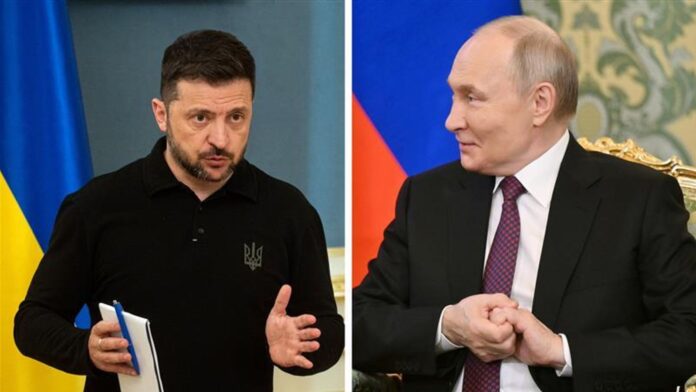
Russia Claims Complete Control Over Ukraine’s Luhansk Region, Escalating Tensions Amid Failed Peace Efforts

Moscow (BN24) – Russia’s occupation authorities in eastern Ukraine declared Monday that Moscow’s forces have seized control of the entirety of the Luhansk region—one of four Ukrainian territories Russia illegally annexed in 2022, despite never fully holding them.

If confirmed, the claim would mark the first time in more than three years of war that Russian troops have established complete military control over an entire annexed region.

Leonid Pasechnik, the Moscow-installed head of occupied Luhansk, announced the development in an interview with Russia’s Channel One. He said he was informed “literally two days ago” that “100%” of Luhansk is now under Russian control. Kyiv has not publicly responded to the claim, and independent verification was not immediately possible.

The declaration underscores Russian President Vladimir Putin’s refusal to back down from demands that Kyiv cede the four regions Moscow claims as Russian territory. Putin has repeatedly rejected calls for a ceasefire or withdrawal, even as international diplomatic initiatives, including recent U.S.-backed talks, have failed to advance negotiations.

Russia’s claim came the same day Germany’s top diplomat, Foreign Minister Johann Wadephul, arrived in Kyiv to demonstrate support and promote new arms manufacturing partnerships aimed at boosting Ukraine’s defense capacity.

Standing alongside Ukrainian Foreign Minister Andrii Sybiha, Wadephul emphasized that bolstering Ukraine’s defense industry is essential to improving its leverage in any future peace talks.

“When Putin speaks of peace today, it is pure mockery,” Wadephul said at a news conference. “His apparent readiness to negotiate is only a facade so far.”

Wadephul, joined by German defense industry executives, said Germany intends to help Ukraine launch new joint ventures that could produce weapons faster and at scale.

“We want to build new joint ventures so that Ukraine itself can produce faster and more for its own defense,” he said. “Our arms cooperation is a real trump card, a logical continuation of our delivery of material.”

Germany is Ukraine’s second-largest military backer after the United States, where uncertainty over continued aid has intensified Ukraine’s sense of vulnerability.

The visit followed Russia’s largest combined aerial assault on Ukraine to date. Over the weekend, Ukrainian officials reported waves of drone and missile strikes across the country.

Ukraine’s air force said it detected 107 Russian Shahed drones and decoys overnight—part of what analysts described as an effort to deplete Ukrainian air defenses before launching cruise and ballistic missile attacks.

“Russia is continuing to use increasingly large numbers of drones in its overnight strike packages in order to overwhelm Ukrainian air defenses,” the Washington-based Institute for the Study of War reported.

In Kharkiv, Russian strikes killed at least two civilians and injured eight more, including a 6-year-old child, according to regional governor Oleh Syniehubov.

Foreign Minister Sybiha urged Berlin to accelerate delivery of additional antimissile systems, calling air defense “the key” to protecting Ukrainian cities and morale.

“The Russians are attacking civilian targets in order to create panic,” Sybiha said.

Despite deepening military cooperation, Berlin has so far refused to supply Kyiv with Taurus long-range missiles—capable of striking targets deep inside Russia—citing fears of escalating the war and triggering a wider NATO conflict.

Instead, German Chancellor Friedrich Merz has pledged to support Ukraine in developing its own long-range weapons systems, which would be exempt from Western-imposed restrictions on use.

Russia’s potential full control of Luhansk underscores the continued risk of further Ukrainian territorial losses if international military assistance wanes. Moscow’s announcement highlights its determination to entrench occupation while grinding down Ukraine’s resources and civilian resilience with near-daily bombardment.

As fighting stretches into a fourth year with no sign of peace, Ukrainian and Western leaders warn that Russia’s latest gains illustrate why support must not weaken.

2 Iranian Grand Ayatollahs Issue Fatwas Declaring Threats Against Khamenei as ‘War Against God’

Iran (BN24) –Two of Iran’s most influential clerics have issued sweeping new religious decrees declaring that any insult, threat, or aggression directed at Supreme Leader Ayatollah Ali Khamenei constitutes an assault on the essence of Islam itself—an offense that, under Iran’s strict interpretation of Islamic law, is punishable by death.

The fatwas—issued Sunday by Grand Ayatollah Hosein Noori Hamedani and Grand Ayatollah Naser Makarem Shirazi—state that such acts amount to moharebeh, or “waging war against God,” one of the gravest charges in the Islamic Republic’s penal code.

Noori Hamedani’s decree goes further, specifying that “whoever provides assistance in this crime will carry the same guilt.”

While the fatwas did not name any individual or government, they followed questions about recent comments by President Donald Trump and Israeli Prime Minister Benjamin Netanyahu suggesting they would consider targeting Khamenei amid escalating tensions between Israel and Iran.

The decrees were published widely by Iranian state media on the same day the Iranian parliament released details of a new bill that significantly broadens the definition of crimes against national security. The combination has alarmed lawyers and rights advocates, who warn the measures could pave the way for more executions and severe crackdowns on dissent.

According to text published by Iran’s semi-official Tasnim News Agency, the bill categorizes a broad range of activities as potential capital offenses, including:

  • “Any action or cooperation in carrying out political, cultural, media, and propaganda activities,”
  • “Creating and reflecting artificial damage,”
  • “Publishing false news that causes public fear or terror,” and
  • “Creating division or harming national security.”

The bill proposes that those convicted of these acts could be found guilty of corruption on earth, an offense that carries the death penalty. Courts would have discretion to instead impose prison terms of 10 to 15 years.

“It is really terrifying,” a Tehran-based attorney told ABC News on condition of anonymity. “The new bill keeps the interpretation of the crimes so widely open that any activity can now be easily labeled as ‘corruption on earth,’ while formerly the same actions would have been prosecuted as ‘propaganda against the regime’ with much shorter prison sentences.”

“Neither the new law nor the fatwa is in favor of the defendants,” the lawyer added.

In Shia Islam, a fatwa is issued by a marja, a senior cleric whose rulings guide the religious obligations of followers. While many fatwas deal with everyday questions—such as prayer, fasting, or ethical conduct—others have had far-reaching social and political consequences.

One of the most notorious examples was the 1989 decree by Ayatollah Ruhollah Khomeini calling for the death of novelist Salman Rushdie. Rushdie was stabbed in 2022 in New York by an assailant who prosecutors said showed “strong indicators of ideological support for the Iranian regime,” though Tehran denied any involvement.

Under Iran’s constitution, judges are empowered to request or rely on “credible fatwas” in cases where the law does not explicitly define a crime.

“Now we see both the law and the fatwa are issued,” the Tehran lawyer said. “It is deeply concerning how it will affect future trials.”

Rights groups warn that the convergence of the fatwas and the legislation could further erode what remains of freedom of expression in Iran, exposing not only critics of the supreme leader but also ordinary protesters and journalists to the risk of capital punishment.

The new measures arrive amid an intensified clampdown on dissent, including rapid executions and mass arrests, as the Iranian government seeks to suppress opposition during a period of regional crisis and internal unrest.