Home Blog Page 285

Trump Signs Executive Order Ending U.S. Sanctions on Syria

Washington, DC (BN24) – President Donald Trump on Monday signed an executive order lifting U.S. sanctions on Syria, fulfilling a promise he made in May to help stabilize the war-torn country.

White House press secretary Karoline Leavitt said the decision was intended to “promote and support Syria’s path to stability and peace.”

Trump announced his plans to ease sanctions during a meeting last month with Syria’s new president, Ahmad al-Sharaa—a former al-Qaeda insurgent who fought U.S. troops in Iraq and was once imprisoned at Abu Ghraib. At the time, Trump urged al-Sharaa to pursue conditions that included normalizing ties with Israel and the United States.

Senior administration officials briefing reporters said the executive order dismantles the broader framework of sanctions imposed by previous administrations, while retaining targeted measures against Bashar al-Assad, his associates, and other destabilizing actors in the region.

U.S. Ambassador to Turkey and Special Envoy for Syria Tom Barrack described the move as an opportunity for Syria’s interim government to rebuild.

“You have a general who transitioned from wartime into being the leader of a reframed new country that needs everything,” Barrack said. “Syria needs to be given a chance, and that’s what’s happened.”

Barrack emphasized the administration’s approach was not about dictating terms.

“Neither the president nor the secretary of state is nation building,” he said. “They’re not requiring a democratic model. They’re giving Syria an opportunity, with criteria that we will monitor—whether it’s integrating foreign fighters, protecting U.S. allies who fought ISIS, or supporting the Abraham Accords.”

Brad Smith, the acting under secretary for terrorism and financial intelligence at the Treasury Department, said the order gives the U.S. flexibility to maintain restrictions where necessary.

“The significance of this moment cannot be overstated,” Smith said. “While we remain hopeful for Syria’s future, we are clear-eyed that threats to peace remain. Treasury will not hesitate to act to protect U.S. interests and the international financial system.”

A senior administration official said the aim was not to maintain leverage over Syria but to create incentives for its leadership to sign onto the Abraham Accords, the series of normalization agreements between Israel and Arab states brokered by the Trump administration.

“Leverage is not what we’re interested in doing,” the official said. “The president ripped the sanctions off without any conditions. It’s to Syria’s benefit to lean towards Israel.”

The official added that there have been reports of backchannel talks between Syria and Israel.

“So the way to entice them is to make it fruitful on an economic basis, on a peace and prosperity basis,” the official said. “What’s happened between Israel and Iran creates that window.”

While Monday’s executive order and the earlier suspension of many restrictions ease pressure on Damascus, the administration acknowledged further action from Congress may be needed to permanently remove all penalties.

“We are now—pursuant to the executive order—going to look at suspension criteria for the Caesar Act,” the official said, referring to the Caesar Syria Civilian Protection Act of 2019, which imposed enhanced sanctions on foreign entities dealing with Assad’s government.

Secretary of State Marco Rubio had issued a 180-day waiver of the Caesar Act sanctions in May.

“Ultimately Congress has the power to repeal the act,” the official noted.

Bryan Kohberger Agrees to Plead Guilty in Idaho College Murders, Will Face Life Sentences

Idaho (BN24) – Bryan Kohberger has agreed to plead guilty to all charges in the brutal slayings of four University of Idaho students, avoiding the possibility of a death sentence, according to a letter prosecutors sent to the victims’ families.

Under the plea agreement, Kohberger will receive four consecutive life sentences without the possibility of parole for the murders, plus the maximum penalty of 10 years in prison for burglary. He has also agreed to waive all rights to appeal.

Sentencing is expected to take place in late July, provided Kohberger formally enters his plea at a change of plea hearing schedule

 The agreement arrives just weeks before the high-profile trial was set to begin. Jury selection had been scheduled for August 4, with opening statements planned for August 18.

Prosecutors said Kohberger’s defense team reached out last week seeking a plea offer. After meeting with victims’ family members and weighing their input, the state extended a formal proposal.

“This resolution is our sincere attempt to seek justice for your family,” prosecutors wrote in the letter to relatives. “This agreement ensures that the defendant will be convicted, will spend the rest of his life in prison, and will not be able to put you and the other families through the uncertainty of decades of post-conviction appeals.”

The state also intends to seek restitution on behalf of the victims’ families.

Kohberger was charged with four counts of first-degree murder and one count of burglary for the November 13, 2022, stabbings that claimed the lives of Kaylee Goncalves, Madison Mogen, Xana Kernodle, and Kernodle’s boyfriend, Ethan Chapin.

The four students were attacked in the girls’ off-campus house in Moscow, Idaho, during the early morning hours. Two other roommates survived, including one who told investigators she encountered a man dressed in black and wearing a mask inside the house. She described him as “not very muscular, but athletically built with bushy eyebrows,” according to court documents.

The killings devastated the small college town and triggered a nearly seven-week nationwide search.

Kohberger, then a criminology Ph.D. student at Washington State University, was arrested in December 2022 at his family’s home in Pennsylvania. Prosecutors later disclosed that DNA matching Kohberger’s was recovered from a KA-BAR knife sheath found next to one of the victims.

Defense attorneys previously argued that Kohberger was driving alone the night of the murders.

abcnews

Bob Vylan Dropped by Talent Agency, U.S. Visas Revoked After Glastonbury Chant, as BBC Admits ‘Regret’ Over Broadcast

London (BN24) – Bob Vylan have been dropped by their talent agency and had their U.S. visas revoked after the duo’s controversial set at Glastonbury Festival sparked widespread condemnation and accusations of incitement to violence.

During their Saturday performance on the West Holts Stage, frontman Bobby Vylan led chants of “Free, free Palestine” and “Death, death to the IDF,” prompting fierce criticism from politicians, broadcasters, and campaign groups.

The BBC, which streamed the set live, said it regretted not halting the broadcast. Media regulator Ofcom announced it was urgently investigating whether the corporation breached editorial standards.

 On Monday, U.S. Deputy Secretary of State Christopher Landau confirmed Bob Vylan’s American visas had been canceled ahead of a planned tour.

“The State Department has revoked the U.S. visas for the members of Bob Vylan in light of their hateful tirade at Glastonbury, including leading the crowd in death chants,” Landau posted on X. “Foreigners who glorify violence and hatred are not welcome visitors to our country.”

Sky News reported that United Talent Agency had terminated its representation of the band.

Prime Minister Sir Keir Starmer condemned the group’s remarks as “appalling hate speech,” while Health Secretary Wes Streeting called the chants especially offensive in light of last October’s massacre at the Nova music festival in Israel.

Festival organizer Emily Eavis said Bob Vylan had “very much crossed a line,” and reiterated that Glastonbury would not tolerate antisemitism or incitement to violence.

The BBC initially defended its decision to display an on-screen warning for “strong and discriminatory language.” However, it issued a stronger statement on Monday:

“The antisemitic sentiments expressed by Bob Vylan were utterly unacceptable and have no place on our airwaves. We welcome Glastonbury’s condemnation of the performance,” the broadcaster said. “The team were dealing with a live situation but with hindsight we should have pulled the stream during the performance. We regret this did not happen.”

A spokesperson added that the performance had not been made available on demand and that the BBC would review its guidance for covering live events.


An Ofcom spokesperson confirmed the regulator was investigating:

“We are very concerned about the live stream of this performance, and the BBC clearly has questions to answer. We are obtaining further information as a matter of urgency, including what procedures were in place to ensure compliance with its editorial guidelines.”

Police said they were reviewing footage of Bob Vylan’s and fellow performers Kneecap’s sets to determine whether any criminal offences were committed.

 Israel’s embassy in the UK condemned the chants as “inflammatory and hateful rhetoric,” claiming they advocated “the dismantling of the State of Israel.” The Campaign Against Antisemitism said it would formally complain to the BBC over what it called an “outrageous decision” to air the performance.

Bobby Vylan defended the set in an Instagram post, saying:

“Teaching our children to speak up for the change they want and need is the only way that we make this world a better place… it is incredibly important that we encourage and inspire future generations to pick up the torch that was passed to us.”

Some festival-goers expressed understanding of the anger over Gaza but criticized the chants.

“Inciting more death and violence is not the way to do it,” said Lucy McMullin, who attended the performance.

Women and Equalities Minister Baroness Jacqui Smith told Sky News she was surprised the BBC continued broadcasting:

“It clearly over-stepped the mark.”

 Bob Vylan’s set included a backdrop stating that Israel’s actions in Gaza amounted to “genocide,” and footage showed some in the crowd joining the chants.

The performance followed months of global outrage over the war in Gaza, where tens of thousands of Palestinians have been killed in Israeli bombardments since October.

Prime Minister Starmer, pressed on whether he retained confidence in BBC Director-General Tim Davie, declined to give a direct answer.

NEWS.SKY.COM

At Least 22 Killed as Israeli Forces Fire on Palestinians Gathering Food Aid in Gaza, Witnesses Say

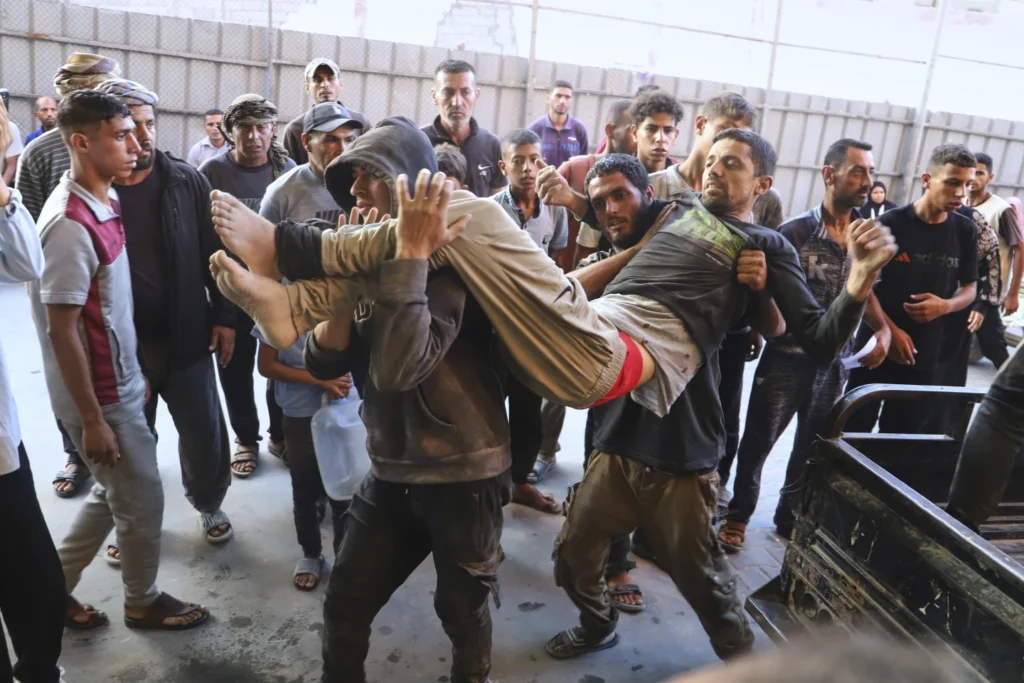
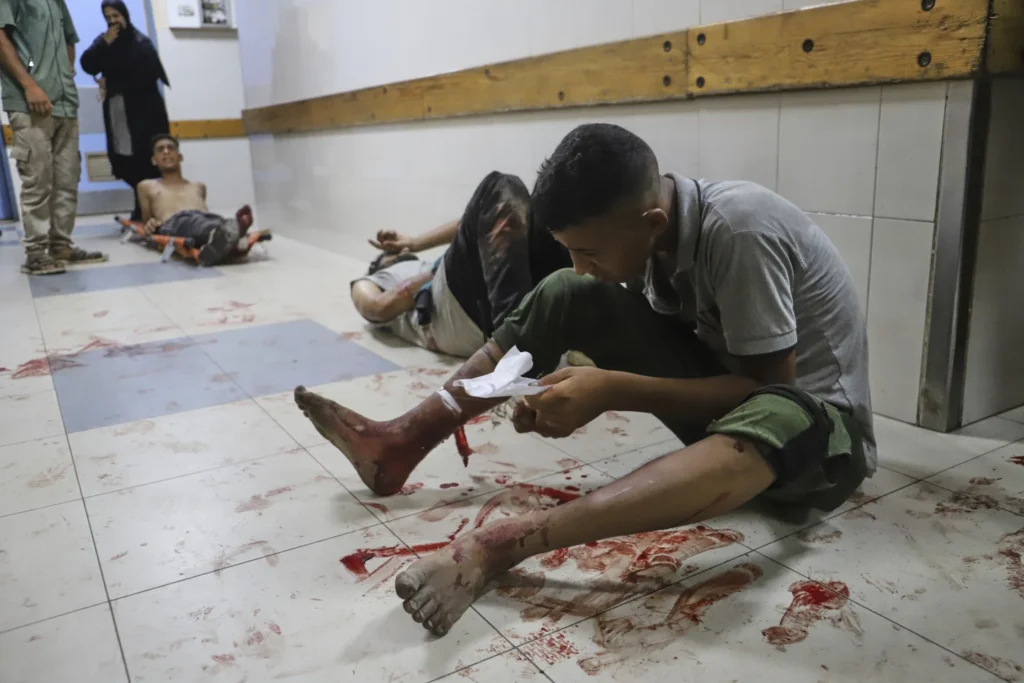
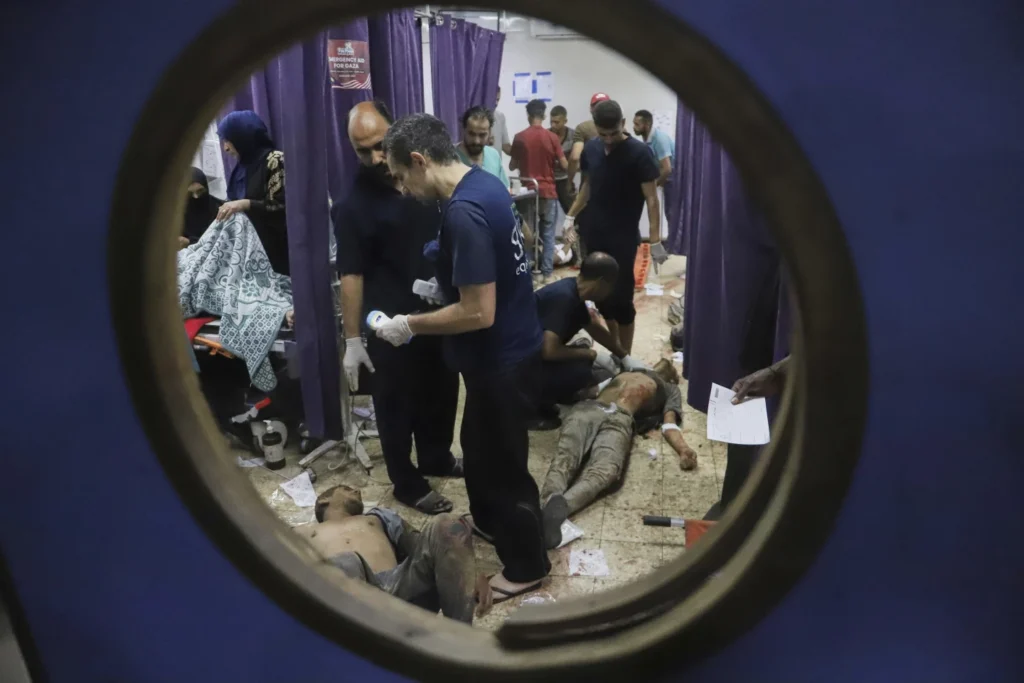
Tel Aviv, Israel (BN24) – Israeli forces shot and killed at least 22 Palestinians and wounded 20 more in Gaza on Monday, many of them as they tried to collect urgently needed food, according to witnesses, hospitals, and Gaza’s Health Ministry.

The incident is part of a deadly pattern linked to the controversial U.S.- and Israeli-backed Gaza Humanitarian Fund (GHF), which has replaced the United Nations as the primary channel for aid distribution. Over the past month, more than 500 Palestinians have been killed in the chaos around these deliveries.

Nasser Hospital in Khan Younis said it received 11 bodies of people shot while returning from a GHF distribution point. Another 10 were killed at a United Nations aid warehouse in northern Gaza.

Witness Accounts of the Shooting
The southern incident occurred about three kilometers from the GHF site in Khan Younis, along the sole accessible route home. Palestinians described Israeli troops in tanks and armored vehicles speeding toward them, firing warning shots before opening fire directly into the crowds.

“They fired at us indiscriminately,” said Yousef Mahmoud Mokheimar, who was shot in the leg. He described seeing a man gunned down while trying to help him and said soldiers detained six people, including three children. “We don’t know whether they are still alive,” he added.

Another witness, Monzer Hisham Ismail, said the crowd was returning from an American-run hub when artillery fire struck.

Nasser Hospital also reported a separate fatal shooting near a GHF point in Rafah.

Military Response
The Israeli military said it was reviewing reports of the attacks. In previous statements about similar incidents, it has maintained that troops fire warning shots if people approach soldiers or behave suspiciously while gathering aid.

Israel has pushed to replace U.N.-coordinated deliveries with the GHF, arguing Hamas routinely diverts food and supplies to bolster its rule. The U.N. denies any systematic theft.

In response to criticism, Israel says it has made efforts to improve the organization of aid, including putting up fencing, new signage, and opening additional routes.

Escalation in Northern Gaza
In northern Gaza, Israeli strikes killed at least 10 Palestinians at a U.N. aid warehouse in Gaza City. Rescue workers said the area had become inaccessible to ambulances as bombardment intensified across the city and Jabaliya refugee camp.

Fares Awad, head of emergency services in northern Gaza, said most neighborhoods were cut off by continuous air and artillery attacks. “Ambulances can’t reach the people under the rubble,” he said.

Residents described the bombardment as a “scorched earth” campaign. “They destroy whatever is left standing,” said Mohamed Mahdy, a Gaza City resident who fled his damaged home.

Strike on Popular Gaza Beach Café
According to medics and eyewitnesses cited by the BBC, at least 20 Palestinians were killed Monday in an Israeli airstrike on Al-Baqa Cafeteria, a seafront café popular among journalists, aid workers, and residents.

“I was on my way to the café to use the internet when a massive explosion hit,” said Aziz Al-Afifi, a cameraman. “The scene was horrific—bodies, blood, screaming everywhere.”

Videos posted on social media showed the missile strike and its aftermath. The café, a makeshift venue of tents and tables on Gaza’s Mediterranean coast, had become a rare space for communication and respite.

The Israeli military did not immediately comment on the attack.

Wider Bombardment and Evacuations
The café strike was part of a wave of Israeli air raids overnight. Witnesses reported dozens of bombs falling on densely populated areas of Gaza City’s east, including Shujaiya, Tuffah, and Zeitoun.

One strike reportedly hit a school sheltering displaced families. Another airstrike on Al Shati refugee camp killed five people, according to local reports.

Residents said many families fled westward within Gaza City instead of south as the Israeli Defense Forces (IDF) instructed, fearing further attacks.

“This is the seventh time we’ve been forced to flee,” said Abeer Talba, a mother of seven. “We’re in the streets again. No food. No water. My children are starving. Death feels kinder than this.”

Ceasefire Prospects and Political Pressure
The fresh violence came as international pressure grew on Israeli Prime Minister Benjamin Netanyahu to agree to a ceasefire. On Saturday, U.S. President Donald Trump said Netanyahu was negotiating a deal with Hamas “right now,” although talks remained stalled.

A ceasefire deal reached in January collapsed in March when Israel resumed airstrikes, later imposing a total blockade on humanitarian aid. The blockade was only partially lifted after 11 weeks, under pressure from U.S. allies and warnings of famine.

Since then, the GHF’s operations have repeatedly turned deadly as desperate crowds gather around aid trucks and distribution sites.

Rising Toll
According to Gaza’s Hamas-run Health Ministry, more than 56,000 Palestinians have been killed since Israel launched its military campaign in response to the October attack that left about 1,200 Israelis dead and 251 hostages taken.

As bombardment continues and evacuation orders multiply, fears are growing that Israel plans to expand its ground offensive deeper into Gaza, risking even more civilian casualties.

How Syrian Forces Massacred Nearly 1,500 Alawites: A Reuters Investigation into the Chain of Command and the Counting of the Dead

A Reuters investigation has uncovered how Syrian forces and pro-government militias carried out a three-day campaign of sectarian killings along the country’s Mediterranean coast in March, leaving nearly 1,500 members of the Alawite minority dead and dozens more missing. Evidence indicates the attackers reported up a chain of command that reached men now serving alongside Syria’s new rulers in Damascus.

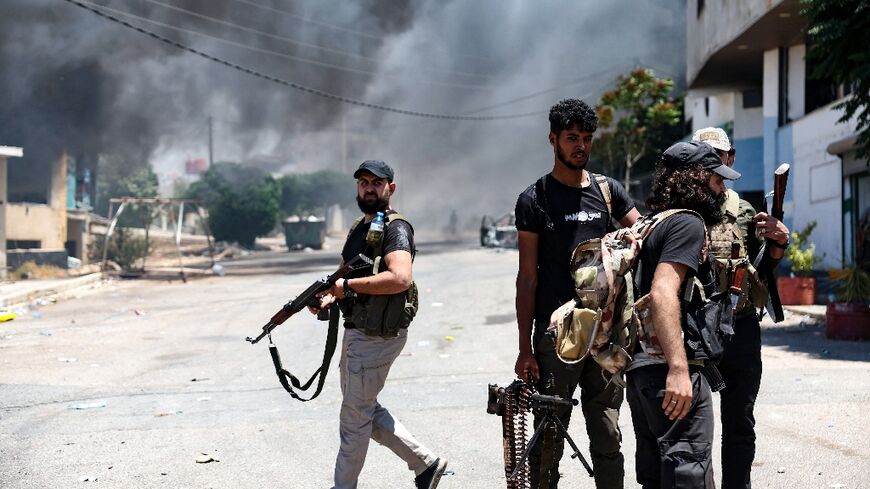
Between March 7 and 9, a patchwork of militias and security forces loyal to the new Sunni-dominated government—many of them rebranded units of extremist factions—swept through Alawite villages long linked to Bashar al-Assad’s toppled regime. Reuters identified 40 separate sites where massacres, looting and arson occurred.

How the Toll Was Counted
Journalists compiled the death toll of 1,479 by obtaining lists of names—many handwritten—from community leaders and relatives. Reporters corroborated these names with activists in Syria and abroad, verified dozens of photographs and mass grave sites, and reviewed extensive CCTV and Telegram chat logs used by Syria’s Defense Ministry to coordinate the crackdown.

Other organizations arrived at similar but slightly lower estimates:

  • The Syrian Network for Human Rights counted 1,334 deaths, including 60 children and 84 women.
  • The Syrian Observatory for Human Rights reported 1,557 civilian deaths but did not explain its methodology.
  • The UN’s last official count stood at just 111—a figure it admitted was a severe undercount.

Entire families were exterminated in some towns, witnesses said. In Sonobar, 236 people were killed—mostly young men—and a message was scrawled on a home: “You were a minority, and now you are a rarity.”

ATTENTION EDITORS – VISUAL COVERAGE OF SCENES OF INJURY OR DEATH Residents rescue a man after what activists said was shelling from forces loyal to Syria’s President Bashar Al-Assad in Aleppo’s Bustan al-Qasr neighbourhood, February 8, 2014. REUTERS/Yaman Al Halabi (SYRIA – Tags: POLITICS CIVIL UNREST CONFLICT) TEMPLATE OUT NYTCREDIT: Yaman Al Halabi/Reuters

A Chain of Command to Damascus
Reuters traced orders for the assault to senior figures in the new Syrian administration. Multiple sources confirmed that the March attacks were initiated to crush what the government called an attempted coup by “Fuloul”—the remnants of Assad’s regime.

Six fighters and commanders, along with three government officials, said directives were issued on March 6 to suppress Alawite enclaves that could become centers of resistance. Some fighters wore Syrian military uniforms, others belonged to militias recently integrated into the army but with histories of brutal sectarian violence.

Units involved included:

  • The General Security Service, the old Assad-era law enforcement body.
  • Ex-Hayat Tahrir al-Sham brigades like Unit 400 and the Othman Brigade.
  • Sunni militias such as the Sultan Suleiman Shah Brigade and Hamza Division, which have been sanctioned by the EU for abuses.

Despite their record, the United States has yet to impose sanctions over these killings.

Testimony of Survivors
Survivors described the attackers’ first question: “Are you Sunni or Alawite?”

One woman recounted how her husband was shot in the eyes and heart while she hid with her children. Others told of fighters forcing young men to howl like dogs before executing them.

In Al-Rusafa on March 8, Ghada Ali watched as her sons were dragged from their home. Her younger boy was returned alive, but her older son’s killers phoned the family to say they had cut out his heart.

In Sonobar, fighters celebrated by stealing food to break the Ramadan fast as bodies lay in the streets.

Official Responses and Denials
President Ahmed al-Sharaa, a former commander of Hayat Tahrir al-Sham, condemned the massacres as a threat to reconciliation. He pledged an investigation and accountability—even for those inside the government.

“This blood will not go unpunished,” he said.

Yet local commanders denied responsibility. The Sultan Suleiman Shah Brigade insisted a fighter seen in video bragging over corpses was an impostor. The Hamza Division and Jaysh al-Ezza declined to comment.

International Silence and Complicity
While EU officials reiterated general condemnations of atrocities, they did not explain why ex-HTS units were not sanctioned. The US State Department did not respond to Reuters’ questions.

Governor Ahmed al-Shami of Tartous, where 350 deaths occurred, insisted Alawites were not targeted as a sect. “The sect needs safety,” he said. “It is our duty as a government.”

A Country Still Divided
The massacres have deepened Syria’s polarization. For decades, Alawites were perceived to hold disproportionate power under Assad. Now, in the wake of regime change, they have become targets of reprisal.

Reuters’ findings underscore how the new government has struggled to control its own fighters, many of whom view the entire Alawite community as complicit.

In villages emptied overnight, Sunnis replaced Alawite families. Entire neighborhoods were depopulated.

Killings Ongoing
Although al-Sharaa ordered an inquiry, local officials privately acknowledged to Reuters that the violence has not stopped. Sporadic revenge killings continue in isolated areas along the coast.

A Final Scene
In one selfie video from Sonobar, a uniformed fighter proclaimed over the bodies of civilians:
Suleiman Shah defeated the remnants of the former regime. God is great and thanks to God.

Among the dead were farmers, students, a motorbike mechanic, and an amnestied policeman.

Trump Threatens to Cut Federal Funding to New York City if Mamdani ‘Doesn’t Behave’

New York (BN24) – President Donald Trump on Sunday threatened to withhold billions in federal funds from New York City if Zohran Mamdani, the democratic socialist who recently won the Democratic mayoral primary, “doesn’t behave himself” if elected.

Trump’s remarks, delivered in an interview with Fox News host Maria Bartiromo, came as he labeled Mamdani “a pure communist” and called his potential victory “inconceivable.”

“Let’s say this—if he does get in, I’m going to be president, and he’s going to have to do the right thing, or they’re not getting any money,” Trump warned. “He’s got to do the right thing, or they’re not getting any money.”

More than $100 billion in federal funding flows into New York City annually through various programs and agencies, according to the city comptroller’s office.

Appearing on NBC’s Meet the Press, Mamdani pushed back forcefully on Trump’s claims. “No, I am not” a communist, he said, adding that he expected the president to attack him personally. “I’ve already had to start to get used to the fact that the president will talk about how I look, how I sound, where I’m from—ultimately because he wants to distract from what I’m fighting for.”

Mamdani cited civil rights leader Martin Luther King Jr., who once said: “Call it democracy or call it democratic socialism. There has to be a better distribution of wealth.”

He reaffirmed his pledge to raise taxes on New York’s wealthiest residents as part of his plan to shift the tax burden away from working- and middle-class homeowners. “I don’t think that we should have billionaires,” he said. “Frankly, it is so much money in a moment of such inequality. What we need more of is equality across our city and across our state and our country.”

Pressed about whether his proposal was racially motivated, Mamdani said it was based on economic disparities, not demographics. “It’s not driven by race,” he said. “It’s more of an assessment of what neighborhoods are being undertaxed versus overtaxed. It is not to work backwards from a racial assessment—it’s to ensure that we actually have an equal playing field.”

Mamdani’s unexpected win over former Governor Andrew Cuomo in the June 24 Democratic primary has rattled many moderate Democrats and sparked debate within the party. While progressive Rep. Alexandria Ocasio-Cortez endorsed him, several high-profile Democrats, including Governor Kathy Hochul, have withheld support. Hochul responded to his victory cautiously, saying: “Obviously, there are areas of difference in our positions, but I also think we need to have those conversations.”

On Sunday, Mamdani expressed openness to working with the governor. “Ultimately, my policies, my vision, it’s driven by an assessment of what’s actually happening,” he said.

Asked whether he believed moderate Democrats were afraid of him, Mamdani replied: “I think people are catching up to this election. Ultimately, what we’re showing is that by putting working people first, by returning to the roots of the Democratic Party, we actually have a path out of this moment where we’re facing authoritarianism in Washington, D.C.”

Trump, for his part, called Mamdani’s proposals—including his vow to defy federal immigration crackdowns and to arrest Israeli Prime Minister Benjamin Netanyahu if he visits New York—“radical left lunacy.”

“He’s a radical left lunatic,” Trump said. “He’s going to be very unsuccessful.”

Mamdani concluded that Democrats must be more than just a party defined by opposition to Trump. “Our campaign was for working people, bringing dignity back into those lives,” he said.

Residents Line Highway to Honor Idaho Firefighters Killed in Deadly Ambush

Idaho (BN24) – Residents of Coeur d’Alene, in Idaho, the United States, lined the highway in solemn tribute on Sunday as a procession carried the bodies of two firefighters killed in an ambush near Canfield Mountain. The firefighters, who were responding to a brush fire, were gunned down in an attack that has left this tight-knit community grappling with grief and disbelief.

The procession, which transported the fallen firefighters from Kootenai Health to Spokane, Washington, drew large crowds of mourners. Many stood in silence, waving American flags or holding each other close as emergency vehicles passed.

“It was very moving to see all the people that came out,” said Bill Buley, assistant managing editor of the Coeur d’Alene Press. “They just kept coming. Even after the procession was done, people were still coming out.”

Buley described the collective heartbreak in a city where many residents personally know first responders. “I think a lot of people were hit hard to think this could happen—to their firefighters, the front-line guys who are there to protect them,” he said. “Coeur d’Alene is a pretty small community. When this happened, people were really shaken and just wanted to come out and show their support for the firefighters and their families.”

Kootenai County Sheriff Bob Norris said the ambush unfolded Sunday afternoon, when firefighters battling the Nettleton Gulch Fire came under gunfire. Law enforcement raced to the area, where the gunman continued shooting as crews attempted to contain the flames.

Retired FBI Special Agent Steve Moore told CNN that the suspect’s cell phone played a crucial role in helping officers track and ultimately end the threat within about 90 minutes. “At 2:00, the firefighters called and said they had been ambushed,” Moore said. “Responders were engaging the shooter, and around the time the phone stopped moving in the woods, either the officers neutralized the suspect or he took his own life.”

Moore credited the swift law enforcement response with preventing further tragedy. “They resolved this within 90 minutes. I’m very impressed,” he said.

Kootenai County Commissioner Bruce Mattare called the attack “unheard of” and difficult for residents to comprehend. “Thank God it’s over. It’s so tragic,” Mattare said. “The people we lost were absolutely top-notch professionals. It’s unheard of for something like this to happen here.”

Mattare said the outpouring of public support has been overwhelming. “This is a great place to live, and something like this just doesn’t happen,” he said. “The procession and the number of people who came out to show their support have been incredible.”

The shooting triggered a massive law enforcement and emergency response that included local, state, and federal agencies. The Idaho National Guard even offered a Black Hawk helicopter to assist, Mattare said.

The investigation into the attack remains active. Sheriff Norris said the suspect’s body was recovered in an area compromised by fire, forcing crews to act quickly to preserve evidence.

“We felt like since the fire was approaching, we needed to scoop up the body,” Norris said. “We had to do what we had to do.”

Authorities have not released details about the weapon recovered with the gunman, citing the need for additional searches once the fire threat recedes. “There’s a likelihood that when we are able to enter the scene again tomorrow without the threat of fire, we’ll find other weapons that were placed,” Norris said.

The area where the suspect was found has been secured, and crews are expected to remain overnight before investigators return in daylight.

U.S. Republican Senator Thom Tillis to Retire After Trump’s Attacks Over Budget Bill Vote

North Carolina (BN24) – U.S. Sen. Thom Tillis, a two-term Republican from North Carolina who was poised to face one of 2026’s toughest Senate battles, announced Sunday that he will not seek re-election, just hours after President Donald Trump publicly lashed out over his vote against advancing a major budget bill.

Tillis, who tried for years to balance loyalty to Trump with the moderate instincts of his politically divided state, said in a statement that he saw little room left for bipartisan compromise in today’s Washington.

“In Washington over the last few years, it’s become increasingly evident that leaders who are willing to embrace bipartisanship, compromise, and demonstrate independent thinking are becoming an endangered species,” Tillis said. He added that the decision was ultimately “not a hard choice” compared with spending more time with his family rather than “another six years in the political theatre and partisan gridlock in Washington.”

The 64-year-old senator acknowledged he had been wavering privately for months, telling colleagues that his willingness to run again hinged on two questions: whether Republican leaders would back him, and whether Trump would give him enough space to remain independent. The answer to both became clear this weekend when Trump unleashed a torrent of criticism and Senate leaders refused to significantly amend the massive spending bill despite Tillis’ warnings.

Trump, who pressured Tillis in an 11th-hour phone call Friday to support the bill, celebrated the announcement. “Great News,” the president wrote on Truth Social, calling Tillis “a talker and complainer, NOT A DOER!”

The sudden escalation punctuated months of tension. Tillis had already voiced concerns about the legislation’s impact on Medicaid, telling Senate colleagues that the plan could cost him re-election in a state where Democrats see an opening. During a private Senate GOP lunch last week, he warned the bill’s Medicaid cuts would be politically devastating.

His doubts about his prospects had been clear for some time. “As many of my colleagues have noticed over the last year, and at times even joked about, I haven’t exactly been excited about running for another term,” he admitted in his statement.

Senate Majority Whip John Thune confirmed Tillis had given him a heads-up about the retirement. “It’s unfortunate, and it’s something he’s been thinking about for a while,” Thune said.

Once, an incumbent with Tillis’ record might have been given leeway to break ranks. He had backed bipartisan legislation under President Joe Biden, supporting the infrastructure bill and a modest gun control package. More recently, he raised pointed questions about Defense Secretary Pete Hegseth’s nomination before ultimately supporting him and later torpedoed one of Trump’s Justice Department picks.

But as the budget fight climaxed, the pressure on Tillis to fall in line proved unrelenting. Despite his public misgivings over clean energy tax credits and Medicaid cuts, Republican leaders made only minor tweaks. On Friday night, Tillis followed through on his warning and voted “no” to begin debate, joining Sen. Rand Paul as the only Republicans to oppose the measure.

By Saturday, Trump made clear that a primary challenge was coming, saying “numerous people have come forward” to run against Tillis and pledging to meet with them. In another post, he accused Tillis of having “hurt the great people of North Carolina.”

Within hours, four people familiar with private discussions said the senator had decided to move up his timeline and announce his retirement.

The decision sets up a potentially volatile and crowded GOP primary in North Carolina. Rep. Pat Harrigan is seen as a likely candidate with close ties to Trump’s orbit. Lara Trump, the president’s daughter-in-law, is also weighing a run, according to a person familiar with her thinking. Many Republican strategists believe a fresh candidate unencumbered by Tillis’ bipartisan record will have a clearer path to uniting the party.

Sen. Tim Scott, who chairs the National Republican Senatorial Committee, expressed confidence Republicans will hold the seat, calling North Carolina a state that will continue to back “a conservative leader committed to advancing an agenda of opportunity, prosperity, and security.”

Democrats immediately claimed the retirement gives them a prime opportunity. Former Rep. Wiley Nickel, who has already declared his candidacy, said he is prepared to take on whichever Republican emerges. But much of the party’s focus remains on former Gov. Roy Cooper, who has kept his intentions quiet and is expected to decide by summer whether to enter the race.

Denmark to Draft Women Into the Military as Russian Aggression and Military Investment Grows

HOVELTE, Denmark (BN24) — Denmark is extending compulsory military enlistment to women for the first time in the nation’s history, implementing a gender-neutral draft lottery system as Russian aggression prompts increased military investment across NATO countries.

Under new rules passed by Denmark’s parliament in June, Danish women who turn 18 after Tuesday will be entered into the same lottery system as their male counterparts, marking a significant shift in the Scandinavian country’s military recruitment policies. The change reflects growing security concerns and efforts to bolster defense capabilities amid ongoing threats in Europe.

Peering across dense woodland outside Denmark’s capital with camouflage paint across her face, 20-year-old Katrine recently completed final training exercises near the Danish army’s barracks in Hovelte, 25 kilometers north of Copenhagen. After nearly four months of military training, she and other female soldiers who spoke to The Associated Press in June had volunteered for service, which until now was the only way women could participate in military training, despite being eligible for full-time armed forces membership since the early 1970s.

“In the situation the world is in now, it’s needed,” Katrine said, speaking on condition that only first names be used for operational security reasons. “I think it’s only fair and right that women participate equally with men.”

The new conscription system maintains voluntary enlistment options for both men and women, with remaining positions filled through the gender-neutral draft lottery. The reform addresses Denmark’s goal of increasing the number of young people in military service as security challenges mount across Europe.

Colonel Kenneth Strøm, head of the conscription program, told The Associated Press that the accelerated implementation is based on “the current security situation.” The program was originally outlined in 2024 as part of a major defense agreement and expected to begin in early 2027, but has been moved forward to summer 2025.

“They could take part in NATO collective deterrence,” Strøm explained. “Raising the number of conscripts, that would simply lead to more combat power.”

Denmark, with a population of 6 million people, currently maintains approximately 9,000 professional troops. The new arrangement is projected to increase annual military service participation to 6,500 people by 2033, compared to 4,700 participants last year. Women volunteers comprised roughly one quarter of the 2024 military cohort.

Under existing Danish law, all physically fit men over age 18 are subject to military service calls. The lottery system previously applied only to men after voluntary positions were filled. The extension to women represents a fundamental change in how Denmark approaches national defense obligations.

Anne Sofie, part of Katrine’s volunteer cohort, acknowledged the mixed reactions the new policy may generate. “Some will probably be very disappointed being chosen to go into the military,” she said regarding future female conscripts. “Some will probably be surprised and like it a lot more than they think they would.”

The conscription program is also being extended in duration, from four months to 11 months of service. Conscripts will complete five months of basic training, followed by six months of operational service and additional specialized instruction. The extended timeline reflects increased emphasis on comprehensive military preparation.

Russia’s full-scale invasion of Ukraine has influenced training content even in Denmark’s relatively secure position. Lessons from Ukrainian battlefields have been incorporated into Danish military exercises, creating immediate relevance for trainees.

“That makes it very real,” Katrine observed about the connection between ongoing conflict and her military training experience.

The conscription expansion forms part of Denmark’s broader military buildup initiative. In February, the Danish government announced plans to establish a $7 billion fund designed to raise the country’s defense spending above 3% of gross domestic product this year. Portions of the conscript program receive financing through the designated Acceleration Fund.

“We see a sharpened security situation in Europe. We have the ongoing conflict in Ukraine. We have focus on the Baltic countries, where Denmark is contributing a lot of soldiers. So, I think it’s a general effort to strengthen the Danish defense,” said researcher Rikke Haugegaard from the Royal Danish Defense College.

However, Haugegaard identified multiple implementation challenges, including inadequately fitting equipment, insufficient barracks capacity, and potential sexual harassment concerns. The infrastructure demands require significant investment and gradual development.

“For the next year or two, we will be building a lot of new buildings to accommodate all these people. So, it will be a gradual process,” she explained.

Denmark joins regional neighbors in expanding military conscription to include women. Sweden instituted gender-inclusive military drafts in 2017 after government officials cited deteriorating European security conditions. Norway implemented similar legislation applying military conscription to both sexes in 2013.

The Nordic trend toward gender-neutral military service reflects broader European responses to evolving security threats. The policies acknowledge both equality principles and practical military needs as nations reassess defense capabilities amid changing geopolitical circumstances.

Denmark’s decision to accelerate the timeline for women’s conscription implementation demonstrates the urgency with which European NATO members view current security challenges. The policy represents both a milestone in gender equality and a strategic response to regional military pressures.

The integration of women into mandatory military service systems across Scandinavia suggests a regional consensus about the necessity of maximizing available human resources for national defense. These changes occur as European nations fundamentally reconsider their military preparedness in response to Russian actions and broader security concerns.

Ukraine F-16 Pilot Killed in Large-Scale Russian Attack, Zelenskyy Calls for US Help

KYIV, Ukraine (BN24) — A Ukrainian F-16 fighter pilot died in a crash while defending against a large-scale Russian air attack involving hundreds of drones, cruise missiles and ballistic missiles, Ukrainian authorities announced Sunday, as Moscow continues intensifying nighttime bombardments in the fourth year of war.

President Volodymyr Zelenskyy praised pilot Maksym Ustymenko and posthumously awarded him the title of Hero of Ukraine, the country’s highest military decoration. The president simultaneously called for increased support from Washington and Western allies to strengthen Ukraine’s air defense capabilities following the devastating attack.

The overnight assault damaged homes and infrastructure across multiple Ukrainian regions and injured at least 12 people, according to local authorities. In the capital Kyiv, families sought shelter in metro stations after air raid sirens sounded throughout the city. Machine-gun fire and explosions echoed across Kyiv and reached the western city of Lviv, where such attacks occur less frequently.

The governor of the Lviv region, which borders Poland, confirmed the raid specifically targeted critical infrastructure facilities. The widespread nature of the attack demonstrated Russia’s continued capability to strike across Ukraine’s territory despite ongoing air defense efforts.

Ukraine has now lost three F-16 aircraft since beginning operations with the U.S.-manufactured jets last year. While Kyiv has not disclosed the total size of its F-16 fleet, the aircraft have become a central component of Ukraine’s air defense strategy and are heavily utilized in combat operations.

According to the Ukrainian Air Force, Ustymenko flew his damaged aircraft away from populated areas but lacked sufficient time to eject before the crash occurred. The pilot had exhausted all onboard weapons systems and successfully destroyed seven aerial targets during the engagement.

“The pilot used all of his onboard weapons and shot down seven air targets. While shooting down the last one, his aircraft was damaged and began to lose altitude,” the Air Force stated on its official Telegram channel.

Ukrainian military expert Roman Svitan had noted earlier this month that F-16 aircraft are not optimally designed for all combat tasks in the current conflict, particularly defending against drone swarms that regularly target Ukrainian cities, as the jets are better suited for engaging higher-speed aerial threats.

In his nightly video address, Zelenskyy revealed that Ustymenko had been conducting combat missions since 2014, when Ukraine began its campaign against Russian-financed separatists who seized portions of eastern Ukrainian territory. The president noted that Ustymenko had mastered four different aircraft types and achieved significant defensive accomplishments.

“He mastered four types of aircraft and had important results to his name in defending Ukraine,” Zelenskyy stated. “It is painful to lose such people.”

The Ukrainian military reported that Russia launched a total of 477 drones and 60 missiles of various classifications against Ukraine during the overnight assault. Ukrainian defense forces successfully destroyed 211 drones and 38 missiles, while an additional 225 drones were either neutralized through electronic warfare systems or identified as decoys carrying no explosive payloads.

Writing on social media platform X, Zelenskyy emphasized the sustained nature of Russian attacks, stating that “Moscow will not stop as long as it has the capability to launch massive strikes.” He documented that Russia had launched approximately 114 missiles, 1,270 drones, and 1,100 glide bombs during the previous week alone.

Russia’s state-operated RIA Novosti news agency reported that one person was killed by a Ukrainian drone in the Russian-controlled section of Ukraine’s Luhansk region. Both Ukrainian and Russian authorities maintain official positions that they do not deliberately target civilian infrastructure or populations.

Ukraine maintains that recent attack patterns underscore the critical need for enhanced support from Washington, where President Donald Trump has not yet committed to providing additional military assistance to Ukraine. Trump indicated he was considering a Ukrainian request for additional Patriot missile batteries following his meeting with Zelenskyy at a NATO summit last Wednesday.

“This war must be brought to an end – pressure on the aggressor is needed, and so is protection,” Zelenskyy wrote in his social media post. “Ukraine needs to strengthen its air defence – the thing that best protects lives.”

The Ukrainian president stated that his country was prepared to purchase American air defense systems and expressed dependence on “leadership, political will, and the support of the United States, Europe, and all our partners.”

Russia has conducted large-scale strikes against Ukrainian cities every few days in recent weeks, causing extensive infrastructure damage, killing dozens of civilians, and injuring hundreds more. The sustained bombing campaign represents a significant escalation in targeting civilian areas and critical infrastructure.

During the latest bombardment, explosions were reported in Kyiv, Lviv, Poltava, Mykolaiv, Dnipropetrovsk, Cherkasy and Ivano-Frankivsk regions, according to witness accounts and regional governor statements. Ukrainian military officials confirmed that air strikes were recorded at six separate locations across the country.

Eleven people, including two children, sustained injuries in the central Cherkasy region, according to the regional governor’s Telegram announcement. The attack damaged three multi-story residential buildings and a college facility. One woman was injured in the western Ivano-Frankivsk region.

Emergency rescue teams evacuated residents from apartment buildings in Cherkasy that displayed charred walls and shattered windows from the bombardment. The evacuation efforts highlighted the continued threat to civilian populations despite designated shelter areas and air defense systems.

The loss of the experienced F-16 pilot represents both a tactical and symbolic setback for Ukraine’s air defense capabilities, particularly as the country seeks to maximize the effectiveness of its limited Western-supplied aircraft fleet. The incident underscores the ongoing challenges Ukrainian forces face in defending against Russia’s sustained aerial assault campaign.