Home Blog Page 29

Federal Judge Orders Release of 5-Year-Old Boy and Father from ICE Detention, Condemns Trump Immigration Enforcement

0

A federal judge issued a scathing ruling Saturday ordering the release of a 5-year-old boy and his father from a Texas immigration detention facility by Tuesday, harshly condemning the Trump administration’s enforcement tactics as “ill-conceived and incompetently-implemented” in a case that has intensified national controversy over immigration policies targeting families with young children.

U.S. District Judge Fred Biery, who sits in San Antonio and was appointed by former President Bill Clinton, directed that Liam Conejo Ramos and his father Adrian Conejo Arias must be freed from the Dilley, Texas family detention center where they have been held since their January 20 arrest by Immigration and Customs Enforcement officers in the Minneapolis suburb of Columbia Heights.

The judge’s extraordinary order characterized the case as having “its genesis in the ill-conceived and incompetently-implemented government pursuit of daily deportation quotas, apparently even if it requires traumatizing children,” directly challenging the Trump administration’s immigration enforcement priorities and methodologies.

Images of Liam wearing a bunny hat and Spider-Man backpack while surrounded by ICE officers sparked widespread outcry about the administration’s Minnesota immigration crackdown, joining the fatal shootings of Renee Good and Alex Pretti as flashpoints in escalating confrontation between federal enforcement operations and local communities resisting those tactics.

Biery had previously ruled that the boy and his father could not be removed from the United States, at least temporarily. Saturday’s release order represents a more definitive judicial intervention requiring their freedom from detention while legal proceedings continue.

The judge invoked foundational American documents and religious texts in his ruling, suggesting the Trump administration’s actions echo grievances enumerated by Thomas Jefferson against England’s King George in the Declaration of Independence. “Apparent also is the government’s ignorance of an American historical document called the Declaration of Independence,” Biery wrote, specifically citing Jefferson’s complaints that the monarch “has sent hither Swarms of Officers to harass our People” and “He has excited domestic Insurrection among us.”

Biery included in his ruling a photograph of Liam and quoted two biblical passages: “Jesus said, ‘Let the little children come to me, and do not hinder them, for the kingdom of heaven belongs to such as these,'” and simply “Jesus wept”—the shortest verse in Christian scripture, evoking profound sorrow at human suffering.

The biblical and constitutional references represent an unusual judicial approach, signaling the depth of the judge’s concern about governmental treatment of vulnerable children and suggesting he views the case as raising fundamental questions about American values and constitutional governance.

Biery joins a Minnesota-based federal judge with conservative credentials who recently described ICE as a serial violator of court orders related to the enforcement crackdown, indicating that judicial skepticism about immigration enforcement tactics transcends ideological divisions and reflects concerns about lawfulness and constitutional compliance.

The circumstances surrounding Liam and Adrian’s January 20 detention remain intensely disputed, with neighbors and school officials offering accounts sharply contradicting the Department of Homeland Security’s narrative. This factual controversy mirrors patterns established in other high-profile Minnesota enforcement incidents where eyewitness accounts and video evidence have conflicted with official governmental explanations.

Columbia Heights Public Schools Superintendent Zena Stenvik told reporters that officers instructed Liam to knock on the door of his home to determine if other people were inside, “essentially using a 5-year-old as bait.” The father told the child’s mother, who was inside the residence, not to open the door, Stenvik recounted.

School Board Chair Mary Granlund disclosed that she personally told agents she could care for the boy, while school officials confirmed that other adults at the scene offered to assume responsibility for Liam but were ignored by enforcement personnel. A neighbor claimed to possess papers authorizing her to care for Liam on the parents’ behalf, yet agents allegedly disregarded this arrangement.

The Department of Homeland Security categorically rejected these accounts as an “abject lie.” DHS spokeswoman Tricia McLaughlin asserted that “ICE did NOT target, arrest a child or use a child as ‘bait,'” claiming instead that “ICE law enforcement officers were the only people primarily concerned with the welfare of this child.”

McLaughlin maintained that Adrian fled on foot, abandoning Liam in a running vehicle in the driveway during freezing Minnesota winter conditions. Officers tried extensively to persuade the mother to take custody of the child and “even assured her she would NOT be taken into custody,” McLaughlin stated. She added that officers “abided by the father’s wishes to keep the child with him.”

Border Patrol Commander-at-Large Greg Bovino criticized what he characterized as a “false media narrative” during a Friday press conference. Marcos Charles, acting executive associate director of ICE enforcement and removal operations, faulted the father for “abandoning his child in the middle of winter in a vehicle,” explaining that one officer remained with Liam while others arrested Adrian.

Charles claimed his officers obtained food for the boy and “did everything they could to reunite him with his family,” but that “when we approached the door of his residence, the people inside refused to take him in and open the door.” He acknowledged not knowing what became of the child’s mother.

The government maintains that Adrian entered the United States illegally from Ecuador in December 2024. White House Deputy Chief of Staff Stephen Miller, who has announced a target of 3,000 immigration arrests daily—the quota Judge Biery appeared to reference—confirmed this timeline.

The family’s attorney contends Adrian has a pending asylum claim allowing him to remain in the country. Both assertions can be simultaneously accurate under immigration law: the government may have initiated deportation proceedings after determining he entered illegally, but Adrian may have exercised his legal right to seek asylum, suspending removal until an immigration judge adjudicates his claim.

An online court summary confirms the case was filed December 17, 2024, and is assigned to the immigration court inside the Dilley detention center—a facility that has faced extensive criticism for conditions affecting detained families and children.

Family attorney Marc Prokosch stated Thursday that he assumed Liam and his father were in a family holding cell but had not established direct contact with them. “We’re looking at our legal options to see if we can free them either through some legal mechanisms or through moral pressure,” he explained at a press conference.

The Law Firm of Jennifer Scarborough, which assumed representation of the boy and family following the court order, issued a statement Saturday confirming work “to ensure a safe and timely reunion.” The firm expressed satisfaction that “the family will now be able to focus on being together and finding some peace after this traumatic ordeal.”

Texas Democratic Representatives Joaquin Castro and Jasmine Crockett visited the detention facility Wednesday, observing Liam sleeping in his father’s arms. Adrian told the congressmen that Liam was frequently tired and not eating well at the facility housing approximately 1,100 people, Castro disclosed.

Detained families have reported severely deficient conditions at Dilley including worms in food, fighting for access to clean water, and inadequate medical care since the facility’s reopening last year. In December, an ICE report acknowledged holding approximately 400 children longer than the recommended 20-day limit.

Leecia Welch, chief legal counsel at Children’s Rights, visited Dilley last week and characterized current conditions as worse than ever. “The number of children had skyrocketed and significant numbers of children had been detained for over 100 days,” Welch observed. “Nearly every child we spoke to was sick.”

These firsthand accounts starkly contradict ICE official Charles’ assertions that people at family centers “get top-notch care. They have medical care. The food is good. They have learning services. They have church services available. They have recreation.”

Bovino defended family detention by comparing it to domestic law enforcement practices. “When U.S. citizens anywhere in the country are arrested and jailed by their local police, they get separated from their children,” he noted, adding: “I challenge any other law enforcement agency anywhere nationwide to show me the fantastic care that ICE and the U.S. Border Patrol provide children.”

He argued that if Liam wasn’t with his father, “he could have ended up in the custody of social services without a parent instead,” framing the detention as preferable to child welfare system placement.

The child’s immigration status remains a critical legal factor. ICE official Charles suggested Friday that the family entered the United States together, implying Liam is not a U.S.-born citizen and may be subject to deportation with one or both parents.

Trump border czar Tom Homan has repeatedly emphasized that parents of U.S.-born children face choices when deported: take children with them or leave them with relatives or other caregivers. “This is parenting 101. You can decide to take that child with you or you can decide to leave the child with a relative or another spouse,” Homan stated last year on CBS’ Face the Nation.

The Trump administration issued a “Detained Parents Directive” in July establishing that when minor children are encountered during ICE enforcement actions, ICE “should under no circumstances take custody of children or transport them.” However, the directive includes exemptions for situations where people could lose their immigration status.

The policy states that ICE should allow parents and guardians to make alternate care arrangements for children before detention, but does not specify procedures when parents request that children remain with them.

Neha Desai, managing director at Children’s Human Rights and Dignity at the National Center for Youth Law, clarified legal obligations: “If a parent is arrested while with their child, the government is not required to arrest the child, regardless of the child’s immigration status. When ICE detains a parent, its own policy requires them to allow time for arrangements to be made for the child’s care.”

The conflicting accounts of whether Adrian and Liam’s mother were given adequate opportunity to arrange alternative care before the child’s detention represents a factual dispute with significant legal and moral implications. If school officials and neighbors accurately describe events, ICE violated its own policies and used a kindergarten-aged child as an investigative tool. If DHS spokeswoman McLaughlin’s account is accurate, the father abandoned his son in dangerous winter conditions and the mother refused to accept custody when officers offered it.

The detention has become a national flashpoint symbolizing broader divisions over Trump administration immigration enforcement, joining other Minnesota incidents that have generated intense controversy. The deadly shooting of Renee Good by an ICE officer just two weeks earlier—which witnesses characterized as blatant abuse of power while the government defended it as legitimate self-defense—established a pattern of radically divergent narratives about federal enforcement operations.

Judge Biery’s release order, due for implementation by Tuesday, will reunite Liam and Adrian while their immigration case proceeds. However, the broader questions raised by their detention—about appropriate treatment of young children during enforcement operations, the credibility of competing narratives from officials and community members, and the human cost of aggressive deportation quotas—will persist as political and legal controversies surrounding immigration enforcement continue.

The U.S. Department of Justice and Department of Homeland Security did not immediately respond to requests for comment on the judge’s order or his characterization of immigration enforcement as ill-conceived, incompetently-implemented pursuit of daily deportation quotas requiring child traumatization.

The Associated Press

Israeli Airstrikes Kill 31 Palestinians in Deadliest Day Since Gaza Ceasefire as Truce Violations Mount

0

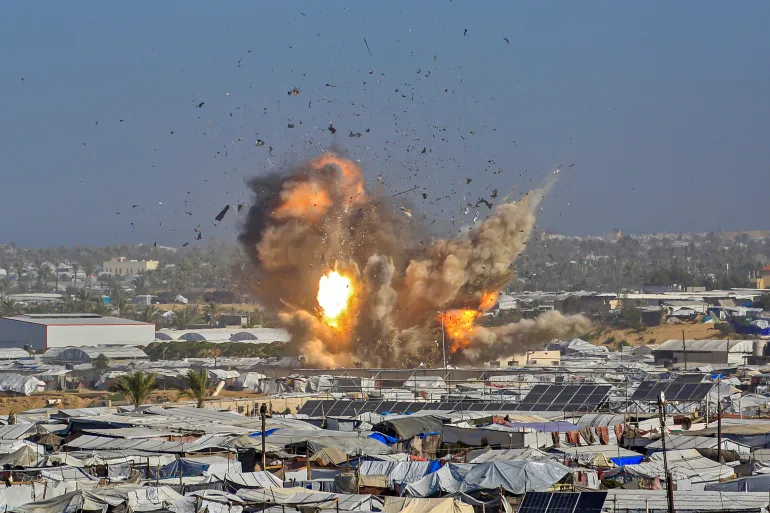
Israeli airstrikes killed at least 31 Palestinians including six children on Saturday in some of the most devastating attacks since the October ceasefire took effect, striking residential buildings, displacement camps and a police station across the Gaza Strip as the fragile truce faces mounting violations from both sides.

The Saturday bombardment represents one of the highest single-day death tolls since the ceasefire commenced, occurring just one day before Israel is scheduled to reopen the Rafah border crossing linking Gaza with Egypt under U.S. President Donald Trump’s plan to advance the peace agreement toward a permanent resolution of the conflict.

Palestinian health officials and hospital administrators cataloged casualties throughout the territory, with strikes hitting locations in Gaza City, Khan Younis and the Jabaliya refugee camp. The victims included two women and six children from two different families, highlighting the civilian toll as Israeli military operations continue despite the truce agreement.

Israeli military officials characterized the strikes as responses to ceasefire violations the previous day, when troops identified eight gunmen emerging from a tunnel in Rafah, an area in southern Gaza controlled by Israeli forces under the truce arrangement. The military maintained it targeted commanders, weapons caches and manufacturing sites belonging to Palestinian militant group Hamas and its ally Islamic Jihad.

Hamas, which retains control of just under half of Gaza where nearly all of the territory’s more than two million residents live predominantly in makeshift tents and damaged buildings, accused Israel of violating the truce. The organization did not confirm whether any of its members or installations were struck in Saturday’s attacks.

Israeli warplanes struck the Sheikh Radwan police station west of Gaza City, killing 14 people including four policewomen, civilians and inmates, according to Shifa Hospital director Mohamed Abu Selmiya. Rescue teams continued searching for additional casualties at the devastated site, Hamas-run police disclosed.

Additional airstrikes targeted at least two residential buildings in Gaza City and a tent encampment sheltering displaced Palestinians in Khan Younis further south, local officials confirmed. Video documentation from Gaza City showed charred, blackened and destroyed walls at an apartment in a multi-story building, with debris scattered inside the residence and outside on the street below.

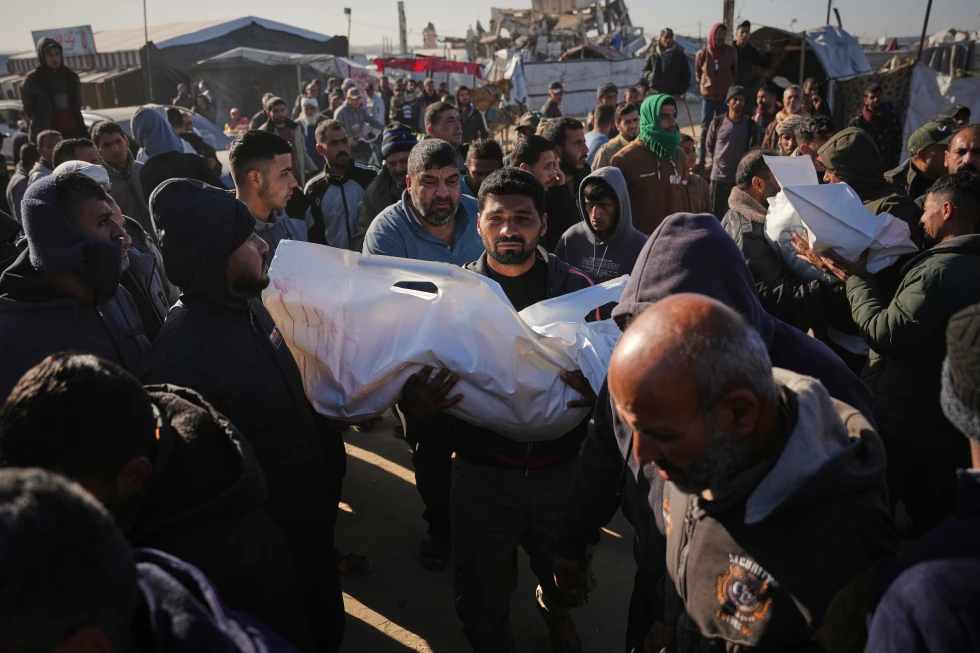
Samer al-Atbash discovered the bodies of his three small nieces in the street following the Gaza City apartment building strike that also killed the children’s aunt and grandmother. “They say ‘ceasefire’ and all. What did those children do? What did we do?” he questioned, his grief captured as names were written on body bags lined up at the foot of a wall at Shifa Hospital.

The tent camp strike in Khan Younis ignited a fire that killed seven people, including a father, his three children and three grandchildren, Nasser Hospital personnel confirmed. Atallah Abu Hadaiyed had just finished praying when the explosion detonated nearby. “We came running and found my cousins lying here and there, with fire raging. We don’t know if we’re at war or at peace, or what. Where is the truce? Where is the ceasefire they talked about?” he demanded as people inspected ruins including a bloodied mattress.

An additional strike on the eastern side of Jabaliya refugee camp killed one man, Shifa Hospital reported. The Gaza civil defense rescue service calculated Saturday’s death toll at 32, slightly higher than hospital tallies that reached 31.

The Israeli military disclosed that during Friday’s encounter with fighters in Rafah, soldiers killed three militants and arrested a fourth individual described as a Hamas commander. Hamas did not comment on this incident. Dozens of Hamas fighters have remained trapped in tunnels beneath Rafah since the ceasefire commenced, with some subsequently killed in clashes with Israeli forces that maintain control over the area.

The Israeli military, which has conducted strikes on both sides of the ceasefire’s dividing line, characterized Saturday’s attacks as responses to what it described as two separate ceasefire violations Friday. Israeli forces killed three militants who emerged from a tunnel in an Israeli-controlled area of Rafah and four who approached troops near the dividing line, according to military accounts.

Hamas senior official Bassem Naim condemned Saturday’s strikes as “a renewed flagrant violation” and urged the United States and other mediating countries to pressure Israel to halt the attacks. “All available indicators suggest that we are dealing with a ‘Board of War,’ not a ‘Board of Peace,'” Naim posted on social media platform X, questioning the legitimacy of the Trump administration-proposed international body intended to govern Gaza.

The Saturday casualties represent several times the daily average since the ceasefire began in October. As of Friday, Gaza’s Health Ministry had documented at least 520 Palestinians killed by Israeli fire since the truce took effect. The ministry, part of the Hamas-led government, maintains detailed casualty records that U.N. agencies and independent experts generally regard as reliable.

Violence has repeatedly fractured the ceasefire’s tenuous stability. Israeli fire has killed over 500 people—the majority of them civilians according to Gaza health officials—while Palestinian militants have killed four Israeli soldiers, Israeli authorities confirm. The two sides have exchanged blame over truce violations even as Washington pushes them to advance toward subsequent phases of the ceasefire agreement meant to permanently end the conflict.

The next phase of Trump’s Gaza plan requires resolving complex issues including Hamas disarmament, which the organization has consistently rejected, further Israeli withdrawal from Gaza territory, and deployment of an international peacekeeping force. Reuters disclosed Monday that Hamas seeks to incorporate its 10,000 police officers into the new U.S.-backed Palestinian administration for Gaza, a demand likely to encounter Israeli opposition.

Sunday’s scheduled reopening of the Rafah crossing represents a significant development for Gaza’s isolated population. All of the territory’s border crossings—the remainder being with Israel—have remained closed throughout almost the entire war. Palestinians regard Rafah as a critical lifeline for tens of thousands requiring medical treatment outside the territory, where the majority of healthcare infrastructure has been destroyed during nearly 16 months of combat.

The crossing’s opening, initially limited in scope, will occur as the U.S.-brokered Israel-Hamas ceasefire plan transitions into its second phase. Additional challenging issues include demilitarizing the strip after nearly two decades of Hamas governance and installing a new administration to oversee reconstruction efforts that will require tens of billions of dollars and many years to complete.

The war commenced after Hamas-led gunmen attacked southern Israel on October 7, 2023, killing approximately 1,200 people—mostly civilians—and abducting 251 individuals as hostages. Israeli officials have cautioned that hostilities could resume if Hamas refuses to disarm. The remains of the final hostage in Gaza were recovered earlier this week, concluding the return of all deceased captives though several dozen living hostages may still remain in Hamas custody or that of other militant factions.

The ceasefire’s fragility reflects fundamental disagreements about Gaza’s political future and security arrangements. Israel insists that Hamas cannot retain any governing or military role in post-conflict Gaza, while Hamas maintains it represents legitimate Palestinian resistance and has earned the right to participate in Gaza’s political future through its resistance against Israeli occupation.

The Trump administration’s approach emphasizes rapid progress through ceasefire phases, potentially sacrificing comprehensive resolution of contentious issues in favor of momentum toward ending active hostilities. However, Saturday’s deadly strikes demonstrate how easily the agreement can unravel when either side perceives violations or feels security interests are threatened.

For Gaza’s civilian population, the distinction between ceasefire and active combat has proven tragically blurred. Families continue experiencing lethal airstrikes, infrastructure remains devastated, and humanitarian conditions deteriorate despite the nominal truce. The death of children in their beds and displacement camp residents incinerated in tent fires underscores that the ceasefire has not delivered the safety or stability that its name suggests.

Samer al-Atbash’s question—”What did those children do?”—captures the moral complexity and human cost of the ongoing violence. The three girls killed in their sleep, the family consumed by fire in their tent, and the police station workers killed at their posts had no involvement in militant operations or ceasefire violations, yet paid with their lives for strategic calculations and military responses that perpetuate cycles of violence.

The international community faces difficult questions about whether the current ceasefire framework can evolve into sustainable peace or merely represents a temporary pause before hostilities inevitably resume. The planned reopening of Rafah crossing offers a concrete test of whether practical cooperation on humanitarian issues can build trust that enables progress on more contentious political and security matters.

As the ceasefire enters what should be its second phase, the fundamental question remains whether Israelis and Palestinians possess sufficient political will to make the compromises necessary for permanent peace, or whether Saturday’s violence presages an eventual return to full-scale warfare that will claim thousands more lives and further devastate Gaza’s already catastrophic humanitarian situation.

AP/Reuters/Aljazeera

Fela Kuti named first African recipient of posthumous Grammy Lifetime Achievement Award

0

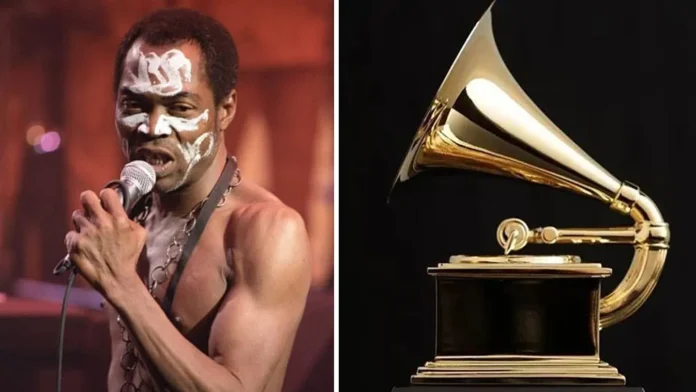
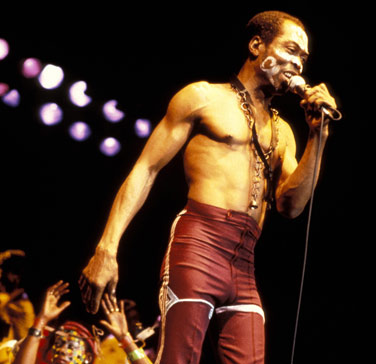
The Recording Academy has named legendary Afrobeat pioneer Fela Anikulapo-Kuti as the first African artist to receive a posthumous Grammy Lifetime Achievement Award, a historic recognition that places one of Africa’s most influential cultural figures firmly within the highest ranks of global music honor.

The Academy announced that Fela will be among the recipients honored in 2026, nearly three decades after his death in 1997 at the age of 58. The award will be presented during the Special Merit Awards Ceremony on Saturday, Jan. 31, at the Wilshire Ebell Theatre in Los Angeles, one day before the 68th annual Grammy Awards.

Fela joins an elite group of 2026 honorees that includes Whitney Houston, Carlos Santana, Chaka Khan, Cher and Paul Simon — a list that underscores the breadth of his influence far beyond the African continent and across generations of popular music.

The announcement was greeted with widespread celebration in Nigeria and across the international music community, where Fela is revered not only as the architect of Afrobeat but also as a fearless political voice who challenged power through rhythm, language and performance.

In a statement accompanying the announcement, the Recording Academy cited Fela’s enduring cultural reach and the continued exploration of his work across multiple artistic platforms. The Academy pointed to projects such as Fela Kuti: Fear No Man, a 12-part podcast series that became The New Yorker’s top-ranked podcast of 2025, as well as the Tony Award-winning Broadway production Fela!, which ran from 2008 to 2010.

“Fela’s influence spans generations,” the Academy said, noting that his music and ideas have inspired artists including Beyoncé, Paul McCartney and Thom Yorke, while also laying the groundwork for the modern Afrobeats movement that now dominates global charts.

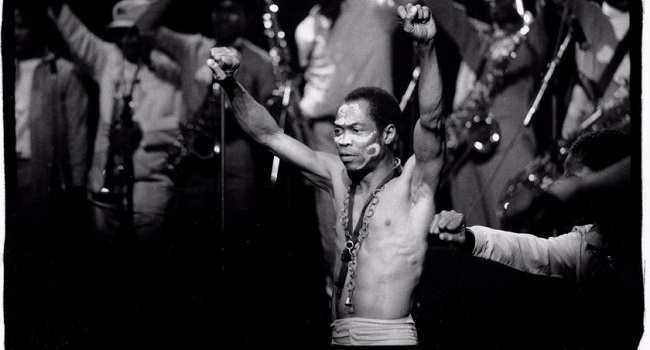
The Academy also emphasized the political force embedded in Fela’s artistry, describing him as “a titanic sociopolitical voice” whose revolutionary Afrobeat sound repeatedly placed him in confrontation with Nigeria’s military rulers. Those clashes culminated in violent crackdowns, including a notorious raid in which soldiers burned down his communal residence and cultural hub, the Kalakuta Republic.

Fela’s son, Seun Kuti, who now leads the iconic Egypt 80 band founded by his father, described the award as a landmark moment for Afrobeat and for politically engaged music worldwide. Seun said, however, that he would be unable to attend the ceremony in person because of travel restrictions.

“We are all proud as a family,” Seun said. “It is just a shame that I can’t be there physically to join my family to accept the honour because of travel restrictions.”

Seun added that he had been barred from traveling due to remarks he previously made, but said the recognition transcended personal circumstances. “Nevertheless, the family is proud. It’s a good day for African music, Afrobeat culture, and resistance music,” he said.

The award will be formally received on Fela’s behalf by his children Yeni, Femi and Kunle Kuti, all of whom have played central roles in preserving and expanding his legacy. Through institutions such as the New Afrika Shrine in Lagos and various cultural initiatives rooted in the ideals of the former Kalakuta Republic, the Kuti family has continued to promote Fela’s music, philosophy and political vision.

Seun Kuti has recently drawn attention for a public exchange with Nigerian pop star Wizkid over debates about musical greatness and legacy. Speaking in the context of his father’s Grammy recognition, Seun used the moment to call for unity rather than rivalry within the music industry.

“The term ‘greatest’ has a lot to do with comparison,” he said. “My point has always been: don’t compare. Our artists and culture should breed cooperation, not pitch people against each other. Fela is great, and that is the truth.”

Fela is being honored for creating Afrobeat, a genre that fused West African highlife, jazz, funk and traditional rhythms into a sound that was both danceable and confrontational. Through songs that often stretched beyond 10 minutes, he used music as a platform to attack military dictatorship, corruption, police brutality and economic inequality, often singing in pidgin English to reach a broad audience.

In recognizing his “inestimable contributions” to global music, the Recording Academy acknowledged that Fela’s sonic and ideological blueprint directly influenced the contemporary Afrobeats movement, which has propelled African artists to unprecedented global visibility.

The Lifetime Achievement Award follows another major Grammy-related honor for Fela. In 2025, his 1976 album Zombie — a scathing critique of Nigeria’s military — was inducted into the Grammy Hall of Fame, further cementing his status as one of the most consequential musicians of the 20th century.

As Grammy weekend approaches, organizers have also planned a special live band tribute in Los Angeles to celebrate Fela’s music, political courage and enduring groove, drawing musicians and fans from across the world.

The renewed attention to Fela’s legacy has extended beyond the music industry. Recently, former U.S. President Barack Obama paid tribute to the Nigerian icon through Fela Kuti: Fear No Man, the podcast series chronicling Fela’s life, art and activism. Obama announced the project in a video shared on social media, describing Fela as “a musical genius from Nigeria” whose work blended funk, jazz and soul into a revolutionary sound.

Produced by Higher Ground, the media company Obama co-founded with his wife, Michelle, the podcast combines rare archival recordings with contemporary interviews featuring artists and cultural figures such as Paul McCartney, Questlove, Santigold, Burna Boy, David Byrne and Ayo Edebiri. Members of the Kuti family, including Yeni, Femi and Mádé, also appear, offering personal reflections.

“It’s a beautiful show about a unique figure in musical history who mixed art with activism,” Obama said, drawing parallels between Fela’s work and the broader power of art to challenge injustice.

Fela’s posthumous Grammy recognition represents more than an individual accolade; it marks a symbolic shift in how African music is situated within global institutions long criticized for overlooking non-Western innovation. During his lifetime, Fela openly rejected Western validation and sharply criticized the same power structures that now honor him, making the award both celebratory and historically ironic.

The decision also reflects the Recording Academy’s evolving engagement with global music, particularly as Afrobeats reshapes the international pop landscape. By formally recognizing Fela, the Academy acknowledges that today’s global African music boom did not emerge in isolation but was built on decades of artistic resistance and experimentation.

For African artists, the award carries profound cultural weight. It affirms that music rooted in local struggle and political defiance can achieve universal resonance without sacrificing authenticity. For younger generations discovering Fela through podcasts, Broadway adaptations and digital platforms, the honor reinforces his relevance in contemporary debates about power, justice and artistic freedom.

Nearly 30 years after his death, Fela Anikulapo-Kuti remains what he always was: impossible to ignore, impossible to contain — and now, officially, impossible to exclude from the highest canon of global music history.

Credit: Channelstvng

Kenyan businesswoman loses millions in Mumbai after impostors posing as police stage roadside robbery

0

A Kenyan businesswoman visiting India for commercial purchases is counting heavy losses after she was robbed of more than ₹66 lakh ($80,000) in Mumbai by suspects masquerading as Indian police officers, authorities said, in a case that has highlighted growing concerns over impersonation crimes targeting foreign visitors.

The robbery unfolded Tuesday afternoon outside the Alana Centre building along Mahatma Gandhi Road, a busy commercial stretch in south Mumbai, as the woman was returning to her hotel with a friend in a hired taxi, Indian media outlets reported.

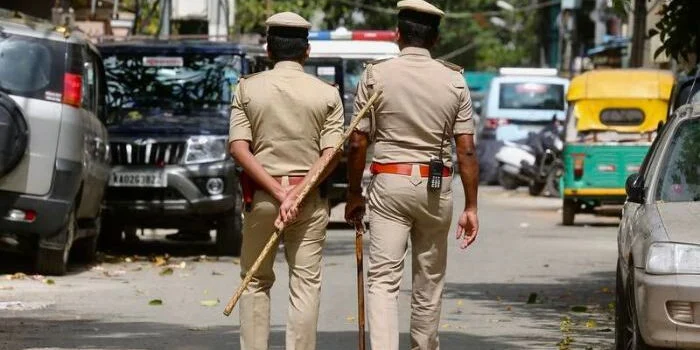
Investigators said two men wearing helmets and face coverings intercepted the taxi and ordered the driver to stop, presenting what appeared to be official police identification. Posing as law enforcement officers, the suspects demanded to search the vehicle, raising no immediate alarm in an area accustomed to frequent security checks.

Police said the impostors questioned the Kenyan woman about her luggage and cash before forcibly seizing bags containing large sums of money. After taking the bags, the men instructed the woman to report the matter to the nearest police station and fled the scene on a motorcycle.

Only moments later did the woman realize she had been deceived.

With the assistance of the taxi driver, she went to the MRA Marg police station, where officers told her that a similar complaint involving fake police officers had recently been filed in the area, according to people familiar with the investigation.

The victim, identified by police as Sumaiya Mohammad Abadi, is an entrepreneur based in Nairobi who runs a business dealing in children’s garments. She had arrived in Mumbai on Monday, Jan. 26, and was staying at a hotel in the city’s business district while sourcing merchandise.

Before the robbery, Abadi had met a Kenyan acquaintance in the Kalbadevi area, one of Mumbai’s busiest wholesale markets. That acquaintance handed her ₹58 lakh (about 8.1 million Kenyan shillings) in cash, which was intended as payment to a wholesale garment trader, police said. Additional funds in her possession brought the total amount stolen to ₹66.45 lakh, roughly 9.3 million Kenyan shillings.

“The Kenyan woman was visiting the city for the first time to buy clothes for her business,” a police officer told the Hindustan Times. “She had visited India earlier, in 2023, but that trip was as a tourist.”

Mumbai police said they have launched an intensive manhunt for the suspects, deploying ground patrols and analyzing footage from closed-circuit television cameras across the area. Officers said investigators have traced the registration number of the motorcycle used in the escape and have detained one individual for questioning based on CCTV evidence.

“We have detained a person based on CCTV footage and the registration number of the bike used while committing the crime,” another officer said. “We are in the process of arresting him.”

Police said the suspects, once formally charged, are expected to face accusations including cheating, robbery and impersonating public servants, offenses that carry significant prison terms under Indian law.

The case has drawn attention not only because of the large amount of cash involved, but also because it underscores the vulnerability of foreign business travelers operating in cash-heavy markets. Mumbai’s wholesale trade hubs often rely on large cash transactions, particularly among small and medium-sized traders dealing in textiles, jewelry and consumer goods.

Crimes involving impersonation of police officers have emerged as a recurring concern in major Indian cities, especially in densely populated commercial zones where security presence is common and travelers may be less likely to question authority. Criminals exploit the assumption that uniformed or credentialed individuals represent legitimate law enforcement, allowing them to conduct searches or stops with minimal resistance.

For foreign visitors, the risks are compounded by unfamiliarity with local procedures. Legal experts note that legitimate Indian police officers rarely conduct roadside searches of private vehicles without clear cause or formal documentation, particularly when large sums of cash are involved. Tourists and visiting businesspeople, however, may not be aware of these norms.

The incident also highlights the continued reliance on cash transactions in parts of India’s informal and semi-formal economy, despite government efforts to promote digital payments. While electronic transactions have expanded rapidly in urban India, wholesale trade in certain sectors still depends heavily on cash, increasing exposure to theft.

Security analysts say organized impersonation rings often study police behavior closely, replicating uniforms, identification cards and even radio equipment to appear authentic. Helmets and masks, commonly worn by motorcyclists in Mumbai traffic, further obscure suspects’ identities and complicate identification.

Indian authorities have periodically warned the public — particularly foreign nationals — to verify the identity of officers during stops and to request official vehicles or station visits before complying with searches. Some embassies also advise citizens traveling to India for business to avoid carrying large amounts of cash and to use formal banking or escrow services where possible.

The robbery comes as Mumbai police face pressure to curb street-level crimes that could tarnish the city’s reputation as India’s financial capital and a major destination for international trade. High-profile cases involving foreign nationals often draw diplomatic attention, especially when victims are targeted because of perceived vulnerability.

For Kenyan entrepreneurs, India remains an important sourcing destination, particularly for textiles, pharmaceuticals and manufactured goods. Business associations in Nairobi say incidents like this could prompt renewed calls for safer trade practices and better coordination with local partners abroad.

As the investigation continues, police say they are reviewing whether the suspects may be linked to other similar crimes reported in the area. Authorities have urged anyone with information to come forward, while reiterating that legitimate police officers do not demand cash inspections in public without clear legal justification.

For Abadi, the incident has transformed what was meant to be a routine business trip into a costly ordeal. While police say they are optimistic about recovering some of the stolen funds, the case serves as a stark reminder of the risks faced by international traders operating far from home — and the lengths to which criminals will go by exploiting trust in official authority.

Kenyans.co.ke

Journalist Don Lemon released after federal arrest tied to protest coverage at Minnesota church

0
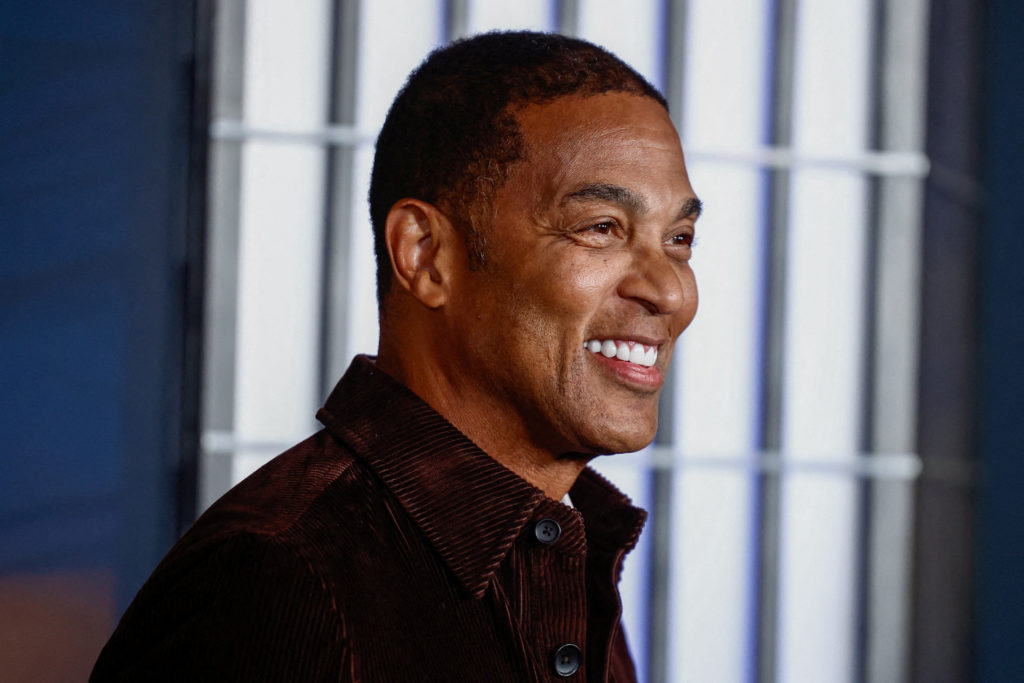
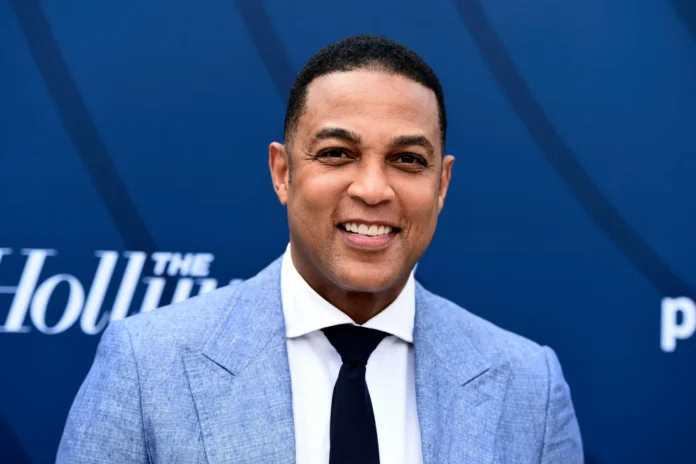
FILE PHOTO: Don Lemon attends the premiere of the fourth season of the TV show "The Morning Show" in New York City, U.S., September 9, 2025. REUTERS/Kylie Cooper/File Photo

Journalist Don Lemon was released Friday after a federal judge declined to detain him following his arrest in connection with his coverage of a protest at a Minnesota church, a case that has intensified debate over press freedom and the scope of federal civil rights enforcement under President Donald Trump’s administration.

FILE PHOTO: Don Lemon attends the premiere of the fourth season of the TV show “The Morning Show” in New York City, U.S., September 9, 2025. REUTERS/Kylie Cooper/File Photo

Lemon, a former CNN anchor, was freed on his own recognizance after appearing in federal court in downtown Los Angeles. Stepping outside the courthouse, Lemon said the prosecution would not deter him from reporting.

“I will not stop ever,” Lemon said, adding that the First Amendment protects his work “and countless other journalists.” He said he would continue reporting and would not be silenced.

His attorney, Marilyn Bednarski, who practices in the Los Angeles area, said Lemon intends to plead not guilty.

Federal prosecutors charged Lemon after a grand jury in Minnesota returned an indictment Thursday accusing him and eight others of conspiring to violate the religious freedom of worshippers at Cities Church in St. Paul. The indictment alleges that the defendants injured, intimidated or interfered with people exercising their right to worship at the church.

Attorney General Pam Bondi said in a post Friday on X that Lemon and three others were arrested “in connection with the coordinated attack on Cities Church in St. Paul, Minnesota.” The arrests followed an earlier court setback for the administration, when a federal magistrate judge found insufficient probable cause to justify Lemon’s initial arrest under a statute that Justice Department officials acknowledged had not previously been applied to protests at churches.

Lemon, 59, was taken into custody in Beverly Hills around midnight by agents from the FBI and Homeland Security Investigations, acting on a federal warrant issued in another district. At the time, Lemon was in Los Angeles covering events surrounding the Grammy Awards, according to his lead defense attorney, Abbe Lowell.

Lowell said the prosecution reflected misplaced priorities by federal authorities. “Instead of investigating the federal agents who killed two peaceful Minnesota protesters, the Trump Justice Department is devoting its time, attention and resources to this arrest,” Lowell said in an earlier statement. He called the case an “unprecedented attack on the First Amendment” and said Lemon would contest the charges “vigorously and thoroughly in court.”

The protest that led to the charges occurred Jan. 18 at Cities Church in St. Paul. Demonstrators gathered during a church service after alleging that the church’s pastor, David Easterwood, works for Immigration and Customs Enforcement and serves as the acting director of an ICE field office in St. Paul. Protesters said their demonstration was aimed at highlighting immigration enforcement actions in Minnesota.

Three protesters — Nekima Levy Armstrong, Chauntyll Louisa Allen and William Kelly — were arrested earlier for disrupting the same service. Federal judges later ordered their release after rejecting government efforts to keep them detained until trial. In one ruling, a judge said prosecutors offered “no factual or legal support” for labeling the alleged conduct a crime of violence.

The Trump administration cited the Freedom of Access to Clinic Entrances Act, known as the FACE Act, to justify the arrests. While the law is most often associated with abortion-related cases, it also includes provisions covering houses of worship. Harmeet Dhillon, the administration’s top official in the Justice Department’s Civil Rights Division, acknowledged earlier this month that the statute had not historically been used this way.

“In all these years up until I was the assistant attorney general for civil rights, nobody ever used that houses of worship part to prosecute protesters or criminals blocking access to a house of worship, so we’ve started to do that,” Dhillon said in a video she posted online.

Trump previously pardoned a number of anti-abortion protesters convicted under the FACE Act, and the Justice Department dismissed other pending abortion-related cases. A memo issued shortly after Trump’s inauguration last year imposed new limits on abortion-related FACE Act prosecutions, requiring “extraordinary circumstances” or significant aggravating factors such as death or serious bodily harm. The memo did not impose the same restrictions on cases involving churches.

Human rights and press freedom groups quickly criticized Lemon’s arrest. The Committee to Protect Journalists said the case should concern journalists nationwide. “The arrest of journalist Don Lemon in connection with his reporting on a protest in Minnesota should alarm all Americans,” said Katherine Jacobsen, who works on the group’s U.S. program. She said federal resources were being directed at journalists rather than accountability in the deaths of two U.S. citizens.

CNN, Lemon’s former employer, said in a post on X that the arrest “raises profoundly concerning questions about press freedom and the First Amendment.” Los Angeles Mayor Karen Bass also condemned the prosecution, saying it demonstrated escalation rather than restraint following fatal encounters between federal agents and civilians in Minnesota.

The White House, in its own post on X, appeared to mock Lemon, sharing an image of him inside the church with the caption, “When life gives you lemons….”

The arrests are unfolding against the backdrop of an aggressive federal immigration operation in Minnesota known as Operation Metro Surge. The Department of Homeland Security says more than 3,000 federal immigration agents have been deployed to the Twin Cities in recent months, resulting in the arrest of more than 3,000 undocumented immigrants.

During the operation, two U.S. citizens — Renee Nicole Good, 37, and Alex Pretti, 37 — were shot and killed by federal immigration authorities in separate incidents, sparking protests and national outrage. Residents in the Twin Cities have organized daily demonstrations, community patrols and mutual aid efforts to support undocumented families afraid to leave their homes.

After initially describing both victims as “domestic terrorists,” administration officials later said they would reduce the federal presence in the state. On Thursday, the administration replaced Border Patrol commander Greg Bovino with Trump’s border czar, Tom Homan, to oversee the operation. Homan said officials recognized that “certain improvements could and should be made.”


Lemon’s case sits at the intersection of press freedom, protest rights and the expanding use of federal civil rights statutes. Legal scholars say the prosecution could set a precedent for how journalists are treated when covering demonstrations in sensitive or politically charged settings. While the government frames the case as protecting religious liberty, critics argue that applying the FACE Act to journalists risks chilling newsgathering and blurring the line between reporting and participation.

The broader context of heightened immigration enforcement in Minnesota further complicates the case. With federal agents involved in fatal shootings and communities on edge, the arrest of a high-profile journalist has amplified concerns that enforcement tactics are overshadowing constitutional protections.

As the case proceeds, courts will be asked to weigh the government’s authority to protect access to houses of worship against the fundamental role of journalists in documenting protests and holding power to account. The outcome could reverberate far beyond Minnesota, shaping how federal law is applied to protests — and how safely journalists can cover them — in the years ahead.

NBC

Justice Department Releases Final Epstein Document Cache Amid Controversy Over Redactions and Withheld Materials

0

WASHINGTON — The Justice Department published what officials characterized as the final installment of Jeffrey Epstein-related records Friday, releasing more than three million pages of documents, 2,000 videos and 180,000 images under legislation that mandated disclosure of all materials concerning the deceased convicted sex offender’s crimes and associations with prominent political and business figures.

Deputy Attorney General Todd Blanche announced during a press conference that the massive document production concludes the Trump administration’s planned releases under the Epstein Files Transparency Act, legislation enacted in November after sustained public and political pressure forced governmental transparency on one of the most notorious criminal cases in recent American history.

The sprawling cache includes “extensive” redactions, Blanche acknowledged, citing legal exceptions permitting certain materials to be withheld including identifying information about victims and content related to ongoing investigations. Previous releases have drawn sharp criticism from congressional members who contend the heavy redaction undermines the transparency legislation’s fundamental purpose.

Reuters was among news organizations immediately beginning comprehensive review of the voluminous materials, attempting to identify significant revelations within the millions of pages documenting federal investigations spanning decades into Epstein’s systematic sexual abuse of underage girls and his relationships with wealthy and powerful individuals.

President Trump, who maintained friendship with Epstein during the 1990s and early 2000s before a falling out occurred years before Epstein’s initial 2008 conviction, spent months resisting any document release until both Democratic and Republican lawmakers forced his compliance by advancing the transparency legislation over presidential objections. Trump has not been formally accused of wrongdoing connected to Epstein and has consistently denied knowledge of Epstein’s criminal activities, though the scandal has plagued his administration partly because he promised document releases during his 2024 presidential campaign.

The extent to which newly released files mention Trump remained unclear Friday. The Justice Department’s first major December release contained relatively few references to the president, though subsequent batches included additional mentions and evidence that Trump flew on Epstein’s private aircraft at least eight times.

The Justice Department included a pointed disclaimer in its press release announcing Friday’s production, asserting that “some of the documents contain untrue and sensationalist claims against President Trump that were submitted to the FBI right before the 2020 election. To be clear, the claims are unfounded and false, and if they have a shred of credibility, they certainly would have been weaponized against President Trump already.”

This preemptive characterization of certain materials as false represents an unusual editorial intervention by law enforcement officials releasing investigative documents, potentially influencing public interpretation of contents before independent review can occur.

NBC News disclosed that the Justice Department temporarily removed and subsequently republished a file containing a spreadsheet summarizing complaints submitted to the FBI’s National Threat Operations Center that referenced both Epstein and Trump. The document provides no indication that the tips underwent verification, and the Justice Department did not immediately respond to questions about why the file was initially withdrawn or the compilation’s purpose.

The spreadsheet appears to catalog approximately 16 complaints spanning a 35-year period. An accompanying email identifies the document as “This is the list I sent Whitney with names of Trump accusers from NTOC,” referencing what is believed to be the FBI’s National Threat Operations Center. Other prominent individuals also appear in the complaints, including former President Bill Clinton and Lisa Marie Presley.

The complaint summaries reveal that at least eight complainants failed to provide contact information when submitting allegations. A notation in the original email cautions, “Some of these individuals are reporting second-hand information,” raising questions about the reliability and investigative value of the reported allegations.

One complaint response indicates investigative follow-up occurred: “Spoke with caller who identified REDACTED as friend. Lead was sent to Washington Office to conduct interview.” The document provides no clarity regarding interview outcomes or whether information obtained warranted further action.

Blanche confirmed the department has withheld certain files based on legal privilege claims, including attorney-client privilege and work product protections. Some lawmakers have argued these withholdings appear to contradict the transparency legislation’s requirements, which specifically mandated production of internal communications related to prosecutorial decisions concerning Epstein or associated individuals.

Senate Democratic Leader Chuck Schumer directly challenged the completeness of document releases when asked whether he believed all files had been disclosed in compliance with statutory mandates. “We believe it is not,” Schumer stated, suggesting continued congressional oversight will examine whether the administration has fulfilled its legal obligations.

The Justice Department committed to providing Congress a comprehensive report summarizing all redactions and withheld documents as required under the transparency law, Blanche disclosed in correspondence sent to Capitol Hill Friday. This accounting will enable lawmakers to assess whether privilege claims and redaction justifications align with statutory exceptions or represent improper information suppression.

Friday’s release dramatically exceeds the scope of three previous Epstein file disclosures. The initial December 19 production—the statutory deadline for complete release—included what Blanche characterized as “hundreds of thousands” of documents, though NBC News review determined the actual volume was under 10,000 pages. Many materials in that first batch had already entered the public domain through prior litigation and media reporting.

The December release included previously unseen photographs of former President Bill Clinton, though the images are undated and their location remains unclear. Clinton spokesperson Angel Ureña previously confirmed the former president traveled on Epstein’s aircraft four times during 2002 and 2003 for Clinton Foundation trips. Nothing in the photographs suggests wrongdoing, and Clinton has consistently denied impropriety regarding his Epstein association.

Additional files released December 20 included a reposted photograph from Epstein’s residence showing Donald Trump, his then-future wife Melania, Epstein and Ghislaine Maxwell together in an image from 2000. The Justice Department initially published then removed this widely circulated photograph, explaining the withdrawal resulted from concern that other images visible in the same frame might depict victims. Officials restored the photograph after determining it contained no victim imagery.

A December 23 document batch totaling approximately 30,000 pages contained additional Trump references and revealed he had flown on Epstein’s private plane at least eight times—double the frequency initially acknowledged. That release also included email correspondence apparently from Andrew Mountbatten-Windsor, the former Prince Andrew who was stripped of royal titles due to his Epstein association. The former prince has denied wrongdoing in his relationship with the financier.

Blanche defended the protracted release timeline, explaining that the voluminous files required hundreds of attorneys working continuously for weeks to review and prepare materials for public disclosure. The transparency legislation established a December 19, 2025 deadline, but officials asserted they needed additional time to complete comprehensive review of millions of pages.

The deputy attorney general expressed frustration with assertions that the Justice Department has declined to pursue Epstein associates who may have participated in illegal activity. “There’s this built-in assumption that somehow there’s this hidden tranche of information of men that we know about, that we’re covering up, or that we’re choosing not to prosecute. That is not the case,” Blanche contended, pushing back against conspiracy theories suggesting governmental protection of powerful individuals implicated in Epstein’s criminal network.

Epstein, a New York financier who cultivated relationships with high-profile political and business figures, was discovered hanged in his Metropolitan Correctional Center cell in August 2019 while awaiting trial on sex trafficking charges. Although medical examiners ruled his death a suicide, the circumstances generated enduring conspiracy theories—some of which Trump himself amplified to supporters during his 2024 presidential campaign, suggesting without evidence that Epstein was murdered to silence him.

The document releases occur under the Epstein Files Transparency Act, legislation enacted after months of public pressure demanding governmental accountability regarding what federal authorities knew about Epstein’s systematic abuse and his interactions with wealthy and powerful individuals. The law specifically requires disclosure of investigative files concerning both Epstein and his confidant and former girlfriend Ghislaine Maxwell, who was convicted in 2021 of sex trafficking and conspiracy charges for her role in Epstein’s abuse scheme.

Maxwell is currently serving a 20-year federal prison sentence for facilitating Epstein’s recruitment and abuse of underage girls. Her conviction represented the only criminal accountability achieved through prosecution, given that Epstein’s death prevented his trial and potential testimony about others who may have participated in or enabled his crimes.

The Epstein scandal has evolved into a persistent political liability for Trump, who already confronts declining approval ratings across multiple policy areas including economic management and immigration enforcement. The promised transparency regarding Epstein files became a campaign commitment that Trump subsequently resisted fulfilling once in office, creating credibility challenges when bipartisan congressional action forced compliance.

The files’ content and redaction patterns will likely generate continued controversy as journalists, researchers and congressional oversight committees conduct detailed examination of the materials. Questions will persist about whether privilege claims legitimately protect sensitive information or improperly shield embarrassing or incriminating content from public scrutiny.

The massive scale of Friday’s release—more than three million pages plus extensive video and photographic materials—ensures that comprehensive analysis will require substantial time. Initial reviews will focus on identifying mentions of prominent individuals, evidence of previously unknown criminal conduct, and documentation of prosecutorial decisions that allowed Epstein to escape more serious consequences in his 2008 plea agreement.

That controversial 2008 non-prosecution agreement, negotiated by then-U.S. Attorney Alexander Acosta, permitted Epstein to plead guilty to state prostitution charges and serve only 13 months in county jail with work-release privileges despite federal investigation revealing extensive evidence of sex trafficking involving dozens of underage victims. The lenient disposition sparked outrage when details became public years later, ultimately forcing Acosta’s resignation from his position as Trump’s Labor Secretary in 2019.

The transparency legislation’s enactment reflected bipartisan determination to understand how Epstein evaded serious accountability for decades despite multiple credible allegations and investigative efforts. By mandating comprehensive disclosure of federal files, lawmakers sought to illuminate whether governmental failures resulted from incompetence, inadequate resources, or improper influence by powerful individuals seeking to protect Epstein or themselves.

For Epstein’s victims—many of whom have waited years for justice and accountability—the document releases offer potential validation of their experiences and possible revelation of the full scope of abuse they endured and the network that enabled it. However, extensive redactions and withheld materials may prevent complete transparency, leaving critical questions about governmental knowledge and inaction permanently unanswered.

As review of the millions of pages proceeds, the fundamental tension between legitimate privacy and security interests justifying redactions and the public’s right to comprehensive accountability regarding one of the most egregious criminal cases in modern American history will shape ongoing debate about whether the Trump administration has genuinely fulfilled the transparency mandate or merely provided the appearance of compliance while protecting sensitive information from disclosure.

NBC/AP/CBS/Reuters

Journalist Don Lemon Arrested on Federal Civil Rights Charges Following Minnesota Church Protest Coverage

0

LOS ANGELES — Former CNN anchor Don Lemon was taken into federal custody Thursday night on civil rights charges stemming from his coverage of an anti-immigration enforcement demonstration that disrupted a Minnesota church service, triggering immediate condemnation from press freedom advocates who characterized the arrest as an unprecedented assault on First Amendment protections for working journalists.

Federal agents apprehended Lemon in Los Angeles where he had been covering the Grammy Awards for his independent media platform, his attorney Abbe Lowell confirmed Friday. The arrest follows nearly two weeks of escalating legal confrontation between the Justice Department and journalists who documented the January 18 protest at Cities Church in St. Paul, where demonstrators interrupted services after learning one of the church’s pastors serves as a U.S. Immigration and Customs Enforcement official.

A grand jury was empaneled Thursday, and both the Federal Bureau of Investigation and Homeland Security Investigations—a law enforcement division within the Department of Homeland Security—participated in the operation that resulted in Lemon’s detention, sources with direct knowledge disclosed to CBS News. Three additional individuals were simultaneously arrested in Minnesota in connection with the church demonstration.

Attorney General Pam Bondi announced via social media Friday morning that federal agents arrested Lemon along with Trahern Jeen Crews, Georgia Fort and Jamael Lydell Lundy “in connection with the coordinated attack on Cities Church in St. Paul, Minnesota,” characterizing the protest as an assault on religious liberty rather than constitutionally protected political expression.

A source briefed on the investigation revealed that Lemon faces charges of conspiracy to deprive others of their civil rights and violation of the Freedom of Access to Clinic Entrances Act by allegedly interfering through force with the exercise of others’ First Amendment rights—an ironic legal framework given that Lemon’s defense centers on his own First Amendment protections as a journalist.

Lowell issued a forceful statement defending his client’s journalistic activities and condemning the Justice Department’s priorities. “Don has been a journalist for 30 years, and his constitutionally protected work in Minneapolis was no different than what he has always done,” Lowell declared. “The First Amendment exists to protect journalists whose role it is to shine light on the truth and hold those in power accountable. There is no more important time for people like Don to be doing this work.”

The attorney escalated his criticism by contrasting the aggressive prosecution of journalists with what he characterized as inadequate investigation of federal agents who killed Renee Good and Alex Pretti in Minnesota earlier this month. “The Justice Department has focused on arresting Lemon instead of investigating the federal agents who killed Renee Good and Alex Pretti in Minnesota earlier this month, calling it ‘the real indictment of wrongdoing in this case,'” Lowell asserted.

“This unprecedented attack on the First Amendment and transparent attempt to distract attention from the many crises facing this administration will not stand,” Lowell continued. “Don will fight these charges vigorously and thoroughly in court.”

CNN, Lemon’s former employer where he worked for more than 15 years before his 2023 termination, issued a statement expressing profound concern about press freedom implications. The network disclosed that the Justice Department had already failed twice to obtain arrest warrants for Lemon and several other journalists in Minnesota, where a chief judge of the Minnesota Federal District Court determined there was “no evidence” of criminal behavior in their journalistic work.

“The First Amendment in the United States protects journalists who bear witness to news and events as they unfold, ensuring they can report freely in the public interest, and the DOJ’s attempts to violate those rights is unacceptable,” CNN’s statement emphasized, pledging to monitor Lemon’s case closely despite his departure from the network.

The legal maneuvering preceding Lemon’s arrest reveals substantial internal disagreement within the federal judiciary about whether probable cause existed to justify criminal charges. Last week, a federal appellate court declined to order a lower court judge to sign arrest warrants for five people, including Lemon, in connection with the church protest. However, one of three appellate judges indicated he believed probable cause justified the arrests, exposing the fractured judicial assessment of the evidence.

Magistrate Judge Douglas Micko had previously rejected five arrest warrant applications for lacking probable cause, including Lemon’s. The judge also approved only one civil rights charge in initial cases against Nekima Levy Armstrong, former president of the Twin Cities NAACP chapter, and Chauntyll Louisa Allen, an elected St. Paul School Board member, while dismissing FACE Act charges against both defendants on grounds that no probable cause existed.

Federal prosecutors in the Minneapolis-based U.S. Attorney’s Office harbored significant reservations about the evidentiary strength of the church protest cases, a source familiar with internal deliberations disclosed to CBS News. When the first three defendants were initially charged, no career officials from that office appeared in court—instead, the Justice Department dispatched two attorneys from the Civil Rights Division in Washington to handle proceedings, suggesting local prosecutors’ reluctance to pursue the cases.

The Justice Department’s investigation has focused intensively on video documentation of a pre-protest meeting that Lemon filmed as part of his journalistic coverage. That gathering was attended by several defendants, including Allen, Armstrong and Lundy. Prosecutors have characterized this meeting as evidence of conspiracy to interfere with religious rights, while Lemon’s legal team maintains he was filming the session as reportorial activity protected by First Amendment press freedoms.

Julius Nam, a former federal prosecutor who handled civil rights cases, warned that the charging approach could establish dangerous precedent. “Although Lemon’s factual assertions and DOJ’s justifications must be tested in court, this case could set a dangerous precedent for charging reporters who cover protests for the conduct of the protesters if there was any prior communications with the protesters, and could even expose American journalists embedded with the U.S. military to being charged with war crimes along with soldiers who may commit such crimes,” Nam cautioned.

The arrest of Georgia Fort, an independent journalist who livestreamed the church protest, raises parallel First Amendment concerns. Fort broadcast the moments before her Friday arrest on Facebook Live, expressing disbelief at federal agents appearing at her door. “I don’t feel like I have my First Amendment right as a member of the press because now the federal agents are at my door arresting me for filming the church protest a few weeks ago,” Fort stated during the livestream.

The Justice Department has now arrested seven individuals connected to the church protest, though it initially sought to charge eight people. CBS News could not immediately determine the status of the final person the department had targeted for prosecution.

Lemon anticipated the eventual arrest despite initial judicial rejections of warrant applications. Following last week’s appellate court decision, he addressed the matter directly on his independent YouTube show. “And guess what,” he told viewers. “Here I am. Keep trying. That’s not going to stop me from being a journalist. That’s not going to diminish my voice. Go ahead, make me into the new Jimmy Kimmel, if you want. Just do it. Because I’m not going anywhere.”

During his coverage of the church protest, Lemon repeatedly emphasized his journalistic role rather than activist participation. “I’m not here as an activist. I’m here as a journalist,” he stated multiple times during his online broadcast from the scene, describing events before him and interviewing both churchgoers and demonstrators.

Lemon has maintained no organizational affiliation with the protest group that entered Cities Church and insists he was present solely in his capacity as an independent journalist documenting newsworthy events. His professional trajectory since leaving CNN includes launching The Don Lemon Show on X (formerly Twitter) in early 2024, though billionaire Elon Musk’s social media platform terminated the partnership months later shortly after Lemon interviewed Musk. He subsequently established his current YouTube-based platform where he posts regular commentary and reporting.

Trahern Jeen Crews, a Black Lives Matter Minnesota leader arrested alongside Lemon, has organized numerous protests and racial justice actions, particularly following George Floyd’s 2020 killing by Minneapolis police. After Trump administration officials announced earlier this month that arrests would be forthcoming in the church protest, Crews acknowledged to The Associated Press a historical “tradition” of Black activists and leaders being targeted or subjected to violence.

“Just as being a Black person, you always have to have that in mind,” Crews observed, placing the prosecutions within broader patterns of governmental responses to racial justice activism.

Jamael Lydell Lundy, another arrestee, serves as intergovernmental affairs manager in Hennepin County Attorney Mary Moriarty’s office and is married to St. Paul City Council Member Anika Bowie. Neither Bowie nor Moriarty could be reached for comment Friday. Lundy is also a state senate candidate who Lemon briefly interviewed as protesters gathered before traveling to the church.

“I feel like it’s important that if you’re going to be representing people in office that you are out here with the people,” Lundy told Lemon during that pre-protest conversation, adding that he believed in “direct action, certainly within the lines of the law.”

The arrests generated immediate condemnation from media advocates and civil rights organizations. Reverend Al Sharpton characterized the Trump administration’s actions as taking a “sledgehammer” to “the knees of the First Amendment,” framing the prosecutions as fundamental threats to constitutional protections.

Kelly McBride, senior vice president at the Poynter Institute, situated Lemon’s arrest within a broader pattern of governmental intimidation targeting journalists documenting opposition to presidential policies. She noted that recent actions including the search of a Washington Post journalist’s home suggested systematic efforts to discourage press scrutiny of administration activities.

The National Association of Black Journalists issued an Instagram statement declaring itself “outraged and deeply alarmed” by Lemon’s arrest. The organization condemned what it characterized as an effort to “criminalize and threaten press freedom under the guise of law enforcement,” positioning the prosecution as part of historical patterns of using legal mechanisms to suppress Black journalists and voices critical of governmental power.

Jordan Kushner, attorney for Nekima Levy Armstrong who was arrested in the initial wave of prosecutions last week, described the latest charges as “beyond the pale.” He emphasized that “nonviolent protest is not a federal felony,” challenging the legal theory underlying the conspiracy charges.

The Justice Department launched its civil rights investigation after demonstrators interrupted Cities Church services by chanting “ICE out” and “Justice for Renee Good,” referencing the 37-year-old mother of three fatally shot by an ICE officer in Minneapolis. The protest reflected broader community outrage over federal immigration enforcement tactics in Minnesota that have included two killings of American citizens and multiple controversial arrests generating national attention.

Cities Church belongs to the Southern Baptist Convention and lists among its pastoral staff David Easterwood, who leads ICE’s St. Paul field office. The congregation’s connection to federal immigration enforcement directly motivated the protest that has now resulted in federal criminal charges against multiple participants and journalists who documented the demonstration.

Lead pastor Jonathan Parnell praised the arrests in a Friday statement, expressing gratitude that “the Department of Justice acted swiftly to protect Cities Church so that we can continue to faithfully live out the church’s mission to worship Jesus and make him known.” The statement positions the prosecutions as legitimate protection of religious liberty rather than suppression of political expression or press freedom.

Attorney General Bondi reinforced this narrative in a video posted to social media Friday. “Make no mistake. Under President Trump’s leadership and this administration, you have the right to worship freely and safely,” Bondi declared. “And if I haven’t been clear already, if you violate that sacred right, we are coming after you.”

The framing of the church disruption as a civil rights violation against worshipers rather than protected political protest creates legal complexity that will be litigated throughout the criminal proceedings. Whether the demonstration constituted constitutionally protected expression or criminal interference with religious exercise represents a fundamental question that will determine the cases’ outcomes.

For journalists specifically, the prosecution raises existential questions about press freedom boundaries. If covering protests and filming pre-event meetings can establish conspiracy liability for subsequent protester actions, the chilling effect on investigative journalism and documentation of political dissent could prove profound. Reporters regularly communicate with subjects before, during and after newsworthy events—characterizing such routine journalistic practice as conspiracy fundamentally threatens independent journalism’s viability.

Lemon was expected to appear in Los Angeles federal court Friday afternoon for initial proceedings. The case will presumably be transferred to Minnesota for prosecution given the alleged crimes occurred in that jurisdiction.

As the legal proceedings unfold, the tension between religious liberty protections, freedom of assembly, press freedoms and governmental authority to enforce order will be tested through the specific facts of a church protest documented by working journalists who now face federal felony charges. The outcome will reverberate far beyond the individual defendants, potentially reshaping constitutional boundaries governing protest coverage and journalistic immunity from prosecution for subjects’ conduct.

CBS/AP

President Donald Trump files $10 billion lawsuit against IRS and Treasury over leak of tax records

0

President Donald Trump has filed a $10 billion lawsuit against the Internal Revenue Service and the Treasury Department, alleging that federal tax authorities failed to safeguard his confidential tax records and allowed a former contractor to unlawfully disclose the information to news organizations.

The civil action was lodged Thursday in federal court in Miami. The complaint asserts that the IRS and Treasury did not take adequate measures to prevent the release of Trump’s personal tax returns from nearly a decade ago, along with records belonging to his business and family members. Trump is pursuing the case in his personal capacity, rather than in his role as president.

In addition to Trump, the plaintiffs include his sons Donald Trump Jr. and Eric Trump, as well as the Trump Organization. The lawsuit contends that the disclosures caused lasting harm to their reputations and finances.

“Defendants have caused Plaintiffs reputational and financial harm, public embarrassment, unfairly tarnished their business reputations, portrayed them in a false light, and negatively affected President Trump, and the other Plaintiffs’ public standing,” the complaint says.

Officials at the Treasury Department and the IRS did not immediately address inquiries seeking comment late Thursday.

The lawsuit centers on the actions of Charles Littlejohn, a former IRS contractor who was sentenced to five years in prison in 2024 after admitting in federal court that he unlawfully accessed and disclosed confidential tax records. Littlejohn pleaded guilty a year earlier to leaking Trump’s tax information to The New York Times, which published an investigative series in 2020 detailing Trump’s federal income tax payments for 2016 and 2017.

That reporting revealed that Trump paid $750 in federal income taxes in each of those two years. At the time, Trump dismissed the coverage as “totally fake news” and said the information had been “illegally obtained.”

Court records show that Littlejohn acknowledged stealing tax data belonging not only to Trump but also to thousands of other wealthy individuals during 2019 and 2020. Those affected included billionaires Jeff Bezos and Elon Musk, according to his admissions in federal court.

Following Littlejohn’s sentencing, the IRS issued a public statement condemning his conduct as “unacceptable” and said it had notified impacted taxpayers. The agency added that it had strengthened internal safeguards in response to the breach.

“It bears noting that the IRS has taken aggressive action more generally to enhance data security — to ensure, to the fullest extent feasible, that nothing like the Littlejohn incident can happen in the future,” the statement said.

Trump, who now finds himself in court against agencies within his own administration, has previously indicated he intended to seek substantial financial compensation from the federal government over past investigations and disclosures involving him. Speaking to reporters last year, he said he was pursuing “a lot of money” in damages.

The New York Times reported in October that Trump was seeking $230 million from the Justice Department in a separate matter. When asked about that figure, Trump responded, “It could be.” He also remarked on the unusual nature of approving compensation for himself, saying at the time, “It’s awfully strange to make a decision where I’m paying myself.”

Trump said then that any money awarded would be donated to charities or directed “to the White House while we restore the White House.”

Neither the White House nor the Trump Organization immediately addressed questions Thursday about the IRS lawsuit or what Trump would do with any damages awarded in the case.

Since returning to office, Trump has filed a series of high-dollar lawsuits, frequently seeking damages in the billions. Last year, he brought a $10 billion defamation suit against the BBC, alleging the broadcaster misrepresented his remarks in edited footage from Jan. 6, 2021. The BBC has said it plans to contest the case and moved this month to have it dismissed.

In July, Trump filed another $10 billion lawsuit against The Wall Street Journal and Rupert Murdoch, whose company controls the newspaper, over reporting that examined a crude drawing Trump was alleged to have sent financier Jeffrey Epstein in 2003. A Dow Jones spokesperson defended the reporting at the time and said the company would “vigorously defend” itself.

Trump has also sued JPMorgan Chase and its chief executive, Jamie Dimon, seeking $5 billion in damages and alleging the bank closed his accounts for political reasons. In another case, he sued The New York Times and three of its reporters for defamation over coverage of his 2024 campaign, asking for $15 billion. JPMorgan and the Times have both said those lawsuits lack merit.


The lawsuit against the IRS and Treasury places a renewed spotlight on data security inside federal agencies and raises unusual legal and ethical questions given Trump’s position as president. While the complaint frames the case as a failure of institutional safeguards rather than a political dispute, it underscores how deeply personal grievances have intersected with Trump’s use of the courts.

Legal experts note that while the federal government can be held liable for certain privacy violations, claims of this magnitude face high hurdles. Plaintiffs must demonstrate not only negligence but also concrete damages directly attributable to agency failures. The outcome could help define the limits of federal responsibility in protecting taxpayer data in an era of increasingly digitized records.

The case also revives debate over the public interest value of leaked tax information involving powerful figures versus the legal protections afforded to confidential financial records. Media organizations have long argued that reporting on the tax practices of public officials serves democratic accountability, while government agencies emphasize the inviolability of taxpayer privacy.

Politically, the lawsuit reinforces Trump’s broader strategy of aggressive legal confrontation with institutions he views as hostile, from media organizations to banks and now federal agencies. Whether the courts ultimately side with Trump or dismiss the claims, the case is likely to reverberate well beyond the courtroom, shaping discussions about privacy, accountability and presidential power.

As the litigation proceeds, it will test not only the government’s defenses but also the boundaries between personal legal action and the authority of the presidency — an intersection rarely examined with such financial and political stakes.

nbcnews

Indonesia enforces one of harshest sharia punishments in decades as woman and partner publicly caned 140 times

0

A woman and her male partner were publicly flogged 140 times each in Indonesia’s conservative Aceh province on Thursday for having sex outside marriage and consuming alcohol, a punishment local officials described as one of the most severe imposed since Islamic law was enacted in the region more than two decades ago.

The punishment was carried out in a public square in Banda Aceh, where dozens of residents gathered as sharia police administered the caning with a rattan cane. Witnesses at the scene said the woman cried out in pain and collapsed before the punishment was completed, prompting officials to carry her away on a stretcher to a waiting ambulance.

The punishment combined two separate offenses under Aceh’s Islamic legal code. The couple received 100 lashes for engaging in sexual relations outside marriage and an additional 40 lashes for consuming alcohol, which is banned under local law. The caning was administered on their backs in full public view.

The public flogging was among the harshest sentences imposed since Aceh formally implemented sharia law in 2001, according to Agence France-Presse, which had a reporter present at the scene. Aceh is the only province in Indonesia permitted to enforce Islamic law, a special autonomy arrangement granted by the central government following decades of separatist conflict.

The couple were among six people punished during the public ceremony. Also caned were a sharia police officer and his female partner, who were accused of being alone together in a private place — an offense under Aceh’s morality laws. That pair received 23 lashes each.

Rizal, an official with Aceh’s religious police, said the punishment underscored the authorities’ claim that the law applies equally to all residents, including those tasked with enforcing it.

“As promised, we make no exceptions, especially not for our own members,” Rizal said, speaking to AFP at the scene. “This certainly tarnishes our name.”

Public canings remain a central enforcement tool under Aceh’s Islamic code, known locally as qanun. Residents can face corporal punishment for a range of offenses, including gambling, drinking alcohol, engaging in sexual relations outside marriage, or failing to attend obligatory prayers. Men can also be punished for missing Friday prayers, while same-sex relations are criminalized under provincial law.

CBS News, citing AFP and its own reporting, said the 140 lashes administered Thursday likely represented one of the most severe sharia punishments carried out in Aceh in recent years. Sexual relations between unmarried couples are strictly prohibited, and enforcement actions are often conducted in public spaces to serve as a deterrent.

Indonesia, the world’s most populous Muslim-majority nation, does not have a national law criminalizing extramarital sex or homosexual relations. However, under the autonomy agreement that allows Aceh to enforce sharia, the federal government has limited authority to intervene in the province’s legal system.

Last year, two men were publicly caned 76 times each after a sharia court found them guilty of sexual relations. The men were arrested after being discovered hugging and kissing in a public bathroom, according to AFP. The punishment drew international criticism from human rights groups, which have long condemned corporal punishment as degrading and incompatible with international law.

Human rights organizations have repeatedly called on Indonesian authorities to end public canings in Aceh, arguing that the practice violates international conventions to which Indonesia is a signatory. Officials in Aceh, however, maintain that the punishments reflect local values and enjoy strong public support.


The latest canings highlight the tension between Indonesia’s national legal framework and Aceh’s autonomous religious authority. While Jakarta has sought to project Indonesia as a pluralistic democracy grounded in human rights, Aceh’s continued use of corporal punishment often places the country under international scrutiny.

Supporters of sharia enforcement in Aceh argue that public punishments serve as an effective deterrent and reinforce moral order in a region that endured decades of conflict before the 2001 autonomy agreement. Critics counter that such punishments disproportionately target women and marginalized groups, while fostering fear rather than justice.

The severity of Thursday’s punishment may also reflect a broader effort by Aceh’s authorities to demonstrate strict enforcement amid periodic accusations of selective justice. The public caning of a sharia police officer and his partner appeared designed to reinforce claims that no one is above the law, even as critics question whether internal accountability extends beyond symbolic cases.

At the same time, public canings continue to attract crowds, suggesting that the practice retains local acceptance despite global condemnation. For Aceh’s leaders, maintaining sharia enforcement remains closely tied to regional identity and political legitimacy.

As Indonesia balances regional autonomy with international obligations, incidents like Thursday’s flogging underscore unresolved questions about the limits of religious law in a modern democratic state — and whether public punishment will remain a defining feature of Aceh’s legal system in the years ahead.

cbsnews

Former Deputy Receives 20-Year Maximum Sentence for Fatal Shooting of Sonya Massey in Illinois Home

0

SPRINGFIELD, Ill. — A former Sangamon County sheriff’s deputy received the maximum 20-year prison sentence Thursday for the fatal shooting of Sonya Massey, an unarmed Black woman killed in her own home after summoning law enforcement for protection, concluding a case that ignited national protests over systemic racism and prompted federal intervention in local policing practices.

Sean Grayson, 31, was convicted in October of second-degree murder in the July 6, 2024 death of the 36-year-old single mother who had called 911 to report a possible intruder after discovering a broken window at her Springfield residence. Judge Ryan Cadigan of the 7th Judicial Circuit Court of Illinois handed down the maximum sentence permissible under the conviction, characterizing Grayson’s actions as demonstrating “unreasonable rage” requiring deterrence.

The shooting unfolded in the early morning hours when Massey, who struggled with mental health challenges, contacted emergency responders fearing a prowler lurked outside her home. Body camera footage captured the encounter that escalated from a welfare check to a fatal shooting within minutes, providing the visual evidence that became central to both prosecution and public outrage.

Grayson and Deputy Dawson Farley, who was not charged, initially searched the exterior of Massey’s residence before meeting her at the door. Video documentation shows Massey appeared confused and repeatedly invoked religious language, saying “Please, God” as the deputies entered her home.

The fatal sequence began when Grayson noticed a pot on the stove and ordered Farley to remove it. Instead, Massey approached the stove herself, retrieved the pot and made a comment teasing Grayson for moving away from “the hot, steaming water.” The interaction rapidly deteriorated from this moment.

When Massey stated “I rebuke you in the name of Jesus,” Grayson drew his firearm and shouted commands to drop the pan. Massey set the pot down and ducked behind a counter, but appeared to reach for it again. Grayson then fired, striking Massey in the face and killing her.

First Assistant State’s Attorney Mary Beth Rodgers emphasized during proceedings that Massey had complied with the order to drop the pot of water before Grayson shot her while cursing at the victim. This critical detail—that compliance preceded the fatal shooting—became central to the prosecution’s argument that Grayson’s actions constituted criminal conduct rather than justified use of force.

Grayson testified at trial that he feared Massey was about to scald him with the steaming water, claiming he honestly believed he faced imminent danger. Illinois law permits second-degree murder convictions when evidence demonstrates the defendant genuinely perceived a threat, even if that fear was objectively unreasonable. The jury rejected first-degree murder charges that could have resulted in life imprisonment, instead convicting on the lesser offense.

Massey’s family expressed profound dissatisfaction with the downgraded conviction. Her cousin Sontae Massey declared after the October verdict that “the justice system did exactly what it’s designed to do today. It’s not meant for us,” articulating the family’s perception that legal structures systematically fail to deliver justice when law enforcement kills Black citizens.

During Thursday’s sentencing hearing, Grayson apologized to the family, acknowledging his “terrible decisions” that night and expressing remorse for actions he cannot undo. “I made a lot of mistakes that night. There were points when I should’ve acted, and I didn’t. I froze,” Grayson told the court. “I made terrible decisions that night. I’m sorry.”

Defense attorney Mark Wykoff pleaded for leniency, revealing that Grayson suffers from Stage 3 colon cancer that has metastasized to his liver and lungs. Wykoff requested a six-year sentence given the terminal diagnosis, arguing that his client faces death from disease regardless of incarceration length.

Judge Cadigan rejected this appeal, imposing the full 20-year term. With standard credit for good behavior reducing sentences by one day for each day served, plus nearly 19 months already spent behind bars awaiting trial, Grayson could potentially secure release in approximately eight and a half years.

Massey’s family members lobbied forcefully for maximum punishment, describing how her death irrevocably altered their lives. Her teenage children testified about growing up without their mother, while Massey’s mother Donna disclosed living in constant fear following her daughter’s killing.

“I cry every day,” Donna Massey told the court, adding a devastating revelation about how the shooting transformed her relationship with law enforcement. “I’m afraid to call the police in fear that I might end up like Sonya.”

This statement encapsulates the broader crisis of confidence in policing that cases like Massey’s generate within Black communities. When calling for help becomes a potentially fatal action, the fundamental social contract between citizens and law enforcement collapses.

Massey’s 16-year-old daughter Summer articulated the family’s perspective after sentencing, acknowledging the limitations of judicial remedies. “Twenty years is not enough, but they did what they could do,” she told reporters gathered outside the courthouse.

The family reacted with an audible cheer—”Yes!”—when Judge Cadigan announced the sentence, prompting judicial admonishment for the courtroom outburst. The celebration, however muted by formal decorum requirements, reflected relief that Grayson received maximum punishment available under his conviction.

State’s Attorney John Milhiser framed the case as having ramifications extending far beyond one family’s tragedy. “Sonya Massey’s death rocked her family, but it rocked the community, it rocked the country,” Milhiser argued. “We have to do whatever we can to ensure it never happens again.”

Milhiser contended that Massey would be alive if any other deputy from the sheriff’s department had responded to her 911 call, placing responsibility not solely on individual misconduct but on systemic failures that allowed Grayson to serve in law enforcement.

The case prompted multiple institutional responses aimed at preventing similar incidents. Sangamon County agreed to pay Massey’s family a $10 million settlement negotiated by civil rights attorney Ben Crump, whose representation of families victimized by police violence has made him a national figure in accountability litigation.

The U.S. Department of Justice launched an investigation that concluded with the county committing to implement enhanced de-escalation training protocols and establish more comprehensive use-of-force data collection systems. These reforms acknowledge that the Massey shooting reflected broader deficiencies in training, supervision and accountability rather than merely individual officer failure.

The sheriff who hired Grayson was forced into retirement, eliminating leadership that permitted someone with Grayson’s background to serve in law enforcement. Subsequent reporting revealed concerning patterns in Grayson’s employment history that should have disqualified him from policing roles.

The incident catalyzed legislative action at the state level. Illinois enacted new transparency requirements mandating fuller disclosure of backgrounds for law enforcement job candidates, attempting to prevent agencies from hiring individuals with problematic histories by improving information sharing across jurisdictions.

James Wilburn, Massey’s father, advocated Thursday for federal implementation of this transparency law, arguing that state-level reforms alone cannot address systemic problems in police hiring practices. He concluded his victim impact statement by invoking his daughter’s final religious invocation: “Sean Grayson, I rebuke you in the name of Jesus.”

Wilburn later explained that while he values forgiveness as a principle, he cannot reconcile Grayson’s courtroom apology with trial testimony portraying Massey as the aggressor in their fatal encounter. This contradiction—expressing remorse while maintaining the victim posed a genuine threat—highlights the incompatibility between accepting responsibility and defending the shooting as justified.

Cousin Sontae Massey, who condemned the jury verdict in October, expressed Thursday that he was “thankful” for the maximum sentence while emphasizing work remains to eliminate conditions that “perpetuated, created this situation.” He called for reform of “outdated laws” that permitted Grayson’s second-degree murder conviction rather than the more serious first-degree charges.

The legal framework allowing conviction on lesser charges when defendants claim honest fear—regardless of how unreasonable that fear may be—creates a significant obstacle to accountability in police shooting cases. This standard effectively permits officers to escape the most serious consequences by asserting subjective fear, even when objective observers conclude no genuine threat existed.

Grayson acknowledged understanding the Massey family’s anger and begged forgiveness while recognizing it would not come “any time soon.” His terminal cancer diagnosis adds complexity to the punishment calculus, raising questions about whether he will survive to serve his full sentence or receive compassionate release as his condition deteriorates.

The case joins a catalog of high-profile instances where law enforcement officers used excessive or fatal force against Black Americans in their homes—spaces where citizens should experience maximum safety and minimum threat from those sworn to protect them. Each incident compounds community trauma and erodes the legitimacy of policing in communities that experience disproportionate violence from those entrusted with public safety responsibilities.

The body camera footage that documented Massey’s final moments served both as critical evidence enabling conviction and as powerful visual testimony contradicting official narratives. Without this technological documentation, the encounter might have been characterized very differently by surviving law enforcement personnel, potentially preventing any accountability.

As Grayson begins serving his sentence—however long his health permits—the broader questions raised by Massey’s death remain unresolved. The reforms implemented in Sangamon County and across Illinois represent progress toward preventing similar tragedies, but systemic change requires sustained commitment beyond the immediate aftermath of high-profile cases.

For Donna Massey, who fears calling police for help, and for Summer Massey, who will navigate adolescence and young adulthood without her mother, no sentence can restore what was taken. The maximum 20-year term provides some measure of accountability but cannot repair the fundamental breach of trust that occurred when a deputy summoned to provide protection instead delivered death.

AP/Reuters

DON'T MISS ANY OF OUR UPDATE