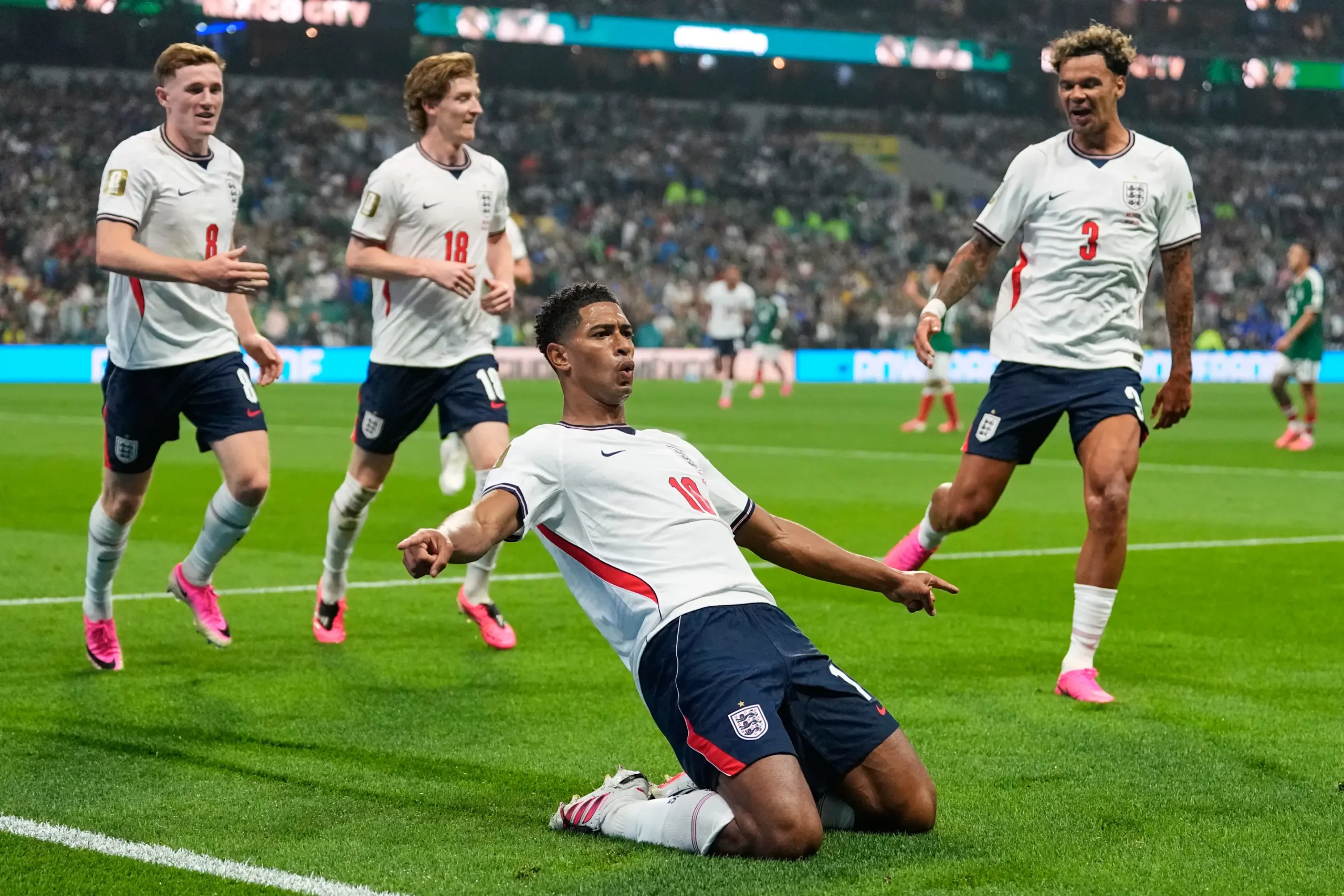
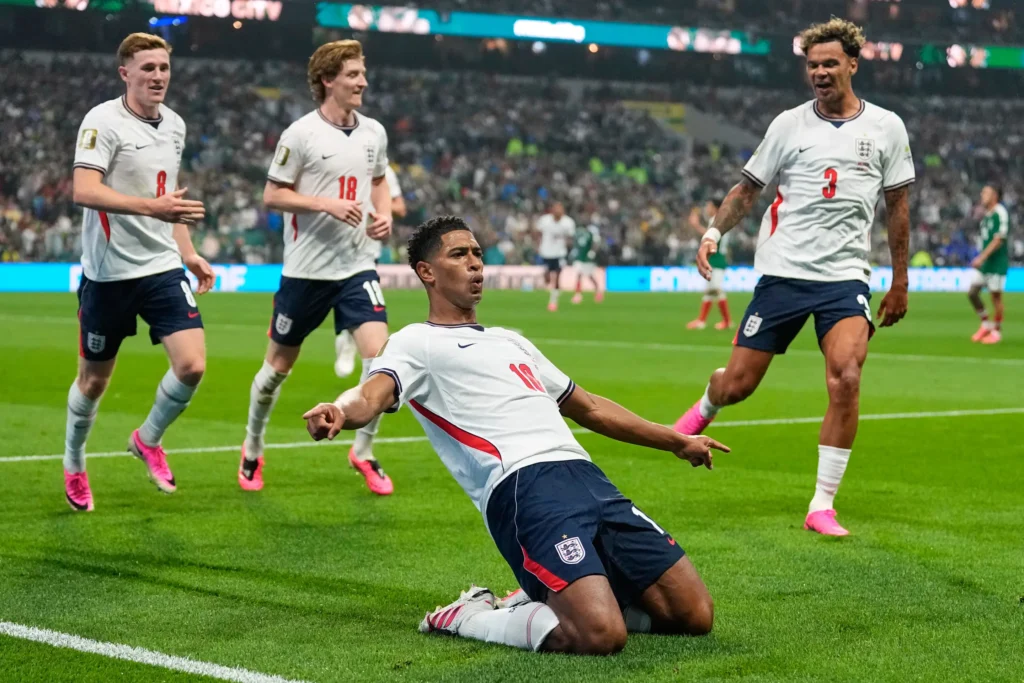
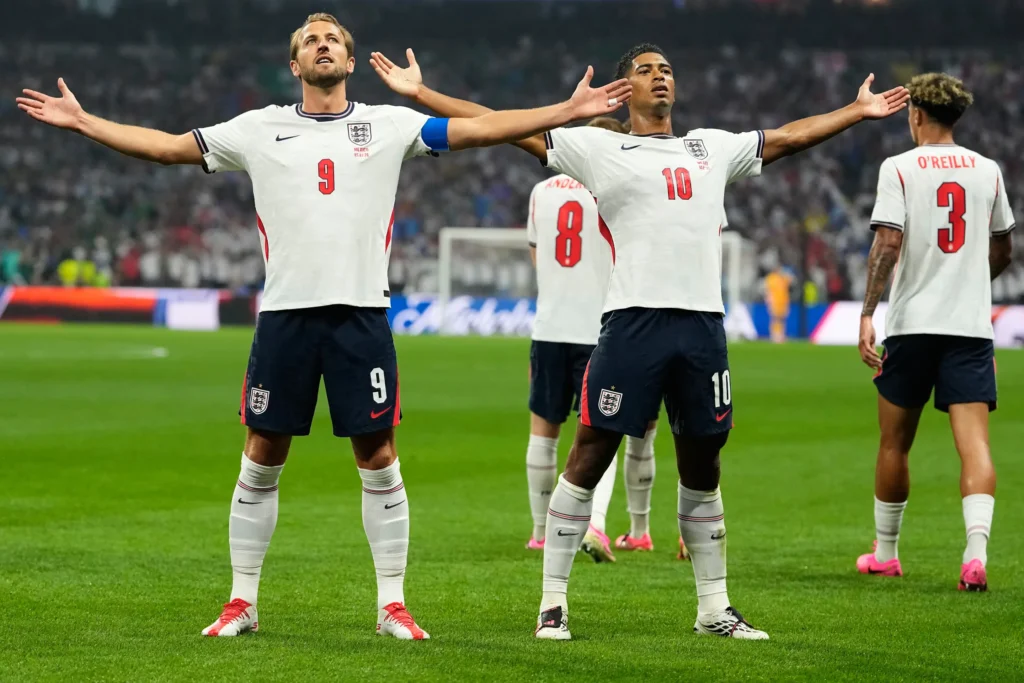
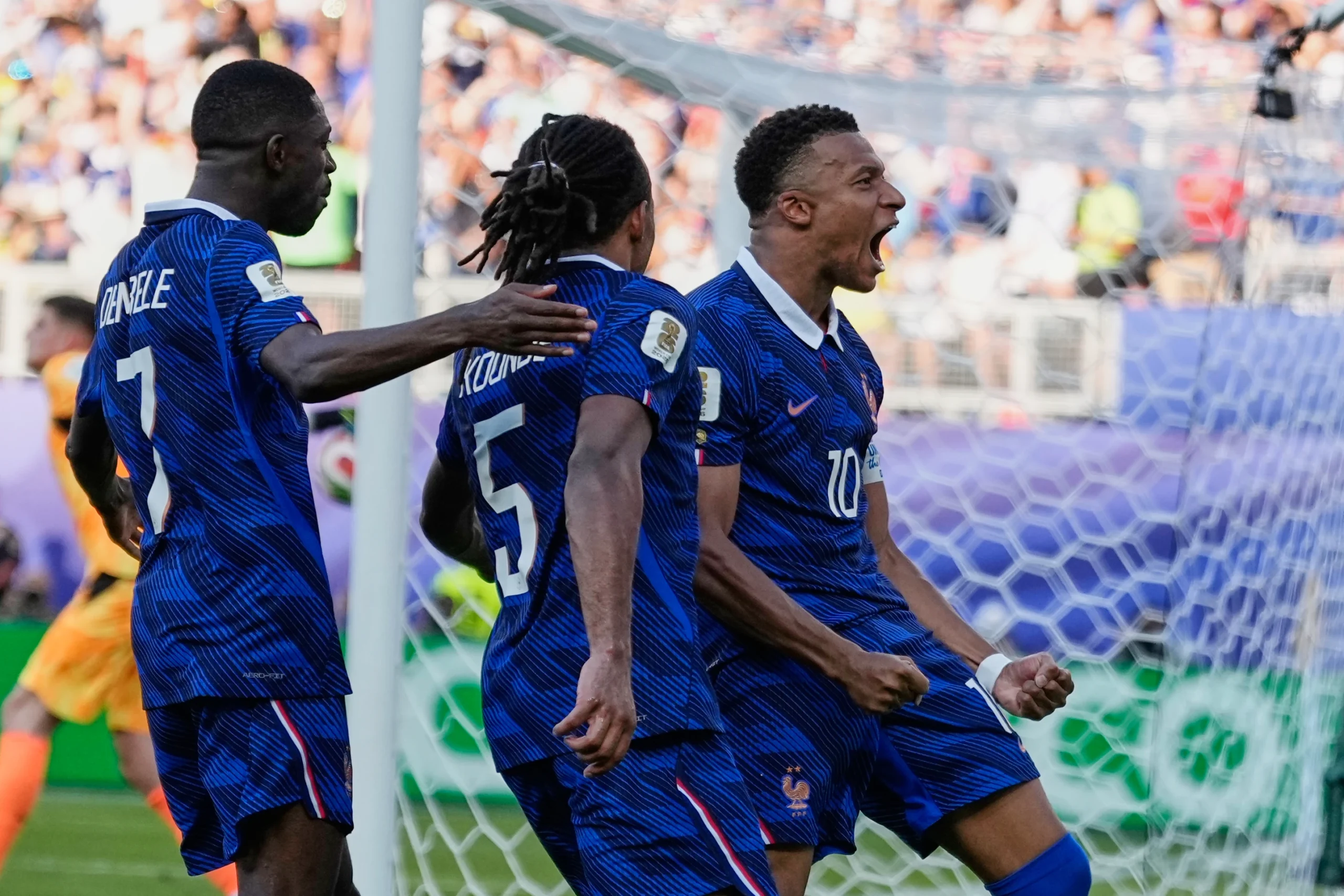
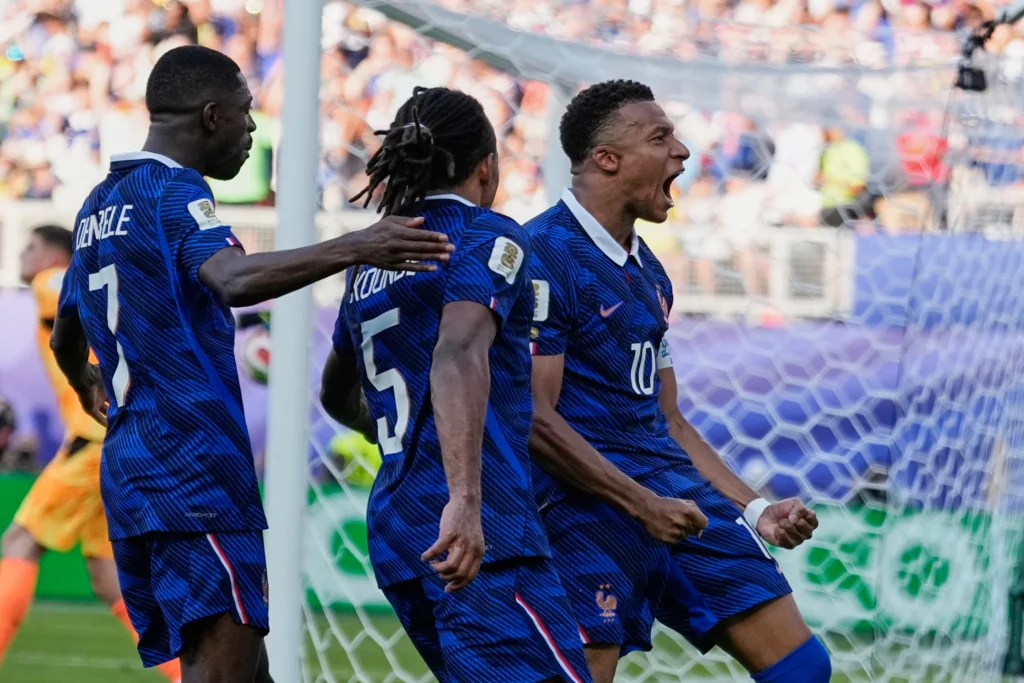
England advanced to the FIFA World Cup quarterfinals after overcoming Mexico 3-2 in a dramatic Round of 16 clash at Estadio Azteca, ending the hosts’ unbeaten World Cup record at the iconic stadium and booking a last eight showdown with Norway.
Jude Bellingham delivered a decisive first half with two goals in quick succession, while Harry Kane converted a second half penalty despite England playing with 10 men for more than half an hour. Mexico mounted a relentless comeback but fell short as goalkeeper Jordan Pickford and England’s defense withstood sustained late pressure.
The victory sends England into the quarterfinals, while Mexico’s long wait for a place in the last eight continues.
What We Know So Far
England stunned a crowd of more than 80,000 after Jude Bellingham scored twice within two minutes to put the visitors firmly in control.
Bellingham opened the scoring with a header before doubling England’s advantage moments later after combining with Harry Kane.
Mexico responded before halftime through Julián Quiñones to reduce the deficit to 2-1 and gained further momentum after England defender Jarell Quansah was sent off early in the second half for a dangerous challenge on Jesús Gallardo.
Despite being reduced to 10 players, England restored its two goal advantage when Kane converted a penalty after Mexico goalkeeper Raúl Rangel fouled Anthony Gordon inside the penalty area.
Mexico answered once again after Raúl Jiménez converted a penalty awarded following a foul by Kane, setting up a tense finish.
The hosts dominated possession during the closing stages but were unable to find an equalizer as England secured a place in the quarterfinals.
According to The Associated Press, the result ended Mexico’s unbeaten World Cup record at Estadio Azteca, where the national team had gone 10 World Cup matches without defeat, including three victories during the 2026 tournament.
What Authorities and Key Figures Are Saying
England manager Thomas Tuchel’s side earned praise for maintaining its composure after Quansah’s dismissal and successfully defending its lead despite extended pressure from Mexico.
ESPN described the match as one of the tournament’s most dramatic knockout encounters, noting that England overcame a red card, multiple momentum swings and an inspired performance from the hosts to advance.
Flashscore highlighted England’s resilience, describing the victory as one achieved through determination in front of a hostile crowd at one of world football’s most intimidating venues.
The victory also sets up a quarterfinal meeting with Norway after the Scandinavian side eliminated Brazil earlier in the tournament.
Why This Matters
England’s victory represents one of its most significant World Cup knockout wins in recent years, not only because it came away from home against one of the tournament’s co hosts, but because it ended one of international football’s longest standing home records.
Mexico had not lost a World Cup match at Estadio Azteca before Sunday’s contest, reinforcing the stadium’s reputation as one of the sport’s most difficult venues for visiting teams.
For England, the performance also demonstrated the squad’s ability to manage adversity. Playing with 10 men for much of the second half, the Three Lions successfully absorbed sustained attacking pressure while protecting a narrow lead.
Mexico’s elimination extends a decades long frustration in the knockout stage. The team has not reached the World Cup quarterfinals since hosting the tournament in 1986 despite several appearances in the Round of 16 over the past four decades.
What Happens Next
England will now face Norway in the quarterfinals, with a semifinal place at stake.
Mexico exits the tournament after another Round of 16 defeat despite an energetic performance that tested one of Europe’s strongest teams until the closing whistle.
England will also await any disciplinary decision regarding Quansah’s red card, which could affect the team’s defensive options in the next round.
England’s victory highlighted a growing tactical maturity under Thomas Tuchel. While previous England teams have often struggled after losing momentum in major tournaments, this squad adapted effectively after the red card by becoming more compact defensively while continuing to threaten on counterattacks.
Bellingham again demonstrated why he is emerging as one of football’s premier midfielders, combining attacking instinct with composure in decisive moments. Kane, meanwhile, continued to underline his value by contributing both goals and leadership during one of England’s most demanding matches of the tournament.
For Mexico, the defeat will be particularly painful because it came on home soil after an encouraging tournament. The performance showed El Tri remains capable of competing with elite opposition, but recurring defensive lapses and missed opportunities once again proved costly in a World Cup knockout match.
Sources: The Associated Press (AP), ESPN, Flashscore, New York Post, Reuters
SEATTLE, Washington — FIFA lifted the one-match suspension of United States striker Folarin Balogun on Sunday in an unprecedented decision that came after President Donald Trump personally called FIFA President Gianni Infantino to request a review of the red card that had threatened to sideline America’s top scorer ahead of Monday’s round of 16 clash with Belgium in Seattle.
The ruling set off immediate celebration in the American camp, sharp condemnation from Belgium’s football federation, and widespread questions about the integrity of football’s governing body at the most high-profile tournament on earth.
What We Know So Far
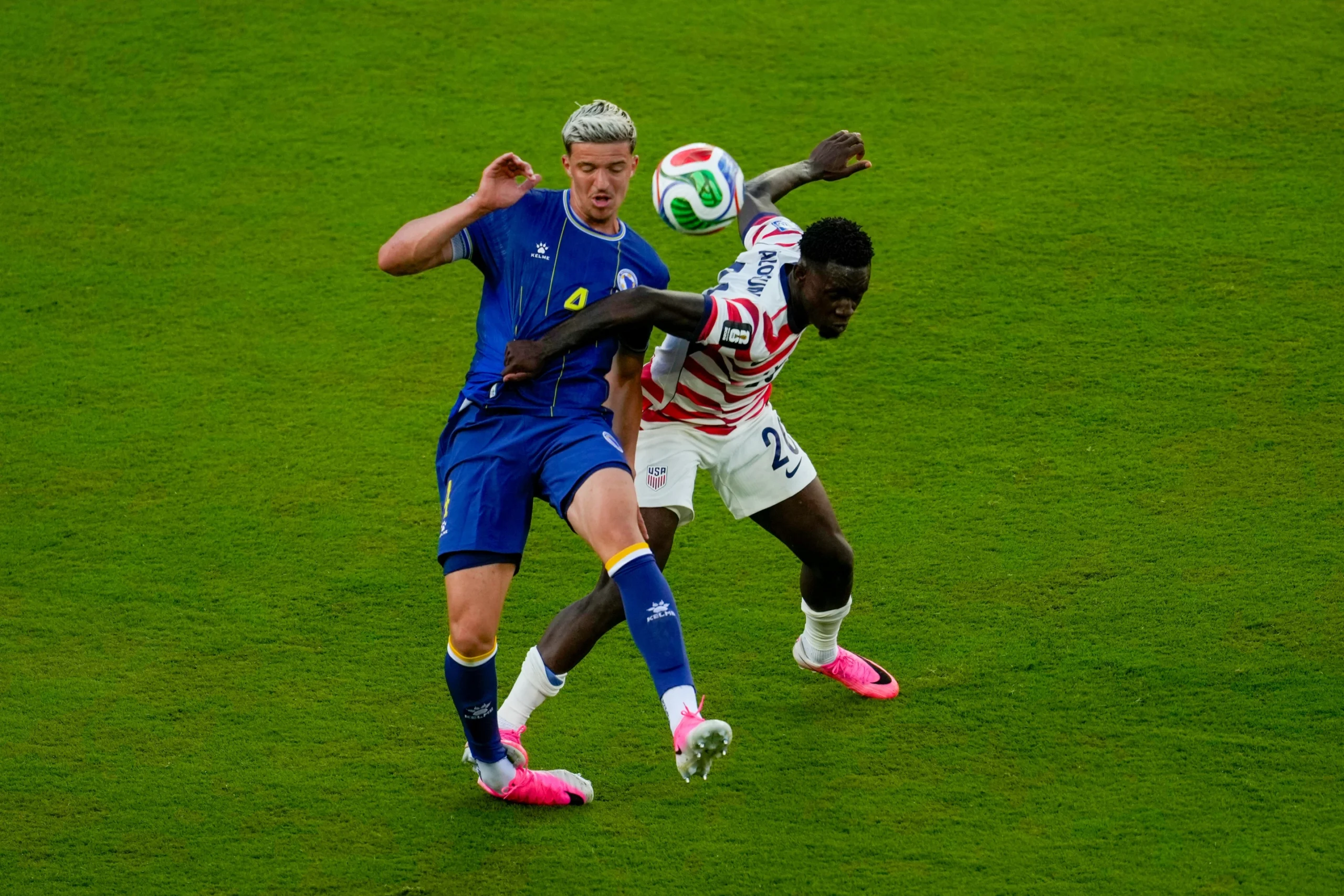
Balogun, 25, received the red card during the United States’ 2-0 victory over Bosnia and Herzegovina after his foot landed awkwardly on the ankle of defender Tarik Muharemovic. A video review confirmed the decision at the time, triggering an automatic one-match suspension under Article 10.5 of FIFA’s World Cup regulations.
Trump called Infantino shortly after the match on July 1 to ask the FIFA president to review the sending-off, a source familiar with the conversation confirmed to USA Today and the New York Post. A separate U.S. official confirmed to the New York Post that the administration also provided additional evidence as part of the appeal process, including a challenge to the use of slow-motion replay in reaching the original decision, which the administration argued violated FIFA’s own rules.
FIFA announced Sunday that Balogun’s suspension had been lifted under Article 27 of its disciplinary code, which grants its judicial body the discretion to suspend the implementation of a disciplinary sanction. The red card itself was not rescinded.
“In line with Article 27 of the FIFA Disciplinary Code, the implementation of the match suspension is suspended for a probationary period of one year,” FIFA said in a statement. “If Folarin Balogun commits another infringement of a similar nature and gravity during the probationary period, the suspension shall be revoked and the sanction enforced without prejudice to any additional sanction imposed for the new infringement.”
FIFA did not address Trump’s call with Infantino in its statement and did not immediately respond to media requests for comment on the White House’s role in the decision.
Trump celebrated the outcome immediately on Truth Social. “Thank you to FIFA for doing what was right, and reversing a great injustice!” he wrote. The White House separately posted “USA-USA-USA” on X.
American players discovered the news on their phones during the ten-minute bus ride from their hotel to training at the University of Washington’s Husky Soccer Stadium on Sunday, the Associated Press confirmed.
“At first, you’re like, ‘Oh really, is this real?’ And then, ‘Oh, this is great news,'” forward Christian Pulisic told reporters. “If you look at the foul, it was just zero intent at all. I felt like there was much worse ones that went on this tournament.”
Balogun responded on his own social media account by posting a photograph of himself in front of American supporters, set to Michael Jackson’s “Bad.”
What Authorities And Officials Are Saying
The Royal Belgian Football Association described the ruling as astonishing and said it contradicted the explicit language of FIFA’s own tournament regulations.
“Article 10.5 clearly provides that a red card automatically results in a suspension for the team’s next match, as has been the case for all previous red cards issued during this FIFA World Cup,” the RBFA said in a statement. “This decision is in direct contradiction with the provisions of the tournament’s Regulations.”
Belgium coach Rudi Garcia was withering in his assessment. “I didn’t know that in the offices of FIFA the 5th of July was the 1st of April in Europe,” Garcia said through a translator, invoking April Fools’ Day. “I think it is the first time in the history of the World Cup that there is this kind of decision.”
Garcia declined to comment when asked directly whether he believed Trump’s involvement had influenced FIFA’s action, or whether Belgium would appeal to the Court of Arbitration for Sport. “The Belgian federation does not defend itself, it does not protect the national team. She defends football in general, she defends her integrity, her ethics,” he said.
U.S. Soccer accepted the decision and declined to make Balogun available to reporters Sunday.
A U.S. official told the New York Post that Trump’s conversation with Infantino was framed as an effort to understand the rationale behind the red card rather than a direct demand to overturn it. “The President and Infantino did speak, and the President wanted to better understand the reason why a red card was given and why there was a suspension,” the official said. “Ultimately, the correct and proper outcome was achieved.”
Why This Matters
FIFA’s decision is the most controversial disciplinary ruling at a World Cup since 1962, when Brazil’s Garrincha was ejected from the semifinal against Chile but allowed to play in the final following political pressure from Chilean fans and President Jorge Alessandri. That precedent is now more than 60 years old, and the circumstances of Sunday’s ruling represent something genuinely new in the tournament’s history.
The context surrounding the decision deepens the controversy significantly. Trump and Infantino have cultivated a close and publicly visible relationship in the period leading up to this World Cup. Infantino has been hosted multiple times at the White House, and FIFA created a new Peace Prize specifically awarded to Trump last year, a move widely noted to have followed the president’s public complaints about not being nominated for the Nobel Peace Prize, USA Today confirmed.
Whether the appeal process was genuinely independent, as FIFA’s rules require, or whether the relationship between the two men created conditions under which Infantino could not easily refuse a presidential request, is a question that FIFA has not answered and that Belgium and other national associations are likely to pursue.
The broader implications extend beyond this particular match. If a head of state can successfully intervene in a FIFA disciplinary process at a World Cup, the enforcement of rules that apply equally to all 48 participating nations is fundamentally compromised. Every future red card issued to a player from a politically influential nation will be viewed through the lens of this precedent.
For the United States, the practical impact is enormous. Balogun is the team’s leading scorer with three goals, matching Landon Donovan’s 2010 total for the second-most goals by an American at a single World Cup, behind only Bert Patenaude’s four in 1930, the Associated Press noted. Without him, the Americans’ chances of defeating Belgium and reaching the quarterfinals for the first time since 2002 would have been measurably reduced.
Balogun was born in Brooklyn to Nigerian parents living in London, represented England at under-21 level, and switched his international allegiance to the United States in 2023. He has scored 12 goals in 30 appearances for the U.S. and contributes 13 Ligue 1 goals last season for Monaco. His development into the team’s most dangerous forward has been one of the defining stories of this World Cup for the co-hosting nation.
FIFA has used the Article 27 provision on previous occasions, most recently when it deferred the final two games of Cristiano Ronaldo’s three-match ban for an elbow against Ireland in a qualifying match, allowing the Portugal captain to play at the start of this tournament.
Ecuador’s Moises Caicedo and Argentina’s Nicolas Otamendi also had one-game bans deferred for red cards in qualifying. But none of those cases involved a sitting head of state calling the FIFA president during an active tournament to request intervention, making Sunday’s ruling categorically different from its precedents.
What Happens Next
Balogun will be available to face Belgium in Seattle on Monday as the United States seeks their first quarterfinal appearance since 2002. The Americans have lost in the round of 16 to Ghana in 2010, Belgium in 2014, and the Netherlands in 2022.
Belgium’s federation is actively investigating potential avenues of challenge, including a possible appeal to the Court of Arbitration for Sport. Whether any such appeal could be heard and resolved before Monday’s match, given the tight tournament schedule, remains unclear.
FIFA has not indicated whether it intends to clarify its decision-making process or address the questions raised about the White House’s involvement. The absence of transparency in how it weighed the competing regulatory provisions it cited will sustain pressure on the organization throughout the remainder of the tournament.
For the United States, regardless of how the rulebook debate resolves, Balogun will be on the pitch in Seattle Monday. Whether he can deliver again for a nation watching its World Cup dream with an intensity that has been building since the tournament’s opening day will be the question the football answers.
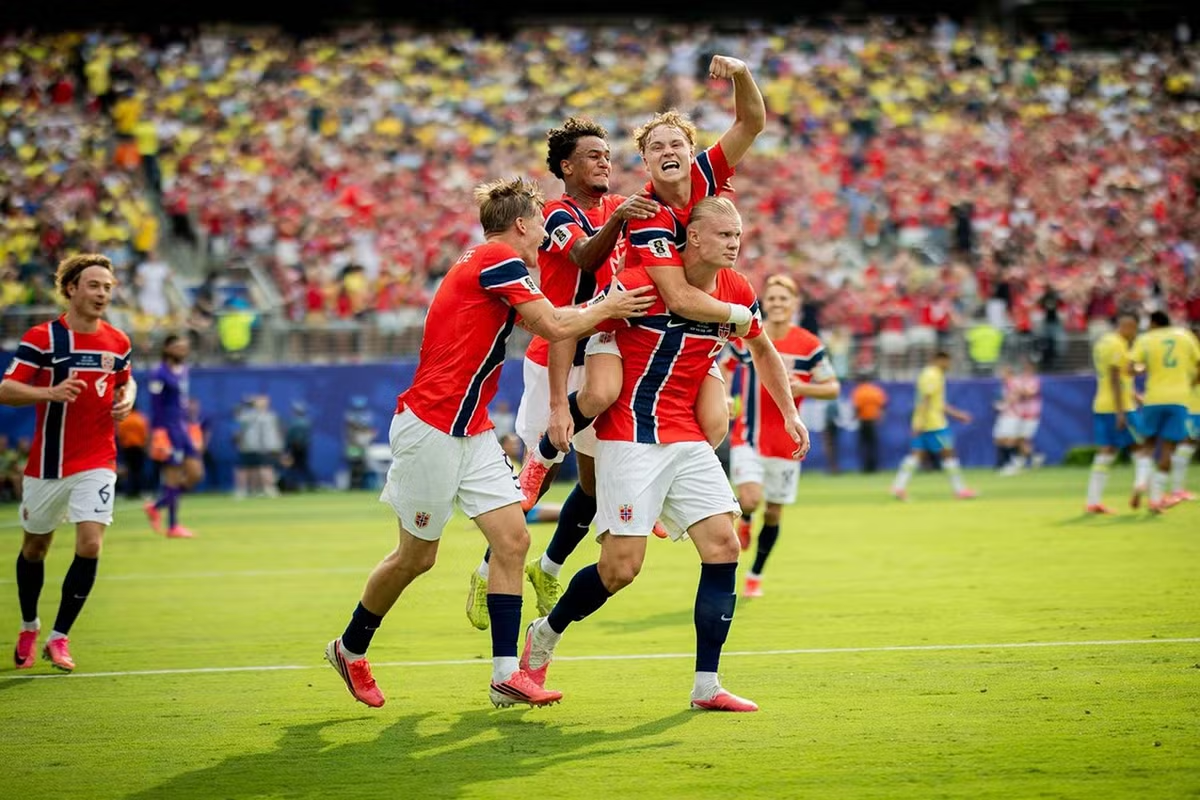
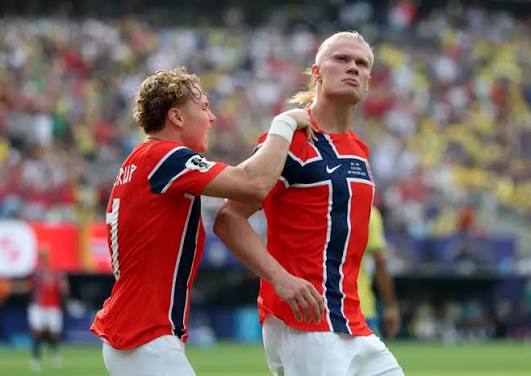
EAST RUTHERFORD, New Jersey — Erling Haaland scored twice in the final eleven minutes to send Norway into the World Cup quarterfinals for the first time in their history Sunday, eliminating five-time champion Brazil in a stunning 2-1 victory at MetLife Stadium that ended the Selecao’s tournament at the round of 16 for the first time since 1990.
The Manchester City striker, irresistible when the match needed a decisive moment, broke a long deadlock with a powerful header in the 79th minute and then drilled a composed left-footed finish into the corner in the 90th, moving level with Lionel Messi and Kylian Mbappe at the top of the Golden Boot standings with seven goals apiece.
Neymar converted a late penalty for Brazil in stoppage time, but it amounted to nothing more than a consolation for a nation that arrived in this tournament expecting to end a 24-year wait for a sixth World Cup title.
What We Know So Far
The match was tightly contested and largely forgettable in its opening exchanges, with both teams failing to convert the chances they created in a first half that promised far more than it delivered.
The defining moment of the opening period came with a missed penalty. Referee Ismail Elfath pointed to the spot after a video review confirmed that Kristoffer Ajer had fouled Matheus Cunha inside the area. Bruno Guimaraes stepped up and struck the ball straight at Orjan Nyland, who parried it to safety in what would prove a critical intervention from the 35-year-old Norwegian goalkeeper, the Associated Press confirmed.
Norway had already had a goal disallowed for offside in the opening minutes, when Alexander Sorloth marginally mistimed his run before setting up Patrick Berg to fire home, Flashscore confirmed. The decision left a predominantly Brazilian crowd at MetLife Stadium frustrated rather than settled.
The second half began sluggishly. Brazil coach Carlo Ancelotti introduced 19-year-old Endrick in the 58th minute for Cunha, and the teenager nearly made an immediate impact, latching onto a precise through ball from Vinicius Junior only to fire wide with just Nyland to beat. The Norwegian goalkeeper also denied Rayan with a strong close-range save moments later.
Momentum gradually shifted toward Norway as the half wore on. Substitute Andreas Schjelderup, introduced from the bench, was causing persistent problems down the left and forced Alisson Becker into a strong save at his near post. With 79 minutes played, Schjelderup whipped a cross from the left flank and Haaland arrived at the far post to head powerfully past Alisson and break the deadlock.
Nyland then produced a remarkable reaction save to prevent an own goal before Haaland settled the contest completely. Gathering the ball in the 90th minute, the Norwegian captain drilled a left-footed strike past Alisson with an economy of effort that bordered on contemptuous, his seventh goal of the tournament and Norway’s most important.
Brazil earned a penalty deep in stoppage time when Leo Ostigard was penalised for an aerial foul on Casemiro. Neymar converted, but the moment drew only hollow satisfaction from a crowd that had spent most of the evening urging on a Brazil team that never found its rhythm against a disciplined and resolute Norwegian side.
Norway will face the winners of Sunday’s match between Mexico and England in Miami next Saturday, the Associated Press confirmed.
What The Coaches And Players Are Saying
Brazil coach Carlo Ancelotti faced the most difficult post-match assessment of his tournament. His side, which had been expected to challenge seriously for the title, exits at the round of 16 having lost each of their previous seven post-group stage World Cup matches against European opposition, Flashscore noted.
The missed Guimaraes penalty in the first half will be the defining image of Brazil’s night and perhaps of their entire tournament. In a match where margins were so small, that moment loomed over everything that followed.
Norway coach Stale Solbakken’s tactical discipline was evident throughout. His side arrived at this tournament with limited World Cup experience, having reached the last 16 only twice before, in 1938 and 1998, losing on both occasions, ESPN confirmed. Sunday’s victory ended that record and delivered Norway’s first quarterfinal appearance in the tournament’s history.
Haaland’s scoring run for his country has now stretched to 14 consecutive international matches, with the striker finding the net 27 times in that span, a record of personal form that is now translating directly into tournament advancement for a nation that has never previously experienced a run of this kind.
Why This Matters
Brazil’s exit is one of the defining upsets of this World Cup and carries consequences that will reverberate through South American football for years.
The Selecao had not been eliminated before the quarterfinals in 32 years, a run that encompassed seven consecutive quarterfinal appearances from 1994 through 2022. That record, which had become a baseline expectation rather than a source of pride, is now gone.
Brazil arrived with the weight of expectation that comes from five World Cup titles and a footballing culture that defines itself through the tournament. Ancelotti, the Italian who became the first foreign coach to lead Brazil at a World Cup, was supposed to bring the organizational discipline that would unlock the individual talent available to him.
Instead, the Selecao exits at the same stage they reached in 1990, a result that will provoke a fundamental reassessment of the team’s direction, its coaching setup, and whether the golden generation of players that includes Vinicius, Rodrygo, and Endrick is closer to fulfilling or falling short of its promise.
For Norway, the scale of Sunday’s achievement is difficult to overstate. A nation of five million people, better known in global football for producing exceptional individuals than for collective tournament success, has now eliminated the most decorated nation in World Cup history at a major tournament.
Haaland’s individual brilliance has been the catalyst, but Nyland’s penalty save, Schjelderup’s energy from the bench, and the collective defensive discipline that frustrated Brazil for most of the match reflect a team rather than a collection of individuals.
Norway also maintained their perfect head-to-head record against Brazil, having never lost to the Selecao in five previous meetings, Flashscore confirmed. That historical footnote is now a significant piece of World Cup history.
The three-way Golden Boot race between Haaland, Mbappe, and Messi adds another compelling narrative thread to the tournament’s quarterfinal stage. All three are still active in the competition, all three are on seven goals, and each represents a different footballing tradition. The next round will determine whether any of them can pull clear.
What Happens Next
Norway faces the winners of Mexico versus England in Miami next Saturday in the quarterfinals. It will be Norway’s first ever World Cup quarterfinal appearance, a milestone that will be celebrated with considerable emotion in a country that has waited decades for this moment.
Brazil face a summer of difficult questions. The federation’s relationship with Ancelotti, the future of senior players like Casemiro and Neymar in the international setup, and the timeline for transitioning to the next generation of Brazilian talent will all need to be addressed before the next major tournament cycle begins.
For Haaland, Sunday’s performance reinforces his status as the tournament’s most dangerous striker and moves him into a position from which a record-breaking Golden Boot finish becomes genuinely possible. Two more goals would give him nine, a total that has historically been sufficient to win the award outright.
For the hundreds of thousands of Brazilian fans who packed MetLife Stadium and the millions watching at home, the journey is over far too early. The wait for a sixth star extends into at least another four years, and Sunday’s performance provided little indication that the gap between expectation and reality has narrowed.
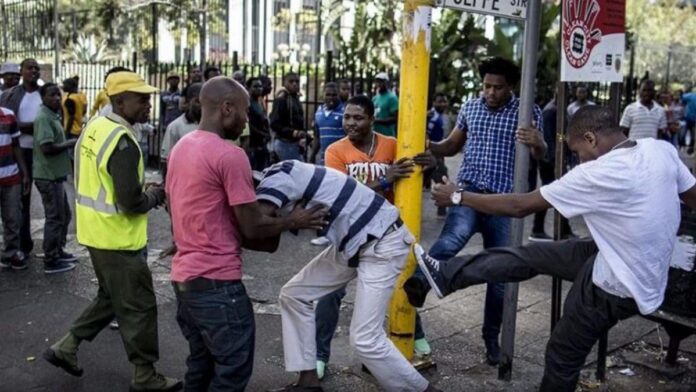
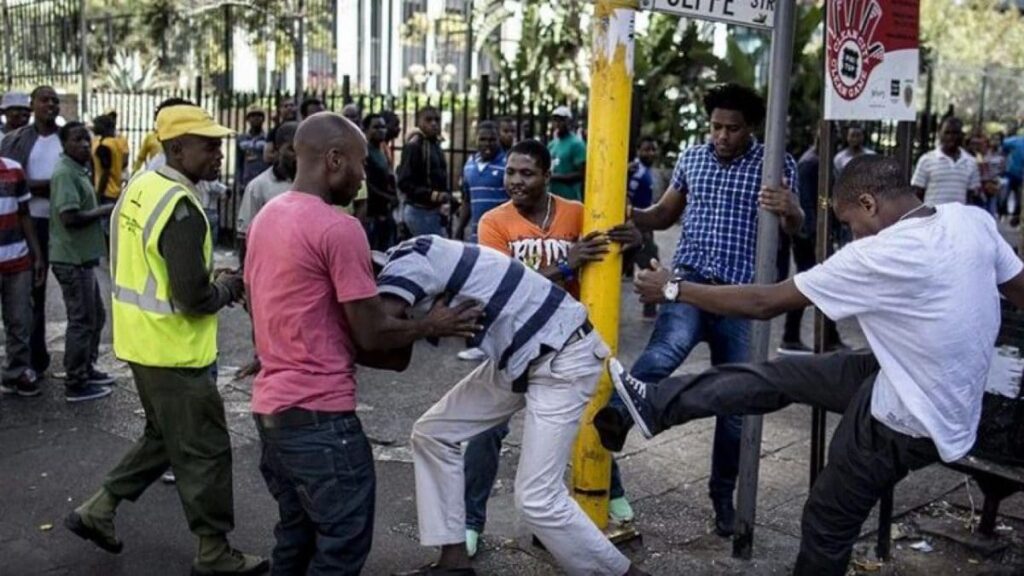
Nigeria says two of its citizens were killed in South Africa amid a recent wave of anti migrant violence that has targeted foreign nationals, renewing concerns over the safety of Africans living and working in the country.
The Nigerian government said the victims died on June 28, just days before an unofficial deadline issued by anti immigrant protesters demanding that foreign nationals leave South Africa. Officials said one Nigerian was allegedly killed by police officers, while the other died in an attack by unidentified assailants.
The incidents come as tensions over immigration continue to fuel violence in parts of South Africa, prompting diplomatic concern and calls for accountability.
What We Know So Far
Nigeria’s Ministry of Foreign Affairs confirmed Sunday that two Nigerian nationals lost their lives during unrest linked to anti migrant demonstrations.
Foreign Ministry spokesperson Kimiebi Imomotimi Ebienfa said one victim was allegedly killed by police personnel, while the second was attacked and killed by unidentified individuals.
According to Premium Times Nigeria, the victims were identified as Emeka Iroegbu and Musa Joe.
The publication said Joe was killed by suspected criminals in Witbank, Mpumalanga Province, while Iroegbu allegedly died after being tortured by officers of the Tshwane Metro Police in Sunnyside, Pretoria.
South African police did not immediately respond to requests for comment from The Associated Press.
The latest deaths follow months of anti-immigrant protests during April and May, when demonstrators blamed foreign nationals for unemployment, crime and pressure on public services.
Nigeria, Ghana and Malawi have already repatriated some of their citizens and summoned South African diplomats following earlier violence against African migrants.
What Authorities Are Saying
Nigeria’s Foreign Ministry condemned the killings and expressed concern that Nigerians are being unfairly targeted.
“These two killings come at a time when foreigners are being unduly targeted in South Africa,” Foreign Ministry spokesperson Kimiebi Imomotimi Ebienfa said.
He added that the attacks raise concerns that some individuals are attempting to wrongly portray law abiding Nigerians as criminals.
The Nigerian Consulate in Johannesburg also called for a comprehensive investigation into the deaths and urged South African authorities to prosecute those responsible.
According to Premium Times, the consulate said the continuing pattern of attacks raises serious concerns about the safety of Nigerians and other foreign nationals living in South Africa.
The South African authorities have not publicly commented on the specific allegations involving the latest killings.
Why This Matters
South Africa has experienced repeated outbreaks of violence directed at foreign nationals for more than a decade. Human rights organizations have frequently described many of these attacks as xenophobic, with migrants from elsewhere in Africa often becoming targets.
The latest incidents risk increasing diplomatic tensions between Africa’s two largest economies, whose relations have periodically been strained by attacks on foreign nationals.
According to The Associated Press, South Africa witnessed one of its deadliest outbreaks of anti migrant violence in 2008, when more than 60 people were killed during attacks on foreign residents.
Premium Times reported that the two latest deaths raise the number of Nigerians killed during this year’s renewed violence to four. Earlier victims, identified as Amaramiro Emmanuel and Ekpenyong Andrew, allegedly died following encounters with South African security personnel.
The publication also reported that several African countries, including Nigeria, Ghana, Mozambique, Malawi and Zimbabwe, have repatriated hundreds of citizens as insecurity has intensified.
Beyond Nigerians, reports indicate that citizens from Mozambique and Ethiopia have also been killed during the recent unrest, while many migrant owned businesses have been looted and properties destroyed.
What Happens Next
Nigerian officials are pressing South African authorities to conduct thorough investigations into the latest killings and ensure those responsible face prosecution.
The outcome of those investigations could influence future diplomatic engagement between the two countries, particularly if allegations involving security personnel are substantiated.
Authorities are also expected to continue monitoring the security situation as concerns persist over the safety of migrant communities across parts of South Africa.
The renewed violence highlights the recurring challenge South Africa faces in balancing domestic economic frustrations with the protection of migrant communities. High unemployment, persistent inequality and pressure on public services have repeatedly fueled anti foreign sentiment, even though researchers have found little evidence that migrants are the primary cause of these structural problems.
For Nigeria, the deaths place additional pressure on the government to protect its citizens abroad while maintaining diplomatic ties with one of Africa’s most influential nations. Unless investigations produce visible accountability and stronger protections for migrants, concerns over xenophobic violence are likely to remain a significant issue in regional relations.
Sources; The Associated Press (AP)/Premium Times Nigeria
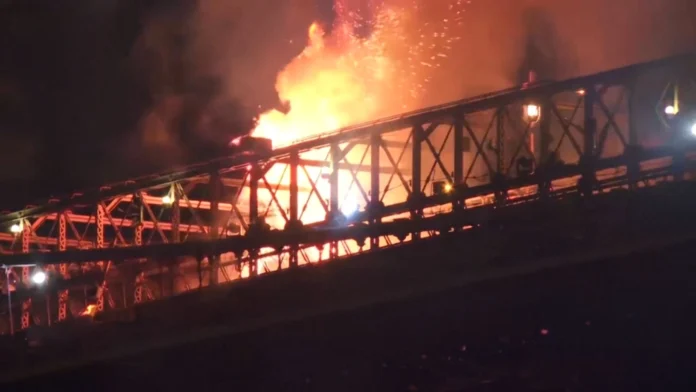
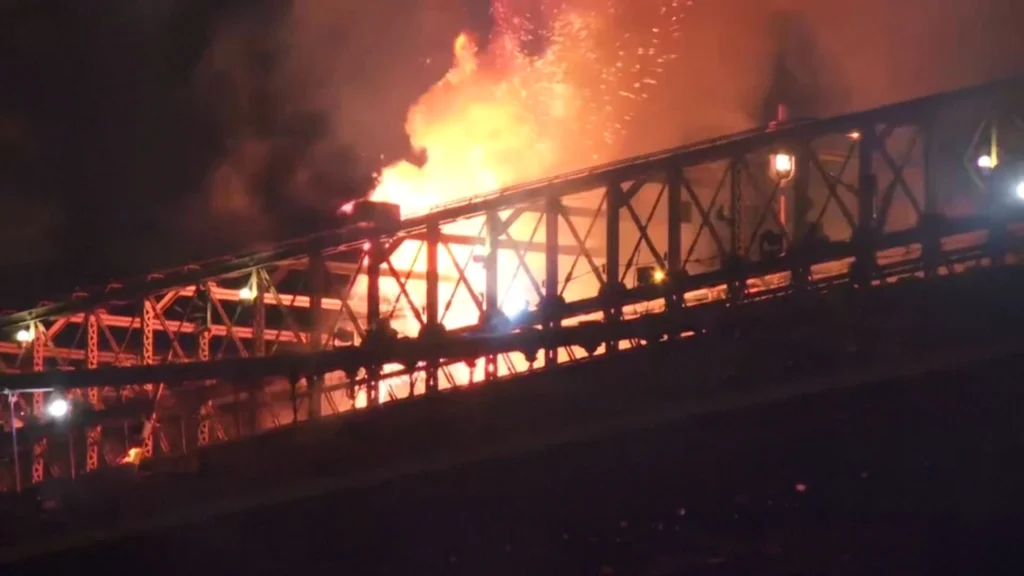
A fire briefly broke out on the Brooklyn Bridge during New York City’s Fourth of July fireworks celebration Saturday night, prompting a rapid response from firefighters who extinguished the blaze without any reported injuries.
The incident occurred as the annual Macy’s Independence Day fireworks display illuminated the East River, with flames and smoke visible from the Manhattan bound side of the historic bridge. Emergency crews quickly brought the situation under control, allowing authorities to prevent further damage.
Officials said the bridge had already been closed to traffic during the fireworks event, allowing firefighters to respond without interference.
What We Know So Far
The New York City Fire Department deployed two fire engines after receiving reports of the blaze shortly before 10 p.m.
Firefighters extinguished what officials described as a rubbish fire on the Manhattan bound traffic lanes of the Brooklyn Bridge. No injuries were reported.
Video shared on social media showed flames and smoke rising from a section of the bridge while fireworks continued exploding overhead.
According to The Associated Press, fires of this nature are not uncommon during large fireworks displays, and emergency plans are designed to address such incidents quickly.
ABC7 New York said the fire began shortly after 9:30 p.m. and was believed to have been sparked by fireworks from the annual Macy’s celebration.
What Authorities Are Saying
The Fire Department said two engine companies responded and quickly contained the blaze.
A department spokesperson told The Associated Press that such fires are anticipated during fireworks events, which is why officials establish safety zones and maintain emergency crews on standby throughout the celebration.
Officials confirmed there were no injuries and that the fire did not pose a wider threat once it was extinguished.
Why This Matters
The Brooklyn Bridge is one of New York City’s most recognizable landmarks and serves as a major transportation link between Manhattan and Brooklyn. Any fire on the structure immediately raises public concern because of its historic significance and the large crowds typically gathered nearby during holiday celebrations.
The incident also highlights the extensive planning required for major public events involving fireworks. Fire departments routinely position personnel and equipment near launch sites because falling debris and burning material can ignite small fires on nearby structures.
Saturday’s celebrations were also affected by severe weather concerns across the eastern United States. Organizers moved New York’s fireworks schedule earlier than planned as storms forced cancellations, delays and evacuations at Independence Day events in several cities, including Washington.
What Happens Next
Fire officials are expected to complete their assessment of the affected area to determine the exact cause of the fire, though early indications suggest fireworks debris ignited combustible material on the bridge.
Authorities are not expecting any lasting impact on the bridge, and no injuries or significant structural damage have been announced.
While the incident briefly interrupted one of the nation’s largest Independence Day celebrations, emergency responders contained the fire within minutes, allowing festivities to conclude safely.
Although the fire was relatively minor, it underscores the logistical challenges involved in staging large scale fireworks displays in densely populated urban areas. New York’s emergency response demonstrated the importance of pre positioning firefighting resources near launch locations, particularly around critical infrastructure such as bridges, tunnels and transportation hubs.
The quick containment also reflects years of coordinated planning between fire officials, police and event organizers, reducing the likelihood that a small fire could develop into a larger public safety emergency during one of the city’s busiest holiday gatherings.
Sources: The Associated Press, ABC7 New York, The Mirror US
Eight people, including four children, were wounded in a shooting near a Fourth of July fireworks celebration in Brooklyn late Saturday, sending police officers rushing to rescue victims as frightened families fled the area.
The shooting occurred near the Seapark Apartments in Coney Island, only a short distance from where crowds had gathered for an evening fireworks display, authorities said.
Police said eight people suffered gunshot wounds after shots were fired shortly after the fireworks celebration. Four of the victims were children, and one adult remained in critical condition as investigators searched for those responsible.
What We Know So Far
According to information released by the New York Police Department and local media reports, officers responded shortly after 10:30 p.m. to reports of multiple people shot near West 30th Street and Surf Avenue in Coney Island.
Emergency responders found eight victims suffering from gunshot wounds.
The victims include:
A 33 year old man who was shot in the chest.
A 21 year old woman who was shot in the chest and remains in critical condition.
A 37 year old man who suffered a gunshot wound to the shoulder.
A 25 year old woman who was shot in the leg.
A 14 year old boy who was shot in the leg.
A 12 year old boy who was shot in the thigh.
A 7 year old boy who was shot in the leg.
A 6 year old boy who suffered a gunshot wound to the abdomen.
Authorities said the remaining seven victims were reported to be in stable condition after being transported to area hospitals.
Video from the scene showed police officers carrying injured children to waiting ambulances as emergency crews worked to secure the area.
Investigators have not determined how many people opened fire or what prompted the shooting.
Witnesses interviewed by the New York Post described scenes of panic as officers rushed children away from the area.
One nearby business employee said officers were seen carrying several young victims in their arms while ambulances arrived.
Another resident told the newspaper the neighborhood has experienced repeated incidents of violence in recent years.
The New York Post also reported that witnesses claimed police recovered a backpack containing a firearm near the scene. Authorities have not publicly confirmed that information.
ABC7 New York initially reported five shooting victims based on preliminary information from the scene. Police later confirmed that eight people had been wounded.
What Authorities Are Saying
The New York Police Department has not announced any arrests and has not identified a suspect.
Detectives continue to examine evidence and interview witnesses as they work to determine whether multiple shooters were involved.
Officials have urged anyone with information or video recordings from the area to contact investigators.
Why This Matters
The shooting unfolded during one of the busiest holiday weekends of the year, when thousands of families gather along the Coney Island boardwalk for Independence Day celebrations.
Incidents of gun violence involving large public gatherings present significant challenges for emergency responders because crowded environments can complicate evacuation efforts and increase the risk of additional injuries.
The fact that four children were among those wounded is likely to intensify concerns about public safety during holiday events and large outdoor celebrations.
Law enforcement agencies across the United States routinely increase security during Independence Day festivities, but shootings near public celebrations continue to underscore the difficulty of preventing sudden acts of violence in densely populated urban areas.
What Happens Next
Police are expected to continue reviewing surveillance footage from nearby buildings and businesses while interviewing witnesses to identify those responsible.
Investigators have not announced whether the shooting was targeted or random, and no motive has been established.
Authorities are also expected to increase patrols in the area while the investigation remains active.
The shooting highlights the continuing challenge of protecting large public gatherings during national holidays.
Independence Day celebrations typically draw thousands of families into concentrated public spaces, making emergency response especially complex when violence erupts.
The rapid actions of responding officers, who were seen carrying injured children to safety, likely helped speed medical treatment.
As investigators determine whether the attack involved one or multiple shooters, the incident is expected to renew discussions about security planning for major public events, particularly in neighborhoods that have experienced recurring gun violence.
Sources: New York Police Department; New York Post; ABC7 New York; WION News.
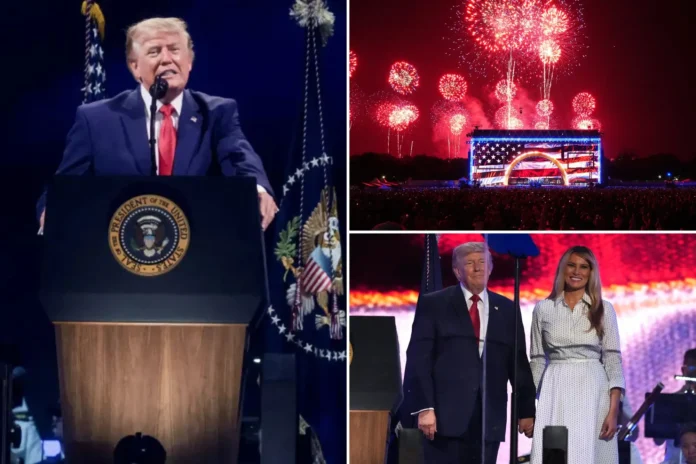
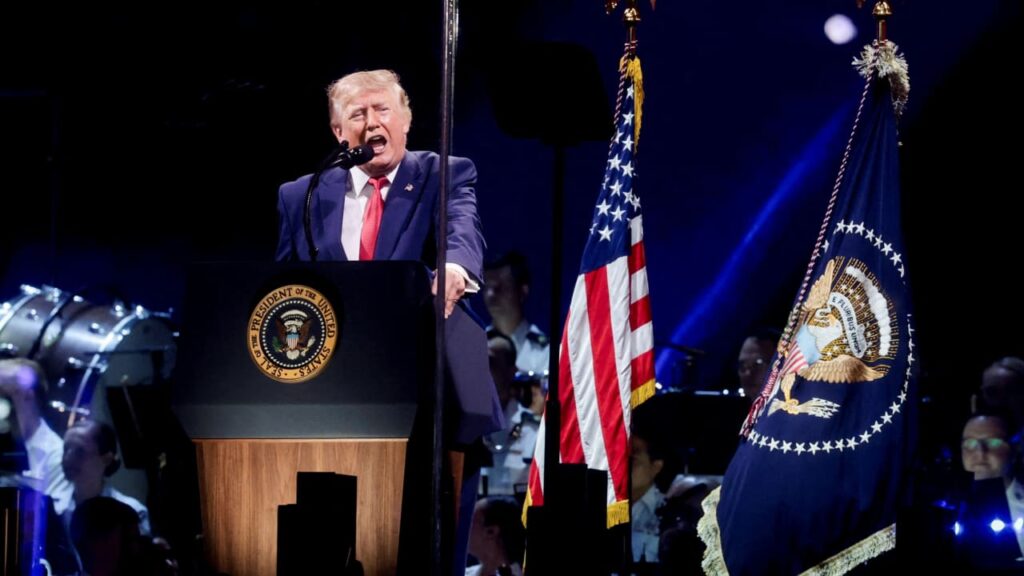
President Donald Trump marked the 250th anniversary of American independence Saturday with a politically charged speech before more than 150,000 people on the National Mall, mixing patriotic tribute with campaign-style rhetoric, calls for voting restrictions, and repeated warnings about what he described as the threat of communism taking root inside the United States.
The address, delayed nearly two hours by a severe thunderstorm that forced a mass evacuation of the Mall, came at the culmination of a week-long celebration that Trump has shaped aggressively to his own political tastes, drawing both enormous crowds and pointed criticism over its partisan character.
What We Know So Far
Trump took the stage shortly before 11 p.m. after organizers cleared the Mall around 7 p.m. as a line of thunderstorms swept through the capital. Spectators sheltered in nearby museums, subway stations, and federal buildings before returning through security in a chaotic rush, with crowds chanting “U-S-A, open the gates” as they pushed through magnetometers to reclaim their places.
Trump acknowledged the delay with characteristic humor. “One of my very brilliant people backstage said, ‘Don’t worry about it, sir, we can do it maybe next week,'” he told the crowd. “I said, ‘It doesn’t work next week.’ This is the big day.”
The speech lasted less than 40 minutes, far shorter than Trump had suggested earlier in the week when he promised to deliver a “really long speech just to show that I can do anything,” Reuters confirmed.
Trump honored 11 Gold Star families, acknowledged World War II veterans watching from the National World War II Memorial, and presented flags that had marked significant moments in American history, including the flag draped over Abraham Lincoln’s casket and the one that flew aboard the Wright Brothers’ pioneering aircraft, the Associated Press confirmed.
He declared the United States “the crowning achievement of human history” and told the crowd: “For 250 years, the United States of America has been the hope, the promise, the light and the glory among all of the nations of the world. Nobody can be like us. And with God’s help, we will always be this or even better,” Fox News confirmed.
Trump also called on Congress to pass the SAVE America Act, an elections bill that would require proof of citizenship to register to vote and photo identification when casting ballots, legislation that has encountered resistance even among some Republicans. He highlighted his administration’s military posture, claiming he had “wiped out” Iran’s military, and returned to themes of economic strength and national pride that have defined his political messaging.
His anti-communist rhetoric was among the evening’s most emphatic themes. “America will never be a communist country,” Trump said. “Communism is a loser, and it always will be. Our warriors did not fight communism on battlefields across the world only to have that menace rear its ugly head right back here in America. We’re not going to let it happen.”
He compared communism to cancer, using the same language he had deployed the previous day at Mount Rushmore. “You’ve got to cut it out and you’ve got to cut it out fast,” he said, the New York Post confirmed.
The remarks appeared directed at Democratic Socialist-backed candidates who have won a series of Democratic primary elections in the current election cycle, though Trump did not name them or their party explicitly in his Saturday address.
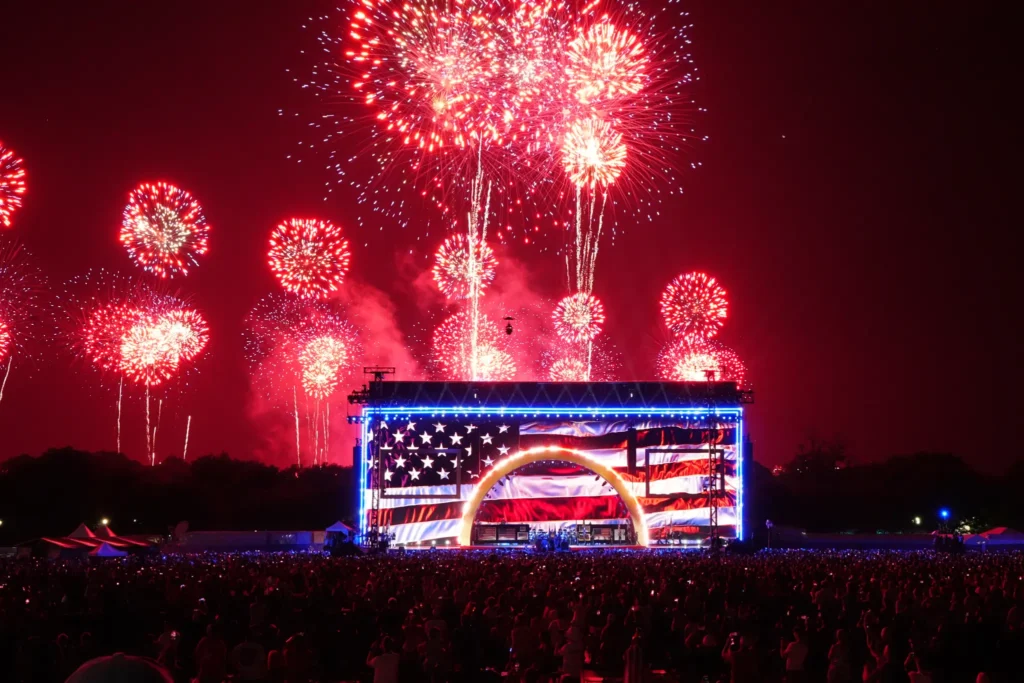
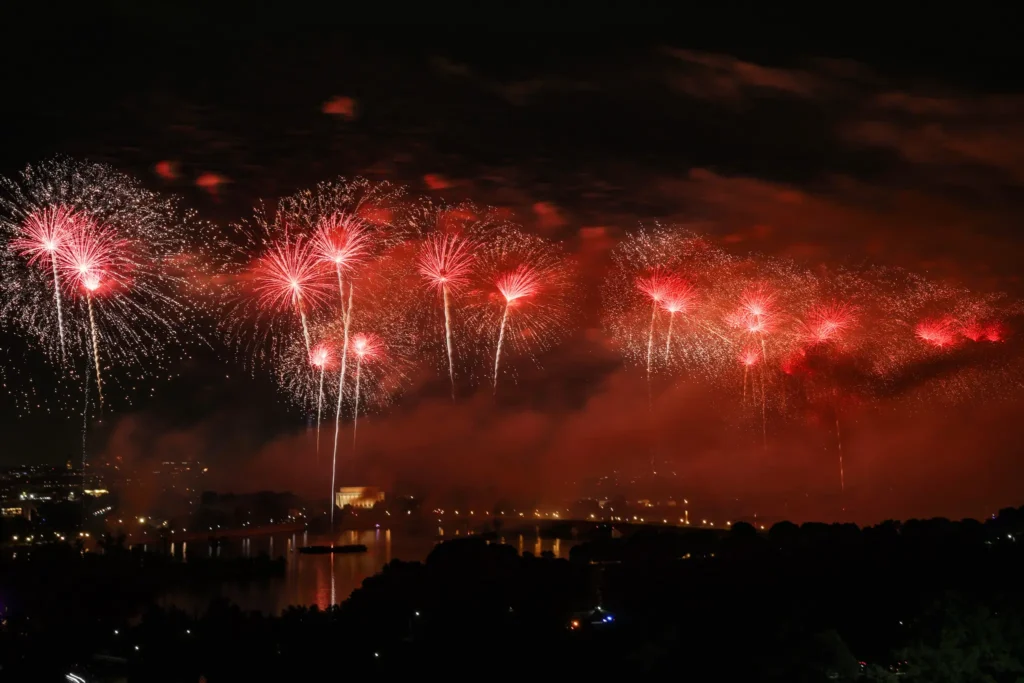
The speech concluded with a record-breaking fireworks display of more than 800,000 fireworks launched from the Potomac River and other sites across Washington, with lightning flickering in the background as military musicians performed selections spanning six decades of popular music, including Trump’s signature “YMCA,” the New York Post reported. Trump and First Lady Melania Trump remained at the site to watch the display, joined by Cabinet members, his son Donald Trump Jr. and new wife Bettina, and several of his grandchildren.
What The Event Looked Like Across America
The extreme heat that gripped much of the East Coast shaped celebrations across the country as much as any official program. Temperatures in Washington reached 103 degrees Fahrenheit, forcing the cancellation of several parades and outdoor events in the region, the Associated Press reported.
In Philadelphia, festivities coincided with the France-Paraguay World Cup knockout game at the city’s stadium, creating what one attendee described to the Associated Press as “one big party.” Carlos Alban, who traveled from Chicago for the match, said he spotted a fan in the parking lot dressed as one of the Founding Fathers.
In New York, a procession of 43 tall ships sailed around the Statue of Liberty and up the Hudson River, followed by aerial displays from a stealth bomber, the Navy’s Blue Angels, and the French Air Force’s Patrouille de France aerobatic team, whose red, white, and blue trails drew crowds along the harbor in a gesture that evoked the Franco-American alliance at the heart of the nation’s founding.
At George Washington’s Mount Vernon, new Americans took the Oath of Allegiance in a naturalization ceremony conducted against the backdrop of the revolutionary era estate, their eyes closed and hands over hearts during the national anthem.
Severe weather prompted the cancellation of celebrations in Hartford, Connecticut, as well as Harrisburg and Wilkes-Barre, Pennsylvania. Boston’s fireworks and concert were briefly interrupted before resuming. Philadelphia ordered its own temporary evacuation. New York and Pittsburgh shifted their fireworks timing to accommodate the shifting weather patterns, the Associated Press confirmed.
What Authorities And Critics Are Saying
The political character of the celebrations drew significant commentary before and during the event. A Reuters and Ipsos poll found that a majority of Americans, including three-quarters of Democrats and half of Republicans, believed the events marking the 250th anniversary had become too political.
Several Democratic-led states declined to send official delegations to Washington’s festivities. Many performers originally scheduled to appear withdrew, citing concerns about the event’s partisan nature. The Trump administration’s Freedom 250 organization had largely displaced a nonpartisan body established by Congress in 2016 to oversee the 250th anniversary planning, fencing off much of the National Mall for a “Great American State Fair” featuring a Ferris wheel alongside displays by conservative organizations and defense contractors.
Critics also took aim at Freedom 250-sponsored “Freedom Trucks” that they said presented an overly religious version of American history while glossing over the legacy of slavery and racial injustice.
The white nationalist organization Patriot Front marched through Washington earlier in the day and used Metro trains serving the region. Police said they received no reports of violence connected to the group’s presence.
Trump has pushed to reshape significant portions of the capital city ahead of the anniversary celebration. Many fountains and statues have been renovated, but a much-publicized $15 million renovation of the Lincoln Memorial’s Reflecting Pool has been beset by problems, with security cameras and soldiers standing guard over peeling paint and algae-covered water, Reuters confirmed.
A Smithsonian Institution executive told Reuters that gift shops and restaurants at museums near the event reported near-record sales on Friday as crowds swelled in the days leading up to the anniversary.
Why This Matters
Saturday’s address was only the second time a sitting American president has delivered a July 4 speech on the National Mall since 1951, the previous occasion being Trump’s own 2019 address. Most presidents have historically avoided in-person appearances at July 4 commemorations, treating the date as a moment for national unity rather than political advocacy.
Trump’s decision to use the 250th anniversary as a platform for campaign-style messaging on voting laws, communist threats, and his administration’s achievements reflects a deliberate strategy heading into November’s midterm elections, where his party’s congressional majorities will be tested.
The anti-communist framing, previewed at Mount Rushmore the day before and repeated with emphasis on the National Mall, signals that the theme will be a recurring element of his political messaging through the election season.
The choice to centralize the national celebration around his administration’s political priorities, rather than delegating it to the bipartisan body Congress established for precisely this purpose, also marks a significant departure from how previous American presidents have handled major national milestones.
The moment itself, 250 years of American independence marked by a president whose relationship with constitutional norms has been the defining controversy of his political career, was not lost on observers across the political spectrum.
What the anniversary meant, and who it was being celebrated for, remained deeply contested even as fireworks lit the sky above the Mall and tall ships sailed past the Statue of Liberty.
What Happens Next
Trump signaled that the anti-communist messaging will intensify as the November midterms approach, treating Saturday’s address as the opening of what is expected to be an aggressive campaign period. The SAVE America Act, which he again urged Congress to pass, faces uncertain prospects given resistance from some Republicans in addition to unified Democratic opposition.
The Freedom 250 events on the Mall are expected to continue in the days following Independence Day, with an IndyCar race scheduled for Washington in August as part of the broader celebration calendar.
For the millions of Americans who marked the day in their own ways, from naturalization ceremonies at Mount Vernon to family cookouts in Phoenix to World Cup crowds in Philadelphia, the 250th anniversary offered a moment of reflection that was simultaneously personal, local, and nationally contested in ways that past anniversaries were not.
Trump closed his remarks with an optimistic flourish that cut through the partisan themes of the evening. “At 250 years, we may be the oldest constitutional republic on earth, but our country is just getting started, because the best is yet to come,” he said. “This is only the dawn of the Golden Age of America.”
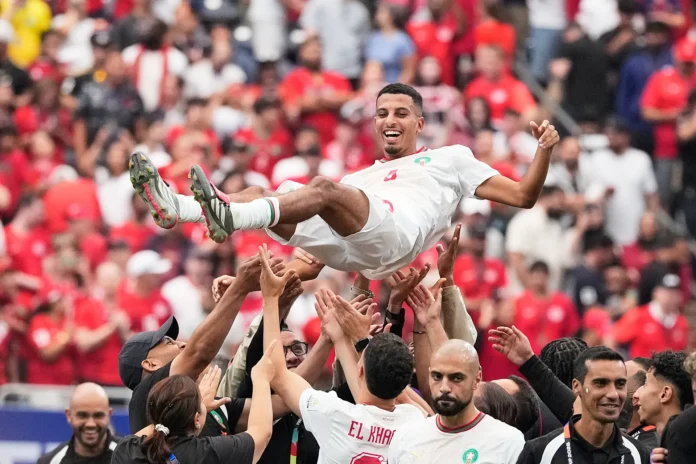
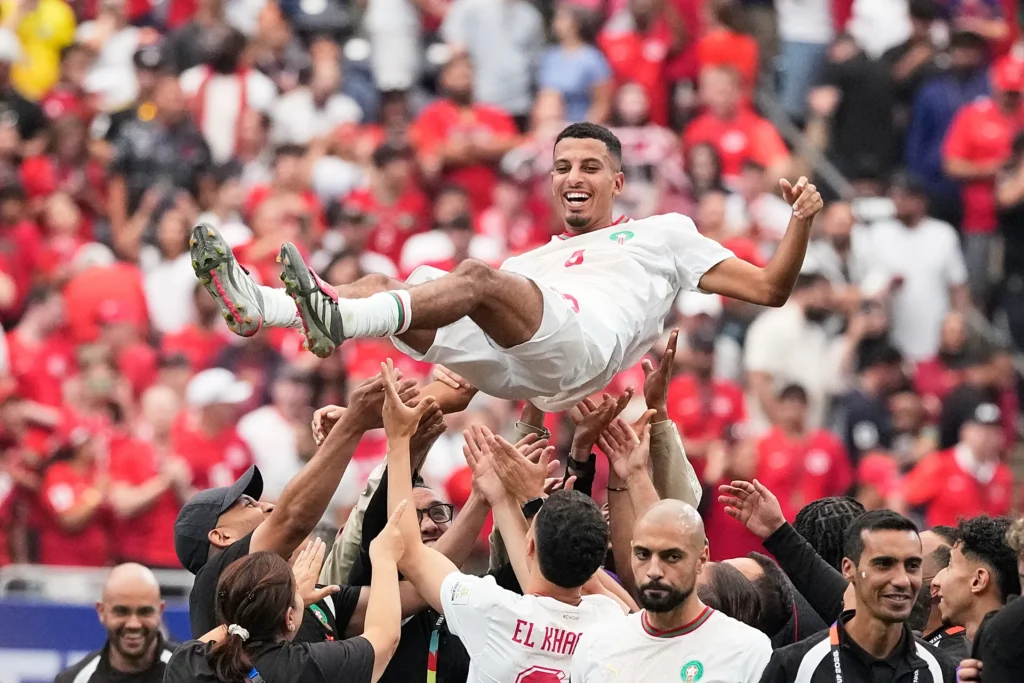
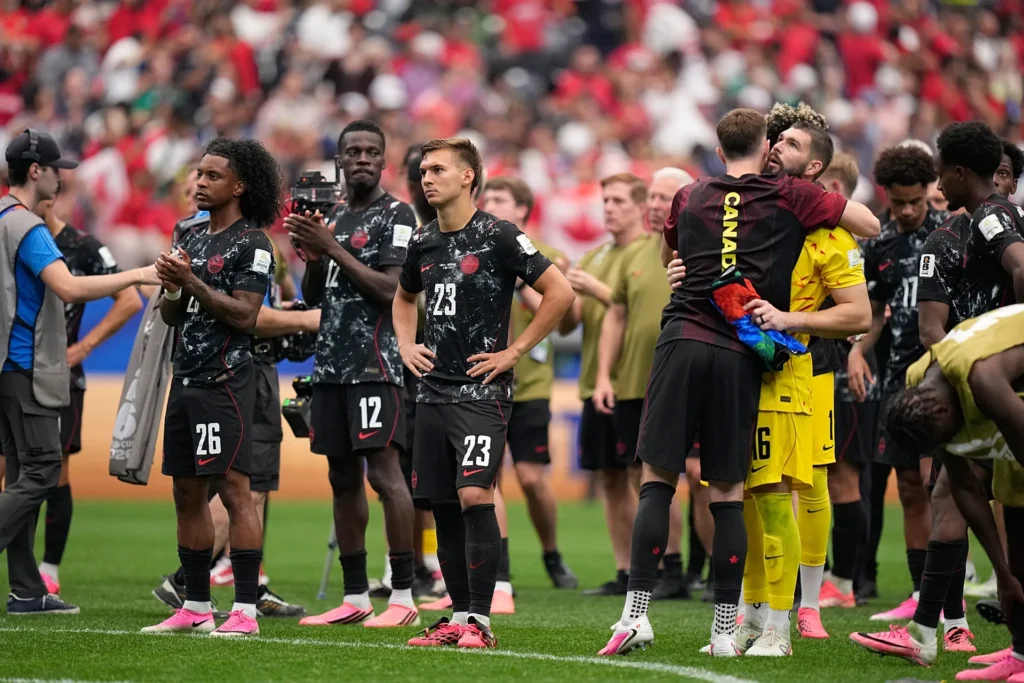
BOSTON, Massachusetts — Morocco became the first African nation to reach the World Cup quarterfinals in consecutive tournaments Saturday, dismantling co-host Canada 3-0 in a dominant second-half performance that ended Canada’s historic and emotionally charged run through the expanded 48-team competition.
Azzedine Ounahi scored twice, Soufiane Rahimi added a late third, and the Atlas Lions will now face France on Thursday in Foxborough, Massachusetts, in what promises to be one of the most anticipated quarterfinal matchups of the tournament.
What We Know So Far
Neither side could find a breakthrough in a tightly contested and scoreless first half, but Morocco took control early in the second period and never relinquished it.
Ounahi opened the scoring in the 50th minute, meeting a free kick delivered by Achraf Hakimi and firing a right-footed shot from outside the penalty area through a crowded defensive wall and into the bottom right corner, Euronews confirmed.
The same player doubled Morocco’s advantage in the 82nd minute, converting a precise right-footed finish from the center of the box after a perfectly weighted pass from Brahim Diaz. Diaz’s contribution was his fourth assist of the tournament, a new record for an African player at a single World Cup, ESPN reported.
Substitute Soufiane Rahimi, who had entered the match before halftime to replace the injured Ismael Saibari, completed the scoring in the final minute of stoppage time to seal a result that was comfortable in its margin if not always in its construction.
Morocco’s clinical efficiency was all the more striking given their underlying statistics. The Atlas Lions managed just five shots in total, the fewest by a winning team in a World Cup knockout match since such records began in 1966, ESPN noted.
Their expected goals figure of 0.85 only marginally exceeded Canada’s 0.78, pointing to a match that was tighter than the final scoreline suggested until Morocco put it beyond doubt in the closing stages.
Morocco goalkeeper Yassine Bounou, who was born in Canada to Moroccan parents, made three saves to preserve the clean sheet. Canada’s best opportunities came late, with Jonathan David firing a free kick over the crossbar in the 78th minute and Tajon Buchanan seeing a long-range effort stopped by a diving Bounou shortly afterward.
Canada’s star player Alphonso Davies was unavailable after his hamstring failed to recover in time. The Bayern Munich winger had played only 15 minutes as a substitute in Canada’s previous victory over South Africa and did not feature Saturday, coach Jesse Marsch confirmed.
The match was physically combative throughout, with eight yellow cards distributed equally between the two sides. Hakimi and Canada’s Richie Laryea were both booked in the 40th minute following a shoving exchange that briefly threatened to escalate further.
Thousands of Moroccan supporters poured into the streets of Casablanca within minutes of the final whistle, with traffic halting along the Corniche Boulevard as fans climbed onto car rooftops, waved flags, set off fireworks, and danced in scenes of jubilation that echoed those from the nation’s remarkable 2022 run, the Associated Press confirmed.
What The Coaches And Players Are Saying
Morocco coach Mohamed Ouahbi was measured but confident in his assessment of where his team now stands in world football. “We are no longer a surprise,” he said through an interpreter. “Now when people talk about Morocco we are a major contender and it is a great source of pride. I think it is only the beginning and I hope we continue to have runs like this.”
When informed of Canada coach Jesse Marsch’s claim that his side had outperformed Morocco for most of the match, Ouahbi offered a sharp response. “In terms of intensity they were good. They were good for 98 minutes. Were they better? It is hard to say. It takes some nerve to say that when you lose 3-nil,” he said.
Goalkeeper Bounou framed the achievement in continental terms. “We are so proud to represent Africa because it is a continent with a lot of talent and Africa deserves to be in the best level in football,” he said.
Marsch acknowledged his team’s performance with pride while conceding that Morocco’s quality ultimately proved decisive. “I told them that I was proud of them and I challenged them to understand that we can play like this all the time against the best teams in the world,” he said. “The way we pushed, the way we were in the match, the quality we showed, the overall impact in the match, we were better. We were better than the number seven team in the world today.”
Ouahbi was asked about Morocco’s ambitions going forward and left no room for ambiguity. “We want to keep going. We do not want to stop,” he said.
Why This Matters
Canada’s elimination ended a tournament run that exceeded every reasonable expectation for a nation appearing in the World Cup for only the third time in its history. The Canadians reached the round of 16 with a group stage campaign that captivated a country far more culturally attuned to hockey than football, and their first-ever knockout victory over South Africa deepened the connection between the national team and a rapidly growing football public at home.
The loss of Davies for almost the entire tournament cast a shadow over what might have been. The nation’s best player and most recognizable football export was rendered effectively a spectator for a campaign his country had dreamed of since qualifying for the first time in 36 years. His absence fundamentally altered Canada’s attacking options at the most critical moments.
For Morocco, Saturday’s result carries historical weight that extends well beyond a single match. The Atlas Lions became the first African nation to reach the World Cup semifinals in 2022, ending a run that stunned global football and established Morocco as a genuine force rather than a novelty. Reaching the quarterfinals again in 2026, as the first African team ever to do so in consecutive tournaments, confirms that 2022 was not an aberration.
Ouahbi’s insistence that Morocco is “no longer a surprise” reflects a broader shift in how African football is being perceived. The continent has produced exceptional individual talent for decades, but Morocco has demonstrated that an African nation can now build a tactically sophisticated, collectively organized, and emotionally resilient team capable of competing with and defeating the traditional powers of the European and South American game.
The rematch with France on Thursday adds further narrative richness. Morocco lost to France 2-0 in the 2022 semifinals in Qatar, a result that still stings within Moroccan football culture. The opportunity to reverse that outcome in front of what promises to be a passionately engaged crowd in Foxborough, with significant Moroccan diaspora communities represented throughout the northeastern United States, elevates this quarterfinal beyond the ordinary.
What Happens Next
Morocco faces France on Thursday in Foxborough, Massachusetts. France advanced to the quarterfinals the same day with a 1-0 victory over Paraguay, with Kylian Mbappe converting a second-half penalty to settle a physically demanding encounter in Philadelphia.
The Morocco-France matchup will be defined by several compelling subplots. Mbappe, who has scored seven goals in this tournament and sits level at the top of the Golden Boot standings with Messi, will face a Moroccan defensive unit that has proven it can neutralize elite attacking talent. Bounou, who grew up in Canada and carries dual connections to Saturday’s match, will be tested against one of the most technically gifted forward lines in world football.
Morocco’s tactical discipline under Ouahbi, built on the defensive foundations that made them so difficult to beat in 2022, will be tested by a French team that has scored 14 goals in five games and has the individual quality to create opportunities from virtually any position on the field.
For Canada, the journey is over. For Morocco, it is emphatically not.
Kylian Mbappe converted a 70th-minute penalty to send France into the World Cup quarterfinals with a grinding 1-0 victory over Paraguay on Saturday at Lincoln Financial Field, a bruising encounter played in near-unbearable heat that tested the composure of Les Bleus as much as their footballing quality.
The win, played in temperatures hovering around 100 degrees Fahrenheit on the 250th anniversary of American independence, extended France’s unbeaten run in this tournament to five games and set up a mouthwatering quarterfinal against Morocco on Thursday in Foxborough, Massachusetts.
What We Know So Far
France dominated possession throughout, with the team completing more than six times as many passes as Paraguay in the opening period alone, yet they failed to register a single shot on target in the first half, the Associated Press confirmed.
The match became just the third World Cup knockout game since 1966 not to feature a shot on target in the opening period, according to Flashscore.
Paraguay, who had produced the tournament’s biggest upset by eliminating Germany in a penalty shootout in the previous round, set about frustrating France from the first whistle. The South American side combined disciplined defensive organization with persistent physical provocation, fouling repeatedly and attempting to draw France into confrontations that could unsettle their rhythm.
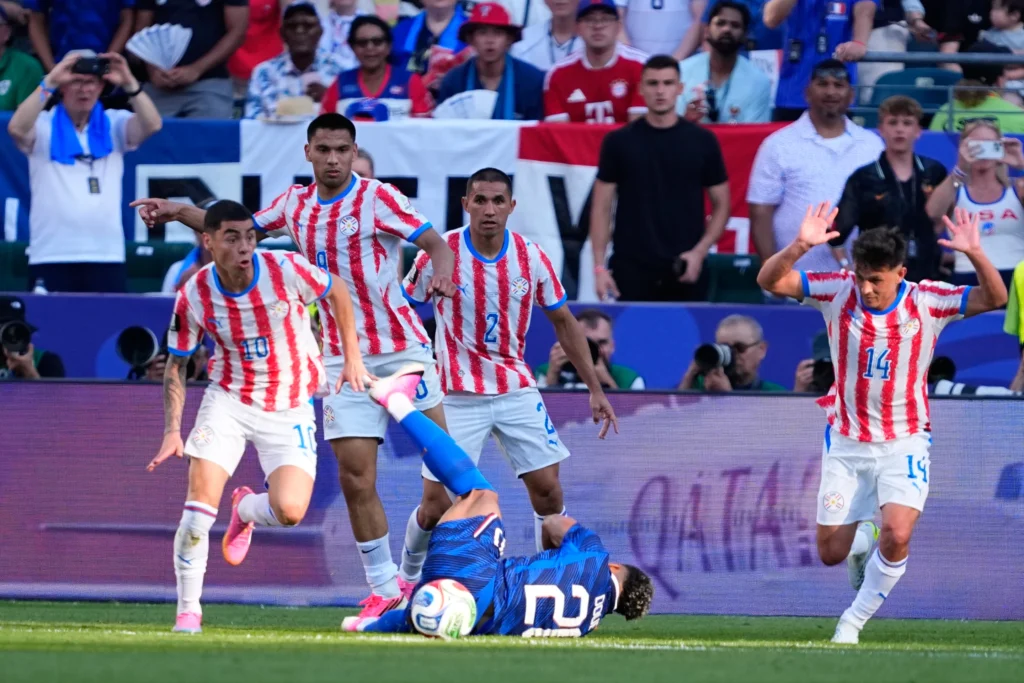
Tempers flared midway through the first half when Andres Cubas brought Mbappe down and triggered a 20-man scuffle involving players from both sides. Matias Galarza also drove his elbow into Mbappe, sending him crashing to the turf. Mbappe responded by trash-talking his opponents in Spanish throughout the afternoon, keeping his cool where others might have cracked.
The breakthrough came in the 70th minute. Substitute Desire Doue, introduced on the hour mark, danced past three Paraguay defenders into the penalty area before Diego Gomez brought him down.
After a video review confirmed the foul, Mbappe stepped up and stroked the ball low into the corner despite Paraguay’s attempts to delay and unsettle him, extending his World Cup tally to 19 goals in 19 appearances, one behind all-time record holder Lionel Messi of Argentina, the Associated Press confirmed.
Paraguay goalkeeper Orlando Gill, who had excelled throughout and produced an outstanding double save in stoppage time to deny Mbappe a second goal, then lost his composure after the final whistle.
When Gill extended his hand toward Mbappe in a gesture of sportsmanship and the French captain walked past without acknowledgment, Gill hurled the ball directly at the number ten on Mbappe’s jersey.
“I tried to shake his hand, but since he didn’t pay me any attention, I lost my temper,” Gill said. “But anyway, that was all I did. I calmed down afterward.”
France’s William Saliba was named player of the match by Flashscore for his commanding defensive display throughout the contest.
What The Coaches And Players Are Saying
Mbappe was unapologetic and characteristically sharp in his assessment of the encounter. “We knew what kind of match it was going to be,” he said in French. “We can also get our hands dirty. We know how to play ugly football. Guess they were thinking we were going to show up in tuxedos, but we were ready.”
France coach Didier Deschamps acknowledged the difficulty of the afternoon while defending his team’s resilience. “It wasn’t easy. They use every trick in the book. It is not the kind of football that will bring people to the stadium, but they defended well. It is always difficult against these South American teams,” Deschamps said, as Flashscore confirmed.
Deschamps also revealed that he had specifically instructed his two largest outfield players to position themselves around Mbappe in the closing minutes to protect him from further physical targeting. “I asked the two biggest lads to go and stand around Kylian at the end because they were going to chop him down,” the coach said.
On the extreme heat, Deschamps conceded it had affected France’s customary pressing game. “Given our style of play, it was harder to give high intensity,” he said. Hydration breaks were deployed throughout the match, with sprinklers cooling the Kentucky bluegrass field during stoppages and at halftime.
More than 68,000 spectators filled Lincoln Financial Field, though large numbers retreated to the concourse at halftime seeking shade from the relentless sun in what was described as one of the hottest conditions ever recorded at a World Cup fixture.
Why This Matters
The result keeps France firmly on course for a deep run in this expanded 48-team tournament and maintains their status as one of the genuine contenders for the title.
Mbappe’s 19th World Cup goal places him one behind Messi’s all-time record, and with both players currently tied at the top of the Golden Boot standings with seven goals apiece, their individual rivalry adds another compelling subplot to what promises to be a dramatic latter stage of the competition.
Saturday’s victory also confirmed something important about this French side beyond their technical quality.
France entered the match having scored 13 goals in their first five games, prompting questions about whether they could handle a team built to suffocate space and disrupt tempo.
Paraguay gave them exactly that test, and while France were far from their best, they found a way through with discipline, patience, and the decisive quality of their captain.
Mbappe is now the only player in World Cup history to score at least three goals in the knockout stages of three separate tournaments, a record that underlines his growing status as one of the defining players of his generation, the Associated Press noted.
The quarterfinal against Morocco carries its own historical weight. France eliminated Morocco by two goals to nil in the 2022 World Cup semifinals in Qatar, ending the North African nation’s remarkable run to the last four.
Morocco’s supporters and players will be motivated by the memory of that defeat, and their team has already shown in this tournament that they retain the defensive resilience and tactical discipline that made them a global story three years ago.
The game on Thursday in Foxborough will also be staged before what promises to be a heavily Moroccan-influenced crowd, given the size and passion of the North African diaspora along the northeastern United States corridor. France will need the kind of grit they showed Saturday, alongside considerably more attacking quality, if they are to advance.
What Happens Next
France faces Morocco in the quarterfinals Thursday in Foxborough, Massachusetts. The winner will advance to the final four of a tournament that has already produced several significant upsets and continues to generate compelling storylines at every stage.
For Paraguay, Saturday’s defeat ends a tournament run that exceeded almost every expectation. Eliminating Germany in a penalty shootout before pushing the world’s second-ranked team to the limit in suffocating heat represents a genuinely impressive achievement for a side that arrived in the United States with little expectation of progressing beyond the group stage.
For Mbappe, the pursuit of Messi’s all-time World Cup scoring record and a first international tournament winner’s medal remains alive. Two more victories would deliver both.
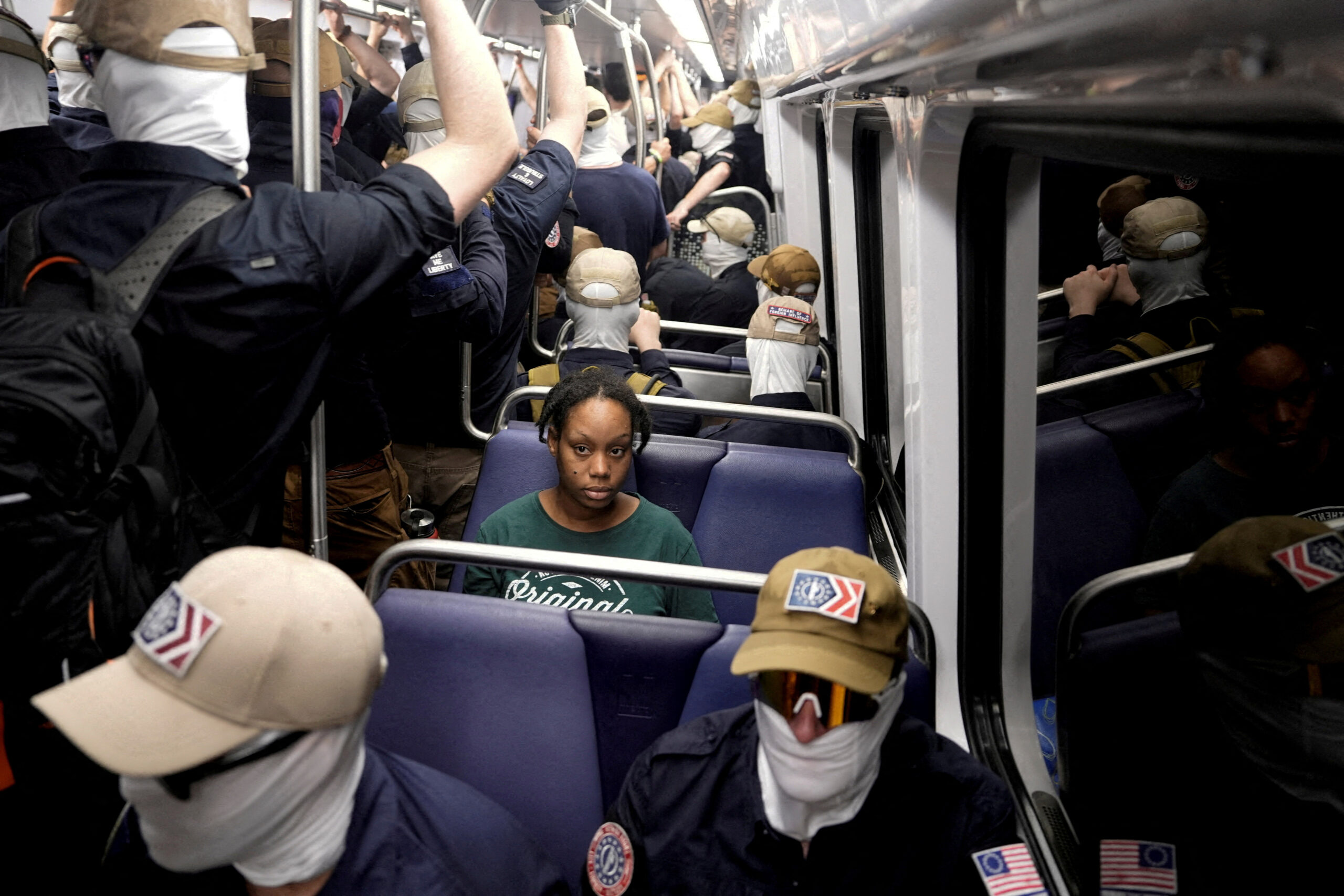
FILE PHOTO: A commuter sits as members of the group Patriot Front ride the metro on the 250th anniversary of U.S. independence on the Fourth of July in Washington, D.C., U.S., July 4, 2026. REUTERS/Cheney Orr/File Photo
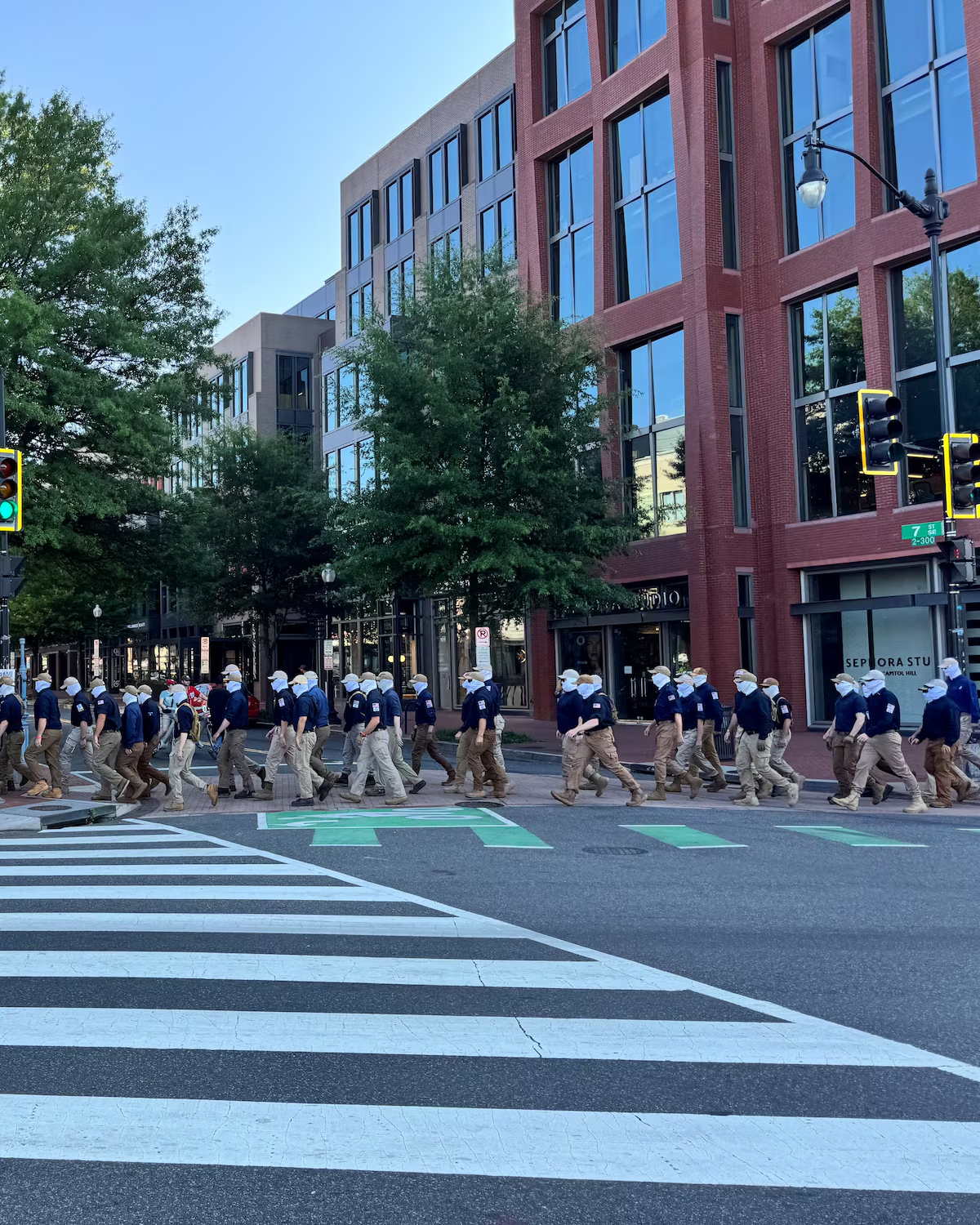
Hundreds of masked members of the white nationalist group Patriot Front marched through parts of Washington on Saturday ahead of Independence Day celebrations, drawing public attention as law enforcement monitored the demonstration and reported no significant incidents.
The group moved through several areas near the U.S. Capitol and Union Station before later leaving the city on Metro trains, according to authorities and news reports.
FILE PHOTO: A commuter sits as members of the group Patriot Front ride the metro on the 250th anniversary of U.S. independence on the Fourth of July in Washington, D.C., U.S., July 4, 2026. REUTERS/Cheney Orr/File Photo
Patriot Front members staged a coordinated march through the nation’s capital while carrying flags and chanting slogans. Washington police monitored the demonstration but said no arrests, complaints or requests for assistance were reported.
What We Know So Far
Reuters reported that Patriot Front announced on social media that approximately 400 members had traveled to Washington for the demonstration.
Journalists observed hundreds of participants wearing matching clothing that included khaki pants, blue shirts, white face coverings, caps and sunglasses.
Videos shared on social media showed the group marching in formation near Union Station and the U.S. Capitol while accompanied by drummers. Participants carried Patriot Front flags, Confederate flags and variations of the United States flag while chanting slogans including “Reclaim America.”
Later in the day, members boarded Washington Metro trains and traveled to New Carrollton, Maryland.
The Metropolitan Police Department confirmed it monitored what it described as First Amendment activity during the event.
Police said there were no arrests, no complaints filed and no calls requesting assistance connected to the march.
“MPD recognizes the rights of individuals to peacefully express their views and remains committed to maintaining public safety and security for DC residents and visitors,” a department spokesperson said.
The Guardian reported that a small number of counterprotesters gathered during the march, with some confronting demonstrators verbally. No significant clashes were reported.
What Authorities Are Saying
The Metropolitan Police Department said officers maintained a visible presence throughout the event while balancing public safety with constitutional protections for peaceful demonstrations.
Authorities did not announce any criminal investigations related to the march.
Why This Matters
Patriot Front was established in 2017 following the Unite the Right rally in Charlottesville, Virginia, according to the Southern Poverty Law Center. The organization emerged after splitting from Vanguard America and has since become known for coordinated public demonstrations featuring matching uniforms, face coverings and carefully organized marches.
The group’s published manifesto argues that the United States should undergo what it describes as a national reset rooted in the country’s European settler traditions.
Researchers who study domestic extremist movements say Patriot Front has sought to increase its public visibility through highly choreographed demonstrations and media campaigns.
John Cohen, a former Homeland Security official who served in counterterrorism and intelligence roles under the Obama and Biden administrations, told Reuters that the group’s willingness to demonstrate during national holidays reflects broader concerns surrounding white supremacist activity in the United States.
Luke Baumgartner, a research fellow with George Washington University’s Program on Extremism, said the organization uses patriotic imagery while promoting an ideology centered on white identity. He noted that some of the group’s symbols resemble historical fascist iconography.
The Guardian also cited experts who said Patriot Front has developed an extensive media and organizational infrastructure that distinguishes it from many other extremist groups operating in the United States.
What Happens Next
Federal and local law enforcement agencies are expected to continue monitoring public demonstrations during the Independence Day holiday weekend.
Officials have not indicated that Saturday’s march resulted in any ongoing criminal investigation.
Organizations that monitor extremist movements are also likely to continue tracking Patriot Front’s public activities as the group maintains a strategy of highly visible demonstrations in cities across the country.
Public marches by extremist organizations continue to present a challenge for law enforcement agencies tasked with protecting both constitutional rights and public safety.
Demonstrations involving groups designated by civil rights organizations as promoting extremist ideologies often attract significant public attention while prompting counterprotests and increased security measures.
Experts note that such events frequently serve both symbolic and recruitment purposes by generating media exposure rather than direct political influence.
The absence of violence during Saturday’s demonstration does not diminish broader concerns among researchers about the continued visibility and organization of extremist movements in the United States.