Home Blog Page 291

Trump Says U.S. to Hold Nuclear Talks With Iran, Credits Airstrikes for Forcing Ceasefire With Tehran

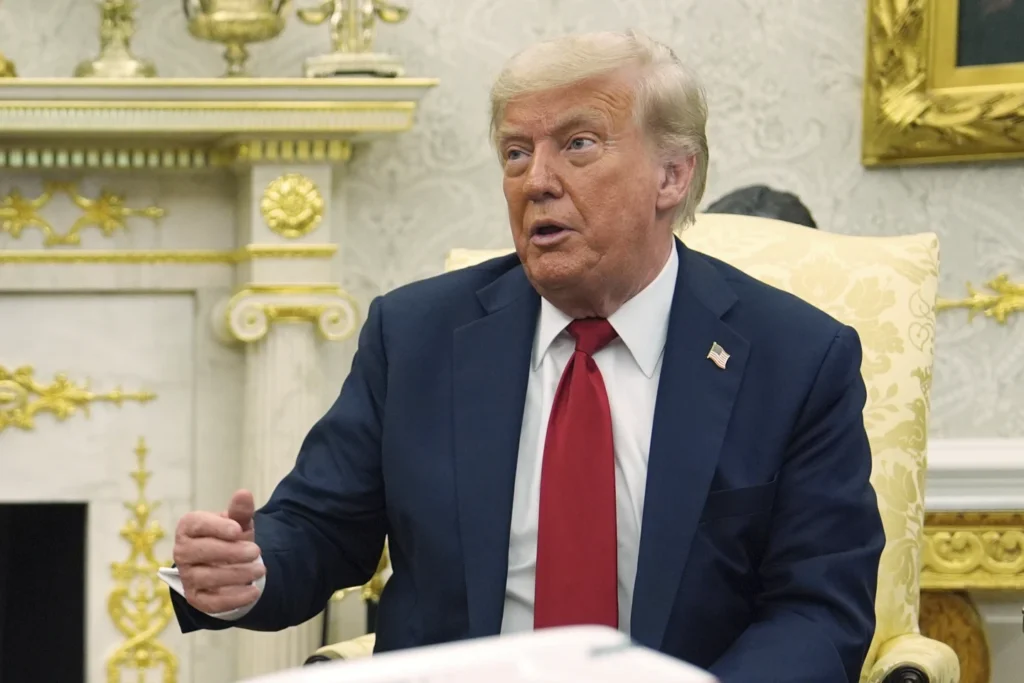
 THE HAGUE, Netherlands (BN24) — President Donald Trump announced Wednesday that the United States will begin talks with Iran next week aimed at securing a commitment to end its nuclear program, and credited recent U.S. airstrikes with helping bring a swift close to the 12-day war between Israel and Tehran.

Speaking at a NATO summit in The Hague, Trump described Sunday’s U.S. strikes—featuring massive bunker-buster bombs—as devastating to Iran’s nuclear infrastructure, calling the outcome “a victory for everybody.”

“It was very severe. It was obliteration,” Trump said, dismissing early assessments from the U.S. Defense Intelligence Agency (DIA) suggesting that Iran’s nuclear capabilities may only have been delayed by several months.

U.S. officials later tempered expectations. CIA Director John Ratcliffe said in a statement that the strikes had “severely damaged” key Iranian nuclear sites, with credible evidence that some facilities were destroyed and would take years to rebuild. Israel’s nuclear agency issued a similar assessment, estimating the strikes set Iran’s nuclear weapons development “back by many years.”

Despite the show of force, Trump said he was optimistic about engaging Iran diplomatically.

“We’re going to talk to them next week,” he said. “We may sign an agreement. I don’t know. To me, I don’t think it’s that necessary… but the last thing they want to do is enrich anything right now. They want to recover.”

Trump gave no details about the venue or participants in the upcoming negotiations. Tehran has long denied that it is seeking nuclear weapons, despite Western accusations to the contrary.

The airstrikes followed Israel’s surprise bombing campaign launched on June 13, which targeted Iran’s military command and its nuclear program. Iran responded with a massive missile barrage that, for the first time, breached Israeli air defenses. By Tuesday, both countries agreed to a ceasefire, bringing a halt to the most intense confrontation between the two nations in history.

Iranian officials reported 627 deaths and nearly 5,000 injuries, while 28 people were killed in Israel. Tight restrictions on media access in Iran have made independent verification of the toll difficult.

In Israel, officials claimed their objectives were met by eliminating Iran’s nuclear sites and missile capabilities. Iran, meanwhile, asserted it had forced an end to the war by successfully striking inside Israeli territory.

President Trump said he no longer supported regime change in Iran, an idea he and Israeli Prime Minister Benjamin Netanyahu had floated during the war. “I don’t want chaos. I want stability,” Trump said. “We’ll work toward something better with them.”

U.N. nuclear watchdog chief Rafael Grossi emphasized that the international community must prioritize access for inspectors at Iranian sites. “Technological knowledge and industrial capacity remain. The key now is transparency and long-term solutions,” he said.

 Iranian President Masoud Pezeshkian, a moderate who rose to power last year, hinted the war could catalyze internal reform. “This war and the empathy it created are an opportunity to change how officials govern and unite the nation,” he said in a statement carried by state media.

Still, the Iranian government moved quickly to reassert authority. On Wednesday, the judiciary announced the execution of three men convicted of spying for Israel’s Mossad. State-affiliated media also reported the arrest of 700 individuals accused of collaborating with Israel during the conflict.

The war took place amid a sensitive political backdrop in Iran, as Supreme Leader Ali Khamenei, now 86, is expected to be succeeded soon. Israel’s ability to strike senior Iranian officials at will has rattled Tehran’s ruling establishment.
As the ceasefire took hold, residents in both countries began to emerge from shelters and return to daily life, but uncertainty lingers.

“We came back after the ceasefire was announced,” said Farah, 67, who fled Tehran for nearby Lavasan during the Israeli bombing campaign. “People are relieved, but there’s a lot of fear about what comes next.”

In Tel Aviv, Rony Hoter-Ishay Meyer, 38, echoed that sentiment. “The last two weeks were catastrophic. We’re exhausted,” she said. “We just want to get back to our normal energy.”

 Kenya’s Faith Kipyegon Aims to Break Four-Minute Mile Barrier in Paris as Nike Launches ‘Breaking4’ Bid

 PARIS (BN24) — Kenya’s Faith Kipyegon, the most decorated female middle-distance runner in history, will attempt to rewrite athletics history on Thursday night in Paris as she takes on the first-ever unofficial sub-four-minute mile for women.

The attempt, backed by Nike as part of its ambitious “Breaking4” initiative, echoes the sportswear giant’s earlier success in helping marathon great Eliud Kipchoge run an unofficial sub-two-hour marathon. Kipyegon’s run will take place at Stade Charlety, the same track where she set world records in the 1,500 and 5,000 meters.

The 31-year-old three-time Olympic and world 1,500-meter champion is aiming to break her own world mile record of 4:07.64, set in 2023, by more than seven seconds—a margin that would shatter one of the most elusive barriers in women’s middle-distance running.

“If there’s a place for something special, it’s Paris,” Kipyegon said ahead of the attempt. “I’ve broken the 1,500 and 5,000 world records here. I feel the energy on this track. Now we try for this historic mark.”

Weather conditions in Paris are expected to be optimal Thursday night, and the attempt will feature cutting-edge elements designed to maximize Kipyegon’s performance. She’ll be equipped with Nike’s latest super-spikes, weighing just 85 grams, along with specially engineered racing apparel. But more critical may be the aerodynamic pacer formations, inspired by those used during Kipchoge’s sub-two marathon.

A rotating crew of pacers, choreographed by computational modeling to deliver maximum drafting advantage, will flank Kipyegon in tight formation. Each will be fresh enough to maintain the necessary pace—each of her four laps must average just under 60 seconds to break the four-minute barrier.

Kipyegon’s dominance in the 1,500 meters spans nearly a decade. She captured Olympic gold in 2016, 2020, and 2024, and won the world title in 2017, 2022, and 2023. Last year, she also added the 5,000-meter crown to her résumé, underlining her range and durability. Remarkably, she returned to world-class form after a 21-month hiatus following the birth of her daughter in 2018.

She currently holds the world records in both the 1,500 meters (3:49.04) and the mile (4:07.64). Her 5,000-meter record was recently broken by Ethiopia’s Gudaf Tsegay.

Nike’s “Breaking4” mirrors the 1954 milestone when Britain’s Roger Bannister famously broke the four-minute mile for men. Just weeks later, Diane Leather became the first woman to run a sub-five-minute mile. The current men’s mile world record, 3:43.13, was set by Morocco’s Hicham El Guerrouj in 1999.

Thursday’s attempt won’t be officially ratified for record purposes due to the pacer format and technology support, but for Kipyegon and millions of fans watching, a sub-four mile would still be a seismic moment in the sport’s history.

 U.S. Marine Convicted of Sexual Assault in Okinawa, Sentenced to 7 Years by Japanese Court

 NAHA, Japan (BN24) — A Japanese court on Tuesday sentenced a U.S. Marine to seven years in prison for sexually assaulting a woman in Okinawa, deepening tensions on the southern island long burdened by the American military presence.

Lance Cpl. Jamel Clayton, 22, from Ohio, was convicted by the Naha District Court of assaulting a woman in her 20s in May 2024 in the village of Yomitan. According to prosecutors, Clayton choked the woman from behind, sexually assaulted her, and left her with injuries. The court found him guilty despite his denial of the charges, which prosecutors had sought to punish with a 10-year sentence.

Presiding Judge Kazuhiko Obata said the victim’s account, delivered anonymously and remotely during the proceedings, was both consistent and credible. The court rejected Clayton’s claims of innocence, siding with the prosecution’s argument that the assault was both violent and deliberate.

The conviction has reignited outrage on Okinawa, home to roughly 70% of all U.S. military installations in Japan. Although the island accounts for less than 1% of Japan’s landmass, it hosts the bulk of the 50,000 U.S. troops stationed across the country under the Japan-U.S. security treaty.

“This behavior does not reflect the values of the Marine Corps nor does it exemplify the standards the overwhelming majority of our Marines uphold daily,” said Capt. Kazuma Engelkemier, spokesperson for the 3rd Marine Division, in a statement confirming the verdict. Engelkemier added that the Marine Corps had fully cooperated with the investigation and respected Japan’s judicial process. Clayton has remained in Japanese custody since his indictment last year.

The case is among several high-profile sexual assault allegations involving U.S. service members that sparked criticism in 2024, especially after reports emerged that local authorities initially delayed publicizing the arrests to protect victims’ privacy. That approach triggered accusations of cover-ups and eroded public trust.

Defense Minister Gen Nakatani raised the issue during a meeting Monday with Lt. Gen. Roger Turner, commander of the III Marine Expeditionary Force, calling for stronger disciplinary and preventive measures. The meeting coincided with the 80th anniversary commemorations of the Battle of Okinawa, one of the bloodiest campaigns of World War II.

The legacy of that battle, followed by decades of U.S. military occupation until 1972, has left a deep sense of resentment among Okinawans. Residents continue to protest the noise, environmental pollution, aircraft accidents, and recurring crimes associated with U.S. bases.

The case has also intensified calls for revisions to the Status of Forces Agreement (SOFA) between Japan and the United States. Critics argue the agreement too often shields American personnel from Japanese legal accountability, allowing the U.S. to retain primary jurisdiction over many crimes.

This week, Prime Minister Shigeru Ishiba’s Cabinet adopted a new statement revealing that between 2014 and 2024, Japanese prosecutors dropped over 300 criminal cases involving U.S. military personnel, including a 2020 sexual assault case in Okinawa that never resulted in charges.

 Armed Police Arrest Suspect After Rush-Hour Stabbing Near Earl’s Court Tube Station, London

LONDON (BN24) — Armed officers descended on Earl’s Court station in west London during rush hour Wednesday after a man was stabbed near the busy transport hub, police said.

The Metropolitan Police responded to reports of a violent altercation on Hogarth Road, just yards from the station entrance, at approximately 4:24 p.m. London Ambulance Service medics treated the victim for stab wounds at the scene before transporting him to hospital. Authorities confirmed his injuries are not believed to be life-threatening or life-altering.

A man has been arrested on suspicion of grievous bodily harm (GBH), and a police cordon remains in place as officers continue their investigation.

Dramatic footage shared online shows armed officers conducting searches in and around Earl’s Court station, which is served by the District and Piccadilly lines. The incident unfolded as commuters made their way home, triggering a swift response from both the Metropolitan Police and British Transport Police.

The stabbing came less than 24 hours after another violent incident occurred in the same area. A viral video circulating on social media showed a man sprinting through the ticket hall at Earl’s Court station and assaulting another individual before being restrained by members of the public. Police said a 20-year-old suspect was arrested in that case on three counts of common assault and remains in custody.

Despite speculation on social media linking Tuesday’s incident to an attempted watch theft, British Transport Police have said there is no indication that robbery was involved.

A spokesperson for the Metropolitan Police said officers are actively pursuing leads in the Wednesday stabbing and urged the public to come forward with any relevant information.

“This kind of violence in broad daylight near one of London’s busiest stations is completely unacceptable,” the spokesperson said. “Our officers responded swiftly to secure the scene, arrest a suspect, and ensure public safety.”

The area around Earl’s Court remained partially closed off into the evening, with visible police presence and forensic teams collecting evidence. No additional suspects are currently being sought, police said.

Trump Applauds NATO’s Historic 5% Defense Spending Pledge, Slams Spain for Falling Short

THE HAGUE, Netherlands (BN24) — President Donald Trump on Wednesday celebrated what he called a “big win” for NATO and Western civilization after alliance leaders pledged to dramatically boost defense spending, agreeing to a new target of 5% of GDP by 2035. The sweeping commitment, finalized at a landmark summit in The Hague, follows sustained pressure from Trump, who had long criticized member states for what he viewed as inadequate contributions.

“This is a great victory for everybody. We’ll be equalized shortly — and that’s the way it has to be,” Trump said at a post-summit news conference, calling the outcome a “big success” and the alliance “stronger, fairer, and more lethal.”

The new NATO declaration commits members to allocate at least 3.5% of their GDP to core defense expenditures, with up to an additional 1.5% to cover broader national security infrastructure investments. The revised goal more than doubles the current benchmark of 2%, first agreed upon in 2014.

While most leaders embraced the shift as a response to evolving global threats, Spain stood out in opposition. President Trump publicly criticized Spain for resisting the new spending requirement, calling Madrid’s stance “terrible” and warning of repercussions in ongoing trade talks.

“They’re not making the same effort as the others — and that’s going to be a problem for them,” Trump said, signaling potential punitive trade measures. His comments followed a tense group photo where Spanish Prime Minister Pedro Sánchez appeared visibly isolated.

Sánchez defended his position, stating Spain was already making an “enormous effort” to reach 2.1% of GDP and calling the 5% goal “misguided.” Nevertheless, he signed the final communiqué, asserting it allowed “flexibility” for individual nations to meet the commitments in line with national capabilities.

The summit, described by NATO Secretary-General Mark Rutte as historic, came amid heightened tensions with Russia and ongoing instability in the Middle East. Leaders reaffirmed NATO’s foundational Article 5, which guarantees mutual defense, though notably the final declaration stopped short of directly condemning Russia’s invasion of Ukraine — a shift from previous statements.

“No one should doubt our capacity or determination should our security be challenged,” Rutte said. “We’re building a stronger alliance at a dangerous moment.”

The gathering marked Trump’s first NATO summit since 2019. While he initially raised eyebrows with comments questioning the alliance’s security guarantees, he later reaffirmed his support: “I stand with Article 5. That’s why I’m here.”

The summit also offered a moment of levity. During a discussion of the fragile ceasefire between Iran and Israel — a truce Trump helped broker — the president likened the warring nations to “two kids in a schoolyard.” Rutte quipped in response, “And then daddy has to sometimes use strong language,” referencing Trump’s on-camera expletive-laced frustration over ceasefire instability.

In bilateral talks on the sidelines, Trump met with Ukrainian President Volodymyr Zelensky. While expressing continued support for Kyiv, Trump acknowledged the difficulties of securing a lasting peace with Russia. “It’s more difficult than I thought,” he said, hinting at further military assistance and suggesting he had asked Russian President Vladimir Putin to “help us on Russia, not Iran.”

NATO’s final communiqué emphasized Ukraine’s central role in European security, stating that contributions to Ukraine’s defense — including direct military aid and support for its defense industry — would count toward member states’ defense spending.

The commitment also drew pushback from French President Emmanuel Macron, who challenged Trump’s ongoing trade disputes with the European Union. “We can’t call for more defense spending among allies and then wage a trade war against one another — it makes no sense,” Macron said.

Despite mixed responses, many leaders praised the summit’s unity. UK Prime Minister Sir Keir Starmer declared NATO “more relevant than ever,” saying, “We’re bigger, stronger, and more united — and that sends a powerful message to our adversaries.”

BBC

 Court Halts Burial of Zambia’s Ex-President Edgar Lungu in South Africa Amid Government-Family Feud

 PRETORIA, South Africa (BN24) — A South African court halted the burial of Zambia’s late President Edgar Lungu at the last moment Tuesday, deepening an already tense dispute between his family and the Zambian government over where and how the former leader should be laid to rest.

The burial was scheduled to take place immediately following a private funeral mass in South Africa, but mourners were informed of the abrupt legal intervention only after the service had concluded. The Pretoria High Court’s ruling effectively delays any funeral until at least August, marking the latest development in a bitter standoff that began shortly after Lungu’s death.

Lungu, who died in South Africa earlier this month at age 68, was Zambia’s sixth president and had long maintained a contentious relationship with his successor, President Hakainde Hichilema. That acrimony has now spilled into the debate over his final resting place.

The Zambian government filed an urgent application with the Pretoria High Court to prevent the planned private burial, insisting that Lungu be accorded a state funeral on home soil. The court announced that the funeral could not proceed, citing an “agreement between the parties,” and scheduled a full hearing for August 4, 2025.

As part of the ruling, Zambian Attorney General Mulilo D. Kabesha must submit amended court filings by July 4, while Lungu’s family has until July 11 to respond. The court will also determine who bears the legal costs of the halted burial during that August hearing.

The standoff highlights longstanding tensions between Lungu and Hichilema that date back to their time in office. During Lungu’s presidency, Hichilema was jailed for over 100 days on controversial treason charges after his motorcade allegedly refused to yield to Lungu’s convoy. That legacy of political animosity has lingered, now resurfacing around Lungu’s death.

According to the family, Lungu expressed a desire not to have President Hichilema attend his funeral. They opted for a private burial in South Africa, asserting control over the arrangements and repatriation of the body. Initially, both parties had agreed on a state funeral in Zambia, but that consensus collapsed amid disagreements over the specifics.

President Hichilema has since argued that Lungu, as a former head of state, “belongs to the nation of Zambia” and must be buried there. Government officials further contend that individual wishes cannot supersede national interest, referencing the 2021 case of founding President Kenneth Kaunda. Despite Kaunda’s reported desire to be buried beside his wife, he was laid to rest at Lusaka’s Embassy Memorial Park by government directive.

The Lungu burial saga underscores the fragile political reconciliation in Zambia, where past rivalries continue to reverberate. For now, Lungu’s body remains in limbo, with South Africa temporarily serving as the stage for a dispute that has become a symbolic extension of Zambia’s deeply divided political legacy.

 At Least 16 Killed, Hundreds Injured as Kenyan Protesters Clash With Police Over Ruto’s Government

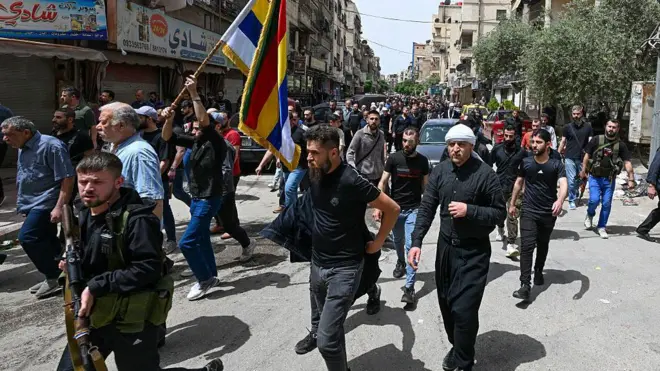
 NAIROBI, Kenya (BN24) — At least 16 people were killed and 400 others injured in violent clashes between demonstrators and police during nationwide protests against President William Ruto’s government, according to rights group Amnesty Kenya.

Thousands of protesters flooded the streets on Wednesday, demanding change and chanting anti-government slogans including “Ruto must go,” while waving tree branches to signify a call for peaceful resistance. Despite the symbolism, the protests turned chaotic, with police deploying tear gas, setting up razor wire barricades, and using force to block access to key government sites including State House and Parliament.

The unrest prompted the Ruto administration to issue a directive banning live TV and radio coverage of the demonstrations. However, that media blackout was swiftly overturned by a ruling from Kenya’s High Court in Nairobi.

Speaking from a funeral service in Kilifi County along the coast, President Ruto appealed for calm and national unity amid mounting anger. “Protests should not be to destroy peace in Kenya,” he said. “We do not have another country to go to when things go wrong. It is our responsibility to keep our country safe.”

His absence from State House in Nairobi was conspicuous as protesters attempted to march on the presidential compound, only to be repelled by heavily armed security forces. Similar blockades were set up around Parliament, where memories of deadly protests one year ago remain fresh. At least 60 people died in last year’s unrest after parts of Parliament were set ablaze by demonstrators.

Kenyan Protesters

Wednesday’s death toll has not been officially confirmed by the government, but a joint statement from the Kenya Medical Association, the Law Society of Kenya, and the Police Reforms Working Group placed the number at eight deaths. The groups reported that 83 of the 400 injured required specialized medical care, with at least eight people suffering gunshot wounds. Among the wounded were three police officers.

Scenes from Nairobi showed thick clouds of tear gas billowing between buildings as protesters scattered, coughing and shielding their eyes. Downtown streets were largely deserted, with businesses shuttered and the typically bustling city center reduced to silence except for the chants of demonstrators.

The protests, which erupted on the anniversary of last year’s fatal storming of Parliament, carried emotional weight. Outside the legislative building, mourners placed flowers and handwritten notes at the perimeter fence in remembrance of those killed. One woman, draped in the Kenyan flag, held a placard bearing the names of victims from last year’s demonstrations.

“I feel like as a country we’re not going in the right direction,” said Amina Mude, who joined the protests in Nairobi. “Especially when it comes to education and the future of our children. It’s time the leadership started listening to us.”

 Brazilian Hiker Found Dead After 600-Meter Fall on Indonesia’s Mount Rinjani

 JAKARTA, Indonesia (BN24) — A 26-year-old Brazilian tourist who plunged nearly 600 meters from the ridge of Mount Rinjani, one of Indonesia’s highest and most active volcanoes, was found dead Tuesday after nearly four days of intensive search efforts, Brazilian and Indonesian authorities confirmed.

Juliana Marins, a dancer and avid traveler from Niterói, near Rio de Janeiro, had been hiking Mount Rinjani on the island of Lombok on June 21 with a local guide and five other foreign tourists when she fell from a ridge into a steep crater, according to Indonesia’s National Search and Rescue Agency.

“No signs of life were found,” said agency head Mohammad Syafii. He confirmed that rescuers located Marins’ body using thermal drone technology in an area made treacherous by rugged terrain and poor weather. Her body was retrieved beside the volcano’s crater after days of grueling efforts.

Due to difficult visibility and extreme conditions, evacuation of her remains was delayed. Rescue crews began the arduous descent toward Sembalun base camp late Tuesday, but transportation to a police hospital was postponed until Wednesday.

Brazil’s Foreign Ministry described the incident as a tragedy and noted that the Brazilian embassy in Jakarta had been working closely with Indonesian authorities during the search. Marins’ family also confirmed her death and expressed gratitude to supporters across Brazil who had followed the dramatic rescue effort online.

The case gripped the South American nation, where millions watched and shared updates on social media. Marins had been chronicling her months-long solo backpacking trip across Asia, which included stops in the Philippines, Vietnam, and Thailand before she arrived in Indonesia.

Controversy briefly surrounded the rescue effort after Brazil’s embassy in Jakarta accused Indonesian officials of prematurely informing Marins’ family that she had been found alive and was receiving aid. Brazilian diplomats claimed this misinformation had caused “emotional distress.” Indonesian authorities did not immediately respond to the accusation.

Mount Rinjani, which stands at 3,726 meters (12,224 feet), is the second-highest volcano in Indonesia and a popular destination for trekkers. The volcano, located east of Bali, is known for its dramatic ridgelines, caldera lake, and unstable weather—factors that compounded the challenge for search teams.

In a heartfelt message posted to Instagram, Marins’ family thanked the global community for their prayers and solidarity during the ordeal.

“She was full of dreams and passion for life,” the family wrote. “We are devastated, but we are also proud of the light she spread.”

Authorities have not publicly stated when Marins died.

British Man Arrested for ‘Staging Wedding’ to Girl, 9, at Disneyland Paris is Known Paedophile Wanted in UK

MEAUX, France (BN24) — A British man arrested at Disneyland Paris for allegedly attempting to stage a wedding ceremony with a nine-year-old girl has been identified as Jaskarn Jhaj, a 39-year-old convicted paedophile wanted by UK authorities, French prosecutors announced Tuesday.

Jhaj, also known as “Jacky,” was charged with fraud, breach of trust, money laundering and identity theft following the shocking incident that unfolded Saturday at the theme park in Marne-la-Vallée. The elaborate scheme involved approximately 100 guests who believed they were attending a legitimate wedding ceremony.

French prosecutors in Meaux confirmed that Jhaj was known to British authorities “for sexual offences against minors” and is currently on the run from UK law enforcement. According to official statements, Jhaj is registered on the British sex offenders register and is wanted nationally by judicial authorities in his home country for failing to comply with registration obligations.

The convicted sex offender was previously sentenced to four years in prison in 2016 for grooming and sexually assaulting two 15-year-old schoolgirls. Court records show he lured the teenagers to parties by falsely claiming to be a prominent Hollywood film producer before providing them with alcohol.

Park staff discovered the disturbing nature of the event when Jhaj arrived with a Ukrainian child identified as the intended “bride,” accompanied by her family and the large group of guests. Disneyland employees only realized the bride was a nine-year-old girl on the day of the ceremony, according to prosecutors.

Despite his criminal background, Disneyland management had permitted Jhaj to privatize portions of the park facility at a cost of approximately £115,000. The private wedding ceremony was scheduled to take place at dawn, as such events at the theme park are typically organized outside regular operating hours.

Prosecutors revealed that Jhaj had assumed the identity of a Latvian national and used fraudulent documents to secure the privatization contract with Disneyland. Senior management claimed they were “deceived” by the false documentation and misrepresentation of the event’s true nature.

In addition to Jhaj, French authorities arrested three other individuals connected to the scheme. Those detained include the child’s mother, a 41-year-old Ukrainian woman, a 24-year-old Latvian woman who portrayed the bride’s sister, and a 55-year-old Latvian man who participated in the ceremony.

The entire event was planned for live broadcast on social media platforms, with prosecutors noting that “extras” had been recruited online to portray family members. Despite the public nature of the planned broadcast, organizers specifically requested that Disneyland maintain confidentiality about the event.

Jhaj has a documented history of elaborate hoaxes and publicity stunts. In 2023, he organized a mysterious fake funeral featuring an empty coffin at London’s prestigious Oratory in Brompton Road, Knightsbridge, complete with hired actors portraying mourners. The same year, he orchestrated a fabricated red carpet scene in London’s West End involving 90 children and dozens of teenage extras recruited to create crowds for filming.

More recently in 2024, Jhaj was filmed naked in Silvertown, east London, detonating a fake police van and sending its roof 50 feet into the air. The incident was recorded as part of a production called Project Dover, which also involved setting fire to a van bearing BBC World branding.

A Disneyland Paris source confirmed that the event was “soon shut down” once staff realized the true circumstances, with guests prevented from entering the premises. The theme park acted swiftly to cancel all proceedings upon discovering the bride was a minor.

Medical examination of the young girl revealed she had not suffered any physical violence, according to prosecutors. The child’s condition and current custody arrangements were not immediately disclosed by authorities.

One individual recruited to act as a wedding guest described the shocking realization among attendees. The source stated that everyone believed they were attending a legitimate wedding ceremony and expressed stunned disbelief upon learning the true nature of the event. The witness praised Disneyland’s professional response, noting that staff immediately canceled everything upon discovering the bride was a child.

The incident has raised serious questions about security protocols and background verification procedures at international entertainment venues. Disneyland Paris officials have not yet provided detailed statements about how the extensive planning and financial arrangements proceeded without detection of Jhaj’s criminal history.

French authorities continue investigating the complex scheme involving multiple international participants and fraudulent documentation. The case highlights ongoing challenges in monitoring registered sex offenders who cross international borders and assume false identities to evade detection.

Jhaj remains in French custody pending further legal proceedings, while UK authorities have been notified of his arrest and location. The incident represents one of the most elaborate and disturbing cases of attempted child exploitation at a major international tourist destination in recent years.

U.S. Intelligence: Iran’s Nuclear Program Set Back Months, Not Destroyed by Trump-Ordered Strikes

 WASHINGTON (BN24) — U.S. airstrikes on three key Iranian nuclear sites ordered by President Donald Trump earlier this month have set back Tehran’s atomic program by several months but failed to destroy it, according to an initial assessment from the Defense Intelligence Agency (DIA) obtained by multiple sources familiar with the classified report.

The preliminary damage assessment contradicts Trump’s repeated claims that the strikes, carried out with B-2 Spirit bombers and submarine-launched Tomahawk cruise missiles, had “totally destroyed” Iran’s nuclear infrastructure. The strikes targeted facilities at Fordow, Natanz, and Isfahan, but intelligence sources say Iran had moved critical assets, including enriched uranium stockpiles, prior to the attacks.

The DIA’s findings, first reported by CNN, suggest Iran’s nuclear program remains intact, though disrupted. Some centrifuges used to enrich uranium reportedly survived the bombardment, and evidence indicates that batches of highly enriched uranium were removed from at least one site before the strikes. One source, speaking on condition of anonymity due to the sensitivity of the material, said the attack may delay Iran’s nuclear advancement “by months, not years.”

Trump, however, continues to portray the mission as a resounding success. “The sites that we hit in Iran were totally destroyed, and everyone knows it,” he wrote in a Truth Social post Monday. White House press secretary Karoline Leavitt doubled down on the administration’s narrative, dismissing the leaked report as a smear from a “low-level loser” in the intelligence community.

The strikes came amid a fragile U.S.-brokered ceasefire between Israel and Iran following a 12-day conflict. The Fordow facility—considered Iran’s most deeply buried and fortified enrichment site—was reportedly heavily damaged and rendered unusable for the near term, according to a senior U.S. official.

Still, questions linger about the survivability and dispersion of Iran’s nuclear infrastructure. Experts have long maintained that airstrikes alone are unlikely to eliminate Iran’s capabilities, given the country’s decades of research and its multiple undisclosed enrichment locations. Iran’s recent construction of a new underground facility near Natanz, buried even deeper than Fordow, underscores the difficulty of neutralizing the entire program through aerial bombardment.

Vice President JD Vance offered conflicting views on the impact of the strikes, calling the mission a “destruction” of Iran’s nuclear program in a Fox News interview, but later acknowledging that while enrichment may have been disrupted, intelligence remains classified. “Even if Iran has uranium, it can no longer enrich it,” Vance said, adding that the U.S. reserves the right to strike again.

Meanwhile, Israeli officials claim their own strikes killed up to a dozen Iranian nuclear scientists. However, the International Atomic Energy Agency estimates Iran’s nuclear assets are spread across at least 30 facilities, many of which remain operational or have yet to be inspected. An IAEA visit to a new underground site near Natanz was canceled following the strikes.

Congressional skepticism over the Trump administration’s claims has grown. A classified briefing for House members was abruptly postponed Tuesday, prompting Rep. Mike Quigley (D-Ill.), a member of the House Intelligence Committee, to speculate that the administration was avoiding political fallout. “They don’t delay briefings that have good news,” he said.

The Pentagon’s Operation Midnight Hammer marked the first combat use of the 30,000-pound Massive Ordnance Penetrator, a bunker-busting bomb designed to destroy underground facilities. While it demonstrated U.S. technological reach, analysts warn that the strikes also gave Iran and other adversaries insight into the limitations of U.S. munitions.

President Trump has continued to press Iran for a new nuclear deal that would permanently eliminate its enrichment capability. Tehran, which is party to the Nuclear Non-Proliferation Treaty, maintains that its nuclear activities are strictly for peaceful purposes and has refused to forfeit its right to enrichment.

washingtonpost