Home Blog Page 290

Iran Denies Any Plans for U.S. Meeting Next Week, Foreign Minister Says

TEHRAN, Iran (BN24) — Iran has no plans to hold talks with the United States next week, Foreign Minister Abbas Araqchi said Thursday, publicly rejecting a claim by President Donald Trump that a meeting was imminent between the two longtime adversaries.

Speaking in an interview broadcast on Iranian state television, Araqchi dismissed the idea of an upcoming dialogue with Washington, asserting that no such engagement is currently scheduled. His comments directly contradicted President Trump’s earlier statement that U.S. and Iranian officials were preparing for negotiations next week in the wake of a fragile ceasefire with Israel.

“There is no meeting planned between Iran and the United States at this time,” Araqchi said. “We are evaluating whether further talks serve our national interest, especially after the disruption of previous rounds.”

The foreign minister referred to five earlier rounds of U.S.-Iran negotiations—widely believed to have been held through intermediaries—which he said were derailed when U.S. and Israeli forces launched a series of coordinated strikes on Iranian nuclear facilities earlier this month.

Both Washington and Tel Aviv have justified the strikes as necessary measures to degrade Iran’s potential to develop nuclear weapons. Tehran, however, has maintained that its nuclear program is strictly civilian in nature, intended for energy production and medical research.

Araqchi acknowledged that the recent attacks had caused significant setbacks. “The damage to our nuclear infrastructure was not minor,” he said, adding that Iranian authorities were “reviewing the extent of the losses and recalibrating the future course of our nuclear policy accordingly.”

His remarks signal Tehran’s continued skepticism over Washington’s intentions, even as U.S. officials, including Trump, have floated the possibility of renewed talks. The conflicting statements underscore the uncertainty surrounding any future diplomatic engagement between the two nations.

While President Trump said earlier this week that “we’re going to talk to them [Iran] next week” and hinted at the possibility of an agreement, Araqchi’s denial suggests that Iran is not yet ready to return to the negotiating table—at least not on Washington’s timeline.

Diplomatic observers say Tehran’s calculus will likely hinge on a combination of factors, including the full extent of the damage to its nuclear infrastructure, the strength of regional alliances, and its internal political dynamics amid a wave of post-war nationalism.

Justice Department Launches Probe Into University of California Over Diversity Hiring Practices

WASHINGTON (BN24) — The Trump administration’s Justice Department has opened a civil rights investigation into the University of California’s hiring practices, examining whether the public university system’s push to diversify its faculty may violate federal anti-discrimination laws.

In a statement issued Thursday, the department confirmed that its Civil Rights Division will scrutinize whether the University of California has engaged in a “pattern or practice” of employment discrimination by using race and sex as factors in faculty hiring decisions. The investigation marks the latest escalation in President Donald Trump’s broader crackdown on what his administration views as political bias and unequal treatment at U.S. academic institutions.

“Institutional directives that use race- and sex-based hiring practices expose employers to legal risk under federal law,” said Harmeet Dhillon, assistant attorney general for the Civil Rights Division. The inquiry will determine whether any practices violate Title VII of the Civil Rights Act of 1964, which prohibits employment discrimination based on race, color, religion, sex, or national origin.

The investigation zeroes in on the University of California’s multi-campus strategic plan, which explicitly lists boosting the number of underrepresented minority and female faculty as a priority goal. Justice Department officials argue such directives could amount to unlawful quotas or preferences.

A spokesperson for the University of California responded in a statement that the university system “is committed to fair and lawful processes in all of our programs and activities, consistent with federal and state anti-discrimination laws.”

“The University also aims to foster a campus environment where everyone is welcomed and supported,” the spokesperson said, adding that UC would cooperate “in good faith” with federal authorities.

The inquiry adds to a growing list of confrontations between the Trump administration and institutions of higher learning over issues of identity, equality, and academic freedom. The administration has already launched probes into campus responses to antisemitism, sought to restrict federal research funding, and threatened universities with legal action over policies it views as discriminatory or ideologically driven.

The University of California system, which spans 10 campuses and employs more than 20,000 faculty members, is widely seen as a national leader in diversity and inclusion initiatives. But officials in Washington say those efforts must not override legal protections against discrimination.

The move is expected to further strain relations between the Trump White House and California’s Democratic leaders, who have frequently clashed over immigration, education, and civil rights. Governor Gavin Newsom has already taken the administration to court over federal intervention in California’s National Guard deployments, and additional legal challenges may follow depending on the outcome of the hiring probe.

Tensions have also escalated over state legislation that allows transgender athletes to compete on girls’ teams in public schools, a law the Justice Department is reviewing separately as part of its broader challenge to progressive policies in the Golden State.

Trump Administration Plans Second Deportation of Kilmar Abrego, But El Salvador Not the Destination

WASHINGTON (BN24) — The Trump administration is preparing to deport Kilmar Abrego for a second time, but this time the Salvadoran national will not be returned to El Salvador, the country where he was wrongly deported in March, a Justice Department attorney told a federal judge on Thursday.

During a hearing in U.S. District Court in Maryland, government attorney Jonathan Guynn said the administration currently has “no imminent plans” to remove Abrego from the country. However, should a deportation take place, Abrego would be sent to a third, unnamed nation—not back to El Salvador, where his life was previously deemed at risk.

Abrego, 29, is at the center of a growing legal and political controversy after his March deportation violated a 2019 federal court order barring his removal to El Salvador over concerns of potential persecution. After being imprisoned in El Salvador, he was recently returned to the U.S. under federal custody to face criminal charges for allegedly smuggling undocumented migrants into the country. He has pleaded not guilty.

The Trump administration’s effort to remove Abrego again, even as legal proceedings remain underway, has further inflamed tensions surrounding the president’s aggressive immigration enforcement strategy. Abrego, who had been living in Maryland with his U.S. citizen wife and young child, has drawn widespread attention as a symbol of what critics say is a system disregarding due process protections for migrants.

A federal judge in Maryland has ordered that Abrego be released ahead of trial, possibly as early as Friday. However, the Department of Homeland Security has indicated it will take him into immigration custody immediately, raising fresh questions about his fate and the administration’s legal responsibilities.

Abrego’s attorneys have urged the court to keep him in Maryland while both the immigration and criminal cases proceed, and to ensure no further deportation is attempted until the legal matters are resolved. Two federal courts—one in Maryland and the other in Tennessee, where the criminal charges were filed—have yet to issue final rulings on those requests.

The Justice Department has remained largely silent about where Abrego might be deported if the removal goes ahead. “He will not be sent to El Salvador,” Guynn said Thursday, without providing further detail.

Meanwhile, Assistant U.S. Attorney Robert McGuire, who is leading the prosecution in Nashville, told Magistrate Judge Barbara Holmes this week that he would coordinate with DHS “as best as he could,” but acknowledged that prosecutorial discretion does not extend to immigration enforcement decisions.

The case has become a flashpoint in the Trump administration’s broader immigration agenda, which has faced repeated judicial challenges and criticism from human rights groups. Abrego’s wrongful deportation, his subsequent return to the United States, and now the uncertainty over a potential second removal have further underscored the legal complexity and human toll of fast-tracked immigration enforcement.

Netherlands Queen Maxima Appears to Mimic Trump During NATO Visit, Sparking Viral Reactions

AMSTERDAM (BN24) — Queen Maxima of the Netherlands sparked a flurry of viral reactions after appearing to mock U.S. President Donald Trump’s speech mannerisms during a joint photo opportunity in Amsterdam on Wednesday, shortly after a high-profile breakfast meeting ahead of the NATO summit.

The U.S. president, visiting the Netherlands for the summit, met with King Willem-Alexander and Queen Maxima at the royal palace as part of his diplomatic engagements in Europe. Trump later praised the encounter on his Truth Social platform.

“The day begins in the beautiful Netherlands. The King and Queen are beautiful and spectacular people,” Trump posted. “Our breakfast meeting was great! Now it’s off to the very important NATO meetings. The USA will be very well represented.”

However, it was the trio’s brief appearance before the cameras that seized attention online. As Trump thanked the press and remarked, “That’s the picture we want,” and “It was great,” Queen Maxima appeared to subtly imitate his mouth movements—an action quickly dissected and shared across social media platforms.

Observers online were quick to interpret her gesture as mockery. A clip of the moment went viral within hours, with thousands of social media users weighing in on the queen’s apparent mimicry.

“This is hilarious! I’ve never been a fan of our stiff monarchy, but Queen Maxima rocks it,” one X (formerly Twitter) user wrote. “Treat him like a baby.”

“Maxima does not like Trump’s a** one bit,” another posted. Others chimed in with: “Was Queen Maxima of the Netherlands mimicking Donald Trump?!” and “Our queen making fun of Trump while standing right next to him—legend!”

Still, some defended the 54-year-old Argentine-born queen, suggesting that the clip may have been misinterpreted. “Awkward, but I think an accident,” one commenter wrote. “People are reading this wrong,” said another.

The White House declined to comment on the clip. Trump himself has made no public reference to the viral footage since returning to Washington following the conclusion of the summit.

The moment capped off a colorful NATO gathering, during which NATO Secretary-General Mark Rutte—himself a Dutch native and former prime minister—made headlines by seemingly referring to Trump as “daddy” during a discussion about the Middle East conflict.

Comparing the war between Israel and Iran to “two kids in a schoolyard,” Trump had reportedly used strong language about the ceasefire’s fragility. Rutte, responding with his own metaphor, added, “Then daddy has to sometimes use strong language,” prompting widespread media commentary. Rutte later clarified that he was not directly calling Trump “daddy,” saying the comment was “figurative.”

news.com.au

Ayatollah Khamenei Reemerges With Warning to U.S. After Ceasefire, Dismisses Impact of Airstrikes on Iran’s Nuclear Program

TEHRAN, Iran (BN24) — Supreme Leader Ayatollah Ali Khamenei resurfaced Thursday with a stern warning to the United States against any future aggression, declaring that Iran had delivered a “slap to America’s face” by launching a retaliatory missile strike on a U.S. airbase in Qatar, days after a ceasefire ended a 12-day war with Israel.

In his first public statement since June 19, Khamenei appeared in a prerecorded address aired on state television, breaking his silence following the intense Israeli and U.S. bombardment of Iranian military and nuclear sites. The 86-year-old leader, sounding fatigued and occasionally stumbling over his words, did not directly address the condition of Iran’s nuclear program or its damaged facilities.

“America intervened to save the Zionist regime from collapse and gained nothing,” Khamenei said, referring to Israel. “In response, the Islamic Republic struck back and delivered a powerful slap to America’s face. This action can be repeated.”

The U.S. confirmed that Iran launched a missile barrage on a base in Qatar earlier in the week, though officials said the attack caused no casualties and had been telegraphed in advance. President Donald Trump, who has described the U.S. and Israeli airstrikes on Iran’s nuclear sites as “obliterating,” dismissed Tehran’s retaliation as a “very weak response.”

In Washington, the White House responded to Khamenei’s comments, accusing him of posturing. “Any commonsense, open-minded person knows the truth about the precision strikes on Saturday night,” press secretary Karoline Leavitt said Thursday. “They were wildly successful.”

Damage to Iran’s Nuclear Infrastructure Confirmed

Despite Khamenei’s attempts to downplay the severity of the joint U.S.-Israeli assault, the head of the International Atomic Energy Agency (IAEA), Rafael Grossi, said the damage to Iran’s nuclear infrastructure was “very, very, very considerable,” though he stopped short of calling it “annihilated.” Grossi reiterated that IAEA inspectors have not yet been allowed access to assess the damage firsthand.

Iran’s Foreign Ministry spokesperson Esmail Baghaei also acknowledged this week that key nuclear installations were “badly damaged.”

Tehran remains defiant, however. In a symbolic move, the Iranian parliament on Wednesday voted to expedite legislation that would cut cooperation with the IAEA—a move likely to further strain already fragile relations with Western powers.

Ceasefire Brings Tense Calm

Thursday also saw partial restoration of normalcy in Iran, with domestic and international flights allowed through the country’s eastern airspace and shops reopening in Tehran. The Ministry of Roads and Urban Development confirmed airspace had been reopened after being closed during the height of the conflict.

According to Iranian authorities, 606 people were killed and over 5,300 injured during the hostilities. The Washington-based Human Rights Activists group said Israeli strikes were responsible for at least 1,054 deaths, including 417 civilians and 318 members of Iranian security forces.

In Israel, officials reported 28 dead and more than 1,000 wounded. Iranian missile barrages numbered more than 550, with Israel claiming a 90% interception rate. Israel said it struck over 720 Iranian military targets and eight nuclear facilities.

Future Talks in Question

While President Trump indicated this week that American and Iranian officials are expected to meet for nuclear talks as soon as next week, Iran has not confirmed its participation. U.S. Mideast envoy Steve Witkoff has said there is ongoing direct and indirect communication between the two sides, though a sixth round of negotiations scheduled earlier this month in Oman was canceled after Israel’s first strike on Iran.

Khamenei, in his address, made no mention of potential negotiations and reaffirmed Tehran’s commitment to its nuclear program, a stance that analysts say is likely to remain a core sticking point in any future diplomacy.

“This conflict has demonstrated that Iran is capable of hitting important U.S. centers in the region and can act decisively whenever it deems necessary,” Khamenei warned. “If any aggression occurs again, the enemy will pay a heavy price.”

U.S. Blocks Financial Operations of 3 Mexican Institutions Accused of Laundering Funds for Cartels

WASHINGTON (BN24) — The Trump administration on Wednesday imposed sweeping sanctions on three Mexican financial institutions accused of laundering millions of dollars on behalf of major drug cartels, in a move that effectively blocks them from conducting certain transactions with the U.S. banking system.

The U.S. Treasury Department said CIBanco, Intercam Banco, and the brokerage firm Vector Casa de Bolsa were being sanctioned for their alleged roles in facilitating money transfers and laundering operations tied to the trafficking of fentanyl and other synthetic drugs.

“These financial institutions have played a long-standing and vital role in laundering millions of dollars for Mexico-based cartels and facilitating payments for precursor chemicals used to produce fentanyl,” Deputy Treasury Secretary Michael Faulkender said in a briefing. “These actions will effectively cut off these institutions from access to the U.S. financial system.”

The sanctions are part of a broader crackdown ordered by President Donald Trump targeting Mexican drug cartels, which his administration recently labeled as Foreign Terrorist Organizations. The president has vowed to intensify pressure on cartel-linked financiers and their support networks.

The Treasury’s designation prohibits U.S. entities and banks from engaging in most transactions with the three financial firms, which are accused of moving funds for some of Mexico’s most violent criminal groups, including the Sinaloa, Jalisco New Generation, Beltrán Leyva, and Gulf cartels.

Treasury officials say CIBanco processed more than $2.1 million in payments for fentanyl precursor chemicals sourced from China. Intercam Banco allegedly facilitated over $1.5 million in similar transactions. Vector Casa de Bolsa, according to U.S. authorities, helped cartels launder more than $1 million for fentanyl procurement and played a key role in facilitating over $40 million in cartel-linked transactions—including payments tied to bribes sent to former Mexican Security Secretary Genaro García Luna, who was sentenced to 38 years in a U.S. prison last October.

The sanctioned institutions did not immediately respond to requests for comment.

Though the Treasury did not publicly name the U.S. financial institutions involved in transactions with the sanctioned firms, officials confirmed that each of the three had facilitated transfers involving U.S.-based banks. They declined to say whether branches of the targeted banks operating outside of Mexico would still be able to access U.S. markets.

The move marks a continuation of the administration’s aggressive stance against cartels and fentanyl trafficking. Despite a recent decline in U.S. overdose deaths and fentanyl flow across the border, Trump’s administration has argued that enforcement must remain robust to dismantle the broader infrastructure sustaining narcotics operations.

Since President Trump returned to office, the administration has sanctioned 31 individuals and expanded legal designations against key trafficking organizations. Officials say more action is expected in the coming weeks as Washington and Mexico City deepen joint enforcement efforts.

AP

Palestinian Student Sues Michigan School Over Teacher’s Response to Her Silent Protest of Pledge

DETROIT (BN24) — A 14-year-old Palestinian American student has filed a federal lawsuit against a Michigan school district, alleging her constitutional rights were violated after a teacher publicly chastised her for refusing to stand for the Pledge of Allegiance in protest of U.S. support for Israel’s war in Gaza.

Danielle Khalaf

The lawsuit, filed Wednesday by the American Civil Liberties Union of Michigan and the Arab American Civil Rights League, claims that Danielle Khalaf was subjected to humiliation and discrimination after silently protesting the Pledge over a three-day period in January. Danielle, a student at Plymouth-Canton Community Schools, is of Palestinian descent.

According to the complaint, Danielle’s teacher confronted her in front of classmates, saying, “Since you live in this country and enjoy its freedom, if you don’t like it, you should go back to your country.” The lawsuit argues that this comment, along with other actions, amounted to a violation of Danielle’s First Amendment rights.

“She was exercising a deeply held belief, grounded in her conscience and in protest of the violence unfolding in Gaza,” said ACLU attorney Mark Fancher. “We should all admire the courage it took for her to take that stand.”

The lawsuit further alleges that Danielle was labeled “disrespectful” by the teacher, leading to lasting emotional and psychological harm. It cites episodes of distress, including nightmares, heightened anxiety, and social isolation, including damaged peer relationships.

“It was traumatizing,” Danielle said at a news conference earlier this year. “It hurt, and I know she could do that to other people.”

The ACLU is seeking financial damages on Danielle’s behalf and a court ruling affirming that her rights were violated.

In a prior statement issued after the incident, Plymouth-Canton Community Schools acknowledged awareness of the situation and said “appropriate action” had been taken. The district has not elaborated on what that action entailed and declined to comment further Wednesday due to ongoing litigation.

“Discrimination in any form is not tolerated by Plymouth-Canton Community Schools and is taken very seriously,” the district stated at the time.

Michigan is home to one of the largest Arab American populations in the country, with over 300,000 residents of Middle Eastern or North African descent, second only to California, according to U.S. Census Bureau data.

The lawsuit adds to growing concerns about the treatment of Arab and Muslim American students amid heightened tensions over the Gaza conflict. Civil rights organizations have warned of rising bias incidents in schools across the U.S. tied to expressions of political dissent and ethnic identity.

Ecuador Recaptures Fugitive Drug Kingpin Wanted by U.S. Over Cocaine Trafficking

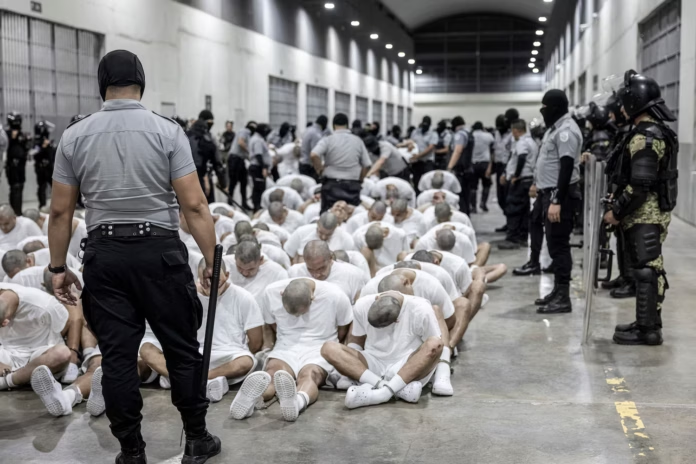
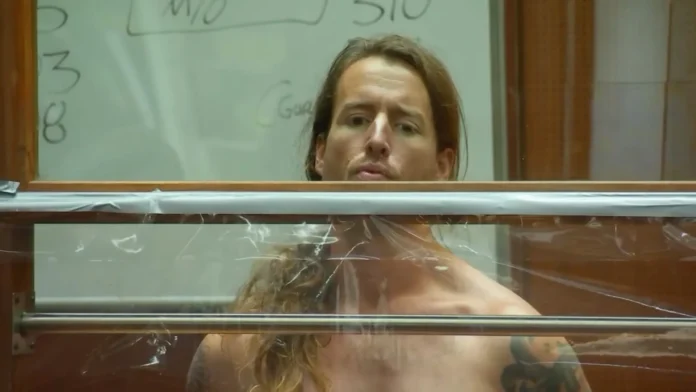
QUITO, Ecuador (BN24) — Ecuadorian authorities have recaptured notorious drug kingpin José Adolfo Macías, alias “Fito,” more than a year after he staged a mysterious escape from prison, President Daniel Noboa confirmed Wednesday. The fugitive, who is also wanted in the United States on major drug trafficking charges, was apprehended in his hometown of Manta on Ecuador’s Pacific coast.

Macías, the longtime leader of the violent gang “Los Choneros,” was taken into custody by Ecuadorian military forces in what appeared to be a coordinated raid. Officials said he was found hiding beneath a kitchen counter in the basement of a house. Footage released by the military shows armed officers storming the property and one of them pointing a rifle at Macías as he confirmed his identity.

Interpol had issued a Red Notice for Macías following his escape from Guayaquil Regional Prison in early 2024. He had been serving a 34-year sentence for drug trafficking, murder, and organized crime. Authorities only discovered he was missing when military officials arrived to transfer him to a higher-security facility—only to find his cell empty. No credible explanation for the escape has ever been provided.

His recapture marks a significant victory for the Ecuadorian government, which has struggled to contain spiraling violence linked to drug cartels and prison gangs. The arrest also coincides with another high-profile prison break involving Federico Gómez, alias “Fede,” leader of the Las Águilas gang, who escaped custody earlier this week.

Macías has long been one of the most feared criminal figures in Ecuador. U.S. federal prosecutors in New York unsealed a seven-count indictment last year accusing him of trafficking thousands of pounds of cocaine into the United States, in coordination with powerful Mexican drug cartels. The indictment also alleges Macías conspired to smuggle firearms and ammunition from the United States into Ecuador.

“Los Choneros operated a vast network responsible for the shipment and distribution of multi-ton quantities of cocaine from South America through Central America and Mexico to the United States and elsewhere,” the U.S. indictment states.

U.S. Attorney John Durham has described Los Choneros as a transnational criminal organization comprised of assassins and arms traffickers. Washington designated the gang as one of the Western Hemisphere’s most violent organized crime groups in 2024.

Inside prison, Macías reportedly wielded considerable influence. He hosted lavish parties with liquor and even cockfighting rings, and once released a video message flanked by heavily armed men, addressing “the Ecuadorian people.”

The Ecuadorian government has labeled Los Choneros a terrorist organization and, earlier this month, raised the reward for Macías’ capture to $1 million. His re-arrest is expected to bolster President Noboa’s campaign against organized crime, which has intensified in recent months following a wave of gang-related violence.

The U.S. Justice Department is expected to formally request Macías’ extradition in the coming days, though Ecuadorian authorities have not commented on when or whether that process will begin.

Trump Administration Sues All Federal Judges in Maryland Over Immigration Removal Block

WASHINGTON (BN24) — In an unprecedented legal maneuver, the Trump administration has filed suit against all 15 federal judges in Maryland, escalating its fight with the judiciary over immigration policy. The lawsuit, lodged Tuesday, seeks to overturn a standing order issued by Chief Judge George L. Russell III that temporarily halts the deportation of migrants who file habeas corpus petitions in federal court.

The order, issued in May, mandates that immigrants who challenge their detention cannot be removed from the United States until 4 p.m. on the second business day after filing. The administration argues that this rule directly contradicts a Supreme Court ruling and undermines President Donald Trump’s constitutional authority to enforce immigration laws.

“It’s an extraordinary step,” said Laurie Levenson, a legal scholar at Loyola Law School. “Suing an entire federal bench is unheard of—and a clear escalation in the Justice Department’s campaign against judicial intervention.”

The lawsuit underscores the administration’s growing frustration with what it views as judicial overreach that has repeatedly thwarted its hardline immigration agenda. “President Trump’s authority has been undermined since the first day of his presidency by a torrent of court injunctions,” Attorney General Pamela Bondi said in a statement Wednesday. “This is not just a legal fight—it’s a defense of the democratic will of the American people.”

Chief Judge Russell’s order was aimed at preserving due process for detained migrants, ensuring access to legal counsel, and maintaining the court’s jurisdiction while allowing the government time to formally respond. However, the Justice Department dismissed the order as a sweeping and “lawless” injunction that enjoins executive action without case-by-case analysis.

In its complaint, the Trump administration is asking that all Maryland federal judges recuse themselves from the matter and that a judge from another state be assigned. A spokesperson for the Maryland district court declined to comment.

Legal experts say the suit signals an erosion of long-standing norms. James Sample, a constitutional law professor at Hofstra University, said the Justice Department’s move circumvents typical procedure. “Ordinarily, losing parties appeal injunctions—they don’t sue the court,” he said. Still, he noted, the administration’s repeated transfer of detainees before they could seek relief left the judiciary few alternatives. “The court’s response was cautious and justified,” Sample said.

Among the judges named in the suit is U.S. District Judge Paula Xinis, who earlier this year ruled that the government’s deportation of Kilmar Abrego Garcia to El Salvador violated court orders. The administration admitted the deportation was a mistake, and a Justice Department attorney later fired in connection with the case filed a whistleblower complaint alleging that top officials had discussed ignoring court directives.

Abrego Garcia was returned to the U.S. earlier this month and charged with smuggling. Though prosecutors sought to detain him pretrial, a judge allowed his release pending further proceedings.

The administration’s sweeping lawsuit comes amid a wider confrontation with federal courts. President Trump has previously railed against judicial rulings, once even suggesting the impeachment of a D.C. judge who ordered deported migrants returned to the U.S.—a move sharply rebuked by Chief Justice John Roberts, who said impeachment is not an appropriate remedy for legal disagreement.

Defense of the Maryland order by the court emphasized its intent to maintain legal clarity and procedural fairness amid an influx of emergency filings. The order, later amended, cited repeated instances where the government failed to provide timely information on petitioners’ whereabouts and legal status.

Still, the Justice Department insists the court cannot unilaterally freeze deportations. “This is a textbook case of judicial overreach,” Bondi said, vowing to continue pressing the matter in federal court.

 Mbappé Returns to Real Madrid Training Ahead of Crucial Club World Cup Clash

 MADRID (BN24) — Kylian Mbappé has resumed full training with Real Madrid after recovering from a bout of gastroenteritis that sidelined him for the Spanish club’s opening two matches at the FIFA Club World Cup.

The 26-year-old French star, who reportedly lost nearly five kilograms during his illness, had been hospitalized but is now back in contention for Madrid’s next group stage match. His return offers a major boost to manager Xabi Alonso’s squad ahead of their early Friday morning fixture against Red Bull Salzburg.

According to transfer insider Fabrizio Romano, Mbappé rejoined team activities this week and is being closely monitored as Madrid assesses his fitness. The club has yet to confirm whether he will be included in the matchday squad, but his return to training suggests he could be ready to feature in some capacity.

Mbappé last appeared on the pitch earlier this month during international duty with France, where he scored twice to help Les Bleus secure third place in the UEFA Nations League.

In his absence, Real Madrid managed a 1-1 draw against Saudi side Al-Hilal and secured a 2-0 victory over Mexico’s Pachuca, earning four points from two matches in Group H. Madrid needs a win against Salzburg to guarantee top spot in the group, although a draw may suffice if Al-Hilal fail to defeat Pachuca.

The Club World Cup has offered Alonso an opportunity to rotate his squad, but with a place in the knockout stage on the line, Mbappé’s potential return adds star power to an already high-stakes encounter.

The former Paris Saint-Germain forward, who made headlines with his high-profile summer move to Madrid, is expected to play a central role in the club’s ambitions at the tournament if fully fit. His recovery and return could not have come at a more pivotal moment.