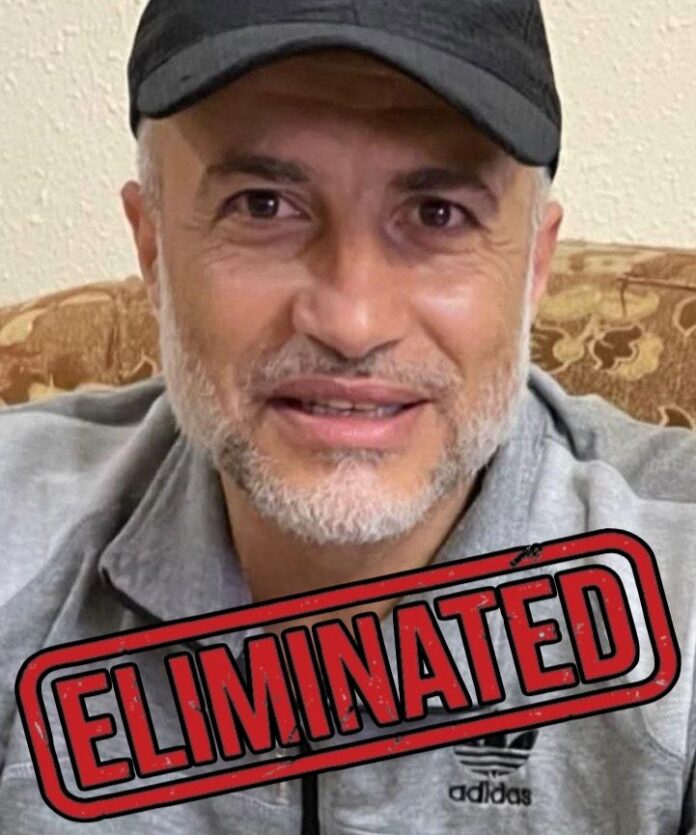
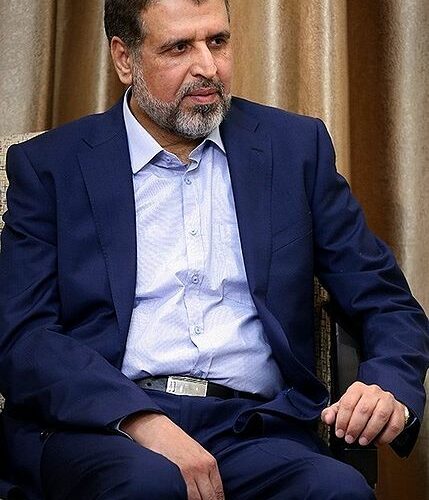
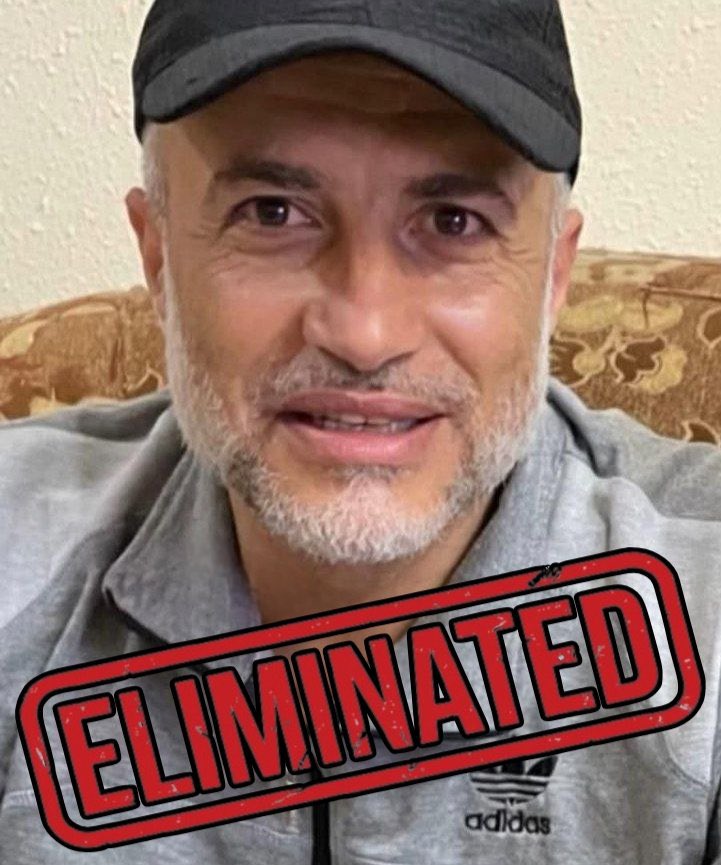
Tel Aviv, Israel (BN24) – The Israeli military announced Sunday that its forces had killed Ramzi Ramadan Abd Ali Saleh, described as the commander of Hamas’s naval force in northern Gaza, during intensified operations in Gaza City.
In a statement, the army also listed other senior Hamas figures it claims to have eliminated, including Hisham Ayman Atiya Mansour, the deputy head of Hamas’s mortar shell operations, and Nissim Muhammad Suleiman Abu Sabha, alleged to be part of the same unit.
The surge in attacks comes as Israel’s military escalation has reached levels not seen since the first weeks of the war, with near-continuous bombardment across the enclave. In a span of two hours Sunday, at least seven airstrikes struck targets in the Gaza Strip.
Shortly before noon, a vehicle was hit on al-Jalal Street in Gaza City, killing one person and critically wounding others. Just an hour earlier, another vehicle was targeted nearby, leaving three people dead and several more injured. Those wounded were rushed to al-Shifa Hospital as rescuers struggled to clear the debris.
In the Sheikh Radwan neighborhood and the Tuffah district in eastern Gaza City, rescue teams continued working to recover bodies from the rubble of two residential buildings demolished in overnight air raids.
In northern Deir el-Balah, an airstrike struck a local community kitchen that had been providing food to displaced families. Three people were killed, including the kitchen’s main operator.
The intensified bombardment comes as negotiators prepare to relaunch mediated ceasefire talks aimed at halting the nearly 21-month conflict. Israeli officials have insisted military pressure will continue alongside the negotiations, which are expected to resume in Qatar this week.
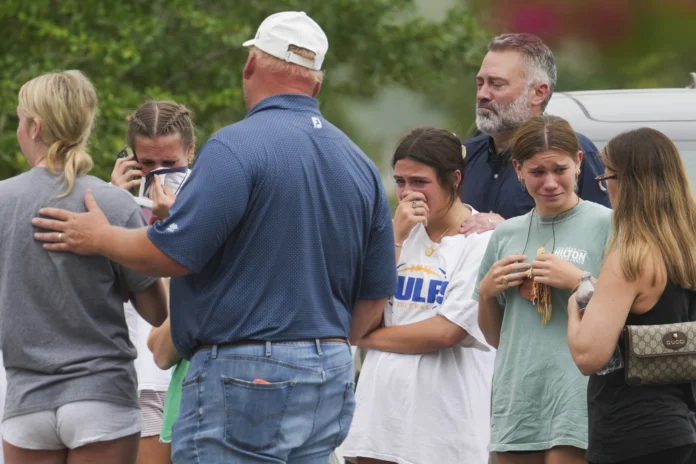
Kerr County, Texas (BN24) – The death toll from the catastrophic flash floods that tore through Central Texas climbed to at least 67 on Sunday, as rescue teams navigating treacherous debris fields recovered more bodies and pressed on in their search for the missing, including 11 young girls who vanished from a summer camp.
Kerr County Sheriff Larry Leitha confirmed that crews discovered 16 more victims since Saturday afternoon, bringing the county’s fatalities to 59. Among the dead were 21 children swept away by the fast-rising Guadalupe River. Leitha vowed that the search would not stop until “everybody is found” in the rugged Hill Country landscape that bore the brunt of Friday’s deluge.
Four additional deaths have been reported in Travis County, while Burnet County authorities counted three victims. One person was confirmed dead in Kendall County.
Emergency crews described grueling conditions as they combed riverbanks choked with splintered trees, wrecked vehicles, and thick layers of silt. Officials have not released an exact tally of the number still unaccounted for beyond the 11 girls and a camp counselor missing from Camp Mystic, a Christian retreat popular with families during the summer holidays.
As dawn broke Sunday, relatives were allowed into parts of the devastated camp to search for any sign of their loved ones. Nearby, crews operating excavators and chainsaws pulled massive tree trunks and snarled debris from the water in hopes of clearing paths to areas still inaccessible since the floodwaters surged.
Thunder rumbled over the region as a new round of storms threatened to hamper the operation and deepen an already staggering tragedy.
Mexico (BN24) – Gunmen burst into a sports hall in central Mexico and shot dead a local government official attending an amateur basketball game Saturday, authorities confirmed.
Ignacio Alejandro Roaro, a city council secretary in Apaseo el Grande
Ignacio Alejandro Roaro, a city council secretary in Apaseo el Grande, was killed during the attack at the sports center in Guanajuato state, where families and children had gathered to watch the game.
The city council issued a statement strongly condemning “the treacherous, despicable, and cowardly attack that occurred this Saturday, in which our colleague and friend, city council secretary Ignacio Alejandro Roaro, lost his life.”
Local media reported that an armed man was arrested in connection with the shooting, though authorities have not released details about the suspect or potential motives for the attack.
Guanajuato serves as a thriving industrial hub and hosts several popular tourist destinations, but the state has become Mexico’s deadliest due to persistent gang turf wars, according to official homicide statistics.
The killing represents the latest incident of violence targeting public officials in the region, where criminal organizations frequently clash over territorial control and drug trafficking routes.
In June, 11 people were shot dead and approximately 20 others injured in a shooting targeting a neighborhood party in Irapuato, located about 80 kilometers west of Apaseo el Grande. A month earlier, investigators discovered 17 bodies in an abandoned house in the same city.
Much of the violence plaguing Guanajuato stems from ongoing conflict between the Santa Rosa de Lima gang and the Jalisco New Generation cartel, one of Mexico’s most powerful criminal organizations.
The two groups have waged a brutal territorial war for control of drug trafficking routes and local criminal enterprises, resulting in unprecedented levels of violence that have made Guanajuato the country’s most dangerous state.
Guanajuato recorded more than 3,000 murders last year, representing the highest total of any Mexican state and accounting for 10.5 percent of homicides nationwide, according to official government figures.
The attack on Roaro highlights the dangerous environment facing Mexican public officials, who frequently become targets of criminal organizations seeking to intimidate local governments or eliminate perceived obstacles to their operations.
Local authorities have struggled to contain the violence despite increased security measures and federal government intervention in the state. The presence of heavily armed criminal groups has created an atmosphere of fear that affects daily life for residents across Guanajuato.
The shooting at the sports center particularly shocked the community because it occurred during a family-friendly event where children were present, demonstrating the brazen nature of criminal violence in the region.
Mexican President Claudia Sheinbaum’s administration has pledged to address the security crisis in Guanajuato and other violence-plagued states, but criminal organizations continue to operate with apparent impunity in many areas.
The killing of Roaro adds to a growing list of public officials murdered in Mexico, where local politicians, mayors, and government workers face constant threats from criminal groups seeking to control territory and eliminate opposition to their activities.
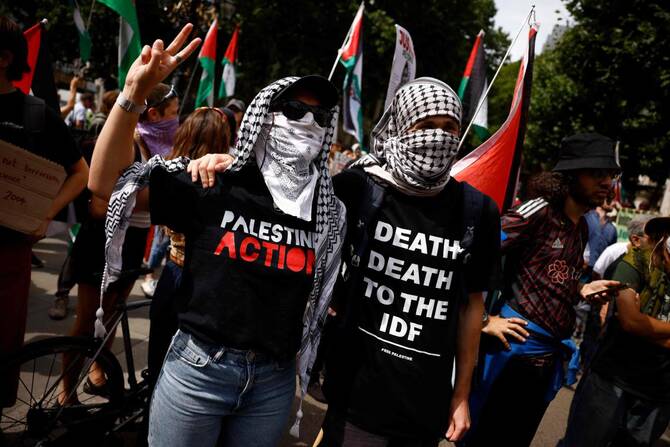
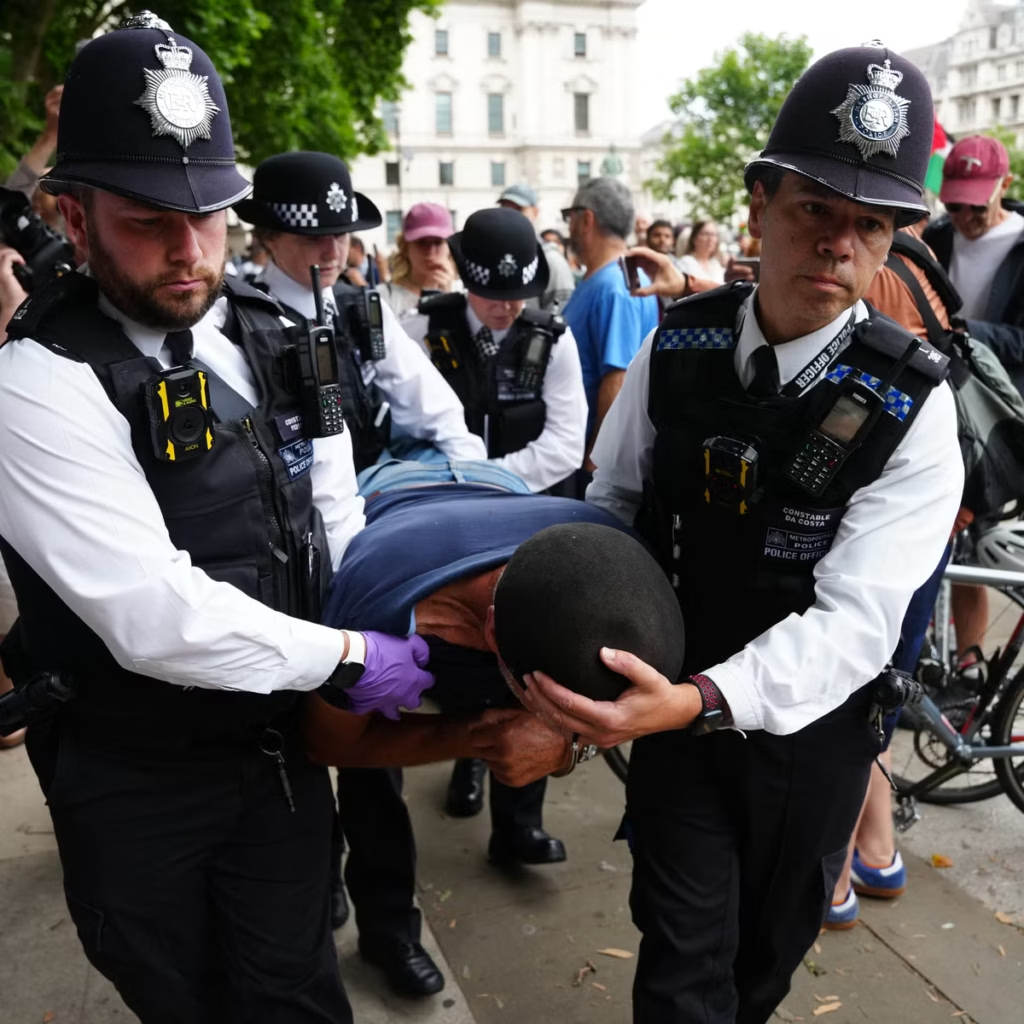
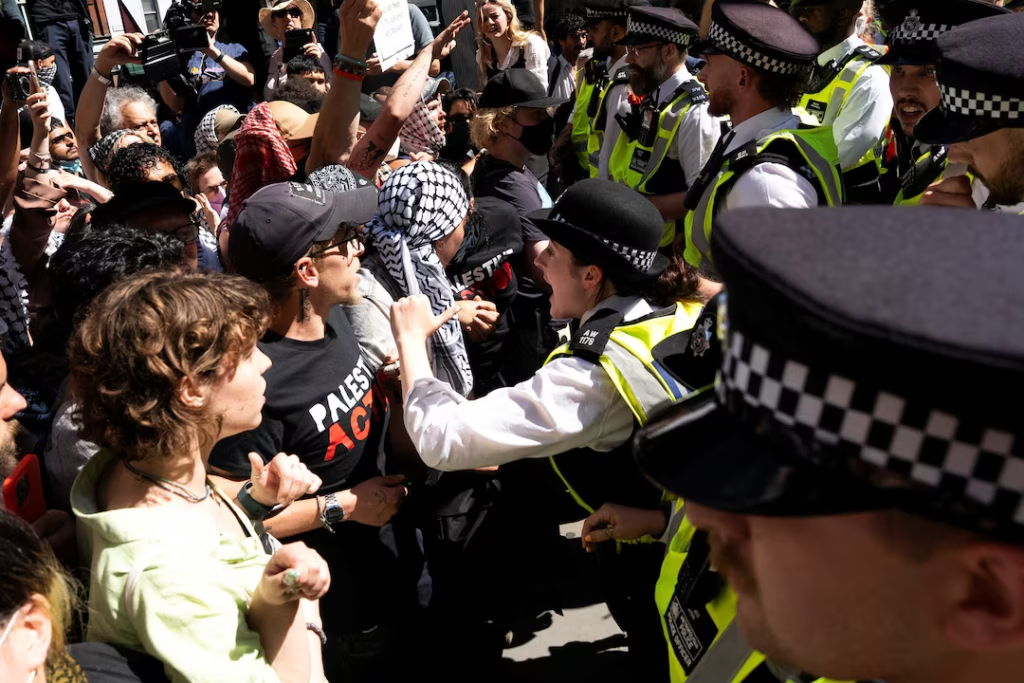
London (BN24) – British police detained more than 20 people on terrorism-related charges Saturday after they expressed support for Palestine Action, the pro-Palestinian activist network that was officially outlawed just hours earlier under sweeping anti-terror laws.
The arrests unfolded in the heart of London, where demonstrators gathered in Parliament Square to protest the ban and voice solidarity with Palestinians. Some held placards declaring, “I OPPOSE GENOCIDE. I SUPPORT PALESTINE ACTION.” Television footage showed officers leading several protesters away in handcuffs from the statue of Mahatma Gandhi as they shouted slogans denouncing Britain’s ties to Israel.
The crackdown came after a last-ditch legal challenge failed late Friday. The group had sought to block the government’s move to proscribe it as a terrorist organization—a designation that took effect at midnight following a parliamentary vote. The Home Office has argued that the group’s repeated acts of sabotage crossed the line into criminal extremism.
Palestine Action, whose activists have targeted companies linked to Israel’s defense industry, drew the government’s ire last month after breaking into a Royal Air Force base and damaging two aircraft in protest over what it called Britain’s complicity in Israeli military operations. Interior minister Yvette Cooper said such tactics amounted to “violent criminal damage” that undermines legitimate protest and warranted proscription.
Under British counterterrorism law, it is a crime to publicly endorse, support, or display symbols of a banned organization, offenses that can carry prison sentences of up to 14 years. Since 2000, the UK has banned 81 groups including Hamas, al-Qaeda, and ISIS.
Critics, including civil liberties advocates and some United Nations experts, say the move marks an alarming escalation that criminalizes political dissent and blurs the line between protest and terrorism. They argue that damaging property does not meet any internationally accepted definition of terrorism.
Saturday’s demonstration was part of a broader day of pro-Palestinian activism across London. At a separate protest during the city’s annual Pride parade, activists from the Youth Demand group disrupted the festivities by dousing a U.S. tech company’s truck in red paint and gluing themselves to it. The group said it targeted the float because Cisco Systems supplies technology “helping Israel” in the war in Gaza. Police arrested five demonstrators, who were removed as thousands watched.
Israel has faced growing international condemnation over its military campaign in Gaza, which began in October 2023 after Hamas militants attacked southern Israel. While United Nations experts have accused Israel of carrying out genocidal acts against Palestinians, Israeli officials have vehemently rejected the allegations.
Saturday’s arrests marked the first major enforcement action since the ban took effect, underscoring the British government’s determination to crack down on activists it deems extremist.
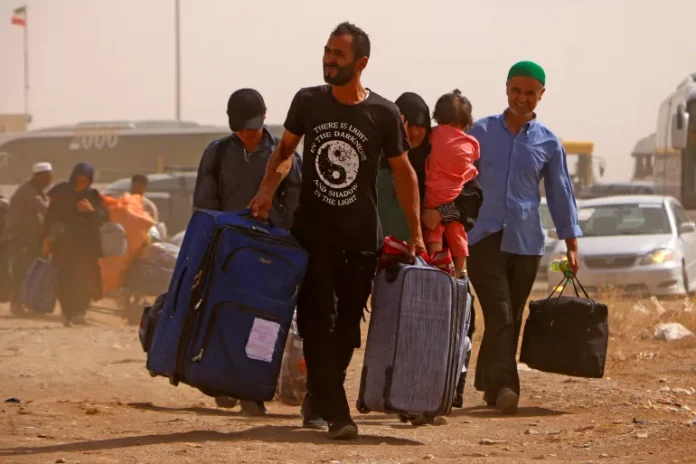
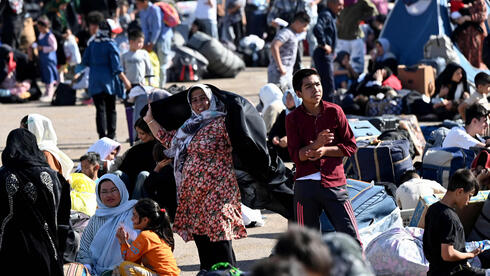
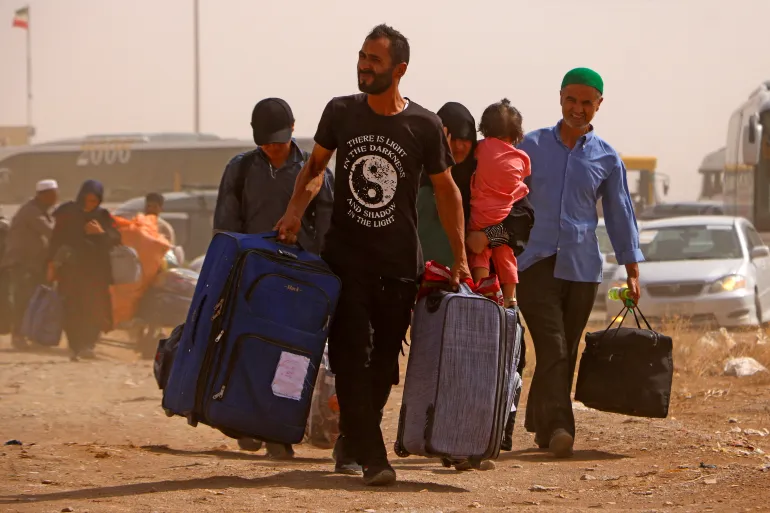
Iran (BN24) – Millions of Afghan migrants and refugees in Iran faced arrest Sunday as a government-imposed deadline expired, requiring them to leave the country or face forcible expulsion amid heightened security concerns following Iran’s recent conflict with Israel.
The Sunday deadline arrived as Iranian authorities expressed public concerns over national security in the aftermath of a 12-day conflict with Israel, which included U.S. airstrikes on Iran’s uranium-enrichment facilities. However, humanitarian organizations warned that mass deportations could further destabilize Afghanistan, already among the world’s most impoverished nations.
Iran hosts an estimated 4 million Afghan migrants and refugees, many of whom have lived in the country for decades after fleeing war, poverty and Taliban rule in their homeland.
Tehran launched a campaign in 2023 to expel foreigners it claimed were living “illegally” in the country. In March, the Iranian government ordered Afghans without legal residency status to leave voluntarily by Sunday or face expulsion.
More than 700,000 Afghans have departed since the March deadline was announced, with hundreds of thousands more facing expulsion. The United Nations International Organization for Migration reported that more than 230,000 Afghans left Iran in June alone.
Iranian authorities denied specifically targeting Afghans, despite the overwhelming impact on the Afghan community. The government maintained that national security concerns necessitated the deportations.
Batoul Akbari, a restaurant owner in Tehran, told Al Jazeera that Afghans living in Iran were suffering from “anti-Afghan sentiment,” describing it as heartbreaking to see “people sent away from the only home they have ever known.”
“Being born in Iran gives us the feeling of having two homelands,” Akbari said. “Our parents are from Afghanistan, but this is what we’ve always known as home.”
Mohammad Nasim Mazaheri, a student whose family was forced to leave Iran, agreed that “the deportations have torn families apart.”
The Office of the UN High Commissioner for Refugees estimated that Iran deported more than 30,000 Afghans daily on average during the conflict with Israel, dramatically increasing from approximately 2,000 deportations per day previously.
“We have always striven to be good hosts, but national security is a priority, and naturally, illegal nationals must return,” Iranian government spokesperson Fatemeh Mohajerani said Tuesday.
The UNHCR reported that of 1.2 million Afghans returning to their homeland, more than half had come from Iran after the government set its March 20 deadline.
“They are coming in buses, and sometimes, five buses arrive at one time with families and others, and the people are let out of the bus, and they are simply bewildered, disoriented and tired and hungry as well,” said Arafat Jamal, the UNHCR representative in Afghanistan, describing scenes at border crossings.
“This has been exacerbated by the war, but I must say it has been part of an underlying trend that we have seen of returns from Iran, some of which are voluntary, but a large portion were also deportations.”
Al Jazeera correspondent Resul Serdar, reporting from Tehran, said Afghans have increasingly been blamed for economic hardships, shortages and social issues in Iran.
“These accusations have been fuelled by political rhetoric and social media campaigns following 12 days of conflict between Iran and Israel and claims that Israel has recruited Afghans as spies,” Serdar reported.
The mass deportations create additional challenges for Afghanistan’s Taliban government, which already struggles to provide basic services and economic opportunities for its population. The influx of returnees threatens to strain resources further in a country heavily dependent on international humanitarian aid.
International observers expressed concern that the deportations could contribute to regional instability, as Afghanistan lacks the infrastructure and economic capacity to absorb hundreds of thousands of returning migrants amid ongoing humanitarian crises.
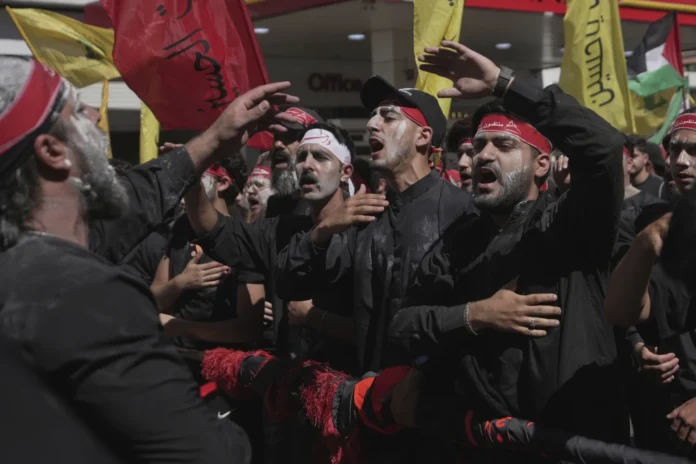
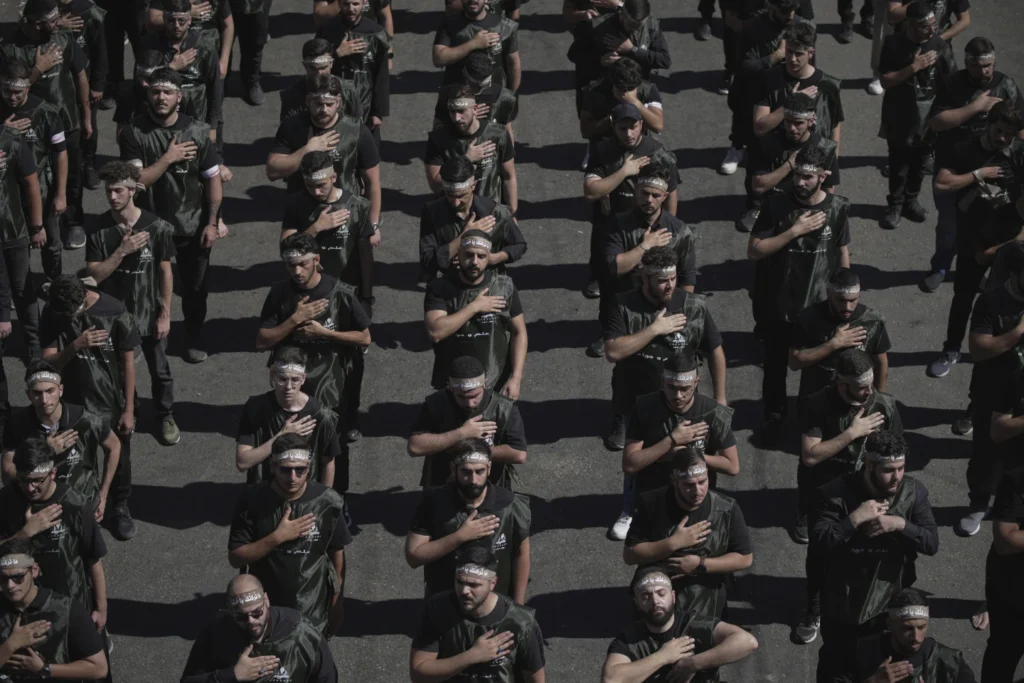
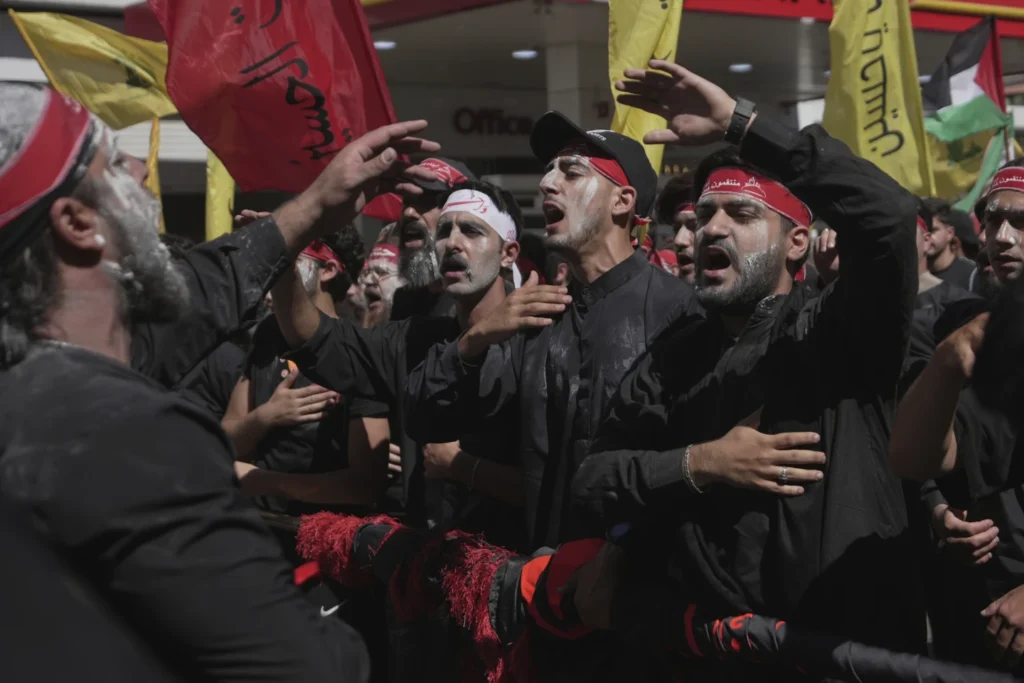
Lebanon (BN24) – Hezbollah leader Naim Kassem reiterated Sunday the militant group’s refusal to surrender its weapons before Israel withdraws from all of southern Lebanon and halts airstrikes, delivering his message in a video address as thousands gathered in Beirut’s southern suburbs to mark the Shiite holy day of Ashoura.
Ashoura commemorates the 680 AD Battle of Karbala, where Prophet Muhammad’s grandson Imam Hussein was killed after refusing to pledge allegiance to the Umayyad caliphate. For Shiites, the commemoration symbolizes resistance against tyranny and injustice.
This year’s observance follows a devastating war between Israel and Hezbollah that nominally ended with a U.S.-brokered ceasefire in late November. Israeli strikes eliminated much of Hezbollah’s top leadership, including longtime Secretary General Hassan Nasrallah, and destroyed significant portions of its arsenal.
Since the ceasefire agreement, Israel has continued occupying five strategic border points in southern Lebanon while conducting near-daily airstrikes that Israeli officials claim aim to prevent Hezbollah from rebuilding its capabilities. Those strikes have killed approximately 250 people since November, adding to more than 4,000 killed during the war, according to Lebanon’s Health Ministry.
International and domestic pressure has mounted for Hezbollah to relinquish its remaining weapons stockpile following the group’s military losses during the conflict.
“How can you expect us not to stand firm while the Israeli enemy continues its aggression, continues to occupy the five points, and continues to enter our territories and kill?” Kassem said in his video address. “We will not be part of legitimizing the occupation in Lebanon and the region. We will not accept normalization with Israel.”
Addressing critics who question why the group maintains its missile arsenal, Kassem responded: “How can we confront Israel when it attacks us if we didn’t have them? Who is preventing Israel from entering villages and landing and killing young people, women and children inside their homes unless there is a resistance with certain capabilities capable of minimal defense?”
Kassem’s comments preceded an expected visit by U.S. envoy Tom Barrack to Beirut to discuss a proposed plan for Hezbollah’s disarmament and the withdrawal of Israeli forces from the remainder of southern Lebanon.
Barrack posted Saturday on social media platform X that Lebanon faces “a historic moment to supersede the strained confessionalism of the past and finally fulfill true promise of the hope of ‘One country, one people, one army.'” He quoted U.S. President Donald Trump saying, “Let’s make Lebanon Great again.”
The ongoing standoff highlights the complex challenges facing efforts to implement the ceasefire agreement and establish lasting peace in the region. While the November ceasefire officially ended active hostilities, the continued Israeli military presence and Hezbollah’s refusal to disarm have created an unstable situation that threatens to reignite conflict.
The Ashoura commemorations provided a symbolic backdrop for Kassem’s defiant message, connecting contemporary resistance to historical Shiite narratives of standing against oppression. The timing underscores how religious and political elements intertwine in Hezbollah’s ideology and public messaging.
Lebanese authorities and international mediators face the difficult task of balancing security concerns with political realities as they work to prevent the fragile ceasefire from collapsing while addressing the underlying issues that fuel the conflict.
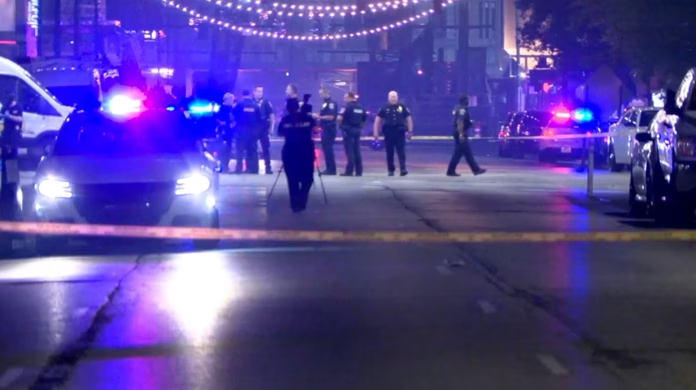
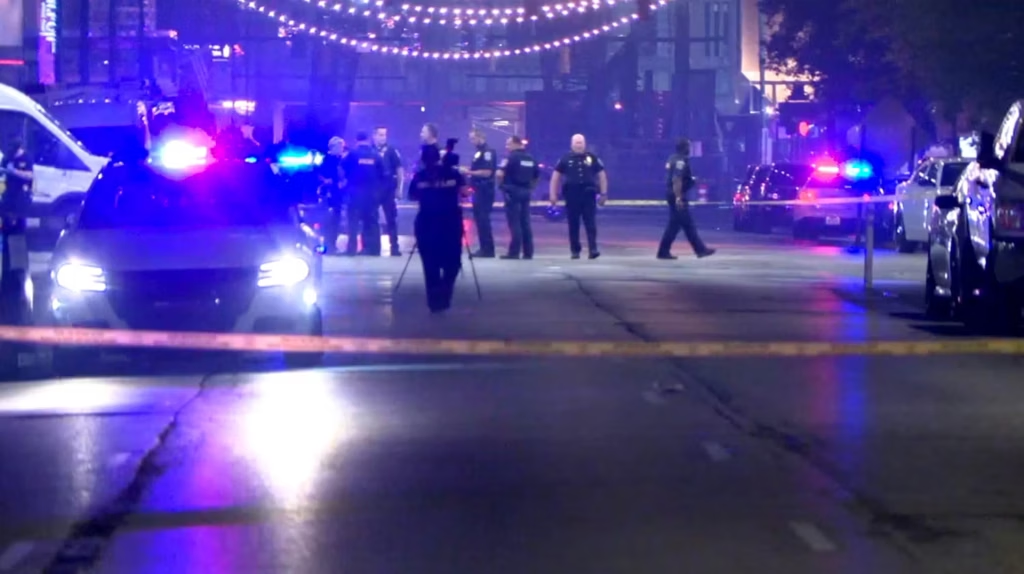
Indianapolis (BN24) – Two teenage boys died and five others were wounded in a mass shooting that occurred early Saturday morning in Indianapolis, police confirmed.
Indianapolis Metropolitan Police Department officers responded to disturbance calls around 1:27 a.m. near Washington and Meridian Street when they heard gunshots, according to department officials.
An unidentified 16-year-old boy was pronounced dead at the scene while five additional victims were transported to local hospitals, police said. A 15-year-old boy was later pronounced dead at the hospital, investigators confirmed. One victim transported themselves to the hospital independently.
The surviving victims included a 16-year-old, a 17-year-old, two 19-year-olds and one 21-year-old, according to police descriptions. Investigators said victim ages ranged from 16 to 21 years old.
No suspect has been identified and police have released no information regarding a motive as of Saturday afternoon. The investigation remains ongoing with no arrests announced.
Indianapolis Police Chief Chris Bailey expressed outrage over the violence during a news conference Saturday. “Too many lives are being lost,” Bailey said, highlighting the escalating gun violence affecting the city’s youth population.
Indianapolis Mayor Joe Hogsett also condemned the shooting and expressed sympathy for the victims’ families during the news conference. “All of this is avoidable and preventable,” Hogsett said, calling attention to the tragic loss of young lives.
The shooting represents the latest incident of gun violence affecting teenagers in Indianapolis, where city officials have struggled to address rising violence among young people. The incident occurred in a downtown area near the intersection of Washington and Meridian Street during early morning hours when many young people gather.
Police have not released details about the circumstances leading to the shooting or whether the victims knew each other. The investigation continues as authorities work to identify suspects and determine what prompted the deadly encounter.
The Indianapolis Metropolitan Police Department has requested anyone with information about the shooting to contact investigators as they work to solve the case and bring those responsible to justice.
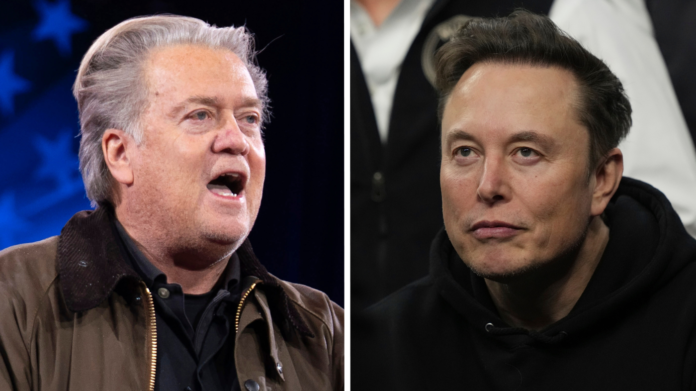
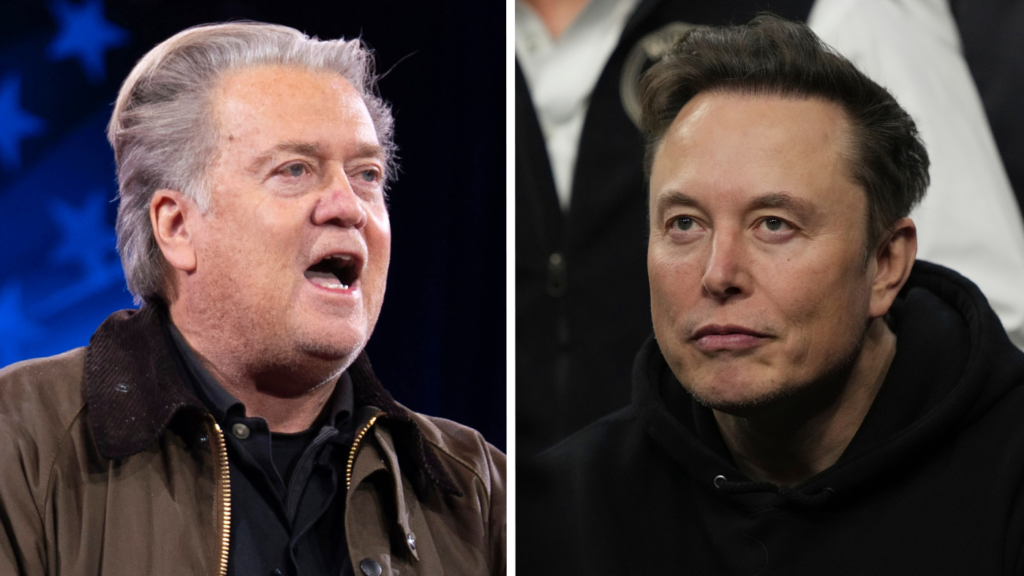
Steve Bannon has launched a blistering attack on Elon Musk over his plans to create a new U.S. political party.
Speaking on his War Room podcast, Bannon, who served as President Donald Trump’s chief strategist, mocked the South African-born billionaire—who is now a U.S. citizen—and declared that Musk was “not American.”
On Saturday, Musk announced he was forming a political movement called the “America Party,” citing a poll he had posted on July 4 in which 65.4% of respondents supported the idea.
“Today, the America Party is formed to give you back your freedom,” Musk wrote on X, the platform formerly known as Twitter.
Although Musk, as a naturalized citizen, is constitutionally barred from running for president, he can back third-party candidates and help get them on ballots in all 50 states if enough signatures are collected. However, history shows that third parties in the U.S. rarely achieve major electoral success.
On Friday, Bannon unleashed a tirade:
“The foul, the buffoon. Elmo the Mook, formerly known as Elon Musk, Elmo the Mook. Today, in another smear—only a foreigner could do this—think about it, he’s got up on Twitter right now, a poll about starting an America Party, a non-American starting an America Party.”
Bannon went further, accusing Musk of criminal conduct:
“No, brother, you’re not an American. You’re a South African. We take enough time and prove the facts of that, you should be deported because it’s a crime of what you did—among many.”
Musk quickly responded to a clip of Bannon’s comments on X:
“The fat, drunken slob called Bannon will go back to prison and this time for a long time. He has a lifetime of crime to pay for.”
Dafydd Townley, an American politics expert at the University of Portsmouth, told Newsweek that historically, third parties struggle to sustain momentum:
“Third parties do not tend to have a long lifetime in American politics.”
Townley added that Musk’s new effort could fracture the Republican base:
“It would likely split the Republican vote, potentially resulting in a Democrat-dominated House of Representatives, at least in the short term, due to the winner-takes-all electoral system.”
It remains unclear how the America Party will be organized or who else might be involved. Whether it can break through the entrenched two-party system is still an open question.
Spain (BN24) – Multiple British passengers have been left with broken bones after a terrifying evacuation from a Ryanair flight sparked by a false fire alert at Palma Airport.
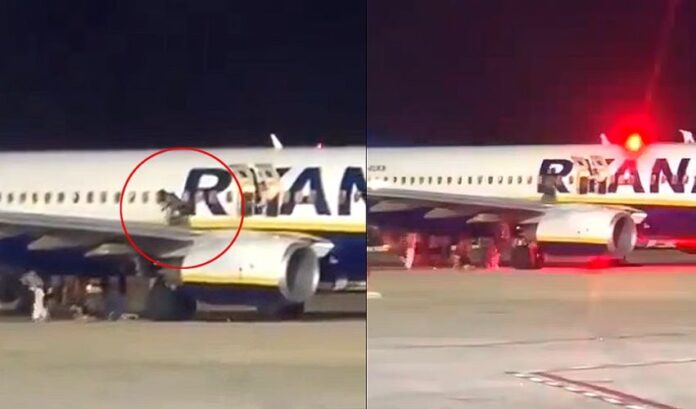
Chaos erupted just after midnight Saturday when an alarm sounded moments before takeoff to Manchester, prompting passengers to scramble over seats and climb out onto the plane’s wing rather than wait for emergency slides.
Authorities said 18 people were injured, with six hospitalized. Two British travelers reportedly suffered broken bones despite Ryanair initially claiming only “very minor injuries.”
Footage shared on social media shows passengers leaping from the wing onto the tarmac in a panic as firefighters and police rushed to the scene.
Savanah, 26, from Whitefield, Manchester, was onboard with her friend and their mothers when the ordeal began.
“We were all just sitting on the plane,” she told the Manchester Evening News. “They made an announcement that we were going in five minutes. All of a sudden there was a bang, and everyone started screaming and running.”
She described “utter chaos” as the crew shouted at everyone to leave their belongings and evacuate immediately.
Savanah said there were no slides deployed on her side of the plane. She and others climbed onto the wing to escape.
“I’ve hurt my shoulder, my friend hurt her knee. Her mum fractured her elbow, wrist, and foot. My mum broke her ankle. She’s in a cast and about to have surgery—it’s broken in three places,” she said.
Neither woman could walk afterward, and when Savanah tried to retrieve her mother’s lost phone, she was told it was too dangerous because “the plane could set on fire.”
Elsewhere on the aircraft, some passengers used the emergency slide as intended, but others were seen jumping from the wing as alarms blared.
A mother of another passenger said her daughter called her in tears from the plane:
“She said, ‘Mum, I’m trying to get down the slide, I might not survive this and I love you.’ It was horrible. I didn’t sleep all night, even after I knew she was safe.”
A Majorca emergency services spokesman confirmed four ambulances and airport firefighters responded to the call at 12:36 a.m.
“Eighteen people were injured and received medical assistance. Six were transferred to hospital, all with minor injuries,” the spokesman said.
Ryanair maintained that passengers disembarked using inflatable slides and described the injuries as mostly ankle sprains.
A spokesperson for the airline said:
“This flight from Palma to Manchester discontinued takeoff due to a false fire warning light indication. Passengers were disembarked using the inflatable slides and returned to the terminal. A small number of passengers encountered very minor injuries, and crew requested immediate medical assistance.
“To minimize disruption, we quickly arranged a replacement aircraft to operate this flight, which departed Palma at 07:05 this morning. We sincerely apologize to affected passengers for any inconvenience caused.”
Local officials confirmed the aircraft was not authorized to depart while the alarm remained active.
Meanwhile, doctors advised some of the injured they will not be fit to fly home to Manchester until at least Monday.
New Jersey (BN24) – Kylian Mbappé delivered a spectacular bicycle kick to cap a dramatic finish as Real Madrid defeated Borussia Dortmund 3–2 in a pulsating Club World Cup quarterfinal on Saturday.
Three of the five goals came deep into second-half stoppage time, transforming a tense encounter into an instant classic.
Madrid appeared in control early on a sweltering afternoon at MetLife Stadium, where temperatures reached 30°C (86°F) at kickoff. Gonzalo García, given a rare start by new coach Xabi Alonso, opened the scoring in the 10th minute, and Fran García doubled the lead in the 20th.
Dortmund’s Maximilian Beier pulled a goal back in the third minute of stoppage time, igniting late drama. But just 60 seconds later, Mbappé—who entered in the 67th minute as he continues to regain fitness after acute gastroenteritis—restored Madrid’s two-goal cushion with a stunning overhead finish.
Serhou Guirassy then converted a penalty in the eighth minute of added time after being fouled by Dean Huijsen, who was sent off and will miss the semifinals.
Even after all that, Dortmund nearly forced extra time. In the dying seconds, Thibaut Courtois stretched every inch of his 200cm (6ft 7in) frame to tip away Marcel Sabitzer’s goal-bound strike, sealing Madrid’s progress.
The Spanish giants now advance to face Champions League winners Paris Saint-Germain in Wednesday’s semifinal. Chelsea will play Brazilian champions Fluminense in the other semifinal Tuesday.
Gonzalo García, 21, who had logged just five La Liga appearances over the past two seasons, tied for the tournament’s scoring lead with his fourth goal, matching Benfica’s Ángel Di María and Al Hilal’s Marcos Leonardo.
Mbappé was chosen as a substitute as he works back to full fitness, replacing Jude Bellingham in the second half. Bellingham missed the chance to face his brother, Jobe Bellingham, who was suspended for yellow-card accumulation.
The win continues Madrid’s recent dominance over Dortmund. Los Blancos have won five straight meetings and are unbeaten in seven, dating back to a 2014 Champions League quarterfinal defeat.
American international Gio Reyna did not appear for Dortmund and concluded the tournament with just a 13-minute cameo across five matches.
A crowd of 76,611 packed MetLife Stadium—the venue for next year’s World Cup final—although one suite level remained conspicuously empty.
Before kickoff, the teams held a moment of silence for Liverpool’s Diogo Jota and his brother, André Silva of Penafiel, who were killed in a car accident on Thursday.