Home Blog Page 304

Saudi Arabia Executes Journalist Turki Al-Jasser Over Social Media Posts, Activists Say

RIYADH, Saudi Arabia — A Saudi journalist arrested in 2018 on charges widely denounced as politically motivated has been executed, the kingdom confirmed over the weekend, prompting sharp condemnation from international rights groups and press freedom advocates.

Turki Al-Jasser, a well-known journalist and blogger in his late 40s, was put to death on Saturday, the state-run Saudi Press Agency said, after the kingdom’s highest court upheld his death sentence. Al-Jasser had spent the past seven years behind bars following his arrest in a 2018 raid in which authorities seized his personal devices and online records.

The Saudi government claimed Al-Jasser was convicted of terrorism and treason, but groups such as the Committee to Protect Journalists (CPJ) and Reprieve insist the charges were fabricated to punish him for running an anonymous Twitter account that criticized members of the royal family and the kingdom’s leadership, particularly Crown Prince Mohammed bin Salman.

The CPJ, citing information from Saudi insiders and digital watchdogs, reported that Al-Jasser was believed to be the voice behind an account that exposed alleged corruption at high levels of government. He had also posted commentary on Islamist militancy and social reforms — topics long considered sensitive in the Saudi political landscape.

Carlos Martínez de la Serna, CPJ’s program director, issued a scathing rebuke of the execution, stating, “The international community’s failure to deliver justice for Jamal Khashoggi did not just betray one journalist — it emboldened Crown Prince Mohammed bin Salman to continue his persecution of the press.”

Khashoggi, a Washington Post columnist and outspoken critic of the crown prince, was killed and dismembered by Saudi operatives at the kingdom’s consulate in Istanbul in 2018. U.S. intelligence agencies later concluded that Mohammed bin Salman had approved the operation — a finding the Saudi government continues to deny.

Human rights advocacy group Reprieve called Al-Jasser’s execution “a chilling demonstration” of the kingdom’s crackdown on dissent. Jeed Basyouni, Reprieve’s Middle East and North Africa director, said Al-Jasser was “tried and convicted in total secrecy for the ‘crime’ of journalism.”

“There was no due process, no transparency — only silence, imprisonment, and ultimately death,” Basyouni said. “This execution once again demonstrates that in Saudi Arabia, the punishment for criticizing or questioning Crown Prince Mohammed bin Salman is death.”

Al-Jasser had gained prominence for his writings on the Arab Spring uprisings, women’s rights, and government corruption, and maintained a personal blog between 2013 and 2015. Despite the blog’s closure, he remained active in Saudi digital discourse, often clashing with the state’s authoritarian sensitivities.

Saudi Arabia continues to face international criticism for its use of the death penalty, including methods such as public beheadings and mass executions. According to rights monitors, the kingdom carried out 330 executions in 2024 alone — a significant spike as authorities intensified repression of political dissent and online activism.

The case of Al-Jasser is not isolated. In recent years, Saudi Arabia has arrested several individuals for social media activity, including foreigners. Last month, a British-based Bank of America analyst was sentenced to a decade in prison, reportedly over a deleted social media post. In 2021, dual Saudi-American national Saad Almadi was sentenced to 19 years for tweets made while living in Florida. Though Almadi was released in 2023, he remains barred from leaving the kingdom.

The Saudi government has not disclosed details of Al-Jasser’s trial or the specific evidence presented against him, further fueling concerns about the country’s opaque judicial process and targeting of peaceful expression.

As global calls mount for accountability, many journalists and rights defenders warn that the international community’s muted response to cases like Al-Jasser’s only reinforces Riyadh’s impunity.

“Turki Al-Jasser paid the ultimate price for speaking out,” de la Serna said. “Without serious consequences for these abuses, other journalists will face the same fate — silenced in the shadows.”

G7 Summit Opens in Canada Amid Global Crises and Quiet Efforts to Avoid Clashing with Trump

BANFF, Alberta — The Group of Seven summit opened Monday in Canada’s Rocky Mountains under a cloud of escalating global conflict, turbulent trade policies, and carefully choreographed diplomacy meant to avoid confrontation with U.S. President Donald Trump.

The meeting comes seven years after Trump’s last appearance at a G7 in Canada, where he famously refused to endorse the summit’s final communiqué, clashed with allies, and unleashed a barrage of insults at Canadian leadership from aboard Air Force One. The image of then-German Chancellor Angela Merkel leaning across a table toward a defiant, arms-crossed Trump became emblematic of the deep divisions that year.

This time, leaders of the world’s top democracies appear united in at least one goal: avoiding a repeat of that political spectacle.

“There’s clearly a shared interest in keeping things calm,” said Peter Boehm, a veteran of six G7 summits and Canada’s counselor at the 2018 meeting in Quebec. “The shadow of Quebec still looms.”

Trump’s arrival in Banff follows a period of intensifying global tension. His administration has issued sweeping new tariffs on dozens of countries, while wars in Ukraine and Gaza continue with no end in sight. Tensions are also rising between Israel and Iran over Tehran’s nuclear activities, further complicating the G7’s traditionally broad agenda that also includes climate change, immigration, AI regulation, and global drug trafficking.

Signaling the Trump administration’s disinterest in collective consensus, no joint communiqué is expected from this year’s summit — a departure from past G7 tradition that underscores Washington’s go-it-alone posture. Instead, Trump’s team appears focused on cementing a unilateral trade framework, intensifying pressure on allies through tariffs and pushing for policies that prioritize American manufacturing and energy expansion.

Caitlin Welsh, a former G7 adviser in Trump’s first term and now a director at the Center for Strategic and International Studies, said the approach reflects a simple philosophy: “The Trump administration almost certainly believes that no deal is better than a bad deal.”

Speaking to reporters before departing the White House on Sunday, Trump hinted at potential new trade announcements, saying, “We have our trade deals. All we have to do is send a letter. ‘This is what you’re going to have to pay.’ But I think we’ll have a few new trade deals.”

His administration has already levied 25% tariffs on steel, aluminum, and automobiles — measures that have hit Japan, Canada, and Mexico particularly hard. Trump has also imposed a 10% baseline tariff on imports from most countries, which could increase after July 9, when a self-imposed 90-day negotiating period ends.

Foreign leaders, well aware of Trump’s volatility, have taken care to emphasize personal rapport. U.K. Prime Minister Keir Starmer said Saturday that he maintains “a good relationship with President Trump,” a sentiment echoed by German, Italian, and Japanese officials. Their hope: keeping Trump engaged without provoking a fresh diplomatic row.

Trump’s bilateral meetings at the summit include sit-downs with Canadian Prime Minister Mark Carney, Mexican President Claudia Sheinbaum, and Ukrainian President Volodymyr Zelenskyy. Each encounter is expected to focus heavily on trade, defense contributions, and efforts to limit China’s economic influence — a particular priority for Washington.

Still, observers warn that Trump’s confrontational tactics may complicate efforts to build a united front.

“Trump will try to coordinate the group against China’s economic coercion,” wrote Josh Lipsky, chair of international economics at the Atlantic Council. “But the rest of the leaders may turn back to Trump and say that this kind of coordination, which is at the heart of why the G7 works, would be easier if he weren’t imposing tariffs on his allies.”

Canada and Mexico, both of which were signatories to the 2020 U.S.-Mexico-Canada Agreement (USMCA), are now facing tariffs of up to 25% — some under the guise of fentanyl interdiction. While certain products remain protected under USMCA provisions, Canadian officials have expressed growing unease about Washington’s long-term reliability.

“Canada can no longer look to the U.S. as an enduring friend,” Prime Minister Carney said last week, reflecting the broader mood of uncertainty among U.S. allies.

Trade has not been the only point of contention. Trump’s rejection of climate goals, insistence on fossil fuel expansion, and skepticism of multilateral institutions have also widened the rift. The absence of a joint G7 statement this year is seen by many as symbolic of a deeper fracture in global cooperation.

Still, the summit retains significance as a rare opportunity for face-to-face diplomacy. Originating in 1973 as a forum for finance ministers to coordinate responses to the oil crisis, the G7 has evolved into an annual gathering of heads of government to address global issues and foster personal ties. It briefly expanded into the G8 when Russia joined in 1997 but reverted back to seven nations after Russia’s 2014 annexation of Crimea.

With the wars in Ukraine and Gaza far from resolved, and a new round of hostilities threatening to erupt between Israel and Iran, the summit’s global security focus is urgent. Trump’s planned meeting with Zelenskyy is expected to touch on military aid and territorial integrity, but also on Trump’s calls for Europe to shoulder more of the burden.

While discussions on artificial intelligence, climate policy, and global economic growth remain on the agenda, few expect major breakthroughs.

“The reality is, this summit is more about optics and survival than substance,” one European diplomat said privately. “It’s about managing Trump — not solving the world’s problems.”

As leaders gather in the tranquil setting of Banff, the stakes remain high. Whether the summit will reinforce the G7’s value or further expose its fractures will likely depend not just on shared policy, but on the temperament of one man — and how the world responds to him.

Suspect in Minnesota Lawmaker Shootings Surrenders After Massive Statewide Manhunt

MINNEAPOLIS — The man suspected of killing former Minnesota House Speaker Melissa Hortman and wounding Democratic State Sen. John Hoffman was taken into custody early Monday after surrendering to police officers in a wooded area near his home, concluding a massive, nearly two-day manhunt that gripped the state in fear.

Authorities identified the suspect as Vance Boelter, who now faces two counts of murder and two counts of attempted murder. Officials say Boelter impersonated a police officer before launching coordinated attacks on the homes of both lawmakers, killing Hortman and her husband, Mark, and critically wounding Hoffman and his wife, Yvette, in a separate shooting.

Police said the shootings were premeditated and politically targeted, though a motive has yet to be formally established.

“This was the largest manhunt in the state’s history,” Brooklyn Park Police Chief Mark Bruley said Sunday. The search began early Saturday after police responding to the Hortmans’ Brooklyn Park residence witnessed Mark Hortman being shot through an open door before the suspect fled.

The trail led to Sibley County, a rural area west of Minneapolis, where officers discovered Boelter’s abandoned vehicle. A perimeter was set up, and tactical teams from more than 20 law enforcement agencies fanned out through the dense woods. After hours of tracking him with helicopters and ground units, Boelter reportedly crawled out of the underbrush to surrender without resistance.

He was booked into the Hennepin County Jail at 1:02 a.m. Monday, wearing an orange prison shirt in booking photos released later.

Officials say Boelter posed as a police officer, modifying a vehicle to resemble a patrol car before carrying out the shootings. According to an unsealed criminal complaint, the violence began at the Hoffman residence in Champlin early Saturday morning. The couple’s adult daughter called 911 just after 2 a.m., saying her parents had been shot by a masked gunman at the door.

Soon after, Brooklyn Park officers were dispatched to check on the Hortmans and arrived just in time to witness the fatal shooting of Mark Hortman. A gunfight ensued, but Boelter escaped. Melissa Hortman was found dead inside the home.

Drew Evans, superintendent of the Minnesota Bureau of Criminal Apprehension, said Boelter’s plans appeared far-reaching and could have resulted in more deaths had police not intervened when they did. “This individual had a list,” he said.

Two law enforcement officials, speaking anonymously to the Associated Press, said writings recovered from the fake police vehicle included a hit list of approximately 70 names, including federal and state lawmakers, abortion rights advocates, community leaders, and healthcare professionals.

A Minnesota official told AP that several legislators who had publicly supported abortion rights were on that list, although it is unclear if the attacks were ideologically motivated.

Boelter, a former political appointee, had previously served on a state workforce development board with Hoffman, though investigators have not clarified the nature of their relationship. Hours after the attacks, Boelter sent cryptic text messages to friends: “I may be dead shortly… I wish it hadn’t gone this way,” he wrote.

Governor Tim Walz, in an emotional press briefing, described the killings as a turning point. “One man’s unthinkable actions have altered the state of Minnesota,” Walz said. “This cannot be the norm. It cannot be the way that we deal with our political differences.”

As the Twin Cities region mourned, makeshift memorials were erected outside the Minnesota State Capitol, where mourners left flowers, American flags, and handwritten notes in tribute to the Hortmans. One read: “You were our leader through the hardest of times. Rest in Power.”

U.S. Sen. Amy Klobuchar shared a statement from Yvette Hoffman, who survived alongside her husband despite sustaining eight gunshot wounds.

“John is enduring many surgeries right now and is closer every hour to being out of the woods,” she wrote. “He took 9 bullet hits. I took 8. We are incredibly lucky to be alive. We are gutted and devastated by the loss of Melissa and Mark.”

Pam Stein, a Minneapolis resident who knelt beside the Capitol memorial, described Hortman as “an absolute powerhouse” and “the real unsung hero of Minnesota government.”

As the investigation continues, authorities are combing through Boelter’s digital and physical records for clues into his motives, amid a climate of increasingly hostile rhetoric and threats against public officials.

Iran Missile Strikes Kill 5 in Israel as Tel Aviv Claims Air Superiority Over Tehran

TEL AVIV, Israel — Iranian missile attacks killed at least five people in central Israel early Monday, as the war with Israel entered its fourth day and the Israeli military claimed it had achieved full air superiority over the Iranian capital.

The Israeli Defense Forces announced that its fighter jets now operate freely from western Iran to Tehran after systematically dismantling key components of Iran’s air defenses and missile infrastructure. More than 120 surface-to-surface missile launchers — a third of Iran’s arsenal — have been destroyed in aerial missions overnight, the military said.

“Now we can say that we have achieved full air supremacy in the Tehran airspace,” Israeli military spokesman Brig. Gen. Effie Defrin declared on Monday.

In a sign of Iran’s resolve to continue retaliating, its Islamic Revolutionary Guard Corps (IRGC) said it had fired over 100 missiles in the latest round, targeting multiple locations across central Israel. Among the sites hit were residential buildings in the city of Petah Tikva and near Tel Aviv, where sirens wailed before dawn and plumes of black smoke followed deafening explosions. Israel’s Magen David Adom emergency service confirmed that two women and two men in their 70s, along with another unidentified civilian, were killed in the strikes. At least 87 others were wounded.

One of the Iranian missiles reportedly fell near the U.S. consulate in Tel Aviv. U.S. Ambassador Mike Huckabee confirmed no American personnel were harmed and said the damage was limited.

In Petah Tikva, a missile tore through an apartment building, shattering concrete walls and windows and leaving several families displaced. Among the survivors was 60-year-old Yoram Suki, who rushed his family to a bomb shelter after hearing the warning sirens. When they emerged, their home was gone. Still, Suki stood firm in support of Israel’s military operation. “It’s totally worth it,” he said. “This is for the sake of our children and grandchildren.”

Israeli paramedics described chaotic scenes of destruction. Dr. Gal Rosen, an MDA paramedic, said he rescued a 4-day-old baby from the rubble as fires consumed what remained of the structure.

Despite the rising civilian toll, the Israeli government has continued its campaign, targeting not only Iran’s missile sites but also strategic locations including oil refineries, government buildings, and suspected nuclear facilities.

Iran’s Foreign Minister Abbas Araghchi offered conditional de-escalation on Sunday, suggesting Tehran would halt strikes if Israel did the same. But with the Israeli air force broadening its target range, the IRGC responded with a warning of “more forceful, severe, precise and destructive” retaliation in future barrages.

Iran’s health ministry said 1,277 people had been wounded since Israeli attacks began Friday, and state media reported at least 224 dead. However, rights groups like Human Rights Activists, based in Washington, say the actual death toll could exceed 400, including nearly 200 civilians.

Israel defends its campaign as a necessary preemptive action to cripple Iran’s nuclear capabilities and military leadership. “We are eliminating those who pose a direct threat to our existence,” said a senior Israeli defense official. While Iran maintains that its nuclear program is for peaceful purposes, recent uranium enrichment levels suggest Tehran could build multiple weapons within months if it made the decision.

In a chilling escalation on the espionage front, Iranian state-run television reported that authorities on Monday executed Dr. Esmail Fekri, a physician accused of passing sensitive military information to Israel’s Mossad. Fekri, imprisoned since 2023, was reportedly involved in facilitating Mossad’s efforts to place explosive drones and precision-guided munitions inside Iran ahead of Israel’s first wave of attacks.

As the toll mounts and the battle for regional dominance intensifies, both Iran and Israel show no signs of backing down — raising fears that the conflict may soon draw in additional powers and spiral further out of control.

Trump Warns U.S. ‘Could Get Involved’ in Israel-Iran Conflict as Escalation Deepens

WASHINGTON — President Donald Trump warned Sunday that the United States “could get involved” in the escalating conflict between Israel and Iran if the deadly exchange of missile strikes does not subside, marking his clearest indication yet that Washington’s hands-off posture could change.

Speaking to ABC News as violence between Israel and Iran entered its fourth day, Trump acknowledged that while the U.S. is not currently involved in military operations, intervention remains on the table.

“We’re not involved in it. It’s possible we could get involved. But we are not at this moment involved,” Trump said.

The president’s comments came amid intensifying hostilities that have seen hundreds of rockets fired by both sides since Friday, and as questions grow over how long the U.S. can remain on the sidelines. Trump insisted he is still hopeful that a resolution is within reach, predicting that “Iran and Israel will make a deal” to halt the conflict. But his warning signals that a prolonged war could draw Washington directly into a volatile regional confrontation.

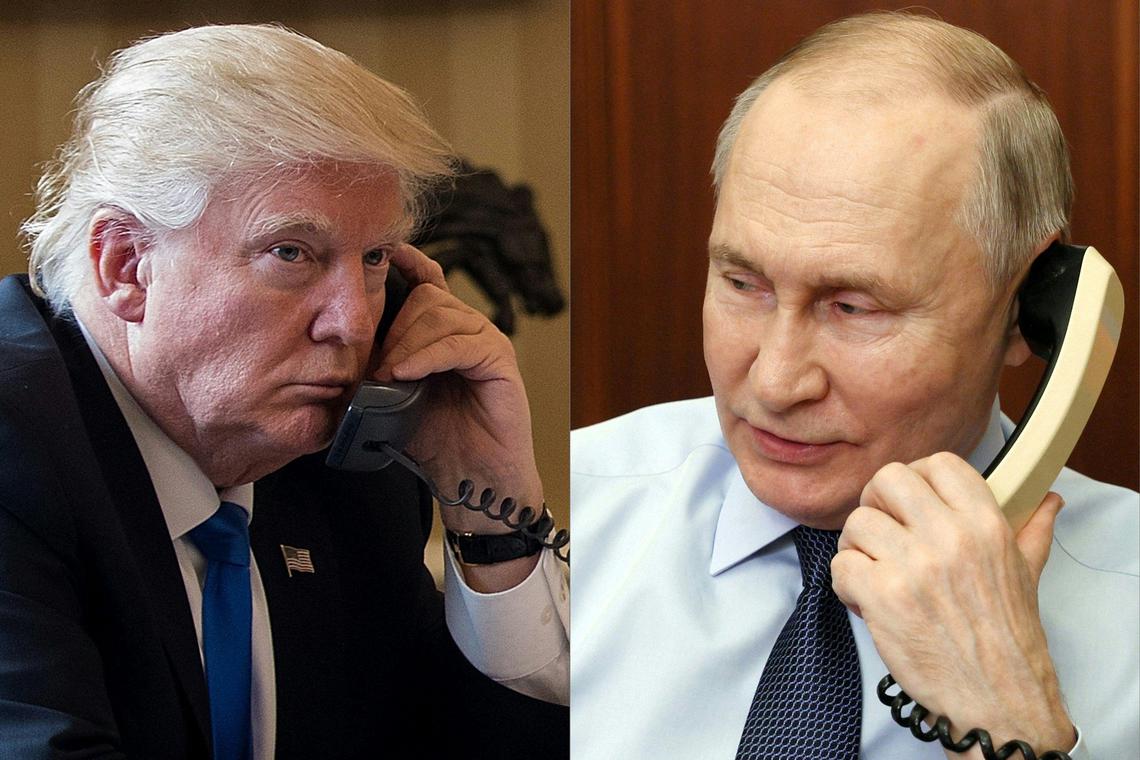
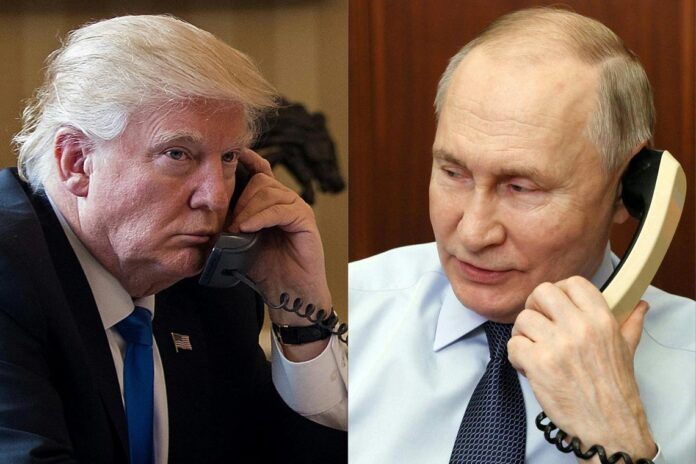
In the same interview, Trump revealed that Russian President Vladimir Putin had offered to mediate talks between Israel and Iran. “He is ready. He called me about it,” Trump said. “We had a long talk about it. We talked about this more than his situation [Ukraine]. This is something I believe is going to get resolved.”

Iranian officials disputed Trump’s assertion that the U.S. is uninvolved. In Tehran, Foreign Minister Abbas Araghchi told reporters the Iranian government believes Israel’s military campaign has been carried out with U.S. knowledge and approval.

“We have received messages from the U.S. through various channels over the past two days stating that the U.S. had no involvement and will have no involvement in this attack,” Araghchi said. “As I said, we don’t believe the U.S.’s claim.”

As tensions escalated, the U.S. State Department on Sunday authorized the voluntary departure of family members and some non-emergency U.S. government employees from its embassy in Israel. A memo advised American citizens in Israel to leave while commercial flights remain available, warning that the embassy’s shelter-in-place order remains in effect “until further notice.”

“U.S. citizens who wish to depart should not delay in taking advantage of commercial transportation options,” the advisory said.

While Trump has publicly distanced the U.S. from direct involvement in the current conflict, his close alignment with Israel and the longstanding U.S.-Israel defense relationship has led Iran and its allies to view Washington as complicit. The former president also referenced his previous efforts to resolve international disputes, such as negotiations between Serbia and Kosovo and tensions between India and Pakistan.

“This will get resolved,” Trump said. “Just like I got India and Pakistan to stop fighting — and they were very close.”

Still, his stark warning underscores the growing risk that the conflict between Israel and Iran could entangle the United States, particularly if Israeli operations intensify or if Iranian retaliation targets U.S. forces or allies in the region.

For now, Trump’s message is a balancing act between deterrence and diplomacy — but with no ceasefire in sight, the threat of U.S. military involvement in another Middle East war grows more real by the day.

nypost.com

Netanyahu Says Israeli Strikes Could Spark Regime Change in Iran as Tehran Launches Fresh Missile Barrage

JERUSALEM — Israeli Prime Minister Benjamin Netanyahu said Sunday that regime change in Iran is a possible outcome of Israel’s expanding military campaign, as Iran launched another wave of missile strikes targeting Israeli cities amid the deepening conflict.

Speaking to Fox News, Netanyahu declared that “regime change could certainly be the result” of the ongoing Israeli offensive, citing what he described as the Iranian regime’s internal weakness. His remarks came as Israeli airstrikes continued for a third consecutive day, hitting a broad range of targets across Iran, including government facilities and energy infrastructure in Tehran. The sustained bombardment reportedly triggered panic in the capital, with residents fleeing neighborhoods affected by the explosions.

Iran responded hours later with a fresh barrage of ballistic missiles aimed at Israeli territory. Among the locations hit were the southern Israeli town of Netivot and the northern port city of Haifa — a key strategic and commercial hub. Sirens blared across multiple regions, with emergency responders dispatched to assess the damage. No official casualty figures in Israel had been released as of late Sunday.

Iranian state media reported that more than 200 people had been killed in the Israeli strikes since the offensive began, quoting a health ministry spokesperson. The figure, which could not be independently verified, underscores the high toll of the conflict’s rapid escalation.

The strikes and counterstrikes reflect a sharp deterioration in the long-simmering tensions between the two regional powers. Israel has framed its military campaign as a direct response to Iranian efforts to reconstitute and arm proxy groups across the region, while Tehran has accused Israel of violating international law and vows continued retaliation.

Asked late Sunday about possible steps to de-escalate the conflict, President Donald Trump offered a measured yet resolute reply. “Sometimes they have to fight it out,” he said, suggesting that military pressure may ultimately be necessary before diplomacy can succeed.

Trump’s comments, delivered just hours before his departure for the G7 summit in Canada, mark a continuation of his administration’s firm stance on Iran. The White House has maintained that while the United States is not directly involved in Israel’s operations, it supports Israel’s right to self-defense and has warned Tehran against targeting U.S. assets or personnel in the region.

As the fighting intensifies, global leaders have called for restraint amid fears of a broader regional war. European Union officials have urged both sides to halt hostilities and return to diplomatic channels, while China and Russia have condemned the violence and blamed the West for fueling instability.

For now, neither Israel nor Iran shows signs of backing down. Netanyahu, reiterating his position in the Fox News interview, said, “We’ll do what we need to do.” His remarks signal a readiness to continue the campaign, even as international pressure grows.

The situation remains fluid, with the risk of a wider confrontation looming over an already volatile Middle East.

Hot Air Balloon Collision in Turkey Kills One, Injures 19 in Tourist Region Near Ihlara Valley

AKSARAY, Turkey — A tragic hot air balloon collision in one of Turkey’s most popular tourist regions has left at least one person dead and 19 others injured, according to local authorities.

The deadly crash occurred near the Ihlara Valley in the central province of Aksaray, a destination famed for its scenic hot air balloon rides and proximity to the famed “fairy chimneys” of Cappadocia, a UNESCO World Heritage site that draws visitors from around the world.

Details surrounding the cause of the mid-air collision remain unclear. The two balloons reportedly came into contact during flight, leading to the collapse of one balloon and sending its basket crashing to the ground. Emergency teams responded swiftly, with ambulances and rescue crews rushing to the scene to assist the injured.

Footage shared by Turkey’s Ilhas News Agency captured the immediate aftermath. In the video, one balloon’s envelope appears deflated as its passenger basket lies on its side, surrounded by emergency personnel attending to the wounded.

The Turkish Interior Ministry confirmed the casualty toll but did not immediately release the identities of those involved or specify their nationalities. Many of the passengers on board the balloons were believed to be tourists.

Hot air ballooning is a major draw in the region, with dozens of flights taking off at sunrise each day under strict weather and aviation protocols. While accidents are rare, the industry has experienced occasional tragedies over the years due to rapidly changing weather conditions or equipment failure.

The Ihlara Valley, with its deep canyons and dramatic landscapes, offers one of the most picturesque ballooning experiences in the country. Sunday’s accident cast a shadow over the otherwise thriving tourism season.

The fatal collision comes amid a string of recent global aviation disasters. Just days earlier, at least 279 people were killed when Air India Flight AI171 crashed into a doctors’ hostel in Ahmedabad shortly after takeoff, exploding into flames in one of the worst airline disasters in India’s history. A British national was the only known survivor.

The following day, another Air India flight — AI379 en route from Phuket to New Delhi — was forced to make an emergency landing after a bomb threat prompted an explosion warning.

On Sunday, a helicopter carrying Hindu pilgrims crashed in the Himalayas shortly after takeoff, killing all seven people on board, including a toddler. And last week, six people died when a twin-engine Cessna 414 plunged into the Pacific Ocean near San Diego’s Point Loma.

Turkey’s civil aviation and safety authorities are expected to investigate the balloon crash thoroughly to determine the cause and assess whether regulations were followed.

As the tourism season continues in central Turkey, safety concerns are again in focus, especially in adventure-based travel sectors such as hot air ballooning. For now, flights in the Aksaray region have reportedly been temporarily suspended pending the outcome of the investigation.

Paris Saint-Germain Routs Atlético Madrid 4-0 in Club World Cup Opener at Rose Bowl

PASADENA, Calif. — Champions League titleholders Paris Saint-Germain opened their Club World Cup campaign with a commanding 4-0 victory over Atlético Madrid on Sunday, delivering a clear statement of intent in the tournament’s inaugural 32-team edition.

PSG controlled the match from the opening whistle at the Rose Bowl, building on the momentum from their 5-0 demolition of Inter Milan in the Champions League final just weeks earlier. Fabián Ruiz and Vitinha scored in the first half before Senny Mayulu and Lee Kang-in added to the tally after halftime, sealing a dominant win in front of a vibrant crowd of 80,619 — the same stadium that hosted the 1994 World Cup final.

The Parisian club showed no signs of fatigue despite a taxing schedule, outclassing Atlético Madrid in a high-profile group stage clash. It was a performance that reflected their treble-winning pedigree and underscored their ambition to lift the global club trophy.

Atlético’s frustrations boiled over in the second half as Clément Lenglet was sent off in the 78th minute following a second yellow card, a moment that further unraveled Diego Simeone’s side on a sweltering California afternoon. The Argentine manager, visibly irate on the sidelines, saw his team collect seven yellow cards in a disjointed outing marred by missed chances and defensive lapses.

Paris Saint-Germain manager Luis Enrique made just one change to his Champions League-winning lineup, slotting in Gonçalo Ramos for the injured Ousmane Dembélé, who suffered a quadriceps injury while on international duty with France on June 6. Coaching in the midday heat of 88 degrees Fahrenheit (31 Celsius), Enrique watched as his side took early control of the game and never relinquished it.

Ruiz opened the scoring in the 19th minute, placing a precise shot into the far corner after finding space atop the penalty area. The goal was especially poignant given long-standing transfer links between the Spanish midfielder and Atlético.

PSG doubled their lead in first-half stoppage time as Vitinha broke through the Atlético defense to convert Khvicha Kvaratskhelia’s second assist of the half, capitalizing just moments after Gianluigi Donnarumma made a critical save on Antoine Griezmann to preserve the lead.

Paris Saint-Germain’s French midfielder #24 Senny Mayulu (2nd-L) celebrates scoring his team’s third goal during the Club World Cup 2025 Group B football match between France’s Paris Saint-Germain and Spain’s Atletico de Madrid at the Rose Bowl stadium in Los Angeles on June 15, 2025. (Photo by Yuri CORTEZ / AFP)

Though Atlético briefly thought they had a lifeline in the second half through Julián Álvarez, VAR intervened to nullify the goal due to a foul by Koke in the buildup. The missed opportunity underscored a miserable afternoon for the Spanish side, which hit rock bottom when Alexander Sørloth misfired an open-net chance in the 82nd minute.

Mayulu punished the miss minutes later, slotting home PSG’s third. Lee Kang-in capped the rout with a composed penalty in the final seconds of the match, highlighting PSG’s relentless pace and precision throughout the 90 minutes.

The result puts PSG in firm control of their group and cements their status as one of the favorites in the revamped Club World Cup format. Despite the setback, Atlético is still expected to advance, though it now faces a tighter margin for error in its remaining matches.

After the game, Enrique praised his team’s focus and drive. “In this competition, we’ve set ourselves the goal to make history,” he said. “We are entering a new chapter, and we need to show it’s possible to reinvent ourselves. I was happy with the way we performed today.”

Atlético midfielder Koke acknowledged PSG’s superiority but expressed frustration with the match’s turning points. “The sending-off killed us,” he said. “We knew it was going to be difficult, but for me, 4-0 is not fair. PSG are fair winners. Given their level, they were better. We have to push harder, like in the second half, when we were a different team.”

With their toughest group opponent now behind them, PSG appears poised to continue their dominant run on the global stage — a campaign that could mark yet another historic milestone in a season already full of silverware.

Trump Vetoed  Israeli Assassination Plan Targeting Iran’s Supreme Leader, U.S. Official Tells AP

WASHINGTON — President Donald Trump vetoed an Israeli proposal to assassinate Iran’s Supreme Leader Ayatollah Ali Khamenei, fearing such a strike would escalate into a broader regional conflict, a U.S. official familiar with the matter told The Associated Press.

According to the official, who spoke on condition of anonymity due to the sensitivity of the discussions, Israeli officials recently informed the Trump administration of a “credible plan” they had developed to eliminate Khamenei. But after reviewing the proposal, Trump opposed the move, citing concerns it would dangerously destabilize the region and undermine efforts to contain the conflict between Israel and Iran.

The official emphasized the administration’s concern that a targeted killing of Iran’s top leader could ignite full-scale war, derailing attempts to manage Israeli military operations aimed at crippling Tehran’s nuclear ambitions without widening the confrontation.

Israeli Prime Minister Benjamin Netanyahu, when asked about the plan during an interview with Fox News’ “Special Report with Bret Baier,” sidestepped the issue. “I think that we do what we need to do, we’ll do what we need to do,” Netanyahu said. “And I think the United States knows what is good for the United States.”

Later, Netanyahu spokesman Omer Dostri dismissed reports of an Israeli operation targeting Khamenei as “fake.” Still, Netanyahu suggested that regime change in Tehran “could certainly be the result” of the escalating hostilities, citing what he called the “weak” state of Iran’s ruling government.

Trump’s rejection of the Israeli plan was first reported by Reuters, and comes at a volatile moment in Middle Eastern geopolitics, as Israeli and Iranian forces have exchanged missile fire for three consecutive days. Although Iran has directly accused the U.S. of complicity in Israeli strikes, Trump publicly denied American involvement in an early Sunday post on social media.

“The United States had nothing to do with the attack on Iran,” Trump wrote. “If we are attacked in any way, shape or form by Iran, the full strength and might of the U.S. Armed Forces will come down on you at levels never seen before.”

Shortly afterward, Trump returned to social media with a more optimistic note, predicting that “Iran and Israel should make a deal, and will make a deal,” adding that an agreement could emerge “soon.”

Before departing for the Group of Seven summit in the Canadian Rockies on Sunday evening, Trump expressed hope for a diplomatic breakthrough while acknowledging the intensity of the conflict. “I hope there is going to be a deal, and we’ll see what happens,” he said. “But sometimes they have to fight it out.”

Trump suggested that his past success in de-escalating global crises — including mediating tensions between India and Pakistan following a deadly attack in Kashmir — demonstrated his ability to resolve conflicts. He reiterated his controversial claim that his intervention helped prompt a ceasefire between the nuclear-armed neighbors, despite pushback from Indian officials.

He also pointed to U.S.-brokered negotiations between Serbia and Kosovo and Egypt and Ethiopia during his first term as examples of his peacemaking record. “Likewise, we will have PEACE, soon, between Israel and Iran!” Trump posted. “Many calls and meetings now taking place. I do a lot, and never get credit for anything, but that’s OK, the PEOPLE understand. MAKE THE MIDDLE EAST GREAT AGAIN!”

Inside the Republican Party, Trump’s cautious approach has sparked debate among his allies. Prominent right-wing figures including Rep. Marjorie Taylor Greene of Georgia, Turning Point USA founder Charlie Kirk, and former Fox News host Tucker Carlson have warned against further U.S. involvement in foreign entanglements, arguing Trump’s base supports a more restrained foreign policy.

Sen. Rand Paul, R-Ky., praised Trump for resisting escalation, saying he hoped the president’s “instincts will prevail.” Speaking on NBC’s “Meet the Press,” Paul said a negotiated settlement may be elusive, warning of “more war and more carnage,” and adding that “it’s not the U.S.’s job to be involved in this war.”

In contrast, Sen. Lindsey Graham, R-S.C., urged Trump to pursue diplomatic options but said the U.S. must be ready to support Israel with full force if necessary. “If that means providing bombs, provide bombs,” Graham said on CBS’ “Face the Nation.” “If that means flying with Israel, fly with Israel.”

As global leaders gather for high-stakes talks in Canada, the Israeli-Iranian conflict is expected to dominate the agenda. Trump, seeking to showcase himself as a dealmaker on the world stage, remains determined to strike a balance between deterrence and diplomacy — even as his administration walks a tightrope amid one of the most dangerous flashpoints in the Middle East in years.

Ukraine Receives 1,200 More Bodies From Russia Under Istanbul Agreement

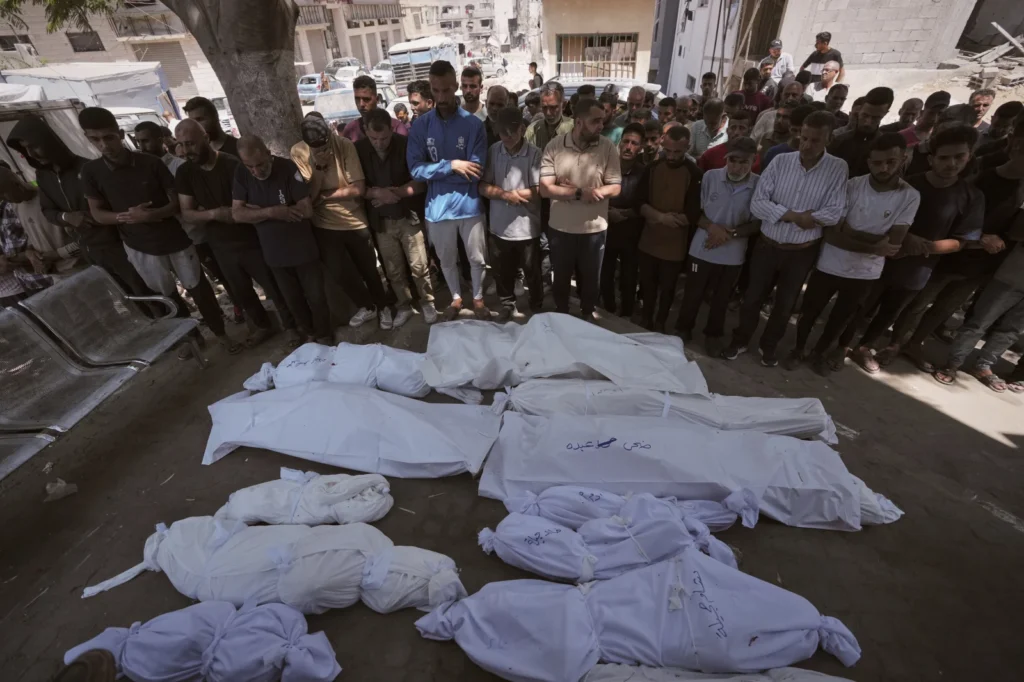
KYIV, Ukraine (BN24) — Ukrainian authorities said Sunday they have received 1,200 more bodies from Russia, the latest in a large-scale exchange of war dead under an agreement reached in Istanbul earlier this month.

The transfer brings the total number of bodies returned to Ukraine in recent days to 4,812, according to Ukrainian Defence Minister Rustem Umerov, who called the operation a “humanitarian mission.”

“Another 1,200 bodies which the Russian side claims belong to Ukrainian citizens, including military personnel, were returned to Ukraine,” Ukraine’s Coordination Headquarters for the Treatment of Prisoners of War announced on social media.

The bodies were transferred as part of a June 2 agreement brokered during direct talks in Istanbul between Ukrainian and Russian representatives. The deal included arrangements for the exchange of prisoners of war and remains of fallen soldiers.

While Ukraine has publicly acknowledged receiving bodies, it has not confirmed whether any remains were sent back to Russia as part of the reciprocal agreement.

The scale of losses remains a sensitive topic for both sides. Neither Ukraine nor Russia routinely disclose updated casualty figures. However, in a rare public estimate, Ukrainian President Volodymyr Zelenskyy told NBC earlier this year that the war has claimed the lives of more than 46,000 Ukrainian soldiers, with some 380,000 wounded.

Russia last issued an official death toll in September 2022, reporting fewer than 6,000 fatalities—a number widely disputed by military analysts and independent researchers.

Open-source investigations by Mediazona and BBC’s Russian service have since identified the names of more than 111,000 Russian soldiers believed to have died in the war. These estimates are based on official obituaries, court records, and statements from local governments and families.

As the war continues into its third year, both Ukraine and Russia have relied on frequent but discreet exchanges of war dead—a grim testament to the intensity and scale of the conflict still unfolding across vast parts of eastern and southern Ukraine.