Home Blog Page 31

Haitian Man Charged With Murder in Hammer Attack Outside Florida Gas Station

0

A Haitian man who entered the United States in 2022 and was granted temporary immigration status has been arrested and charged with second-degree murder after allegedly killing a mother of two with a hammer outside a gas station in Fort Myers, Florida, in broad daylight Friday.

Rolbert Joachim, 40, faces charges of second-degree murder and criminal damage to property, according to Lee County Sheriff’s Office jail records. The arrest followed a violent incident captured on surveillance footage that shocked the community and immediately became focal point for political debates about immigration enforcement and border security.

Surveillance footage appeared to show Joachim smashing the woman’s car windshield, approaching her, and repeatedly striking her in the head with a hammer—killing her in full view of potential witnesses during daylight hours, according to the Department of Homeland Security. The brazen nature of the attack outside a commercial establishment during normal business hours amplified public alarm about the incident.

The woman, whose identity has not been publicly released pending family notification, was a store clerk working inside the gas station. She was also the mother of two teenage daughters, according to a report from local outlet Gulf Coast News. The victim’s family now faces devastating loss compounded by the brutal circumstances of her death.

Immigration and Customs Enforcement assisted the Fort Myers Police Department in tracking down and arresting Joachim on Mango Street in Fort Myers following the attack. The collaborative law enforcement effort resulted in his swift apprehension before he could flee the jurisdiction.

Joachim first entered the United States in August 2022 and was released into the country under the Biden administration, according to DHS records. A federal immigration judge issued a final order of removal against him later that year, but he was granted Temporary Protected Status—which expired in 2024—allowing him to remain in the country legally despite the deportation order.

“This illegal alien barbarically hit this woman in the head multiple times with a hammer,” DHS acting assistant secretary Lauren Bis wrote in a statement employing inflammatory language characterizing the suspect by immigration status rather than simply as an accused criminal. “This heinous murderer was RELEASED into the country by the Biden administration. Not only did the Biden administration release him into the country, but they then gave him temporary protected status. Their reckless immigration policies cost this woman her life.”

The statement immediately politicized the murder investigation by framing the crime as an immigration policy failure rather than addressing it primarily as a horrific act of violence requiring justice for the victim and her family. The emphasis on the suspect’s immigration history rather than the victim’s life reflected broader political strategies of attributing individual crimes to systemic policy decisions.

ICE has lodged a detainer against Joachim, and he will be deported regardless of the outcome of the criminal case—meaning even if acquitted of murder charges, he would face removal from the United States based on immigration violations. The dual track of criminal prosecution and immigration enforcement ensures consequences for his presence in the country independent of murder trial outcomes.

“The arrest of this criminal is an example of how ICE and local authorities can work together to swiftly bring criminals to justice and make our communities safer,” Bis declared, framing the case as validation of cooperative immigration enforcement rather than acknowledging the tragedy that a woman lost her life before any prevention occurred.

The case immediately generated political controversy as immigration restrictionists cited it as evidence that temporary protected status programs and border policies endanger public safety by allowing individuals with deportation orders to remain in the country. Advocates for immigrants countered that individual crimes should not be used to stereotype entire populations or justify sweeping policy changes affecting millions.

Temporary Protected Status is a humanitarian program that allows nationals of designated countries experiencing armed conflict, environmental disasters, or other extraordinary conditions to remain temporarily in the United States. Haiti has been designated for TPS multiple times due to political instability, natural disasters including devastating earthquakes, and economic collapse that have made return dangerous for Haitian nationals.

The program’s critics argue it enables individuals with removal orders to remain in the country indefinitely despite lacking permanent legal status. Supporters emphasize it provides essential humanitarian protection to vulnerable populations who would face serious harm if forcibly returned to crisis-affected nations.

The fact that Joachim received TPS despite having a final removal order raises questions about how such statuses are granted and whether adequate background checks or coordination between immigration enforcement divisions occurs. However, it remains unclear whether any prior criminal history or behavioral indicators existed that might have predicted violent behavior.

For the victim’s teenage daughters, the political debates about their mother’s killer’s immigration status provide no comfort as they confront life without the parent who worked at a gas station to support them. The reduction of their mother’s life to a talking point in immigration arguments compounds the tragedy of her violent death.

The surveillance footage that apparently captured the attack will likely prove central to prosecution efforts, providing visual documentation of the incident that could eliminate reasonable doubt about what transpired. However, the footage’s existence also means the victim’s final moments may become public spectacle as the case proceeds through judicial processes.

Lee County prosecutors will determine whether to pursue first-degree murder charges that could result in life imprisonment or whether the second-degree murder charge—suggesting intent to kill without premeditation—adequately reflects the evidence. The distinction carries significant sentencing implications should Joachim be convicted.

As the case proceeds through Florida’s criminal justice system, it will inevitably fuel ongoing political battles about immigration enforcement, border security, and humanitarian protection programs. The Trump administration has already seized upon such incidents to justify aggressive immigration enforcement measures and proposals to eliminate or severely restrict programs like Temporary Protected Status.

Whether this horrific murder represents evidence of systemic immigration policy failures requiring dramatic reforms or an isolated crime that should not drive sweeping policy changes affecting millions will likely divide observers along existing ideological lines regarding immigration. For the Fort Myers community and especially the victim’s family, the urgent need is for justice and accountability rather than political vindication.

New York Post

Iran to Allow Strait of Hormuz Shipping for Two Weeks Under Ceasefire Deal, Foreign Minister Says

0

Iran will allow ships to pass through the Strait of Hormuz for the next two weeks under military oversight, its foreign minister said Tuesday, as Tehran and the United States reached a temporary ceasefire agreement aimed at easing a nearly 40-day conflict that has disrupted global shipping and driven up fuel prices.

President Donald Trump announced the two-week pause in military action less than 90 minutes before his deadline for Iran to reopen the key waterway or face expanded strikes on its infrastructure. The agreement is contingent on Iran ensuring the safe and immediate reopening of the strait, a route that carries about one-fifth of the world’s oil supply.

“This will be a two-sided ceasefire,” Trump said, adding that both countries had made significant progress toward a broader agreement on long-term peace.

Iran’s foreign minister said passage through the strait would be permitted during the two-week period, with Iranian forces managing traffic. He added that Iran would halt its defensive operations if attacks against the country stop.

The breakthrough triggered an immediate reaction in global markets. Oil prices dropped sharply, with Brent crude falling about 14 percent within an hour of the announcement, reflecting expectations of restored supply and reduced risk of further disruption.

Iran’s national security authorities confirmed the ceasefire but cautioned that it does not mark the end of the conflict. In a statement, officials said the country remains ready to respond to any renewed attacks.

The agreement follows weeks of escalating violence that saw strikes on military and infrastructure targets, including key sites linked to Iran’s oil production. The Strait of Hormuz had been effectively closed during the conflict, sending shockwaves through global energy markets and increasing pressure on both sides to reach a resolution.

Diplomatic efforts are continuing, with officials indicating that direct talks between the United States and Iran are under consideration, though no final arrangements have been confirmed.

Iran has outlined conditions for a broader peace deal, including the lifting of long-standing economic sanctions and guarantees against future military action. U.S. officials have signaled that discussions remain ongoing but emphasized that no final agreement has been reached.

The temporary ceasefire came after mediation efforts by several countries seeking to prevent further escalation. Officials said negotiations intensified in the final hours before the deadline, with both sides under pressure to avoid a wider conflict that could further destabilize global markets.

Despite the agreement, uncertainty remains over whether the two-week pause will lead to a lasting settlement. Officials on both sides have acknowledged that significant differences remain, particularly over sanctions and long-term security arrangements.

The conflict has resulted in significant casualties and damage across the region, including the deaths of U.S. service members and widespread destruction of military assets. It has also imposed a heavy economic cost, with disruptions to oil supply affecting prices worldwide.

The agreement to reopen the Strait of Hormuz, even temporarily, represents a critical turning point in the conflict, given the waterway’s central role in global energy supply. Its closure had immediate and far-reaching economic consequences, highlighting how regional conflicts can quickly impact markets worldwide.

The two-week ceasefire appears to be a tactical pause rather than a comprehensive resolution. For the United States, it offers an opportunity to secure key objectives without immediate escalation, while Iran gains temporary relief from sustained military pressure and the possibility of sanctions negotiations.

However, the arrangement remains fragile. Iran’s insistence on long-term guarantees and sanctions relief presents a major hurdle, while the United States is likely to resist concessions that could weaken its strategic position.

The sharp drop in oil prices following the announcement underscores how closely global markets are tied to developments in the region. Any breakdown in the agreement could quickly reverse those gains and renew volatility.

Diplomatic momentum in the coming days will be crucial. If negotiations progress, the ceasefire could serve as a foundation for a broader agreement. If not, the conflict risks returning to escalation once the two-week period expires.

The situation remains fluid, with both sides balancing military pressure and diplomatic engagement as they test the possibility of a longer-term resolution.

NewYorkPost

U.S. and Iran Agree to Two-Week Ceasefire After Trump Abandons Destruction Threats

0

The United States and Iran agreed to a two-week ceasefire on Tuesday evening following last-minute diplomatic intervention led by Pakistan, canceling an ultimatum from Donald Trump for Iran to surrender or face widespread destruction that legal scholars and international leaders had warned could constitute war crimes.

Trump’s announcement of the ceasefire agreement arrived less than two hours before the U.S. president’s self-imposed 8 p.m. Eastern time deadline to bomb Iran’s power plants and bridges in attacks that the Pope, numerous government officials, and legal experts had characterized as potential crimes against humanity. Just hours earlier, Trump had written on Truth Social: “A whole civilization will die tonight, never to be brought back again. I don’t want that to happen, but it probably will.”

B-52 bombers were documented to be en route to Iran before the ceasefire agreement was announced, suggesting military preparations for infrastructure destruction had advanced to operational stages when diplomatic breakthrough intervened. The dramatic reversal occurred through intensive mediation by Pakistan, whose prime minister Shehbaz Sharif had requested the two-week peace period to “allow diplomacy to run its course.”

Trump wrote in a post that “subject to the Islamic Republic of Iran agreeing to the COMPLETE, IMMEDIATE, and SAFE OPENING of the Strait of Hormuz, I agree to suspend the bombing and attack of Iran for a period of two weeks.” The statement emphasized that Iran’s compliance with strait reopening represented the essential condition for American restraint from attacks on civilian infrastructure.

In the two-week period, Trump indicated, he believed the United States and Iran could negotiate over a 10-point proposal submitted by Tehran that would allow an armistice to be “finalized and consummated.” The reference to Iranian proposals represented acknowledgment that Tehran had presented substantive negotiating positions rather than merely resisting American demands.

“This will be a double sided CEASEFIRE!” he continued, employing capital letters for emphasis. “The reason for doing so is that we have already met and exceeded all Military objectives, and are very far along with a definitive Agreement concerning Longterm PEACE with Iran, and PEACE in the Middle East.”

Iran’s foreign minister, Abbas Araghchi, issued a statement shortly after Trump’s announcement confirming Iran had agreed to the ceasefire terms. “For a period of two weeks, safe passage through the Strait of Hormuz will be possible via coordinating with Iran’s Armed Forces,” he wrote, specifying the mechanism by which maritime traffic would resume through the waterway handling approximately one-fifth of global energy supplies.

The sudden reversal will allow Trump to retreat as the U.S. war in Iran has dragged on for five weeks with minimal evidence that Tehran is prepared to surrender or release its hold on the Strait of Hormuz, where traffic has slowed to a trickle since Iran effectively closed the waterway following American and Israeli attacks. The ceasefire provides Trump an exit from escalating toward infrastructure destruction that could have triggered international condemnation and domestic political backlash.

Israel will also agree to the two-week ceasefire, Axios confirmed, citing an Israeli official who added that the ceasefire would enter effect as soon as the blockade of the Strait of Hormuz ceased. The coordination between American and Israeli forces suggested both nations recognized the strategic dead end reached after five weeks of bombardment producing no Iranian capitulation.

Trump had earlier rejected Iran’s 10-point plan as “not good enough,” but the president has established deadlines previously and allowed them to pass over the five weeks of conflict. Yet he insisted Tuesday the ensuing hours would represent “one of the most important moments in the long and complex history of the World” unless “something revolutionarily wonderful” happened, with “less radicalized minds” in Iran’s leadership prevailing.

Amir-Saeid Iravani, Iran’s representative at the United Nations, declared that Trump’s threats constituted “incitement to war crimes – and potentially genocide.” During a Security Council session on the Strait of Hormuz, Iravani emphasized: “Iran will not stand idle in the face of such egregious war crimes. It will exercise, without hesitation, its inherent right of self-defence and will take immediate and proportionate reciprocal measures.”

Through his spokesperson, UN Secretary-General António Guterres issued a reminder Monday that attacking civilian infrastructure is banned under international law, but Trump proclaimed the same day he was “not at all” concerned about being called a war criminal—language suggesting willingness to violate legal prohibitions if they interfered with his objectives.

The Guardian documented that in the hours before Trump’s deadline, Israel mounted its own attacks on Iran’s infrastructure. A rail bridge in the central city of Kashan was among the first reported bombed Tuesday by Iranian state media, with two people reportedly killed as Israel’s military announced it had launched “a wide-scale wave of strikes targeting dozens of infrastructure sites.”

A bridge over a railway line near Karaj, northwest of Tehran, was struck, according to Iranian media, and power outages were documented in the same city after a substation and transmission lines were bombed. Bridges near Qom and Tabriz were also reportedly hit in coordinated attacks apparently designed to demonstrate Israel’s capability to execute the infrastructure destruction Trump threatened.

The United States also struck 50 military targets on Iran’s Kharg Island, home to its main oil export terminal, while Iran’s Revolutionary Guards disclosed they had attacked Saudi Arabia’s Jubail petrochemical complex in retaliation for strikes on an Iranian petrochemical facility the night before. The tit-for-tat attacks illustrated the escalating violence that the ceasefire would temporarily halt.

The Associated Press confirmed that the president indicated the pause includes an array of bridges, power plants, and other civilian targets—subject to Iran accepting a two-week ceasefire and reopening the Strait of Hormuz. In a post on his social media site Tuesday evening, Trump specified Iran could agree “to the COMPLETE, IMMEDIATE, and SAFE OPENING of the Strait of Hormuz” and said he would then “suspend the bombing and attack of Iran for a period of two weeks.”

Since the war began in February, Trump has established a series of deadlines threatening escalation of the conflict, only to retreat just before they expire—a phenomenon his critics have derided as “Trump Always Chickens Out,” or TACO. The pattern suggests Trump employs deadline threats as negotiating tactics rather than genuine intentions to execute threatened actions.

The president added in his social media post that Iran has presented “a workable basis on which to negotiate.” “Almost all of the various points of past contention have been agreed to between the United States and Iran, but a two week period will allow the Agreement to be finalized and consummated,” Trump declared, suggesting diplomatic progress had been more substantial than his public rhetoric acknowledged.

Trump backed off many of the sweeping “Liberation Day” tariffs he first announced in April 2025 after they caused financial markets to crash. He also largely abandoned threats to impose high levies on imported products from China, Mexico, the European Union, and Canada—among other trade partners whose resistance forced him to modify maximalist demands.

Perhaps the most spectacular example transpired during a January meeting of the World Economic Forum in Davos, where Trump insisted he wanted the United States to obtain Greenland “including right, title and ownership” only to reverse course and abandon his threat to impose widespread tariffs on Europe to press his case. The pattern of dramatic threats followed by quiet retreat has become characteristic of Trump’s negotiating style.

In his social media post, Trump disclosed he reached the decision to delay expansion of U.S. strikes “based on conversations” with Pakistan Prime Minister Shehbaz Sharif and General Asim Munir, Pakistan’s powerful army chief. Sharif, in a post on X earlier Tuesday, urged Trump to extend his deadline by two weeks to allow diplomacy to advance. Pakistan has been leading negotiations between the adversaries.

Sharif employed the same post to request Iran open the Hormuz Strait for two weeks, demonstrating Pakistan’s role as honest broker appealing to both parties to accept compromise. According to Reuters, Trump agreed to suspend “bombing and attack of Iran” for two weeks, contingent on Iran agreeing to the “complete, immediate and safe opening” of the Strait of Hormuz.

The Independent documented that Trump backed off his threat to unleash devastation across Iran. Trump wrote on Truth Social around 6:30 p.m. ET that U.S. forces would pause plans for a massive final military assault against Iran for two weeks while negotiations continued between the two countries, mediated by Pakistan.

He also claimed that complete reopening of the Strait of Hormuz would be part of arrangements around a temporary pause. “Based on conversations with Prime Minister Shehbaz Sharif and Field Marshal Asim Munir, of Pakistan, and wherein they requested that I hold off the destructive force being sent tonight to Iran, and subject to the Islamic Republic of Iran agreeing to the COMPLETE, IMMEDIATE, and SAFE OPENING of the Strait of Hormuz, I agree to suspend the bombing and attack of Iran for a period of two weeks,” the president stated.

Earlier Tuesday, the president warned that Iran’s millennia-old “civilization will die tonight, never to be brought back again” unless Tehran capitulated to his demands for a ceasefire deal by 8 p.m. ET—language evoking genocide that provoked international outrage and domestic calls for his removal from office.

Shortly afterwards, Iran’s Foreign Minister Abbas Araghchi confirmed an agreement had been reached. He disclosed in an X post that shipping traffic would be allowed through the Strait of Hormuz for two weeks, adding that Iran would cease “defensive” operations until that time, providing attacks against Iran are stopped—language framing Iranian military actions as self-defense rather than aggression.

Tuesday evening’s announcement followed a particularly dire 12 hours in Washington. The day began with the president issuing vows to unleash catastrophic military force upon Iran’s civil infrastructure, including bridges and power plants, if the Iranian government did not comply with his demand for the Strait of Hormuz to be reopened.

The closure of the strait has caused a spike in global oil prices showing no signs of alleviating as long as the waterway, through which about one-fifth of the world’s oil and gas supplies travel, remains largely blocked by Iranian mines and other forces. The economic consequences of continued closure threatened to produce recession across energy-importing nations.

That post from the president drew shocked reactions worldwide and on Capitol Hill, where despite lawmakers being out for Easter recess, many Democrats reacted with public calls for Vice President JD Vance to instigate the removal of the president via the 25th Amendment. The amendment is designed to guide power transfer when the president is incapacitated or unable to serve office duties. Others called for impeachment by the Republican-held House and Senate.

“These are not the words of a sane person, nor one who is fit to serve as president of the most powerful nation in the world,” wrote Democratic Illinois Representative Shri Thanedar in a letter addressed to Vance and top administration officials, questioning Trump’s mental fitness for office.

House Minority Leader Hakeem Jeffries added in a statement: “Congress must immediately end this reckless war of choice in Iran before Donald Trump plunges us into World War III. It’s time for every single Republican to put patriotic duty over party and stop the madness. Enough.”

Experts in military warfare and international law concur that targeting Iran’s civil infrastructure could not be accomplished without causing significant civilian casualties. The non-military designation of the targets would likely constitute war crimes unless the targets were actively being utilized for military purposes—a legal standard these infrastructure sites clearly would not meet.

U.S. forces have sought for weeks to de-mine the Strait of Hormuz and secure the waterway for global shipping traffic, without success. Trump’s efforts to convince European allies to intervene and assist in the endeavor has also largely ended in failure—a result of his frequent and toxic personal attacks aimed at European and NATO leadership that alienated potential partners.

The president’s critics immediately characterized the reversal as evidence that Trump was bluffing once again. “He’s not telling the truth. But if you accept even part of the Iranian statement, Donald Trump has agreed to give Iran control of the Strait of Hormuz. That is extraordinary and cataclysmic for the world,” Senator Chris Murphy, a Democrat from Connecticut, declared on CNN after the news broke.

The 8 p.m. deadline Trump claimed was still in effect to Fox’s Bret Baier just hours earlier represented merely the latest iteration of a deadline that the White House repeatedly extended, even as Iranian officials publicly rejected temporary ceasefire overtures. His first 48-hour “deadline” concerning the Strait of Hormuz was issued more than two weeks earlier.

It was not immediately clear from Trump’s Tuesday evening words whether the temporary ceasefire would include Israel’s military, which is also a party in the conflict, but in Tel Aviv an alert warned residents of incoming rockets just minutes after Trump’s message was posted, according to Fox News—suggesting Iranian retaliation continued despite ceasefire announcements.

For the Trump administration, the Iran war has become a murky morass as the president finds himself unable to tell Americans when it will conclude or why the White House keeps threatening to escalate the conflict if U.S. objectives have supposedly been achieved and Iran’s military is truly “devastated,” as officials claim.

At a press conference Monday, Trump could not tell a reporter whether the conflict was escalating or drawing down when asked directly. “Somebody said, ‘Oh, he doesn’t have a plan.’ I have the best plan of all, but I’m not going to tell you what my plan is,” the president also insisted Monday—language suggesting improvisation rather than strategic coherence.

As the two-week ceasefire begins, fundamental questions remain about whether substantive negotiations can bridge gaps between American and Iranian positions, whether the strait will genuinely reopen to commercial traffic, and whether Trump will follow through on infrastructure destruction threats if diplomacy fails to produce agreement he deems acceptable within the temporary peace window.

AP/Theindependent

Trump Warns ‘Whole Civilization Will Die Tonight’ if Iran Deal Fails as Strikes Intensify

0

President Donald Trump warned Tuesday that “a whole civilization will die tonight” if Iran fails to meet his latest deadline to reach a deal, as airstrikes intensified and tensions escalated across the region.

The warning came hours before Trump’s 8 p.m. Eastern deadline for Tehran to agree to terms that include reopening the Strait of Hormuz, a critical global shipping route for oil. Iran signaled it would respond forcefully if the United States follows through on its threats.

Iran’s ambassador to the United Nations said any U.S. action would be met with “immediate and proportionate” retaliation, calling Trump’s statements a dangerous escalation and accusing Washington of encouraging potential violations of international law.

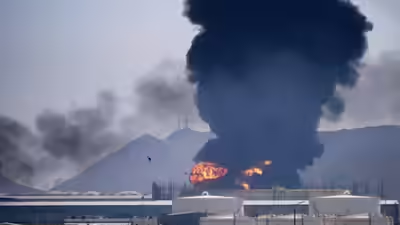
Even before the deadline, new strikes were reported across Iran. Two bridges and a train station were hit, while U.S. forces struck military-related targets on Kharg Island, a key location tied to Iran’s oil production. It marked the second time American forces have targeted the island since the conflict began.

Trump has repeatedly set deadlines throughout the conflict, often extending them, but insisted this latest ultimatum would not change without a major diplomatic breakthrough. At the same time, his public statements have left uncertainty about the exact scope of possible U.S. action.

He has tied reopening the Strait of Hormuz to avoiding broader attacks, while also suggesting the waterway is more critical to other countries than to the United States. Trump has also raised the possibility of deploying ground forces to secure Iranian oil assets, even as he indicated that large-scale combat operations could wind down.

The mixed signals have added to uncertainty as rhetoric on both sides has intensified.

Iranian President Masoud Pezeshkian said 14 million people have volunteered to defend the country, including himself. The statement came as Trump warned that U.S. forces could destroy Iran’s bridges and power plants within hours and suggested the country could face devastating consequences.

It remained unclear whether the latest airstrikes were directly tied to Trump’s broader threats. Some targets appeared linked to Iran’s transportation network, and Israel’s prime minister said Israeli aircraft struck bridges and rail lines used for military purposes.

Iran launched missiles toward Israel and Saudi Arabia, prompting defensive responses and the temporary closure of a major bridge connecting Saudi Arabia and Bahrain.

While Iran lacks the advanced military capabilities of the United States and Israel, its ability to disrupt shipping through the Strait of Hormuz has had a significant impact on the global economy, increasing pressure on Washington to find a resolution.

Diplomatic efforts are continuing, though Iran has rejected the latest U.S. proposal. Officials involved in negotiations said talks remain active but face major obstacles.

In a social media post Tuesday morning, Trump repeated his warning, saying that without a deal, “a whole civilization will die tonight,” while also leaving open the possibility of a breakthrough.

Iranian officials have called on civilians to form human chains around power plants, a move intended to deter attacks on critical infrastructure. Similar actions have been taken in past periods of heightened tension, though the scale of the current effort remains unclear.

Military leaders in Iran also signaled a broader response if the United States escalates, warning that regional energy supplies could be disrupted for years.

On the ground in Tehran, residents expressed growing concern about the impact of continued strikes. One teacher, speaking anonymously for safety reasons, said prolonged attacks could severely damage basic services and daily life.

International leaders have urged restraint. France’s foreign minister warned that targeting civilian and energy infrastructure could violate the laws of war and lead to further escalation. The United Nations human rights chief also criticized the rhetoric from all sides, including threats to destroy large parts of a country.

Meanwhile, intense airstrikes continued across Iran, including in residential areas. Israel said it targeted a petrochemical facility in the south and struck multiple bridges used by Iranian forces to transport military equipment.

A U.S. official, speaking on condition of anonymity, said the strikes on Kharg Island were focused on previously identified military targets and were not aimed at oil infrastructure.

Saudi Arabia reported intercepting multiple missiles and drones launched by Iran and temporarily closed the King Fahd Causeway, a key road link to Bahrain, where the U.S. Navy’s Fifth Fleet is based.

The conflict has caused widespread casualties. More than 1,900 people have been killed in Iran since the fighting began, though official figures have not been updated in recent days. In Lebanon, more than 1,500 people have died and over one million have been displaced. Additional deaths have been reported in Israel, neighboring areas and among U.S. service members.

At the center of the crisis is the Strait of Hormuz, where shipping has been severely disrupted since the conflict began earlier this year. The disruption, combined with attacks on regional energy infrastructure, has driven global oil prices sharply higher, increasing costs for fuel and basic goods worldwide.

Iran has rejected a temporary ceasefire proposal, saying it wants a permanent end to the war. However, indirect talks between the United States and Iran are continuing, with mediators from several countries working to reach a compromise before the deadline.

Iran has linked reopening the Strait of Hormuz to relief from economic sanctions, and U.S. officials have signaled some openness to easing restrictions, particularly on Iran’s oil sector, to stabilize global markets.

President Donald Trump’s warning marks one of the most severe rhetorical escalations in the conflict, raising fears of a dramatic expansion of military action. His use of sweeping language underscores both the urgency of the deadline and the uncertainty surrounding what actions may follow if diplomacy fails.

The focus on the Strait of Hormuz highlights the global stakes of the الأزمة. As a critical route for oil shipments, any prolonged disruption has immediate consequences for energy markets and economies worldwide. This has increased pressure on all sides to find a resolution, even as positions remain far apart.

Iran’s strategy appears to rely on both military pressure and symbolic actions, including public mobilization and threats to regional energy supplies. While it cannot match the military strength of the United States and its allies, its ability to disrupt key shipping lanes gives it significant leverage.

At the same time, the growing number of civilian casualties and warnings from international leaders about potential violations of international law add another layer of complexity. Calls for restraint reflect concern that further escalation could trigger a broader regional conflict with long-term consequences.

With diplomacy ongoing but uncertain, the situation remains highly volatile. The hours surrounding the deadline are likely to determine whether the conflict moves toward a negotiated outcome or a more dangerous phase of escalation.

AP

NASA Astronaut Shares Faith and Unity Message Before Artemis II Passes Behind Moon

0

A NASA astronaut delivered a message of faith, unity and reflection as the Artemis II crew prepared to lose contact with Earth while passing behind the moon, marking a symbolic moment in the first crewed lunar flyby mission in more than 50 years.

Astronaut Victor Glover, pilot of the Artemis II mission, spoke on Easter Sunday

Astronaut Victor Glover, pilot of the Artemis II mission, spoke on Easter Sunday during an interview from aboard NASA’s Orion spacecraft, emphasizing shared humanity and the need for compassion at a time of global conflict.

“As we continue to unlock the mysteries of the cosmos,” Glover said, he hoped people would reflect on “where we are, who we are, and that we are the same thing, and that we’ve got to get through this together.”

The spacecraft launched April 1 from Kennedy Space Center in Florida and is carrying a four-person crew, including commander Reid Wiseman, mission specialist Christina Koch and Canadian astronaut Jeremy Hansen. The 10-day mission will take the crew around the moon and back, covering nearly 700,000 miles before a planned splashdown off the coast of California.

As Orion moves behind the moon, the crew is expected to experience a temporary communications blackout lasting about 40 minutes, a routine but significant phase of the mission when radio signals are blocked.

Ahead of that moment, Glover encouraged reflection and prayer, suggesting people use the period of silence as an opportunity to send positive thoughts and support to the crew.

“When we’re behind the moon, out of contact with everybody, let’s take that as an opportunity,” he said in a separate interview. “Let’s pray, hope, and send good thoughts.”

Glover, who has spoken publicly about his Christian faith, also reflected on the significance of Earth when viewed from space, describing it as a rare and shared home in an otherwise vast and empty universe.

“You’re on a spaceship called Earth that was created to give us a place to live,” he said, adding that while spaceflight may seem extraordinary, the conditions that sustain life on Earth are equally remarkable.

He described Earth as “this oasis, this beautiful place where we get to exist together,” urging people to recognize their shared responsibility to care for one another.

The mission comes at a time of heightened global tensions, and Glover’s remarks appeared to resonate beyond the scientific goals of the flight. While Artemis II is focused on advancing human space exploration and laying the groundwork for future missions to the lunar surface, the astronaut’s message underscored a broader theme of unity.

Glover also referenced the importance of love and compassion, echoing a central teaching of Christianity about loving one’s neighbor.

The moment drew comparisons to the Apollo 8 mission in 1968, when astronauts read from the Book of Genesis during a live broadcast from lunar orbit, one of the most widely watched events in television history.

Artemis II represents NASA’s first crewed mission to circle the moon since the Apollo era. The flight will test systems needed for deeper space exploration and is a key step toward establishing a sustained human presence on the lunar surface.

Victor Glover’s message highlights the intersection of science, faith and human perspective that often emerges during space exploration. While NASA missions are grounded in technical objectives, astronauts frequently use their platform to reflect on broader themes, particularly when viewing Earth from space.

The temporary loss of communication as Orion passes behind the moon adds a layer of symbolism, reinforcing the sense of isolation and vulnerability that comes with deep space travel. In that context, Glover’s call for unity and reflection carries added weight.

His remarks also reflect a long-standing tradition of astronauts sharing personal or philosophical insights during historic missions. From Apollo 8 to modern flights aboard the International Space Station, space exploration has often prompted reflections on humanity’s place in the universe.

At a time of global uncertainty, such messages can resonate widely, offering a reminder of shared existence beyond national or political divisions. Glover’s emphasis on Earth as a common home aligns with a broader narrative often described by astronauts who experience the “overview effect,” a shift in perspective that highlights the planet’s fragility and interconnectedness.

As Artemis II continues its journey, the mission stands not only as a technological milestone but also as a moment of reflection, bridging exploration with deeper questions about humanity’s future and its responsibilities both on Earth and beyond.

Iran Urges Civilian Shields for Power Plants as Trump Deadline Nears and Airstrikes Intensify

0

Iranian officials called on civilians to form human chains around power plants Tuesday as airstrikes struck the capital and tensions surged ahead of President Donald Trump’s deadline for Tehran to reopen a critical global shipping route or face sweeping U.S. attacks on infrastructure.

Explosions echoed across Tehran and other cities as strikes hit residential neighborhoods and strategic sites, leaving at least several dozen people dead, including civilians, officials said. The escalating violence comes hours before Trump’s 8 p.m. Eastern deadline, which he has described as final after extending previous ultimatums.

Iranian authorities urged widespread public mobilization to protect key facilities. State television broadcast a message from Alireza Rahimi, identified as secretary of the country’s youth council, calling on young people, students, athletes and academics to gather around power plants.

“Power plants that are our national assets and capital,” Rahimi said, urging participation in what he framed as a national effort to safeguard critical infrastructure.

President Masoud Pezeshkian said millions had responded to calls for volunteers, stating in a social media post that 14 million people had signed up to support the country. He added that he was personally prepared to defend Iran if necessary.

The appeals recalled past moments of heightened tensions when civilians gathered at sensitive sites, though the current call drew concern from observers about the risks of placing noncombatants near potential military targets.

The intensifying rhetoric followed stark warnings from Trump, who said the United States could destroy Iran’s bridges and power plants within hours if Tehran does not comply with demands to reopen the Strait of Hormuz. The narrow waterway is a vital route for global oil shipments, carrying roughly one-fifth of the world’s supply.

“The entire country can be taken out in one night,” Trump said Monday, adding that key infrastructure would be “burning, exploding and never to be used again.”

Trump also dismissed concerns about potential violations of international law, saying he was not worried about accusations related to war crimes.

Iranian officials condemned the threats, warning they would respond with similar measures if infrastructure is targeted. A government spokesperson described the statements as dangerous and said Tehran would not yield under pressure or deadlines.

International reaction has grown increasingly urgent. France’s foreign minister said attacks on civilian and energy infrastructure are prohibited under the laws of war and warned such actions could trigger broader escalation with severe economic consequences. The United Nations secretary-general also cautioned that strikes on civilian facilities would violate international law, according to his office.

Meanwhile, military activity intensified across the region. A series of airstrikes hit Tehran and other cities, including reported strikes on industrial sites and transportation infrastructure. An attack in a province northwest of the capital killed at least 18 people, while additional strikes in nearby cities left more casualties, Iranian media said.

Israel’s military said it targeted a petrochemical facility in southern Iran, marking the second consecutive day such sites were hit. Additional strikes were reported near an airport in western Iran and in areas surrounding the capital.

Iran responded with missile launches targeting Israel and Saudi Arabia. Authorities in Saudi Arabia said intercepted projectiles caused debris to fall near energy facilities, prompting safety assessments and temporary disruptions. A major bridge linking Saudi Arabia and Bahrain was briefly closed following the attacks.

Air raid sirens sounded in multiple Israeli cities as incoming missiles were detected, with emergency crews responding to reported damage and injuries.

The conflict has taken a heavy toll across the region. More than 1,900 people have been reported killed in Iran since the fighting began, though officials have not updated the figure in recent days. In Lebanon, where clashes involving armed groups aligned with Iran have intensified, more than 1,400 people have died and more than one million people have been displaced. Casualties have also been reported in Israel, Gulf countries and among U.S. forces.

At the center of the crisis remains the Strait of Hormuz, where shipping has been severely disrupted since the conflict began. Iran’s restrictions on passage, combined with attacks on regional energy infrastructure, have driven global oil prices sharply higher, affecting fuel and food costs worldwide. Brent crude prices have climbed significantly since the war started, reflecting market fears of prolonged disruption.

Diplomatic efforts continue behind the scenes. Officials involved in negotiations said indirect communication between Washington and Tehran remains active, with mediators from Pakistan, Egypt and Turkey working to broker a compromise. However, Iran has rejected a temporary ceasefire proposal, insisting on a permanent end to hostilities and guarantees against future attacks.

An official familiar with the talks told The Associated Press that discussions are ongoing but face major obstacles, including disagreements over sanctions relief and conditions for reopening the shipping route.

Iran’s call for civilians to form protective chains around power plants marks a significant escalation not just in military terms but also in the broader strategy of the conflict. By mobilizing ordinary citizens, the government is signaling both defiance and vulnerability, attempting to deter strikes while reinforcing national unity.

However, the tactic carries serious risks. Placing civilians near potential targets could increase casualties if attacks proceed and may raise further legal and ethical concerns internationally. It also underscores the imbalance in military capabilities, as Iran seeks alternative ways to counter the technological superiority of U.S. and Israeli forces.

President Donald Trump’s firm deadline reflects mounting pressure to resolve the standoff quickly, particularly as global economic impacts deepen. The disruption of the Strait of Hormuz has already sent shockwaves through energy markets, making the crisis not just a regional conflict but a global economic issue.

Rising oil prices and supply uncertainty are likely to influence political decisions in Washington and allied capitals, where leaders must weigh military action against potential economic fallout.

Diplomatic channels remain open, but the gap between the two sides appears wide. Iran’s insistence on long-term guarantees and sanctions relief contrasts with the immediate demands set by the United States. Without a breakthrough, the risk of large-scale strikes and a broader regional war continues to grow.

The coming hours, as the deadline approaches, could prove decisive in determining whether the conflict moves toward escalation or a fragile path to negotiation.

AP/Nypost

Nigerian Christian Leaders Challenge Military Account of Kaduna Church Attack, Say Kidnap Victims Still Missing

0

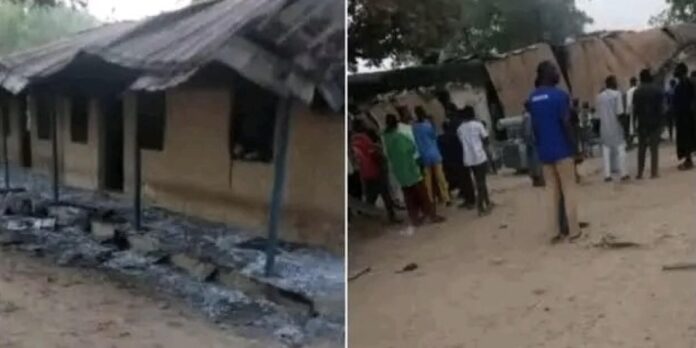
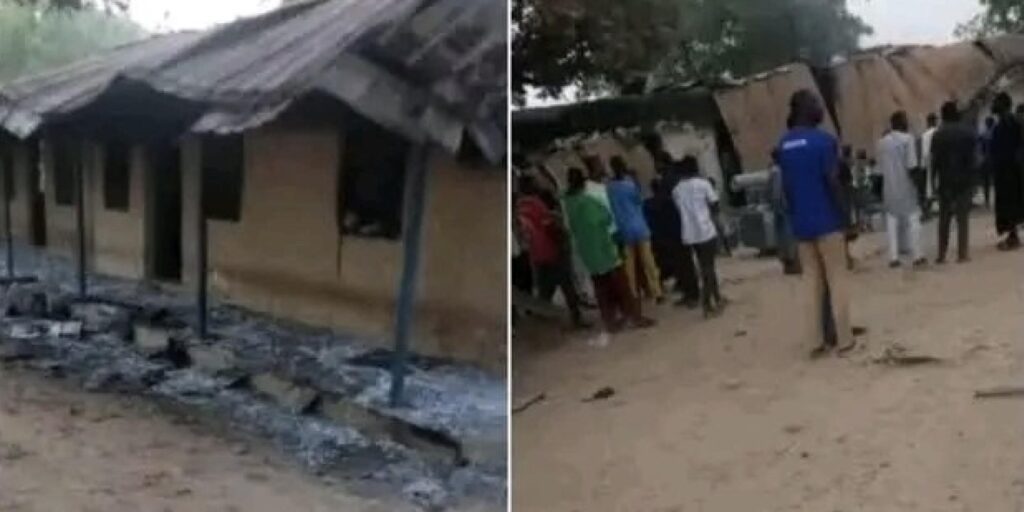
A leading Christian organization in Nigeria has pushed back against the military’s account of a deadly church attack in Kaduna state, saying dozens of people reported rescued by troops remain in captivity, deepening concerns over conflicting information in one of the country’s most volatile regions.

The Nigerian Army said Sunday that its forces freed 31 civilians abducted when armed men stormed a church during an Easter service in Ariko village, located in the Kachia area of Kaduna. The military also said five people were found dead at the scene and that troops were pursuing the attackers.

But church leaders and local residents quickly disputed that version of events.

The Christian Association of Nigeria (CAN), a prominent religious body, said no such rescue had taken place. Reverend John Joseph Hayab, who heads the group’s northern chapter, told Reuters that while security forces were making efforts to locate the victims, claims of a successful rescue were inaccurate.

“Yes, the military are doing their best to get them back home, but it is not fair for the military to claim that the victims have been rescued,” Hayab said in a phone interview with Reuters.

Hayab warned that conflicting narratives could complicate rescue efforts and embolden armed groups responsible for the attack.

“Now we have misinformation. When we are busy denying, we are just giving the bandits the opportunity to strike and go freely,” he said.

Local community leaders echoed that concern. The Kurtumi Unity Development Association, which represents residents of Ariko, described the army’s statement as “entirely false, misleading and does not reflect the current situation.”

A former village head, Iliya Audu, said the death toll was higher than initially reported and confirmed that burials for the victims had taken place Monday.

“We are just returning from the burial of those killed. No single soul was rescued,” Audu said, also speaking to Reuters.

Efforts to obtain clarification from the Nigerian Army and the Defence Headquarters were unsuccessful, with no response to repeated requests for comment on Monday, Reuters reported.

The attack, which took place during a religious service, has added to growing fears among Christian communities in northern Nigeria, where violence by armed groups has persisted for years. Earlier accounts from local church officials indicated that at least two churches were targeted in the assault.

Caleb Maaji, chairman of the Christian Association of Nigeria in Kaduna state, had earlier said seven people were killed and that an unknown number of worshippers were taken hostage. He noted that investigations into the incident were still ongoing, according to Reuters.

The conflicting reports highlight the challenges of verifying information in areas where insecurity and limited access complicate official responses. In regions like northwest Nigeria, armed groups frequently carry out kidnappings, raids and attacks on villages, often operating from remote forest areas.

The incident also comes as Nigeria faces international scrutiny over religious violence. President Donald Trump has raised concerns about the treatment of Christians in the country, allegations that Nigerian authorities have repeatedly denied.

This is not the first time the Christian Association of Nigeria has questioned official accounts of such incidents. The group previously challenged government figures following the abduction of students from a Catholic school in Niger state last year, underscoring a pattern of disagreement between civil society groups and security agencies.

The dispute over what happened in Ariko reflects a broader credibility gap between local communities and Nigeria’s security forces, particularly in regions plagued by persistent violence. While the military often provides rapid updates following attacks, those accounts are sometimes contradicted by residents who have direct knowledge of events on the ground.

Such discrepancies can have serious consequences. In conflict zones, accurate information is critical not only for public awareness but also for coordinating rescue efforts and preventing further violence. When official statements are later challenged, it can erode trust in authorities and create confusion that armed groups may exploit.

The attack itself underscores the enduring security crisis in northwest Nigeria, where criminal networks and armed groups have evolved into highly organized operations. These groups frequently target rural communities, religious institutions and schools, often seeking ransom payments or attempting to assert control over territory.

The targeting of a church during a major religious observance adds a sensitive dimension to the incident, potentially heightening tensions in a country already marked by religious and ethnic divisions. While authorities maintain that such attacks are primarily driven by criminal motives, many affected communities view them through a religious lens, increasing the risk of polarization.

The international spotlight, including comments from President Donald Trump, places additional pressure on Nigeria’s government to demonstrate progress in addressing insecurity. However, officials have consistently rejected claims of systematic religious persecution, arguing that violence affects multiple communities regardless of faith.

The Ariko attack, and the conflicting accounts that followed, illustrate the complexity of Nigeria’s security challenges. As investigations continue, the focus remains on locating those still believed to be in captivity and preventing further attacks in a region where stability remains fragile.

Reuters/Jpost

Trump Says He Is Unconcerned About War Crime Claims, Threatens Swift Destruction of Iran Infrastructure

0

President Donald Trump declared Monday that he is “not at all” concerned about committing possible war crimes as he continued threatening the destruction of Iran’s bridges and power plants if Tehran fails to meet his Tuesday 8 p.m. Eastern time deadline to reopen the Strait of Hormuz and accept American demands for unconditional capitulation.

Speaking to journalists at the White House during an 83-minute press briefing, the president refused to specify whether any civilian targets would be off-limits in potential American attacks. “We have a plan, because of the power of our military, where every bridge in Iran will be decimated by 12 o’clock tomorrow night,” Trump announced during his Monday news conference, employing language suggesting total infrastructure destruction.

Power plants throughout Iran, he continued, would be “burning, exploding and never to be used again”—threats that legal experts characterize as promising deliberate attacks on civilian infrastructure prohibited under international humanitarian law. The Geneva Conventions require combatants to distinguish between military objectives and civilian objects, prohibiting attacks designed to deprive civilian populations of essential services.

Trump’s explicit threats to destroy bridges and power plants across an entire nation raised immediate concerns among legal scholars that such attacks would constitute war crimes under established international law. The wholesale destruction of civilian infrastructure serving no direct military purpose violates fundamental principles of proportionality and distinction that govern lawful warfare.

When questioned about potential war crimes liability, Trump dismissed the concerns entirely. “We have a plan, because of the power of our military, where every bridge in Iran will be decimated by 12 o’clock tomorrow night,” he repeated, showing no hesitation about publicly announcing intentions to commit what international legal authorities would classify as criminal conduct.

Iran on Monday rejected a 45-day ceasefire proposal presented through Pakistani mediators and emphasized it demands a permanent end to the war rather than temporary pause. Iran’s state-run IRNA news agency disclosed Tehran conveyed its response through Pakistan, a key mediator attempting to prevent further escalation.

“We only accept an end of the war with guarantees that we won’t be attacked again,” Mojtaba Ferdousi Pour, head of the Iranian diplomatic mission in Cairo, told the Associated Press on Monday. The statement illustrated the fundamental gap between Iranian demands for security guarantees and Trump’s insistence on unconditional surrender without reciprocal American commitments.

Israeli Defense Minister Israel Katz announced Monday that Israel attacked the South Pars petrochemical plant at Asaluyeh in Iran. He made the announcement after Iran confirmed the facility had been struck. An Israeli attack on South Pars facilities in March sparked major Iranian attacks targeting oil and gas infrastructure across the Gulf Arab states—suggesting the latest strike could trigger similar retaliation.

The head of intelligence for Iran’s paramilitary Revolutionary Guard, Major General Majid Khademi, was killed, according to Iranian state media. Israel claimed responsibility for the killing Monday, continuing the systematic assassination campaign against Iranian leadership that has eliminated dozens of senior officials since hostilities commenced.

Israel’s military disclosed it also killed the leader of the Iranian paramilitary Revolutionary Guard’s undercover unit in its expeditionary Quds Force, Asghar Bakeri. Israel and the United States carried out a wave of attacks on Iran on Monday, killing more than 25 people. Iran responded with missile fire on Israel and its Gulf Arab neighbors, perpetuating the cycle of attack and retaliation.

According to Reuters, Trump held the lengthy press briefing to outline his ultimatum to Iran. “The entire country can be taken out in one night, and that night might be tomorrow night,” he warned, referring to the 8 p.m. EDT Tuesday (midnight GMT) deadline he established for Iran to meet U.S. demands or face destruction of its national infrastructure.

Trump specified he needed “a deal that’s acceptable to me. And part of that deal is going to be we want free traffic of oil and everything,” framing American objectives around commercial shipping access rather than broader security concerns or regional stability.

He vowed to destroy Iranian power plants and bridges, brushing off concerns that such actions would constitute war crimes or alienate Iran’s 93 million people who would suffer catastrophic humanitarian consequences from infrastructure destruction. The threats suggested Trump views civilian suffering as acceptable collateral damage or potentially useful leverage to pressure Tehran into submission.

However, Trump claimed the United States has an active and willing partner in negotiations, adding that he hopes America doesn’t have to bomb Iran’s energy infrastructure—statements contradicting his simultaneous threats of imminent total destruction and suggesting uncertainty about whether Tehran will capitulate before his deadline expires.

Trump and Defense Secretary Pete Hegseth praised the successful weekend retrieval from Iran of a U.S. airman whose jet was shot down Friday. The president called the rescue mission a “risky decision” because the United States “could have ended up with 100 dead, as opposed to one or two,” acknowledging the operation’s dangers while celebrating the successful outcome.

Hegseth, who has faced scrutiny for outspokenly blending his evangelical religious faith with military operations, described the rescue in explicitly Christian terms, comparing it to the resurrection of Jesus Christ. The religious framing of military operations has drawn criticism from those who argue it inappropriately conflates American nationalism with Christian theology and alienates non-Christian service members.

Trump threatened to jail the person who reported on the mission while it was underway, claiming the disclosure put the operation “at great risk.” The threat to prosecute journalists or government officials for reporting military operations raised First Amendment concerns about press freedom and governmental transparency.

Iran’s official IRNA news agency confirmed that Tehran rejected the ceasefire proposal and insisted a permanent end to the war was necessary rather than temporary pause. The rejection eliminated the most promising diplomatic avenue for avoiding Trump’s threatened Tuesday night attacks on civilian infrastructure.

The president’s willingness to publicly threaten war crimes while dismissing legal and humanitarian concerns represents a dramatic departure from traditional American presidential rhetoric that at least paid lip service to international law and the laws of armed conflict. Previous administrations carefully framed military operations as compliant with legal obligations even when reality suggested otherwise.

Trump’s explicit embrace of infrastructure destruction as policy raises questions about whether military commanders would obey orders they might conclude constitute illegal commands under the Uniform Code of Military Justice. Officers have obligations to refuse manifestly illegal orders, though the practical and career consequences of defying presidential directives create enormous pressure to comply regardless of legal concerns.

International legal experts have emphasized that deliberate attacks on bridges, power plants, and other civilian infrastructure serving no direct military purpose would violate multiple provisions of the Geneva Conventions and potentially constitute crimes against humanity if conducted on the scale Trump threatens. The systematic destruction of infrastructure essential to civilian survival crosses legal and moral boundaries established after World War II to prevent repetition of total war tactics.

For Iran’s civilian population, Trump’s threats create impossible choices between enduring catastrophic infrastructure destruction or pressuring their government to accept terms many Iranians would view as national humiliation. The strategy of threatening collective punishment to extract political concessions has been condemned by human rights organizations as both immoral and ineffective.

As Tuesday’s 8 p.m. Eastern deadline approaches, the fundamental questions remain whether Trump will follow through on threats to commit what international lawyers characterize as war crimes, whether Iran will capitulate to avoid such attacks, or whether last-minute diplomacy might produce compromise preventing the threatened infrastructure destruction.

The world will learn within hours whether Trump’s rhetoric represents genuine intention or negotiating bluster designed to pressure Iran into accepting American terms. For millions of Iranians who would suffer the consequences of power grid destruction and bridge demolition, the uncertainty about whether their infrastructure will be annihilated creates terror regardless of Trump’s ultimate decision about implementation.

Whether American military commanders would execute orders to systematically destroy civilian infrastructure, whether Congress would assert constitutional authority to prevent such attacks, or whether international institutions would condemn American war crimes remains uncertain as the deadline approaches and the prospect of unprecedented infrastructure destruction looms over a nation already devastated by five weeks of bombardment.

Cameroon’s President Biya Appoints Son as Vice President and Military Commander

0

 Cameroon’s President Paul Biya has appointed his son, Franck Emmanuel Biya, as Vice President of the Republic and Head of the Armed Forces, consolidating family control over the country’s political and military structures at a time of heightened unrest following disputed elections that triggered nationwide protests and international scrutiny.

The appointment, announced in an official decree dated April 4, 2026, also designates Franck Biya as Minister Delegate at the Ministry of Defence, placing him at the center of Cameroon’s security architecture. The document declares: “Mr Franck Emmanuel BIYA is appointed Vice President of the Republic of Cameroon.”

The decree further specifies: “Mr Franck Emmanuel BIYA is appointed Head of the Armed Forces,” granting the president’s son command authority over military forces that have repeatedly been accused of using excessive force against civilian demonstrators opposing his father’s continued rule.

Expanding his authority, the decree notes: “The Vice President of the Republic, Mr Franck Emmanuel BIYA, is also appointed Minister Delegate at the Ministry of Defence of the Republic of Cameroon,” creating an unprecedented concentration of executive, military, and defense portfolio responsibilities in a single individual whose primary qualification appears to be family lineage.

Citing constitutional provisions and defense laws, the presidency claimed the appointments were made in line with “service requirements,” adding that the decree “shall be registered, published according to the procedure of urgency, and inserted in the Official Gazette.” The invocation of urgency procedures prevented legislative debate or public consultation about the dynasty-building maneuver.

The move transpired months after Biya, 92, was sworn in for an unprecedented eighth term following a disputed election that opposition candidates and international observers have characterized as fraudulent. Biya secured 54 percent of the vote in the election, defeating opposition candidate Issa Tchiroma Bakary, who polled 35 percent according to official tallies.

Tchiroma Bakary has rejected the outcome, insisting he was the rightful winner and accusing authorities of electoral fraud—claims the government denies while offering no credible evidence to support the legitimacy of results that statistical analysts have questioned. Despite the controversy, Biya characterized the election as “satisfactory” and commended the electoral body for its conduct while congratulating security forces for containing demonstrations without addressing allegations of excessive force that left dozens dead.

The Constitutional Council dismissed multiple petitions challenging the results, citing insufficient evidence or lack of jurisdiction—rulings that critics contend demonstrate the judiciary’s subservience to executive authority rather than independent constitutional interpretation.

Biya, who has ruled Cameroon since 1982 after succeeding former president Ahmadou Ahidjo through a constitutional transfer of power, now faces renewed criticism from opponents who accuse him of tightening his grip through both political manipulation and military intimidation. The elevation of his son to the vice presidency and armed forces leadership intensifies concerns over succession planning and democratic governance in the Central African nation as calls for reform continue growing.

Reuters documented that Cameroon’s parliament on Saturday overwhelmingly approved a constitutional amendment to reintroduce the position of vice president—a measure the government claims will ensure continuity but which opposition figures characterize as consolidating executive power and facilitating dynastic succession.

In a joint session of the ruling party-dominated National Assembly and Senate, lawmakers voted 200 to 18 in favor, with four abstentions, to pass the bill. The lopsided vote reflected the ruling party’s parliamentary dominance rather than genuine multiparty consensus about constitutional changes with profound implications for governance.

The bill stipulates that the vice president will automatically assume the presidency if President Biya dies, resigns, or becomes incapacitated—creating a succession mechanism that bypasses competitive elections and ensures power remains within the ruling family. Biya, 93 according to Reuters reporting, has led the oil- and cocoa-producing Central African country since 1982 and ranks as the world’s oldest serving head of state. Public discussion about his health is banned under laws criminalizing speculation about the president’s physical condition.

According to the legislation, a copy of which was reviewed by Reuters, the vice president will be appointed and dismissed by the president, serving for the remainder of the president’s seven-year term. However, the interim leader would be prohibited from initiating constitutional changes or running in a subsequent election—restrictions intended to portray the succession mechanism as temporary despite creating circumstances where an appointed vice president could govern for years.

The government has argued that the reform safeguards institutional stability in case of sudden leadership vacancy. Biya has 15 days to promulgate the bill under constitutional procedures, though given that he engineered the amendment to benefit his son, prompt signature appears certain.

Critics, including opposition lawmakers, argue the amendment weakens democratic institutions and exacerbates centralization of power in an already authoritarian system where meaningful political competition has been systematically suppressed. Joshua Osih, a member of parliament and chairman of the opposition Social Democratic Front, declared the changes were a missed opportunity to boost national unity and democratic governance in a nation torn by civil conflict since 2017.

“This text weakens legitimacy, reinforces centralisation, and ignores a major historical grievance,” Osih emphasized, calling instead for a system where the president and vice president are jointly elected, reflecting Cameroon’s origins as a union of British and French-administered territories that achieved independence through distinct historical paths.

The reintroduction of the vice presidency marks Cameroon’s first major constitutional revision since 2008 when presidential term limits were scrapped in a move that sparked nationwide protests which were met with violent crackdown by security forces. The term limit elimination allowed Biya to continue ruling indefinitely, transforming what had been constitutional democracy into personalized authoritarian rule.

The vice presidency was previously part of Cameroon’s governance structure but was abolished in 1972 following a constitutional referendum during an earlier era when centralization was pursued as a strategy for national unity. The position’s restoration under dramatically different circumstances—specifically to facilitate dynastic succession—represents a fundamental departure from even the pretense of democratic governance.

For opposition figures and civil society activists in Cameroon, the appointments confirm their worst fears about Biya’s intentions to create a family dynasty that perpetuates authoritarian control beyond his lifetime. The concentration of both executive authority and military command in Franck Biya’s hands provides him with tools to suppress dissent and maintain power through force if popular resistance emerges.

The international community has remained largely silent about the succession maneuvering despite its obvious departure from democratic norms. Western governments that routinely criticize authoritarian practices elsewhere have offered no condemnation of Biya’s dynasty-building, reflecting geopolitical calculations that prioritize stability over democratic accountability in a region facing multiple security challenges.

For Cameroonians who have endured more than four decades of Biya family rule, the appointments represent the formalization of what many already understood—that political power in their country functions as hereditary property rather than public trust subject to democratic accountability. Whether the population will accept indefinite Biya family rule or whether the succession arrangements will trigger resistance remains uncertain.

As Franck Biya assumes his new roles as vice president, armed forces commander, and defense minister, he inherits both enormous power and profound legitimacy deficits. His elevation occurred through presidential decree rather than popular mandate, and his qualifications for commanding military forces or governing a diverse nation of 28 million people remain unclear beyond his fortunate birth.

The coming months will reveal whether Cameroon’s political and military establishments accept dynastic succession as inevitable or whether factions within the regime begin positioning themselves to contest power once the elder Biya—now 92 or 93 depending on sources—eventually passes from the scene. For now, the Biya family’s grip on Cameroon appears secure, sustained by military force, constitutional manipulation, and international indifference to the erosion of democratic governance in Central Africa.

Reuters/Nation.africa/Arisetv

Nigerian Army Rescues 31 Hostages After Easter Sunday Church Attack in Kaduna State

0

Nigeria’s army announced Sunday it had rescued 31 civilians who were taken hostage during an attack on a church in northwestern Kaduna state while five people were found dead at the scene, demonstrating both the continuing vulnerability of Christian worshippers and the military’s capacity to respond when deployed effectively.

The army disclosed the attack occurred during Easter church services in Ariko village in the Kachia local government area. Troops were in pursuit of the attackers following the rescue operation, military officials added, indicating the perpetrators had fled into surrounding terrain after abandoning their captives during combat with security forces.

The chairman of the Christian Association of Nigeria for Kaduna state, Caleb Maaji, confirmed that two churches were attacked in Ariko village on Sunday morning. He stated that seven people were killed and an unknown number taken hostage, though his casualty figures differed from the military’s account. “Findings are still ongoing,” Maaji told Reuters, acknowledging that complete information remained unavailable as investigators examined the attack scene.

Northwest Nigeria has struggled for years with violence including mass kidnappings for ransom and village raids, with armed groups operating from vast forest hideouts across the region. The persistent insecurity has displaced millions and crippled economic development in territories where government authority remains tenuous despite military operations consuming substantial resources.

According to DW, the army confirmed the attack occurred during Easter celebrations at a church in northwestern Kaduna state. “Through a swift response, (troops) have successfully foiled a terrorist attack leading to the rescue of 31 civilians abducted during an Easter church service” in Ariko village, the military stated officially, characterizing the operation as a success despite the confirmed deaths.

Military officials added that troops engaged the attackers in a “firefight,” forcing the “terrorists to abandon 31 hostages” as they fled to avoid casualties and capture. Local media documented that a Catholic and an evangelical church were targeted simultaneously in what appeared to be a coordinated assault designed to maximize casualties and hostages.

Maaji also confirmed that assailants targeted two churches in Ariko village on Sunday, adding that seven people were killed and several others were abducted before military intervention. The military, however, reported five victims were found dead at the scene—a discrepancy that may reflect bodies discovered after initial military assessments or differing counts between civilian witnesses and security personnel.

The attack in Ariko village, located approximately 100 kilometers (62 miles) north of the capital Abuja, transpired despite the police chief ordering “massive security deployment” including at places of worship during Easter. The successful attack despite heightened security measures raised questions about intelligence failures and resource allocation that allowed armed groups to strike predictable targets during major religious observances.

For years, several states in northwest and central Nigeria, including Kaduna, have been terrorized by criminal gangs known locally as bandits which carry out mass kidnappings for ransom and village raids. Nigeria, Africa’s most populous nation, has witnessed rising violence despite the army strengthening security in the region to combat these groups—suggesting that military solutions alone cannot resolve the complex security crisis.

In January, gunmen attacked churches during mass in Kaduna and rounded up more than 170 worshippers in an incident that drew international attention and prompted renewed calls for governmental action to protect vulnerable populations. The pattern of church attacks during major Christian holidays suggests deliberate targeting rather than random violence.

The security situation has attracted attention from U.S. President Donald Trump, who has characterized the violence in Nigeria as a “genocide” of Christians—language the Nigerian government has strongly rejected as inaccurate and inflammatory. Nigeria, home to over 250 ethnic groups, is roughly divided between Muslims in the north and Christians in the south, with significant mixing in central regions where much of the violence occurs.

The BBC confirmed that thirty-one civilians held hostage following the Sunday morning church attack in northwest Nigeria were rescued by military forces. The army emphasized that soldiers engaged attackers in a “fierce firefight,” forcing them to flee and leave the hostages and the bodies of dead victims behind—a account suggesting the rescue resulted from military pressure rather than negotiations.

Attacks and kidnappings for ransom constitute common occurrences in northern Nigeria as the country grapples with security threats from extremist groups and armed gangs locally known as bandits. Although the army claimed it responded swiftly to Sunday’s attack, local media documented that residents stated the gunmen operated for extended periods without facing resistance—contradicting official accounts and suggesting delayed military response.

As a result of the firefight, officials declared the “fleeing terrorists” had sustained “significant casualties, as evidenced by blood trails along their escape routes.” The claim remained unverified by independent sources, and blood trails could reflect wounded attackers or injured hostages being dragged during the chaos.

Troops had been deployed to hunt the insurgents and reinforce security in surrounding areas. The army urged residents to share information that could support operations against groups fueling insecurity across the country—an appeal reflecting the military’s dependence on civilian intelligence to locate armed groups operating in familiar terrain.

In a separate incident, Nigeria’s military killed 65 bandits following an offensive in Zamfara state, the AFP news agency documented Sunday, days after a large group of bandits abducted residents from villages in the state. Police confirmed Saturday that mass abduction had occurred in villages earlier in the week and a manhunt had been launched.

Late last year, the Trump administration raised concerns about the treatment of Christians in Nigeria and urged the government to do more to improve security and strengthen protection for Christian communities. Trump had previously claimed there was a “Christian genocide” underway in Nigeria—an allegation strongly rejected by Nigeria’s government, which emphasized that Muslims, Christians, and people of no faith were victims of attacks.

In February, U.S. troops were deployed to Nigeria to train its forces and provide intelligence assistance in their fight against extremist militants and other armed groups. The American military presence reflected Washington’s growing concern about instability in Africa’s most populous nation and the potential for regional spillover if Nigeria’s security situation continues deteriorating.

The successful rescue of 31 hostages from the Easter Sunday attack represents a rare positive outcome in Nigeria’s chronic security crisis, where kidnapping victims often remain in captivity for months until ransoms are paid or are never recovered at all. The swift military response—if accounts of immediate deployment are accurate—demonstrates what can be accomplished when security forces react decisively to attacks in progress.

However, the fact that attackers successfully assaulted two churches during Easter services despite warnings and supposedly heightened security illustrates persistent vulnerabilities that armed groups continue exploiting. The ability of gunmen to kill at least five people and initially abduct 31 others before military intervention suggests that preventive security measures remain inadequate even during high-alert periods.

For Christian communities across northern Nigeria, the rescue provides some reassurance that military forces can save hostages when properly deployed and equipped. However, the underlying pattern of repeated attacks on churches and worshippers demonstrates that reactive rescues cannot substitute for proactive security that prevents assaults from occurring in the first place.

As Nigerian authorities continue investigating the Easter Sunday attack and pursuing the perpetrators who escaped military forces, fundamental questions persist about whether the government can establish sufficient security presence in rural areas to protect vulnerable populations from armed groups that operate with disturbing frequency despite years of counterinsurgency operations and billions spent on military equipment and training.

BBC/Reuters