Istanbul, Turkey (BN24) – Turkish police detained more than 50 people on Sunday as authorities cracked down on the Istanbul Pride march, extending a years-long campaign to suppress LGBTQ+ gatherings in the city.
A heavy security presence and barricades prevented large groups from assembling in traditional rally areas. Organizers were forced to change the meeting point multiple times to avoid police blockades and detentions.
Yildiz Tar, editor-in-chief of the LGBTQ+ rights publication Kaos GL, said on social media that 54 people were taken into custody during the Pride event, including six lawyers who had come to monitor the situation. By Sunday evening, seven detainees had been released while 47 remained in custody.
The Confederation of Progressive Trade Unions of Turkey, known as DISK, reported that at least three journalists covering the march were also detained.
Kezban Konukcu, a member of parliament from the Peoples’ Equality and Democracy Party (DEM), joined demonstrators and condemned the sweeping arrests.
“The palace regime will not be able to stay in power by demonizing the LGBTQ community,” Konukcu said.
Once among the region’s largest LGBTQ+ celebrations, drawing tens of thousands of participants to central Istanbul, Pride marches have been officially banned since 2015. That year marked a shift as President Recep Tayyip Erdogan’s ruling Justice and Development Party began leaning more heavily on religiously conservative supporters.
Despite the bans, LGBTQ+ advocates have continued to stage smaller demonstrations and face regular police crackdowns.
Washington, DC (BN24) – President Donald Trump announced that a consortium of wealthy investors has agreed to acquire TikTok’s U.S. operations, as the Chinese-owned video platform faces the threat of a ban unless it finds an American buyer.
Speaking in an interview with Fox News, Trump said the buyers would be disclosed “in about two weeks” and indicated that the transaction would likely require Beijing’s consent.
“It’s a group of very wealthy people,” Trump said. “I think I’ll probably need China approval. I think President Xi will probably do it.”
The president’s remarks came more than a year after the U.S. ordered TikTok’s parent company, ByteDance, to divest its American operations over concerns that user data could be accessed by the Chinese government. ByteDance has denied the allegations, insisting that TikTok does not share sensitive information with Chinese authorities.
Under Trump’s directive, TikTok was initially given until January 19 to secure a buyer. When the deadline passed, the app briefly “went dark,” alarming millions of U.S. users before service was restored. Trump has since extended the timeline multiple times, most recently on June 19, when he signed an executive order moving the cutoff to September 17.
While Trump did not name the buyers, speculation has swirled around high-profile figures including YouTube star MrBeast, emerging search engine Perplexity AI, and Shark Tank investor Kevin O’Leary.
ByteDance said in April that talks with the U.S. government were ongoing but acknowledged “differences on many key issues.” Any final deal is expected to require approval from Chinese regulators.
Trump’s comments on TikTok coincided with renewed focus on his trade agenda. He confirmed that the suspension of tariffs on imported goods is nearing an end, with a July 9 deadline approaching.
In April, the administration granted a 90-day reprieve to give countries facing tariffs exceeding 10% additional time to negotiate agreements. Some nations, including the UK, have already secured deals to avoid the levies.
Trump told Fox News that letters would soon be dispatched notifying countries of their tariff rates.
“We’ll look at the deficit we have — or whatever it is with the country,” he said. “We’ll look at how the country treats us — are they good, are they not so good. Some countries, we don’t care — we’ll just send a high number out.”
The president said he did not anticipate extending the deadline again and portrayed the tariffs as a corrective measure to rebalance trade relationships and revive U.S. industries such as automobile manufacturing.
Washington, DC (BN24) – A sweeping budget bill championed by President Donald Trump could strip health insurance from nearly 12 million Americans and add $3.3 trillion to the national debt, according to new projections from the Congressional Budget Office.
The nonpartisan analysis is the most comprehensive accounting yet of the potential fallout from Trump’s “One Big Beautiful Bill Act,” which narrowly cleared a procedural hurdle in the Senate late Saturday after hours of tense negotiations and party infighting.
The CBO projected that the legislation would slash about $1 trillion in health care funding, primarily through deep cuts to Medicaid, the program serving low-income, disabled, and elderly Americans. Those reductions, paired with new work requirements and restrictions on state taxes to finance Medicaid, would leave millions without coverage over the next decade.
Republican leaders have defended the measure as a necessary overhaul to curb waste and expand tax relief. But critics warn the trade-offs would be catastrophic.
“This is tax cuts for the wealthiest to end up cutting health care, plain and simple,” said Democratic Sen. Mark Warner of Virginia in an interview Sunday.
The bill advanced by a 51-49 vote after two Republican senators—Thom Tillis of North Carolina and Rand Paul of Kentucky—joined all Democrats in opposition. Paul objected to provisions raising the debt ceiling, while Tillis said the Medicaid cuts would devastate his state. Hours later, Tillis announced he would not seek re-election.
Senate rules required a marathon 16-hour reading of the nearly 1,000-page bill over the weekend. Lawmakers now have 20 more hours allocated for debate, and Democratic leaders have pledged to use every minute to delay passage.
Republicans hold a narrow 53-seat majority, leaving them little room for additional defections. Vice President JD Vance could cast a tie-breaking vote if needed, underscoring the razor-thin margin.
President Trump, who has set a July 4 deadline to deliver the legislation to his desk, hailed the initial Senate vote as a “great victory” and urged Republicans to remain unified.
“The White House said failure to pass it would be the ‘ultimate betrayal,’” Trump told reporters Saturday.
While the legislation retains core campaign promises—including new tax cuts on overtime pay and tips and extending the 2017 Republican tax reductions—it relies on controversial spending cuts to offset the cost.
Under the plan, most Americans would see tax relief next year, though wealthier households would receive the largest benefits as a share of their incomes, according to the nonpartisan Tax Policy Center.
The bill imposes work requirements on most adults to qualify for Medicaid and reduces the taxes states can levy on health providers, a key source of funding for the program. In response to concerns from rural-state Republicans, Senate negotiators boosted a rural hospital relief fund from $15 billion to $25 billion in the latest draft.
Food assistance would also be restricted, with parents of children 14 and older required to show proof of employment to access benefits. Additional provisions would shift some federal costs for Medicaid to states beginning in 2028.
Sen. Markwayne Mullin, an Oklahoma Republican, defended the bill on NBC Sunday, saying it aims to curb “fraud, waste and abuse” in federal programs.
“We don’t pay people in this country to be lazy,” Mullin said. “We want to give them an opportunity. And when they’re going through a hard time, we want to give them a helping hand.”
If the Senate passes the measure, it would return to the House for final approval before heading to the president’s desk.
Idaho (BN24) – At least two people were killed Sunday when gunfire erupted as firefighters worked to contain a wildfire on Canfield Mountain in northern Idaho, local authorities said.
Kootenai County Sheriff Robert Norris confirmed the fatalities during a tense news conference, describing an ongoing and dangerous situation in which first responders came under what he called “active sniper fire.”
“We still have civilians that are coming off of that mountain,” Norris said. “We might have civilians that are stuck or in shock on that mountain, so this is a very, very fresh situation.”
Law enforcement agencies from multiple counties were mobilized to secure the area as the gunman remained at large. Sheriff Norris said authorities were prepared to “neutralize this suspect as quickly as possible,” describing the shooter as heavily armed and warning that if not apprehended soon, the crisis could become “a multiday operation.”
“It appears that modern-day sporting rifles are being used. It appears that high-powered rifles are being used,” he said.
According to the Kootenai County Sheriff’s Office, the violence began about 30 minutes after firefighters first arrived to battle the blaze. The wildfire itself was still burning late Sunday afternoon, complicating efforts to evacuate residents and search the area for additional victims.
Officials from the Shoshone County Sheriff’s Office and Kootenai County Emergency Management urged residents to shelter in place and avoid the vicinity while law enforcement teams attempted to secure the mountain.
Idaho Gov. Brad Little condemned the attack in a statement on social media, calling it “a heinous direct assault on our brave firefighters.”
“I ask all Idahoans to pray for them and their families as we wait to learn more,” Little wrote. “Teresa and I are heartbroken. As this situation is still developing, please stay clear from the area to allow law enforcement and firefighters to do their jobs.”
Authorities did not immediately confirm how many shooters were involved or release the identities of those killed.
Virginia (BN24) – A Mega Millions ticket purchased in Virginia has delivered a historic windfall, awarding one lucky player a record-breaking $348 million jackpot in Friday night’s drawing and ending a stretch of 20 consecutive drawings without a top prize winner.
Virginia Lottery officials confirmed the winning ticket was sold at the E & C VA convenience store in Burgess, a small community about 85 miles northeast of Richmond. The prize marks the largest Mega Millions jackpot ever claimed in Virginia since the multi-state game launched in 2002.
The winning numbers were 18, 21, 29, 42 and 50, with the gold Mega Ball 2. The jackpot winner has the option to take the full $348 million in annual payments spread over 30 years or choose a one-time lump sum cash payout, which is estimated at $155.5 million before taxes.
The victor, who has not yet been publicly identified, will have 180 days to step forward and claim the prize.
The previous state record belonged to retired truck driver JR Triplett, who scored a $239 million Mega Millions jackpot in 2004. Triplett opted for the cash payment, collecting about $140 million before taxes.
Friday’s win is the fourth Mega Millions jackpot awarded in 2025 and the second under the game’s revamped rules, which took effect on April 8. Under the new format, ticket prices rose from $2 to $5, and the minimum jackpot increased from $20 million to $50 million. The changes were designed to boost non-jackpot prizes and improve the odds of hitting the grand prize.
Since Mega Millions’ inception, Virginia has now produced 10 jackpot winners. The most recent was Kevin Young of Bristow, who in 2016 matched all six numbers and split a $15 million jackpot with Christina Ford of Dallas, Georgia.
Earlier this year, a $112 million prize under the updated game was claimed by the Ironwood Family Trust in South Euclid, Oregon. Two other jackpots were awarded from tickets purchased under the prior format, including a $112 million win in Tempe, Arizona, and a $349 million payout in Cortland, Illinois.
While this latest Virginia win stands out in 2025, it still falls short of some of Mega Millions’ historic prizes. In December 2024, California resident Rosemary Casarotti claimed a $1.269 billion jackpot, the largest in 2024 and the fifth biggest in the game’s history.
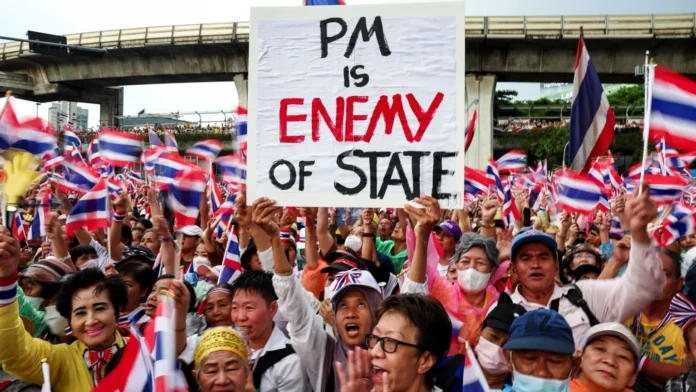
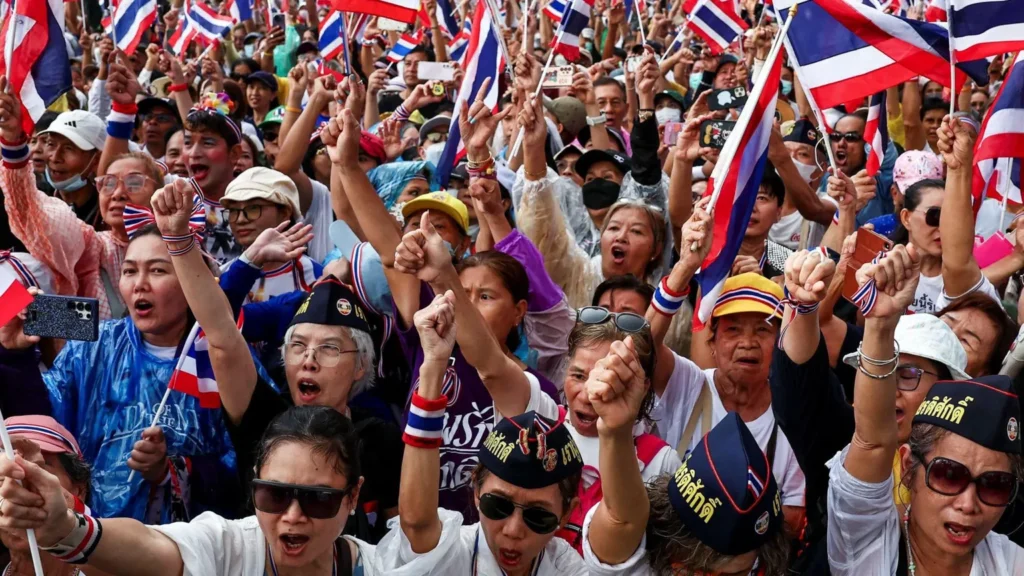
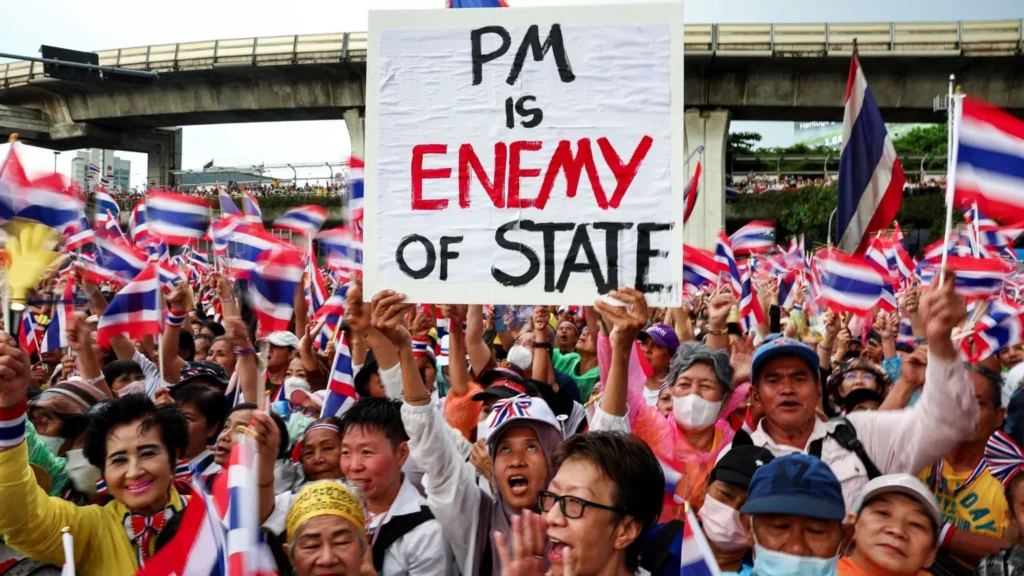
Bangkok, Thailand (BN24) – Thousands of demonstrators filled Bangkok’s streets on Saturday, demanding the resignation of Prime Minister Paetongtarn Shinawatra after the leak of a controversial phone call with former Cambodian leader Hun Sen intensified public anger and fractured her governing coalition.
Protesters converged on the city’s Victory Monument, waving Thai flags and carrying placards declaring the prime minister an “enemy of the state.” The rally, the largest since the Pheu Thai Party returned to power in 2023, unfolded despite heavy monsoon rain that failed to deter crowds intent on pressing for Paetongtarn’s departure.
The uproar erupted earlier this month when audio of the call surfaced online. In the recording, Paetongtarn referred to Hun Sen as “uncle” and criticized a Thai military commander involved in a tense border dispute, saying he “just wanted to look cool and said things that are not useful.” The remarks struck a nerve in Thailand, where national security remains a deeply sensitive issue.
Although the prime minister apologized and defended her tone as a “negotiation technique,” the fallout has been swift. One of her coalition’s key partners has already withdrawn support, and a Constitutional Court petition seeking her removal over alleged unprofessional conduct is scheduled for review this week.
Protest leader Parnthep Pourpongpan addressed the crowd, declaring Paetongtarn “the problem” and insisting she step aside for the sake of national stability. “We want to protect Thailand’s sovereignty,” said Seri Sawangmue, a 70-year-old demonstrator who traveled overnight from the country’s north to join the rally. “The prime minister is unfit.”
As the demonstrations unfolded, Paetongtarn, 38, was in northern Thailand meeting flood victims. Speaking to reporters before departing Bangkok, she said it was citizens’ “right to protest, as long as it’s peaceful,” but pledged she would no longer hold private calls with Hun Sen.
The leak has fueled accusations that the Shinawatra family, which has dominated Thai politics for more than two decades, is too closely entangled with Cambodia’s Hun dynasty. Paetongtarn’s father, deposed former Prime Minister Thaksin Shinawatra, and Hun Sen have long described each other as “godbrothers,” a relationship critics say compromises Thailand’s interests.
While relations between Thailand and Cambodia have been tense for decades, recent border clashes, including the killing of a Cambodian soldier in May, have pushed diplomatic ties to their lowest point in more than ten years. Cambodia has retaliated by imposing broad restrictions on Thai goods, electricity, and cultural imports.
Hun Sen, who said he distributed the audio clip to dozens of political figures before it was leaked, later posted the entire 17-minute recording on his Facebook page. The call triggered fresh scrutiny of Paetongtarn’s judgment just ten months into her term as Thailand’s second female prime minister, following her aunt Yingluck Shinawatra.
The rally was organized by the United Force of the Land, a coalition of nationalist groups that have long opposed Shinawatra-led administrations. In a statement read aloud to the assembled crowds, organizers accused the government and parliament of abandoning their responsibility to uphold democracy and Thailand’s constitutional monarchy.
As protesters dispersed, a rainbow formed over Victory Monument, ending a dramatic day that underscored the country’s enduring political fault lines. The Constitutional Court is expected to announce on Tuesday whether it will proceed with the case that could ultimately decide Paetongtarn’s political fate.
Canada (BN24) – An invasive fish species capable of surviving out of water for extended periods has been discovered in Eastern Canada, setting off concerns among scientists about potential threats to native wildlife and ecosystems.
The Oriental Weatherfish, an eel-like species also known as the pond loach, was identified last month in a Nova Scotia waterway by Canada’s Department of Oceans. According to the Nova Scotia Invasive Species Council, the fish was spotted near the village of New Germany in the Morgan Falls fishway on the LeHave River. A resident who encountered the unusual fish reported it to authorities, leading to its confirmation.
The council announced the discovery in a statement on May 16, warning that this is the first documented occurrence of the Oriental Weatherfish in the Maritimes, which includes Nova Scotia, New Brunswick, and Prince Edward Island. Experts say the species poses a serious ecological threat if it becomes established.
“Oriental Weatherfish pose a significant threat when introduced to native ecosystems,” the council said in a social media post. “They reduce aquatic insect biodiversity, compete with native fish species for food and spawning habitat, and are known to carry parasites and pathogens harmful to wildlife and humans.”
The fish, native to parts of Eastern Asia stretching from Siberia to northern Vietnam and Japan, is commonly sold in the aquarium trade. Officials believe the specimen in Nova Scotia was illegally released into the wild. The individual fish was reported to be carrying eggs, raising fears it could already be reproducing in the waterway.
According to the U.S. Geological Survey, Oriental Weatherfish (Misgurnus anguillicaudatus) typically grow to lengths of 3 to 7 inches, though some specimens can reach 11 inches. What makes the species especially difficult to eradicate is its ability to endure harsh conditions by breathing through its intestine. This adaptation allows it to survive in oxygen-poor waters, bury itself in mud or silt, and tolerate prolonged droughts.
Researchers have found that the fish can survive without water and endure starvation for more than 81 days, a level of resilience that alarms biologists monitoring the spread of invasive species in North America.
Though this is the first confirmed case in Atlantic Canada, Oriental Weatherfish have already established populations in over a dozen U.S. states, including Hawaii, where they have disrupted native fish communities.
Officials are urging residents not to release aquarium species into local waterways and to report any sightings of the fish to regional authorities. Environmental experts warn that if the population takes hold in Eastern Canada, it could prove extremely difficult to remove, posing long-term challenges to biodiversity and ecosystem health.
Serbia (BN24) – Riot police clashed for hours with protesters in the Serbian capital late Saturday as tens of thousands gathered to demand snap elections and an end to President Aleksandar Vucic’s 12-year grip on power, a challenge that has grown into one of the most serious threats to his rule in over a decade.
The massive anti-government demonstration filled Belgrade’s central Slavija Square and surrounding streets, echoing months of protests that erupted after the deadly collapse of a newly renovated rail station canopy in November. The tragedy, which killed 16 people, became a rallying point for widespread anger over alleged corruption and negligence in state infrastructure projects.
Police in helmets and body armor deployed throughout the city’s core, sealing off government buildings and parliament as tensions simmered. Organizers, many of them university students, delivered speeches denouncing Vucic’s leadership. One student, who declined to give her name, declared the authorities “illegitimate,” urging early parliamentary elections as a way out of what she called a deepening social crisis.
“Elections are a clear way out of the social crisis caused by the deeds of the government, which is undoubtedly against the interests of their own people,” she told the cheering crowd.
As night fell, confrontations intensified. Protesters hurled bottles, rocks and flares toward riot police blocking access to Pionirski Park, where hundreds of Vucic’s supporters have camped for months in a show of loyalty. Officers responded with tear gas in several locations across central Belgrade to scatter the crowds, resulting in chaotic scenes that stretched late into the evening.
Police detained several dozen demonstrators and reported that six officers were injured during the clashes. Dragan Vasiljevic, Serbia’s police director, confirmed the arrests during a late-night press conference.
In a statement posted to Instagram after the violence, Vucic, who has cultivated an increasingly authoritarian style since coming to power, appeared defiant. “Serbia always wins in the end,” he wrote.
Vucic and his right-wing Serbian Progressive Party have rejected calls for early elections, accusing opposition activists of provoking unrest under orders from foreign powers, though officials have offered no evidence to support those claims. The president, a former extreme nationalist who now says he wants Serbia to join the European Union, has been widely criticized by rights groups and Western observers for suppressing democratic freedoms and tightening ties with Russia and China.
While the demonstrations had diminished in scale in recent weeks, the turnout on Saturday underscored the lingering anger toward the government and the determination of opponents to keep up pressure. After nearly eight months of protests—sometimes almost daily—the latest rally revealed that frustration over corruption, stalled reforms and creeping authoritarianism remains a potent force on Serbia’s streets.
GAZA CITY (BN24) — The Israeli military ordered Palestinians to evacuate areas in northern Gaza on Sunday before intensified fighting against Hamas, as President Donald Trump called for an end to the 20-month conflict amid renewed international efforts to broker a ceasefire.
Trump’s early morning post on his Truth Social platform delivered a direct message regarding the ongoing hostilities: “Make the deal in Gaza, get the hostages back.” The presidential intervention came as Arab mediators backed by the United States launched a new diplomatic push to halt the protracted conflict and secure the release of Israeli and foreign hostages still held by Hamas.
Israeli Prime Minister Benjamin Netanyahu was scheduled to hold discussions later Sunday on the progress of Israel’s military offensive. A senior security official indicated that military commanders would inform Netanyahu that the campaign was approaching its strategic objectives while warning that expanding operations to new areas in Gaza could endanger the remaining Israeli hostages.
Despite these internal deliberations, the Israeli military issued evacuation orders covering the Jabalia area and most Gaza City districts through statements posted on social media platform X and text messages sent directly to residents. The military directed Palestinians in northern parts of the enclave to move south toward the Al-Mawasi area in Khan Younis, which Israel has designated as a humanitarian zone.
The military statement emphasized the intensity of planned operations, declaring that “The Defense Forces is operating with extreme force in these areas, and these military operations will escalate, intensify, and extend westward to the city center to destroy the capabilities of terrorist organizations.”
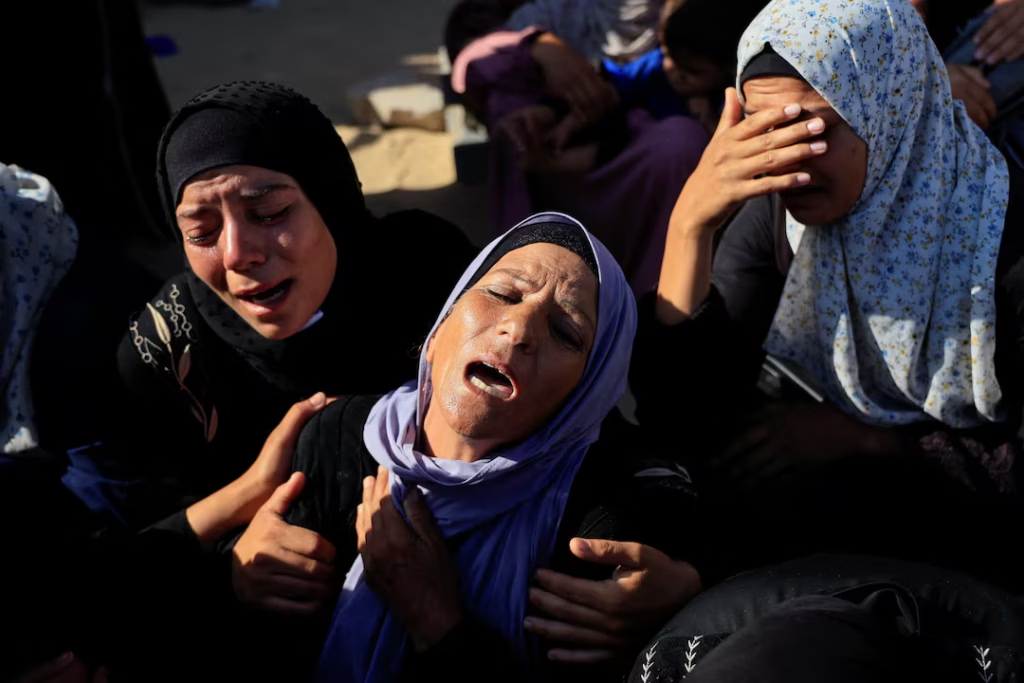
Palestinian and United Nations officials contested the safety of designated evacuation areas, maintaining that nowhere in Gaza remains secure for civilians. The evacuation directive came as Israeli bombardments escalated in the early morning hours in Jabalia, with medics and residents reporting the destruction of several houses and at least six fatalities.
The violence extended to southern Gaza, where five people were killed in an airstrike on a tent encampment near Mawasi in Khan Younis, according to medical officials. The attacks underscored the continued intensity of combat operations despite international diplomatic efforts.
The renewed ceasefire initiative involves Arab mediators Egypt and Qatar, supported by the United States, seeking to end the prolonged conflict and secure hostage releases. Interest in resolving the Gaza situation has intensified following recent U.S. and Israeli bombing campaigns targeting Iran’s nuclear facilities, which have heightened regional tensions.
A Hamas official confirmed to Reuters that the organization had informed mediators of its readiness to resume ceasefire negotiations. However, the group reaffirmed its established demands that any agreement must definitively end the war and guarantee complete Israeli withdrawal from the coastal territory.
Hamas maintains its position that it will only release the remaining hostages in Gaza, with approximately 20 believed to still be alive, as part of a comprehensive deal ending the conflict. Israel has consistently stated it can only conclude the war if Hamas is completely disarmed and dismantled as an organization. Hamas leadership refuses to surrender its weapons or dissolve its military capabilities.
The current escalation represents the latest chapter in the decades-old Israeli-Palestinian conflict, which reached a devastating turning point in October 2023. Hamas launched a surprise attack against Israel, resulting in 1,200 Israeli deaths and the capture of 251 hostages, according to Israeli government tallies.
Israel’s subsequent military response has resulted in more than 56,000 Palestinian deaths according to the Gaza health ministry, displaced nearly the entire population of 2.3 million residents, created a severe humanitarian crisis, and left large portions of the territory in ruins. The sustained military campaign has fundamentally altered the landscape and infrastructure of the densely populated coastal enclave.
The international community continues to grapple with the humanitarian implications of the conflict, as evacuation orders affect hundreds of thousands of Palestinians who have already been displaced multiple times throughout the 20-month war. The repeated displacement has created logistical challenges for aid organizations attempting to provide essential services to the civilian population.
Netanyahu’s upcoming security briefing will likely address the military’s assessment of Hamas capabilities and the strategic value of continued operations versus the risks to hostage safety. The tension between achieving military objectives and protecting civilian lives, including hostages, remains a central challenge in Israeli decision-making.
The renewed diplomatic efforts come at a critical juncture, with Trump’s direct involvement signaling potential shifts in U.S. engagement with the conflict resolution process. The coordination between American officials and regional mediators represents an attempt to leverage multiple diplomatic channels to achieve breakthrough agreements.
As military operations continue in northern Gaza, the humanitarian situation deteriorates further for Palestinian civilians caught between evacuation orders and ongoing combat. The cycle of displacement, bombardment, and diplomatic efforts reflects the complex dynamics that have sustained this conflict for nearly two years without resolution.
Washinghton, DC (BN24) – Billionaire entrepreneur Elon Musk sharply escalated his criticism of President Donald Trump’s sweeping tax and spending package on Saturday, warning that the Senate legislation would devastate American jobs and cripple the nation’s future industries.
Musk, who only weeks ago stepped down as head of Trump’s Department of Government Efficiency, denounced the latest draft of the bill as “utterly insane and destructive” in a series of posts to his 220 million followers on X, the platform he owns. His remarks came just before the Senate prepared to open debate on the sprawling measure, which would make permanent Trump-era tax cuts, slash spending on federal programs such as Medicaid and food assistance, and channel hundreds of billions into defense and deportation priorities.
“The latest Senate draft bill will destroy millions of jobs in America and cause immense strategic harm to our country!” Musk wrote Saturday. “It gives handouts to industries of the past while severely damaging industries of the future.”
Musk, whose companies Tesla and SpaceX have been closely linked to federal climate and technology policy, has emerged as one of the most prominent critics of the legislation. He previously called the bill a “disgusting abomination” for failing to impose deeper cuts to government spending. In a later post Saturday, he claimed that polls showed the legislation could be “political suicide for the Republican Party.”
The dispute marks the latest twist in Musk’s turbulent relationship with Trump. Earlier this year, Musk accused the president of appearing in confidential Justice Department files related to the late sex trafficker Jeffrey Epstein, an allegation the White House forcefully denied. In June, Musk publicly apologized, saying, “I regret some of my posts about President @realDonaldTrump last week. They went too far,” though he did not specify which accusations he was retracting.
Trump has responded by blaming Musk’s increasingly hostile stance on his administration’s decision to end federal subsidies for electric vehicles and reject Musk’s preferred candidate to lead NASA. In a post on Truth Social, Trump claimed Musk “just went CRAZY” after the White House revoked what he called the “EV Mandate” that had supported Tesla’s growth.
“Elon was ‘wearing thin,’ I asked him to leave,” Trump wrote. “I took away his EV Mandate that forced everyone to buy Electric Cars that nobody else wanted (that he knew for months I was going to do!), and he just went CRAZY!”
The Senate’s late-night vote Saturday to advance the measure capped days of wrangling among Republican lawmakers. Even as Trump lobbied holdouts in tense private meetings, the legislation has faced backlash from multiple quarters, with critics warning it could erode health coverage for millions and deepen deficits over the next decade.
Musk’s intervention underscored the stakes of the debate, as some Republicans fear alienating voters ahead of the 2026 midterm elections while others remain committed to fulfilling Trump’s campaign promises.