Home Blog Page 320

3 British Nationals Face Death Penalty in Indonesia Over Bali Cocaine Smuggling Case

DENPASAR, Indonesia — Three British nationals accused of smuggling more than two pounds of cocaine into Bali have been formally charged under Indonesia’s strict drug laws and could face execution if convicted, officials said Tuesday.

Jonathan Christopher Collyer, 28, and Lisa Ellen Stocker, 29, appeared before the Denpasar District Court after their February arrest at Ngurah Rai International Airport. Prosecutors said customs officials became suspicious after X-ray scans revealed irregular items in their luggage disguised as powdered dessert packets.

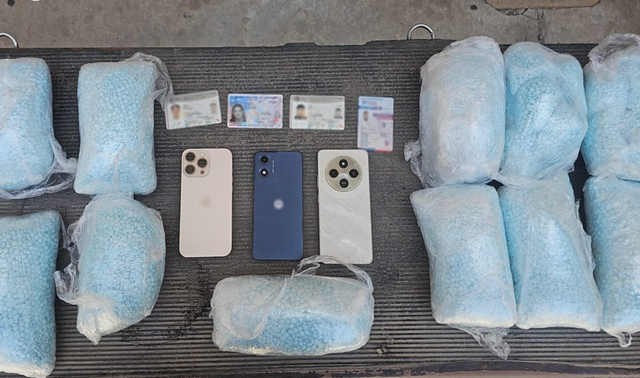
According to prosecutor I Made Dipa Umbara, a forensic examination confirmed that ten sachets labeled as Angel Delight in Collyer’s luggage, along with seven from Stocker’s suitcase, contained a total of 993.56 grams (2.19 pounds) of cocaine. Authorities estimate the street value at nearly 6 billion rupiah (approximately $368,000).

The drugs were reportedly smuggled from England with a stopover in Doha, Qatar. Two days after Collyer and Stocker’s arrest, Bali police detained a third British citizen, 31-year-old Phineas Ambrose Float, during a controlled delivery operation in the parking lot of a hotel in Denpasar. Float, who was allegedly the intended recipient of the narcotics, is being tried in a separate case.

During a news conference on Feb. 7, Bali Police Narcotics Unit Deputy Director Ponco Indriyo stated the group had successfully trafficked cocaine into Indonesia twice before being intercepted on their third attempt. He provided no further details about the previous smuggling operations.

Following the formal reading of charges on Tuesday, the three-judge panel adjourned the trial until June 10, when witness testimonies are scheduled to be heard. The defendants and their legal representatives declined to speak with reporters after the proceedings.

Indonesia enforces some of the world’s most severe drug laws, including the death penalty for trafficking offenses. Convicted smugglers are often executed by firing squad. According to the country’s Ministry of Immigration and Corrections, 530 people are currently on death row, including 96 foreign nationals—most for drug-related crimes.

The country’s last executions took place in July 2016, when three foreign nationals and one Indonesian were put to death. Among those awaiting execution is British citizen Lindsay Sandiford, 69, who was arrested in 2012 with 3.8 kilograms (8.4 pounds) of cocaine concealed in her suitcase lining. Her death sentence was upheld by Indonesia’s highest court in 2013, and she remains on death row.

The United Nations Office on Drugs and Crime (UNODC) has identified Indonesia as a major transit and distribution hub for international narcotics syndicates, despite its draconian penalties. Authorities say the country’s young population and booming tourism sector make it a high-priority target for drug traffickers.

As Indonesia continues its war on drugs, the trial of the three British nationals is being closely watched by human rights groups, legal observers, and the UK government. British diplomatic representatives have yet to comment publicly on the ongoing court proceedings in Denpasar.

AP

Trump Reinstates Travel Ban Targeting Dozen Countries, Effective Monday

WASHINGTON — President Donald Trump has signed a new proclamation reinstating a sweeping travel ban that will block entry into the United States for nationals from a dozen countries beginning Monday, reviving a policy that stirred global controversy during his first term.

The executive action, announced late Wednesday, targets nationals from Afghanistan, Myanmar, Chad, the Republic of Congo, Equatorial Guinea, Eritrea, Haiti, Iran, Libya, Somalia, Sudan, and Yemen. Additional restrictions will apply to visitors from Burundi, Cuba, Laos, Sierra Leone, Togo, Turkmenistan, and Venezuela, the White House confirmed.

The restrictions are set to take effect at 12:01 a.m. Monday.

“I must act to protect the national security and national interest of the United States and its people,” Trump stated in the proclamation, citing findings from a classified report by the State Department, Department of Homeland Security, and the Director of National Intelligence. The report was ordered under a Jan. 20 executive directive instructing agencies to identify countries demonstrating “hostile attitudes” toward the United States or posing potential security threats.

Ten of the 19 countries subject to bans or restrictions are located in Africa, with nine of them being majority-Black African nations. Notably, several countries on the list — including Sierra Leone, Togo, and Equatorial Guinea — have not been widely associated with extremist activity targeting the West.

The move is reminiscent of Trump’s initial travel ban enacted in January 2017, which barred entry from seven majority-Muslim countries — Iraq, Syria, Iran, Sudan, Libya, Somalia, and Yemen. That executive order triggered immediate confusion and chaos at airports globally, leading to mass detentions and flight cancellations for students, business travelers, and families alike.

Dubbed the “Muslim ban” by critics, the measure was eventually revised multiple times amid legal challenges. A later version, upheld by the U.S. Supreme Court in 2018, maintained restrictions on several of the original countries while adding others, including North Korea and certain Venezuelan government officials and their relatives.

Trump and his allies have repeatedly defended the ban on national security grounds, insisting it is designed to protect Americans from potential terrorist infiltration, not to target specific religious or ethnic groups. However, during his 2016 campaign, Trump openly called for a “total and complete shutdown of Muslims entering the United States,” which critics have cited as evidence of discriminatory intent behind the policy.

The updated list represents an expansion of Trump’s original travel restrictions. Unlike previous iterations, the latest proclamation draws from a broader set of intelligence and geopolitical criteria. Though officials did not release detailed justification for each country’s inclusion, administration sources described the move as part of a long-term strategy to tighten border security and reassert control over the immigration system.

The countries under the latest ban are categorized as failing to meet baseline security protocols or exhibiting adversarial behavior toward the U.S. government, according to the White House. Entry restrictions are expected to affect a range of travelers, including immigrants, tourists, students, and business visa applicants.

Civil rights groups and immigration advocates swiftly condemned the move, warning it would again disproportionately impact Muslim and African nations and sow confusion for travelers and legal immigrants alike.

The administration, however, is expected to defend the legality of the new order using the precedent set by the 2018 Supreme Court ruling.

With this latest policy, Trump returns to a hallmark of his first administration’s immigration agenda, aiming to project a tough stance on national security as his reelection campaign ramps up.

Trump Administration Moves to Strip Columbia University of Accreditation Over Alleged Civil Rights Violations

WASHINGTON — The Trump administration has initiated a formal challenge to Columbia University’s accreditation, accusing the Ivy League institution of violating the civil rights of Jewish students by failing to address widespread harassment on campus, according to a letter released Wednesday by Education Secretary Linda McMahon.

In the letter to the Middle States Commission on Higher Education, the independent body responsible for Columbia’s accreditation, McMahon asserted that the New York university “acted with deliberate indifference toward the harassment of Jewish students,” a failure that she said constitutes a breach of federal anti-discrimination laws.

“Accreditors have an enormous public responsibility as gatekeepers of federal student aid,” McMahon wrote, calling Columbia’s response “immoral” and “unlawful.” The department said the university “no longer appears to meet the Commission’s accreditation standards” due to its alleged failure to provide Jewish students with equal access to educational opportunities.

The move marks an escalation in President Donald Trump’s ongoing campaign against what he has described as a failure of elite universities to protect Jewish students in the wake of pro-Palestinian protests linked to the ongoing war in Gaza. Trump has repeatedly criticized Columbia and other institutions, claiming their inaction has enabled antisemitism and campus unrest.

In February, the Trump administration cut $400 million in federal funding to Columbia, citing concerns about antisemitism. Although the university subsequently restructured aspects of its Middle Eastern studies department and implemented policy changes in an apparent attempt to comply with federal expectations, the administration has deemed those efforts insufficient.

The Department of Education’s latest letter suggests the university’s accreditation — and thus its eligibility for billions in federal aid — is now at serious risk.

Federal accreditors such as the Middle States Commission play a critical role in determining which institutions are eligible for student financial aid, research funding, and other forms of federal support. A loss of accreditation would severely undermine Columbia’s financial and academic operations.

The Education Department claims Columbia’s leadership failed “to meaningfully protect Jewish students against severe and pervasive harassment,” effectively denying those students equal educational access under Title VI of the Civil Rights Act.

So far, Columbia University has not issued a public response to the department’s allegations or the potential threat to its accreditation.

The Trump administration has widened its scrutiny to other campuses, including Harvard University, which is currently battling federal legal challenges related to its funding and its right to accept international students. The White House has cited similar concerns over antisemitism at Harvard, arguing that elite institutions have failed to uphold civil rights protections in the face of growing anti-Israel sentiment on college campuses.

McMahon’s letter suggests more institutions may come under review. “The Department has an obligation to promptly provide accreditors with any noncompliance findings related to member institutions,” she wrote, indicating that additional accreditation reviews may be forthcoming.

The letter comes amid Trump’s broader push to overhaul higher education. Earlier this year, he signed an executive order revising the university accreditation process, granting the Education Department greater leverage over institutions receiving federal funding.

As the debate intensifies over the balance between free speech and civil rights on U.S. campuses, Columbia now finds itself at the center of a legal and political firestorm that could redefine the federal government’s role in academic oversight.

Top Ivory Coast Opposition Leaders Barred from October Presidential Election

ABIDJAN, Ivory Coast — Four high-profile opposition leaders have been officially barred from contesting Ivory Coast’s upcoming presidential election, the country’s Electoral Commission confirmed, a move that has sparked accusations of political exclusion and democratic erosion ahead of the pivotal October vote.

The Independent Electoral Commission (CEI) said the final electoral list excludes key candidates, including Tidjane Thiam, leader of the Democratic Party of Ivory Coast (PDCI), former President Laurent Gbagbo, his ally Charles Blé Goudé, and ex-Prime Minister Guillaume Soro. None of the four will be permitted to run or vote in the October 25 election.

CEI President Ibrahime Kuibiert Coulibaly also announced that no revisions will be made to the electoral register before the vote, shutting the door on any appeals to reinstate disqualified candidates.

“This elimination from the electoral list is a sad but eloquent example of Ivory Coast’s drift towards a total absence of democracy,” Thiam said in a statement on Wednesday. Once considered the primary challenger to incumbent President Alassane Ouattara, Thiam was removed from the list in April after a court ruled him ineligible due to his past French citizenship. Thiam, who was born in Ivory Coast and acquired French nationality in 1987, renounced it in March but remains disqualified.

The CEI’s decision has triggered legal appeals and political pushback from affected candidates. Thiam’s legal team filed a complaint with the United Nations Human Rights Committee, calling the disqualification “a serious violation of Ivory Coast’s international commitments,” according to a statement by his lawyer Mathias Chichportich.

Gbagbo’s African Peoples’ Party–Ivory Coast (PPA-CI) also denounced the exclusion. “Authorities did not choose to listen to the advice, the calls for discussion, for reason,” said Jean-Gervais Tcheidé, the party’s secretary-general. “It’s a shame they chose to force their way through. We’re not going to let them do it.”

Gbagbo and Blé Goudé face legal restrictions linked to their prosecution by the International Criminal Court over crimes related to the country’s post-election violence. Meanwhile, Soro, a former rebel leader, remains in exile and was sentenced in absentia to life imprisonment for allegedly orchestrating a coup.

Former First Lady Simone Ehivet Gbagbo, who remains on the electoral register, criticized the conditions for the election, warning that they are not conducive to a “peaceful, calm election.” Speaking on behalf of an opposition coalition, she said the exclusion of prominent rivals raises serious doubts about the credibility of the process.

During the last presidential election in 2020, Ivory Coast conducted a voter list revision in June, months ahead of the polls. In contrast, CEI officials now say no such revision will occur before October’s election. The final voter register includes 8.7 million names in a country with a population nearing 30 million, nearly half of whom are under 18.

Authorities have rejected accusations of political interference, insisting that the judiciary operates independently. The government has made no comment on whether President Ouattara, who has ruled since 2011 and won previous elections with over 80% of the vote, will seek a fourth term.

While some opposition candidates remain eligible to run, the exclusion of major figures has deepened political divides in a country still recovering from years of conflict, coups, and post-election violence.

Dozens of Bodies Found at Militia-Controlled Sites in Libya’s Tripoli; UN Demands Accountability

TRIPOLI, Libya — The United Nations on Wednesday expressed alarm over the discovery of dozens of bodies at locations previously controlled by a powerful militia group in Tripoli, calling for immediate international action and accountability over suspected human rights abuses.

According to UN High Commissioner for Human Rights Volker Turk, the sites had been operated by the Stabilisation Support Apparatus (SSA), a militia formerly led by Abdel-Ghani al-Kikli, a prominent commander killed during clashes in the Libyan capital last month.

“We are shocked by the reports and our worst fears are being confirmed,” Turk said in a statement. “Dozens of bodies have been uncovered at these facilities, alongside suspected instruments of torture, signs of abuse, and potential evidence of extrajudicial killings.”

At least 10 charred bodies were reportedly found inside the SSA’s base in the Abu Salim district, a southern Tripoli stronghold of the militia. An additional 67 corpses were discovered in hospital refrigerators at two local facilities — Abu Salim and Al Khadra — where detainees were believed to have been held. Investigators were also informed of a possible burial site located at the Tripoli Zoo, an area that had been under SSA control.

The identities of the victims remain unknown, and the UN has called for the immediate sealing of all affected sites to preserve potential forensic evidence. Turk urged Libyan authorities to grant international investigators access to the locations and ensure transparency in any ongoing inquiries.

Al-Kikli, long regarded as one of Tripoli’s most influential militia leaders, had commanded the SSA, a group officially linked to Libya’s UN-recognized Government of National Unity (GNU). His killing during violent clashes in May reignited power struggles among rival armed factions, plunging parts of the capital into chaos.

The fighting that followed his death led to multiple civilian casualties, forced school closures, and the imposition of a citywide curfew. The UN Support Mission in Libya called on all factions to cease hostilities and protect civilians, warning of further destabilization in the already fractured nation.

Tripoli remains dominated by a patchwork of armed groups operating with minimal accountability in the absence of a unified national military force. Despite formal affiliations with the GNU, many militias function autonomously and have been implicated in a range of abuses, including unlawful detention, torture, and extrajudicial executions.

The SSA has previously faced accusations of serious human rights violations, and the latest discoveries appear to corroborate long-standing concerns about the conditions of its detention centers and its treatment of prisoners.

Turk emphasized the urgency of implementing a disarmament and accountability mechanism to dismantle Libya’s impunity culture and ensure justice for victims.

“This is not just about identifying those responsible,” he said. “It’s about restoring dignity to the victims and rebuilding trust in institutions that are meant to protect, not harm.”

As investigations continue, the UN reiterated its commitment to supporting a sustainable political process in Libya and urged local and international stakeholders to work toward a lasting ceasefire and institutional reform.

Libya has remained in political limbo since the fall of Moammar Gadhafi in 2011, with rival governments and militias vying for power. The GNU, based in Tripoli, was established in 2021 under a UN-led peace process, but efforts to unify the country’s institutions have stalled amid ongoing violence and political gridlock.

At Least 11 Killed in Stampede Outside Bengaluru Stadium Ahead of IPL Victory Parade

BENGALURU, India — At least 11 people, including a woman and a young boy, were killed in a crowd crush outside Bengaluru’s M. Chinnaswamy Stadium on Wednesday, as thousands of cricket fans surged forward to celebrate Royal Challengers Bengaluru’s Indian Premier League (IPL) victory, local authorities confirmed.

Bengaluru: Footwears lie on the ground outside the Chinnaswamy Stadium following a stampede after a large number of fans gathered for the felicitation of IPL 2025 winning Royal Challengers Bengaluru team, in Bengaluru, Karnataka, Wednesday, June 4, 2025. At least four people were killed and several others suffered injuries in the incident. (PTI Photo)(PTI06_04_2025_000618B)

The deadly stampede unfolded when a massive crowd gathered outside the stadium near Cubbon Park, attempting to enter the venue for the highly anticipated victory parade following RCB’s win over Punjab Kings on Tuesday night. The franchise’s first-ever IPL title had sparked a wave of euphoria across the city, drawing large numbers of supporters to the team’s home ground in southern India.

According to local media and police reports, the situation spiraled out of control as fans stormed multiple entry gates simultaneously in an effort to catch a glimpse of their cricket heroes. The resulting crush left at least 11 dead and more than 50 others injured, many seriously.

Emergency services were severely hampered by the overwhelming crowds, making it difficult for ambulances to reach the injured or transport them to nearby hospitals in time. Four victims succumbed to their injuries at Vydehi Multispecialty Hospital, while three others were pronounced dead on arrival at Bowring Hospital, health officials said. Additional fatalities were later confirmed by city authorities.

Authorities have not yet released the names of the deceased, and officials warn that the death toll could rise as several victims remain in critical condition.

Eyewitness accounts described chaotic scenes as fans, many of them young, jostled and pushed through narrow entry points despite security efforts to maintain order. The gate near Cubbon Park became a focal point of the surge, where the crowd’s momentum proved fatal for those caught in the crush.

“I saw people screaming, trying to hold on to railings, and then suddenly they were just falling,” said Ramesh Nair, a 29-year-old fan who narrowly avoided injury. “It was supposed to be a celebration, not a tragedy.”

The Times of India reported that in the rush to get inside the stadium, several gates were breached simultaneously, adding to the confusion and making it nearly impossible for security forces to control the crowd.

State and local authorities have announced an investigation into the incident, focusing on crowd control measures, entry protocols, and emergency response coordination. Karnataka Chief Minister Siddaramaiah expressed deep sorrow over the loss of life and promised accountability.

“This is an unspeakable tragedy. We are coordinating with health officials and law enforcement to ensure all injured are treated and families of the deceased receive full support,” the chief minister said in a statement.

The Royal Challengers Bengaluru team also issued a statement expressing their condolences to the victims’ families and urging fans to remain calm and safe during future celebrations.

Large-scale public events in India, especially those related to cricket, often attract overwhelming crowds. While security arrangements are usually made in anticipation of large turnouts, crowd mismanagement and lack of emergency preparedness have contributed to past tragedies.

Wednesday’s fatal stampede has reignited questions about public safety at major sporting events and the need for stricter protocols when organizing mass gatherings, particularly in urban areas with limited access for emergency vehicles.

2 Ex-Military Men Arrested After Armed Robbery at Washington Army Base; Nazi Paraphernalia, Grenade Launchers Seized

LACEY, Wash. — Two former military personnel have been arrested in connection with a violent theft at Joint Base Lewis-McChord in Washington state, where prosecutors say they assaulted a soldier and stole government equipment before federal agents recovered an extensive weapons cache and Nazi paraphernalia from their home.

Levi Austin Frakes and Charles Ethan Fields were taken into custody Monday evening at their residence in Lacey, a suburb of Olympia, following an investigation led by the U.S. Army Criminal Investigation Division and the FBI. A criminal complaint filed Wednesday in U.S. District Court in Tacoma charges both men with robbery, assault, and theft of government property.

According to the complaint, Fields and Frakes — both former military members — were found to possess a military-style arsenal, including short-barreled rifles, grenade launchers, and an MG42 machine gun, a weapon historically used by Nazi Germany during World War II. Authorities also discovered body armor, ballistic helmets, and a Nazi flag bearing a swastika inside their home.

The incident occurred Sunday night when a soldier stationed at the Army Ranger compound on Joint Base Lewis-McChord encountered two masked intruders inside a building. The soldier questioned the men, who removed their masks, prompting a confrontation that escalated violently. One of the suspects struck the soldier in the head with a hammer, and a knife was later drawn during the struggle, according to the complaint.

Despite severe bleeding, the soldier managed to disarm the attacker wielding the hammer but released the suspects when the second brandished a blade. During the altercation, one of the men dropped a hat labeled “Fields,” which later helped authorities identify and track the suspects using surveillance footage and base entry logs.

A federal search warrant executed at the suspects’ shared residence revealed a stockpile of more than 35 firearms, including illegal short-barreled rifles, incendiary devices, and a World War II-era MG42 machine gun. Several weapons were reportedly staged at upstairs windows, suggesting the home may have been fortified.

Investigators also found approximately $24,000 in cash and an array of military-grade gear, including Army-issued explosives, grenade launchers, ammunition, and protective equipment. Nazi-themed items were photographed at the scene, including a prominent red flag bearing a black swastika.

Authorities say one of the suspects admitted to stealing equipment from the base for two years to sell or trade. Both Fields and Frakes are currently held at Pierce County Jail on $500,000 bail each and may face additional state charges, including unlawful possession of restricted firearms and explosive devices.

Fields was previously assigned to the Ranger Battalion at Joint Base Lewis-McChord in 2021, according to the complaint. Frakes’ military background was not detailed in court documents.

The FBI and Army CID continue to investigate whether the pair were part of a larger trafficking operation or posed additional threats. Federal prosecutors indicated that further charges could be filed pending the results of forensic analysis and interviews.

The arrests underscore growing concerns over extremist ties among former military members and the potential for stolen military hardware to be diverted into the civilian population.

CBO: Trump’s Tax and Spending Bill to Add $2.4 Trillion to Deficit, Leave 10.9 Million More Uninsured-AP

WASHINGTON — President Donald Trump’s sweeping tax cut and spending bill would increase the federal deficit by $2.4 trillion over the next decade and result in 10.9 million more Americans losing health insurance coverage, according to a new report from the nonpartisan Congressional Budget Office released Wednesday.

The bill, formally titled the One Big Beautiful Bill Act, is the centerpiece of Trump’s current domestic agenda and reflects Republican ambitions to extend the 2017 tax cuts while reducing government spending. Despite mounting opposition, GOP leaders are pressing forward with efforts to move the package through Congress.

The CBO’s findings dropped as Republican senators prepared to meet Trump at the White House to strategize next steps. The House narrowly passed the bill last month, but it now faces scrutiny in the Senate, where some Republicans are seeking major revisions.

Democrats, unified in opposition, cited the report as further evidence the legislation would have dire economic and health care consequences. Rep. Brendan Boyle of Pennsylvania, the top Democrat on the House Budget Committee, echoed billionaire Elon Musk’s recent criticism of the bill, calling it a “disgusting abomination.”

“This report confirms what we feared: that this bill not only balloons the deficit but strips health insurance from millions,” Boyle said.

Republican leaders quickly dismissed the CBO’s forecast. Senate Majority Leader John Thune argued that the agency “got it wrong,” claiming the report failed to adequately factor in economic growth spurred by tax reform. He pointed to higher-than-expected federal revenues during the post-pandemic inflation surge as evidence.

White House Budget Director Russ Vought defended the legislation’s fiscal outlook, saying the deficit impact would be far smaller once “current policy” is accounted for—referring to the continuation of tax cuts that would otherwise expire.

“When you adjust for what we’re already doing, this bill actually reduces the deficit by $1.4 trillion over ten years,” Vought insisted.

However, both Democrats and some Republicans dismissed that claim as budgetary sleight of hand, accusing the administration of masking the bill’s real impact through selective math. Vought, in turn, accused the CBO of using its own “gimmick” methodology.

Despite the criticism, Trump and his allies remained committed to the legislation. “Our One Big Beautiful Bill will REDUCE the deficit WHILE delivering on the mandate given to us by the American people,” House Speaker Mike Johnson wrote on social media.

White House Press Secretary Karoline Leavitt downplayed the CBO’s findings, suggesting the agency was biased despite legal safeguards meant to ensure the office’s nonpartisan objectivity.

The CBO, established in 1974, is celebrating its 50th year of providing nonpartisan economic and budgetary analysis to Congress. Its current director, Phillip Swagel, is a former Treasury official under President George W. Bush and was reappointed to a second term in 2023.

The legislation would extend Trump’s 2017 individual income tax breaks, which are set to expire in December unless Congress acts. Republicans warn the expiration would amount to a broad tax increase on American families.

The package also includes $350 billion in additional funding for border security, immigration enforcement, and national defense, as well as a $4 trillion increase to the federal debt ceiling—required by summer to prevent a government default, according to the Treasury Department.

With the GOP holding a narrow 53-seat majority in the Senate, any dissent could imperil the bill’s passage. The CBO report is likely to sharpen debate among Senate Republicans, many of whom have expressed growing concern about federal deficits.

The CBO projected that under the bill’s proposed spending cuts and policy changes, 10.9 million Americans would lose health insurance coverage over the next ten years. The reduction is expected to come from cuts to Medicaid, rollback of Affordable Care Act subsidies, and tighter eligibility requirements for government assistance programs.

The findings add another layer of controversy to the GOP proposal, already under fire for prioritizing tax relief for corporations and the wealthy while slashing key social safety net programs.

Woman Testifies Diddy Gave Her Night Terrors After Alleged Balcony Assault

LOS ANGELES — A woman who says Sean “Diddy” Combs dangled her over a high-rise apartment balcony testified in court Wednesday that the terrifying incident left her with night terrors, paranoia, and lasting emotional trauma.

Bryana “Bana” Bongolan, 33, a creative director and longtime friend of Combs’ former girlfriend Cassie Ventura, told a federal jury she feared for her life when the music mogul allegedly lifted her and held her over the railing of a 17th-floor balcony at Cassie’s Los Angeles apartment in 2016.

“I was scared to fall,” Bongolan said in emotional testimony during the fourth week of the government’s racketeering case against Combs. “I have night terrors and paranoia and I would scream in my sleep sometimes.”

Prosecutors allege Combs, 55, led a criminal enterprise involving his associates and staff to facilitate acts of physical and sexual abuse over two decades. The charges against him include racketeering conspiracy and sex trafficking. He has pleaded not guilty and faces 15 years to life in prison if convicted.

Bongolan testified that the assault left her with a bruise on the back of her leg and lingering neck and back pain. She said Combs stormed into the apartment, picked her up without warning, and placed her on the balcony railing, yelling at her during the ordeal. She estimated she was held there for up to 15 seconds before he threw her onto patio furniture.

“I got up right away. I had a lot of adrenaline,” she said. Bongolan described the moment as “deeply traumatic,” recalling how she believed she could die.

Cassie, who previously testified for four days, also recounted the same incident, saying she awoke to find Combs dragging Bongolan back over the railing before hurling her onto the balcony furniture. According to Cassie, she confronted Combs, asking, “Did you just hang her over the balcony?” before he quickly left upon learning another guest was present in the apartment.

Bongolan testified she continues to suffer psychological distress years after the incident. She detailed behaviors linked to her trauma, such as cautiously opening doors and peering into rooms before entering. She said she recently had another nightmare about the attack.

“I have nightmares, and I used to scream a lot in my sleep,” she told the court. “It’s dissipated a little bit, but the paranoia is still there.”

She also testified that Combs provided her with drugs on multiple occasions, including ecstasy, cocaine, ketamine, and a depressant she identified as GHB. She said she also used drugs with Cassie when Combs wasn’t present.

Bongolan was compelled to testify under subpoena and initially declined to answer questions, invoking her Fifth Amendment right against self-incrimination. Prosecutors ultimately granted her immunity, making her at least the third witness to testify under those protections.

Her account adds to the mounting allegations against Combs, whose trial has featured several women recounting episodes of physical and emotional abuse. Prosecutors are using their testimonies to argue that Combs operated a long-running criminal enterprise behind the façade of a successful music and business empire.

Putin Tells Trump Russia Will Respond to Ukrainian Strike on Warplanes, Peace Remains Elusive

WASHINGTON — President Donald Trump said Russian President Vladimir Putin pledged “very strongly” to retaliate after Ukraine’s weekend drone assault on Russian airfields, warning of further escalation in the nearly three-and-a-half-year-old war, even as diplomatic efforts continue to stall.

Speaking Wednesday after a one-hour, 15-minute phone call with Putin, Trump described the conversation as “good,” though he acknowledged it would not lead to immediate peace between Moscow and Kyiv.

“We discussed the attack on Russia’s docked airplanes, by Ukraine, and also various other attacks that have been taking place by both sides,” Trump wrote on his Truth Social platform. “It was a good conversation, but not a conversation that will lead to immediate Peace. President Putin did say, and very strongly, that he will have to respond to the recent attack on the airfields.”

The weekend assault — dubbed Operation Spider’s Web — marked a significant Ukrainian strike deep into Russian territory. According to Ukraine’s Security Service, the attack involved highly automated drones targeting five Russian airfields, damaging or destroying at least 41 military aircraft, including Tu-95, Tu-22, Tu-160 strategic bombers and A-50 surveillance planes. Footage released Wednesday appeared to show several aircraft on fire, though the Kremlin has not independently confirmed the full extent of the damage.

The White House said the United States had no prior knowledge of the attack. A Russian foreign policy adviser later confirmed that Trump emphasized this point to Putin during their call. Meanwhile, Ukrainian President Volodymyr Zelenskyy reportedly oversaw the operation, which officials say was over 18 months in the making.

In a separate action, Ukraine’s security agency claimed responsibility for an underwater explosion beneath the Kerch Bridge linking Russia to annexed Crimea, though Russian officials denied any damage.

Despite ongoing U.S.-led diplomatic efforts, peace negotiations remain stalled. Monday’s second round of talks in Istanbul between Russian and Ukrainian delegations ended with little progress. The sides agreed only to facilitate the exchange of thousands of dead and wounded troops.

Zelenskyy dismissed Moscow’s latest ceasefire proposal as a political stunt and “spam,” accusing Russia of trying to manipulate international perception by pretending to engage in meaningful dialogue.

“They voiced the same ultimatums they gave us two weeks ago — this time, just on paper,” Zelenskyy said. “This document looks like spam … designed to buy time, avoid sanctions, and trick the U.S. into believing that real negotiations are taking place.”

Putin, who did not attend the Istanbul talks, expressed frustration with Zelenskyy’s response. Speaking via video to top Russian officials, he accused Ukraine of orchestrating recent “terrorist attacks” on infrastructure in the Kursk and Bryansk regions near the border.

“How can any such (summit) meetings be conducted in such circumstances? What shall we talk about?” Putin asked.

Trump has consistently called for peace negotiations to end the war and has promised a swift resolution if reelected. However, recent comments show his patience with Putin may be wearing thin.

Last month, Trump criticized Putin directly, calling him “absolutely CRAZY” for prolonging the war. Still, Trump has not endorsed bipartisan congressional efforts to impose additional sanctions on Russia.

During Wednesday’s call, Trump also raised the issue of Iran’s nuclear program. He said he told Putin that “time is running out” and emphasized that “Iran cannot have a nuclear weapon.” Trump added that Putin appeared receptive to helping facilitate discussions with Tehran and expressed hope for a “rapid conclusion” to the matter.

“I believe we were in agreement,” Trump wrote, warning that Iran has been “slowwalking their decision” and that a final answer is needed soon.

While leaders exchanged statements over the phone and through diplomatic channels, fighting along the front line has continued. Ukrainian and Russian forces are reportedly maintaining offensive operations across the roughly 1,000-kilometer (620-mile) battlefield.

Russia’s Defense Ministry claimed Wednesday that its forces had captured another village in Ukraine’s northern Sumy region, part of what Putin recently described as a buffer zone strategy to deter further cross-border raids.

The ongoing hostilities and competing ultimatums underscore the entrenched positions on both sides, despite international pressure to de-escalate. A summit involving Trump, Zelenskyy, and Putin remains only a hypothetical prospect as diplomatic ground remains frozen.