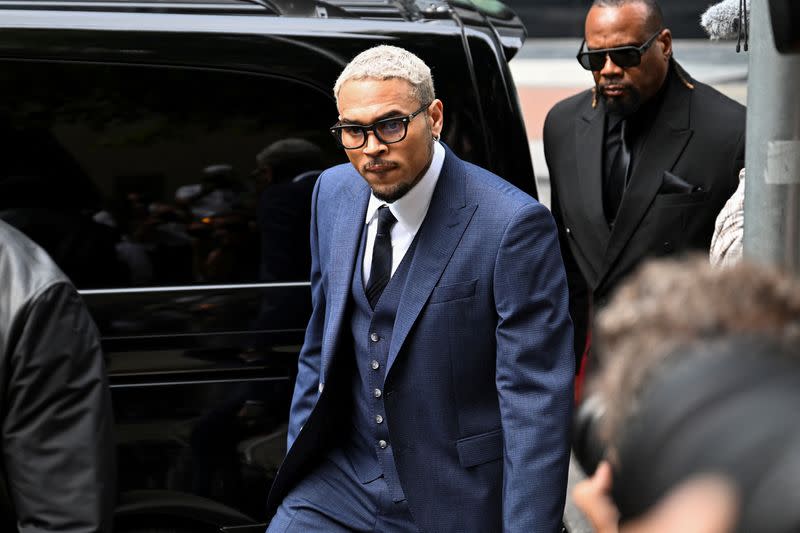
LONDON (BN24) — American R&B artist Chris Brown pleaded not guilty Friday to a charge of attempting to inflict grievous bodily harm on a music producer during an alleged bottle attack at a London nightclub in 2023.
Appearing before Southwark Crown Court, Brown, 36, was formally accused of carrying out what prosecutors described as an “unprovoked attack” using a tequila bottle against music producer Abraham Diaw. The alleged assault took place at a London club during Brown’s previous visit to the United Kingdom.
Brown, dressed in dark formal attire, quietly confirmed his name and date of birth before responding to the charge with a calm: “Not guilty, ma’am.” His co-defendant, 38-year-old Omololu Akinlolu, entered the same plea.
The Grammy-winning performer did not enter a plea on a separate charge of possessing an offensive weapon — the bottle allegedly used in the incident. That charge is expected to be addressed at a later date.
Judge Christopher Hehir allowed both defendants to remain free on bail until their next scheduled court appearance on July 11. At that hearing, they may be asked to respond to a reduced charge of assault causing actual bodily harm.
Brown’s legal team previously secured bail in May after the singer agreed to post a £5 million ($6.7 million) security bond to continue his “Breezy Bowl XX” concert tour across Europe. The singer was arrested last month at a hotel in Manchester — his first return to the UK since the nightclub incident.
Supporters filled the courtroom gallery during the brief hearing, some shouting “We love you, Chris” as the pop star exited the dock.
Brown, best known for hits like Run It, Loyal, and Under the Influence, has faced multiple legal controversies over the years. The upcoming trial is set to begin on October 26, 2026, and could last several weeks.
Prosecutors have yet to disclose full evidence to the public but have characterized the assault as violent and unprovoked. Neither Brown nor his legal representatives have made further public comments on the case.
BEERSHEBA, Israel (BN24) — An Iranian ballistic missile obliterated an Israeli childcare center in the southern city of Beersheba on Friday, as Israel launched a fresh wave of airstrikes on Iranian military infrastructure, intensifying a week-old conflict that shows no sign of de-escalation.
Disturbing surveillance footage captured the moment a cluster missile fired from Iran struck the Colel Chabad Daycare Center just after closing time. The building suffered major structural damage, but no children or staff were present at the time, Israeli officials confirmed.
“The building sustained significant damage. Miraculously, no children or staff were present — the attack occurred just after closing time,” the daycare center said in a statement.
The strike was one of approximately 20 missile attacks launched by Iran early Friday, according to an Israeli military official. Air raid sirens sounded across multiple cities, including Tel Aviv, Haifa, and areas of the Negev Desert, prompting widespread panic as citizens took shelter.
In Haifa, a coastal port city in northern Israel, at least 19 people were wounded in a separate missile attack, hospital officials said. Magen David Adom, Israel’s emergency medical service, reported that a 16-year-old boy sustained critical injuries from shrapnel and a 54-year-old man was moderately wounded.
Iranian state-affiliated Fars news agency claimed that long-range and ultra-heavy missiles targeted Israeli military infrastructure, including defense installations, command hubs, and weapons development sites. A military spokesman said the attacks were retaliation for Israel’s ongoing offensive.
In response, Israel launched sweeping retaliatory airstrikes inside Iran on Friday. More than 60 Israeli aircraft struck strategic military and industrial locations, including missile factories and weapons storage facilities in Kermanshah and Tabriz. Israeli officials said the operation focused on neutralizing Iran’s launch capabilities and supply chains.
Among the targets was a five-story building in Tehran that housed a bakery and hair salon. At least five civilians were injured in that strike, Iranian media reported.
The Israeli military also confirmed it had bombed the headquarters of Iran’s Organization of Defensive Innovation and Research, a site that the United States has previously linked to suspected nuclear weapons development efforts.
“A week has passed since the operation began,” Israeli military spokesperson Brig. Gen. Effie Defrin told reporters. “We are strengthening air control in the region and expanding our offensive. We have more sites to strike in Tehran, western Iran, and beyond.”
Israel’s Defense Minister Yoav Gallant echoed that determination, instructing the IDF to intensify operations designed to destabilize the Islamic regime in Tehran. “We must strike all symbols of the regime and its mechanisms of oppression, such as the Basij and the Islamic Revolutionary Guard Corps,” Gallant said.
Prime Minister Benjamin Netanyahu visited the bombed Weizmann Institute of Science in Rehovot on Friday, a facility recently targeted in an earlier Iranian strike. Speaking to reporters, he expressed confidence in U.S. support and said he believed President Donald Trump would act decisively.
“I can tell you that they’re already helping a lot,” Netanyahu said. “I trust President Trump will do what’s best for America.”
On Thursday, Trump said he would make a final decision within two weeks on whether to directly strike Iranian targets, even as he continued to leave the door open for possible nuclear negotiations.
As the tit-for-tat escalation intensifies, analysts warn the conflict between the regional powers may be nearing a point of no return, with the potential to further destabilize the Middle East.
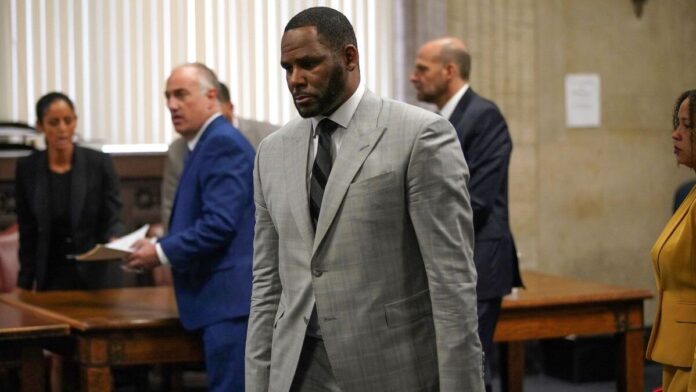
CHICAGO (BN24) — A federal judge has rejected R. Kelly’s emergency request for release from prison after the convicted R&B singer alleged that federal correctional officials orchestrated a plot to murder him while he serves sentences for child sex crimes and racketeering.
U.S. District Judge Martha M. Pacold issued a five-page ruling Friday denying the Grammy-winning artist’s petition for temporary furlough and home detention, determining that federal courts lack jurisdiction to consider his extraordinary claims against prison administrators.
The 58-year-old singer, born Robert Sylvester Kelly, is currently serving concurrent sentences totaling decades at a federal correctional facility in Butner, North Carolina. His legal team had sought emergency intervention based on allegations that prison officials conspired with white supremacist inmates to silence him permanently.
Judge Pacold canceled scheduled oral arguments and instead delivered a written decision that systematically examined and rejected multiple legal avenues through which Kelly’s request might have been considered. The ruling emphasized that jurisdictional limitations must be observed regardless of the severity of a defendant’s claims.
“Jurisdictional limitations must be respected even where, as here, a litigant claims that the circumstances are extraordinary,” Pacold wrote in her decision. “Kelly has not identified, nor is the court aware of, any statute or rule that authorizes the court to exercise jurisdiction. Thus, the court cannot award relief in this case.”
Kelly’s legal filings this month detailed allegations that prison officials solicited white supremacist leaders within the facility to kill him, purportedly to prevent disclosure of information that could damage the reputations of correctional administrators. The singer’s attorneys claimed the alleged conspiracy was designed to silence their client permanently.
According to Kelly’s legal team, prison officials subsequently moved him to solitary confinement and deliberately administered an overdose of medication that required emergency hospitalization and surgical intervention for blood clots. The attorneys characterized these actions as attempted murder disguised as medical treatment.
Judge Pacold noted in her ruling that Kelly provided no substantive evidence to support his serious allegations against federal prison officials. The lack of documentation or corroborating testimony undermined the credibility of his claims, according to the court’s analysis.
Government prosecutors responding to Kelly’s emergency petition dismissed his allegations as a “fanciful conspiracy” lacking any basis in fact. Federal attorneys suggested that the singer’s claims represented an attempt to manipulate the legal system to obtain unwarranted relief from his lawful imprisonment.
Kelly rose to international fame with hits including “I Believe I Can Fly” before his career was derailed by criminal convictions in multiple jurisdictions. A Chicago federal jury found him guilty in 2022 of three charges of producing child sexual abuse images and three charges of enticement of minors for sexual purposes.
The Chicago conviction followed a separate 2021 racketeering and sex trafficking conviction in New York federal court. Kelly received a 20-year sentence in Chicago and a 30-year sentence in New York, with most of the terms running concurrently rather than consecutively.
The singer’s legal team has pursued multiple avenues of appeal since his convictions, including petitions to the U.S. Supreme Court, but has been unsuccessful in overturning the verdicts or reducing the sentences. Kelly has also reportedly sought intervention from President Donald Trump, though no official response has been forthcoming.
The current legal challenge represents Kelly’s latest attempt to secure release from federal custody through extraordinary circumstances claims. His attorneys have argued that the alleged threats to his safety within the prison system justify immediate transfer to home confinement pending resolution of his safety concerns.
Federal courts have historically maintained limited authority to intervene in prison administration matters, particularly when inmates make unsubstantiated claims about treatment or safety within correctional facilities. The separation of powers between judicial and executive branches restricts courts’ ability to micromanage prison operations.
Kelly’s case has drawn significant public attention due to his celebrity status and the serious nature of his criminal convictions involving minors. The singer’s legal troubles have been documented extensively in media coverage and documentary productions that examined allegations spanning decades.
Prison officials at the Butner facility have not publicly responded to Kelly’s allegations, following standard protocols that typically restrict commentary on individual inmate cases. Federal Bureau of Prisons policies generally prohibit detailed discussions of specific prisoner treatment or security measures.
The denial of Kelly’s emergency petition means he will continue serving his federal sentences at the North Carolina facility while his legal team considers additional options for addressing his safety concerns through appropriate administrative channels rather than federal court intervention.
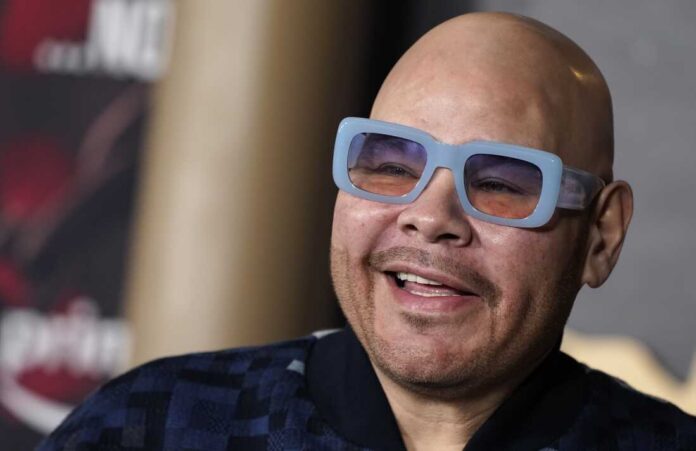
Fat Joe arrives at the premiere of "This Is Me... Now: A Love Story," Tuesday, Feb. 13, 2024, at Dolby Theatre in Los Angeles. (Photo by Jordan Strauss/Invision/AP)
NEW YORK (BN24) — Rapper Joseph “Fat Joe” Cartagena has been accused of sex trafficking, fraud, and coercive abuse in a wide-ranging lawsuit filed Wednesday in the Southern District of New York by a longtime former employee.
Fat Joe arrives at the premiere of “This Is Me… Now: A Love Story,” Tuesday, Feb. 13, 2024, at Dolby Theatre in Los Angeles. (Photo by Jordan Strauss/Invision/AP)
The 157-page federal complaint, filed on June 19 by attorney Tyrone Blackburn, centers on allegations from Terrance “T.A.” Dixon, who claims to have worked with Cartagena in multiple roles from 2005 to 2020. Dixon’s positions reportedly included lyricist, hype man, creative collaborator, and member of the rapper’s security team.
According to the lawsuit, Dixon alleges that Cartagena and his associates operated a “systematic scheme” involving “coercive labor exploitation, financial fraud, sexual manipulation, violent intimidation, and psychological coercion.” He claims he was forced into “humiliating sexual situations” under surveillance and duress, and subjected to threats of abandonment overseas, job loss, or physical harm if he resisted.
Dixon further contends he contributed vocals, lyrics, and creative direction to tracks like “Congratulations” and “Ice Cream” without credit or compensation. The lawsuit also includes disturbing claims that Cartagena and his associates allegedly trafficked underage girls and that Dixon personally witnessed Cartagena engaging in sexual acts with minors as young as 15 and 16 years old.
Due to the nature of the allegations, the court filing includes a trigger warning citing “highly graphic information of a sexual nature, including sexual assault.”
Dixon is seeking over $2 million in unpaid wages and additional damages. He has also accused Cartagena of cultivating a toxic, exploitative environment throughout their years of collaboration.
In response, Fat Joe’s attorney, Joe Tacopina — known for representing high-profile clients including President Donald Trump — categorically denied the allegations, calling the lawsuit “a blatant act of retaliation.” Tacopina noted that Cartagena had already filed a civil suit in April against Dixon and Blackburn, alleging extortion, slander, and defamation.
“The lawsuit filed by Tyrone Blackburn and Terrance Dixon is a desperate attempt to deflect attention from the civil suit we filed first, which exposed their coordinated scheme to extort Mr. Cartagena through lies, threats, and manufactured allegations,” Tacopina said in a statement to ABC News.
He described Dixon as a “disgruntled former employee” attempting to revive a “false claim from 15 years ago,” and accused Blackburn of “a well-documented pattern of abusing the courts” to attract media attention.
Tacopina added, “Mr. Cartagena will not be intimidated. We have taken legal action to expose this fraudulent campaign and hold everyone involved accountable.”
Dixon and Blackburn must file a response to Cartagena’s earlier lawsuit by June 23, with a court hearing scheduled for August 1.
In a sharp rebuttal, Blackburn dismissed Tacopina’s characterization and defended the credibility of his client.
“Joe Tacopina is desperate. He thought only of himself when he erroneously advised his client to take this course,” Blackburn said. “Fat Joe knows what he has done. My client does not drink or use drugs. His memory is sharp and he has receipts. We have three additional pages of predicate acts detailing other forms of trafficking.”
Both attorneys have handled notable celebrity legal battles. Tacopina has represented Trump, while Blackburn has advocated for public figures such as rapper T.I. and music producer Rodney “Darkchild” Jerkins.
As the dueling lawsuits unfold, the case adds another high-profile controversy to the growing list of abuse allegations in the entertainment industry, raising renewed questions about accountability, power dynamics, and artist exploitation.
WASHINGTON (BN24) — President Donald Trump’s administration on Friday ordered sweeping layoffs at Voice of America and other U.S.-funded international media organizations, pressing forward with a controversial plan to drastically downsize the nation’s global broadcasting operations despite active legal challenges and warnings that authoritarian regimes will benefit.
The action, which affects hundreds of employees, is being led by Kari Lake, a staunch Trump ally recently appointed to a senior post at the U.S. Agency for Global Media (USAGM). In a statement, Lake defended the dismissals as a necessary overhaul of “a bloated, unaccountable bureaucracy” and vowed to modernize U.S. global media in alignment with Trump-era foreign policy priorities.
“This is a long-overdue effort to dismantle a bureaucracy that resists reform,” Lake said, pledging to coordinate with the State Department and Congress to reshape the government’s voice abroad.
The mass firings come just months after Trump issued an executive order in March that froze operations at Voice of America (VOA) for the first time since its World War II-era founding in 1942. On Friday, termination notices were issued to 639 staffers following earlier rounds of contractor dismissals and voluntary departure offers. According to Lake, USAGM has now slashed roughly 1,400 positions, leaving only 250 employees across all agencies.
Among those laid off were journalists from VOA’s Persian service, some of whom had briefly been reinstated following the recent Israeli strikes on Iran. Their removal sparked fresh alarm given the timing and geopolitical implications.
The layoffs have triggered a lawsuit by employees who argue that the firings are unlawful, especially given that Congress had already approved funding for the agencies. Plaintiffs Patsy Widakuswara, Jessica Jerreat, and Kate Neeper issued a joint statement condemning the move as a direct attack on American journalistic independence.
“This spells the death of 83 years of independent journalism that upholds U.S. ideals of democracy and freedom around the world,” they wrote. “Moscow, Beijing, Tehran and extremist groups are flooding the information space with anti-American propaganda. Do not cede this ground by silencing America’s voice.”
The backlash has been swift and bipartisan. Senator Jeanne Shaheen, the top Democrat on the Senate Foreign Relations Committee, said the layoffs undermine the very mission of U.S.-backed media and violate legislative intent.
“The decimation of U.S. broadcasting leaves authoritarian propaganda unchecked by U.S.-funded independent media and is a perversion of the law and congressional intent,” Shaheen said in a post on X. “It is a dark day for the truth.”
Trump has repeatedly criticized Voice of America throughout his presidency, arguing that its editorial independence has allowed for critical coverage of his administration. He has long questioned the value of the so-called “editorial firewall,” which legally protects U.S.-funded journalists from government interference.
Of the media arms affected, some outlets like Radio Free Asia and Radio Free Europe — historic instruments of U.S. soft power during the Cold War — are now operating in limited capacity. However, Radio Marti, which targets Cuban audiences and enjoys strong support from Republican Cuban-American lawmakers, has been spared.
Critics argue that the selective nature of the cuts reveals political bias, privileging outlets aligned with Trump’s hardline foreign policy while dismantling others central to U.S. democratic messaging.
As legal battles unfold and employees seek redress, media freedom advocates warn that the gutting of U.S. global media weakens the nation’s ability to combat disinformation and promote free expression abroad — a vulnerability that U.S. adversaries are likely to exploit.
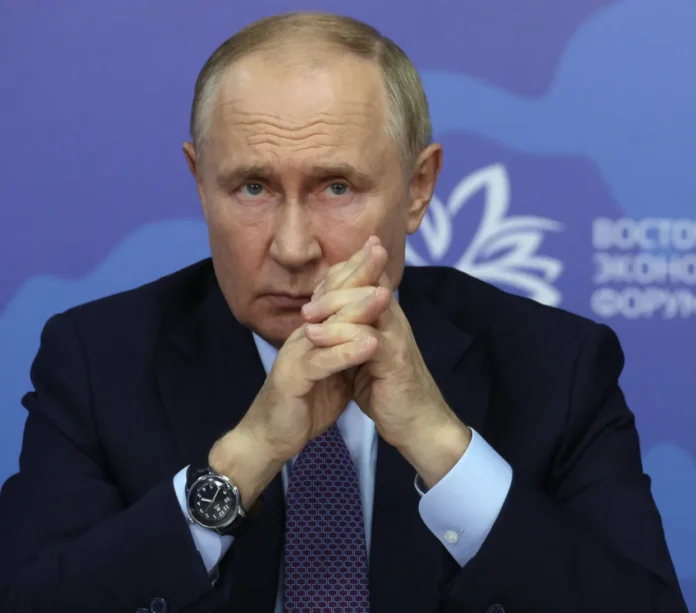
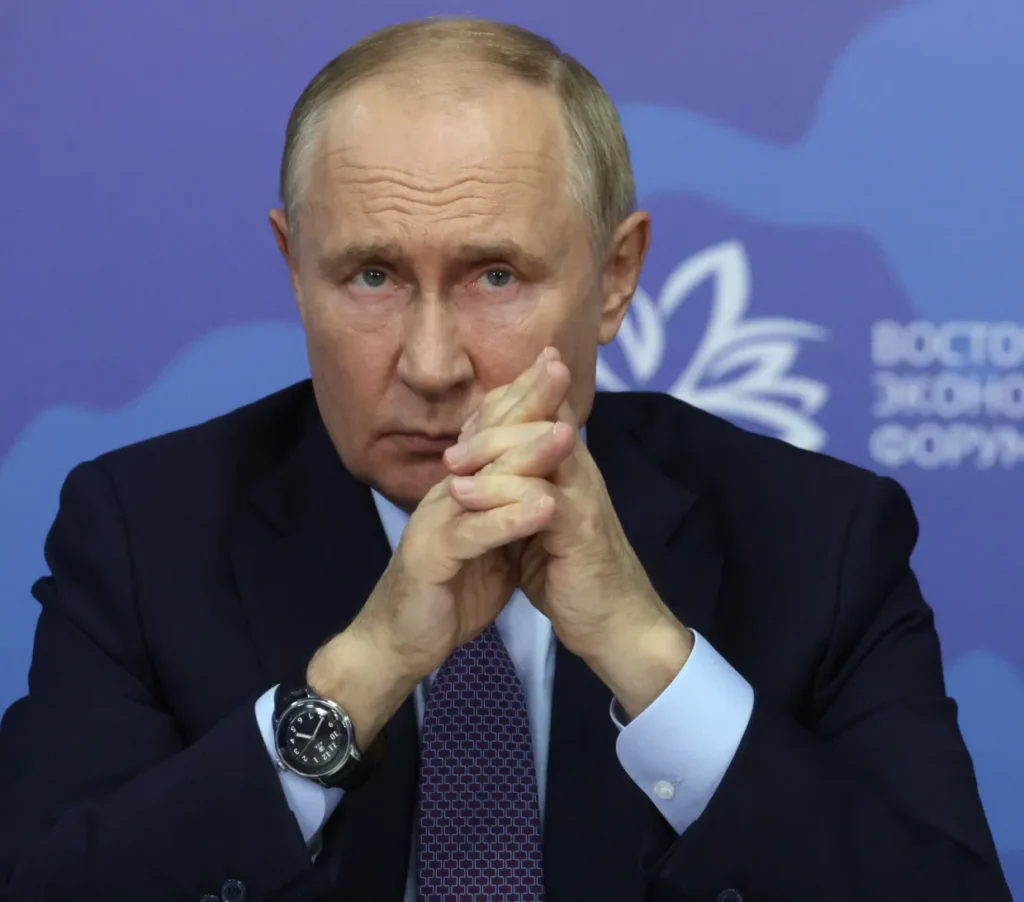
ST. PETERSBURG, Russia (BN24) — Russian President Vladimir Putin on Friday declared that “the whole of Ukraine is ours” in principle, as he hinted that advancing Russian forces could move to capture the Ukrainian city of Sumy in an effort to expand a buffer zone along the northern border.
Speaking at the St. Petersburg International Economic Forum, Putin reinforced his long-standing assertion that Russians and Ukrainians are “one people” and claimed that Ukraine, in its entirety, historically belongs to Russia. “In that sense, the whole of Ukraine is ours,” he said, further escalating rhetoric that Kyiv and Western allies condemn as an attempt to justify illegal territorial seizures.
The comments sparked immediate outrage from Ukraine’s government. Ukrainian Foreign Minister Andrii Sybiha said Putin’s remarks demonstrated “complete disdain for U.S. peace efforts” and accused Moscow of actively pursuing further territorial expansion and destruction.
“While the United States and the rest of the world have called for an immediate end to the killing, Russia’s top war criminal discusses plans to seize more Ukrainian territory and kill more Ukrainians,” Sybiha wrote on X. “Wherever a Russian soldier sets foot, he brings along only death, destruction, and devastation.”
Putin’s comments come as Russian forces continue to make incremental gains in eastern and northeastern Ukraine. Russia now controls roughly 20% of Ukrainian territory, including Crimea, the vast majority of Luhansk, and significant portions of Donetsk, Zaporizhzhia, and Kherson, along with parts of Kharkiv, Dnipropetrovsk, and Sumy.
Despite the sweeping nature of his territorial claims, Putin insisted he was not denying Ukraine’s sovereignty, referencing Ukraine’s 1991 independence declaration after the collapse of the Soviet Union. However, he emphasized that Ukraine had initially committed to neutrality, a point he framed as broken by Kyiv’s current pro-Western stance.
Putin claimed that Russia’s current goal is to create a “buffer zone” along the border to shield Russian territory from Ukrainian attacks. “Next is the city of Sumy, the regional center. We don’t have the task of taking it, but in principle I don’t rule it out,” he said.
Ukrainian President Volodymyr Zelenskyy, in his nightly address, accused Moscow of deliberately prolonging the war and ignoring calls for a ceasefire. “Russia wants to continue the war,” he said, noting that Ukrainian commanders had been discussing Russian threats in the Sumy region. “We are holding them back and eliminating these killers, defending our Sumy region.”
Zelenskyy again rejected the notion that Russians and Ukrainians share a single identity and denounced Putin’s so-called peace terms as tantamount to surrender.
Putin invoked a Russian military proverb to underscore his stance: “Where the foot of a Russian soldier steps, that is ours.” The remark was widely interpreted as a chilling reaffirmation of Russia’s expansionist ambitions.
The Kremlin’s renewed push in Ukraine and Putin’s inflammatory language underscore a growing divide between Russian objectives and international diplomatic efforts. U.S. officials have continued to press for a negotiated end to the conflict, but with both sides dug in and rhetoric intensifying, a diplomatic breakthrough remains elusive.
Cybersecurity researchers have uncovered one of the largest credential exposures in digital history, discovering 30 datasets containing approximately 16 billion compromised login credentials that provide criminals with what experts describe as “unprecedented access” to consumer accounts across major online platforms.
The massive data compilation, identified by researchers at cybersecurity firm Cybernews in a report published this week, includes user passwords and login information for popular services including Google, Facebook, and Apple. The scale of the exposure represents roughly double the current global population, indicating that many affected consumers likely had credentials from multiple accounts compromised.
Cybernews researchers emphasized that the 16 billion figure contains numerous duplicates across the datasets, making it impossible to determine the exact number of individuals or accounts actually exposed. The overlapping nature of the data suggests that many users’ credentials appear multiple times across different compilation sets.
The leaked login information did not originate from a single security incident or company breach, according to the investigation findings. Instead, the data appears to have been collected through multiple security incidents over an extended period before being compiled and temporarily exposed publicly, which allowed Cybernews researchers to identify the compromise.
Cybersecurity experts believe infostealers represent the most likely source of the credential theft. These malicious software programs infiltrate victim devices and computer systems specifically to extract sensitive information including passwords, authentication tokens, and personal data.
The discovery raises significant concerns about the current state of digital security and the vulnerability of consumer accounts across major technology platforms. The massive scale of the credential exposure demonstrates the cumulative impact of ongoing cybercriminal activities targeting individual users and corporate systems.
Questions remain about the current location and control of the leaked login credentials, with security experts unable to determine which criminal organizations or individuals may have accessed the exposed datasets. The temporary public exposure suggests the data may have been distributed among multiple threat actors before being secured or removed from public access.
The credential exposure highlights the evolving threat landscape facing consumers and businesses as data breaches become increasingly common and sophisticated. Cybercriminals continue developing new methods to aggregate stolen information from multiple sources, creating comprehensive databases that enable widespread account compromise.
Security professionals stress that the discovery underscores the critical importance of maintaining proper cyber hygiene practices to protect personal and professional accounts. The massive scale of credential compromise demonstrates that no platform or service can be considered immune to security threats.
Cybersecurity experts recommend immediate action for consumers concerned about potential credential exposure in recent breaches. The first priority involves changing passwords across all accounts, particularly avoiding the use of identical or similar login credentials across multiple platforms and services.
Password management represents a crucial component of effective cybersecurity defense. Users struggling to memorize multiple unique passwords should consider implementing password manager applications or transitioning to passkey authentication systems that provide enhanced security while maintaining usability.
Multi-factor authentication serves as an essential second layer of account protection, requiring additional verification through mobile phones, email addresses, or USB authenticator keys. This security measure can prevent account access even when login credentials have been compromised and are in criminal hands.
The Cybernews discovery follows a pattern of increasingly large-scale data exposures affecting major technology companies and online services. Previous incidents have demonstrated that credential databases often circulate within criminal networks for extended periods before being discovered by security researchers.
Industry analysts note that the compiled nature of this particular exposure reflects the professionalization of cybercriminal operations, with organized groups systematically collecting and organizing stolen data for maximum exploitation potential. The 30 separate datasets suggest sophisticated data management and distribution systems within criminal organizations.
The incident serves as a reminder that digital security requires ongoing vigilance from both individual users and technology companies. Regular password updates, unique credentials for each account, and multi-factor authentication implementation remain the most effective defenses against credential-based attacks.
Security researchers continue monitoring underground markets and criminal forums where stolen credentials are typically traded and sold. The scale of this particular exposure suggests ongoing surveillance will be necessary to track how the compromised information is utilized by cybercriminal organizations.
LAGOS, Nigeria (BN24) — A Federal High Court in Lagos State has sentenced a Nigerian man to 76 years imprisonment following his conviction on multiple charges including child pornography, cyberstalking, money laundering, and fraud in a case that involved international cooperation with Canadian authorities.
Justice Alexander Owoeye delivered the sentence Thursday after finding Olukeye Adeayo Olalekan guilty on all 18 counts brought against him by the Economic and Financial Crimes Commission. The charges encompassed distribution and procurement of child pornography, cyberstalking, retention and concealment of fraudulent funds, and obtaining property under false pretenses.
The prosecution, led by Mrs. Bilkisu Buhari-Bala, established that Olalekan’s criminal activities violated multiple provisions of Nigerian cybercrime and financial crime legislation. The offenses contravened sections of the Cybercrimes Prohibition, Prevention Act of 2015, the Advance Fee Fraud and Other Related Offences Act of 2006, and the Money Laundering Prevention and Prohibition Act of 2022.
Olalekan initially entered a not guilty plea when first arraigned on September 6, 2023, before Justice Y.G. Ringim. The case underwent multiple reassignments, first to Justice Kehinde Ogundare for a de novo hearing, and subsequently to Justice Owoeye, who presided over the final proceedings and sentencing.
During the trial, EFCC counsel Buhari-Bala presented testimony from five witnesses, including two investigators whose evidence proved crucial in securing the conviction. The prosecution revealed that the case originated from an international investigation into the death of a Canadian teenager.
Buhari-Bala told the court that the British Columbia Serious Crime Unit had initiated an inquiry into the murder of 14-year-old Robin Janjus, who was discovered dead at his residence. Digital forensics analysis of the victim’s mobile phone led Canadian authorities to social media accounts operated by the convicted defendant.
“Digital forensics on the victim’s phone led authorities to social media accounts operated by the convict,” the prosecutor explained during proceedings. The investigation revealed that Olalekan had created false online personas to facilitate his criminal activities across international borders.
An undercover operation conducted by Canadian authorities uncovered the defendant’s systematic deception methods. “An undercover operation was subsequently launched, revealing that the convict had posed as a female from North Carolina,” Buhari-Bala stated in court testimony.
The investigation established that Olalekan utilized popular social media platforms including Snapchat and Instagram to carry out his criminal schemes. Through these platforms, he solicited and obtained property under false pretenses while simultaneously engaging in more serious offenses involving minors.
Court evidence revealed that the defendant threatened to transmit nude images of minors as part of his criminal enterprise. The prosecution demonstrated that Olalekan conducted multiple fraudulent transactions involving gift cards and cryptocurrency, creating a complex web of financial crimes spanning international jurisdictions.
The case highlighted the growing challenge of transnational cybercrime, with Nigerian authorities working closely with Canadian law enforcement to build the prosecution case. The international cooperation proved essential in gathering digital evidence and establishing the connection between the defendant’s online activities and the Canadian investigation.
Justice Owoeye’s comprehensive sentencing reflected the severity and scope of the defendant’s criminal conduct. The 76-year cumulative sentence represents one of the most substantial penalties handed down by Nigerian courts for cybercrimes involving child exploitation and international fraud schemes.
The conviction demonstrates the EFCC’s commitment to prosecuting complex cybercrime cases that cross international boundaries. The commission’s successful prosecution required extensive collaboration with foreign law enforcement agencies and sophisticated digital forensics capabilities.
Legal experts note that the case establishes important precedent for Nigerian courts handling cybercrime prosecutions that involve international victims and digital evidence. The substantial sentence serves as a deterrent to other potential offenders engaged in similar criminal activities.
The conviction also underscores the vulnerability of young people to online predators and the importance of international cooperation in combating crimes that exploit digital platforms to harm minors. The case demonstrates how digital forensics can trace criminal activity across multiple jurisdictions and social media platforms.
Nigerian authorities continue to strengthen their capacity to investigate and prosecute sophisticated cybercrimes as the country works to address its reputation as a source of international fraud schemes. The EFCC’s successful prosecution of this case represents ongoing efforts to hold perpetrators accountable for crimes that damage Nigeria’s international standing.
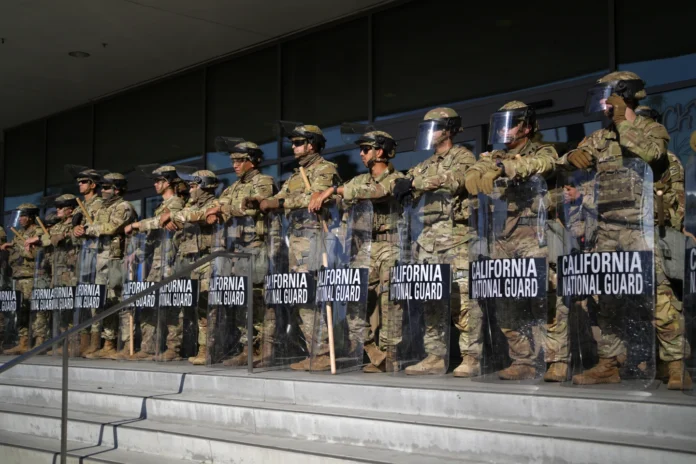
SAN FRANCISCO (BN24) — A federal appeals court ruled Thursday that President Donald Trump may retain control of National Guard troops he deployed to Los Angeles following violent protests over immigration enforcement operations, delivering a significant victory for presidential authority over state military forces.
The 9th U.S. Circuit Court of Appeals unanimously reversed a lower court decision that had found Trump acted illegally when he federalized California National Guard units without permission from Governor Gavin Newsom. The deployment marked the first instance since 1965 that a president activated state National Guard forces over gubernatorial opposition.
The three-judge panel concluded that Trump likely exercised lawful authority in seizing control of the California National Guard, determining that the administration presented sufficient evidence to justify the extraordinary federal intervention. The court cited documented violence by protesters against federal officers and property as grounds supporting the president’s decision.
“The undisputed facts demonstrate that before the deployment of the National Guard, protesters ‘pinned down’ several federal officers and threw ‘concrete chunks, bottles of liquid, and other objects’ at the officers,” the appeals court wrote in its decision. “Protesters also damaged federal buildings and caused the closure of at least one federal building. And a federal van was attacked by protesters who smashed in the van’s windows.”
The ruling emphasized that while presidential power to commandeer state military forces is not unlimited, the federal government’s interest in preventing such incidents constitutes a significant justification for intervention. The court found that documented attacks on federal personnel and facilities provided a defensible rationale for Trump’s actions.
Additionally, the appeals panel determined that even if the federal government failed to provide required notification to California’s governor before federalizing the National Guard, Newsom lacked authority to veto the presidential order once issued.
Trump celebrated the decision on his Truth Social platform, characterizing the ruling as a “BIG WIN” and suggesting broader implications for federal intervention in other jurisdictions. “All over the United States, if our Cities, and our people, need protection, we are the ones to give it to them should State and Local Police be unable, for whatever reason, to get the job done,” the president wrote.
Governor Newsom expressed disappointment with the court’s decision to allow Trump continued control over California’s National Guard forces while acknowledging one favorable aspect of the ruling. “The court rightly rejected Trump’s claim that he can do whatever he wants with the National Guard and not have to explain himself to a court,” Newsom stated. “The President is not a king and is not above the law.”
The Democratic governor vowed to continue challenging what he characterized as “Trump’s authoritarian use of U.S. military soldiers against citizens,” indicating the legal battle will proceed despite the appeals court setback.
The case originated when Newsom filed suit to block Trump’s command of California National Guard units, initially securing a favorable ruling from U.S. District Judge Charles Breyer in San Francisco. Judge Breyer had determined that Trump exceeded his legal authority, finding that federal law permits presidential control only during “rebellion or danger of a rebellion.”
“The protests in Los Angeles fall far short of ‘rebellion,'” Breyer wrote in his original decision. The judge, appointed by former President Bill Clinton and brother to retired Supreme Court Justice Stephen Breyer, concluded that the circumstances did not meet the statutory threshold for federal intervention.
The Trump administration challenged Breyer’s ruling, arguing that courts cannot second-guess presidential decisions regarding national security and public order. The administration quickly obtained a temporary halt from the appeals court, allowing continued federal control during the litigation process.
Two of the three appeals court judges hearing the case were appointed by Trump during his first presidential term. During oral arguments Tuesday, all three judges indicated that federal law grants presidents considerable latitude in deploying military forces and suggested courts should exercise restraint in reviewing such decisions.
The ruling carries broader implications for presidential authority to deploy soldiers within the United States, particularly as Trump has directed immigration officials to prioritize deportation operations in other Democratic-controlled cities. The decision establishes precedent for federal intervention in situations where state and local authorities oppose presidential deployment of National Guard forces.
Trump has argued that the military deployment was necessary to restore public order in Los Angeles, while Newsom contended that the federal intervention inflamed existing tensions, undermined local authority, and wasted public resources. Immigration-related protests in the area have reportedly diminished in recent weeks.
The appeals court decision ensures that California National Guard units will remain under federal command as the underlying lawsuit continues through the judicial system. The case represents a significant test of the balance between federal executive power and state authority over military forces during domestic unrest.
Legal experts suggest the ruling may influence future disputes over presidential deployment of National Guard forces, particularly in situations where governors oppose federal intervention in their states during civil disturbances or emergency situations.
LOS ANGELES (BN24) — Federal and state authorities have charged 19 members and associates of the Mexican Mafia prison gang in connection with an elaborate conspiracy to murder a prominent social media rapper who allegedly offended the criminal organization.
The multi-jurisdictional investigation, announced Wednesday by the Los Angeles County District Attorney’s Office, uncovered a coordinated assassination plot that spanned from December 2022 through recent months, involving inmates within California’s prison system, the Los Angeles County Jail, and gang associates operating throughout Southern California.
Prosecutors revealed that a high-ranking Mexican Mafia member, identified by co-conspirators as “The Elegant One,” placed the unidentified rapper on a “green-light” list, effectively marking him for death due to perceived slights against the organization. The victim’s identity remains protected by authorities, though officials confirmed he survived multiple attempts on his life and remains alive.
The conspiracy involved sophisticated tracking methods, with gang members monitoring the rapper’s social media presence and conducting surveillance at his family’s residence in attempts to locate and eliminate the target. The assassination efforts persisted even after the rapper was arrested and incarcerated in the Los Angeles County Jail.
According to federal prosecutors, Mexican Mafia leadership figures known as “shotcallers” coordinated the murder plot from their prison cells, communicating with counterparts in state correctional facilities and street-level associates to confirm the execution order. Gang members classified as “Sureños” or “soldiers” within the jail system subsequently attacked the rapper while he was in custody.
The victim was hospitalized following the jail assault but survived the attack. Prosecutors allege the gang renewed their efforts to locate and kill the rapper after his release from medical care, continuing to monitor his movements through online platforms and social media surveillance.
“Today’s successful operation resulting in state charges is just the latest blow to the Mexican Mafia hierarchy,” said Donald Alway, Assistant Director in Charge of the FBI’s Los Angeles Field Office. “This organization operates not only behind bars, but also poses a threat to our communities.”
The charges were filed following an extensive multi-agency investigation led by the Los Angeles County Sheriff’s Department Major Crimes Bureau in partnership with the FBI’s San Gabriel Valley Safe Streets Task Force. The coordinated law enforcement response resulted in multiple arrests and the identification of one remaining fugitive.
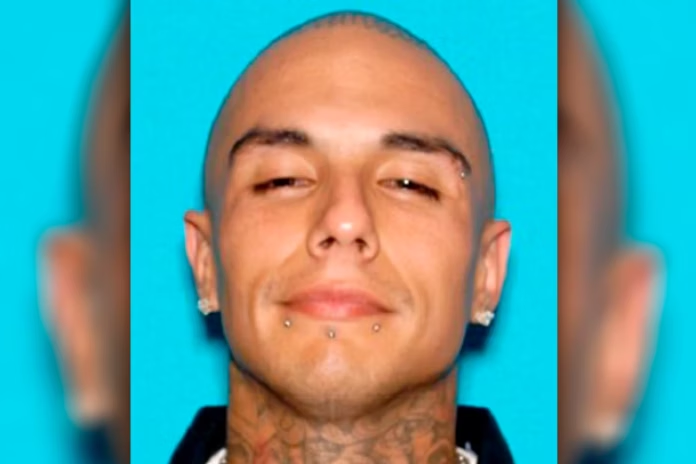
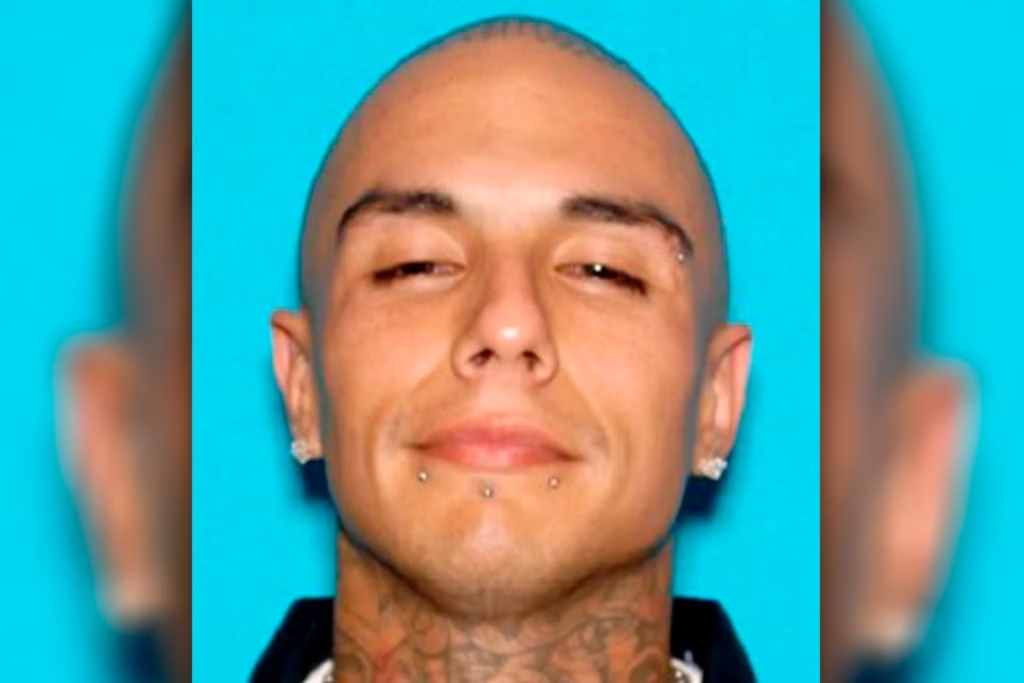
Joshua Euan, 37, of Paramount, remains at large and is actively sought by federal authorities. The FBI has released his photograph to the public and requested anyone with information regarding his whereabouts to contact the agency at 1-800-CALL-FBI or submit tips through the FBI’s online portal.
Seven suspects were arrested during coordinated raids at their residences on June 18, 2025. Those taken into custody include Manuel Quintero, 49, of Paramount; Patricia Esquivel, 45, of Palmdale; Dominga Gonzalez, 66, of Bellflower; Jude Valle, 48, of Pomona; Carl Brown, 31, of Gardena; Glendy Orozco-Lechuga, 29, of Gardena; and Sanjuana Macias, 26, of Los Angeles.
Eleven additional defendants were already in custody on unrelated charges when the conspiracy case was filed. These individuals include Guiseppe Leyva, 34, of La Puente; Jacob David, 39, of Coachella; Manuel O’Campo, 40, of Compton; Jonathan Quevedo, 43, of Los Angeles; Onesimo Gonzalez, 44, of Paramount; Michael Ortiz, 29, of Norwalk; Andrew Shinaia, 24, of Los Angeles; Adrian Bueno, 33, of San Fernando; Larry Sanchez, 31, of Gardena; Juan Meza, 53, of Compton; and Jorge Zavala, 31, of Norwalk.
Los Angeles County Sheriff Robert G. Luna emphasized the significance of disrupting the murder conspiracy before additional violence occurred. “The relentless efforts of our Major Crimes Bureau and our law enforcement partners helped disrupt a murder conspiracy and prevent further violence,” Luna stated. “This case underscores the dangerous influence of prison gangs beyond prison walls.”
District Attorney Nathan Hochman warned that organized criminal activity extending from correctional facilities would face aggressive prosecution. “We will not tolerate organized crime using our jails and prisons as a haven for violence,” Hochman declared during the announcement.
The district attorney emphasized the broader implications of the case for correctional system integrity. “When individuals on the outside conspire with those inside to carry out attacks, they threaten the safety and integrity of our correctional system,” Hochman explained. “That criminal activity may scale over prison walls, but I will make it my mission to ensure it ends at the front door, with an arrest.”
The investigation highlights the Mexican Mafia’s continued ability to coordinate criminal activities across multiple jurisdictions despite incarceration of key leadership figures. The organization’s influence extends from California’s state prison system to county jails and street-level criminal networks throughout Southern California.
Authorities stressed that every incarcerated individual deserves protection from targeted violence while serving their sentences. The successful disruption of this murder conspiracy represents ongoing efforts to combat organized crime’s infiltration of correctional facilities and prevent gang-related violence from extending into surrounding communities.