Home Blog Page 358

Trump Expresses New Doubts Over Putin’s Willingness to End Ukraine War After Previously Saying Deal Was Close

ROME — President Donald Trump on Saturday cast new doubt over the possibility of a swift end to the war in Ukraine, saying he questions whether Russian President Vladimir Putin truly wants peace, just one day after he had suggested a deal was near.

“There was no reason for Putin to be shooting missiles into civilian areas, cities and towns, over the last few days,” Trump wrote in a post on social media, as he traveled back to the United States following Pope Francis’ funeral at the Vatican. Trump met briefly with Ukrainian President Volodymyr Zelenskyy on the sidelines of the ceremony.

Hinting at possible new economic measures against Moscow, Trump added, “It makes me think that maybe he doesn’t want to stop the war, he’s just tapping me along, and has to be dealt with differently, through ‘Banking’ or ‘Secondary Sanctions?’ Too many people are dying!!!”

Trump’s public airing of doubts marks a stark shift from his comments just one day earlier, when he had sounded optimistic about peace prospects. Speaking after a meeting between his special envoy, Steve Witkoff, and Putin in Moscow, Trump had said Ukraine and Russia were “very close to a deal.”

The reversal underscores growing frustrations within the Trump administration as efforts to broker an end to the conflict intensify. The war, launched by Russia’s full-scale invasion of Ukraine in February 2022, has dragged on with heavy casualties and little sign of lasting peace.

The encounter between Trump and Zelenskyy inside St. Peter’s Basilica — their first since a heated Oval Office exchange earlier this year — lasted about 15 minutes. It ended without a second, scheduled follow-up meeting due to tight travel schedules, according to Zelenskyy’s spokesperson, Serhii Nykyforov.

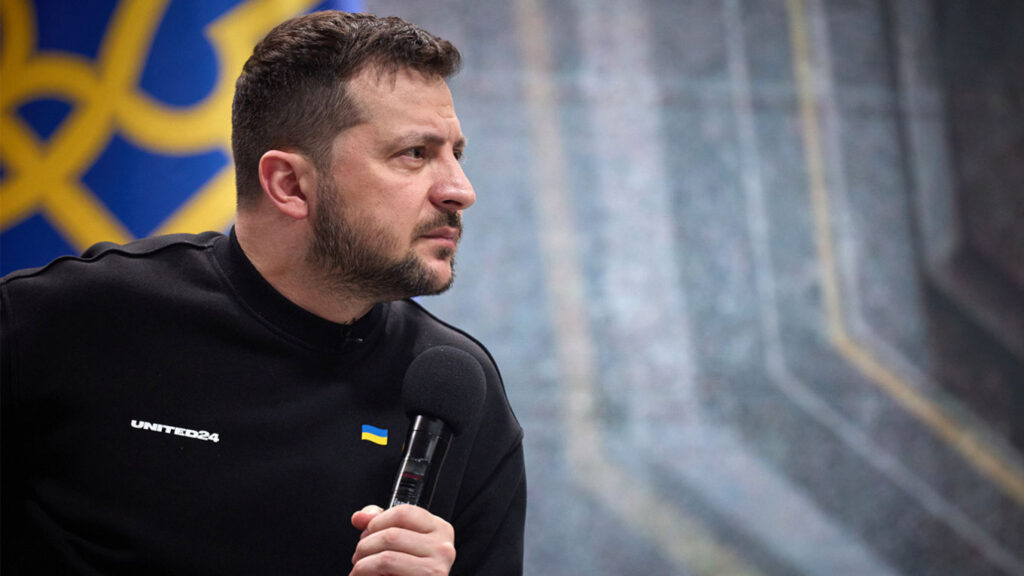
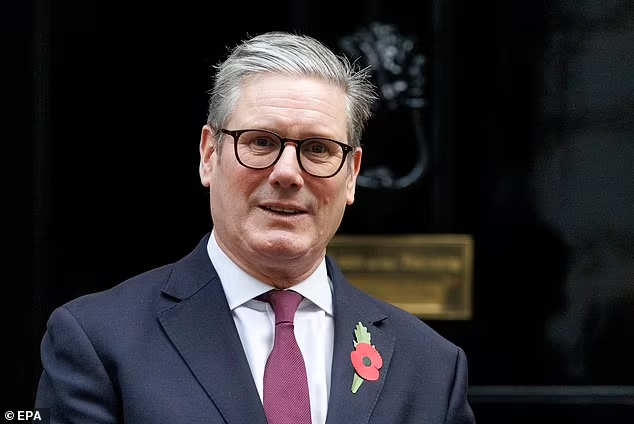
After the meeting, Zelenskyy characterized the conversation as a “good meeting,” stating on social media, “We discussed a lot one on one. Hoping for results on everything we covered. Protecting lives of our people. Full and unconditional ceasefire. Reliable and lasting peace that will prevent another war from breaking out.” He also met separately with British Prime Minister Keir Starmer.

The White House similarly called the discussion “very productive,” highlighting the symbolism of the talks taking place during Pope Francis’ funeral, a leader who had long championed calls for peace between Ukraine and Russia.

Trump had arrived in Italy on Friday evening, immediately calling for “very high level talks” between Ukraine and Russia. However, neither Putin nor Zelenskyy publicly responded to his proposal for direct negotiations.

Although Zelenskyy has accepted an American proposal for an initial 30-day ceasefire, Russia has yet to agree, continuing to launch strikes on Ukrainian cities. Trump’s call for restraint came Thursday after a deadly Russian missile barrage on Kyiv, during which he publicly urged Putin to “STOP!”

Trump’s wavering optimism comes amid internal U.S. political pressure. Senator Chuck Grassley, R-Iowa, urged Trump on Friday to impose “the toughest of sanctions” against Russia, warning that Putin was “playing America as a patsy.” Trump has so far hesitated, even as he announced sweeping new global tariffs this month that notably excluded Russia.

Meanwhile, Putin, facing an International Criminal Court arrest warrant for alleged war crimes, did not attend the Vatican funeral.

Zelenskyy has maintained pressure for real action, saying Friday night that “very significant meetings may take place” in the coming days. He repeated calls for an unconditional ceasefire, asserting that “real pressure on Russia is needed so that they accept either the American proposal to cease fire and move towards peace, or our proposal.”

Diplomatic efforts continue despite growing tensions. Yet complicating matters further are Trump’s recent public statements on Ukraine’s territorial claims. In an interview with Time magazine published Friday, Trump said that Crimea — which Russia annexed in 2014 — should remain under Russian control, calling Ukrainian efforts to reclaim it “unrealistic.”

“Everybody understands that it’s been with them for a long time,” Trump said during the interview conducted Tuesday at the White House.

Russia also currently occupies parts of the Luhansk, Donetsk, Zaporizhzhia, and Kherson regions following its 2022 invasion, all territories Kyiv has pledged to regain.

As diplomatic momentum builds, Trump’s shifting tone on Putin and the war underscores both the urgency and fragility of negotiations aimed at ending Europe’s deadliest conflict in decades.

 Senior Russian General Killed in Car Bomb Near Moscow as Kremlin Blames Ukraine

MOSCOW — A senior Russian military official was killed Friday in a car bomb attack outside Moscow, in what Kremlin authorities quickly labeled an act of terrorism and blamed on Ukraine, further deepening tensions between the two countries as the war enters its fourth year.

Lt. Gen. Yaroslav Moskalik, a high-ranking figure in Russia’s armed forces, was fatally wounded when an explosive device detonated inside a Volkswagen Golf in the city of Balashikha, a suburban district located just east of the capital. According to Svetlana Petrenko, spokesperson for Russia’s federal Investigative Committee, the bomb was a homemade device packed with shrapnel and appears to have been designed for maximum lethality.

“The detonation of the device resulted in the death of Lt. Gen. Moskalik at the scene,” Petrenko said in a televised statement. She confirmed that a criminal investigation had been launched into the explosion, which she described as an act of terrorism.

Video released by Russian investigators showed the scorched remains of the vehicle on a desolate road, its hood blown open and the cabin reduced to charred debris. It was not immediately clear whether Moskalik was inside the car at the time of the explosion or in close proximity when the device was triggered.

Kremlin spokesperson Dmitry Peskov did not hesitate to implicate Kyiv during a press briefing, stating, “The Kyiv regime once again shows its nature,” and accusing Ukrainian forces of continuing what he called “terrorist activity” on Russian soil. However, Moscow has not formally presented evidence linking Ukraine to the attack, and Ukrainian officials have not commented on the accusation.

Maria Zakharova, spokesperson for the Russian Foreign Ministry, echoed the allegations, characterizing the bombing as a “terrorist act,” and claimed the attack fits a broader pattern of operations targeting Russian officials and military figures.

“This is not an isolated incident,” Zakharova said. “We have seen repeated attempts to assassinate Russian personnel, both military and civilian, as part of Kyiv’s hybrid warfare strategy.”

Moskalik is the latest in a string of high-profile Russian figures to be assassinated or targeted since the start of the war in February 2022. The list includes pro-war commentator Darya Dugina and former submarine commander Stanislav Rzhitsky, both of whom were killed in bombings or shootings that Moscow has attributed to Ukrainian intelligence or its affiliates.

Authorities said the investigative team assigned to Moskalik’s case includes forensic analysts, bomb specialists, and top federal law enforcement personnel. The city of Balashikha, home to numerous military facilities, has been placed under heightened security.

The car bombing comes as Russia intensifies its aerial assault on Ukrainian cities. Overnight Thursday, a barrage of Russian missiles killed at least 12 civilians in Kyiv, drawing sharp condemnation from President Donald Trump.

“I am not happy with the Russian strikes on KYIV. Not necessary, and very bad timing,” Trump wrote on his Truth Social platform. In a direct appeal to Russian President Vladimir Putin, Trump added: “Vladimir, STOP! Let’s get the Peace Deal DONE!”

Speaking to reporters Thursday, Trump expressed confidence that Putin would heed his call to end the strikes and reiterated his belief that both sides ultimately desire peace. However, Trump also vented frustration over Ukrainian President Volodymyr Zelenskyy’s continued refusal to consider territorial concessions as part of a potential ceasefire.

That position was challenged Friday by Kyiv Mayor Vitali Klitschko, who publicly stated that Ukraine may need to contemplate giving up some territory to achieve peace — a rare public deviation from Ukraine’s official stance.

The remarks drew swift criticism from Zelenskyy’s office. Serhiy Leshchenko, a senior adviser, called Klitschko’s comments “counterproductive” during an interview with the BBC, emphasizing that the Ukrainian government remains committed to reclaiming all occupied territories, including Crimea.

Meanwhile, Russian state media released new footage of U.S. envoy Steve Witkoff’s latest meeting with Putin in Moscow. Witkoff, who has emerged as the central figure in President Trump’s Ukraine peace push, has held multiple closed-door sessions with the Russian leader over the past several months.

With another high-ranking Russian general now dead and both sides engaged in parallel diplomatic and military maneuvers, the path to a negotiated resolution remains uncertain — but the stakes, and the death toll, continue to rise.

Russia Claims Progress in Ukraine Talks as Trump Envoy Meets Putin in Moscow

MOSCOW — The Kremlin announced Friday that its positions with Washington have moved closer on resolving the war in Ukraine, following a three-hour meeting between Russian President Vladimir Putin and Steve Witkoff, U.S. President Donald Trump’s envoy and point man for peace negotiations.

The two men met in Moscow on Thursday, their third extended session since Trump designated Witkoff to spearhead diplomatic efforts to bring an end to the war, now in its fourth year. Russian state media released footage showing Putin and Witkoff exchanging pleasantries and handshakes before beginning closed-door discussions at the Kremlin.

Kremlin foreign policy adviser Yuri Ushakov, who participated in the meeting, described the dialogue as “constructive and very useful,” emphasizing the potential for renewed diplomacy.

“This conversation allowed Russia and the United States to further bring their positions closer together, not only on Ukraine but also on a number of other international issues,” Ushakov said in a briefing. “As for the Ukrainian crisis itself, the discussion focused in particular on the possibility of resuming direct negotiations between representatives of the Russian Federation and Ukraine.”

No formal talks between Russia and Ukraine have occurred since the early weeks of the conflict, which erupted after Putin launched a full-scale invasion of Ukraine in February 2022.

Witkoff’s visit came amid growing diplomatic friction. Ukrainian and European officials have expressed resistance to aspects of Washington’s evolving proposals, particularly elements that suggest concessions to Moscow, including recognition of its hold over Crimea.

President Trump, however, took to his Truth Social platform shortly after the Kremlin meeting, characterizing the moment as a potential breakthrough. “They are very close to a deal, and the two sides should now meet, at very high levels, to ‘finish it off,’” he wrote, adding that “most of the major points are agreed to.”

Trump has repeatedly pressed for a rapid resolution to the war and has warned that the U.S. could abandon the diplomatic process if progress stalls. “I won’t be happy, let me put it that way. Things will happen,” he told reporters Thursday when asked about Russia’s stance.

Following a deadly Russian missile barrage that killed 12 civilians in Kyiv the same day, Trump posted a blunt message to Putin on social media: “Vladimir, STOP! Let’s get the Peace Deal DONE!”

Russia, meanwhile, has signaled cautious openness to an agreement. Foreign Minister Sergey Lavrov said the government is “ready to reach a deal” but stressed the need to resolve certain outstanding “specific points.” He told CBS News that both sides are continuing to fine-tune those areas.

Among the more controversial proposals under consideration is the idea of freezing the front lines and acknowledging Russian control over Crimea, which Moscow annexed in 2014. Trump was quoted in a TIME magazine interview published Friday as saying, “Crimea will stay with Russia. And Zelenskyy understands that.”

Ukraine’s government, however, has categorically rejected ceding any territory. President Volodymyr Zelenskyy reiterated that Kyiv’s position remains unchanged. “The constitution of Ukraine says that all the temporarily occupied territories … belong to Ukraine,” Zelenskyy told reporters in the capital Friday.

The path to peace remains uncertain as competing visions for a settlement continue to clash. But the Kremlin’s remarks about progress—coupled with Trump’s assertive push—suggest both sides are testing the boundaries of a possible endgame.

 Former Taliban Commander Pleads Guilty to Kidnapping U.S. Journalist and Role in Attacks on American Troops

NEW YORK — A former Taliban commander has pleaded guilty to taking American journalist David Rohde and two Afghan nationals hostage in Afghanistan and Pakistan in 2008 and 2009, according to the U.S. Department of Justice. The man, Haji Najibullah, 49, also admitted responsibility for orchestrating deadly attacks against U.S. military forces in Afghanistan during the same period.

Najibullah, an Afghan national, entered his guilty plea in a U.S. federal court after previously contesting the charges. He now faces the possibility of life in prison for his role in high-profile hostage-taking and coordinated assaults that resulted in American deaths.

Initially charged in 2020, Najibullah was extradited to the United States to stand trial for the kidnapping of Rohde, a former Reuters correspondent who was abducted along with Afghan journalist Tahir Ludin and their driver, Asadullah Mangal. The men were held for over seven months before Rohde and Ludin escaped captivity in Pakistan. Mangal was released separately.

The Justice Department confirmed that Najibullah has also changed his plea to guilty in a separate terrorism case involving fatal attacks on U.S. troops between 2007 and 2009. Prosecutors cited his direct leadership of Taliban fighters who ambushed American and coalition forces, underscoring his active role in orchestrating violence against the U.S. military.

“These terrorist attacks demonstrated utter disregard for humanity, and Najibullah finally admitted to his role in these premature deaths of our citizens,” said Christopher G. Raia, FBI Assistant Director in Charge of the New York Joint Terrorism Task Force. “Today’s plea emphasizes the FBI’s unwavering resolve to disrupt all acts of terrorism and ensure that anyone who targets our country will be held accountable.”

During a past interview with a French journalist, Najibullah boasted about specifically targeting U.S. and French forces, according to federal authorities, further solidifying the government’s case against him. Prosecutors said that his militant actions and ideological alignment with the Taliban made him a persistent threat throughout the U.S. war in Afghanistan.

U.S. Attorney Jay Clayton of the Southern District of New York stated that his office remains committed to pursuing individuals who endanger American lives—no matter where in the world the crimes occur.

“This plea sends a clear message that the United States will not forget or forgive acts of terror against its citizens,” Clayton said. “We will continue to pursue those responsible, hold them accountable, and bring them to justice—even years after the crimes were committed.”

Najibullah remains in federal custody while awaiting sentencing, with a date yet to be scheduled. His conviction marks a significant legal milestone in U.S. efforts to prosecute foreign nationals involved in acts of terrorism against Americans overseas.

 Luigi Mangione Pleads Not Guilty as Prosecutors Move Forward with Death Penalty Pursuit

NEW YORK — Luigi Mangione pleaded not guilty Friday to federal charges tied to the fatal shooting of health insurance executive Brian Thompson, a day after prosecutors formally notified the court of their intention to seek the death penalty. The dramatic case—rooted in a brazen attack outside a midtown Manhattan hotel—has drawn national attention, sparking both condemnation and sympathy.

Standing in a packed federal courtroom in lower Manhattan, Mangione, 26, wore a tan, jail-issued T-shirt as he leaned into a microphone and delivered his plea. “Not guilty,” he said firmly in response to U.S. District Judge Margaret Garnett’s question.

The plea comes in response to federal charges related to the Dec. 4 shooting of Thompson, the former CEO of UnitedHealthcare, a subsidiary of UnitedHealth Group. Mangione had already entered a not guilty plea to similar state charges in New York in earlier proceedings.

The case took a new turn earlier this month when U.S. Attorney General Pam Bondi announced the Justice Department’s decision to pursue capital punishment. That intent was officially registered Thursday evening in a court filing submitted by the Manhattan U.S. Attorney’s Office.

Mangione’s legal team swiftly pushed back, calling Bondi’s April 1 announcement “unapologetically political” and alleging that it violated long-standing federal protocols governing death penalty deliberations. Judge Garnett set a June 27 deadline for defense attorneys to submit a formal brief challenging the government’s pursuit of the death penalty. A tentative trial date will be scheduled next year, following Mangione’s next court appearance on Dec. 5.

During Friday’s hearing, Garnett issued a stern reminder about limitations on public commentary that could compromise Mangione’s right to a fair trial. She directed prosecutors to pass her warning to Manhattan U.S. Attorney Jay Clayton, with instructions that it be conveyed to Bondi as well.

The fatal shooting of Thompson unfolded outside a hotel where UnitedHealth executives had gathered for an investor event. Authorities say Mangione approached Thompson in public and opened fire before fleeing the scene, triggering a five-day manhunt that riveted the nation.

According to investigators, shell casings recovered at the scene bore the words “deny,” “delay,” and “depose”—a reference some have interpreted as a critique of health insurance industry practices, particularly the alleged denial of life-saving treatments or delays in care.

While public officials swiftly condemned the attack as an act of violence against the health care system, some Americans have expressed sympathy for Mangione, viewing his actions as a statement against the U.S. health insurance industry and the high cost of care. Prosecutors acknowledged this controversial response in their filing, stating that Mangione posed a continued threat to public safety. “He expressed an intent to target an entire industry, and rally political and social opposition to that industry, by engaging in an act of lethal violence,” they wrote.

If convicted in the federal trial, Mangione would face a separate sentencing phase in which the jury must unanimously recommend capital punishment for it to be imposed. The presiding judge would then be obligated to deliver that sentence.

For now, Mangione remains in federal custody at the Metropolitan Detention Center in Brooklyn, awaiting a legal process that is expected to draw further national scrutiny as it unfolds.

 Ex-Rep. George Santos Sentenced to Over 7 Years in Prison for Fraud, Identity Theft

0

CENTRAL ISLIP, N.Y. — Former U.S. Rep. George Santos was sentenced Friday to more than seven years in federal prison, bringing a stunning end to one of the most scandal-ridden tenures in modern congressional history. The New York Republican, who was expelled from Congress in disgrace, sobbed in court as he was sentenced to 87 months for wire fraud and aggravated identity theft.

Santos, 36, pled guilty last summer after admitting to a series of elaborate schemes to defraud donors, steal identities—including those of his own family members—and use campaign funds for personal enrichment. In a tearful statement delivered in court near his former district on Long Island, Santos said he was “humbled” by the process and acknowledged betraying the public trust. “I cannot rewrite the past,” he said. “But I can control the road ahead.”

U.S. District Court Judge Joanna Seybert, however, remained unconvinced. “Where is your remorse? Where do I see it?” Seybert asked, rejecting a plea for leniency and pointing to a pattern of deflection. “It’s always someone else’s fault.”

Santos is expected to report to prison on July 25. He declined to speak with reporters following the hearing, though he had earlier told The Associated Press he was “ready to face the music.”

The sentence concludes a political downfall that began soon after his 2022 election, when reports surfaced that Santos had fabricated large portions of his resume and personal background. Though he successfully flipped a well-off congressional district encompassing parts of Queens and Long Island, scrutiny followed almost immediately. Journalists and investigators uncovered false claims ranging from his professional experience on Wall Street to his education and ethnicity.

While campaigning, Santos portrayed himself as a seasoned businessman with Jewish heritage and an impressive real estate portfolio. In reality, he had not attended the schools he listed, did not hold the jobs he claimed, and had misled the public about his family background. He admitted to calling himself “Jew-ish” based on distant ancestry, despite being Catholic.

The revelations snowballed into legal and congressional investigations. Prosecutors said Santos used stolen identities—including those of a woman with brain damage and two elderly men—to make fraudulent campaign contributions. U.S. Attorney John Durham said outside court that Santos had used his candidacy “for his own enrichment and financial benefit” from the very beginning.

Santos was also found to have collected unemployment benefits in New York while working for a Florida company. After entering Congress, he co-sponsored legislation to fight unemployment fraud.

In court, prosecutor Ryan Harris described Santos’ actions as cold and calculated, highlighting the vulnerability of his victims. His defense attorney, Andrew Mancilla, pleaded for a lighter sentence of two years, portraying Santos as a man shaped by childhood trauma and lifelong rejection. “He built the man he wanted to be, not who he was,” Mancilla said, calling his client misunderstood and hated by the public. “Deep down, he is warm, kind, caring, and thoughtful.”

Judge Seybert disagreed, emphasizing that Santos had shown little accountability despite his guilty plea. The court also ordered Santos to pay nearly $580,000 in restitution and penalties.

Outside the courthouse, Nassau County District Attorney Anne Donnelly, a fellow Republican, condemned Santos for deceiving voters and law enforcement alike. “He told lie after lie until it caught up with him,” she said. “Until we caught up with him and exposed him for what he truly was: an opportunist and a fraud.”

Despite the legal consequences, Santos had embraced his notoriety in recent months. He launched a podcast, “Pants on Fire with George Santos,” and earned hundreds of thousands of dollars on the video platform Cameo by selling customized messages. Even as sentencing loomed, he promoted his Cameo account, urging followers to “think ahead” for celebrations and sign-offs with heart emojis.

While Santos continued to voice admiration for President Donald Trump and the current administration, he said he had no intention of requesting clemency.

His sentencing closes the chapter on a political career defined by deception, ending with a federal prison term and a legacy as one of the most infamous figures ever to serve in the U.S. House of Representatives.

FBI Arrests Milwaukee Judge Accused of Helping Defendant Evade Immigration Arrest

MILWAUKEE — The FBI on Friday arrested Milwaukee County Circuit Court Judge Hannah Dugan on allegations that she helped a man avoid federal immigration authorities, marking a dramatic escalation in the Trump administration’s ongoing conflict with local officials over its hardline immigration policies.

Federal authorities claim Dugan assisted a defendant in evading arrest by U.S. Immigration and Customs Enforcement agents last week, guiding the man and his attorney out of her courtroom through a restricted jury door after learning ICE was present inside the courthouse. The man, identified as Eduardo Flores-Ruiz, was later apprehended outside the building after a foot chase.

The charges, which include obstructing justice and concealing a person to prevent arrest, have deepened already fraught tensions between the White House and local jurisdictions perceived to be hindering federal immigration enforcement. The arrest comes amid broader legal battles between President Donald Trump’s administration and the federal judiciary over deportation policies and executive authority.

According to an affidavit filed by the FBI, Dugan was informed about ICE agents in the courthouse by her clerk, who had been alerted by an attorney. The document describes Dugan as reacting angrily, leaving the bench and retreating to her chambers before confronting agents inside the courthouse alongside another judge. Witnesses described her demeanor as visibly confrontational and upset.

The affidavit further alleges that after directing officers to the chief judge’s office to discuss the situation, Dugan returned to her courtroom and was overheard saying “wait, come with me,” before leading Flores-Ruiz and his attorney through the restricted jury door—normally off-limits to defense lawyers and defendants not in custody. The back door is typically used only by juries, in-custody individuals escorted by deputies, and court staff.

U.S. Marshals took Dugan into custody Friday morning on courthouse grounds. She appeared briefly in federal court later that day before being released. During the hearing, her attorney, Craig Mastantuono, said Dugan “wholeheartedly regrets and protests her arrest,” arguing it was not made in the interest of public safety. Mastantuono declined to speak further after the hearing.

Attorney General Pam Bondi said Flores-Ruiz was facing domestic violence charges at the time of the incident, with victims and prosecutors present in court. Bondi criticized Dugan’s actions on Fox News, calling them a threat to public safety and law enforcement.

“She put the lives of our law enforcement officers at risk. She put the lives of citizens at risk. A street chase — it’s absurd that that had to happen,” Bondi said.

Democratic Wisconsin Gov. Tony Evers responded to the arrest by defending the independence of the judiciary and denouncing what he called dangerous political interference by the Trump administration.

“I have deep respect for the rule of law, our nation’s judiciary, the importance of judges making decisions impartially without fear or favor, and the efforts of law enforcement to hold people accountable if they commit a crime,” Evers said. “I will continue to put my faith in our justice system as this situation plays out in the court of law.”

U.S. Sen. Tammy Baldwin, a Democrat representing Wisconsin, called the arrest a “gravely serious and drastic move” that risks violating the constitutional separation of powers between the executive and judicial branches.

“By relentlessly attacking the judicial system, flouting court orders, and arresting a sitting judge, this President is putting those basic democratic values that Wisconsinites hold dear on the line,” Baldwin said in a statement.

The case mirrors a similar prosecution brought during Trump’s first term against Massachusetts Judge Shelley Joseph, who was accused of aiding a defendant’s escape from immigration custody through a courthouse backdoor. That prosecution drew heavy criticism from the legal community, many of whom called it politically charged. The charges were dropped in 2022 under President Joe Biden’s administration, after Joseph agreed to submit to a state review board.

As the legal case against Dugan proceeds, it underscores the sharp friction between federal immigration authorities and a judicial system under pressure to remain impartial amid political upheaval. The arrest also reignites debate over the limits of judicial discretion and the scope of presidential authority in enforcing immigration laws.

Trump Fuels 2028 Speculation With New Campaign Hat as He Hints at Third Term and Urges Fans to ‘Rewrite the Rules’

NEW YORK — President Donald Trump has again ignited speculation about his political future by launching a bold new merchandise item: a red “Trump 2028” baseball cap. The $50 hat, featured on the Trump Organization’s official online store, is marketed as a statement piece for supporters looking to embrace the idea of Trump pursuing an unprecedented third term in office.

The launch comes amid Trump’s public insistence that he is “not joking” about running again after his current second term — a move that would require a constitutional change or exploitation of legal loopholes, as current law prohibits any individual from being elected to the presidency more than twice.

The new cap, emblazoned simply with the year “2028,” was modeled in the online listing by Eric Trump, the president’s son and executive vice president of the Trump Organization, who posed smiling in the attention-grabbing headwear. The listing encourages shoppers to “make a statement” by purchasing the merchandise, which has quickly attracted attention online.

When asked about the timing and purpose behind the product release, Trump Organization spokesperson Kimberly Benza offered a brief yet emphatic explanation: “Because it’s amazing,” according to the New York Post.

Although the U.S. Constitution’s 22nd Amendment bars Trump from seeking a third term, the president has repeatedly floated the idea in interviews and public remarks. In March, during a sit-down with NBC’s Kristen Welker, Trump claimed, “A lot of people want me to do it,” referring to a potential run in 2028. While he said he remains focused on his current administration, Trump added pointedly, “I like working” and suggested “there are methods which you could do it.”

Later, speaking with reporters aboard Air Force One, Trump escalated his claims further by asserting that he’s already serving what he considers a third term, referencing his continued belief that the 2020 election was “totally rigged.”

“I have had more people ask me to have a third term, which in a way is a fourth term,” Trump said. The statement reflects his ongoing rhetoric questioning the legitimacy of the 2020 election results, which he claims were manipulated to prevent his reelection.

Constitutional Limits and Loopholes

Under the 22nd Amendment, ratified in 1951 after Franklin D. Roosevelt served four consecutive terms, no individual can be elected president more than twice. The rule was implemented to prevent extended presidencies and reinforce the democratic principle of leadership turnover.

But Trump’s allies and supporters are exploring ways around that barrier. One speculative scenario discussed during his March interview with NBC involves Vice President JD Vance potentially running for president in 2028 with Trump as his running mate. In theory, Vance could resign after being elected, elevating Trump to the presidency without violating the letter of the Constitution.

Trump acknowledged this possibility, saying, “Well, that’s one. But there are others too. There are others,” hinting at additional strategies.

Legislative Efforts to Change Term Limits

Fueling the speculation, Rep. Andy Ogles, a Republican congressman from Tennessee, introduced a resolution in January that would amend the Constitution to permit a president to serve up to three non-consecutive terms. The proposal was widely interpreted as an effort to pave the way for Trump to return to the White House after 2028.

“This amendment would allow President Trump to serve three terms, ensuring that we can sustain the bold leadership our nation so desperately needs,” Ogles said while unveiling the proposal.

Despite the attention it received among conservative media and pro-Trump factions, the resolution has not advanced in the House and faces long odds in Congress, where constitutional amendments require two-thirds approval in both chambers and ratification by three-fourths of the states.

Merchandise as Messaging

Trump’s use of campaign-themed merchandise to make political statements is not new. His signature red “Make America Great Again” caps became a ubiquitous symbol of his movement in 2016. The new “Trump 2028” cap may not signal an official campaign just yet, but it unmistakably aligns with Trump’s brand of political showmanship — blurring the line between merchandise and message.

As Trump continues to float the idea of extended leadership, even jokingly, the release of the 2028-themed gear offers a provocative visual cue for supporters — and a potential warning shot for critics — that the president is not ready to exit the political stage anytime soon.

Whether the push for a third term is a marketing stunt, a legal test, or a serious aspiration, the Trump 2028 hat has already succeeded in what it set out to do: get people talking.

Trump Urges Putin to Stop Kyiv Assault, Criticizes Russia’s ‘Very Bad Timing’ Amid Stalled Peace Negotiations

WASHINGTON — President Donald Trump issued a rare and forceful rebuke of Russian President Vladimir Putin on Thursday, condemning Moscow’s latest deadly missile and drone barrage on Kyiv and urging the Kremlin to halt its offensive as peace negotiations between Russia and Ukraine continue to falter.

“I am not happy with the Russian strikes on KYIV. Not necessary, and very bad timing. Vladimir, STOP! 5000 soldiers a week are dying,” Trump wrote on his Truth Social platform. “Let’s get the Peace Deal DONE!”

The overnight Russian assault on Ukraine’s capital killed at least 12 civilians and injured 90 others, according to Ukrainian officials, making it the deadliest strike on Kyiv since July 2023. The attack added pressure on already strained diplomatic efforts led by the United States and Europe to secure a long-term peace settlement between Moscow and Kyiv.

Trump’s criticism of Putin marked a significant departure from his typical public tone toward the Russian leader. In recent months, Trump has repeatedly framed Ukraine as the primary obstacle to peace, accusing President Volodymyr Zelenskyy of refusing to negotiate over Russian-occupied territories. However, Thursday’s remarks suggested growing frustration with both sides as efforts to broker a ceasefire remain stalled.

During a meeting with Norwegian Prime Minister Jonas Gahr Støre at the White House later that day, Trump elaborated on his position, stating that Crimea — which Russia annexed from Ukraine in 2014 — had been taken “without a fight,” and placed blame on President Barack Obama’s administration for allowing it to happen.

When asked what Putin had done to advance a peace deal, Trump pointed to what he called a major gesture: “Stopping taking the whole country, pretty big concession.” That assertion, however, was met with immediate pushback from Kyiv and European allies, who argue that Russia halting further territorial conquest does not constitute a legitimate concession under international law.

Zelenskyy reiterated on Thursday that Ukraine remains open to a negotiated resolution but emphasized that ceding sovereign land — including Crimea and other occupied territories in Donetsk, Luhansk, Kherson, and Zaporizhzhia — is non-negotiable. He said Ukraine had already accepted a U.S.-proposed ceasefire agreement 44 days earlier, but that Russia had continued its strikes without pause.

Trump’s intensified criticism came after days of heightened diplomatic activity. Last week, U.S. and European negotiators met in Paris to discuss a potential framework for peace. A European official familiar with the talks confirmed that one of the proposals floated included allowing Russia to retain certain territories under occupation — an idea strongly opposed by Kyiv and viewed as a potential precedent for rewarding territorial aggression.

French President Emmanuel Macron, speaking during a visit to Madagascar, bluntly rejected any suggestion that the burden for peace lay with Ukraine. “There is only one answer we are waiting for: Does President Putin agree to an unconditional ceasefire?” Macron said. He also criticized Putin directly, saying, “He should stop lying when he says he wants peace while continuing to bomb Ukraine.”

France’s Foreign Ministry also defended Zelenskyy, responding to Trump’s claim that Ukraine was prolonging the war. “The principle of Ukraine’s territorial integrity is not something that can be negotiated,” said ministry spokesman Christophe Lemoine. “This was the position taken last week and reiterated yesterday in London.”

Despite his criticism of Putin, Trump continued to emphasize the power dynamic in Moscow’s favor. He has often said that Putin “has the cards,” while arguing that Zelenskyy lacks leverage. His administration has made no secret of its goal to forge a deal quickly, even as concerns mount among NATO allies over potential concessions to Russia.

The White House confirmed this week that Trump’s special envoy, Steve Witkoff, will travel to Moscow for a fourth round of direct talks with Putin’s inner circle — a notable diplomatic effort that underlines the administration’s commitment to fast-tracking a resolution.

Defense Secretary Pete Hegseth also met Thursday with NATO Secretary-General Mark Rutte. Rutte, who plans additional meetings with Secretary of State Marco Rubio and National Security Adviser Michael Waltz, said preparations are underway for the upcoming NATO summit in the Netherlands this summer.

Trump has used the NATO platform to demand increased defense spending from member states. According to NATO’s latest annual report released Thursday, 22 out of 32 members have now met the 2% GDP threshold for military spending — a benchmark set by the alliance in 2023 amid Russia’s continued aggression.

“In 2025, we need to significantly increase our efforts to ensure NATO remains a key source of military advantage for all our nations,” Rutte said in a written statement. “Our continued freedom and prosperity depend on it.”

Prime Minister Støre echoed that sentiment during his White House visit, stating that “close contact between Norway and the USA is crucial.” As a NATO member sharing a border with Russia, Norway has remained a steadfast supporter of Ukraine since the beginning of the full-scale invasion in February 2022.

“We must contribute to a lasting and just peace in Ukraine,” Støre said on X, formerly Twitter.

Trump’s direct message to Putin — a rare public admonition from a leader known for his measured language toward the Kremlin — underscored the urgent need to de-escalate the war. As Ukrainian cities endure relentless attacks and diplomatic channels show signs of strain, the White House appears poised to step up its push for a peace framework that can gain buy-in from both Kyiv and Moscow — a formidable task, even for an administration committed to deal-making.

Russian Missile Attack on Kyiv Kills at Least Eight, Injures Dozens in Deadliest Strike of 2025

KYIV, Ukraine — A massive Russian missile and drone assault struck the Ukrainian capital overnight, killing at least eight people, injuring more than 70 others and igniting fires across Kyiv in what officials described as the most devastating attack on the city in 2025.

Ukrainian emergency services and military officials said the early-morning barrage damaged residential buildings, administrative facilities, garages and critical infrastructure across multiple districts. Kyiv Mayor Vitali Klitschko said rescue efforts were ongoing, particularly in the heavily hit Sviatoshynskyi district on the city’s western edge, where rescuers worked under floodlights through the rubble of at least two damaged buildings. Officials initially reported nine deaths, but later revised the confirmed death toll to eight.

Six children were among the injured, and search-and-rescue crews were still combing debris for possible survivors, according to Ukrainian emergency services. “Mobile telephones are heard ringing beneath rubble. The search will continue until it becomes clear that they have got everyone,” the agency said in a statement.

Photos and video shared on Telegram showed teams climbing ladders along scorched facades and calling out from apartment to apartment as smoke billowed from shattered structures. Forty fires were reported across Kyiv, including blazes in garages and administrative buildings. Falling metal fragments from downed missiles also struck vehicles parked on city streets.

The attack lasted for more than six hours, with an air raid alert in effect across the capital throughout the night. “There was the air raid siren, we did not even have time to dress to go out of the apartment,” said Kyiv resident Viktoria Bakal. “One blast came after the other, all windows were blown out, doors, walls, my husband and son were thrown to the other side.”

According to Ukraine’s air force, Russia launched a total of 145 attack drones and 70 missiles — including 11 ballistic missiles — in the overnight onslaught. Ukrainian air defense units reported intercepting 112 aerial targets. Despite these efforts, significant damage was inflicted across multiple regions.

Interior Minister Ihor Klymenko confirmed that the missile and drone attacks extended beyond Kyiv to seven other regions. In Kharkiv, Ukraine’s second-largest city, authorities reported at least 14 drone strikes and 10 missile attacks during the night. Mayor Ihor Terekhov said damage was widespread, impacting multi-story residential buildings, a school, a polyclinic, private homes, a hotel complex and industrial facilities. One person was hospitalized.

In the Zhytomyr region west of Kyiv, emergency responders were injured in what officials described as a repeat Russian strike on rescue teams attempting to extinguish fires caused by an earlier bombardment. One emergency worker was reported injured.

Ukraine’s state railway operator, Ukrzaliznytsia, said several rail infrastructure sites were damaged in Kyiv and Kharkiv regions. Two railway workers were hurt, but the company confirmed that train services were continuing as scheduled, despite damage to technical tracks and administrative buildings.

Further south, in the industrial city of Pavlohrad in the Dnipropetrovsk region, regional governor Serhiy Lysak said 14 multi-story buildings suffered damage to balconies and windows, but no casualties were reported.

The overnight assault came at a critical diplomatic juncture in the war, now in its third year following Russia’s full-scale invasion in 2022. Pressure is mounting on both Kyiv and Moscow from President Donald Trump’s administration to demonstrate concrete steps toward a peace agreement. Trump has signaled that U.S. support for brokering a ceasefire could be withdrawn if no progress is made.

Ukrainian officials, however, underscored that the overnight strikes undermined those diplomatic efforts. Andrii Sybiha, Ukraine’s Deputy Head of the Presidential Office and a senior diplomat, condemned the missile barrage on social media. “These brutal strikes prove once again that the obstacle to peace is not Ukraine. It is Russia,” Sybiha posted on X.

Meanwhile, talks held in London on Wednesday, which involved British, French and German diplomats, yielded what those countries called “significant progress” toward a common path forward. However, the meeting was overshadowed by a last-minute decision by U.S. Secretary of State Marco Rubio to cancel his attendance. The absence cast doubt on the cohesion of the Western response, even as Trump appeared to shift blame onto Ukrainian President Volodymyr Zelenskyy for stalled negotiations after Zelenskyy reaffirmed that Ukraine would not recognize Russia’s 2014 annexation of Crimea as part of any peace deal.

As Kyiv continues to recover from one of the most lethal bombardments of the year, rescue operations remain underway across the capital. Authorities have warned that further Russian strikes remain possible in the coming days.