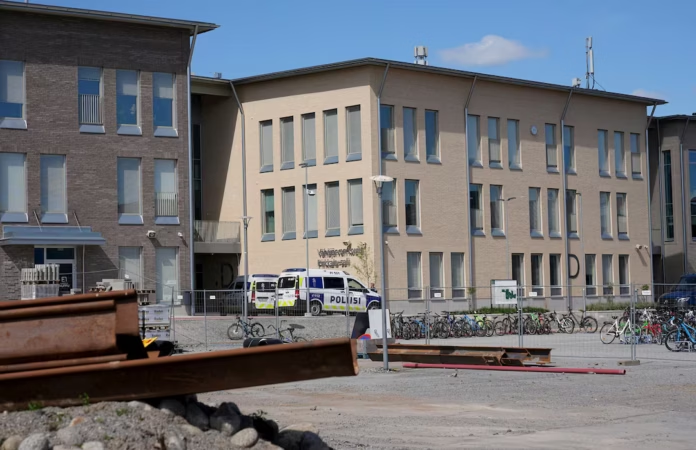
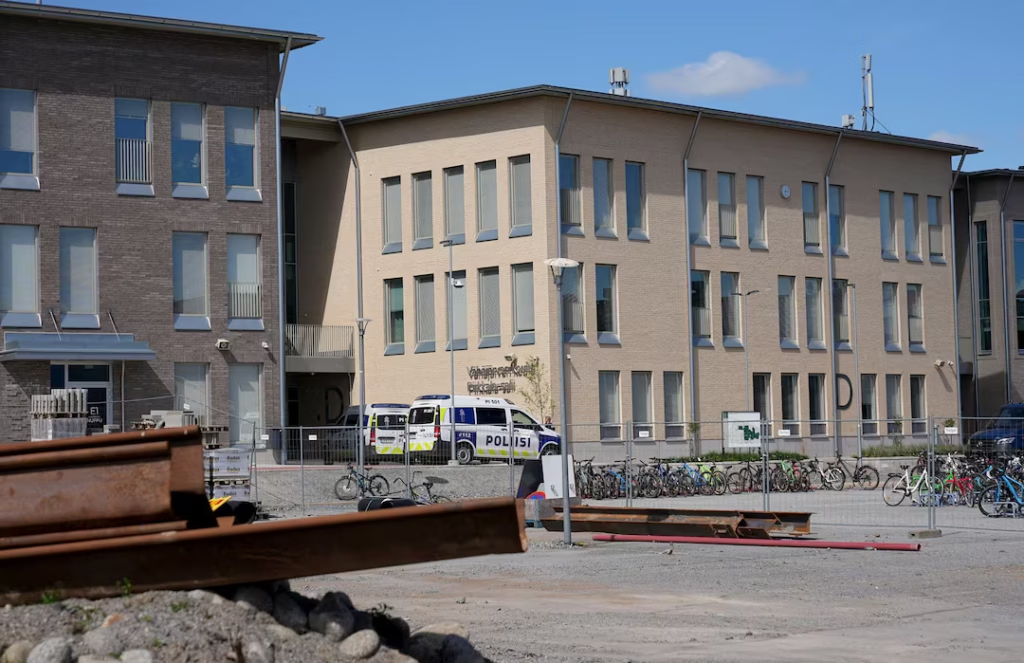
PIRKKALA, Finland — A knife attack at a school in southern Finland left three pupils injured on Tuesday, authorities said, in a disturbing incident that has drawn renewed attention to school safety in the Nordic country.
According to Finnish police, the suspected attacker is a fellow student who was swiftly apprehended at the scene. The victims’ injuries, while serious, are not believed to be life-threatening, officials confirmed in a statement.
The assault took place at Vähäjärvi School in Pirkkala, located roughly 180 kilometers (110 miles) north of Helsinki. The school serves students from preschool through ninth grade, according to its official website.
Police said the suspect used a bladed weapon in the attack. Authorities are now examining written material allegedly published by the suspect prior to the incident, though they have yet to release details on its content or nature.
The ages and identities of the injured students have not been disclosed, but officials confirmed that parents of all involved pupils have been notified.
Law enforcement remains tight-lipped about whether the attack was premeditated or if the writings under investigation suggested a motive or warning signs. The suspect’s identity and age have not been publicly released.
The attack has shocked the small town of Pirkkala and renewed concerns over student safety in Finnish schools. While violent school attacks are relatively rare in Finland, the country has faced several high-profile incidents in the past that prompted nationwide debates over youth mental health, school security, and access to weapons.
Police said the investigation is ongoing and more details would be shared once preliminary findings are confirmed. In the meantime, local authorities have provided psychological support and crisis counseling for affected students and staff.
MADRID — Spanish Prime Minister Pedro Sanchez has called for Israel’s exclusion from international cultural events, including the Eurovision Song Contest, over its ongoing military offensive in Gaza. Speaking at a conference in Madrid on Monday, Sanchez said cultural organizations must not adopt a double standard, drawing a parallel to Russia’s expulsion from global competitions following its 2022 invasion of Ukraine.
“We cannot allow double standards, not even in culture,” Sanchez said. “No one was shocked three years ago when Russia was excluded from Eurovision after its invasion of Ukraine. Israel should not be allowed to participate either.”
The Spanish Socialist leader, a consistent critic of Israeli policy in the occupied Palestinian territories, emphasized the need for the cultural sector to take a stand on democratic values and peace. He criticized artists and institutions who maintain “a bland, silent, equidistant” stance on global conflicts.
Israel’s Foreign Ministry has not issued a response to Sanchez’s remarks, which come amid intensifying scrutiny over the Israeli government’s handling of the war in Gaza.
The 2024 Eurovision finals, held this month in Basel, Switzerland, reignited controversy as Israeli contestant Yuval Raphael won the televote, while Austrian singer JJ won overall. Despite its insistence on political neutrality, Eurovision faced calls from pro-Palestinian groups and activists urging the European Broadcasting Union to bar Israel from participating due to its military campaign in Gaza.
Critics of Israel’s inclusion cite the escalating civilian death toll in Gaza. According to local health authorities, more than 53,000 Palestinians, mostly women and children, have been killed since Israel launched a full-scale offensive in response to the October 7, 2023, Hamas cross-border attack, which claimed around 1,200 Israeli lives and led to hundreds of hostages being taken.
Israel’s stated goal is the complete dismantling of Hamas’s military and governing capabilities, but the relentless bombardment has drawn mounting global condemnation.
Sanchez has emerged as one of the most outspoken European leaders on Israel’s war in Gaza, frequently clashing with Tel Aviv’s leadership. In October 2023, he called on the European Union and the broader international community to halt arms sales to Israel, a policy that Spain had already adopted.
More recently, in a landmark diplomatic move, Spain, Norway, and Ireland officially recognized a Palestinian state, declaring East Jerusalem as its capital. The decision was condemned by Israel, which claimed the recognition rewarded Hamas and undermined prospects for peace.
On Monday, Israeli Prime Minister Benjamin Netanyahu signaled his intent to seize full control of the Gaza Strip, defying ongoing calls from allies to scale back military operations and negotiate a ceasefire.
Sanchez’s remarks reflect growing European pressure to apply diplomatic and cultural levers in response to the crisis in Gaza. His call for Israel’s exclusion from Eurovision and similar events amplifies efforts by pro-Palestinian campaigners who view cultural boycotts as a tool for accountability.
By invoking Russia’s cultural isolation after the invasion of Ukraine, Sanchez challenged what he sees as Western inconsistency in responding to violations of international law.
“Artists must rise to defend values like democracy and peace,” Sanchez asserted. “Culture must not remain neutral in the face of war crimes.”
As the humanitarian crisis in Gaza deepens and the war continues unabated, Sanchez’s proposal signals a potential shift in how cultural institutions engage with political conflict, placing Israel’s future participation in European cultural events under renewed scrutiny.
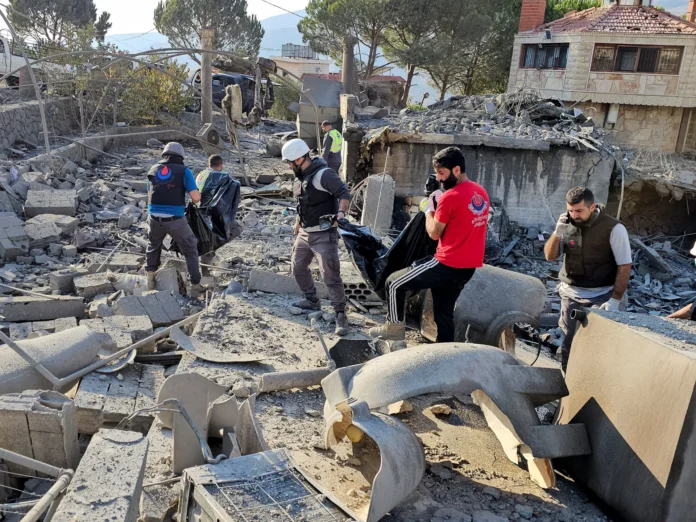
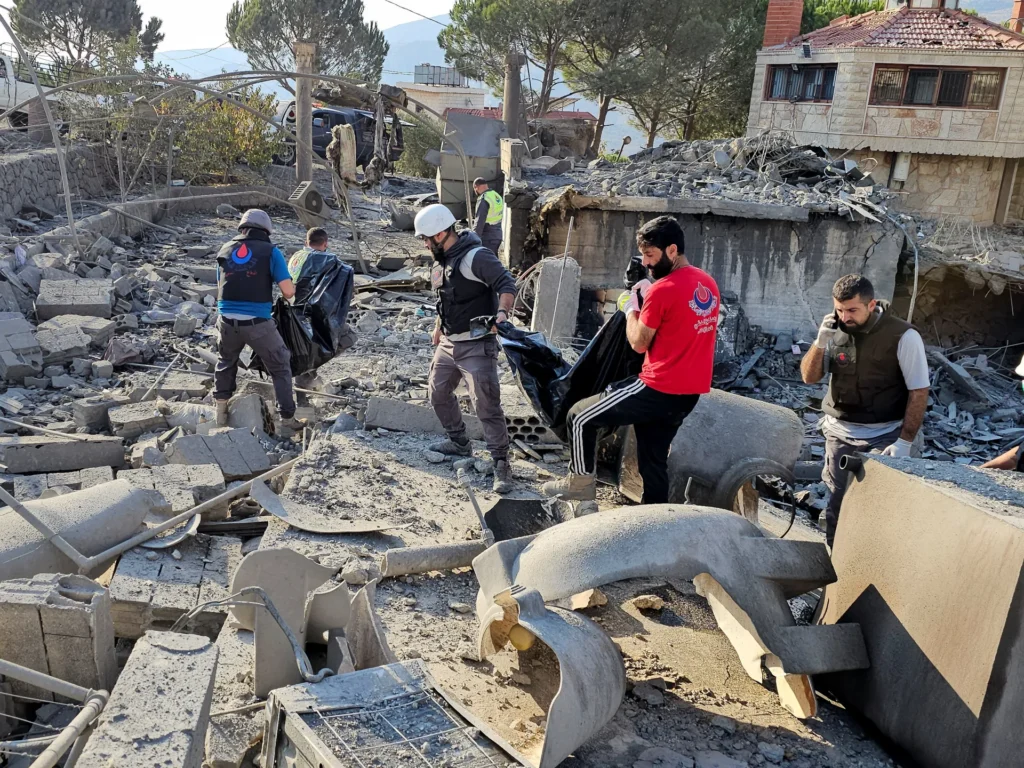
GAZA CITY, Gaza Strip — At least 60 Palestinians were killed in a series of Israeli airstrikes overnight and into Tuesday, local health officials reported, as Israel intensifies its military campaign against Hamas. The strikes targeted residential areas and a school-turned-shelter, adding to the growing civilian toll and fueling a surge in international criticism of Israel’s conduct in Gaza.
Since the renewed offensive began in recent days, over 300 people have been killed across the Gaza Strip, according to the Gaza Health Ministry. The ongoing conflict, which Israel says is aimed at rescuing hostages and dismantling Hamas, has devastated the already war-torn enclave of 2 million residents.
The latest Israeli airstrikes hit multiple locations across Gaza, including a family home and a school serving as a shelter in northern Gaza, killing at least 22 people, more than half of whom were women and children, according to the Health Ministry.
In Deir al-Balah, a strike killed 13 people, while 15 others died in an attack on the Nuseirat refugee camp, hospital sources said. In Khan Younis, two separate strikes resulted in 10 additional fatalities, according to Nasser Hospital.
The Israeli military did not immediately comment, but has consistently claimed that it targets only Hamas operatives and blames the group for civilian casualties due to its use of densely populated areas for operations.
The mounting death toll has drawn sharp condemnation from Israel’s allies. On Monday, Canada, France, and the United Kingdom warned of potential “concrete actions,” including sanctions, unless Israel halts what they described as “egregious” new military actions in Gaza.
French Foreign Minister Jean-Noël Barrot accused Israel of exercising “blind violence”, turning Gaza into a “place of death,” and declared on French radio that “this must stop.”
Israeli Prime Minister Benjamin Netanyahu rejected the criticism, arguing that concessions to international pressure would only reward Hamas for its Oct. 7, 2023 attack, during which 1,200 people, mostly civilians, were killed and 251 others taken hostage.
While criticism of Israel’s military strategy is rare within the country, Yair Golan, leader of the Democrats opposition party and a former general, delivered a searing rebuke on Tuesday.
“A sane country doesn’t engage in fighting against civilians, doesn’t kill babies as a hobby and doesn’t set for itself the goals of expelling a population,” Golan said in an interview with Reshet Bet radio.
Netanyahu fired back, calling Golan’s comments “wild incitement” and accusing him of echoing “antisemitic blood libels.” Golan, who fought during the October 7 attacks, has previously faced backlash for drawing parallels between Israeli society and Nazi-era Germany.
As international pressure builds, Israel has agreed to permit limited humanitarian aid into Gaza for the first time in more than two months. The blockade had previously cut off food, medicine, and fuel, leading to famine warnings from relief experts.
Jens Laerke, spokesperson for the UN Office for the Coordination of Humanitarian Affairs (OCHA), said Israel approved 100 aid trucks, but only five have entered Gaza since Monday. The delay in aid distribution remains unexplained, and the UN calls the volume “a drop in the ocean” compared to the 600 trucks per day delivered during earlier ceasefires.
Netanyahu acknowledged allowing limited aid following pressure from international allies concerned over “images of hunger” emanating from Gaza.
The current conflict was triggered by Hamas’s surprise attack on Israel last October, which left 1,200 dead and led to the abduction of 251 hostages. Of those, 58 remain captive, with roughly a third believed to be alive.
In retaliation, Israel launched a sweeping military campaign across Gaza, which the Gaza Health Ministry claims has now killed more than 53,000 Palestinians, the majority of them women and children. The figures do not distinguish between militants and civilians.
As Israeli forces push deeper into the territory, the humanitarian crisis continues to escalate. Evacuation orders have been issued for Khan Younis, which was heavily bombarded earlier this year. With thousands displaced and hospitals overwhelmed, the outlook remains dire.
DUBLIN, IRELAND — A 16-year-old Nigerian teenager, Emmanuel Familola, has been confirmed dead after drowning during a swimming incident in the Buncrana community of County Donegal, Ireland. His body was recovered from Lough Swilly following an extensive search and rescue operation launched after he and two other teenagers encountered difficulties while swimming.
The tragedy unfolded on Saturday, May 10, around 4 p.m., according to Raidió Teilifís Éireann (RTÉ). Witnesses reported the emergency, prompting the immediate deployment of air and sea rescue units. One teenager was able to swim ashore, while another was rescued from the water and is currently in critical condition at Letterkenny University Hospital.
Familola’s body was discovered later that evening between Ned’s Point and Fahan, near Buncrana, and was also taken to Letterkenny Hospital. The drowning has sent shockwaves through the local community and the broader Nigerian-Irish diaspora.
Local lawmaker Padraig Mac Lochlainn, a member of the Irish Parliament for the Donegal Constituency, confirmed the deaths of Emmanuel Familola and 18-year-old Matt Sibanda. Lochlainn described the incident as a heartbreaking tragedy that has left the community reeling.
“There has been widespread shock and sadness following the deaths of 16-year-old Emmanuel Familola and 18-year-old Matt Sibanda in the drowning tragedy,” he wrote in a statement on Facebook.
In response, Insight Inishowen, a local charitable group, set up a GoFundMe campaign to assist with funeral expenses for the two families. The campaign exceeded its €40,000 target, raising €41,515 as of Monday.
“We are heartbroken by their loss and want to do everything to help ease the financial burden at a time of such unimaginable pain,” read the GoFundMe message. “Every penny raised will be divided equally between the two grieving families.”
The effort has garnered support from the Exchange Community Centre and the wider Buncrana area, where both boys were known and loved.
The tragedy comes just days after PUNCH Metro reported the drowning of another 16-year-old Nigerian teenager, Valentine Ikechukwu, who died while swimming in a lake at Colwick Country Park in the United Kingdom on April 30. Authorities in Nottinghamshire said the teenager got into difficulty and could not be saved.
Both incidents have raised concerns about water safety awareness among youth in Ireland and the UK, especially during warmer months when recreational swimming increases.
As investigations continue, community leaders and organizations are calling for greater public education and safety measures to prevent future tragedies.
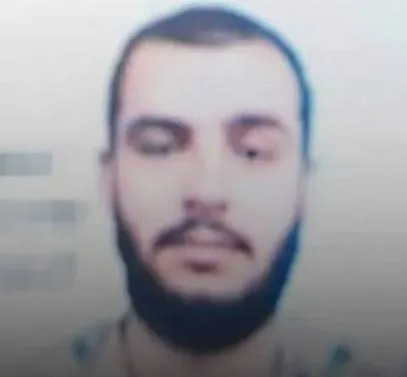
GAZA CITY — Muhammad Sinwar, the Hamas military commander known as “The Shadow”, and brother of slain terror leader Yahya Sinwar, was likely killed in an Israeli airstrike targeting a hospital bunker, Israeli officials said Tuesday.
Muhammad Sinwar, the Hamas military commander known as “The Shadow”
According to Israeli Defense Minister Israel Katz, Sinwar’s body was found inside a tunnel complex beneath the European Hospital in Khan Younis, a facility the Israel Defense Forces (IDF) say Hamas had converted into a subterranean command center. The IDF used bunker-buster bombs in the strike, aiming to seal off all exits and prevent the escape of those inside.
Sinwar assumed command of Hamas’s military wing following the July 2024 killing of Muhammad Deif, and later became the group’s overall leader after his older brother Yahya Sinwar—dubbed “Gaza’s bin Laden” for his brutality—was killed by Israel in October.
While Hamas has not confirmed Sinwar’s death, Katz reportedly told lawmakers in a closed-door meeting that he is believed to be dead “beyond all indications,” according to the Wall Street Journal.
The IDF released aerial footage of the operation showing Israeli fighter jets striking the hospital complex. CCTV video from the area captured civilians running in panic moments before a massive explosion tore through the ground, followed by a fireball.
Hamas claimed that at least six people were killed and 40 others injured in the strike, but provided no information about Sinwar’s fate. Israeli sources also indicated that Mohammad Shabana, commander of Hamas’s Rafah Brigade, may have been killed in the same operation.
If confirmed, Sinwar’s death could leave a leadership vacuum inside Hamas, potentially triggering a power struggle between its military and political wings as the war in Gaza intensifies.
Tuesday’s airstrike coincided with the launch of a new Israeli military campaign, dubbed Operation Gideon’s Chariots, aimed at securing strategic areas of the Gaza Strip and displacing Hamas fighters.
Muhammad Sinwar, the Hamas military commander known as “The Shadow”
In a statement posted to X, the IDF said the “initial stages” of the operation were underway as part of a broader expansion of the war in Gaza. Objectives include defeating Hamas and securing the release of Israeli hostages still held in the territory since the October 7 attacks.
“We have struck over 150 terror targets throughout the Gaza Strip in the past 24 hours,” the IDF said. “We will not stop until Hamas is no longer a threat and all our hostages are home.”
The Israeli military says the offensive also aims to relocate civilians away from combat zones in southern Gaza and tighten the noose around remaining Hamas strongholds.
Humanitarian Crisis Deepens Amid Blockade
The latest escalation comes amid a growing humanitarian crisis in Gaza. One of the last functioning hospitals warned it could no longer treat critical injuries due to supply shortages and damage from nearby Israeli attacks.
Since March, Israel has maintained a blockade on aid entering Gaza, a measure it says is meant to pressure Hamas into releasing Israeli hostages. But aid organizations and international observers warn that the population is starving and facing mass displacement.
On Friday, President Donald Trump, speaking during a stop in Abu Dhabi, acknowledged the worsening situation.
“We’re looking at Gaza. And we’re going to get that taken care of,” Trump told reporters, though he did not visit Israel during his regional tour.
U.S. Secretary of State Marco Rubio said the administration was “troubled” by the scale of the suffering and urged Israel to consider renewed ceasefire negotiations.
In a stark rebuke, UN human rights chief Volker Turk condemned the ongoing airstrikes and warned that the forced displacement of Palestinians amid bombing and aid restrictions may amount to ethnic cleansing.
“This latest barrage of bombs, the methodical destruction of entire neighborhoods, and the denial of humanitarian assistance appear to push for a permanent demographic shift in Gaza,” Turk said Friday. “This is in defiance of international law.”
Israel has continued to signal that it will not halt military operations. Earlier this month, Prime Minister Benjamin Netanyahu said the country was preparing for an “intense entry” into Gaza to fully seize control of the territory.
As Gaza endures one of its bloodiest and most destructive phases of the war, the likely death of Muhammad Sinwar could mark a pivotal moment in Israel’s campaign to dismantle Hamas leadership—but also heightens fears of a prolonged insurgency and deeper humanitarian catastrophe.
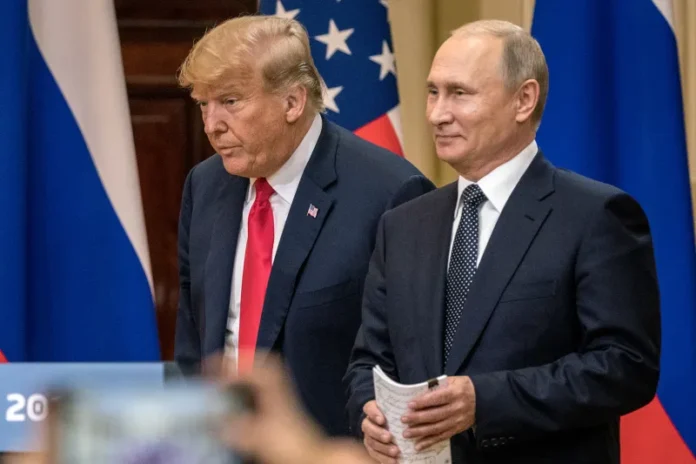
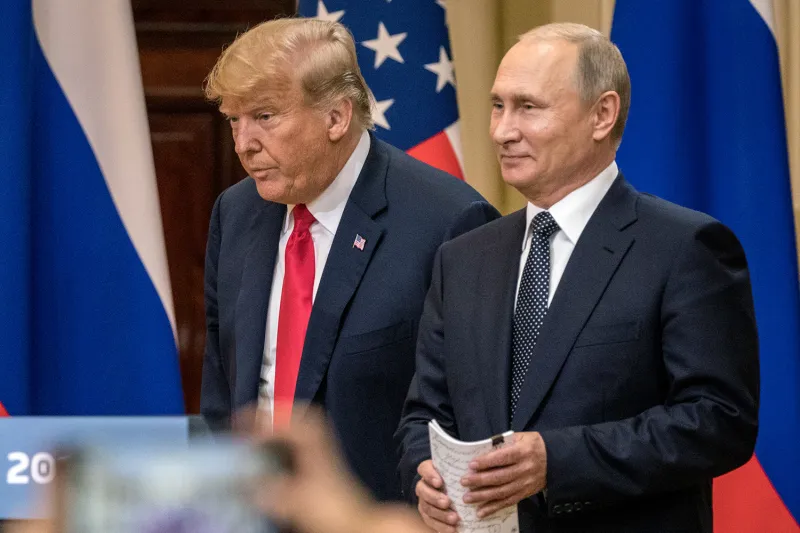
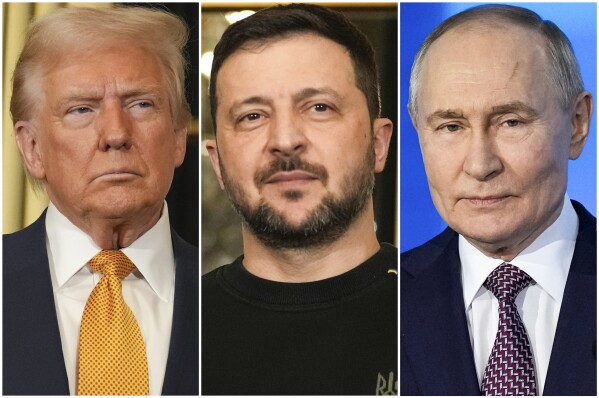
WASHINGTON — President Donald Trump on Monday announced that Russia and Ukraine will begin immediate negotiations aimed at reaching a ceasefire and eventual peace agreement, following a phone call with Russian President Vladimir Putin. However, the Kremlin offered no specific timeframe, dampening hopes for a swift end to the more than three-year conflict.
In a post on his social media platform, Trump said he had conveyed the ceasefire proposal to Ukrainian President Volodymyr Zelenskyy and several European leaders, including the heads of France, Germany, Italy, Finland, and the European Union, in a group call following his conversation with Putin.
“Russia and Ukraine will immediately start negotiations toward a ceasefire and, more importantly, an END to the war,” Trump declared, later adding at the White House that he believed “some progress is being made.”
Putin, speaking after the call, acknowledged Trump’s support for renewed direct talks and confirmed Russia’s willingness to work with Ukraine on a memorandum outlining terms for a future peace accord. However, he stopped short of endorsing any immediate halt to hostilities.
“Efforts are generally on the right track,” Putin said, noting that while Russia is ready to resume negotiations, any agreement would take time.
Kremlin spokesperson Dmitry Peskov said the two leaders did not establish any deadlines for a ceasefire and warned of “complex contacts” ahead as Russia and Ukraine attempt to draft a unified proposal.
“There are no deadlines and there cannot be any,” Peskov told Russian state media. “Of course, everyone wants to do this quickly, but the devil is in the details.”
Trump’s announcement was met with cautious optimism in Europe, though several leaders moved forward with new sanctions against Russia. German Chancellor Friedrich Merz confirmed the decision in a late-night post on X (formerly Twitter), saying European leaders had agreed to expand pressure on the Kremlin.
But Trump declined to follow their lead, telling reporters that fresh U.S. sanctions might worsen the situation and could derail progress.
“I think there’s a chance of getting something done,” Trump said. “But there could be a time where that’s going to happen. This is not my war.”
Trump hinted at frustration with the negotiating parties, stating there were “some big egos involved” and warning he might “just back away” if talks failed to advance.
Following his conversation with Trump, Zelenskyy said Ukraine was open to direct negotiations with Russia in any format that leads to results. He suggested a high-level summit involving the U.S., EU, U.K., and Russia, possibly hosted by Turkey, the Vatican, or Switzerland.
Trump said Pope Leo had shown interest in hosting the talks at the Vatican, though the Holy See did not immediately confirm the report. The Kremlin welcomed the idea but said no final decision had been made.
While the announcement signals the first significant U.S.-backed diplomatic push in over a year, critics remain skeptical of Moscow’s intentions. Former Swedish Prime Minister Carl Bildt called the Kremlin’s maneuvering a “win for Putin,” saying the Russian leader was using the negotiations to delay pressure while continuing military operations.
“Putin deflected the call for an immediate ceasefire and instead continues military action while gaining leverage at the table,” Bildt said on X.
Putin has consistently refused to accept a 30-day ceasefire sought by Trump and Ukraine, demanding that Ukrainian forces withdraw from four regions Russia claims as its own before agreeing to any truce.
Last week, delegates from Ukraine and Russia met in Istanbul for the first time since 2022 at Trump’s urging. The meeting ended without a breakthrough after Putin rejected Zelenskyy’s offer for face-to-face talks.
Putin said the proposed memorandum would define key settlement principles, including timelines and conditions for a potential peace agreement.
“The main thing for us is to eliminate the root causes of this crisis,” Putin said. “We just need to determine the most effective ways to move towards peace.”
Despite Trump’s high-profile intervention, there remains no guarantee of an end to the war, which has killed tens of thousands, displaced millions, and reshaped European security. A senior source familiar with the group call said some European leaders were “shocked” by Trump’s refusal to confront Putin with sanctions.
European Commission President Ursula von der Leyen offered a restrained assessment, stating only that the conversation with Trump was “good” and affirming the importance of continued U.S. engagement.
While the Kremlin’s language hints at a willingness to negotiate, U.S. and Ukrainian officials remain wary that Moscow is buying time while seeking to solidify gains on the battlefield.
As the conflict grinds on, the world is watching to see whether Trump’s diplomacy will yield a lasting solution—or become another missed opportunity in a war with no clear end.
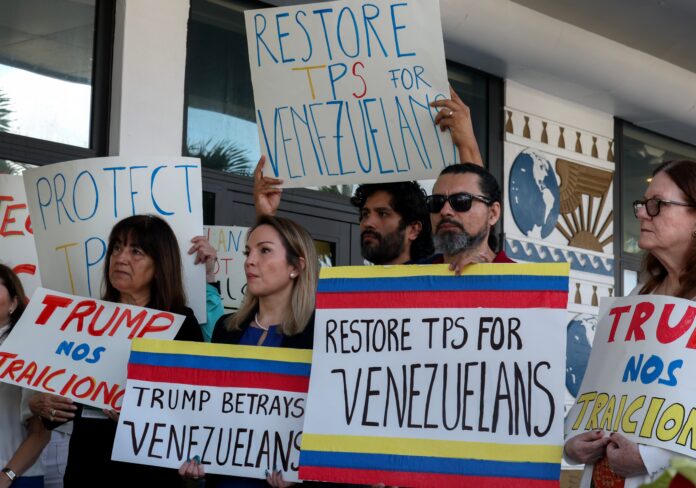
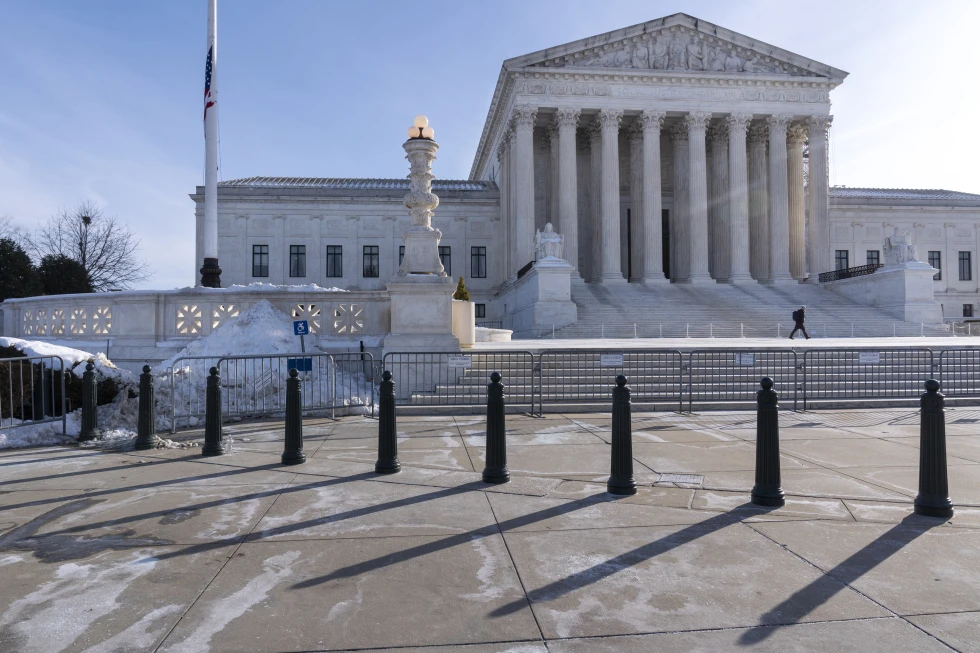
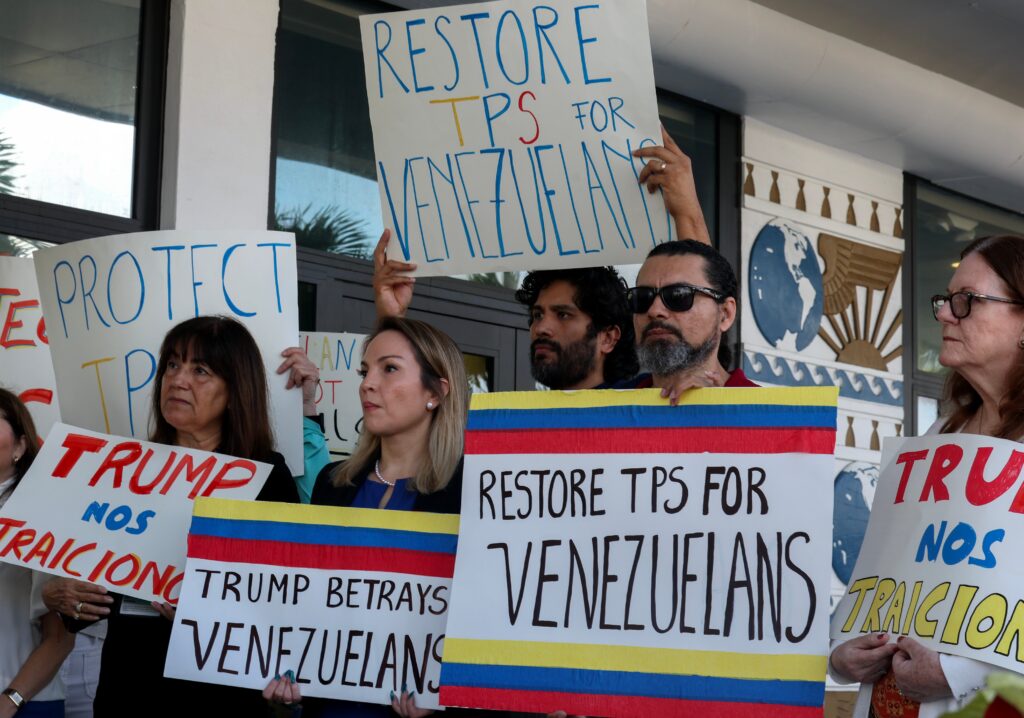
WASHINGTON — The U.S. Supreme Court on Monday allowed President Donald Trump’s administration to revoke Temporary Protected Status (TPS) for more than 350,000 Venezuelans, opening the door to potential deportation amid the country’s ongoing economic and political collapse.
In a brief unsigned order, with only Justice Ketanji Brown Jackson dissenting, the high court granted the Trump administration’s request to halt a lower court ruling that had temporarily preserved the protections. The justices offered no explanation, a common practice in emergency appeals.
The decision overrides a ruling by U.S. District Judge Edward Chen in San Francisco, who had found that ending TPS for Venezuelans could destabilize the lives of hundreds of thousands and significantly disrupt the U.S. economy.
TPS, created by Congress in 1990, allows non-citizens from countries facing armed conflict, natural disasters, or civil unrest to legally remain and work in the United States. Venezuela was designated for TPS in 2021 due to widespread violence, persecution, and systemic collapse under Nicolás Maduro’s regime.
“This is the largest mass revocation of immigration status in modern American history,” said Ahilan Arulanantham, one of the attorneys representing Venezuelan TPS holders. He warned that the decision will leave families forced to choose between “survival or stability.”
Cecilia Gonzalez Herrera, a plaintiff in the case, expressed heartbreak over the ruling.
“Venezuelans are not criminals,” Gonzalez Herrera said. “We all deserve the chance to thrive without being sent back to danger.”
Mariana Moleros, a 44-year-old Venezuelan lawyer living in Florida, said she and her family fled death threats for opposing Maduro’s regime. After their asylum claim was denied, they were granted TPS — protections now suddenly in jeopardy.
“We came here for peace and protection. Now we’re back to living in fear,” Moleros said. “If we are returned, we face prison, torture, even death.”
The Department of Homeland Security hailed the Supreme Court’s decision as a victory for American security and immigration integrity. In a statement, DHS spokeswoman Tricia McLaughlin said the Biden administration had abused humanitarian programs, and the Trump White House is “reinstating integrity” into the system.
“The Trump administration is reinstituting integrity into our immigration system to keep our homeland and its people safe,” McLaughlin said.
The case is one of several immigration-related emergency appeals brought by the Trump administration before the Supreme Court. Earlier this month, the administration also asked to terminate humanitarian parole programs for immigrants from Cuba, Haiti, Nicaragua, and Venezuela — decisions that could expose hundreds of thousands more to removal.
Venezuela has seen more than 7.7 million citizens flee since 2013 due to hyperinflation, shortages, and violent repression. Inflation soared to 172% year-over-year in April, prompting President Maduro to declare an economic emergency. His government — widely denounced as illegitimate — continues to imprison political opponents and suppress dissent.
Despite the humanitarian conditions, Solicitor General D. John Sauer argued that Judge Chen’s order unlawfully infringed on executive authority over immigration and foreign policy.
“The decision to terminate TPS is not equivalent to a final removal order,” Sauer noted, emphasizing that Venezuelans affected may still explore other legal avenues to remain in the U.S.
Judge Chen had previously warned that ending TPS for Venezuelans would disrupt communities and cost billions in lost productivity. He concluded the government had failed to demonstrate any immediate harm in extending the protections.
Still, the Trump administration moved swiftly to unwind the program — part of a broader rollback affecting 600,000 Venezuelans and 500,000 Haitians, with TPS granted in renewable 18-month increments.
Last week, DHS also announced that TPS for Afghanistan, granted in 2022, would expire this July.
As the legal battle over TPS continues, a federal hearing is scheduled for next week in Chen’s courtroom. Meanwhile, hundreds of thousands of Venezuelans now face the harsh reality of uncertain legal status — and the looming threat of forced return to a nation in turmoil.
WASHINGTON — President Donald Trump and Vladimir Putin spoke directly in a high-stakes phone call Monday as Trump pressed the Russian leader to halt what he described as the ongoing “bloodbath” in Ukraine, according to senior White House officials.
The tense exchange marked a pivotal moment in Trump’s efforts to broker a ceasefire between Russia and Ukraine, as the war continues to devastate Eastern Europe. The call came just hours after Vice President JD Vance issued a sharp warning that the United States may walk away from ceasefire negotiations if Putin refuses to show genuine interest in peace.
“I think the president’s going to say to President Putin: ‘Look, are you serious? Are you real about this?’” Vance told reporters Monday morning.
White House press secretary Karoline Leavitt signaled Trump’s growing impatience with both sides in the conflict, saying the president is “weary and frustrated” by the prolonged war and the lack of progress toward peace.
Shortly after the call with Putin, Trump is expected to speak with Ukrainian President Volodymyr Zelensky, in what officials described as a coordinated diplomatic push to bring both parties back to the negotiating table.
But that effort comes as Putin intensifies military aggression, launching what Ukrainian defense officials called the largest drone assault since the war began in 2022. Over the weekend, Russia fired a staggering 273 explosive drones across Kyiv, Donetsk, and Dnipropetrovsk.
Despite Trump’s direct appeal, Putin reportedly resisted any effort to dictate terms. Speaking on Kremlin-controlled television, the Russian leader suggested Trump should respect Moscow’s sovereignty and national interests.
“The Americans — the American people and the American leadership, including the president — have their own national interests,” Putin said. “We proceed from the assumption that we will be treated the same way.”
Putin doubled down, reportedly telling Trump he intends to “finish what he started” in Ukraine, reaffirming his long-held ambition to expand Russian control over the country.
Hours before the Trump-Putin conversation, reports emerged of a failed Russian missile test involving the RS-24 Yars, a nuclear-capable intercontinental ballistic missile. Ukrainian intelligence officials said no detonation was detected at the Sverdlovsk test site, suggesting the launch attempt may have failed — the latest in a series of setbacks for the Russian military.
In a concurrent show of force, Russia staged live-fire naval exercises in the Sea of Japan. The landing ship Peresvet launched Grad-M rocket salvos at targets over six miles away, while AK-176 and AK-630 artillery units and heavy machine guns targeted mock mines and aerial threats.
The exercises, while far from Ukraine, were seen as another signal to NATO and U.S. allies that Moscow remains defiant amid mounting international pressure.
As Trump attempts to bridge the chasm between Kyiv and Moscow, the stakes are escalating. With Vice President Vance signaling the U.S. may withdraw from peace efforts unless Russia alters course, Trump’s next moves could determine whether the path forward involves diplomacy — or deeper division.
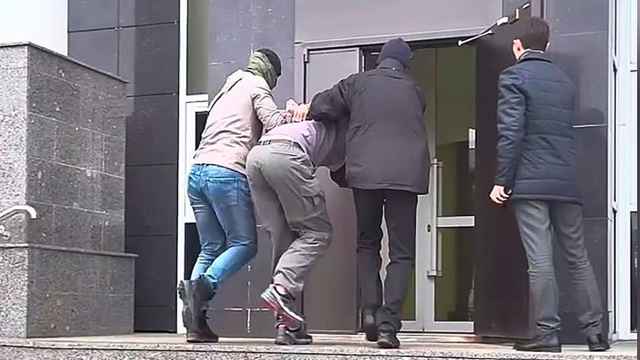
MOSCOW — Russia’s Federal Security Service (FSB) announced Monday that it has arrested nine individuals, including several teenagers, accused of plotting terrorist attacks targeting police in the Stavropol region during Victory Day celebrations earlier this month.
The suspects were taken into custody on May 8, just one day before Russia commemorated its World War II victory over Nazi Germany — a national holiday marked by heightened security across the country.
The FSB said the alleged ringleader is an unnamed teenager who joined an unidentified terrorist organization in 2023 with the intention of committing crimes on its behalf. Authorities claim he recruited an adult relative and seven other teenagers, aged 14 to 16, to participate in planned attacks targeting law enforcement.
The Investigative Committee, which handles major criminal cases in Russia, confirmed that the suspects were preparing to carry out assaults on police officers during the Victory Day festivities.
According to official statements, all nine were formally charged with participating in terrorist activities and have been placed in pre-trial detention.
Russian state media released footage showing excerpts of interrogations with the young suspects, whose faces were blurred. In one video, a teenager described being indoctrinated into a banned extremist group by a peer.
“He told us to repeat after him, then congratulated us for joining some kind of group that’s banned in Russia,” the boy said in the video.
The teen recruiter now faces additional charges for coercing others to join terrorist activities, authorities said.
The case has heightened concerns about radicalization among Russian youth, especially through online platforms and peer-to-peer recruitment. Russian officials have repeatedly warned that foreign and domestic extremist groups are targeting vulnerable minors to carry out attacks on home soil.
While the FSB did not name the organization allegedly behind the plot, authorities emphasized that the group is banned in Russia and that the investigation remains ongoing.
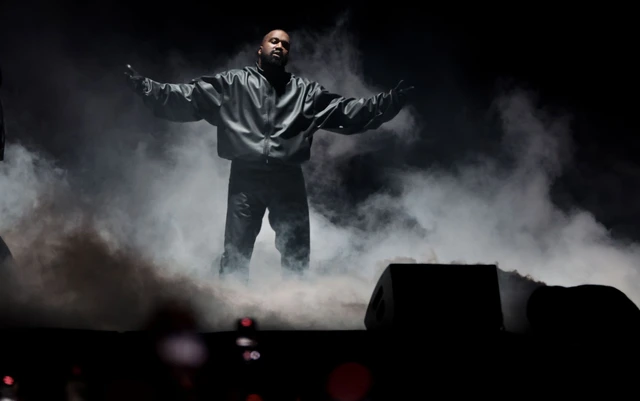
SEOUL, South Korea — A planned Kanye West concert in South Korea has been abruptly canceled by Coupang, the e-commerce giant behind the event, citing “recent controversies involving the artist.” The show, scheduled for May 31 in the city of Incheon, will no longer proceed, Coupang and ticket vendor Interpark announced Monday.
The companies offered no specific details about the decision, but the move comes amid renewed global backlash against the American rapper — now legally known as Ye — following the release of a provocative song titled “Heil Hitler” earlier this month.
West’s latest song has drawn widespread condemnation for its explicit praise of Adolf Hitler, the Nazi dictator responsible for the Holocaust. The lyrics have reignited criticism over Ye’s pattern of antisemitic rhetoric, which had already damaged his standing with corporate partners and the public.
The concert’s cancellation comes nearly two years after Adidas terminated its partnership with Ye over similar comments. The German sportswear giant officially ended the Yeezy collaboration in October 2022, later selling off the remaining inventory in March.
Coupang, which was organizing the concert through its streaming platform Coupang Play, confirmed that all purchased tickets would be fully refunded. In a further step, the company announced the suspension of all sales of West’s Yeezy fashion merchandise from its platform.
The show in Incheon was billed as a high-profile return for Ye to the Asian concert circuit. Instead, the cancellation marks another setback in his effort to rebuild a public platform following years of controversial and inflammatory behavior.
Ye’s unraveling relationship with the entertainment and fashion industries continues to deepen as companies distance themselves from his increasingly erratic and offensive public statements. Monday’s cancellation follows a pattern of event pullouts, product removals, and sponsorship terminations since West began expressing openly antisemitic and extremist views.
Though Coupang and Interpark refrained from citing specific incidents, Ye’s history of inflammatory comments and recent glorification of Hitler have made it increasingly untenable for global brands to remain affiliated with him.
As outrage grows and backlash intensifies, it remains unclear what public platform — if any — Kanye West will retain. For now, South Korea has joined a growing list of markets unwilling to host the rapper amid his continued controversies.