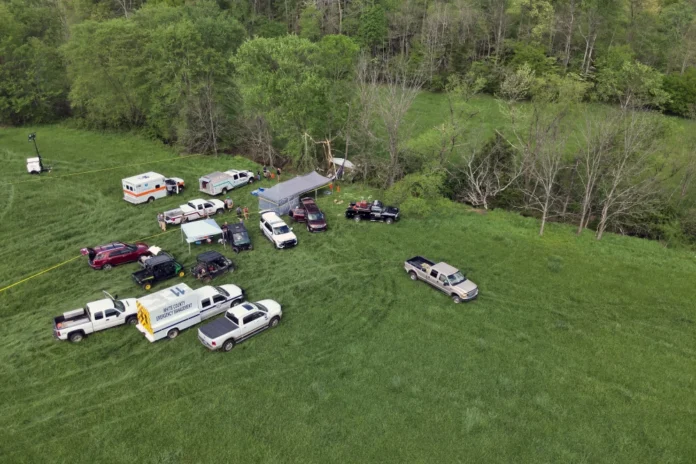
A small single-engine aircraft crashed Saturday morning near the Upper Cumberland Regional Airport in White County, Tennessee, claiming the lives of all three people on board, authorities said.
The Mooney M20TN, a high-performance, single-engine aircraft, had departed from Alabama and was approaching its destination when it went down south of the airport, according to a statement released by the Federal Aviation Administration. The crash occurred around 11:50 a.m., when initial reports of a downed aircraft reached the Upper Cumberland Regional Airport.
Dean Selby, the airport’s director, said that shortly after those reports, officials received a call from the Memphis Air Traffic Control Center indicating that communication and radar contact had been lost with an inbound aircraft. Emergency management teams, fire and rescue crews, and volunteers were dispatched to locate the wreckage. After an extensive ground search, the airport launched another plane to search from the air, eventually leading to the discovery of the crash site in what Selby described as a remote and difficult-to-access area.
Federal investigators from the FAA arrived at the scene within a few hours to begin an initial examination of the wreckage. The National Transportation Safety Board, which will lead the investigation, is expected to arrive on Sunday to conduct a more detailed probe into the cause of the accident. As of Saturday evening, the identities of the three victims had not been released, pending notification of their next of kin.
Sparta, where the airport is located, lies approximately 96 miles southeast of Nashville. The tragic incident adds to a troubling pattern of fatal small aircraft crashes across the United States in recent weeks. Last month, a plane crashed into a home in Brooklyn Park, Minnesota, killing all aboard. In upstate New York, another small aircraft went down under similar circumstances shortly thereafter. Last Saturday, three people were killed when a plane plunged into a river in Nebraska, followed by another fatal crash on Sunday that left four dead in Illinois when a single-engine aircraft went down.
The series of deadly accidents has prompted renewed focus on small aircraft safety. Officials have not yet released any preliminary findings regarding what may have caused Saturday’s crash in Tennessee. The NTSB is expected to provide a preliminary report within days after their on-site examination, but full investigations typically take several months to complete.
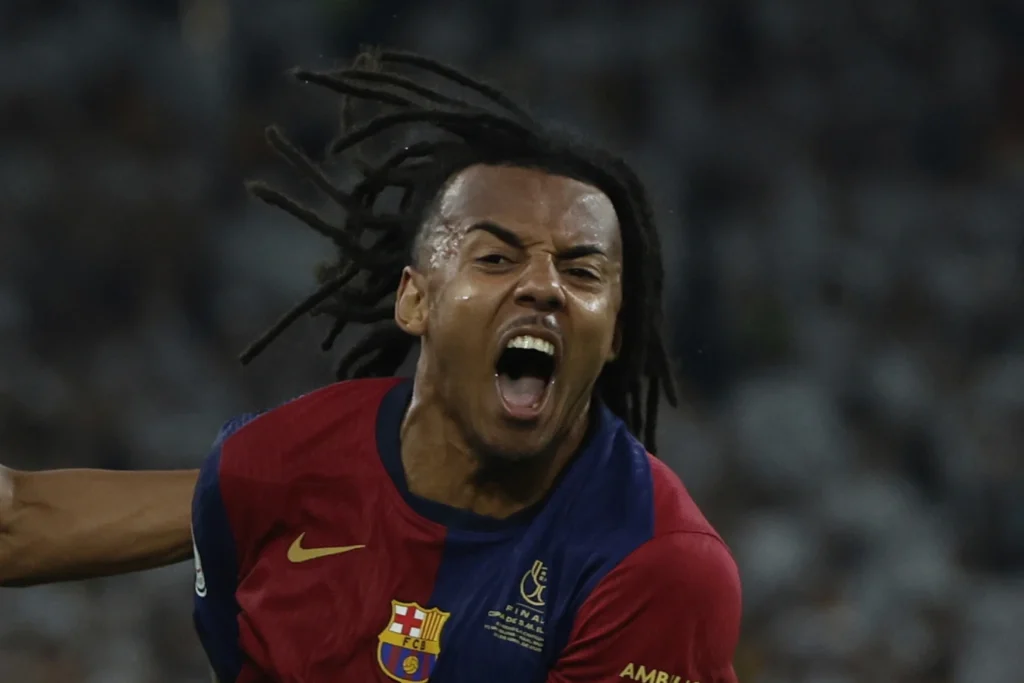
Barcelona strengthened its pursuit of a historic treble after defeating Real Madrid 3-2 in a dramatic Copa del Rey final Saturday, with Jules Koundé delivering the decisive goal deep into extra time.
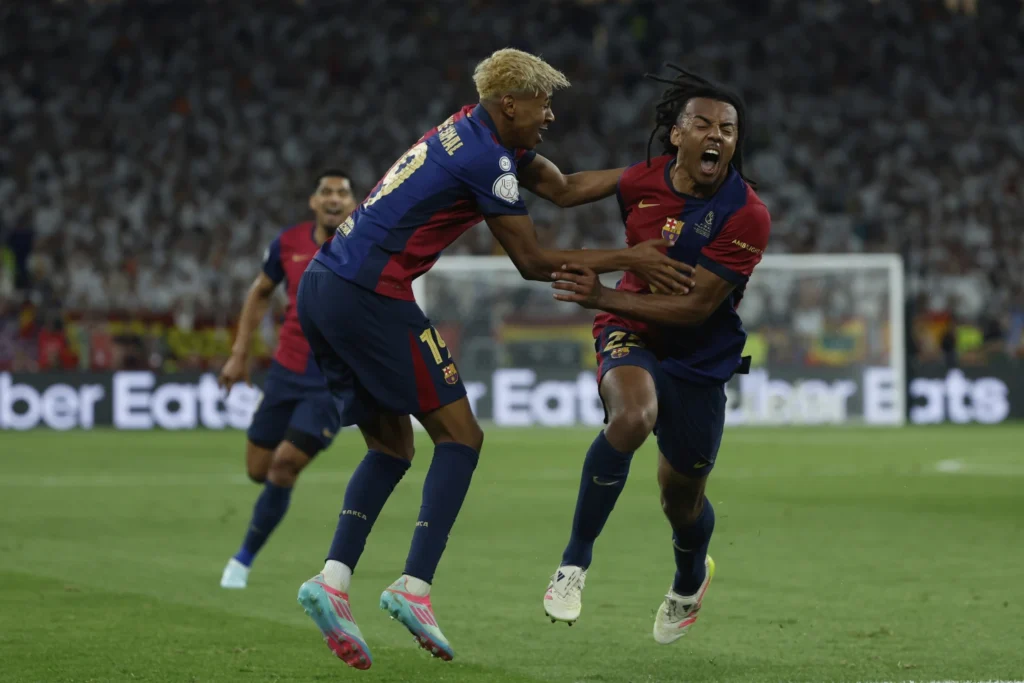
Right back Koundé capitalized on a costly mistake by Luka Modric, intercepting a loose pass and firing low past Thibaut Courtois in the 116th minute to seal Barcelona’s record-extending 32nd Copa del Rey title at La Cartuja Stadium. The triumph provides crucial momentum for Barcelona ahead of Wednesday’s opening leg of the UEFA Champions League semifinal against Inter Milan, and the club continues to lead La Liga by four points over its fiercest rival.
Pedri González orchestrated Barcelona’s attack from midfield and opened the scoring in the 28th minute with a powerful long-range strike following a rapid break led by teenage sensation Lamine Yamal. The first half was dominated by Barcelona’s pressing defense and superior ball control, leaving Real Madrid struggling to create significant chances aside from a brief moment when Jude Bellingham broke free, only for his pass to be intercepted.
Real Madrid regrouped after halftime, energized by the introduction of Kylian Mbappé, who had been sidelined with an ankle injury. The French star ignited Madrid’s comeback, drawing a foul and converting the resulting free kick with precision in the 70th minute to level the match. Seven minutes later, Aurélien Tchouaméni gave Madrid the lead with a powerful header off a corner delivered by Arda Güler.
Barcelona, however, responded with resilience. Ferran Torres, starting in place of the injured Robert Lewandowski, scored the equalizer in the 84th minute. Yamal lofted a ball over the Madrid defense, and Courtois misjudged his attempt to intercept, allowing Torres to slot into an empty net and force extra time.
The intense rivalry, one of global soccer’s most storied, lived up to its billing with both sides pushing for a winner. The referee, who faced accusations of bias from Real Madrid’s club media on the eve of the final, faced another controversy when he reversed a late penalty decision after a VAR review in injury time.
As extra time unfolded and players on both sides showed visible fatigue, the match seemed destined for a penalty shootout until Koundé’s decisive intervention. Barcelona’s defense remained resolute thereafter, despite late drama when Real Madrid’s Antonio Rudiger was shown a red card for dissent in the dying moments, needing to be restrained by teammates and staff after confronting the referee.
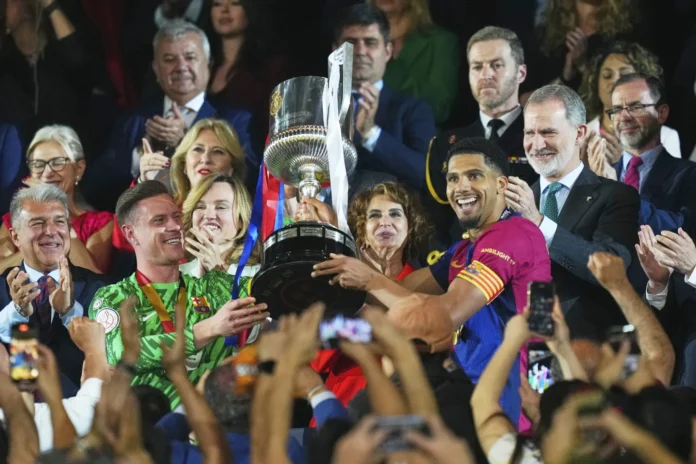
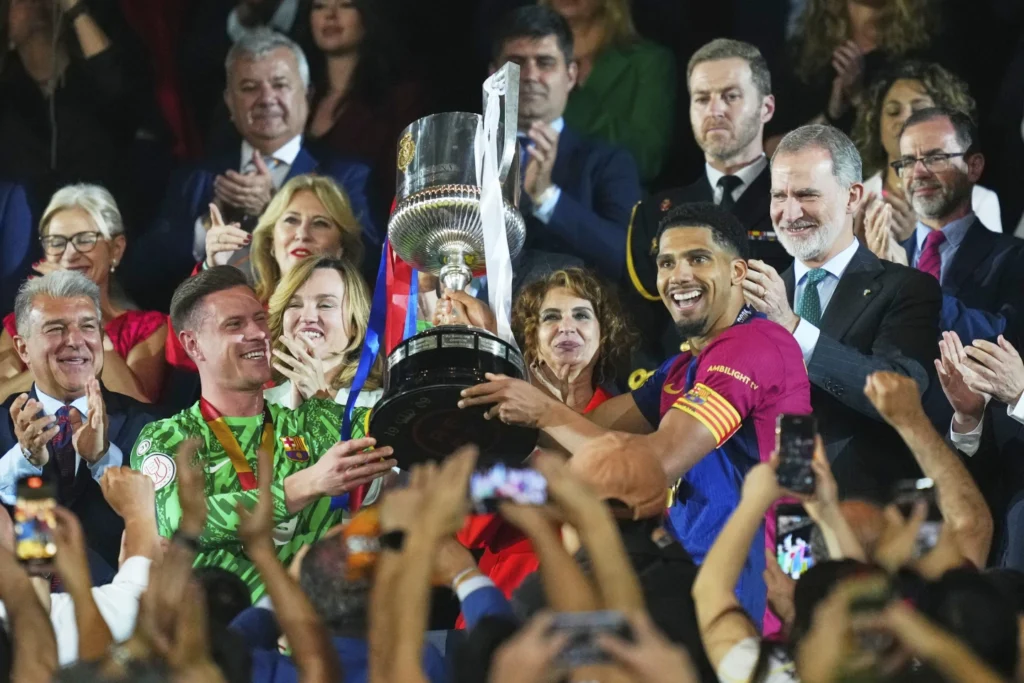
Following the final whistle, King Felipe VI, having just returned from attending the funeral of Pope Francis, presented the trophy to Barcelona captains Ronald Araújo and Marc-André ter Stegen. The victory marks the first trophy of the season for Barcelona under coach Hansi Flick, who has rejuvenated the squad after a difficult period under Xavi Hernández, nurturing young talents like Yamal and Pau Cubarsí into vital contributors.
For Real Madrid, the defeat capped a difficult stretch following its elimination from the Champions League quarterfinals by Arsenal. Manager Carlo Ancelotti’s future remains uncertain, as the Italian indicated that a decision on his tenure will be made in the coming weeks amid speculation linking him to the Brazilian national team.
“This was such a physically demanding game, but we showed that we are a great team that never gives up,” said Torres, who played a critical role in the comeback effort.
Meanwhile, Flick praised his squad’s resilience, saying, “I have to say thanks to the team because they had an unbelievable performance.”
Barcelona now turns its focus to maintaining its La Liga lead and chasing European glory, as it seeks to replicate the treble achievements previously accomplished under Pep Guardiola in 2009 and Luis Enrique in 2015.
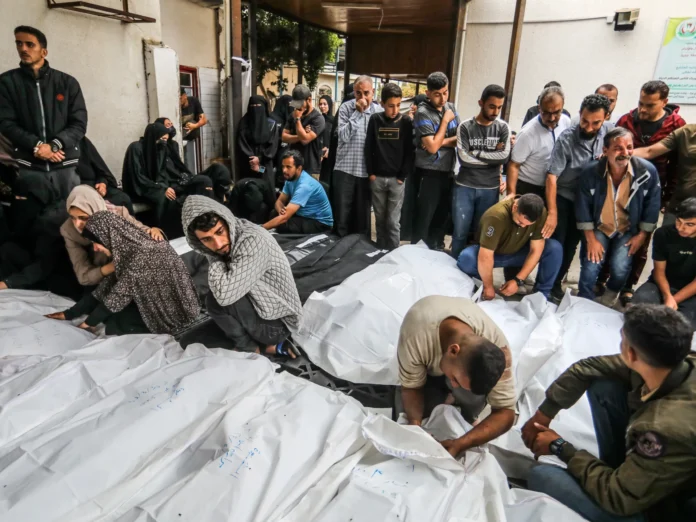
Israeli military operations in Gaza intensified Saturday, killing at least 40 Palestinians in a series of air and drone strikes as a senior Hamas delegation arrived in Cairo for renewed ceasefire negotiations.
According to a civil defense official speaking to AFP, an Israeli airstrike targeting the al-Khour family’s home in Gaza’s Sabra neighborhood resulted in the deaths of at least 10 people. Meanwhile, journalists on the ground reported that four Palestinians were killed and several more wounded in another Israeli air raid on Deir el-Balah, located in central Gaza. In southern Gaza’s Khan Younis region, three individuals were killed in a drone attack on the al-Mawasi area, which has been designated a “safe zone.”
The escalation in violence comes amid warnings from international aid organizations about the worsening humanitarian crisis in Gaza. Relief agencies have sounded alarms over “full-scale famine conditions” developing as Israel’s blockade, now nearing two months, continues to choke off critical supplies.
A high-level Hamas delegation arrived in Cairo on Saturday, where mediators are working urgently to broker a ceasefire agreement between Hamas and Israel. These talks remain fraught, with little progress made since Israel abandoned a January ceasefire accord by imposing a total blockade on Gaza on March 2 and resuming military attacks on March 17.
Hamas has reiterated its willingness to discuss a truce but has firmly rejected Israeli demands for disarmament. Taher al-Nono, a senior Hamas official speaking to Reuters, stated that the group remains open to negotiations aimed at ending the war. “The idea of a truce or its duration is not rejected by us, and we are ready to discuss it within the framework of negotiations,” he said. However, al-Nono was unequivocal in rejecting the disarmament condition, emphasizing, “The weapon of resistance is not negotiable and will remain in our hands as long as the occupation exists.”
Mahmud Mardawi, another senior Hamas official, added that any agreement would need to include binding guarantees to ensure the war’s end. “The occupation can return to war after any partial deal, but it cannot do so with a comprehensive deal and international guarantees,” Mardawi said.
As the fighting rages, humanitarian conditions in Gaza continue to deteriorate. Jonathan Whittall, the head of the UN’s humanitarian agency (OCHA) in Gaza, issued a stark warning about the humanitarian disaster unfolding in the enclave. Speaking at a news conference in Gaza City, Whittall said that Israel’s “total and complete blockade” was causing “endless suffering” and that many residents are no longer able to survive.
“The coming days in Gaza are going to be critical. Today, people are not surviving in Gaza. Those that aren’t being killed with bombs and bullets are slowly dying,” Whittall said. He accused parties of weaponizing humanitarian aid by denying it, asserting, “There’s no justification for the denial of humanitarian assistance.”
Whittall further confirmed that the World Food Programme’s stockpiles in Gaza have been exhausted and that no significant food distributions are currently underway. He warned that Gaza is on the brink of “full-scale famine conditions,” although a formal declaration would require additional evidence. OCHA is collaborating with other humanitarian organizations to determine whether the hunger crisis officially meets the criteria for a famine.
The humanitarian situation, coupled with the rising death toll and the collapse of previous ceasefire agreements, underscores the immense challenges facing mediators as they attempt to negotiate an end to the violence.
A federal judge has raised serious concerns that a two-year-old U.S. citizen may have been deported to Honduras without receiving any meaningful legal process, amid the Trump administration’s intensified efforts to speed up deportations.
In a court filing, U.S. District Judge Terry Doughty noted a “strong suspicion” that the child, identified only as VML, was removed from the United States alongside her mother and 11-year-old sister without proper legal proceedings. The child, born in Louisiana, and her family were apprehended during a routine check-in at a New Orleans immigration office on April 22, according to court documents.
A spokesperson for the Department of Homeland Security stated that the mother had chosen to bring her daughters with her upon being deported to Honduras. However, the sequence of events outlined in court documents suggests troubling irregularities. The judge attempted to arrange a phone call with the child’s mother, but a government attorney responded that communication would not be possible because she—and presumably VML—had already been released in Honduras.
The immigration status of VML’s mother, father, and older sister remains unclear, though VML’s citizenship is not in question. Judge Doughty emphasized the legal gravity of the situation, stating that it is “illegal and unconstitutional to deport, detain for deportation, or recommend deportation of a U.S. citizen.”
A hearing has been scheduled for May 19 to address the court’s suspicion that a U.S. citizen was deported without receiving meaningful due process protections. The proceeding is intended to clarify the circumstances surrounding the deportation and the government’s actions.
In a statement sent to CBS News, the BBC’s U.S. media partner, Department of Homeland Security Assistant Secretary Tricia McLaughlin reiterated that “the parent made the decision to take the child with them to Honduras,” adding that “it is common that parents want to be removed with their children.”
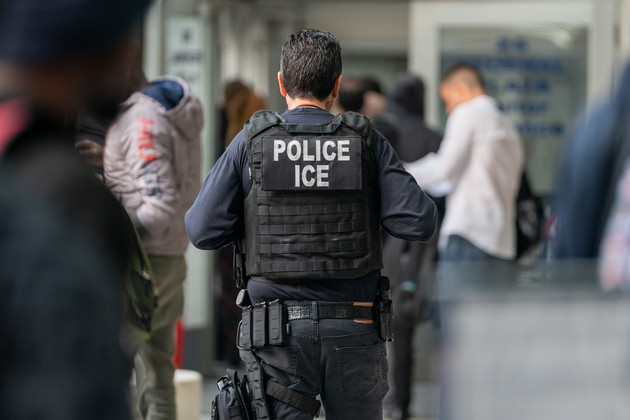
Complicating the situation further, earlier this week the child’s father filed for a temporary transfer of legal custody to his sister-in-law, who is also a U.S. citizen. Under state law, this move would have granted the sister-in-law custody of the children. However, an Immigration and Customs Enforcement (ICE) agent reportedly rejected the request, telling a family attorney that the father could attempt to pick up his daughter but warned he would face detention himself.
This case echoes a second, similar incident in Florida. According to media reports, a Cuban woman named Heidy Sánchez, who was breastfeeding her one-year-old daughter and married to a U.S. citizen, was detained at a scheduled immigration appointment and deported to Cuba within two days. Sánchez’s lawyer noted that her daughter suffers from seizures and argued that Sánchez, who has no criminal record, should have been allowed to remain in the United States on humanitarian grounds.
Thousands of undocumented immigrants have been detained since President Donald Trump returned to office on January 20, implementing a harder line on immigration enforcement. Trump’s policies have triggered a series of legal challenges nationwide.
In one high-profile case, the government admitted it mistakenly deported Kilmar Ábrego García, a Salvadoran national, but asserted that he was affiliated with the MS-13 gang—a claim strongly disputed by his attorney and family. Ábrego García has never been convicted of a crime. Although the U.S. Supreme Court unanimously ruled that efforts should be made to facilitate his return, the Trump administration has maintained that he will “never” be allowed to live in the United States again.
The cases raise broader concerns about the protections afforded to U.S. citizens and lawful residents under an immigration system experiencing renewed pressure and scrutiny.
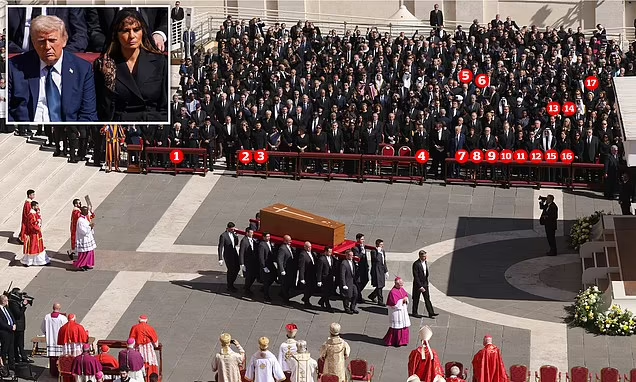
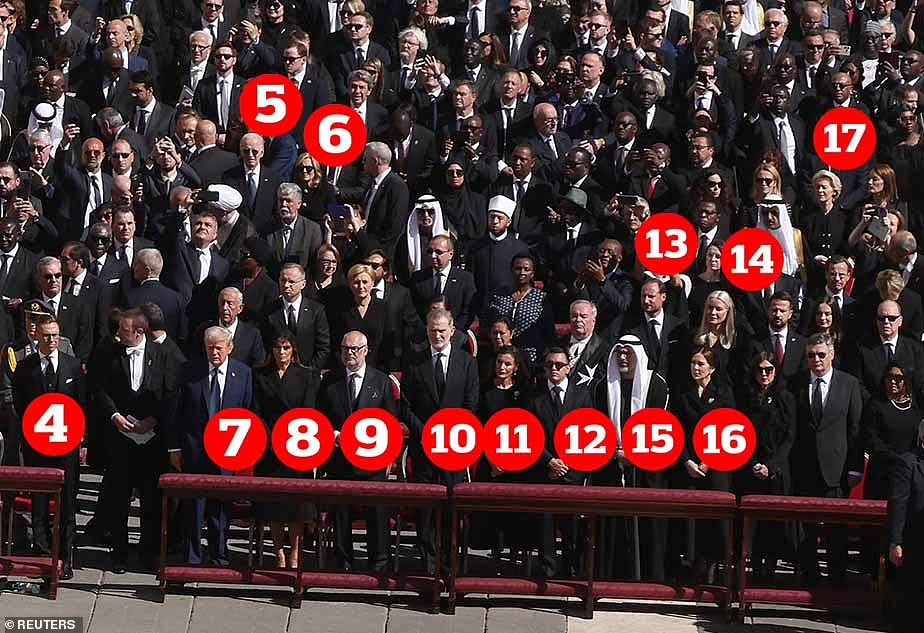
VATICAN CITY — The Vatican’s meticulously choreographed seating arrangement for Pope Francis’ funeral revealed subtle political maneuvering, placing President Donald Trump prominently in the front row while other major figures, including Prince William and Prime Minister Sir Keir Starmer, were relegated further back.
4. Alexander Stubb, President of Finland; 5. Joe Biden, former US President; 6. Jill Biden, former First Lady ; 7. Donald J Trump, US President; 8. Melania Trump, US First Lady; 9. Alar Karis, President of Estonia ; 10. King Felipe VI of Spain; 11. Queen Letizia of Spain; 12. Daniel Noboa, President of Ecuador; 13. Haakon, Crown Prince of Norway; 14. Mette-Marit, Crown Princess of Norway; 15. Mohammed bin Zayed Al Nahyan, President of the UAE; 16. Queen Mary of Denmark ; 17. Ursula von der Leyen, President of the European Commission
In a move that broke with traditional protocol, Ukraine’s President Volodymyr Zelensky was also moved forward to the front row, positioned just eleven seats away from Trump. The Vatican did not deny altering the formal seating plan, with spokesman Matteo Bruni suggesting to The Telegraph that a “vacant place” had been filled at the last moment.
The unusual seating adjustments came amid widespread anticipation that Trump might be placed in the third row, a position that could have been interpreted as a diplomatic slight. Instead, Trump was given a prominent place alongside First Lady Melania Trump, Irish President Michael D. Higgins, Ukraine’s Zelensky, and Argentina’s President Javier Milei. Milei was seated closest to Pope Francis’ simple wooden casket, a symbolic gesture acknowledging the late pope’s Argentine roots.
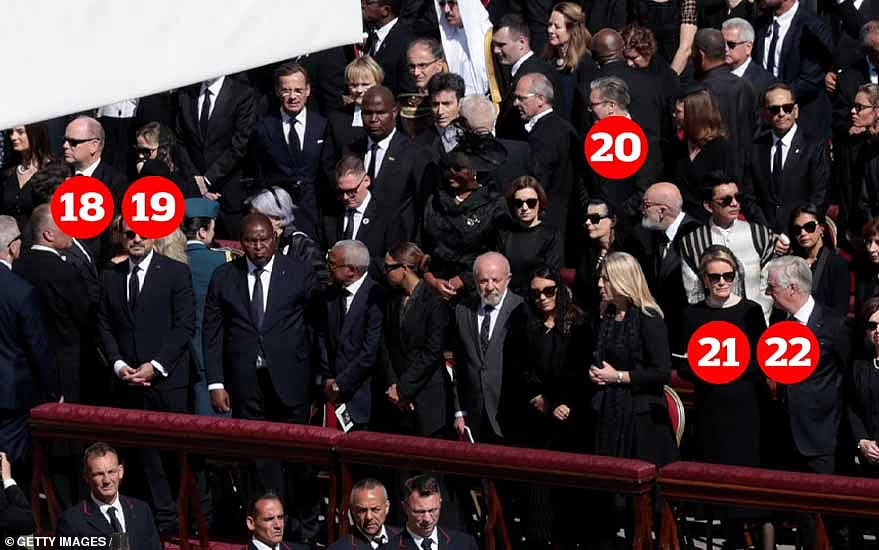
18. Albert II, Prince of Monaco; 19. Charlene, Princess of Monaco; 20. Sir Keir Starmer, UK Prime Minister (with his wife Victoria to the right); 21. Queen Mathilde of Belgium; 22. King Philippe of Belgium;
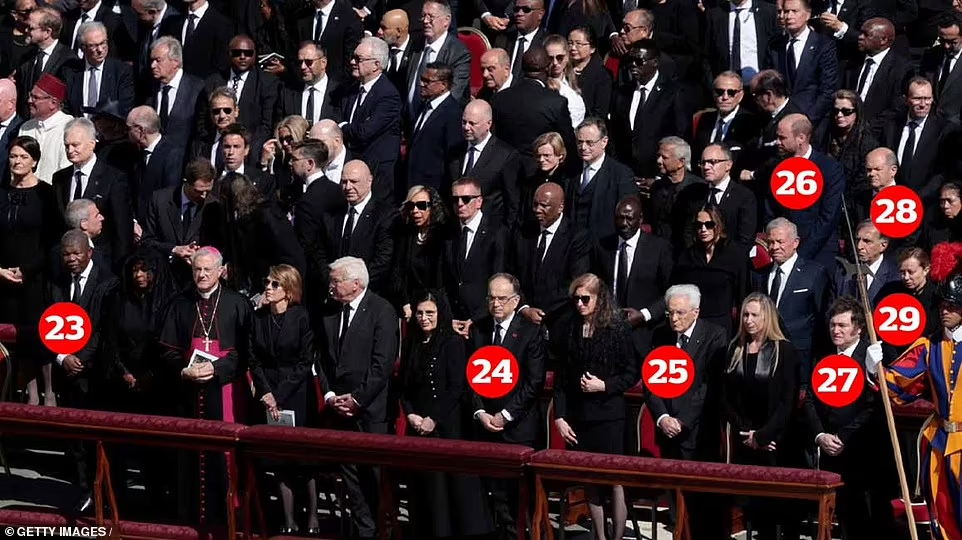
Italy’s President Sergio Mattarella and his daughter Laura sat adjacent to Milei, with Prime Minister Giorgia Meloni positioned directly behind them. Leaders of Albania and Angola also filled out the ranks surrounding the Italian delegation. Meanwhile, Prince William, attending on behalf of King Charles III, stood among world leaders two rows behind Milei, alongside German Chancellor Olaf Scholz.
Sir Keir Starmer, attending as the head of the United Kingdom’s government rather than as a head of state, was seated further back, accompanied by his wife Victoria. Also positioned in the mid-rows were European Commission President Ursula von der Leyen and other heads of government, reflecting Vatican protocol that prioritizes reigning monarchs and heads of state over prime ministers.
The Vatican’s system for seating dignitaries, established to navigate the sensitive egos of international leaders, operates on a diplomatic hierarchy and arranges seating in French alphabetical order. This explains why, under the French designations, the United States (“les États-Unis”) and Germany (“Allemagne”) appeared earlier in the sequence, securing more prominent positions, while the United Kingdom (“Royaume-Uni”) found itself placed further back.
1. Michael D Higgins, President of Ireland; 2. Olena Zelenska, First Lady of Ukraine; 3. Volodymyr Zelensky, President of Ukraine
Despite the rigor of this system, questions remained over Zelensky’s prominent placement, as “Ukraine” remains unchanged in French alphabetical terms. His advancement suggested a deliberate diplomatic exception, particularly given Francis’ controversial past comments urging Ukraine to consider “the courage of the white flag” in negotiations with Russia, a stance rejected by Ukrainian leadership.
There was no special concession for British representatives. Sir Keir Starmer, Lady Victoria Starmer, and Foreign Secretary David Lammy were seated among dignitaries from Qatar and Serbia. Cardinal Vincent Nichols, head of the Catholic Church in England and Wales, remarked ahead of the funeral that the Vatican’s planning would be a “masterpiece of stage management,” emphasizing Rome’s long history of handling leaders with inflated self-importance.
Cardinal Nichols, who will participate in the forthcoming conclave to elect Francis’ successor, praised the Vatican’s expertise in balancing diplomatic sensitivities, stating that every world leader attending was likely to return home feeling “reasonably content.”
Among other attendees, former U.S. President Joe Biden and First Lady Jill Biden also secured seats, though positioned about five rows behind Trump and Melania. Vatican officials clarified that no distinction was made between Catholic and non-Catholic royalty in seating assignments.
23. João Lourenço, President of Angola; 24. Bajram Begaj, President of Albania; 25. Sergio Mattarella, President of Italy; 26. Prince William; 27. Javier Milei, President of Argentina; 28. Olaf Scholz, Chancellor of Germany; 29. Giorgia Meloni, Prime Minister of Italy
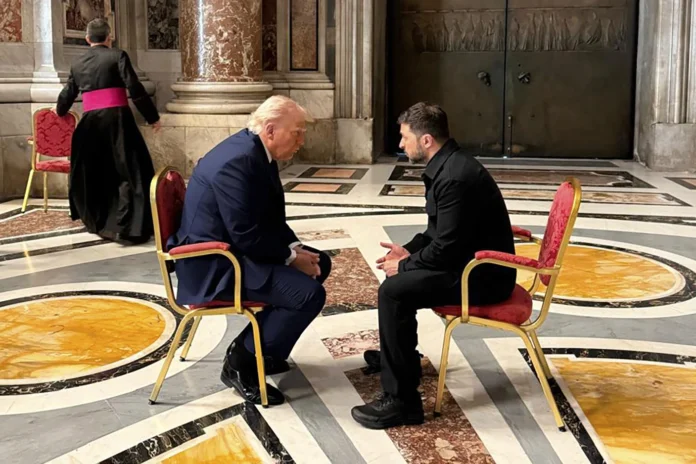
Beyond the carefully curated seating arrangements, diplomatic exchanges also took place. Images captured before the funeral showed Trump and Zelensky in an intense conversation, described as an almost literal tête-à-tête, rekindling dialogue months after a heated dispute during Trump’s White House tenure. Discussions involving Trump, Zelensky, French President Emmanuel Macron, and Prime Minister Starmer were reportedly underway, aimed at advancing efforts to broker peace in Ukraine.
Hundreds of thousands gathered in St. Peter’s Square and throughout the streets of Rome for the open-air Requiem Mass. Following the solemn service, Pope Francis’ coffin was driven across the Italian capital to its final resting place. Known as the “people’s pope” for his advocacy for society’s most vulnerable, Francis died on Monday at the age of 88, only hours after celebrating Easter with the public. His body lay in state for three days in St. Peter’s Basilica, where more than 250,000 mourners paid their respects before his coffin was sealed in a private ceremony.
As the Vatican embarks on nine days of official mourning before beginning the process of selecting a new pope, the funeral of Francis will be remembered as much for its symbolic gestures and subtle diplomacy as for the farewell to one of the most influential religious figures of the modern era.
WASHINGTON — President Donald Trump has begun implementing a migrant removal program to Rwanda, drawing sharp criticism of Prime Minister Sir Keir Starmer’s decision to abandon Britain’s similar deportation scheme less than a year ago.
According to US media reports, an Iraqi migrant has already been transferred to the East African nation, with additional removals scheduled in the coming weeks. The development puts renewed pressure on the Labour government, which dismissed the UK’s Rwanda plan as a “gimmick” before scrapping it immediately upon taking office.
A diplomatic cable obtained by reporters details the arrangement, describing a potential “removal program for third-country nationals” where the United States would finance housing, administrative costs, and integration programs in Rwanda for migrants removed from US territory.
The Trump administration’s swift action on migration policy contrasts starkly with the UK’s experience. Britain originally signed its Rwanda agreement in 2022 under then-Prime Minister Boris Johnson’s Conservative government as part of efforts to deter migrants from making dangerous Channel crossings in small boats.
However, the British plan became entangled in legal challenges after European judges intervened to stop the first scheduled deportation flight. Despite the UK government spending more than £700 million on the initiative, not a single removal flight ever departed British soil before Labour terminated the program.
Former Conservative Home Secretary Suella Braverman, who personally visited Rwanda during her tenure to oversee preparations for the scheme, called the US development “humiliating for the UK.”
“It would have made the British people safer and stopped the boats,” Braverman said. “The Americans are showing us what proper border control looks like.”
The parallels between the two countries’ approaches to migration control have reignited debate about the effectiveness of third-country processing. Critics of Labour’s decision argue that Starmer’s government prematurely abandoned a strategy that now appears viable under US implementation.
Defenders of Labour’s position maintain that the legal and ethical concerns surrounding the Rwanda scheme justified its cancellation. Current Home Secretary Yvette Cooper insists the government is pursuing alternative methods to increase deportations of illegal migrants through more conventional channels.
Immigration policy experts note that while the US and UK face different legal frameworks and migration challenges, Trump’s ability to operationalize a Rwanda-based solution so quickly raises questions about whether Britain’s approach was abandoned too hastily.
The White House has not commented officially on how many migrants might ultimately be transferred to Rwanda under the program, but sources familiar with the plan suggest it could become a significant component of Trump’s broader border security strategy if initial removals prove successful.
The development comes amid rising migration pressures on both sides of the Atlantic and growing public concern about border control in both countries.
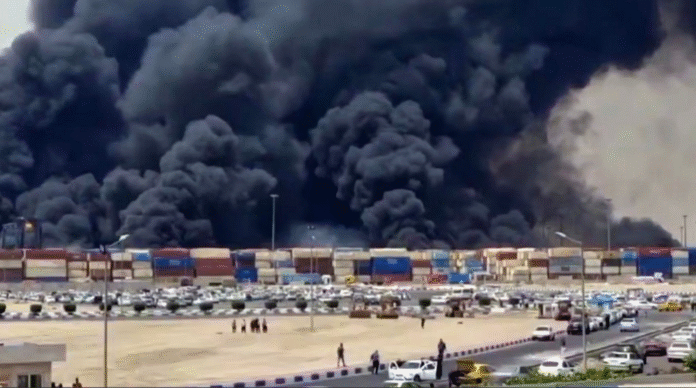
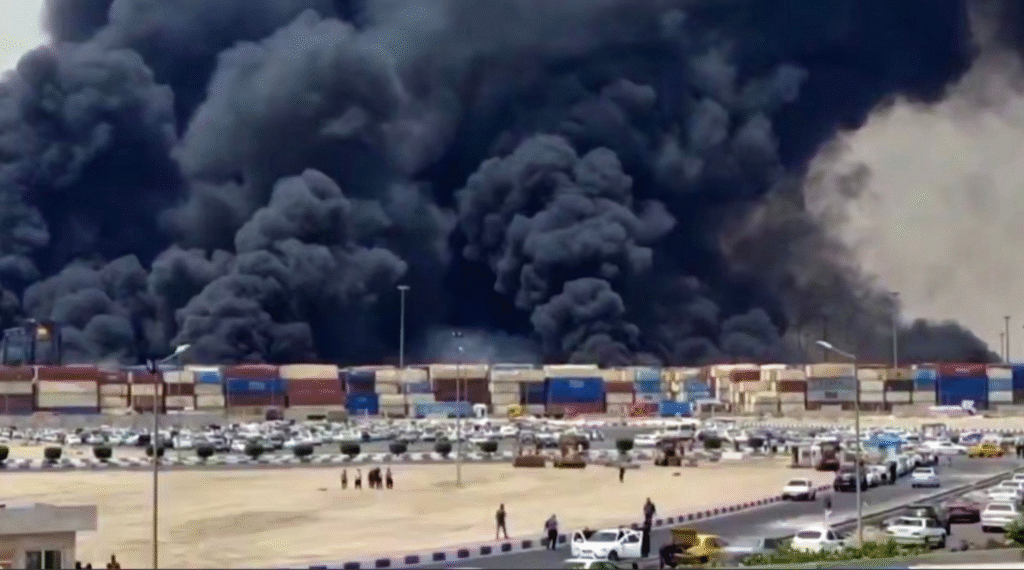
TEHRAN, Iran — A massive explosion suspected to have been caused by improperly stored chemical materials killed at least five people and injured more than 700 on Saturday at Iran’s busiest port, Bandar Abbas, state media reported.
The blast struck the Shahid Rajaee terminal, a vital hub for Iranian container shipping, sending a towering black and orange plume into the sky. The explosion occurred as Iran engaged in a third round of sensitive nuclear negotiations with the United States in Oman, though authorities stressed there was no evidence linking the two events.
Hossein Zafari, a spokesperson for Iran’s Crisis Management Organization, pointed to poor chemical storage practices as a likely cause. “The cause of the explosion was the chemicals inside the containers,” Zafari told Iran’s semi-official ILNA news agency. He added that previous warnings about safety lapses at Shahid Rajaee had gone unheeded.
An Iranian government spokesperson, however, cautioned that while chemicals likely triggered the blast, a full investigation would be needed to determine the precise cause. President Masoud Pezeshkian ordered a comprehensive inquiry and dispatched his Interior Minister to Bandar Abbas, where emergency crews battled to control the fire and prevent it from spreading further.
State television broadcast scenes of devastation: office buildings with doors blown off their hinges, streets littered with debris, and thick smoke choking the sky. The explosion was so powerful that it shattered windows across several kilometers and was heard on Qeshm Island, roughly 26 kilometers (16 miles) south of the port.
Located near the strategic Strait of Hormuz, the Shahid Rajaee port handles the majority of Iran’s containerized cargo, according to state media. Following the explosion, all port operations were suspended as customs officials evacuated trucks from the area and warned that the damaged container yard stored “dangerous goods and chemicals.”
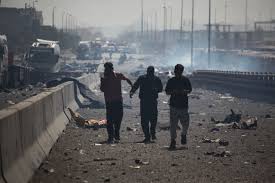
The semi-official Tasnim News Agency published video footage showing injured men lying along the roadside as first responders scrambled to provide aid amid chaotic scenes. State TV also reported that improper handling of flammable materials was a “contributing factor” to the blast.
A Pattern of Deadly Incidents
Saturday’s explosion fits into a broader pattern of deadly industrial accidents in Iran, many attributed to negligence or insufficient safety standards. Recent years have seen refinery fires, a gas explosion at a coal mine, and an emergency maintenance accident at Bandar Abbas itself that killed a worker in 2023.
While negligence has been blamed for many domestic incidents, Iran has also pointed fingers at Israel for attacks on sensitive infrastructure. Tehran accused Israel of orchestrating the February 2024 attack on its gas pipelines and a 2020 cyberattack that paralyzed computers at Shahid Rajaee port. The Washington Post reported that Israeli forces likely carried out the 2020 cyberattack as retaliation for an Iranian cyberoffensive.
Israel, wary of U.S.-Iran nuclear talks, has consistently demanded the complete dismantlement of Iran’s nuclear program. Tehran maintains that its nuclear activities are for peaceful purposes, though international monitors have expressed increasing concerns that Iran’s program is nearing the capability to develop a nuclear weapon.
There was no immediate response from Israel’s military or from Prime Minister Benjamin Netanyahu’s office when asked whether Israel had any involvement in Saturday’s explosion.
Despite the scale of the blast, Iranian authorities emphasized that no oil facilities had been affected. The National Iranian Petroleum Refining and Distribution Company released a statement clarifying that the explosion had “no connection to refineries, fuel tanks, distribution complexes, and oil pipelines.”
As the investigation continues, Bandar Abbas remains a scene of recovery and uncertainty, with the blast highlighting long-standing vulnerabilities in Iran’s critical infrastructure at a tense moment in its international relations.
VATICAN CITY — Rome and the world came together Saturday to bid an emotional farewell to Pope Francis, who died Monday at 88 after suffering a stroke. Tens of thousands of mourners, world leaders, and clergy filled St. Peter’s Square for a solemn ceremony celebrating the life and legacy of the Argentine pontiff, who championed the marginalized, fought for migrants’ rights, and urged protection of the planet.
The funeral Mass, presided over by Italian Cardinal Giovanni Battista Re, reflected Francis’ profound connection to contemporary challenges. Re, speaking in spiritual but unmistakably clear language, urged the Church not to turn back from the path Francis had forged, calling him “rich in human warmth and deeply sensitive to today’s challenges.”
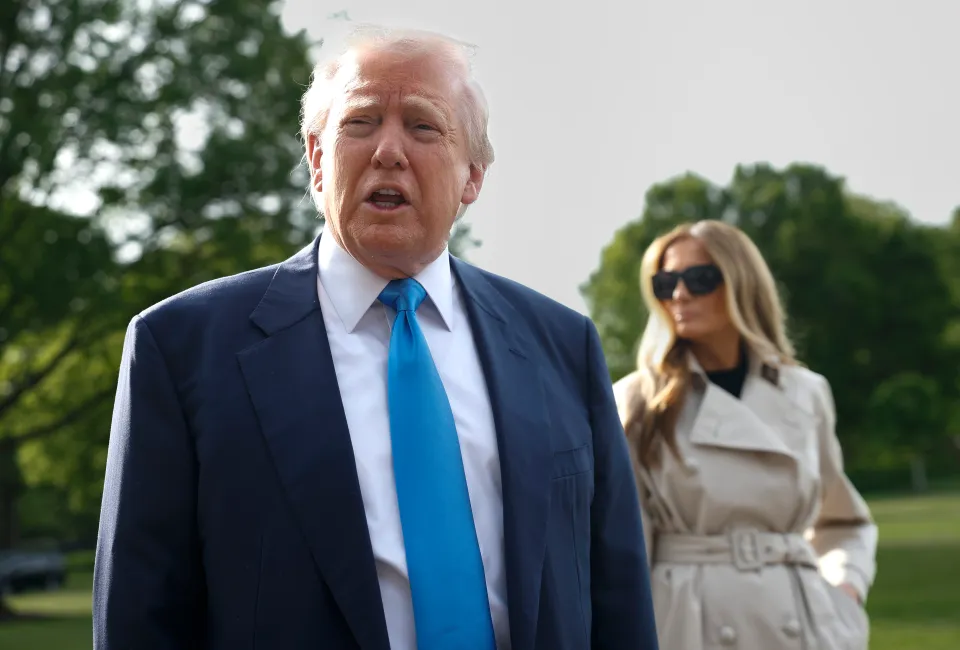
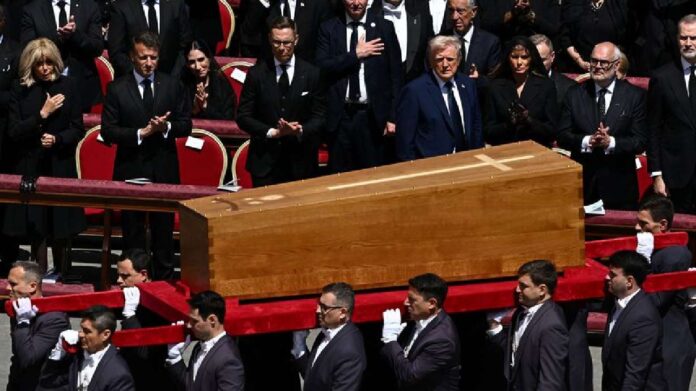
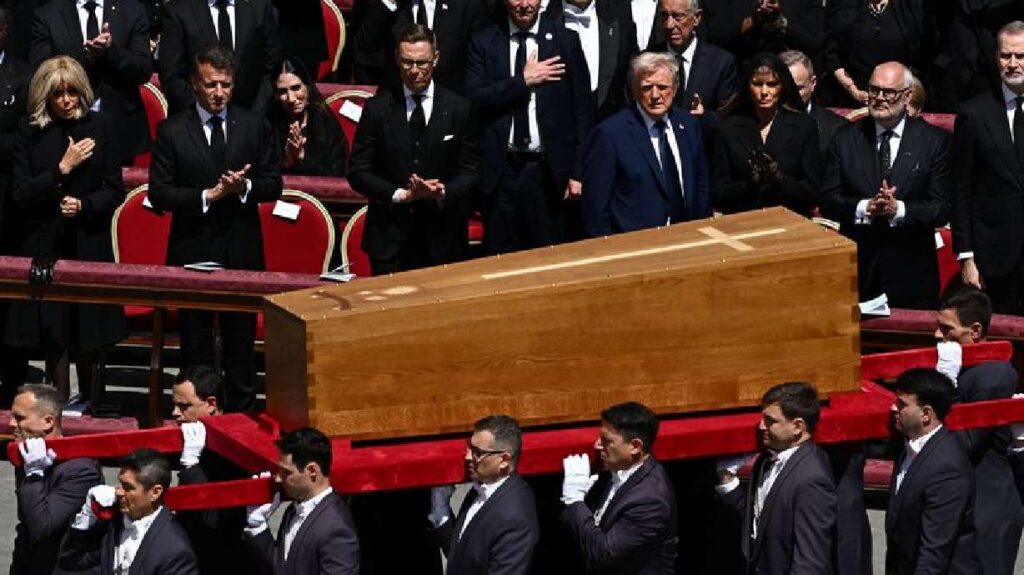
U.S. President Donald Trump, who frequently clashed with Francis on issues such as climate change, immigration, and wealth inequality, was seated among foreign dignitaries to one side of the coffin. Opposite them sat the cardinals who, next month, will gather in conclave to choose Francis’ successor — a decision likely to shape the future direction of the Catholic Church for decades.
The ceremony, infused with symbolism and grandeur, began as Francis’ simple wooden coffin, inlaid with a cross, was carried out into the sun-drenched square by 14 white-gloved pallbearers. Applause rippled through the crowd, estimated by the Vatican at more than 250,000, as the procession began. Cheers erupted again at the close of the service, when ushers lifted the casket and tilted it slightly so more mourners could offer their goodbyes.
A stunning aerial view revealed a sea of colors — the black attire of world leaders, the cardinal red of approximately 250 cardinals, the purple robes of 400 bishops, and the white cassocks worn by 4,000 priests. Choirs filled the air with Latin hymns and prayers were offered in Italian, Spanish, Chinese, Portuguese, and Arabic, underscoring the global breadth of the 1.4-billion-member Church.
After the Mass, the coffin was placed on an open-topped popemobile for one final journey through Rome. The solemn procession left through the Vatican’s Perugino Gate, not far from the modest Santa Marta guesthouse where Francis had famously chosen to reside, shunning the ornate Apostolic Palace. Along the 5.5-kilometer route to St. Mary Major Basilica, where Francis wished to be laid to rest, crowds estimated at 150,000 gathered, waving flags, tossing flowers, and chanting “Viva il Papa!” and “Ciao, Francesco.”
Francis’ choice to be buried at St. Mary Major, rather than in the Vatican, marked the first time in more than a century that a pope had chosen to rest outside St. Peter’s. The private burial ceremony aligned with his lifelong emphasis on humility and simplicity. Departing from tradition, Francis was interred in a single zinc-lined wooden coffin, foregoing the customary triple casket. His tomb bears only the Latin inscription “Franciscus,” and above it hangs a replica of the iron-plated cross he once wore.
During the funeral, President Trump and Ukrainian President Volodymyr Zelenskyy briefly met inside St. Peter’s Basilica — their first in-person encounter since a tense Oval Office meeting in February. In a photograph released by Zelenskyy’s office, the two leaders were pictured sitting closely, speaking intently. A White House official described the conversation as “very productive,” while Zelenskyy called it a “good meeting.”
The funeral drew an extraordinary assembly of dignitaries, including the presidents of Argentina, France, Gabon, Germany, the Philippines, and Poland, as well as prime ministers from Britain and New Zealand. Spain’s King Felipe VI and Queen Letizia were among the many royals present.
Over the three days preceding the funeral, more than 250,000 mourners had filed past Pope Francis’ open coffin as it lay before the altar of the grand basilica, paying their final respects to the first non-European pontiff in nearly 1,300 years. Francis spent his 12-year papacy reshaping the Catholic Church by advocating for the poor, emphasizing compassion over dogma, and calling on wealthy nations to act on climate change.
A formal summary of his life, written in Latin, was placed beside his body, praising his “wonderful testimony of humanity, of a holy life and of universal fatherhood.”
Francis’ push for transparency and a modernized Church met fierce resistance from traditionalists, and many of his calls for peace, economic justice, and environmental stewardship went unheeded. Yet his final wishes — for a funeral stripped of excess and a humble burial — remained an enduring testament to the ideals he spent his life promoting.
As the Church enters a period of mourning and transition, attention now turns to the coming conclave, expected to begin no earlier than May 6. In the weeks ahead, cardinals will meet to assess the state of a Church still grappling with internal divisions, financial challenges, and the enormous task of choosing a leader who can carry forward, or redirect, the powerful legacy of Pope Francis.
ROME — President Donald Trump on Saturday cast new doubt over the possibility of a swift end to the war in Ukraine, saying he questions whether Russian President Vladimir Putin truly wants peace, just one day after he had suggested a deal was near.
“There was no reason for Putin to be shooting missiles into civilian areas, cities and towns, over the last few days,” Trump wrote in a post on social media, as he traveled back to the United States following Pope Francis’ funeral at the Vatican. Trump met briefly with Ukrainian President Volodymyr Zelenskyy on the sidelines of the ceremony.
Hinting at possible new economic measures against Moscow, Trump added, “It makes me think that maybe he doesn’t want to stop the war, he’s just tapping me along, and has to be dealt with differently, through ‘Banking’ or ‘Secondary Sanctions?’ Too many people are dying!!!”
Trump’s public airing of doubts marks a stark shift from his comments just one day earlier, when he had sounded optimistic about peace prospects. Speaking after a meeting between his special envoy, Steve Witkoff, and Putin in Moscow, Trump had said Ukraine and Russia were “very close to a deal.”
The reversal underscores growing frustrations within the Trump administration as efforts to broker an end to the conflict intensify. The war, launched by Russia’s full-scale invasion of Ukraine in February 2022, has dragged on with heavy casualties and little sign of lasting peace.
The encounter between Trump and Zelenskyy inside St. Peter’s Basilica — their first since a heated Oval Office exchange earlier this year — lasted about 15 minutes. It ended without a second, scheduled follow-up meeting due to tight travel schedules, according to Zelenskyy’s spokesperson, Serhii Nykyforov.
After the meeting, Zelenskyy characterized the conversation as a “good meeting,” stating on social media, “We discussed a lot one on one. Hoping for results on everything we covered. Protecting lives of our people. Full and unconditional ceasefire. Reliable and lasting peace that will prevent another war from breaking out.” He also met separately with British Prime Minister Keir Starmer.
The White House similarly called the discussion “very productive,” highlighting the symbolism of the talks taking place during Pope Francis’ funeral, a leader who had long championed calls for peace between Ukraine and Russia.
Trump had arrived in Italy on Friday evening, immediately calling for “very high level talks” between Ukraine and Russia. However, neither Putin nor Zelenskyy publicly responded to his proposal for direct negotiations.
Although Zelenskyy has accepted an American proposal for an initial 30-day ceasefire, Russia has yet to agree, continuing to launch strikes on Ukrainian cities. Trump’s call for restraint came Thursday after a deadly Russian missile barrage on Kyiv, during which he publicly urged Putin to “STOP!”
Trump’s wavering optimism comes amid internal U.S. political pressure. Senator Chuck Grassley, R-Iowa, urged Trump on Friday to impose “the toughest of sanctions” against Russia, warning that Putin was “playing America as a patsy.” Trump has so far hesitated, even as he announced sweeping new global tariffs this month that notably excluded Russia.
Meanwhile, Putin, facing an International Criminal Court arrest warrant for alleged war crimes, did not attend the Vatican funeral.
Zelenskyy has maintained pressure for real action, saying Friday night that “very significant meetings may take place” in the coming days. He repeated calls for an unconditional ceasefire, asserting that “real pressure on Russia is needed so that they accept either the American proposal to cease fire and move towards peace, or our proposal.”
Diplomatic efforts continue despite growing tensions. Yet complicating matters further are Trump’s recent public statements on Ukraine’s territorial claims. In an interview with Time magazine published Friday, Trump said that Crimea — which Russia annexed in 2014 — should remain under Russian control, calling Ukrainian efforts to reclaim it “unrealistic.”
“Everybody understands that it’s been with them for a long time,” Trump said during the interview conducted Tuesday at the White House.
Russia also currently occupies parts of the Luhansk, Donetsk, Zaporizhzhia, and Kherson regions following its 2022 invasion, all territories Kyiv has pledged to regain.
As diplomatic momentum builds, Trump’s shifting tone on Putin and the war underscores both the urgency and fragility of negotiations aimed at ending Europe’s deadliest conflict in decades.
MOSCOW — A senior Russian military official was killed Friday in a car bomb attack outside Moscow, in what Kremlin authorities quickly labeled an act of terrorism and blamed on Ukraine, further deepening tensions between the two countries as the war enters its fourth year.
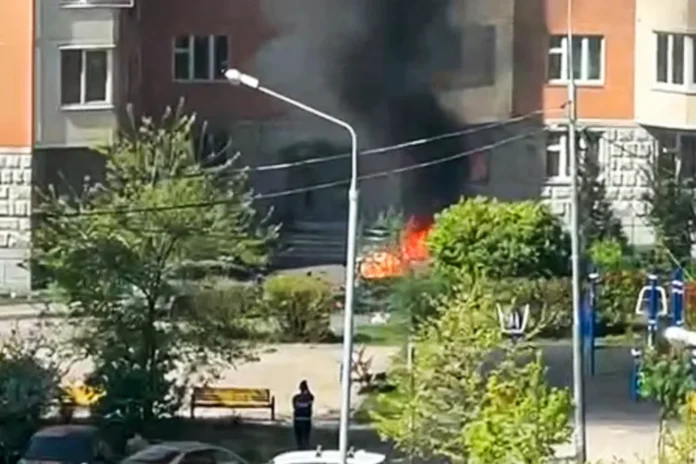
Lt. Gen. Yaroslav Moskalik, a high-ranking figure in Russia’s armed forces, was fatally wounded when an explosive device detonated inside a Volkswagen Golf in the city of Balashikha, a suburban district located just east of the capital. According to Svetlana Petrenko, spokesperson for Russia’s federal Investigative Committee, the bomb was a homemade device packed with shrapnel and appears to have been designed for maximum lethality.
“The detonation of the device resulted in the death of Lt. Gen. Moskalik at the scene,” Petrenko said in a televised statement. She confirmed that a criminal investigation had been launched into the explosion, which she described as an act of terrorism.
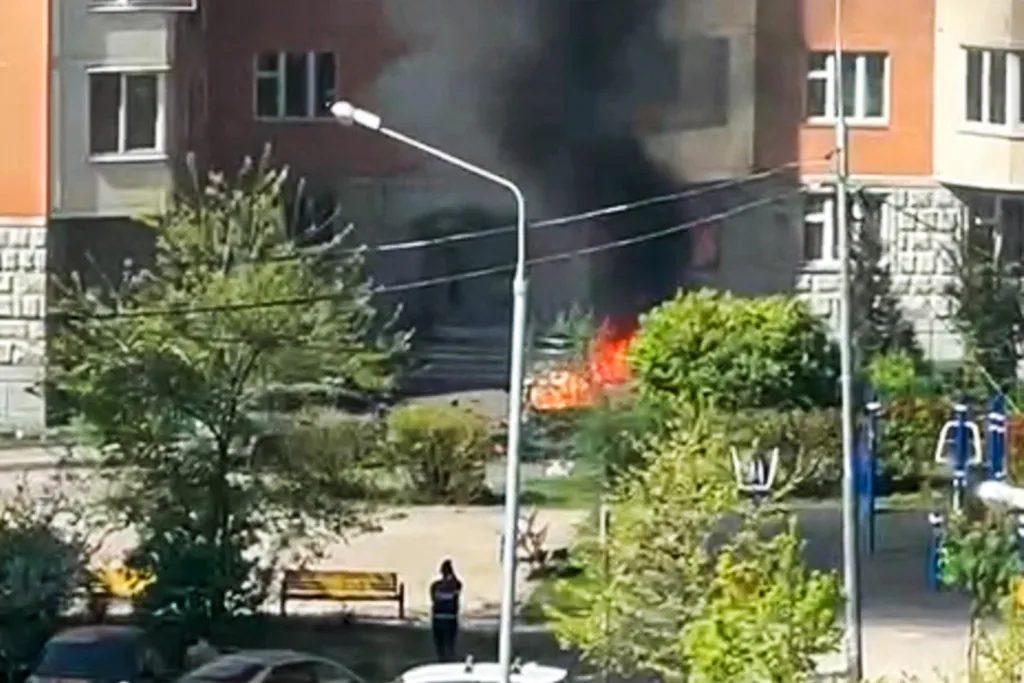
Video released by Russian investigators showed the scorched remains of the vehicle on a desolate road, its hood blown open and the cabin reduced to charred debris. It was not immediately clear whether Moskalik was inside the car at the time of the explosion or in close proximity when the device was triggered.
Kremlin spokesperson Dmitry Peskov did not hesitate to implicate Kyiv during a press briefing, stating, “The Kyiv regime once again shows its nature,” and accusing Ukrainian forces of continuing what he called “terrorist activity” on Russian soil. However, Moscow has not formally presented evidence linking Ukraine to the attack, and Ukrainian officials have not commented on the accusation.
Maria Zakharova, spokesperson for the Russian Foreign Ministry, echoed the allegations, characterizing the bombing as a “terrorist act,” and claimed the attack fits a broader pattern of operations targeting Russian officials and military figures.
“This is not an isolated incident,” Zakharova said. “We have seen repeated attempts to assassinate Russian personnel, both military and civilian, as part of Kyiv’s hybrid warfare strategy.”
Moskalik is the latest in a string of high-profile Russian figures to be assassinated or targeted since the start of the war in February 2022. The list includes pro-war commentator Darya Dugina and former submarine commander Stanislav Rzhitsky, both of whom were killed in bombings or shootings that Moscow has attributed to Ukrainian intelligence or its affiliates.
Authorities said the investigative team assigned to Moskalik’s case includes forensic analysts, bomb specialists, and top federal law enforcement personnel. The city of Balashikha, home to numerous military facilities, has been placed under heightened security.
The car bombing comes as Russia intensifies its aerial assault on Ukrainian cities. Overnight Thursday, a barrage of Russian missiles killed at least 12 civilians in Kyiv, drawing sharp condemnation from President Donald Trump.
“I am not happy with the Russian strikes on KYIV. Not necessary, and very bad timing,” Trump wrote on his Truth Social platform. In a direct appeal to Russian President Vladimir Putin, Trump added: “Vladimir, STOP! Let’s get the Peace Deal DONE!”
Speaking to reporters Thursday, Trump expressed confidence that Putin would heed his call to end the strikes and reiterated his belief that both sides ultimately desire peace. However, Trump also vented frustration over Ukrainian President Volodymyr Zelenskyy’s continued refusal to consider territorial concessions as part of a potential ceasefire.
That position was challenged Friday by Kyiv Mayor Vitali Klitschko, who publicly stated that Ukraine may need to contemplate giving up some territory to achieve peace — a rare public deviation from Ukraine’s official stance.
The remarks drew swift criticism from Zelenskyy’s office. Serhiy Leshchenko, a senior adviser, called Klitschko’s comments “counterproductive” during an interview with the BBC, emphasizing that the Ukrainian government remains committed to reclaiming all occupied territories, including Crimea.
Meanwhile, Russian state media released new footage of U.S. envoy Steve Witkoff’s latest meeting with Putin in Moscow. Witkoff, who has emerged as the central figure in President Trump’s Ukraine peace push, has held multiple closed-door sessions with the Russian leader over the past several months.
With another high-ranking Russian general now dead and both sides engaged in parallel diplomatic and military maneuvers, the path to a negotiated resolution remains uncertain — but the stakes, and the death toll, continue to rise.