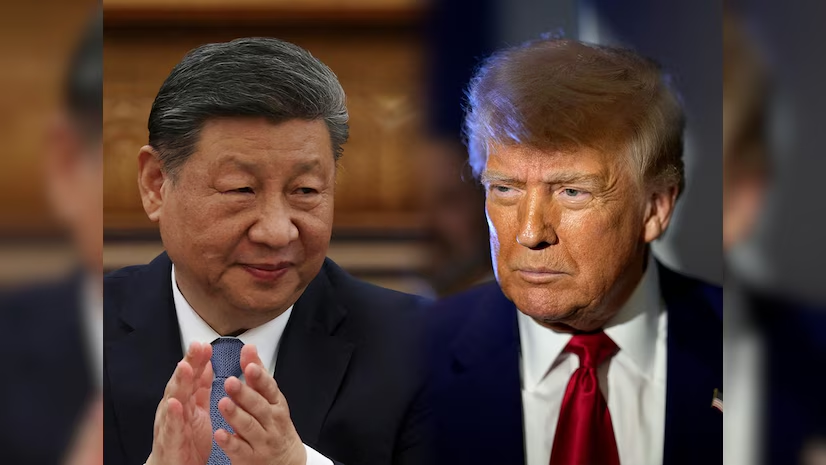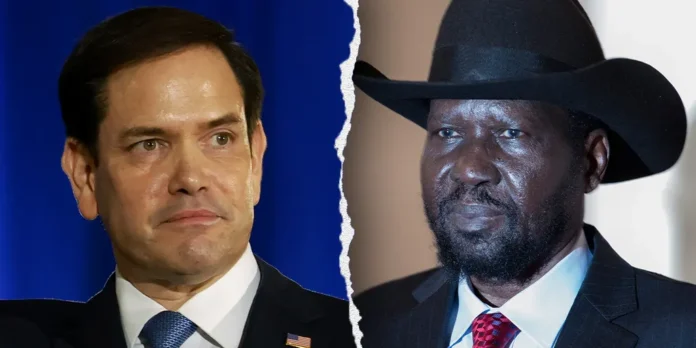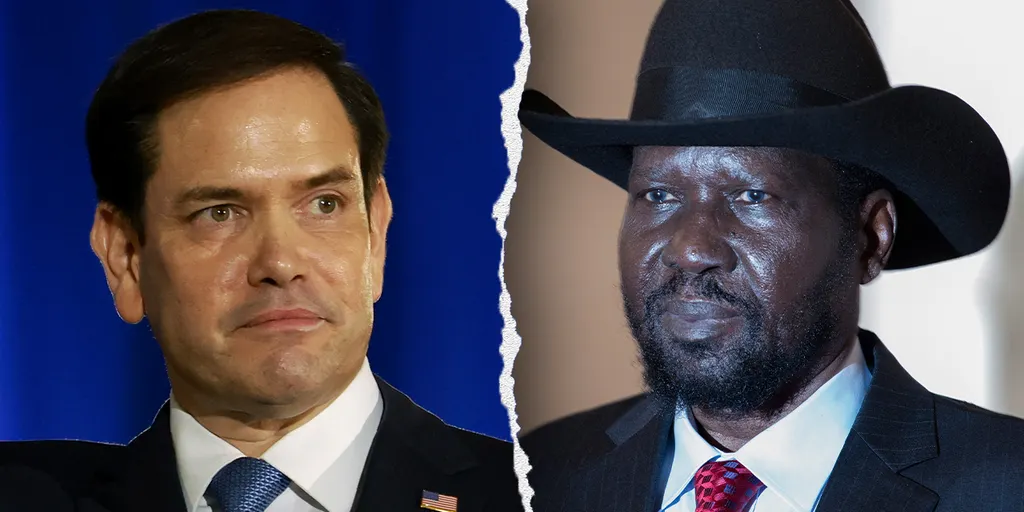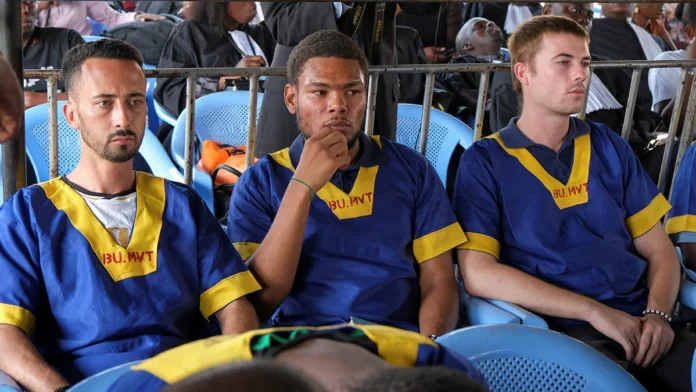
The Trump administration is weighing broad travel restrictions for citizens of dozens of countries as part of a potential new ban, according to sources familiar with the matter and an internal memo obtained by Reuters.
The memo outlines 41 countries divided into three categories. The first group, comprising 10 nations including Afghanistan, Iran, Syria, Cuba, and North Korea, would face a full visa suspension.
A second group of five countries—Eritrea, Haiti, Laos, Myanmar, and South Sudan—would be subject to partial suspensions affecting tourist, student, and immigrant visas, with certain exceptions.
A third group, consisting of 26 nations such as Belarus, Pakistan, and Turkmenistan, could face partial visa suspensions if their governments fail to address security and vetting concerns within 60 days, the memo states.
A U.S. official, speaking on condition of anonymity, emphasized that the list is subject to change and has not yet received final approval from the administration, including U.S. Secretary of State Marco Rubio.
The **New York Times** first reported on the proposed travel restrictions.
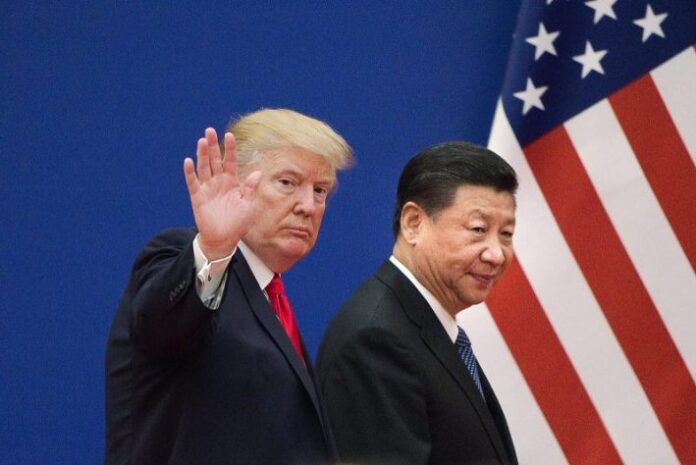
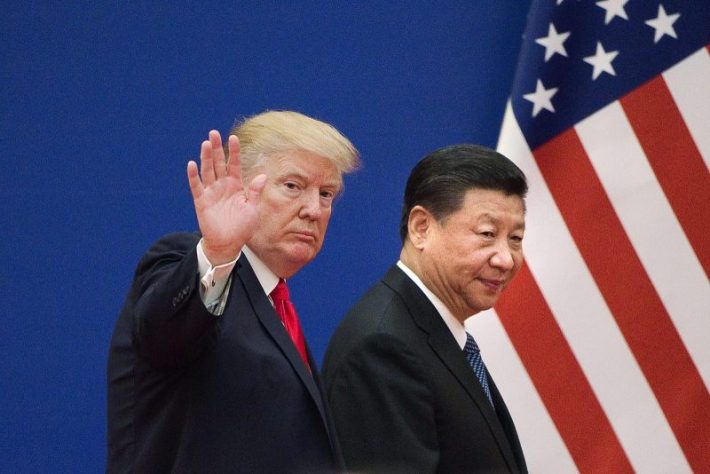
The move mirrors President Donald Trump’s 2017 travel ban on seven Muslim-majority nations, a policy that underwent multiple legal challenges before being upheld by the Supreme Court in 2018.
Trump issued an executive order on January 20 mandating enhanced security screening for foreign nationals seeking entry into the U.S. The order required cabinet officials to submit a list by March 21 identifying countries where vetting procedures were deemed inadequate, warranting partial or full travel suspensions.
The proposed restrictions are part of a broader immigration crackdown initiated at the start of Trump’s second term. In an October 2023 speech, he previewed his plan, vowing to restrict travel from the Gaza Strip, Libya, Somalia, Syria, Yemen, and other regions deemed national security risks.
The State Department has not responded to a request for comment from Reuters.
As the United States expands its border security objectives deeper into Central America, Guatemala faces mounting pressure to strengthen its own border enforcement efforts.
On Thursday, a Guatemalan army unit conducted patrols along the Suchiate River, which forms the western boundary between Guatemala and Mexico. The operation is part of an intensified border security initiative launched in January, according to Col. Juan Ernesto Celis.
Guatemalan President Bernardo Arévalo has acknowledged migration as a fundamental right but emphasized the need for regulated movement.
The soldiers on patrol aim to curb illegal arms trafficking, drug smuggling, and human trafficking across Guatemala’s borders. Along this stretch, Guatemalan forces frequently coordinate with their Mexican counterparts to enhance security.
Ann Marie Argueta, spokesperson for Guatemala’s Defense Ministry, stated that the military’s mission extends beyond crime prevention to countering incursions by transnational organized crime into national territory.
In February, during a visit by U.S. Secretary of State Marco Rubio, Arévalo announced the formation of a new border security force to monitor Guatemala’s frontiers with Honduras and El Salvador.
Concerns over border security have been amplified by violence in Mexico’s cartel-controlled regions. Last July, nearly 600 Mexican residents fled cartel violence near the Guatemala border, seeking refuge across the border. Sinaloa and Jalisco, two of Mexico’s most powerful cartels, continue to battle for dominance over drug smuggling routes in southern Mexico.
Millions of people across South Asia marked Holi, the Hindu festival of colors, on Friday, covering each other in brightly colored powder, dancing to festive music, and indulging in traditional sweets.
The raucous spring festival is a vibrant celebration marking the end of winter and the triumph of good over evil. In India, Holi is a national holiday, while in Nepal, it is observed over two days. The festival is also celebrated in other South Asian countries and by the Indian diaspora worldwide.
Rooted in Hindu mythology, Holi commemorates the divine love between the god Krishna and his consort Radha, symbolizing renewal and joy.
Dressed predominantly in white, revelers hurled colored powder at one another, while children flung water balloons filled with vibrant pigments from rooftops and balconies. In public parks and on streets, groups of young men wielded water guns, chasing passersby, as others danced to blaring music.
In New Delhi, a rainbow haze settled over a park where friends doused each other in pigmented powder and colored water.
“It’s time for fun and frolic,” said Krisha Bedi, a lawyer, whose face was streaked with red, green, and blue powders.
In some regions, people replaced colored powders with marigolds, roses, and jasmine petals.
Massive celebrations unfolded in Ahmedabad, where thousands gathered at temples to be sprayed with colored water from large pipes while dancing to traditional Gujarati music.
Food and drink are integral to the festivities. Vendors across India sold **thandai**, a traditional milk-based beverage infused with cardamom and dried fruit, and **gujia**, a deep-fried pastry stuffed with sweetened milk curds and nuts. Another tradition associated with Holi is **bhang**, a cannabis-infused drink linked to Hindu deity Shiva, legally available at government-licensed shops.
Bonfires lit up the night before Holi in many parts of India, symbolizing the destruction of evil. Families gathered around the flames to sing, dance, and offer prayers.
In two northern towns, hundreds of women took part in **Lathmar Holi**, or “Stick Holi,” playfully striking men with wooden sticks in a ritual reenactment of a Hindu legend.
An Israeli airstrike in Beit Lahia, northern Gaza, killed at least nine people, including charity workers, and injured several others, the enclave’s Government Media Office said Saturday. The strike is the deadliest since the ceasefire took effect in January.
Palestinians watch as smoke rises following Israeli strikes, amid the ongoing conflict between Israel and Hamas, in Nuseirat in the central Gaza Strip, November 1, 2024. REUTERS/Ahmed Mustafa TPX IMAGES OF THE DAY
The Israel Defense Forces stated they had targeted “terrorists” operating in the area and attempting to retrieve a drone. Gaza’s health ministry confirmed the deaths and reported that multiple critically injured individuals were transported to Gaza’s Indonesian Hospital.
Among the dead were three members of a media team documenting humanitarian relief efforts, according to the Palestinian Journalists’ Protection Center. Hamas condemned the attack, calling it “a horrific massacre” and alleging that those killed were engaged in humanitarian work at shelters and displacement centers.
“The targeting of unarmed civilians, especially those providing humanitarian aid, constitutes a blatant violation of international and humanitarian law,” said Ismail Thawabta, Director General of Hamas’ Government Media Office.
Eyewitness Mahmoud Louay Atiya described the aftermath, stating he had to extinguish fires caused by the strike using bottles of water. “I helped two people—one was already dead, and the other was injured but still alive. I managed to remove multiple bodies. There were no ambulances or fire trucks,” he said.
Another witness reported the death of his 17-year-old son, who was not affiliated with Hamas or any militant group. “He was working in one of the camps, and they told me he had been killed. I don’t know exactly how it happened,” he said.
The IDF confirmed striking two individuals operating a drone that posed a threat to its troops. “Later, additional terrorists collected the drone equipment and entered a vehicle. The IDF struck the terrorists,” the military said.
Israeli military operations in Gaza have continued since the ceasefire, citing responses to militant threats or Hamas violations. However, casualties have declined since the truce began.
The attack comes as the United States pushes a new proposal to extend the ceasefire, which includes securing the release of hostages held by Hamas in exchange for an extension of the truce. The proposal also calls for lifting Israel’s blockade on humanitarian aid to Gaza, which has been in effect for nearly two weeks.
Hamas confirmed Friday that it had responded to the ceasefire extension proposal and approved the release of American-Israeli soldier Edan Alexander and the remains of four dual nationals held hostage in Gaza.
Secretary of State Marco Rubio announced that South Africa’s ambassador to the United States, Ebrahim Rasool, “is no longer welcome” in the country.
Rubio made the declaration in a post on X, accusing Rasool of being a “race-baiting politician” who opposes former President Donald Trump and labeling him “persona non grata.”
The State Department did not provide further details on the decision.
It is highly unusual for the U.S. to expel a foreign ambassador, though lower-ranking diplomats have been targeted more frequently in past diplomatic disputes.
Meanwhile, Trump has signed an executive order cutting aid and assistance to South Africa’s Black-led government. The former president cited concerns over a new law that allows the expropriation of private land, claiming it disproportionately affects Afrikaners, descendants of Dutch colonial settlers.
The Senate passed a six-month spending bill on Friday, just hours before a potential government shutdown, overcoming sharp Democratic opposition and sending the measure to President Donald Trump for approval.
The bill cleared the Senate with a 54-46 vote.
Senators also moved forward on legislation that would allow the District of Columbia to maintain its 2025 budget rather than reverting to 2024 funding levels. The bill aims to overturn a provision in the government spending package that mandated approximately $1 billion in budget cuts, a measure that sparked strong objections from the mayor and residents.
Senate Majority Leader Chuck Schumer hailed the bill as “very good news” and urged the House to act swiftly.
If approved, the legislation—separate from the broader government funding package—will proceed to the House. Lawmakers are currently out of town but are expected to take up the measure upon their return.
Iraqi Prime Minister Mohammed Shia al-Sudani announced Friday that Iraqi security forces, with support from the U.S.-led coalition, have killed Abdallah Makki Muslih al-Rufay’i, also known as Abu Khadija, the leader of Islamic State in Iraq and Syria.
Al-Sudani described Abu Khadija as “one of the most dangerous terrorists in Iraq and the world.” His death marks a significant blow to the group, which has been attempting to regain influence in the Middle East, the West, and Asia after losing its territorial control.
Islamic State ruled over millions in Iraq and Syria under strict Islamist governance before suffering major defeats. In 2014, former leader Abu Bakr al-Baghdadi declared a caliphate over large areas of both countries, only to be killed in a U.S. special forces raid in northwest Syria in 2019 as the group collapsed.
The U.S. Central Command reported last July that Islamic State was working to “reconstitute following several years of decreased capability.” The assessment was based on the group’s claims of conducting 153 attacks in Iraq and Syria during the first half of 2024, a figure that, if sustained, would more than double the number of attacks recorded the previous year.
Syria’s interim president signed a temporary constitution Thursday, placing the country under Islamist rule for five years while pledging to protect the rights of all citizens during the transitional period.
The interim leadership has faced challenges in consolidating control following the December overthrow of longtime President Bashar Assad by the Islamist former insurgent group Hayat Tahrir al-Sham (HTS). Ahmad al-Sharaa, a former HTS leader, assumed the presidency after an agreement among armed groups that led the offensive against Assad. At the same meeting, leaders repealed the previous constitution and committed to drafting a new one.
While many Syrians welcomed the end of Assad’s 50-year rule, religious and ethnic minorities have expressed skepticism about the new Islamist-led government and remain hesitant to accept its authority.
Abdulhamid Al-Awak, one of seven committee members assigned by al-Sharaa to draft the temporary constitution, said it retains certain provisions from the previous constitution, including the requirement that the head of state be Muslim and that Islamic law serve as the primary source of jurisprudence. However, he stated that the document also enshrines protections for freedom of expression and the media.
The temporary constitution aims to “balance social security and freedom” during Syria’s volatile political transition, Al-Awak said. It establishes a strict separation of legislative, executive, and judicial powers. The document, published late Thursday, outlines the creation of a People’s Committee to serve as an interim parliament until a permanent constitution is adopted and elections are held. Two-thirds of its members will be appointed by a committee selected by the interim president, while al-Sharaa will directly appoint the remaining third.
The document states that the government is “committed to combatting all forms of violent extremism while respecting rights and freedoms” and affirms that “citizens are equal before the law without discrimination based on race, religion, gender, or lineage.” It defines the army as a “professional national institution” with exclusive control over armed forces and criminalizes “glorifying the former Assad regime.”
A committee to draft a permanent constitution will be formed, but it remains unclear whether it will be more inclusive of Syria’s political, religious, and ethnic groups.
On Monday, al-Sharaa reached a ceasefire agreement with U.S.-backed Kurdish-led authorities in northeastern Syria, which includes the integration of their armed forces into the central government’s security agencies. The deal followed the suppression of an insurgency last week by pro-Assad gunmen. Rights groups report that retaliatory attacks by factions in the counteroffensive led to the deaths of hundreds of civilians, primarily from Assad’s Alawite sect.
The interim constitution provides a timeline for Syria’s political transition. Al-Sharaa has said that drafting a permanent constitution could take up to three years, while national elections could take up to five years.
Al-Sharaa convened a national dialogue conference last month, leading to the adoption of the temporary constitution and the scheduling of interim parliamentary elections. Critics argue that the conference lacked representation from Syria’s diverse ethnic and sectarian communities, as well as civil society organizations.
The United States and European nations have been reluctant to lift sanctions imposed on Syria under Assad’s rule, citing concerns about the new leadership’s commitment to an inclusive political system and the protection of minorities. Al-Sharaa and regional governments have urged them to reconsider, warning that economic instability could further destabilize the country.
Also Thursday, an Israeli airstrike targeted an apartment building in a Damascus suburb, injuring three people, including one critically, according to Syrian state media and a paramedic group. The Israeli military said the strike hit a command center used by the Palestinian Islamic Jihad militant group to coordinate attacks against Israel.
Israeli Defense Minister Israel Katz warned that “whenever terrorist activity is organized against Israel,” al-Sharaa “will find air force planes circling above him and attacking terrorist targets.”
A Palestinian Islamic Jihad official at the site, Ismail Sindak, told The Associated Press that the targeted apartment belonged to the group’s leader, Ziad Nakhaleh, but had been vacant for years. He said Nakhaleh was not in Syria and denied any casualties in the attack.
Meanwhile, a high-level Turkish delegation, including the foreign minister, defense minister, and intelligence chief, made an unannounced visit to Damascus. The visit followed the agreement between Syria’s interim government and the Kurdish-led Syrian Democratic Forces, as well as recent violence on the Syrian coast.
Thousands of Syrians displaced by sectarian violence remain sheltered at a Russian airbase in Latakia province. Russian Foreign Ministry spokesperson Maria Zakharova said Thursday that “our military has provided shelter for more than 8,000 people, likely approaching 9,000, mostly women and children.”
Sudan has suspended all imports from Kenya after Nairobi hosted the paramilitary Rapid Support Forces (RSF), which have been engaged in a two-year civil war against the Sudanese army.
The Sudanese military government announced the trade ban, citing the need to protect national security and preserve sovereignty. The suspension applies to all Kenyan goods, including tea exports, food products, and pharmaceuticals, and affects all ports, border crossings, and airports. Sudan’s Ministry of Trade issued a directive for authorities to enforce the ban immediately.
The move follows a meeting in Kenya last month, where the RSF and allied political groups signed a founding charter expressing intentions to form a parallel government in Sudan. In response, Sudan recalled its ambassador from Kenya and accused Nairobi of supporting an alternative administration.
Sudan’s government labeled Kenya’s facilitation of the RSF meetings as an act of hostility. However, Kenya defended its role, stating that hosting the discussions was part of diplomatic efforts to find a peaceful resolution to Sudan’s conflict. Kenyan President William Ruto has faced domestic criticism over his perceived ties with the RSF.
The trade suspension is expected to impact Kenya-Sudan economic relations, as Kenya has been a key supplier of agricultural exports and manufactured goods to Sudan. Tea exports to Sudan, which are among Kenya’s top foreign exchange earners, along with coffee, tobacco, soaps, electrical equipment, and pharmaceuticals, will be affected. The East African Tea Trade Association (EATTA) reported that shipments already en route are now stranded at sea, while large tea stockpiles remain at Mombasa port.
Sudan is one of Kenya’s largest tea markets, and economists warn that the import ban could disrupt foreign exchange earnings and impact Kenyan farmers and businesses. RSF advisor El Basha Tebeig stated on social media that the group would facilitate Kenyan trade in RSF-controlled territories. However, Port Sudan, the country’s main trade gateway, remains under Sudanese army control, making such assurances uncertain.
The civil war in Sudan, which erupted in April 2023, has caused widespread destruction, killing thousands and displacing over 12 million people, according to the United Nations. The ongoing Sudan conflict has severely disrupted supply chains and trade routes, affecting commerce between Sudan and neighboring countries, including Kenya.
The Kenyan government has yet to respond to the trade restrictions, but Agriculture Minister Mutahi Kagwe recently stated that diplomatic efforts are underway to address market access challenges in Sudan.
Hamas announced Friday that it had accepted a proposal from mediators to release one living American-Israeli hostage along with the bodies of four dual nationals who died in captivity. However, the Israeli prime minister’s office quickly dismissed the claim, accusing Hamas of using psychological tactics to manipulate ongoing ceasefire negotiations in Qatar.
The militant group did not specify a timeline for the release of 19-year-old soldier Edan Alexander, who was abducted from his base during Hamas’ October 7, 2023, attack on Israel. Nor did it clarify what it expected in return for the release.
It remains unclear which mediators put forth the proposal Hamas referenced. Egypt, Qatar, and the U.S. have been facilitating negotiations, but as of Friday night, none had confirmed making such an offer.
U.S. officials, including envoy Steve Witkoff, confirmed that they had presented a plan on Wednesday aiming to extend the ceasefire for several weeks while negotiating a permanent truce. They accused Hamas of publicly feigning flexibility while making “entirely impractical” demands behind closed doors.
The Israeli Prime Minister’s Office stated that Israel had already “accepted the Witkoff outline and showed flexibility,” but that Hamas was unwilling to reciprocate.
“At the same time, it continues to use manipulation and psychological warfare. The reports about Hamas’ willingness to release American hostages are intended to sabotage the negotiations,” the Israeli government wrote in a letter addressed to hostage families.
Israel’s negotiating team returned home from Qatar on Friday, with Prime Minister Benjamin Netanyahu expected to convene his ministerial team Saturday night to determine the next steps.
Meanwhile, Hamas sent a delegation to Cairo to continue ceasefire discussions with Egyptian officials. Hamas official Husam Badran reaffirmed the group’s commitment to the ceasefire deal but warned that any Israeli deviations from its terms would reset negotiations to “square one.”
The White House recently acknowledged that U.S. officials have engaged in “ongoing talks and discussions” with Hamas, signaling a shift away from Washington’s previous policy of not directly engaging with the group. This prompted a firm response from Netanyahu’s office.
According to the U.S., its latest proposal calls for Hamas to release Alexander and other living hostages in exchange for Palestinian prisoners and increased humanitarian aid to Gaza. The U.S. statement emphasized that Hamas must accept the offer soon, warning that delays would not work in its favor.
The initial phase of the ceasefire ended two weeks ago, but a tenuous pause in fighting has held since then. Under that first stage, 25 living hostages and the remains of eight others were returned in exchange for nearly 2,000 Palestinian prisoners.
Israeli forces have since pulled back to buffer zones inside Gaza, allowing hundreds of thousands of displaced Palestinians to return to the northern part of the strip. However, Israel cut off humanitarian aid to Gaza two weeks ago, leaving the territory’s 2 million residents in dire need.
Hamas is believed to be holding 24 living hostages and the bodies of 35 others.
The Hostage Families Forum, representing most of the captives’ families, cautiously welcomed any potential release but warned, “Without a comprehensive deal, we risk sealing the fate of all remaining hostages.”
Israel has pushed Hamas to release at least half of the remaining hostages in exchange for extending the first phase of the ceasefire and negotiating a long-term truce. Hamas, on the other hand, wants discussions to move to the more contentious second phase—one that includes the release of all remaining hostages, full withdrawal of Israeli forces, and a lasting peace agreement.
The developments come as Jews celebrate the Purim holiday and Muslims continue observing Ramadan. On Friday, around 80,000 Muslim worshippers gathered for prayers at Jerusalem’s Al-Aqsa Mosque compound, according to the Islamic Trust, which monitors the site.
Israel has imposed age-based restrictions on worshippers, allowing only men over 55 and women over 50 to enter from the occupied West Bank.
“The conditions are extremely difficult,” said Yousef Badreen, a Palestinian from Hebron who traveled to Jerusalem for Friday prayers. “We wish they would open it permanently.”
Hamas accused Israel of escalating a “religious war” against Palestinians, describing the Al-Aqsa restrictions as part of a “systematic targeting of Muslim religious practices.” The Israeli government has yet to respond.