Home Blog Page 398

Sean ‘Diddy’ Combs Faces New Sex Trafficking and Prostitution Charges Ahead of Trial

0

Music mogul Sean “Diddy” Combs has been hit with two additional federal charges, including sex trafficking and engaging in prostitution, just weeks before his scheduled trial in New York. The latest accusations, revealed in a Manhattan court on Friday, allege Combs coerced and transported a victim for commercial sex acts from 2021 to 2024. 

Combs has denied all allegations, with his legal team arguing that the charges stem from consensual relationships rather than coercion. “These are not new allegations or new accusers,” his attorneys said in a statement to CBS News. “These are the same individuals, former long-term girlfriends, who were engaged in consensual relationships.” 

The new charges follow a grand jury indictment last year that accused Combs of racketeering conspiracy, sex trafficking, and transportation for prostitution. The latest counts bring the total number of federal charges against him to five. Prosecutors have not disclosed details about the most recent offenses but say they stem from an ongoing grand jury investigation. 

Combs was first indicted in 2024 on allegations dating back to 2009, involving claims of kidnapping, drugging, and coercing women into sex acts—sometimes using threats or firearms. Authorities also pointed to a police raid on his Los Angeles mansion, where they reportedly found illicit substances and items allegedly used in organized sex parties known as “freak offs.” 

Once one of the most powerful figures in the music industry, Combs built an empire through Bad Boy Records, propelling the careers of Mary J. Blige, the Notorious B.I.G., Faith Evans, and Jennifer Lopez. He later gained mainstream fame with reality TV ventures on MTV and VH1. 

However, his legacy has been overshadowed by mounting legal troubles. Since his indictment, multiple lawsuits have surfaced, accusing Combs of sexual assault, drugging, and intimidation. He is currently being held at the Metropolitan Detention Center in Brooklyn, with his trial set to begin on May 5. 
Russian Missile Strike Kills 16 in Zelenskyy’s Hometown as Drone Attacks Intensify

0

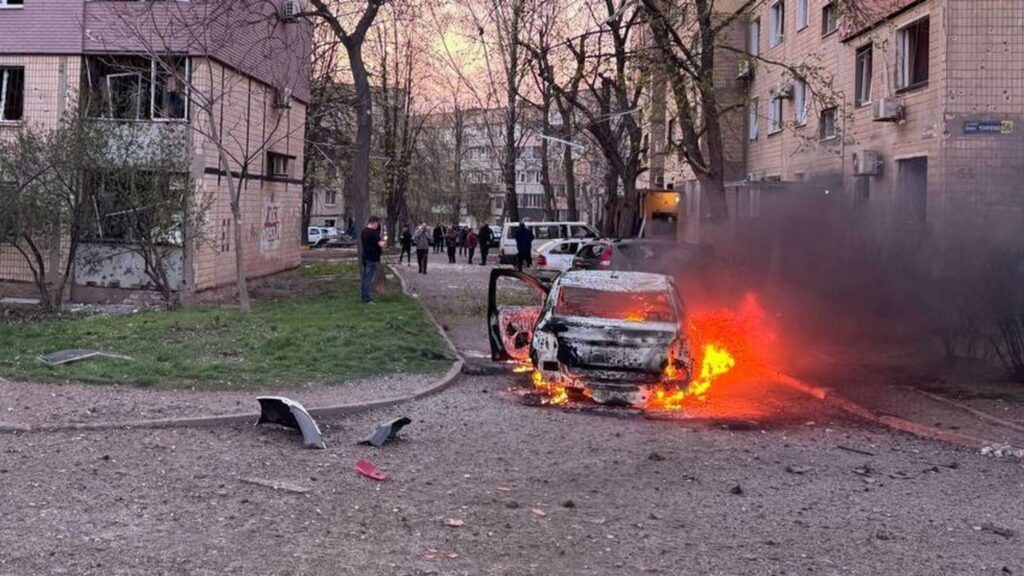
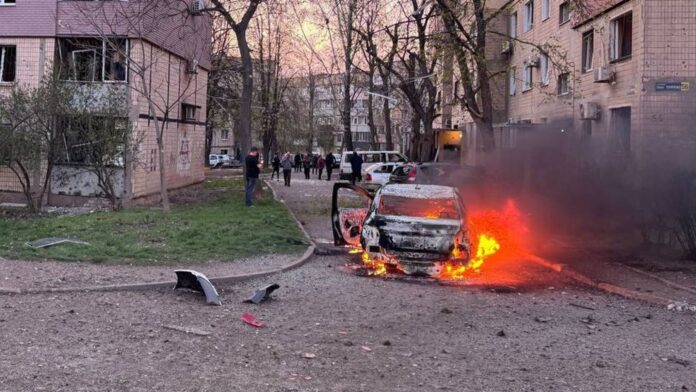
At least 16 people, including six children, were killed in a Russian missile strike on President Volodymyr Zelenskyy’s hometown, Kryvyi Rih, according to Ukrainian officials. The attack, which left at least 50 people wounded, was followed by a wave of drone strikes later in the day, further escalating tensions. 

Ukraine’s President condemned the strike, stating that Russia “does not want a ceasefire.” He emphasized that “every missile, every drone attack proves that Russia only wants war.” He urged international support to strengthen Ukraine’s air defense, stressing that global pressure on Russia is key to determining when the war will end. 

Regional governor Serhiy Lysak confirmed that more than 30 of the wounded, including a three-month-old baby, were hospitalized. Local authorities reported significant damage, with 20 apartment buildings, over 30 vehicles, an educational facility, and a restaurant impacted. Emergency responders were on-site, while psychologists provided support to survivors. 

The Russian defense ministry described the strike as a “high-precision” operation, claiming it targeted “a meeting of unit commanders and Western instructors” at a restaurant in the city. The ministry further alleged that the attack resulted in the deaths of up to 85 Ukrainian and foreign military personnel, along with the destruction of 20 vehicles. 

Later on Friday, Kryvyi Rih came under a “massive” drone attack, according to local military official Oleksandr Vilkul. He reported multiple fires at different sites following impacts from Shahed drones, a type of Iranian-designed unmanned aerial weapon. 

The escalation comes amid ongoing diplomatic efforts to negotiate a ceasefire. In Brussels, U.S. Secretary of State Marco Rubio warned that Washington is “not interested in negotiations about negotiations” and signaled that time is running out for Russia to demonstrate genuine intent toward peace. 

“In the end, it will be clear whether Russia wants peace or not—and that time is approaching fast,” Rubio said during a NATO meeting. 

The United States had previously brokered a 30-day ceasefire with Ukraine in March, followed by limited agreements over energy infrastructure. However, both Ukraine and Russia have since accused each other of violating these agreements. 

Meanwhile, British Foreign Secretary David Lammy criticized Russian President Vladimir Putin for “dragging his feet” on ceasefire talks while continuing to target Ukrainian civilians and energy supplies. “We see you, Vladimir Putin. We know what you are doing,” Lammy said, reaffirming Western opposition to Russian aggression. 

TikTok Deal Halted as China Signals Rejection Over Trump’s Tariff Hike, Sources Say

0

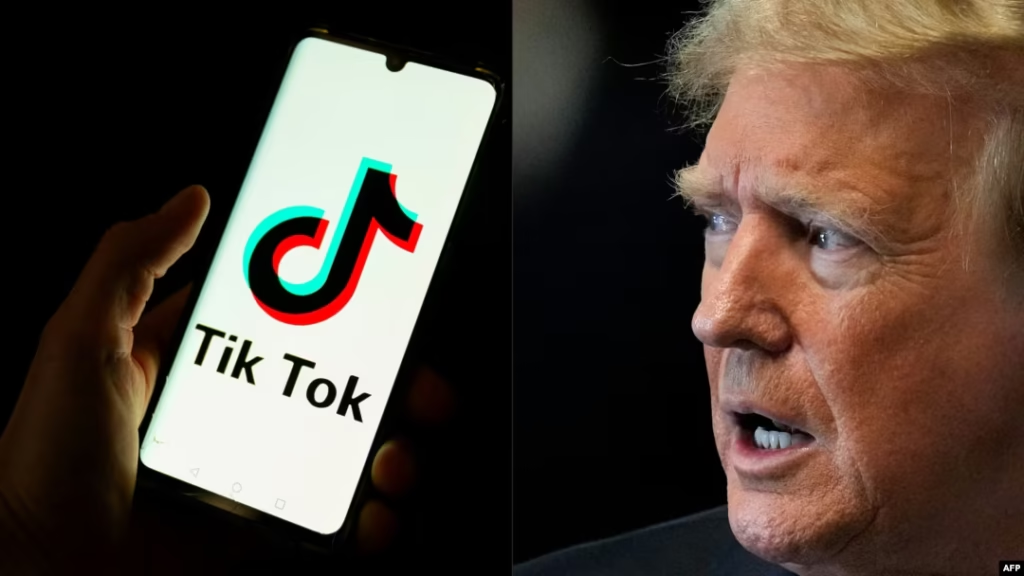
WASHINGTON  — A long-anticipated deal to spin off TikTok’s U.S. operations has been put on hold after China privately signaled it would reject the agreement in response to President Donald Trump’s latest tariff escalation, according to two people familiar with the matter.

The deal, which was nearly finalized by midweek, aimed to restructure TikTok’s American business into a new U.S.-based company controlled by a majority of American investors, with China’s ByteDance retaining a minority stake of less than 20%, one of the sources said. The plan had secured approvals from ByteDance, existing stakeholders, incoming U.S. investors, and the U.S. government, the person added.

But the agreement stalled after China indicated behind the scenes that it would not authorize the transaction in light of the sharp escalation in trade tensions between Washington and Beijing. Neither ByteDance nor the White House responded to requests for comment, and the Chinese Embassy in Washington also did not reply.

The hold-up comes just as President Trump extended the U.S. deadline for ByteDance to divest TikTok’s U.S. assets. On Friday, Trump granted a 75-day extension to a January 2024 law mandating the sale, citing the need to finalize regulatory approvals.

“The deal requires more work to ensure all necessary approvals are signed,” Trump posted on social media. “We hope to continue working in good faith with China, who I understand is not very happy about our reciprocal tariffs.”

Trump this week raised tariffs on Chinese imports by 34%, bringing the total to 54% on a wide range of goods. China responded Friday with matching tariffs on U.S. products, intensifying an already fraught trade relationship between the world’s two largest economies. Trump has said he is open to lowering tariffs if it helps secure a deal for TikTok, which has more than 170 million users in the United States.

The stalled TikTok deal now sits at the center of a growing geopolitical standoff. The proposed spin-off was seen by many as a diplomatic middle ground—allowing continued U.S. access to the popular short video app while addressing national security concerns about Chinese influence over American user data.

But Beijing’s retaliatory posture casts new doubt over whether any resolution is possible without broader trade concessions. As both sides brace for continued escalation, the fate of TikTok in the U.S.—and the broader tech and trade relationship between Washington and Beijing—remains uncertain.

REUTERS

Markets Plunge as China Retaliates Against Trump Tariffs, S&P 500 Suffers Worst Day Since Pandemic Crash

0

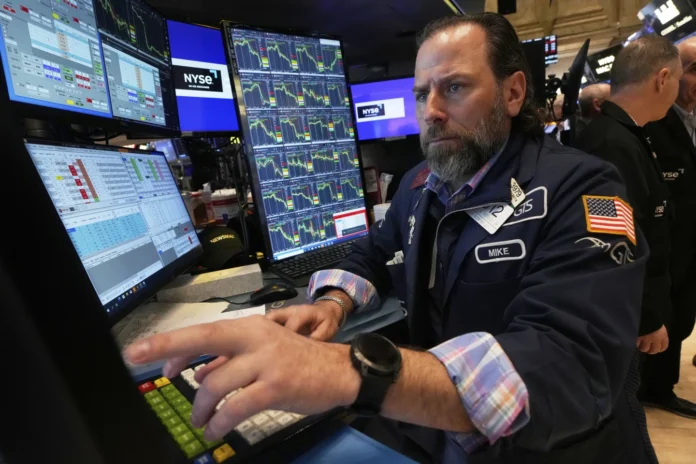
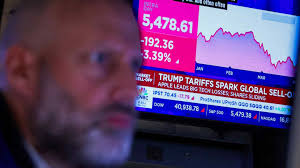
Wall Street suffered a stunning collapse on Friday, as escalating tensions in the U.S.-China trade war triggered the sharpest losses for American markets since the COVID-19 panic of March 2020. The S&P 500 tumbled 6% in a single day, erasing hundreds of billions in market value, while the Dow Jones Industrial Average plunged 2,231 points, or 5.5%. The tech-heavy Nasdaq fell 5.8%, sinking more than 20% below its December high and officially entering bear market territory.

The market chaos was sparked by China’s swift and aggressive retaliation to President Donald Trump’s sweeping tariffs earlier in the week. On Friday, Beijing announced a matching 34% tariff on all U.S. imports, set to take effect April 10, in direct response to the U.S. move. The dramatic escalation between the world’s two largest economies deepened fears that the prolonged trade conflict could tip the global economy into recession.

Even a stronger-than-expected U.S. jobs report—typically a highlight for markets—couldn’t slow the sell-off. Employers added more jobs than anticipated last month, underscoring the continued resilience of the labor market in early 2025. But the data was largely dismissed by jittery investors focused on the looming economic damage that could follow from a drawn-out tariff war.

The losses capped the worst week for the S&P 500 in five years. Of the index’s 500 companies, only 14 closed in positive territory on Friday. Crude oil fell to its lowest price since 2021, while copper and other key industrial commodities slumped, as markets braced for weakened global demand. Overseas, markets fared no better. Germany’s DAX dropped 5%, France’s CAC 40 shed 4.3%, and Japan’s Nikkei 225 fell 2.8%.

The Federal Reserve, which had been considering rate cuts to stimulate growth, now faces a difficult balancing act. Fed Chair Jerome Powell warned Friday that tariffs could drive up inflation expectations, potentially making it riskier to lower interest rates. He said the central bank’s responsibility is to keep long-term inflation expectations anchored, and that a “one-time increase in the price level” could morph into a more permanent inflation problem if not carefully managed.

Despite the turmoil, Trump remained characteristically defiant. Speaking from Mar-a-Lago before heading to his nearby golf course, he posted on Truth Social: “THIS IS A GREAT TIME TO GET RICH.” He also mocked Beijing’s response, claiming, “CHINA PLAYED IT WRONG, THEY PANICKED – THE ONE THING THEY CANNOT AFFORD TO DO!” Trump has repeatedly insisted the short-term pain from tariffs will be worth it, likening the trade battle to a medical operation that, while painful, will ultimately make the U.S. economy stronger. “Some pain” for Americans, he has said, is necessary to bring manufacturing back home.

Markets saw some of their steepest losses in companies with heavy exposure to China. DuPont’s stock fell nearly 13% after Beijing opened an antitrust investigation into its Chinese operations. GE Healthcare, which earned 12% of its revenue from China last year, dropped 16%.

Bond yields fell sharply as investors scrambled for safety, though they trimmed some losses after Powell’s remarks. The yield on the 10-year Treasury dropped to 4.01%, after dipping below 3.90% earlier in the day.

Analysts warned that the full economic impact depends on how long tariffs remain in place and how quickly negotiations resume. Trump suggested Vietnam may be willing to lower its tariffs to zero in exchange for a deal with the U.S., giving some hope for a potential de-escalation. Still, with global financial markets on edge, few were optimistic about a fast resolution.

“The speed of recovery will depend on how quickly officials negotiate,” said Brian Jacobsen, chief economist at Annex Wealth Management. “For investors, it could have felt like an operation performed without anesthesia.”

Yoon Suk Yeol Removed as South Korea’s President Over Martial Law Scandal

0

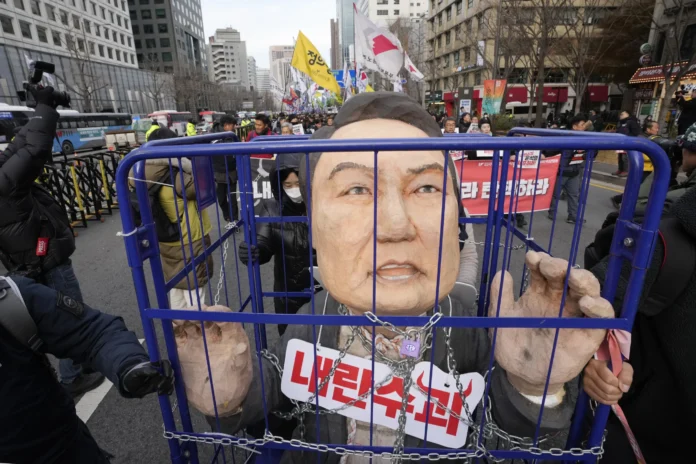
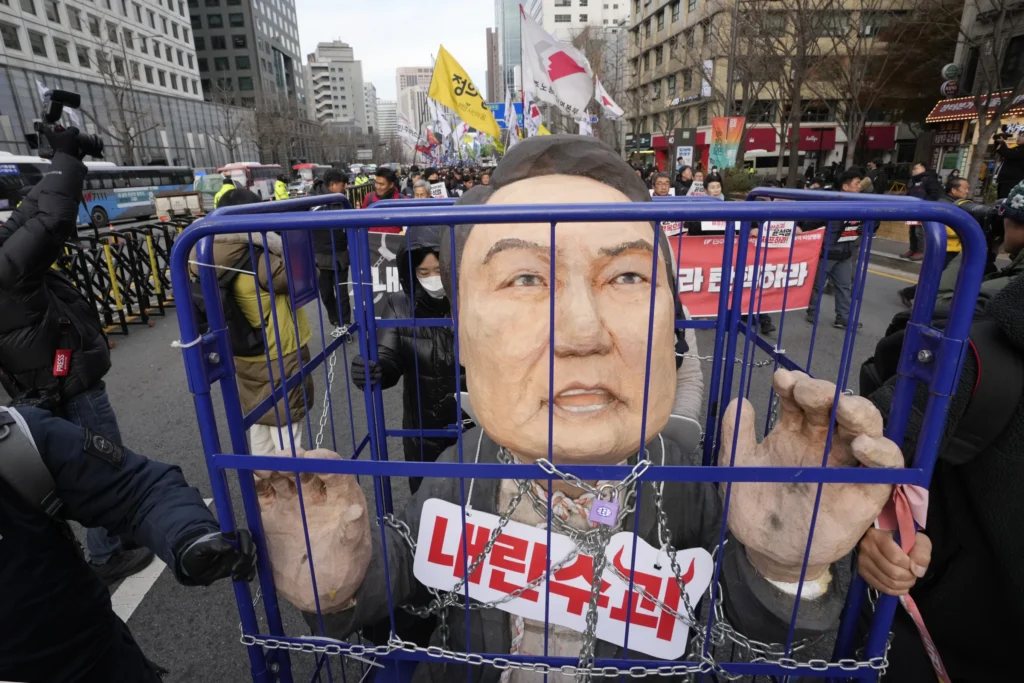
South Korea’s Constitutional Court unanimously removed President Yoon Suk Yeol from office on Friday, marking a historic end to a controversial presidency that spiraled into crisis after his declaration of martial law just four months ago.

The court’s eight-member panel found Yoon’s actions to be unconstitutional, citing grave consequences for the country’s political, social, and economic stability. The martial law decree, though short-lived, triggered widespread unrest and prompted immediate backlash from lawmakers, civil society, and international observers.

 “By declaring martial law in breach of the constitution and other laws, the defendant revived a dark chapter in our history, shocking the public and causing confusion across society,” said acting Chief Justice Moon Hyung-bae during the nationally televised ruling.

Yoon’s removal sparked emotional scenes across Seoul. Outside the Constitutional Court, anti-Yoon demonstrators erupted in cheers, tears, and celebration, while supporters near the presidential residence responded with sorrow and anger. Despite heightened tensions, authorities reported no major incidents of violence.

Political analysts say the unanimous ruling helps restore constitutional order and removes a key source of political instability. However, deep societal divisions remain.

 “This is the greatest constitutional challenge South Korea has faced in a generation,” said Leif-Eric Easley, professor at Ewha University. “But the institutions have held.”

South Korea must now hold a new presidential election within 60 days. Lee Jae-myung, leader of the liberal Democratic Party, currently leads in early polling, though he faces multiple criminal charges.

“If Lee wins, it could lead to a significant shift in foreign policy, especially in relation to the U.S.,” said Duyeon Kim, senior analyst at the Center for a New American Security.

Yoon’s conservative People Power Party accepted the court’s ruling, though one of his lawyers denounced the verdict as “purely political.” Prime Minister Han Duck-soo, now acting president, pledged a smooth transition and public order.

The crisis began on December 3, when Yoon imposed martial law in response to escalating political resistance. Troops were deployed to the National Assembly, opposition offices, and election facilities. Protesters clashed with special forces as images evoked painful memories of South Korea’s military dictatorship era.

The martial law lasted just six hours before being struck down by lawmakers, including members of Yoon’s own party. The National Assembly impeached Yoon 11 days later.

The Constitutional Court ruled that Yoon’s declaration lacked legal basis and failed to meet procedural requirements, such as formal Cabinet deliberation. It also concluded that his political conflict with the opposition did not justify such extreme measures.

Yoon now faces criminal prosecution, including charges of rebellion—an offense punishable by life imprisonment or the death penalty. Though a district court canceled his arrest warrant in March, allowing him to await trial without detention, he has lost the presidential immunity that previously shielded him from broader legal action.

Observers say Yoon could soon face additional charges, including abuse of power and obstruction of legislative processes.

In a statement issued through his legal team, Yoon expressed “deep regret” for not meeting public expectations but stopped short of accepting the court’s decision.

“It has been the greatest honor of my life to serve our nation,” he said, adding that he would “pray for the country and its people.”

6 Dead in Alleged Dynamite Attack Amid Bolivia Gold-Mining Dispute

0

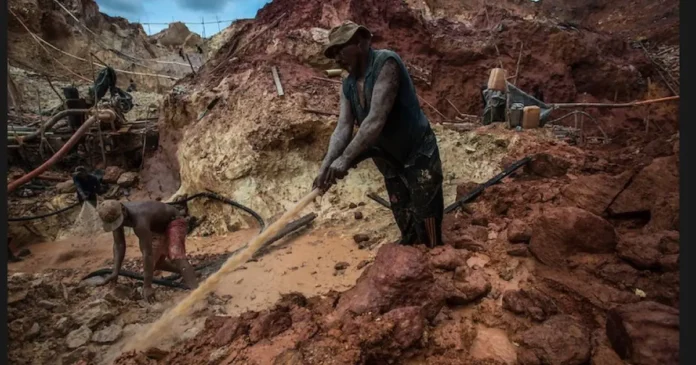
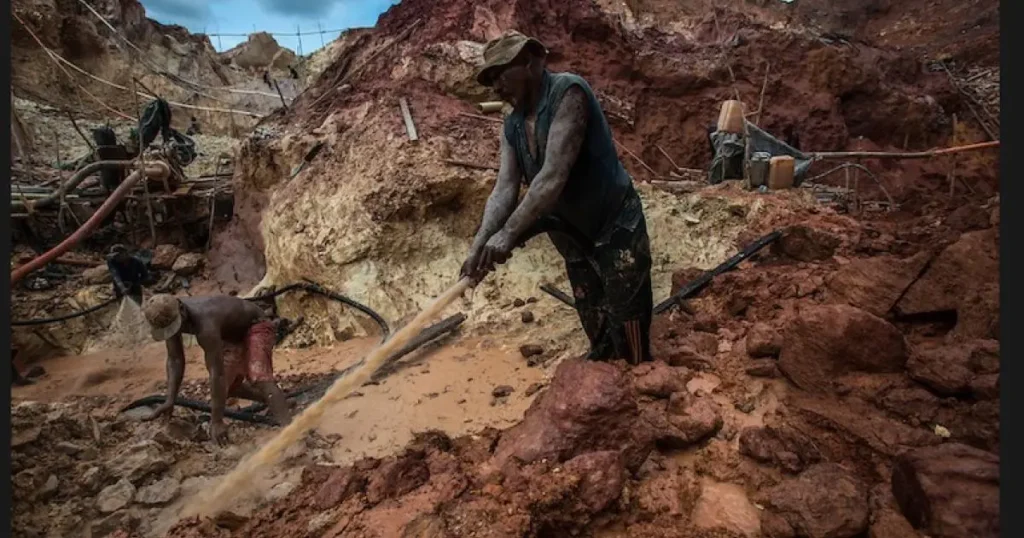
A violent confrontation between rival gold-mining collectives in Bolivia has resulted in a deadly explosion that killed six people, officials confirmed on Thursday. 

The blast struck the Yani mining camp, located approximately 150 kilometers (90 miles) northwest of La Paz, amid an ongoing dispute over access to gold deposits. 

“There are six dead, and we have reports of missing persons,” said Jhonny Silva, a representative of the Hijos de Ingenio Mining Cooperative, one of the groups involved in the conflict. 

According to reports, members of the Hijos de Ingenio cooperative clashed with another mining group, Senor de Mayo, in a fight involving dynamite. The explosion damaged homes and left the nearby town of Sorata without electricity. 

“They have blown up machinery with dynamite, even a diesel tank,” Silva said, blaming the rival cooperative for the destruction. 

Bolivia’s mining collectives emerged as an alternative to state-run and private enterprises, providing employment to miners left jobless after the collapse of the state-owned mining company, Corporación Minera de Bolivia (COMIBOL), in the 1980s. 

Today, mining collectives dominate Bolivia’s extractive industry, outnumbering workers in the state and private sectors. However, critics argue that the cooperative system operates with minimal regulations, leading to dangerous working conditions, environmental damage, and frequent violent disputes over mining rights and market control. 

With an estimated 1,600 gold-mining collectives, clashes have erupted in the past, sometimes involving COMIBOL workers and security forces. In 2012, a similar conflict led to road blockades and a fatal dynamite attack in La Paz. 

Thursday’s explosion followed years of escalating tensions between the rival collectives, Silva said. 

Colonel Gunther Agudo, a local police officer, described the blast as “an explosion of great magnitude” and confirmed that rescue operations were ongoing.  Authorities have not yet confirmed whether any arrests have been made in connection with the attack. 

At Least 16 Dead as Refugee Boats Sink Between Turkiye and Greece

0

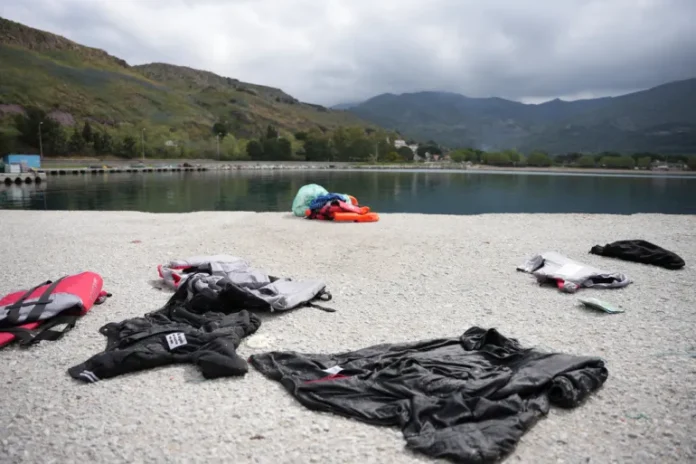
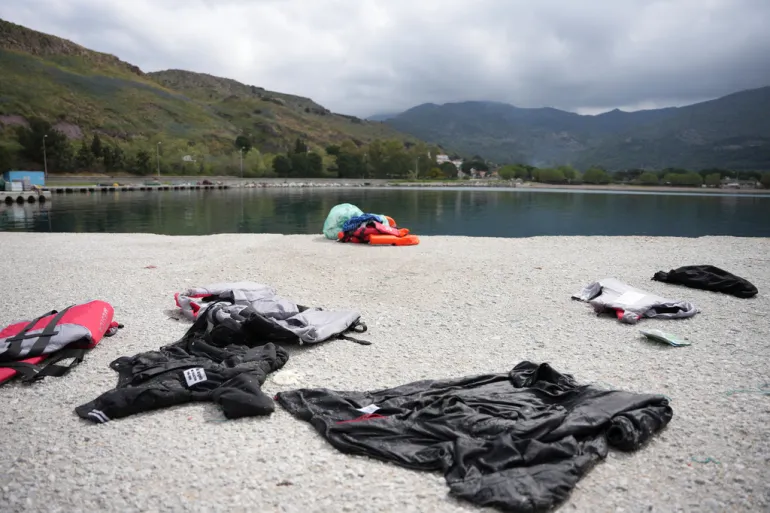
At least 16 people have died after two refugee boats sank in the Aegean Sea between Turkiye and the Greek island of Lesbos, officials from both countries confirmed on Thursday. 

The incidents, involving approximately 66 passengers, occurred hours apart in separate locations. Authorities on either side of the maritime border were initially unaware of each other’s rescue operations. 

The Greek coastguard reported that one of its patrol boats discovered a five-meter (5.5-yard) dinghy taking on water and rescued 23 people, including 11 minors, eight men, and four women. The boat was carrying a total of 31 passengers, survivors said. 

A search and rescue operation involving helicopters, Greek coastguard vessels, and the FRONTEX European border agency recovered the bodies of seven victims—three women, two boys, a girl, and a man. Officials continued searching for a young girl reported missing by survivors. 

One survivor, a 20-year-old man, was arrested on suspicion of human smuggling after other passengers allegedly identified him as the boat’s pilot, according to the Greek coastguard. 

Meanwhile, in Turkiye’s northwestern province of Canakkale, authorities responded to a distress call from another vessel in the early hours of Thursday. The Turkish coastguard deployed three boats and a helicopter, rescuing 25 people. Nine bodies were recovered, and one person remained missing. Turkish media reported that survivors were taken to a local hospital for medical treatment. 

The short but treacherous maritime route between Turkiye and the Greek islands of Lesbos, Samos, and Rhodes continues to be a hotspot for shipwrecks, as refugees and migrants risk the dangerous crossing in search of safety and a better future in the European Union. 

South Africa’s White Afrikaner Separatists Seek U.S. Support for Statehood

0

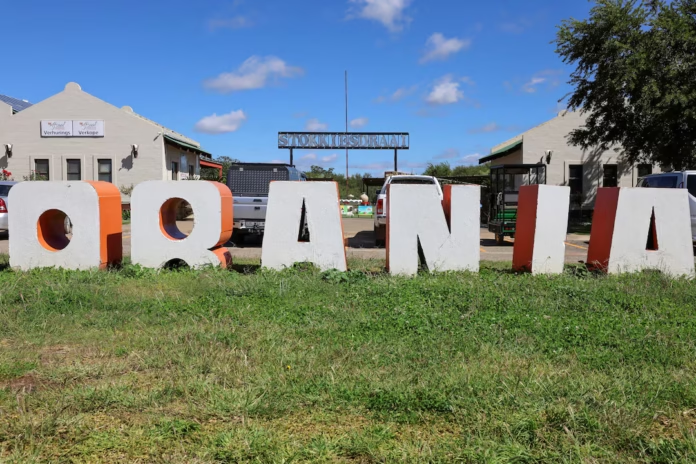
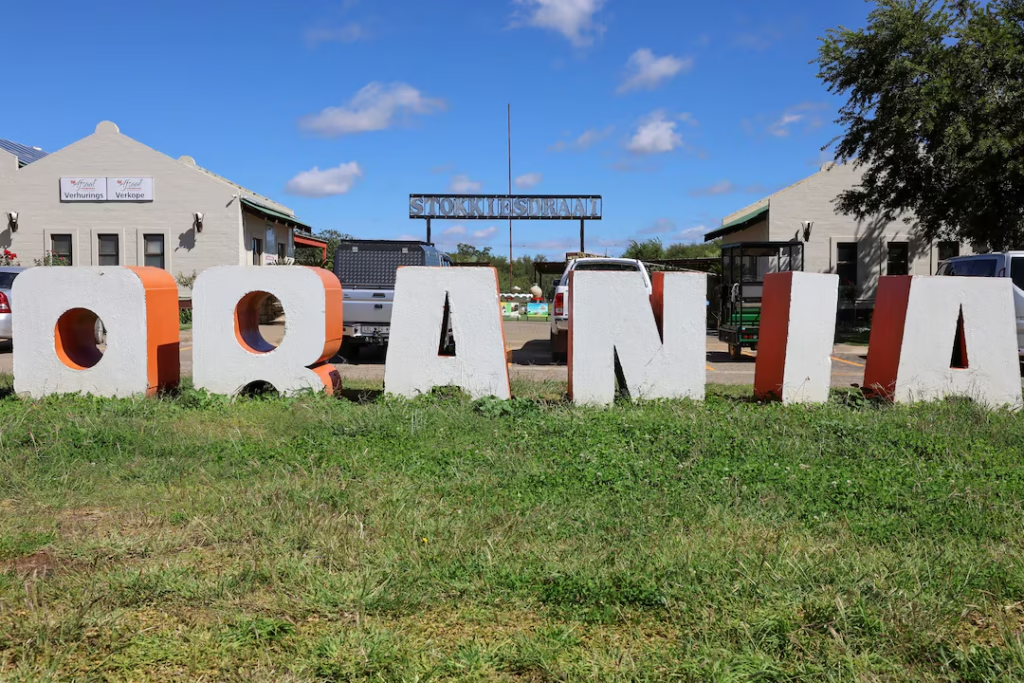
Orania, South Africa—A group of white Afrikaners seeking autonomy from South Africa has turned to the United States for support, hoping to gain recognition as an independent state. The community leaders from Orania, a self-sustaining enclave in the Karoo region, recently traveled to the U.S. to rally backing for their cause, leveraging growing right-wing American interest in their movement.

Founded in 1991 as apartheid was dismantled, Orania remains an all-white settlement with a population of 3,000. Residents run their own local administration, levy taxes, and provide municipal services, yet they remain under South African jurisdiction. Seeking further autonomy, the town’s leaders met with conservative think tanks and Republican figures in Washington and New York.

“We want recognition and investment to help Orania grow,” said Joost Strydom, leader of the Orania Movement. He emphasized that their appeal was not for financial aid but for investment in infrastructure, housing, and energy independence, which the town has already partially achieved through solar power.

China, the European Union, and several other global powers have been the focus of U.S. trade discussions, but Orania’s leaders are looking for a different kind of support. “South Africa is too diverse to be managed centrally,” Strydom said, arguing that Afrikaners should have their own homeland. He declined to confirm whether there had been direct talks with the Trump administration, and the U.S. State Department did not immediately respond to requests for comment.

South African authorities dismiss the idea of Orania’s independence. “Orania is not a sovereign country. It falls under South African law and the constitution,” said foreign ministry spokesperson Chrispin Phiri.

Critics argue that Orania’s separatist ambitions revive apartheid-era racial divisions. The Economic Freedom Fighters (EFF), a leftist political party, accused Orania of undermining national unity. “This is an attempt to destroy the unity of our country,” the party said in a statement.

Afrikaners, descendants of Dutch settlers, have historically sought autonomy. Their ancestors resisted British rule and later implemented apartheid, a system of institutionalized racial segregation. The end of apartheid in 1994 led to the election of Nelson Mandela as South Africa’s first Black president, marking a political shift that Orania’s founders opposed.

Former Orania Movement leader Carel Boshoff compared their pursuit of autonomy to Israel’s establishment after World War II. “We are building something new,” he said, envisioning an Afrikaner homeland stretching to South Africa’s west coast. Orania already operates its own local currency and self-sufficient economy through community funding and external donations.

Despite their ambitions, Orania’s leaders found that most U.S. discussions focused on white South Africans seeking residency abroad, following President Donald Trump’s 2018 comments suggesting America could offer asylum to white South African farmers facing land expropriation.

“We told them, ‘Help us here. We cannot simply export our people’,” Boshoff said, standing next to a portrait of his grandfather, Hendrik Verwoerd, widely regarded as the architect of apartheid.

The issue resonates with right-wing circles in the U.S., where critics of affirmative action and diversity policies have drawn parallels with South Africa’s post-apartheid Black economic empowerment laws. High-profile figures, including Trump ally Elon Musk, have publicly criticized these policies.

For Hanlie Pieters, a former Johannesburg resident who moved to Orania, these policies motivated her relocation. “What future will our children have with these quotas?” she asked while overseeing students at the town’s technical college.

Meanwhile, South Africa faces widespread economic hardship, with a third of its population unemployed, predominantly Black South Africans. Bongani Zitha, a 49-year-old resident of Soweto, has lived in a shack without running water since 1995. “People in Orania are doing well,” he acknowledged. “At least they have rights to health, education, and a future.”

Yet, he noted that, unlike during apartheid, “Orania’s residents are free to live wherever they choose.”

For Second Day, Wall Street Ends with Heavy Losses as Trump Tariff Fears Stoke Recession Concerns

0

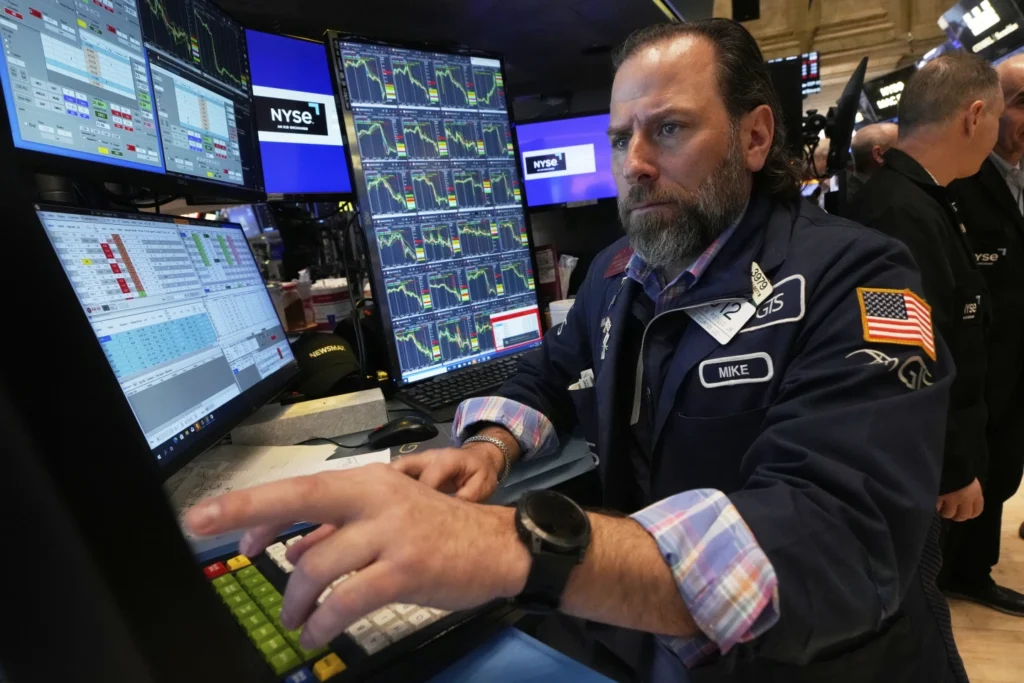
NEW YORK — Wall Street tumbled on Thursday, marking one of its worst single-day losses in years as U.S. President Donald Trump’s newly imposed tariffs fueled investor concerns over a deepening trade war and potential global recession.

Major stock indexes fell sharply as investors pulled out of riskier assets in favor of government bonds. The sell-off followed Trump’s announcement of a 10% tariff on most U.S. imports, along with steeper duties on numerous countries, heightening uncertainty across financial markets.

The tariff measures, expected to disrupt global trade, signaled a dramatic shift from earlier optimism surrounding Trump’s pro-business policies, which previously pushed stocks to record highs. The new economic landscape prompted investors to sell off positions, fearing retaliatory moves from global trading partners.

China swiftly pledged countermeasures, while the European Union faces a 20% tariff. Other key trading partners, including South Korea, Mexico, and India, signaled a wait-and-see approach before the new tariffs take effect on April 9, as they seek potential concessions.

Market volatility surged, with the CBOE Volatility Index (.VIX), often referred to as Wall Street’s “fear gauge,” hitting a three-week high. Analysts predict ongoing instability as the economic impact of the tariffs unfolds.

“There are still more questions than answers,” said Steven DeSanctis, small and mid-cap strategist at Jefferies Financial Group.

Market Performance:

– The S&P 500 (.SPX) lost 275.05 points, or 4.85%, closing at 5,395.92.

– The Nasdaq Composite (.IXIC) fell 1,053.60 points, or 5.99%, to 16,547.45.

– The Dow Jones Industrial Average (.DJI) plunged 1,682.61 points, or 3.98%, to 40,542.71.

Technology stocks, which previously led Wall Street’s rally, were hit hard. Apple (AAPL.O) dropped following an aggregate 54% tariff on Chinese imports, affecting its supply chain. Nvidia (NVDA.O) and Amazon.com (AMZN.O) also recorded significant losses.

The stock market has declined significantly since the start of Trump’s presidency, with both the S&P 500 and Nasdaq falling 10% from recent record highs, signaling a market correction driven by tariff concerns.

Amidst the turmoil, investors increased bets on multiple interest rate cuts by the Federal Reserve. Traders are now pricing in four rate cuts this year, with the first likely in June.

“The Fed has substantial tools to stabilize the market,” said George Bory, chief investment strategist at Allspring Global Investments. He noted that the probability of a rate cut in June has increased, with some even anticipating a reduction as early as May.

The economic outlook now hinges on upcoming payroll data and a speech by Federal Reserve Chair Jerome Powell, both expected to provide critical insights into U.S. economic stability and future monetary policy direction.

Retail stocks faced steep declines, with Nike (NKE.N) and Ralph Lauren (RL.N) hit by new tariffs targeting production hubs in Vietnam, Indonesia, and China. Banking giants Citigroup (C.N), Bank of America (BAC.N), and JPMorgan Chase & Co (JPM.N) also slid as economic uncertainty deepened.

The small-cap Russell 2000 index (.RUT) plunged, reflecting broader concerns over domestic economic health.

“Small-cap firms supply major corporations, so tariff pressures on big businesses inevitably impact their smaller suppliers,” DeSanctis added.

Energy stocks were not spared, as Exxon Mobil (XOM.N) and Chevron (CVX.N) declined amid a 6.8% slump in crude prices. The drop was exacerbated by OPEC+ accelerating production increases.

Consumer staples emerged as a rare bright spot, with the traditionally defensive sector benefiting from gains in Lamb Weston (LW.N), which reported strong earnings.

As markets brace for further uncertainty, investors remain on edge over global trade tensions and potential Federal Reserve interventions aimed at stabilizing the economy.

Israeli Strike on Gaza School Kills at Least 27, Death Toll Expected to Rise 

0

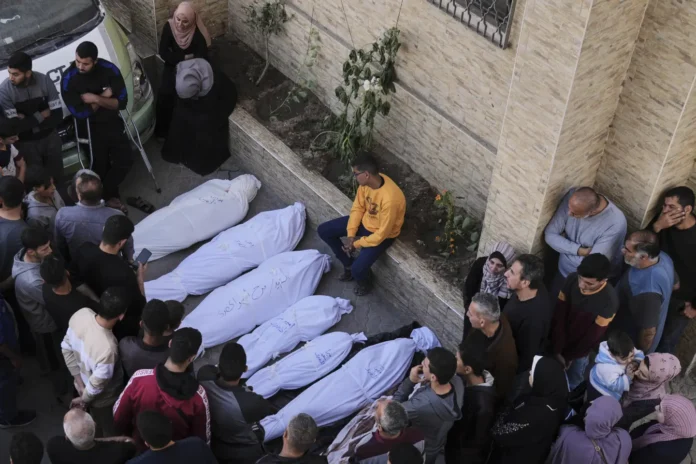
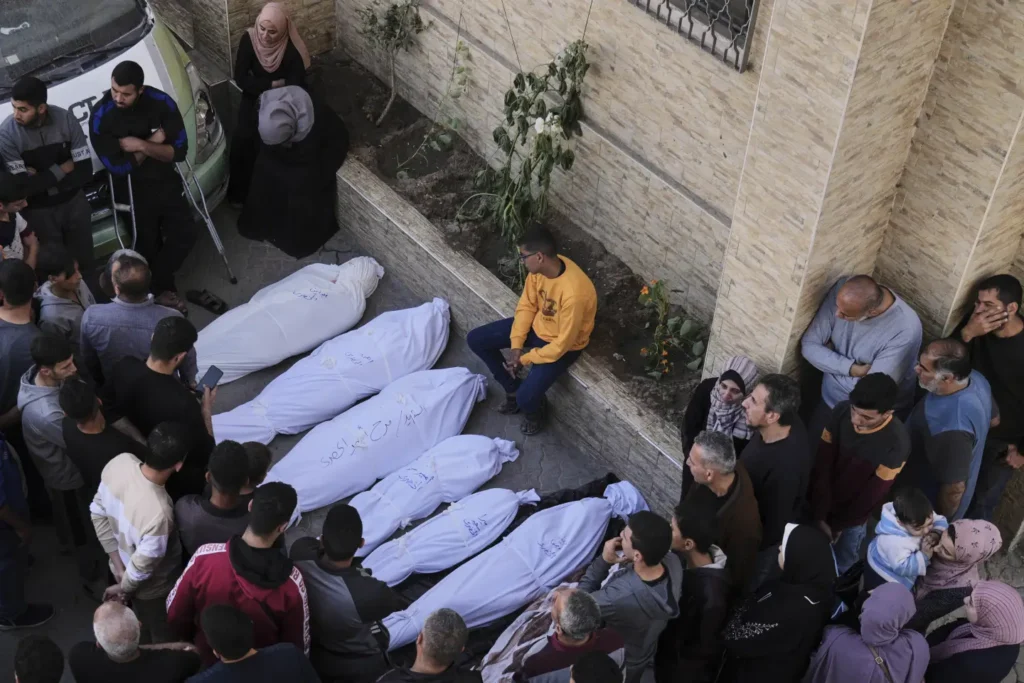
Israeli airstrikes killed at least 100 Palestinians across the Gaza Strip on Thursday, including 27 who were sheltering at a school in the northern part of the territory, according to Palestinian health officials. The escalation comes as Israel intensifies its military offensive, which it says aims to eliminate Hamas and weaken its infrastructure. 

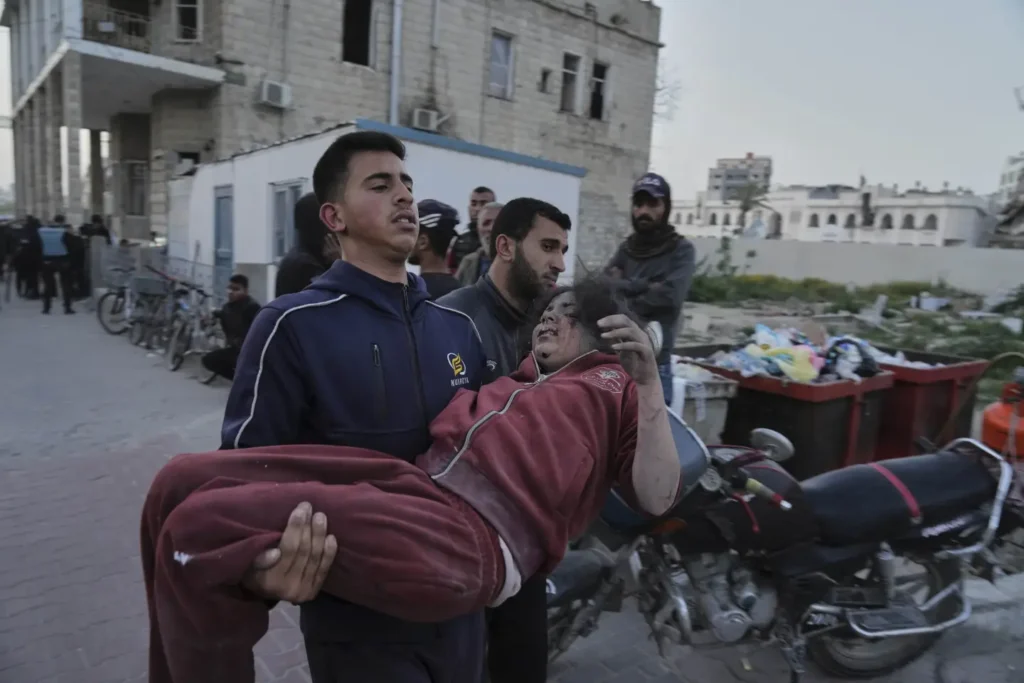
The Health Ministry in Gaza reported that among the dead at the school in the Tuffah neighborhood of Gaza City were 14 children and five women. Officials warned that the toll could rise as some of the 70 wounded suffered critical injuries. More than 30 other civilians were killed in airstrikes on homes in the nearby Shijaiyah neighborhood, according to medical records at Ahli Hospital. 

The Israeli military said it targeted a Hamas command and control center in Gaza City and took measures to minimize civilian casualties. A day earlier, Israel launched an airstrike on a United Nations building used as a shelter, killing at least 17 people. Hamas condemned the school attack as a “heinous massacre” of innocent civilians. 

As Israeli forces expanded operations, the military ordered residents in northern Gaza to evacuate to the west and south, warning of intensified attacks. Thousands of Palestinians fled on foot, carrying belongings in carts and makeshift bags. 

“My wife and I have been walking for three hours and covered just one kilometer,” said Mohammad Ermana, 72, who was searching for shelter. “We are desperate to find safety.” 

The United Nations humanitarian office reported that around 280,000 Palestinians have been displaced since Israel ended a ceasefire with Hamas last month. The humanitarian crisis continues to deepen amid food, fuel, and aid shortages. 

Israeli airstrikes overnight killed at least 55 more people across the territory, with hospitals in Khan Younis, central Gaza, and Gaza City receiving dozens of bodies, including those of young children and women, according to health officials. 

The Israeli military also announced an investigation into a March 23 operation where its forces reportedly opened fire on ambulances in southern Gaza. The United Nations stated that 15 Palestinian medics and emergency responders were killed, with their bodies and vehicles buried in a mass grave. Israeli officials initially claimed that the ambulances were operating suspiciously. 

U.N. human rights chief Volker Türk said there is an “increasing risk” of war crimes in Gaza and warned that blocking humanitarian aid could constitute the use of starvation as a weapon of war. 

As part of its military strategy, Israel is establishing a security corridor across Gaza to pressure Hamas, further restricting movement in the densely populated enclave. The war, which began after Hamas militants attacked Israel on Oct. 7, has left vast parts of Gaza in ruins and displaced millions. Gaza’s Health Ministry reports that more than 50,000 Palestinians have been killed, over half of them women and children. 

Israeli Prime Minister Benjamin Netanyahu, facing an arrest warrant from the International Criminal Court over alleged war crimes, arrived in Hungary on Thursday for diplomatic talks. Hungary, an ICC member, has not indicated whether it will comply with the warrant. 

The conflict, now in its sixth month, continues to escalate, with no immediate resolution in sight as airstrikes and evacuations persist across Gaza.