Home Blog Page 400

Death Toll in Roof Collapse at Dominican Republic Nightclub Rises to 98, Over 160 Injured

0
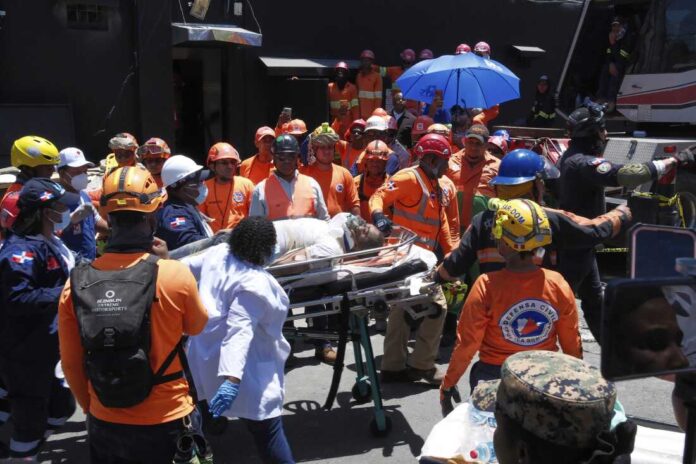
Rescue workers carry a person pulled from the wreckage of the Jet Set nightclub after its roof collapsed during a merengue concert in Santo Domingo, Dominican Republic, Tuesday, April 8, 2025. (AP Photo/Ricardo Hernandez)

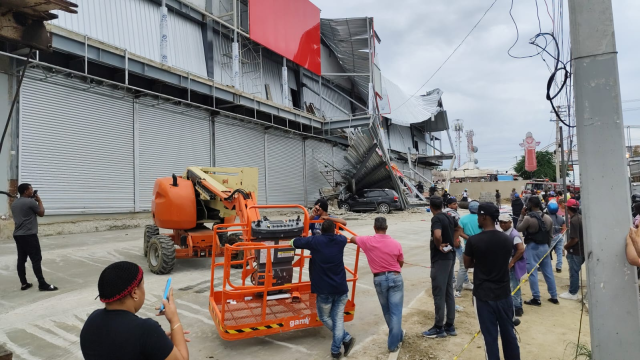
The death toll from the catastrophic roof collapse at a popular nightclub in the Dominican Republic has now risen to 98, as emergency crews continue digging through rubble in a desperate search for survivors. More than 160 people were injured in the collapse, which occurred during a merengue concert at the Jet Set nightclub in Santo Domingo early Tuesday morning.
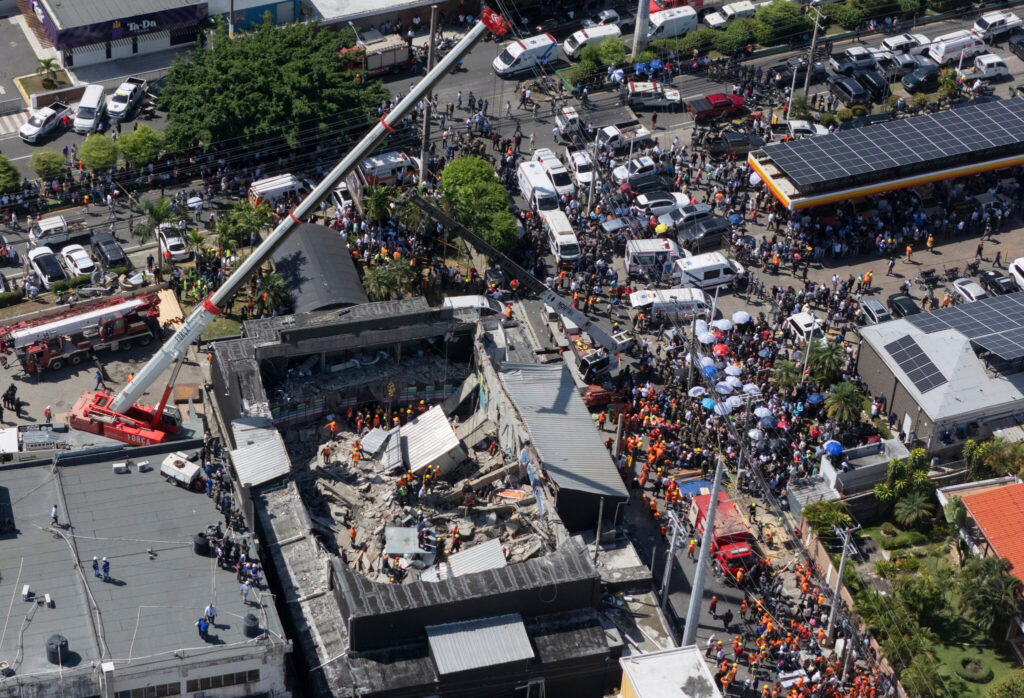
The venue, a well-known nightlife hotspot in the capital, was hosting a packed event attended by politicians, athletes, and locals when the roof suddenly gave way. Authorities say the collapse was sudden and devastating, burying scores of patrons under concrete and debris.

Rescue teams led by Juan Manuel Méndez, director of the Center of Emergency Operations, have worked tirelessly since the early hours of Tuesday to locate those still trapped. “We continue clearing debris and searching for people,” Méndez said Tuesday night. “We’re going to search tirelessly.”

Even 12 hours after the roof came down, crews were still pulling survivors from the wreckage. They paused frequently to listen for cries beneath the rubble, using wooden planks to shift heavy slabs of concrete while drills echoed through the air. Méndez confirmed that rescuers were focusing on three areas where they had detected potential signs of life.

Among the confirmed dead is Nelsy Cruz, governor of Montecristi and sister of Major League Baseball star Nelson Cruz. First Lady Raquel Abraje revealed that Cruz had managed to call President Luis Abinader shortly after midnight, reporting that she was trapped beneath the collapsed roof. Cruz was rushed to a hospital but later died. “This is too great a tragedy,” said an emotional Abraje.

The Dominican Republic’s baseball community also suffered tragic losses. Former MLB pitcher Octavio Dotel, 51, was pulled from the debris and taken to a hospital, but died from his injuries. Dominican professional baseball player Tony Enrique Blanco Cabrera was also killed, confirmed by the national league’s spokesperson, Satosky Terrero.

As night fell on Tuesday, dozens of families stood outside the site, singing hymns and praying for news of their missing loved ones. National lawmaker Bray Vargas was among the injured. Initial reports that merengue star Rubby Pérez had been rescued were later corrected—authorities now say he remains unaccounted for.

Enrique Paulino, Pérez’s manager, described the horror. Covered in blood, he told reporters that the concert began just before midnight and that the roof collapsed less than an hour later, killing the group’s saxophonist. Paulino said he narrowly survived by diving into a corner, initially mistaking the rumble for an earthquake.

There is still no official explanation for what caused the roof to collapse. It remains unclear when the building was last inspected. Jet Set’s owner, Antonio Espaillat, was out of the country at the time but returned to Santo Domingo Tuesday night. In a statement, he called the event “devastating” and offered condolences to the victims.

“We are cooperating fully with the authorities,” the club said in a release. “There are no words to express the pain this event has caused.”

While investigations are underway, officials say their primary focus remains on rescue and recovery. Prosecutor Rosalba Ramos told local media that determining the cause would come later. “Right now, everyone wants answers, but saving lives is our priority,” she said.
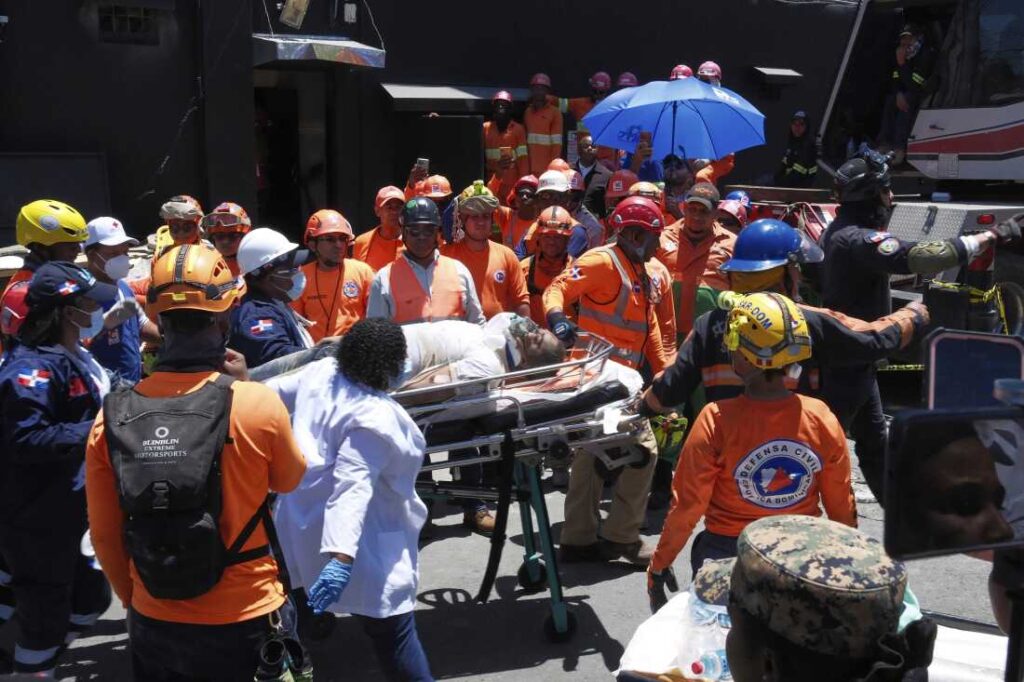
Rescue workers carry a person pulled from the wreckage of the Jet Set nightclub after its roof collapsed during a merengue concert in Santo Domingo, Dominican Republic, Tuesday, April 8, 2025. (AP Photo/Ricardo Hernandez)

Authorities have created a makeshift morgue near the site as more than 120 people lined up to donate blood at two collection centers. In hospitals, officials read aloud the names of the injured while families anxiously waited for updates. Photos of the deceased were circulated by the National Institute of Forensic Pathology to help loved ones identify them.

For many, the wait continues. Manuel Olivo Ortiz stood outside the nightclub all night, praying for his son, who had attended the concert and never returned. “We’re holding on only to God,” he said. Massiel Cuevas waited for her 22-year-old goddaughter, Darlenys Batista. “She’s in there,” she said with quiet determination. “I know she’s in there.”

President Luis Abinader took to social media to express sorrow and pledged the government’s full support. “We deeply regret the tragedy that occurred at the Jet Set nightclub,” he wrote. “We have been following the incident minute by minute since it occurred.” Abinader later visited the scene, embracing grieving families and encouraging the crowd not to lose faith. “We have hope in God that more people will be rescued alive,” he told reporters.

Outside the building, an official with a megaphone pleaded with the crowd to clear the way for ambulances. “Please cooperate with authorities,” he urged. “We are removing people.”

At a nearby hospital, the names of survivors were called out as hopeful relatives clung to every word, shouting the names of their loved ones in response. Meanwhile, at the forensic institute, mourners gathered quietly, staring at printed photos of victims in hopes of finding closure.

The collapse of the Jet Set nightclub has become one of the deadliest tragedies in the country’s recent history. As the rescue mission enters another day, the nation remains on edge, waiting for answers—and praying for miracles.
Trump Enforces 104% Tariffs on China as Global Trade Tensions Intensify

0

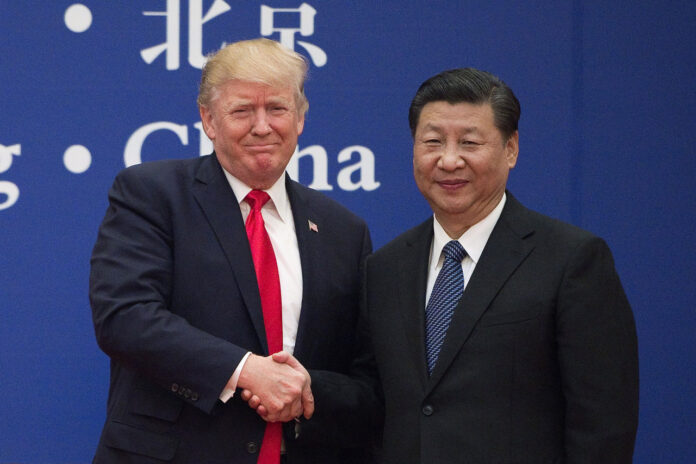
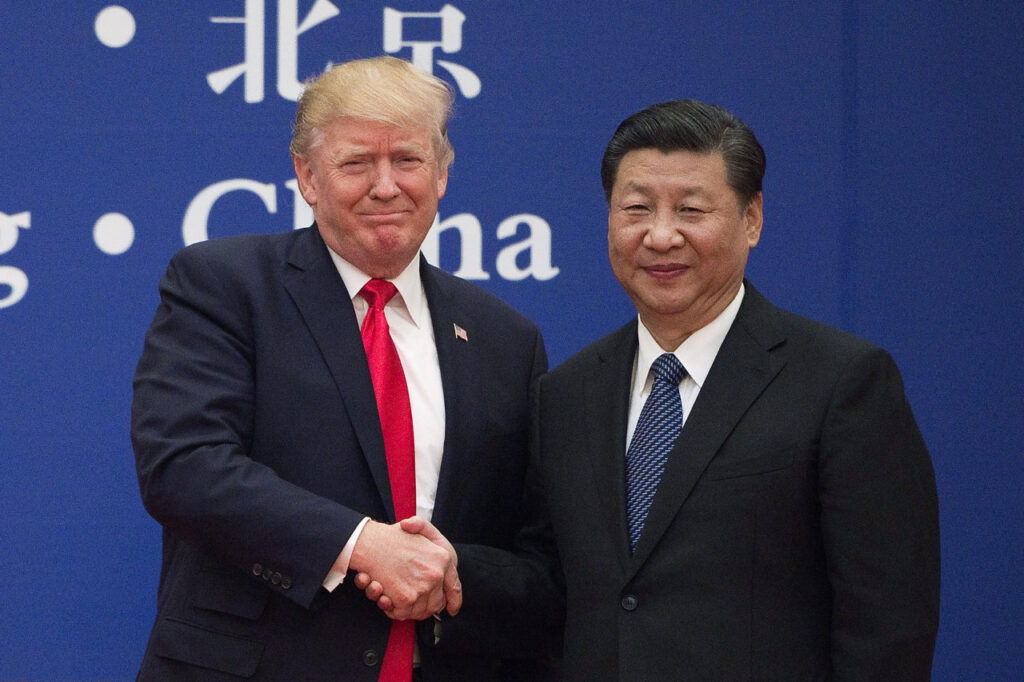
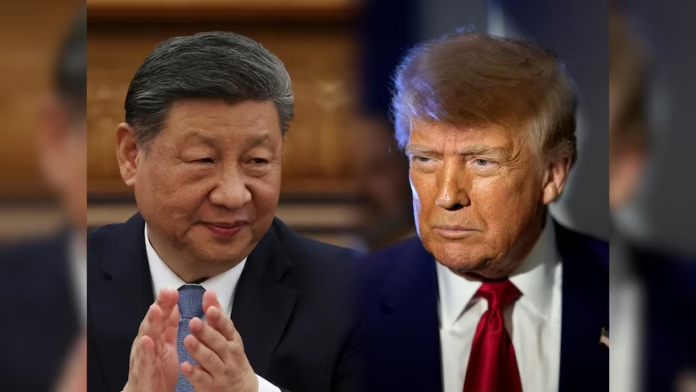
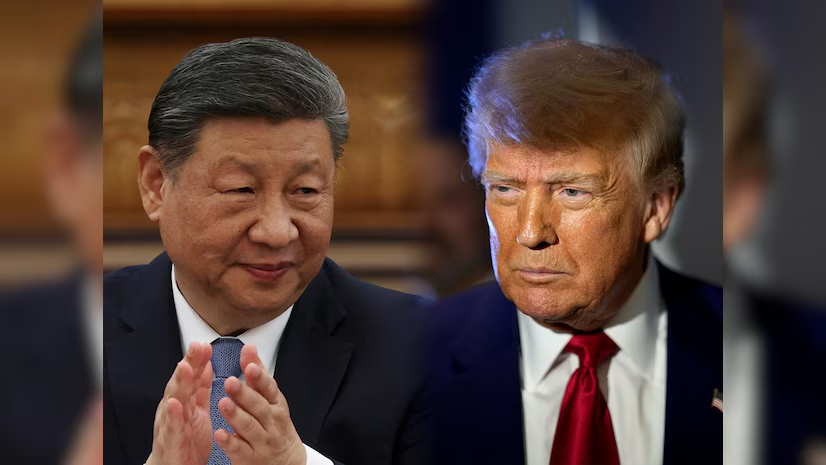
Donald Trump’s sweeping new tariffs on what he has labeled the “worst offenders” have officially come into effect, with China bearing the heaviest blow. As of 5am UK time, Chinese imports to the United States are now subject to a staggering 104 percent in total tariffs, marking the most severe escalation yet in the ongoing trade standoff between Washington and Beijing.

The White House confirmed that this move includes an additional 50 percent levy, layered atop earlier duties that already placed a 20 percent burden on Chinese goods. This follows last week’s imposition of a 34 percent tariff on specific imports from China, bringing the total cost to 104 percent. The administration cited China’s retaliatory behavior as justification for the dramatic increase.

According to an official document released by the White House, China’s own 34 percent tariff on US goods was expected to be raised to 84 percent within hours, a move seen as deeply provocative by US officials. In response, the White House declared that the United States had no choice but to act decisively to protect American industry and economic interests.

White House press secretary Karoline Leavitt stated that President Trump remains confident China still wants to reach a deal with the US. She emphasized that the administration views China’s retaliation as a strategic misstep, adding that when America is hit, the president punches back even harder.

The current trade clash was triggered by the administration’s unveiling of a 34 percent “reciprocal” tariff on Chinese imports, aimed at countering what it described as years of unfair trade practices. China quickly responded with its own 34 percent countermeasure targeting US goods, setting the stage for the current tit-for-tat escalation.

Beijing’s Commerce Ministry responded strongly, pledging to fight to the end, while China’s Foreign Ministry accused the United States of economic bullying and attempting to destabilize global markets. The situation has rapidly evolved into a full-blown trade confrontation with wide-reaching consequences.

Beyond China, approximately 60 other nations have also been hit with tariffs under Trump’s new trade directive. These countries were labeled by the former president as the “worst offenders” in undermining American manufacturing. The European Union faces 20 percent tariffs, while Vietnam and Cambodia are being hit with 46 percent and 49 percent tariffs respectively.

The United Kingdom avoided being included on this list but was still subjected to a new baseline 10 percent global tariff that came into effect last Saturday. UK Labour leader Sir Keir Starmer addressed the situation over the weekend, saying the government stands ready to protect British businesses from the economic fallout.

The financial repercussions have been swift and severe. Since the initial tariff announcement last Wednesday, global stock markets have plunged. All three major US stock indexes have endured four straight days of losses. The S&P 500 has dropped by 1.49 percent, the Nasdaq Composite has fallen by 2.15 percent, and the Dow Jones Industrial Average has slipped by 0.84 percent.

According to LSEG data, companies listed on the S&P 500 have collectively lost 5.8 trillion dollars, or roughly 4.5 trillion pounds, in market value since the tariffs were announced. This marks the deepest four-day loss since the creation of the benchmark index in the 1950s.

As the world’s two largest economies dig in, the prospect of a resolution seems distant. With China vowing to resist and Washington doubling down, the global economy finds itself at a crossroads shaped by economic nationalism, political posturing, and rapidly shifting alliances.

AI-Generated Chinese Video Mocks Trump’s Tariffs, Sparks Viral Backlash

0

An artificial intelligence-generated video allegedly created by a Chinese TikTok user has gone viral for its satirical portrayal of life in the United States under President Donald Trump’s tariff policies. The video has drawn widespread attention across social media platforms and intensified debate over trade relations between the US and China.

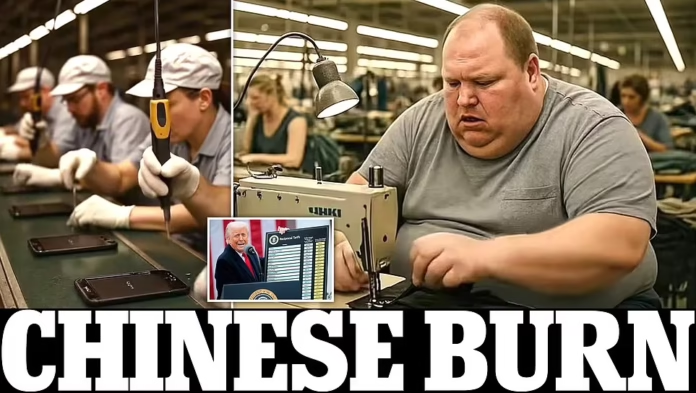
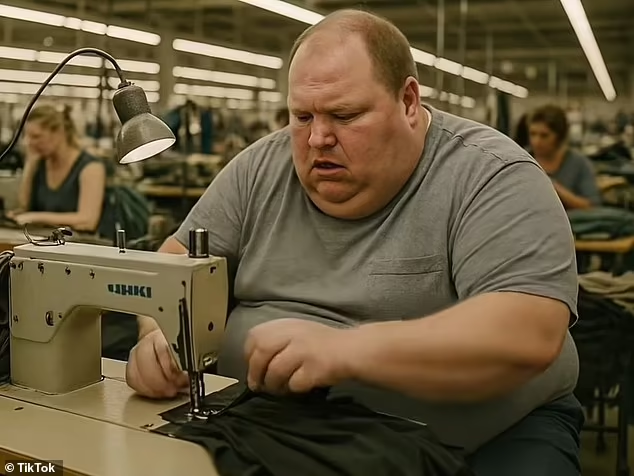
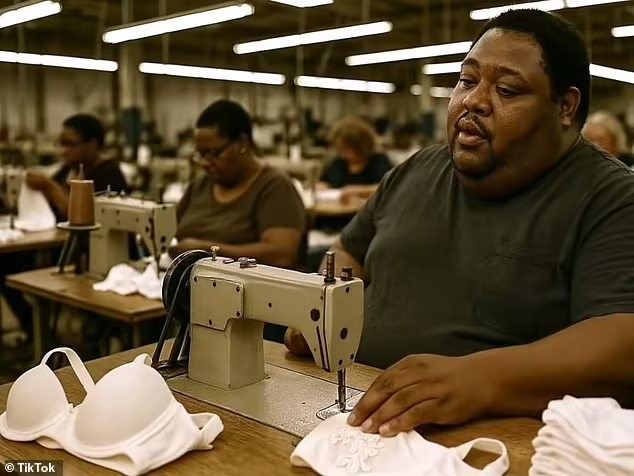
The 32-second video features AI-rendered depictions of morbidly obese American workers dressed in sweat-stained clothing, laboring in dimly lit factories and sweatshops. The background audio includes melancholic Chinese music, creating a somber tone. Each character appears fatigued and emotionally drained, reinforcing negative stereotypes about American labor and productivity.

As the video concludes, it displays the phrase “Make America Great Again,” referencing Trump’s well-known campaign slogan. The narrative appears to mock the idea that manufacturing jobs lost to overseas markets could return to the United States through tariff enforcement.

The video’s timing coincides with renewed tariff disputes between Washington and Beijing, which have led to heightened tensions and threats of steep import fees from both sides. This satirical clip is being circulated widely amid the ongoing trade battle, viewed by some as a digital propaganda effort targeting US economic policy.

The video was posted by a TikTok user identified as Ben Lau. Until now, Lau’s TikTok account had minimal activity, with fewer than 1,000 followers and only three previous videos. Despite its modest origins, the video was reposted by a user on X (formerly Twitter) and quickly went viral, surpassing five million views.

The clip has sparked intense commentary online. One user wrote, “Low-skilled manufacturing will never come back to the US. Highly skilled manufacturing won’t come either because we gutted education and don’t have the highly skilled workforce.” Another added, “America will become the poorest country in the world under Trump’s rule.”

Some responses, however, attempted humor. One user joked, “That sewing machine could be made in China,” in reference to the setting of the video.

Reactions to the video appear to be mixed, with both Chinese nationals and American users critical of the Trump administration expressing approval of the satire. The video has become a flashpoint in broader debates about the impact of tariffs on the US economy and perceptions of American labor globally.

Defending the administration’s trade policy, US Vice President JD Vance recently addressed the growing economic rift between the two countries. During a Fox News interview, Vance stated that China’s economy was built by “peasants” and claimed, “We borrow money from Chinese peasants to buy the things those Chinese peasants manufacture.”

Vance further criticized the globalist economy, saying it has burdened the US with unsustainable debt in exchange for foreign-manufactured goods. “What has the globalist economy gotten the United States of America? And the answer is, fundamentally, it’s based on two principles – incurring a huge amount of debt to buy things that other countries make for us,” he said.

The Chinese government quickly responded. During a press conference, Foreign Ministry spokesperson Lin Jian condemned Vance’s comments, calling them “astonishing and lamentable,” and accused the US Vice President of making “ignorant and disrespectful” remarks.

As digital rhetoric intensifies, real-world economic policy also escalates. On Monday, President Trump threatened to impose a 50% tariff on Chinese goods if Beijing does not withdraw its newly announced 34% retaliatory tariffs on US imports. Trump issued an ultimatum via his Truth Social platform, stating the higher tariffs would take effect on April 9, 2025, if China did not reverse course by April 8.

Beijing’s 34% tariff increase was in response to Trump’s latest global tariff measures, which have already contributed to a sharp 4,000-point decline in US stock markets. Trump warned that continued Chinese retaliation would lead to the cancellation of further trade talks and negotiations.

The broader conflict over manufacturing jobs—a central issue of the Trump administration since 2017—is again under the spotlight. Trump has long argued that imposing tariffs on Chinese goods would incentivize companies to bring production back to the US, creating jobs and reducing dependence on foreign labor.

However, social media discourse, including the viral AI-generated video, now questions whether American workers would be willing or able to resume labor-intensive manufacturing roles, given long-term shifts in the labor market, education systems, and economic priorities.

The video and its global reaction underscore the increasingly complex intersection of digital media, international relations, and economic policy in the US-China trade war era.

2 Chinese Soldiers Captured Fighting for Russia in Ukraine, Zelensky Says

0

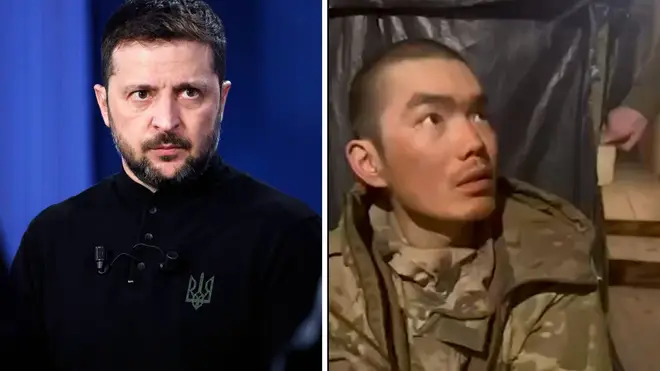
Ukrainian President Volodymyr Zelensky announced that two Chinese nationals have been captured by Ukrainian forces while allegedly fighting alongside Russian troops in the Donetsk region. The development marks a potential turning point in the Russia-Ukraine conflict and raises serious concerns over foreign involvement.

According to Zelensky, a total of six Chinese nationals were reportedly found fighting for the Russian military, with two of them taken into custody by Ukrainian forces. The captured individuals are currently being held by Ukraine’s Security Service (SBU) as intelligence agencies continue to assess the situation.

President Zelensky emphasized the gravity of the incident, stating that Ukrainian authorities possess official documents, including bank cards and personal data, belonging to the captured soldiers. He added that intelligence indicates the presence of additional Chinese nationals fighting on behalf of Russia in occupied Ukrainian territories.

“Our military captured two Chinese citizens who fought in the Russian army. This happened on the territory of Ukraine – in the Donetsk region,” Zelensky stated. “There are documents of these prisoners, bank cards, personal data. We have information that there are significantly more such Chinese citizens in the units of the occupier than two.”

Ukraine’s intelligence services, including the SBU and relevant military units, are continuing their investigation into the presence of Chinese personnel in Russian military ranks.

The Ukrainian Foreign Ministry has since summoned the Chinese charge d’affaires to provide an official explanation following the detainment of the two Chinese nationals. No formal comment from Beijing has been issued thus far.

In a video shared by Zelensky, one of the captured individuals can be seen mimicking what appears to be the sound of a drone strike. The soldier, speaking with Ukrainian forces, imitates the sound with phrases such as, “Vroom vroom… boom boom boom boom boom… and then my commander…”

Zelensky characterized the discovery of Chinese fighters as a critical signal, stating that their involvement underscores Russian President Vladimir Putin’s intentions to prolong and expand the war. “Russia’s involvement, directly or indirectly, of China in this war in Europe is a clear signal that Putin is going to do anything but end the war,” Zelensky said. “He is looking for a way to continue the war. This definitely requires a reaction. A reaction from the United States, Europe, and everyone in the world who wants peace.”

While China remains one of Russia’s major geopolitical allies, the Chinese government has consistently denied allegations that it provides military support to Moscow in the conflict against Ukraine. If the captured individuals are verified as active-duty members of the Chinese military, it could mark a serious escalation in global involvement in the war.

However, officials caution that the presence of foreign fighters on the battlefield does not necessarily constitute direct intervention by their home countries. Foreign nationals from various states, including North Korea, have previously been found participating in the conflict.

Earlier in the year, Ukrainian forces reportedly captured two North Korean soldiers in Russia’s Kursk region. Ukrainian inspections revealed that the captured individuals had been given false Russian identities by the Kremlin. One of the captives carried an identification document listing him as Antonin Ayasovich Arankyn from Tuva, a republic bordering Mongolia. The ID stated he was a tailor by profession, single, and had completed secondary higher education. The second detainee had no documentation.

This deception was uncovered during postmortem inspections of North Korean combatants killed in action, as their physical features and non-Russian documentation raised suspicions among Ukrainian servicemen.

In a separate development, President Zelensky also confirmed for the first time that Ukrainian forces are operating inside Russia’s Belgorod region. The area has been under regular attack and sits near the Kursk region, where Ukrainian troops previously conducted surprise incursions. “We continue to conduct active operations in the border areas on the enemy’s territory, and this is absolutely right—the war must return to where it came from,” Zelensky said, referring to Russia.

UK Prime Minister Sir Keir Starmer addressed the claims during a session with the Liaison Committee. He said he would consult with intelligence agencies and Ukrainian officials before making a formal statement. “I will obviously be taking intelligence and security advice on it. We will obviously be talking to the Ukrainians about it,” Starmer stated.

As investigations continue, the potential involvement of foreign state-backed fighters in the ongoing war could further complicate diplomatic efforts and raise the stakes in the already volatile conflict between Ukraine and Russia.

US Accelerates Development of B61-13 Nuclear Bomb, 24 Times More Powerful Than Hiroshima Blast

0

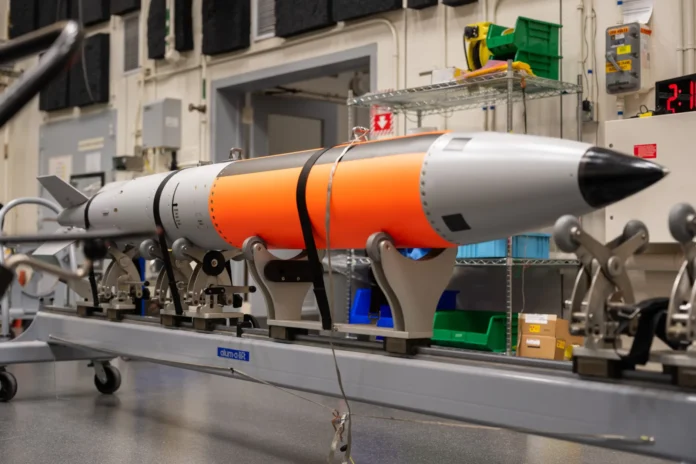
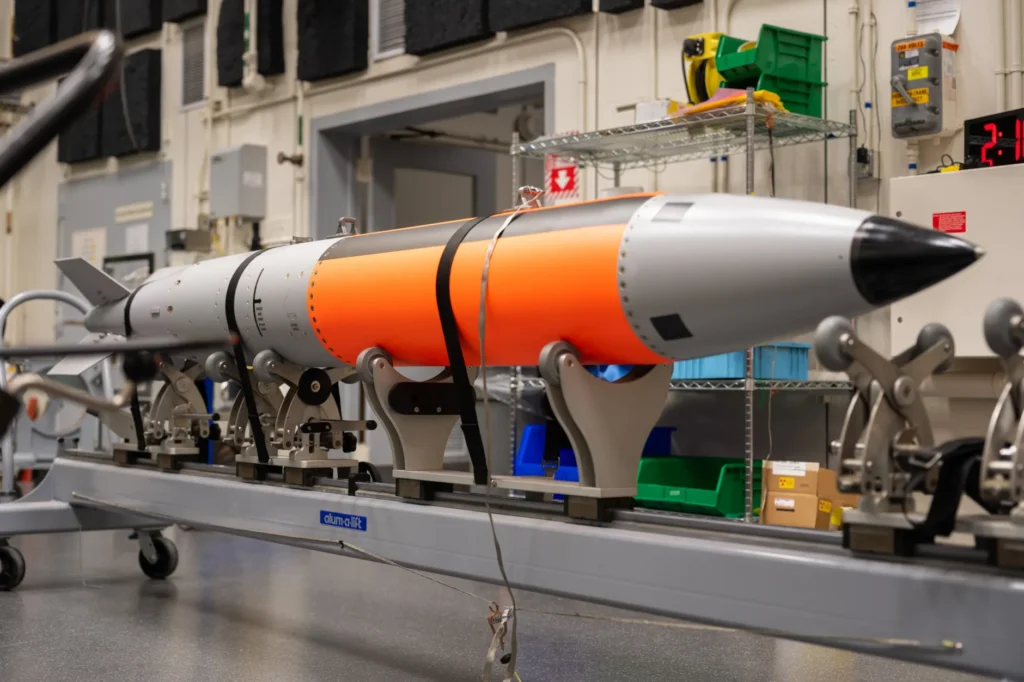
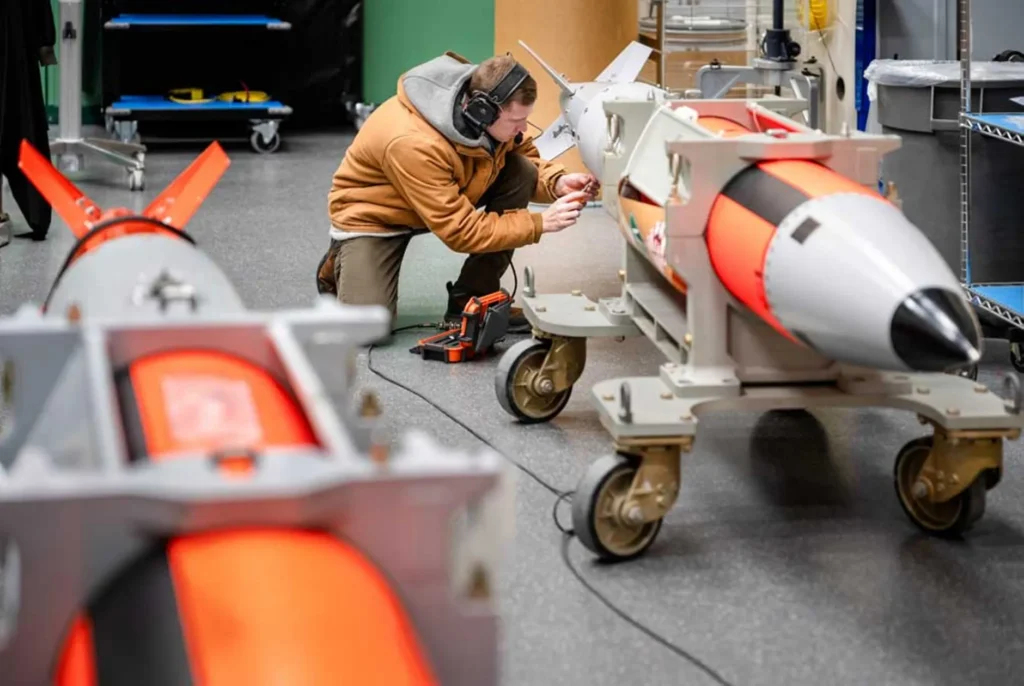
The United States has commenced early production of the B61-13 nuclear gravity bomb, an advanced weapon system with a destructive capacity significantly higher than any previous iteration. According to Sandia National Laboratories, the new B61-13 is being developed seven months ahead of its original schedule, following a fast-tracked plan under what officials described as “innovative program planning.”

The B61-13’s accelerated development is part of the Department of Energy’s National Nuclear Security Administration’s 2023 initiative to modernize the US nuclear arsenal. The program has been adjusted to allow for a 25 percent faster completion rate than originally planned.

This nuclear bomb is a gravity bomb, designed to be dropped from aircraft rather than launched via missile systems. Reports indicate that its production cost is $92 million. Unlike earlier models, the B61-13 will be equipped with an advanced tail kit that enables guided delivery to a specific target, enhancing its precision.

According to specifications released by Sandia National Laboratories, the B61-13 builds on the design of the B61-7 bomb. It offers a variable yield ranging from 10 to 360 kilotons, allowing for use in diverse operational contexts while limiting unintended damage outside the strike zone.

Its maximum yield of 360 kilotons makes the B61-13 approximately 24 times more powerful than the atomic bomb dropped on Hiroshima during World War II. The Hiroshima bomb had a yield estimated between 12 and 18 kilotons, while the Nagasaki bomb produced between 18 and 23 kilotons.

The B61-13 will be integrated into the United States’ strategic bomber fleet. Initial deployment is planned aboard the B-2 Spirit stealth bomber, with eventual transition to the upcoming B-21 Raider, the US Air Force’s next-generation long-range bomber.

The B61 nuclear bomb series, originally introduced in 1968, is one of the longest-running and most widely deployed in the US arsenal. The B61-13 continues this lineage with new features that enhance delivery precision and destructive capability.

Parallel to its military developments, the US has also resumed diplomatic conversations regarding nuclear issues. President Donald Trump, speaking in a March interview, described nuclear weapons as a significant threat while acknowledging continued investment in the field. He characterized the destructive power of nuclear arms as far beyond conventional measures.

On Monday, Trump confirmed that the United States has re-entered direct nuclear negotiations with Iran, marking the first face-to-face discussions between the two nations since 2015. The president announced that a high-level meeting is scheduled for Saturday, involving senior officials from both countries.

Sources familiar with the matter reported that the ongoing talks are centered on re-establishing a nuclear deal, with a two-month timeframe proposed for reaching a new agreement. Iran’s Foreign Minister Abbas Araghchi stated that the opportunity also represents a test for both sides, adding that the next move belongs to the United States.

Previous invitations by the Trump administration for direct negotiations had been rejected by Iranian Supreme Leader Ayatollah Ali Khamenei. However, current diplomatic activity suggests a potential shift in approach. Trump noted that success in the talks would be in Iran’s best interest and added that failure to reach a deal could place Iran in a vulnerable position.

The renewed dialogue comes at a time of heightened geopolitical focus on nuclear capabilities, with the early development of the B61-13 adding to the broader landscape of international nuclear strategy.

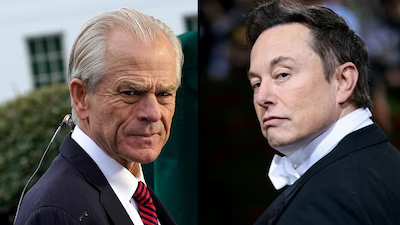
Elon Musk Calls Trump Trade Adviser Peter Navarro a ‘Moron’ and ‘Dumber Than a Sack of Bricks’ Amid Escalating GOP Trade Rift

0

Tensions between two prominent figures in Donald Trump’s circle escalated over the weekend after Elon Musk publicly ridiculed former White House trade adviser Peter Navarro, calling him a “moron” and “dumber than a sack of bricks” in response to Navarro’s defense of sweeping tariffs proposed under a potential second Trump administration.

The heated remarks followed Navarro’s appearance on Fox News’ *Sunday Morning Futures*, where he responded to Musk’s earlier comments advocating for a zero-tariff trade agreement with Europe—something Musk suggested would boost global commerce and ease tensions. Navarro dismissed Musk’s suggestion, accusing the billionaire entrepreneur of oversimplifying international trade policy and prioritizing his own business interests.

“It was interesting to hear Elon Musk at the beginning talk about a zero-tariff zone with Europe. He didn’t understand that,” Navarro said in the televised interview. “The thing that’s, I think, important about Elon to understand—he sells cars.”

Navarro, who was the architect of Trump’s aggressive trade policy during his first term, including the tariff battles with China and the European Union, defended his approach and brushed off Musk’s criticism. When asked if the public disagreement pointed to a deeper rift between himself and Musk—both influential figures in Trump-aligned politics—Navarro downplayed any internal divide.

“There’s no rift here,” he said. “We don’t mind him saying whatever he wants, but just the American people need to understand that we understand what that’s all about. It’s fine.”

Still, the clash underscores growing ideological tension within the GOP, particularly as Trump’s allies debate how far a second-term administration should go in reviving protectionist trade policies. Navarro has remained one of the most unrelenting proponents of tariffs as a cornerstone of economic nationalism, while Musk represents a powerful wing of the pro-business elite wary of government interference in global markets.

A former Trump adviser, speaking to NBC News, emphasized that Navarro’s loyalty to the former president runs deep, citing his four-month stint in federal prison for contempt of Congress after defying a subpoena from the House committee investigating the January 6 attack on the Capitol.

“He went to jail for President Trump. I’m not sure how much more you could show loyalty,” the adviser said. “Sure, Elon is his guy and they get along great, but there is just another level there with Peter.”

That same adviser suggested that if the feud between Navarro and Musk continues to escalate, Navarro is unlikely to lose favor with Trump. “If this turns out to be an all-out war, I very much doubt Peter is the one who is going to come out on the wrong end of it. I really wish it was not so public and am not sure how exactly it will play out, but I know that the president very much values what Peter did for him.”

Navarro’s return to public life following his release from prison was marked by a high-profile appearance at the Republican National Convention, where he passionately defended Trump and railed against the Biden administration’s economic policies. The moment was seen by many within the GOP as a reassertion of Navarro’s central role in the MAGA movement.

Asked about the spat between Navarro and Musk, White House press secretary Karoline Leavitt appeared unfazed, telling CNBC, “Whatever. We are the most transparent administration in history expressing our disagreements in public.”

The dispute also drew attention from Capitol Hill, where Senate Minority Leader Chuck Schumer seized the moment to criticize the perceived dysfunction within Trump’s inner circle. Speaking on the Senate floor, Schumer said, “The chaos within the Trump administration was shown a few minutes ago when Elon Musk called Peter Navarro, the chief architect of these tariffs, a moron. That’s Musk’s word. He called him a moron.”

Schumer added, “Their plan is so crazy, so controversial, that this administration cannot get its act together—with them calling names about each other—about this tariff plan.”

As Trump weighs his economic team for a potential return to the White House in 2025, the clash between two of his most visible backers—one a former federal official turned convicted defiant, the other the world’s richest man—may prove to be a test of which vision for trade policy will dominate the next phase of Republican politics.

South Sudan Slams U.S. Visa Revocation as Unjust, Citing Mistaken Identity

0

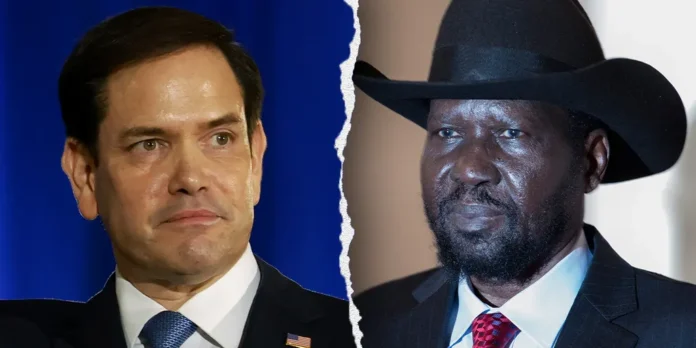
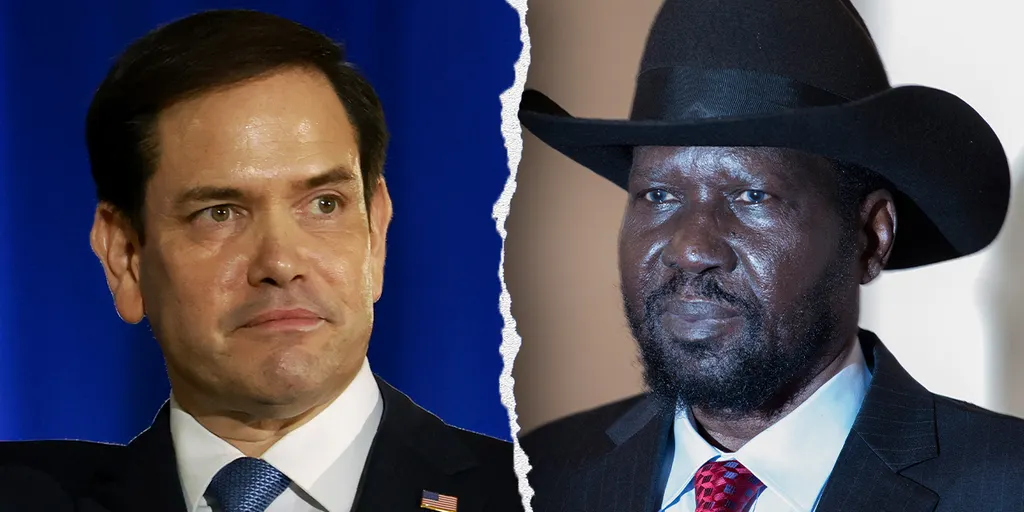
South Sudan’s government is strongly pushing back against the United States’ decision to revoke all U.S. visas for South Sudanese nationals, calling the move unjust, discriminatory, and rooted in a case of mistaken nationality involving a Congolese citizen.

The U.S. State Department announced Saturday that visa services would be suspended for all South Sudanese following Juba’s alleged failure to cooperate with deportation proceedings particularly in refusing to accept a deportee removed from the U.S.

However, in an official statement released Monday, South Sudan’s Ministry of Foreign Affairs disputed the claim, stating that the individual in question was not a South Sudanese national, but rather a Congolese citizen, who was returned to the U.S. with documented proof of his true nationality. These findings, the ministry said, were shared with American officials.

 “The government deeply regrets that despite this history of collaboration and partnership, South Sudan now faces a broad revocation of visas based on an isolated incident involving misrepresentation by an individual who is not a South Sudanese national,” the statement said.

South Sudan’s Information Minister Michael Makuei Lueth told the Associated Press that the U.S. decision was likely politically motivated, suggesting that Washington is “attempting to find faults with the tense situation” in South Sudan as a pretext for punitive measures.

“No sovereign nation would accept foreign deportees,” Lueth said, defending his government’s stance and emphasizing that South Sudan has consistently worked with the U.S. on migration issues.

The diplomatic row comes as South Sudan remains on fragile footing domestically. The United Nations warned in March that the country was at risk of descending into renewed civil war. Opposition leader and Vice President Riek Machar remains under house arrest on allegations of inciting violence after his loyalists allegedly seized an army camp and attacked a U.N. helicopter.

These tensions have raised fears that South Sudan’s political instability may now be influencing its international relationships, with visa restrictions compounding the nation’s isolation amid growing internal unrest.

While the U.S. did not publicly release the name of the deportee at the center of the controversy, Deputy Secretary of State Christopher Landau noted via social media that the visa dispute stemmed from “one individual” whose repatriation was declined despite having been certified by South Sudan’s embassy in Washington.

“We will be prepared to review these actions when South Sudan is in full cooperation,” the U.S. government said, signaling that future visa access hinges on the resolution of the deportation impasse.

At present, it remains unclear how many South Sudanese nationals hold valid U.S. visas or how many may be affected by the sudden suspension.

13 Dead, Over 90 Hospitalized After Roof Collapse at Santo Domingo Nightclub

0

At least 13 people have been confirmed dead and more than 90 have been hospitalized following the catastrophic roof collapse of a popular nightclub in Santo Domingo, the capital of the Dominican Republic. The incident occurred in the early hours of Tuesday at Jet Set Club, a well-known nightlife hotspot in the city’s National District.

According to the Dominican Republic National Police, a total of 93 ambulance transfers were made to various local hospitals as emergency responders scrambled to treat those injured in the disaster. The full extent of the injuries and the number of people trapped under the debris remains unknown, prompting ongoing search and rescue operations at the site.

The cause of the structural failure remains under investigation. The roof collapsed during a live performance by acclaimed merengue singer Rubby Pérez, who was on stage at the time of the incident, according to local media reports.

Juan Manuel Méndez, the Director of the country’s Emergency Management Operations, confirmed via a video statement on Instagram that authorities are continuing their search through the rubble, holding out hope that some victims may still be alive.

“We are still working, searching for people in the rubble. We presume that many of them are still alive, that’s why the authorities here with their teams will not stop until we find the last person in that rubble,” Méndez said.

Specialized teams, including firefighters, paramedics, and structural engineers, remain on-site as heavy machinery is used to carefully remove debris while minimizing further risks to potential survivors.

Santo Domingo Mayor Carolina Mejía de Garrigó expressed her condolences in a statement shared Tuesday morning on X (formerly Twitter), calling the incident a “terrible tragedy” for the city.

 “Our city wakes up to a terrible tragedy that occurred at the Jet Set nightclub. My deepest sympathy goes out to the families still waiting for news of their loved ones,” she said.

The mayor also confirmed that the National Disaster Response Committee had been activated and is coordinating relief and recovery efforts. City officials are working alongside national agencies to ensure those injured receive prompt medical care and that structural experts investigate the integrity of similar buildings in the area.

Jet Set Club has long been a staple in Santo Domingo’s nightlife scene, known for hosting live performances by some of the most iconic merengue and salsa artists in the Dominican Republic and the Caribbean. The collapse has shocked the entertainment community and raised questions about building safety and overcrowding in entertainment venues.

As authorities continue their investigation, safety officials have urged other nightclubs and public venues to review their structural integrity and emergency protocols.

China Vows to ‘Fight to the End’ as Global Tensions Rise Over Trump Tariffs

0

China has issued a fierce rebuke to what it describes as economic blackmail by the United States, vowing to “fight to the end” in response to President Donald Trump’s sweeping tariffs on Chinese goods. The move signals escalating tensions in a trade war that continues to unsettle global financial markets and reshape international trade alliances.

On Tuesday, stock markets showed signs of stabilizing after steep declines, but investor sentiment remained shaky. The unrest was triggered by Trump’s latest threat to hike tariffs on Chinese imports to more than 100 percent, a response to China’s earlier decision to impose equivalent tariffs on American goods.

Beijing condemned the U.S. escalation as a grave error, with China’s Commerce Ministry stating that “the U.S. side’s threat to escalate tariffs against China is a mistake on top of a mistake, once again exposing the American side’s blackmailing nature.” In a strongly worded statement, China warned, “If the U.S. insists on having its way, China will fight to the end.”

While China takes a hardline stance, other nations are exploring more measured strategies. The European Union is currently consulting member states on how to respond to Washington’s aggressive trade measures, seeking a way to defend European interests without causing additional economic strain.

European Commission President Ursula von der Leyen spoke by phone with Chinese Premier Li Qiang, urging Beijing to work toward a negotiated settlement. She emphasized the importance of maintaining a fair global trading system and proposed the creation of a mechanism to monitor trade redirection that might result from U.S. tariffs.

There are growing concerns that China may redirect cheap exports originally intended for the U.S. to European markets, potentially undercutting local industries.

Chinese manufacturers, particularly in industries such as tableware and flooring, are warning of plummeting profits and exploring the possibility of relocating production overseas. As economic uncertainty deepens, financial institutions are adjusting their outlook. Citi recently lowered its GDP growth forecast for China in 2025 from 4.7 percent to 4.2 percent, citing heightened external risks and weakening global demand.

The European Union is preparing its own slate of counter-tariffs, targeting a 25 percent levy on a range of U.S. exports including soybeans, nuts, and sausages. The bloc is still open to negotiating a “zero-for-zero” deal, but frustration continues to mount over U.S. tariffs already imposed on European autos, metals, and potentially alcoholic beverages.

The intensifying tariff conflict has rattled markets worldwide. Stéphane Boujnah, CEO of pan-European stock exchange operator Euronext, said the U.S. is now beginning to resemble an emerging market rather than the dominant global force it once was. “There is a certain form of mourning,” he said in a radio interview. “The United States that we had known for the most part now resembles more an emerging market.”

While markets stabilized somewhat on Tuesday, volatility remains high. European indices rebounded from 14-month lows, oil prices recovered slightly after a sharp sell-off, and U.S. stock futures climbed marginally after incurring massive losses the previous week. Japan’s Nikkei index closed 6 percent higher, and Chinese blue chips rose by 1 percent after a steep drop the day before.

However, emerging markets like Indonesia faced significant pressure. Its stock market fell 9 percent after a trading break, prompting central bank intervention to stabilize conditions.

Nations across the Asia-Pacific region are seeking diplomatic solutions to mitigate the impact of Trump’s tariff agenda. Vietnam, heavily reliant on low-cost exports to the U.S., requested a 45-day delay in implementing new tariffs and pledged to increase purchases of American products.

Indonesia, whose currency fell to record lows, offered concessions on imports of electronics and steel to ease tensions with Washington. The country also announced it would send a high-level delegation to the U.S. to negotiate ahead of a 32 percent tariff slated to begin soon.

South Korea, meanwhile, is reviewing plans to boost U.S. imports as it prepares for bilateral discussions with the Trump administration.

Trump has defended the tariffs, which range from 10 to 50 percent on various imports, claiming they will restore America’s industrial base and correct decades of imbalanced trade. But critics warn that the sweeping measures are fueling global economic instability and pushing the world toward a recession.

As the trade standoff continues, nations are scrambling to protect their economies and recalibrate international relationships. Whether through defiance, diplomacy, or economic realignment, the global response to Trump’s tariff war is only just beginning.

UN Report Exposes Haiti Gang Massacre and Delayed Government Response Amid Worsening Crisis

0

A newly released United Nations report has revealed the staggering toll of coordinated gang violence in Haiti’s capital, Port-au-Prince, while sharply criticizing the Haitian government for its delayed and disorganized response. According to the UN political mission in Haiti, known as BINUH, at least 262 people were killed in gang-led attacks between January 27 and March 27 in the neighborhoods of Kenscoff and Carrefour.

The report outlined how a January attack in Kenscoff unfolded, exposing deep flaws in the country’s emergency response system. It took more than five hours for Haiti’s military, national police, and a UN-backed international security mission led by Kenyan forces to respond—despite advance warnings.

BINUH suggested the delay pointed to a serious disconnect between the Haitian National Police and the central government. The mission said, “The sequence of events in Kenscoff appears to indicate that the security forces did not initially take adequate measures to prevent the first attacks, nor to ensure the rapid deployment of specialized police units, despite reports of an imminent threat posed by gangs.”

In the initial wave of violence, at least 31 civilians were killed, 27 injured, and more than 70 homes were burned to the ground before security forces finally arrived. The attackers were eventually repelled, with authorities killing at least 23 gang members.

Just hours later, a separate attack in Carrefour left at least 30 more civilians dead, adding to the growing death toll across the metro area. The report described widespread execution-style killings, with victims shot inside their homes or gunned down as they fled through nearby roads and trails.

Between late January and late March, a total of 262 people were confirmed dead, 66 injured, and over 190 homes torched. Among the victims were 147 suspected gang members and a one-month-old infant who was thrown into a fire. More than 3,000 residents were left homeless. The report also documented the rape of at least seven women and girls, including a 41-year-old breastfeeding mother.

The UN report also highlighted the gangs’ advanced planning. Weapons and ammunition were smuggled into the area inside large plastic drums, typically used for water and fuel, and transported undetected on donkeys through surrounding hills. The attackers exhibited “extreme brutality,” the UN said, intentionally creating fear by executing men, women, and children in plain view.

Analysts say the attacks reflect Haiti’s rapidly unraveling governance. Diego Da Rin, an analyst with the International Crisis Group, said the violence once again revealed the fracture between Haiti’s prime minister and police leadership, along with the police force’s failure to process and act on critical intelligence.

The Haitian National Police has not publicly responded to the report. However, the agency has faced widespread criticism for being under-resourced and ineffective against powerful, well-armed gangs.

Amid the chaos, journalists have also become targets. Two reporters have gone missing in recent days, further inflaming concerns over press freedom and democratic backsliding.

Jean Christophe Collègue, a former correspondent for Voice of America, has disappeared after his home was set on fire. Separately, a viral video showed Radio Ginen journalist Israël Roger Claudy and his brother being abducted by armed gangs. The Association of Haitian Journalists denounced the incidents, calling them direct attacks on democracy.

Port-au-Prince, once the political and cultural heart of Haiti, is now estimated to be 85 percent controlled by gangs. Jake Johnston, a senior researcher at the Center for Economic and Policy Research, said, “For the vast majority, that threshold was passed long ago. Many now believe the city has completely fallen.”

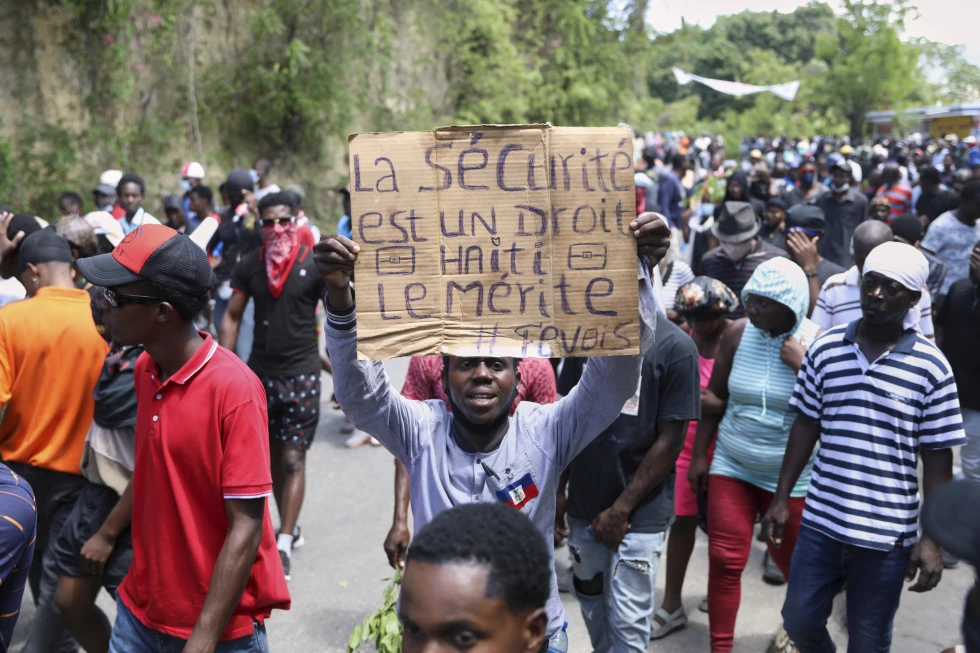
On April 2, thousands of residents took to the streets in a protest march aimed at the prime minister’s office and the transitional presidential council. The demonstrators, demanding immediate action to end gang violence, were met with gunfire and tear gas.

“What it really shows you is the level of frustration,” Johnston said. “Taking to the streets to protest in this context is obviously not a safe thing to do, but people are willing to risk their lives.”

The much-anticipated international security mission led by Kenyan police is currently operating at less than half its intended capacity. Out of the original plan for 2,500 personnel, only 40 percent have been deployed due to funding and logistical constraints.

Johnston added, “What’s clear is that sitting around and waiting for more external help in doing this is not a viable strategy.”