Canada has halted imports from the largest U.S. pork processing plant, operated by Smithfield Foods in Tar Heel, North Carolina, citing noncompliance issues, the company confirmed Friday.
The suspension follows escalating trade tensions between Washington and Ottawa over tariffs, raising concerns about potential retaliatory measures that could impact U.S. agricultural exports.
The U.S. Department of Agriculture (USDA) stated that the suspension aligns with standard protocols and is not linked to ongoing trade disputes. However, neither the USDA nor Smithfield, the nation’s top pork processor, provided specific details on the violations that led to the ban.
“Under Canada’s policy, three noncompliance issues within six months result in a temporary suspension,” the USDA noted in a statement.
The import ban restricts a key market for U.S. pork products. Canada was the fifth-largest destination for American pork exports in 2023, with shipments valued at approximately $850 million.
The USDA is working with Smithfield to resolve the compliance concerns and draft a corrective action plan for submission to Canadian authorities.
“Once reviewed and accepted, Canada may consider reinstating the plant’s export eligibility,” the agency added.
Smithfield spokesman Jim Monroe clarified that the issue pertains to a “limited number of certain offal shipments.” The company’s shares remained largely unchanged following the announcement.
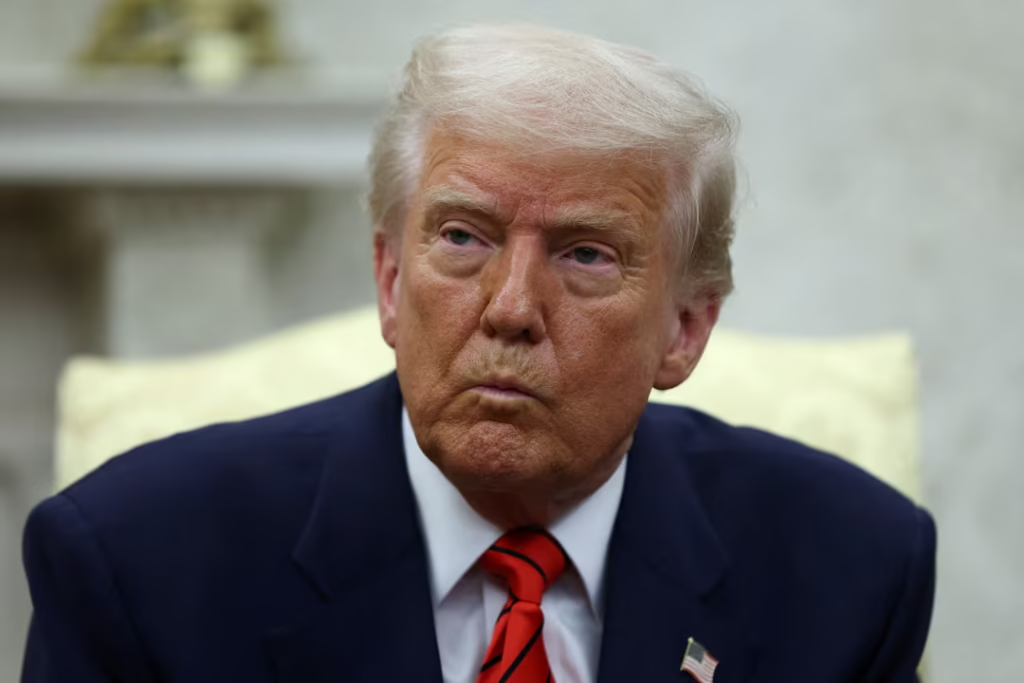
The import halt took effect Thursday, according to a USDA report. The move comes as U.S. President Donald Trump temporarily exempted Canada and Mexico from newly imposed 25% tariffs on imported goods under the North American trade agreement.
Smithfield, which owns brands such as Eckrich and Nathan’s Famous, recently returned to a U.S. stock exchange following a spin-off from its former Hong Kong-based parent company, WH Group.
Russian forces launched a massive missile and drone attack across Ukraine overnight, targeting energy and gas infrastructure in what marked the first large-scale assault since the United States halted military aid and intelligence sharing earlier this week.
Ukraine’s Air Force reported that Russia fired 67 missiles and 194 drones, of which 34 missiles and 100 drones were intercepted. The attack, stretching from Kharkiv in the northeast to Ternopil in the west, left multiple regions suffering damage. Officials confirmed at least ten injuries, including a child, in Poltava and Kharkiv.
“Russia continues its energy terror,” Ukrainian Energy Minister Herman Halushchenko said. “Once again, energy and gas infrastructure in various regions of Ukraine has come under massive missile and drone fire.”
The strikes come amid mounting pressure on Kyiv as Ukrainian President Volodymyr Zelensky seeks to maintain Western support following a diplomatic shift in Washington.
Following the attack, Zelensky reiterated his call for a ceasefire covering air and sea operations but excluding ground troops, an initiative first proposed by France.
“The first steps to establishing real peace should be forcing the sole source of this war—Russia—to stop such attacks,” Zelensky said in a statement on Telegram.
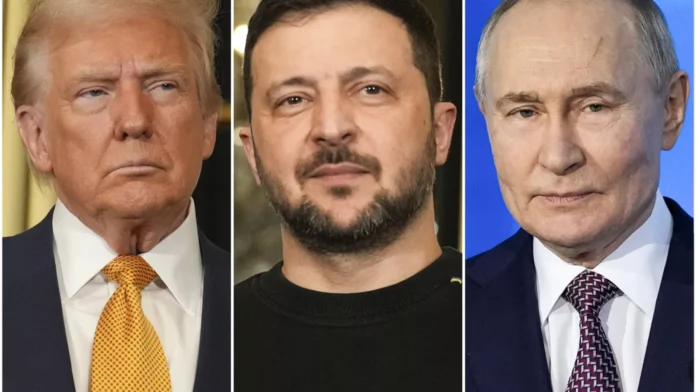
Tensions between Ukraine and the United States have escalated since Zelensky’s meeting with President Donald Trump in Washington last week. After their tense exchange, Trump indicated he viewed Zelensky as an obstacle to peace negotiations with Moscow.
Amid diplomatic efforts to mend relations, Zelensky announced he would meet with Saudi Crown Prince Mohammed bin Salman in Riyadh on Monday. The visit precedes planned discussions between U.S. and Ukrainian officials in Saudi Arabia regarding a potential peace framework.
Trump’s special envoy, Steve Witkoff, confirmed ongoing talks with Ukrainian officials and stated that negotiations for a possible peace deal were underway. “Ukraine is ready to pursue the path to peace, and it is Ukraine that strives for peace from the very first second of this war,” Zelensky reiterated.
Despite these discussions, key differences remain between Kyiv and Washington. Ukraine continues to seek firm security guarantees, while the U.S. has not committed to long-term military aid, instead proposing alternative agreements, including a critical minerals partnership.
Friday’s strikes are part of an ongoing Russian campaign against Ukraine’s energy sector. Attacks on power stations and gas production sites have intensified in recent months, significantly reducing the country’s electricity generation capacity.
Naftogaz, Ukraine’s state energy company, confirmed that gas production facilities had been damaged but reported no casualties. Meanwhile, DTEK, Ukraine’s largest private energy company, was forced to suspend operations in the central Poltava region due to extensive damage.
The suspension of U.S. military aid may be impacting Ukraine’s air defense capabilities, analysts warn, as the country faces increasing difficulty in countering missile strikes due to depleting stockpiles of advanced interceptor missiles.
On the battlefield, Russian forces continue their advance in the eastern Donetsk region and have mounted offensives near Ukraine’s northern border with Russia’s Kursk region. The shifting military balance has raised concerns over Ukraine’s ability to hold territory without renewed Western support.
As Ukraine braces for further assaults, Zelensky’s government remains engaged in diplomatic efforts to secure international backing while seeking to reinforce its defenses amid an increasingly complex geopolitical landscape.
A SpaceX Starship spacecraft exploded midflight Thursday during its eighth test mission, disrupting Florida air traffic and marking the second consecutive failure for the vehicle this year.
The uncrewed mission launched at 5:30 p.m. CT (6:30 p.m. ET) from SpaceX’s Starbase facility in South Texas. The Starship spacecraft, the upper stage of the world’s most powerful launch system, rode atop the 232-foot-tall (71-meter-tall) Super Heavy rocket booster.
Following a successful stage separation after 2 ½ minutes of flight, the Super Heavy booster executed a landing maneuver using the “chopstick” arms of SpaceX’s launch tower near Brownsville, Texas. It marked the third successful booster recovery using this method.
However, less than 10 minutes into the mission, the Starship vehicle encountered problems as several engines visibly shut down. The spacecraft began tumbling before SpaceX lost contact with it.
“Once you lose enough of those center engines, you’re going to lose attitude control,” said SpaceX communications manager Dan Huot during the livestream. “At this point, we have lost contact with the ship.”
The failure occurred at approximately the same stage of flight as January’s Flight 7 mishap, which resulted in debris scattering over the Turks and Caicos Islands. Reports indicated that Thursday’s explosion was visible from parts of Florida and the Caribbean.
The Federal Aviation Administration (FAA) temporarily halted flights into Miami, Fort Lauderdale, Palm Beach, and Orlando airports, citing concerns over “falling space debris.” Flights from Miami International Airport and Fort Lauderdale/Hollywood International Airport were delayed by an average of 30 to 45 minutes.
Huot emphasized that SpaceX had pre-established safety measures to mitigate risks to the public. “We have a lot of measures in place before we ever launch a rocket to make sure that we’re keeping the public safe,” he stated.
SpaceX provided an update on the incident, stating that an “energetic event” in the aft portion of Starship resulted in the loss of multiple Raptor engines, leading to the vehicle’s loss of control and subsequent explosion.
“Final contact with Starship came approximately 9 minutes and 30 seconds after liftoff,” the company confirmed. SpaceX added that any debris would have fallen within a designated debris response area and posed no significant environmental risk.
The FAA has initiated a formal mishap investigation, requiring SpaceX to determine the root cause of the failure and propose corrective actions. “The FAA will be involved in every step of the SpaceX-led mishap investigation process and must approve SpaceX’s final report,” the agency stated.
The FAA’s decision to approve Thursday’s launch before completing its investigation into January’s Flight 7 explosion has raised concerns over experimental rocket launches over populated areas.
Thursday’s failed launch came just seven weeks after Starship Flight 7 was prematurely terminated over the Turks and Caicos Islands. Debris from that explosion was later discovered on beaches and roadways, prompting a coordinated cleanup effort between SpaceX and local authorities.
The company previously cited a leak in the vehicle’s aft section near an oxygen tank as the cause of Flight 7’s failure. SpaceX has since implemented modifications, including additional fuel line protections, new vents, and a purge system to reduce fire risk.
Despite the ongoing failures, SpaceX continues to push forward with Starship’s rapid development. The company aims to refine the spacecraft’s heat shield, propulsion systems, and flight control mechanisms in preparation for future missions.
HOUSTON – A Southwest Airlines flight was forced to return to its gate after a female passenger stripped naked and ran up and down the aisle for 25 minutes, shocking fellow travelers.
The incident occurred Monday on Flight 733 from Houston’s William P. Hobby Airport to Phoenix. Footage captured by passenger Macy Estevez and first shared by ABC13 showed the woman baring her breasts and gyrating in front of the cabin inside the Boeing 737. Estevez stated that the woman continued parading through the aircraft before authorities intervened.
The Houston Police Department detained the woman for medical evaluation but did not confirm whether charges would be filed. Reports indicate she repeatedly demanded to be let off the plane and claimed to be bipolar during her outburst.
A statement from Southwest Airlines confirmed the disruption and issued an apology to affected passengers. “Local law enforcement met Flight 733 from Houston to Phoenix Monday afternoon after it returned to the gate because of a customer situation onboard,” the airline stated. “We’ve reached out to customers to apologize for the delay and appreciate their patience as our teams worked to get them to their destinations as quickly as possible.”
Passengers recounted the chaotic scene, with some reporting that the woman attempted to enter the cockpit before being restrained. KHOU11 reported that she banged on the cockpit doors, shouting to be let in. “She turned around facing us and stripped all of her clothes off,” one passenger recalled. “It was really scary.”
Footage obtained by 12News captured the woman running through the aisle, yelling “wait, wait, wait” as passengers watched in disbelief. Witnesses expressed surprise at the lack of immediate intervention, with one passenger commenting, “Very weird that nobody kind of intervened. Everyone just let her run on and on.”
A gate attendant reportedly wrapped the woman in a blanket as she was escorted off the plane. Experts advise passengers in similar situations to remain calm, distance themselves from the disruptive individual, and intervene only if necessary or instructed by flight staff.
One of Europe’s most wanted female crime bosses has been sentenced to prison after six years on the run. Magdalena Kralka, 30, took control of a notorious drug trafficking and hooligan network following the death of her gang-leader boyfriend, who was fatally shot by police.
Kralka rose through the ranks of the criminal organization, assuming leadership in 2018. She managed the gang’s financial operations and was instrumental in brokering drug deals, trafficking over 65 kilograms of cocaine and cannabis across Europe, according to law enforcement officials.
Authorities also accused her of harboring fugitive gang members and recruiting new operatives to battle rival football hooligan factions. Her criminal enterprise collapsed in 2019 when police launched a raid, forcing her to flee. She evaded capture for six years before being apprehended in Slovakia. During this period, Interpol placed her on its Red List of most-wanted fugitives.
A Polish court sentenced Kralka to three and a half years in prison on drug trafficking and money laundering charges. She was also ordered to pay a fine of £4,757. She appeared in court alongside 10 other gang members.
Prosecutors detailed the gang’s violent tactics, stating, “The group also committed acts against life and health, often using dangerous weapons such as knives and machetes. They targeted rival football hooligans from Krakow and Lodz clubs. Their activities were highly organized and hierarchical.”
Despite being regarded as a top figure in the gang, Kralka received a reduced sentence. Judges ruled that she was not in an executive position but rather followed directives issued by the previous leader, Mariusz Z., who was sentenced to 10 years in prison and fined nearly £21,000.
Her conviction follows a series of crackdowns on Europe’s most notorious drug traffickers. In February, Dutch drug kingpin Marco Ebben was shot and killed near Mexico City after years of evading capture. In January, UK authorities arrested Luis Grijalba, a cartel leader wanted in the United States for cocaine trafficking, after tracking his wife’s social media posts.
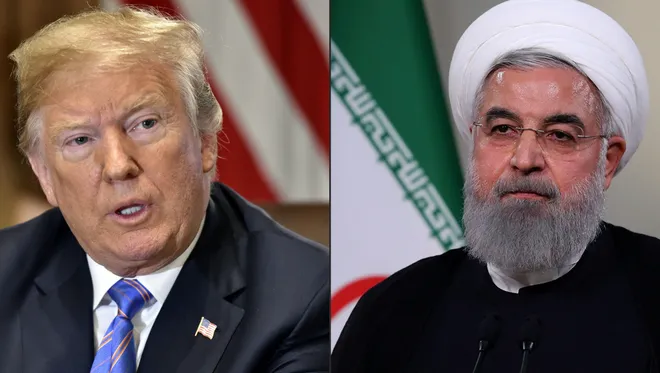
The Trump administration is considering a new strategy to intercept and inspect Iranian oil tankers at sea, leveraging an international accord designed to prevent the spread of weapons of mass destruction, sources familiar with the matter told Reuters.
President Donald Trump has pledged to reinstate a “maximum pressure” campaign aimed at crippling Iran’s economy and reducing its oil exports to zero in an effort to prevent Tehran from developing a nuclear weapon.
Since returning to office, Trump has already imposed two rounds of fresh sanctions targeting Iran’s so-called shadow fleet—an aging network of uninsured tankers transporting crude from sanctioned countries. These measures largely build on previous restrictions implemented under former President Joe Biden, during which Iran continued to smuggle oil through complex networks.
Now, Trump officials are exploring more aggressive tactics, including working with allied nations to stop and inspect Iranian tankers sailing through critical maritime chokepoints such as the Malacca Strait in Asia, sources said.
The move, if implemented, could delay crude deliveries to refiners, creating logistical and financial risks for those facilitating the trade. It could also deter buyers by exposing them to reputational damage and potential sanctions, according to six sources who spoke on condition of anonymity.
“You don’t have to sink ships or arrest people to have a chilling effect,” one source explained. “Delays in delivery create uncertainty in illicit trade networks.”
The administration is considering using the Proliferation Security Initiative (PSI)—a U.S.-led international effort launched in 2003 to combat the trafficking of weapons of mass destruction—as the legal framework for inspections. Over 100 governments have signed onto the initiative, potentially giving Washington leverage to encourage foreign allies to enforce oil shipment restrictions.
The National Security Council (NSC) is currently reviewing the feasibility of the plan, two sources confirmed, though it remains unclear whether the U.S. has approached PSI signatories to gauge their willingness to participate.
John Bolton, who negotiated the PSI framework for the U.S., told Reuters that applying the initiative to Iran’s oil trade “would be fully justified.” He emphasized that oil sales remain “critical to Iran’s ability to fund both proliferation activities and support for terrorism.”
Iranian President Masoud Pezeshkian told lawmakers on March 2 that Trump’s latest sanctions have created uncertainty for Iranian oil and gas shipments.
“Many of our ships at sea are now left wondering how to unload their cargo,” Pezeshkian said.
Neither Iran’s oil nor foreign ministries responded to requests for comment on the proposed U.S. inspections. The White House National Security Council also declined to comment.
The U.S. has previously attempted to seize Iranian oil shipments, triggering swift retaliation from Tehran.
In 2023, under Biden, the U.S. tried to interdict at least two Iranian oil cargoes. In response, Iran seized foreign vessels—including one operated by Chevron Corp (CVX.N)—sending crude prices higher.
Trump may have more room to maneuver under current market conditions. Ben Cahill, an energy analyst at the University of Texas, noted that lower oil prices provide the administration with flexibility in enforcing sanctions.
“If oil prices remain below $75 per barrel, the White House has more latitude to enforce measures that reduce Iranian supply,” Cahill said. “At $92 per barrel, it becomes much harder.”
He estimated that aggressive enforcement could initially cut Iran’s exports by 750,000 barrels per day, but cautioned that over time, Tehran and its buyers would likely find workarounds.
A potential offset to any disruption in Iranian exports could come from Iraq’s semi-autonomous Kurdistan region, where the White House is reportedly pressuring Baghdad to restart Kurdish oil shipments. Failure to comply could result in U.S. sanctions on Iraq, Reuters previously reported.
Despite years of sanctions, Iran’s oil trade remains lucrative. The U.S. Energy Information Administration (EIA) estimates that Iranian oil exports generated $53 billion in 2023 and $54 billion in 2022, primarily through sales to China.
Like Iran, Russia has increasingly relied on China and India as primary buyers amid Western sanctions.
Some European countries have recently raised alarms about the risks posed by aging oil tankers operating without Western insurance. Finland and other Nordic nations have warned about potential environmental disasters if one of these ships were to spill oil near their coastlines.
While European regulators have considered monitoring Russian oil shipments for compliance with insurance requirements, there has been no serious discussion about similar measures for Iranian vessels—raising questions about how much international support Washington might secure for its plan.
European Union leaders convened an emergency summit Thursday to bolster their defense strategy and ensure continued support for Ukraine, as concerns grow that the United States could scale back its commitments under President Donald Trump.
Friedrich Merz, the frontrunner to become Germany’s next chancellor, and summit chairman Antonio Costa met over breakfast in Brussels to discuss ways to strengthen Europe’s security on a tight deadline. Merz has been pushing for changes to Germany’s fiscal policies to allow for increased defense spending.
Meanwhile, the 27-member bloc reacted to reports that French President Emmanuel Macron would discuss with EU leaders the possibility of using France’s nuclear deterrent to safeguard Europe from potential Russian threats.
The discussions highlight a significant shift in transatlantic relations in the two months since Trump returned to office, quickly disrupting the long-standing pillars of U.S.-Europe cooperation that have underpinned Western security since World War II.
“Spend, spend, spend on defense and deterrence. That’s the most important message,” Danish Prime Minister Mette Frederiksen emphasized.
The summit marks a sharp departure from decades of declining military expenditures in Europe, where defense has often taken a back seat in national budgets.
The EU will “take decisive steps forward,” Macron said in a national address Wednesday evening. “Member states will be able to increase their military spending,” he added, announcing plans for a “massive joint funding initiative” to produce advanced munitions, tanks, weapons, and other military equipment in Europe.
“Europe’s future does not have to be decided in Washington or Moscow,” Macron declared, signaling a stronger push for European military independence.
Ukrainian President Volodymyr Zelenskyy, attending the summit, received a warm reception from European leaders—standing in stark contrast to his tense encounter with Trump days earlier.
“I want to thank all our European leaders,” Zelenskyy said. “From the very beginning of the war, throughout this entire period, and even last week, you have stood with us.”
European Commission President Ursula von der Leyen has introduced a proposal to ease budgetary restrictions, allowing member states to increase defense spending. The plan includes €150 billion ($162 billion) in loans to help nations purchase high-priority military equipment.
However, much of the additional spending would have to come from national budgets, posing challenges for heavily indebted countries. France, for example, is grappling with an annual budget deficit of 5% of GDP and a total debt burden of 112% of GDP. Other eurozone nations, including Belgium, Greece, Spain, Italy, and Portugal, also have debt levels exceeding 100% of GDP.
Germany, Europe’s largest economy, has more fiscal flexibility with a debt-to-GDP ratio of 62%.
Von der Leyen stressed the urgency of action, stating, “Europe faces a clear and present danger, and therefore Europe must be able to protect and defend itself.”
As EU leaders deliberated on long-term defense measures, Ukraine faced another deadly Russian assault. A missile strike in President Zelenskyy’s hometown overnight killed four people, including humanitarian volunteers from Ukraine, the United States, and Britain. At least 31 others were injured.
The attack coincided with Trump’s decision to pause U.S. military aid to Ukraine, pushing Zelenskyy to seek stronger European commitments.
Despite the urgency, Thursday’s meeting is not expected to result in immediate arms shipments or unlock an estimated €183 billion ($196 billion) in frozen Russian assets, which some EU nations want to use to support Ukraine’s war effort.
However, EU leaders emphasized the gravity of the situation.
“This is a watershed moment for Europe and Ukraine,” von der Leyen said, standing alongside Zelenskyy before entering the summit.
Despite growing consensus on the need for stronger European defense, internal divisions persist. Hungary and Slovakia have threatened to block parts of the summit’s final statement on Ukraine, potentially complicating efforts to present a united front.
“We must take action, even if one or two members oppose it every time,” Lithuanian President Gitanas Nausėda warned. “Otherwise, history will judge us, and we will pay a high price.”
While the summit is unlikely to yield immediate policy changes, a follow-up meeting scheduled for March 20-21 is expected to provide clearer decisions on military spending and support for Ukraine.
The Hamas militant group dismissed U.S. President Donald Trump’s latest threat on Thursday, reaffirming that it will only release the remaining Israeli hostages in exchange for a permanent ceasefire in the Gaza Strip.
Hamas accused Trump and Israeli Prime Minister Benjamin Netanyahu of attempting to renege on the ceasefire agreement reached in January. Under the deal, a second phase of negotiations was supposed to begin in early February, involving the release of hostages in exchange for Palestinian prisoners, a lasting ceasefire, and Israel’s withdrawal from Gaza.
Hamas spokesperson Abdel-Latif al-Qanoua stated that negotiations on this second phase are “the best path to free the remaining Israeli hostages,” though only preliminary talks have taken place.
On Wednesday, Trump issued what he described as a “last warning” to Hamas after meeting with eight former hostages. Meanwhile, the White House confirmed it had engaged in direct talks with the militant group—an unprecedented move given that Hamas is designated a terrorist organization by the U.S., Israel, and other Western nations.
“Release all of the Hostages now, not later, and immediately return all of the dead bodies of the people you murdered, or it is OVER for you,” Trump wrote on Truth Social. “Only sick and twisted people keep bodies, and you are sick and twisted!”
Both Israel and Hamas have a history of holding onto the remains of adversaries for leverage in prisoner exchanges. Hamas is believed to still be holding 24 living hostages from the October 7, 2023, attack that triggered the war, including Israeli-American Edan Alexander. Additionally, the group is keeping the bodies of 34 individuals killed either during the initial assault or while in captivity, along with the remains of a soldier killed in the 2014 war.
During the initial 42-day ceasefire, which ended Saturday, Hamas released 25 Israeli hostages and the remains of eight others in exchange for nearly 2,000 Palestinian prisoners.
Israel has endorsed a U.S.-backed proposal for the second phase of the agreement, in which Hamas would release half of the remaining hostages immediately and the rest once a permanent ceasefire is secured. However, Hamas has rejected this plan, insisting on the original terms agreed upon in January.
In an effort to pressure Hamas into compliance, Israel has cut off deliveries of food, fuel, medicine, and other supplies to Gaza’s 2 million residents. Israeli officials have also warned of “additional consequences” if Hamas does not resume hostage releases.
The progress of direct talks between U.S. officials and Hamas remains uncertain. The Trump administration has pledged full support for Israel’s stated war objectives—returning all hostages and dismantling Hamas—raising questions about the compatibility of U.S. diplomatic efforts with Israel’s military strategy.
Mkhaimar Abusada, a political science professor at Gaza’s Al-Azhar University currently in Egypt, noted that Washington’s direct engagement with Hamas could complicate Israel’s ability to restart military operations.
“The current U.S. administration is trying to avoid a return to war in Gaza in all possible ways,” Abusada said.
Hamas-led militants killed approximately 1,200 people—mostly civilians—during the October 7 attack and took 251 hostages. While many have been released through ceasefire negotiations or rescue operations, Israeli forces have recovered the bodies of dozens of others.
Israel’s military offensive in Gaza has killed over 48,000 Palestinians, primarily women and children, according to Gaza’s Health Ministry. The ministry does not differentiate between civilians and combatants. Israel claims it has killed more than 17,000 Hamas fighters, though it has not provided independent verification.
The ongoing conflict has devastated Gaza’s infrastructure, displacing most of its population. Hundreds of thousands are now living in makeshift shelters, schools, or war-damaged buildings, relying heavily on international aid for survival.
The United States has broken a longstanding diplomatic policy by engaging in secret negotiations with Hamas to secure the release of American hostages held in Gaza, sources told Reuters on Wednesday. Meanwhile, President Donald Trump issued a direct threat to the Palestinian militant group, warning of “hell to pay” if it fails to comply.
US President Donald Trump speaks at the Governors Working Session in the State Dining Room of the White House in Washington, DC, on February 21, 2025. (Photo by Jim WATSON / AFP)
U.S. hostage affairs envoy Adam Boehler has been granted authority to speak directly with Hamas, the White House confirmed, marking a major departure from decades of U.S. policy against negotiating with groups designated as terrorist organizations.
According to two sources familiar with the discussions, Boehler met with Hamas officials in Doha in recent weeks, though it remains unclear who represented the group in the talks. The negotiations signify a shift in U.S. diplomatic strategy, which has traditionally relied on Israeli, Qatari, and Egyptian mediators rather than direct engagement with Hamas.
At the White House, Trump met with recently released hostages and followed up with a forceful statement on social media.
“Hamas must release all of the hostages now, not later, including the remains of the dead, or it is OVER for you,” Trump declared. “I am sending Israel everything it needs to finish the job. Not a single Hamas member will be safe if you don’t do as I say.”
He also addressed the people of Gaza, stating, “A beautiful future awaits, but not if you hold hostages. If you do, you are DEAD! Make a SMART decision. RELEASE THE HOSTAGES NOW, OR THERE WILL BE HELL TO PAY LATER!”
Trump previously issued a similar warning before taking office in January, which was followed by a ceasefire and hostage exchange deal in mid-January. However, he did not specify what actions he would take if Hamas fails to comply this time.
The U.S. has long avoided direct contact with Hamas, which launched a deadly cross-border raid into southern Israel on October 7, 2023, sparking the ongoing Gaza war. The U.S. State Department has designated Hamas a terrorist organization since 1997.
One of the sources said negotiations include efforts to secure the release of Edan Alexander, a New Jersey native believed to be the last living American hostage held by Hamas. He appeared in a video released by the group in November 2024. Four other U.S. hostages have been declared dead by Israeli authorities.
Until now, Washington’s role in the Gaza ceasefire and hostage negotiations has been limited to working with Israel, Qatar, and Egypt. White House press secretary Karoline Leavitt confirmed that Boehler “does have the authority” to hold direct talks with Hamas but did not clarify whether Israel was consulted before or after the meetings.
Israeli Prime Minister Benjamin Netanyahu’s office issued a brief statement: “Israel has expressed to the United States its position regarding direct talks with Hamas.” The statement did not elaborate, but Israel has consistently refused to negotiate directly with the group.
Hamas political adviser Taher Al-Nono told Reuters, “I have no information about meetings with American officials, but any meeting with the American administration is beneficial for the stability of the region.”
Sources indicated that while the primary focus of the U.S.-Hamas talks is the release of American hostages, discussions have also touched on a potential broader deal for the release of all remaining hostages and steps toward a long-term truce.
Fighting in Gaza has been halted since January 19, with Hamas exchanging 33 Israeli hostages and five Thai nationals for approximately 2,000 Palestinian prisoners. Israeli authorities estimate that fewer than half of the remaining 59 hostages are still alive.
When asked whether the discussions included Trump’s controversial proposal to have the U.S. take control of Gaza—transforming it into a resort destination after resettling its inhabitants elsewhere—Leavitt declined to provide details. “These are ongoing talks and discussions. I’m not going to detail them,” she said. “There are American lives at stake.”
Trump’s approach to diplomacy in the Middle East remains unconventional and polarizing. Jonathan Panikoff, a former U.S. deputy national intelligence officer for the region, said the direct engagement with Hamas presents both risks and opportunities.
“On one hand, engaging Hamas directly could make it easier to secure the release of American hostages and work toward a broader agreement,” said Panikoff, now with the Atlantic Council. “On the other, there’s a reason the U.S. doesn’t usually negotiate with terrorist groups—knowing Washington will do so could encourage them to repeat the behavior in the future.”
Trump’s Middle East envoy, Steve Witkoff, is set to return to the region in the coming days to discuss extending the Gaza ceasefire or advancing to its next phase, a State Department spokesperson confirmed Monday.
The Kremlin signaled Wednesday that it welcomes the possibility of U.S.-mediated peace talks with Ukraine but insisted that legal barriers imposed by Kyiv still stand in the way of negotiations.
President Donald Trump told Congress on Tuesday that Ukrainian President Volodymyr Zelensky had expressed willingness to negotiate an end to the ongoing war. Trump also claimed he had received “strong signals” from Russia indicating its readiness for peace.
Kremlin spokesman Dmitry Peskov acknowledged the development as a “positive” step but cautioned that unresolved issues remain.
“The question is who to negotiate with?” Peskov said, citing a 2022 decree in which Zelensky formally ruled out talks with Russian President Vladimir Putin. “The general approach is positive, but the nuances have not yet changed.”
Moscow has repeatedly questioned the legitimacy of Zelensky’s presidency, arguing that his term expired in May 2024. Under Ukrainian law, elections cannot be held during martial law, which has been in place since Russia’s full-scale invasion in February 2022.
Peskov’s remarks suggest that Russia may use Zelensky’s status as a point of contention in any future negotiations, potentially complicating diplomatic efforts.
Since taking office in January, Trump has pledged to quickly end the war and reset relations with Russia. His administration’s decision to pause military aid to Ukraine has drawn sharp criticism from U.S. allies, but Peskov praised the move as a step toward negotiations.
“The U.S. military aid freeze is a solution that could really push the Kyiv regime toward a peace process,” Peskov said.
Despite the diplomatic overtures, no formal plans for U.S.-mediated negotiations have been announced, and both sides remain entrenched in their positions as the war enters its third year.