BORNO, Nigeria – Suspected Islamic State West Africa Province (ISWAP) insurgents launched an attack on a Forward Operating Base (FOB) in Wajiroko, Borno State, Nigeria, resulting in the deaths of at least three Nigerian soldiers and injuries to several others, including a brigade commander.
According to military intelligence, drone surveillance detected fire at the base, with troops retreating toward Sabongari, suggesting the insurgents overran the position. The assault, which occurred late Monday night, prompted a rapid military response, including air support and reinforcement deployment.
A military communication obtained Tuesday indicated that the first reinforcement team encountered an improvised explosive device (IED) along the main supply route, leading to delays. A second team, led by Brigadier General UF Abubakar, was subsequently dispatched toward Azir Bridge.
During the mission, the brigade commander’s convoy hit another IED between Damboa and Azir Bridge, resulting in fatalities and multiple injuries. Those wounded include Private Mohammed Hashim and Corporal Ibrahim Musa, who were evacuated for medical treatment.
Authorities have yet to provide a full assessment of the attack, though sources report continued security concerns in the area. The Nigerian military has not issued an official statement on the incident, but reinforcement operations are ongoing to secure the region.
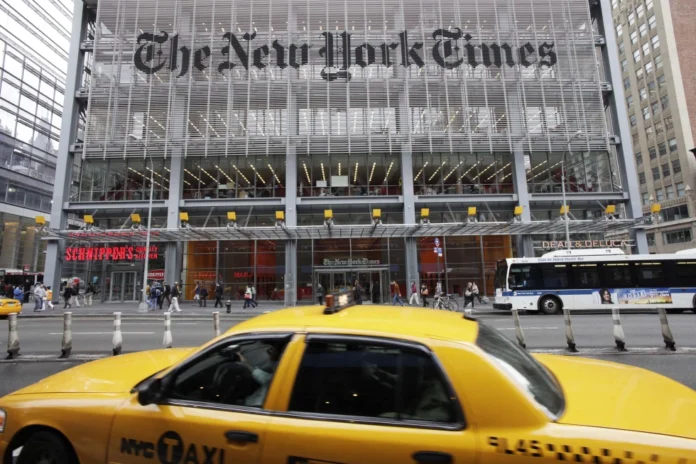
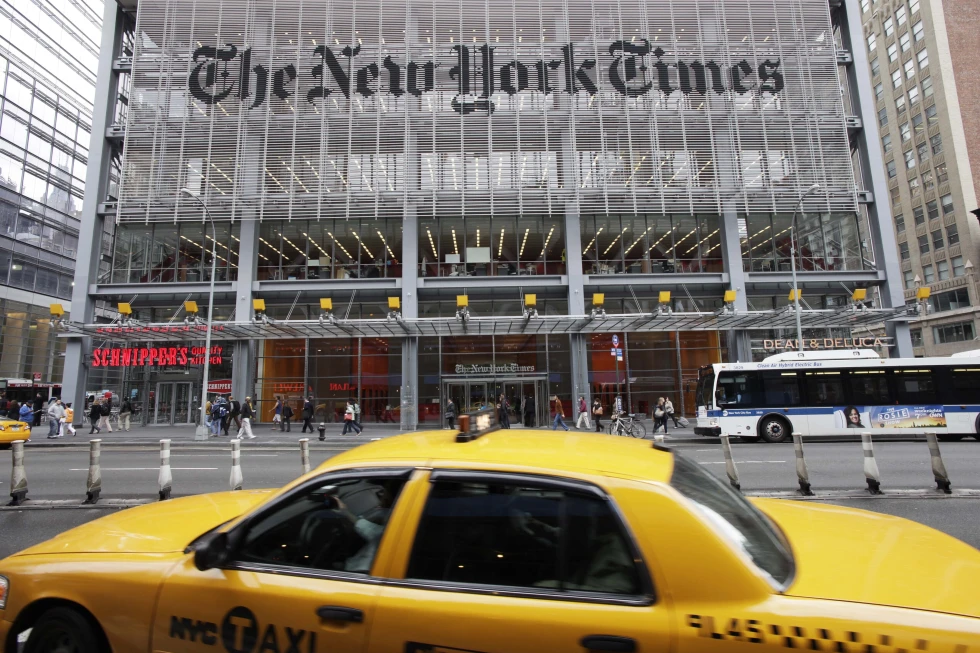
WASHINGTON – The New York Times on Monday accused President Donald Trump of employing “intimidation tactics” against its journalists following days of criticism from his administration over the newspaper’s reporting on Elon Musk and the Defense Department.
In a statement posted on X, the social media platform owned by Musk, the Times reaffirmed its commitment to holding powerful figures accountable, stating that its journalists, including Peter Baker and Maggie Haberman, maintain an “unrivaled record” of fair and thorough coverage of multiple administrations.
The response followed Trump’s Sunday post on Truth Social, where he singled out Haberman—whose name he misspelled as “Hagerman”—and Baker, along with Baker’s wife, New Yorker writer Susan Glasser. Trump called them “sick, deranged editors” and accused them of working to “rig the election” against him.
Trump has previously criticized media organizations and individual journalists. The Times emphasized that it would not be deterred by such attacks, with spokesman Charles Stadtlander stating that the administration’s goal was to “undermine public confidence in journalists who ask difficult questions and publish uncomfortable truths.”
The newspaper recently published a report alleging that Musk was set to receive a classified military briefing on potential conflicts involving China. The Defense Department refuted the claims, calling the Times a “propaganda machine” and demanding a retraction. The Times defended its reporting, later stating that the briefing was canceled after news of it emerged.
Trump dismissed the report as “fake news” but asserted that Musk should not be given access to such intelligence. Haberman, who has extensively covered Trump, is also the author of the 2022 book *Confidence Man: The Making of Donald Trump and the Breaking of America*.
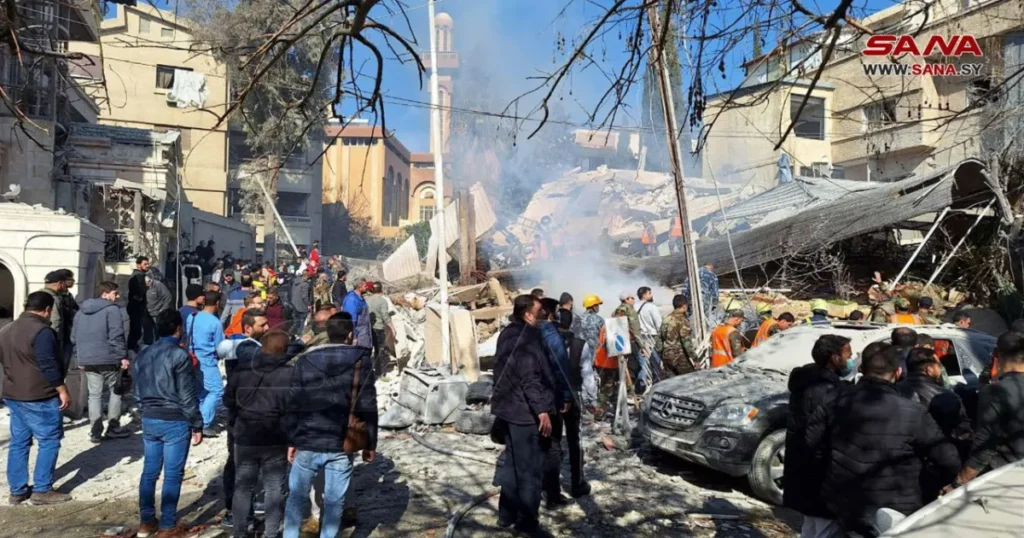
DAMASCUS/JERUSALEM — Israeli shelling killed four people in southern Syria on Tuesday after border clashes between Israeli forces and militants, Syria’s state news agency reported.
The escalation underscores rising tensions between Israel and Syria, where an Islamist-led government took control in December after rebels ousted longtime leader Bashar al-Assad.
Israel has vowed to prevent Islamist militants from establishing a presence near its border and has deployed troops into Syria’s border zone. Syria’s leadership, however, has denied any intention of engaging in direct conflict with Israel.
on its troops, but it did not clarify whether Israeli forces were inside Syrian territory at the time. Israeli forces returned fire, and an Israeli warplane conducted a precision strike on the attackers, confirming “hits were identified” but providing no casualty figures.
Syria’s state news agency reported that Israeli tank fire struck the town of Koya in Daraa province, killing four people and wounding others, including a woman. A Syrian security official told Reuters the death toll could rise.
Earlier in the day, Israel confirmed airstrikes on two military bases in Homs province, central Syria.
“Earlier today, the IDF targeted military capabilities at the Syrian military bases of Tadmur and T4,” an Israeli military statement said.
For years, Israel conducted airstrikes against Iran-linked military installations and weapons shipments destined for Hezbollah, a Lebanese armed group active in Syria. However, following Assad’s removal, Israel has continued targeting key Syrian military facilities.
European Union foreign policy chief Kaja Kallas warned that Israel’s continued strikes on Syria “risk further escalation” in the region.
Speaking at a joint press conference with Israeli Foreign Minister Giden Saar, Kallas emphasized the EU’s position that these military actions are “unnecessary, as Syria is not currently attacking Israel.”
Despite growing international pressure, Israel remains firm in its security stance, maintaining that preemptive military action is necessary to secure its borders.
MOSCOW — A Ukrainian artillery strike in Moscow-controlled eastern Ukraine killed six people, including two journalists and their driver, Russian authorities said Monday.
The attack in Luhansk region claimed the lives of Alexander Fedorchak, a war correspondent for Russia’s Izvestia media outlet, as well as Zvezda television channel’s camera operator Andrei Panov and driver Alexander Sirkeli, according to the Russian foreign ministry.
Another Zvezda correspondent, Nikita Goldin, was seriously wounded.
Maria Zakharova, a spokeswoman for Russia’s foreign ministry, labeled the strike “a targeted artillery shelling by Kyiv,” adding that high-precision MLRS munitions struck a civilian vehicle carrying journalists. She provided no evidence to support the claim.
Reuters could not independently verify the reports. Ukraine’s presidential office and foreign ministry did not immediately respond to requests for comment.
The attack came as Russian and American negotiators met in Saudi Arabia to discuss a potential partial ceasefire in the three-year-old war sparked by Russia’s full-scale invasion of Ukraine.
Leonid Pasechnik, the Russian-appointed governor of Luhansk, confirmed six deaths but did not identify the other victims. Nearly all of Luhansk region is now under Russian control as Moscow continues its push to seize the broader Donbas region, one of Ukraine’s industrial strongholds.
Luhansk, along with three other partially occupied Ukrainian regions, has been illegally annexed by Russia—a move condemned by Kyiv and its Western allies.
With the Kremlin maintaining tight control over information about its military actions, Russian war correspondents have played a key role in reporting from the front lines.
Izvestia reported that Fedorchak had been covering Russian advances in Kupiansk, in neighboring Kharkiv region, before traveling to Luhansk. He was reportedly preparing a story on drone crews when his vehicle was hit.
“His last report was released on March 23, detailing how our troops were tightening the semicircle around Kupiansk,” Izvestia said.
Earlier this year, a freelance journalist working for Izvestia was also killed in Ukraine.
Meanwhile, Zakharova reported that a separate Ukrainian attack on Russia’s Kursk region on Monday injured a correspondent for the state-run TASS news agency.
According to the Committee to Protect Journalists, at least 15 reporters have been killed since Russia launched its full-scale invasion in February 2022.
Zakharova called on the Organization for Security and Cooperation in Europe and the United Nations to condemn the attack.
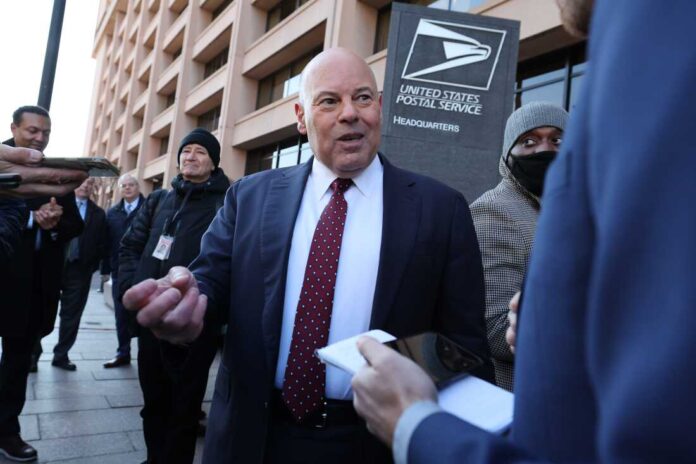
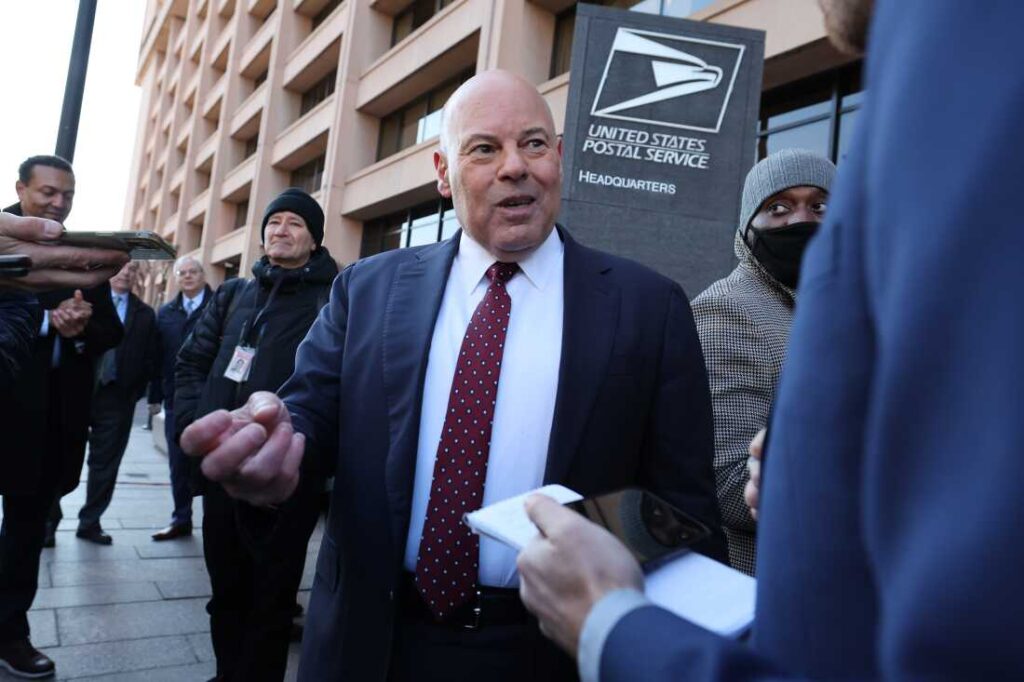
WASHINGTON, DC - DECEMBER 20: Louis DeJoy, the U.S. Postmaster General, speaks to reporters after announcing the Postal Service's plan on implementing electric vehicles, at the Postal Service Headquarters on December 20, 2022 in Washington, DC. The U.S. Postal Service announced it intends to deploy over 66,000 electric vehicles by 2028. (Photo by Kevin Dietsch/Getty Images)
WASHINGTON — Postmaster General Louis DeJoy, who spearheaded efforts to restructure the struggling U.S. Postal Service (USPS) for nearly five years, resigned effective immediately, the agency announced Monday.
WASHINGTON, DC – DECEMBER 20: Louis DeJoy, the U.S. Postmaster General, speaks to reporters after announcing the Postal Service’s plan on implementing electric vehicles, at the Postal Service Headquarters on December 20, 2022 in Washington, DC. The U.S. Postal Service announced it intends to deploy over 66,000 electric vehicles by 2028. (Photo by Kevin Dietsch/Getty Images)
DeJoy, a former logistics executive and major Republican donor, took the helm of the Postal Service in 2020 under then-President Donald Trump. His tenure was marked by fierce clashes with lawmakers over sweeping reforms to the agency, which has lost more than $100 billion since 2007.
Trump, who in February described USPS as a “tremendous loser for this country,” had floated the idea of merging the Postal Service with the Commerce Department—an idea that Democrats warned would violate federal law.
Earlier this month, DeJoy revealed that he had sought assistance from the government efficiency team led by billionaire Elon Musk to tackle USPS financial and operational challenges. He signed an agreement for reform assistance, though details remained sparse.
Despite previously asking the USPS governing board to identify his successor, DeJoy had not indicated plans for an abrupt departure. Musk recently voiced support for privatizing the Postal Service, a stance that has fueled further debate.
“Much work remains that is necessary to sustain our positive trajectory,” DeJoy said in his resignation statement, adding that Monday was his final day. Deputy Postmaster General Doug Tulino will serve as interim chief while the postal board searches for a permanent replacement.
Democratic lawmakers had long called for DeJoy’s removal but ultimately backed a $50 billion financial relief package for USPS in 2022. Under his leadership, the agency aggressively restructured operations, cutting projected 10-year losses from $160 billion to $80 billion despite mail volumes dropping to their lowest level since 1968.
In May, DeJoy agreed to temporarily pause further consolidation of the USPS processing network after senators raised concerns about potential mail delivery delays. His cost-cutting strategies mirrored tactics used by Musk’s Department of Government Efficiency (DOGE), including workforce reductions and contract renegotiations.
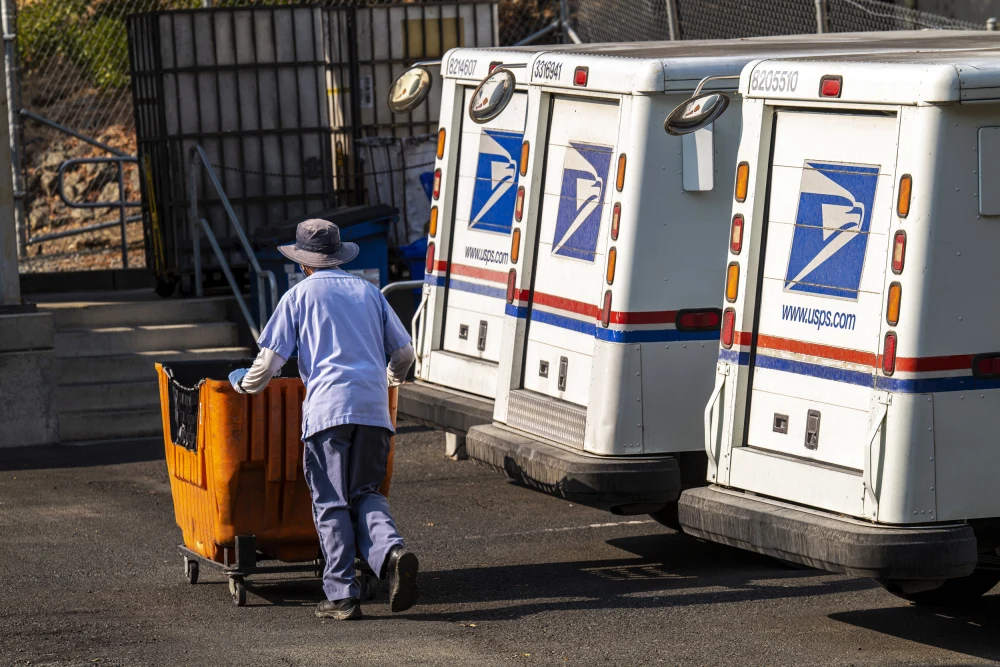
USPS, which employs 635,000 people and reported a $9.5 billion loss last year, had been exempt from DOGE-mandated federal job cuts. However, DeJoy announced earlier this month that the agency plans to shrink its workforce by 10,000 employees in the next month through a voluntary retirement program.
Last month, multiple media reports indicated that Trump was preparing an executive order to fire the USPS Board of Governors, a move that could have further reshaped the agency’s leadership. Commerce Secretary Howard Lutnick has since suggested that USPS could play a role in reducing federal costs by assisting with the U.S. census and taking over some tasks performed by 20,000 Social Security employees.
DeJoy’s tenure was also marred by controversy over the agency’s handling of election mail. In 2020, he faced intense scrutiny from Democrats over mail delays, while in 2024, USPS processed at least 99.2 million ballots in the presidential election.
The White House has not commented on whether it played a role in DeJoy’s sudden resignation. Last week, the administration forced out the CEO of Amtrak, raising speculation about broader leadership changes across federal agencies.
WASHINGTON — A senior Trump administration official mistakenly included a journalist in a Signal group chat discussing highly classified U.S. military plans for a strike on Houthi targets in Yemen, the White House confirmed Monday. The chat, which reportedly involved top national security and defense officials, was first revealed in a report by The Atlantic.
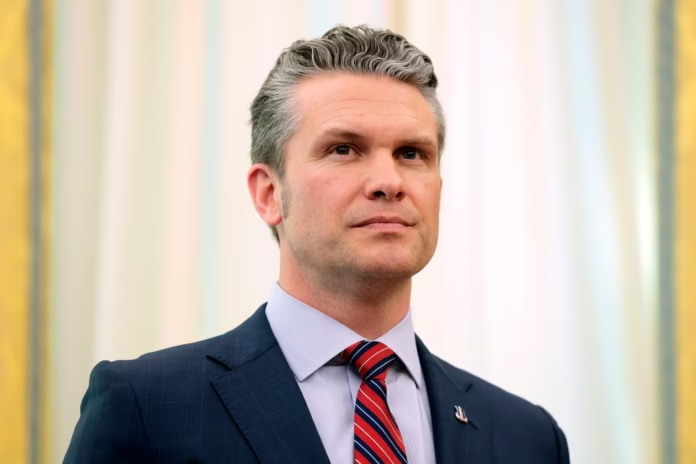
The unsecure conversation reportedly included Defense Secretary Pete Hegseth, Vice President JD Vance, National Security Adviser Mike Waltz, and Secretary of State Marco Rubio. White House National Security Council spokesman Brian Hughes acknowledged the authenticity of the chat and said the administration was investigating how an unauthorized number was added.
“At this time, the message thread that was reported appears to be authentic, and we are reviewing how an inadvertent number was added to the chain,” Hughes said. “The thread is a demonstration of deep and thoughtful policy coordination between senior officials. The ongoing success of the Houthi operation demonstrates that there were no threats to our servicemembers or our national security.”
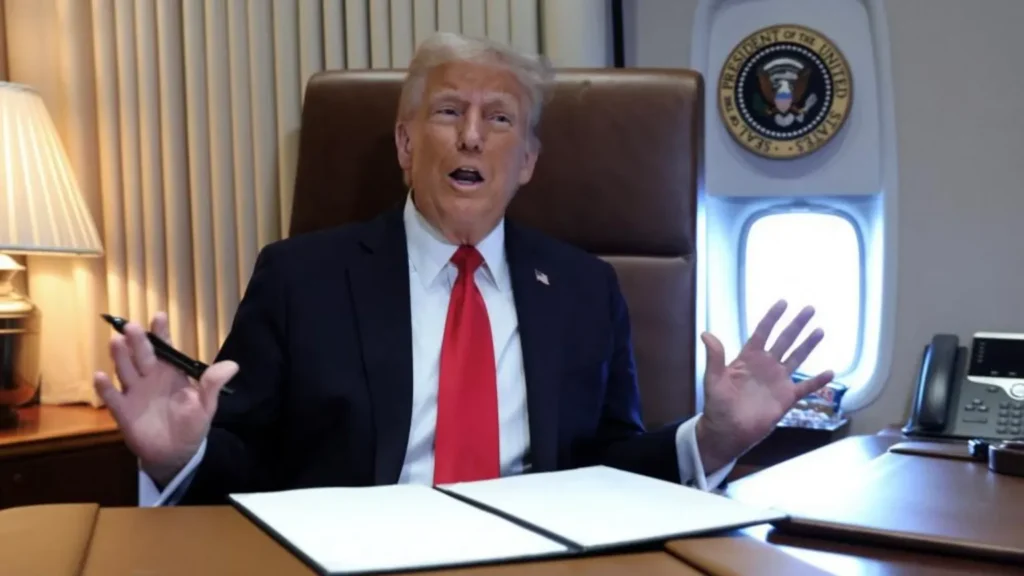
When asked about the incident, President Donald Trump said he was unaware of it, stating, “I don’t know anything about it,” and adding that he was hearing about it for the first time from the reporter posing the question.
The Pentagon declined to comment on Defense Secretary Hegseth’s involvement, referring inquiries to the National Security Council and the White House. Meanwhile, Democratic lawmakers voiced alarm over the apparent breach and called for a formal investigation.
Sen. Jack Reed, the top Democrat on the Senate Armed Services Committee, condemned the incident as “stunning and dangerous.”
“If true, this represents one of the most egregious failures of operational security and common sense I have ever seen,” Reed said in a statement. “Military operations must be handled with the utmost discretion, using only secure communication channels.”
Senate Democratic Leader Chuck Schumer urged Republican leaders to support a full congressional investigation, calling the mishap “one of the most stunning breaches of military intelligence in recent history.”
“This kind of carelessness is how people get killed,” Schumer said on the Senate floor. “It’s how our enemies take advantage of us and how our national security is put at risk.”
Other lawmakers echoed similar concerns. Sen. Tammy Duckworth, a retired Army National Guard lieutenant colonel, criticized Defense Secretary Hegseth, calling him “the most unqualified Secretary of Defense in history” and accusing him of “literally leaking classified war plans in a group chat.”
Sen. Chris Coons suggested the participants may have “committed a crime—even if accidentally,” while Rep. Ruben Gallego called the blunder “amateur hour.”
“These are the same geniuses who are selling out Ukraine and destroying our alliances worldwide,” Gallego said. “No wonder Putin is embarrassing them at the negotiation table.”
House Speaker Mike Johnson downplayed the breach, suggesting the issue was being addressed internally.
“The administration is looking into what happened, apparently an inadvertent phone number was added to the thread,” Johnson said. “They’re going to track that down and make sure it doesn’t happen again.”
When pressed on whether conducting sensitive discussions on an unsecure app was irresponsible, Johnson declined to characterize the incident. He also said he did not believe Waltz or Hegseth should face disciplinary action.
Former Secretary of State Hillary Clinton, who endured years of Republican criticism over her use of a private email server while in office, weighed in on X (formerly Twitter), writing simply: “You have got to be kidding me.”
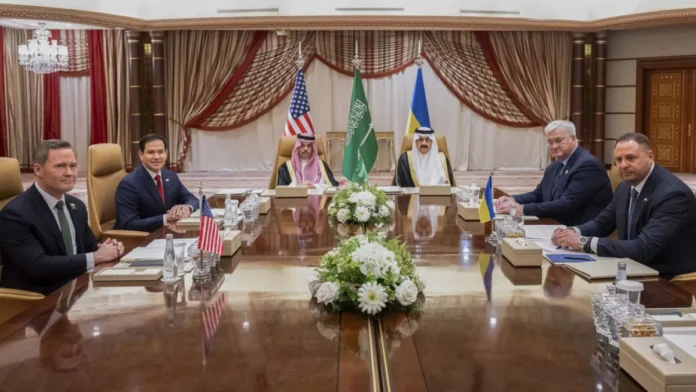
RIYADH, Saudi Arabia — U.S. negotiators met with Russian representatives on Monday in an effort to broker a partial ceasefire in Ukraine’s three-year-long war, following separate discussions with Ukrainian officials a day earlier. The talks, held in the Saudi capital, Riyadh, come as efforts to establish a limited 30-day ceasefire continue to face significant hurdles, with both Moscow and Kyiv engaged in ongoing drone and missile attacks.
A key sticking point in negotiations is defining which targets should be off-limits. Despite direct conversations between U.S. President Donald Trump and the leaders of Russia and Ukraine, disagreements persist. The White House has stated that energy and infrastructure would be covered under the ceasefire agreement, but the Kremlin insists the protection applies only to energy infrastructure. Ukrainian President Volodymyr Zelenskyy has pushed for additional safeguards for key transit networks, including railways and ports.
The negotiations in Riyadh are expected to address these differences, as well as discuss a potential pause in attacks in the Black Sea to protect commercial shipping.
As discussions unfold, hostilities persist on both sides. Ukraine remains open to Trump’s proposal for a full 30-day ceasefire, according to officials. However, Russian President Vladimir Putin has tied any agreement to Kyiv halting its military mobilization and Western arms shipments—a demand that Ukraine and its allies have rejected.
In an interview on “Fox News Sunday,” U.S. special envoy Steve Witkoff expressed optimism about the talks, stating he expects “real progress” and that an initial pause in Black Sea attacks could eventually lead to a full ceasefire.
Amid speculation that China might deploy peacekeeping forces to Ukraine as part of a potential ceasefire enforcement, Chinese Foreign Ministry spokesperson Guo Jiakun dismissed the reports on Monday, calling them “completely false.” Speaking at a press briefing, Guo reaffirmed China’s neutral stance, emphasizing that Beijing continues to support a diplomatic resolution.
China has provided economic and diplomatic support to Russia, particularly through energy trade, but has refrained from supplying weapons or military personnel. However, China maintains close ties with North Korea, which has deployed troops to aid Russian forces.
A large-scale cyberattack struck Ukraine’s state railway operator Ukrzaliznytsia on Sunday, temporarily disrupting its online booking system. The company announced on Telegram that train operations remained unaffected despite the attack.
“The railway continues to function despite both physical and cyberattacks. These efforts will not stop us,” Ukrzaliznytsia said in a statement.
Ukraine’s Special Operations Forces reported on Monday that they destroyed four Russian military helicopters in the Belgorod region using U.S.-supplied HIMARS rocket systems. The Ukrainian military shared drone footage of the attack on Telegram, stating that the strike targeted a concealed launch site used by Russian aircraft for surprise attacks.
Meanwhile, a Russian missile strike hit the northern Ukrainian city of Sumy, damaging residential buildings and a school. Regional authorities confirmed that students were being evacuated at the time of the attack, preventing any casualties among children. However, the prosecutor’s office reported that 65 people were injured, including 14 children.
Ukraine’s air force stated that Russian forces launched 99 drones in overnight attacks, 57 of which were intercepted.
PUEBLO, Colorado — A 76-year-old woman suffering from dementia was mauled to death by a pack of dogs in her home, leading to the arrest of her daughter, authorities confirmed.
LaVonne Hoff’s body was discovered in February at the home she shared with her daughter, Jessica, in Pueblo, Colorado. Police reported that Jessica had left her mother alone while running errands, despite LaVonne requiring 24-hour care due to her condition.
Upon arrival, officers found multiple dogs running loose inside the property. A total of 24 dogs were found at the scene of the fatal attack, with an additional 30 dogs discovered at a second property owned by Jessica, 47. Authorities noted that some of the dogs were in poor health.
During their search, investigators also seized seven birds. Police linked LaVonne’s death to a dog attack and subsequently arrested Jessica. She faces charges of criminal negligence resulting in the death of an at-risk adult, along with 54 counts of aggravated cruelty to animals.
Jessica is scheduled to appear in court on March 27.
The incident follows a series of fatal dog attacks. In California, Davina Corbin was mauled to death by a pack of 25 Great Danes while hiking in Feather Falls, approximately 90 miles from Sacramento, in August. Authorities confirmed multiple bite marks on her body and forensic evidence linking the dogs to the attack.
A fundraiser was launched to cover Corbin’s funeral expenses, with her family struggling to cope with the tragedy.
In December, a man in San Diego was fatally mauled by his three XL bully dogs in a public park. Witnesses described the animals as “massive muscle.”
The UK has since implemented legislation banning XL bully dogs unless the owner possesses an exemption certificate, a law that took effect in February 2024.
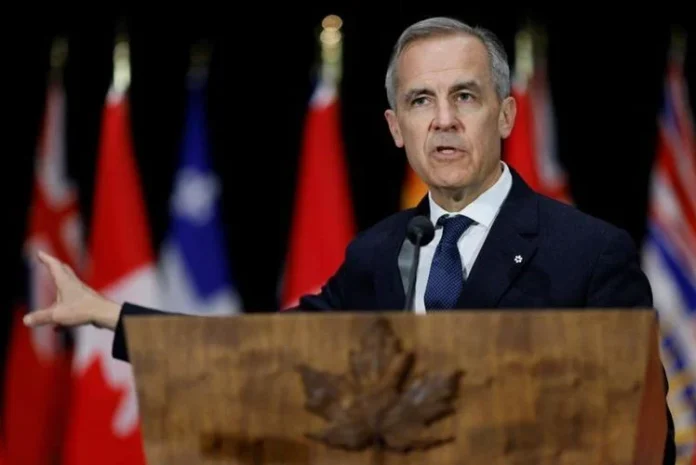
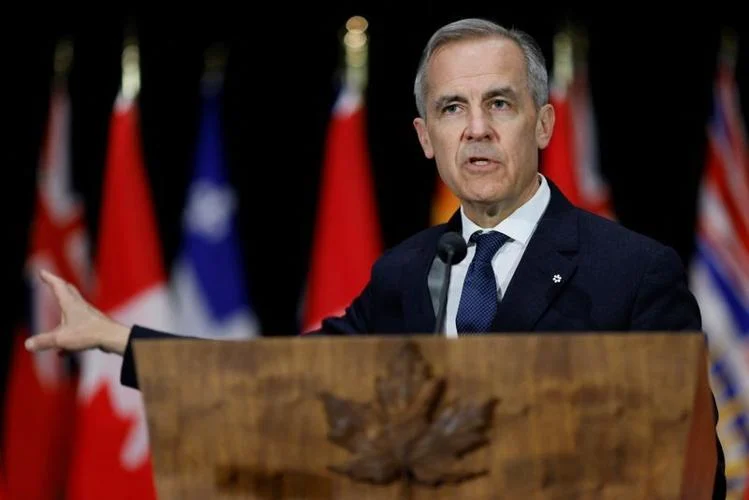
OTTAWA, Canada — Canadian Prime Minister Mark Carney has called a snap general election following repeated remarks by U.S. President Donald Trump suggesting Canada should become the 51st state, as well as the imposition of tariffs on Canadian exports.
Carney, the former governor of the Bank of England, announced Sunday that the country will hold a five-week election campaign leading to a vote on April 28. His governing Liberal Party had faced a potential election defeat until Trump escalated trade tensions and made sovereignty-related comments that sparked national outrage.
Trump has repeatedly stated that Canada is not a real country and should be part of the United States, while also imposing tariffs on key exports. These actions have triggered a surge in support for the Liberals.
“We’re facing the most significant crisis of our lifetimes due to President Trump’s unjustified trade actions and threats to our sovereignty,” Carney said after requesting the dissolution of Parliament by Canada’s governor-general. “Our response must be to build a strong economy and a more secure Canada. President Trump wants to break us, but we will not let that happen.”
Carney, who led the Bank of Canada through the 2008 financial crisis before becoming the first non-British governor of the Bank of England, replaced Justin Trudeau as prime minister earlier this month. Trudeau had announced his resignation in January following declining support before Trump’s trade war.
The election will determine the makeup of Canada’s 343-seat House of Commons. While several parties are competing, the race is primarily between the Liberals and the Conservatives. The opposition Conservatives, led by Pierre Poilievre, had initially expected a decisive victory, focusing their campaign on economic concerns such as rising food and housing costs and increased immigration.
However, the election now centers on who is best equipped to counter Trump. The U.S. president has already imposed 25% tariffs on Canada’s steel and aluminum and has threatened broader economic measures against all Canadian exports.
“I will insist the president recognize Canada’s independence and sovereignty,” Poilievre said while launching his campaign. “I will demand that he stops imposing unfair tariffs on our nation.”
Poilievre, a populist politician who has pledged to put “Canada first,” said he does not accept the way Trump has treated the country.
SIAYA, Kenya — Two Form Four students died after a septic tank collapsed at Ramba Boys High School in Rarieda, Siaya County, Kenya, officials confirmed.
The students were reportedly on top of the septic tank with others when it caved in around 6:00 p.m. Most of the students managed to escape unharmed, according to a junior teacher at the school. However, two students sustained injuries and were taken to the hospital, while the deceased fell into the septic tank.
Police and Kenya Red Cross officials responded to the scene and worked overnight to recover the bodies from the collapsed structure.
Siaya Governor James Orengo, in a press statement, extended his condolences to the school community and reaffirmed his administration’s commitment to ensuring the safety of learners across the county. He also urged residents to remain calm during this difficult period.