Nigeria’s Economic and Financial Crimes Commission (EFCC) reported the recovery of nearly $500 million in proceeds of crime over the past year, alongside securing more than 4,000 criminal convictions, marking the highest figures since the agency’s establishment over two decades ago.
As Africa’s largest oil producer, Nigeria has long battled systemic corruption, which many believe fuels poverty across the nation. The EFCC, tasked with investigating and prosecuting financial crimes, stated in a report on Monday that a portion of the recovered funds had been redirected to government projects.
Nigeria ranks 140th out of 180 countries on Transparency International’s Corruption Perception Index, reflecting ongoing challenges in tackling financial misconduct.
Beyond cash recoveries, the EFCC disclosed that it seized 931,052 metric tons of petroleum products, 975 real estate assets, and company shares in its continued efforts to combat economic crimes.
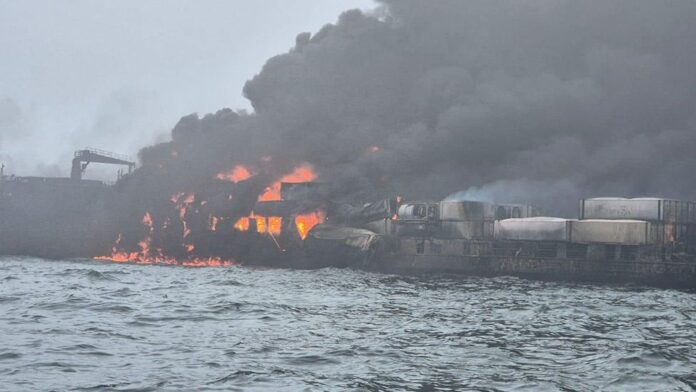
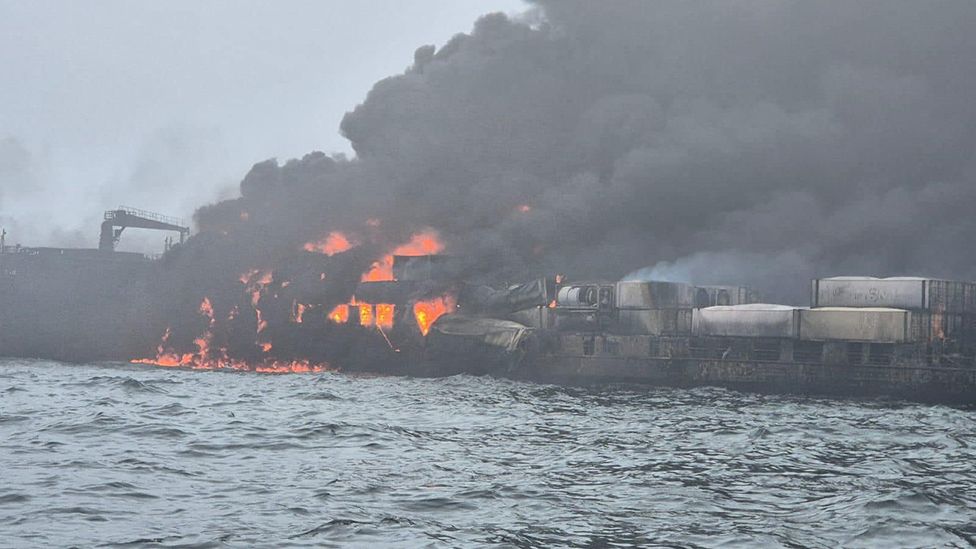
A tanker and a cargo ship have collided in the North Sea off the East Yorkshire coast, United Kiongdom, prompting a major rescue operation. Reports indicate that both vessels are on fire, and some crew members have abandoned their ships. A coastguard helicopter and multiple lifeboats have been dispatched to the scene.
The UK’s HM Coastguard reported that the incident occurred near the Humber Estuary at approximately 9:48 a.m. GMT on Monday. Rescue teams, including lifeboats from Skegness, Bridlington, Mablethorpe, and Cleethorpes, have been deployed alongside a fixed-wing aircraft and nearby vessels equipped with firefighting capabilities.
The Coastguard confirmed that the response remains ongoing, while the Royal National Lifeboat Institution stated that there were reports of multiple people in the water. Thick black smoke and flames have been observed, but it remains unclear which of the two ships is the primary source of the fire.
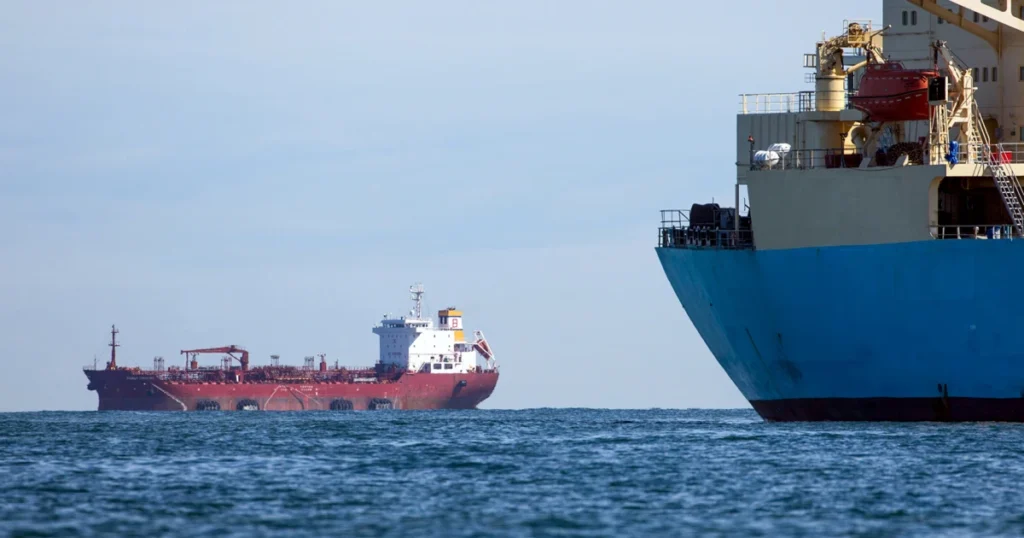
According to maritime tracking data, the cargo vessel Solong was en route to Rotterdam in the Netherlands after departing from Grangemouth, Scotland, earlier in the day. Tracking data suggests the oil tanker involved was stationary when Solong approached and collided with it. The stationary vessel is believed to be the Stena Immaculate, which was traveling from Greece to the United Kingdom at the time of the incident.
The crash took place just off the Lincolnshire coastline, near the Humber Estuary, close to British waters. The Coastguard reported that the alarm was raised at 9:48 a.m., and a helicopter, four lifeboats, a fixed-wing aircraft, and firefighting vessels were dispatched to assist.
The RNLI confirmed that fires had been reported on both ships and that some crew members had abandoned the vessels. Lifeboats were deployed at 10:20 a.m. and continued search and rescue efforts, with Cleethorpes lifeboat later being stood down at 11:40 a.m.
Authorities have yet to confirm the cause of the collision or the extent of potential casualties. Search and rescue operations are ongoing, and updates will follow as more details emerge.
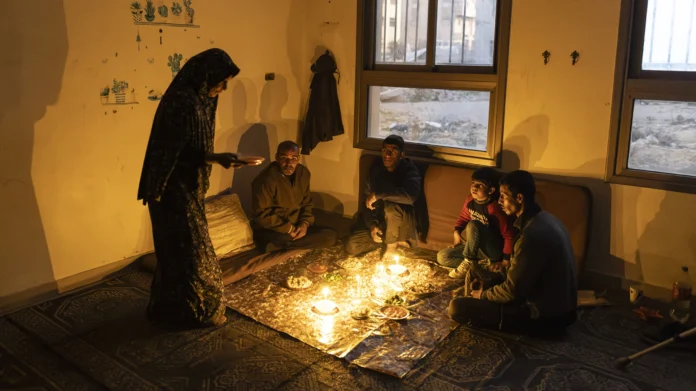
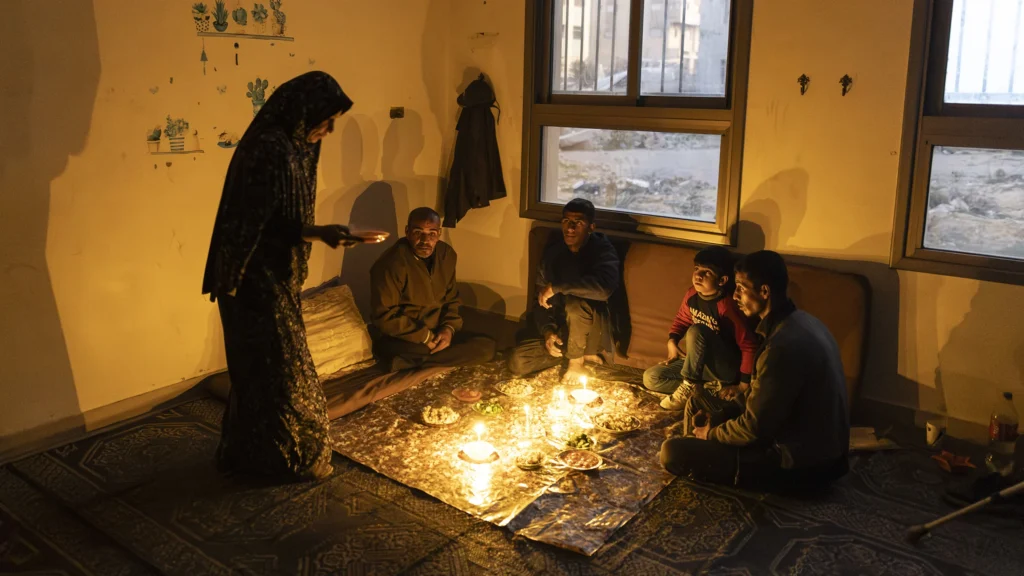
Israel has severed electricity to the last facility in Gaza that was still receiving power from the Israel Electric Corporation (IEC), escalating the ongoing humanitarian crisis in the enclave.
“I just signed an order for the immediate halt of electricity to the Gaza Strip,” Israeli Energy Minister Eli Cohen announced on Saturday. He emphasized that Israel would use all available measures to ensure the return of the hostages still held by Hamas.
Israel initially cut off electricity supplies to Gaza following Hamas’ attacks on October 7, 2023, which left more than 1,200 people dead and saw 251 taken hostage. However, under a government directive, the IEC had reconnected power to a wastewater treatment facility. That power has now been cut once again.
An IEC spokesperson confirmed the move to CNN, stating, “Today, a directive was received to disconnect the electricity to the facility, and this was done.”
Hamas spokesperson Hazem Qassem downplayed the move’s practical impact but denounced it as part of Israel’s “genocidal war” against Gaza, accusing it of using “starvation policies” in violation of international law.
Israeli far-right politician Itamar Ben Gvir welcomed the decision and urged the government to go further by targeting fuel supplies that entered Gaza during the ceasefire and hostage deal between Israel and Hamas.
“The Gaza Strip must be completely and immediately blacked out as long as even one Israeli hostage is being held there,” Ben Gvir said, advocating for bombing fuel depots and Hamas-operated generators.
The electricity cutoff comes as Israel and Hamas engage in delicate negotiations over a ceasefire and hostage exchange.
Last week, Israel announced it would block all humanitarian aid into Gaza to pressure Hamas into agreeing to new terms for an extension of the truce, after the initial phase expired.
Israel seeks to extend the first phase of the agreement, allowing for the continued exchange of hostages and Palestinian prisoners while increasing aid to Gaza—but without committing to a permanent end to the war. Hamas, however, insists on moving forward with a second phase of negotiations that would secure a long-term truce.
On Friday, a Hamas delegation arrived in Cairo to discuss the ceasefire terms, while Israel confirmed on Saturday that it had accepted an invitation from US-backed mediators to send an Israeli delegation to Doha on Monday for further talks.
US Special Envoy for Hostages Adam Boehler expressed optimism about a potential truce following direct negotiations with Hamas.
“I think something could come together within weeks,” Boehler said on CNN’s “State of the Union,” adding that a deal could be reached to secure the release of all hostages, including Americans.
According to the Israeli Prime Minister’s Office, 59 hostages remain in Gaza, with more than half presumed dead. Among them are five American-Israelis, only one of whom—Edan Alexander—is believed to be alive.
On Sunday, senior Hamas official Taher Al Nunu suggested in a statement to Al Aqsa TV that Hamas was open to releasing Alexander as part of negotiations to end the war.
With talks ongoing and humanitarian conditions worsening, the situation in Gaza remains dire. The latest power cut signals an escalation in Israel’s pressure tactics as it seeks the return of hostages and the weakening of Hamas’ control.
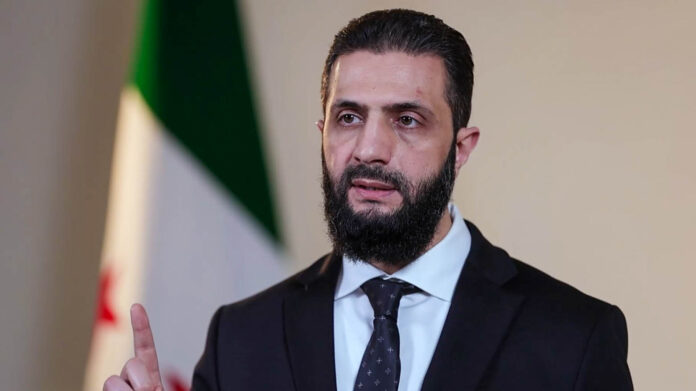
Syria’s interim leader, Ahmed al-Sharaa, has pledged to hold those responsible for the recent mass killings of civilians accountable after clashes left hundreds dead. Reports indicate that Syrian security forces allegedly targeted members of the Alawite religious minority in what is being described as one of the deadliest episodes since the fall of the Assad regime.
A UK-based monitoring group, the Syrian Observatory for Human Rights, reported that at least 830 civilians were killed in massacres along Syria’s west coast on Friday and Saturday. The overall death toll from the recent violence has risen to 1,311, including 231 security forces and 250 pro-Assad fighters, according to the monitoring group.
The BBC has not independently verified the casualties. However, the reported numbers suggest a significant escalation of violence.
In a televised address on national TV and social media, Sharaa, whose rebel movement ousted Bashar al-Assad in December, vowed to track down those involved in the bloodshed, including Assad loyalists.
At this critical moment, we face a new danger—remnants of the former regime and their foreign backers seeking to incite strife and drag our country into civil war, aiming to destroy its unity and stability, Sharaa said on Sunday.
We will hold accountable, firmly and without leniency, anyone involved in harming civilians or abusing power to achieve personal gains, he continued. No one is above the law, and those with blood on their hands will face justice sooner rather than later.
Sharaa also announced on Telegram that an independent committee had been formed to investigate civilian deaths and identify those responsible.
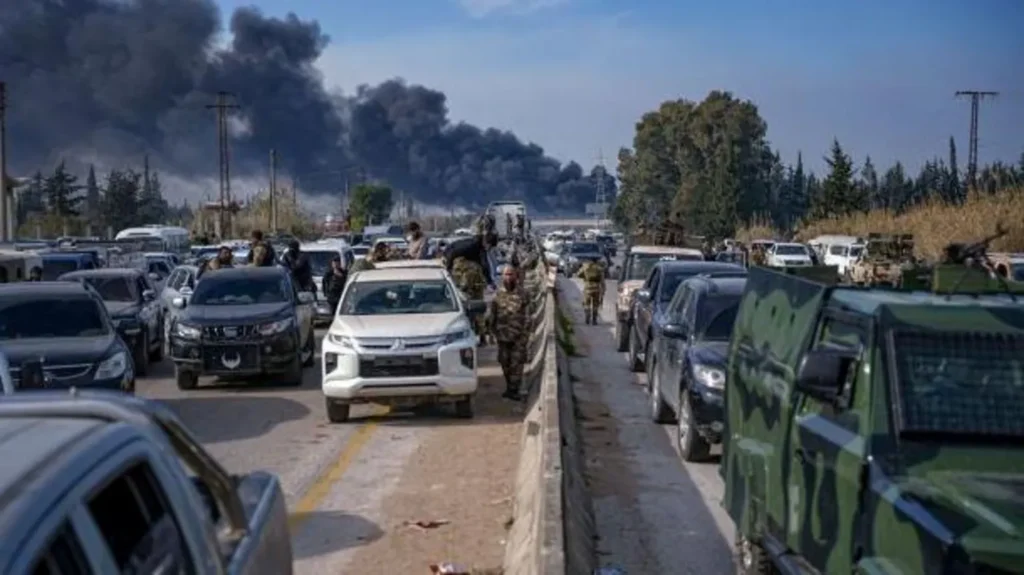
The recent violence follows ambushes on government forces last Thursday, which the Syrian defense ministry described as treacherous attacks against security personnel. The situation rapidly escalated into a wave of clashes between Assad loyalists and government forces, particularly in Latakia and Tartous—former Assad strongholds along the Mediterranean coast.
Civilians in the region have been forced to flee, with many seeking refuge at Russia’s Hmeimim military base in Latakia. Video footage obtained by Reuters showed crowds outside the base chanting people want Russian protection. Others have fled across the border into Lebanon.
UN Special Envoy for Syria Geir Pedersen expressed deep concern over the rising civilian casualties, calling for all parties to refrain from destabilizing actions and work toward an inclusive political transition.
UN Human Rights Chief Volker Türk described the reports as extremely disturbing and urged an independent, transparent investigation into human rights violations.
Iran’s ambassador to Lebanon, Mojtaba Amani, condemned the killings of Alawites in Latakia and Tartous as systematic and extremely dangerous. He accused Syria’s interim government of failing to control the crisis.
The fall of the Assad government in December ended decades of rule by the Assad family but left Syria facing a turbulent transition. The recent surge in violence has raised fears of renewed conflict in the war-ravaged country.
Sharaa, in a separate speech at a Damascus mosque, called for unity, saying, God willing, we will be able to live together in this country.
With tensions high and thousands displaced, Syria’s future remains uncertain as its new leadership struggles to maintain control and prevent further bloodshed.
A journalist targeted by a Russian spy ring revealed that the group had a list of “assassination methods” intended to kill him, methods he described as “beyond any imagination.”
Christo Grozev told the BBC that the group “fantasized” about his death, discussing plans that included using a sledgehammer and even a “suicide bomber” to target him.
The Bulgarian journalist, known for publishing several exposés on Russia alongside colleague Roman Dobrokhotov, recounted multiple incidents indicating that they were being tracked across Europe, with agents “breathing down our necks.”
His revelations followed the conviction last week of three Bulgarian nationals for spying for Russia in one of the largest foreign intelligence operations uncovered in the UK.
Since the court case, Austrian police have reassured Grozev’s children that such a threat will not happen again. He admitted that his family was initially “shocked” by the extent of the plot against him.
Speaking to BBC Radio 4’s Broadcasting House programme, he described the “list of imagined assassination methods” as reading “like a film noir.”
One of the plans discussed by the spies involved hiring an Islamic State “suicide bomber” to detonate near him in the street.
Another plot included kidnapping him and “sending me to a torture camp in Syria,” while a different operative wearing a latex mask resembling him would board a flight to Russia, where he would be “arrested in front of cameras for full deniability.”
Yet another planned method involved “bludgeoning me to death using a sledgehammer,” he said, adding that “the fantasy and imagination of these wannabe spies is beyond any imagination.”
Grozev noted that past failures by Russian intelligence have led to an increased reliance on “outsourced” non-professional spies.
He emphasized that even though these individuals were “non-professional,” their intent to kill remained very real. He warned that such “wannabe spies” lacked the experience to de-escalate situations, making them particularly dangerous.
Grozev expressed gratitude for being alive, given how long he and his colleague had been tracked by these spies and the level of funding behind the operation. He revealed that while they expected Russian operatives to be monitoring them, they had not anticipated EU citizens spying on their activities.
His and Dobrokhotov’s investigative work has uncovered Russia’s involvement in the nerve agent attacks on Sergei Skripal in Salisbury in 2018 and the poisoning of then-opposition leader Alexei Navalny in 2020.
Jan Marsalek, who directed the spy ring on behalf of Russian intelligence services, identified Grozev as a prime target. In a December 2020 message, he wrote that Grozev was the “lead investigator in the Navalny case.”
In another message to Orlin Roussev, the man running the UK-based spy cell from a former guest house in Norfolk, Marsalek noted: “Personally, I find Grozev not to be a very valuable target, but apparently, Putin seriously hates him.”
Following this, the spy cell tracked Grozev and Dobrokhotov across Europe, spying on them in hotels, planes, and private residences.
They also discussed kidnapping and killing the journalists. One plan considered smuggling Dobrokhotov out of the UK by boat from the Norfolk coast and delivering him to Russia—a move he believed would have led to his death.
In January 2023, just a month before UK police arrested members of the spy ring, Dobrokhotov was warned that leaving the country could be dangerous.
He later realized that the Bulgarian spies had followed him so closely that they had even seen his mobile phone PIN code while he was on a flight.
Dobrokhotov believes the arrests send a strong signal to Moscow.
“Vladimir Putin doesn’t understand messages in words, only in actions,” he said.
He argued that Putin recognizes forceful actions, like Ukraine receiving long-range missiles, and understands consequences when his spies are arrested and given lengthy prison sentences.
The journalist also suggested that Russia’s reliance on Bulgarian spies with ordinary jobs reflects the decline of its espionage network following the mass expulsion of professional spies from the West. However, he warned that such spy cells remain highly dangerous.
Speaking about his motivations, Dobrokhotov expressed his determination to change Russia, stating he does not want to live in a country that “kills people just because they’re doing journalism or criticizing the government.”
He believes that as long as he and others continue their work, Putin will see them as a threat.
“We are in a situation where only some of us will survive—either we will, or Vladimir Putin and his team will,” he said.
On Friday, Vanya Gaberova, 30, Katrin Ivanova, 33, and Tihomir Ivanchev, 39, were found guilty of conspiracy to spy. Two other members, Roussev, 47, and Biser Dzhambazov, 43, had previously admitted the same charge, while a sixth Bulgarian, Ivan Stoyanov, 34, pleaded guilty to spying.
Ivanova was also convicted of possessing multiple false identity documents.
The methods used by the spy ring resembled those “you would expect to see in a spy novel,” said Metropolitan Police Commander Dominic Murphy.
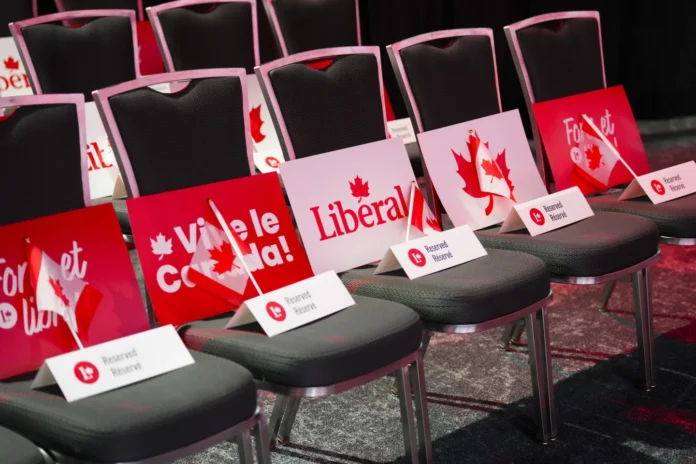
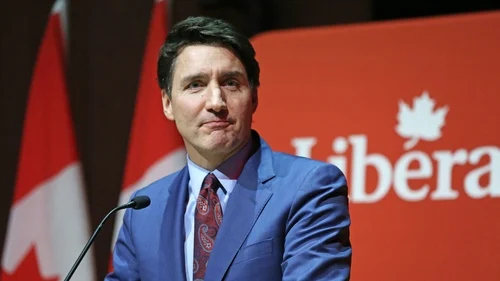
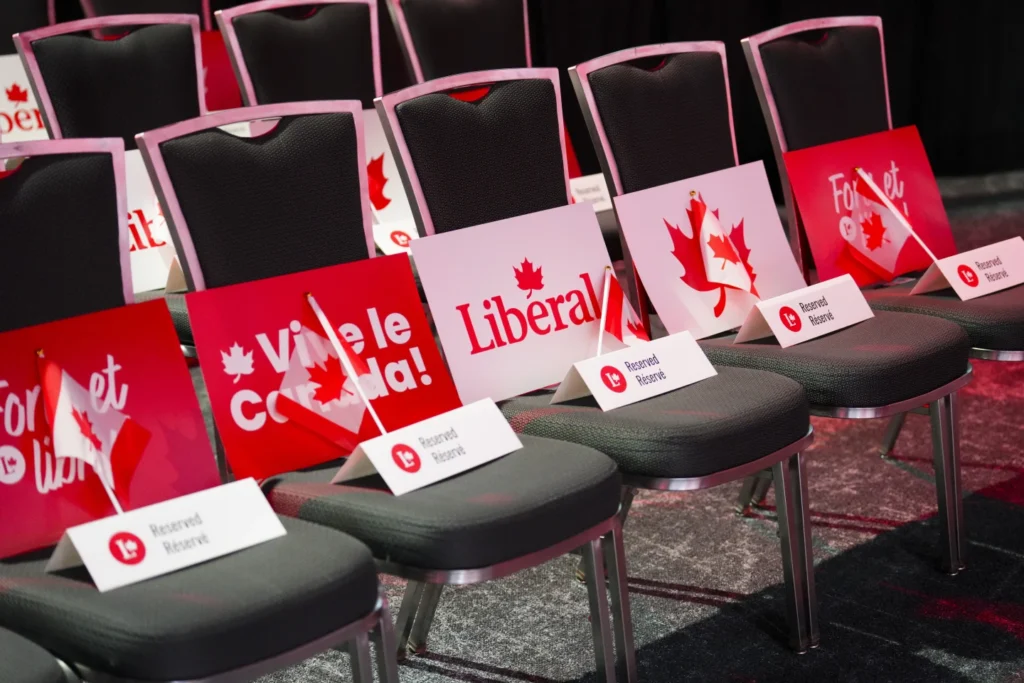
Canada’s governing Liberal Party will announce a new leader on Sunday, selecting a replacement for Prime Minister Justin Trudeau as the country grapples with U.S. President Donald Trump’s tariff policies and a looming federal election.
Liberal members are expected to choose former central bank governor Mark Carney as the party’s next leader and Canada’s new prime minister in a vote set for Sunday evening.
Carney, 59, previously led the Bank of Canada and later made history in 2013 as the first noncitizen to head the Bank of England since its founding in 1694. His leadership during the 2008 financial crisis won bipartisan praise in the U.K., as Canada rebounded faster than many global economies.
The opposition Conservative Party aimed to make the upcoming election a referendum on Trudeau, whose approval ratings declined amid rising food and housing prices and immigration concerns. Although Trudeau announced his resignation in January, he remains prime minister until a successor is sworn in. Election laws require a general election by fall, but experts anticipate an earlier vote this spring.
Trump’s trade war and comments suggesting Canada should become “the 51st U.S. state” have sparked backlash among Canadians. Fans have booed the American national anthem at NHL and NBA games, while many have canceled travel to the U.S. and boycotted American products.
This surge in Canadian nationalism has strengthened Liberal Party prospects ahead of an imminent election, with polls showing improved public support.
“We have built the greatest country in the world, and now our neighbors want to take us. No way,” Carney stated.
Carney has secured endorsements from multiple Cabinet ministers and Members of Parliament since launching his candidacy in January. A highly respected economist with Wall Street experience, he has long been seen as a potential prime ministerial candidate, despite lacking political experience.
His main challenger is Chrystia Freeland, former Deputy Prime Minister and Minister of Finance. Trudeau reportedly asked Freeland to step down as finance minister in December, though she was offered a continued role as deputy prime minister and key liaison for U.S.-Canada relations. Instead, she resigned, later releasing a scathing letter criticizing the government—an event widely seen as a pivotal moment in Trudeau’s decision to step aside.
The Liberal Party is expected to honor Trudeau’s leadership during Sunday’s announcement, with more than 151,000 members participating in the vote.
“There is an incredible wave of patriotism across this country,” Freeland said. “All of us have one message for Donald Trump tonight—Canada will never be the 51st state.”
Following the leadership vote, the new Liberal leader is likely to trigger a general election. This could happen either through a direct call for an election or via an opposition-led no-confidence vote in Parliament later this month.
Canada now stands at a critical political crossroads, as the next leader will shape the nation’s response to U.S.-Canada relations, economic challenges, and an increasingly unstable global trade environment.
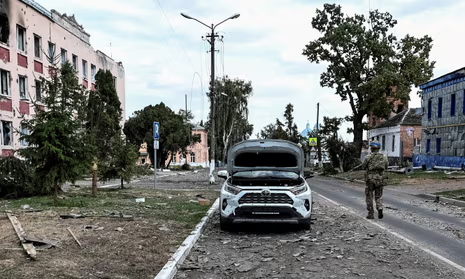
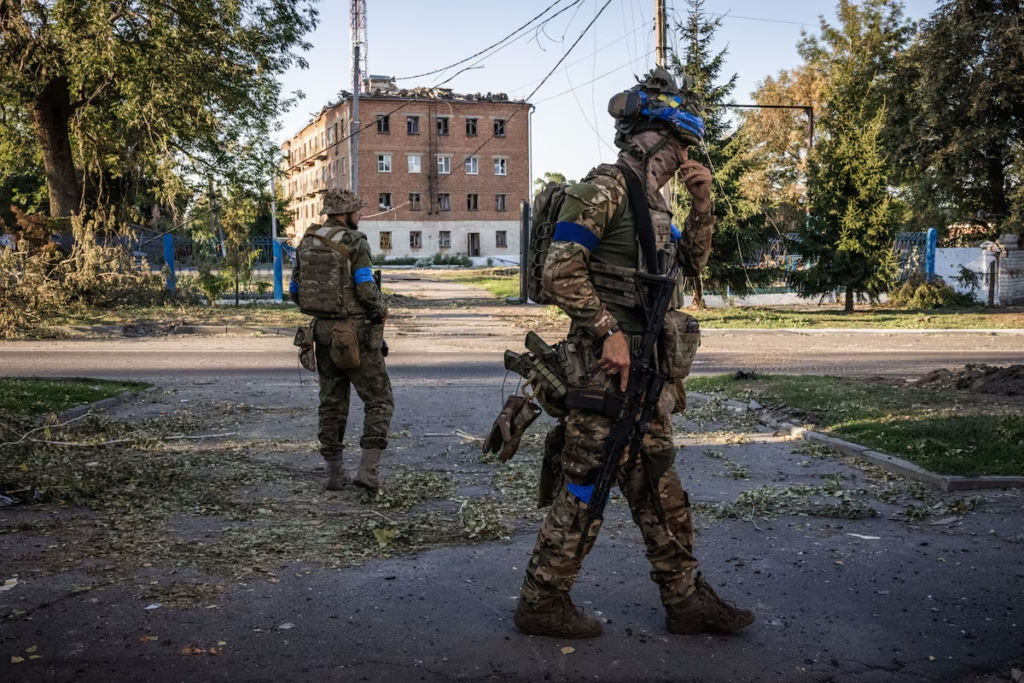
A fierce battle is underway in Sudzha after Russian forces used a gas pipeline to launch a surprise attack on Ukrainian positions, according to pro-Russian war blogger Two Majors. The incursion has intensified fighting along the border, with heavy clashes reported.
Ukraine’s airborne assault forces confirmed that Russian troops attempted to use the pipeline to establish a foothold but were quickly detected and attacked with rockets, artillery, and drones. The Ukrainian military’s General Staff later reported that 15 Russian attacks had been repelled in the Kursk region, with six clashes still ongoing. Additionally, Ukrainian positions were hit by 12 Russian airstrikes.
Russia’s Defense Ministry did not comment on the pipeline operation, but Major General Apti Alaudinov, commander of Chechnya’s Akhmat special forces, posted images on Telegram of troops inside a large pipe, wearing gas masks and carrying flashlights. “I am surprised by people who really think that Russia could lose,” Alaudinov remarked. “It is a good day.”
Due to battlefield reporting restrictions, Reuters has been unable to verify the claims from either side.
The escalation comes at a time of mounting European concerns over shifting U.S. policy on Ukraine. Russian advances in 2024 and President Donald Trump’s reversal of military aid and intelligence-sharing with Ukraine have raised fears that Kyiv could lose the war.
Tensions spiked after Trump’s February 28 meeting with Ukrainian President Volodymyr Zelensky ended in public discord. Shortly after, Washington announced a freeze on military support, leaving European allies worried about the broader implications for NATO and regional security.
Russia’s Defense Ministry stated that its forces had retaken the village of Lebedevka and seized Novenke, a hamlet in Ukraine’s Sumy region.
Ukraine now faces a tactical challenge as spring thaw conditions turn roads into muddy tracks. Military analysts question whether Ukraine should withdraw from Kursk and, if so, whether it can do so in an orderly manner without facing heavy Russian bombardment.
Ukraine’s previous incursion into Kursk in August marked the most significant attack on Russian territory since the Nazi invasion of the Soviet Union in 1941. Now, Russian forces appear determined to solidify their control over the region.
Meanwhile, in eastern Donetsk, Russian forces continue their slow but steady push, with Moscow announcing the capture of Kostyantynopil after months of grueling combat.
In Russian-occupied Kherson, Moscow-installed officials accused Ukrainian forces of launching a missile attack on a crowded market in Velyki Kopani. Russian news agencies reported two civilians killed and seven injured, though Reuters could not independently verify the claim.
As the war grinds on, both sides brace for further escalation, with the battle for Sudzha marking another critical flashpoint in the ongoing conflict.
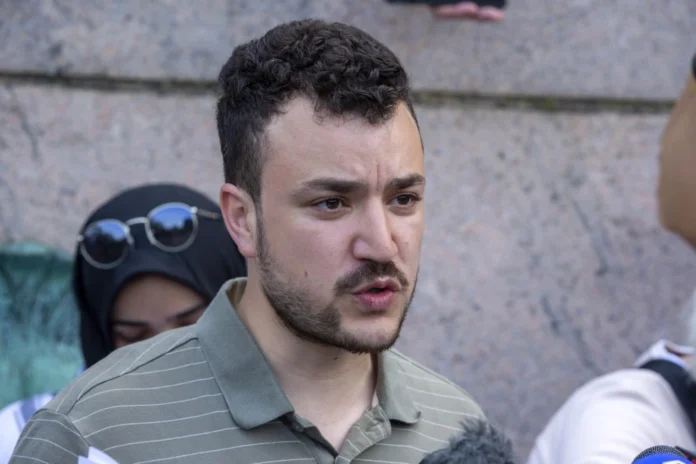
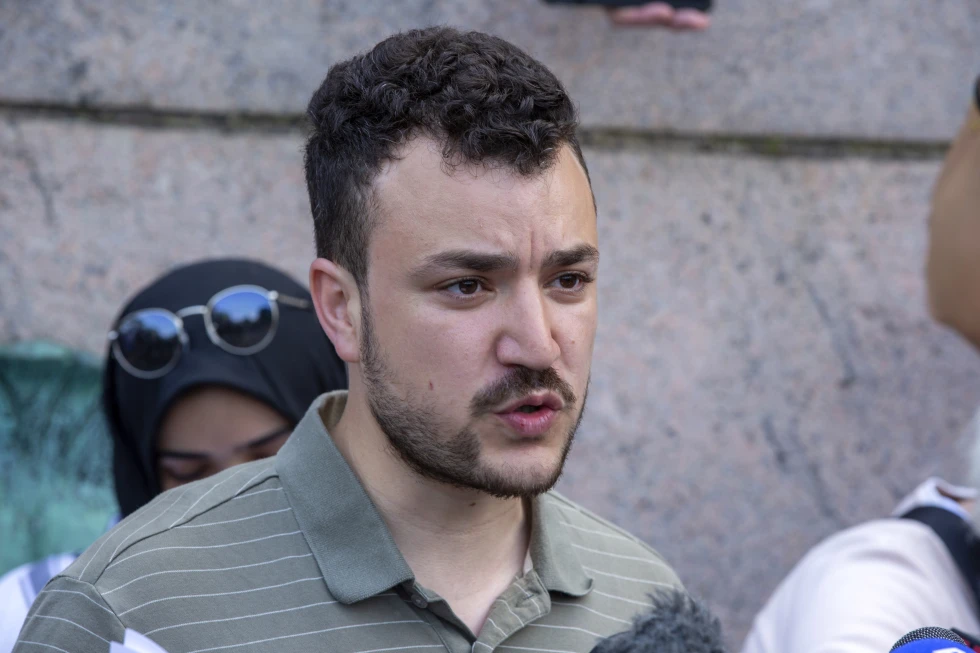
Federal immigration authorities have arrested Palestinian activist Mahmoud Khalil, a prominent leader in Columbia University’s student encampment protests, citing a State Department order to revoke his green card, according to his attorney.
Khalil was taken into custody Saturday night at his university-owned apartment near Columbia’s Manhattan campus. Immigration and Customs Enforcement (ICE) agents entered the building and detained him, his lawyer, Amy Greer, told The Associated Press.
According to Greer, an ICE agent stated over the phone that they were executing a State Department order to revoke Khalil’s student visa. When informed that Khalil had already graduated in December and was in the U.S. as a permanent resident with a green card, the agent replied that his green card was also being revoked.
Khalil’s arrest comes amid a broader crackdown on pro-Palestinian demonstrations, as President Donald Trump has vowed to deport foreign students and imprison those involved in protests against Israel’s war in Gaza.
The administration has specifically targeted Columbia University, announcing Friday that it would cut $400 million in federal grants and contracts, citing what it called the school’s failure to curb antisemitism on campus.
Authorities did not provide a reason for Khalil’s detention to his wife, who is eight months pregnant, according to Greer. He has since been transferred to an immigration detention facility in Elizabeth, New Jersey.
“We have not been able to get any more details about why he is being detained,” Greer told The Associated Press. “This is a clear escalation. The administration is following through on its threats.”
A Columbia University spokesperson stated that law enforcement agents must present a warrant before entering university property but declined to confirm whether one was issued for Khalil’s arrest.
Requests for comment from the State Department, the Department of Homeland Security, and ICE remain unanswered.
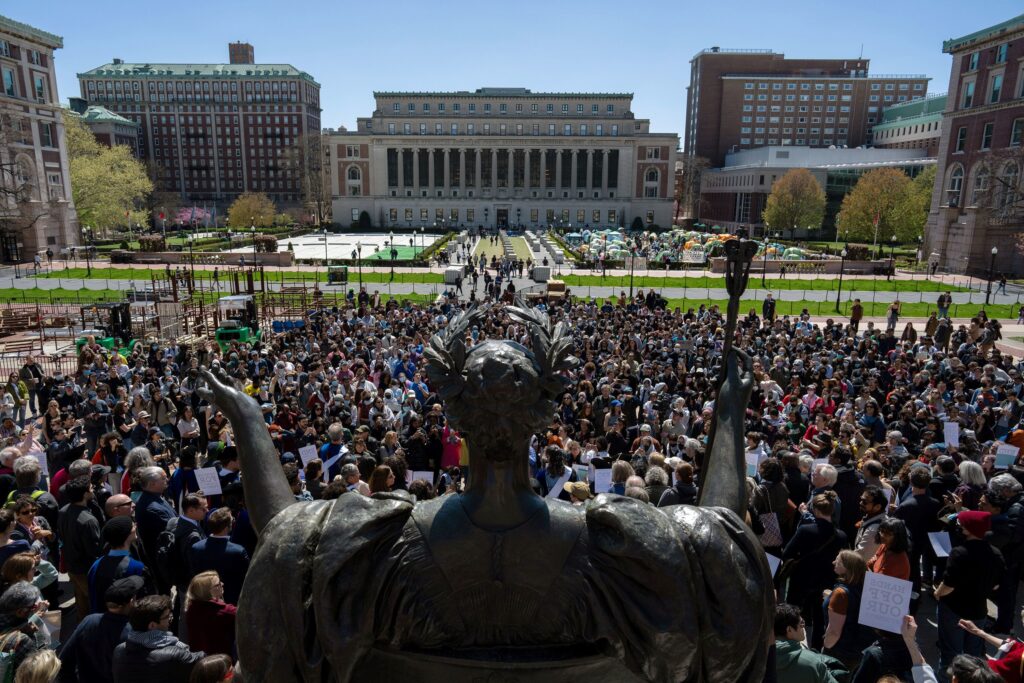
Khalil had emerged as a central figure in Columbia’s pro-Palestinian movement. When students established encampments on campus last spring, he was selected as a negotiator, frequently meeting with university administrators on behalf of protestors.
Speaking to The Associated Press in September, he affirmed the continuation of demonstrations: “As long as Columbia continues to invest and to benefit from Israeli apartheid, the students will continue to resist.”
His sudden arrest has raised concerns among activists and legal experts, who warn of a growing crackdown on political dissent in academic institutions.
An NYPD detective has been removed from active cases after a viral rap video surfaced showing her pole-dancing in a strip club.
Melissa Mercado, a Bronx-based officer in the Special Victims Unit, appeared in a music video for hip-hop artist S-Quire, where she performed in lingerie. The video for “Doin’ That” has amassed over 1.6 million views in a month, sparking controversy within the department.
A spokesperson for the NYPD confirmed that Mercado’s actions are under review and that she has been taken off duty while the investigation is ongoing, according to The New York Post.
Mercado, a seven-year veteran of the force, has been assigned to cases involving sexual offenses as part of the Special Victims Unit. While the department has not yet determined whether her actions violate official policies, she will not be handling active cases during the review.
In the explicit video, Mercado can be seen twerking on a pole, giving a lap dance, and crawling on the floor while being showered with dollar bills. S-Quire, the featured artist, watches her closely while rapping suggestive lyrics.
Lyrics in the video include: “She’s thick, just want to smash it quick” and “I like the way she doin’ that, the way she sliding up the pole.”
The rapper and the video’s production company, Pitch Perfect, claimed they were unaware of Mercado’s profession. “None of us knew what her main job was,” the director told TMZ.
S-Quire said he only knew Mercado by the nickname “Honeybee.” Nothing in the video identified her as an NYPD detective, but colleagues recognized her once the video went viral.
Mercado’s participation in the video has drawn sharp criticism from current and former law enforcement officials, particularly given her role in investigating sensitive cases.
Retired NYPD Special Victims Division Chief Michael Osgood condemned her actions, stating, “This conduct is unbecoming of a police officer. It is morally wrong, especially for a special victims detective.”
One NYPD detective told the Daily Mail, “I really don’t understand why she would do something like this. We are supposed to be held to a higher standard as role models.”
Another officer simply said, “I have no words.”
Eric Saunders, a former NYPD officer and attorney, added that Mercado’s actions were “inconsistent with the values and professional standards expected from law enforcement.” He urged the department to evaluate her fitness for duty and review any cases she handled to maintain public trust.
Despite the backlash, some in the department argue that Mercado’s actions were unrelated to her professional role.
A source from the police union told The New York Post, “What she did has nothing to do with her job as an NYC detective. She’s not wearing NYPD gear, and nothing in the video identifies her as a cop.”
Meanwhile, the production company behind the video has seen increased demand for Mercado as a dancer and model.
“Everyone loved her in the video,” the director told TMZ, calling her “one of the stars.” S-Quire agreed, describing her as a “beautiful woman.”
“I’ve had tons of artists reaching out, trying to get her in their videos,” Pitch Perfect added. “If you look at it like that, this could be a great opportunity for her. I think she wins.”
As the NYPD review continues, Mercado has not publicly commented on her involvement in the video or the department’s decision to remove her from active cases.
Actress Bai Ling has announced plans to publish a memoir exposing her romantic history with some of Hollywood’s biggest stars, promising a revealing and shocking account of her love life.
In a recent interview, the 60-year-old Chinese-American actress said her book, My Outrageous Romances in Hollywood, will share intimate details about the famous men she has been involved with throughout her decades-long career.
Ling, known for roles in The Crow, Crank: High Voltage, and Red Corner, has been linked to stars such as Mickey Rourke, Bill Maher, Lionel Richie, and Backstreet Boys singer Nick Carter. She hinted that even more unexpected names will be revealed in her memoir.
“I’ve had many romances, and now is the time to share my story,” Ling said. “People will be shocked.”
She admitted that she cannot recall the exact number of relationships she has had over the years, stating, “There are too many.”
Ling acknowledged concerns about naming high-profile celebrities but confirmed she consulted legal experts to ensure accuracy and compliance with publishing laws.
“If it’s true, I can use real names,” she said. “I want to tell my story in a truthful, romantic, and positive light.”
The actress emphasized that her book is not about exposing scandals but about celebrating love and human connection.
Ling, who has never married, described her perspective on romance as unconventional.
“I believe in pure connections, not just traditional relationships,” she explained. “Love is about intensity, not duration. Some people are married for life but remember one unforgettable romance.”
She added that she has experienced love stories that few others can relate to, calling her journey “unique and bold.”
With over 200 pages already written, Ling is planning an extensive promotional campaign for the memoir, which she hopes will coincide with the release of her upcoming film, My Quarantine Romance with Toilet Paper.
She discussed her book while attending the 2025 Vampire Ball’s The Endless Night at Los Angeles’ historic Mayan Theatre, an event celebrating gothic and vampire culture.
As anticipation builds, Ling teased that her revelations will leave many in Hollywood feeling uneasy.
“They will be nervous. I will be nervous,” she admitted. “But it’s a story I need to tell.”