Home Blog Page 426

Judge to Block Trump Administration from Placing 2,200 USAID Employees on Leave at Midnight

A federal judge is set to block the Trump administration’s plan to place more than 2,000 employees of the United States Agency for International Development (USAID) on leave at midnight, following legal challenges from unions representing foreign service workers.

Two foreign service unions sued the federal government in response to the administration’s effort to reduce USAID’s workforce from 14,000 to just 300 employees as part of broader government spending cuts.

After a hearing on Friday afternoon, U.S. District Judge Carl Nichols, a Trump appointee, announced his intention to issue a temporary restraining order preventing the administration from placing 2,200 USAID employees on administrative leave as planned.

Nichols stated that the order would halt the “accelerated removal” of USAID employees from their overseas posts, adding that he would provide a written explanation before midnight.

“This is about how employees are harmed in their capacity as employees in the employee/employer relationship,” Nichols said. “It seems to me that, for reasons I will discuss in this order, the plaintiffs have established at least that there is irreparable harm as it relates to that relationship.”

Lawyers from the Department of Justice confirmed that 500 USAID employees had already been placed on leave, with an additional 2,000 scheduled for leave at midnight.

Acting Assistant Attorney Brett Shumate defended the layoffs, stating, “The president has decided there was corruption and fraud at USAID.”

The restraining order temporarily halts the administration’s workforce reduction at USAID, pending further court proceedings.

Hamas to Release Three Israeli Hostages in Latest Ceasefire Exchange 

Hamas has named three Israeli hostages set to be released on Saturday as part of the ongoing ceasefire prisoner exchanges in Gaza, marking the fifth such swap since the truce began. 

The hostages—Eli Sharabi, Ohad Ben Ami, and Or Levy—were identified in a Telegram post by Hamas’ armed wing spokesperson, Abu Obeida. 

Ben Ami and Sharabi were taken from Kibbutz Be’eri during Hamas’ October 7 attack, which resulted in approximately 1,200 Israeli deaths and 250 kidnappings. Levy was abducted from the Nova music festival. 

As part of the exchange, Israel will release 183 Palestinian prisoners. Among them, 18 are serving life sentences, 54 are serving long terms, and the majority—111—were detained in Gaza during the current conflict. 

Sharabi’s wife, Lianne Sharabi, originally from Bristol, was killed in the October 7 attack along with their daughters, 16-year-old Noiya and 13-year-old Yahel, according to a statement from the family’s lawyer. His brother also reportedly died while being held hostage. 

“The Sharabi family has already lost too much,” the lawyer said in a statement. “It is long past time to bring Eli home.” 

Tensions flared on Friday as Hamas accused Israel of violating the ceasefire agreement by delaying the entry of humanitarian aid, including food, tents, and mobile homes, into Gaza. The militant group claimed the restrictions amounted to “clear manipulation of relief and shelter priorities.” 

COGAT, the Israeli military agency overseeing aid deliveries, denied the accusations, stating that Israel “will not tolerate violations by Hamas.” 

The dispute underscores the fragile nature of the truce, which remains uncertain amid ongoing hostilities and political statements. U.S. President Donald Trump recently suggested that the United States could take control of Gaza and relocate the Palestinian population, further fueling controversy. 

Israeli military actions in Gaza have resulted in more than 47,000 Palestinian deaths, according to Gaza health officials, and have displaced the majority of the strip’s population. 

China’s Xi Jinping Fires Warning Shot at Trump with Strategic Metal Export Controls 

China’s latest export controls on key strategic metals, a direct response to U.S. President Donald Trump’s recent tariff hike, are being interpreted as a tactical move rather than a direct economic blow—aimed at pressuring Washington back to the negotiating table. 

The Chinese foreign ministry has not yet responded to a request for comment. 

Trump escalated trade tensions last weekend by increasing tariffs on Chinese imports by 10%, citing efforts to curb the flow of precursor chemicals linked to the U.S. fentanyl crisis. 

China retaliated Tuesday by imposing restrictions on exports of tungsten, bismuth, indium, molybdenum, and tellurium—marking the third time in three months that Beijing has wielded its dominance in global resource supply as leverage. 

Among the affected materials, tungsten poses the most significant strategic risk. China controls 80% of global tungsten supply and accounts for 45% of U.S. imports, according to the U.S. Geological Survey (USGS). Tungsten is vital for military applications, including armor-piercing rounds, and is also used in light bulbs and electric vehicle batteries. 

The Biden administration previously imposed a 25% tariff on tungsten and other critical materials in an effort to reduce U.S. reliance on Chinese-controlled supply chains. Meanwhile, Almonty Industries, a Canada-based mining firm, has reopened a tungsten mine in South Korea, projected to meet 12% of global demand by 2027. 

China also previously restricted tungsten exports late last year in response to U.S. sanctions on Chinese firms accused of supplying Russia with dual-use electronics. 

For bismuth, China was the top supplier to the U.S. from 2019-2022, accounting for 68% of imports. The metal is widely used in pharmaceuticals, cosmetics, and industrial applications. 

Other restricted materials are expected to have minimal impact on U.S. supply chains. Molybdenum powder, used in manufacturing, is primarily sourced from Peru, Mexico, and Chile. Indium, essential for TV and smartphone screens, is also supplied by South Korea, Japan, and Canada. Tellurium, used in solar panels and memory chips, is mostly sourced from Canada, Germany, the Philippines, and Japan. 

According to a London-based commodities trader cited by *Mining Weekly*, China’s export curbs will have little effect on global markets due to the availability of alternative suppliers. 

A spokesperson for China’s commerce ministry defended the restrictions, stating, “Implementing export controls on tungsten and related items is a common international practice. As a major global producer and exporter, China remains committed to fulfilling international obligations, including non-proliferation, in accordance with national security and interest considerations.” 

Sean King, an Asia expert and vice president at Park Strategies, which advises tungsten mining firm Almonty Industries, commented: “Beijing’s latest critical minerals strike suggests Xi Jinping is playing targeted hardball. This should serve as a long-overdue wake-up call for the United States and its allies to secure alternative sources for essential materials.” 

Chinese officials have reiterated that “there are no winners in a trade war” and have urged Washington to “meet China halfway.” 

White House Press Secretary Karoline Leavitt told reporters Monday that Trump is expected to speak with Xi soon, though no specific timeline was provided. 

Nearly 11,000 Migrants Deported from US to Mexico Since Trump Took Office 

Nearly 11,000 migrants have been deported from the United States to Mexico since January 20, when U.S. President Donald Trump took office, Mexican President Claudia Sheinbaum said Friday. 

Sheinbaum stated that the figure includes approximately 2,500 non-Mexican nationals. 

Earlier this week, she reached an agreement with Trump to pause planned tariffs on Mexican goods in exchange for deploying thousands of National Guard officers to the country’s northern border. The move aims to further restrict the flow of U.S.-bound migrants. 

Speaking at her daily press conference, Sheinbaum noted that Mexico has also repatriated deported migrants to Honduras via both flights and ground transportation. 

However, she emphasized that the repatriations were voluntary. 

“It’s voluntary,” Sheinbaum told reporters. “We will accompany them so they can go to their home countries.” 

Two Dead as Small Plane Crashes Into Bus on Busy Sao Paulo Avenue 

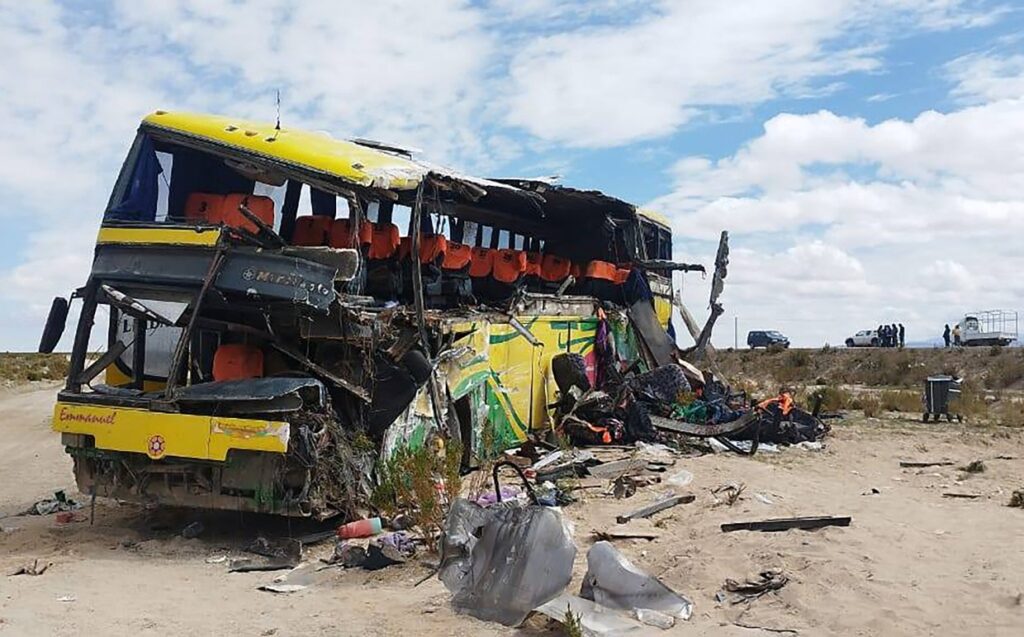
Two people died and six others were injured when a small plane crashed into a bus on a busy avenue in Sao Paulo, Brazil, on Friday morning, according to the local fire department. 

Authorities said the two victims, identified as the pilot and co-pilot, were found charred in the fuselage of the Beech F90 King Air aircraft. The plane had departed from Sao Paulo en route to Porto Alegre in southern Brazil before crashing on Marques de Sao Vicente Avenue and colliding with the bus. 

“Unfortunately, we started the day with this tragic plane crash,” Sao Paulo Governor Tarcisio de Freitas wrote on social media. He praised the fire department’s swift response, which extinguished the flames within minutes and prevented further casualties. 

A woman traveling on the bus and a biker struck by debris were taken to a hospital, the fire department said. Four other individuals sustained minor injuries. 

Officials are investigating the cause of the crash. 

Search Underway for Missing Plane Carrying 10 People Off Alaska’s Western Coast

Rescuers searched Friday for a missing Bering Air plane that disappeared while carrying 10 people over Alaska’s Norton Sound, south of the Arctic Circle. 

The single-engine Cessna Caravan was en route from Unalakleet to Nome on Thursday afternoon with nine passengers and a pilot, according to the Alaska Department of Public Safety. Authorities are working to determine the aircraft’s last known location. 

Unalakleet, a community of about 690 people, is located roughly 150 miles southeast of Nome and 395 miles northwest of Anchorage. 

The disappearance marks the third major aviation incident in the United States within eight days. A commercial jetliner and an Army helicopter collided near Washington, D.C., on Jan. 29, killing 67 people. Two days later, a medical transportation plane crashed in Philadelphia, resulting in seven fatalities. 

The Cessna Caravan departed Unalakleet at 2:37 p.m. Thursday. Officials lost contact with the aircraft less than an hour later, according to David Olson, director of operations for Bering Air. The U.S. Coast Guard reported that the plane was approximately 12 miles offshore at the time of its last known position. 

“Bering Air staff are working to gather details, coordinate emergency assistance, and initiate search and rescue operations,” Olson said. 

Bering Air operates flights to 32 villages in western Alaska from hubs in Nome, Kotzebue, and Unalakleet. Most destinations receive twice-daily scheduled service from Monday through Saturday. 

In remote areas of Alaska, especially during winter, air travel is often the only viable transportation option. 

Authorities continue search efforts, and updates will be provided as new information emerges. 

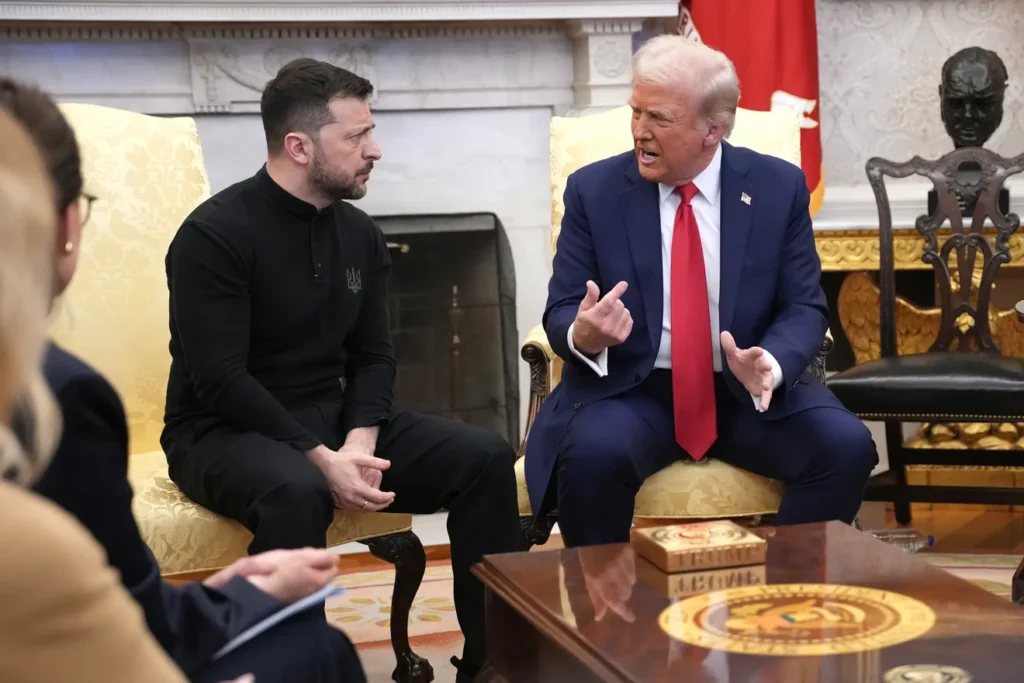
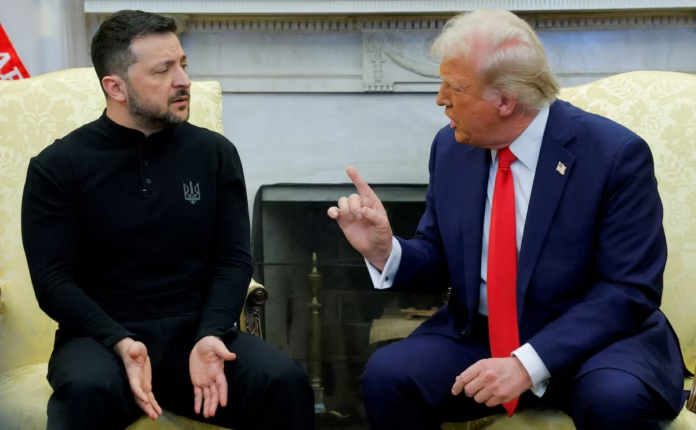
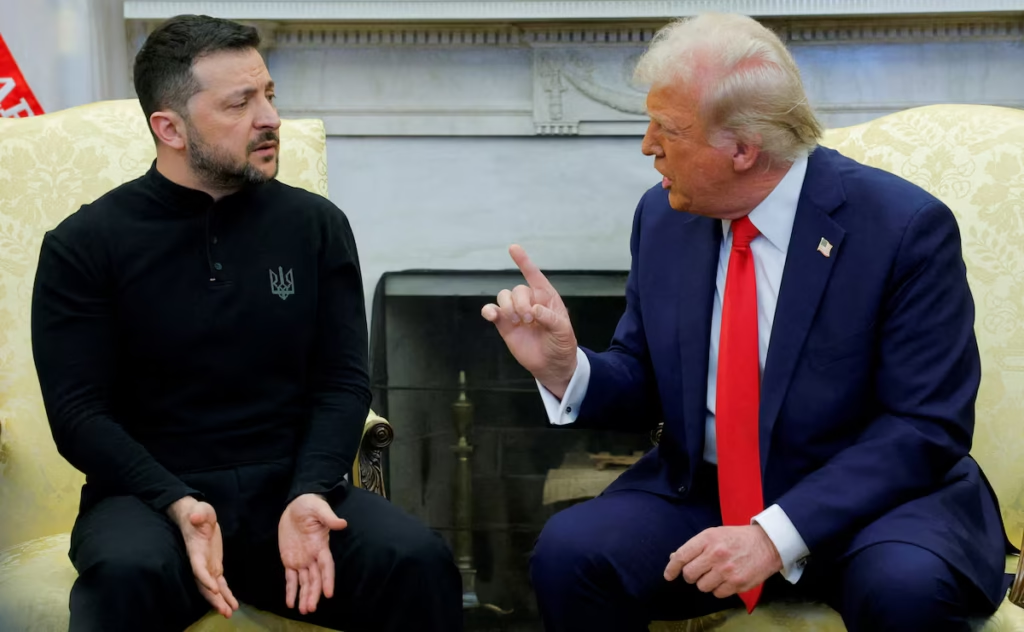
Trump to Unveil ‘100-Day Peace Plan’ to End Ukraine War

Former President Donald Trump is set to unveil his long-anticipated peace proposal to end the war in Ukraine, with details expected to be announced at the Munich Security Conference next week. 

A leaked version of the alleged plan, first reported by *Newsweek*, outlines a ceasefire that would freeze the current front lines in an Easter truce. The proposal suggests deploying European peacekeepers—including British forces—to enforce a demilitarized buffer zone, ensuring Russia does not launch further attacks. Notably, no U.S. troops would be involved in the operation. 

– Ukraine’s NATO Bid Blocked: Under the proposed terms, Ukraine would remain neutral and be barred from joining NATO. However, it could still join the European Union by 2030, with the EU leading the nation’s post-war reconstruction. 

– U.S. Military Aid Continues: While military support for Ukraine would persist, Kyiv would have to accept Russian control over territories currently occupied by Moscow. 

– Sanctions on Russia Relaxed: Economic penalties against Russia would be gradually lifted over several years, with special duties funding Ukraine’s rebuilding efforts. 

– Peace Conference or Trump-Putin Call: A peace deal could be finalized through direct talks between Trump and Russian President Vladimir Putin or at a broader international peace summit. 

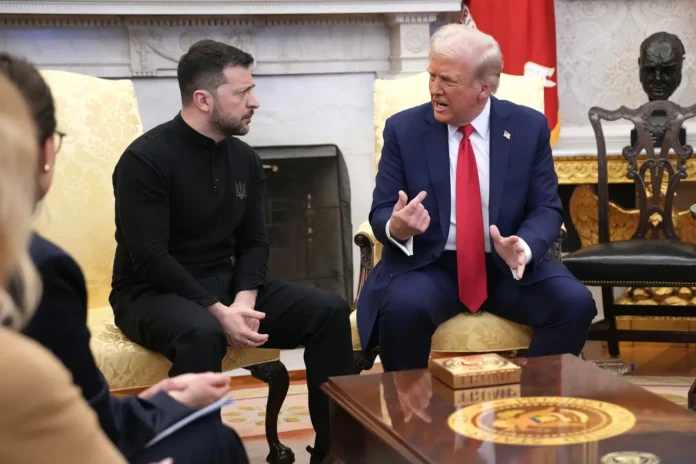
Ukrainian President Volodymyr Zelensky’s office swiftly dismissed the leaked document as Russian disinformation. However, Zelensky has made it clear that his goal is to reclaim all Ukrainian territory currently under Russian control while securing immediate NATO protection for the land still held by Kyiv. 

Zelensky has also expressed concerns that Trump could bypass Ukraine and negotiate directly with Russia, pressuring Kyiv into accepting unfavorable terms by threatening to cut off U.S. military support. 

“Russia’s war is against Ukraine, against Europe, against the whole world, but above all, the war is waged on our land,” Zelensky said Saturday. “It is impossible to exclude Ukraine from any negotiating platform.” 

Putin has yet to publicly state his conditions for a peace deal but has previously demanded Ukraine’s demilitarization and an end to NATO expansion. Meanwhile, pro-Kremlin figures, such as Putin ally Viktor Medvedchuk, continue to push historical narratives justifying Russia’s territorial claims over Ukraine. 

Despite heavy troop losses—reports indicate over 2,000 Russian soldiers killed in a single day last week—Putin’s forces continue their offensive. Trump, however, has threatened additional economic sanctions on Moscow if Putin refuses to negotiate.  Although Trump initially claimed he could end the war in a single day, his new envoy, General Keith Kellogg, has been tasked with securing peace within 100 days. The former president is expected to remain directly involved in the negotiations as the plan moves forward. 

Trump Sanctions International Criminal Court, Accuses It of ‘Abusing Its Power’

Former President Donald Trump imposed sanctions on the International Criminal Court (ICC) on Thursday, accusing the tribunal of overstepping its authority by targeting the United States and Israel. 

The executive order enacts financial and travel restrictions on ICC officials and their family members who participate in investigations involving U.S. citizens or American allies. The move comes as Israeli Prime Minister Benjamin Netanyahu visits Washington amid the ICC’s war crimes case against him and former Israeli Defense Minister Yoav Gallant over the Gaza conflict. 

The order claims the ICC’s actions “further abused its power” by issuing warrants against Israeli officials. The administration has not yet disclosed the names of those affected by the sanctions. 

During Trump’s first term, his administration sanctioned then-ICC Prosecutor Fatou Bensouda and a senior aide over their investigation into alleged war crimes by U.S. troops in Afghanistan. 

Alongside the ICC sanctions, Trump signed an executive order aimed at eliminating what he called “anti-Christian bias” within the federal government. The order directs Attorney General Pam Bondi to lead a task force to investigate and prevent religious discrimination across agencies, including the Department of Justice, the IRS, and the FBI. 

“The mission of this task force will be to immediately halt all forms of anti-Christian targeting and discrimination,” Trump said in a statement. 

Meanwhile, a U.S. district judge temporarily halted a Trump-backed federal employee buyout program just hours before its application deadline. The “Fork in the Road” deferred resignation plan—spearheaded by Trump ally Elon Musk—offers employees continued salary payments until September 30 if they voluntarily resign. 

Judge George O’Toole Jr. of Boston ordered the program’s deadline extended and scheduled a hearing for Monday. He could further delay or permanently block the plan, which labor unions have challenged in court. 

Trump officials said more than 40,000 federal workers had accepted the buyout, though NBC News cited a higher figure of 60,000. White House Press Secretary Karoline Leavitt welcomed the extension, saying it would give more workers “a generous, once-in-a-lifetime offer.” 

The administration warned that those who refuse the buyout may still face termination. Critics, including labor unions and Democratic lawmakers, argue the plan is unreliable and could leave thousands without guaranteed salaries past March 14, when current spending laws expire. 

The court ruling marks another legal hurdle for Trump’s executive actions. A separate federal judge blocked his attempt to revoke birthright citizenship, marking the second such ruling in two days. 

U.S. Seizes Venezuelan President Maduro’s Plane in Dominican Republic During Rubio Visit

The Trump administration on Thursday seized a second aircraft linked to Venezuelan President Nicolás Maduro’s government while U.S. Secretary of State Marco Rubio was in the Dominican Republic on a Latin America tour. 

Rubio watched as American officials affixed the seizure warrant to the Dassault Falcon 200 jet, which had been used by Maduro and top aides, including his vice president and defense minister, for international travel. The U.S. claims these trips, including visits to Greece, Turkey, Russia, and Cuba, violated American sanctions. 

The seizure required Rubio to approve a waiver to a Trump-imposed foreign aid freeze to cover more than $230,000 in storage and maintenance fees, according to a State Department document obtained by The Associated Press.

The U.S. Justice Department also approved the action, citing the plane’s ties to a sanctioned Venezuelan state-owned oil and natural gas company. An investigation found the aircraft was purchased in the U.S. in 2017, later sent to Venezuela, and serviced multiple times with American parts. 

The move follows the September 2024 seizure of another Maduro-linked jet from the Dominican Republic. That aircraft, a Dassault Falcon 900EX valued at $13 million, was allegedly purchased using a Caribbean-based shell company to conceal Venezuelan involvement, according to the U.S. Justice Department. 

The latest seizure comes a week after U.S. special envoy Richard Grenell met with Maduro in Caracas to discuss the repatriation of Venezuelan nationals who illegally entered the United States. Grenell returned with six detained Americans. 

Separately, Rubio addressed ongoing U.S.-Panama negotiations over transit fees for warships passing through the Panama Canal. He dismissed confusion over an agreement to waive the fees, acknowledging Panama must follow legal procedures. 

Panamanian President José Raúl Mulino denied claims that his government had agreed to eliminate the fees, contradicting a U.S. State Department statement. The issue has been a point of contention for President Donald Trump, who has threatened to reclaim control of the canal if Panama does not curb Chinese influence in the region. 

AP

Philippine Vice President Sara Duterte Impeached Over Marcos Assassination Remark, Corruption Allegations

Philippine Vice President Sara Duterte was impeached Wednesday on charges including plotting to assassinate President Ferdinand Marcos Jr., large-scale corruption, and failing to condemn China’s aggressive actions in the South China Sea. 

The House of Representatives, dominated by Marcos allies, voted overwhelmingly to send the impeachment case to the Senate, escalating tensions between the nation’s top leaders. The move deepens a growing political rift in one of Asia’s most vibrant democracies. 

Duterte, daughter of former President Rodrigo Duterte, has not publicly responded to the impeachment. However, her brother, Rep. Paolo Duterte, called it “a clear act of political persecution.” 

At least 215 lawmakers signed the impeachment complaint, surpassing the required number for fast-tracking the case to the Senate, where Duterte will face trial. Among the signatories were the president’s son, Rep. Sandro Marcos, and House Speaker Martin Romualdez. 

The charges stem from a death threat Duterte allegedly made against Marcos and his family, irregularities involving $10.5 million in intelligence funds, and her failure to take a strong stance against Chinese territorial incursions. She previously stated she had contracted an assassin to kill Marcos and other officials if she were assassinated, later claiming it was not a direct threat. 

Duterte has also been accused of unexplained wealth and failing to declare her assets as required by law. House investigations into her use of intelligence funds have fueled corruption allegations. 

The impeachment complaint also cited her criticism of Marcos’ handling of the South China Sea dispute, calling it a “fiasco,” and accused her of undermining government policies. 

The Senate will now determine whether Duterte should be removed from office and barred from holding public office in the future.