Home Blog Page 433

U.S. Pauses Tariffs on Mexico for One Month Following Border Agreement, Trump Announces

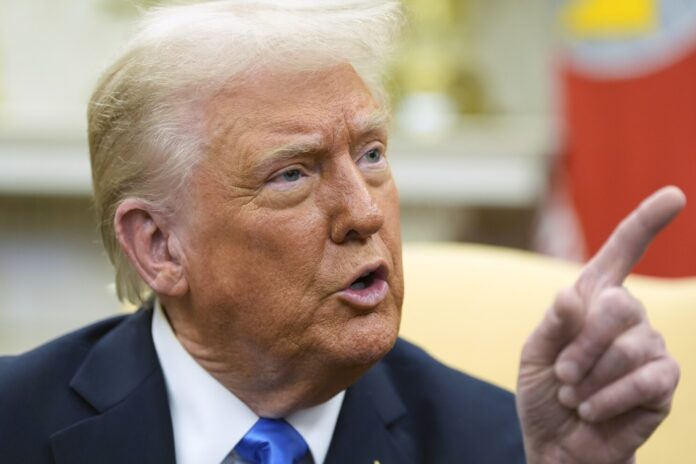
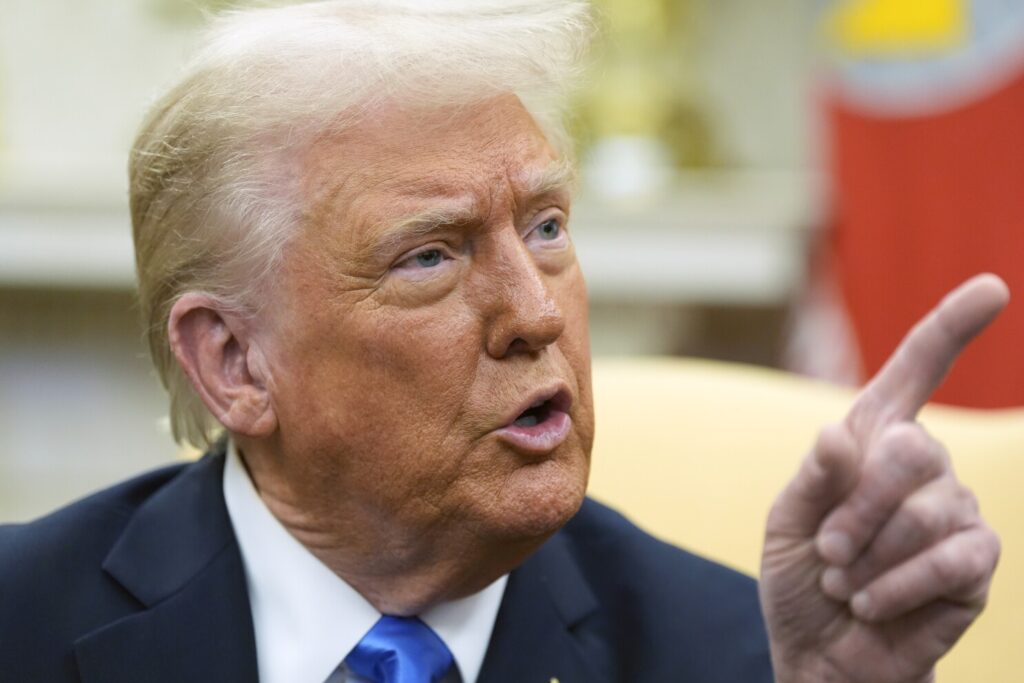
President Donald Trump has announced a one-month pause on new tariffs against Mexico after the country agreed to deploy 10,000 National Guard troops along its northern border to curb the flow of illegal drugs, particularly fentanyl. 

As part of the agreement, the U.S. also committed to measures aimed at preventing the trafficking of high-powered weapons into Mexico, Mexican President Claudia Sheinbaum said on X. The two leaders spoke by phone on Monday, just hours before tariffs on Mexico, Canada, and China were set to take effect. 

Trump said the temporary suspension will allow time for further negotiations. 

“I look forward to participating in those negotiations with President Sheinbaum as we attempt to achieve a deal between our two countries,” he wrote on Truth Social. 

Sheinbaum echoed the sentiment during a press conference, stating, “We have this month to work and convince each other that this is the best way forward.” 

Following the announcement, U.S. stocks rebounded from earlier losses triggered by fears of a widening trade war. The S&P 500, which had dropped sharply in early trading, was down 0.7% by mid-morning, recovering some of its earlier losses. The Mexican peso also strengthened after the news. 

Trump also spoke with Canadian Prime Minister Justin Trudeau on Monday and planned another call later in the day. However, tariffs on Canada and China remain scheduled to take effect on Tuesday, with Canada already announcing retaliatory measures. 

A senior Canadian official told The New York Times that Ottawa was not optimistic about securing a similar reprieve. 

Speaking in Washington after returning from his Mar-a-Lago estate, Trump suggested that the 27-nation European Union could be next to face tariffs, though he did not specify a timeline. 

“They don’t take our cars, they don’t take our farm products. They take almost nothing, and we take everything from them,” he told reporters. 

EU leaders, meeting in Brussels on Monday, warned they were prepared to retaliate but called for negotiation. French President Emmanuel Macron stated that if Europe’s commercial interests were attacked, the EU would “make itself respected and thus react.” German Chancellor Olaf Scholz emphasized the need for a trade agreement but warned that the bloc could impose its own tariffs if necessary. 

Trump hinted that Britain, which left the EU in 2020, might be spared from potential tariffs, stating, “I think that one can be worked out.” 

The U.S. remains the EU’s largest trade and investment partner. According to 2023 Eurostat data, the U.S. had a trade deficit of 155.8 billion euros ($161.6 billion) in goods with the EU, though this was offset by a surplus of 104 billion euros in services. 

EU foreign policy chief Kaja Kallas warned against escalating tensions, stating, “There are no winners in a trade war. If one breaks out between Europe and the U.S., the only one laughing on the sidelines is China.” 

Trump’s proposal to impose 25% tariffs on Canada and Mexico and 10% on China has sparked fears of a global economic slowdown and rising prices in the U.S. He defended the tariffs as necessary to curb illegal immigration, combat drug trafficking, and boost domestic industries. 

Financial markets reflected concerns about the economic fallout. Tokyo stocks fell nearly 3%, and Australia’s benchmark index, often seen as a proxy for Chinese markets, dropped 1.8%. Germany’s DAX fell 1.8%, France’s CAC 40 declined 1.9%, and Britain’s FTSE 100 dropped 1.5%. 

The Chinese yuan, Canadian dollar, and Mexican peso all weakened against the U.S. dollar, while oil prices rose more than 1%, with gasoline futures surging nearly 3%. 

Trump’s tariffs would impact nearly half of all U.S. imports, requiring a massive increase in domestic manufacturing output to offset the gap—something analysts at ING called “unfeasible” in the short term. Some experts warned the tariffs could push Canada and Mexico into recession and cause “stagflation”—a combination of high inflation, stagnant growth, and rising unemployment—in the U.S. 

In Europe, Deutsche Bank economists estimated that if Trump imposes 10% tariffs on the EU, it could reduce the bloc’s GDP by 0.5%. 

A White House fact sheet did not specify what additional steps Canada, Mexico, or China would need to take to secure a long-term reprieve. Trump said the sanctions would remain until the “national emergency” over fentanyl and illegal immigration was resolved. 

China dismissed Trump’s claims, arguing that fentanyl abuse is an American issue. Beijing vowed to challenge the tariffs at the World Trade Organization and take countermeasures but left the door open for negotiations. 

Canada announced plans to pursue legal action through international trade bodies. 

The auto industry is expected to be one of the hardest-hit sectors. New tariffs on vehicles manufactured in Canada and Mexico could disrupt a complex supply chain where car parts cross borders multiple times before final assembly. Shares of Ford and General Motors each fell between 4% and 5% following the announcement. 

European automakers also faced steep declines, with Volkswagen, BMW, Porsche, Stellantis, and Daimler Truck all dropping between 5% and 6% in Monday’s trading. 

UPDATED: Pro-Russia Paramilitary Leader Killed in Moscow Explosion

Armen Sargsyan, the leader of the pro-Russian paramilitary group “Arbat” battalion, has been identified as the victim of the bombing in Moscow initially reported. He died in the hospital after sustaining severe injuries in an explosion in Moscow on Monday morning, according to Russian media. 

The blast occurred in the entrance hall of a residential building in northwest Moscow, about 12 kilometers (7 miles) from the Kremlin. Sargsyan was airlifted to a hospital and placed in intensive care but later succumbed to his injuries, reports from Telegram channels stated. 

Several others, including one of Sargsyan’s bodyguards, were also seriously injured. Some sources reported that another individual had died in the explosion. Ukraine has not yet commented on the incident. 

In December, Ukraine’s Security Service (SBU) described Sargsyan as a “crime boss” and accused him of recruiting prisoners to fight in Ukraine. He had been on an international wanted list since May 2014 for alleged involvement in murders in central Kyiv. The SBU also claimed he was part of the inner circle of former Ukrainian President Viktor Yanukovych. 

“The assassination attempt on Sargsyan was carefully planned and ordered. Investigators are currently identifying those responsible,” Russian news agency TASS quoted a law enforcement official as saying. 

Images shared on social media showed extensive damage to the building’s entrance hall, with rubble and shattered glass scattered across the area. 

Olga Voronova, a 36-year-old resident of a neighboring building, expressed shock over the incident. “We have strict security measures here. They check every car at the checkpoints, and we have to order passes even for family members,” she told AFP. 

Sargsyan was born in Horlivka, a city in Ukraine’s Donetsk region that has been under Russian occupation since 2014. Ivan Prikhodko, the mayor of Horlivka, confirmed Sargsyan’s death in a Telegram post, praising him for founding and leading a special forces battalion. Prikhodko also noted that Sargsyan headed the Boxing Federation of the self-proclaimed Donetsk People’s Republic. 

The “Arbat” battalion has been active in Russia’s Kursk region, where Ukrainian forces launched a surprise offensive in August. 

There has been a series of attacks targeting high-profile supporters of Russia’s invasion of Ukraine, both in Moscow and in occupied territories. 

In late 2024, senior Russian naval officer Valery Trankovsky and Russian prison chief Sergei Yevsyukov were killed in car bombings in Russian-occupied Ukraine. In December, a high-ranking Russian general and his assistant were also assassinated in Moscow, reportedly by Ukraine’s security service, a Ukrainian source told the BBC. 

Beyoncé Wins First Album of the Year Grammy for ‘Cowboy Carter’

Beyoncé won album of the year at the Grammy Awards on Sunday for the first time in her career, taking home the top honor with her country album Cowboy Carter. The victory came after four previous nominations in the category, solidifying her as the most-awarded artist in Grammy history with 35 career wins. 

“I just feel very full and very honored. It’s been many, many years,” Beyoncé said on stage, standing beside her daughter, Blue Ivy Carter. 

The superstar triumphed over Taylor Swift, Billie Eilish, and others in a ceremony that also served as a tribute to Los Angeles, recently ravaged by wildfires. 

Kendrick Lamar dominated the night, winning record and song of the year for Not Like Us, a diss track in his feud with Drake. Lamar, who swept all five categories in which he was nominated, dedicated his awards to Los Angeles. 

“This is my neck of the woods that’s held me down since I was a young pup,” Lamar said. “We are going to restore the city.” 

Chappell Roan, known for Pink Pony Club, was named best new artist. She used her speech to call on record labels to provide musicians with fair wages and healthcare benefits. 

“Labels—we got you, but do you got us?” she asked, recalling a time when she felt “dehumanized” by a lack of health insurance. 

Taylor Swift, who holds the record for the most album of the year wins, was nominated for The Tortured Poets Department but did not take home any awards. She made one appearance on stage to present best country album, an honor that went to Beyoncé. 

The ceremony, broadcast live on CBS, was also a fundraiser for those affected by the recent wildfires in California. 

In a reimagined format, the event blended awards presentations with fundraising efforts. The show opened with an all-star performance of I Love LA, featuring Dawes, John Legend, Brad Paisley, St. Vincent, and Brittany Howard. 

“Tonight, we are not just celebrating our favorite music. We are also celebrating the city that brought us so much of that music,” host Trevor Noah said, encouraging viewers to donate. The event raised at least $7 million. 

Tributes to Los Angeles continued throughout the night. Lady Gaga and Bruno Mars performed California Dreamin’, and firefighters received a standing ovation while presenting the album of the year award. 

The Grammys honored the late music producer Quincy Jones, who died in November. Stevie Wonder led a choir of students from wildfire-damaged schools in a rendition of We Are the World, and Janelle Monáe performed Michael Jackson’s Don’t Stop ’til You Get Enough in tribute. 

Canadian singer The Weeknd, who had previously boycotted the Grammys over transparency concerns, made a surprise appearance with a mid-show performance. 

“We have listened, we have acted, and we have changed,” Recording Academy CEO Harvey Mason Jr. said. He noted that the voting body now includes a younger demographic, with 40 percent being people of color. 

Grammy winners are selected by the 13,000 members of the Recording Academy, which includes singers, songwriters, producers, and engineers. 

Elon Musk Claims He and Trump Are Shutting Down USAID Amid Federal Budget Cuts

Tech billionaire Elon Musk announced plans to dismantle the United States Agency for International Development (USAID) as part of a broader effort to slash federal spending, claiming support from President Donald Trump. 

During an audio-only appearance on his social media platform X early Monday, Musk said USAID would be “fed into the wood chipper,” calling the foreign aid agency “beyond repair.” The move, which has not received congressional approval, comes as Musk leads the newly established Department of Government Efficiency (DOGE), tasked with federal cost-cutting initiatives. 

USAID, created in 1961 under an executive order by President John F. Kennedy, is the world’s largest foreign aid agency. It provides billions in assistance to nations recovering from disasters and poverty-related crises. In fiscal year 2023, USAID disbursed $72 billion in aid globally, supporting projects related to public health, energy security, clean water, and anti-corruption efforts. The agency employs more than 10,000 staff members. 

The announcement follows reports that two top security officials were removed after attempting to block Musk’s DOGE representatives from accessing restricted areas of the agency and classified documents. More than 100 senior USAID staff members have reportedly been placed on leave, and as of Monday morning, the agency’s website was inactive. 

Democratic lawmakers have strongly opposed the move, arguing that the president does not have the constitutional authority to dismantle USAID without congressional approval. 

“No one elected Elon Musk,” Sen. Elizabeth Warren, D-Mass., posted on X. “As Donald Trump allows Musk to access people’s personal information and shut down government funding, Republicans in Washington will also own the consequences. We must push back and protect people from harm.” 

On Sunday, 10 Democratic senators sent a letter to Secretary of State Marco Rubio, warning that any efforts to dismantle USAID would require congressional approval. 

The reported shutdown follows Trump’s executive order freezing most U.S. foreign aid as part of his “America First” policy. His administration has also discussed transferring USAID’s functions to the State Department. 

As part of his federal government overhaul, Musk’s team has reportedly taken control of or gained access to multiple government systems. Late Friday, DOGE secured access to the Treasury Department’s payment system, which processes more than $6 trillion in annual payments for federal agencies, including Social Security and tax refunds. The New York Times first reported the development. 

When asked if Musk was handling the cost-cutting initiative well, Trump voiced his support. 

“He’s a big cost-cutter,” Trump told Reuters on Sunday. “Sometimes we won’t agree with it, and we’ll not go where he wants to go. But I think he’s doing a great job. He’s a smart guy. Very smart. And he’s very much into cutting the budget.” 

Ugandan Activists Demand Release of Opposition Leader Facing Military Trial

Opposition leaders in Uganda on Monday called for the immediate release of a detained opposition figure facing a military trial, following a Supreme Court ruling that civilians cannot be prosecuted in military courts. 

Kizza Besigye, a four-time presidential candidate and longtime critic of President Yoweri Museveni, has been in detention since his repatriation from Nairobi, Kenya, after he went missing on Nov. 16. Days later, Besigye and an aide appeared before a military tribunal in Kampala on charges of illegal possession of a firearm and threatening national security. He was later charged with treason, an offense that carries the death penalty. 

The Supreme Court ruled last week that civilians cannot be court-martialed, questioning the jurisdiction of military courts over non-military personnel. The decision was welcomed by legal activists and Besigye’s supporters, who argued it provided a legal pathway for his release. 

“Besigye is in Luzira now illegally,” said opposition lawmaker Ibrahim Ssemujju Nganda, referring to the maximum-security prison where he is being held. 

Kampala Mayor Erias Lukwago, a close associate of Besigye, said Ugandans “are duty-bound to enforce” the court’s decision. 

Museveni, who has been in power since 1986, responded to the ruling by asserting that “the country is not governed by the judges.” 

Oryem Nyeko, a senior researcher at Human Rights Watch, said the court’s decision was a critical step toward ensuring fair trials in Uganda. He urged the government to “uphold justice for civilians wrongly convicted under military courts as well as those awaiting trial.” 

Besigye was expected to appear before the military panel on Monday, but the hearing did not take place amid heavy police and military presence outside the court. 

A veteran opposition leader, Besigye has been arrested multiple times but has never been convicted of a crime. Amnesty International also called for his release, condemning his “abduction” as a violation of international human rights law. 

His detention comes as Uganda prepares for presidential elections next year. While Museveni is expected to seek re-election, some political observers speculate that he may step aside. The ruling National Resistance Movement party has no clear successor, raising concerns over potential political instability. 

Besigye, 68, is a retired military officer and former leader of the Forum for Democratic Change, once Uganda’s most prominent opposition party. A former personal doctor and military aide to Museveni, Besigye broke ties with the president in the 1990s, accusing him of authoritarianism. 

Car Bomb Kills 15 Agricultural Workers in Northern Syria

A car bomb explosion in northern Syria killed at least 15 people, including 14 women, and wounded 15 others on Monday, according to first responders. The attack targeted a vehicle transporting agricultural workers on the outskirts of Manbij, east of Aleppo, the Syria Civil Defense agency, also known as the White Helmets, reported. 

Emergency responders said some of the injured remain in critical condition, warning that the death toll could rise. There has been no immediate claim of responsibility for the bombing, which marks the deadliest attack since rebel forces ousted President Bashar al-Assad in December. 

This was the second car bomb attack in Manbij in three days. On Saturday, an explosion in the city center killed four people, including two children and a woman, according to the Syria Civil Defense. 

The Syrian Observatory for Human Rights, a UK-based monitoring group, reported that the latest explosion occurred near a military position and that nine of the deceased were fighters linked to pro-Turkish forces. 

Since the fall of the Assad regime, Manbij and surrounding areas have experienced intense clashes between Turkish-backed Syrian National Army (SNA) factions and the Kurdish-led Syrian Democratic Forces (SDF), which receives support from the United States. 

The SNA launched an offensive to seize territory west of the Euphrates River, an area previously controlled by the SDF since it expelled the Islamic State (IS) in 2016. The SNA took control of Manbij on December 9 after fighters from the SDF-affiliated Manbij Military Council withdrew. However, the SDF has since launched a counter-offensive. 

Blast in Upscale Moscow Residential Area Kills One, Injures Four 

A blast in an upscale residential block in Moscow killed one person and injured four others early Monday, according to Russian news agencies citing emergency officials. 

The cause of the explosion was not immediately disclosed. Those injured were hospitalized in critical condition, Russia’s state news agency RIA Novosti reported, citing Moscow health officials. 

Footage released by the Investigative Committee of Russia showed extensive damage, including shattered glass doors and collapsed suspended ceilings inside the building. 

Authorities have launched a criminal investigation into the explosion on charges of murder by means injurious to the public and attempted murder of two or more individuals, the Investigative Committee confirmed. 

Russian state news agencies Tass and RIA Novosti, citing law enforcement sources, identified one of the wounded as Armen Sarkisyan. Sarkisyan is the founder of a volunteer battalion involved in the Ukraine conflict and leads a boxing federation in the Russian-controlled Donetsk region. 

According to RIA Novosti, Sarkisyan is listed as wanted in Ukraine, though the agency did not specify the charges. Tass reported that Sarkisyan’s bodyguard was killed in the explosion. 

Officials have not yet provided further details on the cause of the blast or possible suspects. The investigation is ongoing.

AP

Bianca Censori Stuns in Sheer Dress on 2025 Grammys Red Carpet with Kanye West

Bianca Censori turned heads at the 2025 Grammy Awards, making a bold red carpet debut alongside husband Kanye West in a completely see-through dress. The Australian model’s daring look, crafted from sheer stocking-like material, left little to the imagination. 

Arriving in a black fur coat, Censori quickly shed the outer layer to pose for photos, revealing the full extent of the transparent ensemble. She kept accessories minimal, pairing the sheer design with clear flip-flop heels. Her beauty look followed suit, featuring a sleek, slicked-back hairstyle and fresh-faced makeup. 

West, who legally changed his name to Ye in 2021, opted for a monochrome outfit, sporting a black T-shirt and trousers, complemented by his signature oversized boots and sunglasses. 

The 2025 ceremony marks West’s first Grammys appearance since 2015, when he attended with then-wife Kim Kardashian. His return to the award show comes just days after he and Censori were spotted boarding a plane to Tokyo, where she showcased another of her signature form-fitting outfits. 

Since her relationship with the “Stronger” rapper began, Censori has become known for her revealing style, often donning sheer bodysuits, thongs, and stocking-inspired fashion. 

West recently announced that his latest Yzy collection will include bodysuits, though it remains unclear whether Censori’s Grammys dress was one of his designs. 

pagesix.com

Canadian Fans Boo U.S. Anthem as Trade Tensions Escalate Over New Tariffs

Canadian sports fans booed the U.S. national anthem at multiple events over the weekend, signaling growing discontent over newly imposed tariffs by President Donald Trump. The protests, which took place at both National Hockey League and National Basketball Association games, reflect widespread frustration in Canada over the economic strain the tariffs are expected to cause. 

The backlash follows Trump’s announcement of a 25 percent tariff on all Canadian imports, with a 10 percent levy on energy, set to take effect Tuesday. The move has intensified tensions between the two neighboring countries and sparked fears of a full-blown trade war. 

In response to the tariffs, Canadian political leaders and citizens alike are calling for economic retaliation. Prime Minister Justin Trudeau urged unity, saying, “Now is the time to choose Canada.” 

Canadians have already begun pushing back. Social media campaigns are encouraging consumers to boycott American-made products, while some grocery stores have started labeling Canadian goods to promote domestic purchasing. Others have announced travel cancellations to the U.S. 

Seth Klein, a Canadian author, wrote on Bluesky that his family had canceled a planned March break trip to the U.S., stating, “It needed to be done.” 

In direct response, Canada has announced 155 billion Canadian dollars, or 105 billion U.S. dollars, in retaliatory tariffs on U.S. goods. The affected products range from vegetables and clothing to sports equipment and perfume. Canadian officials have specifically targeted products from Republican-led states, such as Florida orange juice. 

Additionally, some provinces, including Ontario, will pull American alcoholic beverages from store shelves indefinitely beginning Tuesday. 

While the U.S. relies on Canada as its largest oil supplier, Trudeau’s administration has signaled that “all options remain on the table” for further retaliation. 

The tariffs mark a turning point in relations between the two countries, raising concerns among Canadian officials about future U.S. economic policies. 

Michael Ignatieff, former leader of Canada’s Liberal Party, described the situation as “a shock,” telling the BBC, “We’re in a new world where trust in America is now a fundamental question in foreign policy.” 

Canada’s opposition leader, Pierre Poilievre, condemned the tariffs as “massive, unjust, and unjustified.” 

“Canada is the United States’ closest neighbor, greatest ally, and best friend,” Poilievre said. “There is no justification for this treatment.” 

Trudeau directly addressed Americans in his speech, highlighting Canada’s history of military alliances with the U.S. “We have fought and died alongside you,” he said. 

Economists warn that Canada faces the greater economic risk in this trade dispute. TD Economics projects that a prolonged tariff battle could push Canada into recession within six months, with unemployment surpassing seven percent. 

Despite speculation that the tariffs were initially a negotiation tactic for border security concessions, Trump has followed through on his threats. He has linked the tariffs to fentanyl trafficking and illegal migration and stated they will remain in place “until the crisis is alleviated.” 

The Canadian government disputes the claims, noting that less than one percent of illegal fentanyl and border crossings into the U.S. originate from Canada. In response, Trudeau has offered 1.3 billion Canadian dollars in additional border security measures. 

However, Trump has also cited the U.S. trade deficit with Canada as a driving factor. In a post on Truth Social, he claimed that “the U.S. pays hundreds of billions of dollars to subsidize Canada” and suggested that without this support, “Canada ceases to exist as a viable country.” 

Trump has further warned of “harsher penalties” if Canada retaliates. Meanwhile, Trudeau has vowed that Canada “will fight when necessary.” 

bbc.com

Diddy Hospitalized for Knee Pain Amid Federal Detention on Sex Trafficking Charges

Sean “Diddy” Combs was transported from his federal prison cell to a hospital late Thursday night for medical evaluation, sources confirmed. The music mogul, currently detained at the Metropolitan Detention Center in Brooklyn while awaiting trial on multiple sex crime charges, underwent an MRI for knee pain at Brooklyn Hospital before being returned to his cell. 

A source told DailyMail.com that Combs’ trip, which took place at approximately 10 p.m., was arranged to avoid speculation. The source also emphasized that his hospitalization was not related to a jail altercation but was due to “an old injury that was bothering him.” 

Diddy, 55, has been in custody since his arrest last year on charges of sex trafficking, racketeering, and prostitution. He has pleaded not guilty and has been denied bail multiple times. 

Just last week, federal prosecutors filed a superseding indictment, adding allegations that Combs trafficked two additional women, bringing the total to three. Despite the new accusations, no additional charges have been filed against him. 

Combs’ attorney, Marc Agnifilo, dismissed the prosecution’s claims, stating that the case “contains no new offenses” and calling the allegations that two of Combs’ former girlfriends were prostitutes “ridiculous.” 

Prosecutors allege Combs transported multiple women, including professional sex workers, across state lines for illicit purposes. One of the women referenced in the indictment is believed to be Cassie Ventura, his ex-girlfriend, who accused him of physical abuse and rape in a civil lawsuit filed in November 2023. Combs settled the lawsuit one day later without admitting to the allegations. 

Additional claims against Combs surfaced in a separate lawsuit filed by Ashley Parham, who accused him of gang rape and sexual assault in March 2018. Parham alleged that she was drugged and assaulted, including an incident where a woman attempted to forcibly insert a copper IUD into her. 

Parham also claimed Combs threatened her with human trafficking and became enraged after overhearing her say she believed he was involved in Tupac Shakur’s murder. 

The federal indictment describes Combs’ alleged involvement in “freak-off” sex parties, where he purportedly distributed drugs such as ketamine, ecstasy, and GHB to maintain control over victims. 

Combs remains in the Metropolitan Detention Center as he awaits trial, scheduled for May 5. He faces life in prison if convicted on the racketeering charge.