Home Blog Page 437

OnlyFans Star Anna Polly Dies After Falling from Rio Hotel Balcony

Adult content creator and OnlyFans star Anna Beatriz Pereira Alves, known as Anna Polly, died after falling from a hotel balcony in Nova Iguaçu, Rio de Janeiro, Brazil, on January 23. 

The 27-year-old’s body was discovered in a courtyard at the Mont Blanc Apart Hotel, where she was reportedly filming an adult scene with two men. Authorities are investigating the circumstances surrounding her death. 

A homicide unit is reviewing CCTV footage and analyzing Anna’s mobile phone as part of the ongoing investigation. Police questioned the two men who were with her at the time, but they were released after giving conflicting statements. 

A spokesperson for the Baixada Fluminense Homicide Unit stated, “We are conducting a thorough investigation to clarify what happened. We are considering all possibilities, from an accident to a possible crime.” 

An autopsy has been ordered to determine the exact cause of death. 

Anna’s boyfriend, Pedro Henrique, expressed his grief on social media, saying, “It’s so difficult without you. As the hours pass, it’s starting to sink in, and the hole in my heart is only getting bigger.” He also confirmed that police are handling all information related to the case. 

A close friend described Anna’s ambitions, saying, “She had big plans and wanted to expand her social media presence. This news has left everyone stunned.” 

Authorities continue to examine the circumstances of Anna Polly’s death, with investigators reviewing evidence and questioning witnesses. 

Hamas Confirms Death of Military Commander Mohammed Deif

Hamas has confirmed the death of its top military commander, Mohammed Deif, in a statement released Thursday. The announcement follows Israel’s claim in July that it had killed Deif in an airstrike, a claim Hamas had previously denied. 

Hamas’s Qassam Brigades spokesperson, Abu Obaida, also confirmed the killing of deputy military commander Marwan Issa and several other senior figures within the armed wing. Israel had claimed responsibility for Issa’s death in a March airstrike, though Hamas had previously withheld confirmation. 

Mohammed Deif was one of the founding members of Hamas’s military wing, the Qassam Brigades, in the 1990s. He led the group’s military operations for over two decades and was linked to numerous attacks against Israel. Deif was also believed to have played a key role in developing Hamas’s tunnel network and weapons program. 

He survived multiple Israeli assassination attempts, reportedly suffering severe injuries, including the loss of an eye and serious leg wounds. In 2014, an Israeli airstrike killed his wife and infant son in Gaza. 

On October 7, 2023, Hamas released an audio recording of Deif announcing the “Al-Aqsa Flood” operation, marking the start of Hamas-led attacks on southern Israel. 

In addition to Deif and Issa, Abu Obaida confirmed the deaths of: 

– Ghazi Abu Tamaa, commander of weapons and combat services 

– Raed Thabet, commander of manpower and head of supplies unit 

– Rafei Salama, commander of the Khan Younis Brigade 

Abu Obaida praised Deif’s leadership, stating, “This is befitting of our leader Mohammed Deif, who exhausted the enemy for more than 30 years.” He also honored Issa, calling him “the brain of the Qassam Brigades.” 

The confirmation of Deif’s death marks a significant moment in the Israel-Hamas conflict. Israeli authorities have yet to comment on Hamas’s latest statement, while analysts suggest the loss of key military figures could impact Hamas’s operational capabilities. 

Trump Suggests Diversity Hiring May Have Played Role in Deadly D.C. Plane Crash

President Donald Trump suggested that diversity-focused hiring initiatives at the Federal Aviation Administration (FAA) may have played a role in the deadly midair collision near Washington, D.C., despite no official findings linking the crash to hiring policies.

Speaking at a White House press briefing, Trump criticized past administrations, including those of former Presidents Joe Biden and Barack Obama, for what he described as lowering aviation safety standards. He specifically targeted the FAA’s diversity and inclusion efforts, which he claimed prioritized political agendas over safety.

“The FAA is actively recruiting workers who suffer severe intellectual disabilities, psychiatric problems, and other mental and physical conditions under a diversity and inclusion hiring initiative spelled out on the agency’s website,” Trump said. He noted that the program allowed for the hiring of people with hearing and vision impairments, as well as other medical conditions such as epilepsy and paralysis.

Trump asserted that air traffic controllers needed to be exceptionally skilled. “They have to be talented, naturally talented geniuses,” he said. “You can’t have regular people doing their job.”

Trump went on to blame Biden’s administration for what he called a decline in aviation safety, though he did not provide evidence to support his claims. “We must have only the highest standards for those who work in our aviation system,” he said. “I changed the Obama standards from very mediocre at best to extraordinary. And then when I left office and Biden took over, he changed them back to lower than ever before.”

Trump also criticized former Transportation Secretary Pete Buttigieg, saying, “Do you know how badly everything’s run since he’s run the Department of Transportation? He’s a disaster. He was a disaster as a mayor. He ran his city into the ground, and he’s a disaster. Now he’s just got a good line of bulls—.”

The president’s remarks came hours after a tragic collision between an American Eagle flight and a U.S. Army Black Hawk helicopter near Ronald Reagan Washington National Airport. Officials confirmed that 67 people were aboard the two aircraft, and no survivors are expected.

The National Transportation Safety Board (NTSB) has launched an investigation into the crash. The agency has not indicated that hiring practices or diversity initiatives played any role in the incident. Investigators are currently analyzing flight data, reviewing air traffic control communications, and examining wreckage stored at Ronald Reagan National Airport’s Hangar 7.

Trump also speculated about the actions of the helicopter pilot involved in the collision. “You had a pilot problem, from the standpoint of the helicopter,” he said. “I mean, because it was visual, it was a very clear night. It was cold, but clear. You could have gone up, you could have gone down. You could have turned, you could have done a million different maneuvers.”

Despite his criticism, Trump later appeared to backtrack when asked if he was blaming the air traffic controller. “I’m not blaming the controller,” he said. “I’m saying there are things that you could question, like the height of the helicopter, the height of the plane being at the same level, going in opposite directions.”

Officials confirmed that both aircraft crashed into the Potomac River, where a large-scale recovery mission is underway. The American Eagle jet was carrying 60 passengers and four crew members, including U.S. figure skaters and their families returning from a training camp in Wichita, Kansas. Russian state media also reported that Russian figure skaters and coaches were among the victims.

Defense Secretary Pete Hegseth provided details on the Army helicopter crew, confirming they were part of the Bravo Company 12th Aviation Battalion at Fort Belvoir. “It was a fairly experienced crew that was doing a required annual night evaluation,” Hegseth said. “They did have night vision goggles.”

The NTSB is expected to release a preliminary report in 30 days, with a final investigation report anticipated within 12 to 18 months. The agency is reviewing air traffic control tapes, interviewing controllers, and assessing training procedures for both aircraft.

While Trump’s remarks have drawn attention, investigators have yet to determine the cause of the crash, and no evidence has been presented linking the incident to diversity hiring initiatives at the FAA.

Hamas Frees 8 Hostages as Israel Releases 110 Palestinian Prisoners Amid Fragile Ceasefire 

Hamas-led militants released eight hostages Thursday in a delayed exchange for 110 Palestinian prisoners freed by Israel, highlighting the fragile state of a ceasefire agreement in Gaza.

The prisoner swap is a key component of the truce aimed at halting the ongoing Israel-Hamas war, the deadliest conflict between the two in decades. Hamas continues to hold dozens of hostages taken during the Oct. 7, 2023, attack that triggered the war.

Hamas also confirmed the death of Mohammed Deif, the leader of its military wing and a mastermind behind the Oct. 7 attack. The announcement came six months after Israel claimed he was killed in an airstrike.

The released hostages included three Israelis and five Thai nationals, all captured over 15 months ago while working on farms in southern Israel. The handover took place in Khan Younis, where thousands of Palestinians gathered, some on rooftops of bombed-out buildings.

Among the Israeli hostages, Arbel Yehoud, 29, and Gadi Moses, 80, both German-Israeli dual nationals, were released along with the five Thai laborers.

Israeli Prime Minister Benjamin Netanyahu condemned what he called “shocking scenes” of the chaotic handover and urged international mediators to ensure future releases proceed safely.

The 110 Palestinian prisoners released by Israel included 30 individuals serving life sentences for attacks against Israelis. While seven returned to the occupied West Bank, the remainder were transferred to Egypt for deportation.

Scuffles erupted outside Israel’s Ofer Prison in the West Bank as Palestinian teenagers threw stones at the convoy carrying the freed prisoners. Israeli forces responded with tear gas and stun grenades. Three Palestinians were reported injured.

Among the released prisoners was Zakaria Zubeidi, a former militant leader and key figure in a 2021 jailbreak. As he stepped off the transport bus, crowds lifted him into the air in celebration.

During a televised statement, Hamas’ military wing confirmed Deif’s death, along with four other senior leaders. Israel had previously announced their deaths in targeted strikes.

Deif, long atop Israel’s most-wanted list, played a critical role in Hamas’ military operations. Other leaders confirmed dead included Marwan Issa, Hamas’ second-in-command, and Rafaa Salameh, a top commander in Khan Younis.

As part of the ceasefire’s first phase, Hamas is expected to release 33 Israeli hostages, including women, children, and elderly individuals, in exchange for approximately 2,000 Palestinian prisoners. Israel says Hamas has confirmed that eight of these hostages are dead.

Israeli forces have largely withdrawn from Gaza, allowing displaced civilians to return home. However, far-right members of Netanyahu’s coalition have called for the war’s resumption once the ceasefire phase ends. Hamas insists it will not release remaining hostages without a full Israeli withdrawal from Gaza.

Hamas launched the war with an unprecedented Oct. 7 assault, killing about 1,200 people and taking 250 hostages.

Israel’s retaliatory military campaign has resulted in more than 47,000 Palestinian deaths, over half of them women and children, according to Gaza’s Health Ministry. Israel claims to have killed 17,000 militants but has not provided evidence.

With 90% of Gaza’s population displaced and entire neighborhoods reduced to rubble, the region faces an uncertain future as international mediators push for continued negotiations.

Trump Orders Expansion of Guantanamo Migrant Detention Facility for 30,000 Detainees

President Donald Trump announced Wednesday that he has directed the Pentagon and the Department of Homeland Security to expand a migrant detention facility at Guantanamo Bay, Cuba, to accommodate up to 30,000 individuals. 

The U.S. naval base at Guantanamo Bay already houses a migrant processing center separate from the high-security prison used for foreign terrorism suspects. The facility has been used intermittently for decades, including to detain Haitians and Cubans intercepted at sea. 

Trump’s border security adviser, Tom Homan, confirmed Wednesday that the administration will expand the existing facility, with U.S. Immigration and Customs Enforcement (ICE) overseeing operations. 

“Today, I’m signing an executive order to instruct the Departments of Defense and Homeland Security to begin preparing the 30,000-person migrant facility at Guantanamo Bay,” Trump said at the White House. 

Trump stated that the facility would be used to “detain the worst criminal illegal aliens threatening the American people,” adding, “Some of them are so bad we don’t even trust the countries to hold them because we don’t want them coming back, so we’re going to send them to Guantanamo.” 

Following his remarks, Trump signed a memorandum calling for “additional detention space” at the expanded facility, though it did not specify the number of detainees. 

Homan later told reporters that the facility would be reserved for the “worst of the worst.” 

Homeland Security Secretary Kristi Noem, when asked about the cost of the expansion, said the administration is working with Congress on funding through reconciliation and appropriations. 

The Guantanamo Bay detention site was initially established in 2002 under President George W. Bush to hold foreign militant suspects following the September 11, 2001, attacks. While the prison population has declined to 15 detainees, Trump has pledged to keep the facility open, reversing efforts by his predecessors, Barack Obama and Joe Biden, to shut it down. 

The facility has been criticized by human rights organizations for indefinite detention practices, with past allegations of harsh interrogation methods. The migrant detention center is separate from the high-security prison but has also faced scrutiny. 

Cuban President Miguel Díaz-Canel condemned Trump’s expansion plan as “an act of brutality.” 

Pro-refugee organizations have called for the closure of the migrant facility, citing concerns over conditions. A 2024 report by the International Refugee Assistance Project detailed allegations of unsanitary living spaces, families being housed alongside single adults, limited access to legal representation, and a lack of education services for children. 

The expansion of the Guantanamo facility comes amid broader immigration enforcement actions by the Trump administration. On Tuesday, the U.S. military announced it would allow ICE to detain migrants at Buckley Space Force Base in Colorado. 

The administration has also increased military deportation flights and deployed over 1,600 active-duty troops to the U.S.-Mexico border following Trump’s recent emergency declaration on immigration. 

The policy shift reflects Trump’s commitment to stricter immigration controls and large-scale detentions as his administration continues to focus on border security and deportation efforts.

Trump Administration Ends Deportation Protections for 600,000 Venezuelans 

The Trump administration has revoked deportation protections for approximately 600,000 Venezuelans, placing many at risk of removal in the coming months, Homeland Security Secretary Kristi Noem announced Wednesday. 

The decision reverses a move by former Homeland Security Secretary Alejandro Mayorkas, who extended Temporary Protected Status (TPS) in the final days of the Biden administration. The change takes effect immediately as part of broader efforts by the Trump administration to tighten immigration policies and carry out what officials describe as the largest mass deportation effort in U.S. history. 

“Before he left office, Mayorkas signed an order that extended this protection for 18 months, allowing people on Temporary Protected Status to stay,” Noem said in an interview with *Fox and Friends.* “We stopped that.” 

The rollback of TPS has created uncertainty among affected Venezuelan immigrants, many of whom fled economic and political turmoil under President Nicolás Maduro. 

Caren Añez, a 41-year-old single mother who arrived in the U.S. on a tourist visa and later obtained TPS, said she fears deportation despite her legal status. 

“I am scared even though I arrived legally,” Añez said. “I cannot return to Venezuela because my life is in danger.” 

Añez, who previously worked as an independent journalist in Venezuela, now resides in Texas as an office manager. She said returning home is not an option due to concerns over government persecution. 

More than 7.7 million Venezuelans have left their country since 2013 as the economy deteriorated and Maduro took office. While many settled in Latin America, a growing number have sought refuge in the United States. 

The decision to revoke TPS aligns with the Trump administration’s broader immigration enforcement policies. The Department of Homeland Security now faces deadlines in April and September to determine whether certain groups of Venezuelans will receive temporary extensions or face removal. 

The U.S. lacks formal diplomatic relations with Venezuela, complicating deportation logistics. Advocacy groups, including the National TPS Alliance, have signaled they may challenge the administration’s decision in court. 

Congress established TPS in 1990 to provide temporary legal status to immigrants from countries experiencing armed conflict, natural disasters, or extraordinary conditions. Approximately 1 million immigrants from 17 countries—including Venezuela, Haiti, Ukraine, and Afghanistan—are currently protected under the program. 

The Biden administration previously extended TPS for Venezuelans until October 2026. The Trump administration’s reversal returns the program to two separate designations set to expire in April and September. If not renewed, affected Venezuelans will lose work authorization and become eligible for deportation. 

In addition to Venezuelans, the Biden administration had also extended protections to more than 230,000 Salvadorans, 103,000 Ukrainians, and 1,900 Sudanese. The Department of Homeland Security has not yet announced whether their protections will be affected. 

The policy change was first reported by The New York Times.

Putin Open to Ukraine Peace Talks, But Not With Zelensky

Russian President Vladimir Putin said Tuesday that Moscow is open to peace talks with Ukraine but ruled out negotiating directly with Ukrainian President Volodymyr Zelensky, whom he called an “illegitimate” leader. 

In an interview with state TV journalist Pavel Zarubin, Putin stated that while he is willing to send representatives for peace talks, he refuses to engage directly with Zelensky, arguing that the Ukrainian president’s term expired last year under martial law. 

“If there is a desire to negotiate and find a compromise, let anyone else lead the negotiations there,” Putin said. “Naturally, we will strive for what suits us, what corresponds to our interests.” 

Putin also suggested that the war in Ukraine could end in two months or less if Western nations halted their military and financial support to Kyiv. 

“They will not exist for a month if the money and, in a broad sense, the bullets run out. Everything would be over in a month and a half or two,” he claimed. 

Zelensky dismissed Putin’s remarks, accusing him of using “cynical tricks” to prolong the nearly three-year conflict. 

“Today, Putin once again confirmed that he is afraid of negotiations, afraid of strong leaders, and does everything possible to prolong the war,” Zelensky wrote on X. 

Since taking office last week, U.S. President Donald Trump has pushed for a resolution to the war, threatening tougher sanctions on Russia while also suggesting that Zelensky is prepared to negotiate a “deal.” 

Kyiv has warned against being sidelined in any negotiations between Moscow and Washington, accusing Putin of attempting to “manipulate” Trump to secure favorable terms. 

Trump Administration Revokes Federal Aid Freeze Amid Legal and Political Backlash

The Trump administration on Wednesday rescinded a sweeping order that sought to freeze most federal grants and loans, just one day after issuing it. The decision follows immediate legal challenges and widespread criticism from lawmakers, advocacy groups, and affected agencies. 

Federal Aid Freeze Temporarily Blocked by Court

The Office of Management and Budget (OMB) directive, first revealed in a memo obtained by journalist Marisa Kabas, called for a halt to federal financial assistance, including grants tied to diversity programs, foreign aid, and environmental initiatives. However, a federal district judge issued a temporary restraining order Tuesday, blocking the rule from applying to existing grants. 

On Wednesday, the Trump administration released a brief memo revoking the freeze, multiple reports confirmed. The initial order had directed agencies to review programs that conflicted with Trump’s executive orders on government spending, including those involving diversity, equity, and inclusion (DEI), foreign aid, and climate initiatives. 

Legal Challenges and Political Reactions 

The freeze prompted swift legal action. The National Council of Nonprofits, the American Public Health Association, the Main Street Alliance, and LGBTQ advocacy group SAGE filed a lawsuit against the OMB, arguing that the order violated the Administrative Procedure Act and the First Amendment. They claimed it unfairly targeted organizations receiving federal funding that express viewpoints opposed by the administration. 

Senate Democrats voiced strong opposition, with Sen. Chuck Schumer (D-N.Y.) stating that federal funding approved by Congress “is not optional, it is the law.” Sen. Patty Murray (D-Wash.) outlined dozens of programs potentially affected, including grants for law enforcement, victims of domestic violence, and transit projects. 

Uncertainty Over Impact on Federal Programs 

The scope of the now-revoked freeze remained unclear. Initial reports suggested it could have affected funding for education, medical research, infrastructure, small businesses, and housing assistance. While the White House attempted to clarify that only specific programs related to Trump’s executive orders would be paused, concerns persisted over its broader impact. 

– Social Security and Medicare: Exempt from the order, according to OMB. 

– Student Loans: Federal Pell Grants and direct student loans were not affected. 

– Medicaid: The White House insisted Medicaid would continue without pause, but online portals in all 50 states briefly went offline Tuesday, prompting Democratic senators to attribute the disruption to the funding freeze. 

– Foreign Aid: Trump separately ordered a 90-day freeze on foreign development assistance. Military aid to Israel and Egypt, as well as emergency food assistance, were exempt. Reports suggested the freeze could impact U.S. aid to Ukraine and Taiwan. 

Legal Questions Over Trump’s Authority

Legal experts argue that Trump’s order may have violated the Impoundment Control Act of 1974, which prevents presidents from unilaterally withholding congressionally approved funds. The Supreme Court previously ruled against former President Richard Nixon on similar grounds. If legal challenges continue, the issue could be fast-tracked to the Supreme Court, which has a 6-3 conservative majority. 

Hamas to Release Three Israeli Hostages, Five Thai Nationals in Ceasefire Deal

Hamas will release three Israeli hostages, including two women and an 80-year-old man, along with five Thai nationals as part of a hostage exchange deal scheduled for Thursday, Israeli and Hamas officials confirmed. The release is part of an ongoing ceasefire agreement between Israel and Hamas that has temporarily paused the conflict in Gaza. 

Israeli officials identified the hostages as Arbel Yehoud, 29, Agam Berger, 19, and Gadi Moses, 80. Their families approved the publication of their names. The identities of the five Thai nationals have not been disclosed. Many foreign workers were taken hostage during Hamas’ October 7, 2023, attack on Israel, which triggered the ongoing war in Gaza. 

The ceasefire deal, negotiated over several months with U.S. mediation, includes the phased release of hostages in exchange for the freedom of hundreds of Palestinian prisoners held by Israel. 

The Thursday release was not initially planned but was arranged after Israel and Hamas disagreed over the selection of hostages released over the weekend. Israeli authorities had requested Yehoud’s inclusion in the earlier group, and when she was not freed, Israel restricted the movement of Palestinians attempting to return to northern Gaza. 

International mediation led to an agreement, securing the additional release and lifting movement restrictions. Another hostage release is scheduled for Saturday, with Israeli officials confirming that male hostages will be among those freed. Dozens of Palestinian prisoners are also set to be released. 

As the ceasefire continues, former U.S. President Donald Trump suggested that neighboring Egypt and Jordan should accept displaced Palestinians from Gaza. The proposal was swiftly rejected by Egyptian President Abdel Fattah el-Sissi, who called it “an injustice” and emphasized Egypt’s commitment to a two-state solution. 

“The solution is not to remove the Palestinian people from their place,” el-Sissi said during a press conference in Cairo with the Kenyan president. 

Trump had stated that relocating Palestinians from Gaza would “clear out” the war-torn region, suggesting that the resettlement could be either temporary or permanent. However, Egypt and Jordan have both opposed the idea, arguing it would undermine Palestinian statehood and destabilize the region. 

Since Hamas’ October 7 attack, which resulted in approximately 1,200 Israeli deaths and 250 hostages taken, the war has devastated Gaza. More than 47,000 Palestinians have been killed, according to Gaza’s health ministry, which does not distinguish between civilians and combatants. The fighting has displaced 90 percent of Gaza’s 2.3 million residents, with many forced to flee multiple times. 

Concerns over permanent displacement remain high among Palestinians. Far-right Israeli officials have suggested rebuilding Jewish settlements in Gaza, an idea Israeli Prime Minister Benjamin Netanyahu has called unrealistic. 

Meanwhile, Egypt and Jordan, both of which have peace treaties with Israel, continue to advocate for a Palestinian state. While both countries receive billions of dollars in U.S. aid, Egypt’s military assistance remains exempt from the Biden administration’s global funding freeze. 

Trump Offers Federal Employees 8 Months’ Pay to Resign Amid Government Downsizing Effort

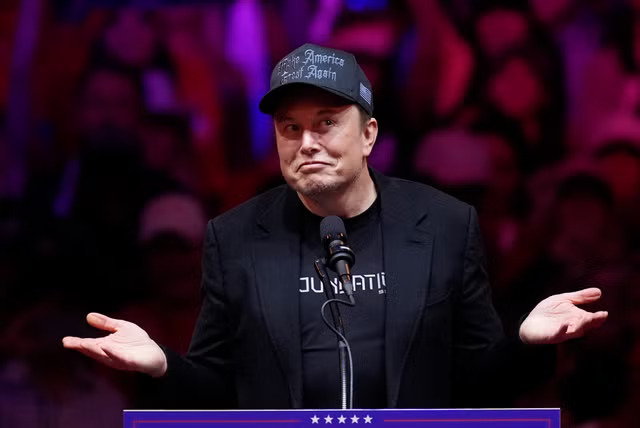
Former President Donald Trump has launched a sweeping initiative to shrink the U.S. government, offering federal employees eight months’ pay to voluntarily resign. The move is part of a broader effort, spearheaded in collaboration with billionaire Elon Musk, to reduce government spending. 

A memo from the Office of Personnel Management (OPM) informed federal workers that they have until February 6 to decide whether to accept the severance package. The plan, known as the “deferred resignation” program, aims to cut up to 10 percent of the federal workforce, excluding employees in immigration, national security, and the U.S. Postal Service. 

While the total impact remains uncertain, the U.S. government employs more than three million people, and significant job cuts could disrupt operations across multiple agencies. 

The OPM memo also hinted at future downsizing, stricter workplace conduct policies, and reduced remote work opportunities. 

Federal employee unions have strongly criticized the initiative, warning that it could force workers out through fear and intimidation. 

“It is clear the Trump administration’s goal is to turn the federal government into a toxic environment where workers cannot stay even if they want to,” said Everett Kelley, president of the American Federation of Government Employees. 

The National Treasury Employees Union, representing 150,000 federal workers, urged its members not to resign, stating, “The email is designed to entice or scare you into resigning… We strongly urge you not to resign in response.” 

The subject line of the OPM email, “Fork in the Road,” mirrored a phrase used by Elon Musk in a 2022 email to Twitter employees during mass layoffs. Musk later referenced the memo in a post on X (formerly Twitter) and urged federal workers to “hit send” to accept the resignation offer. 

The memo included a “deferred resignation letter,” allowing employees to resign while retaining full pay and benefits until September 30. They would also be exempt from in-person work requirements. 

In a separate move, Trump’s administration has paused federal grants and loans as part of a wider strategy to cut government expenditures. The Office of Management and Budget (OMB) issued a directive on Monday, instructing agencies to temporarily halt spending that may conflict with the administration’s policy agenda. 

The funding freeze has already triggered legal action. On Tuesday, non-profit organizations reported being unable to access federal systems for payroll and operational expenses. 

Within minutes of the freeze taking effect, U.S. District Judge Loren L. AliKhan issued an emergency order blocking the policy, pending further legal review. A court hearing is scheduled for Monday to determine whether the freeze will be permanently overturned.