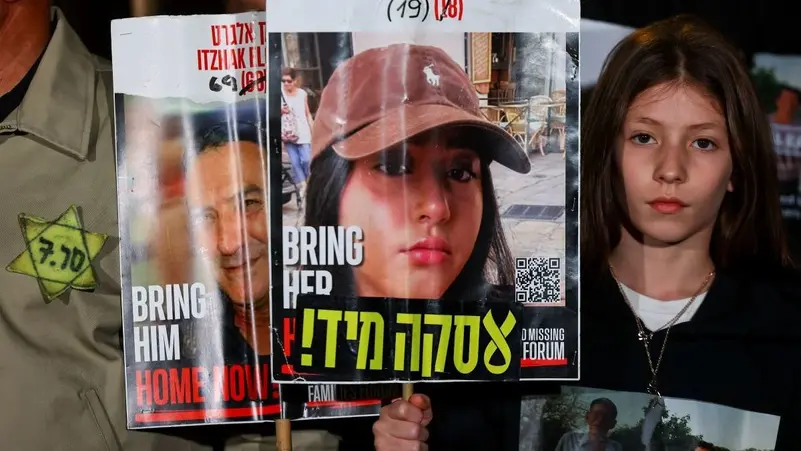
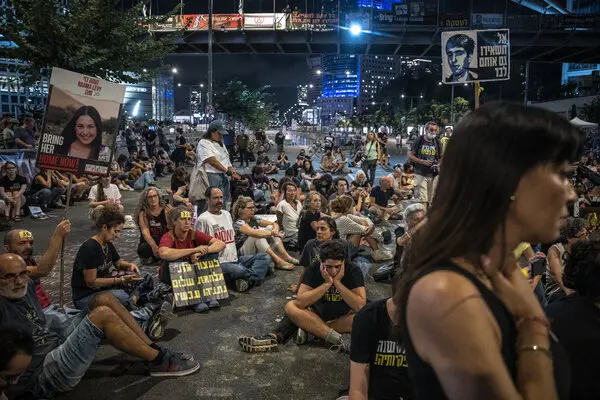
Hannah Katzir, a 78-year-old Israeli woman freed from Hamas captivity during last year’s brief ceasefire, has died, the Hostages Families Forum announced Tuesday. Her daughter attributed the death to trauma endured since the October 7 attack, stating her mother’s “heart could not withstand the terrible suffering.”
Katzir’s ordeal began when Hamas militants raided her home in Kibbutz Nir Oz, killing her husband Rami and kidnapping her son Elad, whose body was recovered by Israeli forces in April after being killed in captivity. She spent 49 days as a hostage before her November 2023 release, after which she was hospitalized with heart issues reportedly caused by “difficult conditions and starvation” during captivity.
She was among 250 hostages taken during Hamas’s October 7 attack that killed approximately 1,200 people. Israel’s subsequent military response in Gaza has resulted in over 45,000 Palestinian deaths, according to the Gaza Health Ministry, which notes that more than half the casualties were women and children.
Oren and Alon Alexander, once prominent real estate brokers known for their elite social circles in New York and Florida, are being held in federal custody after being deemed flight risks. The 37-year-old Israeli-American twins, along with their older brother Tal, face state and federal charges of sex trafficking and gang rape involving at least 40 women.
The brothers attempted to secure release on bail by proposing a $115 million loan package backed by their parents’ properties as collateral. However, this request was denied. Federal prosecutors argued that the Alexanders posed both a flight risk and a danger to the community. Southern District of Florida Judge Ellen D’Angelo scheduled a detention hearing for December 20.
The case continues to grow, with additional women coming forward to report assaults allegedly committed by the brothers.
One accuser, a 38-year-old woman identified as Maria S., told Miami police on Thursday that Oren Alexander raped her in 2014 at the Versace Mansion in Miami Beach. Another woman in New York alleged that the Alexander twins took turns raping her after their birthday party, two years prior to Maria’s assault.
A third accuser, identified only as “Jane,” revealed to the Miami Herald that the twins raped her at their Manhattan apartment in Chinatown. She expressed guilt for not coming forward sooner, saying she had remained silent after the assault.
The Alexanders are facing multiple charges in New York for allegedly luring, drugging, and violently raping dozens of women over more than a decade. The brothers are expected to appear in Manhattan federal court as the investigation unfolds.
A stampede during palliative distribution at the Obijackson Centre in Okija, Anambra State, has resulted in multiple casualties and injuries, with women and children among the primary victims. The Saturday incident occurred as crowds struggled to enter the facility where rice, vegetable oil, and money were being distributed.
The aid materials were provided by local community member Chief Ernest Obiejesi (Obijackson). Eyewitnesses report several people collapsed in the chaos, with at least one woman in critical condition after being rushed to the hospital. The exact number of casualties remains unconfirmed.
The scene of the incident was marked by scattered footwear belonging to victims caught in the crush at the entrance gate. Officials have since restored order, and the distribution of palliatives has resumed.
Myanmar’s Arakan Army (AA), an ethnic rebel group, announced on Friday that it has seized the military’s western regional command in Rakhine state, marking a significant setback for the junta.
In a statement shared via its Telegram channel, the AA stated it had “completely captured” the western command in Ann following weeks of intense fighting. If confirmed, this would be the second regional military command to fall to ethnic rebels within five months—a significant blow to the military’s control.
The Myanmar military, known as the Tatmadaw, operates 14 regional commands across the country, many of which are currently engaged in battles with entrenched ethnic rebel groups or the newer “People’s Defense Forces” (PDFs) that emerged in response to the military’s 2021 coup.
Fighting has escalated in Rakhine state since November last year, when the AA launched attacks on security forces, breaking a ceasefire that had largely held since the coup. The Arakan Army has since gained control of large swathes of territory in the strategically important state, disrupting commerce and isolating the state capital, Sittwe.
Photos posted by the AA on its Telegram channel showed a man claimed to be the Ann deputy regional commander in the custody of its fighters. However, this information has not been independently verified, and AFP has sought comment from the AA’s spokesperson.
Due to patchy internet and phone services, AFP was also unable to contact residents in the Ann area for confirmation.

Historically, Myanmar’s military had never lost a regional command until August of this year, when the Myanmar National Democratic Alliance Army captured the northeastern command in Lashio, Shan state.
Myanmar’s borderlands have long been hotspots of conflict, with numerous ethnic armed groups fighting the military for greater autonomy and control over lucrative natural resources since the country’s independence from Britain in 1948.
The ongoing conflict in Rakhine state has compounded economic hardship. Last month, the United Nations warned of an impending famine in the region, as the clashes disrupt commerce and agricultural activities.
“Rakhine’s economy has stopped functioning,” the UN Development Program reported, forecasting “famine conditions by mid-2025” unless the worsening food insecurity is addressed.
Zimbabwean President Emmerson Mnangagwa on Friday unveiled a new land policy enabling Black farmers to gain direct ownership of farmland seized from white farmers during the country’s contentious land reforms. The policy allows beneficiaries to sell their land or use it as collateral for bank loans, a significant shift in Zimbabwe’s approach to land tenure.
Under the new framework, land ownership can only be transferred between “Indigenous Zimbabweans,” referring to Black citizens, with government approval. Previously, resettled farmers were prohibited from transferring or selling land, as it was deemed state property.
The land reforms, initiated in 2000 under the late President Robert Mugabe, saw tens of thousands of Black farmers occupy white-owned farms. Mugabe argued the reforms were necessary to correct colonial-era injustices that concentrated most fertile land in the hands of a white minority.
However, the resettled farmers were unable to use their land as collateral, leaving banks unwilling to provide loans. This restriction hindered agricultural productivity and contributed to Zimbabwe’s economic decline.
At an event near Kwekwe city, Mnangagwa distributed title deeds to a handful of farmers, including himself, symbolizing the policy’s official launch. He also announced the establishment of a technical committee to expedite the issuance of deeds to other resettled Black farmers.
“This policy will unlock the value of our land, making it bankable and transferable,” Mnangagwa said, emphasizing that secure land tenure would enable farmers to access credit facilities and elevate many out of poverty.
The land reforms forcibly displaced approximately 4,500 white farmers, often through violent means led by independence war veterans. Human Rights Watch documented cases of assault, rape, and killings during the seizures.
The upheaval devastated Zimbabwe’s commercial farming sector, transforming a once self-sufficient agricultural economy into one reliant on donor aid. Although agricultural output has improved in recent years, droughts remain a significant challenge.
Mnangagwa expressed optimism that the new policy would address financing issues, enabling farmers to invest in productivity and infrastructure.
In a related move, Finance Minister Mthuli Ncube announced in October that Zimbabwe would compensate local and foreign white farmers for land and property lost during the land seizures.
Russia’s aviation authorities report Kazan’s airport has resumed operations following a Saturday morning Ukrainian drone attack that temporarily disrupted air traffic. The Defense Ministry confirmed three waves of drones targeted the city, located 800 kilometers east of Moscow, between 7:40 and 9:20 a.m.
Russian officials claim their forces neutralized six drones, with three destroyed by air defense systems and three disabled through electronic warfare. While local authorities reported no casualties, unverified footage from the security services-linked Baza Telegram channel showed a drone striking a high-rise building, creating a large explosion.
The incident prompted temporary airport closures in Izhevsk and Saratov, though operations have since resumed at all affected facilities. Kazan’s mayor announced the cancellation of weekend mass events and offered temporary accommodation to evacuees.
Russian foreign ministry spokeswoman Maria Zakharova characterized the attack as Ukraine “taking out its impotent anger for real military defeats on the peaceful population of Russia.”
A missile launched from Yemen struck the Tel Aviv-Jaffa area early Saturday after Israel’s military failed to intercept it, resulting in 14 people suffering minor shrapnel injuries. Israeli emergency services confirmed the casualties were transported to local hospitals.
The Iran-aligned Houthi movement claimed responsibility, stating they had targeted a “military target” in Jaffa. Israeli police confirmed reports of a missile impact in a Tel Aviv-area town, though specific location details were not disclosed.
This attack follows a pattern of Houthi strikes against Israel, which the Yemen-based group describes as solidarity actions with Palestinians in Gaza. Israel responded Thursday with strikes on Houthi-controlled ports and energy facilities in Yemen, warning of further retaliation.

Billionaire Elon Musk, slated to advise U.S. President-elect Donald Trump, on Friday demanded German Chancellor Olaf Scholz step down following a deadly car-ramming attack at a Christmas market in Magdeburg.
“Scholz should resign immediately,” Musk posted on his social media platform, X, adding: “Incompetent fool.”
Musk’s comments came in response to reports of the attack, where a vehicle plowed into a crowd of holiday revelers, killing at least two people and injuring dozens, according to local officials.
Earlier in the day, Elon sparked controversy by intervening in Germany’s election campaign, endorsing the far-right Alternative for Germany (AfD) party. “Only the AfD can save Germany,” Musk wrote on X.
The AfD, currently polling second, has gained traction with its anti-immigration platform. However, Germany’s mainstream parties have ruled out forming coalitions with the AfD at the national level.
The German government acknowledged Musk’s remarks but declined to comment further during a press briefing.
Musk, the world’s richest individual, has previously supported anti-immigration movements in Europe. Last year, he criticized Germany’s migration policies and voiced approval for the AfD.
In recent weeks, Musk has also criticized Italy’s judiciary, calling for the removal of judges who questioned measures to curb irregular immigration.

Additionally, Musk has been seen aligning with other European right-wing leaders. This week, British Reform UK party leader Nigel Farage shared a photo of himself with Musk at Donald Trump’s Florida residence, noting ongoing discussions about financial backing.
Ukrainian drones targeted the Russian city of Kazan on Saturday, prompting temporary airport closures and cancellations of public events, according to Russian media and aviation authorities.
State news outlets reported that three waves of drones attacked a residential complex in Kazan, located approximately 500 miles (800 km) east of Moscow. The Russian Defense Ministry confirmed the attacks occurred between 7:40 a.m. and 9:20 a.m. (0440-0620 GMT).
No casualties were reported, officials said. Kazan Mayor Ilsur Metshin announced via Telegram that all planned mass events in the city would be canceled over the weekend. Authorities are providing temporary accommodation for affected residents.
The Baza Telegram channel, which has ties to Russia’s security services, shared unverified footage showing an aerial object crashing into a high-rise building, resulting in a large fireball.
Following the attack, Kazan Airport suspended all flight arrivals and departures temporarily, Russia’s aviation regulator Rosaviatsia confirmed via Telegram.
Rosaviatsia also imposed temporary restrictions at two other airports: Izhevsk, northeast of Kazan, and Saratov, located 400 miles (650 km) to the south. Restrictions at Saratov were later lifted.
A car-ramming attack at a Christmas market in Magdeburg on Friday evening left at least five people dead and more than 200 injured, officials said. Authorities arrested a 50-year-old Saudi national, suspected of driving the car into the crowd, in connection with the incident.
The attack, which occurred as market visitors celebrated the festive pre-Christmas season, has heightened security concerns and reignited debate over migration policies amid an election campaign in Germany, where far-right parties are gaining ground in opinion polls.
Chancellor Olaf Scholz expressed sorrow and outrage during a visit to the city in the former East Germany. “What a terrible act it is to injure and kill so many people with such brutality,” Scholz said after laying a white rose at a local church to honor the victims. He confirmed that over 200 people were injured, with nearly 40 in critical condition.
German authorities are investigating the suspect, identified in local media as Taleb A., a Saudi doctor who has lived in Germany for almost two decades. Police searched his home overnight, but the motive for the attack remains unclear.
A Saudi official told Reuters that the kingdom had warned German authorities about the suspect after he reportedly posted extremist content on his X account, threatening peace and security.
The suspect is also alleged to have shown sympathy for Germany’s far-right Alternative for Germany (AfD) party, according to a report by Der Spiegel. However, the magazine did not specify the source of this information.
Germany’s domestic intelligence agency declined to comment on the ongoing investigation, while FAZ newspaper noted that it had interviewed the suspect in 2019, describing him as an anti-Islam activist. “People like me, who have an Islamic background but are no longer believers, are met with neither understanding nor tolerance by Muslims here,” he was quoted as saying.
Andrea Reis, who was at the market with her daughter Julia on Friday, recounted their narrow escape. “I said, ‘let’s go and get a sausage,’ but my daughter wanted to keep walking. If we’d stayed, we might have been in the car’s path,” she said, tearfully recalling the chaos. “Children screaming, crying for mama. You can’t forget that.”
The attack has added urgency to Germany’s heated political climate ahead of snap elections on February 23. Scholz’s Social Democrats are trailing the far-right AfD and the leading conservative opposition in the polls.
AfD leaders Alice Weidel and Tino Chrupalla condemned the attack in a joint statement. “The terrible attack on the Christmas market in Magdeburg during the peaceful pre-Christmas season has shaken us,” they said.
Dirk Wiese, a prominent Social Democrat lawmaker, cautioned against jumping to conclusions about the suspect’s motives. “Now we have to wait for the investigations. It seems that things are different here than was initially assumed,” Wiese told the Rheinische Post newspaper.