Home Blog Page 600

FBI Thwarts Alleged Drone Attack Plot Against Nashville Power Grid

0

Federal agents arrested a Tennessee man with white nationalist ties who allegedly planned to use an explosives-laden drone to destroy a Nashville electrical substation, the Department of Justice announced Monday.

Skyler Philippi, 24, believed he was about to launch an attack Saturday when authorities arrested him at his intended launch site, where he had arrived with what he thought was a drone carrying three pounds of C-4 explosives, according to court documents. The explosives had been provided by undercover FBI employees as part of a months-long investigation.

“As charged, Skyler Philippi believed he was moments away from launching an attack on a Nashville energy facility to further his violent white supremacist ideology – but the FBI had already compromised his plot,” Attorney General Merrick B. Garland said in a statement.

Court records unsealed Monday detail how Philippi allegedly told an FBI confidential source in July that he wanted to attack multiple substations to “shock the system.” The source introduced him to undercover FBI agents who gathered evidence about his plans over several months.

FBI Special Agent Angelo DeFeo wrote that Philippi had “researched previous attacks on electric substations and concluded that attacking with firearms would not be sufficient.” Instead, investigators say, he developed a plan to fly an explosive-laden drone into the facility.

The investigation revealed Philippi’s alleged ties to several white nationalist organizations, including the National Alliance, which advocates for eradicating Jewish people and other races. According to court documents, Philippi shared excerpts of his manifesto with undercover agents in September, focusing on white race preservation.

The case highlights growing concerns about threats to America’s power infrastructure, which includes more than 6,400 power plants and 450,000 miles of high-voltage transmission lines. Law enforcement officials note that extremist groups increasingly view attacking the power grid as a means of causing widespread disruption.

Philippi faces federal charges and is scheduled to appear in court November 13. A federal public defender has been appointed to represent him, though requests for comment went unanswered Monday.

AP

Nigerian President Orders Release of Youth Protesters After Courtroom Crisis

0

Nigerian President Bola Tinubu ordered the immediate release of 27 detained teenagers Monday after viral footage of several youths collapsing during their first court appearance sparked nationwide outrage over their treatment.

The teenagers, aged 14 to 18, were among 76 suspects held for nearly three months following their arrest during August’s #EndBadGovernance protests, which erupted amid growing anger over Nigeria’s cost of living crisis. The demonstrations turned violent in some areas as protesters clashed with security forces, resulting in disputed casualty figures — police report seven deaths, while rights groups claim 23 people died. Authorities arrested nearly 700 people during the unrest.

Presidential spokesman Bayo Onanuga said Tinubu directed the humanitarian affairs ministry “to ensure the safe return of all the minors to their families,” adding that an investigation has been launched into their prolonged detention. Information Minister Mohammed Idris told Reuters that treason charges against the youth have been dropped, though Onanuga noted the president’s wish that the releases not prejudice ongoing legal proceedings.

The teenagers appeared in an Abuja court Friday facing serious charges, including accusations of flying Russian flags and plotting to overthrow the Nigerian government. During the proceedings, four of the young defendants collapsed, apparently from malnourishment, requiring immediate medical attention. Video footage of the incident went viral on social media, prompting intense criticism of their treatment by authorities.

Rights organizations responded forcefully to the revelations. Enough is Enough, a Nigerian advocacy group, condemned what it called “institutional child abuse,” while Amnesty International described the detention as “one of the deadliest attempts to suppress freedom of assembly” in the country’s recent history.

Judge Permits Musk’s Controversial Voter Payment Program to Continue

0

A Philadelphia judge ruled Monday that Elon Musk’s political action committee can continue its controversial program of awarding $1 million daily to voters in swing states, despite legal challenges from local prosecutors.

The ruling came after a surprising revelation in court that America PAC has been selecting recipients rather than choosing them randomly as widely believed. “The $1 million recipients are not chosen by chance,” said Chris Gober, the group’s attorney, during the hearing. “We know exactly who will be announced as the $1 million recipient today and tomorrow.”

Philadelphia District Attorney Lawrence Krasner had sought to halt what he termed “an illegal lottery,” filing suit after Musk announced plans to distribute the money to one voter daily until Election Day. Judge Angelo Foglietta issued the ruling hours after the hearing without immediately providing reasoning.

Gober disclosed that the program’s final recipient would be from Michigan, while the group announced on X, formerly Twitter, that an Arizona resident named Joshua had received Monday’s payment. The program is set to conclude Tuesday.

The case highlighted discrepancies between the program’s public portrayal and its actual operation. When Musk introduced the initiative last month, he suggested recipients would be randomly selected from those signing a petition supporting Constitutional amendments. “We are going to be awarding $1m randomly to people who have signed the petition, every day, from now until the election,” Musk said at a campaign event.

Chris Young, America PAC’s director, testified that recipients undergo screening to ensure their values align with the organization’s goals. Reuters reported that winners must sign non-disclosure agreements regarding their contract terms.

The controversy emerged as Musk campaigns actively for Republican presidential candidate Donald Trump in battleground states, particularly Pennsylvania, where polls show Trump tied with Democratic rival Vice President Kamala Harris.

The U.S. Justice Department had previously warned the program might violate laws prohibiting payment for voter registration. A prosecutor from Krasner’s office characterized Gober’s courtroom statements as “a complete admission of liability.”

Musk, who owns X and leads SpaceX, did not attend the hearing. During court proceedings, prosecutors presented video footage where Musk stated that “all we ask” is for winners to serve as group spokespeople.

The ruling allows the controversial program to complete its planned run, despite ongoing questions about its impact on electoral integrity and campaign finance regulations.

Turkish National Arrested in Miami Over Venezuelan Oil Sanctions Evasion

0
FILE - Venezuela's President Nicolas Maduro addresses government loyalists gathered at the presidential palace in support of his reelection one month after the presidential vote, in Caracas, Venezuela, Aug. 28, 2024. (AP Photo/Ariana Cubillos, File)

Federal authorities arrested Turkish businessman Taskin Torlak, 37, in Miami on Monday as he attempted to return to Turkey, charging him with orchestrating an elaborate scheme to help Venezuela’s state-run oil company bypass U.S. sanctions.

According to Justice Department documents, Torlak operated multiple companies that facilitated sanctioned oil shipments beginning in 2020. Prosecutors allege he collaborated with unnamed co-conspirators and companies from Ukraine, China, Indonesia, and other countries to transport Venezuelan crude oil when most Western entities avoided such transactions due to U.S. sanctions targeting President Nicolas Maduro’s regime.

Venezuela’s President Nicolas Maduro

“We could use one of the clean names to avoid money getting stuck somewhere,” Torlak allegedly wrote to a co-conspirator, revealing efforts to conceal transaction beneficiaries and trick U.S. banks into processing payments for the illegal oil transport.

The scheme allegedly employed sophisticated evasion tactics, with perpetrators disabling mandatory vessel tracking systems during oil transport, frequently changing vessel registries to use flags of convenience, and creating complex payment structures to hide Venezuelan connections.

“The Justice Department will continue to hold accountable those involved in criminal efforts to circumvent sanctions imposed on the Maduro regime,” said Assistant Attorney General Matthew G. Olsen in announcing the arrest.

The case highlights ongoing U.S. efforts to enforce sanctions imposed after Maduro’s contested 2018 re-election, when key opponents were barred from running. Tensions escalated this year after Maduro claimed victory in a third six-year term amid opposition claims of election fraud, prompting new U.S. sanctions against officials accused of electoral interference and human rights violations.

Court records did not indicate whether Torlak had secured legal representation. The arrest marks a significant development in U.S. efforts to maintain pressure on Venezuela’s oil sector, a crucial source of revenue for Maduro’s government.

Thousands in Georgia Rally Against Disputed Parliamentary Election

0

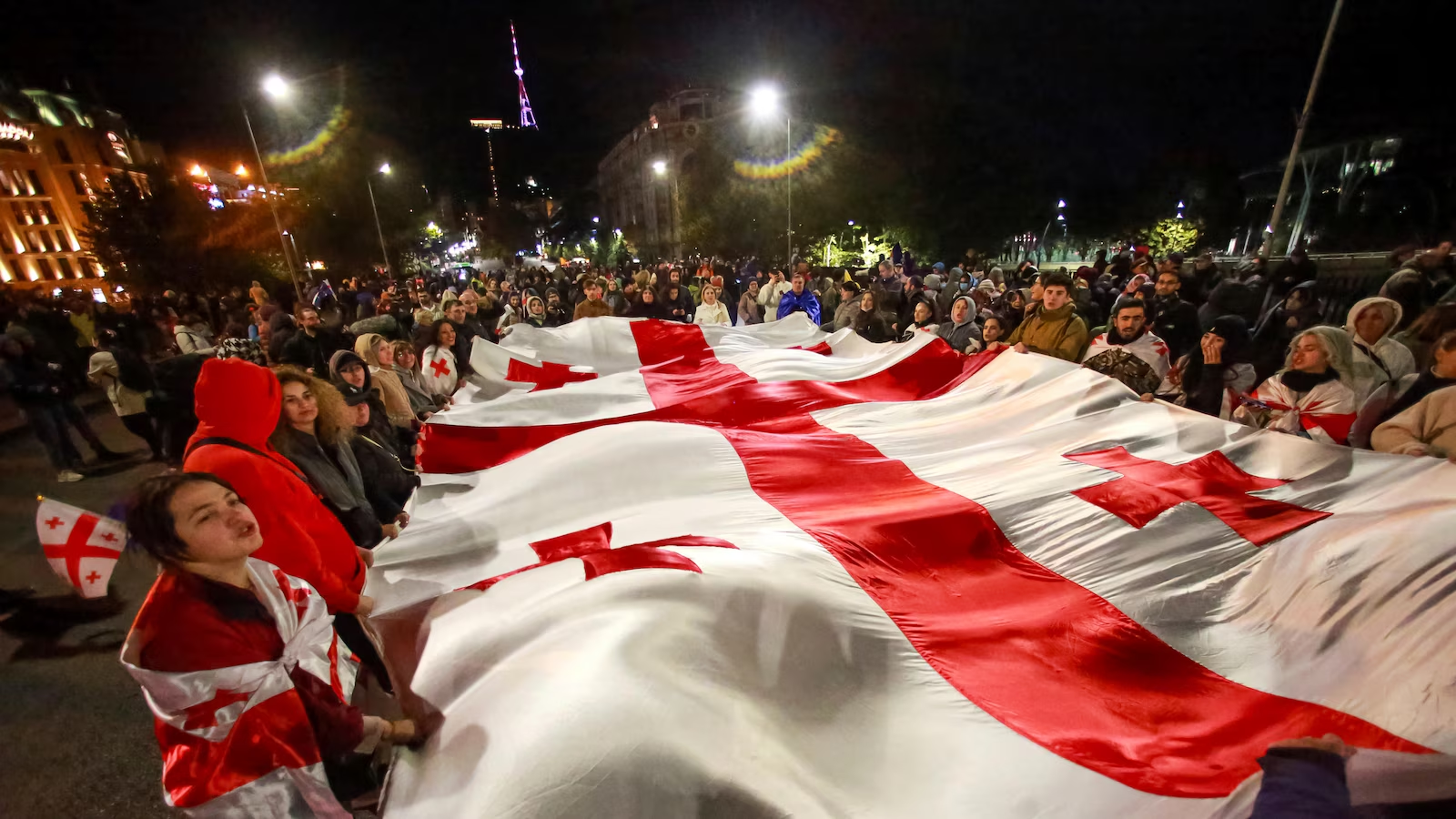
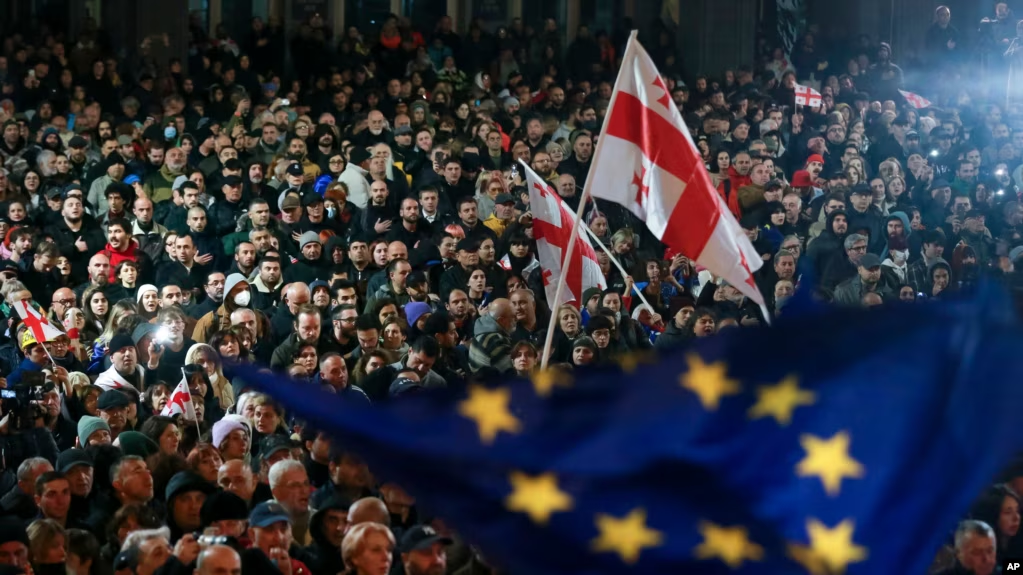
Thousands of opposition supporters gathered outside Georgia’s parliament for a second consecutive Monday to protest what they claim was a rigged October 26 election, demanding new internationally supervised polls amid allegations of Russian interference.

Demonstrators waving Georgian and European Union flags faced rows of riot police in a show of mounting political tensions in this South Caucasus nation of 3.7 million. Opposition leaders pledged to boycott parliament and maintain regular protests until their demands for fresh elections and an investigation into voting irregularities are met.

The Central Election Commission declared the ruling Georgian Dream party victorious with approximately 54% of the vote, though opposition groups and President Salome Zourabichvili have rejected these results. Zourabichvili, whose role is largely ceremonial, accused Moscow of pressuring Georgia to prevent its integration with the European Union and has appealed for support from Washington and Brussels.

European election observers reported the vote occurred in a “divisive” environment marked by bribery, double voting, and physical violence, with irregularities particularly prevalent in rural areas. The United States and EU have called for a thorough investigation, while Moscow has denied allegations of interference.

The controversy surrounds Georgian Dream, founded by billionaire Bidzina Ivanishvili, who amassed his wealth in Russia. Critics accuse the party, in power since 2012, of increasingly authoritarian tendencies and pro-Moscow leanings, pointing to recent legislation mirroring Russian laws restricting free speech and LGBTQ+ rights.

Georgia’s EU membership aspirations have suffered setbacks, with Brussels indefinitely suspending the application process following the country’s adoption of a Russian-style “foreign influence law” in June. Many citizens viewed the parliamentary election as a crucial referendum on Georgia’s European integration prospects.

While Georgian Dream maintains its commitment to EU accession, it simultaneously advocates “resetting” relations with Russia, which has maintained military presence in two breakaway Georgian regions since a brief 2008 war.

The government’s response to election fraud allegations has faced immediate skepticism. When prosecutors launched an investigation last week, opposition leaders dismissed it as compromised, noting the prosecutor’s appointment by the Georgian Dream-controlled parliament.

“This election represents a critical moment for Georgia’s democratic future,” said one opposition leader at the protest. “We cannot allow our nation’s sovereignty and European aspirations to be undermined by foreign influence and domestic corruption.”

VOA

Terror Trial Begins Over French Teacher’s Killing in Freedom of Expression Dispute, Who Made Caricature of the Prophet

0

Eight defendants appeared in a Paris court in France on Monday to face terrorism charges in connection with the 2020 beheading of teacher Samuel Paty, who was killed after showing caricatures of the Prophet Mohammed during a lesson on freedom of expression.

The trial, which follows last year’s conviction of six teenagers for their role in identifying Paty to his killer, marks a pivotal moment in France’s ongoing struggle with religious extremism and its commitment to secular values.

Paty, 47, was murdered outside his school near Paris on October 16, 2020, by Abdoullakh Anzorov, an 18-year-old Russian of Chechen origin who was later killed by police. The attack occurred amid widespread Muslim protests over the republication of Prophet Mohammed caricatures by satirical newspaper Charlie Hebdo.

Central to the trial is Brahim Chnina, father of a 13-year-old student who falsely claimed she was excluded from Paty’s class during the lesson. Prosecutors say Chnina launched an online campaign against Paty, sharing the school’s address and calling for the “sick man” to be fired. Court documents reveal his daughter had fabricated her involvement in the class.

Another key defendant, Abdelhakim Sefrioui, who presented himself as a spokesman for French imams, faces charges for recording a video outside the school denouncing Paty as a “thug.” Sefrioui, founder of the now-dissolved pro-Hamas Cheikh Yassine Collective, could face 30 years in prison if convicted.

Two of Anzorov’s friends, Naim Boudaoud and Azim Epsirkhanov, face potential life sentences for allegedly helping purchase weapons used in the attack. Boudaoud is also accused of driving Anzorov to the school. Both claim they were unaware of his murderous intentions.

The remaining defendants are charged with criminal terrorist conspiracy for communications with Anzorov through pro-jihad Snapchat groups. One reportedly sent smiling emojis after images of Paty’s decapitation were shared online.

Court documents show Paty’s lesson was part of a mandated civics education module on freedom of expression. He had offered students the option to leave the classroom before showing the caricatures, which many Muslims consider sacrilegious.

The attack, which left an indelible mark on France, has reinforced the nation’s commitment to secular values and freedom of expression. Several schools now bear Paty’s name in memorial.

The trial comes amid continued tensions over religious extremism in France. Last October, another teacher was killed by a radical Islamist from Russia’s Ingushetia region, highlighting ongoing security concerns in French schools.

Defense attorneys for Sefrioui argue for acquittal, claiming the accused’s video was not seen by the attacker. Chnina maintains his messages were not intended to incite violence, though investigators found Anzorov discovered Paty through jihadist social media channels despite living 100 kilometers from the school.

Al-Shabab Attack Kills Two African Union Peacekeepers in Somalia

0

Two African Union soldiers were killed and another wounded Sunday when al-Shabab militants launched a mortar attack on a military base within Mogadishu’s international airport perimeter, Somalia officials confirmed.

Mohamed El-Amine Souef, head of the African Union Transition Mission in Somalia (ATMIS) and Special Representative of the AU Commission Chairperson, condemned the attack on the Halane Base Camp. Sources told VOA’s Horn of Africa service that the casualties were Ugandan soldiers, though official statements did not specify their nationality.

“The heinous attack will not deter us and the Somali security forces from pursuing lasting peace in Somalia,” Souef declared in a statement. “We reaffirm our unwavering commitment to combat terrorism and build a peaceful and prosperous Somalia.”

Military officials reported that attackers fired at least four mortar rounds, likely using a 107mm rocket system. Following the incident, AU senior leadership conducted an inspection of the blast sites.

Al-Shabab claimed responsibility for the attack through its media channels, asserting they had killed both “white and black officers.” Though driven from Mogadishu in 2011, the militant group maintains the capability to launch periodic mortar strikes against the airport complex, which houses both AU forces and foreign diplomatic missions.

The attack demonstrates al-Shabab’s continued ability to threaten high-security zones despite years of counterterrorism efforts. The group’s mortar attacks have previously struck civilian areas in Mogadishu, causing civilian casualties.

ATMIS expressed “deepest sympathies and condolences” to the families of the fallen soldiers and wished a swift recovery to the injured servicemember.

5 Dead in Latest Canary Islands Migration Tragedy

0

Spanish Sea Rescue services discovered five bodies floating in waters off the Canary Islands Sunday after their inflatable vessel ruptured approximately 90 kilometers (56 miles) from Lanzarote, marking the latest tragedy in a surge of maritime migration to the Spanish archipelago.

Rescue crews spotted two inflatable boats heading toward the islands, one with a deflated float, prompting an emergency response that saved 97 people. Rescuers deployed two life rafts, successfully evacuating 17 people from one vessel and 80 from another, according to a spokesperson for the rescue services.

The incident occurred during a weekend of intense rescue activity, with state news agency EFE reporting more than 1,500 migrants rescued. In a separate tragedy, EFE reported that at least 48 migrants who departed Mauritania three weeks ago perished attempting to reach the islands. Ten survivors from that vessel were rescued Saturday near El Hierro island.

Late summer weather conditions in the Atlantic, characterized by calm seas and gentle winds off West Africa’s coast, have triggered an increase in departure attempts. Migrants, primarily fleeing extreme poverty and political instability in Africa’s Sahel region, are taking advantage of the favorable conditions despite the journey’s risks.

Government data reveals 32,878 migrants attempted the Atlantic route to the Canary Islands between January and October 15, representing a 39.7% increase from the same period last year. While this route has experienced the fastest growth in irregular migration recently, numbers remain lower than those on the Central Mediterranean route toward Italy.

VOA

Iran Executes Jewish Man Despite Appeals for Clemency

0

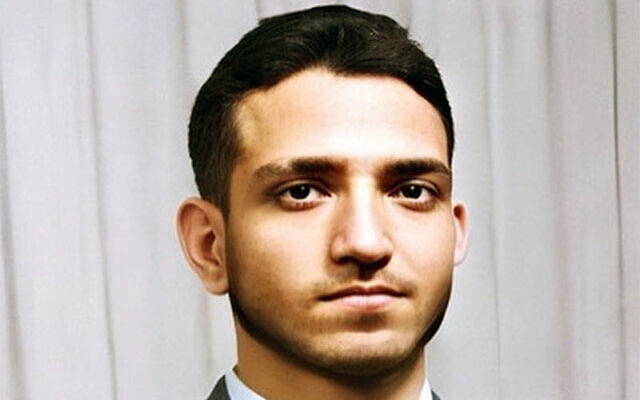
Iranian authorities executed Arvin Nathaniel Ghahremani, a 20-year-old Jewish citizen, on Monday morning at Kermanshah Central Prison, following a two-year campaign by his family and the Jewish community to spare his life, rights groups reported and judiciary officials confirmed.

Ghahremani was convicted of murder following a 2022 street fight, according to the Norway-based Iran Human Rights group. His execution comes amid heightened regional tensions between Iran and Israel.

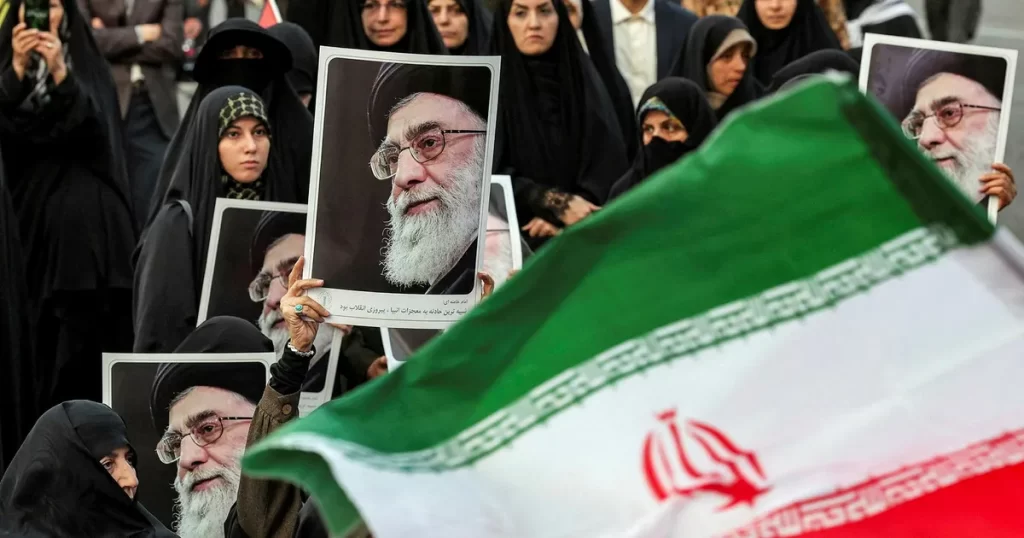
“In the midst of the threats of war with Israel, the Islamic Republic executed Arvin Ghahremani, an Iranian Jewish citizen,” said Iran Human Rights director Mahmood Amiry-Moghaddam. He cited “significant flaws” in the legal proceedings and argued that “institutionalized antisemitism in the Islamic Republic undoubtedly played a crucial role in the execution.”

The case stemmed from a fatal confrontation where Ghahremani allegedly acted in self-defense against Amir Shokri during a dispute over money. According to local media reports, Ghahremani’s defense claimed he was at a gym when Shokri, who owed him money, attacked him with a knife. While Ghahremani managed to wrestle the weapon away, the altercation ended in Shokri’s death.

His family sought to resolve the case through Iran’s Islamic law of retribution, which allows victims’ families to accept blood money in lieu of execution. However, the Mizan Online judiciary website reported that Shokri’s family “refused to give consent” to such an arrangement. Earlier reports suggested that representatives close to Ayatollah Ali Khamenei and the Revolutionary Guard Corps had pressured the victim’s family to reject any financial settlement.

The execution highlights concerns about Iran’s legal treatment of religious minorities. Human Rights Watch notes that Iranian law applies capital punishment differently based on religious identity: while non-Muslims can face execution for killing Muslims under Qisas law, Muslims who kill non-Muslims may avoid similar sentences.

Ghahremani’s mother, Sonia Saadati, had pleaded for mercy. His defense team argued that crucial evidence was omitted from court documents, including his attempts to save Shokri’s life by seeking medical attention.

The execution marks a rare implementation of capital punishment against a member of Iran’s Jewish minority in recent years. While the community numbered around 100,000 before the 1979 Islamic Revolution, a 2016 census showed fewer than 10,000 remaining.

The case unfolds against a backdrop of regional conflict, with Iran recently launching missile attacks against Israel following the outbreak of warfare between Israel and Iranian-backed groups in Gaza and Lebanon. The timing of the execution has drawn additional scrutiny from international human rights observers concerned about the treatment of religious minorities in Iran.

Boeing Workers Vote on Contract to End Production-Halting Strike

0

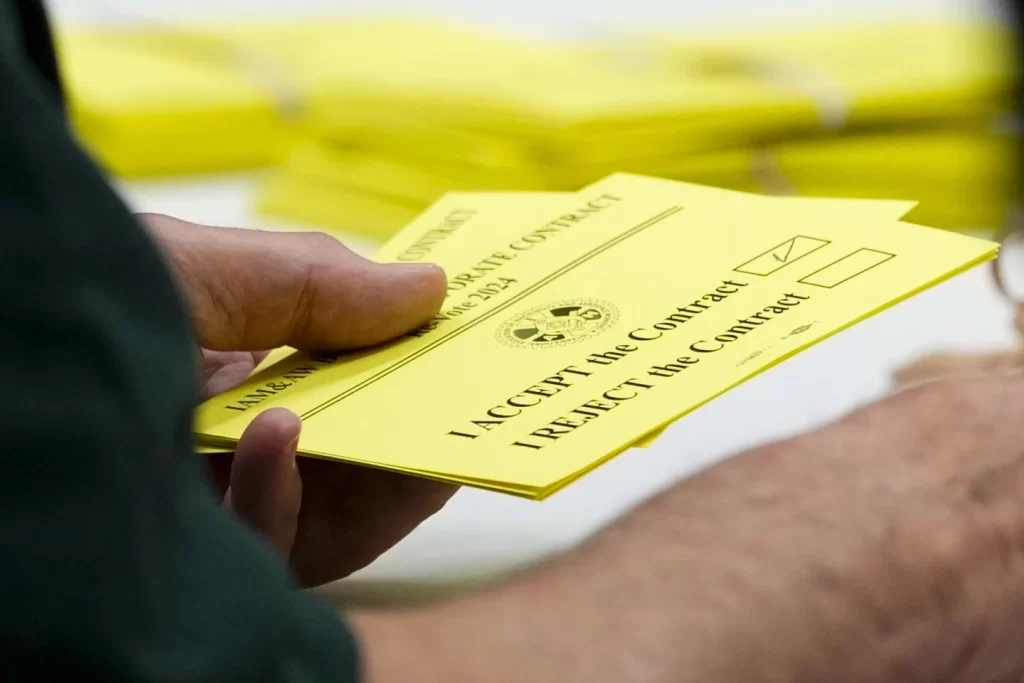
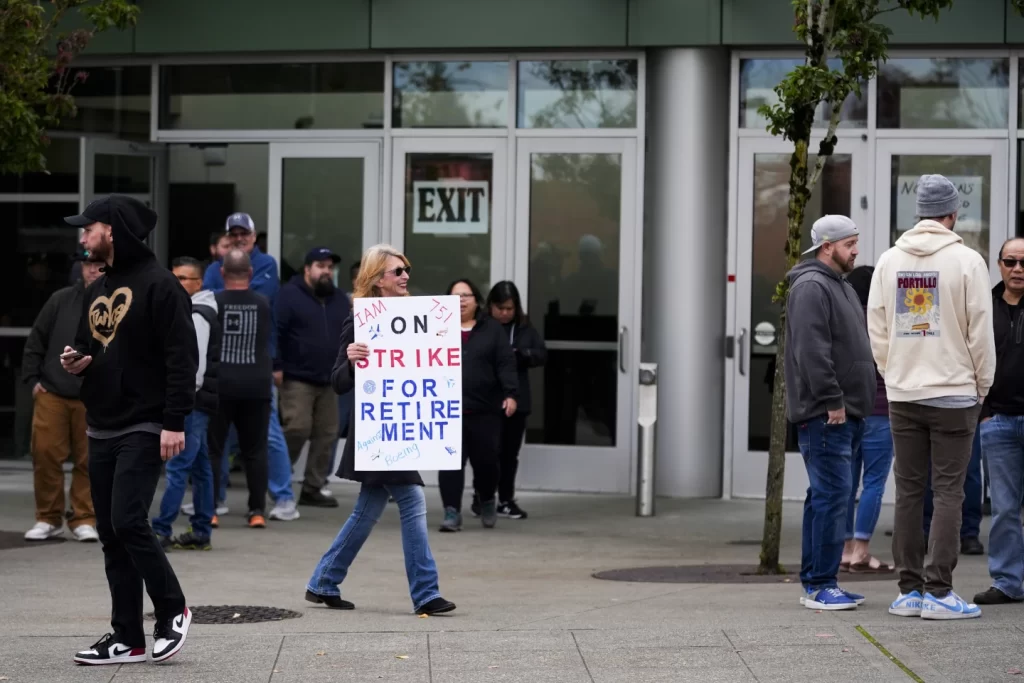
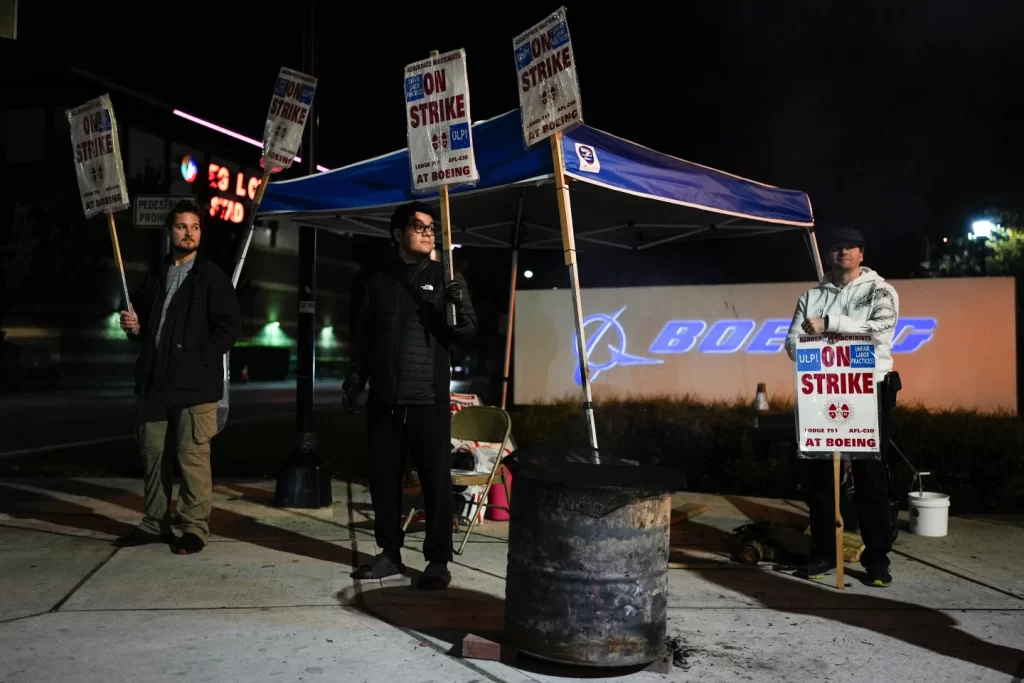
Boeing machinists are voting Monday on a contract proposal that could end their seven-week strike, a labor action that has paralyzed production of most Boeing commercial aircraft and deepened the aerospace giant’s financial challenges.

The International Association of Machinists and Aerospace Workers (IAM) District 751 has endorsed the latest offer, which includes 38% pay raises over four years plus enhanced bonuses. Union leaders say the package represents the best achievable outcome after weeks of negotiations.

“It is time for our members to lock in these gains and confidently declare victory,” union officials stated in announcing the vote. “We believe asking members to stay on strike longer wouldn’t be right as we have achieved so much success.”

The proposed agreement would boost average machinist pay from $75,608 to $119,309 over four years and includes a $12,000 ratification bonus, up from $7,000 in the previous rejected offer. Boeing has also promised to build its next passenger aircraft in the Seattle area, though union officials warn this commitment might be withdrawn if workers reject the deal.

The strike began September 13 when workers overwhelmingly rejected Boeing’s initial 25% wage increase offer with 94.6% voting against. A second proposal offering 35% raises was defeated October 23, though with increasing support at 36%, suggesting to Boeing leadership that a deal was within reach.

Boeing has maintained its firm stance against reinstating traditional pensions, which were frozen nearly a decade ago and remain a key issue for many workers. The company instead offered increased contributions to employees’ 401(k) retirement accounts.

The labor dispute has caught the attention of the Biden administration, with Acting Labor Secretary Julie Su intervening multiple times in negotiations, including last week.

This strike marks the latest challenge in a tumultuous year for Boeing. The company faces multiple federal investigations following January’s Alaska Airlines door plug incident, which led to production restrictions from regulators. New CEO Kelly Ortberg recently announced 17,000 layoffs and a major stock sale to prevent a potential credit downgrade to junk status.

The walkout has severely impacted Boeing’s cash flow by halting deliveries of its popular 737 Max, 777, and cargo-configured 767 aircraft. The company reported a third-quarter loss exceeding $6 billion as the strike continued.

If workers ratify the contract, they would return to work by November 12. Union officials expect to announce voting results Monday night. They have cautioned members that rejecting this offer could lead to less favorable terms in future negotiations.

The vote comes as Boeing grapples with broader challenges, including diminished trust following the 737 Max crashes and subsequent investigations. While Ortberg acknowledges these issues, he points to the company’s $500 billion backlog of orders as evidence of its fundamental strength.