Home Blog Page 620

Israeli Strikes Kill 19 in Gaza as Military Pushes North, Humanitarian Concerns Grow

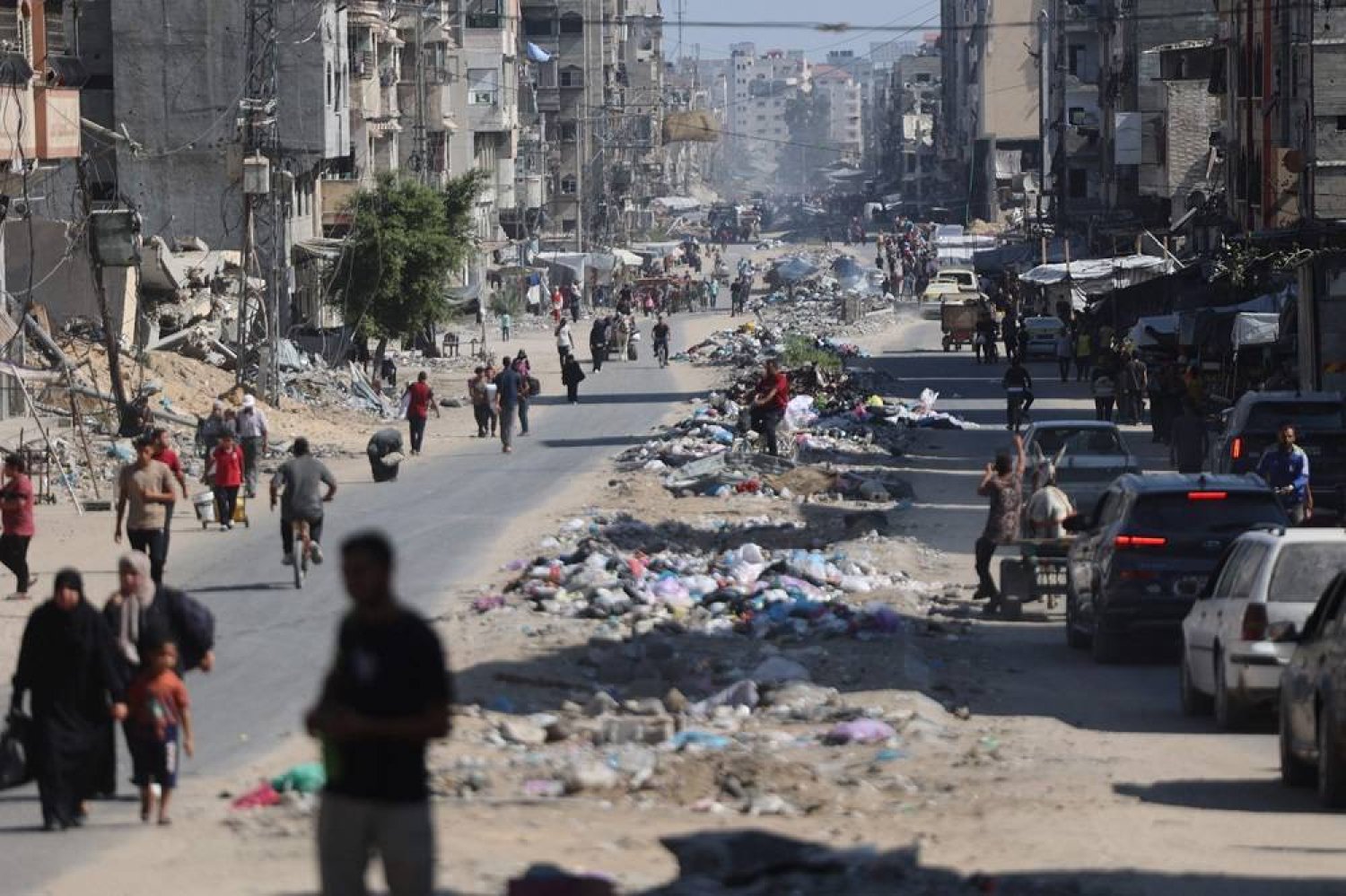
Israeli military strikes in Gaza overnight have resulted in at least 19 Palestinian fatalities, according to medical sources on Saturday. The Israeli forces continue to advance deeper into the Jabalia area, where international relief agencies report thousands of civilians are trapped.

Residents describe ongoing aerial and ground bombardments of Jabalia, the largest of Gaza’s historic refugee camps, located in the northern part of the enclave. The Israeli military has issued new evacuation orders for two neighborhoods on the northern edge of Gaza City, designating the area a “dangerous combat zone.”

Gaza’s Hamas-run interior ministry has urged residents to avoid relocating within northern areas or heading south, claiming continued bombing in areas Israel has declared safe. The Israeli military reports killing dozens of militants and dismantling military infrastructure in Jabalia and nearby areas over the past week.

Palestinian health officials estimate around 150 people have been killed in Jabalia in the past week alone. Friday saw Israeli strikes hit four houses in the area, resulting in approximately 20 deaths and dozens of injuries.

The ongoing military campaign has raised severe humanitarian concerns. UN officials and Palestinian authorities warn of no safe areas in Gaza and voice alarm over critical shortages of food, fuel, and medical supplies in the northern region, with a growing risk of famine.

Since the conflict began a year ago, following a Hamas-led assault on southern Israeli communities, more than 42,000 Palestinians have been killed, according to Gaza’s health ministry. The war has devastated large parts of the enclave.

Amid the continued fighting, UN officials have expressed concern that the Israeli offensive might disrupt the second phase of a polio vaccination campaign scheduled to start next week. The Gaza health ministry announced the campaign would begin Monday in central Gaza Strip areas, lasting three days before moving to other territories.

Man Pleads Guilty to Hate Crime for Vandalizing Islamic Center at Rutgers University

Jacob Beacher, 24, of North Plainfield, has pleaded guilty to a hate crime for vandalizing the Center for Islamic Life at Rutgers University, federal prosecutors announced Thursday. The incident occurred on April 10, coinciding with the Muslim holiday of Eid-al-Fitr.

Beacher, who is not affiliated with Rutgers, admitted to damaging religious property and now faces up to three years in prison. His sentencing is scheduled for February 11.

Initially charged in April with intentional or attempted obstruction of religious practice and making false statements to federal authorities, Beacher’s actions resulted in an estimated $40,000 in damages. Prosecutors reported that he damaged several religious artifacts and items containing holy language from the Quran, Islam’s sacred scripture. Additionally, Beacher stole a Palestinian flag and a charity box belonging to the center.

The break-in occurred around 2:40 a.m. when the site was unoccupied. Two days after the incident, Beacher admitted to the FBI that he was the person seen in surveillance footage near the center but denied breaking in.

This case comes amid a reported spike in bias incidents in New Jersey, as noted by the state attorney general’s office weeks before the vandalism.

U.S. Imposes New Sanctions on Iran’s Energy Sector Following Missile Attack on Israel

The United States has unveiled new sanctions targeting Iran’s energy sector in retaliation for Tehran’s October 1 missile attack on Israel, which involved approximately 180 projectiles. The sanctions, announced Friday, aim to further restrict Iran’s ability to finance its missile programs and support for militant groups.

The measures focus on Iran’s “ghost fleet” of ships and associated companies across multiple jurisdictions, including the United Arab Emirates, Liberia, and Hong Kong, which allegedly facilitate the covert transport and sale of Iranian oil to Asian buyers. Additionally, the U.S. State Department has designated a network of companies based in Suriname, India, Malaysia, and Hong Kong for their alleged involvement in arranging the sale and transport of Iranian petroleum products.

National Security Advisor Jake Sullivan stated that these sanctions “will help further deny Iran financial resources used to support its missile programs and provide support for terrorist groups that threaten the United States, its allies, and partners.”

The new restrictions are designed to block sanctioned entities from accessing the U.S. financial system and prohibit American citizens from engaging in business with them. However, the implementation of energy sanctions remains a delicate issue, as limiting supplies could potentially drive up global commodity prices.

This action comes amid escalating tensions between Iran and Israel, with both countries engaging in a series of retaliatory strikes. Iran claimed its October attack was in response to recent Israeli operations against the Iran-backed Hezbollah in Lebanon.

Treasury Secretary Janet Yellen emphasized the U.S. government’s resolve, stating, “The United States will not hesitate to take further action to hold Iran accountable.”

As regional tensions continue to rise, these sanctions represent the latest effort by the United States to exert pressure on Iran and its allies while supporting Israel’s security interests.

AP

Bangladesh’s Hindus Celebrate Durga Puja Under Tight Security Amid Tensions

Bangladesh’s Hindu community is celebrating its largest festival, Durga Puja, under tight security measures following recent attacks and amid ongoing tensions in the Muslim-majority country.

The weeklong celebration, ending Sunday with the immersion of the Hindu Goddess idols, has been overshadowed by reports of vandalism, violence, and intimidation against Hindus, who make up about 8% of Bangladesh’s population of nearly 170 million.

Supriya Sarker, a schoolteacher participating in the Kumari Puja in Dhaka’s Uttara district, expressed concern: “It is a challenging time for us Hindus. We faced problems in the past as well, but we did not see such escalation earlier.”

The Bangladesh Hindu, Buddhist, Christian Unity Council reported 2,010 incidents of communal violence targeting minorities, mostly Hindus, between August 4 and 20. These incidents included killings, rapes, and destruction of property and temples.

Security concerns have been heightened following recent political changes, including the ousting of former Prime Minister Sheikh Hasina and the installation of interim leader Muhammad Yunus. Minority communities have criticized the current government for inadequate protection.

Despite promises of security from Home Affairs Adviser Mohammad Jahangir Alam Chowdhury and Army Chief Gen. Waker-Uz-Zaman, tensions remain. Recent incidents include the arrest of members of an Islamic cultural group for singing revolutionary songs at a Hindu temple and a firebomb attack on a temple in Dhaka.

Jayanta Kumar Dev, president of the Sarbajanin Puja Committee, confirmed reports of attacks on temples and idols before the festival’s official start on October 9.

While some festival-goers, like university student Arpita Barman, remain optimistic about religious harmony, others express concern over the need for such extensive security measures during a religious celebration.

As the festival concludes, authorities have stated that special security measures, including military deployment, will remain in place, highlighting the delicate balance between religious freedom and security in Bangladesh’s diverse society.

Colorado Officer Who Fatally Shot Black Man Holding Cellphone Will Not Face Charges

District Attorney John Kellner announced Friday that Officer Michael Dieck will not be prosecuted for the fatal shooting of Kilyn Lewis, a Black man who was holding a cellphone mistaken for a gun during an arrest attempt in Aurora, Colorado.

The incident occurred on May 23 when police were trying to apprehend Lewis, who was wanted in connection with a shooting in Denver. Kellner’s decision letter states that Dieck believed Lewis was holding a gun and about to fire at officers.

According to Kellner, other officers at the scene described Lewis’ actions as consistent with someone preparing to draw a weapon. Body camera footage previously released shows officers shouting at Lewis to get on the ground. Lewis initially raised his hands as if to surrender but then allegedly put his right hand in his rear pocket before raising it again, holding the object later identified as a cellphone.

Lewis’ family has called for Dieck to be prosecuted for murder and has been demanding justice at city council meetings. In a statement posted on social media, the family expressed deep disappointment and outrage at Kellner’s decision, criticizing the lack of notice and time to review the 20-page decision letter.

“This decision is not only a failure of justice but a message that the life of an unarmed Black man like Kilyn means nothing to the very system that is supposed to protect us,” the family stated.

The case has reignited discussions about police use of force and racial bias in law enforcement. Lewis’ family has called for supporters to join them at a rally before the upcoming city council meeting, continuing their push for accountability in the case.

Putin Breaks Bizarre Turkmen Law with Black Limo at Surprise Iran Summit

Russian President Vladimir Putin inadvertently broke a peculiar Turkmen law as he arrived in Ashgabat for an unscheduled summit with Iranian President Masoud Pezeshkian. Footage released by the Kremlin shows Putin, 72, pulling up to the Chamber of Commerce in his black Aurus Senat limousine, contravening local regulations that favor white or silver vehicles.

The law, instituted under former President Gurbanguly Berdimuhamedow, considers white a symbol of luck and prosperity. Black cars were discouraged, with some owners reportedly required to repaint their vehicles lighter colors.

Putin’s choice of transport may reflect security concerns, as the seven-tonne armored car is designed to resist bomb and chemical weapons attacks. The impromptu meeting, occurring on the sidelines of a conference celebrating a local poet, comes amid escalating Middle East tensions.

During the talks, Putin declared relations with Iran a “priority,” highlighting the two nations’ often aligned views on world events. Both countries are under Western sanctions, with Iran reportedly supplying weapons to Russia since its 2022 invasion of Ukraine.

Pezeshkian described relations between Iran and Russia as “sincere” and criticized the United States and Europe for not wanting to calm the situation in the Middle East.

This summit in reclusive Turkmenistan, which maintains strategic relationships with both Russia and Iran while adhering to a policy of neutrality, underscores the shifting geopolitical landscape in the region.

Putin’s violation of local custom, while likely unintentional, adds an unusual twist to this high-stakes diplomatic meeting between two leaders often portrayed as part of an “axis of evil” by Western media.

500-Year-Old Mystery Solved: DNA Confirms Bones in Spain Belong to Christopher Columbus

A 500-year-old mystery surrounding the final resting place of Christopher Columbus has been definitively solved, according to scientists who have conducted extensive DNA analysis on human bones found in Seville Cathedral.

Forensic scientist Miguel Lorente, who led the groundbreaking research, announced that new technologies have “absolutely” confirmed that the remains in Seville belong to the famous explorer. This discovery puts to rest long-standing speculation about Columbus’ burial site, with some claiming he was interred in the Dominican Republic.

The investigation, spanning two decades, involved comparing DNA from the bone fragments with that of Columbus’ relatives and descendants. In 2003, Lorente and historian Marcial Castro opened the tomb in Seville Cathedral, uncovering previously unknown bone fragments that sparked the lengthy research project.

Advancements in DNA technology, which now allow for accurate analysis of small amounts of genetic material, were crucial to the breakthrough. Researchers also studied the remains of Columbus’ son Hernando and brother Diego, both buried in the same cathedral, to aid in the identification process.

The study not only confirms Columbus’ final resting place but also aims to settle debates about his nationality. While many believe he was born in Genoa, Italy, others have suggested origins in Poland, Spain, Scotland, Catalonia, or even Jewish heritage.

A documentary titled “Columbus DNA: The true origin,” set to air on Spain’s TVE, promises to reveal the full conclusions of the research, including insights into Columbus’ disputed birthplace.

This scientific breakthrough provides closure to centuries of speculation about one of history’s most influential explorers, while also showcasing the power of modern DNA analysis in solving historical mysteries.

R. Kelly’s Daughter Buku Abi Alleges Childhood Sexual Abuse by Dad, Claims Police Inaction

Buku Abi, the 26-year-old daughter of convicted sex offender R. Kelly, has come forward with allegations that her father sexually abused her as a child. These claims are detailed in a new two-part documentary, “R Kelly’s Karma: A Daughter’s Journey,” produced by TVEI Network.

Abi, born Joanne Kelly, alleges the abuse occurred in Illinois in the early 2000s when she was around eight or nine years old. She describes waking up to Kelly touching her, an experience she says profoundly impacted her life.

According to Abi, she disclosed the alleged abuse to her mother, Andrea, in 2009 when she was 10 years old. They reportedly filed an anonymous police report in Illinois but were told that authorities could not pursue the case due to the statute of limitations.

Buku’s mom

At the time, Illinois law allowed prosecutors a maximum of 10 years to bring charges for alleged sex crimes, provided the offense was reported within three years of occurrence.

R. Kelly, 57, has vehemently denied these allegations. His attorney, Jennifer Bonjean, stated that similar claims made by Kelly’s ex-wife were previously investigated by the Illinois Department of Children & Family Services and found to be unsubstantiated.

This revelation comes amid Kelly’s ongoing legal troubles. The singer is currently serving a 19-year sentence at FCI Butner Medium I correctional facility in North Carolina for child pornography, sex trafficking, and racketeering convictions. He will be eligible for release in 2045.

The documentary sheds light on the complexities of reporting childhood sexual abuse and the impact of statute of limitations laws on such cases. It also raises questions about the protection of minors within families of high-profile individuals.

U.S. Army Soldier Sentenced to 14 Years for Attempting to Assist ISIS Attack on U.S. Troops

Cole Bridges, a 24-year-old U.S. Army Private First Class from Stow, Ohio, has been sentenced to 14 years in prison followed by 10 years of supervised release for attempting to provide material support to ISIS and plotting to murder U.S. military service members.

Bridges, also known as Cole Gonzales, pleaded guilty to terrorism charges on June 14, 2023. According to court documents, he joined the U.S. Army in September 2019 and was assigned as a cavalry scout in the Third Infantry Division at Fort Stewart, Georgia.

The soldier’s radicalization began in 2019 when he started consuming online jihadist propaganda. By October 2020, Bridges was communicating with an FBI online covert employee posing as an ISIS supporter. During these interactions, Bridges expressed frustration with the U.S. military and provided tactical guidance to purported ISIS fighters planning attacks, including potential targets in New York City.

Bridges supplied portions of U.S. Army training manuals and detailed military combat tactics to the undercover agent. In December 2020, he began providing specific instructions on attacking U.S. forces in the Middle East, including diagrams of military maneuvers to maximize casualties in potential ISIS attacks.

The case, investigated by FBI field offices in Washington, Atlanta, and Cleveland, with assistance from U.S. Army Counterintelligence and other agencies, highlights ongoing concerns about insider threats and online radicalization within the U.S. military.

Assistant U.S. Attorneys Sam Adelsberg and Matthew Hellman prosecuted the case, with support from the National Security Division’s Counterterrorism Section.

Trump Campaign Requests Military Aircraft and Armored Vehicles Amid Iran Threats

Donald Trump’s presidential campaign has made an unprecedented request for heightened security measures, including military aircraft capable of countering surface-to-air missiles and armored vehicles typically reserved for sitting presidents. This appeal comes in response to escalating threats, particularly from Iran, in a campaign already marked by violence.

The campaign’s demands, outlined in a letter to acting Secret Service director Ronald Rowe Jr., include military aircraft with anti-missile capabilities for Trump’s transportation, special armored vehicles usually reserved for incumbent presidents, expanded temporary flight restrictions over Trump’s rallies and residences, reimbursements for decoy aircraft, and increased funding for the U.S. Secret Service and local law enforcement agencies.

These requests follow two assassination attempts on Trump, though neither has been publicly linked to Iranian actors. The campaign also cites a widespread hack of top officials, attributed to Iran, as further justification for enhanced security.

President Joe Biden has responded to the requests, stating he would approve Trump’s use of military aircraft in the campaign’s final stages, as long as the demands remain reasonable. “Give him all that he needs. If it fits within that category, that’s fine. But it doesn’t, he shouldn’t,” Biden commented.

The Secret Service maintains that Trump is already “receiving the highest levels of protection.” Spokesperson Anthony Guglielmi detailed recent enhancements to their protective operations, including Department of Defense assistance and air traffic restrictions around Trump’s movements.