Home Blog Page 621

Undav Brace Secures Germany’s 2-1 Victory Over Bosnia in Nations League

Germany maintained their lead in Nations League Group A3 with a hard-fought 2-1 victory over Bosnia on Friday, thanks to a first-half double from forward Deniz Undav.

Despite missing several key players due to injuries, including Jamal Musiala, Niclas Fuellkrug, and Aleksandar Pavlovic, Germany dominated the match from the outset. However, they struggled to create clear chances against a disciplined Bosnian defense until the 30-minute mark.

Undav broke the deadlock when Robert Andrich’s cross found Florian Wirtz, who cleverly set up the VfB Stuttgart striker for a first-time finish. Six minutes later, Undav doubled Germany’s lead, converting a cross from Maximilian Mittelstaedt.

Germany had three more goals disallowed for offside and could have extended their lead further. Bosnia threatened occasionally, with Ermedin Demirovic hitting the woodwork, before Edin Dzeko scored a header in the 70th minute to set up a tense finish.

German coach Julian Nagelsmann expressed satisfaction with the team’s performance, stating, “Overall I am satisfied with the performance. We did not allow too many counter-attacks. We maybe had too few goals for the dominance we had.”

However, Nagelsmann confirmed that midfielder Chris Fuehrich, who came on as a substitute, picked up a muscle injury and will be unavailable for Monday’s crucial match against the Netherlands.

The victory keeps Germany at the top of Group A3 with seven points from three games, followed by the Netherlands with five points. Hungary sits third with two points, while Bosnia remains at the bottom with one point.

As Germany prepares for their upcoming clash with the Netherlands, this win provides a crucial boost to their Nations League campaign despite the narrow scoreline and late pressure from Bosnia.

Salah Scores as Egypt Beats Mauritania, Tunisia Stunned in Africa Cup of Nations Qualifiers

Mohamed Salah scored to help Egypt maintain their perfect record in the 2025 Africa Cup of Nations (AFCON) qualifiers with a 2-0 victory over Mauritania on Friday. Meanwhile, Tunisia was stunned at home by Comoros in a shocking 1-0 defeat.

Egypt’s win in Cairo saw Salah add to Trezeguet’s opener, breaking down a stubborn Mauritanian defense after 70 minutes. The Pharaohs now sit six points clear at the top of Group C at the midway point of the qualifiers.

Tunisia’s unexpected loss came despite dominating possession and creating 15 goal attempts. Rafiki Said’s strike just after the hour mark handed Comoros a historic victory, marking Tunisia’s first home defeat in Cup of Nations qualifiers since 2010. Tunisia remains top of Group A with six points from three games, with Comoros close behind on five points.

In other notable results, Nigeria secured a late 1-0 win over Libya, with German-born Fisayo Dele-Bashiru scoring four minutes from time. Ivory Coast dominated Sierra Leone 4-1, featuring a brace from Franck Kessie and a goal from Nicolas Pepe. Senegal, led by Sadio Mane and Nicolas Jackson, defeated 10-man Malawi 4-0.

Cameroon cruised to a 4-1 victory over Kenya, with Premier League star Bryan Mbeumo among the scorers. South Africa recorded a historic 5-0 win over Congo, their joint second-largest victory ever.

Uganda, Equatorial Guinea, Benin, Angola, and Mali also secured wins in their respective matches. However, Avram Grant’s Zambia was held to a surprising 0-0 draw at home by Chad.

As the qualifiers reach their midway point, the race for the 24 spots in the 2025 AFCON finals in Morocco intensifies, with the top two teams from each group set to advance.

Israeli Strikes Kill Two Lebanese Soldiers, Injure UN Peacekeepers Amid Escalating Border Conflict

An Israeli airstrike killed two Lebanese soldiers and wounded three others on Friday in southern Lebanon’s Bint Jbeil province, according to Lebanon’s military. This incident occurred just hours after Israeli forces fired on the headquarters of U.N. peacekeepers in southern Lebanon, injuring two peacekeepers for the second consecutive day.

These events, involving both Lebanon’s official army and the U.N. peacekeeping mission, have heightened concerns as Israel broadens its campaign against Hezbollah with extensive airstrikes across Lebanon and a ground invasion along the border.

The Israeli military claimed it was targeting Hezbollah positions in southern Lebanon when reports emerged of Lebanese army casualties. Israel said it was investigating the incident but was “unaware of any Lebanese army facilities found in the area of the strike.”

Lebanon’s army, which has largely remained neutral in the conflict between Israel and Hezbollah, withdrew about 5 kilometers (3 miles) from border observation posts after Israel’s ground invasion began on September 30.

In central Beirut, rescue workers continued searching for survivors in the rubble of a collapsed building following an Israeli airstrike that killed at least 22 people and wounded dozens the previous night.

The conflict has escalated since Hamas’ October 7 attacks on southern Israel, with Hezbollah firing rockets into Israel in solidarity with Palestinians in Gaza. Israel has responded with airstrikes on Hezbollah targets in Lebanon, resulting in over 2,237 Lebanese casualties, including Hezbollah fighters, civilians, and medical personnel, according to the Lebanese health ministry.

Both Lebanese troops and U.N. peacekeepers are deployed in southern Lebanon to enforce U.N. Security Council Resolution 1701, which ended the 2006 war between Israel and Hezbollah. However, neither force has been able to prevent Hezbollah from establishing a presence in the border region.

As the conflict intensifies, concerns grow about its potential to draw in more parties and further destabilize the region.

Woman Who Stabbed Classmate to Please Slender Man files Third Release Request -AP

Morgan Geyser, now 22, who was accused of stabbing a classmate in 2014 to please the fictional horror character Slender Man, has filed her third petition in two years seeking release from the Winnebago Mental Health Institute.

Geyser submitted the request to Waukesha County Circuit Judge Michael Bohren on Friday, marking her latest attempt to leave the psychiatric facility where she has been held since pleading guilty to attempted first-degree intentional homicide.

The one-page petition doesn’t present arguments for Geyser’s release but cites state laws requiring Judge Bohren to appoint at least one expert to examine her within 20 days and produce a report within 30 days. The petition also requests a hearing, which Bohren has scheduled for November 1.

Geyser’s previous attempts at release have been unsuccessful. She withdrew her first petition in 2022, two months after filing. Her second request was denied by Judge Bohren in April, citing that she remained a risk to the public.

The case stems from a 2014 incident where Geyser and Anissa Weier, both 12 at the time, lured classmate Payton Leutner to a Waukesha park and stabbed her 19 times. The girls claimed they were trying to please Slender Man, a fictional internet character, and feared harm to their families if they didn’t carry out the attack. Leutner barely survived the assault.

Weier, who pleaded guilty to attempted second-degree intentional homicide, was granted release in 2021 to live with her father under GPS monitoring.

As Geyser pursues this latest bid for release, the case continues to draw attention to issues surrounding juvenile offenders, mental health, and the long-term consequences of crimes committed by minors influenced by internet phenomena.

Australian Woman Loses Arm in Severe Dog Attack in Townsville

A 34-year-old woman is fighting for her life in a Townsville hospital after her own dog, believed to be a pit bull, severed her right arm below the elbow in a vicious attack on Friday morning.

Emergency services responded to a call at a house in the coastal city of Townsville, Queensland, around 07:00 local time. Paramedics retrieved the detached part of the woman’s arm before rushing her to hospital, where she remains in serious but stable condition.

Senior Sergeant Scott Warrick reported that police arrived to find the woman bleeding heavily outside the house, with the aggressive dog still inside. “It was very angry, very aggressive… [it] was still trying to get outside,” Warrick stated at a press conference.

Police were forced to shoot the dog dead at the scene, a decision made on the advice of animal control officers. “I’ve been a police officer for 37 years… this is the first time I’ve gone to such a serious injury as a result of a dog attack,” Warrick added, describing the woman’s injuries as “absolutely awful.”

Two neighbors told the Australian Broadcasting Corporation that the dog involved was known for being aggressive, with one showing scars from a previous alleged attack by the same animal.

A second, smaller dog found uninjured at the scene is now in the care of the RSPCA. Authorities are investigating whether there had been previous complaints about the dog involved in the attack.

This incident follows another severe dog attack in Melbourne just a day earlier, where a woman was critically injured by three dogs, reportedly two bulldogs and a pit bull, which were subsequently shot dead by police.

These back-to-back attacks have reignited discussions about dog ownership responsibilities and breed-specific legislation in Australia. As investigations continue, local authorities are urging pet owners to ensure their animals are properly trained and controlled to prevent such tragic incidents.

Four Killed in Latest Russian Strike on Odesa Region, Including Teenage Girl

A Russian strike near Ukraine’s port city of Odesa has claimed four lives, marking the fourth such attack on the Black Sea coastal region in five days. Among the victims were a 16-year-old girl, two women, and a man, all killed when a missile hit a two-floor building housing a mushroom farm where civilians lived and worked, according to local officials.

Odesa regional governor Oleh Kiper reported that Russian forces have killed 13 people in just two days, following an attack on a grain ship in the port early Thursday. This recent escalation of attacks has targeted Ukraine’s vital grain export industry, though Russia has not commented on the wave of missile strikes in the Odesa region.

Deputy Prime Minister Oleksiy Kuleba revealed that Russia has carried out 60 such attacks in the past three months, damaging or destroying nearly 300 port facilities. The attacks have resulted in 79 casualties and damage to 22 civilian vessels.

Kiper suggested to the BBC that Russia is now targeting civilian vessels to harm Ukraine’s economy and intimidate the international community. With other Ukrainian ports in Zaporizhzhia, Kherson, and Mykolayiv regions no longer operational, the Odesa facilities have become increasingly crucial for Ukrainian exports.

Meanwhile, Ukrainian President Volodymyr Zelensky is on a European tour, meeting with Pope Francis at the Vatican before heading to Berlin for talks with German Chancellor Olaf Scholz. Zelensky is promoting a “victory plan” to end the war, expressing hope for its conclusion by 2025 and stressing the importance of continued aid to Kyiv.

In eastern Ukraine, Russian forces continue to make gains. Authorities in the strategically important city of Toretsk report that only 40-50% of the city remains under Ukrainian control. Ukrainian troops, outgunned and outnumbered, are also under pressure in Pokrovsk, with both cities crucial for maintaining army supply lines.

The ongoing conflict has also seen Ukraine target Russian-occupied areas, with a recent strike on a major oil terminal in Crimea. Satellite images show the facility in Feodosia still burning five days after the attack, which Kyiv claims was in retaliation for Russian strikes on Ukrainian power infrastructure.

As the conflict intensifies on multiple fronts, the international community watches closely, with Ukraine continuing to seek support from its allies in the face of persistent Russian aggression.

Binance Compliance Chief Denied Bail Again in Nigerian Money Laundering Trial

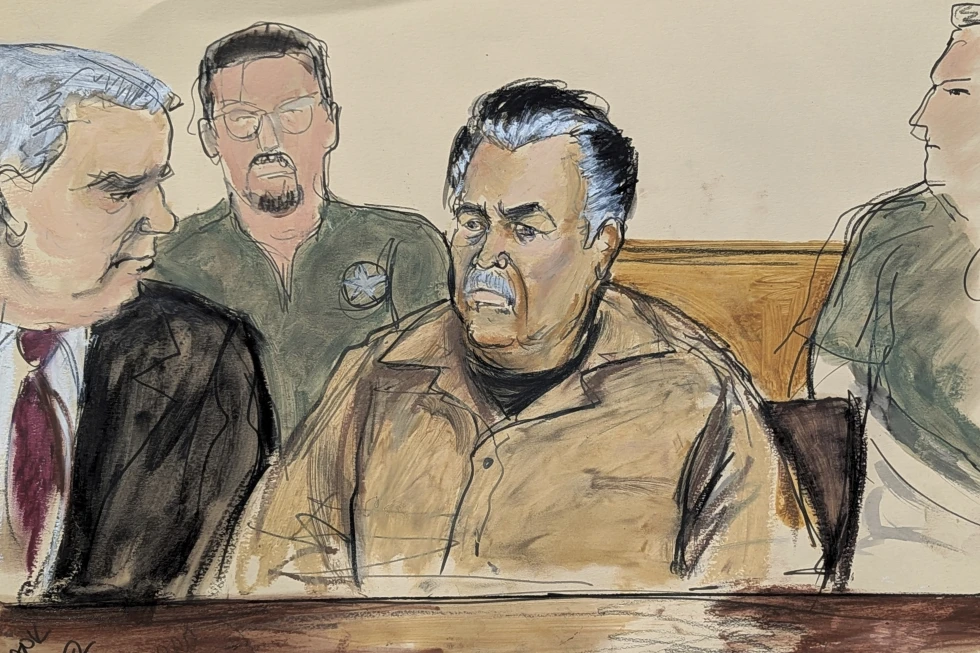
Tigran Gambaryan, the head of financial compliance at cryptocurrency exchange Binance, was denied bail for a second time on Friday as his trial on money laundering charges commenced in Nigeria. Federal High Court Judge Emeka Nwite ruled that the prison where Gambaryan is being held can adequately address his medical needs.

Gambaryan, an American citizen, has been in detention in Nigeria since late February. Both he and Binance have denied the charges against him.

The defendant had requested release on medical grounds, arguing that he required surgery outside of prison and that his health was deteriorating. However, Judge Nwite stated, “There is no evidence before this court that the Nigerian Correctional Service cannot handle the health challenges of the accused.”

The judge also noted that Gambaryan had not withdrawn an appeal against a previous bail ruling in May, describing the latest request as an “abuse of judicial process.”

Following the bail denial, the trial proceeded with Gambaryan’s lawyer cross-examining two state witnesses. The judge adjourned the trial to October 18 for further proceedings.

Yuki Gambaryan, the defendant’s wife, expressed disappointment with the decision, maintaining that her husband should not be in detention as he was never a decision-maker at Binance. She vowed to continue fighting for his freedom, stating, “I just pray that when he is finally released that the damage he is suffering is not permanent. I am exhausted and deeply disappointed.”

This case is part of broader legal challenges facing Binance in Nigeria, as the cryptocurrency exchange also faces separate tax evasion charges, which it denies.

Kenyan Court Refers Deputy President Gachagua’s Impeachment Case to Chief Justice

Kenya’s High Court ruled on Friday that the impeachment case against Deputy President Rigathi Gachagua should be referred to the Chief Justice, citing the high public interest surrounding the matter.

FILE PHOTO: Kenya’s Deputy President Rigathi Gachagua addresses delegates in Nairobi, Kenya July 9, 2024. REUTERS/Thomas Mukoya/File Photo

Justice Lawrence Mugambi called for the creation of a panel of three judges to examine Gachagua’s petition challenging his impeachment. This decision comes after Kenya’s parliament voted on Tuesday to impeach Gachagua on 11 charges, including allegations of self-enrichment and inciting ethnic hatred.

Gachagua has vehemently denied all allegations, describing the impeachment motion as a “choreographed political lynching” based on falsehoods, according to court documents reviewed by Reuters.

The Senate is scheduled to debate the charges and vote on Gachagua’s dismissal next week. The impeachment process has highlighted growing tensions within Kenya’s ruling coalition, with Gachagua’s rift with President William Ruto becoming increasingly public following deadly protests earlier this year over proposed tax increases and rising living costs.

Gachagua sparked controversy by comparing the government to a company and suggesting that coalition voters should have priority for public-sector jobs and development projects. These comments are cited in the impeachment motion as “highly inflammatory.”

The push to remove Gachagua from office has divided public opinion in Kenya. Some citizens argue that parliament should prioritize economic issues over political maneuvering, while others call for both Ruto and Gachagua to step down.

President Ruto has not yet commented publicly on the impeachment proceedings against his deputy.

Nigerian Police Rescue Six Kidnapped Supersport Crew Members in Southeast

Nigerian police have successfully rescued six members of a media crew working for South African broadcaster Supersport, who were kidnapped while en route to cover an Africa Cup of Nations match between Nigeria and Libya in Akwa Ibom state.

Tochukwu Ikenga, police spokesperson for Anambra state, announced on Friday that the crew was abducted by armed men on Wednesday as they traveled through Anambra, a region known for separatist violence. The team was on its way from Lagos to Uyo for the match coverage.

“Joint security forces have successfully rescued six members of the media crew who were abducted while travelling from Lagos to Uyo along Isseke-Orlu Road in Ihiala,” Ikenga stated. He added that a rescue operation for a seventh crew member is ongoing.

The kidnapping occurred in Nigeria’s southeast, an area embroiled in violence that the government attributes to a separatist group campaigning for the secession of a region predominantly populated by the Igbo ethnic group.

REUTERS

Cameroon Bans Public Discussion of 91-Year-Old President Biya’s Health

The Cameroonian government has issued a directive banning any public discussion or media coverage regarding the health of 91-year-old President Paul Biya, according to a letter shared by the interior ministry. This move comes in response to widespread speculation about Biya’s well-being following his prolonged absence from public view.

Interior Minister Paul Atanga Nji, in a letter dated October 9 and addressed to regional governors, declared that discussing the president’s health is now a matter of national security. “Any debate in the media about the president’s condition is therefore strictly prohibited. Offenders will face the full force of the law,” Nji stated.

The directive orders governors to establish monitoring units to oversee broadcasts on private media channels and social networks, raising concerns about potential infringements on press freedom and free speech.

This ban follows recent government statements asserting that President Biya was on a private visit to Geneva and in good health, dismissing reports of illness as “pure fantasy.” Biya has not been seen in public since attending a China-Africa forum in Beijing in early September, and his absence from a scheduled summit in France last weekend further fueled speculation.

The move has faced criticism from journalists and press freedom advocates. Hycenth Chia, a Yaounde-based journalist, argued, “The president is elected by Cameroonians and it’s just normal that they worry about his whereabouts.” He contrasted the situation with open discussions about the health of other world leaders like U.S. President Joe Biden.

Angela Quintal, head of the Committee to Protect Journalists’ Africa Program, expressed grave concern, stating, “Trying to hide behind national security on such a major issue of national importance is outrageous.”

The ban on health discussions highlights the sensitive nature of succession politics in Cameroon, which has had only two presidents since gaining independence in the early 1960s. Analysts suggest that the country could face a messy succession crisis if Biya became too ill to remain in office or died.

As Cameroon grapples with this controversial directive, the situation underscores the delicate balance between national security concerns and principles of transparency and press freedom in the Central African nation.