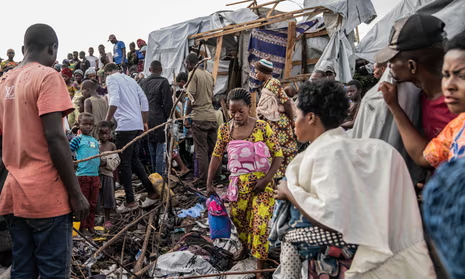
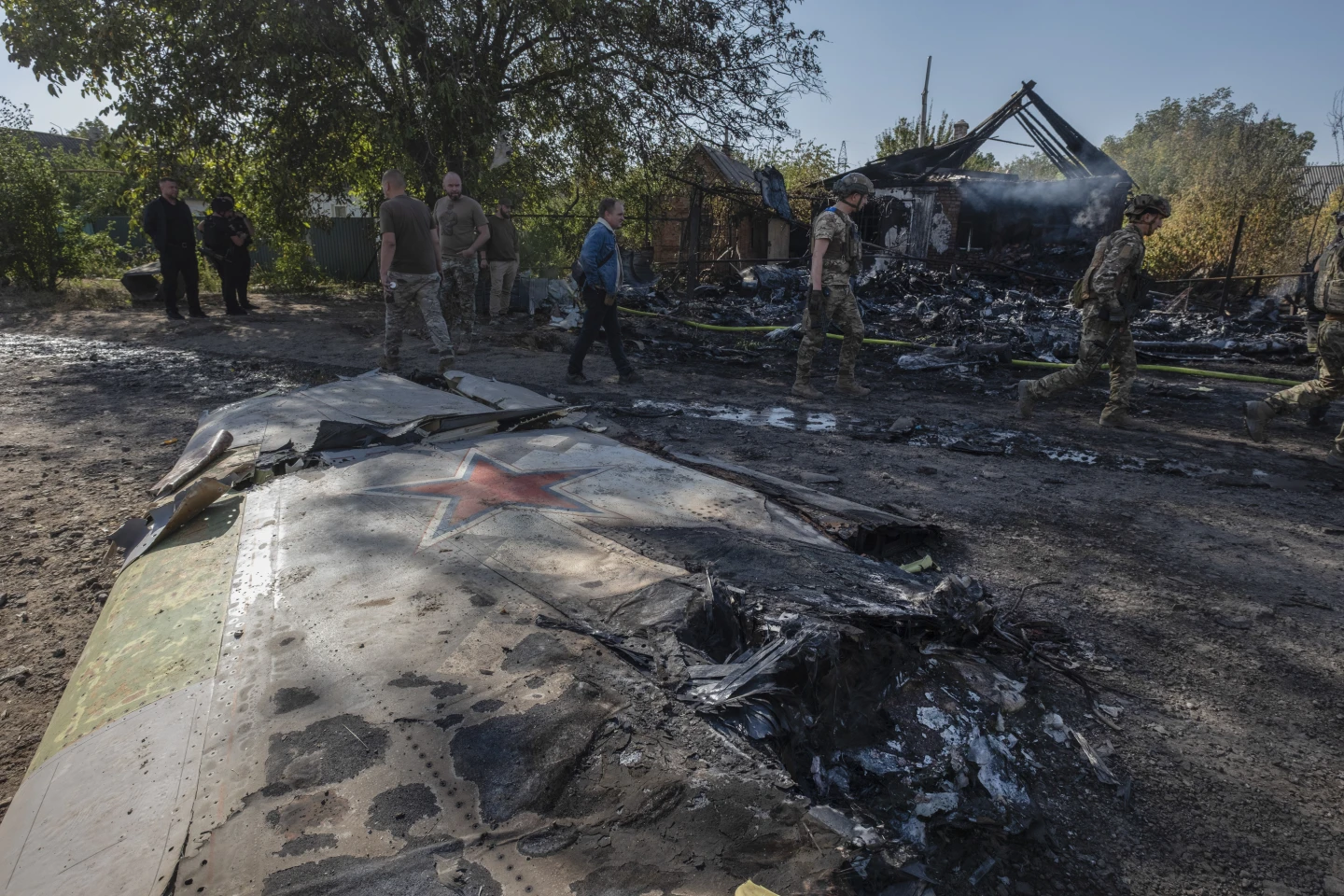
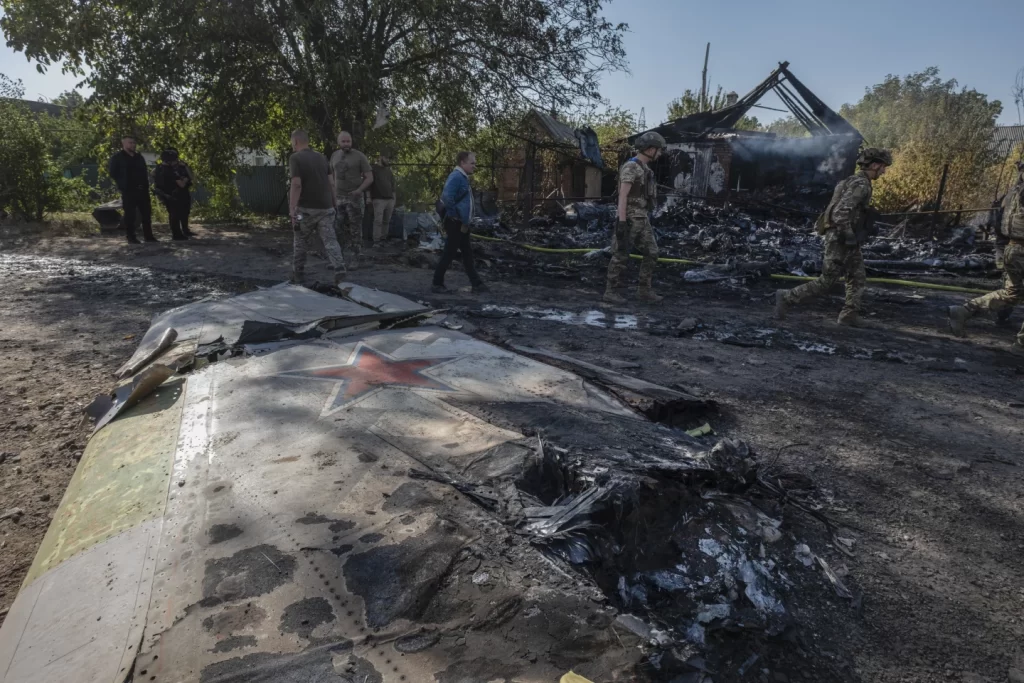
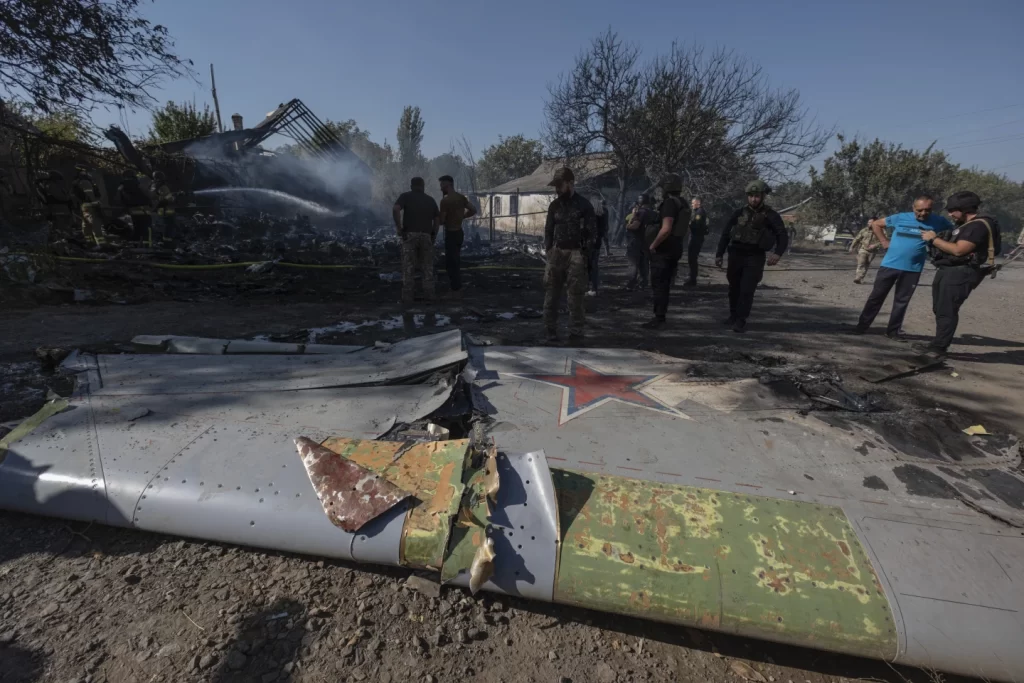
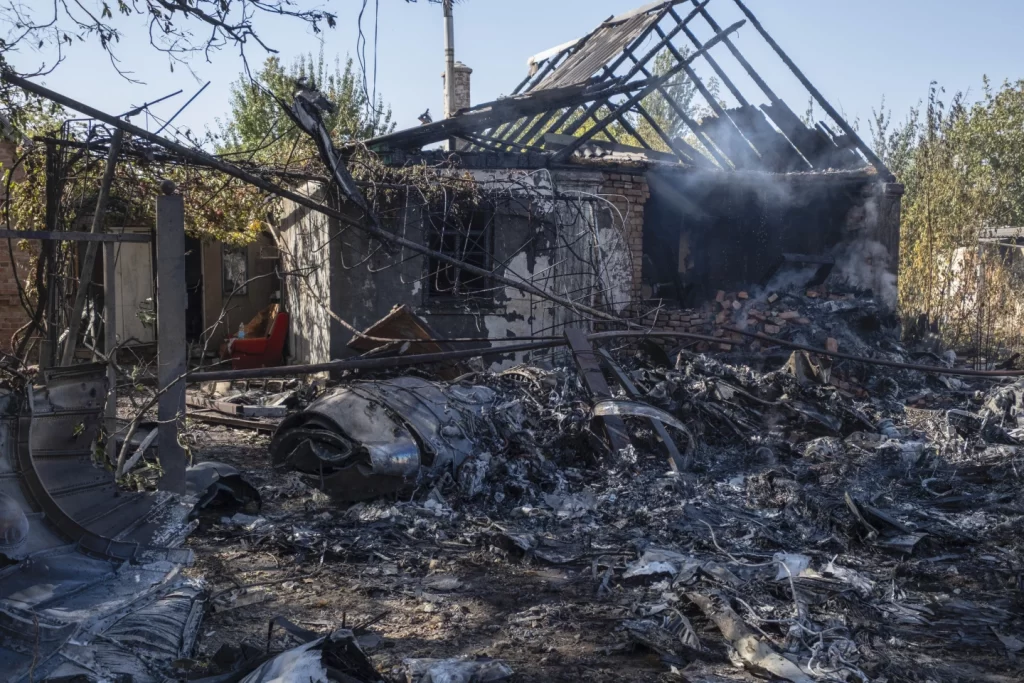
Two consecutive Russian attacks on a medical center in the northeastern Ukrainian city of Sumy killed at least nine people on Saturday morning, Ukrainian officials reported.
Ukraine’s Interior Minister Ihor Klymenko said the first strike killed one person. Russia then attacked again while patients and staff were being evacuated, resulting in additional casualties. Sumy’s City Military administration confirmed that twelve other people were wounded in the attacks.
Local officials in Sumy stated that Shahed drones were used in the assault. The city, located approximately 20 miles (32 kilometers) from Russia’s Kursk region, has seen increased military activity since August 6, when Ukrainian troops were deployed there in an effort to divert the Kremlin’s military focus from the main front line in Ukraine.
The attack on Sumy was part of a broader overnight assault by Russian forces. Ukraine’s air force reported shooting down 69 of 73 Russian drones launched overnight, as well as two of four missiles. In Kyiv, city authorities said about 15 drones were intercepted over the capital and its outskirts.
In Kryvyi Rih, the hometown of Ukrainian President Volodymyr Zelenskyy, local officials announced on Saturday that a man’s body was recovered from the rubble of an administrative building hit by a Russian missile on Friday. This discovery raised the death toll from that attack to four.
The conflict has also seen continued attacks on Russian territory. The Russian Defense Ministry reported on Saturday that air defenses had intercepted four Ukrainian drones over the Belgorod region and one over the Kursk region, both bordering Ukraine.
In the Russian border city of Shebekino, Belgorod regional Governor Vyacheslav Gladkov said one person was killed and two others were wounded in Ukrainian shelling on Saturday.
Iran announced Saturday that a prominent general in its paramilitary Revolutionary Guard was killed in the same Israeli airstrike that claimed the life of Hezbollah leader Hassan Nasrallah, marking a significant escalation in regional tensions.
Abbas Nilforushan, 58, identified by the U.S. as the deputy commander for operations in the Revolutionary Guard, died in Friday’s strike on Beirut, according to Iran’s state-run IRNA news agency. Nilforushan had been sanctioned by the United States for his role in the Guard.
The dual loss of high-ranking figures in Iran’s sphere of influence sent shockwaves through the region, prompting calls for retaliation and raising fears of a wider conflict.
Iranian Supreme Leader Ayatollah Ali Khamenei responded to the deaths with a stern warning. “The resistance movement, headed by Hezbollah, will decide the fate of the region,” Khamenei said in a statement broadcast on state television.
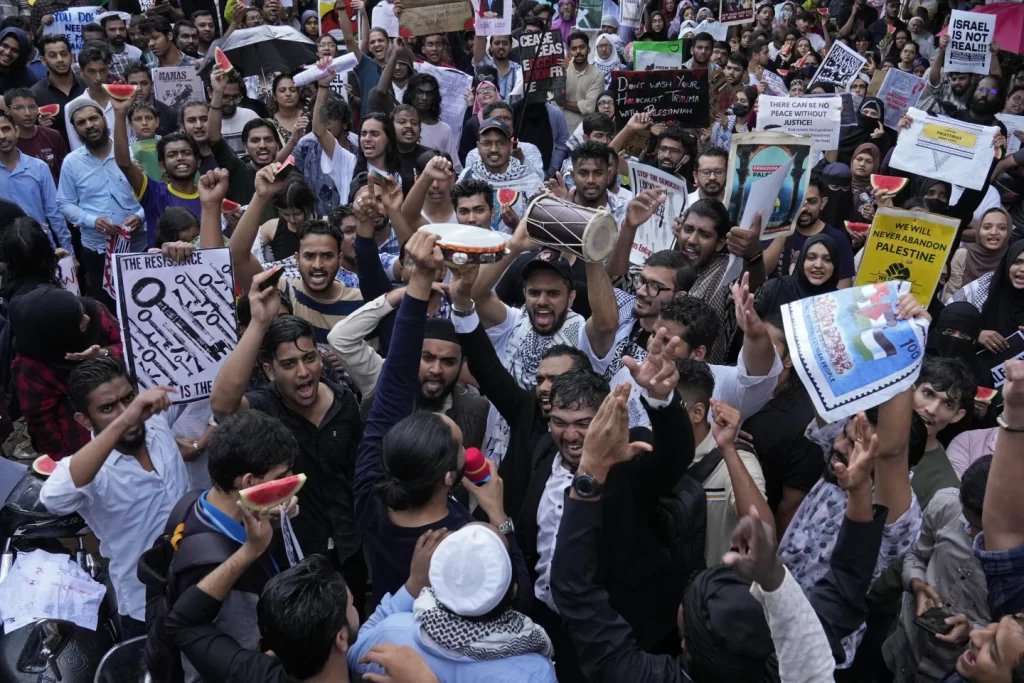
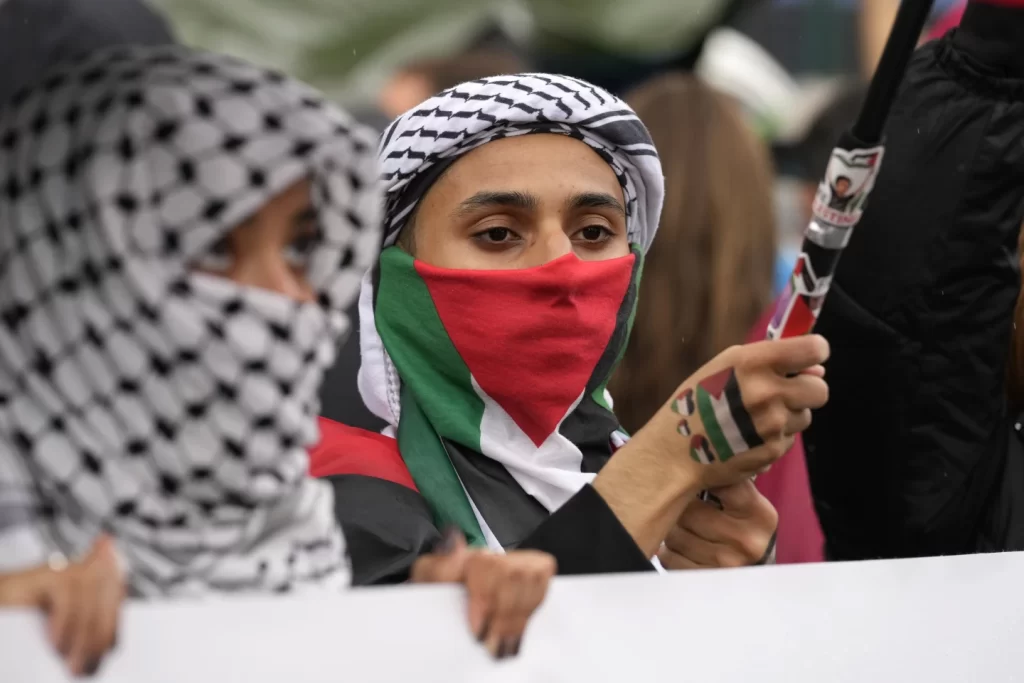
Iran’s influential parliamentary committee on national security demanded a “strong” response to Israel following an emergency meeting. Across major Iranian cities, state TV reported anti-Israeli rallies in support of Hezbollah.
The Israeli military, while confirming the strike that killed Hezbollah’s Nasrallah, did not immediately comment on Nilforushan’s death. Lt. Col. Nadav Shoshani, an Israeli army spokesperson, said the airstrike was based on years of intelligence gathering and “real-time information,” but declined to provide specifics on the operation or civilian casualties.
Israel’s Chief of Staff, Lt. Gen. Herzi Halevi, indicated that the strike was part of a broader campaign, stating that the elimination of Nasrallah was “not the end of our toolbox.” Defense Minister Yoav Gallant went further, calling it “the most important targeted strike since the founding of the State of Israel.”
The deaths of Nasrallah and Nilforushan come amid escalating hostilities between Israel and Hezbollah, which intensified following Hamas’s attack on Israel on October 7, 2023. Hezbollah, backed by Iran, had been engaging in cross-border strikes with Israel for nearly a year.
Iraq, another country within Iran’s sphere of influence, reacted strongly to the news. Prime Minister Mohammed Shia al-Sudani declared a three-day period of mourning. Sudani, who came to power with support from Iran-backed political factions, leads a coalition with armed wings allied to Hezbollah.
The loss of Nilforushan represents a significant blow to Iran’s military leadership in the region. As deputy commander for operations in the Revolutionary Guard, he played a crucial role in Iran’s military strategy and its support for allied groups like Hezbollah.
Orna Mizrahi, a senior researcher at the Tel Aviv-based Institute for National Security Studies and former Israeli intelligence analyst, suggested that the deaths could lead to unpredictable consequences. “The biggest question mark right now is how Iran will respond,” Mizrahi said.
The Israeli strike has already triggered a series of retaliatory actions. Hezbollah launched dozens of projectiles across northern and central Israel and into the Israeli-occupied West Bank on Saturday. Meanwhile, Israel carried out over 140 airstrikes in southern Beirut and eastern Lebanon’s Bekaa Valley, including targeting a storage facility for anti-ship missiles.
The escalating conflict has taken a heavy toll on civilians. Lebanon’s health minister reported Saturday that 1,030 people — including 156 women and 87 children — have been killed in Israeli strikes in Lebanon in less than two weeks. On the Israeli side, tens of thousands have been displaced from communities near the Lebanese border.
Spanish authorities reported Saturday that nine people have died and 48 others are missing after a boat carrying migrants capsized during a rescue operation near the Canary Islands.
Spain’s maritime rescue service said the tragedy occurred approximately 6 1/2 kilometers (4 miles) from the island of El Hierro. The small boat, loaded with migrants, overturned when too many people moved to one side during the rescue attempt, according to a statement from the rescue service.
Rescuers have saved 27 people and confirmed nine deaths. The search for the 48 missing individuals continues.
The rescue operation was complicated by nighttime conditions and strong winds reaching 20 knots. Multiple agencies participated in the effort, including rescue craft and helicopters from the maritime rescue service, Civil Guard, Red Cross, and local government.
This incident highlights the dangers of the Atlantic route from West Africa to the Canary Islands, considered one of the deadliest migration routes in the world. While accurate death tolls are difficult to establish due to lack of information on departures from West Africa, Spanish migrant rights group Walking Borders estimates the victims to be in the thousands.
The Canary Islands have seen a significant increase in migrant arrivals this year, with over 26,000 people reaching the archipelago by sea so far, compared to about 14,000 during the same period last year.
Located closer to Africa than mainland Spain, the Canary Islands are often viewed as a stepping stone to continental Europe. Many migrants come from Mali, Senegal, Mauritania, and other West African countries, seeking better job opportunities or fleeing violence and political instability.
Lebanon’s Hezbollah group confirmed Saturday that its leader and co-founder, Hassan Nasrallah, was killed in an Israeli airstrike in Beirut the previous day, marking a significant escalation in the ongoing conflict between Israel and the militant group.
A statement from Hezbollah said Nasrallah “has joined his fellow martyrs” and vowed to “continue the holy war against the enemy and in support of Palestine.” Nasrallah, who led Hezbollah for more than three decades, is the most powerful target eliminated by Israel in weeks of intensified fighting.
The Israeli military reported carrying out a precise airstrike on Friday targeting a meeting of Hezbollah leadership at their headquarters in Dahiyeh, south of Beirut. The Lebanese Health Ministry said six people were killed and 91 injured in the strikes, which leveled six apartment buildings. Ali Karki, commander of Hezbollah’s Southern Front, and other commanders were also killed, according to the Israeli military.
Lt. Col. Nadav Shoshani, an Israeli army spokesperson, said the airstrike was based on years of tracking Nasrallah along with “real time information.” He declined to provide details on the munitions used or civilian casualties, stating only that Israel takes measures to avoid civilian deaths whenever possible.
The Palestinian militant group Hamas issued condolences to its ally, Hezbollah, stating that “assassinations will only increase the resistance in Lebanon and Palestine in determination and resolve.”
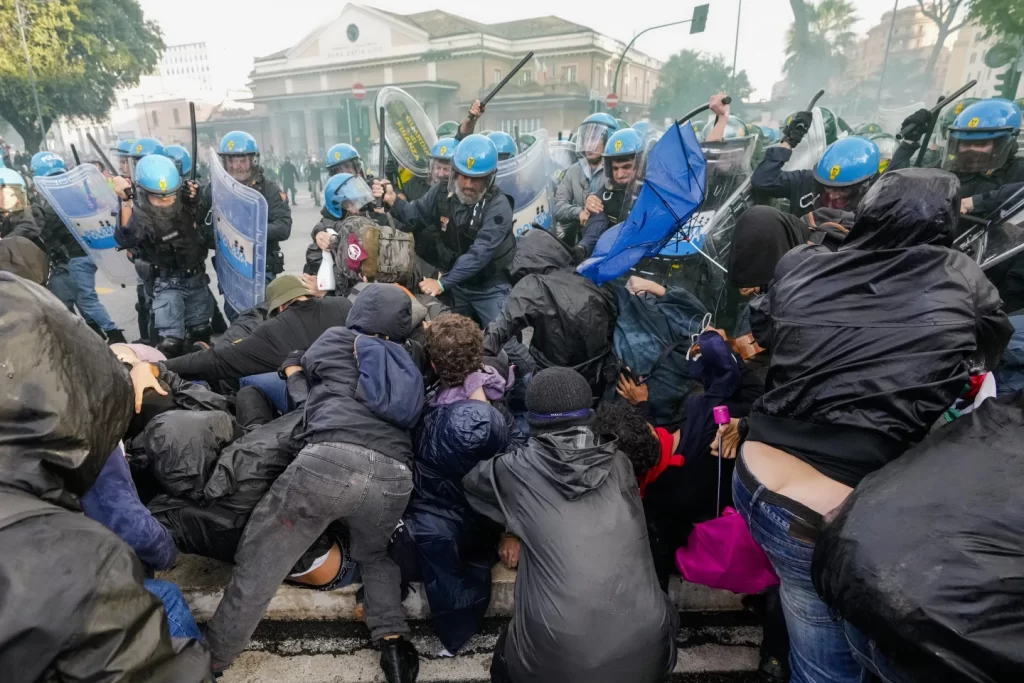
In Beirut and other areas of Lebanon, people fired into the air to mourn Nasrallah’s death, with some protesting that he was killed because of his support for the war in Gaza.
Israel’s Chief of Staff, Lt. Gen. Herzi Halevi, indicated that more strikes were planned, saying the elimination of Nasrallah was “not the end of our toolbox.” The Israeli military announced the mobilization of additional reserve soldiers as tensions escalate with Lebanon.
Iran, Hezbollah’s main supporter, called for a “strong” response to Israel. Iraqi Prime Minister Mohammed Shia al-Sudani declared a three-day period of mourning in his country.
The killing of Nasrallah comes after nearly a year of hostilities between Israel and Hezbollah, which intensified following Hamas’s attack on Israel on October 7, 2023. The conflict has displaced tens of thousands of civilians on both sides of the border.
Orna Mizrahi, a senior researcher at the Institute for National Security Studies in Tel Aviv, noted that Nasrallah’s death could prompt less senior Hezbollah members to use stronger weapons against Israel. She added that his death might provide an opportunity for Lebanon to reduce Hezbollah’s influence in the country.
As the situation develops, both Israel and Hezbollah continue to exchange strikes. The Israeli military reported carrying out over 140 airstrikes in southern Beirut and eastern Lebanon’s Bekaa Valley on Saturday morning, while Hezbollah launched projectiles into northern and central Israel.
The Lebanese Health Ministry reports that at least 720 people have been killed in Lebanon over the past week by Israeli airstrikes.
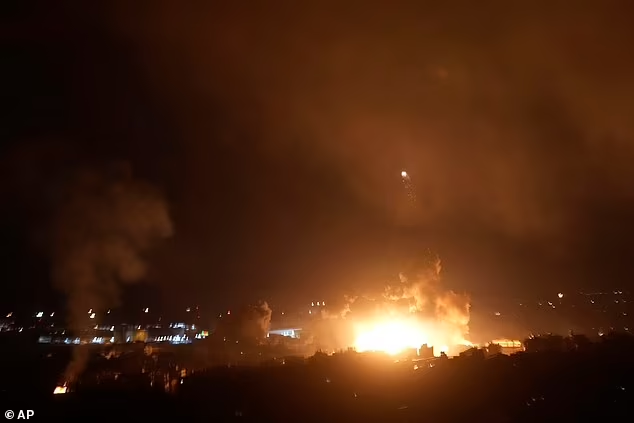
The Israeli military launched a massive strike on Hezbollah’s headquarters in Beirut on Friday, causing widespread destruction and pushing the region closer to full-scale war. The attack, which targeted the militant group’s leader Hassan Nasrallah, leveled multiple high-rise apartment buildings and resulted in at least six deaths and 91 injuries, according to Lebanon’s health ministry.
The series of explosions, occurring around nightfall, reduced six apartment towers to rubble in Haret Hreik, a densely populated, predominantly Shiite district of Beirut’s Dahiyeh suburbs. Witnesses reported billowing black and orange smoke rising into the sky, with the blasts felt up to 30 kilometers (20 miles) north of Beirut.
Israeli army spokesperson Rear Adm. Daniel Hagari stated that the strikes targeted Hezbollah’s main headquarters, which was reportedly located underground beneath residential buildings. The Israeli military declined to comment on who specifically was targeted, but two sources, including a U.S. official speaking on condition of anonymity, confirmed that Nasrallah was the intended target.
In the aftermath, rescue workers were seen clambering over large slabs of concrete, surrounded by piles of twisted metal and wreckage. Several craters were visible in the area, with one containing an overturned car. Residents carrying belongings were observed fleeing along a main road out of the district.
The Israeli air force conducted additional strikes early Saturday in the southern suburbs of Beirut, warning residents of three buildings to evacuate. The military claimed these structures were being used by Hezbollah to conceal weapons, including anti-ship missiles.
Prime Minister Benjamin Netanyahu abruptly cut short a visit to the United States to return home following the strikes. Hours earlier, he had addressed the United Nations, vowing to continue Israel’s intensified campaign against Hezbollah.
The attack marks a significant escalation in the conflict, which has been ongoing for more than 11 months. Israel has dramatically increased its airstrikes in Lebanon this week, stating its determination to end Hezbollah’s fire into its territory. The escalated campaign has resulted in over 720 deaths in Lebanon, including dozens of women and children, according to Health Ministry statistics.
Hezbollah, for its part, announced the launch of a salvo of rockets at the Israeli city of Safed in response to what it called “the barbaric Israeli violation of cities, villages and civilians.” The Israeli military reported that a house and a car in Safed were hit, with a 68-year-old woman sustaining minor shrapnel wounds.
The United Nations reported that the fighting has displaced 211,000 people, with 85,000 now staying in public schools and other shelters. The conflict has also forced the closure of 20 primary health care centers and disrupted access to clean water for nearly 300,000 people.
Two Nigerian nationals have been indicted in connection with a business email compromise (BEC) scheme that defrauded several Minnesota-based health care companies of more than $13 million, U.S. Attorney Andrew M. Luger announced.
The suspects, identified as Shodiya Babatunde, 43, and Jamui Ahmed, 31, allegedly conducted the fraudulent scheme between October 2020 and 2024. According to court documents, the two devised a plan to deceive employees of health care companies by posing as executives of Fairview Health, a prominent health care provider in the state. The scheme involved directing payments intended for Fairview Health to bank accounts controlled by the suspects and their co-conspirators.
As part of the scam, Babatunde and Ahmed created a spoofed internet domain, designed to closely resemble the official Fairview Health domain. They also set up fraudulent email accounts mimicking high-ranking executives, including the CEO, Executive Vice President, General Counsel, and a business analyst. These fake accounts were then used in a phishing campaign to acquire login credentials, enabling the defendants to reroute payments.
The fraudsters contacted several health insurance companies in Minnesota, falsely representing themselves as Fairview Health personnel. They provided the companies with new payment instructions, convincing them to wire funds to accounts under their control instead of Fairview Health’s legitimate accounts.
Authorities estimate that Babatunde, Ahmed, and their co-conspirators diverted over $13 million in payments intended for Fairview Health. Both Babatunde and Ahmed are currently fugitives and remain in Nigeria.
The investigation was carried out by the Federal Bureau of Investigation (FBI), and Assistant U.S. Attorney Joseph H. Thompson is handling the prosecution.
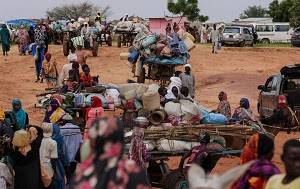
An attack by the Rapid Support Forces (RSF) on a market in El-Fasher, Sudan, has left 18 people dead and dozens injured, escalating the ongoing civil war that has devastated the country for 17 months.
A medical source at El-Fasher Teaching Hospital, speaking on condition of anonymity due to safety concerns, told AFP on Friday that the hospital received 18 bodies following Thursday evening’s attack. Some victims were burned, while others suffered severe shrapnel injuries.
Local activists reported that the RSF’s shelling of the market also wounded dozens of civilians. The attack comes as the RSF and the regular Sudanese army continue to vie for control of El-Fasher, the capital of North Darfur state.
The assault on El-Fasher, a city of two million people, has drawn international attention and condemnation. UN Secretary-General Antonio Guterres called for an urgent ceasefire following reports of a “full-scale assault” by the RSF on the city last weekend.
Linda Thomas-Greenfield, the U.S. ambassador to the UN, stressed the need for immediate action during the United Nations General Assembly in New York. “We must compel the warring parties to accept humanitarian pauses in El-Fasher, Khartoum and other highly vulnerable areas,” she said on Wednesday.
The situation in El-Fasher has become increasingly dire since May, when the RSF began besieging the city. Famine has already been declared in the nearby Zamzam refugee camp, highlighting the severe humanitarian crisis unfolding in the region.
Local resistance committees, pro-democracy volunteer groups providing crucial aid to civilians, reported that RSF artillery shelling continued on Friday morning, targeting residential neighborhoods and the market.
The ongoing conflict has taken a devastating toll on Sudan. While the World Health Organization cites a death toll of at least 20,000, U.S. envoy Tom Perriello has mentioned estimates reaching as high as 150,000.
During the UN General Assembly, U.S. President Joe Biden urged all countries to cut off weapons supplies to the rival Sudanese generals: Sudanese Armed Forces chief Abdel Fattah al-Burhan and RSF commander Mohamed Hamdan Daglo. “The world needs to stop arming the generals,” Biden said, calling for an immediate end to the war.
UN Secretary-General Guterres met with General Burhan on the sidelines of the UN talks, expressing concern about the escalation of violence and the risk of regional spillover.
Both the RSF and the Sudanese army have been repeatedly accused of war crimes throughout the conflict. The international community continues to push for a resolution to the crisis, emphasizing the urgent need for humanitarian aid and a cessation of hostilities.
Federal prosecutors have charged three alleged members of the notorious MS-13 gang with racketeering and murder for their alleged roles in two separate killings in Massachusetts, underscoring ongoing efforts to combat transnational gang violence.
The charges, announced Thursday by Acting United States Attorney Joshua S. Levy, target William Pineda Portillo, 31, of Everett; Jose Vasquez, 31, of Somerville; and Franklin Antonio Amaya Paredes, 27, of New Bedford. The indictments stem from murders committed in December 2010 and July 2020, demonstrating law enforcement’s commitment to solving cold cases and recent crimes alike.
Pineda Portillo, also known as “Humilde,” and Vasquez, who goes by the aliases “Cholo” and “Little Crazy,” face charges of racketeering conspiracy and violent crime in aid of racketeering. These charges are related to the December 18, 2010, murder of a 28-year-old man in Chelsea, Massachusetts.
According to the indictment, Pineda Portillo allegedly drove the victim and other MS-13 members to the murder scene in Chelsea. The victim was found with 12 stab wounds to his head and chest. Prosecutors allege that Vasquez was one of the assailants, citing a palm print found on a silver kitchen knife left at the crime scene.
In a separate case, Amaya Paredes, known as “Tony,” is charged with racketeering and violent crime in aid of racketeering for the July 2020 murder of a 27-year-old man near Horseneck Road in Dartmouth, Massachusetts. Prosecutors allege that Amaya Paredes lured the victim to a family party before driving him to the murder location and shooting him multiple times.
“The brutal acts of violence these defendants are accused of committing demonstrate a complete disregard for human life and the rule of law,” said Acting U.S. Attorney Levy. “We will not allow MS-13 or any other violent criminal organization to terrorize our communities.”
The charges come as part of an ongoing crackdown on MS-13 activities in Massachusetts. In 2016, a large-scale investigation targeted dozens of MS-13 leaders, members, and associates in the state. During that probe, Vasquez pleaded guilty to racketeering conspiracy and received a 212-month prison sentence, which he is currently serving.
Jodi Cohen, Special Agent in Charge of the FBI’s Boston Division, emphasized the significance of these charges, stating, “Today’s charges should make it clear to MS-13 members and their associates that medieval-style violence and senseless murder will not be tolerated in Massachusetts.”
The indictments provide insight into the structure and operations of MS-13. The gang, also known as La Mara Salvatrucha, is described as a violent, transnational criminal organization involved in murder, assault, extortion, kidnapping, obstruction of justice, and drug trafficking. It maintains a significant presence in Massachusetts, as well as in several other U.S. states and Central American countries. MS-13 members allegedly commit violent acts to maintain and enhance their status within the gang and to bolster the gang’s overall reputation.
The charges carry severe potential penalties. Racketeering and racketeering conspiracy involving murder can result in life imprisonment, a $250,000 fine, and five years of supervised release. Violent crime in aid of racketeering involving murder may lead to life imprisonment or the death penalty, along with a $250,000 fine.
These indictments are part of the Organized Crime Drug Enforcement Task Forces (OCDETF) Strike Force Initiative, which facilitates multi-agency collaboration to combat significant drug trafficking, money laundering, and transnational criminal organizations.
As the cases proceed, all three defendants are presumed innocent until proven guilty in a court of law. Pineda Portillo and Vasquez are currently in federal custody, while Amaya Paredes is in state custody on related charges. They will appear in federal court in Boston at a later date.
The U.S. Marshals Service (USMS) has apprehended 3,421 violent fugitives across 10 metropolitan areas in a major law enforcement initiative, the Justice Department announced Thursday.
Operation North Star FY 2024 (ONS FY24), conducted from May 10 to September 13, focused on arresting individuals wanted for violent crimes, including homicide, sexual offenses, robbery, aggravated assault, and firearms violations.
“This operation demonstrates our unwavering commitment to removing dangerous offenders from our communities,” Attorney General Merrick B. Garland said in a statement. “The collaborative efforts of federal, state, and local law enforcement have made a significant impact on public safety.”
Key arrest figures from the 74-day operation include 216 fugitives wanted for homicide, 803 individuals charged with assault, and 482 suspects facing weapons offenses.
The operation also resulted in the seizure of 534 firearms, over $508,000 in U.S. currency, and 456 kilograms of illegal narcotics, including 138 pounds and more than 550,000 pills of fentanyl.
USMS Director Ronald L. Davis highlighted the operation’s focus on areas experiencing high levels of gun violence. “By removing over 3,000 dangerous fugitives from the streets, including more than 200 homicide suspects, we’ve made a tangible difference in neighborhood safety,” Davis said.
The metropolitan areas targeted in ONS FY24 were selected based on data from the National Crime Information Center and the FBI Uniform Crime Report. These locations included Dallas and Fort Worth, Texas; Charleston and North Charleston, South Carolina; Baton Rouge, Louisiana; Little Rock, Arkansas; Phoenix, Arizona; St. Louis, Missouri (including East St. Louis, Illinois); Birmingham, Alabama; Winston-Salem, North Carolina; Dayton, Ohio; and San Antonio, Texas.
Since its inception in July 2022, Operation North Star initiatives have led to the arrest of more than 10,200 wanted fugitives across 30 locations nationwide. This includes 1,153 individuals charged with homicide and the removal of over 1,425 weapons linked to violent crimes.
The USMS employed a data-driven, evidence-based approach to identify and apprehend the most dangerous offenders. This strategy builds on decades of experience in coordinating interagency law enforcement operations, dating back to the establishment of regional and district fugitive task forces in the 1980s.
Notable arrests during ONS FY24 include Aaron Michael Jones, arrested in Baton Rouge on May 20 for home invasion, domestic abuse battery, and child endangerment. In Fort Worth, Texas, four suspects were apprehended on May 22 in connection with a drive-by shooting that injured multiple children. Nine handguns and one shotgun were recovered during the arrest.
Garron Stevenson was arrested in St. Louis on May 21 for first-degree murder and unlawful use of a weapon after a shooting at a street racing event that killed a 14-year-old and injured six others. Michael Muldovan was taken into custody in Sterling, Virginia, on August 15, wanted in Winston-Salem, North Carolina, for first-degree statutory rape and indecent liberties with a child.
FIFA has suspended Argentina goalkeeper Emiliano Martínez for two matches of South American World Cup qualifying in October, the Argentina soccer association (AFA) announced Friday.
The 32-year-old Martínez will miss official games against Venezuela on Oct. 10 and Bolivia on Oct. 15 in the round-robin competition.
FIFA’s disciplinary commission sanctioned Martínez for incidents in two recent World Cup qualifying matches against Chile and Colombia, according to the AFA statement. The specific incidents leading to the punishment were not described.
Martínez made headlines after Argentina’s 3-0 victory over Chile when he repeated an obscene gesture, holding the Copa America trophy close to his genitals. He had previously done this after Argentina won the World Cup in Qatar in late 2022.
In a separate incident, Martínez slapped a local cameraman following Argentina’s 2-1 loss to Colombia in Barranquilla.
The AFA expressed strong disagreement with FIFA’s decision in its statement.
Argentina currently leads South American World Cup qualifying with 18 points after eight games. Colombia follows with 16 points, and Uruguay is in third place with 15 points.
The suspension of Martínez, a key player in Argentina’s recent international successes, may impact the team’s performance in the upcoming qualifiers.