Home Blog Page 658

Trump Threatens to ‘Blow Iran to Smithereens’ Amid Reported Assassination Threats

Former President Donald Trump issued a stark warning to Iran on Wednesday, threatening to “blow Iran to smithereens” if the Islamic Republic attempts to harm him or any other presidential candidate. Trump’s comments came during a speech at a furniture factory in Mint Hill, North Carolina, a crucial battleground state for the 2024 election.

The 78-year-old Republican candidate’s threats were in response to reports of a “real and specific” danger to his life, allegedly originating from Iran. U.S. intelligence officers have reportedly informed Trump and his advisors of an increasing threat that has “heightened in the past few months.”

“If I were the president, I would inform the threatening country, in this case Iran, that if you do anything to harm this person, we are going to blow your largest cities, and the country itself, to smithereens,” Trump declared. He added, “We’re going to blow it to smithereens. You can’t do that. And there would be no more threats.”

Trump emphasized that his proposed response would apply regardless of whether the threatened candidate was a Democrat or Republican. However, he suggested that neither President Joe Biden nor Vice President Kamala Harris possesses the strength to respond with similar force.

The former president also acknowledged recent bipartisan action in Congress, thanking Democrats for voting in favor of a law that guarantees him and Vice President Harris the same level of Secret Service protection as the sitting president.

Secretary of State Antony Blinken earlier on Wednesday stated that the U.S. government is “intensely tracking” Iran’s continuous threats against current and former U.S. officials.

President of Iran

This development comes amid heightened international tensions, particularly concerning Iran’s role in supporting Hezbollah in Lebanon, where Israel has been targeting locations linked to the Tehran-backed group.

Trump, who reportedly survived a second assassination attempt earlier this month, used the platform to criticize the current administration’s leadership, stating, “But right now we don’t have that leadership or the necessary people, the necessary leaders.”

A

West African Military Juntas Launch Investigation into French Journalist Over Jihadi Analysis

Prosecutors from the military-ruled nations of Mali, Niger, and Burkina Faso have launched a coordinated investigation into French journalist and researcher Wassim Nasr, accusing him of “apology of terrorism” and “complicity” in alleged terrorist acts. The move, announced Wednesday, marks the latest action against Western media in the region.

Nasr, who works for French broadcaster France 24, provided a detailed analysis of a rare deadly jihadi attack in Mali’s capital, Bamako, on September 17. Prosecutors allege that Nasr had been in contact with the attackers, receiving real-time information about their location, objectives, and the death toll.

In a statement aired on national television in all three countries, prosecutors accused Nasr of making comments that “amount to blatant acts of publicity and support of the terrorists,” according to Niger’s deputy prosecutor Manzo Hadiza.

Responding to the allegations, Nasr told The Associated Press via WhatsApp, “They are trying to intimidate anyone still contradicting their storytelling about security and control.” He condemned the investigation as an attack on journalism and called for support for local journalists and civil society activists working under the junta regimes.

This development comes amid growing concerns about press freedom in the Sahel region. Reporters Without Borders recently highlighted increased security risks for local journalists in the area. The three countries have struggled with an insurgency for over a decade, battling armed groups allied with al-Qaida and the Islamic State group.

Following military coups in recent years, the ruling juntas in Mali, Niger, and Burkina Faso have expelled French forces and turned to Russian mercenary units for security assistance. However, analysts suggest the security situation has worsened under junta rule, with a record number of attacks and civilian casualties.

The military governments have also intensified crackdowns on political dissent and journalism. Mali has banned media reporting on political party activities, Burkina Faso suspended BBC and Voice of America radio stations, and Niger ordered the closure of the “Maison de la Presse,” an umbrella organization for journalists’ associations.

France 24, Nasr’s employer, is currently suspended in all three countries due to its coverage of the insurgency.

AP

Congo Takes Rwanda to East African Court Over Alleged Support for Rebels

0

The East African Court of Justice opened proceedings on Thursday in a landmark case filed by the Democratic Republic of Congo against neighboring Rwanda, accusing it of violating Congo’s sovereignty and territorial integrity by allegedly supporting rebels in the country’s eastern region.

The case, heard in Arusha, Tanzania, brings to the forefront long-standing tensions between the two nations over the mineral-rich eastern Congo, where more than 120 armed groups vie for power, land, and resources.

Congo’s legal team, led by lawyer Elisha Ongoya, seeks to hold Rwanda accountable for alleged violations including atrocities against civilians and breaches of international law. The lawsuit also aims to secure reparations for victims of these purported crimes.

The proceedings come on the heels of Congolese President Felix Tshisekedi’s address to the UN General Assembly, where he called for sanctions against Rwanda for its alleged support of the M23 rebel group. A July report by UN experts estimated that between 3,000 and 4,000 Rwandan government forces are deployed in eastern Congo alongside M23 rebels, who have made significant territorial gains.

Rwanda’s legal representatives, led by Emile Ntwali, raised objections to the case, questioning the court’s jurisdiction over criminal matters and pointing out procedural issues, including Congo’s failure to translate court documents into English, the official language of the court.

The East African Court of Justice, established under a 1999 treaty and ratified by the United Nations, typically handles cases from Kenya, Burundi, Rwanda, Uganda, and Tanzania. Its involvement in this interstate dispute marks a significant moment in regional jurisprudence.

Presiding Judge Yohanne Masara announced that the court would review arguments from both sides before delivering a ruling on the objections at a later date.

Tunisian Presidential Candidate Ayachi Zammel Sentenced to Six Months in Prison

A Tunisian court has sentenced presidential candidate Ayachi Zammel to six months in prison for falsifying documents, his lawyer Abdessattar Massoudi confirmed to Reuters on Wednesday. This marks the second prison sentence against Zammel in a week, coming just days before the country’s presidential election scheduled for October 6.

The verdict has intensified political tensions in Tunisia, with opposition and civil society groups expressing concerns about the potential for a rigged election aimed at maintaining President Kais Saied’s grip on power.

Last week, Zammel received a 20-month prison sentence on charges of falsifying popular endorsements. His lawyer decried the latest ruling, stating, “It is another unjust ruling and a farce that clearly aims to weaken him in the election race, but we will defend his right to the last minute.”

Zammel is one of only three candidates admitted to compete for the presidency, alongside incumbent Saied and Zouhair Magzhaoui. The limited field of candidates has raised eyebrows, particularly after an electoral commission appointed by Saied disqualified three prominent candidates earlier this month, sparking protests from opposition groups and civil society organizations.

The back-to-back convictions of Zammel have fueled suspicions about the integrity of the electoral process. Critics argue that these legal actions against a presidential candidate so close to the election date could be politically motivated, potentially undermining the fairness of the upcoming polls.

Kenya Mourns 21 Children in Mass Funeral After Tragic School Fire

0

Thousands of mourners gathered Thursday for a solemn memorial service honoring 21 children who perished in a devastating fire at Hillside Endarasha Academy, a boarding school in central Kenya’s Nyeri town earlier this month.

The ceremony featured rows of small white coffins, each adorned with flowers and photographs of the young victims, most aged between 9 and 13. The children had been trapped in their dormitory during the blaze.

Opposition party leader Eugene Wamalwa, addressing the crowd, emphasized the national impact of the tragedy: “To come to Nyeri and see all these coffins, this is one of the greatest national tragedies that we’ve had in our country.”

This incident has reignited concerns about school safety in Kenya, which has a troubling history of such fires. A 2018 parliamentary report documented over 60 cases of arson in public secondary schools that year alone.

While the cause of the Hillside Endarasha Academy fire remains under investigation, researchers note that many similar incidents have been linked to student protests against harsh disciplinary measures and poor living conditions.

The tragedy has evoked painful memories for families affected by previous school fires. Maryanne Mwangi, whose 14-year-old daughter Virlear died in a 2017 Nairobi school fire, expressed frustration at the government’s apparent lack of progress in improving school safety despite the creation of various task forces.

Mwangi criticized the strict disciplinary environment in many Kenyan boarding schools, likening them to “military camps” and suggesting that such conditions may contribute to student unrest and potential arson attempts.

As Kenya grapples with this latest tragedy, questions persist about the effectiveness of current safety measures and disciplinary practices in the country’s schools. The mass funeral serves not only as a moment of collective grief but also as a stark reminder of the urgent need for comprehensive reforms to ensure the safety and well-being of students across the nation.

Sudan’s Army Launches Major Offensive in Capital Amid 17-Month Conflict

0

Sudan’s army launched its most significant operation to reclaim territory in the capital since the onset of its 17-month war with the Rapid Support Forces (RSF) on Thursday. The offensive, marked by heavy artillery and air strikes, comes as Army Commander General Abdel Fattah al-Burhan prepares to address the United Nations General Assembly in New York.

Witnesses reported intense bombardments and clashes as army troops attempted to cross bridges spanning the Nile, connecting the tri-city capital complex of Khartoum, Omdurman, and Bahri. Ahmed Abdalla, a 48-year-old resident, told Reuters by phone, “The army is carrying out heavy artillery strikes and air strikes on Halfaya and Shambat,” referring to areas in Bahri near the river.

Army sources claimed their forces had crossed bridges into Khartoum and Bahri, while the RSF countered that it had repelled the army’s attempts to cross two bridges into Khartoum. These claims could not be independently verified.

The army, which lost control of most of the capital early in the conflict, has largely relied on artillery and airstrikes, struggling to dislodge the more mobile RSF ground forces embedded throughout the capital. While the army regained some ground in Omdurman earlier this year, its progress has been limited.

This offensive occurs against the backdrop of a deteriorating humanitarian crisis, with over 10 million people displaced and parts of the country facing extreme hunger or famine. Diplomatic efforts, including recent U.S.-backed talks in Switzerland, have faltered with the army’s refusal to participate.

Concurrently, fighting has intensified in al-Fashir, the capital of North Darfur state, as the RSF attempts to advance against the army and allied former rebel groups. The United Nations human rights office has documented summary executions, sexual violence, and abductions in al-Fashir, warning of the risk of ethnically targeted violations if the city falls to the RSF.

As the conflict continues to escalate, international concern grows over the humanitarian situation and the potential for further regional destabilization. The UN Security Council and Secretary-General have demanded an end to the siege of al-Fashir, home to over 1.8 million residents and displaced persons.

The war, which began in April 2023, stems from tensions between the RSF and the army over power-sharing arrangements following the 2021 coup that ousted the transitional government established after the fall of long-time autocrat Omar al-Bashir in 2019.

Israel Rejects U.S.-Backed Lebanon Ceasefire Proposal Amid Escalating Conflict

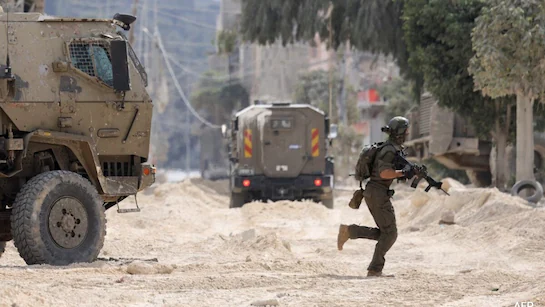
Israel firmly rejected proposals for a ceasefire with Hezbollah on Thursday, defying calls from allies including the United States for an immediate three-week halt in fighting. The decision dashes hopes for a swift resolution to the escalating conflict along the Israel-Lebanon border.

Israeli Foreign Minister Israel Katz stated unequivocally on social media platform X, “There will be no ceasefire in the north. We will continue to fight against the Hezbollah terrorist organization with all our strength until victory and the safe return of the residents of the north to their homes.”

This stance comes in direct opposition to a U.S.-led initiative calling for a 21-day ceasefire across the Israel-Lebanon border. The proposal, supported by France and other allies, aimed to create space for diplomatic efforts to prevent a wider regional war.

Israeli Prime Minister Benjamin Netanyahu, en route to New York to address the United Nations, indicated he had not yet formally responded to the truce proposal but had instructed the military to continue operations. Hardline members of his government have advocated rejecting any truce and intensifying attacks on Hezbollah.

The conflict has seen Israel launch its heaviest airstrikes against Lebanon since the 2006 war, resulting in over 600 deaths in the past week. Hezbollah has retaliated with hundreds of missile strikes, including unprecedented attacks on Tel Aviv, though Israel’s aerial defense systems have limited the damage.

Lebanese Prime Minister Najib Mikati had expressed hope for a swift ceasefire, telling Reuters, “Hopefully, yes” when asked about the prospects. However, Israel’s rejection appears to have scuttled immediate prospects for peace.

The situation has displaced hundreds of thousands in Lebanon, with many seeking refuge in schools and other facilities in Beirut. Aid organizations are scrambling to provide basic necessities to the displaced population.

Israel’s military reported striking dozens of Hezbollah targets on Thursday, including fighters, military buildings, and weapons depots. Concurrently, approximately 45 projectiles were fired from Lebanon towards Israel’s western Galilee area.

The ongoing violence has raised concerns among neighboring countries, with Turkey reportedly preparing for the possible evacuation of its citizens and foreign nationals from Lebanon.

As the conflict intensifies, world leaders continue to voice growing alarm over the rapid escalation and its potential to spark a broader Middle Eastern war. The situation remains highly volatile, with international diplomatic efforts continuing despite Israel’s firm stance against a ceasefire.

Dominican President Warns of ‘Drastic Measures’ if Haiti Anti-Gang Mission Fails

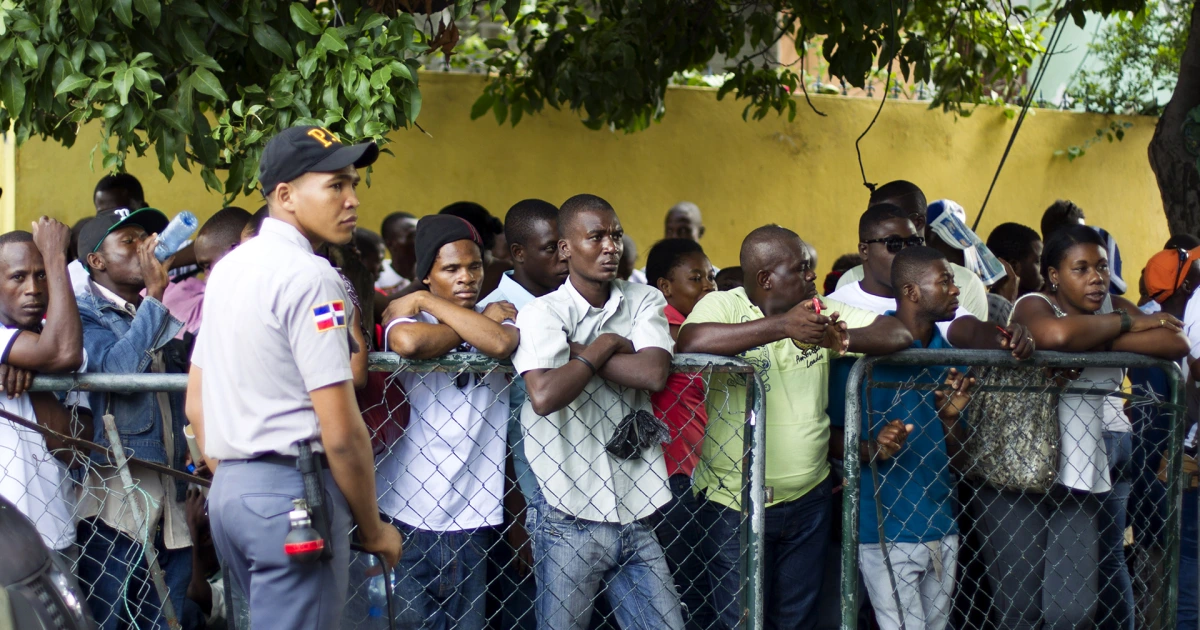
Dominican Republic President Luis Abinader issued a stark warning at the United Nations General Assembly on Wednesday, threatening “drastic measures” to protect his country if the U.N.-backed anti-gang mission in neighboring Haiti fails.

Abinader, addressing world leaders in New York, did not specify what actions his administration might take. His comments underscore growing regional concerns about Haiti’s deteriorating security situation, where gangs control approximately 80% of the capital, Port-au-Prince.

The Dominican leader expressed gratitude to Kenya for leading the mission in Haiti, with nearly 400 Kenyan police officers recently joined by personnel from Jamaica and Belize. However, he noted that the current deployment falls significantly short of the 2,500 personnel pledged by various countries.

Abinader emphasized the necessity for the mission to be fully established to enable free and transparent elections in Haiti, which has not held polls since 2016. “Practically one year from the holding of elections, the conditions are still not in place to do so,” he stated, adding, “We cannot allow the effort made to date to fail. If that were to happen, Haiti’s collapse would be imminent.”

The president highlighted the strain Haiti’s instability has placed on the Dominican Republic, citing that 10% of medical appointments in his country last year involved Haitians, and 147,000 of 200,000 foreign minors in the Dominican education system are of Haitian origin.

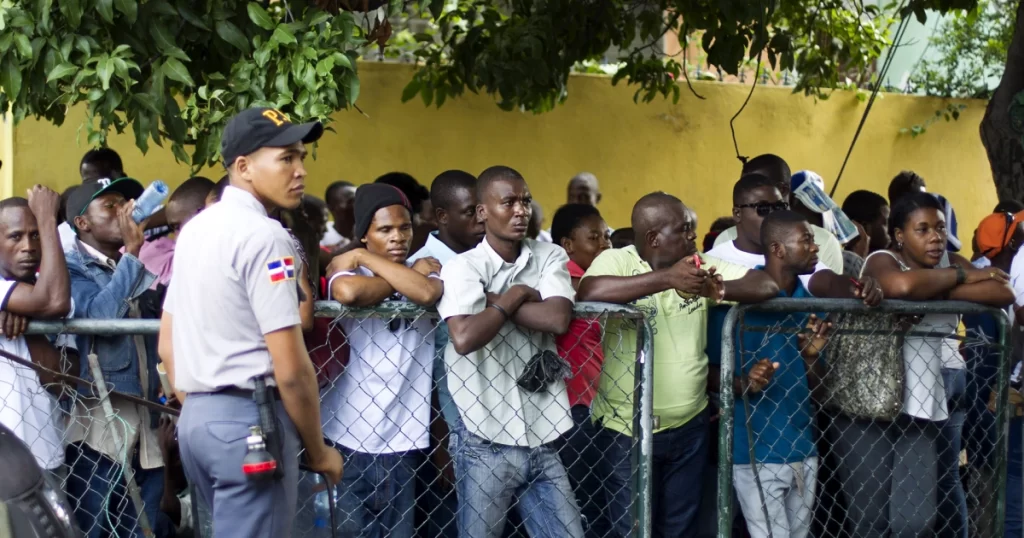
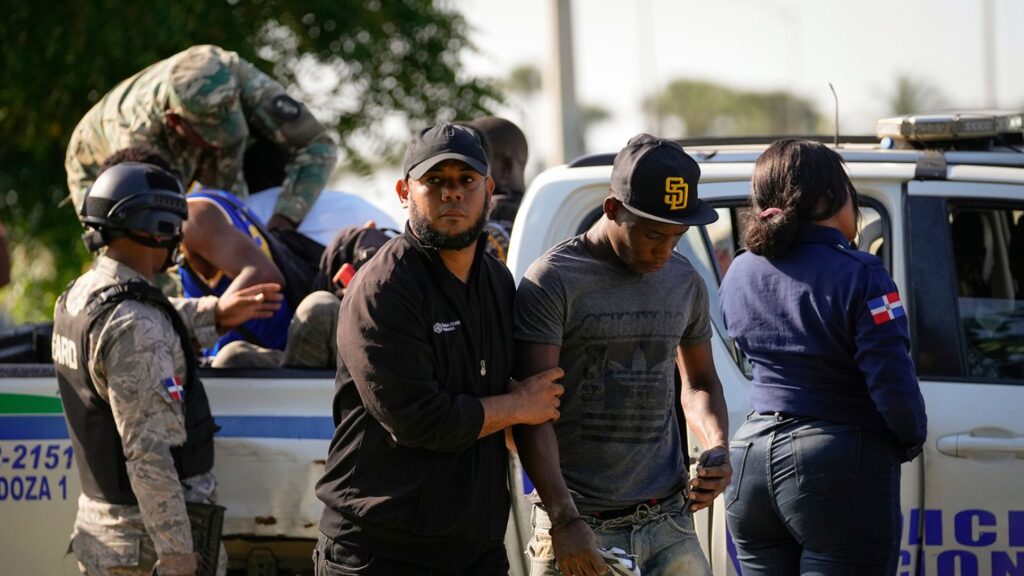
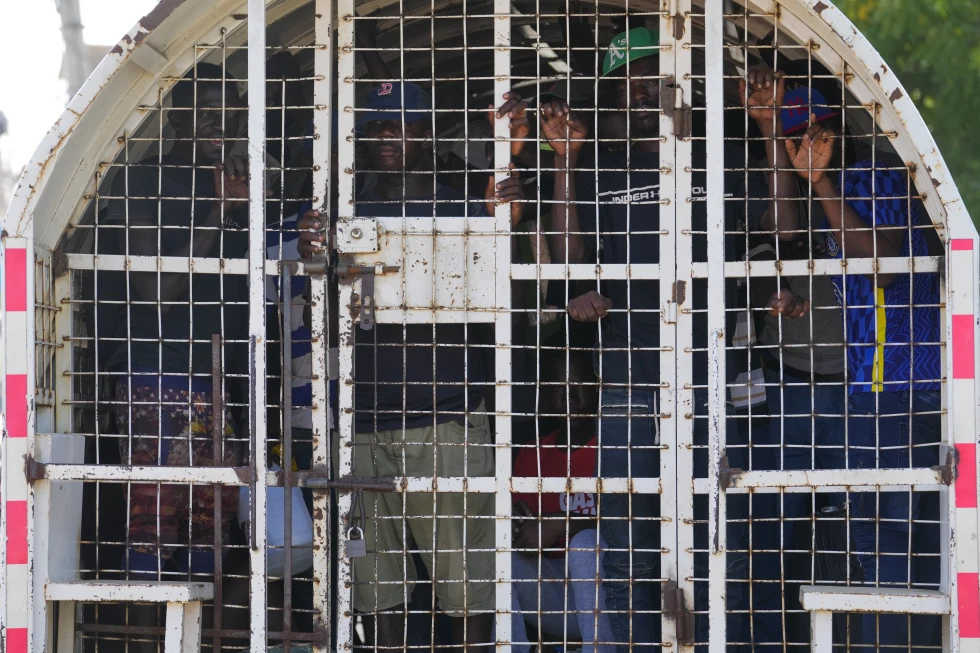
Abinader’s administration has faced criticism for its treatment of Haitians, with government data showing over 170,000 deportations of individuals believed to be Haitian last year. The U.N.’s International Organization for Migration estimates this number to be closer to 224,000.

The speech comes as the U.S. government warns that the Haiti mission lacks resources, with discussions ongoing about a possible U.N. peacekeeping mission. U.S. Secretary of State Antony Blinken met with officials at the U.N. to discuss the mission’s status, contributions, and future deployments.

As Haiti’s crisis deepens, with over 3,600 reported killings in the first half of this year and nearly 700,000 Haitians displaced, Abinader’s warnings reflect growing regional anxiety about the potential for further instability in the Caribbean.

The situation remains fluid, with the international community watching closely as efforts to stabilize Haiti continue amid escalating violence and political uncertainty.

South Africa Repatriates Remains of 42 Anti-Apartheid Activists from Zimbabwe and Zambia-AP

0

The remains of 42 South African freedom fighters who died in exile in Zimbabwe and Zambia during the struggle against apartheid were repatriated to their home country on Wednesday. The solemn ceremony took place at Waterkloof Air Force Base in Pretoria, where government officials and family members received the remains.

This repatriation is part of a broader government initiative to bring closure to families whose loved ones died abroad while serving in the underground structures of both the African National Congress (ANC) and Pan Africanist Congress (PAC). Many activists left South Africa during the apartheid era to receive military training or to avoid arrest for their anti-apartheid activities, with Zimbabwe and Zambia serving as key bases for underground operations.

Among the repatriated remains were those of prominent struggle stalwarts Duma Nokwe, Florence Mophosho, and Basil February. These individuals played significant roles in the fight against white minority rule, which ended in 1994.

Deputy President Paul Mashatile, speaking at a Heritage Day event on Tuesday, emphasized the educational importance of this repatriation. “As a national memory project, this initiative aims to commemorate, celebrate, educate, promote, preserve, conserve, and provide a durable testament to South Africa’s road to freedom,” Mashatile stated.

President Cyril Ramaphosa is scheduled to host a homecoming ceremony for the repatriated remains on Friday before they are handed over to families for reburial. This event is expected to be a poignant moment of national reflection on the sacrifices made during the anti-apartheid struggle.

The government has announced that this repatriation effort is ongoing, with plans to bring home the remains of other South Africans from countries including Lesotho, Ethiopia, Tanzania, Angola, and Russia. Deputy Defense Minister Bantu Holomisa expressed hope that this process would help more families find closure, stating, “I hope this process will culminate in getting more people in other countries who died under difficult conditions. We welcome them back to connect with their families.”

Trump Describes Ukraine as ‘Demolished,’ ‘Can’t be Rebuilt’ Questions U.S. Aid in Ongoing Conflict

Former President Donald Trump painted a bleak picture of Ukraine on Wednesday, describing the country as “demolished” and its people as “dead,” raising questions about his potential approach to the conflict if re-elected.

Speaking at an economic event in North Carolina, Trump argued that Ukraine should have made concessions to Russian President Vladimir Putin before Russia’s February 2022 invasion. “Any deal — the worst deal — would’ve been better than what we have now,” Trump stated, suggesting that even significant territorial concessions would have been preferable to the current situation.

Trump’s comments came in response to recent criticism from Ukrainian President Volodymyr Zelenskyy, who told The New Yorker that Trump “doesn’t really know how to stop the war even if he might think he knows how.” Trump began his remarks by addressing this, saying, “The president of Ukraine is in our country and he’s making little nasty aspersions toward your favorite president, me.”

The former president described Ukraine as a country in ruins outside its capital, Kyiv, short on soldiers and losing population to war deaths and emigration. He questioned whether Ukraine has any remaining leverage in potential peace negotiations.

Trump laid blame for the conflict on President Joe Biden and Vice President Kamala Harris, accusing them of encouraging the war by pledging to help Ukraine defend itself rather than pushing for territorial concessions to Russia. “Biden and Kamala allowed this to happen by feeding Zelenskyy money and munitions like no country has ever seen before,” Trump said.

These remarks follow a recent debate in which Trump pointedly refused to say whether he wanted Ukraine to win the war. On Tuesday, he praised Russia’s military prowess, saying that wars are “what they do.”

Trump’s comments contrast sharply with the current U.S. administration’s stance. Zelenskyy is currently in the U.S. to attend the U.N. General Assembly and is expected to present what he calls a victory plan for the war, including requests for long-range Western weapons to strike Russian targets.

While Trump did not directly attack Putin’s reasoning for the invasion, he suggested that the conflict would not have started had he been in office, adding that Putin is “no angel.”

As the 2024 presidential election approaches, Trump’s views on the Ukraine conflict and U.S. foreign policy continue to diverge significantly from those of the current administration, potentially signaling a major shift in U.S. approach to the region if he were to return to office.