Home Blog Page 692

Congo Court Sentences 3 Americans, 34 Others to Death on Coup Charges

0

A military court in the Democratic Republic of Congo handed down death sentences Friday to 37 people, including three American citizens, after convicting them of participating in a failed coup attempt against President Felix Tshisekedi’s government.

The verdicts, delivered in an open-air military court and broadcast live on national television, mark a significant escalation in Congo’s approach to political dissent and have drawn international attention to the country’s justice system.

Among those sentenced were a British national, a Belgian, and a Canadian, alongside several Congolese citizens. The charges included terrorism, murder, and criminal association stemming from a botched coup attempt in May led by Christian Malanga, a little-known opposition figure.

The court acquitted 14 individuals in the same trial, which began in June. All defendants have the right to appeal the verdict.

The coup attempt, which targeted the presidential palace and a close ally of President Tshisekedi, resulted in six deaths. Malanga was fatally shot while resisting arrest after live-streaming the attack on social media, according to the Congolese army.

Marcel Malanga, the 21-year-old American son of Christian Malanga, was among those convicted. His mother, Brittney Sawyer, has maintained her son’s innocence, stating he was merely following his father, who considered himself the leader of a shadow government in exile.

The other two Americans sentenced were Tyler Thompson Jr. and Benjamin Reuben Zalman-Polun, 36. Thompson’s family claims he traveled to Africa from Utah with the younger Malanga for what they believed was a vacation, with no intentions of entering Congo or engaging in political activism.

Zalman-Polun reportedly had connections to Christian Malanga through a gold mining company established in Mozambique in 2022, according to official Mozambican government publications and reports from the Africa Intelligence newsletter.

Last month, military prosecutor Lt. Col. Innocent Radjabu called for death sentences for all defendants, except one suffering from “psychological problems.”

The sentences come in the wake of Congo’s recent reinstatement of the death penalty, lifting a moratorium that had been in place for over two decades. This move reflects the government’s struggle to curb violence and militant attacks across the country.

The case has raised concerns among human rights organizations and the international community about the fairness of Congo’s military justice system and the country’s use of capital punishment. It also highlights the complex political landscape in Congo, where allegations of coup attempts and political instability remain prevalent.

As the defendants prepare to appeal their sentences, the case continues to draw scrutiny from international observers, potentially impacting diplomatic relations between Congo and the countries whose citizens have been sentenced.

The U.S. State Department has not yet commented on the verdicts, but the case is likely to prompt diplomatic interventions on behalf of the American citizens involved.

Justin Timberlake Pleads Guilty to Impaired Driving in New York Hamptons

Pop star Justin Timberlake pleaded guilty to impaired driving on Friday, resolving a criminal case stemming from his June arrest in New York’s Hamptons. The 43-year-old singer and actor appeared in Sag Harbor Village Court to enter his plea, facing consequences for an incident that occurred in the early hours of June 18.

Judge Carl Irace sentenced Timberlake to a $500 fine with a $260 surcharge, 25 hours of community service, and mandated him to make a public safety announcement about the dangers of impaired driving. The judge expressed disappointment with the initial plea deal proposed by prosecutors, adding the community service requirement to ensure a more reflective period for the star.

During the proceedings, Timberlake remained standing and delivered a remorseful statement. “I try to hold myself to a very high standard, and this was not that,” he told the court. He acknowledged the strain his actions had placed on the small community of Sag Harbor and expressed gratitude for the opportunity to move forward.

Outside the courthouse, Timberlake addressed the media and onlookers, urging others to learn from his mistake. “Even if you’ve had one drink, don’t get behind the wheel of a car,” he emphasized, listing alternatives such as calling a friend, using ride-sharing apps, or taking a taxi.

The arrest occurred when police observed Timberlake running a stop sign in the village center, veering out of his lane, and exiting his BMW smelling of alcohol. Court filings described the Tennessee native as having “bloodshot and glassy” eyes, slowed speech, and poor performance on sobriety tests.

Edward Burke Jr., Timberlake’s attorney, maintained that his client had consumed only one drink over two hours at the American Hotel. “Contrary to what was reported, he wasn’t drinking other peoples’ drinks, or warned in advance not to drive,” Burke stated, adding that Timberlake was polite and cooperative during his arrest.

The incident has potentially far-reaching consequences for Timberlake’s driving privileges. Legal expert Kenneth Gober noted that refusing a Breathalyzer test, as Timberlake did, triggers an automatic license suspension in New York, which should be enforced in other states due to the interstate Driver’s License Compact.

Timberlake, a 10-time Grammy winner, hasn’t publicly addressed the arrest beyond a brief acknowledgment during a Chicago concert on June 21, where he told the audience, “It’s been a tough week.”

Kenyan Mother Arrested After Bodies of Two Daughters Exhumed from Shallow Grave

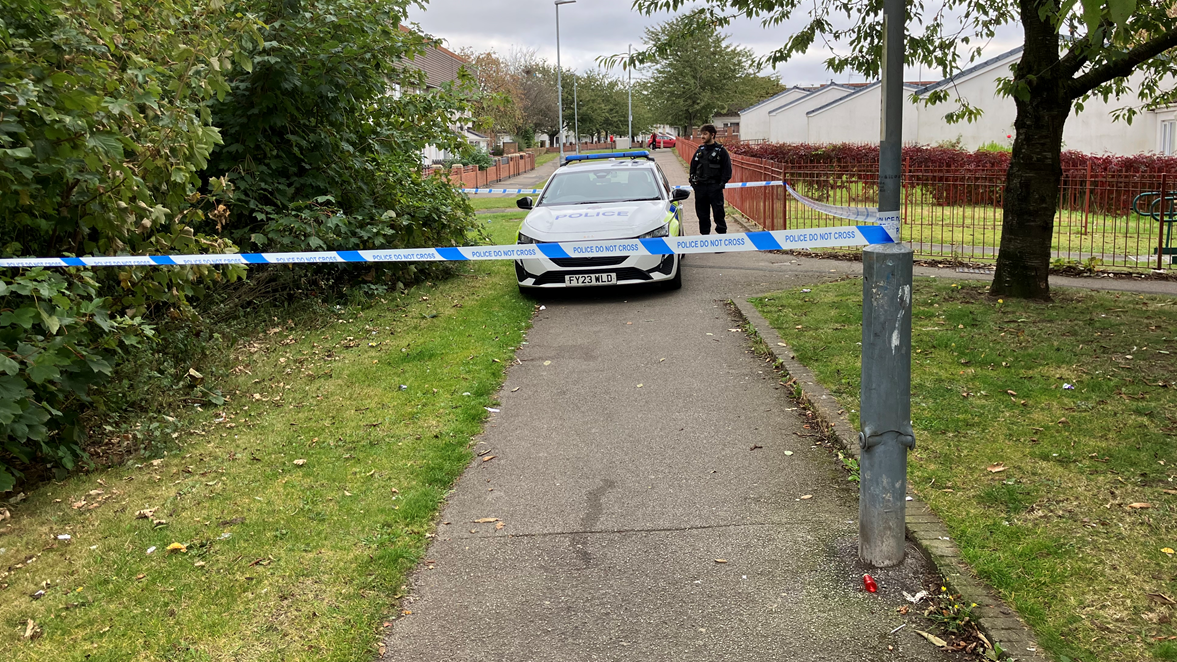
Kenyan authorities have arrested a middle-aged woman in connection with the murder of her two daughters, aged 12 and 9, whose bodies were discovered in a shallow grave in Nyatembe Village, Sotik Sub-county, on Wednesday. The woman’s male partner, considered the prime suspect, remains at large as police intensify their search.

Lenny Kirui, the Chemagel location chief, confirmed that the girls had been reported missing for a week by a family member. The grim discovery was made after neighbors became suspicious of a makeshift grave in a nearby tea farm.

“The community’s vigilance led to this crucial breakthrough in the case,” Kirui stated. “It’s a tragedy that has shocked our entire region.”

The investigation gained momentum when the local area manager visited the children’s school and learned they had been absent for four days. This information prompted a report to Chebongi Assistant Chief, who alerted Sotik police officers.

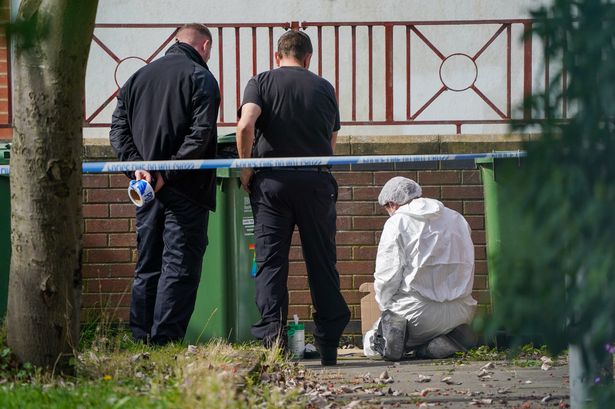
Upon securing the scene, police exhumed the grave, revealing the decomposing bodies of the two girls. Homicide officers from Bomet County have transferred the remains to Kapkatet Hospital mortuary for autopsy.

A police spokesperson, speaking on condition of anonymity due to the ongoing investigation, said, “We are pursuing several leads, including the whereabouts of the mother’s partner, who fled shortly after the crime was discovered.”

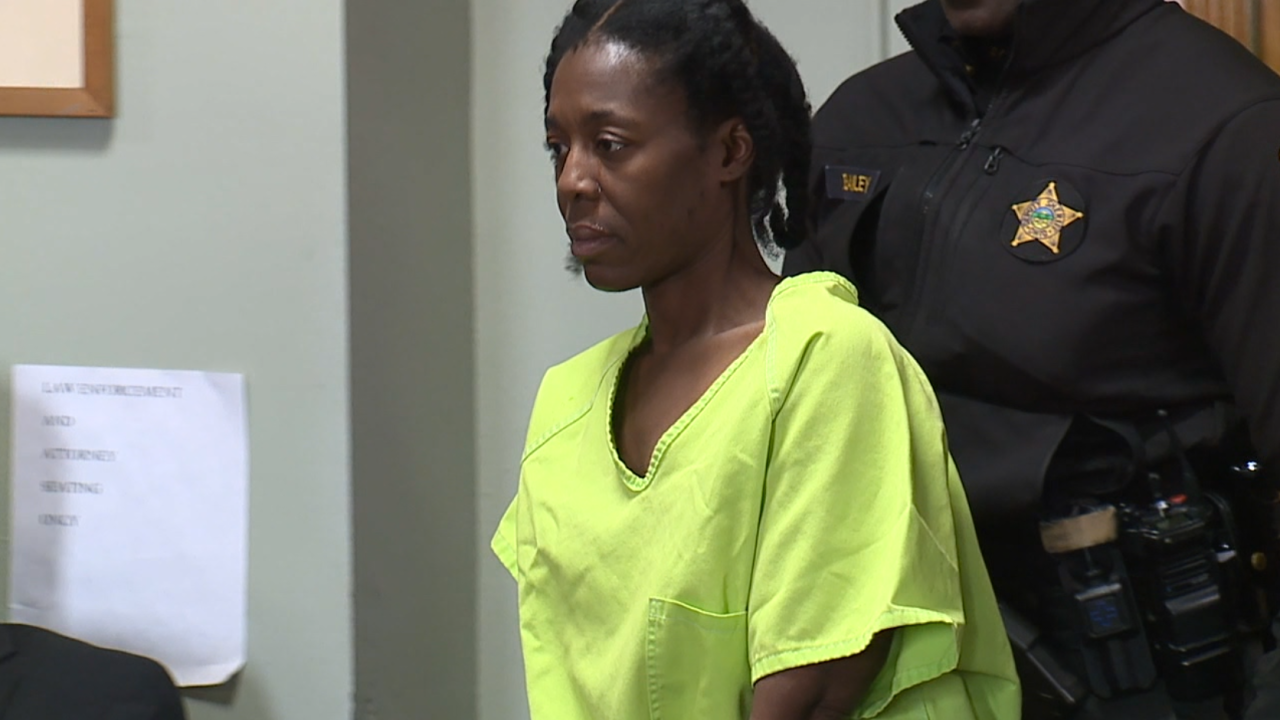
The case has sent shockwaves through the community, raising concerns about child safety and domestic violence. Local leaders have called for increased vigilance and reporting of suspicious activities.

“This heinous act underscores the need for stronger community bonds and prompt reporting of missing persons,” said a representative from a local child protection organization. “We must work together to prevent such tragedies.”

Lindaikejisblog.com

Botswana’s Exiled Ex-President Khama Returns, Court Suspends Arrest Warrants

Former Botswana President Ian Khama made a dramatic return to his homeland on Friday, ending nearly three years of self-imposed exile to face charges of illegal firearm possession and receiving stolen property. The return of the influential political figure comes just weeks before a crucial national election, heightening tensions in the southern African nation.

Khama, 70, appeared before a magistrate’s court in Gaborone, where two arrest warrants issued against him in April 2022 were suspended. The former president had been living in exile, primarily in neighboring South Africa, since late 2021 following a bitter fallout with his successor, President Mokgweetsi Masisi.

Magistrate Mareledi Dipate presided over the hearing, where Khama faced allegations including unlawful possession of a firearm, receiving stolen property, and procuring the registration of a firearm by false pretense. Khama has consistently denied these charges, claiming they are politically motivated.

The son of Botswana’s founding president, Seretse Khama, Ian Khama’s return adds a new dimension to the upcoming October 30 national election. Khama, who quit the ruling Botswana Democratic Party (BDP) in 2019, has thrown his support behind the opposition Botswana Patriotic Front. He had previously stated his intention to return to Botswana to help unseat President Masisi, his former ally turned rival.

The political landscape in Botswana, long considered one of Africa’s most stable democracies, has been increasingly turbulent since the rift between Khama and Masisi became public. Khama’s exile and subsequent legal troubles have been seen by some as an attempt to neutralize a powerful political opponent.

Khama’s return and court appearance have drawn significant attention from both supporters and critics. Outside the courthouse, a mix of curious onlookers and political supporters gathered, highlighting the ex-president’s enduring influence in Botswana’s political sphere.

The suspension of the arrest warrants allows Khama to remain in Botswana, potentially playing a more active role in the opposition’s campaign efforts. However, the legal proceedings against him are set to continue, with the next court appearance scheduled for September 23.

The charges against Khama stem from a broader investigation into alleged misuse of state resources during his presidency, which ended in 2018. The case has been a focal point of political discourse in Botswana, with supporters of Khama claiming persecution and those aligned with Masisi arguing for accountability.

As Botswana approaches the October elections, Khama’s return adds another layer of complexity to an already heated political climate. The outcome of both the legal proceedings against Khama and the upcoming election could have significant implications for the future of Botswana’s democracy and its reputation for political stability in the region.

International observers are closely watching these developments, as Botswana’s political stability has long been seen as a model for other African nations. The handling of Khama’s case and the conduct of the upcoming election will be crucial tests for the country’s democratic institutions and rule of law.

Cristiano Ronaldo Reaches 1 Billion Social Media Followers, Setting New Record

Soccer superstar Cristiano Ronaldo has achieved an unprecedented milestone in the digital world, becoming the first person to amass 1 billion total followers across various social media platforms. This staggering figure combines his followings on Instagram, Facebook, Twitter, YouTube, and Chinese platforms Weibo and Kuaishou.

Photo: Dailymailonline

While the number doesn’t represent 1 billion unique individuals due to cross-platform following and the presence of bot accounts, social media expert Paolo Pescatore of PP Foresight describes it as a “staggering number” that will captivate media and brands alike. “What an achievement, and it further underlines the fundamental shift taking place in media,” Pescatore told the BBC, emphasizing “the power to reach new, younger audiences thanks to technology.”

Ronaldo’s digital dominance far outstrips that of his longtime on-field rival, Lionel Messi, who trails with 623 million total followers. Other celebrities with significant social media presence include actor/singer Selena Gomez (690 million), singer Justin Bieber (607 million), and singer Taylor Swift (574 million).

The Portuguese footballer’s recent foray into YouTube contributed significantly to reaching this milestone. His channel, launched just last month, quickly amassed 50 million subscribers within a week. The content primarily features conversations between Ronaldo, his wife Georgina Rodríguez, and former Manchester United teammate Rio Ferdinand.

Ronaldo’s social media supremacy mirrors his record-breaking career on the pitch. He holds records for being the top scorer in UEFA Champions League history, having the most goals in the European Championship, and making more international appearances than any other player. Recently, he became the first footballer to score 900 top-level career goals.

Despite his commanding lead in follower count, Ronaldo still has room for growth in the digital sphere. Unlike some of his celebrity counterparts, he has yet to establish a presence on platforms like TikTok or Threads.

This digital dominance translates directly to Ronaldo’s earning power. According to Forbes, his total earnings now stand at $260 million, the highest of any athlete globally. This figure underscores the increasing importance of social media influence in determining an athlete’s marketability and overall earning potential.

Ronaldo’s achievement highlights the evolving landscape of celebrity influence and the growing intersection between sports, entertainment, and digital media. As brands and marketers continue to seek ways to reach younger, tech-savvy audiences, Ronaldo’s unprecedented social media following cements his status not just as a football icon, but as a global digital powerhouse.

The milestone also raises questions about the future of celebrity influence and the potential for other public figures to reach similar levels of digital engagement. As social media platforms continue to evolve and new ones emerge, the race for followers and digital influence shows no signs of slowing down.

Tunisians to Protest Alleged Authoritarianism Ahead of Presidential Vote

Tunisians are set to stage nationwide protests on Friday against what organizers call a surge in authoritarianism, as controversy swirls around the country’s upcoming presidential election scheduled for October 6.

The newly-formed “Tunisian Network for the Defense of Rights and Freedoms” is spearheading the demonstrations, aiming to highlight concerns over candidate arrests, ballot disqualifications, and lifetime bans from politics.

Mohieddine Lagha, Secretary-General of the Tunisian League for Human Rights, explained the motivations behind the protests: “We’re reacting to the violation of rights and freedoms we’re seeing in Tunisia today, and to citizens being deprived of their right to run in the presidential vote.”

Central to the controversy is the Independent High Authority for Elections (ISIE), which has clashed with judges over candidate eligibility. Critics accuse the commission, whose members are appointed by President Kais Saied, of lacking independence.

The ISIE has rejected several election observer applications and refused to add three candidates to the ballot who won court appeals challenging their earlier rejections. One such candidate is former health minister Abdellatif Mekki, arrested in July on what his attorneys claim are political charges and initially banned from politics for life.

Ahmed Neffati, Mekki’s campaign manager, told The Associated Press, “We called for large participation in this protest, hoping to pressure for a massive mobilization. Tunisians won’t let go of their right for a free and democratic election.”

The political climate in Tunisia has grown increasingly tense in recent months. President Saied sacked the majority of his cabinet last month, while critics decry a wave of arrests and gag orders on leading opposition figures as politically motivated.

International organizations have expressed concern over the situation. The International Crisis Group recently described Tunisia’s political landscape as “deteriorating,” while Human Rights Watch has called on the election commission to reinstate disqualified candidates.

Bassam Khawaja, deputy Middle East and North Africa director for Human Rights Watch, stated, “Holding elections amid such repression makes a mockery of Tunisians’ right to participate in free and fair elections.”

As Friday’s protests approach, tensions continue to mount in this North African nation, once hailed as a beacon of democracy in the region following the 2011 Arab Spring. The outcome of these demonstrations and the subsequent election could have far-reaching implications for Tunisia’s democratic future.

Indian Lawmaker, Trade Group Urge Suspension of Amazon, Flipkart After Antitrust Breaches

A prominent lawmaker from India’s ruling Bharatiya Janata Party (BJP) and a major retailers’ association have called for the suspension of operations of e-commerce giants Amazon and Walmart-owned Flipkart in India, following reports of antitrust violations. This development marks a significant escalation in the ongoing tension between traditional retailers and global e-commerce platforms in one of the world’s fastest-growing online markets.

Praveen Khandelwal, a BJP lawmaker and secretary general emeritus of the influential Confederation of All India Traders (CAIT), told Reuters on Friday that he plans to hold discussions with the federal government and Commerce Minister Piyush Goyal to push for immediate action against these companies. “The practices of these companies are greatly damaging our manufacturing sector,” Khandelwal stated, emphasizing the need for swift intervention.

The call for suspension comes in the wake of a Reuters exclusive report revealing that confidential antitrust investigation reports have found Amazon and Flipkart in violation of local competition laws. These reports, which are not public, allegedly show that both companies have been giving preferential treatment to select sellers and prioritizing certain listings, actions that are seen as detrimental to fair competition.

CAIT, representing approximately 80 million shopkeepers across India, has long been a vocal critic of the business practices employed by Amazon and Flipkart. The organization argues that these practices unfairly disadvantage smaller retailers, a constituency that forms a crucial voting bloc for Prime Minister Narendra Modi’s ruling party.

The timing of these allegations is particularly significant, coming ahead of key state elections in the industrial hubs of Maharashtra and Haryana. The retail sector’s concerns could potentially influence political discourse and policy decisions in the run-up to these elections.

Neither Amazon India nor Flipkart responded to requests for comment on the calls for suspension. Both companies have previously denied any wrongdoing and maintained that they comply with Indian laws. They have not yet commented on the Competition Commission of India (CCI) reports cited in the Reuters investigation.

The current controversy is reminiscent of a 2021 Reuters investigation that uncovered internal Amazon documents showing the company had given preferential treatment to a small group of sellers, some of whom were termed “Special Merchants,” for years. This practice was allegedly used to bypass Indian laws designed to protect smaller retailers.

Adding to the pressure on e-commerce companies, Commerce Minister Goyal publicly criticized Amazon last month, suggesting that the company’s investments often serve to cover its losses rather than providing significant benefits to the Indian market.

Credit: Reuters

TikTok Faces Crucial Court Hearing in Battle Against Potential US Ban

TikTok and its parent company ByteDance are set to face a pivotal moment in their legal battle against a potential ban in the United States, as the U.S. Court of Appeals for the District of Columbia prepares to hear oral arguments on Monday. The hearing could determine the fate of the popular social media platform used by an estimated 170 million Americans, with a possible ban looming as soon as January 19, 2024.

The legal challenge centers on a law passed by Congress in April, which gives ByteDance until January 19 to divest TikTok or face a ban in the United States. TikTok and ByteDance argue that this law is unconstitutional and violates Americans’ free speech rights, describing it as “a radical departure from this country’s tradition of championing an open Internet.”

The timing of this legal battle is particularly significant, as it unfolds during the final weeks of the 2024 presidential election campaign. Both Republican candidate Donald Trump and Vice President Kamala Harris have active TikTok accounts, using the platform to court younger voters, underscoring the app’s political relevance.

Circuit Judges Sri Srinivasan, Neomi Rao, and Douglas Ginsburg will preside over the hearing, considering legal challenges brought by TikTok and its users. Both TikTok and the Justice Department have requested a ruling by December 6, potentially allowing time for the U.S. Supreme Court to review the decision before any ban takes effect.

The law in question was driven by concerns among U.S. lawmakers that China could access data on American users or use the app for espionage purposes. It passed Congress with overwhelming support just weeks after being introduced, reflecting bipartisan apprehension about TikTok’s Chinese ownership.

ByteDance has maintained that divestiture is “not possible technologically, commercially, or legally,” arguing that without court intervention, an unprecedented ban will be implemented on January 19. President Joe Biden, who signed the law in April, has the option to extend the deadline by three months if he certifies that ByteDance is making progress toward a sale.

The White House and supporters of the law emphasize that the measure targets Chinese-based ownership of the app on national security grounds, rather than seeking to eliminate TikTok entirely. They argue for an end to Chinese-based ownership while maintaining that a complete ban on TikTok is not the goal.

This legal battle highlights the complex intersection of technology, national security, and international relations. It also raises questions about the balance between protecting national interests and preserving free speech and open internet principles.

As the court hearing approaches, the tech industry, policymakers, and millions of TikTok users are closely watching the proceedings. The outcome could have far-reaching implications not only for TikTok’s future in the United States but also for the broader landscape of social media regulation and international technology companies operating in the U.S. market.

US Finalizes Steep Tariff Hikes on Chinese Imports, EVs Face 100% Duty

The Biden administration on Friday solidified its stance on trade relations with China, announcing the finalization of significant tariff increases on a wide range of Chinese imports. The move, aimed at bolstering protection for strategic domestic industries, includes a striking 100% duty on Chinese electric vehicles (EVs) set to take effect on September 27.

The Office of the U.S. Trade Representative (USTR) detailed the tariff adjustments, which affect approximately $18 billion worth of goods. Among the most notable changes are a 50% duty on solar cells and a 25% tariff on steel, aluminum, EV batteries, and key minerals, all scheduled to begin on September 27.

In a move that could reshape the semiconductor industry, the USTR also outlined a 50% duty on Chinese semiconductors, including two new categories: polysilicon used in solar panels and silicon wafers. This particular tariff is slated to commence in 2025, giving industries time to adjust supply chains.

Lael Brainard, the top White House economic adviser, defended the decision in an interview with Reuters, characterizing the tariffs as “tough, targeted” measures necessary to counter China’s state-driven subsidies and technology transfer policies. Brainard emphasized the need to diversify the U.S. EV industry away from China’s dominant supply chain.

“The 100% tariff on electric vehicles here does reflect the very significant unfair cost advantage that Chinese electric vehicles in particular are using to dominate car markets at a breathtaking pace in other parts of the world,” Brainard stated. “That’s not going to take place here under the vice president’s and the president’s leadership.”

The tariff adjustments largely maintained the proposals announced in May, disregarding pleas from the auto industry for lower tariffs on graphite and critical minerals essential for EV battery production. The USTR kept unchanged the tariff increase to 25% from zero on lithium-ion batteries, minerals, and components, with the hike for EV batteries taking effect September 27 and those for other devices, such as laptops and cell phones, starting January 1, 2026.

China has vowed retaliation against what it terms “bullying” tariff hikes, arguing that its EV industry’s success stems from innovation rather than government support. The Chinese embassy in Washington did not immediately respond to requests for comment on the finalized tariffs.

The timing of these tariff increases is significant, coming as both Vice President Kamala Harris and former President Donald Trump court voters in auto and steel-producing states, each positioning themselves as tough on China ahead of the November presidential election. Trump has promised even more aggressive measures, vowing to impose 60% tariffs on all Chinese imports if elected.

The U.S. is not alone in its protectionist stance, with the European Union and Canada also announcing new import tariffs on Chinese EVs, the latter matching the 100% U.S. duties.

While the tariffs are largely aimed at protecting domestic industries, the USTR did provide some relief in certain areas. U.S. port operators received a temporary reprieve from a new 25% tariff on massive ship-to-shore cranes, an industry dominated by China with no U.S. producers. The agency will allow exclusions for Chinese port cranes ordered before May 14, 2024, as long as they are delivered by May 14, 2026.

In the medical sector, tariffs on face masks and surgical gloves were raised to 50% from an initially proposed 25%, but their implementation was delayed to allow a shift to non-Chinese suppliers. The duty on Chinese syringes will immediately rise to 100%, with a temporary exclusion for enteral syringes used to feed infants.

The USTR also announced it would consider requests for tariff exclusions in five Chinese industrial machinery categories and allow tariff exclusions for Chinese solar wafer and cell manufacturing equipment, but not for equipment used to make full solar modules.

As these tariffs take effect, their impact on global trade, supply chains, and diplomatic relations between the U.S. and China will be closely watched. The Biden administration’s approach reflects a delicate balance between protecting domestic industries and navigating the complexities of international trade in an increasingly interconnected global economy.

Jury Awards $6M to Family of Black Lives Matter Protester Killed on Seattle Freeway

A King County jury in Seattle reached a significant verdict Thursday, awarding $6 million to the family of Summer Taylor, a Black Lives Matter protester who was fatally struck by a car on a closed section of Interstate 5 in July 2020. The decision marks a pivotal moment in a case that has drawn attention to protest safety and state responsibility during civil demonstrations.

A photo of Summer Taylor, who suffered critical injuries and died after being hit by a car while protesting over the weekend, sits among flowers at the King County Correctional Facility where a hearing was held for the suspect in their death on July 6, 2020, in Seattle.

Summer Taylor, 24, was killed when a vehicle driven by Dawit Kelete, 30, entered the wrong way onto the interstate during a protest sparked by the murder of George Floyd in Minneapolis. Another protester was critically injured in the incident.

The jury’s decision was twofold: while holding Kelete financially responsible for Taylor’s death, it simultaneously absolved the state of Washington of negligence claims brought by Taylor’s family. This verdict comes after a complex trial that weighed questions of public safety, protest rights, and government accountability.

The $6 million award is divided among Taylor’s family members, with substantial sums allocated to their parents and brother. The lawsuit, filed by Taylor’s family, had alleged that state officials failed to take adequate precautions to protect protesters on the interstate bridge. Karen Koehler, the attorney representing Taylor’s family, argued during closing statements that the state’s negligence was evident in its failure to properly secure the area, citing the absence of patrol cars, spike strips, flashing lights, or barricades.

However, the state’s defense, led by Steve Puz, senior counsel for the Washington Attorney General’s Office, contended that both Taylor and Kelete bore responsibility for the tragedy. Puz emphasized that Taylor’s presence on the freeway was illegal and that the accident could have been avoided if both parties had followed the law.

The incident occurred during a period of nightly protests following George Floyd’s death, with the Washington State Patrol closing sections of I-5 to accommodate demonstrators. Despite these closures, Kelete managed to access the freeway via an exit ramp, highlighting what the plaintiffs saw as a critical security lapse.

Kelete was sentenced in September 2023 to 6.5 years in prison after being convicted of vehicular homicide and other charges related to the incident. His sentencing marked a partial closure to the criminal aspect of the case, while the civil trial sought to address broader questions of responsibility and compensation.

Summer Taylor, remembered as a dedicated advocate for racial and LGBTQ+ justice, worked as a veterinary assistant with aspirations of attending veterinary school at Washington State University. Their death sent shockwaves through Seattle’s activist community and reignited debates about protest safety and policing practices during demonstrations.

The jury’s decision not to find the state negligent may have significant implications for future protests and state policies regarding road closures during civil demonstrations. It underscores the complex legal and ethical considerations surrounding public safety, freedom of assembly, and government responsibility in times of civil unrest.