Surveillance footage from a Maricopa County jail facility has revealed a disturbing incident where a male inmate was seen crawling past a security guard to access the female side of the intake center, according to court documents and local media reports.
Justin Avery, 29, who was in custody for allegedly sexually assaulting five women near Arizona State University’s Tempe campus, was captured on video at 4 a.m. sneaking from the male side of the facility to the female area. The footage, obtained by ABC15 through a records request, shows Avery dropping to the floor and scooting past an apparently unaware guard.
Court documents state that Avery later admitted he “snuck over like a spider” with the intention to “rape” a female inmate. The incident occurred in April but has only recently come to light.
According to the documents, Avery approached a sleeping female inmate and lowered his pants before being spotted by another woman who alerted the guards. He was subsequently charged with an additional count of sexual assault.
The Maricopa County Sheriff’s Office released a statement saying, “We’re appalled by inmate Avery’s actions.” They noted this was the first incident of its kind in the four years since the facility opened and have since added mirrors to improve monitoring of blind spots and reviewed their procedures.
Avery remains in custody and has been “reclassified” due to his behavior. He is scheduled to appear in court on Tuesday.
This incident has raised serious questions about security protocols in the jail facility and the safety of inmates, particularly in gender-segregated areas.
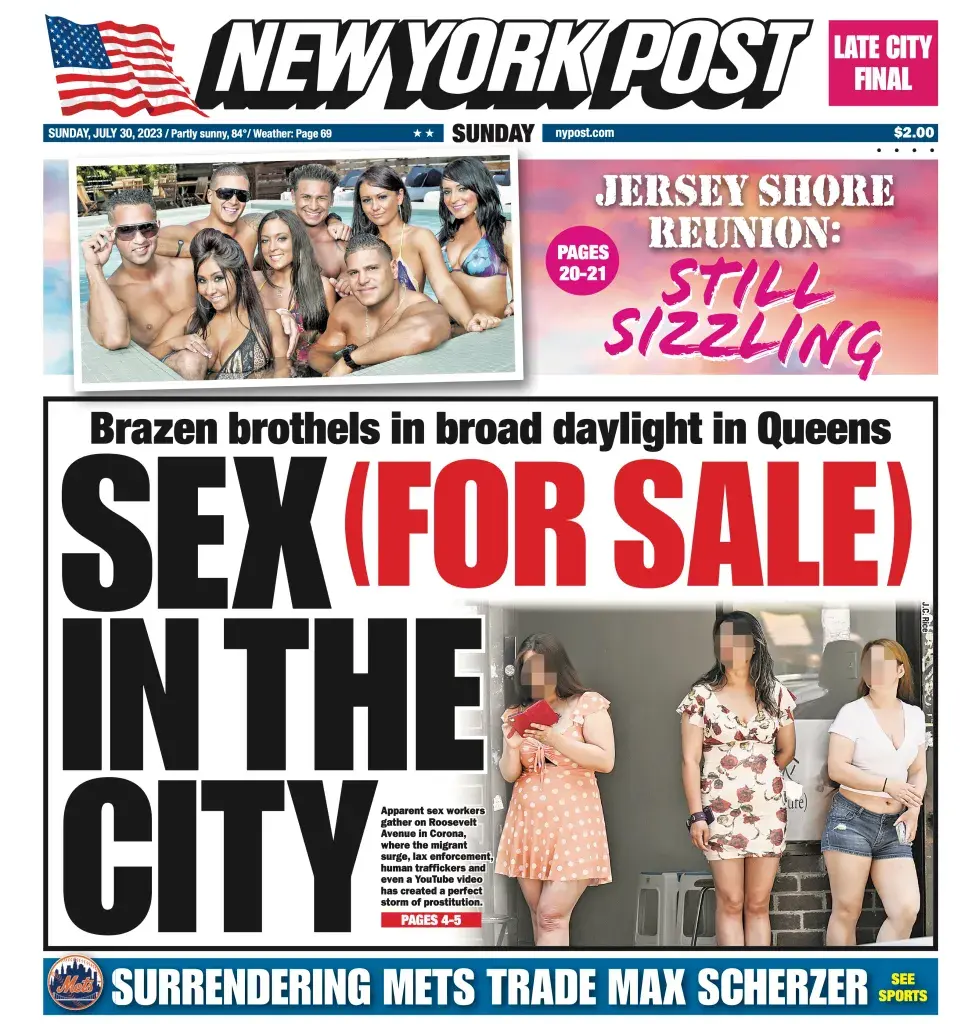
The New York Police Department conducted a late-night raid on Wednesday targeting an alleged migrant-run brothel along Roosevelt Avenue in Jackson Heights, Queens, an area known locally as the “Market of Sweethearts.”
Officers from the vice squad and the 110th Precinct converged on the storefront, detaining both alleged sex workers and customers, according to police sources. The operation focused on a location that had been operating around the clock, as reported by local officials.
Hiram Monserrate, a Democratic district leader and former state lawmaker, described the raided establishment as “the worst of the worst.” He alleged that some sex workers are forced into prostitution to repay debts of up to $50,000 to human traffickers.
The raid follows a series of reports highlighting illegal activities in the area, including prostitution, drug sales, and the peddling of stolen goods. Local merchants have reported an increase in such activities in recent months, with some expressing concerns about threats from individuals engaged in shoplifting.
This operation is part of ongoing efforts by the NYPD to address criminal activities in the neighborhood. Previous raids have targeted illegal vendors and confiscated stolen merchandise, though reports suggest that such activities often resume shortly after police interventions.
The incident occurs against the backdrop of New York City’s ongoing migrant crisis. Since 2022, more than 200,000 migrants have arrived in the city from the U.S. border, with approximately 65,000 currently housed in city-funded shelters and temporary facilities.
City officials and law enforcement continue to grapple with the complex issues surrounding migration, public safety, and community concerns in affected neighborhoods.
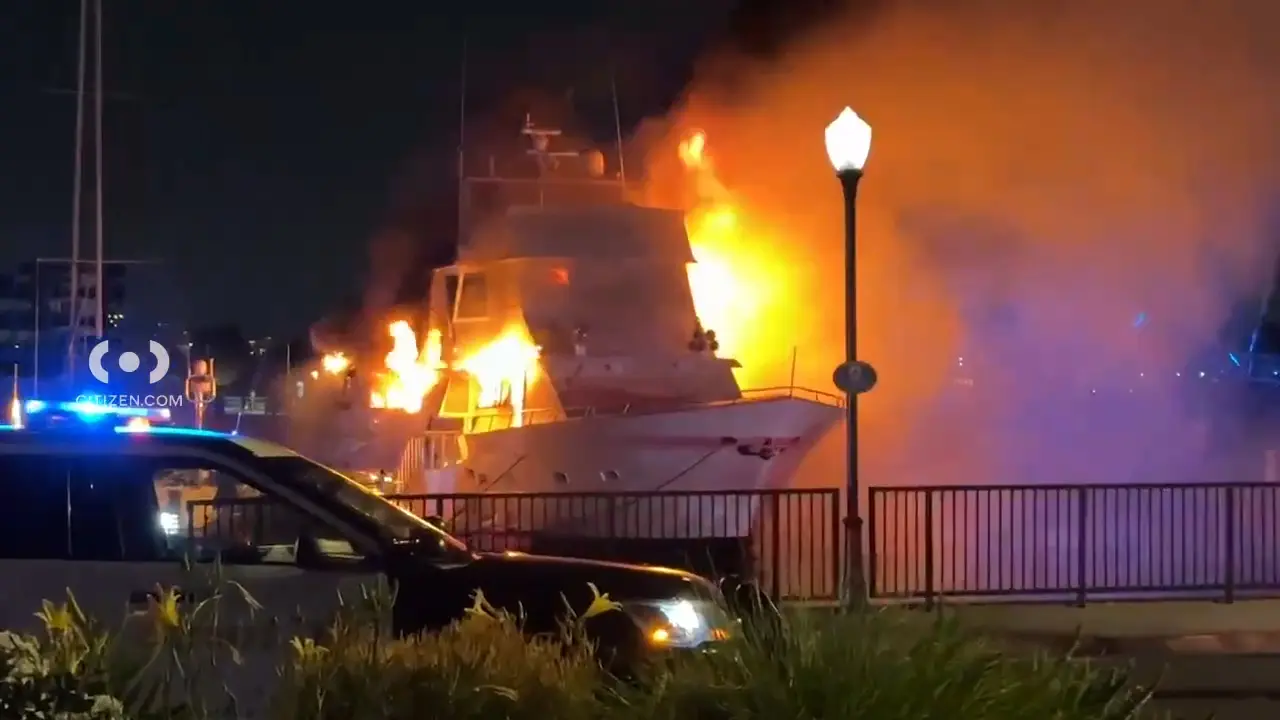
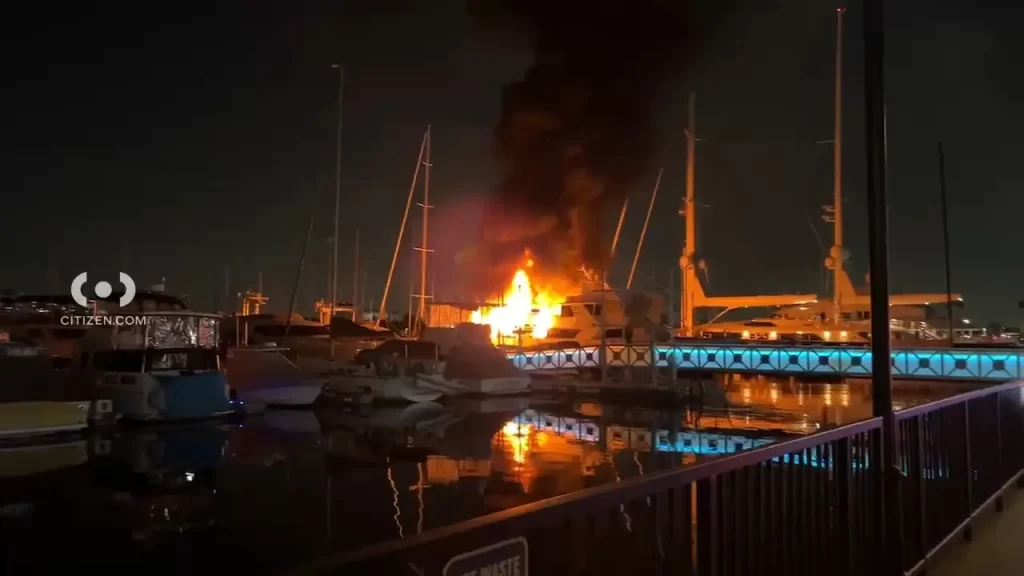
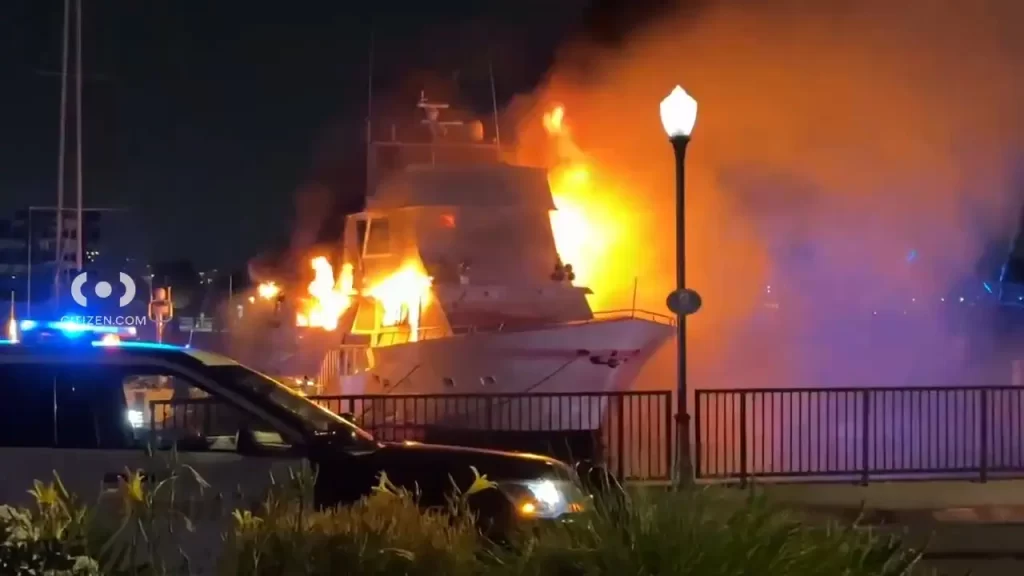
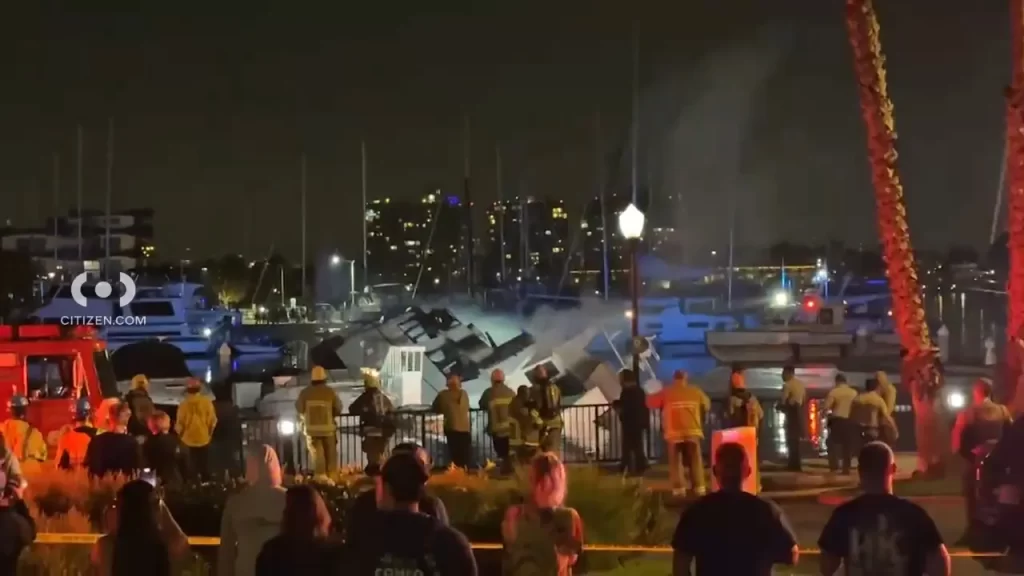
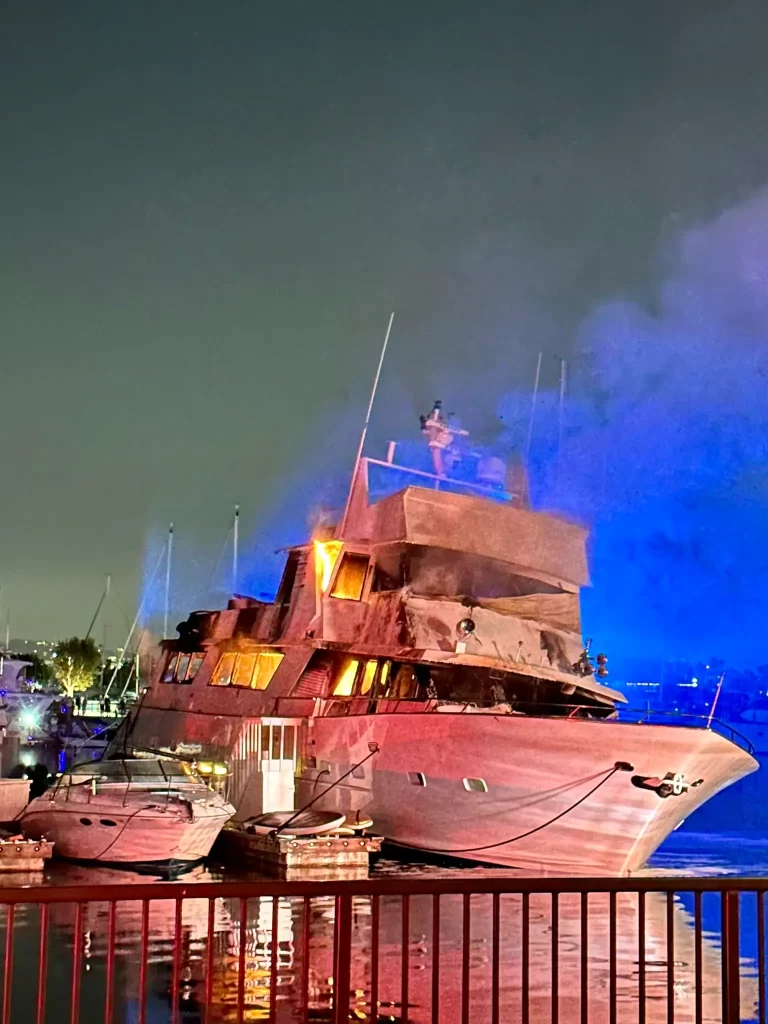
A 100-foot luxury yacht laden with fireworks and approximately 1,000 rounds of ammunition caught fire and sank in Marina del Rey on Wednesday night, prompting a large-scale response from the Los Angeles Fire Department.
The vessel, named “The Admiral,” erupted into flames while docked in the man-made harbor, located about 5 miles south of Santa Monica. Witnesses reported seeing fireworks illuminating the night sky as the blaze intensified, sending plumes of black smoke into the air.
Two people aboard the yacht escaped without injury, according to fire department officials.
Despite initial efforts to extinguish the flames from the exterior, the fire continued to burn inside the vessel, resistant to water hoses. The yacht, valued at nearly $1 million, sank into the 800-acre marina approximately two hours after the fire began, around 10:30 p.m.
Lynn Rose, a local resident, told NBC Los Angeles, “I saw it fully engulfed in flames and like many of us living here, heard an explosion and saw fireworks coming off it, and more flames.”
Firefighting efforts were complicated by a propane source fueling the boat. Officials deployed a floating barrier to prevent debris and diesel fuel from contaminating the surrounding waters.
The Admiral, built by Broward Marine in 1986, featured four cabins including a master suite and could accommodate 10 guests and three crew members. It was last listed for sale in 2018 for $985,000, according to Boat International.
As of Thursday morning, officials had not determined the cause of the fire. The identity of the yacht’s owner has not been disclosed.
The incident raised concerns among nearby residents about the potential spread of fire to other vessels in the marina. The presence of ammunition and fireworks on board added to the complexity and danger of the situation.
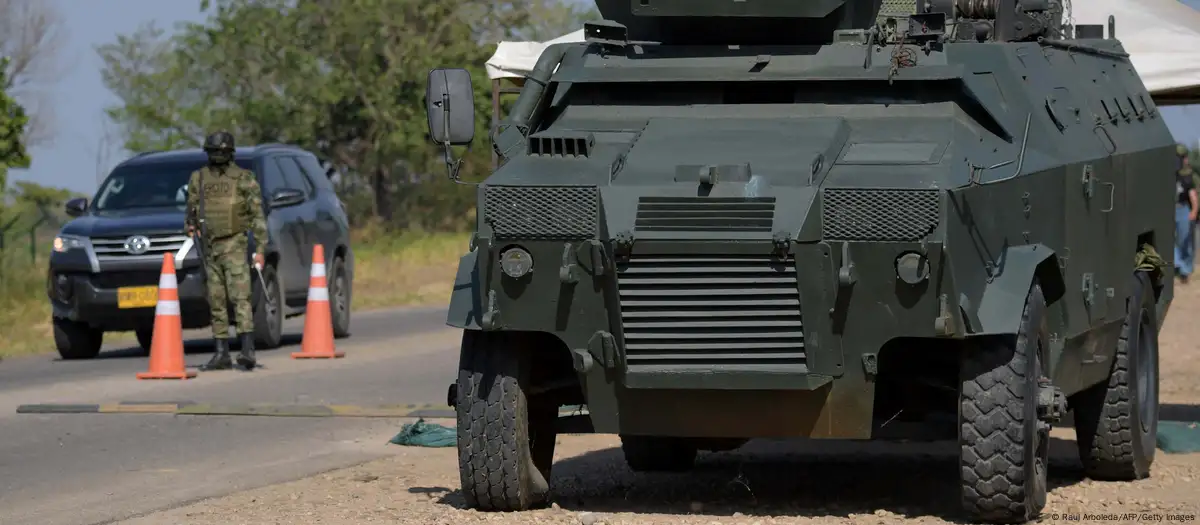
The Colombian government announced Wednesday it has suspended peace negotiations with the National Liberation Army (ELN) guerrilla group following a deadly attack on an army base that left two soldiers dead and more than two dozen injured.
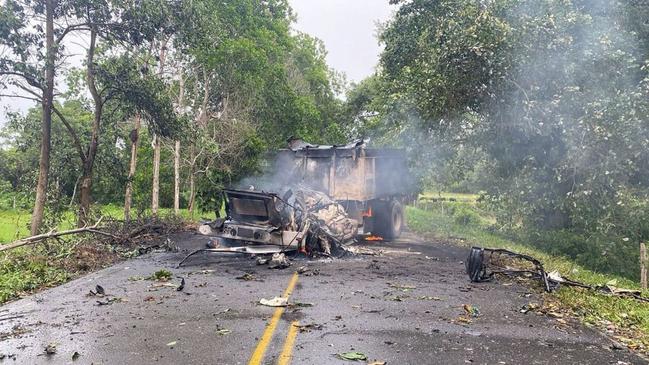
The assault, which occurred Tuesday in a rural area of Colombia’s Arauca province near the Venezuelan border, involved explosives detonated in a truck at the military installation. Colombian authorities have attributed the attack to the ELN.
“Today the peace process is on hold. Its viability is severely diminished and its continuation can only go ahead with an unequivocal demonstration of peace by the ELN,” government negotiators stated on social media platform X.
This decision deals a significant blow to President Gustavo Petro’s flagship “total peace” policy, which aims to end the ELN’s involvement in Colombia’s six-decade-long internal armed conflict. Petro described the attack as one that “practically closes a peace process, with blood.”
The ELN has intensified attacks on military targets since August when it chose not to renew a ceasefire that had been in place since 2023. In response, Colombia’s military resumed operations against the rebel group.
The suspension of talks may lead to the reissuing of arrest warrants for top ELN commanders, who the government believes are currently based in Venezuela and Cuba.
This development marks a critical setback in Colombia’s efforts to achieve lasting peace with one of its longest-standing insurgent groups. The ELN, which has been active since the 1960s, has yet to release an official statement regarding the suspension of talks or the recent attack.
As Colombia grapples with this latest challenge to its peace process, the international community watches closely, recognizing the potential implications for regional stability and the ongoing efforts to address long-standing conflicts in Latin America.
The Czech Republic is struggling to mitigate risks associated with a disproportionately high number of Russian-linked companies operating within its borders, according to recent research and government reports.
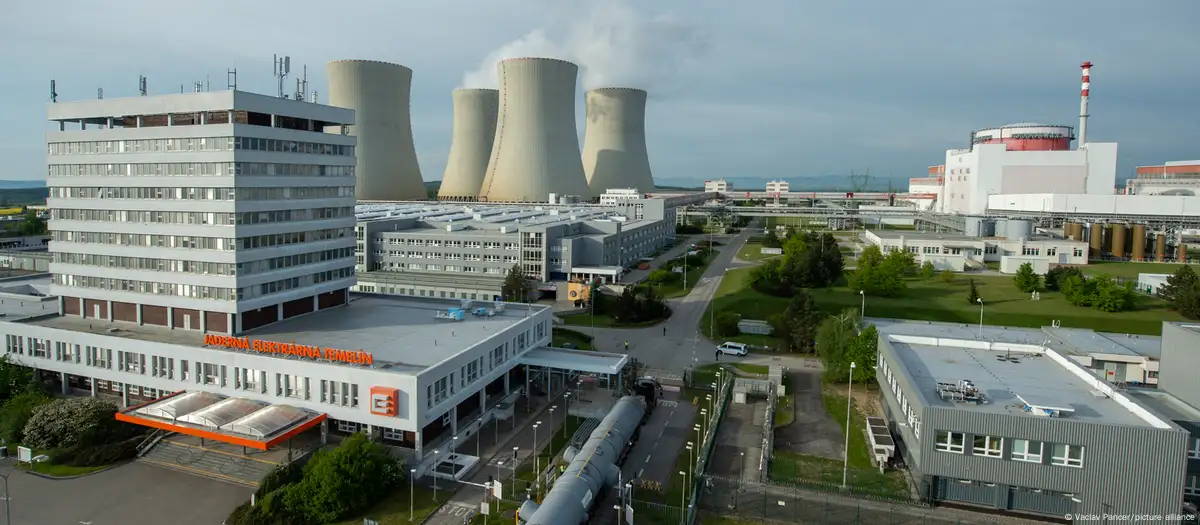
The Czech Republic’s nuclear energy sector still relies heavily on supplies and know-how from Russia
A study by international ratings agency Moody’s reveals that Czechia, with just 2.4% of the European Union’s population, hosts over a quarter of the 46,000 Russian-linked firms in the 27-nation bloc. This concentration far exceeds that of larger economies like Germany, which ranks third with 4,200 such companies.
Pavel Havlicek, an analyst at Prague’s Association for International Affairs, attributes this trend to historical political and business ties forged under Communism, linguistic proximity, and regulatory loopholes. The ongoing war in Ukraine has further contributed to this influx, with business ventures or property purchases offering a path to Czech residency permits for Russians.
Czech Prime Minister Petr Fiala recently warned of the security implications, stating, “We cannot avoid a deeper discussion on how to approach those countries where Russian influence has reached a level that threatens not only the unity of the EU or NATO but also our security.”
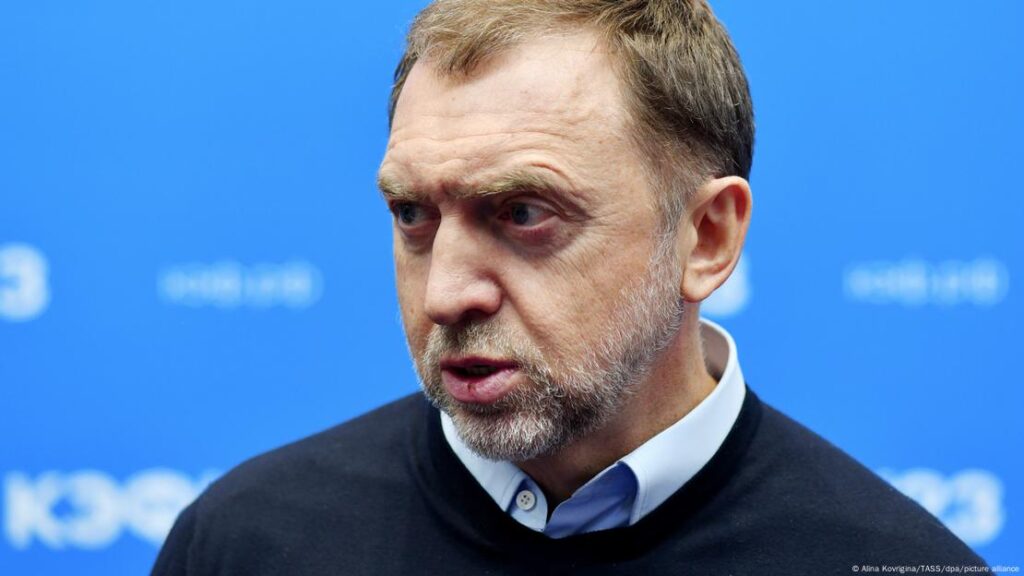
Despite being sanctioned by the EU, Russian oligarch Oleg Deripaska is said to be wielding power through his secret holdings
The Czech counterintelligence agency BIS has long cautioned about internal threats, expressing concern that the high number of Russian-owned companies “does not contribute” to national security. Major worries include the potential for espionage, sanctions violations, and money laundering activities.
Lukas Kraus, a lawyer for the NGO Reconstruction of the State, highlighted the economic impact, noting that money laundering “is helping to disrupt the economy,” particularly in the housing market where property prices have become unaffordable for many Czechs.
The risks extend beyond Czech borders due to the country’s export-dependent economy and strong links with other EU nations, particularly Germany. A report by Prague-based think tank Datlab found that Russian-owned companies, including some linked to sanctioned individuals, secured €2.5 billion ($2.76 billion) worth of public contracts across the EU in 2023 despite sanctions.
Czech PM Fiala is critical of Hungary for its economic ties to Russia, but is seen failing to take steps in his own country
While the Czech government has taken steps to address these issues, including establishing its own sanctions regime, critics argue that problems persist in regulations regarding transparency and enforcement. Datlab estimates that only 35% of likely Russian-owned companies are correctly recorded in Czech registries.
Ondrej Kopecny, head of Transparency International CR, criticized the government’s approach, stating it has failed to establish “long-term strategic and effective solutions or improve the enforcement of existing rules in the name of promoting transparency.”
In response to inquiries, a spokesman for the Ministry of Industry and Trade stated that the ministry “has been monitoring the situation… over the long term” and reviews investments that pose potential security risks.
As Czechia continues to navigate this complex issue, balancing economic interests with national security concerns remains a significant challenge for the government.
The Nigerian government has issued a flood warning for 11 states following the controlled release of water from the Lagdo dam in neighboring Cameroon.
Nigeria’s hydrological agency announced on Wednesday that while the water release from the dam would be gradual, it could potentially cause flooding in affected areas. However, officials stressed there was no immediate cause for alarm.
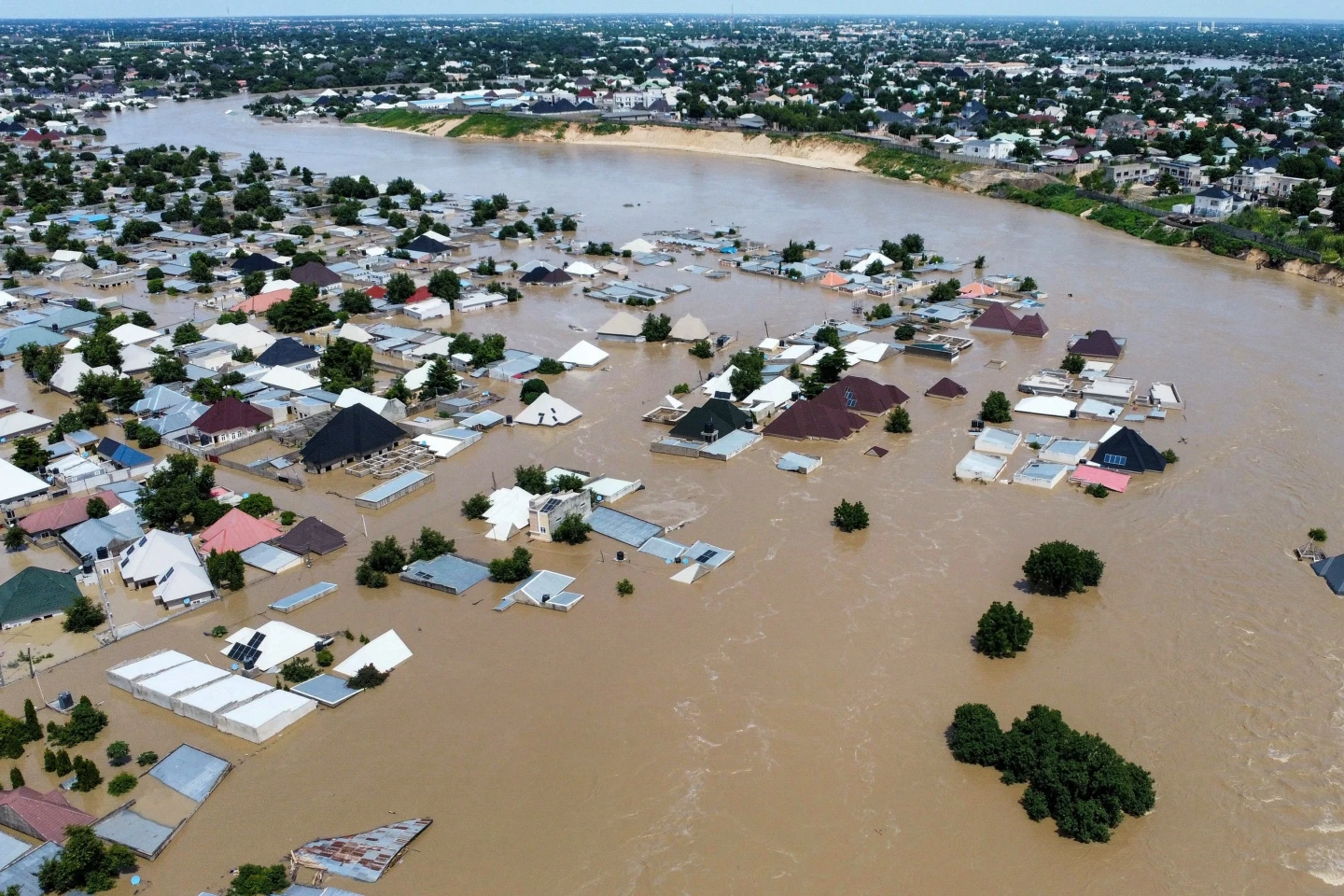
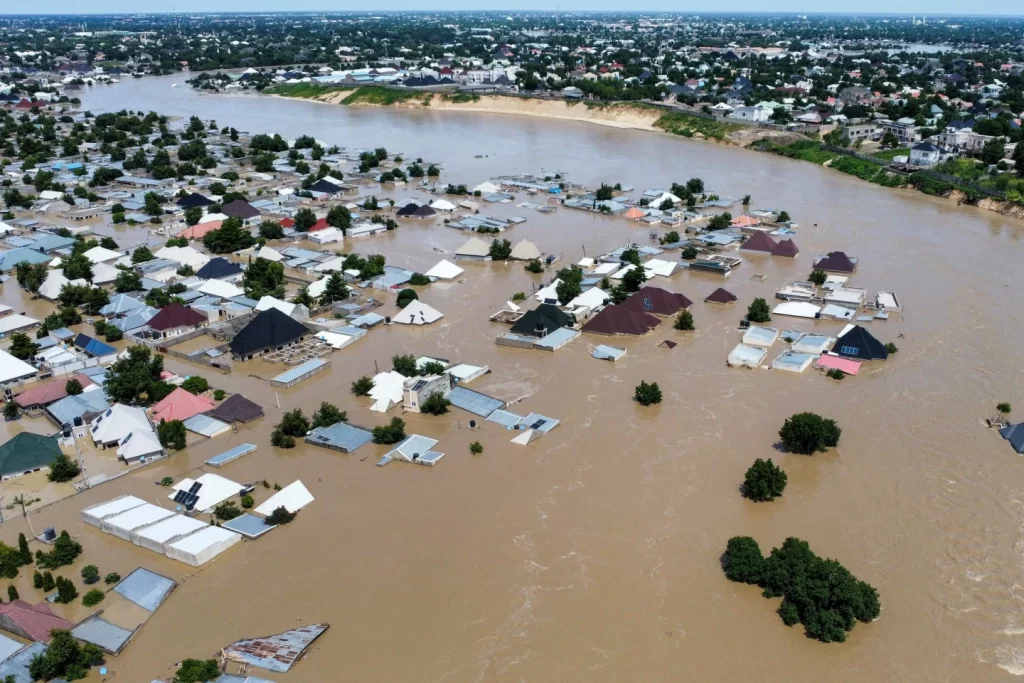
This warning comes as northeastern Nigeria grapples with severe flooding that has already impacted over 400,000 people, according to United Nations reports. The floods have been particularly devastating in Borno state, forcing many residents from their homes into displacement sites.
Earlier this month, flooding in Borno state resulted in 30 fatalities following the collapse of a major dam. Approximately 15% of Maiduguri, the state capital, was submerged.
The flooding has exacerbated the ongoing humanitarian crisis in Nigeria, where armed conflict, especially in the northern regions, has already displaced millions of people.
This year, West Africa has experienced some of its worst flooding in decades, affecting more than 2 million people – triple the number impacted last year. In 2022, over 600 people in Nigeria were affected by flooding when water was released from the same Lagdo dam in Cameroon.
The Nigerian hydrological agency is closely monitoring the situation and urging residents in potentially affected areas to stay alert and follow official guidelines.
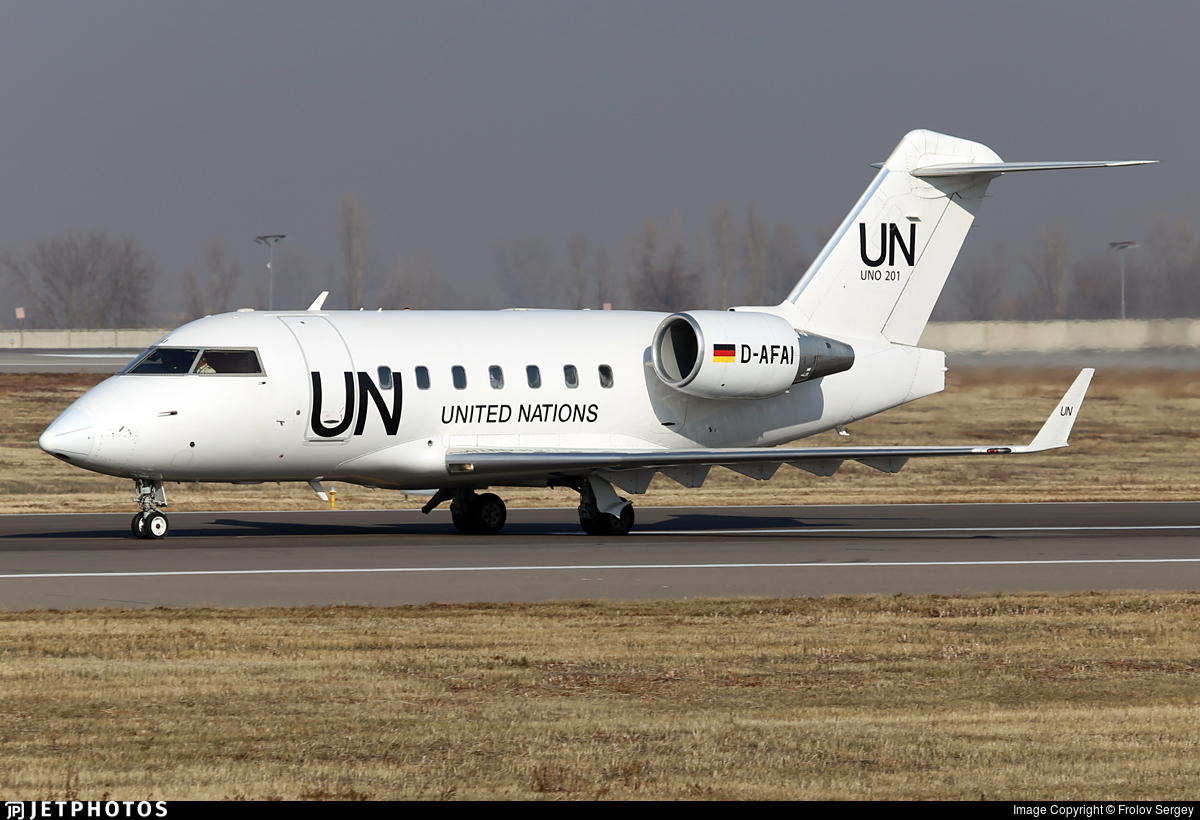
A plane used for humanitarian missions by the World Food Program (WFP) was damaged during an Islamist militant attack in Mali’s capital, Bamako, the South African aviation company that owns the aircraft reported late Wednesday.
National Airways Corporation (NAC) stated that the plane “came under terrorist attack” on Tuesday while grounded in Bamako. The company confirmed that all crew and staff were unharmed and relocated to a secure location.
Djaounsede Madjiangar, a WFP spokesperson, said the aircraft was used to “transport aid workers and provide emergency humanitarian aid in remote areas of Mali.” He noted that while it wasn’t the only plane used by WFP in Mali, its damage “reduces our humanitarian response capacity to give to civilians, given that we have several destination points.”
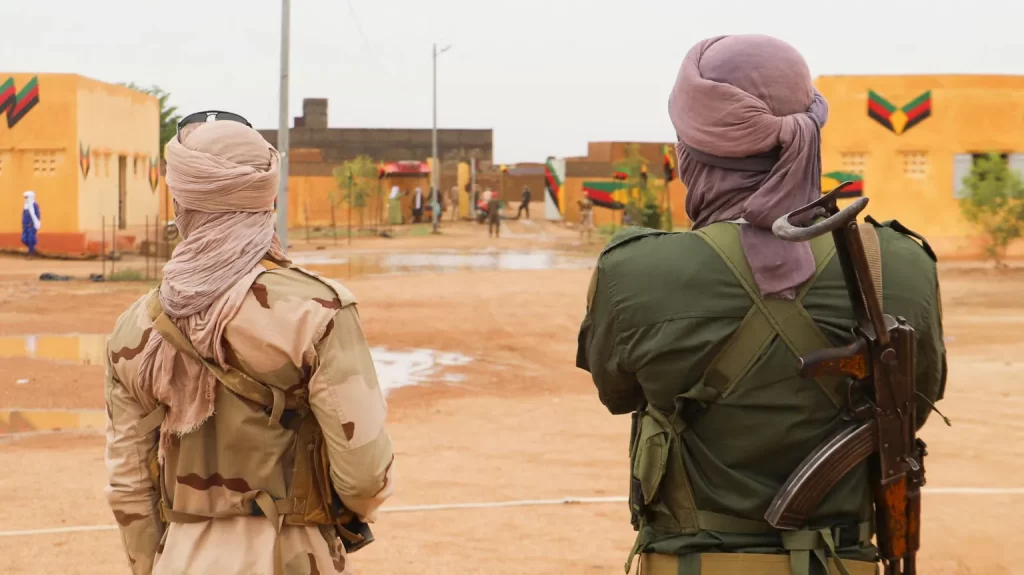
The incident occurred during a broader attack by Islamic militants on a military training camp and the airport in Bamako on Tuesday. Malian troops subdued the attackers after an exchange of gunfire that resulted in soldier casualties, according to authorities. An al-Qaida-linked group, JNIM, has claimed responsibility for the assault.
A security official, speaking anonymously, told The Associated Press that at least 15 suspects were arrested following the attack. JNIM posted videos on its website, Azallaq, showing fighters setting a plane on fire and claimed to have inflicted “major human and material losses.”
NAC expressed dismay that their “assets are damaged and destroyed in a fellow African country whilst performing humanitarian work in support of the citizens of Mali, under the auspices, approval, markings and the flag of the World Food Program (WFP).”
This attack highlights the ongoing security challenges in Mali, which, along with neighboring Burkina Faso and Niger, has been battling an Islamist insurgency for over a decade. Recent military coups in these nations have led to the expulsion of French forces and increased reliance on Russian mercenary units for security assistance.
While attacks in Bamako are rare, this incident underscores the persistent threat posed by militant groups in the region and the potential impact on humanitarian operations.
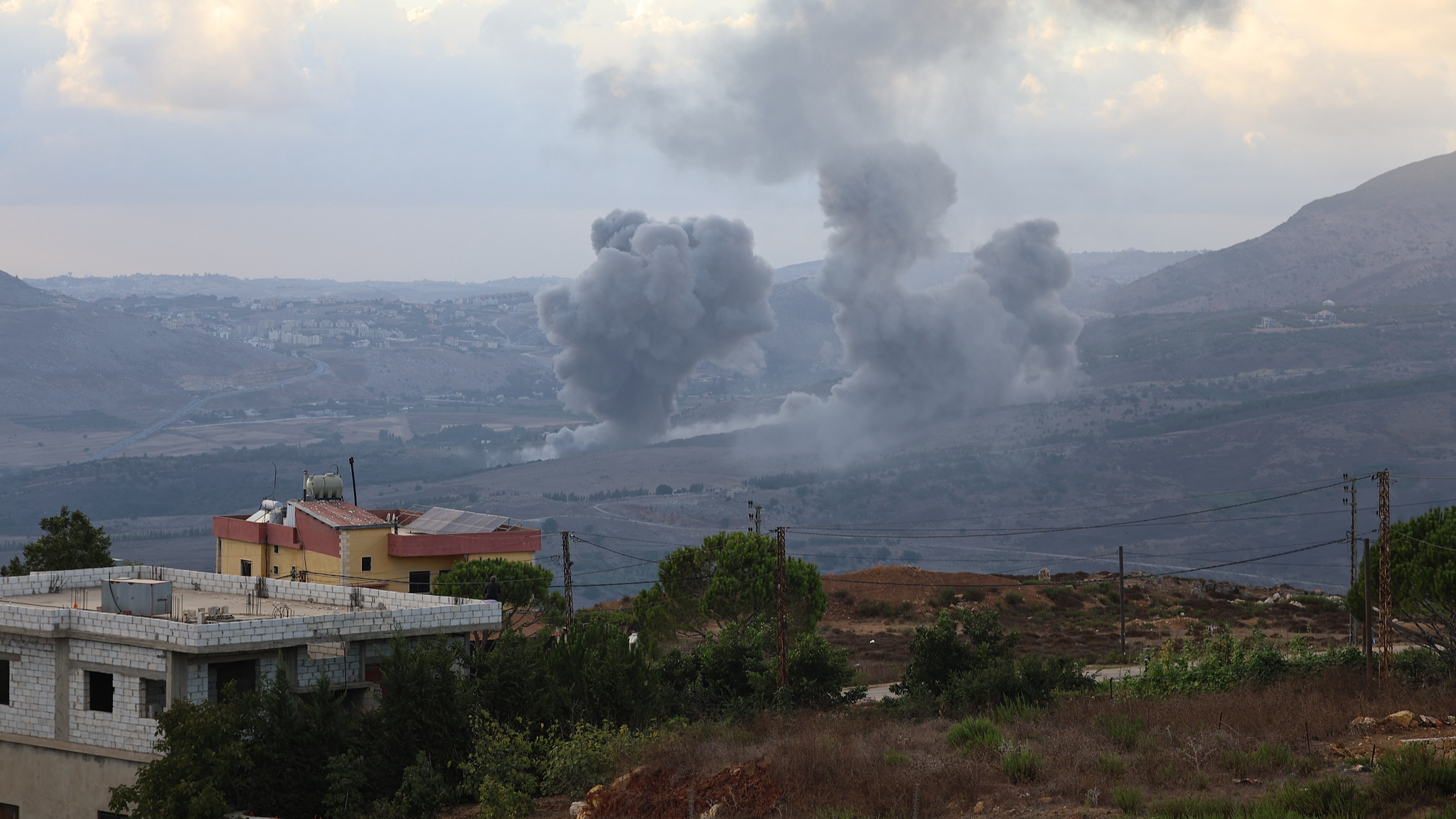
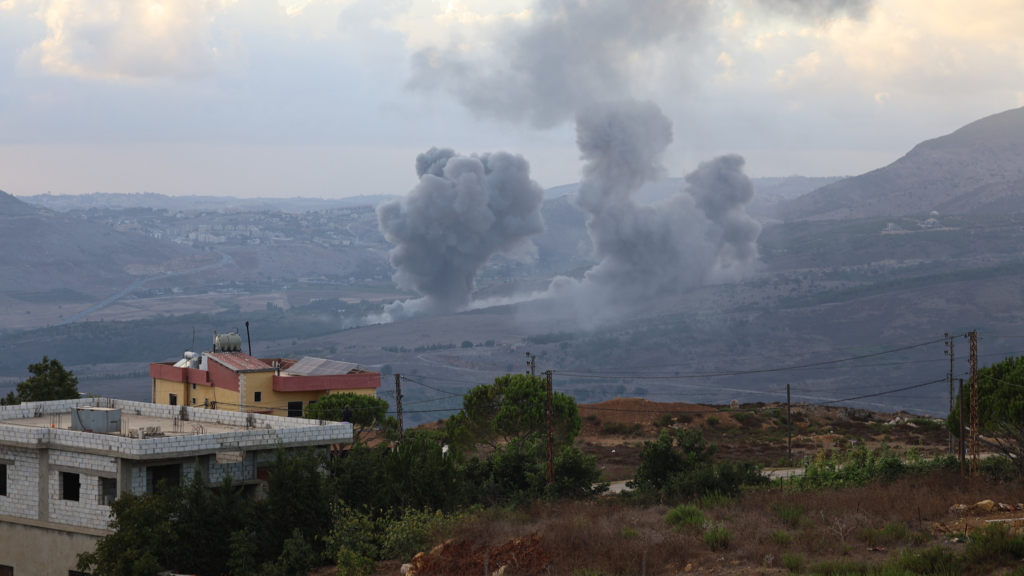
Israel launched airstrikes on southern Lebanon Thursday, escalating tensions following two days of explosions that destroyed Hezbollah communication devices and killed 37 people.
The Israeli military reported striking Hezbollah targets overnight in several Lebanese villages, including Chihine, Tayibe, Blida, Meiss El Jabal, Aitaroun, and Kfarkela. A weapons storage facility near Khiam was also hit. Lebanese state media and Hezbollah’s al-Manar TV confirmed renewed airstrikes near the border just after midday Thursday.
This action comes after a sophisticated attack on Hezbollah’s communication equipment. On Wednesday, hand-held radios used by the militant group detonated across southern Lebanon, killing 25 and injuring 608, according to Lebanon’s health minister. The previous day, hundreds of pagers exploded simultaneously, resulting in 12 deaths, including two children, and over 2,300 injuries.
Israeli officials have not directly commented on these incidents, but multiple security sources attribute the attacks to Israel’s Mossad intelligence agency.
Lebanese Prime Minister Najib Mikati called on the UN Security Council to take action against Israel’s “aggression” and “technological war” on Lebanon.
5053NO-ISRAEL-PALESTINIANS_HEZBOLLAH_O_
The conflict has spread panic among Lebanese civilians. Mustafa Sibal, a Beirut resident, said, “This isn’t a small matter, it’s war. Who can even secure their phone now?”
Israel claims these actions are part of a broader regional confrontation with Iran, which supports Hezbollah and Hamas. On Thursday, Israeli security forces announced the arrest of an Israeli businessman accused of discussing assassination plots against top officials, including Prime Minister Benjamin Netanyahu, during meetings in Iran.
Despite the escalation, Andrea Tenenti, spokesperson for the UN peacekeeping mission in southern Lebanon, stated that the situation along the border hasn’t changed significantly in terms of exchanges of fire, though it remains “worrying” and “concerning.”
The conflict has forced tens of thousands to evacuate border areas on both sides. Israeli Defense Minister Yoav Gallant announced a shift in military focus, with more resources and units, including the elite 98th Division, being moved to the northern border.
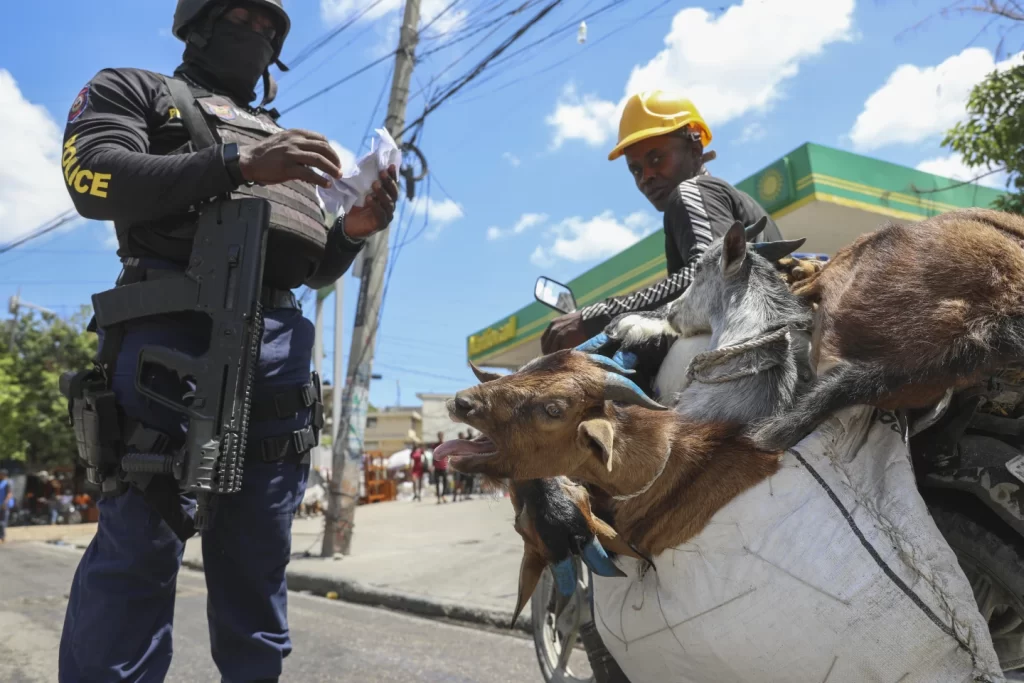
Haiti’s government has established a provisional electoral council, a crucial step towards holding the country’s first general elections since 2016, officials announced Wednesday.
Smith Augustin, a member of Haiti’s transitional presidential council, confirmed to The Associated Press that the electoral body has been formed with seven of the nine members required by law. The remaining two members are expected to be announced in the coming days.
The council, comprising representatives from various sectors including farmers, journalists, human rights activists, and the Vodou community, is tasked with organizing elections and developing the legal framework to conduct them.
Haiti has been without a president since July 2021, following the assassination of President Jovenel Moïse. The country’s last elections were held in 2016, with subsequent attempts to organize polls derailed by political instability and escalating gang violence.
The creation of this electoral council comes after years of delays and international pressure. In September 2021, former Prime Minister Ariel Henry dissolved the previous council, accusing it of partisanship. Henry, who took office shortly after Moïse’s assassination, repeatedly pledged to hold elections but cited worsening gang violence as an obstacle.
Earlier this year, Henry resigned amid coordinated gang attacks on critical government infrastructure in Port-au-Prince. A transitional presidential council was then formed with the mandate to hold presidential elections by February 2026.
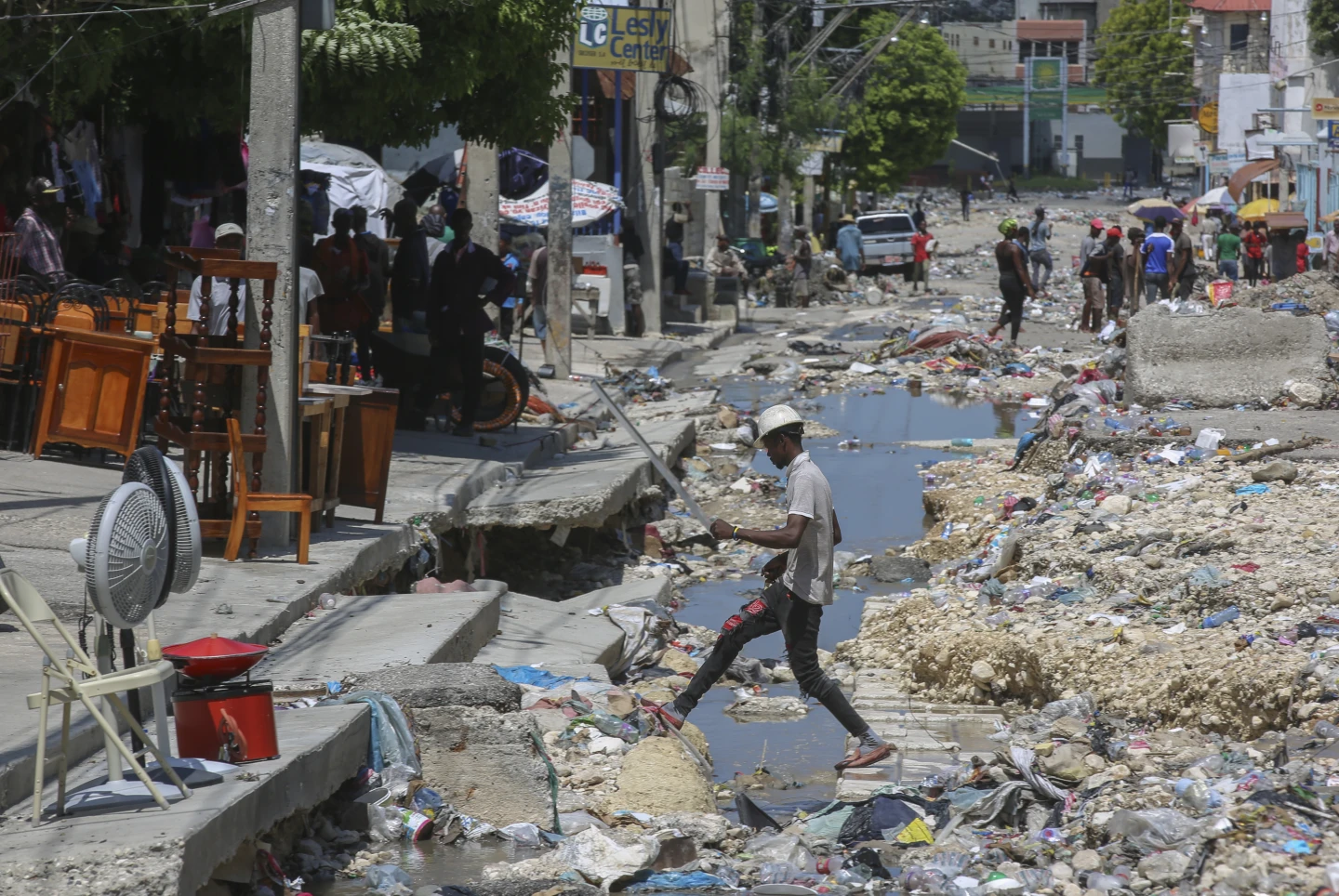
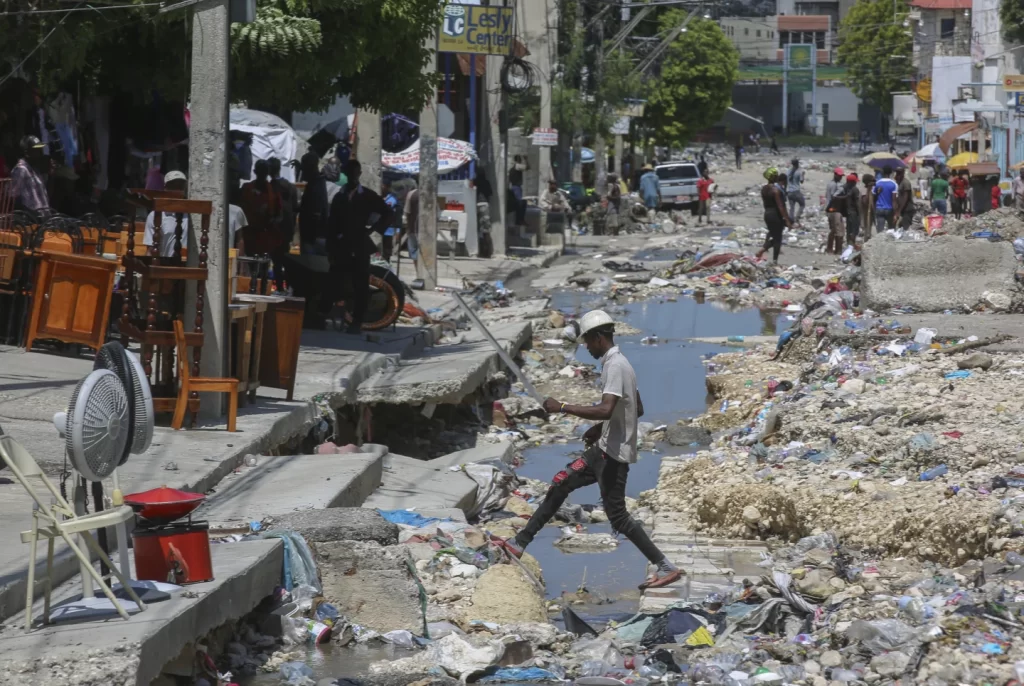
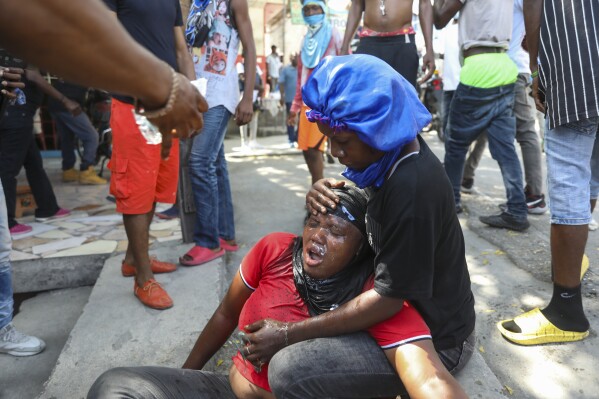
The new electoral council faces significant challenges, including persistent gang violence that has displaced over half a million people and killed more than 3,200 between January and May of this year. Many Haitians, forced to flee their homes, have lost essential documents including IDs needed to vote.
To address security concerns, nearly 400 Kenyan police officers have arrived in Haiti as part of a UN-backed mission, with additional deployments expected from the Bahamas, Chad, Benin, and Bangladesh.
Despite these efforts, many Haitians remain skeptical about the prospects of holding successful elections. Daniel Janvier, a 40-year-old displaced by gang violence, expressed doubts about the voting process, saying, “How are people going to vote? Most of the people that I know in this area don’t have an ID.”
The formation of this electoral council represents a pivotal moment in Haiti’s efforts to restore democratic governance, though significant obstacles remain in organizing free and fair elections in the troubled Caribbean nation.
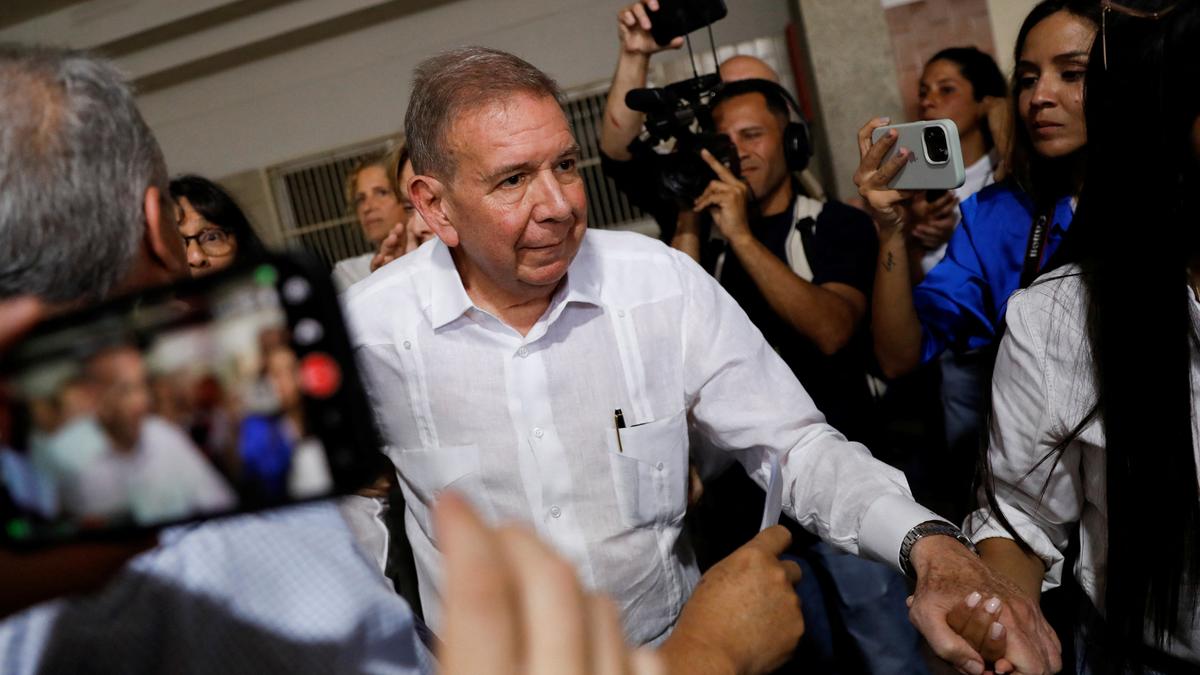
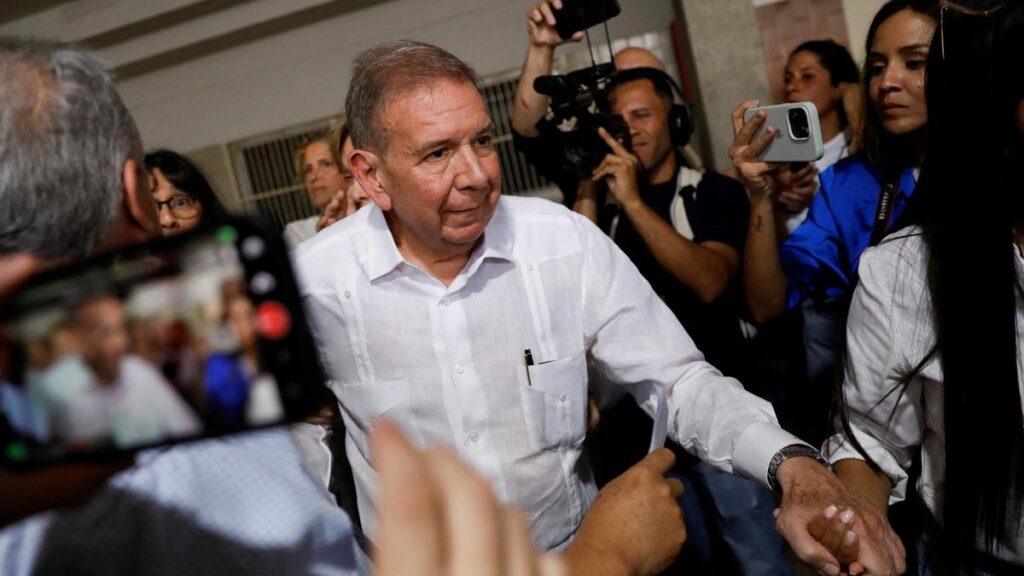
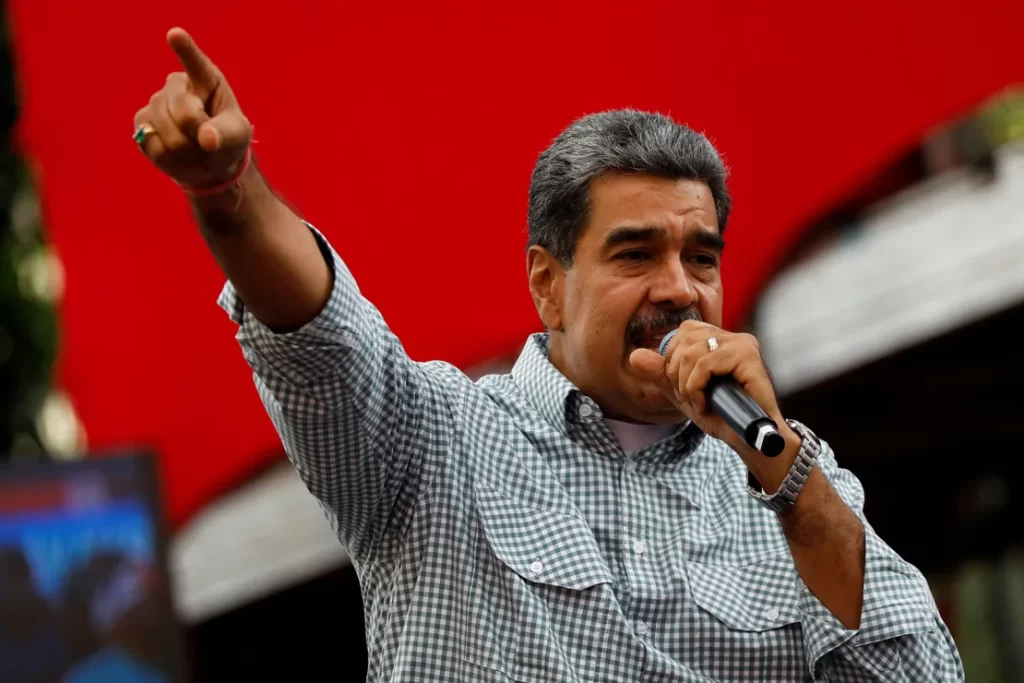
Venezuela’s former opposition presidential candidate, Edmundo González, claimed on Wednesday he was forced to sign a letter effectively conceding defeat in July’s disputed election, which official results show was won by incumbent President Nicolás Maduro.
González, who fled to Spain following the contentious election, said in a video posted on social media that he signed the document under duress. “They showed up with a document that I would have to sign to allow my departure from the country,” González stated. “In other words, either I signed or I would face consequences. There were very tense hours of coercion, blackmail and pressure.”
The letter, presented during a nationally televised press conference by Jorge Rodríguez, head of the National Assembly and Maduro’s chief negotiator, shows González as the sender and is addressed to Rodríguez. In it, González reportedly acknowledges the Supreme Tribunal of Justice’s ruling confirming Maduro’s victory, despite disagreeing with it.
This revelation adds another layer of complexity to Venezuela’s ongoing political crisis. The July 28 election results have been heavily contested, with González and the Unitary Platform coalition claiming they defeated Maduro by a significant margin.
Venezuela’s National Electoral Council, widely seen as loyal to Maduro, declared him the winner shortly after polls closed without providing detailed vote counts. The opposition coalition, however, collected and published online tally sheets from 80% of the nation’s electronic voting machines, which they claim show González winning with twice as many votes as Maduro.
Following the election, González became the subject of an arrest warrant related to the publication of these tally sheets. The lack of transparency in the election process drew international condemnation, prompting Maduro to request an audit from the Supreme Tribunal of Justice, which subsequently reaffirmed his victory.
In response to González’s video statement, Rodríguez threatened to reveal audio of their conversations if the former candidate did not retract his assertions of coercion.
As Venezuela approaches the start of the next presidential term on January 10, the country remains deeply divided. González, in his video message, referred to himself as the “elected president of millions and millions of Venezuelans” and vowed to fulfill their mandate, contradicting the contents of the letter he allegedly signed under pressure.