Home Blog Page 744

Sean ‘Diddy’ Combs Moves to Dismiss Ex-Employee’s $30 Million Lawsuit, Alleging Extortion Attempt

Sean “Diddy” Combs, the embattled music mogul, is taking a stand against a $30 million lawsuit filed by a former employee, alleging that the legal action is an attempt to extort him through salacious claims and media manipulation.

In a motion filed Monday in the U.S. District Court for the Southern District of New York, Combs’ legal team seeks to dismiss the lawsuit brought by music producer Rodney “Lil Rod” Jones, characterizing it as a “run-of-the-mill commercial disagreement” disguised as a sensational conspiracy.

The lawsuit, initially filed in February by attorney Tyrone Blackburn on behalf of Jones, accuses Combs of sexual harassment, drugging, and threats during Jones’ employment from September 2022 to November 2023.

An amended complaint in March further alleged Combs’ involvement in a “RICO enterprise” and a “sex trafficking venture,” invoking the Racketeer Influenced and Corrupt Organizations Act typically used to combat organized crime.

Combs’ motion, obtained by NBC News, argues that Jones’ complaint fails to establish the necessary criteria for a RICO case and lacks legal standing. The music mogul’s attorneys describe the lawsuit as a 100-page document filled with “countless tall tales, shameless celebrity namedrops, and irrelevant images,” asserting that it provides no specific dates or instances of the alleged sexual harassment.

Erica Wolff, Combs’ lawyer, stated, “Mr. Jones’s lawsuit is pure fiction — a shameless attempt to create media hype and extract a quick settlement. There was no RICO conspiracy and Mr. Jones was not threatened, groomed, assaulted, or trafficked.” Wolff expressed confidence in proving the claims are fabricated and securing a dismissal in court.

The motion filed by Combs’ team suggests that Jones’ “true purpose is to generate media hype and exploit it to extract a settlement.” It also points to a recent referral of Jones’ attorney, Tyrone Blackburn, to a grievance committee by U.S. District Judge Denise Cote. The referral came after what appeared to be a pattern of cases with jurisdiction issues, though unrelated to Combs.

Blackburn, responding to NBC News, denied the allegations in Combs’ motion, stating, “This is clearly a billing exercise by individuals who are late to the game and are attempting to fill their pockets before their client is indicted.” He defended his legal approach, saying, “If you don’t do salacious shit, I won’t have salacious things to file.”

This lawsuit is one of several legal challenges facing Combs. Blackburn has filed three other suits against the music mogul since last year, including allegations of sexual assault from decades ago.

One such case involves Liza Gardner, who claims Combs sexually assaulted her in 1990 or 1991 when she was 16 years old. Another lawsuit filed by Blackburn alleges Combs sexually assaulted April Lampros four times between 1994 and the early 2000s.

Combs is also named in a lawsuit involving his son, where he faces charges of premises liability and aiding and abetting an alleged sexual assault during a 2022 New Year’s Eve yacht party.

The music industry titan settled a high-profile lawsuit in November 2023 with former partner Cassandra “Cassie” Ventura, who accused him of rape, sex trafficking, and physical assault throughout their 11-year relationship. While Combs denied the abuse, surveillance video later emerged showing him violently assaulting Ventura in a Los Angeles hotel in 2016, prompting a public apology from Combs on Instagram.

Adding to his legal woes, Combs is currently the subject of a federal investigation by the Southern District of New York. In March, federal agents raided his homes in Los Angeles, Miami, and New York.

Sources familiar with the ongoing legal troubles confirmed to NBC News in July that a federal grand jury was hearing evidence as part of the investigation, though no criminal charges have been filed against Combs.

As the legal battle unfolds, the music industry and public alike are watching closely. The case highlights the complex intersections of power, celebrity, and accountability in the entertainment world, while also raising questions about the use of civil lawsuits and media attention as tools in high-profile disputes.

The outcome of this motion to dismiss and the broader legal challenges facing Combs could have significant implications not only for his career and legacy but also for how similar cases are approached in the future.

As the court weighs the merits of the allegations against the defense’s claims of extortion and fabrication, the case continues to captivate public attention and fuel discussions about misconduct and justice in the music industry.

Colorado Man Arrested for Threatening Trump Critics on Far-Right Platforms, Highlighting Concerns Over Election Security

In a case underscoring the growing concerns over threats to election integrity, the Federal Bureau of Investigation (FBI) has arrested a Colorado man for allegedly making violent threats against election officials, a judge, and federal law enforcement agents on far-right social media platforms. The arrest comes as the Department of Justice (DOJ) intensifies its efforts to combat intimidation targeting public servants involved in the electoral process.

Teak Brockbank, a 45-year-old resident of Cortez, Colorado, was taken into custody on Friday and charged with transmitting interstate threats. He is scheduled to make his initial court appearance on Monday, facing serious allegations that highlight the increasingly volatile political climate surrounding U.S. elections.

According to a redacted affidavit from an FBI special agent, investigators had been monitoring threats made on two right-wing social media websites — Rumble and Gab. They determined that Brockbank, operating under the username “Teakty4u,” had made numerous threatening posts against various officials. The names of Brockbank’s targets remain sealed at the government’s request, adding a layer of intrigue to the case.

Nicole M. Argentieri, head of the Justice Department’s Criminal Division, emphasized the gravity of the situation in a statement: “As alleged, Teak Brockbank threatened the lives of multiple public servants on social media. Among other threats, he allegedly claimed that it was ‘time’ to put two state election officials to death and that he was obligated to ‘put a bullet’ in the head of a Colorado state judge.” Argentieri reaffirmed the DOJ’s commitment to aggressively investigating and prosecuting those who target public officials with violent threats.

The case against Brockbank reveals a disturbing pattern of online behavior. In one Rumble post from July 2022, he allegedly wrote about his belief that people in Colorado and Arizona needed to be executed, stating, “The people have to take matters into their own hands.”

A Gab post from the same month contained even more explicit language: “We are gonna have to take care of these people ourselves. Our law-enforcement are incompetent our judges are incompetent George Soros paid for funded puppets are running our state. It’s time for the American people to take matters into their own hands start eliminating those that we know are guilty!! There is no other way! Mark my words. We have to go to war with these people right now!!”

Further investigation revealed that Brockbank had a history of illegally possessing firearms, despite being banned from owning them due to a prior conviction for attempted theft by receipt of stolen property. The FBI affidavit notes that he was blocked from purchasing a gun in August 2023 after failing a background check, with his appeal being denied the following month.

Of particular concern to authorities was Brockbank’s “continued interest in violence toward public officials as well as his ongoing and recent illegal possession of firearms.” A message he allegedly sent to his stepfather in December 2023 referenced the Colorado Supreme Court’s decision to remove former President Donald Trump from the state’s ballot: “Four judges in Colorado have removed President Trump from the ballot in Colorado. their names have been added to my list… their names have been moved to the front of my list.” The U.S. Supreme Court later ruled that states could not remove Trump’s name from the ballot.

The FBI affidavit also references slogans associated with the fringe QAnon movement, suggesting possible connections to broader conspiracy theories that have gained traction in certain online communities.

Macron Denies Political Motive in Telegram Founder Pavel Durov’s Arrest, Raising Questions About Tech Regulation

French President Emmanuel Macron on Monday strongly denied any political motivation behind the arrest of Telegram founder Pavel Durov, as the prominent tech entrepreneur spent a second day in French custody following his unexpected detention at a Paris airport.

The high-profile arrest has ignited a firestorm of speculation and raised pressing questions about the intersection of technology, free speech, and government regulation.

Durov, 39, who holds both Russian and French citizenship, was apprehended as part of an ongoing judicial investigation, according to sources close to the case.

The tech mogul is accused of failing to adequately curb the spread of illegal content on Telegram, a messaging platform boasting over 900 million users worldwide. Telegram has vehemently denied these allegations.

In an unusual move for a head of state commenting on an active legal case, President Macron took to the X social media platform to address what he termed “false information” surrounding Durov’s arrest. “It is in no way a political decision,” Macron asserted.

“It is up to the judges to rule on the matter.” The French leader’s statement underscores the sensitive nature of the case and its potential implications for France’s stance on tech regulation and international relations.

The circumstances of Durov’s arrest have raised eyebrows among observers. The tech entrepreneur, who has been primarily based in Dubai in recent years, arrived in Paris from Baku, Azerbaijan, reportedly planning to have dinner in the French capital.

His unexpected journey into France, despite likely awareness of pending legal issues, has puzzled many. “Perhaps he had a feeling of impunity,” suggested a source close to the case, speaking on condition of anonymity.

Durov’s legal troubles stem from accusations by France’s OFMIN, an office dedicated to preventing violence against minors. The agency issued an arrest warrant for Durov as part of a preliminary investigation into alleged offenses including fraud, drug trafficking, cyberbullying, organized crime, and promotion of terrorism.

Telegram, in response to the allegations, stated that “Durov has nothing to hide and travels frequently in Europe.” The company further asserted its compliance with EU laws, including the Digital Services Act, and maintained that its moderation practices align with industry standards.

“It is absurd to claim that a platform or its owner are responsible for abuse of that platform,” Telegram’s statement added, highlighting the ongoing debate over platform liability.

The arrest of Durov, whose current fortune Forbes estimates at $15.5 billion, has sent shockwaves through the tech industry and beyond. Born in Soviet-era Leningrad (now St. Petersburg) to a family of academics, Durov spent his childhood in Italy before founding Russia’s then-largest social network, VKontakte (VK), in his early 20s. He established Telegram after leaving Russia a decade ago, positioning it as a “neutral” alternative to U.S.-owned platforms.

Telegram’s role in global communication has been significant, particularly since Russia’s invasion of Ukraine, with the platform being actively used by politicians and commentators on both sides of the conflict. However, critics have long accused Telegram of hosting illegal content ranging from extreme sexual imagery to disinformation and narcotics services.

The case has drawn attention from other tech leaders, including Elon Musk, who leads Tesla and X (formerly Twitter). Musk posted the hashtag #FreePavel on his platform, commenting in French, “Liberte Liberte! Liberte?” (Freedom Freedom! Freedom?), signaling potential concern within the tech community about government intervention in digital platforms.

FILE – Telegram co-founder Pavel Durov, center, smiles following his meeting with Indonesian Communication and Information Minister Rudiantara in Jakarta, Indonesia on Aug. 1, 2017. (AP Photo/Tatan Syuflana, File)

President Macron, while emphasizing France’s commitment to freedom of expression and communication, stressed that such freedoms operate within a legal framework, “both on social media and in real life.” He reiterated that it is the judiciary’s role, in full independence, to enforce the law.

As Durov’s detention continues, with the possibility of charges being pressed or his release within a 96-hour window, the case has become a focal point for debates on digital regulation, platform responsibility, and the balance between free speech and content moderation.

The outcome may have far-reaching implications for how tech companies operate in France and potentially across the European Union.

The international community watches closely as this case unfolds, recognizing its potential to set precedents in the ongoing struggle to define the responsibilities of digital platforms in an increasingly interconnected world.

As governments grapple with the challenges posed by the digital age, the arrest of Pavel Durov serves as a stark reminder of the complex interplay between innovation, regulation, and the fundamental rights of free expression in the 21st century.

Fresh Fighting Erupts in Eastern DR Congo as M23 Rebels Clash with Army, Threatening Fragile Peace

Intense fighting erupted on Sunday, August 25, in the eastern Democratic Republic of Congo (DRC) as M23 rebels clashed with government forces, shattering a fragile ceasefire and reigniting concerns about regional stability. The violence, centered in the strategic Lubero district of North Kivu province, threatens to unravel recent diplomatic efforts aimed at bringing peace to the troubled region.

Local media reported violent clashes near the Uganda border, with the fighting concentrated along the vital commercial axis connecting the economic hubs of Butembo and Beni. This escalation comes barely a month after Angola brokered a ceasefire agreement between the DRC and Rwanda on July 30, highlighting the tenuous nature of peace in the region.

Lieutenant-Colonel Ndjike Kaiko Guillaume, speaking for the Congolese army (FARDC), confirmed in a press statement on Monday that M23 rebels had launched attacks on army positions in Lubero. The FARDC spokesperson emphasized that Congolese authorities would be referring the matter to the Expanded Joint Verification Mechanism, a body comprising military experts from the International Conference on the Great Lakes Region Member States, South Africa, MONUSCO (the UN peacekeeping mission in DRC), and the African Union.

The resumption of hostilities casts a shadow over recent diplomatic initiatives, including the third meeting of foreign ministers from the DRC and Rwanda held in Luanda, Angola, on August 22. That meeting, part of the ongoing Luanda Process led by Angolan President João Lourenço, failed to achieve significant progress in resolving the conflict. A follow-up meeting is scheduled for September 9-10, though the recent outbreak of violence may complicate these talks.

The March 23 Movement (M23), formed in 2012 by defectors from the Congolese army, has been a persistent source of instability in eastern DRC. The group began its current campaign in January 2021, managing to capture several towns and villages in North Kivu Province near the Rwandan border. The Congolese government has consistently accused Rwanda of supporting the rebels, a charge that Kigali vehemently denies.

This latest flare-up of violence underscores the complex web of regional tensions and historical grievances that continue to fuel conflict in the Great Lakes region. The DRC’s eastern provinces have long been a hotbed of ethnic strife and competition for control over the area’s vast mineral wealth, with neighboring countries often accused of meddling to further their interests.

International observers are closely monitoring the situation, with concerns that a prolonged conflict could lead to a humanitarian crisis and further destabilize the region. The United Nations, through its MONUSCO mission, has repeatedly called for all parties to adhere to the ceasefire and engage in meaningful dialogue to address the root causes of the conflict.

The failure of the recent ceasefire agreement, barely a month after its implementation, raises questions about the efficacy of current peacekeeping and diplomatic efforts in the region. It also highlights the challenges facing the DRC government in asserting control over its eastern territories and protecting civilian populations from armed groups.

As fighting continues, there are growing fears of potential civilian casualties and displacement. Humanitarian organizations operating in the area are on high alert, preparing for a possible influx of refugees fleeing the violence.

The international community now faces increased pressure to intervene more decisively to prevent a full-scale return to conflict. With another round of talks scheduled for early September, diplomats are racing against time to salvage the peace process and prevent further escalation of hostilities.

As the situation unfolds, all eyes remain on the responses from Kinshasa and Kigali, as well as regional mediators like Angola, whose efforts to broker peace are being severely tested by this latest outbreak of violence. The coming days will be crucial in determining whether diplomacy can prevail over the cycle of conflict that has long plagued this resource-rich but volatile corner of Africa.

Germany to Donate 100,000 Mpox Vaccine Doses to Combat African Outbreak

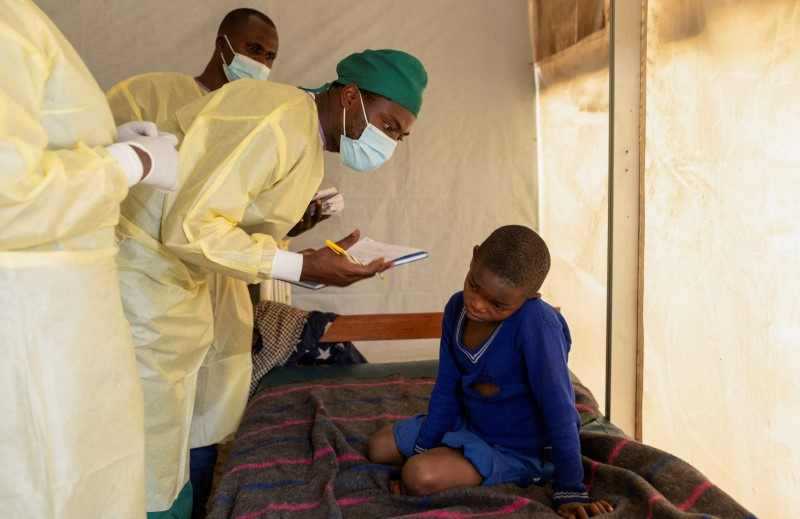
The German government announced on Monday its plan to donate 100,000 doses of the mpox vaccine from its military stockpile to help curb the outbreak in Africa, as the World Health Organization (WHO) declares the disease a global public health emergency.

A government spokesperson stated that Germany will provide the vaccines to assist in containing the short-term spread of mpox on the African continent. In addition to the vaccine donation, Germany has committed to offering flexible financial resources to the WHO through various instruments to combat the disease.

The donated doses will come from Germany’s supply of approximately 117,000 Jynneos vaccines, which were procured and stockpiled by the German army in 2022. A defense ministry spokesperson confirmed that Germany would retain a minimal stock for protecting traveling authorities and other essential personnel.

The decision to reorder vaccines will be made separately, as noted by the defense ministry spokesperson. This strategic approach allows Germany to maintain domestic preparedness while contributing significantly to international efforts to control the outbreak.

Germany’s foreign ministry is currently working to determine the most efficient method of delivering the vaccines to affected countries. The primary focus is on the Democratic Republic of Congo (DRC), where the outbreak originated, as well as Burundi and neighboring East African nations that have reported cases.

The urgency of Germany’s response is underscored by the WHO’s recent declaration of mpox as a global public health emergency. This decision came after the outbreak in the DRC spread to adjacent countries and the emergence of a new form of the virus, identified as clade Ib, raised concerns about accelerated transmission rates.

In addition to the vaccine donation, Germany plans to support its African partners through the GAVI vaccination alliance. This multifaceted approach demonstrates Germany’s commitment to global health security and its recognition of the interconnected nature of public health challenges in an increasingly globalized world.

The outbreak in Africa and the subsequent international response highlight the ongoing need for robust global health infrastructure and cooperation. As countries like Germany step up to provide resources and support, the international community watches closely to see how effectively these combined efforts can contain and ultimately overcome the mpox threat.

As the situation develops, health officials and policymakers worldwide are likely to draw lessons from this outbreak and the global response, potentially informing future strategies for managing emerging infectious diseases and strengthening international health security frameworks.

Deadly Floods Ravage Northeastern Nigeria, Killing 49 and Displacing Thousands

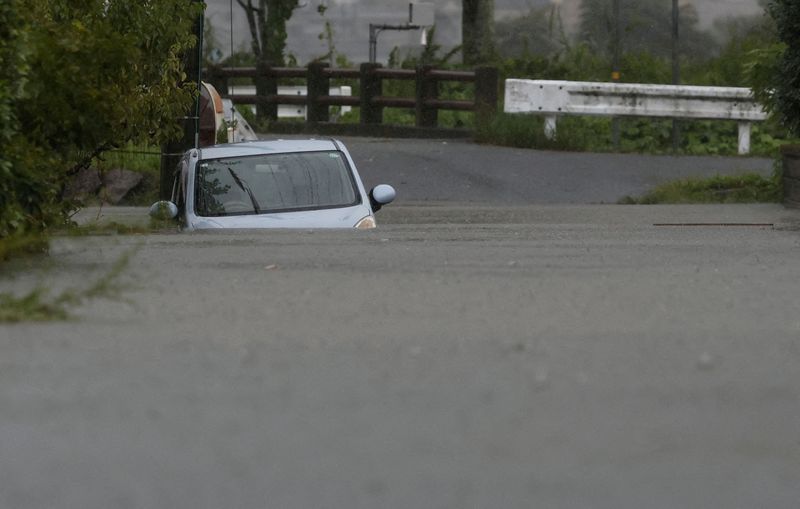
Devastating floods have swept through northeastern Nigeria, leaving at least 49 people dead and displacing tens of thousands, the National Emergency Management Authority (NEMA) reported on Monday. The disaster underscores the growing climate challenges facing Africa’s most populous nation as it enters the peak of its rainy season.

NEMA spokesperson Manzo Ezekiel confirmed that three states – Jigawa, Adamawa, and Taraba – have borne the brunt of the deluge, with a staggering 41,344 individuals forced from their homes. The floods have submerged vast swathes of land, including crucial agricultural areas, exacerbating concerns over food security in a country already grappling with soaring inflation rates.

“We are just entering into the peak of the season, particularly in the northern part of the country, and the situation is very dire,” Ezekiel told Reuters, hinting at the potential for further devastation in the coming weeks.

The floods have wreaked havoc on approximately 693 hectares of farmland, dealing a significant blow to Nigeria’s agricultural sector. This destruction comes at a critical time when the country is battling double-digit inflation, largely driven by escalating food prices. The agricultural crisis is further compounded by ongoing security challenges in the northeast, where militant attacks have forced many farmers to abandon their lands.

The current disaster evokes painful memories of last year’s catastrophic floods, which were deemed the worst in over a decade. Those floods claimed more than 600 lives, displaced around 1.4 million people, and obliterated 440,000 hectares of farmland. The recurrence of such severe flooding raises urgent questions about Nigeria’s disaster preparedness and climate resilience strategies.

Adding to the concern, NEMA warned that the situation could worsen in the coming weeks. Ezekiel noted, “We also have information about the high tide in the upper countries of the River Niger before Nigeria. All of these are flowing towards Nigeria. We are beginning to see a manifestation of our predictions.”

The Nigerian government’s flood outlook for this year had already sounded alarm bells, indicating that 31 out of the country’s 36 states were at risk of experiencing “high flood” conditions. This prediction appears to be materializing, with the northeastern states bearing the initial brunt of the disaster.

Over 100 Dead in Devastating Jihadi Attack on Central Burkina Faso Village

A devastating attack by al-Qaida-linked jihadists has left at least 100 people dead in central Burkina Faso, marking one of the bloodiest assaults in the conflict-ridden West African nation this year. The massacre, which targeted both civilians and security forces, underscores the escalating violence gripping the country despite recent changes in leadership.

The attack unfolded on Saturday in the Barsalogho commune, approximately 80 kilometers (50 miles) from the capital city of Ouagadougou. According to Wassim Nasr, a senior research fellow at the Soufan Center and Sahel specialist, villagers were assisting security forces in digging defensive trenches when militants from the al-Qaida-affiliated group Jama’at Nusrat al-Islam wal-Muslimin (JNIM) launched their assault.

Video evidence reviewed by regional experts, including Nasr, revealed a grim scene with bodies piled beside newly dug trenches, suggesting a death toll of at least 100. While the Associated Press could not independently verify this count, the footage clearly depicted a massacre of significant scale.

Al-Qaida swiftly claimed responsibility for the attack on Sunday, boasting in a statement that they had gained “total control over a militia position” in Barsalogho. The town of Kaya, where the attack occurred, holds strategic importance as a base for security forces combating jihadist attempts to close in on the capital.

Burkina Faso’s Security Minister, Mahamadou Sana, addressed the nation via state television on Sunday, confirming that both soldiers and civilians were among the casualties. Without providing specific numbers, Sana assured the public that the government had responded with ground and air support. “We are not going to accept such barbarity on the territory,” he declared, pledging medical and humanitarian assistance to those affected.

This latest atrocity highlights the precarious security situation in Burkina Faso, where approximately half of the country’s territory lies beyond government control. The nation has been increasingly besieged by jihadi attacks linked to both al-Qaida and the Islamic State group, resulting in thousands of deaths and the displacement of over 2 million people in what experts describe as one of the world’s most neglected crises.

The persistent violence contributed to two military coups in 2022, with the current junta led by Capt. Ibrahim Traore struggling to fulfill its promise of enhanced security. Despite seeking new partnerships with Russia and other junta-led countries in the Sahel region, the government has made little headway in stemming the tide of attacks.

In a controversial move, Traore’s administration has been encouraging civilian participation in security efforts. The Volunteers for the Defence of the Fatherland (VDP), a civilian task force, works closely with the military. The trenches being dug in Barsalogho are part of this civilian-military cooperation strategy, aimed at creating defensive positions in areas threatened by jihadist control.

However, experts like Nasr point out that the jihadists’ increasing success can be attributed to multiple factors, including ineffective air cover, poor intelligence gathering by security forces, and weak control of border areas with equally unstable neighbors Mali and Niger. Moreover, human rights abuses committed by Burkina Faso’s security forces and the VDP have reportedly driven more civilians to join jihadist ranks.

As Burkina Faso grapples with this latest tragedy, the international community watches closely. The escalating violence not only threatens the stability of the country but also risks further destabilizing the entire Sahel region. With each attack, the pressure mounts on Burkina Faso’s military government to find effective solutions to a crisis that continues to claim innocent lives and erode the nation’s sovereignty.

Ghanaian Migrant Dies in Detention at Brazil’s Guarulhos Airport Amid Immigration Crackdown

A 39-year-old Ghanaian migrant died on August 13 while in detention at Guarulhos International Airport in São Paulo, Brazil, spotlighting the country’s handling of undocumented travelers amid tightening immigration policies.

The man, whose identity has not been released, was part of a group of “inadmissible travelers” held in a restricted area of South America’s busiest airport. These individuals, lacking proper documentation or visas for entry into Brazil, have been confined to an area with severely limited access to basic necessities, according to reports.

Brazilian authorities have not yet disclosed the cause of death, stating only that the man received medical care at the airport before his passing. The incident has drawn sharp criticism from human rights advocates and Brazil’s Public Defender’s Office, who argue that the detention conditions constitute serious human rights violations.

Reports indicate that detainees in the airport’s restricted area face deteriorating health conditions due to inadequate access to food, water, and sanitary facilities. The Public Defender’s Office has raised alarms about the physical and mental toll on those held in what they describe as substandard conditions.

This tragic event unfolds against the backdrop of Brazil’s impending enforcement of stricter entry regulations. Starting Monday, the government will implement new rules aimed at curbing the use of Brazil as a transit point for migrants attempting to reach destinations such as the United States and Canada.

Under the new policy, foreign travelers without a valid Brazilian visa will be required to either proceed directly to their final destination or return to their country of origin. The fate of those currently detained at Guarulhos International Airport under these new regulations remains unclear.

The death of the Ghanaian migrant has intensified scrutiny of Brazil’s immigration practices and detention conditions. Human rights organizations are calling for an immediate investigation into the circumstances surrounding the man’s death and a comprehensive review of the treatment of detained migrants.

As Brazil positions itself to tighten its borders, the incident at Guarulhos Airport underscores the complex challenges faced by both migrants and authorities in navigating the often perilous landscape of international

Former England Manager Sven-Goran Eriksson Dies at 76, Leaving Lasting Legacy in Football

Sven-Goran Eriksson, the trailblazing Swedish football manager who became the first non-British coach to lead England’s national team, died peacefully at his home in Bjorkefors, Sweden, on Monday. He was 76 years old.

Eriksson’s children, Lina and Johan, announced their father’s passing in a poignant statement, revealing that he had succumbed to the cancer he had been battling. “Our father Sven-Goran Eriksson fell asleep peacefully in his home at Bjorkefors outside Sunne this morning,” they said, adding that he had fought bravely against his illness.

The announcement comes just weeks after Eriksson publicly disclosed his terminal diagnosis in January, stating he had “at best” a year to live. Despite the grim prognosis, the beloved coach spent his final months reconnecting with the football world that had been his life’s passion.

Eriksson’s managerial career spanned over four decades and multiple continents. He led 12 clubs, including high-profile stints with Manchester City, Leicester City, AS Roma, and Lazio. His trophy cabinet boasted 18 major honors, including the Serie A title with Lazio and the UEFA Cup with IFK Gothenburg.

However, it was his tenure as England manager from 2001 to 2006 that cemented his place in football history. Eriksson guided the Three Lions to three consecutive major tournament quarter-finals – the 2002 and 2006 World Cups, and Euro 2004. His time at the helm was marked by both on-field successes, including a memorable 5-1 victory over Germany in Munich, and off-field controversies that captivated the British tabloids.

Following his England departure, Eriksson embarked on a nomadic career that included managing Mexico, Ivory Coast, and the Philippines national teams, as well as several club sides in China. His final managerial position was a brief 10-game spell with the Philippines in 2018-2019.

In the wake of his cancer diagnosis, Eriksson received an outpouring of support from the football community. He made emotional visits to former clubs, including Lazio and Sampdoria, and even fulfilled a lifelong dream by leading a Liverpool Legends team at Anfield in March.

Tributes poured in from across the football world upon news of Eriksson’s passing. Michael Owen, who played under him for England, described the Swede as “one of the very best” and “a man who will be sadly missed by everyone in the world of football.” The Prince of Wales, president of the Football Association, remembered Eriksson for his “charisma and passion for the game.”

Mark Bullingham, FA chief executive, highlighted Eriksson’s significant contributions to English football, stating, “He gave all England fans such special memories. No one can ever forget the 5-1 victory in Munich against Germany under Sven’s guidance.”

Eriksson’s legacy extends beyond his tactical acumen and trophy haul. He was widely regarded as a gentleman of the sport, known for his calm demeanor and positive outlook. In his final public message, featured in a recently released documentary, Eriksson reflected on his life with characteristic grace: “I had a good life. I think we are all scared of the day when it is finished – when we die. But life is about death as well. You have to learn to accept it for what it is.”

As the football world mourns the loss of one of its most influential figures, Sven-Goran Eriksson’s impact on the beautiful game – from Sweden to England and beyond – will be remembered for generations to come.

Pro-Iran Militants Launch Deadly Attack on Nigerian Police in Abuja

An attack by an outlawed pro-Iran Nigerian Shiite group left at least two law enforcement officers dead and three others unconscious in the capital city of Abuja on Sunday, according to police reports.

Josephine Adeh, spokesperson for the Abuja police force, confirmed the assault in a statement, describing it as “an unprovoked attack by the proscribed Islamic Movement of Nigeria (IMN)” on police personnel. The militants targeted a police checkpoint, resulting in the deaths of two officers and leaving three others hospitalized. Additionally, three police patrol vehicles were set ablaze during the incident.

The attackers, armed with machetes, knives, and improvised explosive devices, caught law enforcement off guard. The Islamic Movement of Nigeria, banned by the government in 2019, has long maintained close ties with Tehran and draws inspiration from Iran’s Islamic Revolution of the late 1970s.

Abuja’s Police Commissioner, Benneth C. Igweh, strongly condemned the attack and pledged to bring those responsible to justice. “The situation is presently under control and normalcy restored,” the police statement assured, noting that several arrests had already been made.

This latest violent episode underscores the ongoing tensions between Nigerian authorities and the IMN, a Shiite organization in a country where the Muslim population is predominantly Sunni. The group’s leader, Ibrahim Zakzaky, a Shiite cleric who has repeatedly called for an Iranian-style Islamic revolution in Nigeria, was released from prison in July 2021 after more than five years of incarceration.

The attack comes at a time of heightened security concerns in Nigeria, as the country grapples with various insurgent groups and separatist movements. The involvement of a pro-Iran faction adds another layer of complexity to the nation’s security challenges, potentially straining diplomatic relations and complicating efforts to maintain stability in the region.