Home Blog Page 745

Deadly Drone Strikes Rock Northern Mali Town, Killing at Least 15 Civilians

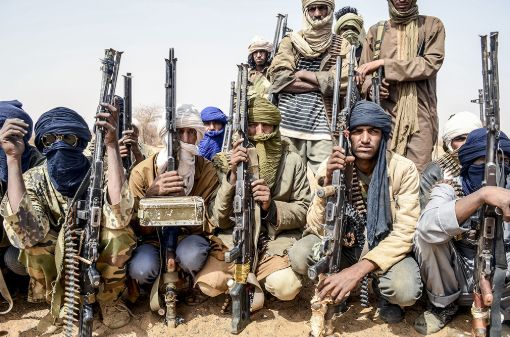
At least 15 people, including children, were killed Sunday in drone strikes on the northern Malian town of Tinzaouaten, according to Tuareg rebel sources. The attacks come amid escalating tensions in the region following a major military setback for Malian forces and their Russian allies last month.

Mohamed Elmaouloud Ramadane, a spokesperson for the rebel coalition known as the Permanent Strategic Framework for Peace, Security and Development (CSP), reported that the strikes targeted civilian areas, including a home and a pharmacy. Speaking via telephone, Ramadane warned that the death toll could rise further as rescue efforts continue.

The Malian military has not responded to requests for comment on the incident.

Tinzaouaten, situated near the Algerian border, has been a focal point of recent clashes between government forces and insurgent groups. In late July, Tuareg and Islamist fighters inflicted significant casualties on Malian soldiers and Russian Wagner Group mercenaries in the vicinity, prompting retaliatory airstrikes from Malian forces.

The recent attack marks a potential escalation in the conflict, with rebels claiming that Sunday’s drone strikes deliberately targeted civilian infrastructure. The incident has raised concerns about the protection of non-combatants in the ongoing struggle for control of northern Mali.

The July confrontation near Tinzaouaten may represent the heaviest losses for the Wagner Group since its involvement in Mali began two years ago. Tuareg rebels reported killing at least 84 Wagner mercenaries and 47 Malian soldiers, while an al-Qaida affiliate claimed to have eliminated 50 Wagner operatives and 10 Malian troops. Neither Mali nor Wagner have officially confirmed their casualties, though Wagner acknowledged suffering substantial losses.

The complex security situation in northern Mali involves various actors, including Tuareg separatists and jihadist groups affiliated with al-Qaida and the Islamic State. The region has been embroiled in conflict since 2012 when Islamist groups co-opted a Tuareg rebellion, leading to widespread instability.

Frustrations over the government’s inability to restore security have contributed to a series of coups in Mali, Burkina Faso, and Niger since 2020. The resulting military juntas have severed ties with Western and regional allies, instead turning to Russia for support.

The CSP, a coalition of Tuareg separatist groups, had previously signed a peace agreement with the Malian government in 2015. However, the group withdrew from talks in 2022, further complicating efforts to achieve lasting stability in the region.

As international observers watch closely, the latest drone strikes in Tinzaouaten underscore the ongoing challenges in resolving Mali’s protracted conflict and the devastating impact on civilian populations caught in the crossfire.

Source: VOA

Denmark to Close Embassies in Mali and Burkina Faso Amid Shifting African Diplomacy

The Danish foreign ministry announced on Monday its decision to close embassies in Mali and Burkina Faso, marking a significant shift in Denmark’s diplomatic approach to the African continent. This move comes as part of a broader strategy to realign Denmark’s engagement with Africa in response to recent political developments and security challenges in the Sahel region.

The decision to shutter these diplomatic outposts follows a series of military coups in both countries over the past few years. Mali, under military rule since 2020, has increasingly distanced itself from Western powers, including European Union countries, in favor of cooperation with Russia’s Wagner mercenary group. This shift has occurred amidst ongoing conflicts with ethnic Tuareg rebels in the country’s north.

Similarly, Burkina Faso has experienced political instability, with coups driven by frustrations over the government’s inability to address security concerns. The Danish foreign ministry cited these developments as creating “very limited room for maneuver” in the Sahel region, necessitating a recalibration of Denmark’s diplomatic presence.

In a strategic pivot, Denmark simultaneously announced plans to open new embassies in Rwanda, Senegal, and Tunisia. The ministry also intends to bolster its diplomatic workforce in existing embassies in Egypt, Kenya, South Africa, Nigeria, and Ghana. This reallocation of resources reflects Denmark’s recognition of the shifting geopolitical landscape in Africa.

“One of the most important foreign policy questions of this century will be whether African countries will orient themselves more towards the East or the West,” the Danish foreign ministry stated, underscoring the strategic importance of maintaining and strengthening ties with key African nations.

The closure of embassies in Mali and Burkina Faso comes at a time of deteriorating relations between these countries, along with Niger, and Western powers. The three nations have increasingly turned to Russia for support, a move that has raised concerns among Western governments about the expanding influence of non-Western actors in the region.

Denmark’s diplomatic realignment is part of a broader trend among Western nations reassessing their engagement with African countries in light of these geopolitical shifts. The move reflects a growing recognition of the need to adapt diplomatic strategies to address the complex and evolving political landscape across the African continent.

As Denmark implements these changes, questions remain about the long-term implications for regional stability and international relations in Africa. The success of this new approach may influence how other Western nations shape their diplomatic presence and engagement strategies in the region.

Mali’s ministry of foreign affairs has not yet responded to requests for comment on Denmark’s decision. The impact of these embassy closures on bilateral relations and ongoing development projects in Mali and Burkina Faso remains to be seen.

Reuters

Ghana Leading Presidential Contenders Promise Economic Relief as Campaign Intensifies

As Ghana’s December 7 presidential election approaches, the two leading candidates have unveiled ambitious manifestos, each promising to address the nation’s severe economic challenges and provide relief to citizens grappling with financial hardship.

Former President John Dramani Mahama of the National Democratic Congress (NDC) and Vice President Mahamudu Bawumia of the ruling New Patriotic Party (NPP) are emerging as the frontrunners in what analysts predict will be a closely contested race. Their campaigns come at a critical juncture for Ghana, as the West African nation faces its worst economic downturn in a generation.

Mahama, 65, who served as president from 2013 to 2017, presented his vision in Winneba, pledging to eliminate first-year university fees and reduce taxes within his first three months in office. “I will lead a ruthless war against corruption,” Mahama declared, promising to recover misappropriated assets.

During his previous term, Mahama focused heavily on infrastructure development but faced criticism over power shortages, economic instability, and allegations of state corruption. While never directly implicated, his administration denied any wrongdoing.

Bawumia, an economist and former central banker, countered with his own set of promises. Speaking in Accra, he outlined plans to simplify the tax system, reduce the number of ministers by almost half, and cut public spending by 3% of GDP. Bawumia also proposed a digital training program aimed at one million young people to boost employment.

The election comes as Ghana grapples with the aftermath of defaulting on most of its $30 billion external debt in 2022. This financial crisis, stemming from years of excessive borrowing, was exacerbated by the COVID-19 pandemic, the global impact of the Ukraine war, and rising international interest rates.

In response to the economic turmoil, the current government, led by outgoing President Nana Akufo-Addo, sought assistance from the International Monetary Fund. Ghana is now in the process of restructuring its debt as a condition for a $3 billion support package.

The upcoming election is particularly significant as no party in Ghana’s democratic history has ever won more than two consecutive terms in government. Both Mahama and Bawumia hail from northern Ghana, traditionally an NDC stronghold where the NPP has made recent inroads.

As the campaign intensifies, both candidates face the challenge of convincing voters of their ability to navigate Ghana out of its current economic predicament. The election’s outcome will likely hinge on which candidate can present the most credible plan for economic recovery and corruption mitigation.

International observers and financial markets are closely watching the election, recognizing its potential impact on Ghana’s economic trajectory and its role in West African regional stability. The successful implementation of the winning candidate’s economic policies could have far-reaching implications for Ghana’s future and its standing in the global economy.

Reuters

Tunisian President Announces Major Cabinet Reshuffle Ahead of October Election

Tunisian President Kais Saied announced a sweeping cabinet reshuffle on Sunday, affecting 19 ministerial positions, including the crucial portfolios of defense, foreign affairs, and the economy. The move comes less than a month before the presidential election scheduled for October 6.

In a statement released by the presidency, Khaled Shili was named as the new defense minister, while Mohamed Ali Nafti will take over as foreign affairs minister. The reshuffle follows Saied’s dismissal of Prime Minister Ahmed Hachani earlier this month, replacing him with Kamel Maddouri, who previously served as the social affairs minister.

Notably, the ministers of finance, justice, and interior have retained their positions amid the shake-up.

This significant reorganization of the government occurs against a backdrop of economic turmoil and widespread public discontent. Tunisia has been grappling with recurring water and electricity outages across much of the country, as well as shortages of essential goods and medicines. The cabinet reshuffle is seen as an attempt to inject new energy into the government and potentially attract voter support ahead of the upcoming election.

Saied, who consolidated power in 2021 after dissolving the elected parliament, is seeking re-election and currently faces two challengers. However, the electoral landscape has been marred by controversy, with opposition parties and human rights organizations accusing authorities of employing “arbitrary restrictions” and intimidation tactics to exclude potential contenders from the race, allegedly to ensure Saied’s re-election.

The president’s actions since 2021 have raised concerns about the state of democracy in Tunisia, which was once hailed as the success story of the Arab Spring. Critics argue that Saied’s moves, including the dissolution of parliament and the cabinet reshuffle, represent a regression in the country’s democratic progress.

As Cows Take Over Nigeria’s Capital, Herders Face Challenges Amid Urbanization and Climate Change

In the heart of Nigeria’s capital, Abuja, a familiar scene unfolds as a herd of cattle crosses a busy intersection, causing traffic to grind to a halt. For Ismail Abubakar, the teenage herder guiding them, it’s just another day navigating the urban landscape.

Abubakar’s presence in the city center is not by choice but necessity. His family, originally from Katsina State in northern Nigeria, moved to Abuja’s outskirts years ago as climate change turned their traditional grazing lands into barren desert. Now, urban development in Abuja’s once-rural areas has pushed them further into the city proper.

“Our settlement at Idu was destroyed and the bush we used for grazing our cattle cut down to pave the way for new houses,” Abubakar explains in Pidgin English. His family now resides on a hill on the city’s periphery, forced to roam main streets for pasture.

This scenario exemplifies the growing conflict between traditional pastoral practices and modern urban development in Nigeria. Fulani herders like Abubakar, who traditionally dominate West Africa’s cattle industry, are finding their nomadic lifestyle increasingly untenable.

Baba Ngelzarma, president of Miyetti Allah Cattle Breeders Association of Nigeria, describes the situation as “disheartening.” He criticizes the government’s failure to harness the potential of the livestock industry by not providing necessary infrastructure and incentives.

Nigeria boasts over 20 million cows, with the fourth-largest cattle population in Africa and a dairy market valued at $1.5 billion. However, the industry’s inefficiency is evident, with nearly 90% of local demand met through imports, according to the U.S. International Trade Administration.

The impact of this inefficiency extends beyond the economy. In Abuja, cattle on roads cause traffic disruptions and damage to urban landscaping. In other parts of Nigeria, conflicts between herders and farmers over land access have turned violent, often exacerbating religious and ethnic divisions.

Despite the existence of four designated grazing reserves in rural areas surrounding Abuja, these lack necessary infrastructure and have been encroached upon by farmers and illegal settlers. This leaves herders like Mohammed Abbas, 67, constantly on the move as development claims their temporary settlements.

“I have to sell all my cows and that means nothing will be left to put on the land,” Abbas says in Hausa, explaining his inability to afford land for permanent settlement and ranching in Abuja.

The government has promised solutions, including fenced-off reserves for cattle herders. President Bola Tinubu announced a new livestock development ministry in July, but no minister has been appointed yet.

Real estate developer Folawiyo Daniel and housing advocate Festus Adebayo argue that the issue stems from a failure in urban planning. They call for the revival of grazing reserves within the city and urge Abuja’s minister, Nyesom Wike, to take decisive action.

Herders express openness to restricted forms of herding or operating like standard businesses that purchase their own feedstock. However, they emphasize the need for government support and incentives, similar to those provided to other industries.

As Abuja continues to expand, the clash between traditional herding practices and urban development intensifies. The situation underscores the complex challenges Nigeria faces in balancing modernization with traditional livelihoods, all against the backdrop of climate change and rapid urbanization.

Source: apnews.com

Dam Collapse in Eastern Sudan Leaves Dozens Missing, Exacerbating Humanitarian Crisis

The Arbaat dam in Sudan’s eastern Red Sea state collapsed late Saturday following heavy rainfall, causing extensive flooding and leaving dozens missing, local officials and media reported. The incident adds to the country’s ongoing humanitarian crisis, which includes widespread displacement and a recent cholera outbreak.

Sudan’s health ministry confirmed in a statement Sunday that the dam, located 40 kilometers (25 miles) north of Port Sudan, had collapsed. The ministry reported at least four fatalities but did not provide an estimate of those missing.

However, local sources paint a grimmer picture. Amr Eissa Taher, head water resources official for the Red Sea state, told the Sudanese news site Al-Tagheer that he believed at least 60 people had died. The Sudanese news outlet Medameek, citing the country’s air force, reported more than 100 people missing, with many villagers seeking refuge on hilltops to escape rising waters.

The collapse of the Arbaat dam, which supplied drinking water to Port Sudan, comes at a critical time for the region. Port Sudan has become a refuge for many of Sudan’s top officials since the outbreak of a brutal conflict in April 2023 between the country’s military and the Rapid Support Forces paramilitary group.

This latest disaster compounds Sudan’s already dire humanitarian situation:

– The ongoing conflict has killed thousands and pushed many into starvation, with famine confirmed in parts of the Darfur region.

– Sudan faces the world’s largest displacement crisis, with over 10.7 million people forced from their homes since fighting began, according to the International Organization for Migration.

– A cholera outbreak, fueled by flooding and poor sanitation, has killed at least two dozen people. The World Health Organization reported more than 650 cases and 28 deaths across five states in the past month.

The WHO has initiated a cholera vaccination campaign in Kassala, eastern Sudan, reaching over 50,000 people, with plans to deliver an additional 450,000 doses of oral cholera vaccine.

Information about the dam collapse has been difficult to gather due to mobile network outages in the area. Local media reports suggest the dam burst Saturday night following heavy rains.

The incident highlights the fragility of Sudan’s infrastructure amid ongoing conflict and climate-related challenges. Sudan’s dams play a crucial role in managing seasonal floodwaters from the two upper branches of the Nile river that meet in the country.

As rescue efforts continue, the dam collapse serves as a stark reminder of the compounding crises facing Sudan and the urgent need for international humanitarian assistance.

AP

Gunmen Kill 31 in Separate Attacks in Southwestern Pakistan; 12 Insurgents Also Dead

Gunmen carried out two deadly attacks in Pakistan’s southwestern Baluchistan province on Monday, killing at least 31 people in one of the region’s most violent days in recent months, officials said. Security forces subsequently killed 12 insurgents in response.

In the first incident, attackers fatally shot 23 people after identifying and removing them from buses, vehicles, and trucks in Musakhail district, according to senior police official Ayub Achakzai. The assailants burned at least 10 vehicles before fleeing the scene.

A separate attack in Qalat district left nine people dead, including four police officers and five civilians, authorities reported.

The violence extended beyond these deadly assaults, with insurgents blowing up a railway track in Bolan, attacking a police station in Mastung, and burning vehicles in Gwadar. No casualties were reported in these incidents.

The outlawed Baluch Liberation Army (BLA) separatist group had earlier warned people to avoid highways as they launched attacks on security forces across the province. However, no group immediately claimed responsibility for the day’s killings.

Interior Minister Mohsin Naqvi announced that security forces killed 12 insurgents in response to the attacks. He promised a thorough investigation to identify those behind the violence, vowing that “terrorists and their facilitators will have no place to hide” in the country.

President Asif Ali Zardari, Prime Minister Shehbaz Sharif, and Interior Minister Naqvi condemned the attacks as “barbaric” and pledged to bring the perpetrators to justice.

Baluchistan has long been the scene of a separatist insurgency, with various groups demanding independence from the central government in Islamabad. While authorities claim to have quelled the insurgency, violence in the province persists.

Syed Muhammad Ali, an Islamabad-based security analyst, told The Associated Press that the attacks on non-Baluch people are likely attempts by separatists to economically weaken the province. “The weakening of Baluchistan means the weakening of Pakistan,” Ali said, noting that such attacks could hamper development work in the region.

Separatists in Baluchistan have often targeted workers and others from the country’s eastern Punjab province, aiming to force them out of the region. The Pakistani Taliban, closely connected to the BLA, also maintain a presence in the province.

In a separate incident on Monday, a roadside bomb in the northwestern Khyber Pakhtunkhwa province killed four people and wounded 12 others in North Waziristan district, local administration official Abid Khan reported.

As violence continues to plague parts of Pakistan, authorities face the ongoing challenge of maintaining security and stability in these volatile regions.

AP

Russia Launches Massive Drone and Missile Attack on Ukraine, Killing at Least 3

Russia unleashed a widespread drone and missile assault on Ukraine early Monday, targeting energy infrastructure across 15 regions and resulting in at least three deaths, Ukrainian officials reported.

The attack, which began around midnight and continued past dawn, appears to be Russia’s most extensive assault on Ukraine in recent weeks. Ukrainian Prime Minister Denys Shmyhal confirmed that Russian forces deployed drones, cruise missiles, and hypersonic ballistic Kinzhal missiles in the barrage.

“The energy infrastructure has once again become the target of Russian terrorists,” Shmyhal stated, noting that Ukraine’s state-owned power grid operator, Ukrenergo, implemented emergency power cuts to stabilize the system.

Casualties were reported in various regions, with deaths occurring in the western city of Lutsk, the central Dnipropetrovsk region, and the partially occupied Zaporizhzhia region. Additionally, 13 people were wounded across several regions, including Kyiv, Lutsk, Mykolaiv, and Odesa.

In the capital, Kyiv Mayor Vitali Klitschko reported disruptions to power and water supplies. Explosions were heard throughout the city.

The attack’s impact was felt nationwide, with the Sumy region reporting widespread power blackouts and DTEK, Ukraine’s private energy company, introducing emergency blackouts. Damage to civilian infrastructure and residential buildings was reported from Sumy in the east to Rivne in the west.

In response to the power cuts, Prime Minister Shmyhal ordered the opening of “points of invincibility” across Ukraine — shelters where people can charge devices and access refreshments during blackouts.

Shmyhal called on Ukraine’s allies to provide long-range weapons and permission to use them on targets inside Russia. “In order to stop the barbaric shelling of Ukrainian cities, it is necessary to destroy the place from which the Russian missiles are launched,” he stated.

The assault also prompted the activation of Polish and NATO air defenses in eastern Poland.

Concurrently, Russian officials reported Ukrainian drone attacks overnight and Monday morning in several regions, including Saratov and Yaroslavl. Four people were reportedly injured in Saratov, where drones struck residential buildings in two cities.

Russia’s Defense Ministry claimed to have intercepted 22 Ukrainian drones over eight Russian regions during this period.

As the conflict intensifies, both sides continue to target each other’s infrastructure and civilian areas, raising concerns about escalation and the toll on non-combatants.

AP

Cucho Hernández Leads Columbus Crew to Leagues Cup Victory Over LAFC

COLUMBUS, Ohio  — Columbus Crew secured its first Leagues Cup title with a dramatic 3-1 victory over Los Angeles FC on Sunday at Lower.com Field, powered by a stellar performance from Cucho Hernández.

Hernández, who earned the Leagues Cup Best Player award, scored two goals and provided an assist, cementing the Crew’s second major trophy in the past year following their MLS Cup triumph.

The Colombian forward broke the deadlock in the 45th minute, heading in a short cross from Mohamed Farsi at the edge of the goal area. Hernández continued to threaten in the second half, narrowly missing another header from a Diego Rossi free kick in the 52nd minute.

LAFC’s marquee signing, Olivier Giroud, equalized in the 57th minute, connecting with a Mateusz Bogusz corner kick to score his first goal for the California club.

As the match seemed destined for penalties, mirroring last year’s final, Hernández struck the decisive blow two minutes into stoppage time. He then orchestrated a counterattack moments later, setting up Jacen Russell-Rowe for the Crew’s third goal, sending the home crowd into raptures.

The match saw several close calls for both sides. LAFC goalkeeper Hugo Lloris denied Christian Ramírez from close range in the 71st minute, while Columbus keeper Nicholas Hagen thwarted Denis Bouanga’s attempt in the 81st minute.

Columbus Crew head coach Wilfried Nancy praised his team’s resilience: “This victory is a testament to our players’ determination. Cucho was exceptional, but it was a complete team effort that got us this trophy.”

LAFC manager Steve Cherundolo acknowledged the challenge posed by Columbus: “We faced a strong opponent today. Despite Olivier’s [Giroud] goal, Columbus outplayed us in crucial moments.”

The victory marks a significant milestone for Columbus Crew, adding the Leagues Cup to their trophy cabinet and reinforcing their status as one of MLS’s top teams.

The Leagues Cup, in its second year, has quickly become a prestigious competition in North American soccer, attracting top talent like Giroud to MLS teams and providing a platform for emerging stars like Hernández.

As confetti rained down on the jubilant Columbus players, captain Darlington Nagbe lifted the trophy, marking a historic moment for the club and its supporters in the Nordecke section.

This triumph sets the stage for an exciting conclusion to the MLS season, with both Columbus Crew and LAFC looking to carry their form into the final stretch of league play.

The Six Strange Habits That Could Prevent Cancer – Research Suggests

As a record number of Americans are set to be diagnosed with cancer this year, researchers are exploring unconventional methods of prevention beyond traditional advice. Here are six unexpected habits that studies suggest might lower cancer risk:

Masturbate

A recent review of 11 studies examined the effect of masturbation on prostate cancer risk, the most common form of cancer in American men. A 2017 Harvard Medical School study found men who climaxed 21 or more times a month had a 31 percent lower risk of prostate cancer than those who did so four to seven times monthly. Another study reported men ejaculating at least four times monthly through sex or masturbation had the lowest prostate cancer risk. While the exact mechanism is unclear, increased blood flow to the prostate and flushing out of carcinogens are proposed explanations.

Pair avocados and tomatoes

Combining avocados with tomatoes may enhance the body’s absorption of lycopene, an antioxidant linked to lower cancer risk. Tomatoes contain essential vitamins and minerals that help lower inflammation and promote blood pressure control. Avocados are rich in omega-3 fatty acids, which reduce cholesterol and inflammation. The fatty acids in avocados improve lycopene’s bioavailability. A review in The Journal of Nutrition noted this combination’s potential to lower prostate cancer risk in animal studies, though more research is needed in humans.

Drink your tea lukewarm

While green tea contains beneficial polyphenols that may help prevent skin cancer, drinking it at very high temperatures could raise the risk of esophageal cancer. A 2018 study of over 450,000 adults in China found those who drank “burning hot” tea, smoked tobacco, and drank excessively had a five-fold increased risk of esophageal cancer. Another study in Iran reported a 90 percent higher risk for those consuming very hot beverages compared to cooler drinks.

Switch to the day shift

A recent study published in Cancer Epidemiology, Biomarkers & Prevention analyzed data from almost 4 million women, finding those working nights had a 19 percent increased overall cancer risk. Specifically, they were 41 percent more likely to get skin cancer, 32 percent more likely to develop breast cancer, and 18 percent more likely to have gastrointestinal cancers. Every five years of late shift work increased breast cancer risk by 3.3 percent. Disruptions to circadian rhythm are thought to be a contributing factor.

Cut down on oral sex

While increased sexual activity might lower prostate cancer risk, oral sex has been linked to an increase in esophageal cancer, possibly due to higher likelihood of contracting HPV. A 2021 study from Johns Hopkins University found those with HPV-related oropharyngeal cancer were about 80 percent more likely than those without cancer to have ever performed oral sex on a partner. The HPV vaccine and limiting sexual partners can help mitigate this risk.

Soak up the sun

Despite being the main risk factor for skin cancer, sun exposure may help prevent other forms of cancer due to vitamin D production. Research in the Clinical Journal of the American Society of Nephrology found getting at least 1,000 units of vitamin D daily could lower the risk of colorectal, breast, and prostate cancer by 30 to 50 percent. A 2019 study also found higher vitamin D levels associated with reduced risks of colorectal and bladder cancers.

Experts caution that more research is needed to fully understand these associations. The American Cancer Society continues to emphasize established prevention strategies, including maintaining a healthy weight, staying physically active, and undergoing recommended cancer screenings.

Source: Daily MailOnline