The Federal Aviation Administration (FAA) has grounded SpaceX’s Falcon 9 rockets and ordered an investigation following a predawn accident Wednesday where a booster rocket toppled over in flames while landing off the Florida coast. No injuries or public damage were reported, but the incident has put SpaceX launches on hold.
The accident occurred after a successful launch from Cape Canaveral Space Force Station, which delivered 21 Starlink internet satellites into orbit. However, the first-stage booster, on its record 23rd flight, fell over in a fireball moments after landing on an ocean platform, marking the first such accident for SpaceX in years.
In response, the FAA has mandated that SpaceX must receive approval for its accident findings and corrective actions before resuming Falcon 9 launches. This decision led to the immediate cancellation of a planned launch from California carrying more Starlink satellites.
The grounding comes at a critical time for SpaceX, potentially impacting upcoming crew flights, including a private mission and a NASA flight. Just hours before the accident, a billionaire’s chartered flight had been delayed due to poor weather forecasts.
Jon Edwards, a SpaceX vice president, addressed the incident on social media platform X, stating the company is working “ASAP” to understand the cause of the failure. “Losing a booster is always sad. Each one of them has a unique history and character. Thankfully this doesn’t happen often,” Edwards posted.
The incident’s timing is particularly sensitive given SpaceX’s upcoming launches. Besides the private spaceflight awaiting liftoff from Florida’s Kennedy Space Center, the company is scheduled to launch a pair of astronauts for NASA late next month. This mission includes provisions for two astronauts who launched in June aboard Boeing’s new Starliner capsule, now deemed unsafe by NASA for their return.
Authorities in the Florida Keys have reported that tourists discovered a package containing 16 bricks of suspected cocaine on a local beach, marking the latest in a series of similar findings along Florida’s shores this year.
The Monroe County Sheriff’s Office stated that guests at the Islands of Islamorada resort found the package late Sunday morning. Following standard procedure, the suspected drugs were turned over to U.S. Customs and Border Protection. The sheriff’s office released a photo of the cocaine, showing a wrapped and taped package adorned with an image resembling a dune buggy.
This incident is at least the sixth reported discovery of cocaine on or near Florida’s coastline in 2024. Earlier incidents include:
In August, Hurricane Debby blew 25 packages of cocaine, worth over $1 million, onto a Florida Keys beach. June saw two separate incidents: boaters found 65 pounds of cocaine floating off the Keys’ coast, and divers discovered 25 kilograms about 100 feet underwater near Key West. In May, a beachgoer stumbled upon approximately $1 million worth of cocaine washed up in the Florida Keys.
The frequency of these discoveries highlights the ongoing challenges faced by law enforcement in combating drug trafficking in the region. Researchers at the United Nations estimate that about 90% of cocaine consumed in North America originates from Colombia. Traffickers often attempt to smuggle the drugs across the Caribbean Sea and Pacific Ocean using speedboats and semi-submersible vessels, known as narco subs.
Experts note that cocaine found on beaches can result from traffickers dumping their cargo to evade law enforcement or from failed handoffs between smugglers. Ocean currents and storms can then carry the discarded drugs to shore, as explained by Scientific American.
Jamaican police have confirmed that a shark attack claimed the life of a 16-year-old high school student, Jahmari Reid, from the northern parish of Trelawny. The teenager’s body was discovered by fishermen in waters just north of the island, bearing injuries consistent with a shark attack.
Authorities reported that Reid had apparently gone spearfishing alone early Monday. His body was found the following day, with police issuing a statement late Tuesday detailing the tragic incident.
This attack marks a rare occurrence in Jamaican waters. According to the International Shark Attack File, administered by the Florida Museum of Natural History and the American Elasmobranch Society, only three unprovoked shark attacks have been reported in Jamaica since 1749.
The incident contributes to global shark attack statistics, which remain relatively low. In 2023, a total of 69 confirmed unprovoked attacks were recorded worldwide, resulting in 14 fatalities. The International Shark Attack File noted a “disproportionate” number of deaths from shark bites in Australia last year compared to other countries, with Australia accounting for approximately 22% of the world’s unprovoked shark attacks in 2023.
Recent months have seen several high-profile shark attacks globally. In July, a surfer in Australia lost his leg in an encounter with a great white shark. The previous month, renowned surfer Tamayo Perry suffered fatal injuries in a shark attack off Oahu, Hawaii. January saw a young fisherman killed by a shark while diving for scallops off Mexico’s Pacific coast.
Russia’s Foreign Ministry announced on Wednesday the addition of 92 Americans to its list of individuals banned from entering the country. The expanded list includes journalists who previously worked in Russia, as well as U.S. law enforcement and business figures.
In a statement, the ministry described the move as a response to the “Russophobic course pursued by the Biden administration with the declared goal of ‘inflicting a strategic defeat on Moscow’.” The ministry specifically targeted what it called “leading liberal-globalist publications involved in the production and dissemination of ‘fakes’ about Russia and the Russian armed forces.”
Among the newly banned individuals are 11 current or former staff members of the Wall Street Journal, including its editor Emma Tucker. Tucker had been vocal in her criticism of Russia following the arrest and conviction on espionage charges of WSJ reporter Evan Gershkovich, who spent 16 months in Russian custody before being released in August as part of a large-scale prisoner exchange between Russia and the West.
The ban also extends to five journalists from The New York Times, including Kyiv bureau chief Andrew Kramer, and four from The Washington Post. Additionally, the list includes individuals working for law enforcement agencies, academics, and representatives from businesses and think tanks.
This latest action brings the total number of Americans banned from entering Russia to over 2,000, according to the ministry’s records. The move reflects the ongoing tensions between Russia and the United States, particularly in the realm of media and information dissemination.
Pavel Durov, the founder and CEO of messaging app Telegram, has narrowly avoided pretrial detention in France by agreeing to pay a €5 million bail and adhere to strict travel restrictions. A French judge placed Durov under formal investigation on Wednesday as part of a probe into organized crime activities on the Telegram platform.
The decision comes four days after Durov’s arrest at an airport near Paris. Under the terms set by the court, Durov must report to police twice weekly and is prohibited from leaving French territory. These conditions allow him to remain free while the investigation proceeds.
In the French legal system, being placed under formal investigation does not imply guilt or necessarily lead to a trial. It indicates that judges have found sufficient evidence to pursue a more in-depth inquiry, which can last for years before potentially going to trial or being dismissed.
Durov’s case has thrust into the spotlight the issue of criminal liability for messaging app providers. It has ignited debate on the delicate balance between freedom of speech and law enforcement, particularly concerning encrypted communication platforms like Telegram, which boasts nearly a billion users worldwide.
The arrest and subsequent legal proceedings have also highlighted the often-strained relationship between governments and Telegram. The platform has faced scrutiny in various countries due to its strong encryption and perceived lack of cooperation with law enforcement agencies.
Defendant allegedly murdered a pregnant young woman and staged her death to look like a suicide to prevent law enforcement from learning about their sexual relationship which began when she was a minor
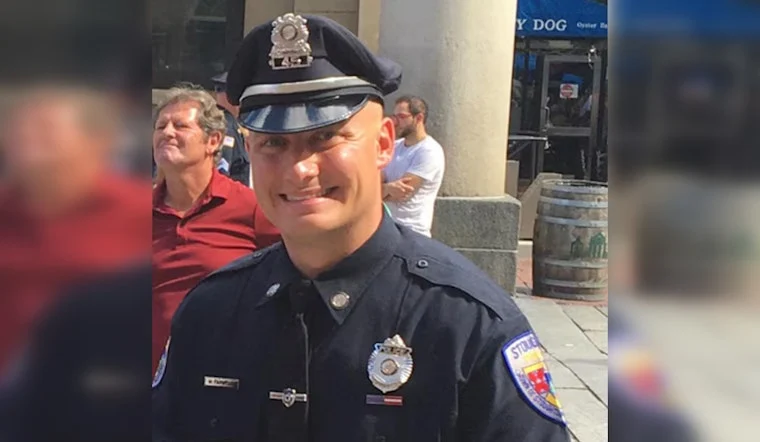
BOSTON – A former Stoughton, Mass. police officer has been charged in federal court in Boston with allegedly murdering a young woman to prevent her from disclosing information about his longstanding sexual exploitation of her while he was on duty, beginning when she was a minor.
Matthew Farwell, 38, of North Easton, Mass., has been indicted on one count of killing a witness or victim. Farwell was arrested this morning and will make an initial appearance in federal court in Boston at 2:30 p.m. today.
According to the indictment, on or about Feb. 1, 2021, Farwell allegedly killed Sandra Birchmore by strangulation. It is alleged that Farwell staged her body and apartment to make it appear as if Birchmore had committed suicide.
The indictment alleges that Farwell killed Birchmore with the intent to prevent law enforcement from learning about Farwell’s commission or possible commission of federal offenses.
According to court documents, Farwell was a sworn officer of the Stoughton Police Department beginning on or about March 27, 2012, until on or about April 1, 2022.
In his capacity as a police officer, Farwell served as an instructor for the Stoughton Police Department’s Explorer’s Program, which is a vocational education program designed for youth to learn about careers in law enforcement.
Sandra Birchmore joined the Stoughton Explorers Program in 2010, when she was 12 years old. Farwell allegedly used his authority and access to groom, sexually exploit and ultimately sexually abuse Birchmore when she was 15 years old and continued to have sex with her when she became an adult.
On several occasions, Farwell allegedly engaged in sex acts with Birchmore while on duty as a Stoughton police officer. To conceal this activity, it is alleged that Farwell falsely represented that he had worked certain hours, when in fact he was not working but engaging in sex acts with the then-minor victim. Farwell’s sexual contact with Birchmore continued until her death on Feb. 1, 2021.
In December 2020, Birchmore learned that she was pregnant. According to court documents, she was excited about the pregnancy: scheduling doctors’ appointments, purchasing items for childcare and telling loved ones how happy she was to become a mother.
Soon after she learned she was pregnant, Birchmore told Farwell that he was the father of the child and that she expected him to be involved, at least in part, in the child’s life.
Birchmore disclosed to loved ones that Farwell allegedly became violent with her when they discussed the pregnancy and his role in the child’s life. At one point while she was pregnant, Farwell allegedly held Birchmore in a headlock and told her that he wished she were dead.
On or about Jan. 20, 2021, Birchmore’s friend called the Stoughton Police Department and referenced Farwell and Birchmore’s sexual relationship. Upon learning this, Farwell allegedly then sent Birchmore angry text messages and, a few days later – approximately one week prior to Birchmore’s death – Farwell visited Birchmore at her apartment in Canton and asked her if she could give him a spare apartment key and keep it a secret.
It is further alleged that one week prior to her death, Farwell visited Birchmore’s apartment and began looking through her closets and bathroom, conduct which made her uncomfortable.
The court documents allege that, on Feb. 1, 2021, facing perceived imminent disclosure of his criminal conduct, Farwell murdered Birchmore to silence her.
According to court documents, while Birchmore’s death was initially ruled a suicide, the federal investigation probed old evidence and revealed critical new evidence leading to the charge against Farwell.
The charge of killing a witness or victim carries a mandatory sentence of death or life in prison. Sentences are imposed by a federal district court judge based upon the U.S. Sentencing Guidelines and statutes which govern the determination of a sentence in a criminal case.
Acting United States Attorney Joshua S. Levy and Jodi Cohen, Special Agent in Charge of the Federal Bureau of Investigation, Boston Division made the announcement today.
The Massachusetts Attorney General’s Office, Massachusetts State Police, Stoughton Police Department and Norfolk District Attorney’s Office provided assistance in the investigation. Assistant U.S. Attorneys Elizabeth Riley, Torey B. Cummings and Brian A. Fogerty of the office’s Human Trafficking & Civil Rights Unit are prosecuting the case.
The details contained in the charging documents are allegations. The defendant is presumed innocent unless and until proven guilty beyond a reasonable doubt in a court of law.
Defendants allegedly traveled from California to Massachusetts with cocaine and methamphetamine valued at over $10.5 million
BOSTON – Two Indian nationals were indicted by a federal grand jury in Boston yesterday in connection with the distribution of cocaine and methamphetamine.
Simranjit Singh, 28, and Gusimrat Singh, 19, of Fresno, Calif. were each charged with one count of conspiracy to distribute and to possess with intent to distribute five kilograms or more of cocaine and 500 grams or more of methamphetamine, and one count of distribution of and possession with intent to distribute five kilograms or more of cocaine and 500 grams or more of methamphetamine. Both men were arrested on July 29, 2024 and have remained in federal custody since their arrests.
According to the charging documents, investigators became aware of a California-based drug-trafficking organization (“DTO”) interested in transporting methamphetamine and other drugs to Boston. A member of the DTO agreed to sell 65 pounds (approximately 30 kilograms) of methamphetamine to undercover agents. On July 29, 2024, at approximately 10:15 p.m., a white tractor trailer arrived at a planned Andover address to deliver methamphetamine to the undercover agents.
The driver and passenger of that tractor trailer, later identified as Gusimrat Singh and Simranjit Singh, allegedly handed off 65 pounds of suspected methamphetamine to the undercover agents. The men were immediately taken into custody.
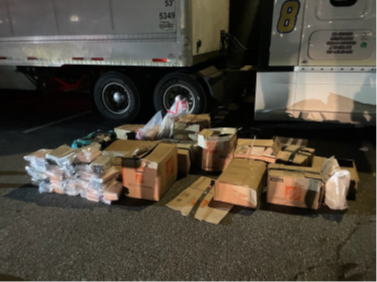
According to court documents, while searching the cab of the tractor trailer, over 400 kilogram bricks of suspected cocaine was discovered, worth more than $10.5 million.
The charges provide for a mandatory minimum of 10 years and up to life in prison, at least five years and up to life of supervised release and a fine of up to $10,000,000. Sentences are imposed by a federal district court judge based upon the U.S. Sentencing Guidelines and statutes which govern the determination of a sentence in a criminal case.
Acting United States Attorney Joshua S. Levy and Michael J. Krol, Special Agent in Charge, Homeland Security Investigations, in New England made the announcement today.
Valuable assistance was provided by U.S. Customs and Border Protection, U.S. Drug Enforcement Administration, Andover Police Department, Milton Police Department and the Massachusetts State Police. Assistant U.S. Attorney Steve Hassink of the Narcotics & Money Laundering Unit is prosecuting the case.
This investigation is part of an Organized Crime Drug Enforcement Task Forces Strike Force Initiative, which provides for the establishment of permanent multi-agency task force teams that work side-by-side in the same location.
This co-located model enables agents from different agencies to collaborate on intelligence-driven, multi-jurisdictional operations to disrupt and dismantle the most significant drug traffickers, money launderers, gangs, and transnational criminal organizations.
The details contained in the charging documents are allegations. The defendants are presumed innocent unless and until proven guilty beyond a reasonable doubt in a court of law.
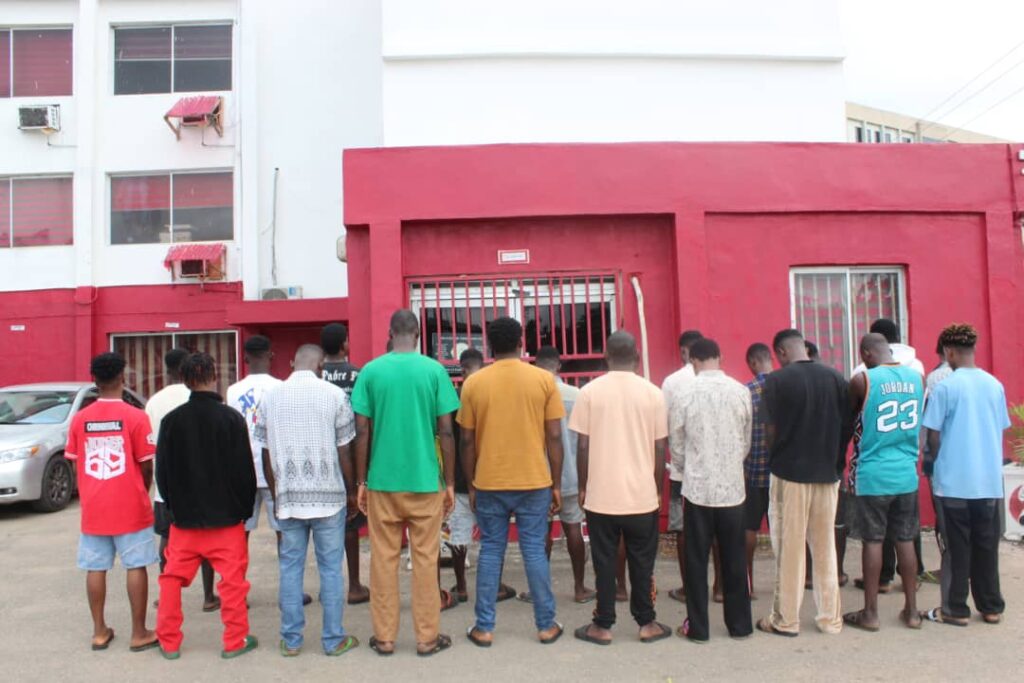
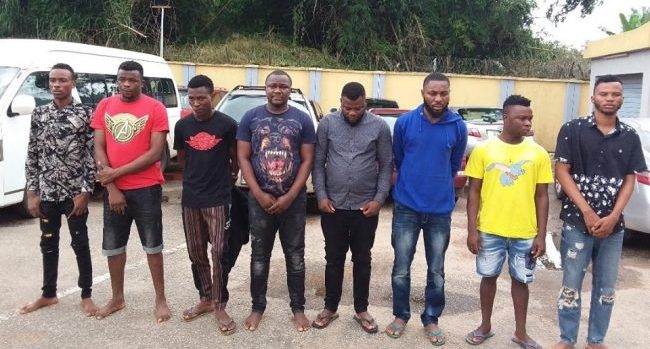
BENIN CITY, Nigeria – Nigeria’s Economic and Financial Crimes Commission (EFCC) has arrested 24 suspected internet fraudsters in a series of raids across Benin City, Edo State. The operation, conducted on Wednesday, August 28, 2024, was based on intelligence reports regarding the suspects’ alleged involvement in online fraud activities.
Dele Oyewale, Head of Media and Publicity for the EFCC, released a statement detailing the arrests and seizures made during the operation. “Operatives of the Benin Zonal Directorate of the Economic and Financial Crimes Commission, EFCC, on Wednesday, August 28, 2024, arrested 24 suspected internet fraudsters at different locations within Benin City,” Oyewale stated.
The EFCC’s action comes as part of ongoing efforts to combat cybercrime and financial fraud in Nigeria, which has gained international notoriety for online scams. The arrests highlight the agency’s commitment to tackling what has become a significant issue affecting Nigeria’s international reputation and economic stability.
During the raids, law enforcement officials seized several valuable items from the suspects. “Items recovered from them include 11 exotic cars, laptops and phones,” Oyewale reported. The confiscation of luxury vehicles suggests that some of the alleged fraudsters may have amassed significant wealth through their illicit activities.
The EFCC spokesman emphasized that the investigation is ongoing, with plans to bring formal charges against the suspects. “They would be charged to court as soon as investigations are concluded,” Oyewale added, indicating that the agency is gathering evidence to build strong cases against the accused.
This operation in Benin City is part of a larger crackdown on cybercrime across Nigeria. The EFCC has been intensifying its efforts to combat internet fraud, which has become increasingly sophisticated and widespread in recent years. These activities not only harm individual victims but also damage Nigeria’s international business relationships and investment climate.
The arrests and seizures send a strong message to potential fraudsters and demonstrate the EFCC’s determination to root out cybercrime. However, the persistence of such activities also highlights the ongoing challenges faced by law enforcement in keeping pace with evolving criminal tactics in the digital age.
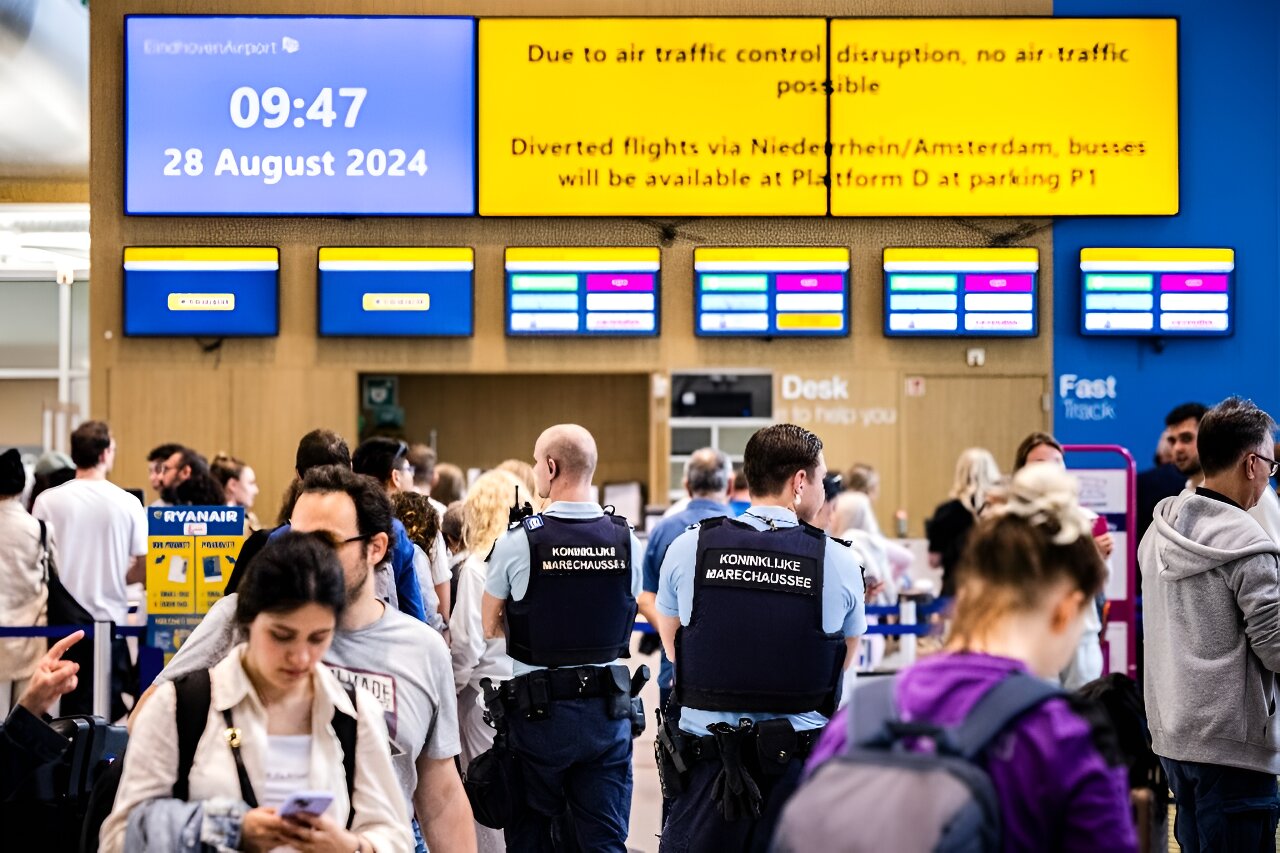
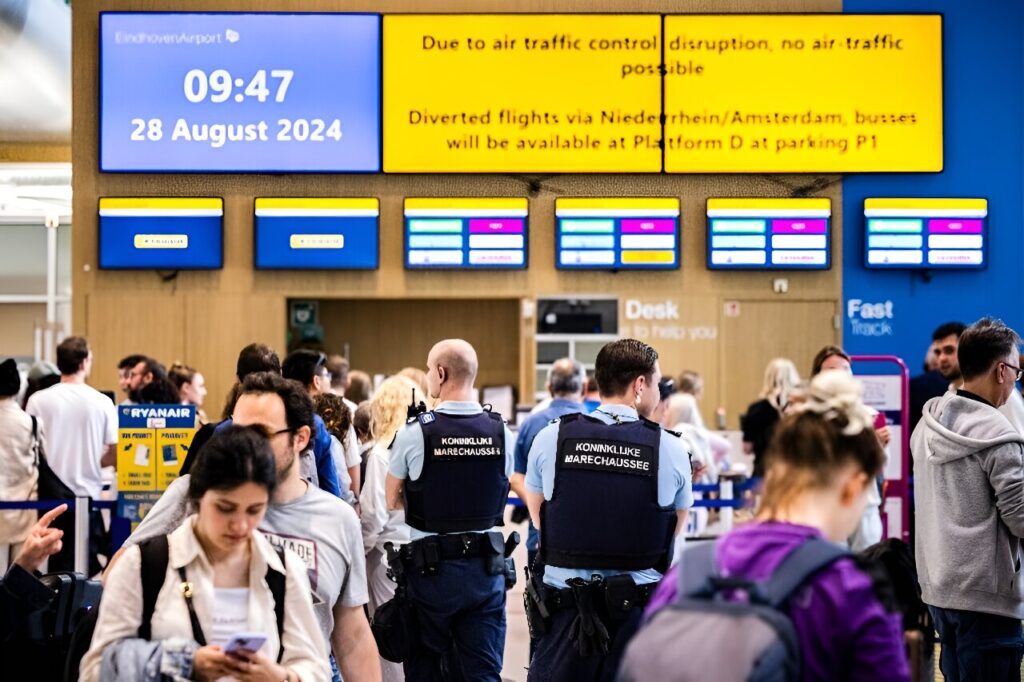
A significant network outage originating from the Dutch Ministry of Defence has triggered widespread IT failures across the Netherlands, grounding flights and forcing police to resort to text messaging for on-duty communication. The full extent and cause of the problems remain unclear as authorities scramble to address the situation.
A spokesperson for the Dutch Defence Ministry confirmed that the issue can be traced back to one of their networks, which is also utilized by other branches of the Dutch government. The outage has had far-reaching consequences, affecting various sectors including transportation and emergency services.
At Eindhoven Airport, the country’s second-largest air hub, travelers have been stranded since early morning, with flights from budget airlines Ryanair and Transavia cancelled. Judith de Roy, an airport spokesperson, stated, “There is no air traffic at all and we have very little information about the cause.” All flights at the airport were grounded until at least 5 pm local time (4 pm UK time), resulting in at least 14 cancelled flights.
Some flights were diverted to Germany’s Weeze Airport, approximately 90km from Eindhoven, as well as Amsterdam’s Schiphol Airport and Belgium’s Brussels Airport, both about 125km away. Notably, Schiphol, the country’s largest airport, has not reported any problems related to the outage.
The disruption has extended beyond air travel, impacting critical emergency services. Alarm and communications systems for emergency workers have been affected, with the coastguard reporting that they were unreachable by phone or radio. Police officers have been forced to rely on mobile phones and text messages to maintain contact, abandoning their normal communication systems.
Adding to the complexity of the situation, telecom company KPN experienced a major outage with its mobile service. However, the company stated it was unclear if this problem was related to the issues at the Defence Ministry.
The Dutch national cybersecurity centre has yet to determine if the outage is a result of a cyber attack, emphasizing the uncertainty surrounding the cause and potential duration of the disruption. The Defence Ministry has not provided an estimated timeline for resolving the issue.
MOSCOW – The Kremlin on Wednesday firmly rejected Ukrainian President Volodymyr Zelenskyy’s discussion of a plan to end the ongoing conflict, asserting that Russia will continue its “special military operation” in Ukraine. This response comes after Zelenskyy announced on Tuesday his intention to present a comprehensive peace plan to U.S. President Joe Biden and potential successors.
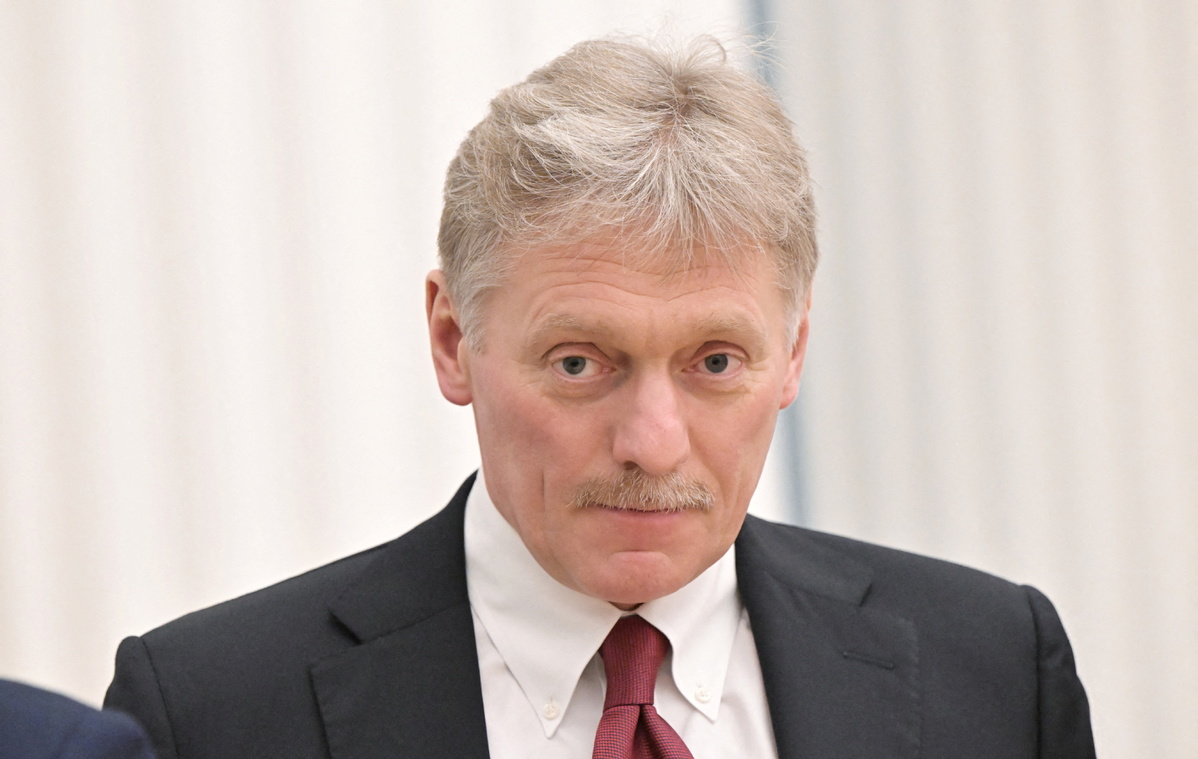
Kremlin spokesman Dmitry Peskov,
Kremlin spokesman Dmitry Peskov, addressing reporters, dismissed Zelenskyy’s proposal: “This is not the first time that we have heard such statements from representatives of the Kyiv regime. We are aware of the nature of this Kyiv regime,” Peskov stated. “We are continuing our special military operation and will achieve all of our goals.”
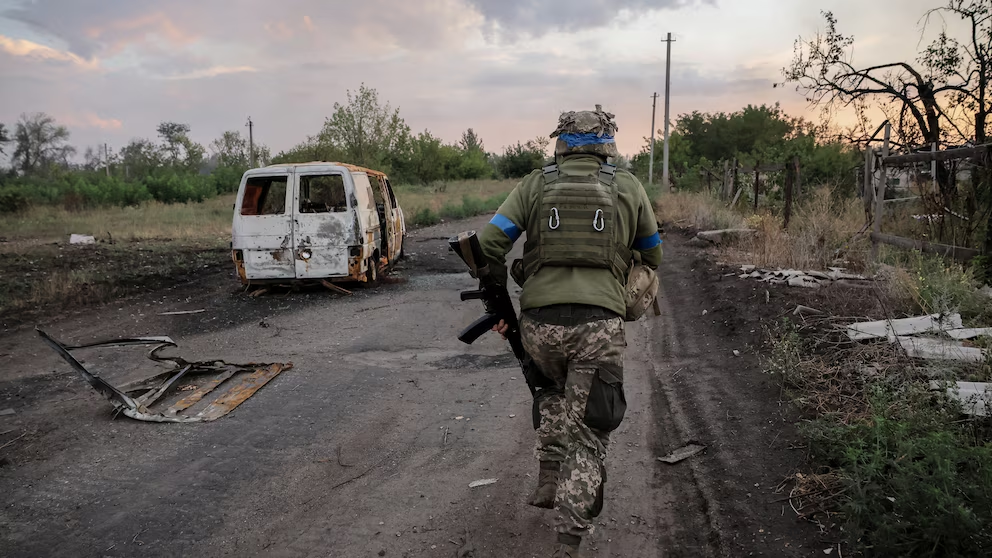
Zelenskyy, speaking at a news conference, revealed that Ukraine’s three-week-old incursion into Russia’s Kursk region forms part of his broader strategy. While not disclosing full details, he indicated that the plan encompasses economic and diplomatic measures alongside military actions. The Ukrainian leader emphasized that the objective is to compel Moscow to end the war, partly by leveraging long-range U.S.-supplied arms to strike deep inside Russian territory – a move he is urging Washington to approve.
The Kremlin’s dismissal underscores the deep divide between Moscow and Kyiv’s perspectives on the conflict and potential resolutions. Russia currently faces the challenge of repelling the Ukrainian incursion that began on August 6, while simultaneously advancing its offensive in the Donetsk region of eastern Ukraine.
Peskov also addressed recent diplomatic efforts by India, acknowledging Prime Minister Narendra Modi’s stance on the need for a peaceful settlement. Modi had recently engaged in discussions with both Russian President Vladimir Putin and Zelenskyy, advocating for an early, peaceful resolution to the conflict. However, Peskov tempered this acknowledgment, stating, “It is more than obvious that there is no basis for talks right now.”
The exchange highlights the complex international dynamics surrounding the conflict, with various nations attempting to mediate or influence its course. India’s efforts, while recognized, are viewed by Moscow as premature given the current military situation and political standoff.