Home Blog Page 76

Russia Attacks Ukraine Killing 1, Wounding 23 as US-Mediated Peace Negotiations Continue in Abu Dhabi

0

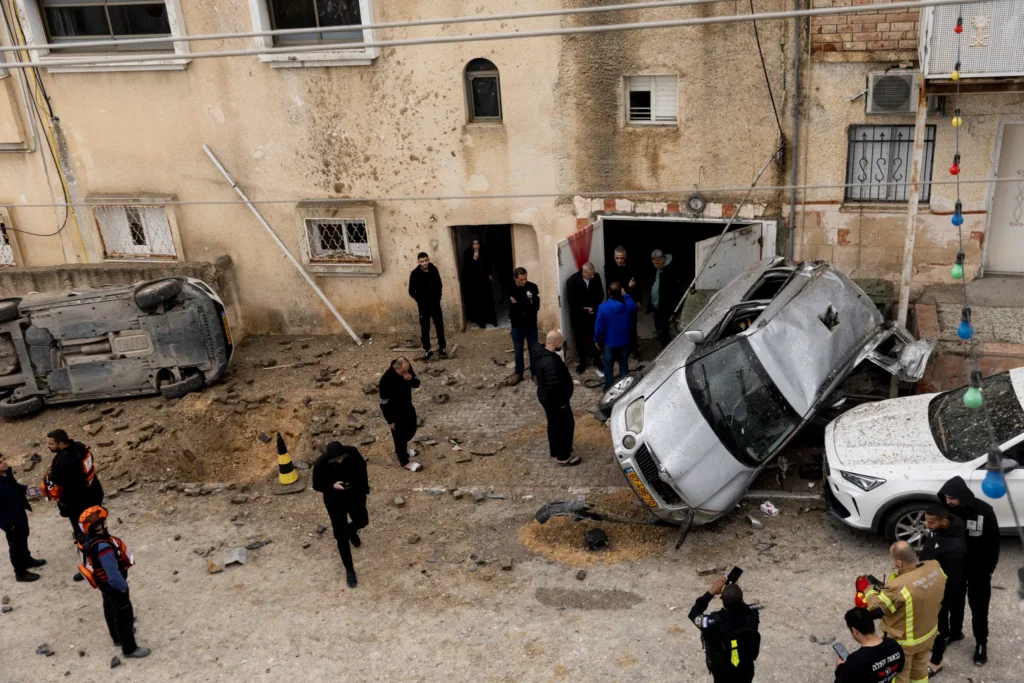
ABU DHABI, United Arab Emirates — Russian attacks on Ukraine killed at least one person and wounded 23 overnight into Saturday, hours before negotiators from Ukraine, Russia and the United States convened for a second day of discussions aimed at ending Moscow’s nearly four-year full-scale invasion.

One person was killed and four wounded in Russian drone attacks on the Ukrainian capital, Kyiv, Kyiv City Military Administration head Tymur Tkachenko disclosed. In Ukraine’s second-largest city, Kharkiv, drone attacks wounded 19 people, Mayor Ihor Terekhov said Saturday.

The strikes occurred as envoys prepared to meet in the United Arab Emirates for a second day of negotiations Saturday. The talks represent the first known instance that officials from the Trump administration have conducted direct discussions with both countries as part of Washington’s initiative to advance progress toward ending Moscow’s invasion that began in February 2022.

The UAE’s foreign ministry characterized the talks as part of efforts “to promote dialogue and identify political solutions to the crisis.” The White House described Friday’s inaugural session as productive, though officials provided limited details about substantive progress on contentious issues dividing the parties.

Diplomatic activity has intensified in recent days, spanning from Switzerland to the Kremlin, despite serious obstacles persisting between both sides regarding fundamental questions about territorial integrity and security guarantees.

Ukrainian President Volodymyr Zelenskyy said in Davos, Switzerland, on Thursday that a potential peace agreement was “nearly ready,” though certain sensitive sticking points—most notably those concerning territorial issues—remain unresolved. The optimistic characterization contrasts with continued violence and Russia’s insistence on territorial concessions that Ukraine views as unacceptable.

Just hours before the three-way talks commenced, Russian President Vladimir Putin discussed Ukraine settlement terms with U.S. President Donald Trump’s envoys Steve Witkoff and Jared Kushner during marathon overnight discussions. The Kremlin maintains that reaching a peace agreement requires Kyiv to withdraw its troops from eastern areas that Russia illegally annexed but has not fully captured militarily.

The territorial demand represents the fundamental divide preventing peace agreement finalization. Russia controls portions of four Ukrainian regions it claims to have annexed—Donetsk, Luhansk, Zaporizhzhia and Kherson—but has failed to capture the entirety of any province despite nearly four years of warfare. Ukrainian leaders have consistently rejected ceding territory to an aggressor as a condition for peace.

The U.S.-led initiative to end the conflict gained momentum late last year and has accelerated in 2026, with leaders, diplomats and envoys conducting numerous meetings to explore potential settlement frameworks. The diplomatic flurry reflects Trump administration determination to broker an agreement that the president characterized during his campaign as achievable within days of taking office.

The negotiation timeline reveals intensive engagement by American envoys shuttling between Kyiv and Moscow while Ukrainian officials traveled repeatedly to the United States and Europe for consultations. Ukrainian President Zelenskyy traveled to Turkey on Nov. 19 in what he characterized as an effort to jump-start negotiations. Soon after, a 28-point peace plan drafted by the U.S. and Russia emerged, which critics characterized as leaning heavily in Moscow’s favor.

U.S. Army Secretary Dan Driscoll traveled to Kyiv on Nov. 20 to brief Zelenskyy on the U.S.-backed peace proposal. Three days later, Secretary of State Marco Rubio met a Ukrainian delegation headed by then-presidential chief of staff Andrii Yermak for talks in Geneva, with both sides claiming progress while providing few details.

Between Nov. 24-25, Driscoll met Russian officials in Abu Dhabi. Putin’s foreign policy adviser, Yuri Ushakov, indicated the parties did not examine the new peace plan in detail during those discussions.

A Ukrainian delegation led by Rustem Umerov met U.S. officials in Florida on Nov. 30. Umerov had replaced Yermak, who resigned amid a corruption scandal involving Ukraine’s energy sector, creating leadership disruption during critical negotiations.

Zelenskyy traveled to Paris on Dec. 1 to brief French President Emmanuel Macron on Florida talks outcomes as a U.S. delegation headed to Moscow for parallel discussions. The following day, Putin met Witkoff and Kushner at the Kremlin for five hours, with Russian envoy Kirill Dmitriev and Ushakov also participating. Ushakov described the meeting as constructive while acknowledging substantial work remained.

Ukrainian delegations returned to Florida on Dec. 4-6 for additional meetings with U.S. delegates. Between Dec. 14-15, Ukrainian officials including Zelenskyy traveled to Berlin for talks with Witkoff and Kushner, after which U.S. officials disclosed that Washington had agreed to provide Kyiv with unspecified security guarantees.

Russian envoy Dmitriev held several days of talks with Witkoff and Kushner in Miami on Dec. 20-21. The Americans separately met with Ukrainian delegation members also in Florida, conducting parallel negotiations with both parties rather than bringing them together directly.

Zelenskyy flew to Florida on Dec. 28 to meet Trump, who contacted Putin before sitting down with the Ukrainian president, demonstrating the president’s personal engagement in mediation efforts.

FILE Ñ President Trump meets with Ukraine’s President Volodymyr Zelenskyy in the Oval Office of The White House in Washington on Aug.18, 2025. In the Trump administrationÕs latest effort to pressure Ukraine into accepting a 28-point peace plan, officials from the two countries will hold talks in Geneva. (Doug Mills/The New York Times)

In 2026, Zelenskyy and other Ukrainian officials attended a “coalition of the willing” summit in Paris on Jan. 6-7 and held talks with Witkoff and Kushner. Kyiv’s allies emphasized major progress toward agreeing on mechanisms to defend Ukraine if a peace settlement is reached, expressing readiness to provide international guarantees deterring Russia from attacking again.

A Ukrainian delegation arrived in the United States for talks on Jan. 17 as Russia attacked Ukraine’s power grid, cutting electricity and heat during freezing temperatures. The timing illustrated how military pressure continues alongside diplomatic engagement.

Russian envoy Dmitriev met Witkoff and Kushner at the World Economic Forum in Davos, Switzerland, on Jan. 20, though no details about discussions were revealed. The following day, Umerov disclosed in a statement that the Ukrainian delegation in Davos met with Witkoff and Kushner.

Zelenskyy met Trump in Davos on Jan. 22 for approximately one hour. Trump characterized the talks as “very good” while Zelenskyy described them as “productive and meaningful,” diplomatic language suggesting cordiality without breakthrough.

Between Jan. 22-23, Putin hosted Witkoff and Kushner for talks in Moscow. After nearly four hours of discussions, Ushakov reaffirmed that “reaching a long-term settlement can’t be expected without solving the territorial issue,” maintaining Russia’s position that Ukraine must accept territorial losses.

The Abu Dhabi talks on Jan. 23 marked the first trilateral session where Russian, Ukrainian and U.S. delegates convened together. Zelenskyy indicated the contentious territorial concessions issue would likely be discussed, while the Kremlin characterized the meeting as a “working group on security issues,” reflecting different priorities and expectations.

Saturday’s continuation of overnight Russian attacks while peace negotiations proceeded illustrated the disconnection between diplomatic processes and battlefield realities. Ukraine continues suffering civilian casualties and infrastructure damage even as representatives discuss settlement terms that might end the violence.

Whether the intensified diplomatic engagement produces a sustainable peace agreement or merely creates the appearance of progress while fundamental disagreements persist will become apparent in coming weeks as negotiations either advance toward concrete terms or stall over irreconcilable positions regarding territorial integrity and security arrangements.

For Ukraine’s civilian population enduring nearly four years of warfare, the promise of peace negotiations offers hope for ending bombardments like Saturday’s drone attacks that killed and wounded dozens. Yet that hope remains tempered by awareness that previous diplomatic initiatives have failed to halt Russian aggression or produce terms Ukraine can accept without compromising its sovereignty and territorial integrity.

AP contributed

Minneapolis ICE Protests Draw Thousands in Below-Zero Weather After Fatal Shooting of Unarmed Woman

0

MINNEAPOLIS — Thousands of demonstrators braved brutal subzero temperatures Friday to protest federal immigration enforcement operations that have arrested more than 3,000 people in six weeks and resulted in the fatal shooting of an unarmed U.S. citizen, transforming Minnesota’s largest city into the epicenter of resistance to the Trump administration’s immigration crackdown.

Organizers distributed hand warmers to protesters who shouted “ICE out,” waved American flags and carried signs demanding the arrest of Immigration and Customs Enforcement officer Jonathan Ross, who fatally shot Renee Nicole Good on Jan. 7. The demonstrations occurred despite temperatures remaining below zero degrees Fahrenheit throughout the day, with a high of minus 9, a low of minus 17 and wind chill values plummeting to minus 35, the National Weather Service disclosed.

“Today is the coldest day of the entire year in Minnesota, and we have the biggest protest to date happening,” Amal Ahmed, 30, said as she and others gathered downtown before marching toward Target Center arena Friday afternoon.

Video posted on social media Friday morning showed thousands of people assembled outside Minneapolis airport, forming a picket line spanning the length of the terminal for departing flights. The morning action served as a precursor for a statewide “ICE Out” day of protest in the afternoon. Throughout the week, clergy, immigrant organizations and labor unions urged residents to support Friday’s demonstration and abstain from shopping, attending school or working that day.

KARE, NBC’s Minneapolis affiliate, captured video of airport demonstrators being zip-tied and loaded into yellow school buses by police officers. Organizers told KARE that approximately 100 people were detained. Airport officials told the station that law enforcement intervened after protesters’ “permitted activity went beyond the agreed-upon terms.”

Several businesses across the Twin Cities closed Friday, with some business owners previously telling NBC News they would attend the rally instead of operating normally.

Mati Hanson, 31, explained she was protesting because she felt she could as a white person. “A lot of people aren’t leaving their houses … Those are the people I want to support, since they can’t be here,” she said.

Yubi Hassan, 24, who immigrated from Somalia as a teenager, distributed hot tea to protesters in The Commons. His friend displayed a sign reading “Free Somali tea.”

“We realized it’s negative 20 degrees out today, and anybody would appreciate something warm,” Hassan, who owns a local tea company, said. He emphasized the importance of protesting despite his fears. “We have seen this happen before, right? It always starts with one group of people, until it spreads to everybody. Today is us, tomorrow it might be somebody else.”

As the sun set, the demonstration moved as planned to Target Center arena, where thousands assembled. Banners reading “Stop kidnapping our neighbors” and “No more masked militia” were hung throughout the city-owned stadium. Several local activists and religious leaders addressed the crowd.

“Today, we are not gathering out of fear. We gathered out of love for our neighbors, for our children and for our future,” activist Imam Youssef Abdullah told the assembly. “When the violence escalated, we did not turn away. We showed up, we shared food, we marched together.”

The Trump administration has deployed more than 3,000 federal immigration personnel to Minneapolis since December in what officials have designated Operation Metro Surge. Over the past six weeks, officers have apprehended more than 3,000 undocumented immigrants, the Department of Homeland Security disclosed.

In a Thursday evening statement to NBC News, a DHS spokesperson criticized Friday’s protests: “The fact that those groups want to shut down Minnesota’s economy, which provides law-abiding American citizens an honest living, to fight for illegal alien murderers, rapists, gang members, pedophiles, drug dealers, and terrorists says everything you need to know.”

Operation Metro Surge commenced after a YouTube video by right-wing influencer Nick Shirley alleging massive fraud at child care centers owned by Somali immigrants went viral. The video generated fierce renewed attention on a yearslong Justice Department investigation into an alleged $250 million fraud scheme in Minnesota involving some members of the state’s Somali community.

Abdi Hassan, 19, a Somali American who has lived in the U.S. since age 2, said at Friday’s protest that he has witnessed friends racially profiled by ICE in recent weeks. He carries identification everywhere, he explained, “or I might just be snatched up for no reason … it’s been scary lately. It’s terrifying.”

The immigration operation has drawn fierce criticism from some residents and local officials, including Gov. Tim Walz, a Democrat, and Minneapolis Mayor Jacob Frey. This week, the Justice Department sent subpoenas to Walz, Frey and other state leaders, escalating its investigation into whether they conspired to impede immigration operations.

Tensions have escalated since Good’s fatal shooting by Ross, whom federal officials maintain was acting in self-defense. Good, an unarmed U.S. citizen, was killed during an ICE operation that authorities characterized as justified despite local officials’ disputes about the circumstances.

On Thursday, Homeland Security and FBI agents arrested three protesters connected to a demonstration that interrupted Sunday services at a St. Paul church. That same day, news emerged that four children had been apprehended by immigration authorities in recent weeks, including a 5-year-old boy.

Images of the 5-year-old, Liam Conejo Ramos, were displayed on numerous protesters’ signs Friday downtown. One read “Not bait.” Officials with Ramos’ school district accused federal authorities of using the boy as bait to arrest his parents, an allegation DHS denied, maintaining they made “multiple attempts” to persuade the boy’s mother to take custody, but she refused.

“It’s super heartbreaking to know that even a 5-year-old can be placed in detention centers,” Ahmed said. “Nobody is safe.”

Border Patrol and ICE officials explained at a Friday news conference that the father fled on foot as agents attempted to arrest him, abandoning the boy. Officials disclosed the father and son have been reunited at a detention facility in Texas.

“To the federal government, look at this gathering here. I know you’re watching,” Youssef Abdullah told the crowd. “Take good pictures. Your division did not work. Your division failed. Your cruelty has been exposed.”

The protests illustrate deepening polarization over immigration enforcement, with federal authorities characterizing operations as targeting dangerous criminals while local communities describe systematic harassment of established immigrant populations contributing to Minnesota’s economy and civic life.

The deployment of over 3,000 federal personnel to a single metropolitan area represents an extraordinary concentration of immigration enforcement resources, transforming routine operations into a visible occupation-style presence that has inflamed tensions between Washington and Minnesota’s Democratic state leadership.

The willingness of thousands to demonstrate in life-threatening cold demonstrates the intensity of opposition to enforcement tactics that critics characterize as indiscriminate and traumatizing to immigrant communities. Wind chills reaching minus 35 degrees create conditions where prolonged outdoor exposure risks frostbite and hypothermia, yet protesters sustained their presence throughout the day.

The Justice Department’s subpoenas to state officials signal potential criminal investigations into whether elected leaders violated federal law by resisting immigration operations. Whether such investigations represent legitimate enforcement of federal authority or political intimidation of officials who criticized administration policies remains contested.

For Minneapolis’ Somali community, the operation represents collective punishment for alleged fraud by some members, with enforcement targeting entire neighborhoods rather than specific individuals implicated in criminal schemes. Community leaders have emphasized that the vast majority of Somali immigrants maintain no connection to fraud allegations yet face heightened scrutiny and enforcement risk.

The fatal shooting of Good, a U.S. citizen with no immigration violations, exemplifies critics’ concerns that aggressive enforcement endangers not only undocumented immigrants but also citizens who happen to be present during operations or who match profiles that agents associate with immigration violations.

As protests concluded Friday evening, the fundamental standoff between federal enforcement authority and local resistance remained unresolved, with both sides convinced of their positions’ righteousness and neither willing to compromise on core principles regarding immigration policy and enforcement methods.

NBC

Trump Deploys Aircraft Carrier Strike Group, Naval ‘Armada’  to Middle East as Iran Nuclear Standoff Escalates

0

President Donald Trump confirmed Thursday that the United States has deployed a naval “armada” toward Iran, including an aircraft carrier strike group diverted from Asia-Pacific operations, as he renewed warnings to Tehran against resuming its nuclear program or executing protesters while expressing hope military force will not become necessary.

“We have a lot of ships going that direction, just in case …I’d rather not see anything happen, but we’re watching them very closely,” Trump told reporters aboard Air Force One while returning from the World Economic Forum in Davos, Switzerland.

At another point during the flight, he elaborated: “We have an armada … heading in that direction, and maybe we won’t have to use it.”

U.S. officials, speaking on condition of anonymity, disclosed that the aircraft carrier USS Abraham Lincoln and several guided-missile destroyers will arrive in the Middle East in coming days. Reuters conveyed that one official indicated additional air-defense systems were being considered for the region, which could prove critical to guard against potential Iranian strikes on U.S. bases.

The deployments expand Trump’s military options both to defend American forces throughout the region during a period of heightened tensions and to execute additional military action following June strikes against Iranian nuclear sites.

The warships began moving from the Asia-Pacific last week as tensions between Iran and the United States soared following Tehran’s severe crackdown on protests across the country in recent months that have killed thousands of people.

Trump had repeatedly threatened to intervene militarily against Iran over protester killings but protests diminished last week. The president backed away from his most aggressive rhetoric last week, claiming he had prevented executions of prisoners.

He repeated that assertion Thursday, saying Iran canceled nearly 840 planned executions after his threats. “I said: ‘If you hang those people, you’re going to be hit harder than you’ve ever been hit. It’ll make what we did to your Iran nuclear (program) look like peanuts,'” Trump recounted.

“At an hour before this horrible thing was going to take place, they canceled it,” he added, calling it “a good sign.”

The U.S. military has periodically surged forces to the Middle East during heightened tensions, moves often defensive in nature. However, the military staged a major buildup last year preceding its June strikes against Iran’s nuclear program.

Trump has emphasized the United States would act if Tehran resumed its nuclear program after the June strikes on key facilities. “If they try to do it again, they have to go to another area. We’ll hit them there too, just as easily,” he said Thursday.

Iran must inform the U.N. nuclear watchdog, the International Atomic Energy Agency, about what occurred at sites struck by the United States and the nuclear material believed present there. That includes an estimated 440.9 kilograms of uranium enriched up to 60 percent purity which, if enriched sufficiently, could provide material for 10 nuclear weapons, based on an IAEA standard.

The agency has not verified Iran’s stock of highly enriched uranium for at least seven months, though the watchdog advises monthly verification should occur.

The protests began Dec. 28 as modest demonstrations in Tehran’s Grand Bazaar over economic hardship and rapidly spread nationwide. Whether protests could surge again remains unclear given the violent crackdown that has killed thousands.

The U.S.-based HRANA rights group disclosed it has verified 4,519 unrest-linked deaths, including 4,251 protesters, with 9,049 additional deaths under review. An Iranian official told Reuters the confirmed death toll through Sunday exceeded 5,000, including 500 security force members.

When asked how many protesters were killed, Trump said: “Nobody knows… I mean, it’s a lot, no matter what.”

Al Jazeera conveyed that Trump told reporters he was “watching Iran” and had deployed “a big force going towards Iran” along with “a big flotilla going in that direction, and we’ll see what happens.”

The naval buildup confirmation comes after Trump appeared to moderate his military action threats last week following what he characterized as assurances that no protester executions would be carried out by Tehran.

Iranian officials have denied plans to execute individuals who participated in the widespread anti-government protests. Iranian state media placed the death toll at 3,117 people, including 2,427 civilians and security force members, a figure substantially lower than estimates from human rights organizations and Iranian officials who spoke to Reuters.

Speaking to CNBC on Wednesday, Trump expressed hope there would not be further U.S. military action against Iran but emphasized the United States would act if Tehran resumed its nuclear program. “They can’t do the ​nuclear,” Trump told CNBC in Davos. “If they do it, it’s going to happen again,” referring to U.S. air strikes on Iran’s nuclear facilities in June 2025 when Washington joined Israel’s 12-day war against the country.

Washington last ordered a major military buildup in the Middle East before its June attacks, with officials later claiming success in keeping intentions to strike Tehran’s nuclear program secret until operations commenced.

Iranian Foreign Minister Abbas Araghchi warned in a Wall Street Journal essay Tuesday that Tehran will respond with “everything we have” if attacked again. “Our powerful armed forces have no qualms about firing back with everything we have if we come under renewed attack,” Araghchi wrote.

The minister characterized his warning not as a threat “but a reality I feel I need to convey explicitly, because as a diplomat and a veteran, I abhor war.”

“An all-out confrontation will certainly be ferocious and drag on far, far longer than the fantasy timelines that Israel and its proxies are trying to peddle to the White House,” Araghchi wrote. “It will certainly engulf the wider region and have an impact on ordinary people around the globe.”

The escalating military posture creates conditions where miscalculation by either side could trigger broader conflict neither government claims to desire. Trump’s repeated emphasis that he hopes to avoid using military force while simultaneously deploying substantial naval assets suggests an approach attempting to deter Iranian nuclear activities through credible threat of attack rather than immediate intention to strike.

For Iran, the naval deployment represents a direct challenge to sovereignty and security in waters adjacent to its coastline. The presence of American carrier strike groups in the Gulf creates tactical vulnerabilities for Iranian forces while demonstrating Washington’s capacity to project power despite geographic distance from U.S. territory.

The execution dispute illustrates information asymmetry surrounding events in Iran, where government restrictions on independent journalism and human rights monitoring create environments where competing claims about planned executions cannot be independently verified. Trump’s assertion that he prevented 840 executions lacks confirmation from sources beyond his own statements.

The nuclear verification gap presents additional complications. Seven months without IAEA access to Iranian enriched uranium stockpiles means international monitors cannot assess whether Tehran has accumulated additional weapons-grade material or maintained existing inventories at levels documented before verification ceased.

The protests that triggered the current crisis emerged from economic grievances in Tehran’s traditional bazaar before expanding into broader anti-government demonstrations across Iran’s diverse provinces. The violent suppression that killed thousands demonstrates the government’s willingness to employ lethal force to maintain control despite international condemnation.

Whether the naval deployment will achieve Trump’s stated objectives of preventing nuclear program resumption and protester executions or whether it instead increases risks of military confrontation that Araghchi warns could engulf the region will become apparent as the carrier group arrives in the Gulf and both sides assess their next moves in a dangerous standoff where rhetoric, military positioning and actual intentions may diverge significantly.

Reuters/Aljazeera

Church Kidnappers Demand Motorcycles as Nigeria Hunts Gunmen Holding More Than 150 Worshippers

0

Gunmen who stormed churches in Nigeria’s restive northwest and abducted scores of worshippers have begun issuing ransom demands, seeking motorcycles rather than cash as security forces intensify efforts to locate more than 150 people still held captive.

Residents in Kaduna State’s Kajuru local government area said Thursday that the attackers, believed to be members of armed criminal gangs operating from forest hideouts, have contacted families of the hostages and demanded 17 motorcycles as a condition for opening negotiations. The abductions, which occurred during Sunday church services, are among the largest mass kidnappings targeting religious centers in Nigeria in recent months.

The attackers raided three churches in quick succession, seizing 177 people before 11 managed to flee into nearby bushland, community leaders said. Those still missing include women, children and elderly worshippers, deepening fears among families and fueling anger over persistent insecurity in the region.

In interviews with The Associated Press, residents said the kidnappers specified motorcycles — each estimated to cost about $1,000 — rather than money, bringing the initial demand to roughly $17,000 in value.

“They said they want 17 motorcycles and have not told us yet that they need money,” said Ishaku Dan’azumi, the village head of Kurmin Wali, one of the affected communities.

Sebastine Barde, president of the Adara Development Association, an ethnic group in the district, said the demand was linked to the attackers’ operational needs. According to Barde, the gunmen told intermediaries they wanted the motorcycles to replace others they had lost during previous encounters.

In Nigeria’s northwest and north-central regions, criminal gangs commonly rely on motorcycles to navigate vast forest reserves that serve as their bases. The terrain allows them to move quickly across state lines and evade overstretched security forces, making motorcycles a critical asset for both raids and escapes.

As negotiations loom, Nigerian security agencies have stepped up their response. Tactical units have been deployed to the forests surrounding Kajuru, with soldiers and police combing remote areas in search of the kidnappers. Authorities say the operation is being coordinated across multiple agencies in an attempt to prevent the abductors from relocating the hostages deeper into hard-to-reach territory.

Kaduna State Gov. Uba Sani visited the affected communities late Wednesday and met with local leaders and security officials. He said the state government was working closely with federal security agencies to secure the release of those abducted.

“Our administration will continue to pursue peace, security and inclusive development,” Sani said during the visit, urging residents to remain calm and cooperate with authorities.

Despite such assurances, communities in Kajuru say fear remains high. Churches have suspended services, markets have thinned out and families are reluctant to allow children to move freely, residents said. Many locals accuse authorities of responding too slowly to repeated warnings about armed gangs operating in the surrounding forests.

The kidnapping highlights the growing challenge posed by criminal gangs in Nigeria’s northwest, where mass abductions for ransom have increasingly supplanted ideological insurgency as the dominant security threat. While Boko Haram and its splinter factions remain active in the northeast, the northwest has been plagued by loosely organized but heavily armed groups that target villages, highways, schools and places of worship.

Security analysts say the gangs exploit weak state presence, poverty and difficult terrain, often negotiating ransoms through community leaders or family representatives. Although authorities officially discourage ransom payments, families frequently feel they have little choice when faced with prolonged captivity and limited rescue successes.

The church abductions have also taken on diplomatic significance. In recent months, Nigeria has come under heightened scrutiny from the United States, which has accused the Nigerian government of failing to adequately protect Christians amid the country’s worsening security crisis. Nigerian officials have rejected claims of religious targeting, noting that attacks by criminal gangs and militants affect both Christian and Muslim communities.

The accusations have strained relations between Abuja and Washington. In December, U.S. forces carried out strikes against alleged Islamic State group members on Nigerian territory — an operation the Nigerian government said it was aware of, though the move underscored international frustration with the pace of Nigeria’s security response.

For families of the abducted worshippers, geopolitical tensions offer little comfort. Many are focused solely on whether the ransom demand will escalate and whether the motorcycles will be enough to secure the release of their loved ones.

Community leaders say they are walking a delicate line, balancing cooperation with security forces against pressure from desperate families who fear that delays could provoke reprisals from the kidnappers.

The demand for motorcycles rather than cash reflects an evolving ransom economy among Nigeria’s armed gangs. While earlier kidnappings often centered on large monetary payments, recent cases suggest abductors are increasingly seeking logistics — fuel, motorcycles or even food supplies — that allow them to sustain operations and avoid financial tracking.

This shift complicates the government’s long-standing policy discouraging ransom payments, as communities may perceive non-monetary demands as less likely to fund future violence. Security experts warn, however, that any concession risks strengthening criminal networks and entrenching kidnapping as a business model.

The targeting of churches also carries symbolic weight in a country where religion is deeply intertwined with identity. Even if attackers are motivated primarily by profit, assaults on worshippers amplify fear and can inflame sectarian tensions, particularly when international actors frame the violence through a religious lens.

As security forces push deeper into Kaduna’s forests, the coming days may determine whether the operation results in rescues or a prolonged standoff. For now, the fate of more than 150 worshippers hangs in the balance, emblematic of a broader crisis in which civilians remain trapped between armed gangs and an overstretched state.

The Associated Press

Trump’s Board of Peace Launches With 19 Nations as Britain, France, Canada Decline to Join

0

President Donald Trump inaugurated his Board of Peace on Thursday to oversee efforts maintaining the Israel-Hamas ceasefire, claiming that “everyone wants to be a part” of an initiative he suggested could eventually rival the United Nations, even as numerous major U.S. allies declined participation over concerns about the body’s mandate and membership.

Speaking at the World Economic Forum, Trump attempted to generate momentum for a project mapping Gaza’s future that has been overshadowed this week by his threats to seize Greenland followed by a dramatic retreat from that territorial campaign.

“This isn’t the United States, this is for the world,” Trump told assembled leaders, adding, “I think we can spread it out to other things as we succeed in Gaza.”

The event featured Ali Shaath, heading a new technocratic government designated to administer Gaza, announcing that the Rafah border crossing will open in both directions next week. Israel offered no confirmation, saying only it would consider the matter next week, illustrating the coordination challenges confronting the nascent governance structure.

The Gaza side of the crossing, which connects the Palestinian territory to Egypt, currently remains under Israeli military control. Shaath, an engineer and former Palestinian Authority official from Gaza, oversees the Palestinian committee established to govern the territory under U.S. supervision.

The Associated Press disclosed that the peace board was initially conceived as a small group of world leaders overseeing the ceasefire but has evolved into something considerably more ambitious—prompting skepticism about its membership and mandate that led countries typically closest to Washington to decline involvement.

Trump minimized the significance of non-participating nations during his unveiling, claiming 59 countries had signed onto the board despite heads of state, top diplomats and other officials from only 19 countries plus the United States actually attending the event. He told the group, ranging from Azerbaijan to Paraguay to Hungary, “You’re the most powerful people in the world.”

The president has discussed the board replacing some United Nations functions and perhaps rendering the entire body obsolete eventually. He adopted a more conciliatory tone in remarks on the forum’s sidelines in the Swiss Alps.

“We’ll do it in conjunction with the United Nations,” Trump said, even while denigrating the U.N. for what he characterized as insufficient action to calm global conflicts.

Secretary of State Marco Rubio explained that some countries’ leaders have indicated plans to join but still require parliamentary approval, suggesting the membership roster could expand beyond current participants.

Major questions persist about the board’s eventual composition and authority. Russian President Vladimir Putin said his country continues consulting with Moscow’s “strategic partners” before committing. Putin was hosting Palestinian President Mahmoud Abbas on Thursday in Moscow, presumably discussing Gaza governance among other Middle East issues.

Britain’s foreign secretary, Yvette Cooper, explained her country’s decision not to participate. “This is about a legal treaty that raises much broader issues,” Cooper told the BBC. “And we do also have concerns about President Putin being part of something which is talking about peace, when we have still not seen any signs from Putin that there will be a commitment to peace in Ukraine.”

The inclusion of authoritarian leaders like Putin among potential board members has generated particular criticism from democratic nations questioning whether such figures can credibly advance peace initiatives while conducting wars of conquest against neighboring countries.

Norway and Sweden have indicated they will not participate. France declined after officials emphasized that while they support the Gaza peace plan, they harbor concerns the board could seek to supplant the United Nations.

Canada, Ukraine, China and the European Union’s executive arm have not committed to participation. Trump’s cancellation of steep tariffs he threatened over Greenland could ease some allies’ reluctance, though the issue remains far from resolved.

The Kremlin disclosed Thursday that Putin plans to discuss his proposal to contribute $1 billion to the Board of Peace for humanitarian purposes during talks with Abbas—contingent on Russia gaining access to assets the United States had previously frozen.

An Arab diplomat in a European capital told The Associated Press that Middle Eastern governments coordinated their response to Trump’s invitation, crafting acceptance language to limit endorsement to the Gaza plan as mandated by the U.N. Security Council rather than the broader board concept.

Speaking on condition of anonymity to discuss the matter candidly, the diplomat characterized the announced acceptance as “preliminary” and noted that the charter presented by the U.S. administration contradicts portions of the United Nations’ mission in certain respects. The diplomat added that other major powers remain unlikely to support the board in its current configuration.

The Board of Peace concept was initially outlined in Trump’s 20-point Gaza ceasefire plan and secured U.N. Security Council endorsement. However, the implementation body has generated controversy that the original ceasefire framework did not.

Months into the ceasefire, Gaza’s more than 2 million Palestinians continue enduring the humanitarian crisis unleashed by over two years of warfare. Violence in Gaza persists despite the nominal truce.

Critical to the ceasefire’s continuation is Hamas disarmament, something the militant organization controlling the Palestinian territory since 2007 has refused despite Israel viewing it as non-negotiable. Trump repeated Thursday his frequent warnings that the group must disarm or face severe consequences.

He characterized the Gaza war as “really coming to an end” while acknowledging, “We have little fires that we’ll put out. But they’re little,” contrasting them to what had been “giant, giant, massive fires.”

Trump’s peace initiative follows his threats this month of military action against Iran as it conducted violent crackdowns against some of the largest street protests in years, killing thousands of people. The president has signaled he will not execute new strikes on Iran after receiving assurances the government would not carry out planned executions of more than 800 protesters.

Trump argued that his aggressive approach toward Tehran—including strikes on Iran’s nuclear facilities in June last year—proved critical to the Israel-Hamas ceasefire arrangement coalescing.

Trump met privately for approximately one hour with Ukrainian President Volodymyr Zelenskyy and characterized the discussion as “very good” without mentioning major breakthroughs. Trump’s special envoy Steve Witkoff and son-in-law Jared Kushner were expected in Moscow for negotiations aimed at ending Russia’s nearly four-year war in Ukraine.

Zelenskyy subsequently addressed the Davos forum and announced two days of trilateral meetings involving the United States, Ukraine and Russia in the United Arab Emirates starting Friday—following U.S. talks in Moscow.

“Russians have to be ready for compromises because, you know, everybody has to be ready, not only Ukraine, and this is important for us,” Zelenskyy said.

The Board of Peace’s troubled launch illustrates challenges confronting Trump’s transactional approach to international diplomacy. The gap between the president’s claims of near-universal support and the reality of major allied nations declining participation demonstrates how rhetorical assertions can diverge sharply from diplomatic outcomes.

For Washington’s traditional European and democratic allies, the board’s ambiguous mandate, potential overlap with United Nations functions and inclusion of authoritarian leaders presents diplomatic and institutional concerns that outweigh desires to support American initiatives. The decision calculus involves balancing partnership with the United States against principles regarding international institutions and engagement with nations conducting aggressive wars.

The discrepancy between 59 claimed participants and 19 actual attendees raises questions about how the administration counts membership. Whether countries that expressed general support for Gaza peace efforts without committing to board participation are being included in the larger figure remains unclear.

For Gaza’s Palestinian population, the board’s composition and effectiveness matters less than whether governing structures emerge capable of providing security, reconstruction and humanitarian relief after years of warfare. The announcement of Rafah crossing opening, pending Israeli confirmation, represents a concrete development that could improve dire humanitarian conditions if implemented.

Whether the Board of Peace evolves into an effective governance mechanism for Gaza or becomes another ambitious initiative that fails to match implementation with rhetoric will become apparent in coming months as the ceasefire’s second phase proceeds and reconstruction efforts either materialize or stall.

AP

3 Killed, 1 Wounded in Shooting That Shakes Small Australian Town

0

A deadly shooting in a small rural town in Australia’s New South Wales state left three people dead and another seriously wounded Thursday, jolting a close-knit community and prompting a large-scale police manhunt as authorities searched for the attacker or attackers.

Emergency crews were dispatched to a residential address in Lake Cargelligo, a farming town of roughly 1,500 people, shortly after 4:40 p.m. local time after authorities received multiple calls alerting them to gunfire, New South Wales Police said in a statement. When officers arrived, they found three victims — two women and one man — who had died at the scene. A fourth victim, a man, was rushed to hospital with injuries police described as serious but stable.

Police said the person or people responsible had fled, triggering an urgent response that saw resources poured into the remote town from neighboring districts as investigators attempted to secure the area and track down those involved.

As dusk fell, state police expanded the operation, deploying specialist units and heavily armed officers to Lake Cargelligo amid concerns that the threat remained active. The Sydney Morning Herald reported that tactical police were sent from surrounding regions and that the elite Tactical Operations Unit was mobilized from Sydney to assist local officers. An unnamed source cited by the newspaper said the unit was equipped with high-powered weapons and had been tasked with containing the threat.

Authorities used geo-targeted emergency text alerts to warn residents to avoid the area around the shooting and urged locals to remain indoors as officers conducted door-to-door checks and secured key locations. The Commercial Hotel, a focal point of social life in the town, was closed by early evening as police worked to limit public movement, The Sydney Morning Herald reported.

For residents, the sudden eruption of violence was both frightening and surreal in a place where serious crime is rare and daily life is defined by routine and familiarity. Manisha, a local resident who declined to give her family name, told Sydney’s The Daily Telegraph that emergency vehicles flooded the town within minutes.

“The town is made of just two main streets,” she told the newspaper. “We can hear the sounds” of sirens as police cars and ambulances moved rapidly through the area.

Local leaders echoed the shock felt by residents as news of the killings spread across the region. Roy Butler, a state parliament lawmaker whose electorate includes Lake Cargelligo, described the shooting as devastating for the small community, which sits about 600 kilometers, or 370 miles, west of Sydney.

“It’s a terrible situation, and it’s still live, so we don’t have much information,” Butler said in comments broadcast by the Australian Broadcasting Corp. “My thoughts are with the victims and their families.”

The shooting unfolded on a National Day of Mourning in Australia, a moment set aside to remember victims of a recent mass killing in Sydney that left 15 people dead during a Hanukkah celebration on Dec. 14. That earlier attack, which authorities said was inspired by the Islamic State group, marked the country’s deadliest mass shooting since 1996 and reignited national debate over gun laws and public safety.

Against that backdrop, the violence in Lake Cargelligo has intensified scrutiny of how firearms are obtained and used in regional Australia, where gun ownership is more common due to farming and hunting but where violent gun crime remains comparatively rare.

Police have not publicly outlined a motive for Thursday’s shooting, nor have they confirmed whether the victims were known to the alleged attacker. Investigators said they were working to establish the relationships between those involved and were appealing to anyone with information to come forward.

Authorities stressed that the investigation was evolving and that details could change as more facts emerged. Forensic teams were seen combing the scene late into the night, while detectives interviewed witnesses and residents who may have heard or seen something in the hours leading up to the attack.

While mass shootings are uncommon in Australia due to strict gun control laws enacted after the 1996 Port Arthur massacre, isolated incidents continue to reverberate nationally, often prompting renewed calls for vigilance and enforcement. The federal government responded swiftly to the December Sydney attack by tightening gun restrictions, with the Australian Parliament approving new measures earlier this week aimed at closing loopholes and strengthening oversight.

Those reforms, passed Tuesday, were designed to address emerging threats and reinforce Australia’s long-standing approach to firearms regulation. Whether the Lake Cargelligo shooting will influence further policy discussions remains unclear, but experts say incidents in rural areas often raise complex questions about access, enforcement and community safety far from major cities.

In the immediate aftermath, however, the focus in Lake Cargelligo remained on the victims and the search for those responsible. Community support services were activated to assist residents grappling with shock and grief, while local officials urged calm as police operations continued.

Authorities have emphasized that there is no indication of a broader threat beyond the immediate incident, though they have asked the public to remain alert and to follow official guidance as the investigation progresses.

As the town begins to absorb the impact of the violence, the tragedy underscores how quickly life can be upended even in the most tranquil settings. For Lake Cargelligo’s residents, the shooting has transformed an ordinary Thursday afternoon into a moment that will likely be remembered for years to come — a stark reminder of vulnerability, resilience and the enduring need for vigilance in the face of sudden violence.

AP

Kenyan Forces Accused of Destroying Key Network Hub of Somalia’s Largest Telecom Firm

0

Somalia’s largest telecommunications provider has accused Kenyan forces of destroying a major mobile network facility in the country’s Lower Juba region, an incident the company says has cut off communications and financial services for tens of thousands of civilians.

Hormuud Telecom said Monday that its infrastructure in the village of Dhuyac-garoon was destroyed on Jan. 14, triggering widespread disruption to mobile connectivity and mobile money services that underpin daily life in the area. The company said the same facility had been targeted in a similar incident in 2019.

“We regret to inform our customers and the Somali community in general that Kenyan government forces have once again deliberately destroyed the company’s telecommunications equipment,” Hormuud said in a statement.

The company said the damage has left between 20,000 and 30,000 residents in Dhuyac-garoon and surrounding communities without access to telecommunications and financial services, dealing a severe blow to local livelihoods.

“Residents of Dhuyac-garoon and nearby areas have completely lost the telecommunications and financial services they relied on,” the statement said, adding that the outage comes at a time when communities are already struggling with drought and harsh living conditions.

Hormuud said preliminary information indicates the site was destroyed using landmines and alleged that the Kenyan forces involved crossed the border unlawfully and were not part of troops operating legally inside Somalia. Kenyan authorities have not publicly responded to the accusations.

Founded more than two decades ago, Hormuud is Somalia’s largest telecom operator and the country’s biggest private-sector employer. Headquartered in Mogadishu, the company says it serves more than 90 percent of Somalia’s population, with over 1.4 million active customers.

The allegation comes roughly two weeks after Kenya deployed additional Defence Forces personnel to Somalia as part of the African Union Transition Mission in Somalia, known as ATMIS. The multinational mission, launched in 2022 and comprising troops from several East African countries, supports Somali forces in efforts to combat militant groups and stabilize the country.

Hormuud said its services form the backbone of commerce, social connections and everyday life in many rural communities, warning that repeated attacks on civilian infrastructure risk deepening humanitarian and economic hardship in already vulnerable regions.

Kenyans.co.ke

Senegal to Award Bonuses, Land Plots to Players After Africa Cup of Nations Triumph

0

Senegal’s president announced generous cash bonuses and land allocations for players and officials after the national team captured the Africa Cup of Nations title with a dramatic final victory over Morocco.

Following a tense 1-0 win, Senegal were crowned AFCON champions for the second time. President Bassirou Diomaye Faye told the squad that their achievement reflected national unity and discipline, praising the players for honoring the country on the continental stage.

“Dear Lions, you have honoured the flag entrusted to you. You have honoured Senegal,” Faye said while addressing the team. “You have shown by example that when Senegalese people move forward together with discipline and confidence, no challenge is beyond their reach.”

Under the rewards package, each of the 28 squad members will receive 75 million CFA francs, roughly £106,000, along with a 1,500-square-meter plot of land. The total value of the players’ bonuses amounts to about 2.1 billion CFA francs, or approximately £3.1 million.

Additional incentives were announced for football administrators and officials. Members of Senegal’s football federation are set to receive 50 million CFA francs and 1,000-square-meter land plots, while the Senegalese delegation to Morocco will be awarded 20 million CFA francs and 500-square-meter plots. Staff of the sports ministry will also share in bonuses totaling 305 million CFA francs.

The final itself was marked by controversy and high drama. Senegal were awarded a penalty deep into stoppage time after West Ham defender El Hadji Malick Diouf was judged to have fouled Real Madrid’s Brahim Diaz. Tempers flared as a scuffle broke out between players from both teams, prompting Senegal’s coach to urge his side to leave the pitch.

Morocco failed to capitalize on the penalty, with a softly struck Panenka easily saved by former Chelsea goalkeeper Edouard Mendy. Senegal then sealed the title four minutes into extra time through a decisive strike by Pape Gueye.

Thousands of supporters gathered in Dakar on Tuesday to celebrate the team’s homecoming. Earlier in the day, the Lions of Teranga paraded through the capital aboard an “African champions” bus en route to the presidential palace, where the scale of the rewards was formally unveiled.

When Senegal last won the Africa Cup of Nations, defeating Egypt in the final, players were awarded 50 million CFA francs and 200-square-meter plots of land, highlighting the increased incentives offered for this latest triumph.

In December, Confederation of African Football President Patrice Motsepe announced that the AFCON champions would receive $10 million in prize money, adding to the financial significance of the tournament victory.

Reuters

Nigerian Troops Free 62 Hostages in Northwest Operations as Boko Haram Attack Kills 8 Soldiers in Borno

0

Nigerian troops have rescued dozens of kidnapped civilians in operations across the country’s northwest, even as the military suffered fresh losses in the northeast where Islamist Boko Haram insurgents killed at least eight soldiers in Borno State, underscoring the dual-front security challenge facing Africa’s most populous nation.

In the northwest, soldiers freed 62 hostages and killed two militants during separate operations in Kebbi and Zamfara states, the army said Wednesday. The raids form part of an ongoing offensive against armed gangs blamed for a surge in mass kidnappings across the region.

Lieutenant Colonel Olaniyi Osoba, an army spokesperson, said troops stormed a known bandit hideout in Zamfara State after receiving intelligence that captives were being held there. All 62 hostages were rescued alive and placed in safe custody, with arrangements underway to reunite them with their families, the army said. Reuters also reported the rescue.

In a separate operation, Nigerian troops ambushed Lakurawa militants near the border between Kebbi State’s Augie district and neighboring Sokoto State, killing two fighters after tracking the group’s movements through intelligence reports, Osoba said.

Northwestern Nigeria has been increasingly destabilized by criminal gangs operating from forest enclaves, carrying out attacks on villages, schools and places of worship. The violence has included high-profile abductions, such as the January 18 kidnapping of more than 160 worshippers from two churches in Kaduna State.

The security situation has drawn international attention. President Donald Trump has accused Nigeria of failing to adequately protect Christians from Islamist militants operating in parts of the country. The Nigerian government has rejected claims of religious persecution, insisting that security forces are targeting armed groups that attack both Christian and Muslim civilians.

The United States has also stepped up its involvement. U.S. forces carried out strikes against Islamic State targets in northwest Nigeria on Christmas Day, Nigerian and U.S. officials have said.

While troops recorded gains in the northwest, the military faced deadly setbacks in the northeast. In Borno State, at least eight Nigerian soldiers were killed and about 50 others wounded when Boko Haram insurgents attacked a military formation on Monday, security sources said Wednesday.

The militants arrived at the base on motorcycles and in armored vehicles, launching a coordinated assault that overwhelmed the position, according to the sources. Several of the wounded were evacuated for treatment, though the conditions of some remained unclear.

Borno State remains the epicenter of Boko Haram’s long-running insurgency, which began in 2009 and has killed tens of thousands of people while displacing millions across northeastern Nigeria and neighboring countries.

The Nigerian military said its latest operations highlight both the progress and the persistent risks facing troops as they battle multiple armed groups across vast and difficult terrain. Officials say efforts will continue to dismantle militant networks responsible for kidnappings, attacks on civilians and assaults on security forces.

Reuters

Niger Republic Village Attack Kills 31 as Islamic State Affiliate Intensifies Civilian Targeting in Tillabéri Region

0

NIAMEY, Niger — Gunmen attacked a village in western Niger over the weekend, killing at least 31 people and hospitalizing four others in critical condition, student organizations and a resident disclosed Tuesday, marking the latest massacre in a region where military governments have failed to curb escalating extremist violence despite seizing power on security promises.

The assault occurred Sunday in the commune of Gorouol in Tillabéri region, the Union of Students Originating from the Commune of Gorouol, the Union of Nigerien Students and other student organizations said in a joint statement.

“Thirty-one people were executed by lawless individuals, and four others were hospitalized in critical condition,” the statement read. The organizations did not identify who carried out the attack, and no group has claimed responsibility for the killings.

Hamidou Amadou, a Gorouol resident, confirmed to The Associated Press that at least 31 people were killed and attributed the attack to the Islamic State in the Greater Sahara militant group. The affiliate represents one of several armed factions targeting both civilians and military forces operating across Niger’s poorly governed territories.

The Tillabéri region borders Mali and Burkina Faso—two countries experiencing similar struggles with escalating insurgencies—and has functioned as a hotspot for extremist group attacks over the past decade. The border area’s remote terrain and porous boundaries create ideal conditions for militant operations and safe havens that government forces struggle to penetrate.

Niger’s military government assumed power in 2023 after deposing the country’s democratically elected administration, justifying the coup partly through promises to curb violence that civilian authorities had failed to contain. However, data demonstrates that attacks have increased following the military takeover, a pattern replicated in Mali and Burkina Faso where armed forces similarly seized control through coups while pledging enhanced security.

The Associated Press disclosed that Human Rights Watch documented in a September report that Islamic State forces have intensified attacks against civilians since March 2025. The rights organization recorded at least five assaults in Tillabéri where the militant group killed “over 127 villagers and Muslim worshippers, and burned and looted dozens of homes.”

The Sunday massacre in Gorouol continues this pattern of systematic civilian targeting that has characterized Islamic State operations across the Sahel, a semi-arid band stretching across Africa below the Sahara Desert where governance collapses have created opportunities for extremist expansion.

The execution-style killings—as described by student organizations—suggest calculated violence against defenseless populations rather than combat operations against security forces. Such tactics aim to terrorize communities, demonstrate state impotence and establish militant authority in contested territories where government presence remains minimal or nonexistent.

The hospitalization of four survivors in critical condition indicates some victims escaped immediate death despite the attackers’ apparent intent to kill all targeted individuals. Whether these survivors can provide testimony about the assault’s circumstances and perpetrators’ identities may assist investigations, though previous massacres in the region have rarely resulted in perpetrator identification or prosecution.

Student organizations’ role in publicizing the attack reflects broader breakdowns in official information systems across Sahel nations where military governments restrict press freedom and control public narratives about security failures. Civil society groups increasingly function as primary sources for massacre documentation when authorities delay acknowledgment or minimize casualty figures.

The Gorouol attack’s timing, occurring during the weekend when security force presence may be reduced and response times slower, follows patterns observed in previous extremist operations. Militants exploit predictable security gaps to conduct operations with reduced risk of encountering military resistance during the assault itself.

Niger’s membership in the Islamic State-affiliated violence zone alongside Mali and Burkina Faso creates regional dynamics where insurgents move fluidly across borders, launch operations from sanctuary areas in one country against targets in another, and evade pursuit by retreating into neighboring jurisdictions. This transnational mobility undermines individual nations’ counterinsurgency efforts and requires coordination that military governments have struggled to achieve.

The three countries’ 2023 formation of the Alliance of Sahel States represents an attempt to coordinate security responses after their military leaders withdrew from the Economic Community of West African States. However, the continued escalation of violence suggests this new security architecture has not improved protection for civilian populations despite member governments’ emphasis on sovereignty and security autonomy.

For Gorouol residents, the massacre represents catastrophic loss in a small community where 31 deaths likely means virtually every family has lost relatives or neighbors. The trauma extends beyond immediate casualties to encompass displacement fears, economic disruption as survivors flee to perceived safer areas, and psychological impacts that persist long after physical wounds heal.

The humanitarian consequences of Sahel violence have created millions of internally displaced persons across the region, overwhelming host communities’ capacity to provide shelter and assistance while straining already inadequate humanitarian resources. Each new massacre like Gorouol’s generates additional displacement waves that compound the crisis.

International responses to Sahel violence have proven ineffective despite years of military assistance, development aid and counterterrorism operations. French forces that operated in the region for a decade withdrew following deteriorating relationships with military governments, while United Nations peacekeeping missions have faced similar pressures to depart amid accusations of ineffectiveness.

The military governments’ pivot toward alternative security partners including Russia has not produced the promised improvements in civilian protection. Violence indicators across all three junta-led nations show deterioration rather than progress, suggesting that regime type matters less than fundamental governance challenges and militant group adaptability.

For the 31 victims killed in Gorouol, whether civilian or military authorities govern Niger, whether French or Russian forces provide assistance, and whether regional or international organizations attempt coordination matters far less than the basic security failures that permitted armed men to execute them in their own community. The inability or unwillingness of any authority to prevent such massacres represents the fundamental crisis confronting Sahel populations regardless of which uniforms their governments wear or which foreign partners they embrace.

AP