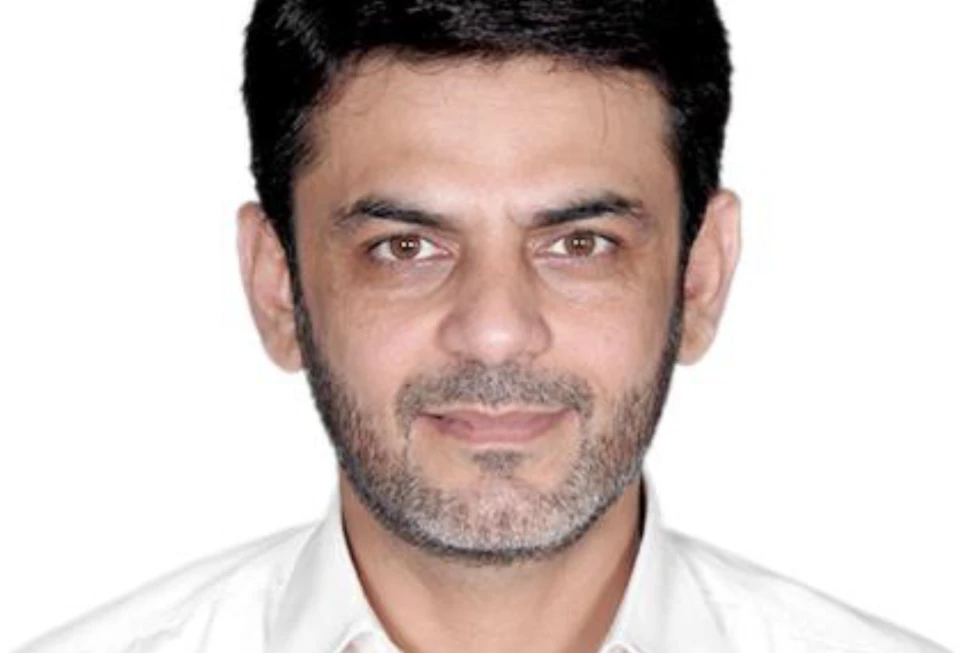
The U.S. Justice Department announced on Tuesday that a Pakistani man, Asif Merchant, with alleged ties to Iran has been charged with plotting to carry out political assassinations on American soil. The case highlights what officials describe as a growing threat of foreign-directed plots targeting American public figures.
Asif Merchant, the accused, traveled to New York in April with the intention of hiring hitmen. He allegedly offered a $5,000 advance to two individuals he believed to be assassins. Unbeknownst to him, these individuals were actually undercover law enforcement officers. Merchant was arrested last month before he could leave the U.S., and the FBI foiled the plot.
The court documents do not specify the intended targets, but the case’s unsealing comes shortly after U.S. officials disclosed a separate threat on former President Donald Trump’s life from Iran. This disclosure had prompted increased security measures in Pennsylvania days before a rally where Trump was injured by a gunman’s bullet.
The Pennsylvania shooting, carried out by a 20-year-old man, was deemed unrelated to the Iranian threat and has no connection to Merchant’s alleged plot. Merchant was apprehended on July 12, a day prior to the Pennsylvania rally shooting. Prosecutors claim that Merchant had instructed the supposed hitmen that the killings were planned for August or September, once he had exited the U.S.
Merchant is identified as a Pakistani national with a wife and children residing in Iran. His frequent travels to Iran, Syria, and Iraq have raised suspicions about his affiliations.
The Justice Department’s revelations come amid broader concerns about Iran’s attempts to influence and disrupt U.S. affairs. Last year, Iranian intelligence was accused of trying to interfere with the 2020 U.S. presidential election. The alleged plot linked to Merchant underscores ongoing geopolitical tensions and the potential for international actors to target U.S. interests.
Officials continue to investigate the full extent of Merchant’s connections and the motivations behind the assassination plot. The case is being closely monitored, given the implications for national security and foreign relations.
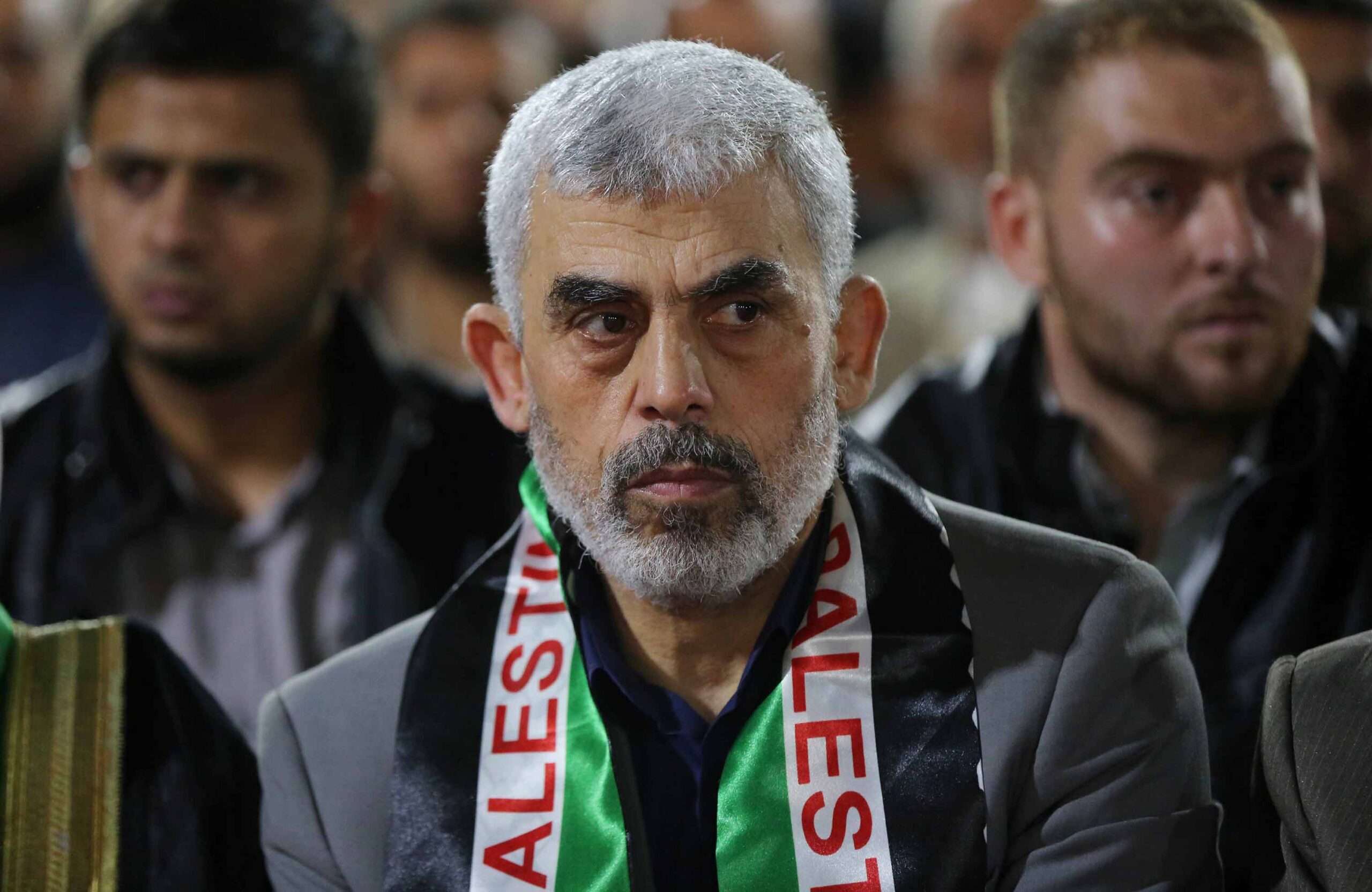
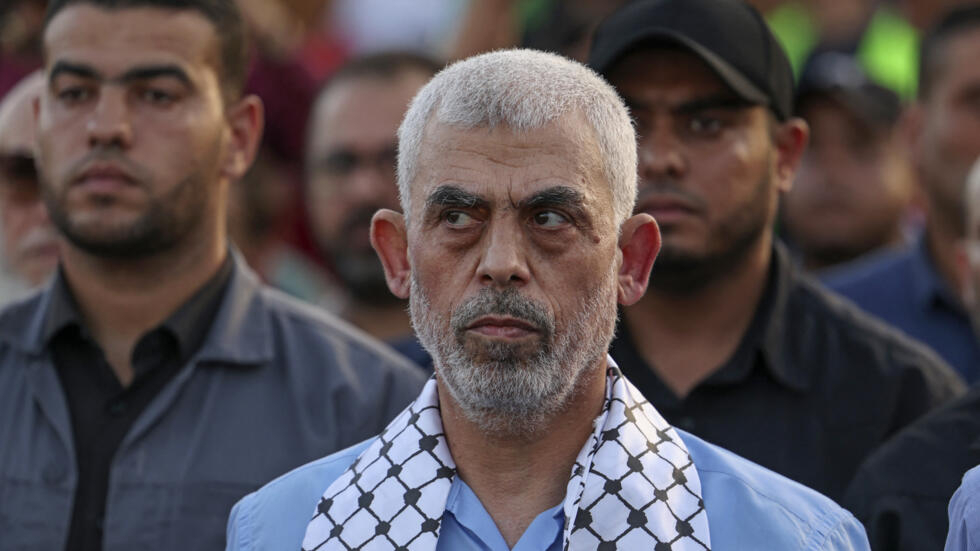
In a bold and defiant move, Hamas has appointed Yahya Sinwar as its new leader in Gaza, marking a significant shift in its leadership strategy and signaling its ongoing commitment to resistance against Israel. Sinwar, known for his hardline approach and close ties to Iran, has been instrumental in orchestrating Hamas’s military operations and has now risen to the top leadership position following the death of his predecessor.
Yahya Sinwar, a long-standing figure within Hamas, has been a key architect in strengthening the group’s military capabilities. His selection as the new leader of Hamas’s political bureau was announced on Tuesday, following the death of Ismail Haniyeh, who was killed in an explosion in Tehran last week. Hamas attributed Haniyeh’s death to Israeli actions, although Israel has not confirmed its involvement.
Sinwar’s rise to power is likely to provoke further tensions with Israel, as he has been placed at the top of Israel’s kill list since the October 7th attacks. These attacks, which he masterminded, resulted in the deaths of 1,200 people in southern Israel and the taking of approximately 250 hostages. His appointment underscores Hamas’s readiness to continue its confrontation with Israel, even after 10 months of relentless military action in Gaza.
The Israeli military has responded strongly to Sinwar’s appointment. Rear Admiral Daniel Hagari, an Israeli military spokesperson, stated in an interview with Saudi-owned Al-Arabiya television, “There is only one place for Yahya Sinwar, and it is beside Mohammed Deif and the rest of the October 7th terrorists. That is the only place we’re preparing and intending for him.”
Presumably assassinated by Israel
Sinwar’s leadership represents a consolidation of power within the Gaza Strip, with the Qassam Brigades, Hamas’s military wing, taking a more prominent role in directing the group’s activities. This shift highlights the growing influence of military leadership in Hamas’s strategic decision-making, especially as the group continues to resist diplomatic efforts and peace negotiations.
Yahya Sinwar’s selection as Hamas’s leader follows a turbulent period marked by intense conflict and strategic maneuvering. Sinwar, who spent time in self-imposed exile in Qatar before 2013, has been a pivotal figure in Hamas’s military planning and has played a crucial role in negotiations over cease-fires in Gaza, involving key international players such as the U.S., Qatar, and Egypt.
Despite these diplomatic engagements, Sinwar has consistently maintained a hardline stance, advocating for continued resistance against Israel. His leadership is expected to further entrench Hamas’s militant position, potentially complicating efforts to reach a peaceful resolution in the region.
Sinwar’s appointment comes at a time when Hamas is grappling with internal and external challenges, including maintaining unity among its ranks and navigating complex geopolitical dynamics. As the situation evolves, Sinwar’s leadership will be critical in shaping the future direction of Hamas and its role in the broader Israeli-Palestinian conflict.
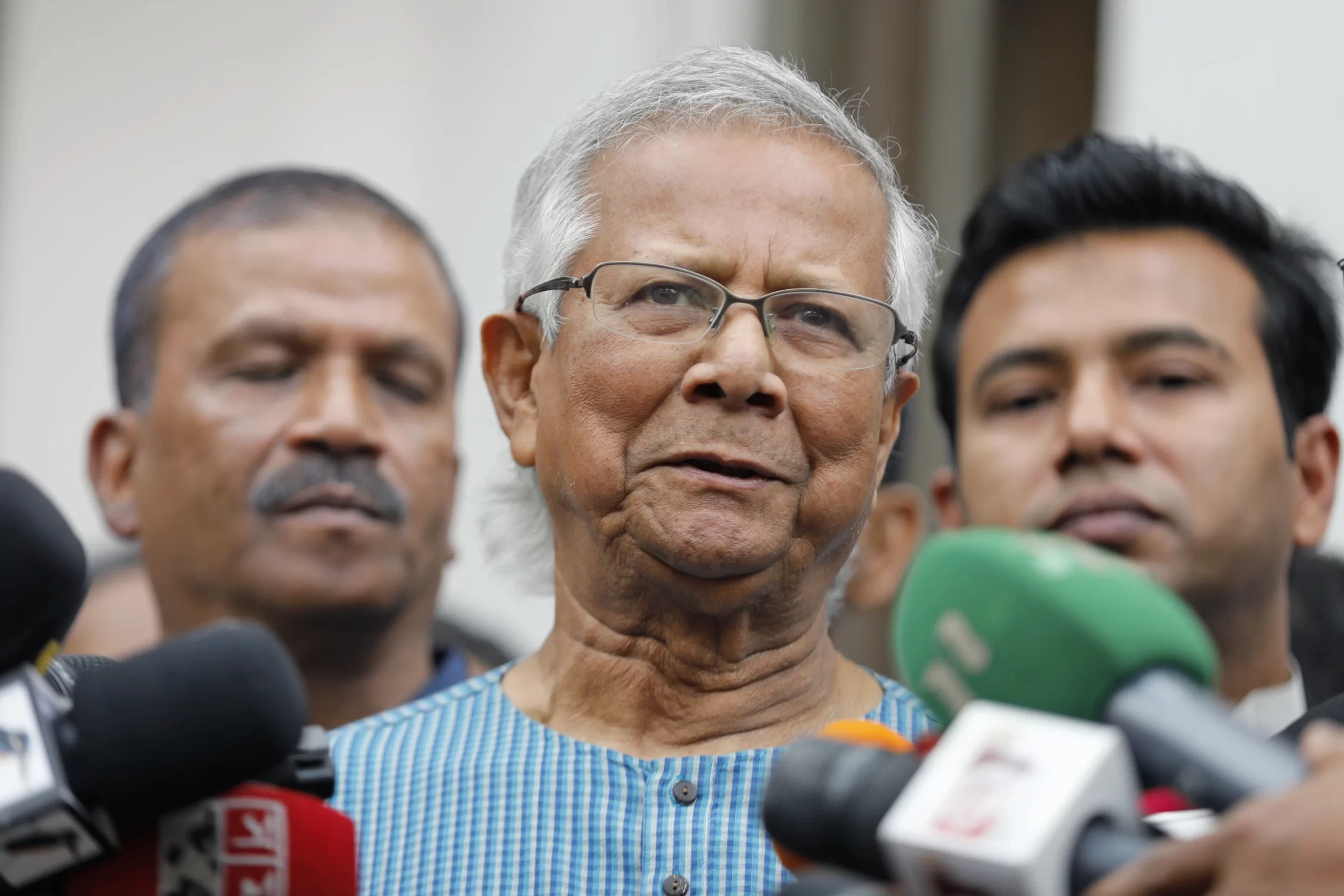
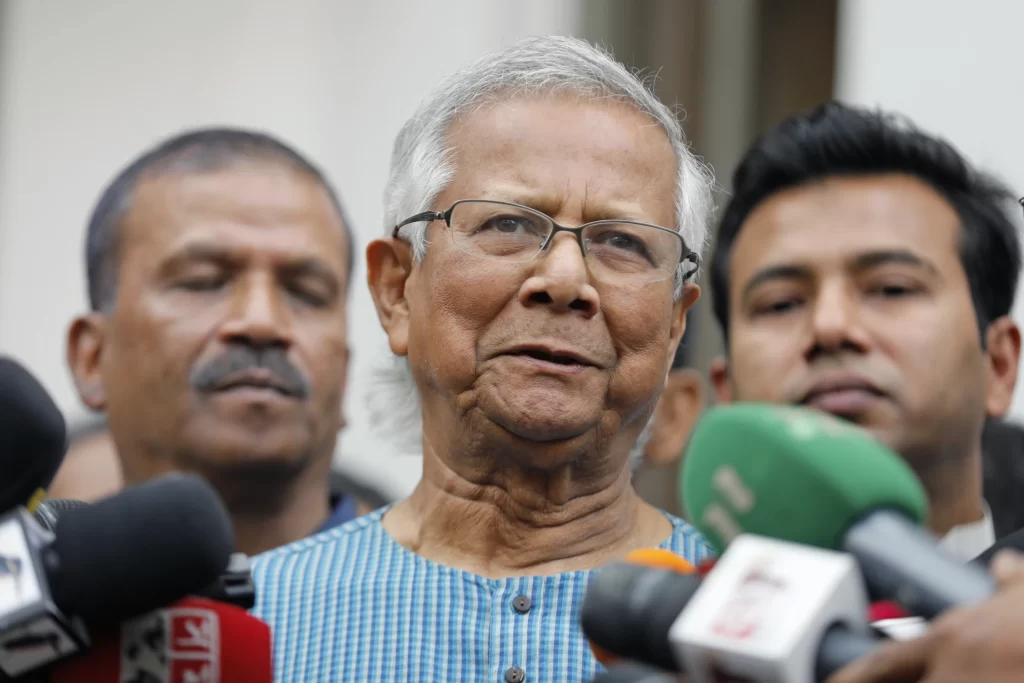
Nobel laureate Muhammad Yunus has been appointed to head Bangladesh’s interim government following the resignation and departure of former Prime Minister Sheikh Hasina. This decision comes amid widespread protests and political unrest that have swept through the country, calling for change and reform in leadership.
New interim leader, Yunus
The decision to appoint Yunus was made during a high-level meeting involving military chiefs, leaders of the student protests that were instrumental in Hasina’s ousting, prominent business figures, and civil society members. Joynal Abedin, the press secretary for Bangladesh’s figurehead President Mohammed Shahabuddin, officially announced the appointment early Wednesday in a statement to The Associated Press via telephone.
Yunus is currently in Paris, where he has been advising Olympic organizers, but is expected to return to Bangladesh shortly to assume his new role. He has been a vocal critic of Hasina’s administration and was considered a suitable candidate to lead the interim government due to his international reputation and prior experience in economic reform.
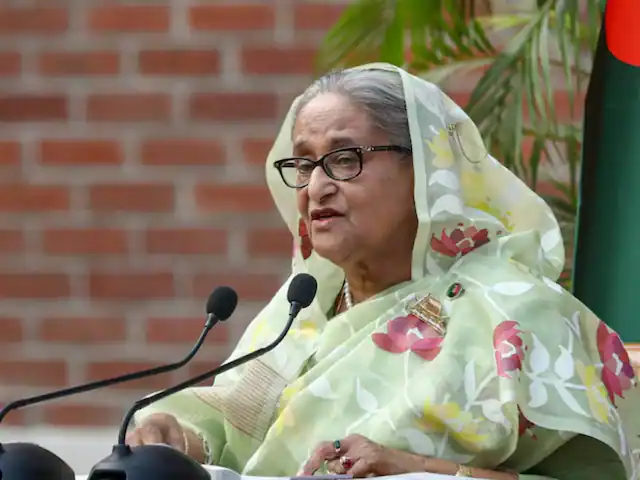
Exiled Prime Minister Hasina
Muhammad Yunus, an economist, and banker, is renowned for his pioneering work in microfinance through the Grameen Bank, which he founded in 1983. He was awarded the Nobel Peace Prize in 2006 for his efforts to create economic opportunities for impoverished communities by providing small loans to entrepreneurs who lack access to traditional banking services. Yunus’s work has lifted millions out of poverty and has been hailed as a model for economic development globally.
The formation of the interim government is expected to be completed soon, with discussions ongoing among political parties, military leaders, and other key stakeholders. The interim government will be tasked with overseeing the country until new elections can be held, ensuring stability, and addressing the demands of protesters who have called for comprehensive political reforms.
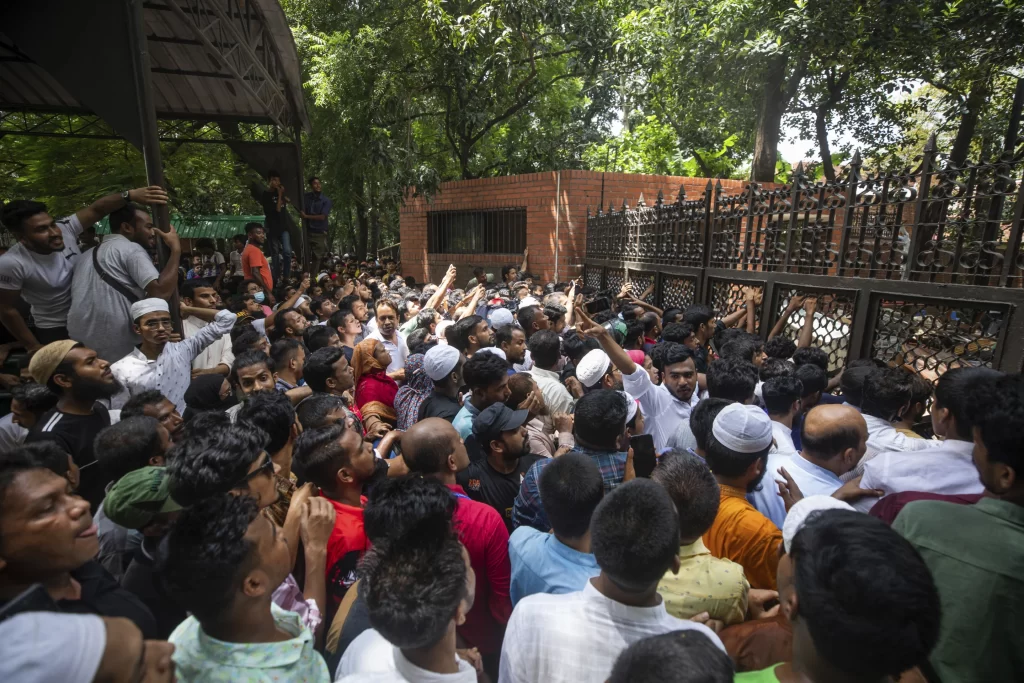
Crowd outside Hasina’s home
President Mohammed Shahabuddin, who dissolved parliament on Tuesday to facilitate the transition, emphasized the need for a peaceful and transparent process to restore public confidence in the government. The interim administration aims to create an environment conducive to free and fair elections, which are anticipated to take place in the coming months.
In a related move, President Shahabuddin ordered the release of Khaleda Zia, a prominent opposition leader and longtime rival of Sheikh Hasina. Zia had been under house arrest since her conviction on corruption charges by Hasina’s government in 2018. Her release is seen as a gesture of goodwill and a step toward political reconciliation, aimed at uniting various factions within the country.
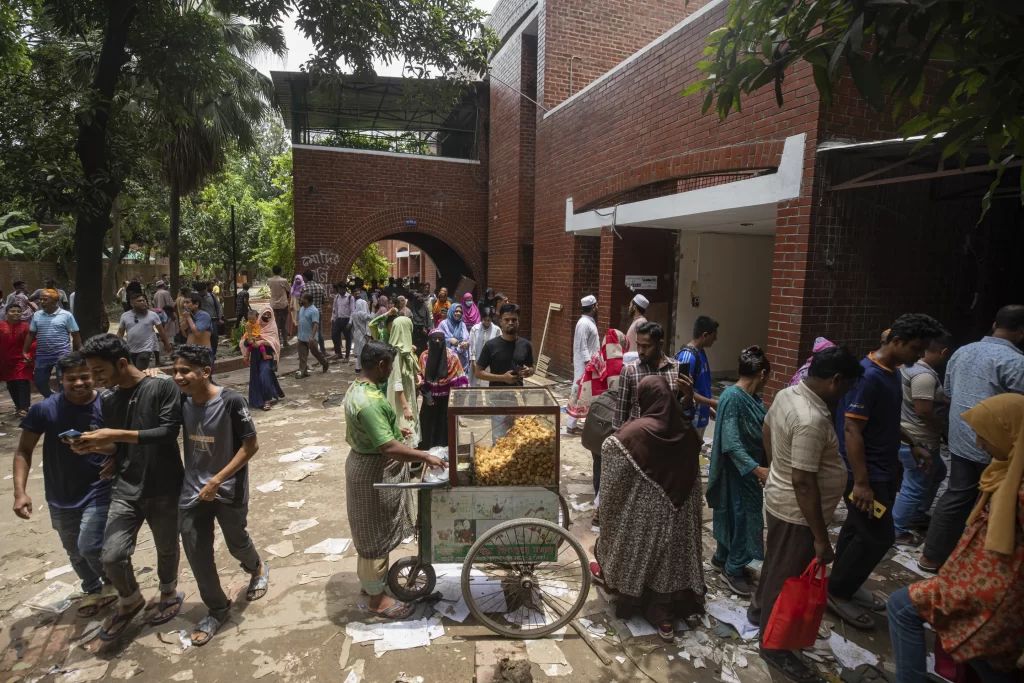
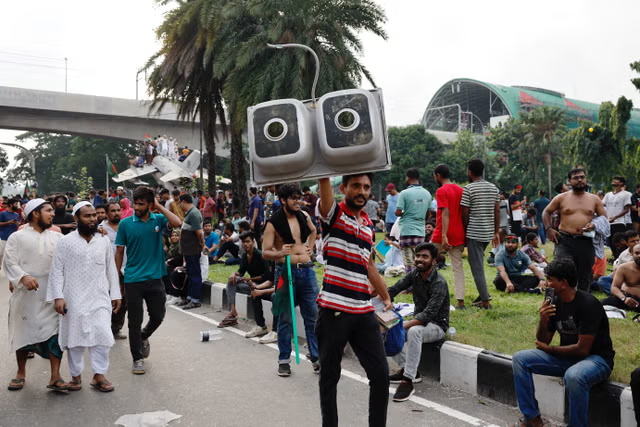
Crowd outside Hasina’s home
The appointment of Yunus has been met with cautious optimism by many citizens, who view it as a positive step towards restoring democracy and addressing the grievances that have fueled weeks of protests. However, some protestors have expressed concerns about the potential for military influence in the interim government, stressing the importance of maintaining civilian leadership.
The streets of Dhaka, which had previously been sites of intense protests and violence, have remained calm following the announcement. The public’s focus now shifts to the interim government’s actions and its ability to deliver on promises of reform and stability.
Yunus’s leadership is expected to bring a renewed focus on economic development and social justice, aligning with his long-standing advocacy for poverty alleviation and empowerment of marginalized communities. His appointment marks a pivotal moment for Bangladesh as the nation seeks to rebuild trust in its political institutions and navigate the challenges ahead.
The United States has revoked the visa of Sheikh Hasina, the ousted Prime Minister of Bangladesh, according to sources close to the opposition in Bangladesh. This development occurs amidst reports that Western nations, including the US, have advocated for her removal from power.
Sheikh Hasina, who resigned and fled to India due to escalating protests in Bangladesh, is currently at Hindon Airbase in Ghaziabad. While she is exploring asylum options in European countries, reports indicate that the UK is not prepared to grant her refuge. Sources suggest that her sister, Rehana, who holds UK citizenship, may soon depart for the UK.
On Monday, the military facilitated Sheikh Hasina’s departure from Dhaka following weeks of mounting pressure from anti-government protests opposing her reservation policies. The protests, which escalated into violent unrest, have resulted in over 440 deaths in recent weeks. Hours after her resignation, protesters stormed Hasina’s residence, leading to significant vandalism and chaos.
As Sheikh Hasina seeks asylum in Western nations, the revocation of her US visa complicates her options. European countries are being considered as potential havens, although the political climate and international relations may influence decisions regarding her acceptance.
This situation reflects the broader political instability in Bangladesh and the challenges faced by former leaders amid transitions of power and public dissent.
Sophia Smith scored a crucial goal in extra time, propelling the United States women’s soccer team to a 1-0 victory against Germany in the Olympic semifinals at the Paris Games on Tuesday. The win secured the Americans a spot in the gold medal match as they aim for their fifth gold in their sixth appearance in the Olympic women’s soccer final.
The United States, under the guidance of new coach Emma Hayes, have maintained an undefeated streak in France, demonstrating strong performances throughout the tournament. Their journey to the final has been marked by strategic plays and key victories, including a commanding 4-1 win over Germany in the group stage earlier in the competition.
The semifinal match against Germany remained scoreless through regular time, as both teams battled defensively. Five minutes into extra time, Sophia Smith broke the deadlock with a skillful maneuver past German defender Felicitas Rauch and goalkeeper Ann-Katrin Berger, securing her third goal of the tournament.
Smith’s goal not only ended the stalemate but also highlighted her pivotal role in the team’s success. Her celebration, where she fell to the ground in joy and embraced teammate Mallory Swanson, encapsulated the team’s determination and camaraderie.
With this victory, the United States advances to the gold medal match, where they will face the winner of the match between Brazil and Spain. This final showdown is scheduled for Saturday in Paris. Meanwhile, Germany will compete for the bronze medal against the loser of the Brazil-Spain match on Friday at Lyon.
The US team’s consistent performance and tactical prowess have positioned them as strong contenders for the gold, reflecting their legacy in international women’s soccer.
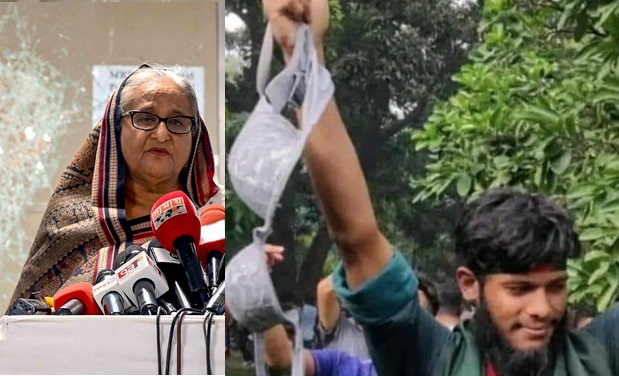
Amidst Bangladesh’s ongoing political crisis, protesters stormed and looted Ganabhaban, the official residence of Prime Minister Sheikh Hasina in Dhaka, taking time to display their loots on social media. The incident occurred shortly after reports of Hasina fleeing the country in the face of escalating protests that have rocked the nation for over a month.
Eyewitness accounts and social media posts reveal a chaotic scene at the prime minister’s residence. Witnesses observed demonstrators carting away a variety of items, from livestock to household goods. Particularly notable were images of protesters fleeing with hens, a stark symbol of the disorder that has engulfed the seat of power.
Among the more unusual sights, a man was photographed sitting on a rickshaw with a German Shepherd puppy, presumably taken from the residence. Another image showed a young protester brazenly sleeping on a bed in one of the rooms of Hasina’s official home, underscoring the complete breach of security and protocol.
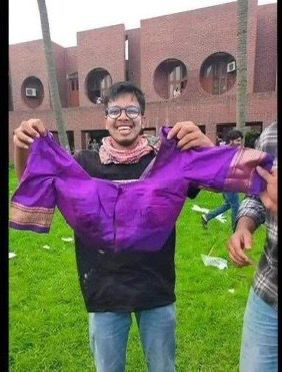
The looting extended beyond animals and furniture. According to local news outlet Prothom Alo, protesters helped themselves to coconuts from the garden area and made off with valuable textiles, including sarees, bed sheets, and pillow covers. These items, particularly the sarees, hold both monetary and cultural significance in Bangladesh.
Perhaps the most audacious act was the impromptu feast that some protesters indulged in within the confines of the prime minister’s residence. Videos and pictures that have since gone viral on social media platforms show demonstrators enjoying biryani and korma, traditional South Asian dishes, in what appear to be the official dining areas of Ganabhaban.
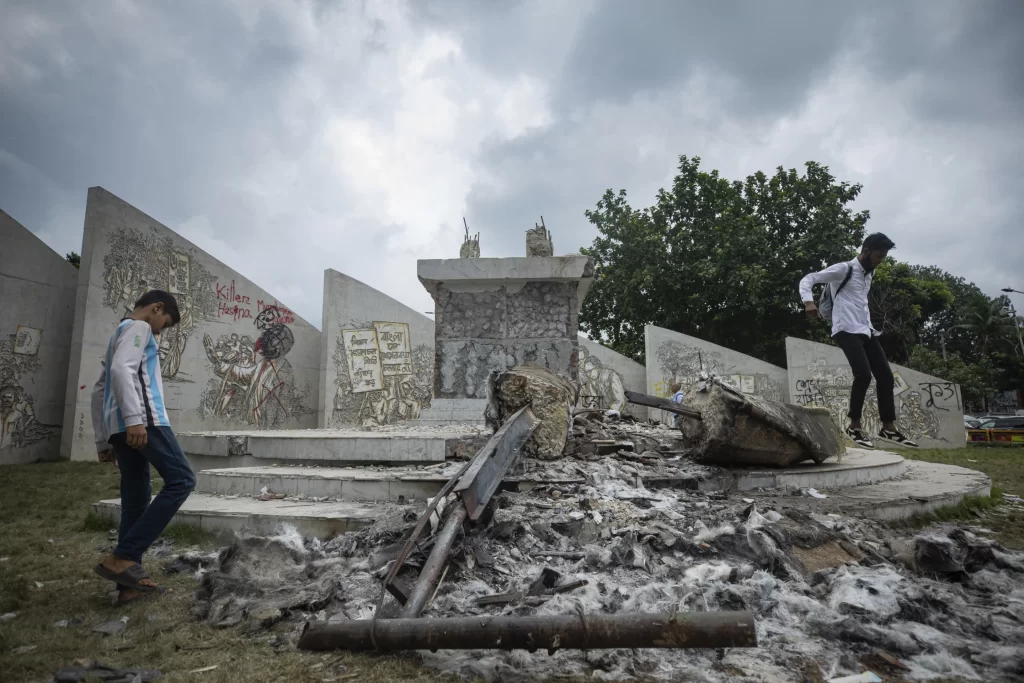
While some reveled in the spoils, others engaged in more destructive activities. Protesters, fueled by accusations that Hasina’s Awami League and its student wing had violently suppressed earlier demonstrations, defaced statues of Bangladesh’s founding father, Sheikh Mujibur Rahman. Anger-fueled mobs set fire to the Awami League party offices, reportedly retaliating violently against several party members.
This unprecedented breach and looting of the prime minister’s residence mark a significant escalation in the political unrest that has gripped Bangladesh. The country has been in turmoil since early July, with protests against Hasina’s 15-year rule growing increasingly violent. The latest incidents have pushed the death toll to at least 356, according to an AFP tally based on reports from various officials and medical personnel.
As Bangladesh grapples with this crisis, the international community watches closely. The looting of Ganabhaban not only symbolizes the breakdown of order but also poses serious questions about the country’s political stability and the challenges facing any incoming administration.
The military’s announcement of plans to form an interim government signals a potential shift in Bangladesh’s political landscape. However, with scenes of protesters feasting on biryani in the prime minister’s residence fresh in the public mind, restoring normalcy and public trust will be a daunting task for whoever takes the reins of power next.
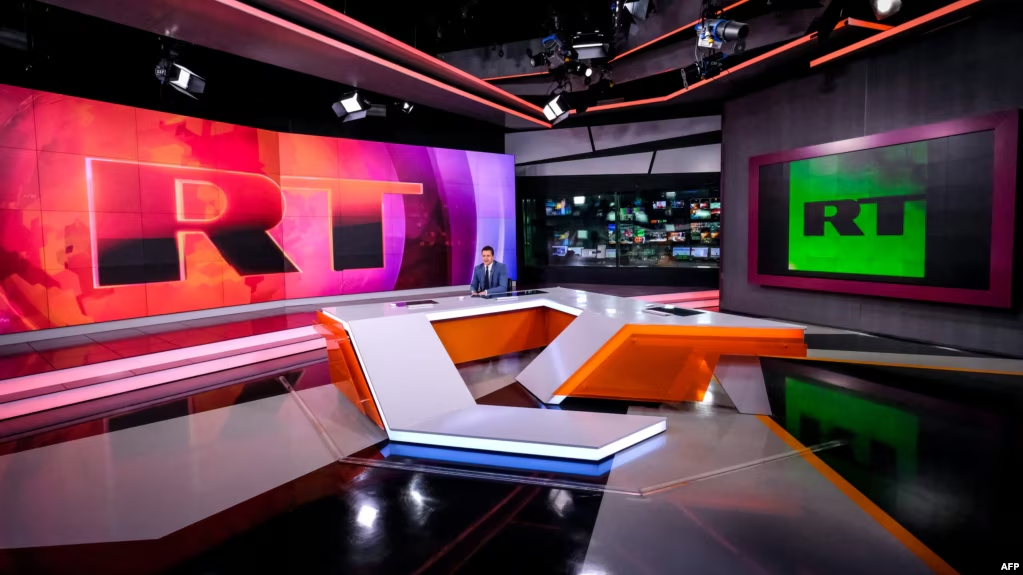
Russian state-funded network RT has launched a provocative advertising campaign across several African cities, featuring billboards and videos that showcase 20th-century independence leaders and anti-colonial quotes. This marketing blitz, aimed at promoting the Kremlin-backed outlet, comes as RT faces widespread bans and restrictions in Western countries due to its role in spreading disinformation, particularly regarding the war in Ukraine.
The campaign, with its slogan “Your Values. Shared,” prominently displays images of influential African leaders such as Julius Nyerere, Tanzania’s first president; Ugandan independence leader Milton Obote; former Ghanaian leader Kwame Nkrumah; and Zimbabwe’s Robert Mugabe. Large-screen digital video promotions for RT are also being displayed at major transport hubs like Addis Ababa Bole International Airport.
RT’s deputy editor-in-chief, Anna Belkina, justified the campaign in a recent op-ed, stating that it “emphasizes RT’s commitment to dismantling neo-colonialist narratives in news media.” Belkina criticized the dominance of Western mainstream media, arguing that RT provides “a voice of dissent in the media landscape.”
However, media watchdogs and disinformation analysts paint a different picture. They point out that Russia, along with China, has been actively seeking to gain a foothold in Africa through various means, including offering free content and funding to local media outlets. The Africa Center for Strategic Studies reported in March 2024 that Russia is the leading source of disinformation on the continent, with a nearly fourfold increase in disinformation campaigns targeting African countries.
Steven Gruzd, a Russia expert at the South African Institute of International Affairs in Pretoria, suggests that this campaign is partly a reaction to setbacks RT faced following Russia’s invasion of Ukraine in February 2022. The network lost significant viewership when European sanctions led to its removal from platforms like DStv (Digital Satellite TV) in South Africa and other African markets.
RT’s pivot to Africa comes after losing much of its impact in Europe, Canada, Australia, and the United States. The network, formed in 2005 and funded by the Russian government, has faced numerous accusations of being a propaganda outlet. It has been found by media regulators, such as Britain’s Ofcom, to lack impartiality and broadcast misleading material. In 2017, RT was forced to register as a foreign agent in the United States.
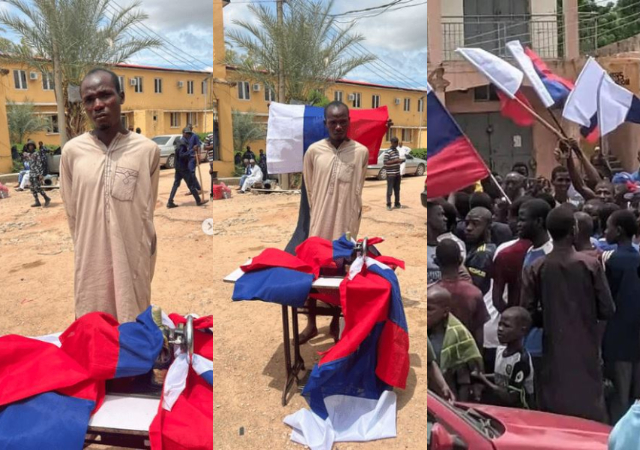
Nigerian protesters embracing russia flag
Despite these setbacks, RT has made inroads in some African countries. It established a bureau in Algeria last year and partnered with Afrique Media in Cameroon. According to Reporters Without Borders, RT is available in various African nations, including the Maghreb region, Côte d’Ivoire, Senegal, Burkina Faso, and Cameroon. The network can also be viewed in Kenya, Tanzania, and other countries through China’s StarTimes service.
Experts note that RT is leveraging the narrative that Russia was never a colonial power to gain traction in Africa. Many African ruling parties have historical links to Moscow due to the Soviet Union’s support for liberation struggles against colonial or white-minority rule. This strategy taps into the collective antipathy towards colonialism deeply ingrained in African populations.
However, the effectiveness of this campaign remains uncertain. Anton Harber, a former journalism professor at the University of the Witwatersrand in Johannesburg, argues that the use of dated African leaders, some of whom are now viewed skeptically, might not resonate with young Africans. He points out the irony of RT promoting itself as a voice of anti-colonialism while Russia increases its influence on the continent in ways that could be described as neo-colonial.
As RT continues its push into African media markets, concerns grow about the spread of disinformation and the potential impact on local politics and public opinion. The situation underscores the complex interplay between media, politics, and historical narratives in shaping contemporary African-Russian relations.
The coming months will likely reveal the effectiveness of RT’s strategy and its impact on African media landscapes. As global powers vie for influence on the continent, the role of media outlets like RT in shaping public discourse and international relations remains a critical area of study and concern for policymakers and media analysts alike.
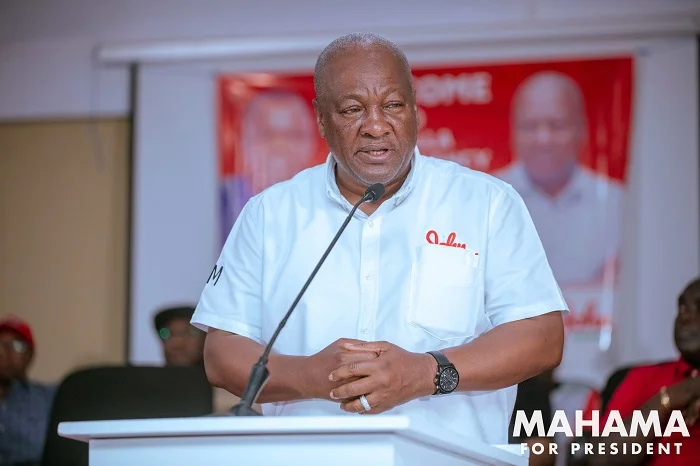
Former President John Dramani Mahama, the National Democratic Congress (NDC) flagbearer for the 2024 Ghana elections, has strongly advised voters against ‘skirt and blouse’ voting during his campaign tour of the Upper East Region. Mahama emphasized that a parliamentary majority is crucial for executing his agenda to revive Ghana’s economy.
Addressing a mini rally in Binduri on Sunday, Mahama stated, “Avoid any sort of skirt and blouse on December 7. We need majority in Parliament to be able to do what you want us to do for you. No skirt and blouse.” He likened split-ticket voting to entering a boxing ring with tied hands, urging supporters to vote for both NDC presidential and parliamentary candidates.
‘Skirt and blouse’ voting, also known as split-ticket voting, occurs when a voter chooses a presidential candidate from one party and a parliamentary candidate from another. Mahama argues this practice could hinder his ability to implement necessary reforms if elected.
The former president’s campaign promises include reviving Ghana’s economy, creating opportunities for all Ghanaians, and continuing human resource development initiatives. Mahama also committed to maintaining and improving the free senior high school policy, dismissing claims that he would cancel it as malicious propaganda. He highlighted the NDC’s track record in education, citing the Community Day Senior High Schools initiative during his previous tenure.
Mahama outlined plans to regionalize recruitment into security services and recruit 20,000 new personnel to support the implementation of a 24-hour economy. These measures, he argued, would help address unemployment and boost economic growth.
The campaign tour included stops in Binduri, Zebilla, Nabdam, and Bolgatanga East, where Mahama engaged with various groups including market vendors, students, and traditional and religious leaders. Throughout these engagements, he consistently emphasized the importance of unified support for the NDC in both presidential and parliamentary elections.
As the 2024 Ghana elections approach, Mahama’s campaign against split-ticket voting underscores the NDC’s strategy to secure both the presidency and a parliamentary majority. This approach reflects the party’s belief that a unified government is necessary to address Ghana’s current economic challenges effectively.
Mahama’s message resonates with NDC supporters who view a strong parliamentary presence as essential for implementing the party’s policies. However, it remains to be seen how this strategy will play out in constituencies where local dynamics might influence voting patterns differently for presidential and parliamentary candidates.
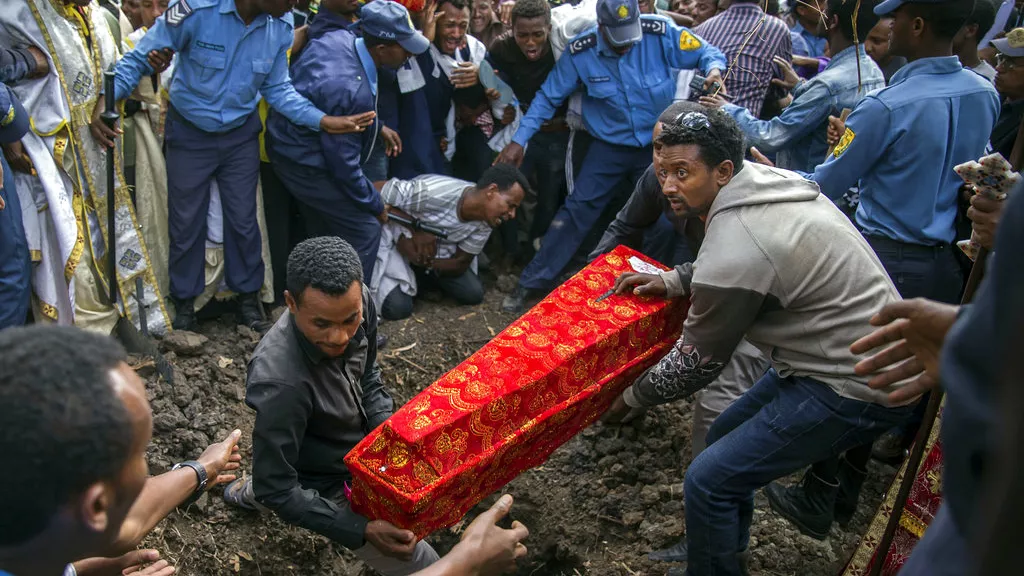
A devastating landslide in southern Ethiopia’s Wolaita area has resulted in at least 13 fatalities, with local officials expecting the death toll to rise. Samuel Fola, zone chief administrator of Wolaita, reported that the disaster occurred in the Kindo Didaye district following heavy rains in the region.
“Children are among the dead,” Fola stated, highlighting the tragic impact on local families. In response to the crisis, authorities have evacuated over 300 people from the affected area as a precautionary measure. The evacuation efforts are ongoing, with officials anticipating the possibility of another major landslide.
The regional government has launched a frantic rescue operation in the Wolaita area, working against time to save lives and provide assistance to those affected. However, the number of people unaccounted for remains unknown, adding to the urgency of the rescue efforts.
While this landslide appears less severe than a similar incident last month in another part of southern Ethiopia that claimed over 200 lives, it underscores the persistent threat posed by such natural disasters in the region. Landslides are a common occurrence during Ethiopia’s rainy season, which typically lasts from July to mid-September.
The mountainous terrain of Wolaita, coupled with limited infrastructure, makes the area particularly susceptible to such accidents. In 2016, a similar incident in the same region resulted in 41 deaths and displaced hundreds of residents.
The recent tragedy in Wolaita follows a major mudslide in neighboring Gamo Gofa last month, where at least 229 people lost their lives. The United Nations Office for Human Rights (OCHA) suggested that the actual death toll in that incident could be as high as 500.These recurring disasters highlight a broader pattern of deadly mudslides across the East African region, affecting countries from Uganda to Kenya. In April, flash floods and a landslide in Kenya’s Rift Valley region claimed at least 45 lives and caused significant infrastructure damage
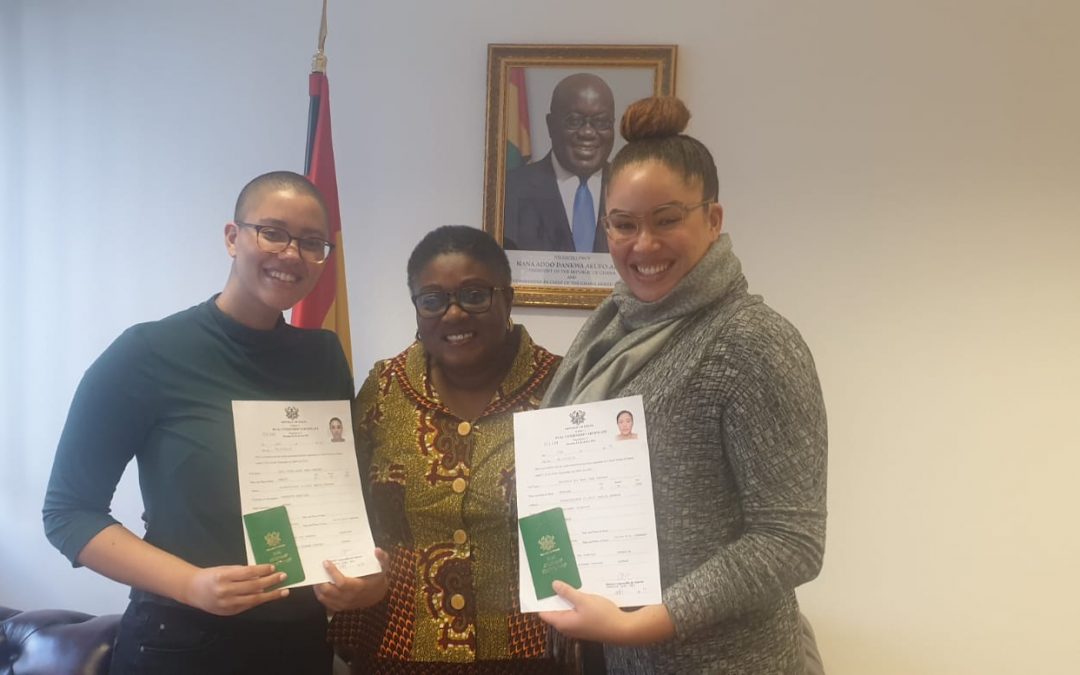
Ghanaians living in Germany have formally petitioned Ghana’s Ambassador to Germany, Gina Blay, and Interior Minister Henry Quartey, urging them to expedite the process of reinstating their Ghanaian citizenship. This move comes in the wake of Germany’s recent passage of a Dual Citizenship law, which now allows these individuals to reclaim their Ghanaian nationality.
Kwaku Appiah, the Ghanaian Community Leader in Germany, expressed disappointment over the lack of clear information from the Ghana Embassy regarding the reinstatement process. Speaking to Asempa FM’s “Abrokyire Nkomo” host, Kwaku Amankwatia, Appiah stated, “It is disappointing that there are still no clear answers to our questions about the reinstatement process.”
The petition, signed by Benjamin Sarfo Okrah on behalf of the Ghanaian Community in Germany, highlights several concerns. Despite four months passing since the German Dual Citizenship law was enacted, no definitive measures have been announced regarding the cost and timelines for reinstatement to apply for a Ghanaian passport. The community expresses frustration over the embassy’s lack of preparedness, despite being aware of the impending law change for over a year.
Petitioners emphasize the potential benefits of reclaiming Ghanaian citizens in Germany, including strengthened bilateral relations, increased economic investments, boosted remittances, and the contribution of skilled professionals to Ghana’s development. They request a comprehensive process for reinstating Ghanaian citizenship, suggesting that the Ghana Embassy in Norway’s approach could serve as a model.
The current process outlined by the embassy is described as cumbersome, especially for individuals born in Ghana who hold Ghanaian birth certificates. The community has given the embassy a two-week deadline to provide a detailed response outlining the steps and requirements for reinstatement. Failure to do so, they warn, will result in a demonstration in Berlin to highlight the urgency of their concerns.