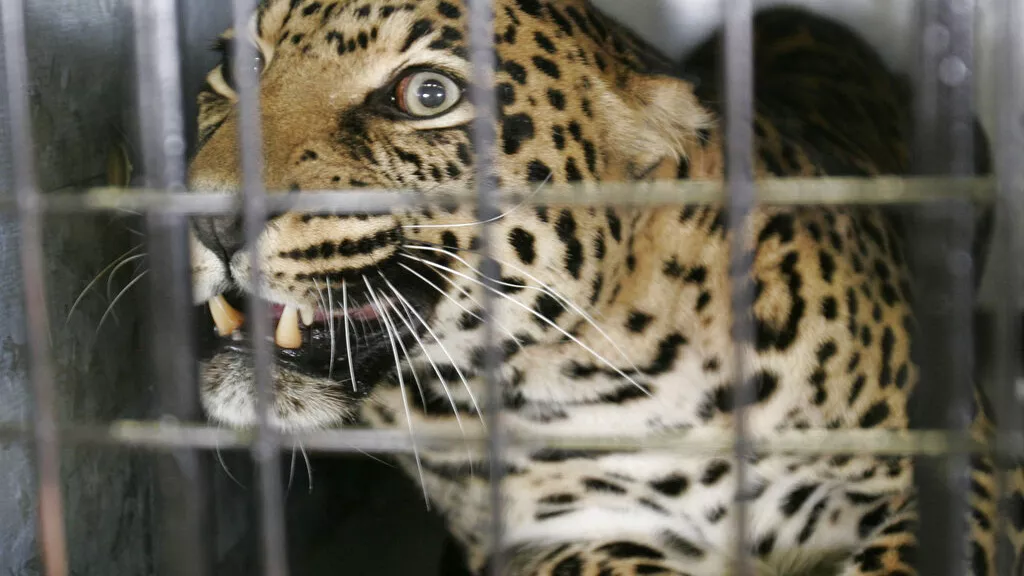
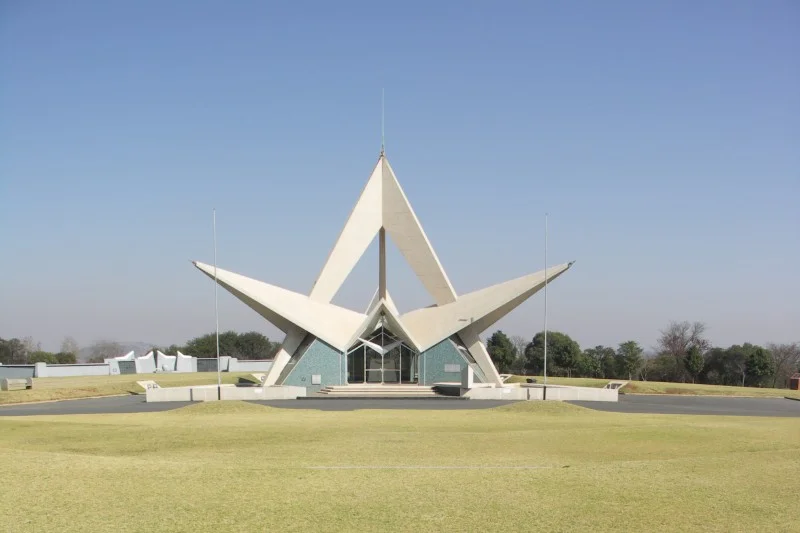
A leopard attacked two men at the Hoedspruit air force base in South Africa, adjacent to the renowned Kruger National Park. The incidents, which occurred last week, involved an air force member in uniform who was attacked while jogging, and a civilian worker who encountered the leopard during a walk on the base.
Brigadier General Donavan Chetty, speaking to the BBC, confirmed that both men were hospitalized with scratches but sustained no major injuries. One victim has already been discharged, while the other is expected to leave the hospital on Thursday.
Following the attacks, authorities captured the leopard on Wednesday and relocated it to a sanctuary approximately 100km (62 miles) from the Hoedspruit air force base. General Chetty noted that while leopard encounters are common for those living and working near the park, they are not usually dangerous.
Despite the Kruger National Park being mostly fenced, General Chetty explained that leopards can easily bypass these barriers due to their agility. This incident highlights the ongoing challenges of human-wildlife coexistence in areas bordering national parks and wildlife reserves.
Leopards, known as nocturnal predators, hunt various prey including wildebeest, antelope, and fish, according to the Kruger National Park website. The park is home to an estimated 150 leopards in the area.
This event serves as a reminder of the proximity of wildlife to human settlements and workplaces in certain parts of South Africa, and the importance of maintaining awareness and safety protocols in such environments. As human development continues to encroach on wildlife habitats, incidents like these underscore the need for ongoing efforts to manage the delicate balance between conservation and human safety.
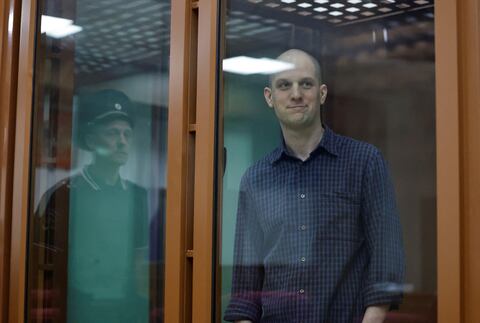
In a landmark diplomatic maneuver, jailed U.S. Wall Street Journal reporter **Evan Gershkovich** and ex-U.S. Marine **Paul Whelan** were included among 26 prisoners exchanged between the United States, Russia, Germany, Poland, Slovenia, Norway, and Belarus. This significant east-west prisoner swap was confirmed on Thursday by Turkey’s presidency, highlighting its pivotal role in the international mediation efforts.
The exchange involved a total of 26 prisoners, with 10 individuals, including two minors, being relocated to Russia, 13 to Germany, and three to the United States. This complex operation was part of a broader diplomatic effort to de-escalate tensions and foster cooperation between Russia and Western nations.
Turkey’s intelligence agency had earlier announced its coordination role in this extensive prisoner exchange, signaling a potential thaw in relations between Russia and several Western countries, including the United States and Germany. “Our organisation has undertaken a major mediation role in this exchange operation, which is the most comprehensive of the recent period,” stated the National Intelligence Agency (MIT) in an official communication.
While both the Kremlin and the White House refrained from commenting on the specifics of the swap when queried by a reputable press agency, the implications of this exchange are far-reaching. The exchange not only involves high-profile American citizens but also indicates a strategic diplomatic engagement aimed at easing the geopolitical tensions that have been escalating in recent years.
Flight tracking site Flightradar24 provided insights into the logistical aspects of the exchange, showing that a special Russian government plane used for previous swaps between the United States and Russia took off from Moscow, heading toward the Russian exclave of Kaliningrad. This region borders Poland and Lithuania, before returning to the Russian capital.
Further reports indicated a Russian government aircraft landed in Ankara, Turkey’s capital, underscoring Turkey’s central role in this international negotiation.
Evan Gershkovich, a journalist known for his reporting on Russia, and Paul Whelan, a former Marine, have both been central figures in diplomatic discussions surrounding U.S.-Russia relations. Their inclusion in this swap reflects the intricate dynamics of international diplomacy and the ongoing negotiations for their release, which have been at the forefront of U.S. diplomatic efforts.
Additionally, Vladimir Kara-Murza, a Russian-British dissident jailed in Russia, vanished from public view in recent days. This disappearance is linked to unexpected movements within the exchange framework, hinting at broader negotiations involving multiple international players.
When approached for comment, the lawyer for Alexander Vinnik, a Russian national imprisoned in the United States, declined to discuss the whereabouts of his client, indicating the sensitive and ongoing nature of these diplomatic engagements.
This prisoner swap represents a significant development in global diplomacy, potentially paving the way for future negotiations and conflict resolutions between Russia and the West. It highlights Turkey’s strategic role as a mediator in international conflicts and underscores the importance of diplomatic channels in resolving complex geopolitical issues.
As the world watches these developments, the implications for international relations, human rights, and future diplomatic negotiations remain profound, shaping the landscape of global diplomacy in the years to come.
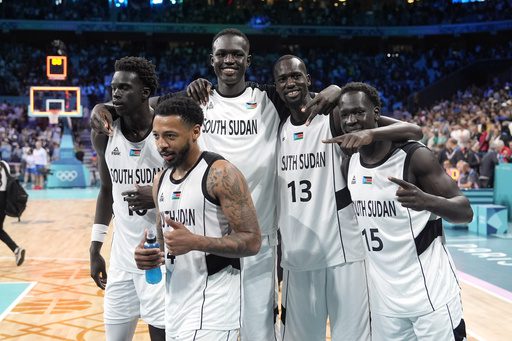
South Sudan arrived at the Paris Olympics riding a wave of firsts. As a 13-year-old nation emerging from years of conflict, it marked a monumental achievement by qualifying for its first Olympic basketball tournament. Their Olympic journey began with a historic victory, but Wednesday’s game against the United States introduced them to another milestone: their first Olympic defeat.
A Spirited Performance Against the United States
In a pre-Games showdown, South Sudan impressed by pushing the United States team—stacked with NBA talent—to the brink in a closely contested one-point game. The South Sudanese team’s speed, resilience, and fighting spirit showcased their potential to challenge some of the best players in the world.
However, during Wednesday’s rematch, South Sudan faced a formidable opponent in the United States. Despite some notable plays and a brief lead, the South Sudanese ultimately succumbed to the superior experience and skill of the American team, losing 103 to 86.
Nuni Omot Shines Bright
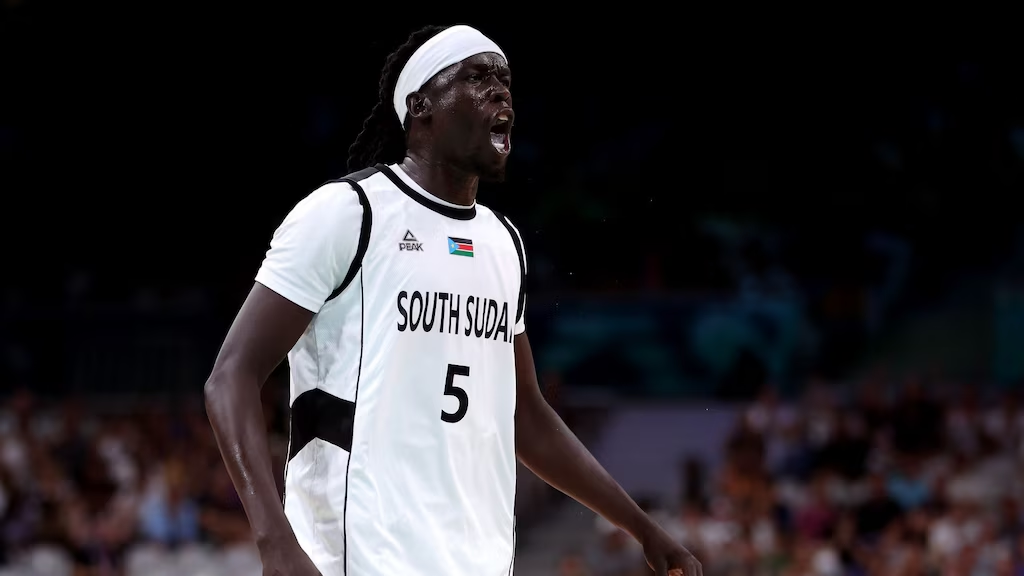
Nuni Omot emerged as a standout player for South Sudan, leading his team with 25 points. Reflecting on the game, Omot expressed pride in the team’s performance and growth. “A lot of people told me I was meant to play with them,” he said. “I think tonight I showed what I can do. The Olympics is about the top 12 teams that are competing right now. It’s an honor to be part of those 12 teams. People are going to know who I am now. And it’s not about me. But people are going to know who South Sudan is.”
Omot’s performance did not go unnoticed. U.S. star Stephen Curry extended his respect to South Sudan, acknowledging their potential. “They won their first game a few days ago. So who knows how far they can go? You cheer for them, except when we play against them.”
The Game’s Dynamics
South Sudan initially stunned the U.S. team by building a lead as large as 21 points in the first half. However, the Americans tightened their defense and closed the gap, bringing the lead down to 12 points by the fourth quarter. Despite the South Sudanese’s spirited efforts, the clock and a more cohesive American team eventually proved insurmountable.
In a prior exhibition match in London, South Sudan had pushed the U.S. team—chasing a fifth consecutive Olympic gold—to reassess their strategy. This time, the game’s dynamics unfolded differently.
A quick 6-0 deficit prompted South Sudan coach Royal Ivey to call his first timeout just 1:31 into the game to settle his team. After a rocky start of 0-for-4 from the field, Bul Kuol invigorated South Sudan with a dynamic one-handed dunk. Omot followed up with a three-pointer, and Marial Shayok added a layup, giving South Sudan their first lead.
Overcoming Challenges
Despite early momentum, the United States concluded the first period with a 20-6 run, establishing a 26-14 lead at the start of the second quarter. South Sudan struggled to handle the relentless American pressure, facing turnovers and missed opportunities.
One pivotal moment saw Sunday Dech harassed by Jrue Holiday for nearly 10 seconds, leading to a forced bad pass and turnover. Similarly, JT Thor faced difficulty when Anthony Davis pressured him into an off-target shot.
Carlik Jones, who contributed 18 points, reflected on the game: “I think we did what we like to do; they just did a good physical job. They tried to get us out of our positions and out of our plays. We fought until the end.”
The Crowd’s Support and Future Prospects
The atmosphere at the Pierre Mauroy stadium was electric, with the crowd enthusiastically cheering for South Sudan during the pre-match warm-up. Omot embraced the spotlight, donning bright green Nikes with silver stripes that shimmered under the stadium lights, embodying the spirit and determination of the Bright Stars.
Despite the setback, South Sudan remains hopeful and resolute as they prepare to face Serbia in their final group stage match on Saturday. The winner will join the United States in advancing to the knockout round in Paris.
“We have to prepare,” Omot emphasized. “Obviously, last summer they got the best of us. I think we have to prepare. We have to come in with a mindset. Our coaches are doing a great job of preparing. If we follow that plan and play our game, it’s going to be a very competitive game.”
Twenty-one-year-old swimmer Ziyad Saleem is set to represent Sudan in the 200m backstroke at the Paris Olympic Games, despite being born in the United States. Saleem is one of four athletes competing for Sudan across three disciplines at the Olympics.
Expressing his gratitude and excitement, Saleem stated, “I’m super grateful, I’m excited to go back to Sudan. I was able to win gold medals at the African championships and also Arab, but I was never able to go back and kind of enjoy that with them.” He added that he hopes to return to Sudan “whenever Sudan’s back to normal.”
Saleem’s Olympic participation comes against the backdrop of Sudan’s ongoing civil war, which began in 2023 and has displaced hundreds of thousands of people within the country and beyond its borders. The young swimmer acknowledged the challenges faced by people in Sudan, including his own family members who have been displaced to neighboring countries like Egypt and Ethiopia.
Motivated by the hardships in his ancestral homeland, Saleem sees his Olympic participation as an opportunity to bring a positive influence, even if only briefly. “I’m just grateful that I have the opportunity to represent them and hopefully give them something to look forward to by my swimming,” he said.
Alongside Saleem, Sudan’s Olympic team includes Rana Hani, a 15-year-old competing in the 100m freestyle swimming event; Yas Ezzeddine, participating in the marathon; and Abdullah Al Araby, competing in rowing.
These athletes represent Sudan’s hopes on the international stage amid challenging times for the country, showcasing the power of sport to transcend borders and conflicts. Their participation in the Paris Olympics serves as a beacon of resilience and national pride for Sudan, offering a moment of unity and celebration in the face of adversity.
As Saleem prepares to dive into the Olympic pool, he carries with him not just the aspirations of his family and fellow Sudanese, but also the spirit of cultural bridge-building. His journey from the United States to representing Sudan on the world’s biggest sporting stage exemplifies the global nature of the Olympic Games and the complex identities of many modern athletes.
The presence of these four athletes in Paris stands as a testament to Sudan’s enduring spirit and the unifying power of sport, even in the most challenging of times. As the world watches, Saleem and his teammates will not only be competing for medals but also for the hopes and dreams of a nation looking for moments of joy and pride.
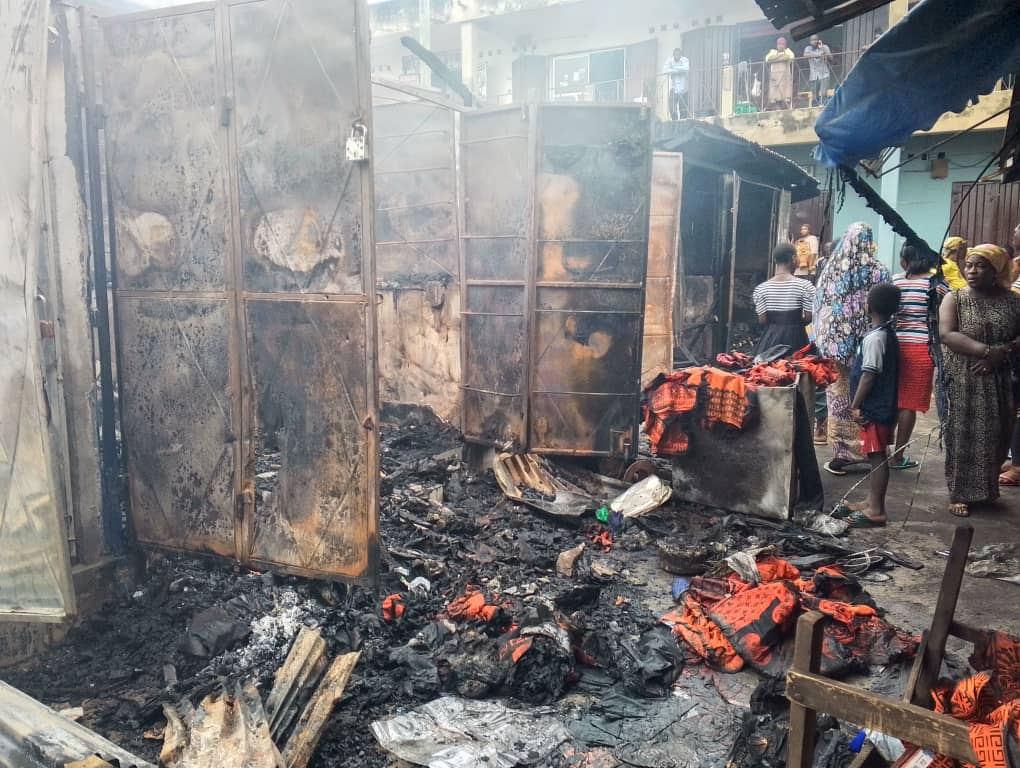
A devastating fire swept through parts of the Kwadaso Market in the Ashanti region of Ghana, destroying over 40 shops and their contents. The blaze, which started in the early hours of Thursday, August 1, 2024, has left traders in the M line of the market in anguish over the loss of millions of cedis worth of goods.
The fire consumed a wide range of merchandise including fabrics, footwear, frozen foods, plantain, yams, and other items. Affected traders expressed their despair, stating that the fire has left them unable to continue their businesses, which serve as their sole source of livelihood.
One 62-year-old trader recounted her losses: “All our plantain have been burnt, we are at a great loss, GHC4,000 to GHC5,000 plantain all destroyed. We bought the plantain on credit and we have to pay, we don’t know how to go about it. Those who gave us the plantain on credit will definitely come after us, they wouldn’t care. We really need help, myself and my colleagues.”
Another trader, 71-year-old Adwoa Connie, who sells fabrics, shoes, and hair scarves, appealed for government assistance: “I took a loan, I had a call that all my fabrics were destroyed, and I’m appealing to the government to come to my aid so that I can restart the business. I’m 71 years old and my kids are in school, there is no help anywhere.”
A third trader estimated her losses at over a million cedis, stating, “This is the only job I can do. I got new stock just Wednesday and everything is gone. I have kids too, the money lost could be over a million cedis. I’m pleading with the government to come to my aid.”
The fire has not only destroyed the livelihoods of these traders but has also put many of them in precarious financial situations, with some facing the prospect of defaulting on loans or credit arrangements.
As the affected traders grapple with their losses, many are calling for government intervention to help them rebuild their businesses and recover from this devastating setback.
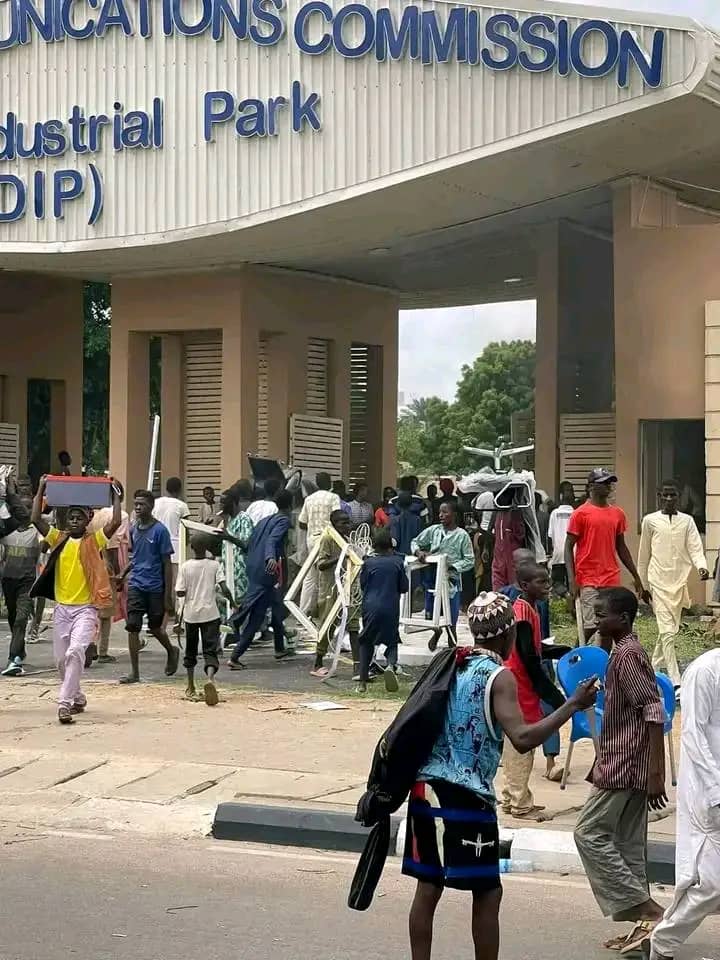
Protesters participating in the ongoing #EndBadGovernance demonstrations in Kano, northern Nigeria, have stormed and looted a new Digital Park built by the Nigerian Communications Commission (NCC). The incident, which occurred on Thursday, saw demonstrators carrying away equipment including computers and furniture from the yet-to-be-commissioned facility.
Dr. Bosun Tijani, Minister of Communications, Innovation and Digital Economy, reported via social media that protesters not only looted the facility but also set it ablaze. The Digital Park was scheduled to be commissioned next week and was intended to support the government’s 3 Million Technical Talent (3MTT) programme.
Tijani described the incident as a setback for the ongoing programme aimed at empowering 3 million Nigerians with technical skills. He stated, “Sad to learn that our Digital Innovation Park in Kano slated for launch next week to support our technical talent accelerator (3MTT) has been set ablaze and looted by protesters.” The minister added that the facility was also set to host a buildathon holiday maker programme for secondary school students starting next week.
The #EndBadGovernance protests, which began on August 1 and are scheduled to continue until August 10, have spread across the country. Demonstrators are demanding that the government address the current high cost of goods and reverse policies that have caused hardships for Nigerians. The protests have gained momentum in cities such as Abuja, Lagos, Kaduna, and several other Northern States, with reports of confrontations between security agencies and protesters in some areas.
The 3MTT program, a critical part of the government’s Renewed Hope agenda, aims to build Nigeria’s technical talent backbone to power its digital economy and position the country as a net talent exporter. The program started with 30,000 Nigerians and has since expanded to include 270,000 participants in its second cohort, representing 10% of the 3 million target.
As a result of the ongoing protests, businesses, markets, roads, and parks have been shut down in several parts of the country. The looting and destruction of the Digital Park in Kano represent a significant setback for the government’s digital innovation initiatives and highlight the intensity of public frustration with current economic conditions in Nigeria.
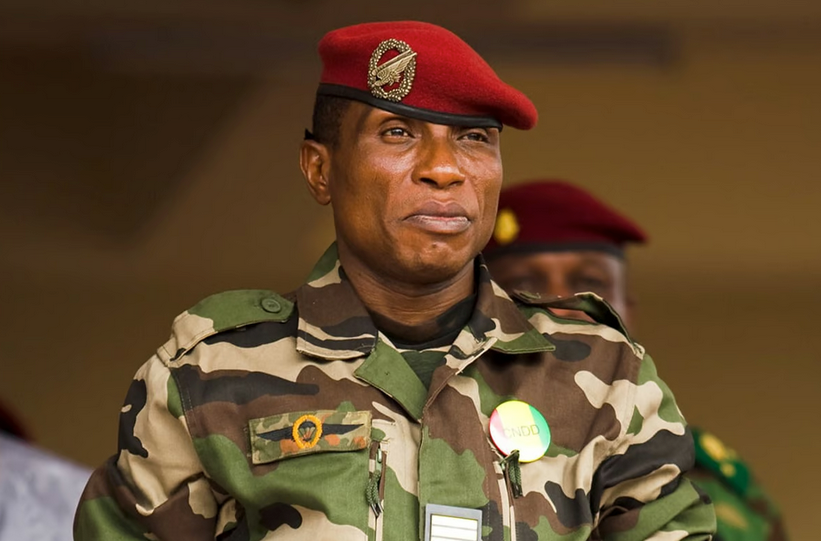
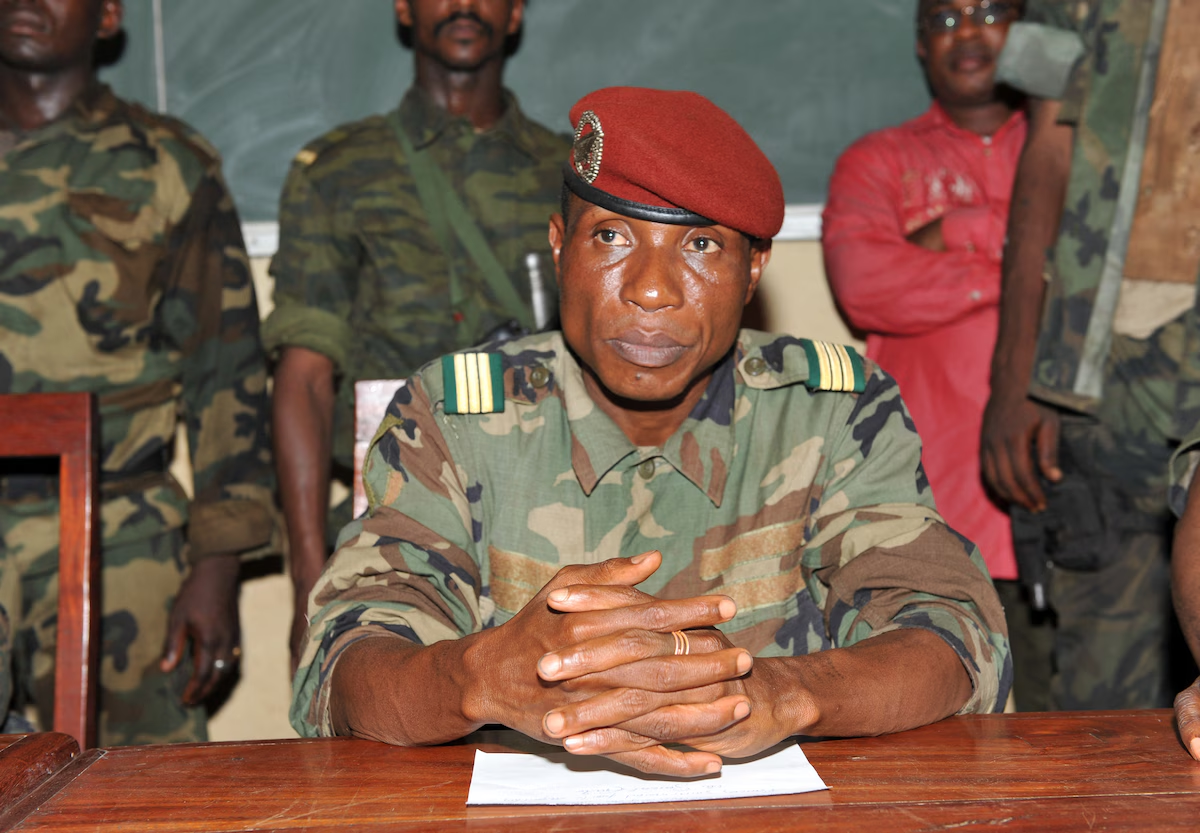
A Guinea court has sentenced former junta leader Moussa “Dadis” Camara to 20 years in prison after finding him guilty of crimes against humanity in the 2009 stadium massacre. The military-led attack killed at least 157 people and left dozens of women raped. The verdict, delivered on Wednesday, marks a significant moment in Guinea’s pursuit of justice for this tragic event.
Guinea’s Criminal Court convicted Camara along with seven other high-ranking officials on charges of murder, kidnapping, and rape, which were reclassified as “crimes against humanity” on the day of the ruling. Four other accused individuals were acquitted in the case.
The trial, which began in November 2022, saw more than 100 survivors and victims’ relatives testify. It came after years of pressure from families and activists demanding justice for the massacre. The demonstrators at the stadium in September 2009 were protesting Camara’s plans to run for president when soldiers opened fire on them and committed mass rapes.
Reactions to the verdict were mixed among victims’ families. Some lauded it as long-awaited justice, while others felt the penalties, particularly for Camara, were insufficient given the severity of the crimes. Safiatou Baldé, a 25-year-old relative of one of the victims, expressed disappointment, stating, “The convictions do not match the crimes. Our sisters were raped, our brothers massacred, bodies reported missing.”
Human Rights Watch’s international justice counsel, Tamara Aburamadan, hailed the decision as a clear message that justice is possible for serious crimes in Guinea and elsewhere. Witnesses described horrific scenes during the trial, with many victims shot, crushed, or knifed to death. Some women were dragged from hiding places and gang-raped by uniformed men over several days.
Camara, who had fled into exile after surviving an assassination attempt months after the massacre, returned to Guinea more than a decade later to face trial. He claimed patriotism as his reason for returning and maintained that he was asleep when the massacre unfolded.
The US dollar weakened on Wednesday after the Federal Reserve held interest rates steady but signaled a potential rate cut as early as September. The dollar index fell to 103.92, down 0.34% at 104.09, on track for a monthly loss of 1.7%.
Fed Chair Jerome Powell stated that an interest rate cut could be considered in September if inflation aligns with expectations, growth remains strong, and the labor market stays stable. The Fed maintains its data-dependent approach and has not made decisions about future meetings.
Traders have fully priced in a September rate cut, with expectations of a second and possible third cut by year-end. The next significant US economic release influencing Fed policy will be Friday’s government jobs report for July, with economists expecting 175,000 new jobs.
The Japanese yen hit a four-month high against the dollar after the Bank of Japan raised rates to 0.25% from 0-0.1%, the largest increase since 2007. The dollar was down 1.87% at 149.91 yen, reaching as low as 149.63. Japanese authorities spent 5.53 trillion yen ($36.8 billion) intervening in the foreign exchange market this month to boost the currency.
In other currency movements, the Australian dollar fell to a three-month low of $0.6480 following softer core inflation data. The euro gained 0.05% to $1.082, set for a roughly 1% gain in July. The pound rose 0.11% to $1.2848, heading for a monthly gain of 1.5%.
The cryptocurrency market also saw movement, with Bitcoin falling 0.77% to $65,668.
These currency fluctuations reflect the impact of central bank decisions and economic data on the forex market. Traders are closely watching for signs of future monetary policy shifts, particularly from major central banks like the Federal Reserve and the Bank of Japan.
The ADP National Employment Report released on Wednesday showed that private payrolls rose by 122,000 jobs this month, below economists’ expectations for 150,000 job gains. This data, along with Friday’s upcoming government jobs report, will be crucial in shaping expectations for the Fed’s next moves.
As the global economic landscape continues to evolve, currency markets remain sensitive to policy decisions and economic indicators. The recent moves in the dollar, yen, and other major currencies underscore the interconnected nature of global finance and the significant role that central bank policies play in shaping market dynamics.
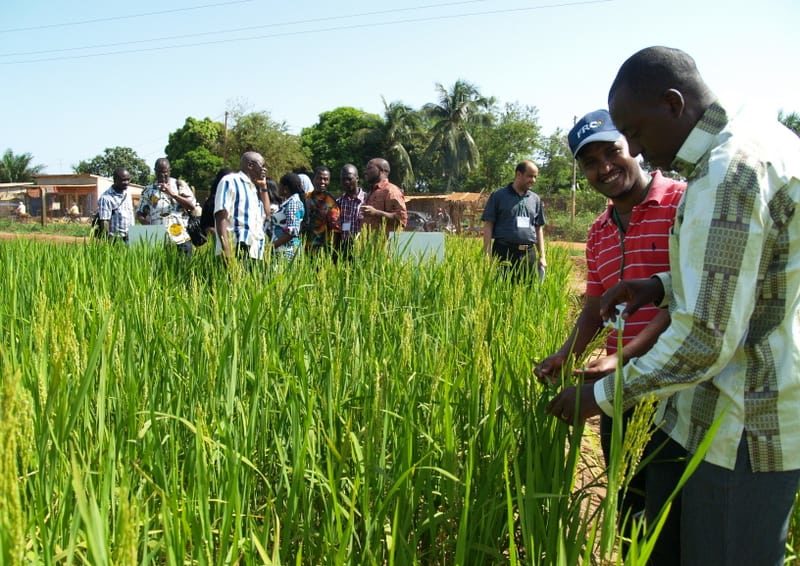
Ivory Coast rice farmer Francois Kasse Yao has long struggled to make ends meet, facing unpredictable weather conditions and producing only one harvest per year. However, a groundbreaking new rice variety is transforming his prospects, allowing for more frequent and abundant harvests.
The new rice grain was introduced as part of a nationwide program designed to boost the output of the regional staple food and reduce the country’s dependency on rice imports. This innovative rice variety, which is drought-resistant, allows farmers like Yao to harvest up to seven times a year, with yields reaching 5 metric tons per hectare.
This agricultural breakthrough is not just a boon for local farmers but also a significant step towards strengthening the nation’s food security. By reducing reliance on foreign imports, the Ivory Coast can enhance its self-sufficiency and bolster its economy.
The introduction of this new rice variety is coupled with enhanced farming techniques, including better irrigation, mechanization, and the development of short-cycle drought-resistant seeds. Before these advancements, farmers in some areas struggled to yield even one metric ton per hectare.
“Today’s yields are better,” said Yao, a 52-year-old farmer from the village of Subiakro, located 14 kilometers from Yamoussoukro, the Ivorian capital. “This time we’ve started with a new variety, so today we’re doing just fine.”
Hermann N’Guessan Kouame, a fellow farmer from a neighboring village, praised the new rice variety for its resilience and superior taste, qualities that make it highly valued in local markets. “The grain is not only drought-resistant but also has a unique aroma and flavor that is well-appreciated by consumers,” Kouame explained.
The average market price for this newly milled rice is 650 CFA francs ($1.09) per kilogram, a price point that reflects its quality and demand.
“When you plant it, no matter how the weather changes, it’s always intact,” said Kouame, who tends a 44-hectare plot in Zatta, about 15 kilometers from Yamoussoukro.
The national output of local white rice is currently estimated at 1.4 million metric tons, with expectations of significant growth as more farmers adopt this high-yield variety. According to agricultural experts, this could help bridge the gap between local production and demand, reducing the country’s reliance on imported rice.
The government’s agricultural program aims to further enhance production capacities, with plans to expand the use of modern farming techniques and provide ongoing support to local farmers. This initiative is part of a broader strategy to revitalize the agricultural sector and promote sustainable economic growth in the Ivory Coast.
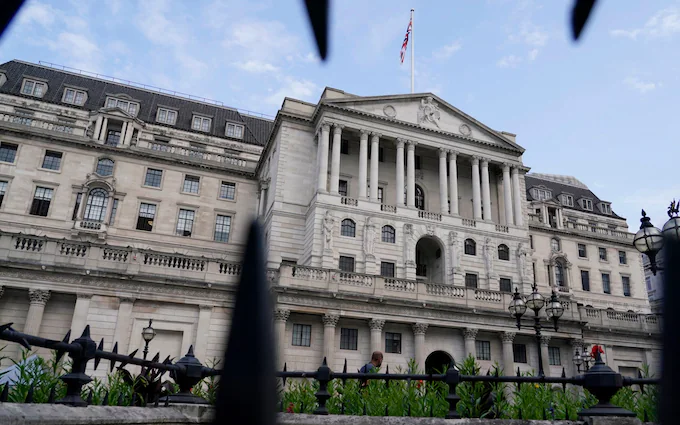
In a significant move aimed at addressing economic uncertainties, the Bank of England (BoE) has announced its first interest rate cut since 2001, lowering rates from a 16-year high. The decision, made by a narrow 5-4 vote within the BoE’s Monetary Policy Committee (MPC), reflects ongoing concerns about inflation and the broader economic climate in the United Kingdom.
Governor Andrew Bailey, who spearheaded the decision to reduce rates by a quarter-point to 5%, emphasized the need for caution as the bank navigates the complex economic landscape. “We must ensure that inflation remains under control while avoiding excessive rate cuts that could destabilize the economy,” Bailey stated during a press conference following the announcement.
The decision aligns with predictions from a recent Reuters poll of economists, although financial markets had priced in only a slightly more than 60% probability of a rate reduction. This unexpected move underscores the commitment of the Bank of England to managing inflation while supporting economic growth.
This rate cut marks the first reduction since March 2020, at the onset of the COVID-19 pandemic, when the bank slashed rates to support the economy amidst unprecedented global challenges. Before the current decision, rates had been held steady for nearly a year, marking the longest period of unchanged rates during a tightening cycle since the early 2000s.
Minutes from the most recent MPC meeting revealed that the decision to cut rates was “finely balanced” for some committee members, highlighting the delicate nature of the current economic environment. The language used in the meeting minutes echoes previous instances when the BoE opted to maintain rates, emphasizing the cautious approach the bank is taking.
The shift in voting patterns among key policymakers, including Governor Bailey and Deputy Governors Sarah Breeden and Clare Lombardelli, signals a change in the bank’s approach to monetary policy. None of these officials had publicly commented on monetary policy since the BoE’s June meeting, adding an element of surprise to the decision.
Recent political developments, including the Labour Party’s victory in the national election, have influenced the economic landscape. The new government has announced public sector pay decisions that will be incorporated into the BoE’s forecasts following the upcoming October 30 budget.
The BoE’s decision comes amid broader economic challenges, including the ongoing impacts of the COVID-19 pandemic, geopolitical tensions, and concerns about inflationary pressures. These factors have contributed to a complex economic environment, requiring careful consideration by policymakers to balance growth and stability.
Governor Bailey has indicated that the BoE will continue to closely monitor economic indicators and adjust policy as needed to support the UK’s recovery and long-term economic health.