LAGOS, Nigeria — A Lagos-based cleric and church founder, Apostle Chikere Nwafor of Heaven’s Gateway Ministries, is facing a series of grave allegations from her former husband, Martin Ugbulu, who claims she forged property documents, diverted church funds for personal use, and orchestrated actions that left him fearing for his life amid a prolonged dispute spanning Nigeria and the United Kingdom.
Speaking in a detailed account to SaharaReporters, Ugbulu alleged that the dispute centers on jointly owned properties, church finances, and a breakdown of trust that he said escalated into intimidation and legal harassment. The accusations, which Nwafor has not publicly responded to, raise broader questions about transparency and governance within religious organizations that operate across borders.
Ugbulu told SaharaReporters that the conflict intensified after he discovered that his name had been removed from ownership documents for a house the couple jointly built at Amen Estate in Lagos, despite his claim that he fully co-funded the project. He said he only became aware of the omission when he returned to Nigeria in November 2024, months after his former wife had traveled ahead of him.
“I trusted her completely because we were married. In marriage, one plus one is one,” Ugbulu said in comments published by SaharaReporters. “I had no idea she had criminal intentions to rob me of my investments in Nigeria.”
According to Ugbulu, Nwafor allegedly worked with a surveyor to alter or forge documents that listed her as the sole owner of the Lagos property. He said estate officials later confirmed that they dealt exclusively with Nwafor during payments and did not verify whether he had been compensated for his share.
The property dispute, Ugbulu said, was only one part of a larger pattern of alleged financial misconduct tied to Heaven’s Gateway Ministries, which operated in London before shifting focus to Nigeria. He told SaharaReporters that while managing the church’s affairs in the UK, Nwafor allegedly collected at least £100,000 in deposits from prospective buyers interested in purchasing the church building, including Church of God Mission, without refunding the funds when the transactions collapsed.
Ugbulu said he personally handled the mortgage process for the London property and later suggested selling it after church membership declined. He recounted that Church of God Mission, linked to the late Archbishop Benson Idahosa, paid a £50,000 holding deposit through its London-based pastor, Obinna Madubuko.
“Because we were a registered charity, such funds should have been kept with the agent or paid into the church’s charity account,” Ugbulu told SaharaReporters. “Instead, she bullied the agent into transferring the money into her personal UK bank account.”
When the sale failed due to mortgage issues, Ugbulu said Nwafor insisted the entire deposit be forfeited. He said he personally refunded £30,000 to the church, while alleging that Nwafor refused to return the remaining balance.
He further alleged that a second prospective buyer, introduced by a Ghanaian pastor identified as Richard of Winners Chapel in London, paid another £50,000, which he said was also deposited into Nwafor’s personal account. Ugbulu claimed the buyer later requested a refund after discovering planning restrictions tied to the building’s use.
“She misled him about how easy it was to convert the building’s planning use,” Ugbulu said, adding that he had worked directly with Bexley Council to navigate zoning restrictions. According to his account to SaharaReporters, the buyer eventually withdrew and sought repayment, which he said was never made.
Ugbulu alleged that both deposits were taken to Nigeria and that no refunds were issued. He also accused Nwafor of misrepresenting rental income from the London property to church trustees, claiming she told them tenants were paying £6,000 monthly when the actual figure was £10,000, which he said went directly to her.
Beyond financial claims, Ugbulu described what he characterized as intimidation and misuse of law enforcement after their relationship deteriorated further in 2025. He told SaharaReporters that upon returning to Nigeria in August 2025, he discovered Nwafor was in a relationship with another man, which he said led to tension and eventual police involvement.
He said he was later summoned to Akudo Police Station, where he learned he was being accused of attempted murder and cyberbullying—allegations he said were unfounded and designed to silence him. Ugbulu said his lawyer advised that the legal actions amounted to harassment, prompting him to file a fundamental human rights suit against Nwafor and the police.
Ugbulu also told SaharaReporters that he feared for his safety after noticing what he described as surveillance and suspicious activity around his residence. His concerns escalated, he said, when Nwafor allegedly returned to the property with a locksmith and several men and forced entry.
“My fear is this: if I had been there, what would have happened to me?” he said. “My life is in danger.”
As of publication, Apostle Chikere Nwafor did not respond to calls or messages seeking her reaction, SaharaReporters reported. No formal charges have been announced, and the allegations remain unproven.
The dispute highlights the legal and ethical complexities that can arise when religious institutions operate across jurisdictions with limited oversight. Analysts say cases like this underscore the need for stronger accountability mechanisms for faith-based organizations, particularly those registered as charities, where personal and institutional finances often intersect.
While the claims continue to unfold, the outcome may carry significant implications not only for the individuals involved but also for public trust in religious leadership and nonprofit governance in Nigeria and the diaspora.
Nigerian airport police have arrested a 20-year-old man accused of orchestrating an international romance and celebrity fraud scheme that allegedly defrauded victims in the United States of more than $1 million, authorities said Tuesday.
The suspect, identified as Essien Emmanuel Akpama, was arrested by operatives of the Nigeria Police Force Airport Command, Lagos, while attempting to leave the country, according to a statement signed by the command’s Police Public Relations Officer, ASP Mohammed Ademola.
Police said the arrest was part of an intensified effort to combat transnational financial crimes and prevent Nigeria’s airports from being exploited as exit routes for suspects facing international fraud investigations.
“In line with sustained intelligence-driven operations, the Airport Police Command has arrested a notorious romance and celebrity scam suspect responsible for defrauding multiple victims in the United States of America of over ₦1 billion, equivalent to more than $1 million,” the statement said.
Akpama was taken into custody on January 5, 2026, following months of covert surveillance and monitoring based on what police described as credible intelligence. Investigators said the suspect previously lived in Calabar, Cross River State, before relocating to Lagos in February 2024.
U.S. Victims Targeted Through Celebrity and Crypto Scam
Police said at least two United States-based victims were allegedly targeted in separate schemes. In one case in 2024, investigators said Akpama posed as a celebrity figure and convinced a 47-year-old American woman to transfer $1 million, claiming the funds would be used to purchase property in Florida for an orphanage.
Authorities said the money was funneled through a cryptocurrency operation known as “BullRun 2.0,” formerly called “4 Way Mirror Money.”
Further investigations revealed that another victim, a 70-year-old woman in the United States, was allegedly defrauded of ₦25,709,400, which police said is equivalent to approximately $18,000.
According to the statement, the fraud was carried out through the purchase of gift cards, high-end mobile phones, and computer equipment, which were shipped to Nigeria at the suspect’s direction.
Devices Recovered, False Identity Uncovered
Items recovered during the investigation include a MacBook Pro 14-inch, an iPhone 17 Pro Max, two Google Pixel 10 Pro XL devices, and a Google Pixel 10 Pro, collectively valued at ₦8,141,367, or about $5,300, police said.
Investigators said Akpama allegedly impersonated a 60-year-old orthopedic surgeon working with the United Nations in Nigeria, claiming the devices were necessary to maintain secure communications with victims abroad.
Police Vow Continued Crackdown
The Commissioner of Police, Airport Command, CP Ogunbode Olufunke, said the arrest underscores the command’s resolve to block criminal networks from exploiting Nigeria’s aviation corridors.
She said the command would continue deploying intelligence-led operations to “detect, disrupt, and dismantle” fraud syndicates operating within and around the country’s airport environment.
Police said the case has been transferred to the Nigeria Police Force Special Fraud Unit (NPF-SFU) for further investigation, adding that the suspect will be formally charged in court once inquiries are concluded.
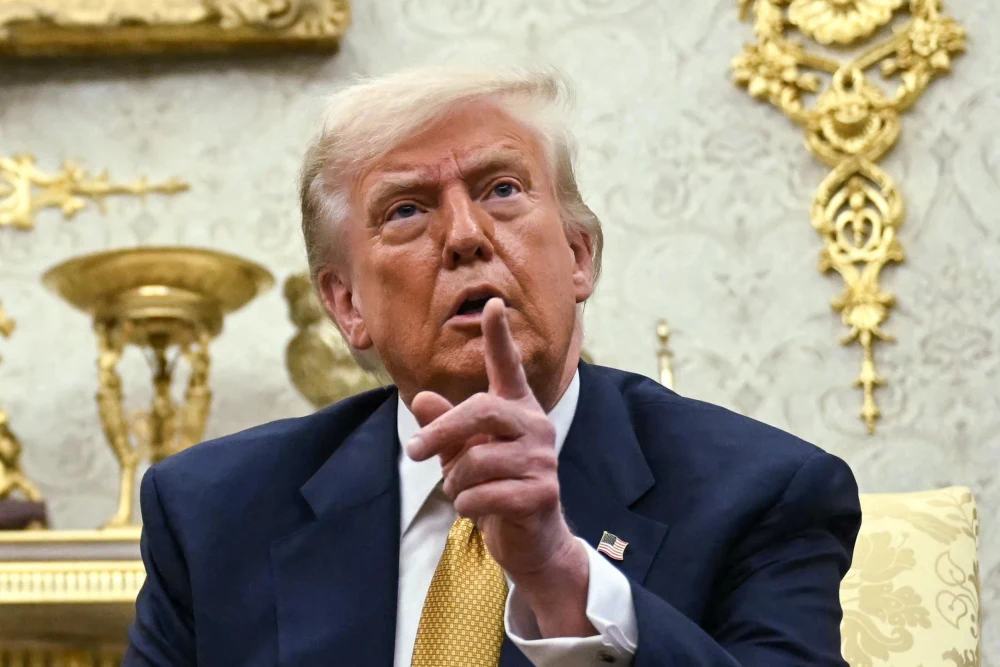
President Donald Trump said Tuesday that what he described as Venezuela’s “Interim Authorities” would sell between 30 million and 50 million barrels of high-quality crude oil to the United States at prevailing market prices, signaling a dramatic escalation of U.S. involvement in the oil-rich South American nation following a deadly military operation that led to the capture of Nicolás Maduro.
In a post on his Truth Social platform, Trump said he had directed Energy Secretary Chris Wright to immediately carry out the plan, adding that the oil would be transported by storage vessels directly to U.S. unloading docks. Trump said proceeds from the sale would be under presidential control but claimed the funds would ultimately benefit both Venezuelans and Americans.
The announcement came hours after Venezuelan officials disclosed that at least 24 Venezuelan security officers were killed during a late-night U.S. military raid over the weekend that resulted in Maduro’s capture and transfer to the United States to face federal drug trafficking charges.
Venezuela Pushes Back as Death Toll Mounts
Venezuela’s acting president, Delcy Rodríguez, confirmed the death toll and sharply criticized Trump’s threats and policy direction, accusing Washington of attempting to dictate Venezuela’s future while seeking access to its vast oil reserves.
“My destiny is not determined by those who threaten me, but by God,” Rodríguez said during remarks to government agricultural and industrial leaders.
Venezuela’s Attorney General Tarek William Saab said “dozens” of Venezuelan officers and civilians were killed during the operation in Caracas and announced prosecutors would open an investigation into what he described as a possible war crime, though he did not specify nationalities among the casualties.
Cuba’s government has also confirmed that 32 Cuban military and police personnel stationed in Venezuela were killed in the raid. The Cuban government said the dead belonged to the Revolutionary Armed Forces and the Ministry of the Interior.
The Pentagon said seven U.S. service members were injured during the operation. Five have since returned to duty, while two remain under medical care for gunshot and shrapnel wounds, according to a U.S. official who spoke on condition of anonymity because they were not authorized to discuss operational details publicly.
Trump on Tuesday defended the operation, pushing back against Democratic criticism and noting that previous U.S. administrations, including that of Joe Biden, had also sought Maduro’s arrest on narcotics charges.
Speaking at a House Republican retreat in Washington, Trump said critics failed to acknowledge what he described as a successful mission, despite bipartisan agreement that Maduro was not Venezuela’s legitimate president.
Maduro was indicted in the United States in 2020 on charges related to a long-running narco-terrorism and cocaine trafficking conspiracy. The Trump administration increased the U.S. reward for information leading to his arrest to $50 million last August.
Public Opinion Divided in the U.S.
A poll conducted by The Washington Post and SSRS over the weekend found Americans sharply divided over the military action. About 40% approved of deploying U.S. forces to capture Maduro, while a similar percentage opposed the move. Roughly 20% said they were unsure.
Nearly 45% of respondents opposed the United States taking control of Venezuela or installing a new government, with about 90% saying Venezuelans should decide their own leadership.
Maduro pleaded not guilty to federal drug trafficking charges during his initial appearance in a U.S. courtroom on Monday. U.S. officials said he and his wife were captured early Saturday at a compound guarded by Cuban personnel.
Regional and Global Fallout
The operation has heightened global concern that Washington is entering a more aggressive phase of foreign policy in the Western Hemisphere. In recent days, Trump has renewed calls for U.S. control of Greenland, threatened military action against Colombia over drug trafficking, and warned Cuba’s communist leadership it is “in a lot of trouble.”
Colombia’s Foreign Affairs Minister Rosa Villavicencio said Tuesday that Bogota would lodge a formal complaint with U.S. diplomats following Trump’s remarks describing Colombia’s president as a “sick man” involved in cocaine trafficking. Villavicencio said Colombia remains committed to cooperation with Washington in combating drugs.
Meanwhile, leaders of France, Germany, Italy, Poland, Spain, and the United Kingdom joined Denmark in reaffirming Greenland’s sovereignty, emphasizing that decisions about the territory belong solely to Denmark and the people of Greenland.
A 36-year-old former church member has provided shocking testimony to SaharaReporters detailing alleged decades-long sexual predation by Pastor Chris Okafor, founder of Liberation City, claiming the prominent televangelist raped her when she was a 15-year-old choir girl in 2004, fathered a child he abandoned, and years later sexually assaulted that same daughter when she was approximately 14 years old.
The woman, who identified herself as Ama to protect her identity while coming forward after more than 20 years of silence, described a harrowing pattern of alleged sexual violence, spiritual manipulation, and family betrayal that began when she delivered snails as a church offering to Okafor’s residence on Bashiru Street in Ojodu-Berger, Lagos, in late 2004.
“He said he was done with the snails and asked me to come see him,” Ama recounted in an interview with SaharaReporters. “I finished quickly and went to the lounge. He then came out and asked me to come inside his room. It was his bedroom. There was a bed and a table in front. He asked me to sit. He thanked me for washing the snails and appreciated my mother.”
What followed, according to Ama’s testimony, was a violent sexual assault. “Suddenly, he touched me inappropriately. I asked, ‘What is this?’ He then locked the door. I was scared and said, ‘Please, I have not done this before,'” she stated, describing how the pastor allegedly overpowered her despite her resistance.
“He pushed me on the bed. I could not overpower him. Before I knew what was happening, I went blank. When I recovered, I was on the floor, bleeding. I cried, asking what I had done to deserve this,” Ama told SaharaReporters, detailing the traumatic assault that she alleges occurred when she was just 15 years old and had no prior sexual experience.
In the immediate aftermath of the alleged rape, Ama claims that Okafor employed his religious authority to confuse and control her, using spiritual manipulation to frame the assault within a religious context that would make disclosure difficult. “He asked me to clean myself. While I was crying, he brought out a jotter. On the back was something written in pencil. He held my shoulder and asked me to look. He verbally told me that the Holy Spirit said I was his wife,” she recounted.
“I did not know what to say or do. I dropped the jotter on the bed. When he left, I looked again and read the pencil: ‘Amarachi, you are my wife, says the Holy Spirit.’ He told me to go to the restroom and clean up. I did. I left, crying,” Ama stated, describing how the pastor allegedly invoked divine authority to justify sexual violence against a minor under his spiritual care.
Pastor Okafor allegedly warned Ama that he was a prophet whom nobody should speak against, threatening consequences if she disclosed the assault. “He said if I told anyone, something bad would happen. He warned me never to mention what happened to anybody,” she told SaharaReporters, describing the fear-based silence that victims of clergy sexual abuse often maintain for years or decades.
Ama described overwhelming fear following the assault. “The fear I had in me was overwhelming because I was young. I didn’t know what to do. I couldn’t tell my left from my right. I was confused and disoriented, but I managed to get home that way,” she stated, capturing the psychological trauma that sexual violence inflicts on adolescent victims who lack frameworks for processing such violations.
By the second month following the alleged assault, Ama noticed changes in her body indicating pregnancy. She confided in a trusted relative who she believed would help her navigate the crisis. “I called her and said I didn’t know what would happen to me, but I needed to say it. I told her what happened when I went to my pastor’s house. She screamed. She told me to wait and said she would come. When she arrived, she said she was in a hurry and asked how we could maintain my mother’s peace. That was always my biggest concern—my mother,” Ama recounted.
According to Ama’s testimony, Okafor attempted to force her to terminate the pregnancy to conceal evidence of the alleged sexual assault. “He gave me money and told me to go to a hospital to terminate the pregnancy. I refused. I told him I couldn’t do it. My exams were coming up in two days,” she stated, describing how she resisted pressure to undergo an abortion despite being a pregnant 15-year-old facing school examinations.
“He begged me. He reminded me that he was a pastor and a prophet. He said the pregnancy must not stay. I told him I couldn’t do it. At that time, there were many rumours of people dying from abortions. Even on my street, people talked about it a lot. I was scared,” Ama explained, referencing widespread concerns in Nigeria about unsafe abortion procedures that have caused maternal deaths.
“He told me not to forget that he was a prophet and that he would pray for me so that nothing would happen. He said I should forget everything and trust him. I left in fear,” she told SaharaReporters, describing continued spiritual manipulation as Okafor allegedly attempted to persuade her to eliminate the pregnancy resulting from rape.
Eventually, Ama disclosed the assault and pregnancy to her mother, triggering family intervention that led to confrontation with the pastor. “When he was called, he didn’t deny it. He stayed calm at first. My mother asked what we were going to do, saying this was a girl who had known nothing. She accused him of raping her daughter and threatening her,” Ama recounted, describing initial family discussions about the crisis.
“Later, family members intervened. He apologised and said they should forgive him. He said he would marry me. More discussions followed, involving elders and family members. In the end, my mother took me to the village to stay with relatives. That was how everything unfolded,” she stated, explaining how traditional conflict resolution through family mediation replaced criminal prosecution despite the alleged rape of a minor.
For years following the birth of their daughter, whom Ama named Precious, she struggled to raise the child alone with Okafor providing no financial support according to her testimony. Her attempts to seek assistance for the child’s education allegedly led to further sexual violation.
Ama described a second alleged assault that occurred when she visited Okafor to request school fees for their daughter. “The only thing I remember clearly before the incident was that he stood up from his chair and tapped my shoulder. I went blank. The next thing I remember was seeing him wiping himself. I saw that my own clothes were down. I started crying,” she recounted, suggesting she lost consciousness before the alleged sexual assault occurred.
“To this day, I ask myself, ‘What did I do to you?’ You raped me again because I came to ask for your child’s school fees and upkeep,” Ama stated, characterizing the alleged second assault as punishment or exploitation for seeking support for the child born from the first rape.
“He started apologising. He said he liked me, that was why he did it. He warned me not to let anybody know. He reminded me again that he was a prophet and nobody must hear about it,” she told SaharaReporters, describing a pattern where Okafor allegedly used religious authority to enforce silence about repeated sexual violence.
Years later, according to Ama’s testimony, family pressure led her to allow Precious to live temporarily with Okafor, a decision she made reluctantly based on his wealth and assurances that he would provide proper care. “There were times he pressured me heavily. I told my mother what he was saying. Some family members felt that since he had money and claimed he wanted to take responsibility, I should allow the child go to him, considering how much we had struggled. Eventually, under pressure, I took her there,” she explained.
The arrangement quickly deteriorated, with Ama alleging she was denied regular access to visit her daughter. “She was repeatedly denied visits, sometimes begging security guards for a glimpse just to briefly see the child,” SaharaReporters reported, describing how Ama alleged the child was deliberately hidden to prevent maternal contact and avoid questions about the girl’s origins.
The situation reached what Ama characterized as a catastrophic point when Precious confided disturbing information to her mother. “Later, my daughter called me, crying, saying something was wrong and that she needed to see me before she left the house. I finished what I was doing and left immediately,” Ama recounted, describing her daughter’s desperate call for help.
“When my daughter was finally with me, she opened up fully. She told me how she was treated differently, how she was denied food, how she was constantly told to leave the house, and how she never felt like she belonged. She said there were no pictures of her among the family photos, and it made her feel unwanted,” Ama stated, detailing allegations of neglect and emotional abuse in addition to more serious accusations.
“I reassured her that she would not return there, that she was safe now, and that everything would be okay. She later opened up to me how her father had been sexually assaulting her (Pastor Chris) too in multiple instances during all her stays with him,” Ama told SaharaReporters, revealing allegations that Okafor had sexually assaulted his own biological daughter in a pattern mirroring the alleged assault of her mother.
The alleged assaults of Precious occurred around 2019 and early 2020 when she was approximately 14 years old, according to Ama’s testimony—nearly the same age her mother had been when the initial alleged rape occurred in 2004. “He assaulted her around 2019 and early 2020 when she was barely 14 years old,” Ama stated, describing what she characterized as generational sexual violence.
“It was a very traumatic news for all of us then, this is because the assault happened almost around the same age that I was raped by this same man. We had the option of raising alarm then. But she didn’t want anything that could affect the child emotionally or psychologically,” Ama explained, describing why the family did not immediately report the alleged sexual assault of Precious to authorities.
“Hence, we opted to quietly take the child away per the child’s request and her safety. The child was about to take her WAEC exam (West African Senior School Certificate Examination – WASSCE), and the situation was very similar to my experience. These were what formed our decision to take the child away from his house immediately so she could continue her school,” she told SaharaReporters, explaining the family’s decision to prioritize Precious’s education and psychological wellbeing over immediate criminal complaints.
Ama, breaking more than 20 years of silence, stated she is speaking publicly to expose the man behind the pulpit whose religious authority allegedly enabled decades of sexual predation. “The fear I had in me was overwhelming because I was young… I was confused and disoriented,” she said, contrasting her teenage fear with her current resolve to seek accountability and prevent future victimization.
Pastor Okafor, a popular figure on Christian television known for theatrical “miracle” services broadcast across Nigeria, could not be reached personally by SaharaReporters for comment on the specific allegations. However, his legal counsel, Ife Ajayi Esq., provided a response that did not directly address the rape and sexual assault claims made by Ama and her daughter.
Instead, Ajayi revealed that Okafor had preemptively taken legal action against Ama. “Just so you know, we have sometime last year lodged a formal complaint against her at the Police HQ and at the Zonal command and investigation has commenced,” Ajayi told SaharaReporters. “I believe she will be summoned anytime soon and she can come over to present her evidence as required by law to the police.”
Ajayi then dismissed SaharaReporters’ investigation as malicious scheming. “As I said above, this so-called article serves no honest journalistic purpose but simply a ploy to distract, cover up, tarnish and blackmail our client into compliance,” the attorney stated, characterizing detailed testimony about alleged child rape as journalism serving no honest purpose.
The allegations against Okafor have emerged amid multiple scandals involving the cleric. In December 2025, Nollywood actress Doris Ogala released a post appearing to show Okafor in a private bedroom setting, which she later deleted. The image depicted a topless man wrapped in a towel, with Ogala alleging the photo showed Okafor’s bedroom immediately after sexual activity and warning she would release full video footage.
Through her lawyers at Synergy Law Partners, Ogala issued a demand letter dated December 16, 2025, seeking N1 billion in aggravated damages from Okafor over what her legal team described as a broken marital commitment. The letter, addressed to the cleric at his Ojodu Berger residence, warned of imminent legal action should he fail to comply within 21 days.
Ogala’s lawyers alleged that Okafor made “clear, consistent and unequivocal” promises to marry the actress, establishing a foundation for a personal relationship that began in 2017 when she was emotionally vulnerable and seeking pastoral guidance. They alleged the relationship involved family introductions and joint appearances at family events that created legitimate expectations of marriage.
Her legal counsel cited evidence including photographs, videos, messages, and banking records supporting claims of legitimate marriage expectations. They further alleged Ogala relied on these promises to her detriment by ending a troubled marriage, abandoning reconciliation efforts, transferring ₦45 million to the cleric in a single transaction, and granting him access to her finances.
The Lagos State Police Command confirmed that Commissioner of Police CP Olohundare Jimoh ordered investigation of Pastor Chris Okafor over allegations of multiple rape and serious sexual offences. The State Criminal Investigation Department was directed to conduct a thorough investigation, with the cleric formally served through his lawyer.
Police also directed full security coverage for alleged victims, assured confidentiality and protection for victims and witnesses, appealed for credible information aiding the investigation, and pledged professional, transparent, and unbiased processes in accordance with law.
In another incident, social media critic VeryDarkMan released an audio clip featuring a woman named Chidera Okafor who claimed to be the pastor’s daughter. She alleged that Okafor made amorous advances toward her within the family home and described troubling and unfair treatment during her time in his household, allegedly forcing her to flee the home in 2020 and report the matter to her mother.
Through his lawyer, Okafor denied being Chidera’s biological father, attributing her mother’s paternity claims to infidelity. He demanded public apology and threatened legal action against both Chidera and VeryDarkMan for defamation and cyberbullying.
However, the pastor’s ex-wife, Ms. Bessem, subsequently came forward with her own detailed allegations including domestic violence, serial infidelity, and child molestation claims, demanding DNA tests to prove paternity—a demand that would either vindicate Okafor’s denials or confirm biological relationships he disputes.
The mounting allegations against Okafor illustrate patterns common in clergy sexual abuse cases where religious authority creates power imbalances that facilitate exploitation while spiritual manipulation and threats enforce victims’ silence for years or decades. The allegations span generations, involving not just the initial alleged rape of a minor but subsequent alleged sexual violence against the child born from that assault—a pattern that, if substantiated, would represent among the most egregious examples of clergy sexual predation documented in Nigeria.
Nigerian law criminalizes rape with penalties including life imprisonment, though prosecution proves difficult particularly when victims are minors without resources to pursue justice against powerful religious figures. The alleged sexual assault of a 14-year-old constitutes defilement under Nigerian law regardless of consent, as minors cannot legally consent to sexual activity with adults in positions of authority.
The case highlights systemic failures in protecting children within Nigerian religious institutions, where charismatic pastors wield enormous influence with minimal accountability structures. The decentralized nature of Nigerian evangelicalism means individual pastors face few institutional constraints beyond their own church boards, which often consist of loyalists unlikely to challenge leaders who elevated them.
For victims like Ama and potentially her daughter Precious, coming forward requires overcoming not just fear of powerful perpetrators but social stigma that often blames victims for sexual violence while viewing accusations against religious leaders as attacks on faith itself. The cultural dynamics create environments where clergy sexual abuse can persist for decades before victims feel empowered to seek justice.
The Lagos police investigation will determine whether sufficient evidence exists to prosecute Okafor on criminal charges. However, regardless of legal outcomes, the detailed testimony Ama has provided contributes to broader conversations about clergy accountability, protection of children in religious contexts, and whether Nigeria’s justice system adequately addresses sexual violence by powerful individuals who exploit spiritual authority to facilitate predation.
At least 24 Venezuelan security officers were killed during a late-night U.S. military operation to seize President Nicolás Maduro and fly him to the United States to face federal drug trafficking charges, Venezuelan officials said Tuesday.
Venezuela’s attorney general, Tarek William Saab, said the operation left “dozens” of officials and civilians dead and announced that prosecutors would examine the deaths, describing the incident as a “war crime.” Saab did not clarify whether his estimate referred exclusively to Venezuelans.
The toll among Venezuelan forces follows an announcement by Cuba’s government that 32 Cuban military and police officers stationed in Venezuela were killed during the operation, a development that prompted two days of official mourning on the island.
The Venezuelan military published a video tribute on Instagram honoring fallen security personnel. The montage displayed photographs of those killed alongside black-and-white footage of soldiers, U.S. aircraft over Caracas and armored vehicles destroyed in the fighting.
“Their spilled blood does not cry out for vengeance, but for justice and strength,” the military wrote in the post. It added that the deaths strengthened its resolve to “rescue our legitimate President,” dismantle what it called foreign-backed terrorist groups and prevent similar events from occurring again on Venezuelan soil.
In Washington, President Donald Trump rejected Democratic criticism of the operation, arguing that previous administrations had also sought Maduro’s arrest. Speaking at a House Republican retreat, Trump complained that Democrats were failing to acknowledge what he described as a successful mission that resulted in Maduro’s removal, despite bipartisan agreement that Maduro was not Venezuela’s rightful president.
Maduro was indicted in the United States in 2020, accused of participating in a long-running narco-terrorism conspiracy involving international cocaine trafficking. U.S. officials have noted that the Biden administration increased the reward for information leading to Maduro’s arrest near the end of his term, after Maduro assumed a third term despite evidence suggesting he lost Venezuela’s most recent election. The Trump administration later raised the reward to $50 million.
“They’ve been after this guy for years,” Trump said. “At some point, they should say, ‘You did a great job.’”
Trump’s comments followed briefings by Secretary of State Marco Rubio and other senior officials to congressional leaders late Monday. The briefings came amid growing concern among lawmakers that the administration may be pursuing a more aggressive foreign policy in the Western Hemisphere without clear consultation or a defined plan for Venezuela’s future governance.
After the session, House Speaker Mike Johnson told reporters he does not anticipate U.S. troops being deployed to Venezuela, saying the operation was “not a regime change” mission. Democratic leaders, however, said the briefing left unanswered questions about the administration’s broader intentions.
Public opinion in the United States remains divided. A poll conducted over the weekend by The Washington Post and SSRS found that about four in 10 Americans supported the use of U.S. military force to capture Maduro, while a similar share opposed it. Roughly two in 10 respondents said they were unsure. Nearly half of those surveyed opposed the United States taking control of Venezuela or selecting a new government, and about nine in 10 said Venezuelans should determine their own leadership.
Maduro pleaded not guilty Monday to federal drug trafficking charges in a U.S. courtroom. U.S. forces captured him and his wife early Saturday during a raid on a guarded compound in Caracas. His longtime ally, Vice President Delcy Rodríguez, has since been sworn in as Venezuela’s acting president.
Since Maduro’s ouster, Trump and senior officials have fueled international unease by signaling a more assertive U.S. posture abroad. In recent days, Trump has renewed calls for an American takeover of Greenland, threatened military action against Colombia over cocaine trafficking and warned that Cuba’s communist government faces mounting pressure.
Trump has said his administration will now oversee Venezuela policy and push the country’s leaders to open its vast oil reserves to U.S. energy companies.
Colombia’s foreign affairs minister, Rosa Villavicencio, said Tuesday she plans to meet with the U.S. Embassy’s chargé d’affaires in Bogotá to lodge a formal complaint over recent threats from Washington. Trump recently said he was not ruling out action against Colombia and criticized its president over drug trafficking concerns.
Villavicencio said Colombia seeks to strengthen relations with the United States and expand cooperation against narcotics trafficking, echoing comments made earlier by other Colombian officials.
Meanwhile, leaders from France, Germany, Italy, Poland, Spain and the United Kingdom joined Danish Prime Minister Mette Frederiksen in a statement defending Greenland’s sovereignty. The self-governing territory, part of the Kingdom of Denmark and a member of NATO, should determine its own future, the leaders said.
“Greenland belongs to its people,” the statement said. “It is for Denmark and Greenland, and them only, to decide on matters concerning Denmark and Greenland.”
WASHINGTON — President Donald Trump issued a stark warning to Republicans Tuesday, predicting Democrats will impeach him for a third time if the party loses control of Congress in November’s midterm elections, as polling indicates voters favor Democratic congressional control amid economic anxiety and concerns about the country’s direction.
“You gotta win the midterms ’cause, if we don’t win the midterms, it’s just gonna be — I mean, they’ll find a reason to impeach me,” Trump stated during a speech at a House Republican policy retreat held at the newly renamed Trump-Kennedy Center. “I’ll get impeached.”
The president’s remarks, delivered on the fifth anniversary of the January 6, 2021, Capitol attack, underscored his recognition that Democratic control of the House of Representatives would empower opposition lawmakers to pursue impeachment proceedings against him despite his having already survived two previous impeachments during his first term. Trump remains the only president in American history to face impeachment twice, though Republican senators prevented conviction in both cases by denying prosecutors the two-thirds supermajority required for removal from office.
Trump’s warning came as polling data suggests Republicans face difficult political terrain heading into the November elections. An NBC News poll conducted in October found that 50 percent of registered voters prefer Democratic control of Congress, while 42 percent favor Republican control—a difference exceeding the survey’s 3.1 percentage point margin of error. The eight-point Democratic advantage suggests the party could reclaim both chambers of Congress that Republicans narrowly control following the 2024 elections.
According to Reuters, Trump urged fellow Republicans to fight in more unified fashion on issues ranging from gender politics to healthcare and election reforms, while emphasizing the need to effectively communicate his administration’s policies to a public frustrated by persistent cost-of-living challenges. The president’s call for party discipline reflected concerns that Republican internal divisions could suppress turnout or enable Democrats to exploit disagreements on controversial issues.
Midterm elections historically favor the party not holding the presidency, a pattern that creates structural challenges for Republicans defending congressional majorities while Trump occupies the White House. The president acknowledged this historical precedent during his speech, expressing puzzlement about the phenomenon. “They say that when you win the presidency, you lose the midterm,” Trump stated. “I wish you could explain to me what the hell’s going on with the mind of the public.”
The historical pattern Trump referenced has proven remarkably consistent across recent decades. In 2018 midterm elections during Trump’s first term, Democrats surged to House majority winning 235 seats while Republicans maintained Senate control. The 2018 Democratic gains dramatically exceeded their 194 House seats from the 2016 presidential election year, demonstrating how midterm dynamics typically punish the president’s party regardless of individual popularity or policy achievements.
That 2018 blue wave ultimately enabled Democrats to pursue both impeachments against Trump. The first impeachment in 2019 stemmed from accusations that he pressured Ukraine to announce investigations into then-Democratic presidential candidate Joe Biden, partially by withholding hundreds of millions of dollars in congressionally approved military aid, as a strategy to damage Biden’s election prospects. The second impeachment in 2021 followed Trump’s role in events surrounding the January 6 Capitol attack as he attempted to overturn his electoral loss to Biden.
Trump has consistently proclaimed innocence regarding both impeachments, characterizing them as politically motivated attacks by Democrats seeking to undermine his presidency through constitutional mechanisms rather than electoral competition. His framing of potential future impeachment as Democrats finding “a reason” to proceed suggested he views the process as predetermined regardless of his conduct, requiring only sufficient Democratic votes rather than legitimate constitutional grounds.
The timing of Trump’s remarks on the fifth anniversary of the Capitol attack carried particular symbolism. Rioters broke into the building on January 6, 2021, attacking law enforcement officers and demanding Trump be installed as president for another term despite his electoral defeat. On the first day of his second term following his 2024 election victory, Trump issued blanket pardons for hundreds of people involved in the riot, including those accused or convicted of violent crimes—a controversial decision that Democrats characterized as endorsing political violence.
NBC News reported in July that Republican operatives planned to weaponize the threat of another Trump impeachment as a turnout driver in midterm elections despite the president not appearing on the ballot. The strategic calculus reflects recognition that base Republican voters respond intensely to perceived threats against Trump, potentially motivating participation in congressional races that might otherwise generate less enthusiasm than presidential contests.
The retreat where Trump delivered his warning took place at the Kennedy Center, a Washington performing arts venue recently renamed to include Trump’s name—a change reflecting the former president’s continued dominance over Republican Party identity and institutions. The renaming of the prestigious cultural center to the Trump-Kennedy Center illustrated how thoroughly Trump has reshaped the GOP in his image, with even institutions traditionally separate from partisan politics now bearing his brand.
House Republicans have demonstrated enormous deference to Trump throughout his second term, ceding substantial congressional authority over spending and other matters to the executive branch in ways that have alarmed constitutional scholars concerned about legislative branch power erosion. However, recent developments suggest nascent independence within the Republican caucus. The House could vote this week to override a Trump veto that canceled water projects in Colorado and Utah, though whether the effort achieves the two-thirds majority required for veto override remains uncertain.
The potential veto override would represent significant Republican defection from presidential preferences, suggesting that some lawmakers prioritize constituent interests in specific states over party loyalty when Trump’s decisions directly harm their districts. Such independence, even if limited to narrow issues, could signal weakening of Trump’s iron grip on congressional Republicans that has characterized much of his political career.
Trump’s agenda faces direct consequences from November’s election outcomes. All 435 House seats and approximately one-third of Senate seats will be contested, with results determining whether Republicans can continue implementing presidential priorities or whether Democratic majorities will obstruct Trump’s legislative goals while pursuing investigations into administration conduct.
The president’s explicit acknowledgment that Democrats would impeach him if they regain power suggests he anticipates his second-term actions will generate impeachable allegations from opposition perspectives. Whether those concerns reflect recognition of controversial policies he plans to pursue or simply realistic assessment of Democratic intentions regardless of his conduct remains ambiguous from his public statements.
Trump’s comments about Democrats finding “a reason” to impeach him could reflect several interpretations. He may believe Democrats will manufacture frivolous charges as political harassment, or he may recognize that his governing approach will inevitably generate legitimate constitutional concerns that Democrats with subpoena power will investigate. The ambiguity serves Trump’s political purposes by portraying potential future impeachment as partisan persecution rather than accountability for specific misconduct.
The economic concerns Trump acknowledged as motivating voter discontent present significant challenges for Republican midterm prospects. Polling consistently shows that cost-of-living issues including inflation, housing affordability, and wage stagnation rank among voters’ top priorities. If economic conditions fail to improve substantially by November, Republicans defending Trump’s economic record may struggle against Democratic attacks blaming administration policies for persistent financial stress afflicting middle-class families.
Most voters believe the country is on the wrong track according to multiple polls, a sentiment that historically correlates with losses for the party controlling the White House. Trump’s challenge involves convincing voters that Republicans deserve continued congressional power despite widespread dissatisfaction with national conditions under his presidency. The difficulty of that task becomes apparent in Trump’s own expressed puzzlement about why presidential parties typically lose midterm elections.
Republican operatives face strategic dilemmas about how aggressively to tie congressional candidates to Trump in different districts. In conservative areas where Trump remains popular, candidates benefit from close association with the president and his policy agenda. However, in competitive suburban districts that have trended Democratic in recent cycles, Republican candidates may need to establish some independence from Trump to appeal to moderate voters skeptical of his leadership while avoiding alienating the party base.
The impeachment threat that Trump emphasized could energize both Republican and Democratic voters, creating asymmetric mobilization effects that are difficult to predict. Republican voters motivated by desire to protect Trump from impeachment may turn out at higher rates than typical midterm participation. Conversely, Democratic voters energized by prospects of holding Trump accountable through impeachment may similarly exceed normal midterm turnout, potentially canceling Republican gains from their base mobilization.
The stakes extend beyond Trump’s personal political fate to encompass fundamental questions about presidential accountability and congressional oversight. If Democrats regain control and pursue impeachment, they will argue that constitutional checks and balances require Congress to investigate and potentially remove presidents who abuse power, regardless of whether Senate conviction appears achievable. Republicans will characterize such actions as partisan weaponization of impeachment that degrades the process into routine political warfare.
Trump’s prediction that Democrats will impeach him effectively acknowledges that his governing approach generates sufficient controversy to provide impeachment justifications from opposition perspectives. Whether future impeachment proceedings would involve conduct similar to his previous impeachments or entirely new allegations remains speculative, though the president’s warning suggests he anticipates that Democratic investigators with subpoena power will uncover or characterize actions as impeachable offenses.
The November 2026 midterm elections will ultimately determine whether Trump’s warning proves prescient or whether Republicans retain sufficient power to shield him from impeachment attempts during his final two years in office. The president’s explicit framing of midterms as referendum on his continued tenure—albeit indirectly through impeachment threat rather than direct electoral challenge—underscores how thoroughly Trump has personalized American politics around his own fate rather than broader policy debates or institutional considerations.
British police have arrested two suspects following the fatal stabbing of a 23-year-old Nigerian man in southeast London, a killing that has renewed scrutiny of persistent knife violence in the United Kingdom and its toll on young people and migrant communities.
The Metropolitan Police confirmed that a teenage boy and a 23-year-old man were taken into custody in connection with the death of John Temitope Onetufo, who was stabbed on New Year’s Eve in the Lewisham area of the capital. The arrests were made on Jan. 2 as detectives intensified efforts to piece together the circumstances surrounding the killing.
Police said emergency services were alerted shortly after midday on Dec. 31 to reports of a stabbing on Grove Street, Lewisham. Officers arrived alongside paramedics from the London Ambulance Service and London’s Air Ambulance to find Onetufo suffering from a serious stab wound to the chest.
Despite attempts by medical teams to save him, Onetufo was pronounced dead at the scene. Authorities later formally identified him as a resident of Deptford, a nearby neighborhood in southeast London.
In a statement published on the Metropolitan Police website, investigators described the incident as a fatal stabbing and confirmed that a homicide investigation had been launched immediately after Onetufo’s death. A post-mortem examination is expected to establish further medical details, though police have not indicated any delay to the criminal inquiry.
Detective Chief Inspector Samantha Townsend, who is leading the investigation, said the arrests marked a significant step forward but emphasized that inquiries were continuing.
“My team has worked relentlessly over recent days to pursue every possible line of enquiry, and I can confirm that two arrests have now been made in connection with this tragic incident,” Townsend said. “While this represents meaningful progress, our investigation remains active as we seek to establish the full circumstances of what happened.”
Townsend extended condolences to Onetufo’s family and friends, underscoring that detectives remain focused on accountability. “We are committed to finding answers and ensuring that those responsible are brought to justice,” she said, appealing to members of the public with relevant information to come forward.
The Metropolitan Police said the two suspects — a 17-year-old boy and a 23-year-old man — remain in custody while questioning continues. No charges had been announced as of Monday, and investigators have not disclosed a possible motive or whether the suspects were known to the victim.
The killing has resonated beyond Lewisham, particularly among Nigerians in the United Kingdom and abroad, where it has reignited concerns over knife crime and the vulnerability of young people living in major British cities. Community leaders say such incidents deepen anxiety among immigrant families already grappling with the challenges of life far from home.
Knife violence has remained a persistent issue in England and Wales despite repeated government pledges to curb it through tougher sentencing, expanded stop-and-search powers and youth intervention programs. Official crime data show that while overall violent crime has fluctuated in recent years, knife-related offenses have continued to claim lives, particularly among young men.
The death of Onetufo also follows other high-profile cases involving Nigerian nationals in the UK. PUNCH Metro reported in August 2025 that a 60-year-old Nigerian woman, Nkiru Chima, was found dead with multiple stab wounds in her apartment in Romford, east London. In that case, the Metropolitan Police said officers were alerted after a distress call from the British Transport Police and later discovered Chima’s body at her residence.
Advocacy groups within the Nigerian diaspora say repeated incidents of fatal violence involving their compatriots underscore the need for closer cooperation between police and minority communities, as well as targeted prevention efforts. They argue that fear of crime, combined with cultural and legal barriers, can discourage witnesses from coming forward promptly.
Criminologists note that fatal stabbings often occur in familiar settings and can escalate rapidly, making early intervention and intelligence-sharing critical. They also point to social pressures, economic stress and youth marginalization as contributing factors that require long-term policy responses beyond policing alone.
In Lewisham, local residents described shock and sadness following the New Year’s Eve killing, which unfolded as many people were preparing to usher in 2026. Some said the timing added to the trauma, casting a shadow over what is typically a moment of celebration.
Police presence in the area was stepped up in the days following the stabbing, with officers conducting door-to-door inquiries and reviewing CCTV footage from nearby streets and businesses. Authorities have not said whether any weapons have been recovered.
The Metropolitan Police reiterated that anyone with information, no matter how small it may seem, is urged to contact detectives or provide tips anonymously through the charity Crimestoppers.
As the investigation continues, Onetufo’s death has become another stark reminder of the human cost of knife crime in Britain — a problem that continues to challenge law enforcement, policymakers and communities alike. For his family, friends and the wider Nigerian community, the focus remains on justice and answers as they mourn a life cut short.
A powerful winter storm blanketed large swaths of Europe with snow and ice, snarling air, rail and road travel from Amsterdam to Paris and triggering deadly accidents, mass flight cancellations and widespread infrastructure disruptions as authorities urged residents to stay home and brace for further deterioration.
A snow-covered street in Amsterdam, amid air, train, and road traffic disruptions caused by snowfall, as hundreds of flights were cancelled and trains came to a standstill, in Netherlands, January 5, 2026. REUTERS/Charlotte Van Campenhout
Heavy snowfall brought aviation to a near standstill in the Dutch and French capitals on Monday, with hundreds of flights scrapped, train networks crippled and highways clogged for hundreds of kilometers. The disruptions rippled outward across the continent, affecting Britain, Italy and the Balkans as a prolonged cold snap tightened its grip.
At Amsterdam’s Schiphol Airport — one of Europe’s busiest aviation hubs — operations were severely curtailed as snow accumulation and icy conditions forced the cancellation of roughly 700 flights. Airport officials halted incoming air traffic for several hours while crews worked to clear runways and de-ice aircraft, diverting inbound planes to alternative airports across the region, Reuters said.
Inside the terminal, stranded passengers crowded departure halls as delays mounted and information screens flickered with cancellations. One traveler told Dutch outlet AD that uncertainty was compounding the frustration, with little clarity on when normal operations might resume.
The transport chaos extended well beyond the airport. Rail travel around Amsterdam collapsed after frozen track switches and a software malfunction crippled the Netherlands’ rail network during the morning rush. The national rail operator NS said no trains were running in the Amsterdam region for much of the day, while services elsewhere were sharply reduced. The company announced it would shift to a winter timetable on Tuesday, cutting the number of trains to improve reliability, Reuters reported.
International connections were also disrupted. Eurostar said services scheduled to travel into the Netherlands were terminated in Brussels, while all departures from Dutch stations were canceled, stranding international travelers mid-journey.
French authorities faced similar challenges as snowfall intensified around Paris. The country’s civil aviation authority instructed airlines to cut flights by 15% at Paris-Charles de Gaulle and Paris-Orly airports through the evening, amounting to roughly 70 canceled departures and arrivals, figures confirmed by airport operator Groupe ADP.
Transport Minister Philippe Tabarot urged travelers to verify flight status before leaving home and encouraged the use of public transportation where possible — advice that proved difficult to follow as snow forced the suspension of some bus services across the capital.
On the ground, the impact was dramatic. Traffic authorities in the Paris region recorded more than 1,000 kilometers (620 miles) of traffic jams as snow and ice turned major arteries into bottlenecks. Officials temporarily barred trucks from roads around Île-de-France to reduce accident risks.
The Associated Press said the storm’s effects turned deadly in parts of France. Authorities in the southwestern Les Landes region confirmed three fatalities linked to traffic accidents, while at least two more people were killed in crashes around Paris. Emergency services responded to dozens of collisions as freezing temperatures made roads treacherous.
By Tuesday morning, Paris awoke under a thick blanket of snow, transforming iconic rooftops and landmarks into wintry scenes. Schools unable to operate safely closed for the day, giving children an unexpected holiday. For air travelers, however, the conditions brought little cheer, as six airports in northern and western France were shuttered entirely due to heavy snowfall, AP said.
Across the border in the Netherlands, snow continued to fall, complicating recovery efforts. Schiphol Airport said approximately 400 additional flights were grounded as crews worked around the clock to clear runways and aircraft. Meteorologists warned that further snowfall was expected later in the week, raising concerns about prolonged disruption.
Commuters who abandoned rail travel and took to the roads encountered long, slow journeys as ice-coated highways snarled traffic nationwide. Authorities urged people to travel only if absolutely necessary, warning that conditions could worsen overnight.
The storm system did not stop at France and the Netherlands. In Italy, persistent rain caused the Tiber River to swell once again, dampening public gatherings in Rome. The Associated Press said Pope Leo XIV’s Epiphany blessing drew smaller crowds than usual as St. Peter’s Square was only partially filled with worshippers sheltering under umbrellas.
Rome Mayor Roberto Gualtieri issued an ordinance restricting access to parks and flood-prone areas, citing risks from falling trees and rising waters. Farther north, snow dusted Bologna, while ski resorts in the Dolomites welcomed fresh powder even as freezing temperatures threatened transport links across central and northern Italy.
Britain was gripped by one of its coldest nights of the winter, with temperatures plunging to minus 12.5 degrees Celsius (9.5 Fahrenheit). Snow and ice disrupted rail, road and air travel, closing hundreds of schools across northern England and Scotland. Sporting events were postponed, Glasgow’s subway shut down due to an ice-related power failure, and Liverpool’s John Lennon Airport suspended operations temporarily.
In northern Scotland, forecasters warned of up to 15 centimeters (6 inches) of additional snowfall. Lawmaker Andrew Bowie described the situation as “critical,” calling for military assistance to help clear snow and deliver food and medical supplies to communities already cut off by earlier storms.
The Balkans also endured severe weather, with heavy snow and rain swelling rivers and knocking out power and water supplies in several areas. In Bosnia’s capital, Sarajevo, a woman was killed when a snow-laden tree branch collapsed, authorities said. Neighboring Serbia imposed emergency measures in parts of the west, urging caution as travelers headed toward ski resorts ahead of Orthodox Christmas celebrations.
Black ice forced vehicles to pull over on mountain roads near Sarajevo, while strong winds and stormy seas battered the Adriatic coast. Video footage from southern Montenegro showed waves surging into seaside cottages at Ada Bojana, underscoring the storm’s reach beyond inland transport networks.
Meteorologists warned that the prolonged cold spell could persist, keeping much of Europe in the grip of hazardous conditions. Emergency officials across the continent emphasized the need for vigilance, particularly as climate experts note that increasingly volatile winter weather is straining infrastructure designed for more moderate conditions.
The sweeping disruptions highlighted Europe’s vulnerability to extreme winter storms, with interconnected transport systems amplifying the impact when key hubs such as Amsterdam and Paris falter. As cleanup crews raced to restore services, authorities cautioned that recovery would be uneven — and that patience would be required as winter tightened its hold.
Flash floods triggered by days of intense monsoon rainfall have killed at least 16 people in Indonesia’s North Sulawesi province, sweeping away homes, isolating villages and forcing hundreds of residents into emergency shelters, officials said Tuesday, as rescue teams continued searching for those still missing.
The floods struck early Monday after rivers burst their banks on Siau Island, part of the Siau Tagulandang Biaro district, unleashing torrents of water mixed with mud, rocks and debris that surged through residential areas. Abdul Muhari, a spokesperson for Indonesia’s National Disaster Management Agency, said the fast-moving floodwaters overwhelmed communities before many residents had time to escape.
Emergency responders supported by police and military personnel were dispatched to four of the hardest-hit villages on Siau, a small volcanic island located about 130 kilometers (80 miles) north of Sulawesi, Indonesia’s fourth-largest island. Access to several areas remained difficult as damaged roads and disrupted communications slowed relief operations, Muhari said.
By Tuesday, as rain eased and floodwaters began to recede, rescuers had recovered 16 bodies from submerged neighborhoods and debris-filled riverbanks, according to Nuriadian Gumeleng, a spokesperson for North Sulawesi’s search and rescue office. Search teams were continuing to look for at least three people who remained unaccounted for, focusing on areas where entire clusters of homes were inundated.
The flooding destroyed at least seven houses and damaged more than 140 others, with water rushing down hillsides and tearing through villages built along river channels. More than 680 residents were displaced and sought refuge in temporary shelters set up in churches, schools and other public buildings, Muhari said.
Sitaro District Chief Chyntia Ingrid Kalangit declared a 14-day emergency response period beginning Monday, a move aimed at accelerating evacuations, aid distribution and infrastructure repairs. She said at least 25 people were injured in the flooding and warned that unstable weather conditions could still pose a threat.
“We are urging residents to remain vigilant, especially those living near rivers and steep slopes,” Kalangit said, adding that additional rainfall could trigger further flooding or landslides. She said the provincial government had deployed heavy equipment to clear debris and sent relief supplies, including food, clean water and medical assistance, to affected communities.
The disaster has once again highlighted Indonesia’s vulnerability to extreme weather, particularly during the monsoon season, which typically runs from November through March. As an archipelago of more than 17,000 islands with mountainous terrain and densely populated riverbanks, Indonesia frequently experiences floods, landslides and other weather-related disasters.
Climate and disaster experts say such events are becoming more destructive as heavier rainfall linked to climate change combines with deforestation, poor drainage and unregulated development. In rural and island communities like those on Siau, homes are often built close to rivers or on unstable slopes, increasing the risk when heavy rains strike.
Residents who survived the floods described scenes of chaos as walls of muddy water surged through their neighborhoods in the predawn hours. Some said they were awakened by the sound of rushing water and collapsing structures, while others were forced to flee rooftops or cling to debris as the floods tore through their villages.
Local authorities said restoring access to isolated areas remained a priority, as several roads were washed out or buried under mud and fallen trees. Power and communications outages further complicated coordination efforts, though officials said conditions were gradually improving.
The tragedy in North Sulawesi comes just weeks after a far deadlier series of floods and landslides struck other parts of Indonesia. In December, catastrophic flooding across 52 cities and regencies on Sumatra, the country’s largest island, killed at least 1,178 people, injured more than 7,000 and left 148 missing as of Tuesday, according to the National Disaster Management Agency.
Those disasters prompted renewed calls for stronger early warning systems and better land-use planning, particularly in flood-prone regions. While Indonesia has made progress in disaster preparedness following the devastating 2004 Indian Ocean tsunami, challenges remain in remote and under-resourced areas.
Analysts say the situation on Siau Island underscores the difficulty of responding quickly to disasters in geographically isolated communities. With limited infrastructure and reliance on ferries or small aircraft, delivering aid and evacuating victims can take precious time.
Humanitarian organizations have urged authorities to ensure that displaced residents receive adequate shelter, sanitation and health care, warning that stagnant water and crowded conditions could raise the risk of disease outbreaks in the days ahead.
For families who lost loved ones and homes, the road to recovery is expected to be long. Local officials said damage assessments were still underway and that longer-term reconstruction plans would depend on support from provincial and national governments.
As Indonesia braces for continued monsoon rains, disaster officials emphasized the importance of public awareness and preparedness. Muhari said authorities were monitoring weather forecasts closely and coordinating with local governments to issue alerts if conditions worsen.
The floods in North Sulawesi serve as a stark reminder of the human toll of extreme weather in Indonesia, where seasonal rains remain a lifeline for agriculture but also pose a recurring threat to lives and livelihoods.
Israeli warplanes struck multiple locations across southern and eastern Lebanon late Monday and early Tuesday, escalating military pressure just days before Lebanese officials are set to hold a pivotal meeting on efforts to disarm Hezbollah and other militant groups operating near the border with Israel.
One of the most significant strikes occurred shortly after 1 a.m. Tuesday in the southern coastal city of Sidon, Lebanon’s third-largest city, where an air raid flattened a three-story commercial building in a busy industrial district. The attack came ahead of a scheduled government briefing by Lebanon’s army commander on the progress of extending state authority into long-contested areas and removing armed groups from the country’s south.
An Associated Press photographer at the scene in Sidon said the destroyed structure was located in a commercial zone filled with workshops and auto repair shops and appeared to be uninhabited at the time of the strike. Ambulances transported at least one injured person from the area, while rescue teams searched through debris for possible victims. No fatalities had been reported by early Tuesday.
Lebanese President Joseph Aoun condemned the strikes, warning that the timing and scale of the attacks undermined international efforts to stabilize the country and threatened Beirut’s own attempts to reassert control over regions historically dominated by Hezbollah.
In a statement issued Tuesday, Aoun said the airstrikes ran counter to diplomatic initiatives aimed at reducing tensions and jeopardized Lebanon’s “serious efforts to extend the authority of the state and implement commitments related to security and stability.”
Israel’s military said the strikes targeted weapons storage facilities and infrastructure belonging to Hezbollah and Hamas, both designated as militant groups by Israel and the United States. In a statement released Tuesday, the military acknowledged that the sites were embedded within civilian areas but blamed the groups for operating among noncombatants.
The attacks were part of near-daily Israeli military action that has continued despite a ceasefire brokered more than a year ago, following a devastating conflict between Israel and Hezbollah. Under that agreement, Lebanon pledged to dismantle armed groups south of the Litani River — a commitment Israeli officials say has not been fully implemented.
The latest airstrikes came nearly two hours after Israel’s military Arabic-language spokesman, Avichay Adraee, issued public warnings on the social media platform X, advising residents to evacuate areas in two villages in eastern Lebanon’s Bekaa Valley and two villages in the country’s south ahead of imminent strikes.
Lebanon’s state-run National News Agency reported that one of the homes hit in the Bekaa Valley village of Manara belonged to Sharhabil al-Sayed, identified as a Hamas military commander who was killed in an Israeli drone strike in May 2024. Residents evacuated the targeted areas after Israel’s warnings, and there were no immediate reports of casualties in those strikes.
Earlier Monday, Lebanon’s Health Ministry said an Israeli drone strike on a vehicle in the southern village of Braikeh wounded two people. The Israeli military said the strike targeted two Hezbollah members.
The airstrikes occurred as Lebanon’s government prepares for a sensitive and politically fraught discussion on Hezbollah’s disarmament. The Cabinet is scheduled to meet Thursday, with army commander Gen. Rudolph Haikal expected to brief ministers on ongoing security operations and future plans.
Lebanon’s army last year began disarming Palestinian factions operating in refugee camps and other areas outside full state control. Government officials have repeatedly said that by the end of 2025, all territory south of the Litani River — an area long regarded as Hezbollah’s stronghold — would be free of the group’s armed presence.
Monday’s strikes, however, targeted villages north of the Litani River and well beyond the immediate border area with Israel, raising concerns among Lebanese officials and analysts that Israel’s military campaign may be expanding geographically even as political negotiations intensify.
The current push to dismantle Hezbollah’s military capabilities follows a 14-month war between Israel and the Iran-backed group that ended in November 2024 with a U.S.-brokered ceasefire. That conflict severely weakened Hezbollah, killing much of its senior political and military leadership and destroying large portions of its infrastructure.
The war began on Oct. 8, 2023, one day after Hamas launched an unprecedented attack on southern Israel. In what it described as solidarity with Hamas, Hezbollah began firing rockets into northern Israel, prompting Israeli retaliation. Israel escalated its campaign in September 2024 with widespread airstrikes across Lebanon, followed by a ground invasion aimed at pushing Hezbollah away from the border.
Although the ceasefire halted large-scale fighting, Israel has continued to carry out targeted strikes, saying they are necessary to prevent Hezbollah from rebuilding its military capabilities. According to the office of the U.N. High Commissioner for Human Rights, at least 127 civilians have been killed in Israeli strikes in Lebanon since the ceasefire took effect.
Analysts say the timing of the latest attacks reflects Israel’s skepticism toward Lebanon’s ability — or willingness — to fully disarm Hezbollah. While Beirut has publicly committed to restoring state authority, Hezbollah remains a powerful political and military force with deep roots in Lebanese society and significant backing from Iran.
For Lebanon, the challenge is balancing internal stability with external pressure. Any aggressive move against Hezbollah risks political backlash and potential unrest, while failure to act invites continued Israeli military action. President Aoun and Prime Minister Najib Mikati’s government face mounting pressure from Western and regional partners to demonstrate concrete progress ahead of renewed diplomatic engagement.
The strikes have also heightened fears among civilians already struggling with Lebanon’s prolonged economic crisis. Sidon residents surveyed by the AP said the attack revived memories of the broader war and raised concerns that fragile calm could collapse into renewed large-scale conflict.
As Lebanon’s leaders prepare to meet later this week, the latest Israeli airstrikes underscore the narrow window for diplomacy. Whether the disarmament talks lead to tangible changes on the ground — or further escalation — could shape the trajectory of Israeli-Lebanese relations and regional stability in the months ahead.