Real Madrid once again asserted its knack for navigating high-stakes derbies, edging city rival Atletico Madrid 2-1 on Thursday night to book a place in the Spanish Super Cup final and set up another high-profile showdown with Barcelona.
Goals from Federico Valverde and Rodrygo proved decisive in a tightly contested semifinal played in Jeddah, where Madrid struck early, absorbed pressure, and showed composure in critical moments to overcome an Atletico side that pushed relentlessly for an equalizer until the final whistle.
The victory sends Madrid into Sunday’s final of the four-team tournament against Barcelona, renewing a Clasico rivalry that has increasingly defined Spanish football’s biggest occasions both at home and abroad. Barcelona advanced a day earlier with a dominant win over Athletic Bilbao, setting the stage for another chapter in a rivalry that has produced lopsided Super Cup scorelines in recent years.
Madrid wasted little time in seizing control. Just two minutes after kickoff, Valverde gave Carlo Ancelotti’s side the lead with a stunning free kick from outside the penalty area. The Uruguay midfielder struck the ball with pace and precision, sending it past Atletico goalkeeper Jan Oblak, who got a touch but could not prevent it from rippling the net.
The early goal immediately tilted the match in Madrid’s favor, forcing Atletico to chase the game and opening up spaces that Madrid sought to exploit on the counter. Valverde’s strike was his first goal of the season, a notable moment for a player whose contributions this campaign have often come outside his preferred role.
With injuries to Dani Carvajal and Trent Alexander-Arnold, Valverde has frequently been deployed at right back, limiting his opportunities to join the attack. Speaking afterward, he acknowledged both the personal relief and the broader importance of the win.
“After so many games without scoring, today was a great day to find the net again and for the team to win,” Valverde said. “Now we must be prepared, rested and focused to win the final.”
Atletico responded to the early setback with periods of sustained pressure, probing Madrid’s defense and testing goalkeeper Thibaut Courtois. Despite missing injured forward Kylian Mbappé for a second straight match due to a left knee sprain, Madrid remained compact and disciplined, content to cede possession while looking for moments to strike.
Those moments arrived again in the 55th minute. Valverde turned provider this time, threading a precise pass through Atletico’s defensive line to meet the run of Rodrygo. The Brazilian forward, who endured an inconsistent campaign last season, showed confidence and composure as he drove into the box and finished low past Oblak to double Madrid’s advantage.
The goal underscored Rodrygo’s resurgence and Madrid’s ability to capitalize on limited chances. In contrast, Atletico’s frustration grew as their attacking moves repeatedly fell short in the final touch.
Three minutes later, Atletico found a lifeline. Alexander Sorloth rose above Madrid’s defenders to head in a cross from Giuliano Simeone, reducing the deficit to 2-1 and reigniting belief among Diego Simeone’s players and supporters.
From that point, the match took on the tense, physical edge typical of Madrid derbies. Atletico pressed higher, committed more numbers forward and created several clear opportunities, but Courtois proved decisive. The Belgian goalkeeper produced a point-blank save from Sorloth and later denied Alex Baena’s long-range effort, preserving Madrid’s slender lead.
Despite Atletico’s late surge, Madrid managed the closing stages with experience, slowing the tempo and disrupting Atletico’s rhythm whenever possible. The final whistle confirmed another narrow but significant victory for Madrid over its crosstown rival.
The loss was particularly painful for Atletico given its recent derby success. Simeone’s side had thrashed Madrid 5-2 in their September La Liga meeting, a result that suggested a potential shift in the balance of power. Thursday’s semifinal, however, highlighted Madrid’s enduring ability to rise in knockout competitions.
The match also carried individual significance for Atletico captain Koke Resurrección, who made his 44th appearance in a Madrid derby, setting a new club and city record. He surpassed former Madrid defender Sergio Ramos to become the most-capped player in the fixture’s history.
Yet the milestone offered little consolation after the defeat.
“It hurts because we wanted to be in the final,” Koke said. “We got off on the wrong foot after that great goal. We had our chances, but the ball wouldn’t go in.”
For Madrid, the win reinforces the depth and adaptability of a squad that continues to compete on multiple fronts despite injuries to key players. Mbappé’s absence was notable, but Madrid’s midfield and defensive structure compensated effectively, with Valverde’s versatility again proving invaluable.
The Spanish Super Cup’s staging in Saudi Arabia remains a subject of debate in Spain, but the tournament continues to deliver high-profile matchups and global exposure. Thursday’s semifinal drew significant international attention, underscoring the commercial and sporting appeal of Spanish football beyond Europe.
Looking ahead, Madrid now turns its focus to Barcelona, a familiar adversary in Super Cup finals. Last year, Barcelona overwhelmed Madrid 5-2 in the final, while this season’s meeting comes with both teams seeking momentum at a crucial point in the campaign.
Ancelotti’s side will aim to avenge last year’s defeat and claim silverware that could set the tone for the rest of the season. For Barcelona, the final represents another chance to assert dominance over its fiercest rival.
With form, pride and a trophy at stake, Sunday’s Clasico final promises intensity to match Thursday’s semifinal — and perhaps even more.
Ken Ofori-Atta, Ghana’s former finance minister and a central figure in the country’s recent economic policymaking, has been taken into custody by U.S. immigration authorities in Virginia, his legal team said, marking a new chapter in a prolonged legal and political saga that has spanned two continents.
In a statement released Wednesday night, lawyers for Ofori-Atta confirmed that he is being held by U.S. Immigration and Customs Enforcement over what they described as an unresolved immigration matter related to his residency status. They emphasized that the detention is administrative in nature and not linked to criminal proceedings in the United States.
“Ofori-Atta has a pending petition for adjustment of status,” his legal team said, describing the process as routine under U.S. immigration law. The lawyers added that the former minister is cooperating fully with authorities and urged the public to view the matter as a legal technicality rather than evidence of wrongdoing in the United States.
Data from ICE’s online detainee locator showed that Ofori-Atta was being held Wednesday at the Caroline Detention Centre in Virginia.
The 66-year-old has been living in the United States since January 2025, according to his lawyers, after traveling for medical treatment related to prostate cancer. His continued stay, they said, is tied to ongoing health needs and a formal request to adjust his immigration status, which would allow him to remain in the country beyond the expiration of his original visa.
While his U.S. legal team framed the detention as a temporary setback, Ofori-Atta’s presence in the United States has long been politically sensitive in Ghana, where he has been under investigation for more than a year.
Last November, Ghanaian prosecutors formally accused him of corruption, alleging that he caused significant financial losses to the state through a series of transactions involving public funds. Authorities have not publicly detailed all the transactions at issue, but officials have described the case as one of the most consequential corruption investigations in the country’s recent history.
In February 2025, Ghanaian courts declared Ofori-Atta a fugitive after he failed to return to the country to face the allegations. His lawyers have maintained that his absence was driven by medical necessity rather than an attempt to evade justice, a claim Ghanaian authorities have disputed.
“His U.S. legal team is in contact with ICE and expects the matter to be resolved quickly,” the statement from his lawyers said, reiterating that Ofori-Atta considers himself a law-abiding individual and is cooperating with all relevant agencies.
Ofori-Atta served as Ghana’s finance minister from 2017 to 2024 under former President Nana Akufo-Addo, a period marked by ambitious fiscal reforms, mounting public debt and high-profile negotiations with the International Monetary Fund. Supporters credit him with steering Ghana through difficult global economic conditions, while critics argue that his policies contributed to rising living costs and fiscal strain.
His tenure coincided with one of the most challenging economic periods in Ghana’s post-independence history, including currency depreciation, debt restructuring and public protests over economic hardship. Those dynamics have continued to shape public opinion of his legacy, particularly as corruption allegations have moved through the courts.
The former minister’s detention in the United States comes amid stricter immigration enforcement under President Donald Trump’s administration, which has expanded scrutiny of visa overstays and residency applications, including for nationals from many African countries.
Although Ghana was previously removed from certain restrictive immigration lists after reaching agreements with Washington on the repatriation of deportees, Ofori-Atta’s detention underscores that high-profile status does not exempt individuals from enforcement actions tied to immigration compliance.
Analysts say the case highlights the increasingly complex intersection of immigration law, international politics and transnational justice. While U.S. immigration authorities have not publicly commented on Ofori-Atta’s detention, such cases typically hinge on documentation, visa validity and the status of pending applications rather than the subject’s political profile abroad.
At the same time, the situation may reignite debate in Ghana over accountability and the ability of powerful former officials to face justice when legal proceedings cross borders. The fact that Ofori-Atta is a declared fugitive at home, yet detained abroad for unrelated reasons, illustrates the limitations national courts can face in pursuing suspects who reside overseas.
It remains unclear whether Ghanaian authorities will seek extradition or whether the immigration matter in the United States will be resolved before any such request is considered. His lawyers have not indicated that extradition proceedings are underway, and U.S. officials have made no public statements suggesting imminent action beyond immigration review.
For now, Ofori-Atta remains in custody in Virginia, awaiting the outcome of his immigration case. The detention adds further uncertainty to his legal future and deepens the political reverberations of a case that has already left a lasting mark on Ghana’s public life.
As both U.S. immigration authorities and Ghanaian prosecutors pursue their respective processes, the former finance minister’s fate will likely continue to draw scrutiny from legal experts, political observers and a Ghanaian public still grappling with the economic and political legacy of his time in office.
RIYADH, Saudi Arabia — Cristiano Ronaldo and Al Nassr’s pursuit of the Saudi Pro League title suffered another significant setback Thursday as a 2-1 home defeat to Al Qadsiah tightened the pressure on the club ahead of a pivotal Riyadh Derby against league leader Al Hilal.
The loss marked Al Nassr’s second consecutive league defeat and left the club second in the standings on 31 points, four behind Al Hilal, with momentum clearly shifting at a critical stage of the 2025-26 season. For Al Qadsiah, the victory represented one of its most high-profile results of the campaign, built on clinical finishing, disciplined defending and capitalizing on costly errors.
Julian Quiñones and Nahitan Nández scored for Al Qadsiah, while Ronaldo converted a late penalty for Al Nassr, his goal ultimately proving insufficient to halt a worrying slide in form for a team widely tipped as a title favorite.
Playing in front of a loud home crowd at Al Awwal Park, Al Nassr began with urgency and territorial dominance, pressing high and probing early for an opening. Despite the early initiative, Al Qadsiah, coached by Brendan Rodgers, set up with a compact defensive structure, absorbing pressure and limiting clear chances.
The visitors nearly struck first in the 30th minute when Quiñones met a cross with a well-timed half-volley, only for Al Nassr goalkeeper Nawaf Alaqidi to react sharply and block the effort straight at him. It was an early warning that Al Nassr’s dominance in possession was not translating into defensive security.
Al Nassr’s best chance of the first half came shortly before the break. Angelo Gabriel delivered a teasing cross to the far post, where Kingsley Coman arrived unmarked. The French winger attempted a first-time finish from close range but failed to keep his effort on target, squandering what proved to be a costly missed opportunity.
The match turned decisively six minutes into the second half following a glaring error from Alaqidi. Racing off his line to clear a through ball, the goalkeeper attempted to chip the ball away but instead struck Quiñones. The deflection sent the Al Qadsiah forward clean through on goal, and with the net unguarded, Quiñones calmly chased the ball down and slotted it home. Alaqidi’s desperate recovery attempt came too late as the ball crossed the line.
Buoyed by the opening goal, Al Qadsiah briefly faced adversity when goalkeeper Koen Casteels was forced off injured after a collision with Angelo while contesting a loose ball. The setback did little to disrupt the visitors’ rhythm.
Al Qadsiah doubled its lead in the 66th minute after Quiñones again played a central role. Winning possession on the right flank, he drove forward before cutting the ball back to Mateo Retegui. Alaqidi produced a strong save to deny Retegui’s first-time shot, but the rebound fell kindly to Nández, who rifled the ball into the roof of the net to make it 2-0.
The goal stunned the home crowd and left Al Nassr facing the prospect of another damaging defeat just days before its showdown with Al Hilal. The hosts were handed a lifeline in the 80th minute when VAR reviewed an incident involving Al Qadsiah defender Jehad Thakri and ruled that he had handled the ball inside the penalty area.
The decision sparked angry protests from the visiting players, with Nández booked for dissent, but Ronaldo remained unmoved. The Portugal star stepped up and sent the ball into the bottom left corner with a measured finish following his trademark stuttering run-up.
With the fourth official signaling 11 minutes of added time, Al Nassr surged forward in search of an equalizer. The home side pushed numbers into attack, but Al Qadsiah held firm, maintaining its defensive shape and repelling a series of late crosses and set pieces to secure all three points.
Beyond the immediate result, the defeat raises broader questions about Al Nassr’s consistency and resilience in high-pressure moments. Despite boasting one of the league’s most star-studded squads, the team has now dropped points in back-to-back matches, allowing Al Hilal to open a commanding gap at the top.
For Ronaldo, the match underscored both his enduring influence and the limits of individual brilliance. While he once again delivered when called upon from the penalty spot, Al Nassr’s struggles stemmed from defensive lapses and missed chances elsewhere on the pitch.
Looking ahead, Monday’s Riyadh Derby looms as a defining moment in the title race. A loss would leave Al Nassr with a steep uphill climb, while a victory could reignite its challenge and shift momentum back in its favor. Al Qadsiah, meanwhile, will take confidence from a disciplined performance that showcased its ability to compete with — and defeat — the league’s elite.
As the Saudi Pro League season gathers pace, Al Nassr’s margin for error is narrowing rapidly, and the pressure on Ronaldo and his teammates continues to intensify with each dropped point.
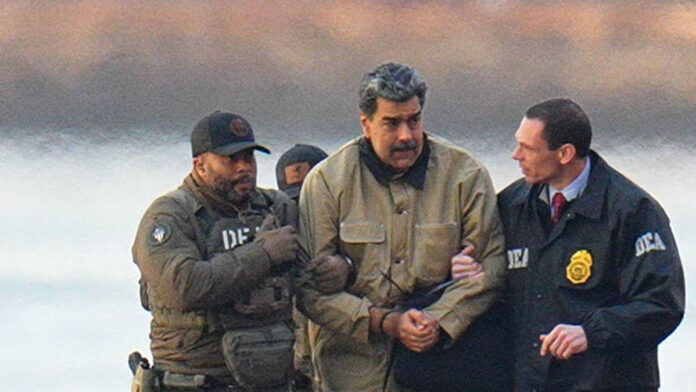
Venezuela’s interior minister said late Wednesday that at least 100 people were killed during a U.S. military operation that removed President Nicolás Maduro from power over the weekend, offering the first official nationwide death toll from the assault and deepening an already volatile political and diplomatic crisis.
Interior Minister Diosdado Cabello announced the figure during a broadcast on state television, saying the fatalities occurred during what Venezuelan officials describe as a coordinated U.S. attack that culminated Saturday with Maduro’s detention and removal from office. Reuters reported that Caracas had not previously released a comprehensive casualty count, though the Venezuelan army earlier published a list naming 23 of its own personnel who were killed.
Venezuelan authorities have alleged that a significant portion of Maduro’s security detail was killed “in cold blood” during the operation, language that underscores the government’s claim that the attack amounted to an unlawful act of foreign aggression rather than a limited or targeted intervention. Cuba, a key ally of Maduro’s government, has separately acknowledged that 32 members of its military and intelligence services stationed in Venezuela were also killed.
Arab News similarly reported Cabello’s statement, noting that it marked the first time Venezuelan officials had publicly cited a figure as high as 100 deaths. The outlet echoed official claims that many of those killed were members of elite security units assigned to protect the president and key government facilities.
In a separate account citing Reuters, the Jerusalem Post also reported Cabello’s assertion that 100 people died in the U.S. operation, confirming that the Venezuelan army’s list of 23 names represented only a fraction of the overall casualties.
Cabello said Maduro’s wife, Cilia Flores, who was detained alongside the president during the raid, sustained a head injury, while Maduro himself suffered an injury to his leg. Both were taken into custody during the operation, which Venezuelan officials say involved airstrikes, ground assaults and the seizure of strategic installations in and around Caracas.
Venezuela’s interim president, Delcy Rodríguez, declared a week of mourning earlier this week for members of the armed forces killed in the raid. Cabello praised Rodríguez during his weekly television program, describing her as “courageous” in the face of what he characterized as an unprecedented assault on Venezuelan sovereignty.
Cuba’s government, in a statement carried by Reuters and cited by the Jerusalem Post, said the 32 Cuban nationals killed were members of its armed forces and intelligence agencies who had been deployed in Venezuela as part of longstanding security cooperation agreements. The statement offered few operational details but said the Cubans died either “in direct combat against the attackers or as a result of bombings on the facilities” they were assigned to protect.
“True to their responsibilities concerning security and defense, our compatriots fulfilled their duty with dignity and heroism and fell, after fierce resistance,” the Cuban government said. Havana announced two days of national mourning on Jan. 5 and 6 to honor those killed, with funeral arrangements to be announced later.
Cuba has played a central role in supporting Maduro’s government since he took office, providing intelligence, security training and personnel. It remains unclear how many Cuban operatives were guarding Maduro personally at the time of the raid and how many were stationed elsewhere in the country when they were killed.
The U.S. government has not publicly confirmed the details of the operation or the casualty figures cited by Venezuelan and Cuban officials. However, the scale of deaths alleged by Caracas suggests an operation far broader than previous U.S. actions in the region and raises the prospect of significant international fallout.
Analysts say the announcement of a 100-death toll serves multiple purposes for Venezuela’s new interim leadership and remnants of the former government. Domestically, it reinforces a narrative of victimhood and resistance that could help unify factions of the military and civilian population amid uncertainty over the country’s political future. Internationally, it places pressure on Washington by framing the raid as a deadly intervention with substantial collateral damage.
The lack of independent verification of the casualty figures, however, leaves key questions unanswered. Reuters has noted that Venezuela’s tightly controlled media environment and restricted access for foreign journalists make it difficult to corroborate official claims. Human rights organizations have also called for an independent investigation to determine how many civilians, if any, were among the dead.
The reported deaths of Cuban personnel further complicate the regional picture. Cuba’s involvement underscores the extent to which Venezuela’s crisis has become entangled with broader geopolitical rivalries, particularly between the United States and governments aligned against U.S. influence in Latin America.
Historically, U.S. interventions in the region — whether overt or covert — have drawn sharp criticism and lasting resentment, even when framed as efforts to restore democracy or protect human rights. The Maduro operation appears poised to reignite those debates, especially if casualty figures continue to rise or if evidence emerges of civilian harm.
At the same time, supporters of the intervention argue that Maduro’s removal could open the door to political and economic reforms in a country battered by years of hyperinflation, sanctions and mass emigration. They contend that the long-term benefits of regime change may outweigh the immediate human cost, a claim that critics vehemently dispute.
For now, Venezuela remains in a period of profound uncertainty. The declaration of a week of mourning reflects both the human toll of the raid and the fragile state of national cohesion. With Maduro detained, an interim leadership in place and international actors closely watching, the coming days are likely to determine whether the country moves toward stabilization or deeper confrontation.
As Reuters, Arab News and the Jerusalem Post have all reported, Cabello’s statement has put a stark figure on the cost of the U.S. operation. Whether that number becomes a rallying cry, a point of diplomatic contention or the basis for future legal and political action may shape Venezuela’s trajectory — and its relations with Washington — for years to come.
Thousands of Iranians poured into streets across the capital Thursday night and shouted from their homes after exiled Crown Prince Reza Pahlavi called for mass demonstrations against the Islamic Republic, triggering immediate nationwide internet and telephone blackouts as the government moved to suppress what represents the most direct challenge to clerical rule in years.
The protests erupted precisely at 8 p.m. local time (1630 GMT) when Pahlavi had urged Iranians to take to the streets, with neighborhoods across Tehran immediately erupting in chanting as witnesses described thousands visible on streets despite government warnings and threats of drone surveillance to identify participants. The coordinated timing and enthusiastic response demonstrated that substantial segments of Iran’s population remain willing to risk severe punishment by openly defying the regime.
Internet access and telephone lines throughout Iran cut out immediately after protests began, according to CloudFlare, an internet monitoring firm, and NetBlocks, an advocacy group tracking digital restrictions. Both organizations attributed the communications blackout to deliberate Iranian government interference designed to prevent protesters from coordinating activities and sharing footage documenting the demonstrations’ scale with international audiences.
Attempts to dial landlines and mobile phones from Dubai to Iran could not be connected, confirming the comprehensive nature of the communications shutdown. Such systematic outages have historically preceded intense government crackdowns in Iran, raising fears that security forces would exploit the information blackout to conduct violent suppression operations without real-time documentation that might generate international condemnation.
The demonstration represented the first major test of whether the Iranian public could be swayed by Crown Prince Reza Pahlavi, whose fatally ill father Mohammad Reza Shah Pahlavi fled Iran just before the country’s 1979 Islamic Revolution that installed the theocratic government currently ruling the country. The younger Pahlavi has lived in exile for decades, maintaining a political presence through social media and interviews but lacking organizational infrastructure inside Iran that would enable him to directly mobilize supporters.
Demonstrations included explicit cries supporting the deposed shah and his son, rhetoric that could historically bring death sentences but now underlines the profound anger fueling protests that began over Iran’s collapsing economy. The willingness of protesters to publicly praise the monarchy while calling for the Islamic Republic’s destruction reflects how thoroughly the regime has lost legitimacy among significant portions of the population, particularly younger Iranians with no personal memory of pre-revolutionary Iran.
When 8 p.m. arrived Thursday, neighborhoods across Tehran erupted in chanting with witnesses describing coordinated vocal protests. The chants included “Death to the dictator!”—referring to Supreme Leader Ayatollah Ali Khamenei—and “Death to the Islamic Republic!” demonstrating that protesters seek regime change rather than reforms within the existing theocratic system.
Others praised the shah, shouting “This is the last battle! Pahlavi will return!”—an extraordinary public embrace of monarchist sentiment in a country where the Islamic Republic has spent 46 years portraying the Pahlavi dynasty as corrupt Western puppets whose overthrow represented liberation. The chants supporting Pahlavi’s return suggest either genuine monarchist sentiment among some protesters or tactical embrace of any alternative to clerical rule regardless of ideological preferences.
“Great nation of Iran, the eyes of the world are upon you. Take to the streets and, as a united front, shout your demands,” Pahlavi stated in his call to action. “I warn the Islamic Republic, its leader and the (Revolutionary Guard) that the world and (President Donald Trump) are closely watching you. Suppression of the people will not go unanswered.”
Pahlavi had indicated he would offer further organizational plans depending on the response to his initial demonstration call, suggesting he views Thursday’s protests as gauging whether he commands sufficient support to pursue more ambitious opposition strategies. His explicit invocation of Trump and warning about international consequences reflected attempts to deter violent crackdowns by suggesting that suppression would trigger American intervention.
However, Pahlavi’s support of and from Israel has drawn substantial criticism, particularly after the 12-day war Israel waged on Iran in June 2025 that destroyed Iranian military installations and killed hundreds. His Israeli connections complicate his appeal within Iran, where even regime critics often maintain strong Palestinian solidarity and anti-Zionist positions that make collaboration with Israel politically toxic.
Demonstrators have shouted support for the shah in various protests, though it remains unclear whether that reflects genuine support for Pahlavi personally or simply nostalgia for pre-revolutionary Iran when the country enjoyed greater international integration, higher living standards, and more personal freedoms despite the shah’s authoritarian governance and secret police brutality.
Iranian officials appeared to take the planned protests seriously despite publicly dismissing Pahlavi as an irrelevant exile. The hard-line Kayhan newspaper published online video claiming security forces would deploy drones to identify participants, threatening that facial recognition technology and other surveillance methods would enable post-protest arrests even if demonstrations proceeded without immediate violent suppression.
Thursday’s demonstrations occurred against a backdrop of sustained unrest that had already spread across Iran on Wednesday, with markets and bazaars shutting down in support of protesters. The bazaar closures carry particular significance given that merchant communities played crucial roles in the 1979 revolution and their opposition historically signals that even traditionally conservative constituencies have turned against the government.
So far, violence surrounding the demonstrations has killed at least 41 people while more than 2,270 others have been detained, according to the U.S.-based Human Rights Activists News Agency, an organization tracking casualties and arrests through networks inside Iran. The death toll and mass detentions demonstrate that despite Thursday representing the most visible large-scale demonstrations, the protests have already generated substantial bloodshed and repression in preceding days.
The growth of protests increases pressure on Iran’s civilian government and Supreme Leader Ayatollah Ali Khamenei, whose authority rests on claims that the Islamic Republic represents the Iranian people’s will and that the clerical system provides superior governance compared to the deposed monarchy. Sustained mass protests directly challenge those legitimacy claims while demonstrating that substantial segments of society reject theocratic rule.
The protests themselves have remained broadly leaderless, operating through decentralized coordination via social media and word-of-mouth rather than through organizational hierarchies that security forces could target by arresting leadership. This leaderless structure provides resilience against decapitation but also limits protesters’ ability to articulate specific demands, negotiate with authorities, or coordinate strategic escalation.
It remains unclear how Pahlavi’s call will affect demonstrations moving forward and whether his emergence as a potential figurehead will help or hurt the opposition movement. “The lack of a viable alternative has undermined past protests in Iran,” wrote Nate Swanson of the Washington-based Atlantic Council, who studies Iranian politics and opposition movements.
“There may be a thousand Iranian dissident activists who, given a chance, could emerge as respected statesmen, as labor leader Lech Wałęsa did in Poland at the end of the Cold War,” Swanson observed. “But so far, the Iranian security apparatus has arrested, persecuted and exiled all of the country’s potential transformational leaders,” creating a vacuum where opposition lacks recognized figures who could negotiate transitions or provide focal points for organizing sustained resistance.
Iranian officials have offered no public acknowledgment of the protests’ scale, maintaining information blackouts about demonstrations that raged across numerous locations Thursday even before the 8 p.m. coordinated action. However, there has been reporting about security officials being injured or killed in confrontations with protesters or armed groups exploiting the chaos.
The judiciary’s Mizan news agency reported that a police colonel suffered fatal stab wounds in a town outside Tehran, while the semi-official Fars news agency stated that gunmen killed two security force members and wounded 30 others in a shooting in the city of Lordegan in Chaharmahal and Bakhtiari province—incidents suggesting that at least some protesters or opposition elements have adopted violent tactics beyond peaceful demonstrations.
A deputy governor in Iran’s Khorasan Razavi province told Iranian state television that an attack on a police station killed five people Wednesday night in Chenaran, approximately 700 kilometers (430 miles) northeast of Tehran. Late Thursday, the Revolutionary Guard announced that two members of its forces were killed in Kermanshah, indicating that security force casualties have occurred across multiple provinces rather than concentrating in the capital.
The attacks on security forces represent escalation beyond previous protest cycles where demonstrators largely engaged in civil disobedience and street protests while avoiding direct armed confrontation with police or Revolutionary Guard units. The violence could provide justification for harsher crackdowns while potentially alienating moderates who support reform but oppose armed insurgency.
Iran has faced multiple rounds of nationwide protests in recent years as economic conditions have deteriorated and political freedoms have contracted. As international sanctions tightened and Iran struggled economically after the June 2025 war with Israel, the rial currency collapsed in December, reaching 1.4 million to $1—a catastrophic devaluation that has rendered imports prohibitively expensive and obliterated savings held in local currency.
Protests began soon after the currency collapse, with demonstrators chanting against Iran’s theocracy and explicitly calling for regime change rather than economic policy adjustments. The direct attacks on the Islamic Republic’s legitimacy rather than focusing narrowly on economic grievances distinguished these protests from earlier cycles that authorities successfully portrayed as limited complaints about specific policies rather than fundamental opposition to clerical rule.
It remains unclear why Iranian officials have not yet implemented the full-scale violent crackdowns that have suppressed previous protest waves, with 2019 demonstrations ending after security forces killed an estimated 1,500 people in systematic massacres. President Trump warned last week that if Tehran “violently kills peaceful protesters,” America “will come to their rescue,” suggesting potential U.S. military intervention if Iran conducts mass killings.
Trump’s warning drew sharp rebuke from Iran’s Foreign Ministry, which issued a statement declaring: “Recalling the long history of criminal interventions by successive U.S. administrations in Iran’s internal affairs, the Foreign Ministry considers claims of concern for the great Iranian nation to be hypocritical, aimed at deceiving public opinion and covering up the numerous crimes committed against Iranians.”
However, the Iranian government’s harsh rhetoric has not deterred the U.S. State Department from using social media platform X to highlight footage purportedly showing demonstrators putting up stickers naming roads after Trump or throwing away government-subsidized rice in symbolic rejection of the regime’s economic management.
“When prices are set so high that neither consumers can afford to buy nor farmers can afford to sell, everyone loses,” the State Department stated in one message amplifying protest footage. “It makes no difference if this rice is thrown away,” the statement continued, characterizing the discarded subsidized food as indictment of economic policies that have failed both producers and consumers.
Meanwhile, Nobel Peace Prize laureate Narges Mohammadi remains imprisoned by Iranian authorities following her December 2025 arrest. Mohammadi has become an international symbol of Iranian resistance, with her continued detention despite Nobel recognition demonstrating the regime’s willingness to ignore international opinion when suppressing domestic dissent.
“Since Dec. 28, 2025, the people of Iran have taken to the streets, just as they did in 2009, 2019,” her son Ali Rahmani stated, connecting current protests to previous uprising cycles. “Each time, the same demands came up: an end to the Islamic Republic, an end to this patriarchal, dictatorial and religious regime, the end of the clerics, the end of the mullahs’ regime.”
Rahmani’s statement emphasized continuity in Iranian opposition demands across protest cycles separated by years, suggesting that the fundamental grievances driving unrest remain unaddressed by a government unwilling to consider reforms that would undermine clerical authority. The repeated protest cycles demonstrate that suppression provides only temporary stability rather than resolving underlying legitimacy crises.
The internet and communications shutdown creates information blackout that makes assessing Thursday night’s protests’ full scope impossible, with international observers dependent on whatever footage protesters managed to upload before connectivity was severed or information that emerges in coming days once some communications are restored. The blackout itself signals government concern about the demonstrations’ scale and potential to spread if Iranians could see thousands of compatriots openly defying authorities.
For Crown Prince Reza Pahlavi, Thursday’s response provides crucial data about whether he commands genuine support inside Iran or whether chants praising his father represent general anti-regime sentiment rather than specific monarchist preferences. If subsequent days show sustained mobilization responding to his calls, it would position him as the opposition’s most prominent figure despite decades in exile. Conversely, if protests diminish or participants reject his leadership, it would confirm that Iran’s opposition remains fragmented without consensus about post-regime governance.
The coming days will reveal whether Iranian security forces implement the violent suppression that has ended previous protest cycles or whether Trump’s warnings and international attention create sufficient deterrence to prevent mass killings. The regime faces difficult calculations about whether tolerating continued protests risks encouraging escalation or whether brutal crackdowns would trigger the American intervention Trump has threatened, creating a potential stalemate where protests continue at reduced intensity while authorities avoid massacres that might provoke foreign intervention.
Two people were killed and six others wounded late Wednesday when gunfire erupted outside a church belonging to The Church of Jesus Christ of Latter-day Saints in Salt Lake City as mourners gathered inside for a memorial service, authorities said, in an attack that has shaken a neighborhood accustomed to quiet religious gatherings.
Police said the shooting occurred in the rear parking lot of the red-brick church in northwest Salt Lake City, where a funeral service was being held. All of the victims were adults. At least three of those injured were listed in critical condition, while the medical status of the remaining victims was not immediately known.
The Associated Press stated that officers had not taken any suspects into custody by Wednesday night, and investigators were continuing to search for those responsible. Police said they did not believe the attack was motivated by religious hatred and stressed that the shooting did not appear to be random.
“We don’t believe this was a targeted attack against a religion or anything like that,” Salt Lake City Police Chief Brian Redd said during a briefing, adding that investigators believe the violence stemmed from an altercation outside the church rather than any animus toward the faith.
Reuters also reported that authorities described the situation as fluid in the hours after the shooting. Police spokesperson Glen Mills told reporters that some type of dispute unfolded in the parking lot, leading to shots being fired, while dozens of people were attending a memorial service inside the chapel.
Among at least eight adult victims, two later died from their injuries, police said. Three survivors were in critical condition, while others were being treated for gunshot wounds. Law enforcement agencies launched an extensive manhunt and began interviewing witnesses who had attended the funeral. The FBI said it was assisting local authorities.
The church, which primarily serves Tongan congregants and holds worship services in their native language, sits beside a low-income housing complex. Residents there rushed outside after hearing the gunfire, helping victims and comforting mourners who poured out of the building in shock.
Brennan McIntire, who lives in an apartment next to the church parking lot, said he and his wife were watching television when they heard several loud gunshots. He ran outside wearing flip-flops and immediately encountered chaos.
“As soon as I came over, I see someone on the ground,” McIntire said. “People are attending to him and crying and arguing.”
His wife, Kenna McIntire, followed moments later and said she was shaken by the sight of first responders lifting an unconscious woman into an ambulance as people nearby sobbed.
The couple said gunfire is not uncommon in their neighborhood, but never so close to home or in such a devastating context. “It was really heartbreaking to hear and see,” Kenna McIntire said.
In the aftermath, roughly 100 law enforcement vehicles converged on the area, while helicopters circled overhead. Neighbors wrapped in blankets gathered near a taco truck, watching officers secure the scene and waiting anxiously for updates.
Police said they were reviewing surveillance footage from nearby businesses and analyzing license plate reader data in an effort to track down the shooter or shooters. Authorities urged anyone with information to come forward.
Mayor Erin Mendenhall condemned the violence, emphasizing the emotional weight of the attack occurring during a memorial service. “This should never have happened outside a place of worship,” she said. “This should never have happened outside a celebration of life.”
The Church of Jesus Christ of Latter-day Saints said in a statement that it was cooperating fully with law enforcement and expressed sorrow over the violence. “We extend prayers for all who have been impacted by this tragedy and express deep concern that any sacred space intended for worship should be subjected to violence of any kind,” the church said.
Church spokesperson Sam Penrod echoed that message, saying the institution was grateful for the swift response of first responders and deeply troubled by the loss of life.
The shooting comes at a time of heightened concern for houses of worship nationwide. Reuters noted that the LDS Church has been on increased alert since a deadly attack last month in Michigan, where a former Marine killed four people at a church and set the building ablaze. The FBI later determined that the suspect in that case was motivated by anti-religious beliefs against Latter-day Saints.
Utah, where the church is headquartered, is home to about half of the state’s 3.5 million residents who identify as members of the faith. LDS meetinghouses are common fixtures in neighborhoods across Salt Lake City and throughout the state, often serving as community hubs for worship, funerals, weddings and social gatherings.
While police have said there is no indication the Salt Lake City shooting was ideologically motivated, the attack has reignited broader concerns about gun violence spilling into spaces traditionally viewed as safe and sacred. Experts say the setting of the shooting underscores how personal disputes can escalate rapidly in environments where large numbers of people are present, with devastating consequences.
The presence of mourners at the church added an additional layer of trauma, compounding grief with fear and confusion. Community leaders said counseling and support services would be made available to those affected.
Investigators cautioned that details could change as the inquiry continues, and urged patience as they work to reconstruct the sequence of events. For now, the neighborhood remains on edge, grappling with the reality that a gathering meant to honor a life lost became the scene of another tragedy.
Authorities said updates would be released as more information becomes available, while city leaders called for unity and calm as the investigation moves forward.
WASHINGTON/ABUJA — The United States has imposed sweeping new travel restrictions requiring Nigerians and citizens from 37 other nations—predominantly African countries—to post financial bonds of up to $15,000 when applying for tourist and business visas, with the requirements taking effect January 21, 2026, for Nigeria and most other affected nations.
According to information published on the U.S. Department of State’s website Travel.State.Gov, payment of a bond does not guarantee visa issuance, with fees paid without explicit direction from a consular officer rendered non-refundable. The policy dramatically increases the financial barriers preventing citizens from targeted countries from visiting the United States, making American travel economically impossible for most residents of affected nations where annual per capita incomes fall well below the maximum $15,000 bond requirement.
Of the 38 nations listed in the updated State Department announcement released Tuesday, African countries account for 24—representing nearly two-thirds of nations subjected to the visa bond requirements. The disproportionate targeting of African nations has generated accusations of racial discrimination and neo-colonial policies designed to exclude Black and Brown travelers from entering the United States regardless of their legitimate business or tourism purposes.
Visa bonds are financial guarantees required by the U.S. State Department for foreign nationals from countries classified as high-risk who are applying for B1/B2 visas permitting business or tourism travel. The Trump administration has characterized the bonds as necessary measures to combat visa overstays, though critics argue the policy amounts to wealth-based discrimination that assumes citizens from poorer nations intend to violate visa terms while travelers from wealthy countries receive presumption of compliance.
The implementation dates vary by country, with Nigeria’s effective date set for January 21, 2026. The Department of State indicated that nationals from listed countries have been identified as requiring visa bonds based on overstay rate analyses, with implementation dates shown in parentheses following each country name on the official list.
The remaining countries are Nigeria (January 21, 2026), São Tomé and Príncipe (October 23, 2025), Senegal (January 21, 2026), Tajikistan (January 21, 2026), Tanzania (October 23, 2025), Togo (January 21, 2026), Tonga (January 21, 2026), Turkmenistan (January 1, 2026), Tuvalu (January 21, 2026), Uganda (January 21, 2026), Vanuatu (January 21, 2026), Venezuela (January 21, 2026), Zambia (August 20, 2025), and Zimbabwe (January 21, 2026).
The directive states that “any citizen or national travelling on a passport issued by one of these countries, who is otherwise found eligible for a B1/B2 visa, must post a bond of $5,000, $10,000, or $15,000. The amount is determined during the visa interview.” The graduated bond structure provides consular officers discretionary authority to assign bond amounts based on individual applicant assessments, though the State Department has not published criteria governing how officers should determine appropriate bond levels.
“Applicants must also submit the Department of Homeland Security’s Form I-352. Applicants must also agree to the terms of the bond through the US Department of the Treasury’s online payment platform, Pay.gov. This requirement applies regardless of the place of application,” the directive continues, indicating that Nigerian citizens applying for U.S. visas anywhere in the world must comply with bond requirements rather than just those applying within Nigeria.
Visa holders who post bonds face additional restrictions on their U.S. entry, with the State Department mandating that they must enter through designated airports including Boston Logan International Airport, John F. Kennedy International Airport in New York, and Washington Dulles International Airport in Virginia. The geographic limitation to three East Coast airports creates substantial additional travel costs and logistical complications for visa holders whose final U.S. destinations lie in other regions, forcing circuitous routing through designated entry points.
Bonds will only be refunded under specific circumstances: when the Department of Homeland Security records the visa holder’s departure from the United States on or before the expiration of their authorized stay, when the applicant does not travel before the visa expires, or when a traveler applies for admission at a U.S. port of entry but is denied. The refund conditions create risks that technical compliance issues or bureaucratic delays in recording departures could result in bond forfeiture even when visa holders have not overstayed their authorized periods.
The visa bond announcement follows the introduction of partial U.S. travel restrictions on Nigeria one week earlier. Nigeria was among 15 mostly African countries—including Angola, Antigua, Benin, Côte d’Ivoire, Gabon, The Gambia, and others—placed under partial travel suspensions by the U.S. government on December 16, 2025, in actions that collectively targeted African nations far more aggressively than travelers from other global regions.
In Nigeria’s case, the U.S. cited the presence and operations of radical Islamic terrorist groups such as Boko Haram and Islamic State affiliates in certain parts of the country, resulting in “substantial screening and vetting difficulties.” U.S. officials also referenced an overstay rate of 5.56 percent for B1/B2 visas and 11.90 percent for F, M, and J visas (student and exchange visitor categories) as justifications for Nigeria’s inclusion on restricted lists.
The travel suspension covered immigrant visas as well as non-immigrant categories including B-1, B-2, B-1/B-2, F, M, and J visas, effectively closing multiple pathways for Nigerians seeking to enter the United States for tourism, business, study, or permanent immigration. The layered restrictions combining travel suspensions with bond requirements create formidable obstacles for Nigerian citizens regardless of their personal circumstances, qualifications, or legitimate reasons for U.S. travel.
According to The Associated Press, the Trump administration quietly added seven countries last week—including five in Africa—to the list of nations whose passport holders face bond requirements. Thirteen countries, all but two of them in Africa, were already on the list prior to Tuesday’s expansion, making visa applications unaffordable for most citizens of targeted nations where median incomes fall far below bond amounts.
The State Department added Bhutan, Botswana, the Central African Republic, Guinea, Guinea-Bissau, Namibia, and Turkmenistan to the list last week, with those designations taking effect January 1 according to notices posted on the Travel.State.Gov website. The gradual expansion of the visa bond program suggests the Trump administration plans continued additions targeting additional countries the administration characterizes as high-risk for visa violations.
The visa bonds represent the latest effort by the Trump administration to tighten requirements for U.S. entry, building on previous policy changes requiring citizens from all visa-requiring countries to sit for in-person interviews and disclose years of social media histories as well as detailed accounts of their own and their families’ previous travel and living arrangements. The cumulative effect of these policies has dramatically reduced visa issuance to citizens of targeted countries while increasing processing times and costs for applicants worldwide.
U.S. officials have defended the bonds, which range from $5,000 to $15,000, maintaining they effectively ensure that citizens of targeted countries do not overstay their visas. However, critics note that overstay rates for affected countries often fall below 10 percent, meaning that the vast majority of visa holders from these nations comply with terms yet all applicants face punitive financial requirements based on assumptions of likely violations.
Payment of bonds does not guarantee visa issuance, but amounts will be refunded if visas are denied or when visa holders demonstrate compliance with visa terms through timely departure. The non-guarantee creates scenarios where applicants could post $15,000 bonds, have visa applications denied, and face delays of weeks or months recovering their funds—creating substantial financial risk particularly for applicants from countries with unstable currencies or limited access to international banking.
The new countries subject to bond requirements join Mauritania, São Tomé and Príncipe, Tanzania, The Gambia, Malawi, and Zambia, which were placed on the list in August and October 2025 as part of what the State Department characterized as a pilot program. The program’s expansion from 6 to 38 countries within six months suggests the Trump administration views the policy as successful despite international criticism and evidence that it has dramatically reduced legitimate travel from affected nations.
According to Axios, the Tuesday additions brought the total to 38 countries—mostly in Africa, with additional nations in South America and Asia—whose travelers could face sharply higher costs to obtain U.S. visas as part of the administration’s broader strategy to curtail both legal and illegal immigration. The explicit connection between legal visa restrictions and illegal immigration enforcement reveals the Trump administration’s view that reducing legal immigration pathways serves immigration restriction goals even when travelers pose no security threats or overstay risks.
The State Department claims the bonds are designed to deter visitors from overstaying visas for tourism or business, citing a 2024 Department of Homeland Security fiscal report that analyzed estimated overstay rates by country. However, the report shows that many targeted countries have overstay rates comparable to or lower than nations not subjected to bond requirements, raising questions about whether overstay statistics genuinely drive policy decisions or serve as convenient justifications for discrimination against disfavored nations.
Venezuela’s addition to the list Tuesday—just days after the U.S. military operation that captured Venezuelan leader Nicolás Maduro—alongside Cuba, another country Trump has threatened with military action, suggests that visa bond designations serve multiple administration purposes beyond addressing overstay rates. The timing indicates that visa policy has become weaponized as punishment for nations the Trump administration views as adversaries, regardless of actual visa compliance data.
The State Department did not immediately respond to Axios’ request for comment on any connection between U.S. actions in Venezuela or Trump’s remarks on Cuba and their visa bond designations, though the temporal proximity makes coincidence unlikely. The punitive use of visa restrictions against countries targeted for other reasons transforms immigration policy into foreign policy cudgel that harms ordinary citizens seeking legitimate travel rather than addressing government behaviors the administration opposes.
Visa applicants from affected countries will be required to post bonds ranging from $5,000 to $15,000, determined at the time of visa interviews, according to the State Department. Approved visa holders will only be allowed to enter the U.S. through one of three airports: Boston Logan International Airport, John F. Kennedy International Airport, and Washington Dulles International Airport—a restriction that creates additional travel costs and complications for visa holders whose U.S. destinations lie elsewhere.
For Nigeria specifically, where per capita GDP stands at approximately $2,000 annually, a $15,000 visa bond represents more than seven years of average income—an insurmountable barrier for all but the wealthiest Nigerians. Even the minimum $5,000 bond exceeds two years of typical Nigerian income, effectively pricing out middle-class professionals, students, and families seeking to visit relatives or conduct business in the United States.
The policy’s impact extends beyond individual travelers to harm Nigerian businesses dependent on U.S. commercial relationships, educational institutions sending students to American universities, and families separated by migration. Nigerian entrepreneurs who might previously have traveled to the United States for trade shows, conferences, or business meetings now face financial barriers that make such travel prohibitively expensive, potentially costing Nigerian businesses opportunities while harming American companies that would benefit from Nigerian partnerships.
Nigerian students accepted to American universities face particular hardships, as F visa bonds compound already substantial tuition and living costs that families must demonstrate ability to cover as visa application requirements. Talented Nigerian students who would enrich American campuses and potentially remain in the United States as skilled workers after graduation may be unable to accept admission offers because their families cannot afford both educational costs and bond requirements.
The diaspora implications are similarly severe, with millions of Nigerian-Americans unable to host family members for weddings, graduations, medical emergencies, or other significant life events because their relatives in Nigeria cannot afford bond requirements. The family separation created by financial barriers achieves through economic means what explicit family reunification restrictions might accomplish through legal prohibition, fragmenting Nigerian-American communities without acknowledging the policy’s human costs.
African Union officials and Nigerian government representatives have not yet issued formal responses to the visa bond expansion, though previous U.S. travel restrictions targeting African nations generated diplomatic protests characterizing the policies as discriminatory and damaging to U.S.-Africa relations. The Biden administration had reversed some Trump-era travel restrictions on African nations, but the current administration has reimposed and expanded them beyond previous levels.
The disproportionate targeting of African nations—24 of 38 countries affected—has generated accusations of racism underlying Trump administration immigration policies. Critics note that European nations with comparable or higher overstay rates face no similar bond requirements, suggesting that nationality and race rather than objective risk assessments drive designation decisions. The administration has not published detailed methodology explaining country selections beyond general references to overstay statistics that do not clearly distinguish affected nations from unaffected countries with similar data.
International travel industry representatives have expressed concern that visa bond policies will devastate travel-dependent businesses in affected countries while harming American tourism sectors that benefit from international visitors. Hotels, airlines, tour operators, and destination marketing organizations in the United States lose revenue when potential travelers from 38 countries face financial barriers preventing visits, creating economic costs for American businesses alongside the restrictions’ direct impacts on affected nations’ citizens.
The three-airport entry restriction creates particular challenges for travelers whose U.S. destinations lie far from the East Coast, forcing circuitous routing through Boston, New York, or Washington before continuing to final destinations in California, Texas, the Midwest, or other regions. The additional travel time and costs compound bond expenses, making U.S. visits even more prohibitively expensive while reducing the practical feasibility of short business trips or family visits that extended travel times render impractical.
ATLANTIC OCEAN/WASHINGTON — The United States seized two oil tankers linked to Venezuela in the Atlantic Ocean on Wednesday, including one sailing under Russia’s flag, as President Donald Trump dramatically expanded maritime enforcement following Saturday’s military raid that captured Venezuelan President Nicolás Maduro, while announcing plans to refine and sell up to 50 million barrels of Venezuelan crude oil currently immobilized under U.S. sanctions.
A weeks-long chase across the Atlantic concluded Wednesday morning when U.S. Coast Guard personnel and military special forces bearing a judicial seizure warrant apprehended the Marinera crude oil tanker, which had refused boarding last month before switching to Russia’s flag in an apparent attempt to evade American enforcement, according to U.S. officials who characterized the vessel as part of a “shadow fleet” transporting sanctioned petroleum.
The U.S. operation received support from Britain’s Royal Air Force and a Royal Navy vessel, which British Defence Secretary John Healey described as contributions to “global efforts to crack down on sanctions busting.” The British assistance reflected the United Kingdom’s willingness to support American maritime interdiction despite the operation’s controversial nature and potential complications for relations with Russia.
With Russian submarines and vessels nearby, the seizure risked direct confrontation with Moscow, which has condemned U.S. actions regarding Venezuela and already maintains adversarial relations with Western nations due to the war in Ukraine. The Kremlin did not respond to requests for comment on the tanker seizure, with Wednesday marking a public holiday in Russia that limited official government responses.
Earlier Wednesday, the U.S. Coast Guard also intercepted the M Sophia, a Panama-flagged tanker carrying Venezuelan oil, near the northeast coast of South America, U.S. officials confirmed. The vessel was fully loaded according to records from Venezuela’s state oil company PDVSA, making it the fourth tanker seizure in recent weeks as the Trump administration intensifies maritime enforcement targeting what it characterizes as sanctions-busting petroleum transport.
The Marinera, formerly known as the Bella-1, was empty of oil when seized, but U.S. authorities stated it belonged to a “shadow fleet” of tankers used to transport sanctioned crude from Venezuela and Iran. These shadow fleet vessels typically employ tactics including disabling tracking transponders, conducting ship-to-ship transfers at sea, and frequently changing flags and ownership documentation to evade sanctions enforcement.
“The only maritime energy transport allowed will be that consistent with American law and national security,” Stephen Miller, deputy White House chief of staff, declared in a statement announcing the seizures. “There is unlimited economic potential for the Venezuelan energy sector through legitimate and authorized commercial avenues established by the United States.”
Attorney General Pam Bondi stated that the Marinera crew had made “frantic efforts to avoid apprehension” and “failed to obey” Coast Guard orders, announcing that crew members would face criminal charges. The threatened prosecutions represented an escalation beyond vessel seizures to potential imprisonment of mariners following orders from ship owners regarding cargo transport.
The tanker seizures occurred as the Trump administration simultaneously pursued negotiations with Venezuela’s transitional government to divert oil supplies intended for China, Venezuela’s largest petroleum buyer, while gaining American access to $2 billion worth of Venezuelan crude oil currently subject to sanctions restrictions.
“The United States’ brazen use of force against Venezuela and its demand for ‘America First’ when Venezuela disposes of its own oil resources are typical acts of bullying,” Chinese Foreign Ministry spokesperson Mao Ning told reporters, delivering Beijing’s sharpest criticism yet of American actions following Maduro’s capture and the expanding maritime blockade.
Trump has openly discussed controlling Venezuela’s vast oil reserves—the world’s largest proven petroleum deposits—in conjunction with U.S. oil companies, following the arrest and detention of Maduro, whom the president has characterized as a drug-trafficking dictator aligned with Washington’s adversaries. Maduro, 63, pleaded not guilty this week to narco-terrorism charges when he appeared in shackles in federal court in New York.
Maduro’s Socialist Party allies remain in power in Venezuela, where Acting President Delcy Rodríguez navigates precarious circumstances between denouncing Maduro’s “kidnapping” by U.S. forces and initiating cooperation with Washington under explicit threats of further military violence from Trump. Rodríguez herself faces U.S. sanctions, with her frozen foreign financial assets identified as potential leverage, according to one person briefed on Trump administration thinking.
Top Trump administration officials including Secretary of State Marco Rubio and Defense Secretary Pete Hegseth conducted classified briefings on Venezuela for the U.S. Senate and House of Representatives on Wednesday. Democratic lawmakers expressed dissatisfaction with the information provided and concerns about the administration’s broader Venezuela strategy.
“They are proposing to steal Venezuela’s oil, at gunpoint, and use that leverage, forever, to run the country,” Democratic Senator Chris Murphy of Connecticut told reporters following the classified briefing, characterizing Trump administration plans as resource theft disguised as sanctions enforcement or governance assistance.
Trump announced Tuesday that the United States would refine and sell up to 50 million barrels of crude oil currently immobilized in Venezuela under U.S. sanctions, describing the sale as a first step in his plan to revive a petroleum sector that has experienced dramatic decline despite Venezuela possessing the world’s largest proven oil reserves.
To enable the oil sales Trump described, the U.S. is “selectively rolling back sanctions” on Venezuelan petroleum, White House Press Secretary Karoline Leavitt told reporters Wednesday, acknowledging that American refineries would need sanctions relief to process Venezuelan crude that has been prohibited from U.S. markets since 2019 when Trump first imposed comprehensive petroleum sanctions during his initial presidential term.
“We are going to take between 30 and 50 million barrels of oil,” Rubio stated during media appearances. “We’re going to sell it in the marketplace, at market rates, not at the discounts Venezuela was getting,” suggesting that U.S. control over Venezuelan petroleum sales would enable capturing profits that Venezuela previously received through discounted sales to allies including China and Cuba.
PDVSA confirmed Wednesday it was negotiating with the U.S. government and characterized discussions as involving “strictly commercial transactions under terms that are legal, transparent and beneficial for both parties.” The state oil company’s conciliatory language reflected Venezuelan officials’ recognition that resistance to American demands could trigger additional military action that Trump has repeatedly threatened.
Crude oil prices fell on world markets due to anticipated increased supplies from Trump’s plan to sell Venezuelan petroleum, with traders calculating that 30 to 50 million barrels entering global markets would temporarily depress prices despite representing only a fraction of daily worldwide consumption. The price decline benefited consumers while harming petroleum-exporting nations dependent on higher prices to balance government budgets.
China, Russia, and leftist allies of Venezuela have all denounced the U.S. military operation that captured Maduro, during which dozens of Venezuelans were killed according to official Venezuelan government statements. The operation represented Washington’s most significant military intervention in Latin America since the 1989 invasion of Panama to topple Manuel Noriega and bring him to the United States to face drug trafficking charges.
Washington’s traditional allies have expressed deep unease at the extraordinary precedent of seizing a foreign head of state through military force, with Trump threatening similar actions targeting other nations from Mexico to Greenland to further U.S. interests. The threats have generated anxiety across Latin America and Europe where governments worry about American willingness to use military power to enforce Trump’s vision of U.S. dominance.
The seizure of a Russian-flagged vessel carries particular risks given already strained U.S.-Russia relations over Ukraine, where Moscow’s invasion has triggered Western sanctions and military support for Ukrainian resistance. Russia could retaliate against American commercial shipping, escalate military tensions, or provide enhanced military support to countries resisting U.S. pressure including Venezuela, Iran, and other nations targeted by Trump administration enforcement.
The British participation in the Marinera seizure operation reflected the United Kingdom’s willingness to support American sanctions enforcement despite potential complications. However, London’s involvement also exposes British vessels and interests to possible Russian retaliation, particularly in regions like the North Atlantic where Russian naval and submarine forces operate with increasing frequency.
The escalating maritime enforcement represents implementation of what Trump has termed a “blockade” of Venezuelan oil exports, effectively preventing the country from earning foreign currency through petroleum sales to anyone except buyers approved by Washington. International law scholars have questioned whether such comprehensive blockades constitute acts of war requiring congressional authorization, though the Trump administration characterizes actions as sanctions enforcement rather than military blockade.
The shadow fleet vessels that U.S. authorities are targeting represent an evolving sanctions-evasion ecosystem involving aging tankers purchased by intermediaries, registered under flags of convenience, and operated through complex corporate structures designed to obscure beneficial ownership. These vessels transport billions of dollars worth of sanctioned petroleum annually from Venezuela, Iran, and Russia, undermining Western sanctions programs while generating revenues for governments targeted by economic pressure.
Maritime insurance companies and port authorities face difficult decisions about whether to service vessels suspected of shadow fleet involvement, with American secondary sanctions threatening penalties for entities facilitating sanctioned petroleum transport. The sanctions create cascading economic pressure throughout the maritime industry, though determined actors continue finding ways to move prohibited cargoes despite enforcement risks.
For Venezuela’s population, Trump’s plans to seize and sell Venezuelan oil generate fury across the political spectrum. Even Venezuelans who opposed Maduro’s government view the petroleum as national patrimony that belongs to the Venezuelan people rather than spoils for foreign seizure. The resource confiscation feeds narratives about American imperialism that have animated Latin American politics for decades and could generate long-term resentment regardless of Venezuela’s eventual governance structure.
The selective rollback of sanctions to enable U.S. refineries to process Venezuelan crude while maintaining restrictions on Venezuelan access to revenues creates asymmetric arrangements where American companies profit from Venezuelan resources while the country remains economically isolated. Critics characterize this as neo-colonial extraction where the United States dictates terms while Venezuelan needs remain subordinated to American interests.
The 30 to 50 million barrels Trump plans to sell represents a relatively modest percentage of Venezuelan oil currently in storage or transit, suggesting the initial sales constitute a pilot program that could expand dramatically if the approach proves politically and economically successful. Venezuela’s total oil reserves exceed 300 billion barrels, making it potentially the world’s most valuable petroleum prize if the United States can establish long-term control over production and sales.
American oil companies including Chevron, ExxonMobil, and others have maintained interests in Venezuelan petroleum despite sanctions, viewing the country’s massive reserves as attractive assets if political conditions enable resumed operations. Trump’s promises that U.S. companies will “go in, spend billions of dollars, fix the badly broken infrastructure” suggest plans for comprehensive American corporate control over Venezuelan energy sector modernization and operations.
The legal basis for seizing and selling Venezuelan state assets remains contested. While U.S. courts have issued judgments against PDVSA in various commercial disputes, whether those judgments authorize wholesale seizure and liquidation of a sovereign nation’s petroleum reserves raises complex questions about international law, sovereign immunity, and the extent of American judicial authority over foreign state property.
For Acting President Rodríguez, negotiating with Washington while her own assets remain frozen creates precarious circumstances where cooperation might lead to personal sanctions relief while resistance risks additional violence and economic devastation. Her calculations must balance Venezuelan nationalist sentiment opposing foreign resource control against pragmatic recognition that military resistance to American demands appears futile given the overwhelming force disparity.
The tanker seizures and oil sales represent just initial components of what Trump has characterized as temporary American governance of Venezuela “until such time as we can do a safe, proper and judicious transition” to leadership aligned with U.S. interests. The petroleum revenue control provides leverage to shape that transition while funding occupation costs and compensating American claims against Venezuela.
International legal scholars will debate for years whether Trump’s Venezuela actions constitute legitimate sanctions enforcement, justifiable intervention to address narco-terrorism threats, or illegal aggression violating United Nations Charter prohibitions on using force against sovereign nations. The unprecedented nature of capturing a sitting president, seizing national assets, and declaring intent to govern a country “temporarily” while extracting resources creates novel legal questions without clear precedents or resolution mechanisms.
A federal immigration agent shot and killed a Minneapolis woman during a large-scale enforcement operation Wednesday, firing multiple times into her face as she sat in her vehicle in what city and state officials characterized as an unjustified execution contradicting federal claims of self-defense, while videos obtained by media outlets appear to show the victim attempting to drive away from approaching agents rather than attacking them.
The fatal shooting of the 37-year-old woman, whose identity was not immediately released by authorities, prompted Minneapolis Mayor Jacob Frey to issue an extraordinary public demand that Immigration and Customs Enforcement officers immediately vacate the city. “To ICE, get the fuck out of Minneapolis. We do not want you here,” Frey declared during an emotional press conference hours after the shooting. “Your stated reason for being in this city is to create some kind of safety and you are doing exactly the opposite.”
Congresswoman Ilhan Omar, the Democratic Minnesota representative whose district includes Minneapolis, stated that the victim was “a legal observer” monitoring ICE enforcement actions that have surged across the city in recent days as part of what the Department of Homeland Security characterized as an extraordinary operation deploying approximately 2,000 agents to the Twin Cities area for a crackdown tied partially to allegations of fraud involving Somali residents.
Emily Heller, a witness to the shooting who provided testimony to MPR News, a Minneapolis public radio station, described seeing an ICE agent fire directly into the woman’s face at close range. “She was trying to turn around, and the ICE agent was in front of her car, and he pulled out a gun and put it right in – like his midriff was on her bumper – and he reached across the hood of the car and shot her in the face like three, four times,” Heller stated, providing graphic eyewitness testimony about the fatal encounter.
A video posted to social media and another obtained by The Guardian appeared to capture the shooting moment as a dark red SUV drove away from agents moving toward it, though the vehicle’s front remained partially obscured. Additional video footage verified by Reuters shows the maroon Honda SUV partially blocking a road, with the driver initially inching forward before stopping to allow another vehicle to pass.
The driver, with her window down, appeared to gesture to an approaching pickup truck to proceed as well, according to Reuters’ analysis of the verified footage. Instead, the truck stopped and two officers exited, approaching the vehicle on foot. As one agent ordered the driver from the SUV and grabbed at the door handle, the vehicle reversed briefly before a third agent came around to the front from the passenger side.
The driver then moved forward, turning the wheels right in what appeared to be an effort to drive up the street away from the officers, Reuters reported. The agent positioned in front of the vehicle pulled his weapon, stepped back, and fired three shots with at least one discharged after the car’s front bumper had already passed him. The footage does not conclusively establish whether the vehicle made contact with the officer, who maintained his footing throughout the encounter.
After shots were fired, the SUV accelerated up the street before crashing into parked vehicles and a utility pole. Witnesses described seeing paramedics perform CPR on the woman collapsed next to a snowbank near the crashed vehicle, though she was pronounced dead despite resuscitation attempts.
In a post to X, the Department of Homeland Security insisted the victim was a “domestic terrorist” who “weaponized her vehicle” and attempted “to run over our law enforcement officers in an attempt to kill them.” The department claimed several ICE officers sustained injuries but would make “full recoveries.”
“An ICE officer, fearing for his life, the lives of his fellow law enforcement and the safety of the public, fired defensive shots. He used his training and saved his own life and that of his fellow officers,” the DHS statement declared, characterizing the fatal shooting as justified defensive action rather than excessive force against an unarmed civilian.
However, the videos circulating on social media and obtained by news organizations appear to contradict that federal narrative. The footage shows the SUV clearly backing away from ICE officers as they approached, with one agent visible partially in front of the vehicle as it moved forward before driving past him. That same agent is visible firing his weapon as the car appeared to pass by his position rather than bearing down on him.
No visible evidence in the videos shows ICE officers being injured or struck by the vehicle. The agent who appeared to have fired the fatal shots is seen returning to a silver SUV that was driven away from the scene shortly after the shooting—proceeding through a red traffic light in departure that witnesses characterized as fleeing the scene before local law enforcement could secure the area.
Mayor Frey emphasized during the press conference that local law enforcement’s priority was transporting the victim to hospital and removing ICE from the scene because federal agents were “making a difficult situation more problematic.” He noted that video footage does not appear to support claims that the vehicle was being weaponized against the ICE officer.
“I do have a message for our community for our city and I do have a message for ICE,” Frey stated. “People are being hurt. Families are being ripped apart. Longterm Minneapolis residents that have contributed so greatly to our city, to our culture, to our economy are being terrorized and now, somebody is dead.”
Continuing to address ICE directly, Frey declared: “That’s on you. It’s also on you to leave. It’s on you to make sure that further damage, further loss of life and injury, is not done.” The mayor also stated that DHS was “trying to spin this as an action of self defense. Having seen the video myself, I wanna tell everybody directly, that is bullshit.”
Minneapolis Police Chief Brian O’Hara told reporters that the victim was “a middle-aged white woman” blocking the street because of federal law enforcement presence, “which is obviously something that has been happening not just in Minneapolis but around the country.” He emphasized that nothing suggested she was the target of any law enforcement investigation or activity.
The woman was no longer in her vehicle when O’Hara arrived at the scene, with the police chief adding that “a spouse” had since arrived at the hospital. O’Hara stated the FBI would conduct a joint investigation with the Minnesota Bureau of Criminal Apprehension into the fatal shooting.
Minnesota Governor Tim Walz, the Democratic former vice presidential candidate who announced this week he will not seek a third term, posted on X that he had “seen the video. Don’t believe this propaganda machine. The state will ensure there is a full, fair, and expeditious investigation to ensure accountability and justice.”
At a news conference later Wednesday, Walz announced he had activated the state’s emergency operations center and “issued a warning order to prepare the Minnesota National Guard” for potential deployment, signaling the seriousness with which state authorities viewed the crisis and their willingness to use military force to protect residents from what they characterized as federal overreach.
“We’ve been warning for weeks that the Trump administration’s dangerous, sensationalized operations are a threat to our public safety, that someone was going to get hurt,” Walz stated, directly blaming the Trump administration for creating conditions that led to the fatal shooting.
To Minnesota residents, Walz declared: “I feel your anger, I’m angry,” while urging those planning protests to “please do so peacefully.” The governor added that the state does not “need any further help from the federal government,” stating bluntly: “To Donald Trump and Kristi Noem, you’ve done enough.”
Congresswoman Omar rejected DHS claims on X, writing: “You’re lying. There was no attempt to run the officer over and no ICE agents appear to be hurt. Get out of our city.” The forceful denunciation from Minnesota’s congressional delegation reflected the intensity of backlash against federal immigration enforcement operations that state and local officials characterized as creating chaos rather than enhancing public safety.
Minnesota Lieutenant Governor Peggy Flanagan, also a Democrat, issued a statement declaring: “ICE has committed an unspeakable act of violence today. These masked agents are out of control and creating real chaos in our state. ICE must leave Minnesota immediately – before more people are hurt. In the face of their violence, let us remain peaceful, calm, and united. Minnesotans will not allow Trump and his thugs to turn our communities into war zones.”
President Donald Trump weighed in on the shooting Wednesday afternoon via Truth Social, defending the ICE officers after stating he had watched video footage of the incident, which he called “a horrible thing to watch.” Trump characterized one witness as a “professional agitator” and described the woman driving as “very disorderly, obstructing and resisting,” claiming she “violently, willfully, and viciously ran over the ICE Officer, who seems to have shot her in self defense.”
“Based on the attached clip, it is hard to believe he is alive, but is now recovering in the hospital,” Trump stated, contradicting visual evidence from multiple videos showing the agent maintaining his footing throughout the encounter. “The situation is being studied, in its entirety, but the reason these incidents are happening is because the Radical Left is threatening, assaulting, and targeting our Law Enforcement Officers and ICE Agents on a daily basis.”
Homeland Security Secretary Kristi Noem, speaking during a visit to Texas, echoed Trump’s characterization, claiming the shooting was carried out against ICE officers by a woman who “attempted to run them over and rammed them with her vehicle. An officer of ours acted quickly and defensively, shot, to protect himself and the people around him.”
Large numbers of protesters gathered near the shooting scene in south Minneapolis shortly after the incident, with law enforcement officers firing chemical irritants attempting to disperse them. Jon Collins, a reporter for MPR News, posted to Bluesky that protesters stopped ICE agents after the shooting and were pepper sprayed. “ICE teargassed a lot of people as they drove down the alley. People were stuck in alley and hit hard. Some people are still getting medical treatment,” he wrote.
The shooting location sits just blocks from some of Minneapolis’s oldest immigrant markets and approximately one mile from where George Floyd was killed by police in 2020—a proximity carrying symbolic weight given ongoing debates about police use of force and accountability. The neighborhood’s immigrant character made it a focal point for ICE enforcement operations targeting what the Trump administration has characterized as widespread fraud among Somali residents.
According to The Associated Press, the fatal shooting represents at least the fifth death linked to immigration crackdowns since 2024, marking a dramatic escalation of enforcement operations in major American cities under the Trump administration. Previous incidents include the October shooting of Silverio Villegas Gonzalez during “Operation Midway Blitz” in Chicago, where ICE agents killed the 38-year-old Mexican cook and father of two with no criminal record after claiming he steered his vehicle at agents.
Border Patrol agents also shot a woman in Chicago in October whom DHS said rammed into their vehicle, though her lawyer stated video footage showed agents hit her car before opening fire. In December, ICE agents in Maryland fired at a van carrying two men, leaving one with bullet wounds after agents claimed the vehicle was driven at officers, prompting defensive shooting.
Venus de Mars, a 65-year-old Minneapolis resident living near the shooting site, described seeing paramedics perform CPR on the woman collapsed next to a snowbank. “There’s been lots of ICE activity but nothing like this,” de Mars told Reuters. “I’m so angry. I’m so angry, and I feel helpless.”
U.S. Senator Tina Smith, a Minnesota Democrat, stated on X that the victim was a U.S. citizen, contradicting any suggestion she was subject to immigration enforcement. The detail that the woman was an American citizen monitoring ICE activities rather than an undocumented immigrant targeted for deportation intensifies questions about the shooting’s justification and whether ICE agents deployed lethal force against a citizen exercising constitutional rights to observe government operations.
The Department of Homeland Security announced Tuesday it had launched the extraordinary immigration enforcement operation with 2,000 agents and officers expected in the Minneapolis-St. Paul area for a crackdown tied partially to allegations of fraud involving Somali residents. The Immigration Defense Network, a coalition serving immigrants in Minnesota, held a training session Tuesday night for approximately 100 people willing to monitor federal enforcement—the very activity the deceased woman appeared to have been conducting when she was killed.
The deployment to Minneapolis follows Trump’s repeated attacks on Governor Walz and the state’s large Somali American and Somali immigrant population over allegations of fraud dating to 2020 by some nonprofit groups administering childcare and other social services programs. At least 56 people have pleaded guilty since federal prosecutors began bringing charges in 2022 under Trump’s Democratic predecessor Joe Biden, though the fraud cases involve specific organizations rather than the broader Somali community that Trump has characterized using derogatory language.
During her Texas news conference Wednesday, Secretary Noem confirmed the agency had deployed more than 2,000 officers to the Twin Cities and already made “hundreds and hundreds” of arrests, though she provided no details about the legal basis for arrests or whether those detained were in removal proceedings, had criminal records, or faced specific charges beyond immigration violations.
The fatal shooting has generated intense scrutiny of ICE use-of-force policies and whether immigration enforcement operations should involve heavily armed tactical teams prepared to use lethal force during what are fundamentally civil proceedings rather than criminal arrests. Critics argue that the militarization of immigration enforcement creates dangerous situations where minor confrontations escalate to deadly violence against individuals who pose no genuine security threat.
Legal experts note that even if the vehicle had made contact with the agent—a fact not established by available video—shooting into the driver’s face multiple times raises questions about whether lethal force was necessary or whether less-lethal options including moving aside would have resolved the situation without killing someone. The use of multiple shots fired directly into the victim’s face suggests an intent to kill rather than stop a threat, contradicting law enforcement use-of-force principles requiring proportional response to perceived danger.
The investigation by the FBI and Minnesota Bureau of Criminal Apprehension will examine whether the shooting violated the victim’s Fourth Amendment rights against unreasonable seizure—the constitutional framework governing law enforcement use of force. However, federal agents typically receive qualified immunity protecting them from civil liability unless plaintiffs can demonstrate violations of clearly established constitutional rights, creating high bars for accountability even in questionable shootings.
For Minneapolis, the fatal shooting reopens wounds from the George Floyd murder and subsequent unrest, reminding residents that federal law enforcement operating in their city can use lethal force with limited immediate accountability. The incident has generated widespread fear within immigrant communities where residents now worry that any interaction with ICE could turn deadly, creating chilling effects on willingness to report crimes, seek medical care, or engage with public institutions.
The Trump administration’s characterization of the victim as a “domestic terrorist” based solely on her presence at an ICE operation reflects rhetoric that critics argue dehumanizes Americans exercising constitutional rights to observe and document government actions. The label’s application to a woman whom witnesses describe as attempting to leave the area rather than attack agents highlights how expansive definitions of terrorism can be weaponized to justify state violence against citizens engaging in protected activities.
As Minneapolis mourns another death at the hands of law enforcement and as state officials demand federal withdrawal, the shooting underscores fundamental tensions between federal immigration enforcement priorities and local community values in a diverse city where immigrants constitute vital economic and cultural fabric. Whether federal authorities will face meaningful accountability for what city and state officials characterize as an unjustified killing remains uncertain, though the political pressure from Minnesota’s unified Democratic leadership creates unusual circumstances where federal agents may face more scrutiny than typically occurs when ICE operations turn deadly.
LOS ANGELES — Nick Reiner, the 32-year-old son of acclaimed actor-director Rob Reiner, is scheduled to be arraigned Wednesday in Los Angeles Superior Court, where he is expected to formally enter a plea in the killings of his parents, authorities said. The court appearance comes more than three weeks after Rob Reiner and his wife of 36 years, Michele Singer Reiner, were found dead with stab wounds inside their home in the upscale Brentwood neighborhood.
Nick Reiner, the youngest of Rob Reiner’s four children, was arrested just hours after the bodies were discovered and has remained in custody without bail since then. Prosecutors charged him two days later with two counts of first-degree murder. During a brief initial court appearance on Dec. 17, Reiner did not enter a plea. He appeared in shackles and wore a suicide prevention smock, according to court records.
His attorney, Alan Jackson, has not publicly outlined a defense strategy. At this stage of the proceedings, defendants almost universally plead not guilty, though Jackson could request additional time before entering a plea. If Reiner pleads not guilty, the case would typically proceed toward a preliminary hearing to determine whether sufficient evidence exists to hold him for trial. His mental competence to stand trial could also become a central issue as the case moves forward.
Rob Reiner, 78, and Michele Singer Reiner, 70, were killed in the early morning hours of Dec. 14, authorities said. Their bodies were discovered later that afternoon. The Los Angeles County Medical Examiner said in initial findings that both died from “multiple sharp force injuries.” Law enforcement officials have not released further details about the circumstances of the killings or a possible motive.
The charges against Nick Reiner include special circumstances alleging multiple murders and the use of a dangerous weapon, a knife. If proven, those enhancements could expose him to a significantly harsher sentence. Prosecutors have said they have not yet decided whether to seek the death penalty.
The prosecution is being led by Deputy District Attorney Habib Balian, whose recent high-profile work has included proceedings involving the Menendez brothers’ resentencing efforts and the trial of Robert Durst. Defense attorney Alan Jackson, a former Los Angeles County prosecutor, is also a prominent figure, having represented Harvey Weinstein in his Los Angeles trial and Karen Read in her closely followed cases in Massachusetts. After the initial Reiner hearing, Jackson described the matter as “a devastating tragedy” and urged that it not be approached with “a rush to judgment.”
A decade ago, Nick Reiner spoke publicly about long-running struggles with addiction and mental health. Those issues were explored in the 2016 semi-autobiographical film “Being Charlie,” which he made with his father. The film loosely mirrored their relationship and Nick Reiner’s battles with substance abuse, which he has said began in his teens. By age 18, he had cycled through treatment programs, periods of homelessness, and repeated relapses.
The Associated Press previously reported that Nick Reiner was arrested on suspicion of murder and held without bail shortly after his parents’ deaths. Investigators believe the couple was stabbed, according to a law enforcement official who spoke to the AP on condition of anonymity because the official was not authorized to discuss details of the investigation publicly. Police have declined to comment on any potential motive.
Representatives for the Reiner family did not immediately respond to requests for comment. It was initially unclear whether Nick Reiner had retained legal counsel, though Jackson later appeared on his behalf.
Rob Reiner was one of the most influential filmmakers of his generation, with a career that spanned acting, directing, producing, and political activism. His directing credits include “This Is Spinal Tap,” “Stand By Me,” “The Princess Bride,” “When Harry Met Sally,” and “A Few Good Men,” films that helped define American popular culture in the 1980s and 1990s. He first rose to fame as Michael “Meathead” Stivic on Norman Lear’s groundbreaking television series “All in the Family,” a role that earned him two Emmy Awards.
The son of comedy legend Carl Reiner, Rob Reiner married photographer Michele Singer in 1989 after meeting her during the production of “When Harry Met Sally.” The couple had three children together: Nick, Jake, and Romy. Reiner also adopted Tracy Reiner, the daughter of his first wife, actor-director Penny Marshall, to whom he was married from 1971 to 1981.
Michele Singer Reiner built her own career in film and media. According to IMDb, she was a producer on projects including “Spinal Tap II: The End Continues,” “God & Country,” “Albert Brooks: Defending My Life,” and “Shock and Awe.” Earlier in her career, she photographed the cover image for President Donald Trump’s 1987 bestseller, “The Art of the Deal.”
The killings drew reactions across Hollywood and political circles. Los Angeles Mayor Karen Bass called the deaths a devastating loss for the city, saying Rob Reiner’s work and advocacy “reverberate throughout American culture and society.” Relatives of the late producer Norman Lear, who died in 2023, said the deaths left them bereft, noting Lear often referred to Reiner as a son and admired the couple’s commitment to art, activism, and philanthropy.
President Donald Trump, in a social media post Monday, blamed Rob Reiner’s outspoken opposition to him for the actor-director’s killing, an unsubstantiated claim that drew criticism for politicizing the tragedy.
Killings are rare in the Brentwood neighborhood, an affluent area of Los Angeles. The Reiners’ home is about a mile from where Nicole Brown Simpson and Ron Goldman were killed in 1994, a case that remains one of the city’s most notorious crimes.
As Nick Reiner prepares to face the court, the case is expected to draw intense scrutiny, not only because of the prominence of the victims, but also because of the complex questions it raises about mental health, addiction, and the criminal justice system’s handling of defendants with documented psychological struggles.