Days before a nationwide protest over bad governance and the high cost of living, Nigerian leadership is offering its young people jobs in the state-oil company and billions of naira worth of grants among other incentives to discourage the action.
Nigerian activists have been looking to emulate youth-led protests elsewhere in Africa, which have rocked the government in Kenya and prompted a tough security response in Uganda.
Nigeria’s state oil firm, which seven years ago warned job seekers against falling prey to fraudulent messages about job placements in the company, published nationwide job vacancies in a post on X for the first time in nearly a decade on Friday. An NNPC Ltd spokesperson said a flood of applications crashed the company’s website.
On Tuesday, Nigerian lawmakers passed a new minimum wage more than doubling the amount the least paid worker will earn monthly. Nigerians are organizing online for nationwide protests next week in response to surging inflation that has seen inflation rise to a 28-year-high of 34.2% which they blame on President Bola Tinubu’s removal of fuel subsidies and a currency devaluation.
Religious clerics, traditional rulers, and other prominent Nigerians have joined the government in urging young people from embarking on protests, addressing the negative impact, and urging them to consider the adverse effects Kenya-style protests will have on the country.
A couple, Delon Jaganath and Micaela, were shot dead in a parking lot of a housing complex in KwaZulu-Natal, South Africa. The shooting took place on Clayfield Drive in Clayfield around 1 am on Friday, July 26, 2024.
Prem Balram from Reaction Unit South Africa (Rusa) said their control room received multiple calls from residents reporting a shooting incident. “On arrival, Reaction Officers discovered the Phoenix SAPS in attendance,” he said.
The body of a female was found in the passenger seat of a white VW Polo and a man believed to be her husband was located in a pathway approximately 20 meters away.
They were shot multiple times and were pronounced deceased at the scene,” Balram said. Witnesses reported seeing a silver VW Jetta (registration unknown) fleeing the scene of the murders. The motive for the shooting was not established.
KZN police spokesperson Constable Thenjiswa Ngcobo confirmed that police in Phoenix are investigating two counts of murder. “This follows an incident in which a 26-year-old woman and a 27-year-old man were found with multiple gunshot wounds on Clayfield Drive,” he said.
As Matchday 2 of the men’s soccer tournament at the 2024 Paris Olympics unfolded, both Argentina and Spain overcame initial challenges to secure crucial victories, reshaping their medal prospects in the process.
Argentina, desperate for a win after a disappointing start, faced off against Iraq at the Parc Olympique Lyonnais. The South American side wasted no time in asserting their dominance, with Manchester City star Julian Alvarez playing a pivotal role. Alvarez provided two assists as Argentina cruised to a 3-1 victory.
Thiago Almada opened the scoring for Argentina in the 13th minute, capitalizing on a clever pass from Alvarez. Despite a brief setback when Iraq’s Aymen Hussein equalized just before halftime, Argentina regained control in the second half. Luciano Gondou restored their lead with a solid header in the 62nd minute, and Ignacio Fernandez sealed the win with a powerful strike in the 85th minute.
This win breathes new life into Argentina’s Olympic campaign, bringing them level on points with Morocco in their group. Coach Javier Mascherano will be particularly pleased with his team’s response to their opening game struggles.
Meanwhile, in Bordeaux, Spain faced a stubborn Dominican Republic side in what initially appeared to be a challenging match. Barcelona midfielder Fermin Lopez broke the deadlock for Spain in the 24th minute, but the underdogs surprised everyone by equalizing through Angel Montes de Oca’s header – the Dominican Republic’s first-ever Olympic goal.
The game’s turning point came in first-half stoppage time when the Dominican Republic’s Edison Azcona received a straight red card for unsportsmanlike conduct. Spain capitalized on their numerical advantage in the second half, with Alex Baena doubling their lead in the 55th minute and Miguel Gutierrez adding a third in the 70th minute.
This 3-1 victory all but secures Spain’s place in the Round of 16 and likely guarantees them top spot in Group C. For the Dominican Republic, while not mathematically eliminated, their path to progression now requires a win against Uzbekistan in their final group stage match.
These results highlight the intensity and unpredictability of Olympic soccer, where established powerhouses must overcome determined underdogs. As the tournament progresses, the performances of key players like Julian Alvarez for Argentina and Spain’s midfield maestros will be crucial in determining their teams’ medal chances.
With more matches to come, including Ukraine facing Morocco later in the day, the men’s soccer tournament at the Paris Olympics continues to offer excitement and drama for fans around the world.
The next round of matches will be pivotal, potentially deciding the fates of several teams. Soccer enthusiasts and Olympic followers alike will be eagerly anticipating the upcoming fixtures, as the road to Olympic glory in men’s soccer becomes clearer with each passing game.
In a series of operations across Osun and Abia states, Nigerian police have made significant arrests related to various serious crimes, demonstrating the authorities’ commitment to combating criminal activities. The arrests, which took place in July 2024, include suspects involved in murder, kidnapping, and child trafficking cases.
In Osun State, police spokesperson Yemisi Opalola reported the arrest of Ganiyu Kehinde, a herbalist based in Oba-Oke, for the murder of his friend, Emmanuel Collins. The case came to light when it was reported to the Oke-Odo Division in Osogbo that Collins, a 35-year-old Ghanaian, had been killed by an unknown person.
Through intelligence-led investigation, police detectives apprehended Kehinde, who confessed to the crime. According to Opalola, the suspect admitted to killing Collins on July 9, 2024, and using parts of the deceased’s body in an attempt to create a ritual soap believed to bring wealth.
Kehinde, when questioned by journalists, claimed that he was influenced by external forces to commit the act. He also admitted to having prepared similar items for others in the past. The police stated that the investigation is ongoing and the suspect will be charged to court upon its conclusion.
In a separate incident in Osun State, 22-year-old Effiong Saviour was arrested for allegedly attacking and robbing a woman in Ipetumodu. The suspect is accused of using a machete in the assault and stealing personal belongings from the victim.
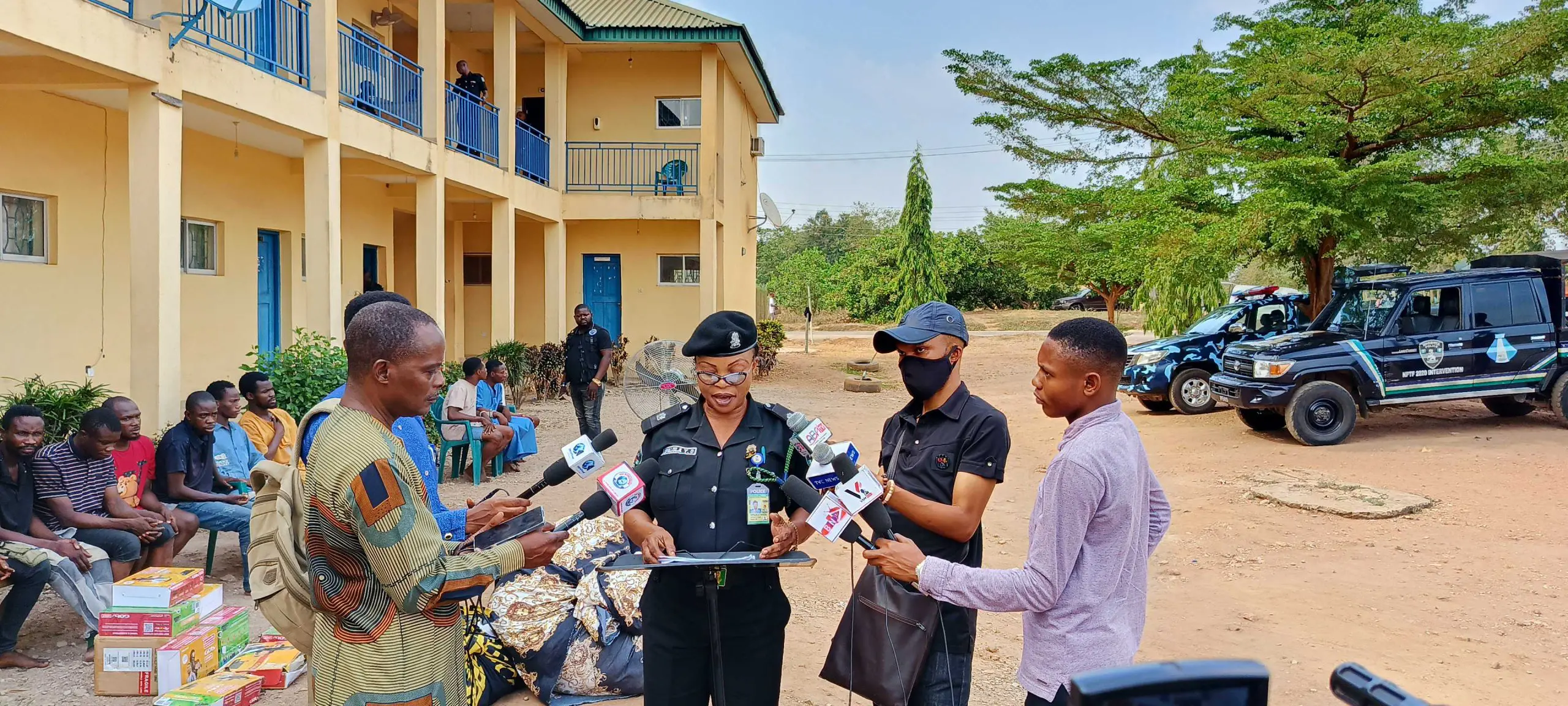
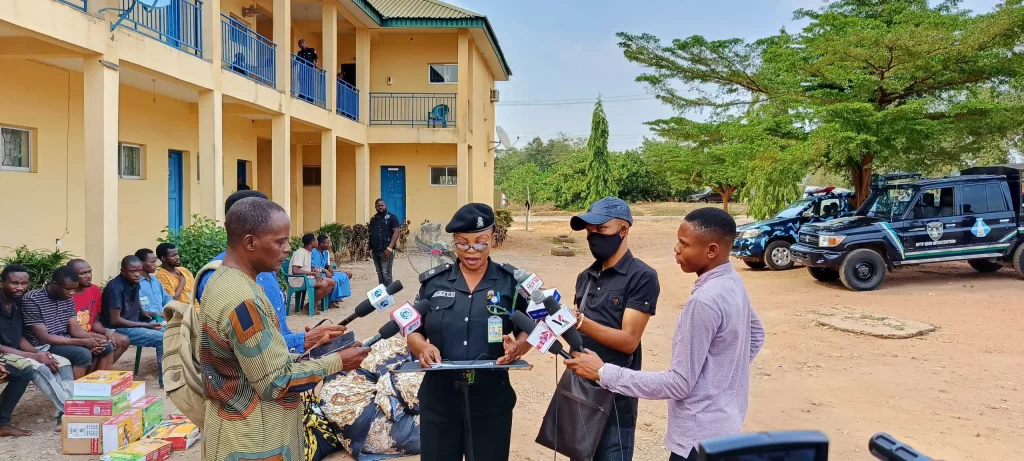
Meanwhile, in Abia State, the police command confirmed the arrest of 162 suspects for various crimes including kidnapping and child trafficking. Police Public Relations Officer Maureen Chinaka provided details during a press briefing at the command headquarters in Umuahia.
Among the notable cases in Abia was the arrest of Josephine Martins, 56, for alleged involvement in child trafficking. The case came to light when a complainant reported concerns about her niece’s missing baby. Investigations led to the arrest of Martins and two other suspects.
In another significant operation, five men were apprehended for the alleged kidnapping of a woman in the Ariaria area of Aba. The victim was reportedly robbed and assaulted before being released after a ransom payment. The Rapid Response Squad traced the suspects to their hideout in Umungbede village, where another victim was rescued.
Additionally, Christian Ezekiel, 25, was arrested for allegedly attempting to traffic three young women to Libya via Kano State without parental consent. The SWAT team intercepted this operation at Milverton Park in Aba.
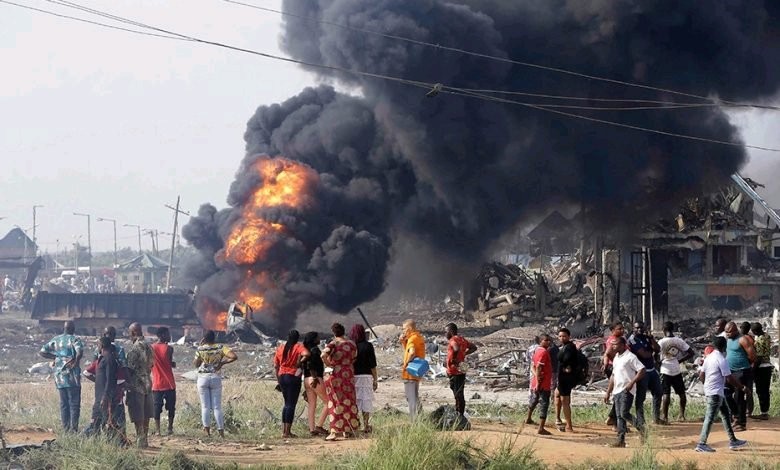
An explosion, suspected to be caused by a planted Improvised Explosive Device (IED), occurred at the popular Buni Yadi market in Gujba Local Government Area of Yobe State, Nigeria on Friday. Channels Television reported that a resident of Buni, Ali Hassan, said the incident happened around 12:30 pm, injuring a girl. The name of the girl and her current state of health have yet to be disclosed.
The spokesman of the Sector 2 Joint Task Force Operation Hadin Kai, Captain Muhammad Shehu, also confirmed the incident, stating that another IED planted in the market was discovered and successfully defused by the Army.
He further explained that the only victim of the explosion is currently receiving treatment at one of the health facilities in Buni Yadi. Captain Shehu emphasized that the incident was a planted IED and not a suicide bombing.
Buni Yadi, located 54 kilometers from Damaturu, the state capital, north of Nigeria was the most severely affected local government area in Yobe State during the two years it was under Boko Haram insurgent control.
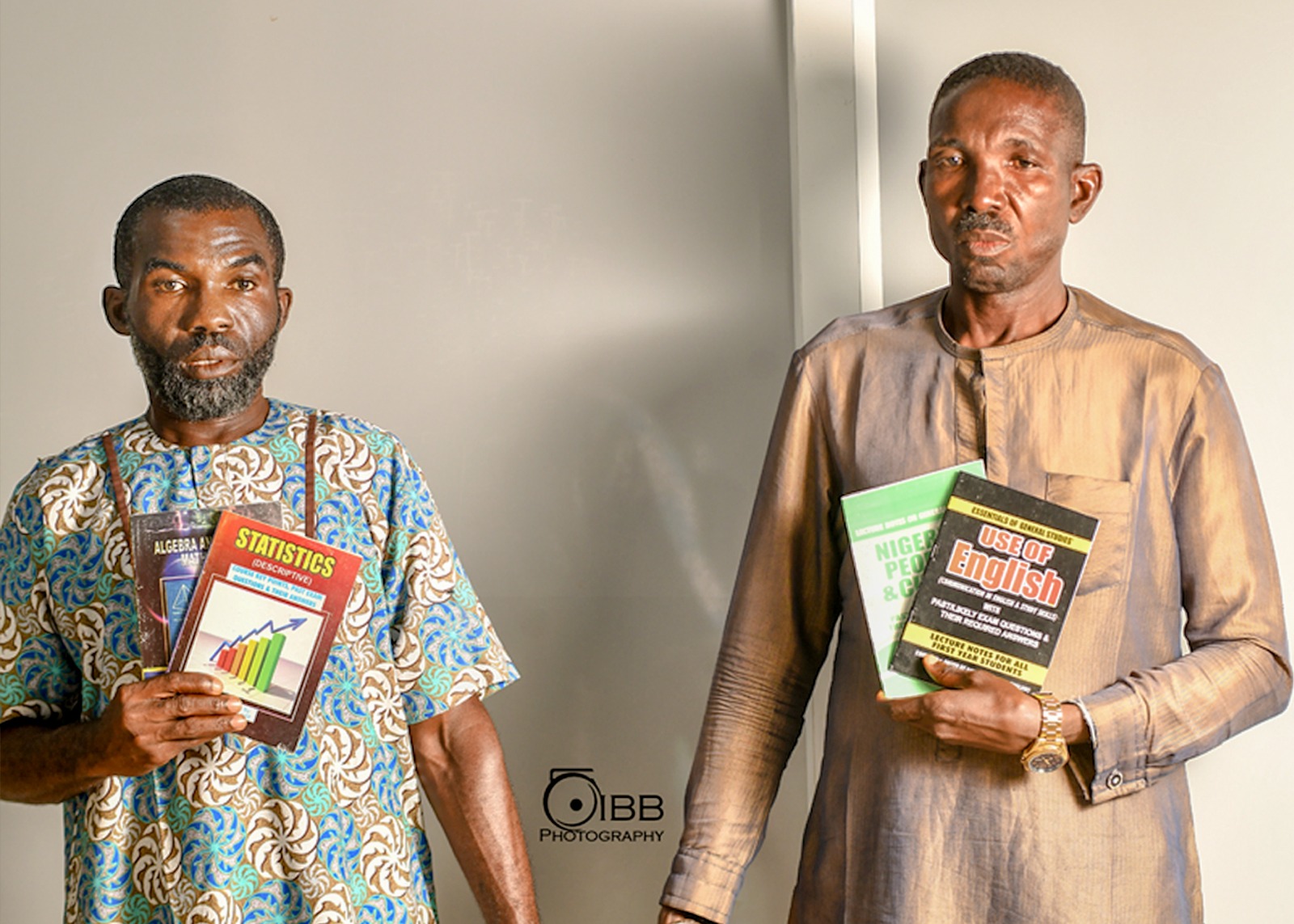
Security operatives at Bayero University, Kano, have arrested two individuals for impersonating lecturers and selling books to unsuspecting fresh students. This was revealed in a statement by Bala Abdullahi, the Publication Secretary, Special Bulletin, on behalf of the Registrar of the university, a copy of which was made available to PUNCH Online on Saturday.
According to the statement, the two suspects, David Iluebe from Edo State and Chike Eke from Delta State, surreptitiously entered a lecture hall at the Faculty of Engineering and introduced themselves to 100-level students as department lecturers.
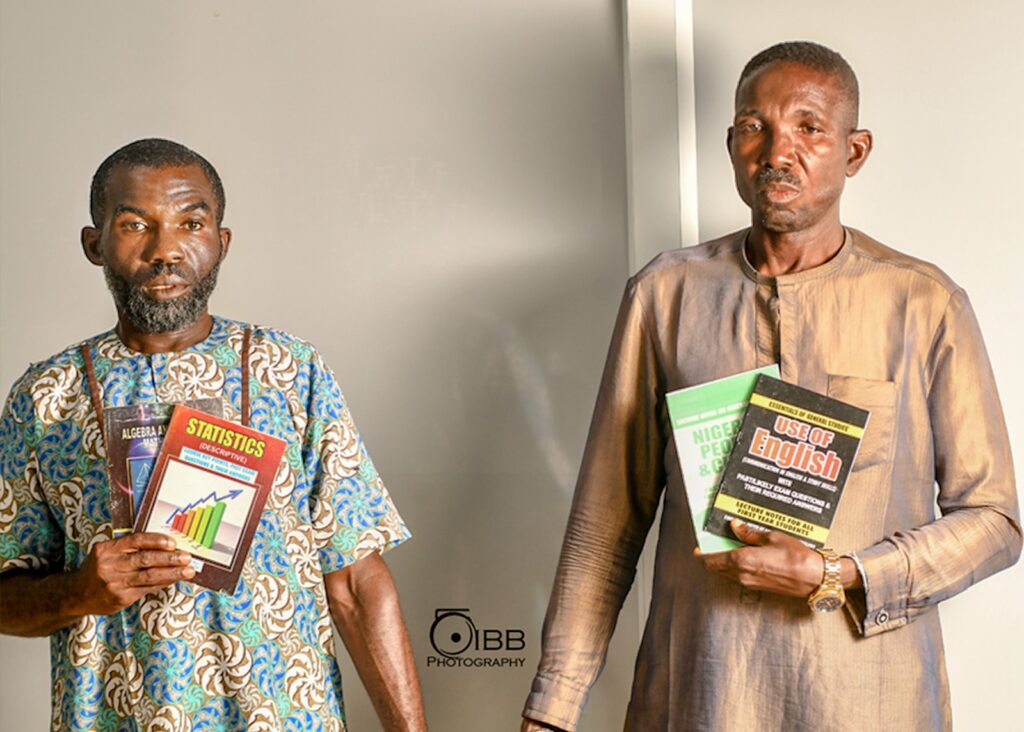
They presented a set of four different textbooks on the Use of English, Statistics, Nigerian People and Culture, and Algebra and Geometry Mathematics, pressuring the students to purchase these books as a requirement for their Continuous Assessment (CA) or risk failing their courses.
“The apprehensive students present in the hall responded by buying several copies to meet the course requirement,” the statement said. However, the suspects were apprehended when the security operatives swooped in following a report.
“The two persons were, however, arrested on July 25, 2024, by the security operatives for suspected criminal trespass, impersonation, and cheating,” the statement added.
During preliminary investigations, the suspects claimed that they were lecturers from another university and were selling the books to the students because of a special arrangement they had with Bayero University. The university administration has since debunked this claim, emphasizing that there was no such arrangement.
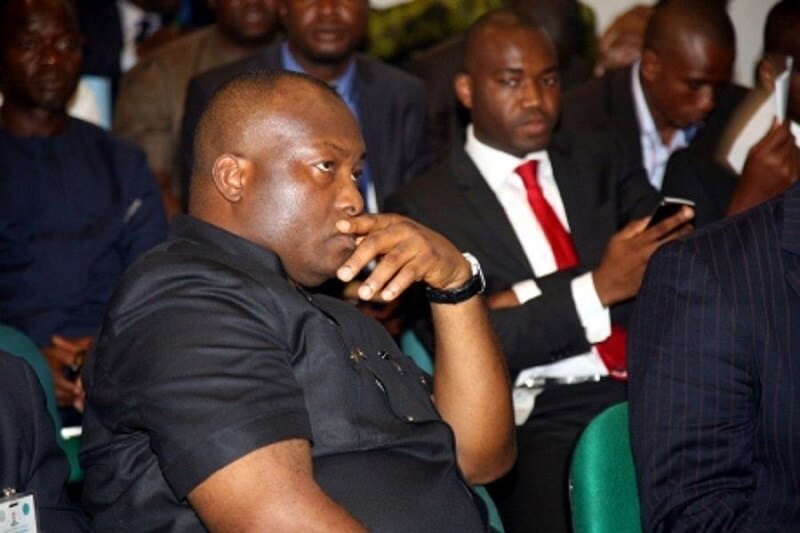
The Senator representing Anambra South, Nigeria in the National Assembly, Ifeanyi Ubah, has died. Ubah, who was the Chief Executive Officer of Capital Oil, reportedly passed away in a hotel in London, United Kingdom, on Saturday. He would have turned 53 on September 3.
Senate spokesperson, Yemi Adaramodu, confirmed Ubah’s death to our correspondent on Saturday. “It’s confirmed, but I am sending an official statement soon,” he said.
Ubah, who was re-elected into the 10th Senate under the Young Peoples Party, defected to the All Progressive Congress last year. His death comes days after his campaign council donated a total of ₦71 million to the All Progressives Congress (APC) in Anambra State. The donation, which included ₦50 million from Senator Ubah himself, was part of his pledge to support the party and enhance its effectiveness in the state.
In September 2022, Ifeanyi Ubah escaped an assassination attempt when he was attacked by gunmen on his way to Nnewi in Enugwu-Ukwu in Anambra State. His convoy was shot at, and at least five persons, including two policemen, were killed. He survived as the vehicle he was riding in was bulletproof.
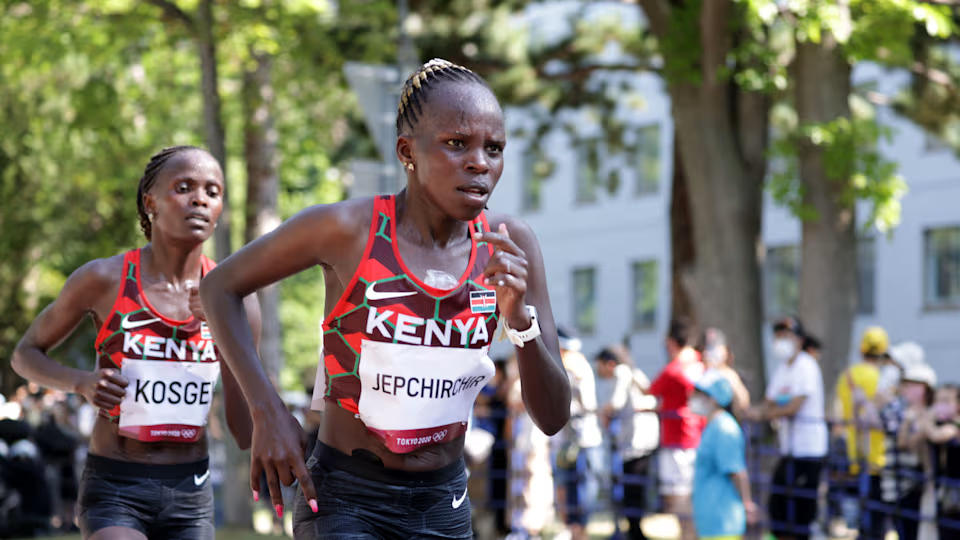
As the world turns its attention to the upcoming Paris 2024 Summer Olympics, Kenya’s marathon team stands poised to make history. Led by the legendary Eliud Kipchoge and defending women’s champion Peres Jepchirchir, the Kenyan contingent is not just aiming for victory, but for unprecedented achievements in Olympic marathon history.
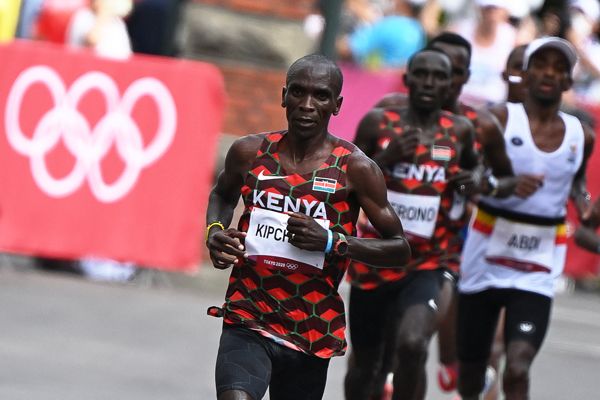
Eliud Kipchoge, the two-time Olympic marathon champion, is on the cusp of a remarkable feat. If successful in Paris, he would become the first man to win three Olympic marathon gold medals. This achievement would add another chapter to his already illustrious career, which includes being the former world marathon record holder and victories in 15 out of 18 marathons he has run.
Kipchoge’s journey to this point is a testament to his versatility and determination. He first competed for Kenya at the 2004 Athens Olympics, winning bronze in the 5,000m. After upgrading to silver in Beijing 2008 and missing out on London 2012, Kipchoge made the pivotal decision to switch to marathon running. This transition led to his first Olympic marathon gold in Rio 2016, followed by a successful defense of his title in Tokyo 2020.
The Olympic Games wants everybody to associate, it promotes freedom of association whereby all of us, about 100 countries will be there competing together and shaking hands at the finish line,” Kipchoge says, emphasizing the broader significance of the Olympics beyond individual achievements.
Joining Kipchoge in the men’s marathon are Tokyo Marathon winner Benson Kipruto and London Marathon champion Alexander Munyao. Kipchoge has expressed confidence in his teammates, tipping them for a potential podium sweep – an unprecedented feat in Olympic marathon history.
On the women’s side, Peres Jepchirchir is aiming to make her own mark on Olympic history. The 30-year-old is looking to become the first woman ever to defend an Olympic marathon title. Jepchirchir’s road to Paris has been marked by both triumphs and challenges. After her surprise victory in Tokyo, she went on to win the 2021 New York Marathon and the 2022 Boston Marathon. However, injuries forced her to withdraw from the 2022 World Championships and the 2023 New York Marathon.
Jepchirchir’s comeback has been nothing short of spectacular. In April 2024, she set a new world record for a women-only race at the London Marathon with a time of 2:16:16. This performance not only secured her place on the Kenyan Olympic team but also re-established her as a frontrunner for gold in Paris.
“I’m so humbled and feeling grateful for that, and I thank God for that. I know it’s not my ability and I’m not more important than other people,” Jepchirchir said, reflecting on her selection for the Olympic team.
The Kenyan women’s team also includes Boston champion Hellen Obiri and Sharon Lokedi, who replaced the injured Brigid Kosgei. Jepchirchir is confident in her team’s ability to potentially sweep the podium, citing their collective experience on challenging courses.
Both Kipchoge and Jepchirchir are acutely aware of the tough competition they face. Kipchoge acknowledges the threat posed by runners from Ethiopia, Uganda, and athletes with East African roots competing for other nations. Jepchirchir, meanwhile, is preparing for a challenging course in Paris, drawing confidence from her and her teammates’ experiences on difficult marathon routes.
As Kenya’s marathon team prepares to compete on August 10, the eyes of the world will be on these extraordinary athletes. Their quest for Olympic glory is not just about individual achievements, but about inspiring a nation and cementing Kenya’s place in marathon running history.
For Kipchoge, it’s about more than just winning: “Personally, I want to make my country a running country and make the world a running world.” As for Jepchirchir, she dreams of closing the Paris 2024 Summer Games on August 12 with another gold medal ceremony, this time with a roaring crowd in the stadium.
As the Olympic flame approaches Paris, the stage is set for what could be one of the most memorable marathon events in Olympic history, with Kenya’s finest leading the charge.
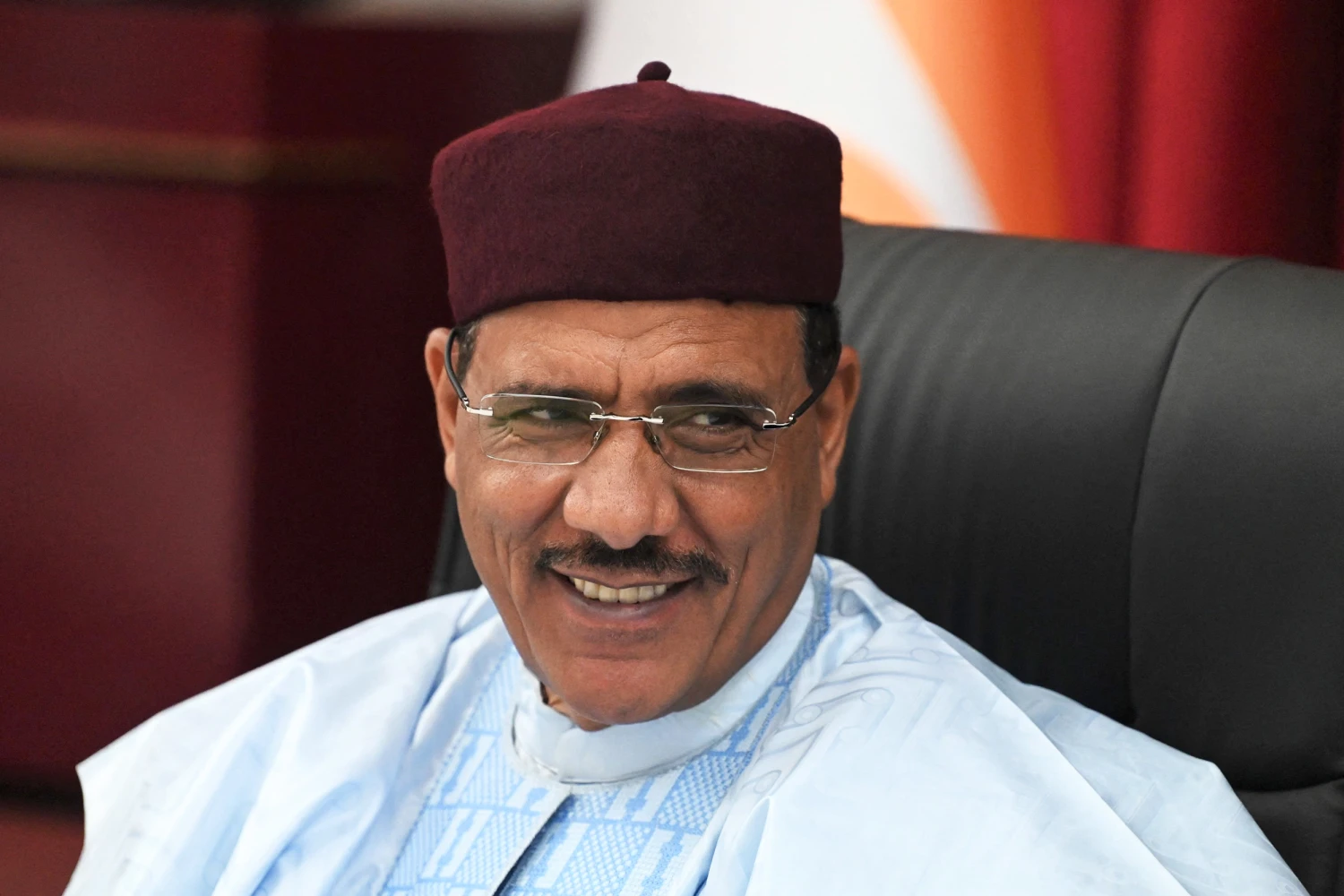
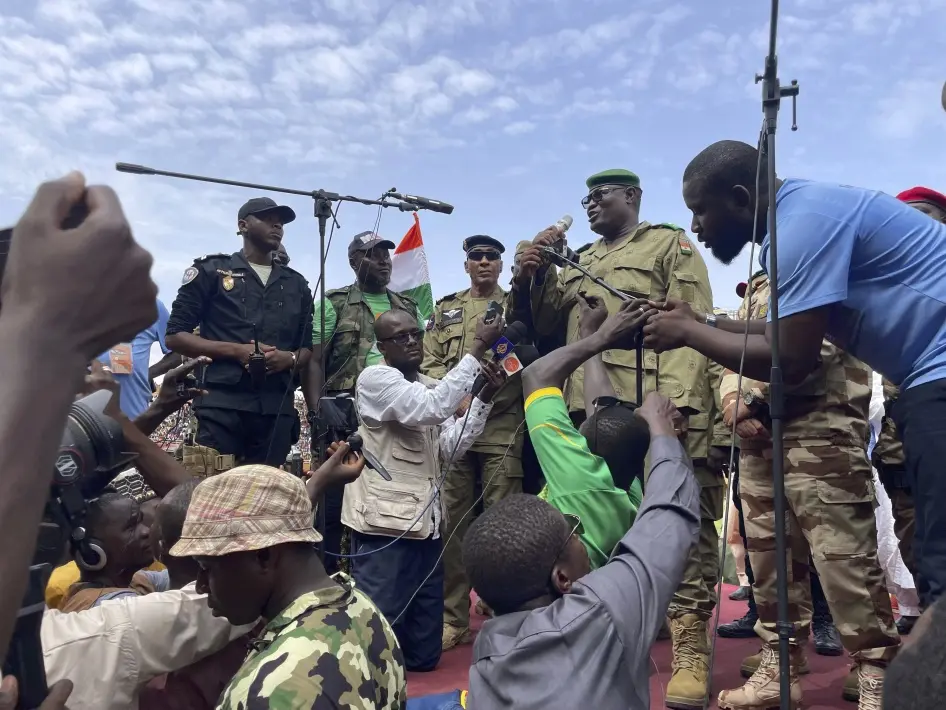
A year ago, Mohamed Bazoum was overthrown in a military coup led by General Tiani, who seized control of Niger with the support of the army. Since then, the military junta has entrenched its power by curtailing freedoms, suspending political parties, and silencing dissent.
Despite the oppressive conditions, Bazoum remains resolutely defiant. No timeline for a return to civilian rule has been announced, and Niger has distanced itself from Western allies, increasingly aligning with Russia.
Bazoum and his wife, Hadiza, have been confined to the presidential residence since October, cut off from the outside world except for regular visits from his doctor.
Deprived of communication tools and under constant surveillance, Bazoum refuses to bow to pressure. His doctor is his only contact, providing him with food and books.
Bazoum’s determination to resist resignation is unwavering. A former philosophy professor, he immerses himself in literature, drawing strength from classic authors like Shakespeare and Tolstoy, as well as contemporary voices like Romain Gary. Political works such as Dominique Moïsi’s “The Triumph of Emotions” also occupy his reading time, fortifying his resolve.
Even a bout of malaria in the spring could not shake his steadfastness. Bazoum remains committed to his principles, rejecting the notion of resignation despite the junta’s recent move to lift his presidential immunity—a step that could lead to a trial. His defiance symbolizes a beacon of resistance in the face of an authoritarian regime tightening its stranglehold on Niger.
The French nuclear fuel specialist reported a loss of 133 million euros for the first half of the year, according to results presented on Friday. This contrasts sharply with the first quarter of 2023 when the company posted a net profit of 117 million euros.
This year, however, the company is facing difficulties. One major issue is Niger’s decision in June to strip the company of the Imouraren mine, the largest in the world, with estimated reserves of 200,000 tons. Additionally, Somair, the subsidiary 63% owned by Orano, is struggling to export uranium from its Arlit operations in northern Niger. This is due to an export ban imposed by the military government in Niamey, which has been in power for a year.
In response to these challenges, the company was forced to sell its uranium production, originally intended to finance the closure of the site.
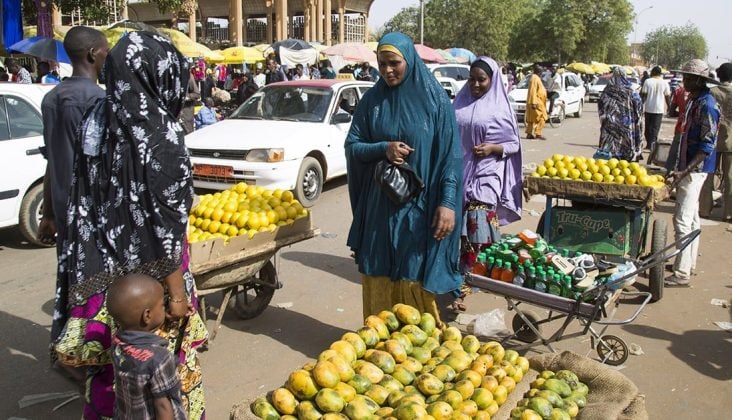
Meanwhile, one year has passed since mutinous soldiers overthrew Niger’s president, Mohamed Bazoum. Coup leaders said they deposed the elected government for two key reasons: its security and economic crises. But those challenges have not only persisted, they’ve worsened. And the country’s 26 million people, among the world’s youngest and poorest, are struggling.
The junta severed ties with key international partners, who imposed sanctions and suspended budgetary support close to half of Niger’s budget. After three months, where thousands of people once cheered the coup, there is growing frustration. Niger is now the latest nation in West Africa to be ruled by a military junta, joining Mali and Burkina Faso.
The juntas have gone on to form what they called the Alliance of Sahel States, shortened to the acronym AES.