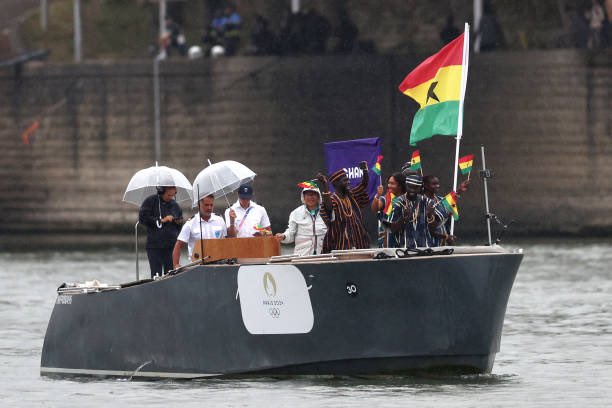
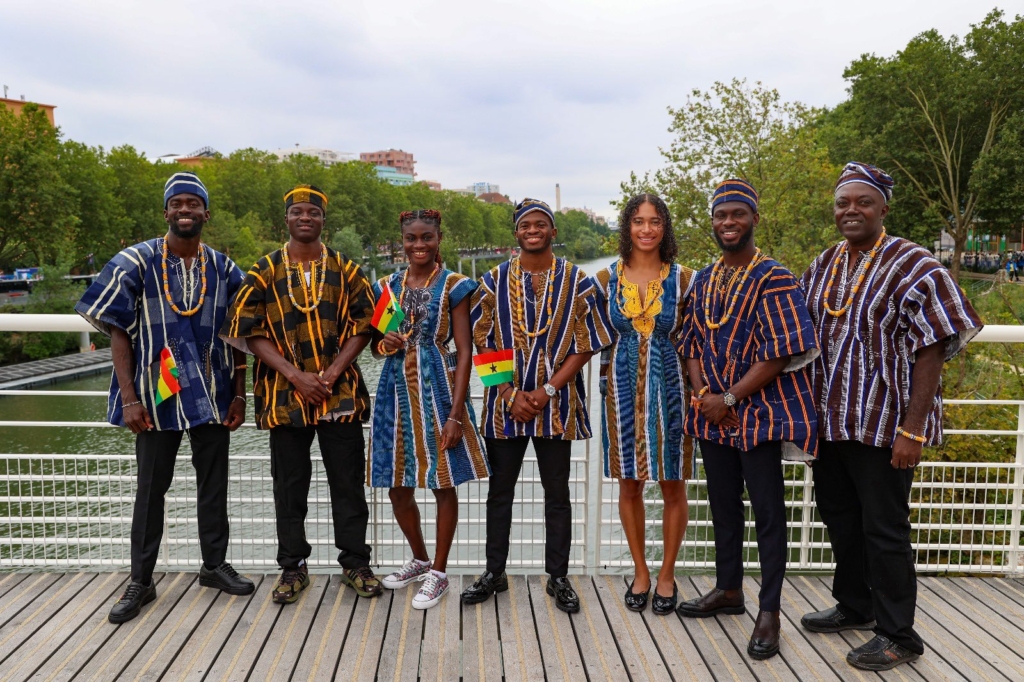
Team Ghana grabbed attention at the opening ceremony of the 2024 Olympic Games with their colorful fugu attire. Ghana’s contingent rocked the traditional hand-woven attire as they continued to display the country’s culture in Paris. For the men’s team, the fugu was accompanied by black trousers, while the women’s team paired it with vibrant skirts.
Joseph Paul Amoah and Rose Yeboah led a five-member team that boarded the boat for the opening ceremony on the Seine River. Ghana took eight athletes to the competition and will compete in sprints as well as high jump and swimming events.
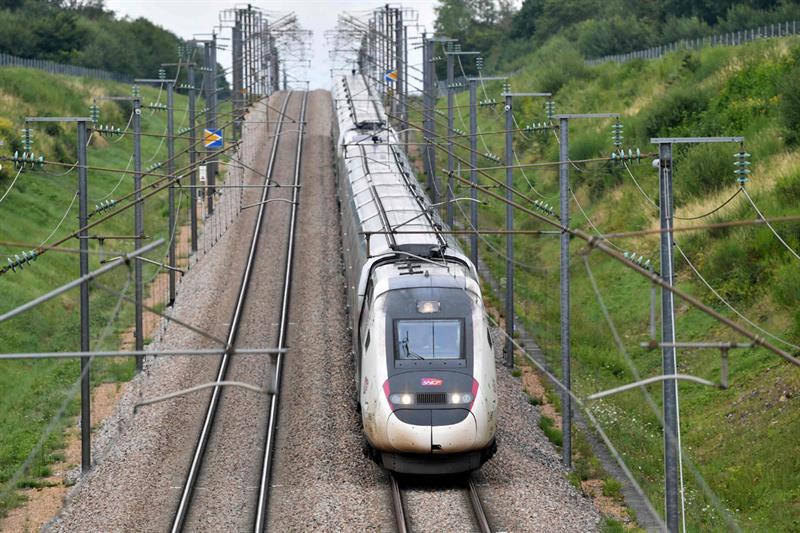
In a race against time, French national railway company SNCF has made significant progress in restoring high-speed train services following acts of sabotage that disrupted three major lines just hours before the Olympic Games opening ceremony in Paris. The incident has raised serious security concerns as the French capital hosts one of the world’s largest sporting events.
SNCF reported on Saturday that its teams worked tirelessly through the night, battling adverse weather conditions, to improve TGV (Train à Grande Vitesse) traffic from the north, east, and west to Paris. As of Saturday morning, normal service had been fully restored on the Eastern high-speed line, providing some relief to travelers and Olympic spectators.
However, challenges persist on other routes. SNCF stated, “On the North, Brittany and South-West high-speed lines, seven out of 10 trains on average will run with delays of one to two hours.” This partial restoration of services represents a significant improvement from the complete disruption experienced in the wake of the sabotage acts.
The company has outlined its ongoing efforts to minimize inconvenience to passengers. Traffic on the Northern axis is expected to remain disrupted on Sunday, but SNCF anticipates improved conditions on the Atlantic axis for weekend return journeys. In a bid to keep travelers informed, the railway operator is proactively contacting customers via text message and email to confirm the status of their trains.
Despite these challenges, SNCF has reassured the public and Olympic organizers that all transportation for Olympic teams and accredited personnel will proceed as planned. This commitment underscores the priority given to ensuring the smooth operation of the Games, even in the face of unexpected obstacles.
The sabotage incidents have cast a shadow over the Olympic festivities and prompted heightened security concerns. French authorities have launched active investigations into the matter, but as of now, no suspects have been identified or apprehended. This lack of progress in identifying the perpetrators has added to the unease surrounding the event’s security measures.
The timing of the sabotage, occurring just before the grand opening ceremony on the Seine River, has been particularly troubling. It has highlighted the vulnerability of critical infrastructure and the potential for disruption to major events like the Olympics.
As Paris continues to host the Games, local authorities and Olympic organizers are likely to maintain heightened vigilance. The incident serves as a stark reminder of the complex security challenges facing large-scale international events in today’s world.
The swift response by SNCF and its partial restoration of services demonstrate the resilience of France’s transportation network. However, the incident has undoubtedly added an extra layer of complexity to the already challenging task of managing the logistics for the Olympic Games.
As the situation continues to evolve, travelers are advised to stay informed about their train schedules and to follow updates from SNCF. The coming days will be crucial in fully restoring normal service and ensuring that the transportation disruptions do not overshadow the sporting achievements and international camaraderie that the Olympics represent.
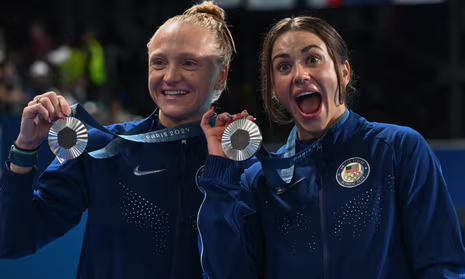
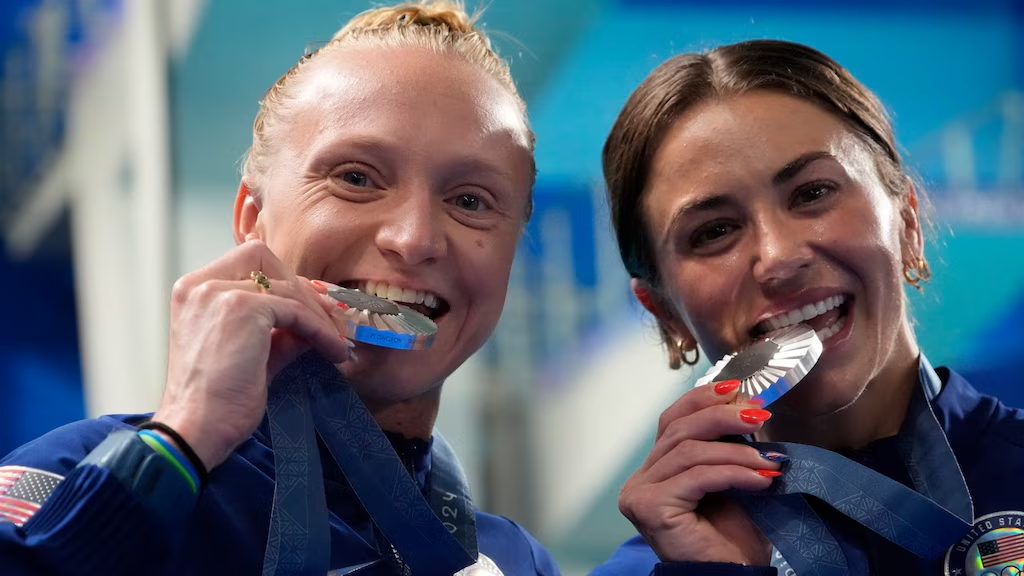
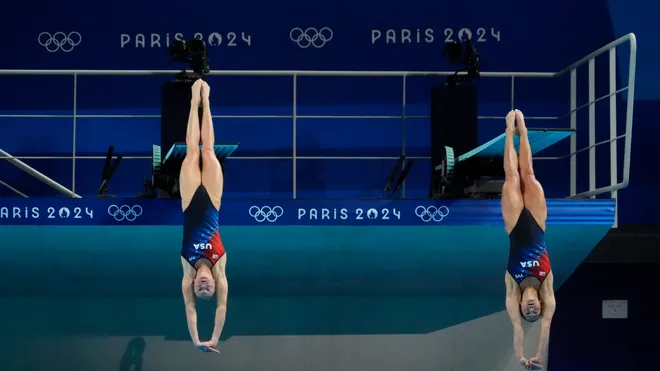
In a thrilling display of aquatic prowess, the United States secured its first medals of the 2024 Paris Olympics as Sarah Bacon and Kassidy Cook clinched silver in the women’s synchronized 3m springboard diving competition. The event, held on the opening day of the Games, saw China continue its diving dominance with gold, while Great Britain snagged bronze in a dramatic final round.
The Chinese duo of Chang Yani and Chen Yiwen, three-time defending world champions, lived up to their favorite status by scoring an impressive 337.68 points to claim gold. This victory marks the first Olympic medals for both Chang and Chen in their debut Games, further cementing China’s reputation as a powerhouse in diving.
Bacon and Cook, affectionately known as ‘Cook’N Bacon’, delivered a stellar performance, accumulating 314.64 points to secure silver. This achievement not only represents the first Olympic medals for both divers but also ends a 12-year medal drought for the United States in this event, last medaling in 2012.
The competition was fierce and unpredictable, particularly in the final round. Australia, holding third place going into the last dive, saw their medal hopes dashed when Anabelle Smith’s mistimed jump off the board disrupted the team’s synchronization. This unexpected turn of events opened the door for Great Britain’s Scarlett Mew Jensen and Yasmin Harper, who capitalized on the opportunity to claim bronze with a total score of 302.28.
The event unfolded over five rounds, with each presenting its own challenges and highlights:
In the opening round, China established an early lead with a 52.8-point dive, setting the tone for their dominant performance. Great Britain and the U.S. followed in second and third places respectively.
The second round saw the U.S. move into second place with 100.8 points, while Great Britain and Germany found themselves tied for third.
From the third round onward, teams were allowed to perform dives of unrestricted difficulty. China and the U.S. both executed an inward two-and-a-half somersault, with China scoring 71.1 points to extend their lead to nearly 10 points.
The fourth round featured another parallel between China and the U.S., both performing a three-and-a-half somersault pike. Despite a slight synchronization issue, China maintained their lead, while Cook and Bacon held onto second place by less than a point over Australia.
In the final round, both leading teams performed a forward two-and-a-half somersault with one twist, carrying a 3.1 degree of difficulty. China’s execution proved superior, outscoring the U.S. by more than six points and solidifying their gold medal position.
For Cook, this silver medal adds to her Olympic experience, having competed in the individual springboard at the 2016 Rio Olympics. Bacon, after four attempts to make the Olympic team, finally realized her dream in spectacular fashion.
The podium was rounded out by Great Britain’s Harper and Mew Jensen, whose consistent performance throughout the competition was rewarded with a bronze medal. Italy (Elena Bertocchi/Chiara Pellacani) narrowly missed the podium, finishing fourth with 293.52 points.
Looking ahead, Chang and Chen will aim for more gold in the individual springboard event, where they are once again favored to finish first and second. Bacon will also compete in the individual springboard, hoping to improve on her fifth-place finish at this year’s world championships.
This opening diving event has set a high bar for the aquatics competition at the Paris Olympics, showcasing the skill, precision, and competitive spirit that define Olympic diving. As the Games continue, all eyes will be on the pool to see if the U.S. can build on this early success and if any nation can challenge China’s diving supremacy.
In a remarkable start to the 2024 Paris Olympics, China has clinched the first gold medal of the Games in the mixed team air rifle shooting event. The victory, however, came far from the bustle of the French capital, in the city of Chateauroux, located a three-hour drive from Paris.
Chinese athletes Huang Yuting, 17, and Sheng Lihao, 19, demonstrated exceptional skill and composure in the 10-meter air rifle mixed team event held Saturday morning. The young duo outperformed their South Korean competitors, Keum Jihyeon and Park Hajun, in a tense head-to-head final. Huang and Sheng established an early four-point lead and maintained their advantage throughout the match, ultimately securing a 16-12 victory.
Reflecting on their performance, Sheng expressed, “My main feeling is just happiness. The match was quite hard, but being able to do a personal best performance helped a lot.” The victory marks a continuation of China’s dominance in this event, following their gold medal win in Tokyo three years ago when Yang Qian and Yang Haoran triumphed as the event made its Olympic debut.
The celebrations of the Chinese team were initially restrained, with Huang and Sheng maintaining a composed demeanor. However, their coach’s animated reaction highlighted the significance of the achievement. The young athletes later displayed their joy on the podium, with Sheng offering a thumbs-up as bronze medalist Islam Satpayev of Kazakhstan took a selfie with his fellow medalists.
Earlier in the day, Kazakhstan’s Alexandra Le and Islam Satpayev secured their place in Olympic history by becoming the first medalists of the 2024 Games. They claimed the bronze medal with a decisive 17-5 victory over Germany’s Anna Janssen and Maximilian Ulbrich. Satpayev, elated with his performance, stated, “I’m feeling perfect. This was the first (Olympic) competition for me, and I got third place, so it’s perfect.”
This opening event of the Paris Olympics brings back memories of the Tokyo Games, where Yang Qian of China also secured the first gold medal in the individual 10-meter air rifle event. The Tokyo victory, however, was marked by the stark reality of the pandemic, with Yang receiving her medal while wearing a mask due to COVID-19 restrictions.
The decision to host the shooting events in Chateauroux, far from the main Olympic venues in Paris, highlights the logistical challenges and innovative solutions being implemented for the 2024 Games. Despite the distance, the event has set a thrilling tone for the Olympics, showcasing the skill, precision, and competitive spirit that define the Games.
As the 2024 Paris Olympics continue, all eyes will be on the world’s top athletes as they compete for glory across a wide range of sports. China’s early success in the mixed team air rifle event sets a high bar for the competitions to come and underscores the nation’s continued strength in Olympic shooting disciplines.
Former President Donald Trump has been spotted without a bandage on his ear during a meeting with Israeli Prime Minister Benjamin Netanyahu, raising questions about the nature and extent of his reported injury from a recent shooting incident, TMZ reports.
According to TMZ, the meeting, which took place on Friday, revealed Trump’s uncovered right ear with no apparent signs of injury or scarring. This development has sparked discussions about the accuracy of earlier reports regarding the incident.
Dr. Ronny Jackson, Trump’s former physician, had previously stated in interviews that a bullet had “blown off part of his ear.” However, the recent images show no visible damage, leading to speculation about the severity of the injury or the speed of Trump’s recovery.
A new shot of the former President-Photo by TMZ
The situation has been further complicated by conflicting statements from official sources. FBI Director Christopher Wray testified to Congress earlier this week, suggesting that Trump may have been hit by shrapnel rather than a bullet. This claim has been strongly contested by Dr. Jackson, who called Wray’s comments “totally out of line.”
Adding to the confusion, TMZ stated that a source close to the Secret Service had initially suggested that a piece of glass might have cut Trump’s ear during the incident. This theory was presented as one of the possibilities being investigated by the Service at the time.
The lack of visible injury in the recent photographs has led to increased speculation online about what actually occurred during the reported shooting incident. However, it’s important to note that the available images are not close-ups of Trump’s ear, which limits the ability to make definitive judgments about any potential scarring or minor damage.
Despite the controversy, Trump appears to be continuing his political activities unimpeded. His meeting with Netanyahu demonstrates his ongoing engagement in international affairs and his continued prominence in the political landscape.
As the debate continues, several questions remain unanswered: What was the exact nature of Trump’s injury? How can the conflicting accounts from the FBI, Secret Service, and Trump’s former doctor be reconciled? If there was an injury, what explains the rapid healing with no visible scarring?
The incident and its aftermath highlight the challenges of verifying information in high-profile cases and the potential for conflicting narratives to emerge from different sources. As this story develops, it’s likely to remain a topic of intense interest and speculation. The public will be watching closely for any further statements from Trump, his team, or official sources that might shed light on the true nature of the incident and its aftermath.
Ismael “El Mayo” Zambada, the 76-year-old alleged co-founder of the Sinaloa Cartel, along with Joaquín “El Chapo” Guzmán’s son, Joaquín Guzmán López, were arrested in a dramatic operation in El Paso, Texas.
According to the Wall Street Journal, Zambada was tricked by Guzmán López into boarding a private plane under the pretense of inspecting airfields for drug planes.
This ruse followed a months-long operation by Homeland Security Investigations and the FBI. Zambada believed the plane would fly south to Mexico, but it landed instead in El Paso, where both men were taken into custody.
Guzmán López is believed to have surrendered to U.S. authorities and turned on Zambada because he “blamed El Mayo for the capture of his father,” according to a Fox News Correspondent.
Guzmán López is one of El Chapo’s sons and was elevated to the cartel’s top leadership in 2017 when his father was extradited to the U.S.
The pair were arrested in El Paso after exiting a private plane that was flown in from Mexico by the FBI. Guzmán López reportedly struck a deal with American law enforcement to surrender and turn in Zambada simultaneously, according to a source told DailyMail.
This strategic move marks a significant moment in the ongoing battle against the Sinaloa Cartel, known for its extensive drug trafficking operations.
Zambada faces multiple indictments in the U.S. for crimes related to drug trafficking and organized crime.
Despite being one of the most-wanted cartel leaders, Zambada managed to evade capture for decades by allegedly hiding in the Sierra Madre mountains and maintaining a low profile.
El Chapo, now serving a life sentence in a U.S. maximum-security prison, left a power vacuum within the cartel that has led to various factions vying for control.
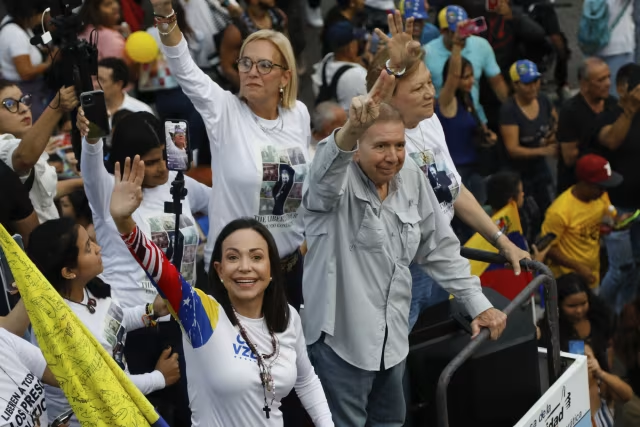
Venezuela’s opposition, led by Edmundo Gonzalez and backed by Maria Corina Machado, is mounting a significant challenge to end 25 years of socialist rule in Sunday’s presidential election. The vote pits them against incumbent President Nicolas Maduro, who seeks a third six-year term amid international skepticism over electoral fairness.
Edmundo Gonzalez and backed by Maria Corina Machado at a rally
Gonzalez, 74, has inherited the opposition mantle after Machado, 56, was barred from holding public office. Their campaign has drawn enthusiastic crowds and support from former ruling party backers, promising change and the potential return of millions of Venezuelan migrants.
However, the election is clouded by uncertainty and concerns over fairness. Maduro’s 2018 reelection is considered fraudulent by the United States and others. Opposition figures and analysts warn of possible underhandedness in the electoral process. Decisions by electoral authorities and arrests of opposition campaign staff have raised concerns about obstacles to a fair vote.
The opposition has urged voters to cast ballots early and maintain a presence at polling stations until they close. They’ve also called on the military to respect the election results, a crucial factor given the armed forces’ long-standing support for Maduro and his predecessor, Hugo Chavez.
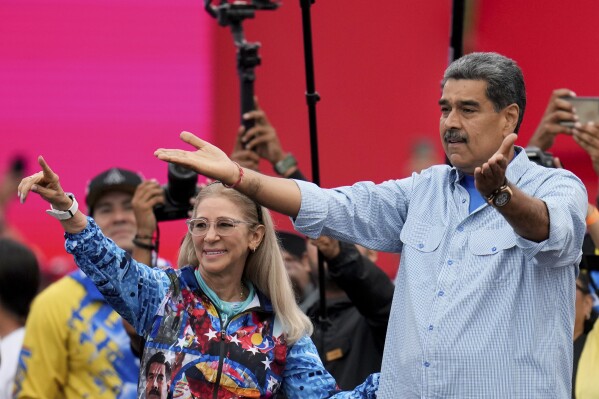
Maduro, 61, has confidently defended Venezuela’s electoral system as the world’s most transparent. However, his warnings of a “bloodbath” if he loses have been rejected by Latin American counterparts and add to the tense atmosphere surrounding the vote.
Maduro’s government has presided over an economic collapse and the migration of about a third of the population. U.S., EU, and other sanctions have further crippled Venezuela’s struggling oil industry. Of the nearly 8 million Venezuelans abroad, fewer than 68,000 are registered to vote, with some opting to return home to participate.
Incumbent President Nicolas Maduro
Gonzalez promises change that could bring migrants home, while Maduro pledges peace and economic growth less dependent on oil. Some former Latin American presidents were reportedly denied entry to observe the election, though Venezuela denies closing its airspace. The United States has indicated a willingness to calibrate its sanctions policy depending on the election’s outcome.
The election has sparked hope among some Venezuelans for change. “We want to come home, but to a free Venezuela, thriving and prosperous,” said Maritza Quemba, a 64-year-old seamstress who returned from Colombia to vote.
Meanwhile, Maduro maintains a base of support, particularly among public sector employees. Noris Rojas, 70, a retired teacher, expressed her loyalty: “Maduro is a man who has shown spiritual strength and has been loyal to Chavez’s project.”
As Venezuela prepares for this pivotal election, the world watches closely. The results, expected Sunday night or in the following days, could reshape the country’s political landscape and have significant implications for its economic future and international relations. Polls will be open between 6 a.m. to 6 p.m. local time on Sunday, with Venezuela’s attorney general calling for a peaceful electoral process and denying claims of political persecution or the holding of political prisoners.
Ismael “El Mayo” Zambada, the notorious alleged co-founder of the Sinaloa Cartel, pleaded not guilty to U.S. drug charges on Friday after he and a son of a Mexican drug lord were arrested in Texas in a dramatic achievement for U.S. law enforcement that could usher in a seismic shift to Mexico’s criminal landscape.
Court records showed that Zambada directed that a not guilty plea be entered on his behalf, which was accepted by U.S. Magistrate Judge Anne Berton. At an initial court appearance in a Texas courtroom on Friday, Zambada, who is believed to be in his 70s and was in a wheelchair, was read his rights and charges, according to a transcript.
He waived his right to be present at an arraignment next Wednesday. He will be required to appear in person at a status conference next Thursday before U.S. District Judge Kathleen Cardone, who will oversee the rest of the case, the records show.
Zambada’s lawyer did not immediately respond to requests for comment.
Zambada is accused of being one of the most consequential traffickers in Mexico’s history, having co-founded the Sinaloa Cartel with Joaquín “El Chapo” Guzmán. El Chapo, opens new tab, was extradited to the U.S. in 2017 and is serving a life sentence in a maximum security prison.
Both Zambada and Joaquín Guzmán López, a son of El Chapo, face multiple charges in the United States for funneling huge quantities of fentanyl and other drugs into U.S. streets. Fentanyl overdoses have surged to become the leading cause of death among Americans between the ages of 18 and 45.
Zambada, now in custody, is due to appear in court in Chicago next week, according to U.S. officials. Joaquín Guzmán López was captured landing in a private plane in the El Paso area on Thursday.
Russia’s former Deputy Defense Minister Gen. Dmitry Bulgakov has been arrested on corruption charges, according to the Russian security services. This arrest marks the latest in a series of high-profile military detentions, signaling a widespread anti-corruption effort within Russia’s defense establishment.
The Investigative Committee of Russia confirmed Bulgakov’s detention in Moscow, ordering him to remain in custody as the investigation unfolds. While specific details of the charges remain undisclosed, the arrest is part of a broader pattern of scrutiny directed at high-ranking military officials.
Bulgakov, who served as Deputy Defense Minister from 2008 to September 2022, was responsible for logistics during his tenure. His dismissal in 2022, initially framed as a job transfer by the ministry, is now widely interpreted as a consequence of logistical failures in supporting operations in Ukraine, particularly following Kyiv’s successful counteroffensive in the Kharkiv region.
This arrest follows closely on the heels of another high-profile detention. Just a day earlier, Andrei Belkov, who headed the Defense Ministry’s construction division, was arrested on suspicion of abuse of power. The string of arrests in recent months has included other prominent figures such as Deputy Defense Minister Timur Ivanov, who was detained on bribery charges in April and subsequently removed from his position.
In total, seven top military figures have now been arrested on charges of fraud, bribery, or abuse of office in recent months, underscoring the Russian government’s intensified efforts to address corruption within its military ranks. These developments potentially reflect broader concerns about the integrity and efficiency of Russia’s defense apparatus.
A firefighting pilot tragically lost his life in eastern Oregon on Friday when a small air tanker plane crashed while battling one of the many wildfires ravaging the Western states. The fatal accident occurred as communities in the U.S. West and Canada grappled with severe wildfire threats. A lightning-induced blaze forced residents to flee fire-ringed roads in rural Idaho, while a human-caused inferno led to the evacuation of hundreds of homes in northern California.
The National Interagency Fire Center reported more than 110 active fires covering 2,800 square miles (7,250 square kilometers) across the U.S. on Friday. Some fires were sparked by lightning, a phenomenon becoming increasingly common due to climate change, which has heightened the frequency of lightning strikes amid record heat and dry conditions. Other fires, such as the Park Fire in Butte County, California, were human-caused. This particular fire is burning just northwest of Paradise, the community devastated by the 2018 Camp Fire that claimed 85 lives and incinerated thousands of homes.
Carli Parker is one of the hundreds who fled their homes this week as the Park Fire advanced. Parker decided to evacuate with her family from their Forest Ranch residence when the fire began burning across the street. Having previously been forced out of two homes by fire, she was determined not to take any risks. “I felt my family was in danger because the police came to our house because we had signed up for early evacuation warnings, and they were at the top of their vehicle telling us that we needed to self-evacuate and they wouldn’t come back,” said Parker, a mother of five.
The pilot’s death in Oregon underscores the perilous conditions faced by those combating these devastating wildfires. The small air tanker, a crucial asset in wildfire suppression, crashed under unknown circumstances while supporting ground crews battling the flames. Federal Aviation Administration (FAA) and National Transportation Safety Board (NTSB) officials are investigating the crash to determine the cause.
In rural Idaho, the lightning-sparked blaze quickly spread, trapping residents on fire-ringed roads and necessitating rapid evacuations. Firefighters worked tirelessly to create firebreaks and protect homes, but the erratic nature of the wildfire posed significant challenges. Meanwhile, in northern California, the human-caused inferno forced hundreds of residents to evacuate as flames encroached upon residential areas. Emergency services issued evacuation orders and set up shelters to accommodate displaced individuals.
The scope of the wildfires has placed immense strain on firefighting resources, with crews from multiple states converging to assist in containment efforts. The Park Fire in Butte County, California, has been particularly destructive, reminiscent of the devastating 2018 Camp Fire. Firefighters are employing aerial and ground strategies to control the blaze, but the rugged terrain and dry conditions are complicating efforts.