CENTRAL REGION, Ghana – A 30-year-old man, Nana Kofi Amofa, also known as Kofi Yesu, in Ghana has been apprehended by the Central East Regional Police Intelligence Unit (PID) for attempting to sell his 6-year-old niece for GHC150,000 in exchange for a Canadian visa.
Amofa was arrested on Tuesday, July 23, 2024, around 10:00 pm at Gomoa Buduburam, near Obolo Estate in the Central Region. The police had received information that the suspect expressed a desire to sell the 6-year-old girl (name withheld) to fund his travel to Canada.
Officers from the Police Intelligence Unit posed as potential buyers during the transaction. Amofa requested GHC150,000 for the child. Following his arrest, Amofa admitted that the child, the daughter of his senior brother Kwadwo Brako, currently residing in Nyamebekyere, a village near Akyem Ayeribi in the Eastern Region, was the intended victim.
Amofa had invited the child to stay with him under the pretext of better educational opportunities, only to exploit her for financial gain.
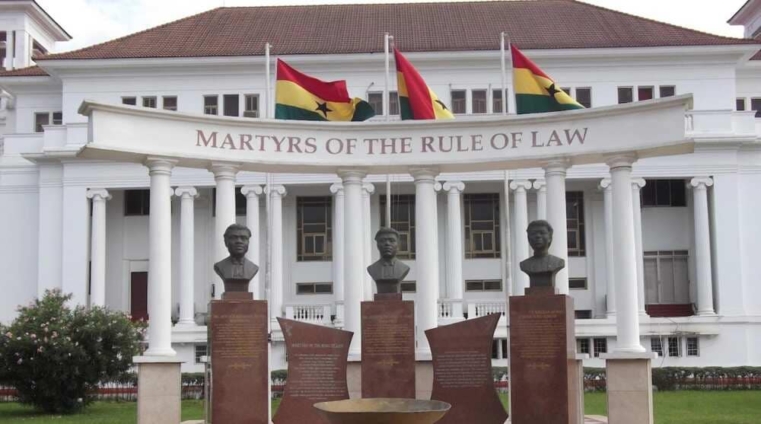
Ghana’s Supreme Court has unanimously declared the existing criminal law against “unnatural carnal knowledge” constitutional, rejecting a challenge to Section 104(1)(b) of the Criminal and Offences Act 1960 (Act 29). The ruling, delivered by a seven-justice panel, maintains the criminalization of consensual same-sex sexual acts between adults.
Dr. Obiri-Korang of the University of Ghana School of Law had contested the law’s constitutionality, arguing that it violated Articles 18(2), 17(2), and 14(1) of the Constitution, which protect rights to privacy, non-discrimination, and personal liberty. The court, however, disagreed with these claims.
The challenged section of Act 29 states: “A person who has unnatural carnal knowledge of another person of not less than sixteen years of age with the consent of that other person commits a misdemeanour.”
The court’s decision was presided over by Justice Baffoe-Bonnie, with Justices Amadu Tanko, Gaewu, Adjei-Frimpong, Lovelace-Johnson, Kulendi, and Darko Asare concurring.
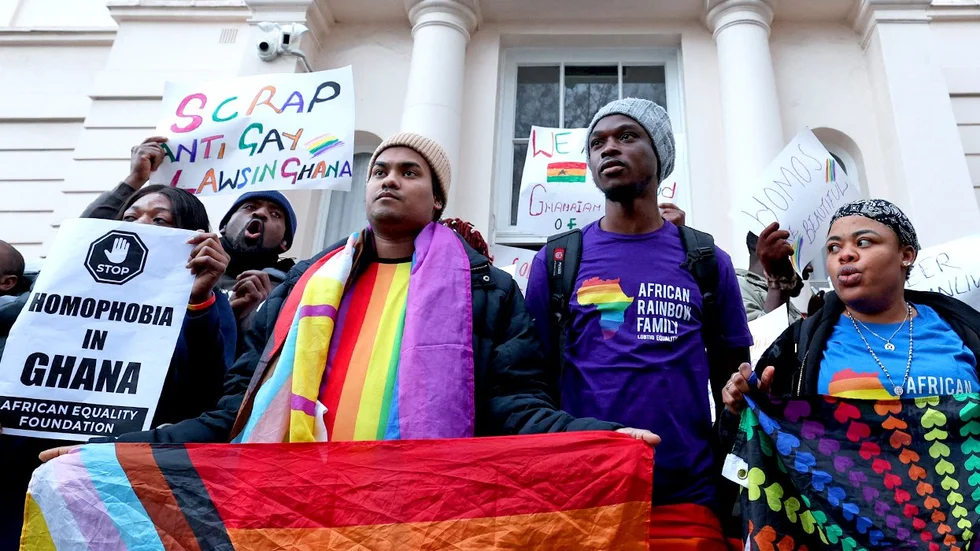
This ruling has significant implications for LGBTQ+ rights in Ghana, effectively maintaining the criminalization of consensual same-sex relationships. It comes amid ongoing debates about LGBTQ+ rights in the country and across Africa.
The decision highlights the tension between traditional values and constitutional rights in Ghana, and is likely to be a subject of continued legal and social discourse. Advocates for LGBTQ+ rights may see this as a setback, while supporters of the law will view it as an affirmation of existing social norms.
The Paris 2024 Olympic men’s soccer tournament began with excitement and controversy two days before the Opening Ceremony, featuring matches that set an intriguing tone for the competition.
Group C: Spain 2-1 Uzbekistan
Spain, riding high on recent international success, opened their Olympic campaign with a hard-fought 2-1 victory over Uzbekistan. Marc Pubill scored the tournament’s first goal from a free kick, giving Spain an early lead. Despite Uzbekistan’s spirited performance, Spain secured three points, positioning themselves well in Group C. Uzbekistan now faces an uphill battle, needing results against Egypt and the Dominican Republic to advance.
Group B: Morocco 2-1 Argentina
In a dramatic Group B opener, Morocco secured a 2-1 victory over Argentina after a controversial VAR decision. Initially thought to have ended in a 2-2 draw, the match took an unexpected turn when Argentina’s stoppage-time equalizer was disallowed following an hour-long VAR check after the final whistle.
Argentina, led by Manchester City’s Julian Alvarez, struggled to create clear chances for much of the match. They managed to score once in the final 30 minutes but couldn’t overcome Morocco’s two-goal lead. The North African side, featuring PSG defender Achraf Hakimi, held on for a crucial win despite failing to capitalize on several opportunities.
The VAR drama unfolded after the referee had initially ended the game. Both teams were called back onto the field to play the final three minutes after the goal was ruled offside, but Argentina couldn’t find another equalizer in the limited time.
Looking Ahead:
Morocco’s victory puts them in a strong position in Group B, while Argentina faces pressure in their upcoming matches against Iraq and Ukraine. Both teams remain favorites to progress, but Argentina’s path is now more challenging.
Egypt 0-0 Dominican Republic
In Group C’s other match, Egypt and the Dominican Republic played out a goalless draw. This result leaves both teams needing a win against either Spain or Uzbekistan to secure their path to the Round of 16.
This opening day of men’s Olympic soccer highlighted the competitive nature of the tournament and the impact of VAR technology on crucial decisions. As the group stage continues, teams will look to build on these early performances and secure their paths to the knockout rounds.
In a dramatic Olympic men’s football opener, Morocco secured a 2-1 victory over Argentina at the Stade Geoffroy-Guichard in Saint Etienne, following a controversial VAR decision that overturned Argentina’s late equalizer. The Group B match was marked by intense action and a stunning turn of events in the final moments.
Morocco took control early, with Abde Rahimi scoring in the 45th and 50th minutes to give his team a 2-0 lead. Argentina showed resilience, with Giovanni Simeone pulling one back in the 67th minute. The South Americans thought they had equalized through Valentín Barco deep into stoppage time, but after an hour-long VAR review post-final whistle, the goal was disallowed for offside.
The match featured high-profile players like Manchester City’s Julien Alvarez and former City defender Nicolas Otamendi for Argentina, while Morocco’s team included Paris Saint-Germain star Achraf Hakimi.
This result gives Morocco a strong start in Group B, while Argentina faces an uphill battle. The controversial ending highlights the impact of VAR in modern football and adds intrigue to the tournament’s progression.
As the Olympic football competition continues, this match sets a high bar for drama and intensity, promising more thrilling encounters in the days to come.
NAIROBI, Kenya – Protesters in Kenya have announced plans for “a total shutdown” by seizing control of Nairobi’s main international airport on Tuesday. This move comes as anti-government demonstrations, now in their sixth week, escalate in intensity and violence.
The ongoing protests have resulted in at least 50 deaths and over 400 injuries, according to the Kenya National Commission on Human Rights. The unrest has seen violent confrontations between demonstrators and security forces, leading to widespread concern over the escalating situation.
Protest organizers have taken to social media, calling for supporters to block all access roads to Jomo Kenyatta International Airport. Widely circulated posts urge demonstrators to create a “total shutdown,” significantly disrupting the country’s main gateway for international travel and trade.
The protests have been fueled by public dissatisfaction with the government, particularly after President William Ruto fired his entire cabinet last month due to public pressure. On Friday, Ruto renominated six ministers, sparking renewed anger among the populace. The cabinet nominees still require parliamentary approval, but they are likely to be confirmed given Ruto’s party holds a majority.
On Sunday, President Ruto expressed frustration with the ongoing protests, declaring that “enough is enough” after previous attempts at dialogue failed. He stated, “Going forward, we will protect the nation. We will protect life, property, we will stop the looters, killers, mayhem and anarchy because Kenya is a democracy, and we want a peaceful, stable nation.”
The protestors’ actions and the government’s stern response underscore a growing divide in the country. As the situation develops, there are rising fears about the potential for further violence and economic disruption. The international community is closely monitoring the situation, with concerns about stability and human rights in Kenya.
LÜDERITZ, Namibia – A land access dispute in Namibia over diamond-rich areas around the town of Lüderitz is threatening to derail major energy projects. The conflict involves state and company officials as the government steps up efforts to resolve the issue, according to Reuters reports.
Any prolonged delays may deter investors at a critical time for Namibia, which is working to accelerate its first oil production following large offshore finds by TotalEnergies, Shell, and Galp. The energy sector is closely watching these developments as Namibia positions itself as a future energy hub.
The disputed area includes vast tracts of desert land surrounding Lüderitz and Elizabeth Bay, located 25 km south. This land is part of a mining license held by Sperrgebiet Diamond Mining (SDM) company, crucial for companies needing access for their projects.
A spokesperson for the mines and energy ministry stated, “At the moment, the ministry and license holder are in talks to find a best solution to address the issue [of land access].” The dispute has the potential to impact several significant projects, including Hyphen Energy’s $10 billion green hydrogen project, a proposed 800-megawatt gas-to-power plant, and two wind farms.
BW Energy’s plans to develop a site in the Kudu gas field to supply a gas-to-power plant and an onshore liquefied natural gas facility are also affected. BW Energy CEO Carl Arnet emphasized the need for clarity, saying, “It’s quite important for us to secure the appropriate land once we are in operation.”
Elizabeth Bay has postponed a final investment decision on its Kudu project, citing the land issue. Officials aim to resolve the mechanics of how land will be accessed for energy infrastructure.
TRIPOLI, Libya – Unofficial Libyan banknotes, some printed by Russia, have been exchanged for real dollars, exacerbating the dinar’s devaluation, according to three sources familiar with the matter. Some of these notes were printed in Russia and exported to eastern Libya this year, while others were printed illicitly within Libya.
The new banknotes have been described as counterfeit by the Central Bank of Libya (CBL) in Tripoli but are being converted into hard currency on the black market or through local banks in Libya’s eastern regions. These activities have significantly impacted the Libyan economy, according to sources from Libya’s eastern government, a Libyan banking source, and a diplomatic source.
The illicit money is reportedly used to fund infrastructure projects in the east following last year’s devastating floods. Additionally, the funds may be used to finance Russian mercenary activity in Libya and the Sahel, the diplomatic source added. Russia’s involvement in introducing new banknotes into Libya was flagged to Reuters by The Sentry, an international investigative and policy group focused on corruption and war crimes.
Neither the Tripoli-based Central Bank of Libya nor its branch in Benghazi responded to Reuters’ requests for comment. There was also no immediate response from the Libyan National Army, which controls eastern Libya. The Russian state printer, Goznak, did not respond to a written request for comment.
Libya split in 2014 between warring eastern and western factions. Despite a 2020 ceasefire, a political solution has been elusive, with ongoing conflict. The U.S. sanctioned Goznak in 2019 for printing more than $1 billion in counterfeit Libyan currency without specifying when the notes were printed.
KAMPALA, Uganda – A Ugandan magistrate’s court has charged at least 42 youths for offenses allegedly committed during a banned anti-corruption protest on Tuesday. The court has remanded them in custody.
Protesters marched on different streets in the capital, Kampala, on Tuesday, shouting slogans and holding placards denouncing corruption by lawmakers. The youths were arrested during these demonstrations and appeared in court late on Tuesday, according to Bernard Oundo, president of the Uganda Law Society, who was leading a team of lawyers representing the suspects.
The court charged the protesters with various offenses, including being “idle and disorderly” and being a “common nuisance,” according to the charge sheet. They pleaded not guilty and were ordered to return to court on different dates between July 30 and August 6.
New York-based human rights group Human Rights Watch condemned the arrests, stating that they demonstrate the Ugandan government’s “lack of respect for people’s right to protest and express themselves.” Oryem Nyeko, senior Africa researcher at Human Rights Watch, said, “Instead of being arrested and blocked from protesting, those people should have been listened to.”
The police spokesperson did not answer repeated calls for comment. The opposition has long accused Ugandan authorities of enabling corruption and misusing public funds, alleging that President Yoweri Museveni protects senior officials who are politically loyal or related to him. Museveni has denied condoning corruption and stated that those found guilty, including lawmakers and even ministers, are punished.
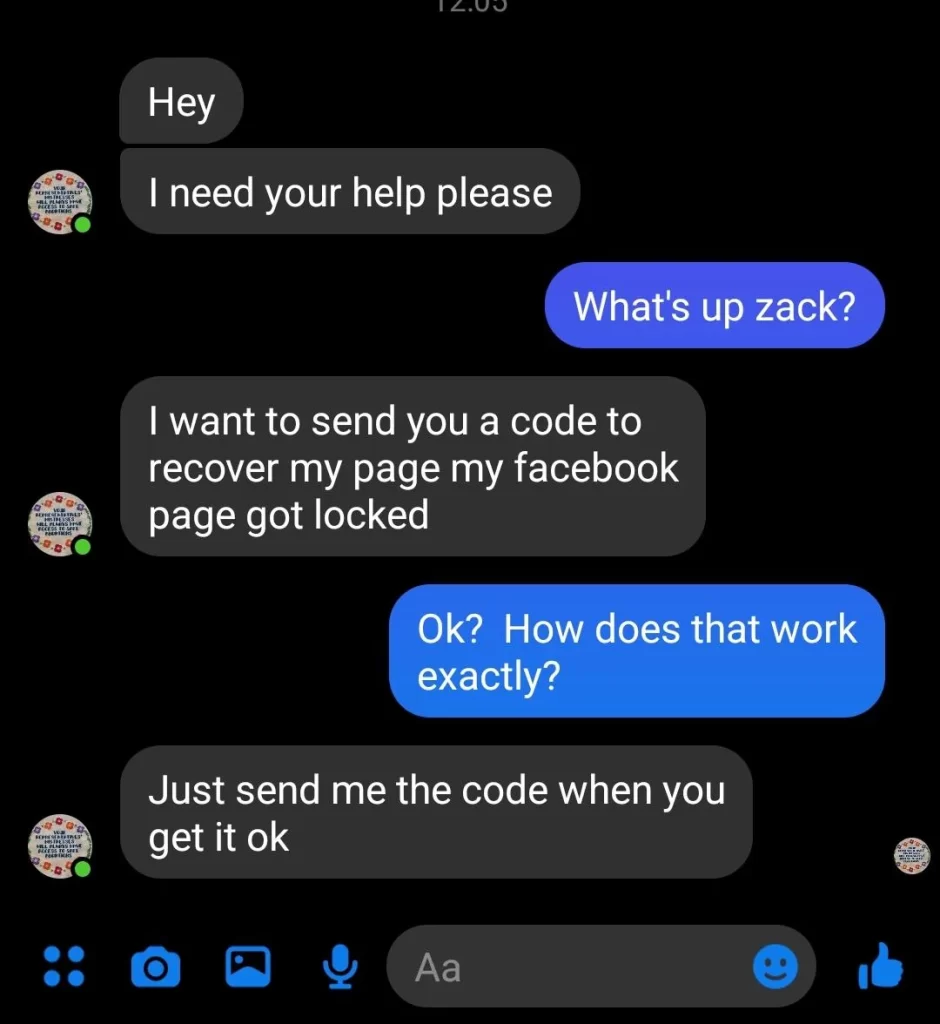
Meta Platforms has taken decisive action against online fraud by removing approximately 63,000 Facebook accounts in Nigeria linked to financial sexual extortion scams. The operation, announced on Wednesday, primarily targeted adult men in the United States, with a smaller network of 2,500 accounts connected to a group of about 20 individuals.
These Nigerian online fraudsters, known colloquially as “Yahoo boys,” are infamous for various scams, including impersonating individuals in financial distress or Nigerian princes offering lucrative investment opportunities. The latest crackdown focuses on “sextortion,” where victims are threatened with the release of compromising photos, real or fabricated, unless they pay to prevent disclosure.
Meta’s investigation revealed that while most scam attempts were unsuccessful, some targeted minors, prompting the company to report these cases to the National Centre for Missing and Exploited Children in the U.S. The tech giant employed new technical signals to identify and combat sex extortion attempts.
The prevalence of such scams in Nigeria, often referred to as “419 scams” after the relevant section of the national penal code, has grown alongside worsening economic conditions in the country of over 200 million people. Scammers operate from various locations, including university dormitories, underprivileged suburbs, and affluent neighborhoods.
As Meta continues its efforts to protect users from online fraud, this large-scale account removal underscores the ongoing battle against cybercrime and the importance of user vigilance in the digital age. The action also raises questions about the effectiveness of current measures to prevent such scams and the need for international cooperation in addressing cross-border cyber threats.
At least 26 villagers were killed in a violent attack on Dembo village in central Mali, near the Burkina Faso border, according to local government official Moulaye Guindo. The assault, which occurred on Sunday evening, targeted villagers working in their farmlands, marking the latest in a series of violent incidents in the conflict-ridden region.
Guindo, the mayor of Bankass town where Dembo is located, reported that the assailants struck as most villagers were engaged in agricultural work. This attack follows a pattern of increasing violence in central Mali, as the country’s military junta struggles to contain unrest in both the central and northern regions.
While no group has claimed responsibility for the attack, suspicion has fallen on JNIM, an al-Qaida-linked extremist group known for similar assaults on villagers in the area. JNIM was blamed for a July attack on a wedding ceremony that left at least 21 people dead.
The violence in central and northern Mali has persisted for over a decade, with extremist rebels regrouping and launching attacks on remote villages and security forces after being initially forced from power in northern cities. The security crisis has been further exacerbated by the collapse of a 2015 peace deal with ethnic Tuareg rebels active in the north.