Home Blog Page 909

Bolivia on Edge: Troops Deployed Amid Coup Fears

0

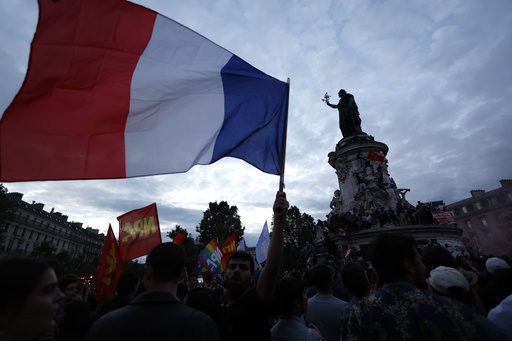
Bolivia faced a tumultuous day on Wednesday as armored vehicles forcefully entered the doors of the government palace in La Paz, prompting serious concerns of a coup attempt. President Luis Arce denounced what he termed as “irregular” troop deployments in the capital and called for the preservation of democratic norms.

In a message posted on his social media account, Arce emphasized the importance of respecting democracy amidst the escalating crisis. The situation unfolded on Bolivian television screens, which broadcasted scenes of military tanks and personnel in military attire stationed outside the government palace.

Former Bolivian President Evo Morales, also active on social media, condemned the military movements in Murillo Square, describing it as a precursor to a coup in progress. General Commander of the Army, Juan José Zúñiga, present at the scene, expressed dismay over the deployment, labeling it an affront to democratic principles and decrying what he termed as attacks on democracy.

María Nela Prada, Minister of the Presidency and a senior Bolivian official characterized the events as an “attempted coup d’état,” stressing that the people remained vigilant to defend democratic institutions. Her remarks were broadcast on local television station Red Uno, amplifying the gravity of the situation across Bolivia.

The developments sparked widespread condemnation from regional leaders, including neighboring Chilean President Gabriel Boric, Honduran leadership, and former Bolivian heads of state. International bodies like the Organization of American States also expressed concern over the unfolding crisis.

Bolivia, a nation of 12 million people, has been grappling with mounting social unrest fueled by economic hardships. Once one of South America’s fastest-growing economies, Bolivia has faced severe economic downturns in recent years, exacerbating social tensions and protests.

Adding to the complexity is a significant political rift within Bolivia’s ruling party, the Movement for Socialism (MAS), led by President Arce and his former ally and predecessor, Evo Morales. The internal struggle within MAS ahead of the 2025 elections has further polarized Bolivian politics, contributing to the current instability.

As the situation unfolds, Bolivia remains on edge, with concerns mounting over the future of democracy and political stability in the country. The international community closely watches developments, urging calm and a peaceful resolution to the escalating crisis in La Paz.

AP

U.S. Supreme Court Mistakenly Posts Draft Abortion Ruling: What Happens Next?

0

In a surprising turn of events, the U.S. Supreme Court briefly posted a draft opinion regarding a pivotal abortion case on its official website Wednesday, only to swiftly retract it. The document in question pertains to the legal debate over whether Idaho hospitals should be mandated to perform abortions during emergency situations, despite a state law prohibiting such procedures.

The nine Justices of the U.S. Supreme Court.

Court spokeswoman Patricia McCabe clarified to Fox News Digital that the opinion in Moyle v. United States, No. 23-726, and Idaho v. United States, No. 23-727, has not been officially released. She attributed the mishap to an inadvertent upload by the Court’s Publications Unit, ensuring that the finalized opinion will be issued in due course.

According to Bloomberg News, which first reported the incident, the leaked version of the opinion suggested a potential lean toward siding with the federal government’s stance. This could imply that hospitals in states with restrictive abortion laws might be compelled to administer abortions in emergency medical situations while the legal proceedings continue. However, the document also indicated a cautious approach, suggesting that the case should return to a federal court of appeals due to premature considerations before lower courts had fully deliberated.

The Supreme Court of the United States of America.

During oral arguments held in April, the Court’s deliberations appeared complex and unresolved. Justices Brett Kavanaugh and Amy Coney Barrett notably posed probing questions to both sides, reflecting the case’s contentious nature.

Idaho officials have staunchly argued against the Biden administration’s position, contending that hospitals cannot be mandated to perform abortions under emergency conditions if state laws significantly restrict the procedure. The state’s laws generally permit abortions only in cases where the mother’s life is at risk, emphasizing strict limitations.

Conversely, the Justice Department has advocated for compliance with the federal Emergency Medical Treatment and Labor Act (EMTALA), asserting that health care providers must provide necessary stabilizing treatment, including abortions, in emergency medical scenarios. This stance underscores a potential clash between federal mandates and state-level abortion restrictions, highlighting the complex legal terrain facing the Supreme Court in its deliberations.

As the public awaits the formal issuance of the Supreme Court’s opinion on Moyle v. United States and Idaho v. United States, the inadvertent posting has sparked considerable speculation and debate. It remains to be seen how the Court will ultimately resolve this sensitive and highly divisive issue, which has significant implications for reproductive rights and state sovereignty across the United States.

Credit: Foxnews.com

Kenyan President Withdraws Controversial Tax Hikes Amid Deadly Protests

0

Kenyan President William Ruto announced the withdrawal of planned tax hikes, bowing to pressure from widespread protests that had turned violent. This decision comes in the wake of demonstrations that saw protesters storm parliament and clash with police, resulting in at least 23 deaths and numerous injuries across the country.

Ruto’s televised address marked a major concession to the week-old, youth-led protest movement that had rapidly evolved from online condemnations of tax increases to mass rallies demanding broader political change. The president stated he would not sign the 2024 finance bill containing the tax hikes, instead recommending to parliament that all of its clauses be deleted.

Kenyan President William Ruto announced the withdrawal of planned tax hikes.

This climbdown represents a significant victory for protesters but has not fully quelled the unrest. Many demonstrators took to social media, vowing to continue with planned rallies and reiterating demands for Ruto’s resignation. Prominent activist Boniface Mwangi called for a “1-million-people march,” highlighting the ongoing tensions despite the president’s concession.

The protests had escalated dramatically, with demonstrations documented in at least 35 of Kenya’s 47 counties. The unrest saw police open fire on crowds around parliament, while protesters broke into the senate chamber and national assembly. The widespread nature of the protests underscores the depth of public discontent with the proposed economic measures.

Ruto’s decision places him in a challenging position, caught between the demands of his citizens and those of international lenders like the IMF, which has been urging the government to cut deficits. The president announced plans to start a dialogue with Kenyan youth and implement austerity measures, beginning with cuts to the presidential budget.

The protest movement, which began as an online outcry against taxes on essential items like bread and diapers.

The protest movement, which began as an online outcry against taxes on essential items like bread and diapers, has evolved into a broader call for political change. While the movement has no official leader and has urged established opposition figures to stay away, some of Ruto’s political rivals have expressed satisfaction with his climbdown.

As Kenya grapples with this political crisis, the international community watches closely. The country’s sovereign dollar bonds traded largely flat despite Ruto’s rejection of the finance bill, indicating ongoing economic uncertainty.

This episode highlights the delicate balance between implementing necessary economic reforms and maintaining social stability. It also underscores the growing influence of youth-led, social media-driven movements in shaping political outcomes in Africa.

As the situation continues to unfold, all eyes will be on how Ruto’s government navigates these challenges, balances competing demands, and addresses the underlying issues that sparked the protests. The coming days will be crucial in determining whether this concession leads to a period of calm or further political upheaval in Kenya.

Ukraine Exits Euro 2024 as Belgium Advances in Tightly Contested Group E

0

The Euro 2024 Group E concluded in dramatic fashion, with Belgium narrowly securing a spot in the knockout stages following a tense 0-0 draw against Ukraine. This result, coupled with Romania’s 1-1 tie with Slovakia, led to an unprecedented scenario where all four teams in the group finished with four points.

Despite matching their competitors’ point tally, Ukraine suffered a heartbreaking exit from the tournament, finishing at the bottom of the group due to goal difference. The outcome highlights the fine margins in international football, as Ukraine collected more points than some third-placed qualifiers from other groups.

Romania emerged as group winners, with Belgium claiming the second spot. Slovakia managed to secure one of the four best third-placed team slots, ensuring their progression to the round of 16. This unique situation underscores the competitive nature of this year’s European Championship.

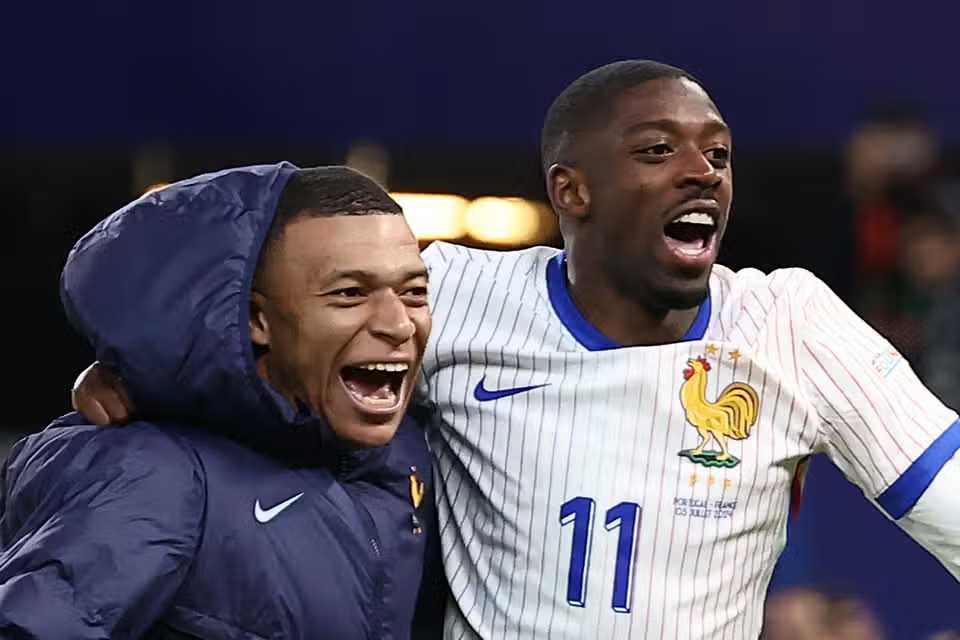
Belgium’s inability to top the group has significant implications for their tournament journey. The Red Devils now face the daunting prospect of meeting France, one of the tournament favorites, in the round of 16. This matchup, scheduled for Monday, promises to be one of the most anticipated encounters of the knockout stage.

Reflecting on their performance, Belgium will be disappointed with their showing against Ukraine. Despite securing qualification, their lackluster display raises questions about their form heading into the clash with France. Ukraine, on the other hand, will rue missed opportunities, particularly their 3-0 loss to Romania earlier in the group stage, which ultimately proved decisive in their elimination.

As the tournament progresses, attention now turns to the potential opponents for other qualified teams. England, for instance, awaits the outcome of matches involving Portugal, Georgia, Czech Republic, and Turkey to determine whether they will face Slovakia or the Netherlands in the next round.

This group stage finale serves as a reminder of the unpredictable nature of tournament football. It also highlights the importance of every goal and point in the group stage, as marginal differences can have significant consequences for a team’s tournament trajectory.

As Euro 2024 moves into its knockout phase, the drama and intensity are set to escalate. With powerhouse matchups like Belgium vs. France on the horizon, football fans can anticipate more thrilling encounters as the competition unfolds.

U.S. Journalist Evan Gershkovich’s Espionage Trial Begins in Russia Amid Controversy

0

The trial of Wall Street Journal reporter Evan Gershkovich, arrested on espionage charges in Russia, commenced behind closed doors in Yekaterinburg on Wednesday. The 32-year-old American journalist, detained for 15 months, faces allegations that he, his employer, and the U.S. government vehemently deny.

Gershkovich appeared in court in a glass defendant’s cage, his head shaved, wearing a black-and-blue plaid shirt. The proceedings, briefly open to journalists and U.S. Embassy officials, were quickly closed to the public, with the next hearing scheduled for August 13.

Wall Street Journal reporter Evan Gershkovich, arrested on espionage charges in Russia.

This case has drawn international attention as Gershkovich is the first Western journalist arrested on espionage charges in post-Soviet Russia. The U.S. State Department has declared him “wrongfully detained,” committing to assertively seek his release.

Jay Conti, executive vice president and general counsel for Dow Jones, described the trial as a “sham” with “bogus charges that are completely trumped up.” The Wall Street Journal has worked diligently to keep the case in the public eye, making it a significant issue in the lead-up to the U.S. presidential election.

Gershkovich faces up to 20 years in prison if found guilty, a verdict that seems almost certain given Russia’s high conviction rate. The case has raised concerns about the targeting of Americans and the broader implications for press freedom in Russia.

The Russian Prosecutor General’s office accuses Gershkovich of “gathering secret information” about Uralvagonzavod, a military equipment plant, allegedly on orders from the CIA. However, Gershkovich’s supporters maintain that he was simply carrying out his duties as an accredited journalist.

Wall Street Journal reporter Evan Gershkovich, arrested on espionage charges in Russia.

The trial’s closed nature means few details may become public. However, it has sparked discussions about potential prisoner exchanges between the U.S. and Russia, reminiscent of the 2022 swap that freed WNBA star Brittney Griner.

As the case unfolds, it continues to strain U.S.-Russia relations, already tense due to the conflict in Ukraine. It also raises questions about the safety of foreign journalists in Russia and the country’s broader approach to press freedom and international relations.

The Gershkovich case serves as a stark reminder of the risks journalists face in certain parts of the world and the complex diplomatic challenges that arise when press freedom clashes with national security claims. As the trial progresses, it will likely remain a focal point of international attention and a key issue in U.S.-Russia relations.

NBC

Entire Bakersfield Hells Angels Chapter Arrested in California Kidnapping and Assault Probe

0

In a sweeping operation, law enforcement agencies in California have arrested the entire Bakersfield chapter of the Hells Angels Motorcycle Club, along with members of an affiliated gang, as part of a wide-ranging investigation into kidnapping, robbery, and assault. This significant crackdown marks a major development in the ongoing efforts to combat organized crime in the region.

The Kern County Sheriff’s Office, in collaboration with the U.S. Bureau of Alcohol, Tobacco, Firearms and Explosives (ATF) and the California Highway Patrol, conducted the arrests on Tuesday morning. The operation resulted in the apprehension of five active members of the Hells Angels Bakersfield chapter and two members of Sons of Hell, a motorcycle club that reportedly takes orders from the Bakersfield Hells Angels.

During the arrests, law enforcement seized an impressive cache of weapons and gang-related items, including 25 firearms, numerous rounds of ammunition, and gang regalia. This haul underscores the potential threat these organizations posed to public safety.

The arrested individuals, ranging in age from 31 to 57, face a litany of serious allegations. These include kidnapping, robbery, making criminal threats, false imprisonment, assault with a firearm, participation in a criminal street gang, criminal conspiracy, intimidating a witness or victim, and elder abuse. While formal charges have not yet been filed, the scope of the allegations suggests a complex and potentially long-running criminal enterprise.

One suspect, John Vaughn, was already in custody on unrelated charges at the time of the operation. The other arrestees were identified as Ricardo Alvarez, Armando Villasenor, Joseph Soto Sr., Joseph Soto Jr., Joshua Zavala, and John Seeger. Vaughn and Seeger are reported to be members of the Sons of Hell, while the others are said to belong to the Bakersfield Hells Angels chapter.

This operation highlights the ongoing concerns about outlaw motorcycle gangs and their alleged involvement in various criminal activities. The Hells Angels, founded in California shortly after World War II, has long been designated by the U.S. Justice Department as an outlaw motorcycle gang and criminal enterprise. Federal authorities have consistently alleged the gang’s involvement in drug and firearms trafficking.

As the investigation continues, law enforcement officials remain tight-lipped about specific details, citing the ongoing nature of the probe. The Kern County public defender’s office has not yet commented on the case, leaving questions about legal representation for the suspects unanswered at this time.

This high-profile arrest of an entire Hells Angels chapter serves as a reminder of the persistent challenges law enforcement faces in combating organized crime. It also raises questions about the current state of outlaw motorcycle gangs and their operations in California and beyond. As the case progresses, it will likely provide valuable insights into the structure and activities of these organizations, potentially leading to further investigations and arrests in the future.

NBCNews

Palestinian Man Shot and Strapped to Israeli Army Jeep Sparks International Outrage

0

The volatile city of Jenin in the West Bank became the stage for a deeply troubling incident that has drawn international condemnation. Mujahid Abadi, a 24-year-old Palestinian man, was shot, beaten, and subsequently tied to the hood of an Israeli military jeep, an event that has reignited debates about the treatment of civilians in conflict zones and the use of human shields.

Mujahid Abadi, a 24-year-old Palestinian man, was shot, beaten, and subsequently tied to the hood of an Israeli military jeep.

Abadi’s harrowing experience began when he stepped outside his uncle’s house to investigate a disturbance. Israeli forces, initially claiming he was a suspected militant, shot him in the arm and foot. Hours later, after allegedly being beaten by soldiers, Abadi found himself strapped to the searing hood of an Israeli military vehicle.

Video footage of the incident quickly circulated on social media platforms, drawing widespread criticism, including from the United States. Many observers accused Israeli soldiers of using Abadi as a human shield, a charge Israel has frequently leveled against Hamas in Gaza.

The Israeli military has since acknowledged that Abadi posed no threat and was caught in crossfire with militants. They have initiated an investigation into the incident, admitting it does not align with their values. However, for many Palestinians, this event represents yet another act of brutality in Israel’s ongoing crackdown in the occupied West Bank.

Mujahid Abadi, a 24-year-old Palestinian man tied to the hood of an Israeli military jeep.

Abadi’s account of the events is harrowing. He claims soldiers beat him in areas where he had already been shot before tying him to the jeep. The military stated they tied Abadi to the vehicle to transport him to paramedics, but dashboard camera footage shows the jeep passing at least two ambulances.

This incident occurs against a backdrop of escalating violence in the West Bank since the October 7 Hamas attack on Israel. Over 550 Palestinians have been killed in the territory during near-nightly raids by Israeli forces, further intensifying tensions in the region.

The event has reignited discussions about the use of human shields in conflict zones. While Israel has long accused Hamas of using civilians as shields in Gaza, human rights groups argue that Israel itself has a history of such practices in both the West Bank and Gaza.

U.S. State Department spokesman Matthew Miller described the video as “shocking,” emphasizing that civilians should never be used as human shields. He called for a swift investigation by the Israeli Defense Forces (IDF) and for those responsible to be held accountable.

One of these Israeli military vehicles had the Palestinian man hanging.

As investigations continue, this incident serves as a stark reminder of the complexities and human costs of the ongoing conflict in the region. It underscores the urgent need for adherence to international law and the protection of civilians in conflict zones, regardless of the parties involved.

The global reaction to this event highlights the international community’s growing concern over the escalation of violence in the occupied territories. It also raises questions about the effectiveness of current peacekeeping efforts and the need for renewed diplomatic initiatives to address the root causes of the conflict.

As the world watches and waits for the results of the Israeli military’s investigation, the incident involving Mujahid Abadi stands as a powerful symbol of the human suffering that continues to plague this troubled region, demanding urgent attention and action from global leaders and human rights organizations alike.

From Selling Cellphones to Olympic Trials: Cordell Tinch’s Inspiring Journey

0

Cordell Tinch’s path to the U.S. Olympic Trials is a testament to resilience and determination, overcoming hurdles both on and off the track. This week, Tinch is set to compete in the semifinals of the 110-meter hurdles at the U.S. Olympic Trials in Eugene, Oregon, aiming for a spot on the U.S. Olympic team bound for the 2024 Paris Games.

Tinch and his mother were once homeless and he sold phones.

Originally from Green Bay, Wisconsin, Tinch’s journey began with adversity. Born to Elizabeth Simmons when she was just 16 years old, Tinch and his mother faced homelessness early on. “We were in a shelter because I was homeless,” Simmons recounted. “But seeing him, it made me say, ‘OK Elizabeth, you can cry later, but you gotta get this done today because he needs to eat. He needs clothes on his back.’”

Despite these challenges, Tinch excelled in sports, becoming a two-time state champion at Bay Port High School and setting records in the triple jump. His athletic prowess earned him a scholarship for track and football at the University of Minnesota before transferring to Kansas to reunite with a former coach.

However, the pandemic brought new challenges. Tinch took a hiatus from college to prioritize his mental health and returned home to work, including stints selling cellphones and operating machinery. Despite thoughts of leaving athletics behind, Tinch’s passion for competition persisted.

Cordell Tinch’s path to the U.S. Olympic Trials is a testament to resilience and determination.

In January 2023, he joined the Pittsburg State track team and quickly made an impact. By May of that year, Tinch clocked 12.96 seconds in the 110-meter hurdles at the Trackwired Arkansas Grand Prix, marking the fastest time in the world at the time.

Last summer, Tinch continued to shine, securing second place at the national championships and narrowly missing the finals at the world championships in Budapest with a time of 13.31 seconds.

Now, at the U.S. Olympic Trials in Eugene, Tinch remains focused on achieving his dream, inspired by his mother’s unwavering support. “I always put my mom on the highest pedestal,” he emphasized.

Throughout his journey, Tinch aims to inspire others facing adversity. “To have people be inspired by me is the biggest thing,” he said. “I want to impact people the way the people around me have impacted me.”

As Tinch prepares for the semifinals, his story serves as a beacon of hope and perseverance, embodying the spirit of overcoming obstacles to achieve greatness.

Julian Assange Pleads Guilty to Conspiracy, Set to Return Home After 5 Years

0

Julian Assange, the founder of WikiLeaks, has entered a guilty plea to conspiracy charges in a landmark legal resolution that concludes a protracted legal battle spanning over a decade. The plea deal, finalized in a court in the Northern Mariana Islands, a U.S. commonwealth, paves the way for Assange’s long-awaited return home to Australia.

Julian Assange, the founder of WikiLeaks, has entered a guilty plea to conspiracy charges in a landmark legal resolution.

Assange, known for his role in publishing classified documents that stirred controversy and exposed government secrets, acknowledged the charge of conspiracy to obtain and disclose national defense information. This plea deal, which includes a 62-month sentence, encompasses the time Assange has already served.

“I believe the First Amendment and the Espionage Act are in contradiction with each other, but I accept that it would be difficult to win such a case given all these circumstances,” Assange stated during the court proceedings, as reported by NBC affiliate KUAM of Guam.

Julian arriving on the Island.

The U.S. Department of Justice has long contended that Assange’s actions endangered national security and compromised the safety of individuals worldwide. Assange’s disclosures, including classified military documents and diplomatic cables, have been central to debates on government transparency and press freedom.

Assange’s legal saga began with his arrest in 2019 at the Ecuadorian Embassy in London, where he sought asylum for years to evade extradition over sexual assault allegations in Sweden. Subsequently, U.S. federal prosecutors pursued charges related to his publication of sensitive materials through WikiLeaks.

Despite the dropping of the Swedish case due to time constraints, Assange faced extradition requests from the U.S. on charges related to computer hacking and espionage. His time in custody included years spent in high-security detention in London’s Belmarsh Prison.

Julian intend to seek for a full pardon.

The plea deal does not involve additional incarceration beyond time served, allowing Assange to seek repatriation to Australia, where he is a citizen. His partner and legal representative, Stella Assange, expressed intentions to seek a full pardon based on journalistic principles and integrity.

“A guilty plea under the Espionage Act raises significant concerns for journalists and national security reporters,” Stella Assange commented, underscoring the broader implications of the case.

Australian Prime Minister Anthony Albanese welcomed the development, calling for Assange’s return and emphasizing the prolonged nature of the legal proceedings.

“Regardless of opinions on Mr. Assange’s activities, prolonged incarceration serves no purpose. It’s time for him to come home,” Albanese stated in Parliament.

WikiLeaks, in a statement prior to the court proceedings, criticized the necessity of the plea deal, asserting that Assange’s contributions to public knowledge should not have led to criminal prosecution.

Assange is set to depart from Saipan to Canberra, Australia, under terms that restrict his return to the U.S. without prior authorization from authorities, according to the Justice Department.

Man Arrested with Human Skull in Nigeria Faces Trial for Ritual Killing

0

The Ogun State Police Command in Nigeria has announced plans to prosecute Lekan Akinyemi, who was apprehended for allegedly exhuming and decapitating a corpse for ritual purposes in Abeokuta, the state capital’s Itoko area.

According to a report by PUNCH Online on Tuesday, Akinyemi was arrested following a tip-off from a resident who noticed suspicious activities near his father’s grave. Upon inspecting the grave, the resident discovered that the head of his father’s corpse had been gruesomely severed.

Lekan Salami is accused of been in possession of human skull.

Acting swiftly on the report, police officers from the Adatan Division launched an operation and caught Akinyemi red-handed at the scene of the crime.

Confirming the incident, the Ogun State Police Public Relations Officer, Omolola Odutola, stated in a phone conversation with reporters, “A resident of Iyana Cele Car Wash, Abeokuta, visited the police station and reported that on June 23, 2024, at about 08:00hrs, his sibling alerted him to unusual activities at their late father’s grave in Isale Itoko, Abeokuta.”

“After inspection, he found that their father’s head had been removed by an unidentified individual or group. Further investigation led to the identification of Lekan Akinyemi, who was apprehended red-handed as the perpetrator who dug up the grave and severed the head.”

Odutola emphasized that an extensive investigation has commenced into the matter, and upon its conclusion, Akinyemi will face prosecution for his alleged involvement in the ritualistic act.

“Lekan Akinyemi was caught in the act, and the case will be handed over to the Anti-Robbery Unit for thorough investigation before being transferred to the State Criminal Investigation Department (CID),” she added.

Ogun State Commissioner of Police, Abiodun Alamutu, has directed a meticulous probe into the incident, underscoring the police’s commitment to combatting crime and ensuring justice for the victims.

“While reassuring residents of the state, the PPRO urged the public to refrain from engaging in ritual killings, emphasizing that such acts are not only criminal but also rooted in myths,” Odutola concluded.

PunchOnline.com