Home Blog Page 910

The Best Architectural Designs in the World Unfolded!

0

 According to a CNN publication, a soaring hotel in Dubai, a space observatory in Cyprus and the control center of a Turkish solar power plant are among more than 220 projects shortlisted for the coveted World Building of the Year prize.

he central control building of a solar power plant in Konya, Turkey, is among 225 completed buildings shortlisted for the prestigious 2024 World Architecture Festival Awards. 
2024 World Architecture Festival

Spanning 18 categories, from housing and offices to health facilities and sport venues, the shortlist was announced by organizers of the annual World Architecture Festival (WAF) on Monday.

Other notable buildings on this year’s shortlist include the new Australian Embassy in Washington DC and the recently expanded Terminal 2 at Singapore’s Changi Airport.

The finalists will all present their projects at the festival’s 17th edition this November. A panel of 175 delegates will vote for category winners, which then go head-to-head for the overall title.

Last year’s top prize was awarded to a boarding school, in China’s Zhejiang province, which features a rooftop park, treehouses and elevated walkways that form a “floating forest.” Previous winners of World Building of the Year include the Zaha Hadid-designed National Museum of XXI Century Arts in Rome, a waste-to-energy power plant with a rooftop ski slope in Copenhagen and Sydney’s “upcycled” Quay Quarter Tower, which retained two-thirds of an old skyscraper on the site.

In a statement, WAF program director Paul Finch said that 2024’s competition had attracted “another terrific set of entries” that had “made shortlisting projects a tough process.”

Scroll down to see a selection of this year’s nominees.

Designed by US architects Kohn Pedersen Fox, the 500-meter-long (1640 feet) Atlantis The Royal hotel in Dubai sees a series of stacked volumes connected by a central sky bridge. 
2024 World Architecture Festival
The “woven” exterior of Texoversum, the new campus expansion plan of the Reutlingen University of Applied Sciences in Germany, reflects the building’s function as a center for teaching and researching textile industry technologies. 
2024 World Architecture Festival
Chilean architecture firm Contexto was recognized for its serene A-framed hotel, TAWA Refugio. 
2024 World Architecture Festival

The aptly named Slender House, by Indian firm Spaces Architects@KA, was built on a plot in Delhi measuring just 6 meters (19.7 feet) wide. 
2024 World Architecture Festival
Nestled in the Troodos Mountains and housing two powerful telescopes, the National Star Observatory of Cyprus, by Kyriakos Tsolakis Architects, was nominated in the Civic and Community category. 
2024 World Architecture Festival
Chinese firm UAO Design’s tent-like Liangzi Island Off-island Pier tent-features a glass-fronted visitor center overlooking a lake in the city of Ezhou. 
2024 World Architecture Festival
Located on the European shore of the Gallipoli Peninsula in Turkey, the original 17th-century structure was severely damaged during WWI. A multi-disciplinary team comprising designers, historians and engineers worked to restore the fortress to its current form today. 
2024 World Architecture Festival

Mixed-use development Lighthouse is currently home to Denmark’s tallest building. The waterside project by 3NX Architects is situated in the city of Aarhus. 
2024 World Architecture Festival
The circular OLM Nature Escape, designed by Andreas Gruber Architects, is a boutique hotel nestled in Italy’s Dolomite Mountains. 
2024 World Architecture Festival
The Shenzhen Women & Children’s Center, by Dutch architecture group MVRDV, is a colorful Chinese skyscraper containing an array of facilities for women and children, including a library and a kids’ theater. 
2024 World Architecture Festival

Target to Phase Out Personal Checks as Payment Option Starting July 15

0

Target, one of America’s leading retail chains, has announced its decision to stop accepting personal checks as a form of payment beginning July 15. This move aligns the company with other retailers who have already phased out this increasingly uncommon payment method, aiming to streamline the checkout process for customers.

In a statement to CNN, Target cited “extremely low volumes” of check usage as the primary reason for this decision. The company reassured customers that a wide range of payment options would remain available, including cash, credit and debit cards, Apple Pay, SNAP/EBT, buy now/pay later services, and Target Circle Cards.

Retail analyst Neil Saunders from GlobalData commented on the decision, noting that while unsurprising, it may impact certain demographics. “There will be small pockets of people, including more elderly consumers, who will lament that they are being phased out,” Saunders said.

Interestingly, despite the decline in check usage, a 2024 report by Abrigo, a financial software solutions company, found that approximately 61% of Americans still write checks. The report also revealed an unexpected trend: younger consumers, including Gen Z and Millennials, self-reported writing more checks than older Gen X consumers.

Target’s decision follows similar moves by other retailers. Grocery chain Aldi and Amazon-owned Whole Foods have already stopped accepting personal checks as payment.

This change is part of a broader series of adjustments Target has made to its checkout experience. Earlier in March, the company announced limitations on the number of items accepted at self-checkout counters and allowed store management to set operating hours for self-checkout machines, measures aimed at combating retail theft.

Target’s decision to phase out personal checks comes amid a challenging retail environment. The company has recently reported declining sales and responded by slashing prices on over 5,000 items, including popular household staples, in an effort to attract inflation-conscious shoppers.

As retailers continue to adapt to changing consumer preferences and technological advancements, the phasing out of personal checks represents another step in the evolution of retail payment systems. While this change may inconvenience a small segment of Target’s customer base, it reflects the broader trend towards faster, more secure, and more convenient payment methods in the retail sector.

Tehran Police Close Turkish Airlines Office Over Employees’ Defiance of Iran’s Headscarf Law

0

Iranian police have temporarily closed the Turkish Airlines office in Tehran following reports that female employees defied the country’s mandatory headscarf law. The incident, reported by Iranian media on Tuesday, underscores the ongoing tensions surrounding Iran’s strict dress code for women and its enforcement.

According to the semi-official Tasnim news agency, police officers visited the Turkish Airlines office on Monday to issue a “first warning” regarding the “non-observance of hijab” by company employees. The situation escalated when the employees, who are Iranian nationals, allegedly “made trouble for the police officers,” leading to the office’s closure.

The police action reflects the continued enforcement of Iran’s headscarf law, which has faced increasing resistance since the September 2022 death of Mahsa Amini. Amini’s death, following her arrest by the country’s morality police, sparked widespread protests across Iran. While these demonstrations have largely subsided, some Iranian women continue to challenge the law by remaining uncovered in public spaces.

Iranian authorities have previously closed hundreds of businesses across the country for allowing female employees to forgo wearing the hijab. This enforcement intensified in the months leading up to Iran’s recent presidential election, which saw Masoud Pezeshkian emerge victorious with promises to ease enforcement of the headscarf law and improve relations with the West.

The closure of the Turkish Airlines office occurred on the same day that Turkish President Recep Tayyip Erdogan congratulated Pezeshkian on his election win, highlighting the delicate balance of diplomatic relations amidst internal policy disputes.

Tehran Prosecutor Ali Salehi stated that no legal proceedings or ruling had been issued regarding the sealing of the Turkish Airlines office, suggesting the closure may be temporary. Tasnim reported that the office is expected to reopen on Wednesday.

This incident occurs against the backdrop of strong bilateral relations between Iran and Turkey, with trade volume reaching $5.4 billion in 2023. Turkey is also a popular tourist destination for Iranians, with Turkish Airlines being a preferred carrier for travel to North America.

As Iran grapples with internal pressures to reform its strict dress code and external pressures to improve international relations, incidents like this highlight the ongoing challenges faced by businesses operating in the country and the complex interplay between cultural norms, law enforcement, and diplomatic considerations.

AP

UAE Sentences 43 Dissidents to Life Imprisonment Amid International Criticism

0

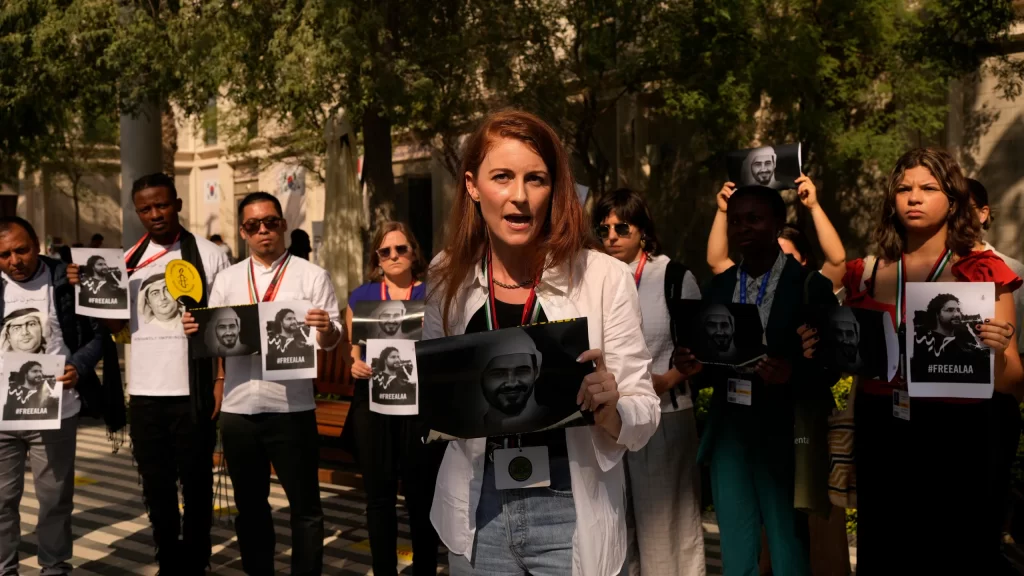
In a high-profile mass trial, the United Arab Emirates sentenced 43 individuals to life imprisonment on Wednesday, while several other defendants received lengthy prison terms. This case has drawn sharp criticism from human rights organizations and activists globally, who argue that it represents a crackdown on dissent.

The Abu Dhabi Federal Court of Appeal handed down the sentences in a case that the UAE government described as involving the Muslim Brotherhood, a pan-Islamic organization designated as a terrorist group by the Emirates. Activists, however, contend that the trial was politically motivated, targeting dissidents, and noted that it coincided with protests at the United Nations COP28 climate talks held in Dubai in November.

The state-run WAM news agency reported the verdicts following the announcement by human rights activists that the sentences had been issued. Among those sentenced, five received 15-year terms, and five others were handed 10-year terms. Additionally, 24 defendants had their cases dismissed, WAM reported.

The court’s ruling stated that those convicted “have worked to create and replicate violent events in the country, similar to what has occurred in other Arab states—including protests and clashes between security forces and protesting crowds—that led to deaths and injuries and to the destruction of facilities, as well as the consequent spread of panic and terror among people,” according to WAM.

Despite these assertions, WAM did not specify the evidence that the court used to link the convicted individuals to violence or the Muslim Brotherhood. This lack of transparency has fueled further criticism from international observers and human rights organizations.

The verdict, which is subject to appeal to the UAE’s Federal Supreme Court, has been condemned by several human rights advocates. Joey Shea, a researcher with the UAE branch of Human Rights Watch, remarked, “These over-the-top long sentences make a mockery of justice and are another nail in the coffin for the UAE’s nascent civil society. The UAE has dragged scores of its most respected human rights defenders and civil society members through a prolonged farcical trial riddled with due process violations and torture allegations.”

Anwar Gargash, a senior UAE diplomat, defended the court’s decision, stating that the country must protect itself from violent extremism and that the judiciary’s independence is paramount. However, Gargash did not address the specific allegations of due process violations or the claims of torture made by the defendants.

She, a radio activist, was among those sentenced to die.

Internationally, the verdict has been met with significant backlash. Human rights organizations are calling for increased scrutiny of the UAE’s judicial practices and for the immediate release of all political prisoners. The trial’s outcome is likely to strain the UAE’s relations with Western nations, many of which have voiced concerns over human rights abuses in the region.

The UAE’s stance on the Muslim Brotherhood, coupled with its broader campaign against perceived political threats, continues to spark debates about the balance between national security and human rights. As the appeals process unfolds, the international community will be closely monitoring the developments, with many hoping for a reassessment of the harsh sentences and an improvement in the UAE’s judicial transparency.

The Associated Press

Novak Djokovic Advances to Wimbledon Semifinals After Alex de Minaur Withdraws Due to Hip Injury

0

In a surprising turn of events at Wimbledon, Novak Djokovic advanced to the semifinals without hitting a ball in the quarterfinals, as his opponent, Alex de Minaur, withdrew due to a hip injury. The withdrawal occurred just hours before their highly anticipated match at Centre Court, leaving fans and players alike in a state of shock and disappointment.

Alex de Minaur, the ninth-seeded Australian, made the difficult announcement on Wednesday morning, citing a severe hip injury as the reason for his withdrawal. De Minaur, visibly distressed, addressed the media in a news conference, expressing his regret over the decision. “Obviously not an announcement I wanted to make, by any means,” he said. “I’m devastated.”

De Minaur recounted that he first experienced the injury during his hard-fought fourth-round victory over Arthur Fils on Monday. Despite winning the match 6-2, 6-4, 4-6, 6-3, he felt a significant crack in his hip towards the end of the contest. Although he managed to walk gingerly to the net and downplayed the injury during the post-match interview, the pain persisted.

The injury’s severity became clear after a series of medical examinations on Tuesday. De Minaur’s team and medical staff worked tirelessly to assess his condition and explore every possible treatment to enable him to compete. “I heard a crack, and I knew something was wrong,” de Minaur explained. “We did everything we could to try to make it to the match, but it just wasn’t possible. It’s the biggest match of my career, and to be forced to pull out is incredibly tough to accept.”

De Minaur attempted a light practice session on Wednesday morning, but the pain was too intense, and his mobility was severely restricted. Realizing he could not compete at the level required, he made the heart-wrenching decision to withdraw.

This development grants Novak Djokovic a walkover into the Wimbledon semifinals for the 13th time, tying him with Roger Federer for the most semifinal appearances by a man in the tournament’s history. Djokovic, the second seed, has a formidable record at Wimbledon, having won seven of his 24 Grand Slam titles at the All England Club.

Djokovic expressed his sympathy for de Minaur during his media address, acknowledging the disappointment and difficulty of withdrawing from such a significant match. “It’s always unfortunate when a match ends this way,” Djokovic remarked. “I wish Alex a speedy recovery and hope to see him back on the court soon. He’s a great competitor, and it’s always tough to see a fellow player go through this.”

The Serb now awaits the winner of the match between Taylor Fritz and Lorenzo Musetti, scheduled to be played on Friday. Djokovic, who has been in impressive form throughout the tournament, will be preparing rigorously for his semifinal clash, aiming to add another Wimbledon title to his illustrious career.

De Minaur’s withdrawal marks a significant moment in his career. This was his first appearance in the Wimbledon quarterfinals, a milestone that underscores his rising trajectory in the tennis world. Earlier this year, he reached the quarterfinals of the French Open, showcasing his potential and determination.

As the tournament progresses, Djokovic’s path to the final becomes a focal point of interest, with fans eagerly anticipating whether he can secure his eighth Wimbledon title. Meanwhile, de Minaur will focus on recovery, with hopes of returning stronger and continuing his ascent in the tennis ranks.

The Associated Press

NYU Abu Dhabi Student Reportedly Deported After Pro-Palestinian Protest at Graduation

0

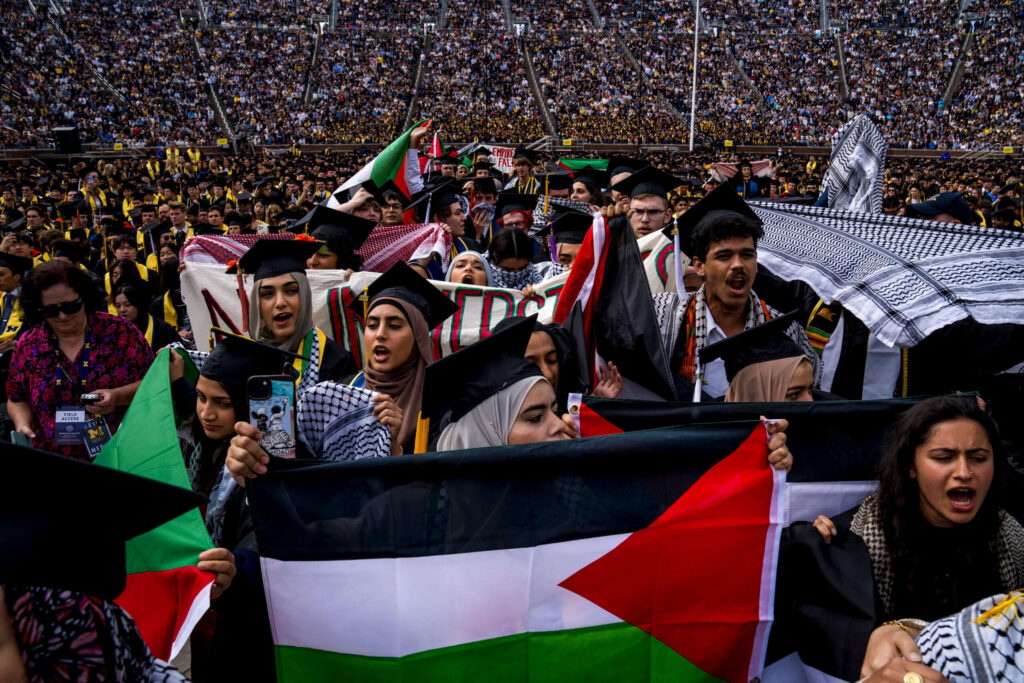
In a stark illustration of the delicate balance between academic freedom and local laws, a student at New York University Abu Dhabi (NYUAD) was reportedly deported from the United Arab Emirates after shouting “Free Palestine” during his graduation ceremony in May. The incident underscores the complex political landscape in the UAE as it navigates its diplomatic ties with Israel while responding to the ongoing Israel-Hamas conflict.

Witnesses describe the student crossing the stage wearing a traditional Palestinian keffiyeh scarf and making the pro-Palestinian statement as he received his diploma. This act of protest came despite prior warnings from the university prohibiting the display of Palestinian flags on campus and restricting cultural attire at the commencement ceremony.

The reported deportation highlights the challenges faced by international academic institutions operating in countries with strict speech controls. NYU Abu Dhabi, while claiming “guaranteed academic authority” on campus, acknowledged that community members are not immune to local laws. The university emphasized its efforts to advise students about expectations and boundaries, particularly regarding graduation protocols.

This incident is not isolated, as students report a broader crackdown on activities related to the Israel-Hamas war. They describe restrictions on organizing vigils for Gaza casualties and fundraising efforts involving the bulk purchase of keffiyehs. The American Association of University Professors has raised concerns about the detention and interrogation of staff and students, particularly those from non-Western countries.

The situation at NYU Abu Dhabi reflects the broader tensions in the UAE, where the government is balancing its diplomatic recognition of Israel with sympathy for the Palestinian cause. While offering aid to Palestinians, the UAE has not seen the mass demonstrations that have occurred elsewhere in the Arab world, maintaining tight control over political expression.

This event adds to previous controversies surrounding NYU Abu Dhabi, including issues with migrant worker rights during campus construction and the denial of work visas to certain professors. It also highlights the challenges of maintaining Western academic ideals in a context where political parties are illegal and speech is heavily regulated.

As the Israel-Hamas conflict continues to impact the region, incidents like this graduation protest and its aftermath serve as a reminder of the ongoing struggle between free expression and political sensitivities in the UAE. The situation raises important questions about the role of international academic institutions in such environments and the limits of academic freedom in contexts where local laws may conflict with principles of open discourse.

AP

Fifth Third Bank Agrees to $20 Million Settlement Over Fake Accounts and Illegal Auto Insurance Practices

0

Fifth Third Bank has agreed to pay $20 million in penalties to settle investigations by the Consumer Financial Protection Bureau (CFPB) into its fraudulent practices. The settlement addresses two major issues: the creation of fake customer accounts and the illegal charging of unnecessary auto insurance policies.

The CFPB’s investigation revealed that Fifth Third Bank forced customers to pay for unneeded auto insurance policies, affecting over 35,000 customers and resulting in more than 1,000 vehicle repossessions. The bank demanded borrowers pay for unnecessary coverage or face delinquency, additional fees, and repossessions. As part of the settlement, Fifth Third must pay $5 million in redress to affected customers and reform its business practices.

In a separate but related matter, the CFPB filed a proposed court order requiring the bank to pay an additional $15 million penalty for incentivizing employees to create fake customer accounts. The order also bans Fifth Third from setting employee sales goals that encourage fraudulent account openings.

Fifth Third Bank, based in Cincinnati, Ohio, operates branches in 12 states across the Midwest and Southeast. The bank’s chief legal officer, Susan Zaunbrecher, stated that they have already taken significant action to address these “legacy matters,” including identifying issues and taking initiative to rectify them.

This settlement is not Fifth Third’s first encounter with CFPB penalties. In 2015, the bank was ordered to pay $18 million for discriminatory auto loan pricing affecting Black and Hispanic borrowers. It was also fined $3.5 million for illegal credit card practices.

The CFPB’s director, Rohit Chopra, emphasized that the agency is ordering Fifth Third to clean up its broken business practices or face further consequences. The penalties will be paid into the CFPB’s victim relief fund.

This case highlights ongoing concerns about unethical practices in the banking industry and underscores the importance of robust consumer protection measures. As financial institutions continue to face scrutiny, the CFPB’s actions against Fifth Third Bank serve as a reminder of the potential consequences for engaging in fraudulent or harmful practices against consumers.

Source: CNN

US Air Force AC-130J Ghostrider Conducts Drills Over South Korea Amid Rising Tensions with North Korea

0

As the US Air Force AC-130J flies over South Korea’s towering apartment blocks, its powerful cameras can almost see inside windows on the highest floors. Aiming farther afield, the weapons officers on the four-engine aircraft, nicknamed Ghostrider, can pick out objects at 50,000 feet, almost 10 miles away—all potential targets for the biggest gun ever mounted on a fixed-wing plane.

CNN obtained an exclusive look inside the aircraft, assigned to Air Force Special Operations Command, in early June after it flew from its home base in Hurlburt Field, Florida, for joint drills in South Korea.

In a live-fire exercise, the 105-millimeter howitzer pumped out 43-pound shells into a firing range east of Seoul. The force of each blast was so powerful that it pushed the tail of the 80-ton plane six feet to the right.

About eight seconds after firing, the shells hit the range 10,000 feet below, sending smoke billowing skyward as the controllers of the big gun watched the results of their handiwork on large video screens in the middle of the aircraft.

“Assess two tanks destroyed,” a scratchy voice confirmed in the radio headsets of the AC-130 crew.

Pilot Capt. John Ikenberry said the AC-130J’s presence for drills in South Korea was designed to send a simple message to its belligerent neighbor North Korea and its leader Kim Jong Un.

“It shows we are ready,” Ikenberry said.

Tensions have been simmering on the peninsula in recent months. The North has been sending balloons filled with trash to areas in and near Seoul and testing missiles, and South Korean troops have fired warning shots as North Korean soldiers from the North have crossed the military demarcation line in the middle of the demilitarized zone.

Last week, North Korea criticized live-fire exercises in the South in late June and early July as an “inexcusable and explicit provocation.

New UK Government Faces Urgent Crisis as Prison Overcrowding Nears Breaking Point

0

Prime Minister Keir Starmer’s newly formed government is confronted with an urgent and complex challenge as Britain’s prisons are on the brink of being too full to accept new inmates. This impending crisis forces the government into making difficult and costly decisions.

Britain holds the highest rate of incarceration in Western Europe, based on data from the World Prison Brief database. The nation now faces a severe crisis after a new prison building programme has failed to keep up with the demands of tougher sentencing laws, leading to a rapidly expanding prison population.

Many prisons are currently housing two inmates in cells originally designed for one. The situation has worsened due to emergency measures put in place by the previous Conservative government, resulting in the early release of some offenders and the delay of court cases to prevent new arrivals.

Andrea Albutt, the head of the Prison Governors Association, has issued a stark warning that unless a viable solution is found quickly, offenders will need to be held in police cells. This would place significant strain on police resources and disrupt the broader judicial system.

Prime Minister Keir Starmer

Labour leader Keir Starmer has criticized the previous administration, describing the current state of Britain’s prisons as a “monumental failure.” He has emphasized that, like other pressing issues—such as sewage in rivers and strikes at the National Health Service—addressing the prison crisis is a priority for his government. However, the time for holding this position without concrete action is limited.

The new government’s options are constrained by financial limitations. According to the Institute for Government (IfG), prison spending is projected to decline by 5.9% annually in real terms over the next few years, further complicating efforts to address the overcrowding issue.

Albutt has stressed the urgency of the situation. “They need to act quickly enough, but only just. It’s going to be touch and go,” she stated, highlighting the precarious nature of the current predicament.

As Starmer’s government navigates this crisis, the need for immediate and effective solutions is paramount to prevent further deterioration of the prison system and to safeguard the integrity of the wider judicial process.

Reuters

U.S Republican House to Vote on Bill Banning Non-Citizens from Voting in Federal Elections

0
UNITED STATES - MAY 8: Speaker of the House Mike Johnson, R-La., and Rep. Chip Roy, R-Texas, left, and en Cuccinelli, background, former attorney general of Virginia, conduct a news conference at the House steps of the U.S. Capitol to introduce the “Safeguard American Voter Eligibility (SAVE) Act," which would require proof of U.S. citizenship to register to vote in federal elections, on Wednesday, May 8, 2024. (Tom Williams/CQ Roll Call)

The Republican-controlled U.S. House of Representatives plans to vote on Wednesday on a bill that aims to ban non-citizens from voting in federal elections. This move comes in response to former President Donald Trump’s unsubstantiated claims about election fraud.

House Republican leaders, including Speaker Mike Johnson, are backing the measure, citing concerns that people who cross the U.S.-Mexico border illegally could cast ballots in the upcoming presidential and congressional elections. On Tuesday, Johnson claimed without evidence that Democrats are encouraging non-citizen voting.

Speaker of the House Mike Johnson, R-La., and Rep. Chip Roy, R-Texas, left, and en Cuccinelli, background, former attorney general of Virginia

“Many of the Democrats want all of these illegals to participate in our federal elections. They want them to vote,” Johnson said at a news conference.

The legislation, however, is expected to be dead on arrival in the Democratic-majority Senate. Democrats have called the bill a “stunt” aimed at creating “confusion and distrust” and warned that it constitutes voter suppression.

“For all their rhetorical rhetoric … Republicans have one real purpose here: to continue to erode the confidence of Americans in our election system,” said Representative Joe Morelle, the top Democrat on the House Administration Committee.

New Mexico Representative Teresa Leger Fernandez warned that the legislation, if enacted, would make it harder for U.S. citizens to vote, particularly impacting armed services members, Indigenous Americans, and people who live in rural areas.

“Voter suppression is evident when Republicans take aim at voter participation,” Fernandez stated.

Meanwhile, Trump continues to support efforts to hold off a bid to oust him from leadership by Republican hardliner Marjorie Taylor Greene. He unveiled plans for political attacks during an appearance in Iowa on Friday.