

President Donald Trump declared Monday that he is “not at all” concerned about committing possible war crimes as he continued threatening the destruction of Iran’s bridges and power plants if Tehran fails to meet his Tuesday 8 p.m. Eastern time deadline to reopen the Strait of Hormuz and accept American demands for unconditional capitulation.
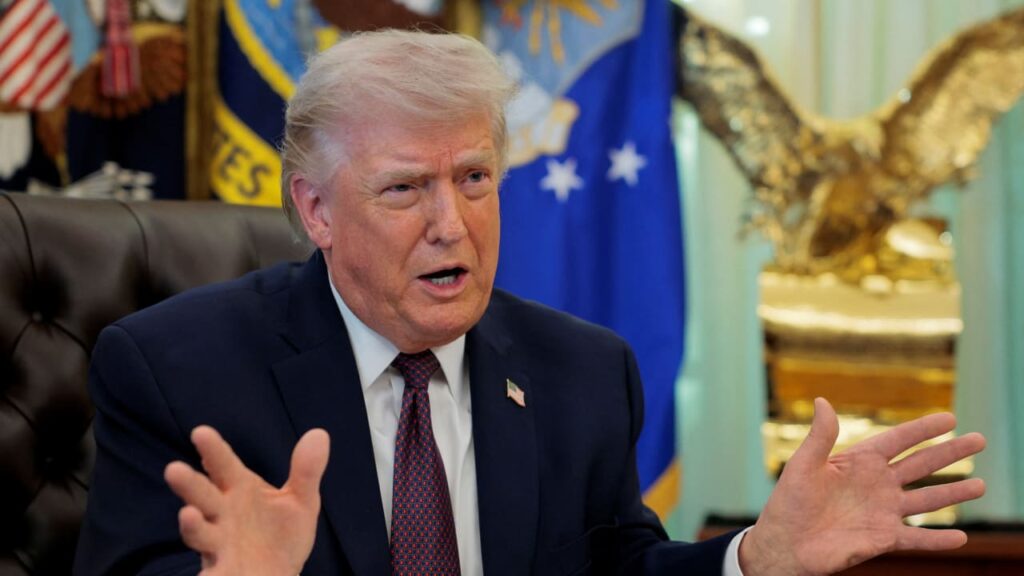
Speaking to journalists at the White House during an 83-minute press briefing, the president refused to specify whether any civilian targets would be off-limits in potential American attacks. “We have a plan, because of the power of our military, where every bridge in Iran will be decimated by 12 o’clock tomorrow night,” Trump announced during his Monday news conference, employing language suggesting total infrastructure destruction.
Power plants throughout Iran, he continued, would be “burning, exploding and never to be used again”—threats that legal experts characterize as promising deliberate attacks on civilian infrastructure prohibited under international humanitarian law. The Geneva Conventions require combatants to distinguish between military objectives and civilian objects, prohibiting attacks designed to deprive civilian populations of essential services.
Trump’s explicit threats to destroy bridges and power plants across an entire nation raised immediate concerns among legal scholars that such attacks would constitute war crimes under established international law. The wholesale destruction of civilian infrastructure serving no direct military purpose violates fundamental principles of proportionality and distinction that govern lawful warfare.
When questioned about potential war crimes liability, Trump dismissed the concerns entirely. “We have a plan, because of the power of our military, where every bridge in Iran will be decimated by 12 o’clock tomorrow night,” he repeated, showing no hesitation about publicly announcing intentions to commit what international legal authorities would classify as criminal conduct.
Iran on Monday rejected a 45-day ceasefire proposal presented through Pakistani mediators and emphasized it demands a permanent end to the war rather than temporary pause. Iran’s state-run IRNA news agency disclosed Tehran conveyed its response through Pakistan, a key mediator attempting to prevent further escalation.
“We only accept an end of the war with guarantees that we won’t be attacked again,” Mojtaba Ferdousi Pour, head of the Iranian diplomatic mission in Cairo, told the Associated Press on Monday. The statement illustrated the fundamental gap between Iranian demands for security guarantees and Trump’s insistence on unconditional surrender without reciprocal American commitments.
Israeli Defense Minister Israel Katz announced Monday that Israel attacked the South Pars petrochemical plant at Asaluyeh in Iran. He made the announcement after Iran confirmed the facility had been struck. An Israeli attack on South Pars facilities in March sparked major Iranian attacks targeting oil and gas infrastructure across the Gulf Arab states—suggesting the latest strike could trigger similar retaliation.
The head of intelligence for Iran’s paramilitary Revolutionary Guard, Major General Majid Khademi, was killed, according to Iranian state media. Israel claimed responsibility for the killing Monday, continuing the systematic assassination campaign against Iranian leadership that has eliminated dozens of senior officials since hostilities commenced.
Israel’s military disclosed it also killed the leader of the Iranian paramilitary Revolutionary Guard’s undercover unit in its expeditionary Quds Force, Asghar Bakeri. Israel and the United States carried out a wave of attacks on Iran on Monday, killing more than 25 people. Iran responded with missile fire on Israel and its Gulf Arab neighbors, perpetuating the cycle of attack and retaliation.
According to Reuters, Trump held the lengthy press briefing to outline his ultimatum to Iran. “The entire country can be taken out in one night, and that night might be tomorrow night,” he warned, referring to the 8 p.m. EDT Tuesday (midnight GMT) deadline he established for Iran to meet U.S. demands or face destruction of its national infrastructure.
Trump specified he needed “a deal that’s acceptable to me. And part of that deal is going to be we want free traffic of oil and everything,” framing American objectives around commercial shipping access rather than broader security concerns or regional stability.
He vowed to destroy Iranian power plants and bridges, brushing off concerns that such actions would constitute war crimes or alienate Iran’s 93 million people who would suffer catastrophic humanitarian consequences from infrastructure destruction. The threats suggested Trump views civilian suffering as acceptable collateral damage or potentially useful leverage to pressure Tehran into submission.
However, Trump claimed the United States has an active and willing partner in negotiations, adding that he hopes America doesn’t have to bomb Iran’s energy infrastructure—statements contradicting his simultaneous threats of imminent total destruction and suggesting uncertainty about whether Tehran will capitulate before his deadline expires.
Trump and Defense Secretary Pete Hegseth praised the successful weekend retrieval from Iran of a U.S. airman whose jet was shot down Friday. The president called the rescue mission a “risky decision” because the United States “could have ended up with 100 dead, as opposed to one or two,” acknowledging the operation’s dangers while celebrating the successful outcome.
Hegseth, who has faced scrutiny for outspokenly blending his evangelical religious faith with military operations, described the rescue in explicitly Christian terms, comparing it to the resurrection of Jesus Christ. The religious framing of military operations has drawn criticism from those who argue it inappropriately conflates American nationalism with Christian theology and alienates non-Christian service members.
Trump threatened to jail the person who reported on the mission while it was underway, claiming the disclosure put the operation “at great risk.” The threat to prosecute journalists or government officials for reporting military operations raised First Amendment concerns about press freedom and governmental transparency.
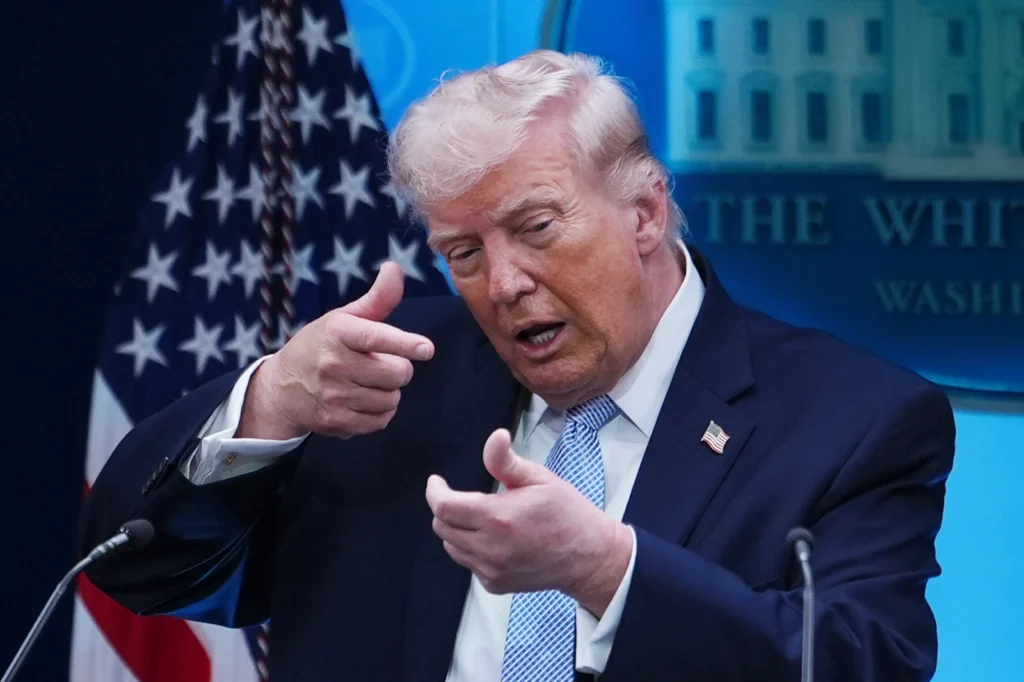
Iran’s official IRNA news agency confirmed that Tehran rejected the ceasefire proposal and insisted a permanent end to the war was necessary rather than temporary pause. The rejection eliminated the most promising diplomatic avenue for avoiding Trump’s threatened Tuesday night attacks on civilian infrastructure.
The president’s willingness to publicly threaten war crimes while dismissing legal and humanitarian concerns represents a dramatic departure from traditional American presidential rhetoric that at least paid lip service to international law and the laws of armed conflict. Previous administrations carefully framed military operations as compliant with legal obligations even when reality suggested otherwise.
Trump’s explicit embrace of infrastructure destruction as policy raises questions about whether military commanders would obey orders they might conclude constitute illegal commands under the Uniform Code of Military Justice. Officers have obligations to refuse manifestly illegal orders, though the practical and career consequences of defying presidential directives create enormous pressure to comply regardless of legal concerns.
International legal experts have emphasized that deliberate attacks on bridges, power plants, and other civilian infrastructure serving no direct military purpose would violate multiple provisions of the Geneva Conventions and potentially constitute crimes against humanity if conducted on the scale Trump threatens. The systematic destruction of infrastructure essential to civilian survival crosses legal and moral boundaries established after World War II to prevent repetition of total war tactics.
For Iran’s civilian population, Trump’s threats create impossible choices between enduring catastrophic infrastructure destruction or pressuring their government to accept terms many Iranians would view as national humiliation. The strategy of threatening collective punishment to extract political concessions has been condemned by human rights organizations as both immoral and ineffective.
As Tuesday’s 8 p.m. Eastern deadline approaches, the fundamental questions remain whether Trump will follow through on threats to commit what international lawyers characterize as war crimes, whether Iran will capitulate to avoid such attacks, or whether last-minute diplomacy might produce compromise preventing the threatened infrastructure destruction.
The world will learn within hours whether Trump’s rhetoric represents genuine intention or negotiating bluster designed to pressure Iran into accepting American terms. For millions of Iranians who would suffer the consequences of power grid destruction and bridge demolition, the uncertainty about whether their infrastructure will be annihilated creates terror regardless of Trump’s ultimate decision about implementation.
Whether American military commanders would execute orders to systematically destroy civilian infrastructure, whether Congress would assert constitutional authority to prevent such attacks, or whether international institutions would condemn American war crimes remains uncertain as the deadline approaches and the prospect of unprecedented infrastructure destruction looms over a nation already devastated by five weeks of bombardment.





