

A shooting inside a public library in Northern California left two people dead Monday evening, with a suspect taken into custody after fleeing the scene, authorities said.
Police responded shortly after 5 p.m. to an emergency call reporting gunfire and screams inside the Chico branch of the Butte County Library. Officers entered the building as the suspect ran out through a rear exit, where additional law enforcement units waiting outside detained the individual, Police Chief Billy Aldridge said during a news conference.
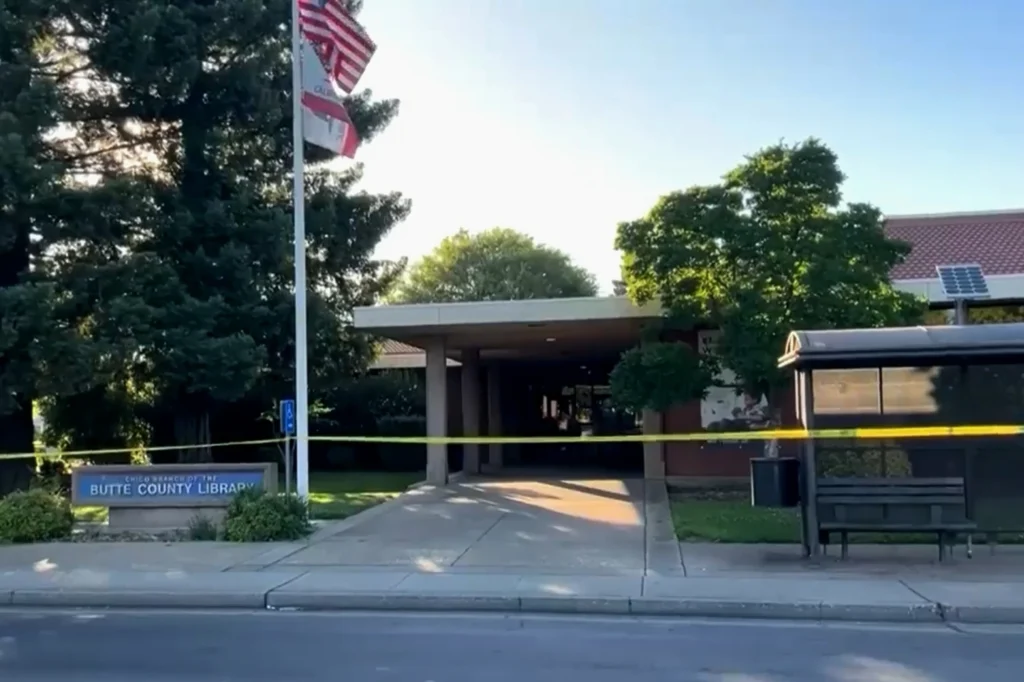
The shooting unfolded inside a busy community facility, prompting a rapid police response and a temporary shutdown of surrounding streets as officers secured the area and assisted those inside.
What is known so far is that two people were killed during the attack. Their identities have not been released as officials work to notify their families. A child suffered a minor injury and was taken to a hospital.
Authorities indicated the suspect is believed to have acted alone, and there is no ongoing threat to the public. A reunification center was set up to assist families and individuals who were inside the building at the time.
Officials said the motive remains under investigation. Aldridge described the incident as deeply traumatic for the community and confirmed that investigators are reviewing evidence and interviewing witnesses.
Police have not released the suspect’s name or further details about what may have led to the violence. Butte County officials announced that all library branches would be closed Tuesday and urged residents to stay away from the area as the investigation continues.
The incident carries broader implications for public safety across community spaces that are traditionally seen as secure. Libraries serve as open access environments for education and public engagement, and violence in such locations raises questions about preparedness and security infrastructure. Similar incidents in public settings across the United States have intensified scrutiny on how local governments allocate resources for safety measures, including surveillance, emergency response coordination, and staff training.
From an economic standpoint, disruptions tied to violent incidents in public facilities can ripple through local systems. Temporary closures affect employees, contractors, and nearby businesses that depend on foot traffic.
Repeated safety concerns may also influence municipal spending priorities, diverting funds toward security enhancements and emergency services. In smaller cities like Chico, such shifts can have noticeable budgetary consequences.
The broader landscape shows a competitive policy environment among states and municipalities, where local leaders face increasing pressure to balance accessibility with safety.
Communities are weighing investments in preventive measures against the need to preserve open public access. The outcome of investigations like this often shapes future policy decisions, including funding allocations and legislative proposals.
Looking ahead, authorities are expected to release additional details as the case develops, including the suspect’s identity and potential charges. Community leaders are likely to expand support services, including counseling for victims and witnesses. The incident may also prompt a reassessment of safety protocols across public institutions in the region.
As Chico begins to recover, the focus will remain on accountability, community healing, and evaluating how to prevent similar tragedies in the future.
AP





