

Islamic militants attacked a military base in northeastern Nigeria, killing soldiers in a pre-dawn assault that underscores the persistent threat posed by insurgent groups in the region.
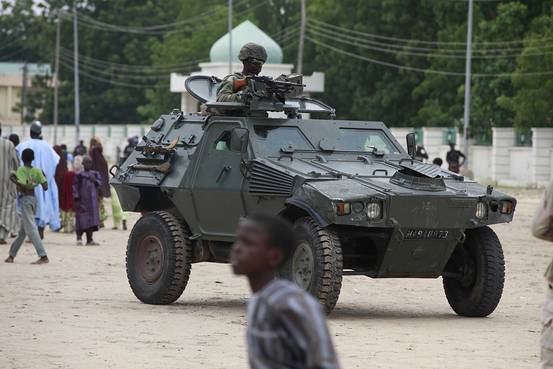
According to the Nigerian military, troops stationed at a forward operating base in Mandaragirau, located in Borno State, came under attack early Friday during severe weather conditions. Army spokesman Haruna Sani said at least five soldiers were killed in the assault, which he attributed to “terrorists,” though he did not specify a group.
The military has previously linked similar attacks in the area to Boko Haram and its splinter faction, the Islamic State West Africa Province, both of which have waged a prolonged insurgency in Nigeria’s northeast.
Sani said troops repelled the attackers and inflicted casualties in a counteroffensive, describing the response as evidence of the military’s resilience. Reinforcements were deployed to secure the area following the attack.
However, local reports citing military sources suggested the death toll may be higher. Some accounts indicated that up to eight soldiers were killed when militants overran parts of the base along the Mandara Buratai Road, launching the assault around 4 a.m. amid heavy rainfall. Several others were reportedly injured.
The conflicting casualty figures highlight the difficulty of obtaining immediate, verified information from conflict zones where communication is limited and operations are ongoing.
The latest assault is part of a broader resurgence of attacks targeting military positions across Borno, the epicenter of Nigeria’s more than decade long insurgency. Fighters have increasingly exploited difficult terrain and weather conditions to launch surprise raids on isolated bases.
Nigeria’s northeast has endured years of violence that has killed thousands and displaced millions, according to the United Nations. Despite sustained counterinsurgency efforts, including joint operations with international partners, militant groups continue to carry out deadly attacks on both military and civilian targets.
Recent operations by Nigerian forces, including a joint effort with the United States that reportedly killed dozens of ISWAP fighters and commanders, have sought to weaken insurgent networks. But analysts say such gains are often followed by retaliatory strikes, as seen in the latest attack.
The assault on the Mandaragirau base reflects a familiar pattern in Nigeria’s insurgency: tactical victories by security forces followed by coordinated militant reprisals. Groups like Boko Haram and ISWAP have adapted their strategies over time, shifting toward high impact attacks on military installations to undermine morale and demonstrate continued relevance.
The use of poor weather as cover suggests a level of operational planning that allows militants to exploit vulnerabilities in surveillance and rapid response capabilities. It also raises concerns about the security of forward operating bases, many of which are located in remote and difficult to defend areas.
Beyond the immediate casualties, such attacks carry broader strategic implications. They challenge the narrative of progress in the fight against insurgency and can erode public confidence in the military’s ability to secure affected regions.
For Nigeria, the conflict remains a complex, multi front crisis involving insurgency, banditry and communal violence. Addressing it requires not only military action but also sustained investment in intelligence, local governance and economic stability in the northeast.
As investigations continue and the military assesses the full impact of the attack, the incident serves as a stark reminder that, despite years of operations, the insurgency in Borno and surrounding areas remains far from over.
AP/SaharaReporters





