

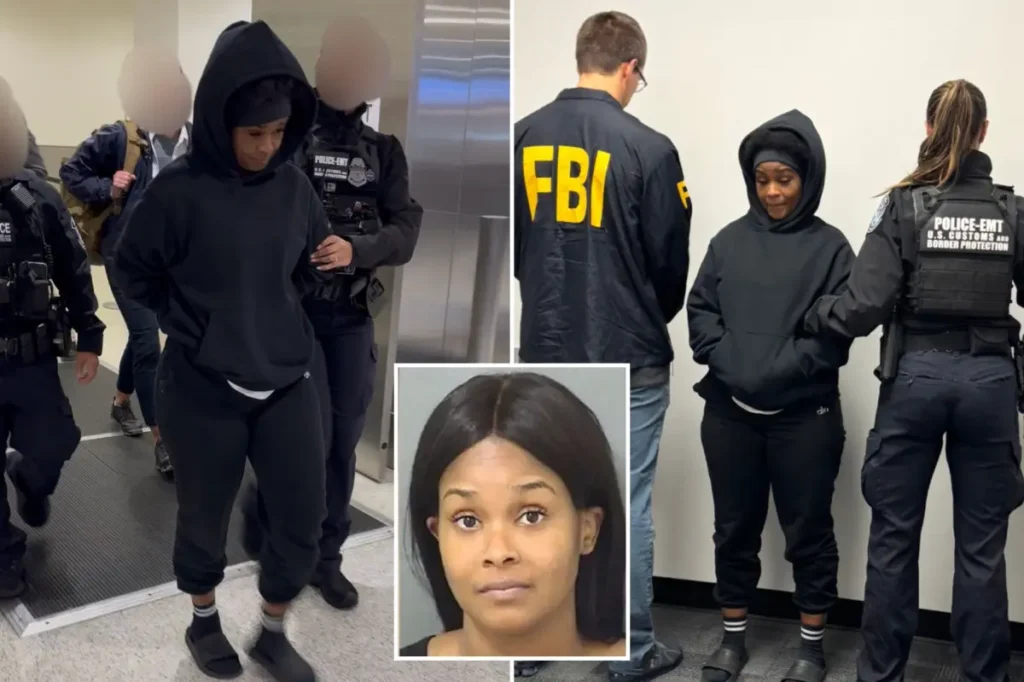
A fugitive on the FBI’s Most Wanted Fraudsters list was returned to the United States Thursday after Jamaican authorities arrested her while she was living under a false name, ending a two-year international manhunt tied to a $32 million pandemic relief fraud scheme.
Elaine Angene Escoe, 41, of Palm Beach County, Florida, had been living in Jamaica under the fake identity “Harley Newman” when the FBI passed a tip to Jamaican law enforcement, FBI Director Kash Patel said.
What We Know So Far
Escoe is charged with conspiracy to commit wire fraud, conspiracy to commit money laundering, wire fraud, and multiple counts of money laundering, the U.S. Attorney’s Office for the Southern District of Florida confirmed.
Federal prosecutors said Escoe helped orchestrate a scheme that fraudulently obtained more than $32 million from four federal pandemic relief programs: the Paycheck Protection Program, the Restaurant Revitalization Fund, the Shuttered Venue Operators Grant, and the Economic Injury Disaster Loan program.
Escoe and her co-conspirators submitted more than 90 fraudulent applications between May 2020 and November 2021, according to court documents. The applications falsely represented the existence, payroll, revenue, and operators of fake businesses to qualify for maximum federal relief funding.
“To support the fraudulent applications, the conspirators created fake tax documents, fabricated bank records, and other false financial records that lenders and program administrators relied upon in approving loans and grants,” the U.S. Attorney’s Office said.
The scheme resulted in the wrongful disbursement of approximately $29.1 million in PPP funds, $1.2 million in Restaurant Revitalization Fund money, and $3.8 million in Shuttered Venue Operators Grant funds, according to FBI records.
After the funds were disbursed, Escoe and others allegedly directed payments to each other and to businesses they controlled, withdrew large sums in cash, and used blank signed checks to conceal the origin of the money.
A federal arrest warrant was issued for Escoe on May 22, 2025, after she failed to appear at a scheduled court hearing on June 5, 2025. She was last seen in Palm Beach County on June 3, 2025.
She is the final defendant charged in the scheme. Five co-conspirators were previously prosecuted. Alfred Davis was sentenced to 235 months in prison. Cher Davis received 87 months. Latoya Clark received 70 months. Gino Jordan received 46 months and James McGhow received 42 months, the Independent confirmed.
What Authorities Are Saying
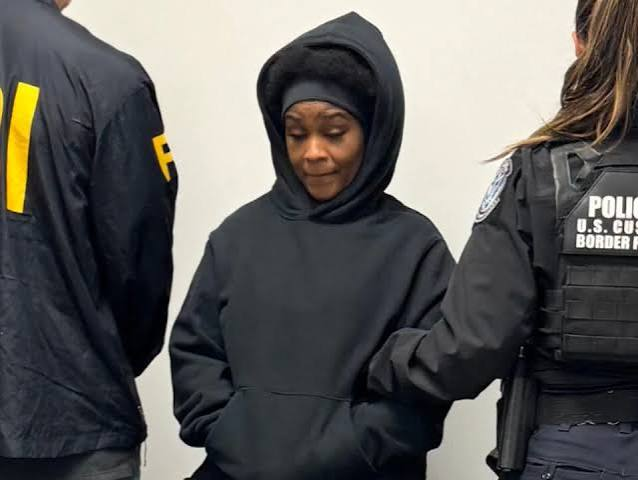
Acting Attorney General Todd Blanche issued a statement as Escoe was returned to Florida.
“This Most Wanted Fraudster allegedly obtained tens of millions in COVID-19 relief, stealing critical resources from legitimate businesses during a national crisis,” Blanche said. “She fled the country believing she could escape justice but ultimately could not. Those who exploit taxpayer-funded programs will be held accountable by this Department of Justice, no matter how long it takes or where they attempt to hide.”
FBI Director Patel described Escoe’s arrest as the fourth Most Wanted Fraudster captured in five weeks.
“Elaine Angene Escoe, on the run since May 2025, was captured in Jamaica while living under a fake identity of Harley Newman and returned to the United States today to face justice,” Patel said.
Patel added that the FBI has returned more than 30 high-value targets to the United States since June. The four fraud suspects captured in the past five weeks are collectively charged with nearly $1.8 billion in fraud after spending more than 3,500 days on the run across three continents, Fox News confirmed.
“Under this administration, fraud is no longer tolerated, and those who steal from American taxpayers have nowhere to hide,” Patel said.
The FBI, Homeland Security Investigations, the U.S. Marshals Service, Jamaican law enforcement, and the Palm Beach County State Attorney’s Office coordinated the arrest and return.
Why This Matters
Escoe’s case is part of a broader federal effort to pursue individuals who exploited emergency pandemic relief programs at a moment when the government was distributing hundreds of billions of dollars to businesses and workers in financial distress.
The Paycheck Protection Program, the Restaurant Revitalization Fund, and similar programs were designed and deployed rapidly in the face of the economic emergency caused by the pandemic. That speed, while necessary, created significant vulnerabilities that fraudsters across the country exploited through fabricated business records, inflated payroll figures, and invented companies.
The $32 million extracted by Escoe and her co-conspirators represented money intended to keep legitimate businesses alive and workers employed during one of the most severe economic contractions in American history. The scheme diverted those funds into personal accounts, cash withdrawals, and businesses controlled by the conspirators.

Escoe’s two-year flight to Jamaica, her adoption of a false identity, and the multinational law enforcement cooperation required to locate and extradite her illustrates both the lengths to which pandemic fraud defendants have gone to avoid prosecution and the expanding reach of federal law enforcement in pursuing them internationally.
The FBI’s Most Wanted Fraudsters list and the pace of recent captures, four in five weeks according to Patel, signals an intensified institutional focus on pandemic fraud prosecutions that the Justice Department has described as a long-term priority regardless of how much time has passed since the original crimes.
What Happens Next
Escoe was returned to South Florida Thursday and faces federal charges in the Southern District of Florida. She is the last of the six defendants charged in the scheme to face trial or enter a plea, with all five of her co-conspirators already convicted and sentenced.
A trial date had not been announced as of Thursday. Given that the five co-defendants who preceded her either pleaded guilty or were convicted at trial in December 2025, prosecutors enter the case against Escoe with a fully established evidentiary record of the broader conspiracy.
Sentences imposed on her co-conspirators ranged from 42 months to 235 months in federal prison, suggesting a wide range of possible outcomes depending on the court’s assessment of Escoe’s role in the scheme, her flight from justice, and her use of a false identity while evading capture.
Sources: FoxNews; The Independent; fbi.gov





