

A hantavirus outbreak that began aboard a Dutch cruise ship in Antarctic waters has reached Spain and one of the world’s most remote inhabited islands, health officials confirmed Friday, as the virus claimed three lives and exposed a widening gap in America’s ability to respond to infectious disease threats at a moment when its public health infrastructure has been hollowed out by federal cuts.
Two suspected cases emerged Friday far from the MV Hondius, the Dutch-flagged vessel where the outbreak originated. A 32-year-old woman in the southeastern Spanish province of Alicante developed symptoms consistent with hantavirus infection after sitting two rows behind a Dutch woman on a plane — a woman who had contracted the virus aboard the ship and fell ill before the flight departed Johannesburg on April 25. That Dutch woman later died at a hospital.
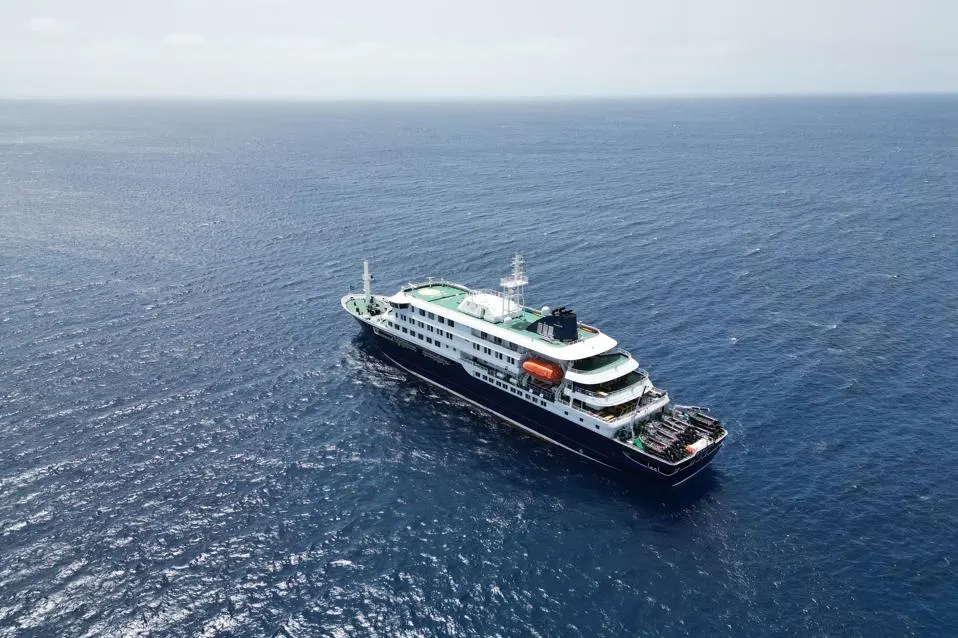
On the remote South Atlantic island of Tristan da Cunha, a British man who had been a passenger on the Hondius developed suspected symptoms. The island, home to roughly 200 people and located more than 1,500 miles from its nearest inhabited neighbor, sits halfway between South Africa and South America — reachable only by a six-day boat journey. Britain’s Health Security Agency confirmed the suspected case without providing further details.
The World Health Organization had tallied eight people who fell ill aboard the Hondius itself. Six of those cases have been confirmed as hantavirus. Three people have died — a Dutch couple and a German national. Four others, including two British nationals, a Dutch person, and a Swiss national, remained hospitalized Friday in the Netherlands, South Africa, and Switzerland.
The Hondius was en route to Tenerife in the Canary Islands and was expected to dock early Sunday. Arriving passengers and crew will be screened before disembarking under guidelines being finalized by the WHO and other health agencies.
How the Outbreak Started
The Hondius sailed from Argentina in March carrying 147 passengers and crew, with stops in Antarctica and other locations before heading north toward Cape Verde off the west coast of Africa. A cluster of severe respiratory illnesses among passengers was first reported to the WHO on Sunday. By that point, 34 other passengers had already left the ship and returned to their home countries.
Testing determined that the Hondius outbreak — the first documented hantavirus outbreak on a ship — involves the Andes virus, the only strain of hantavirus known to transmit between humans, though only through close and prolonged contact. The WHO’s Anais Legand, a technical officer for viral threats, said Friday the risk to the general public remained low.
“Based on the dynamics of this outbreak, based on how it is spreading and not spreading amongst the people on the ship, the people who have disembarked as well, we continue to consider the risk as low for the general population,” Legand said in an online briefing.
The WHO puts the fatality rate among infected people in the United States at up to 50 percent. The CDC has classified the outbreak as a Level 3 emergency response — the lowest level of emergency activation. Oceanwide, the cruise operator, said Thursday that no passengers or crew with active symptoms remained aboard the vessel.
The CDC announced Friday that it would dispatch staffers to meet the ship in the Canary Islands and escort American passengers home on a charter medical repatriation flight. Those passengers are expected to be quarantined at the University of Nebraska in Omaha. Seventeen U.S. citizens were aboard the Hondius, Oceanwide confirmed.
The Plane Transmission Question
The Spanish case is the one drawing the most scrutiny from epidemiologists. The woman in Alicante did not board the cruise ship. She sat near a confirmed patient on a commercial flight. The Andes virus is not considered an airborne pathogen in the conventional sense — it spreads through close and prolonged contact, not casual proximity. Whether the Alicante case represents genuine plane transmission or reflects some other exposure will be critical to understanding how the outbreak behaves outside the ship environment.
WHO officials have been careful not to draw firm conclusions before testing is complete. The Spanish woman had mild respiratory symptoms and was being evaluated at a hospital, the regional health department confirmed.
Maria Van Kerkhove, director of epidemic and pandemic management at the WHO, tried to frame the outbreak clearly at a Thursday briefing. “This is not Covid, this is not influenza. It spreads very, very differently,” Van Kerkhove said. “This is not the same situation we were in six years ago. It’s very different.”
A similar outbreak in Argentina in late 2018 and early 2019 eventually infected 34 people and killed 11. WHO officials believe the current outbreak is following a comparable pattern — with transmission originating from the first cases and spreading to those who had very close contact, including a ship’s doctor who treated early patients.
America’s Missing Response
While health agencies in Europe coordinated rapidly — the European Centre for Disease Prevention and Control deployed two Dutch physicians and an infectious disease expert directly to the ship — the United States response was notably slower and considerably less visible.
The CDC did not hold a public briefing. It did not create a resource page for the public. Its top officials did not appear on television to address the American public’s risk. The agency’s first press release on the matter arrived Wednesday evening, days into the outbreak, and was a single short statement.
More striking still: the U.S. Department of State, not the CDC, is leading the American response. That is not how outbreaks of this kind are typically handled.
Boghuma Titanji, an infectious disease physician and assistant professor at Emory School of Medicine, called the silence damaging in itself. “Radio silence from officials is one of the most concerning parts of the outbreak because it just fuels public anxiety,” Titanji said. “People are still reeling from the trauma that was Covid-19, and a lot of people who experienced that still have a degree of PTSD. So it’s very hard to not spiral.”
Titanji said the CDC would normally have been the first call for any physician encountering a hantavirus patient. “When it comes to rare diseases that a physician might only encounter once or twice in their career, the first step is usually to call the CDC for advice on how to test and diagnose and how to contain further transmission. We’re losing that type of support.”
The CDC did not respond to questions from the Guardian about whether the agency had adequate testing and laboratory capacity for hantavirus, what precautions returning passengers had been advised to follow, or how local health providers would be supported if they encountered patients.
The Cuts Behind the Silence
The muted American response is not incidental. It is structural. Under the Trump administration, U.S. health agencies have been cut deeply and repeatedly. All full-time cruise ship inspectors at the CDC were laid off last year while the agency was actively investigating two separate outbreaks. Laboratory staff have been reduced significantly. Testing capacity for multiple pathogens has been paused or eliminated — states can no longer send samples to the CDC for certain viral testing, and rabies testing at the agency was temporarily halted in April.
Trump withdrew the United States from the WHO shortly after taking office, removing American leadership and institutional presence from the global response coordination body at the precise moment it was managing a novel ship-based outbreak. The White House also issued an executive order in May curtailing research on certain viruses, and the National Institutes of Health made sweeping cuts to virology research.
Bill Hanage, professor of epidemiology at the Harvard T.H. Chan School of Public Health, said his personal concern about this specific outbreak was near zero — but his concern about the system supposed to contain it was something else entirely.
“It’s very important to be doing some extremely aggressive contact tracing of everybody who left the boat, and they should be quarantined,” Hanage said. He noted that the multi-country, multi-jurisdiction nature of the Hondius outbreak made coordination harder than the Argentina case. “It may take more time to coordinate an adequate response.”
Hanage also flagged a risk that goes beyond this particular virus. Given the erosion of public trust in health institutions following the pandemic, “it remains to be seen” how closely people will follow guidance — and how willing officials will be to implement containment measures after the political backlash to COVID restrictions.
WHO Director-General Tedros Adhanom Ghebreyesus used the outbreak Friday to make a broader argument about what happens when international health cooperation breaks down. “Any vacuum, any space which is not covered, actually gives advantage to the virus,” Tedros said. He expressed hope that the U.S. and Argentina — which has also stepped back from WHO engagement — would reconsider. “The best immunity we have is solidarity.”
Analysis: A Test Run for Something Worse
Hantavirus, experts are clear, is not a pandemic-level threat. The Andes strain can spread between humans but does so only through prolonged close contact and has never produced sustained community transmission outside contained outbreak settings. The WHO’s assessment that public risk remains low is grounded in decades of outbreak data and is not spin.
But the significance of this outbreak is not the virus itself. It is what the response reveals about readiness for something worse.
Titanji put it plainly. “If we had a significant outbreak of a high-consequence pathogen, it would be very, very concerning to see what the response and the leadership of that response would be.”
The United States has gutted its cruise ship inspection capacity, reduced laboratory testing capability, withdrawn from the WHO, restricted virology research, and left public health communication during a live international outbreak to the State Department. Those are not circumstances that emerged by accident. They are the cumulative result of deliberate policy choices made over the past year.
Passengers from 12 countries disembarked the Hondius before the outbreak was identified and are now home across multiple continents. Tracking them, testing their close contacts, and breaking any chains of transmission that may have started on the plane or at the baggage carousel is exactly the kind of painstaking, multinational public health work that international institutions exist to coordinate.
The world is doing that work. America is watching from the outside.
Reuters/TheGuardian





